You are currently viewing a new version of our website. To view the old version click .
Electronics
  • Article
  • Open Access

26 December 2024

An Internet of Things—Supervisory Control and Data Acquisition (IoT-SCADA) Architecture for Photovoltaic System Monitoring, Control, and Inspection in Real Time


,
and
Department of Electrical and Computer Engineering, Memorial University of Newfoundland, 230 Elizabeth Ave, St. John’s, NL A1C5S7, Canada
*
Author to whom correspondence should be addressed.
This article belongs to the Section Industrial Electronics

Abstract

The Internet of Things (IoT) serves as a key component to enhance operational efficiency and decision-making in the context of supervisory control and data acquisition (SCADA) systems. Featuring the improved system robustness and real-time parameters, including images of the load, a new design of SCADA system monitoring for a photovoltaic (PV) system based on dual IoT platforms is proposed in this paper. Two voltage sensors collect the voltages of the PV module and the battery, while three current sensors accumulate the current data from the PV module, the battery, and the load. ESP32-E assembles the data and then transmits them to the Arduino Cloud via MQTT for real-time display and ESP32-S3 via HTTP. The relay and the load are controlled by ESP32-E to turn ON/OFF based on the battery voltage as well. In addition, ESP32-S3 forwards the received data to ThingSpeak for advanced analysis, data storage, and real-time display via HTTP. The load images are also displayed on a camera web server built by ESP32-S3. Successfully monitoring for over 20 days, the proposed system demonstrated its robustness and versatility even during the downtime of the Arduino Cloud, with a one-day voltage measurement ranging to a maximum of 13 V and current ranging from zero amperes to 4.42 amperes. To add to this system, it incorporates visual load monitoring features, which are unseen in traditional systems.

1. Introduction

The Internet of Things (IoT) is a technology that integrates objects with the internet, enabling them to collect, exchange, and act upon data. This interconnected network of devices—ranging from household appliances [1] and wearable technology [2] to industrial machinery [3,4] and smart city infrastructure [5,6]—facilitates seamless communication and automation. By leveraging advanced sensors, actuators, and connectivity technologies, the IoT enhances efficiency, improves decision-making, and fosters innovation across various sectors. The transformative potential of the IoT is the ability to create intelligent systems that optimize operations, enhance user experiences, and drive significant economic growth.
Supervisory control and data acquisition (SCADA) refers to a control system architecture that utilizes computers, communication networks, and graphical user interfaces to supervise machines and processes at a high level. A few taxonomies of SCADA components should be briefly introduced. The remote terminal unit (RTU) collects data and information from sensors and then forwards them to the main terminal unit (MTU). The human machine interface (HMI) is responsible for visually presenting the data to human operators. Communication networks can be wired or wireless, providing communication services across the other SCADA system components.
During the evolution of SCADA systems, there are typically four stages: monolithic, distributed, networked, and IoT-based [7,8]. Using the proprietary communication protocol (wide area network, WAN), MTU and RTU must be from the same vendor to communicate with each other. Similarly in distributed SCADA, the communication server uses WAN to communicate with RTUs. However, local area networks (LANs) bridge the gap between the communication server and the multiple operation stations. Furthermore, in networked SCADA, the internet protocol (IP) replaces the proprietary protocols, allowing the SCADA system components to be from different vendors and separated geographically. Finally, IoT-based SCADA utilizes cloud computing, trying to extract insightful information from the collected data. Due to the advantages of flexibility, easy development, cost efficiency, and scalability, IoT-based SCADA systems are becoming popular.
However, new vulnerabilities emerge when the IoT is integrated into the traditional SCADA systems. The management of large-scale systems and cross-layer collaborations [9], significant required storage space, and data security, along with high power consumption [10] and big data analytics [11], are challenges to be overcome. Furthermore, system metrics are of great importance, such as bandwidth overload and latency, and rely on the cloud service providers [7]. Production loss could occur if the cloud service is down.
In this study, we proposed an open-source and low-power-consumption IoT-SCADA system that monitors the PV system at the MUN ECE laboratory. Two voltage sensors collect the PV module voltage and the battery voltage data, while three current sensors are responsible for fetching the PV module current, the battery current, and the lamp load current. ESP32-E assembles the voltage and current data, forwarding them to ESP32-S3 via HTTP and the Arduino Cloud platform via MQTT. Furthermore, ESP32-E controls the ON/OFF state of the relay, turning ON/OFF the load based on the battery voltage. In addition, ESP32-S3 transmits the received data to the ThingSpeak platform via HTTP and sends load images to the web server it built. The effectiveness of the proposed IoT-SCADA system was verified through experiment results. The novel contribution of this article includes the use of two IoT platforms that enhance the system robustness. Additionally, the designed system incorporates the feature of visual load status verification over the webserver.
The rest of the paper is organized as follows. Related works are reviewed in Section 2. Section 3 describes the overview of the system. Section 4, Section 5 and Section 6 present the system components, implementation methodology, and experimental setup. In Section 7, the experimental results are demonstrated and analyzed. Discussions of the designed system are covered in Section 8. Section 9 concludes this paper.

3. System Descriptions

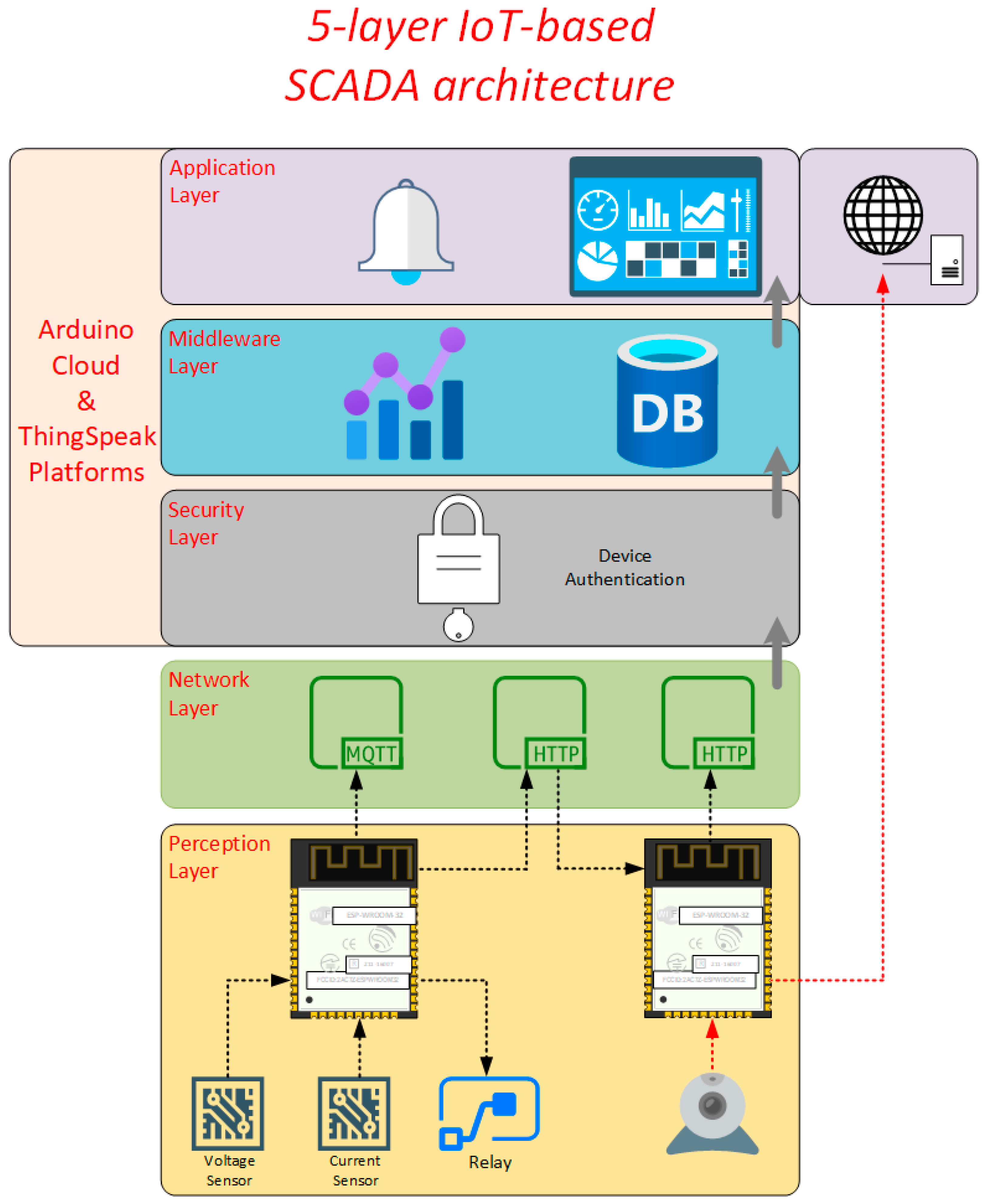
The conceptual representation of the developed IoT-based SCADA architecture in five layers, along with the schematic diagram of the PV system and the SCADA system, are presented in this section. In Figure 1, the perception layer, the network layer, the security layer, the middleware layer, and the application layer consist of the overall IoT architecture. Within the perception layer, an ESP32-E (FireBeetle 2 ESP32-E, DFRobot®, Shanghai, China) collects voltage readings and current readings from the respective sensors. Moreover, the ESP32-E sends the control signal to the actuator (a relay) for turning on or off the load. Another ESP32 series board ESP32-S3 (ESP32-S3-WROOM CAM Board, Freenove®, Shenzhen, China) builds a webserver to display the load images from a 2-Megapixel OV2640 camera mounted on the development board. The network layer, as the second layer, ensures that data packets are transmitted from the source IoT devices to other devices, central servers, or the cloud. ESP32-E forwards the collected sensor data to the Arduino Cloud using the MQTT protocol and to the ESP32-S3 webserver through HTTP. ESP32-S3 transmits the parsed sensor data from the webserver to ThingSpeak through HTTP, afterwards. The security layer, middleware layer, and the application layer are integrated and implemented by the Arduino Cloud and ThingSpeak platform. In the Arduino Cloud, the device authentication is achieved by matching the device login name and the device key generated by the platform. Similarly, Read/Write API keys are provided in ThingSpeak to grant read/write access to the ThingSpeak channel data. The two IoT platforms can also function as the middleware layer. The Arduino Cloud aggregates all the sensor data from ESP32-E, stores the historical sensor data, and serves as a bridge between the hardware devices and the application layer. In addition to these functions, ThingSpeak also features easy-to-implement data processing, such as the average, median, sum, and rounding. The final application layer consists of several applications, including dashboards, email alert, and integration with other software (MATLAB R2023a for ThingSpeak).
Figure 1. Proposed design of 5-layer IoT-based SCADA architecture.
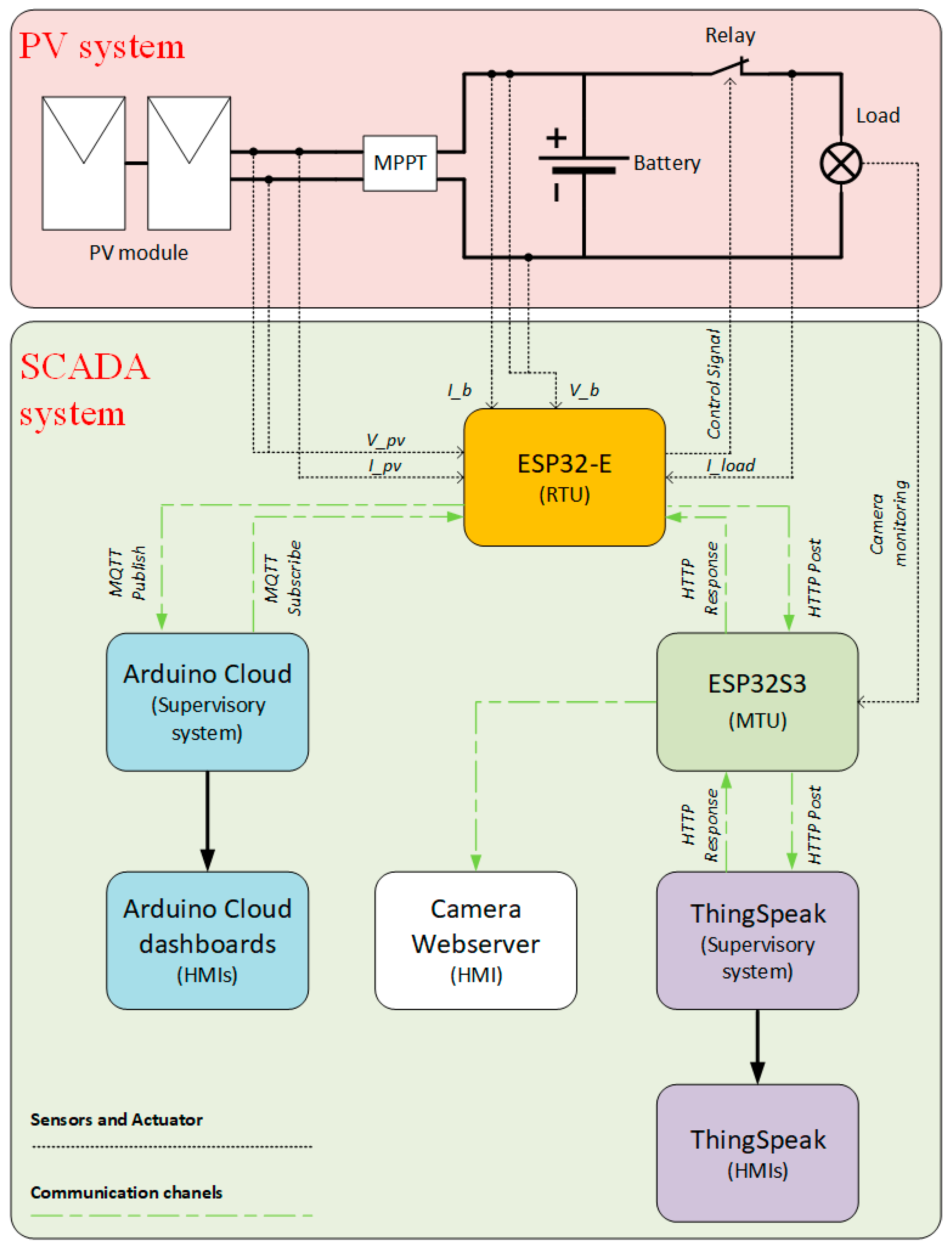
Figure 2 illustrates the developed system from the view of the SCADA system. Voltage sensors are placed in parallel with the PV panel and the battery. Current sensors are in series arrangements with the PV panel, the battery, and the load. A relay is also connected in series with the load, controlling its ON/OFF state. The sensors and the relay comprise the FIDs. The RTU (ESP32-E) collects the sensor data and controls the relay according to the battery voltage, where low voltage leads to the load being turned off. Additionally, the RTU sends the data to the MTU (ESP32-S3) and to the middleware (Arduino Cloud). The MTU forwards the received data to the middleware (ThingSpeak) and sends the images of the load to the webserver. Two middlewares both provide HMIs (dashboards) and data historians (online data storage).
Figure 2. SCADA components of the proposed design.

4. SCADA System Components

In this section, we introduce the hardware and IoT platforms crucial to the system design. The ESP32-E as the MTU and part of the perception layer, controls the relay and collects the sensor data to forward them to the ESP32-S3 and the Arduino Cloud. The MTU, ESP32S3, captures the images of the monitored load and sends the sensor data to ThingSpeak. The current sensors, voltage sensors, the relay, and the camera comprise the perception layer, which serve as the FIDs.

4.1. ESP32-S3 and ESP32-E

The ESP32-S3-WROOM-1-N8R8 is a powerful microcontroller module that comprises the compact ESP32-S3-DEV-KIT-N8R8 development board. For hardware, equipped with an Xtensa® 32-bit LX7 dual-core processor(Cadence®, San Jose, CA, USA), the module has a main frequency that can be up to 240 MHz [32]. PSRAM provides extra memory space to increase the usable ESP32 system memory, which is helpful for accelerating access to memory and expanding the buffer. The 8 MB PSRAM on the ESP32-S3 module allows for the seamless integration of the camera. It also has 512 kBSRAM, 384 kB ROM, 16 kB SRAM in RTC, and 8 MB of flash memory. Its working voltage is from 3.0 V to 3.6 V. Resourceful peripherals include up to 45 GPIOs, two 12-bit ADC, two I2C/I2S, one camera interface, four SPIs, one USB OTG, three UART interfaces, and so on; 2.4 GHz Wi-Fi (802.11 B/G/N) and Bluetooth® LE are adopted to enable wireless communication with superior RF performance. On the development board, USB and UART development can be achieved simultaneously by using onboard CH343 and CH334 chips. Excelling in its performance and versatility, ESP32-S3 is an excellent choice for developing IoT applications. The superior support for vector instructions also shows great potential for computer vision tasks, such as facial recognition, object detection, and image classification.
Another ESP32 module employed in this design is ESP32-WROOM-32E-N4, powering the FireBeetle 2 ESP32-E development board. Having an Xtensa® 32-bit LX6 dual-core processor, the module has a clock frequency up to 240 MHz [33]. It also has 448 kBROM, 520 kBSRAM, and 16 kB SRAM in RTC. The operating voltage is from 3.0 V to 3.6 V. As for wireless communication, it supports 2.4 GHz Wi-Fi (802.11 B/G/N) and Bluetooth V4.2 and BLE. Peripherals are supported, such as an SD card, UART, SPI, SDIO, I2C, GPIOs, and so on. ESP32-WROOM-32E is more of a generic and powerful MCU module that can target various applications, including low-power sensor networks, when compared to ESP32-WROOM-S3.

4.2. Arduino Cloud

Developed by the Arduino® company(Somerville, MA, USA), the Arduino Cloud is an online open-source platform facilitating the creation, deployment, and monitoring of IoT projects. Key features of the platform are briefly introduced.
  • Device Management: It allows users to manage multiple Arduino boards or third-party devices on one platform with a customized user interface.
  • Security: To set up a new device in the platform, a device ID and a secret key are provided to realize the authentication process.
  • Cloud Programming: Users can write, compile, and upload codes to the devices from the web browser, instead of installing a local programming IDE environment.
  • Remote Control: Widgets that link to pre-defined variables can control the states of these variables.
  • Over-the-Air Updates: Users can update the firmware of the devices over the air, without removing the field devices from their deployment place.
  • Cloud Services Integration: The Arduino Cloud supports integration with other cloud services, such as Google Cloud, AWS, and IFTTT, allowing for complex and automated workflows.
Things handle the communication between IoT devices and the Arduino Cloud. The cloud variables, the associated device, network SSID and password, sketch, and metadata comprise Things. The Arduino Cloud free plan supports 2 Things, with 5 cloud variables for each Thing. Cloud data retention is 1 day on a rolling basis.

4.3. ThingSpeak

ThingSpeak is an IoT analytics platform that supports the aggregating, visualization, and analysis of real-time data streams in the cloud. Users can transmit data from their devices to ThingSpeak, generate immediate visualizations, and send alerts via web services. By incorporating MATLAB® analytics, ThingSpeak allows users to write and execute MATLAB codes for data preprocessing, visualization, and analysis. The free plan supports 3 million messages per year, a 15 s updating interval, and 4 channels.
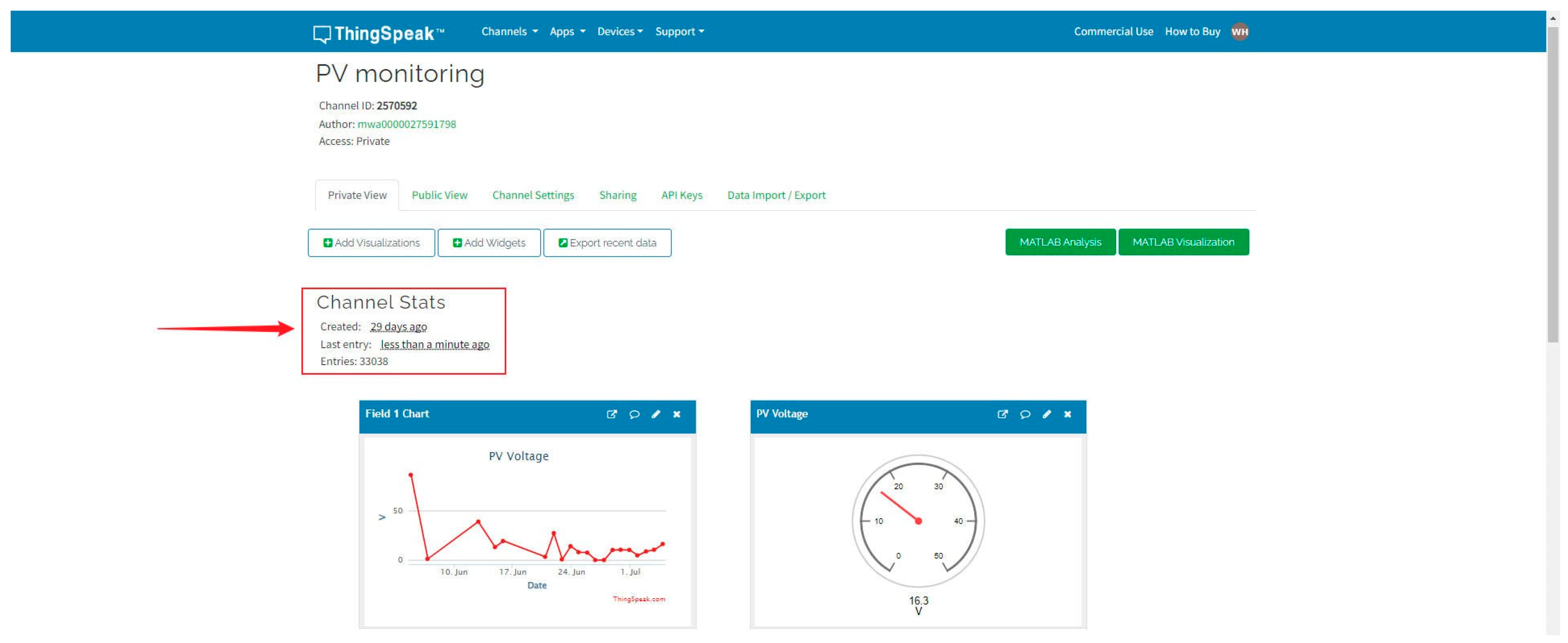
The user can read/write data from/to the channel, by using HTTP calls from the REST API or MQTT subscribe/publish method. After that, the MATLAB Analysis app helps to prepare, filter, and analyze the channel data. Calculating average values, eliminating data outliers, and replacing missing values in data are some common functions that the MATLAB Analysis app can realize. Users can then visualize the data and trigger an action, such as sending an email. Finally, MATLAB Add-On Toolboxes can be utilized to perform a specialized analysis, including prediction with data. Figure 3 is the ThingSpeak channel created on 5 June 2024, with more than 33,000 entries.
Figure 3. ThingSpeak channel private view.

4.4. Voltage Sensor and Current Sensors

The voltage sensor used in this design is suitable for 0–25 V DC voltage measuring. It is essentially a voltage divider that reduces the input voltage by a factor of 5 and generates a corresponding analog output voltage signal. Manufactured by HiLetgo®, Shenzhen, China, this is an open-source electronic device featuring a low price, down to about 1.7 USD per item [34].
A calibration process is needed to implement voltage measuring. One fifth of the source voltage divided by the ESP32-E reference voltage is equal to the voltage analog signal divided by 4096 (12-bit ADC for ESP32). The corresponding relationship between the measured voltage and ESP32-E analog voltage readings is given in Equation (1), where Vs is the source voltage to be measured, Vref is the reference voltage for ESP32-E (3.26 V), and Vsig is the analog value read by the ESP32-E.
V s / 5 V r e f = V s i g 4096
V s = 5 × V r e f 4096 × V s i g
The current sensor deployed in our implementation is the ACS712 current sensor [35] manufactured by Allegro Microsystems®, Manchester, NH, USA. This sensor is comprised of a linear current sensor IC based on Hall Effect, 2.1 kVRMS voltage isolation, and a low-resistance current conductor.
The ACS712 current sensor also requires calibration to make the results significant. When VCC and GND are connected to 5 V and ground, the OUT pin has an AcsOffset analog reading on ESP32-E if no current is flowing through the sensor. In addition, the sensitivity of ACS712-30A is 66 mV/A, meaning that every change of 1 A leads to a change of 66 mV on the OUT pin. Therefore, we have Equation (2) giving the correspondence between the measured current and the analog readings on ESP32-E, where sensitivity is 66 mV/A, AcsOffset is the analog reading on ESP32-E when the measured current is zero, and Asig is the analog reading of the measured current, where the AcsOffset for a 5 V sensor is 2.5 V.
I s × Sensitivity V r e f = A s i g AcsOffset 4096
I s = V r e f 4096 × Sensitivity ( A s i g AcsOffset )

4.5. OV2640 Camera

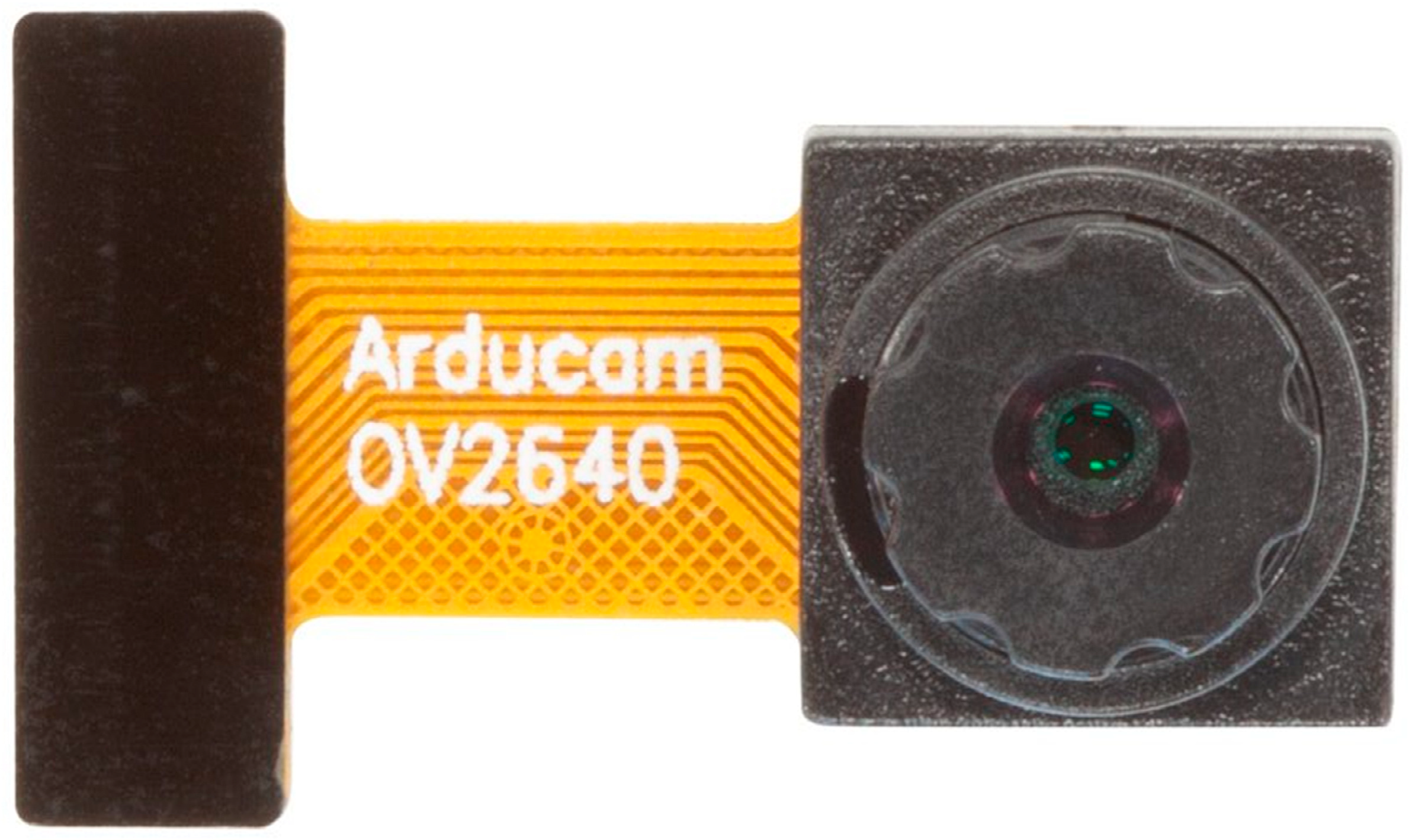
The OV2640 is a small (1/4 inch) CMOS UXGA image sensor that is functioning as the combination of a single-chip UXGA (1600 × 1200) camera and an image processor [36]. The single-chip camera supports image sizes, including UXGA, SXGA (1280 × 1024), SVGA (800 × 600), and any size down to 40 × 30. The maximum image transfer rate is 15 frames per second at UXGA resolution. The S/N ratio and dynamic range are 40 dB and 50 dB, respectively. In addition, the image processor can be programmed to select the settings of resolution, frame rate, exposure control, white balance, gain control, noise reduction, and so on. In terms of the power supply and power consumption, the maximum voltage and power needed are 3.3 V and 140 mW. Having the powerful on-chip ISP with JPEG encoding and low power consumption, the OV2640 image sensor is popular for IoT projects. Figure 4 is the visual image of the Arducam® OV2640 camera module, with a DVP-friendly interface, which makes it easy to connect to microcontrollers.
Figure 4. OV2640 camera module [37].

5. Implementation Methodology

In the developed IoT-based SCADA system, one microcontroller (ESP32-E) sends parameters of the monitored PV system, which are collected by sensors, to another microcontroller (ESP32-S3) and two IoT platforms (Arduino Cloud and ThingSpeak). Furthermore, ESP32-E also controls the relay to turn ON/OFF the load, while ESP32-S3 sends load images to the web server it built.
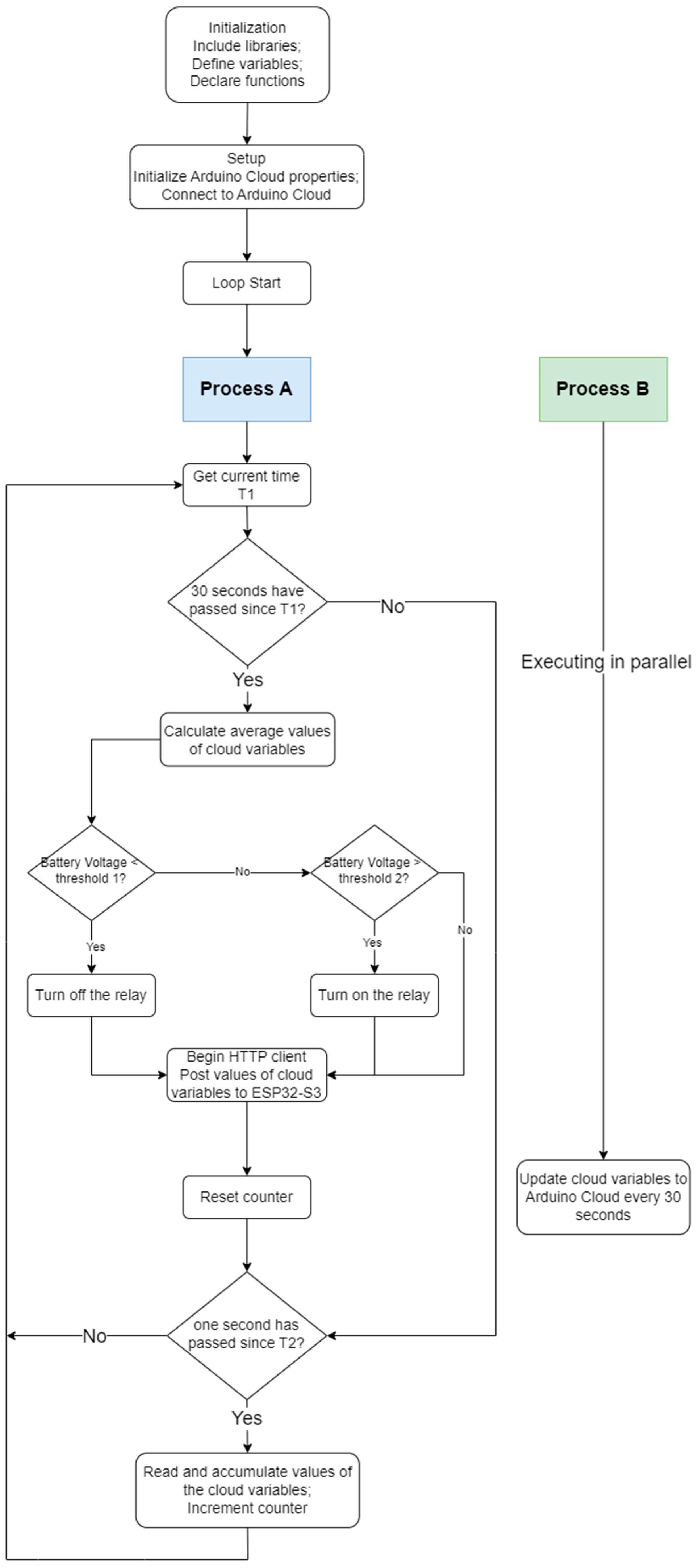
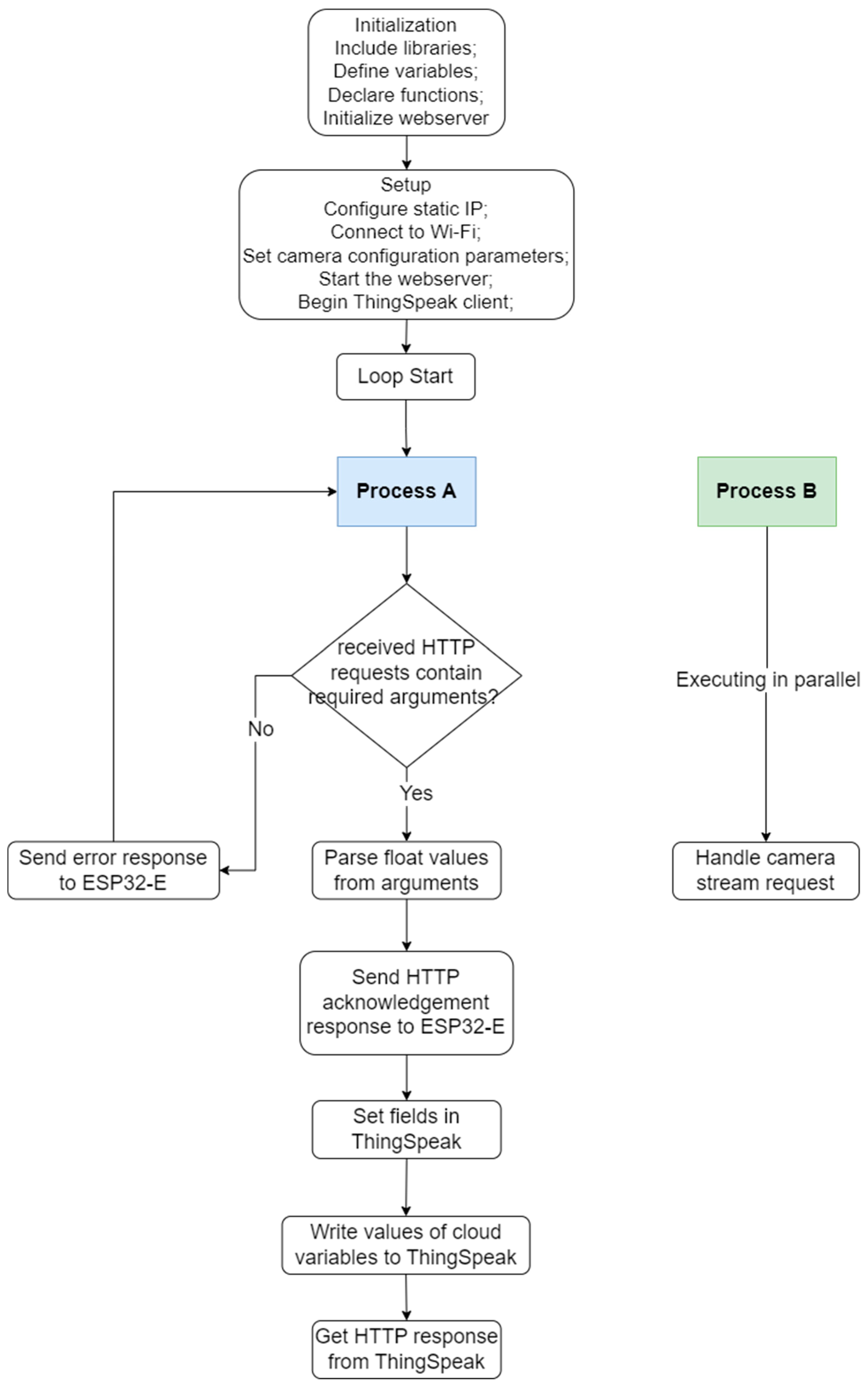
Figure 5 and Figure 6 describe the sketch flowchart for ESP32-E and ESP32-S3, respectively. Two processes are executed in parallel in ESP32-E: one is translating sensor readings to usable sensor values, controlling the relay, and sending sensor values to ESP32-S3, the other is to update the sensor values to the Arduino Cloud regularly. This asynchronous programming ensures that multiple tasks will run concurrently without blocking each other, leading to an improved system efficiency. Similarly, in ESP32-S3, there are also Process A and Process B that are executed simultaneously. Process A consists of two steps: Web server A listens to port 81 for incoming HTTP POST requests sent by ESP32-E, posting sensor data to the ThingSpeak platform. Meanwhile, Process B is that web server B monitors default port 80 for any HTTP GET requests for the latest image from a web browser. The use of different port numbers can separate services to avoid conflicts. Algorithm 1 is the pseudocode flashed into ESP32-E by the Arduino Cloud. Furthermore, Algorithm 2 is the pseudocode running on ESP32-S3, which is uploaded by Arduino IDE (version 2.3.2).
Algorithm 1: Data acquisition, automatic control, and data communication by ESP32-E.
Initialization;
  • Include libraries for Arduino Cloud, HTTP client, and Arduino Cloud connection handler;
  • Define constants, including device login name, device key, Wi-Fi network SSID and password, server URL, thresholds, intervals, and counter for averaging;
  • Define cloud variables including PV panel voltage/current, battery voltage/current, and the load current;
  • Declare sensor calibration functions;
Setup Function (executed only once);
5.
Initialize cloud properties with read permissions and update intervals;
6.
Connect to Arduino Cloud;
Loop Function (executed repeatedly);
7.
Call a callback function to update cloud variables at predefined update intervals to Arduino Cloud;
8.
Get current time;
If interval_1 (30 s) has passed then
   9.
Calculate average values (dividing the accumulated values by counter) of cloud variables;
   If battery voltage is below threshold_1 then
      10.
Cut the load by turning off the relay;
   Else If battery voltage is above threshold_2 then
      11.
Power the load;
   Else:
      12.
Continue;
   End
   13.
Begin HTTP client;
   14.
Send values of cloud variables to server (ESP32-S3) via HTTP POST request;
   15.
Get HTTP response code;
   16.
Reset counter;
Else If interval_2 (one second) has passed then
   17.
Read and accumulate values of the cloud variables;
   18.
Increment counter;
Else:
   19.
Continue;
End
Figure 5. Flowchart of programs on ESP32-E.
Figure 6. Flowchart of programs on ESP32-S3.
Algorithm 2: Data communication, and camera web server by ESP32-S3.
Initialization;
  • Include libraries for ThingSpeak, Wi-Fi, Webserver, and ESP Camera;
  • Define constants, including static IP, ThingSpeak channel number and write API key, Wi-Fi network SSID and password, and ThingSpeak client;
  • Define cloud variables including PV panel voltage/current, battery voltage/current, and the load current;
  • Initialize webserver on port 81;
  • Declare the function for starting the camera server, and the callback function for handling float-type HTTP requests;
Setup Function (executed only once);
6.
Configure static IP;
7.
Connect to Wi-Fi network;
8.
Set camera configuration parameters based on the model;
9.
Start the webserver for camera on port 80, and for receiving sensor data from ESP32-E on port 81;
10.
Begin ThingSpeak client;
Loop Function (executed repeatedly);
11.
Handle incoming client (ESP32-E) POST requests to the server;
Handle function;
If received requests contain required arguments (such as “pv_voltage”) then
   12.
Parse and convert the arguments to float values;
   13.
Send HTTP acknowledgement response to the client (ESP32-E);
   14.
Set fields in ThingSpeak;
   15.
Write values of cloud variables to ThingSpeak;
   16.
Get HTTP response from ThingSpeak;
Else
   17.
Send error response to the client (ESP32-E);
End

6. Experimental Setup

This section explains the details of the experiments carried out to prove the effectiveness of the IoT-SCADA system design. At Memorial University ECE laboratory, the IoT-SCADA system is integrated into the installed PV modules for monitoring and control. The PV module contains two panels, with each one producing 130 W at 17.1 V under ideal conditions.
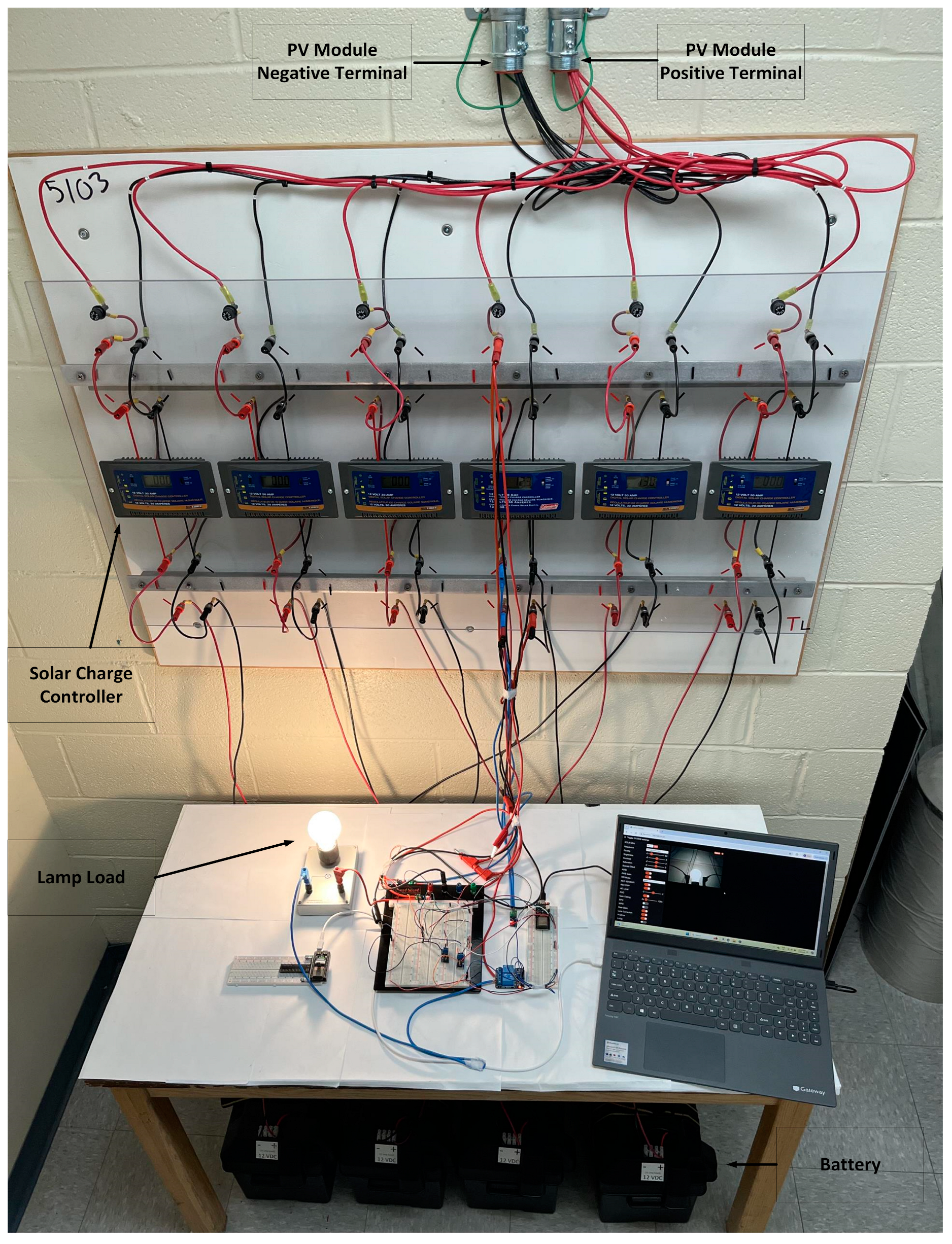
Figure 7 demonstrates the overview of the designed system setup. Positive and negative power terminals of the PV modules on the rooftop are connected to the digital solar charge controllers, the batteries and the load that are placed indoor, through red and black power wires.
Figure 7. Overview of the experimental setup.
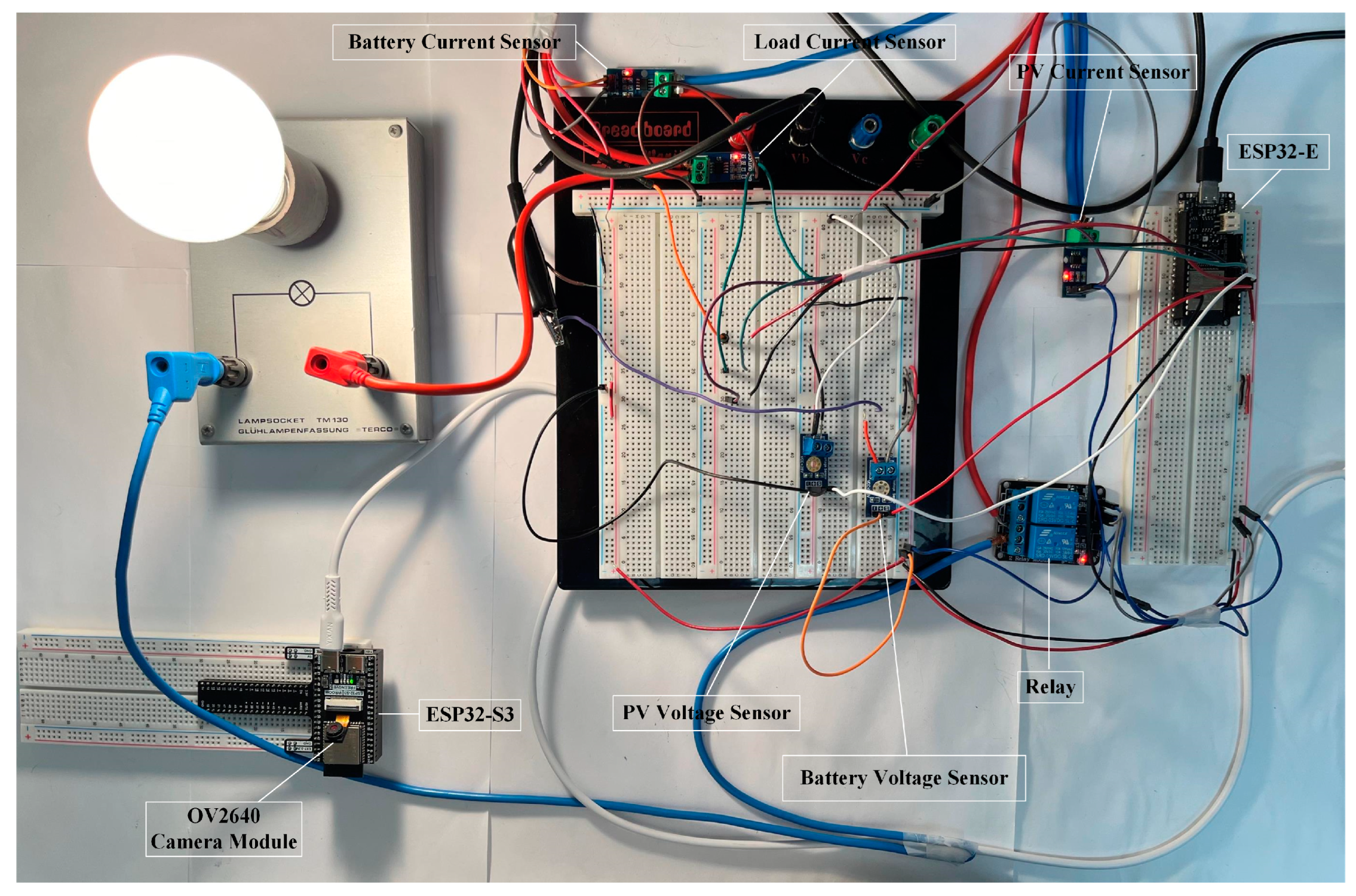
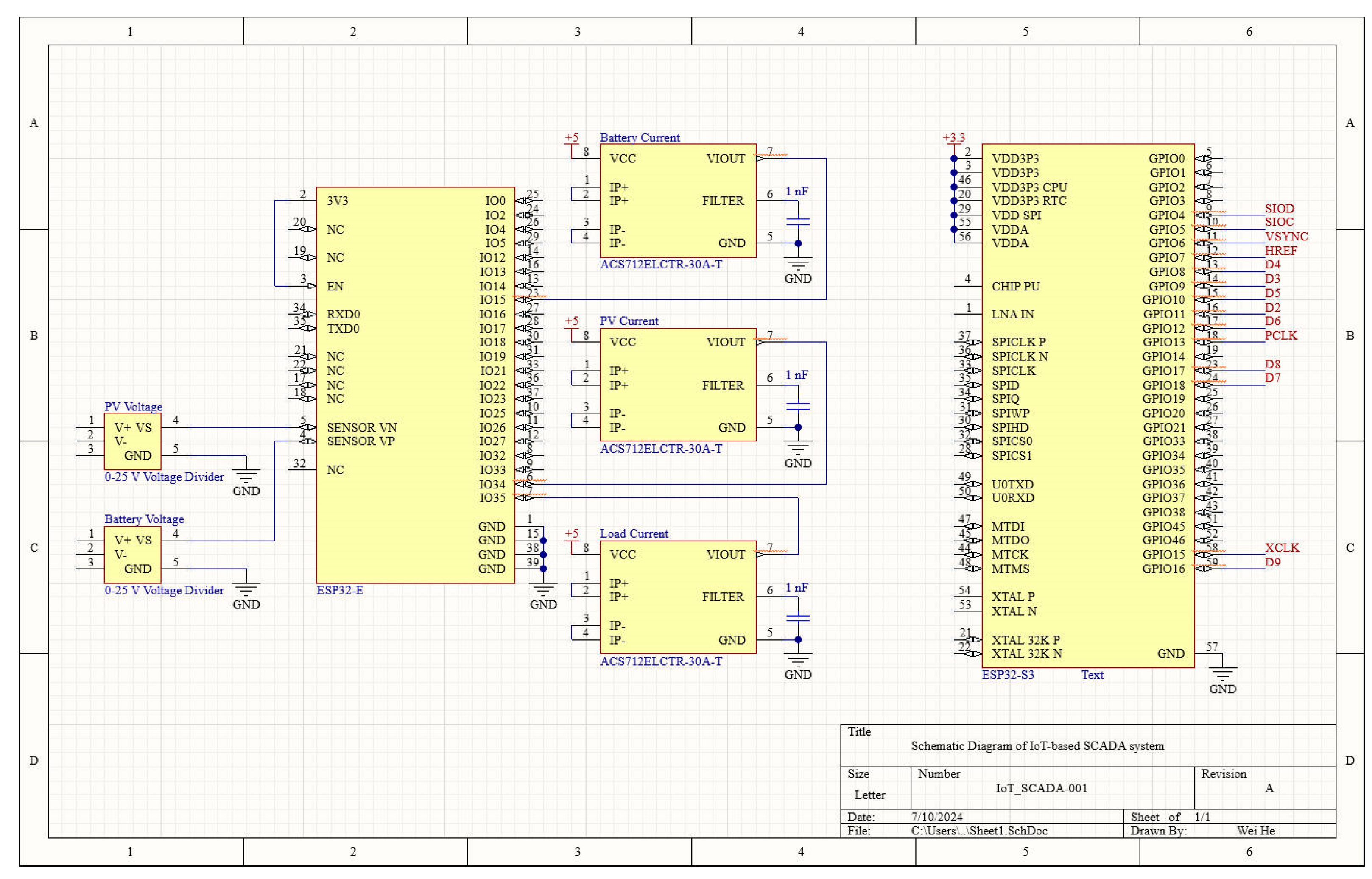
Figure 8 presents the hardware schematic diagram of the IoT-based SCADA system. The voltage signal output pin VS of the PV voltage sensor is connected to the SENSOR VN pin of ESP32-E; meanwhile, the VS pin of the battery voltage sensor is connected to the SENSOR VP pin. GPIO15, GPIO34, and GPIO35 of ESP32-E are connected to the voltage output pins of the battery current sensor, the PV module current sensor, and the load current sensor. Additionally, the DVP interface is used to connect the OV2640 camera module to ESP32-S3. The interface consists of several signal lines. To be specific, 8-bit data lines (D2-D9) carry pixel data from the camera to the microcontroller; vertical synchronization (VSYNC) and horizontal reference (HREF) indicate the start of a new frame and a new row of pixels, respectively; pixel clock (PLCK) is responsible for providing a clock signal when data lines have valid data; external clock (XCLK) is an input clock signal provided to the camera by the microcontroller to drive its internal logic; serial clock (SIOC) synchronizes the data transfer over the I2C bus, while serial data (SIOD) enables bi-directional data transfer (camera configuration commands and settings) between the master ESP32-S3 and the slave camera. Figure 9 is the implementation of the hardware schematic diagram.
Figure 8. Hardware schematic diagram.
Figure 9. Hardware setup of IoT-SCADA system.
Despite the hardware experimental setup, the application layer, which is implemented in the Arduino Cloud, ThingSpeak, and the camera web server, is also introduced.
The Arduino Cloud provides different widgets in the dashboard application, including Switch, Push Button, Slider, Chart, etc. By simply linking the cloud variables to the widgets, the values of the cloud variables can be shown in the dashboard without much effort. In this setup, the Chart widget is chosen to display the changing values. Different time scales of the data are available in Chart, which are 15/7/1 day(s), 1 h, and live. However, with the free plan, the maximum length of data displayed is one day. If 15 days are selected, it will only present the one-day data 15 days ago, instead of displaying all 15-day data.
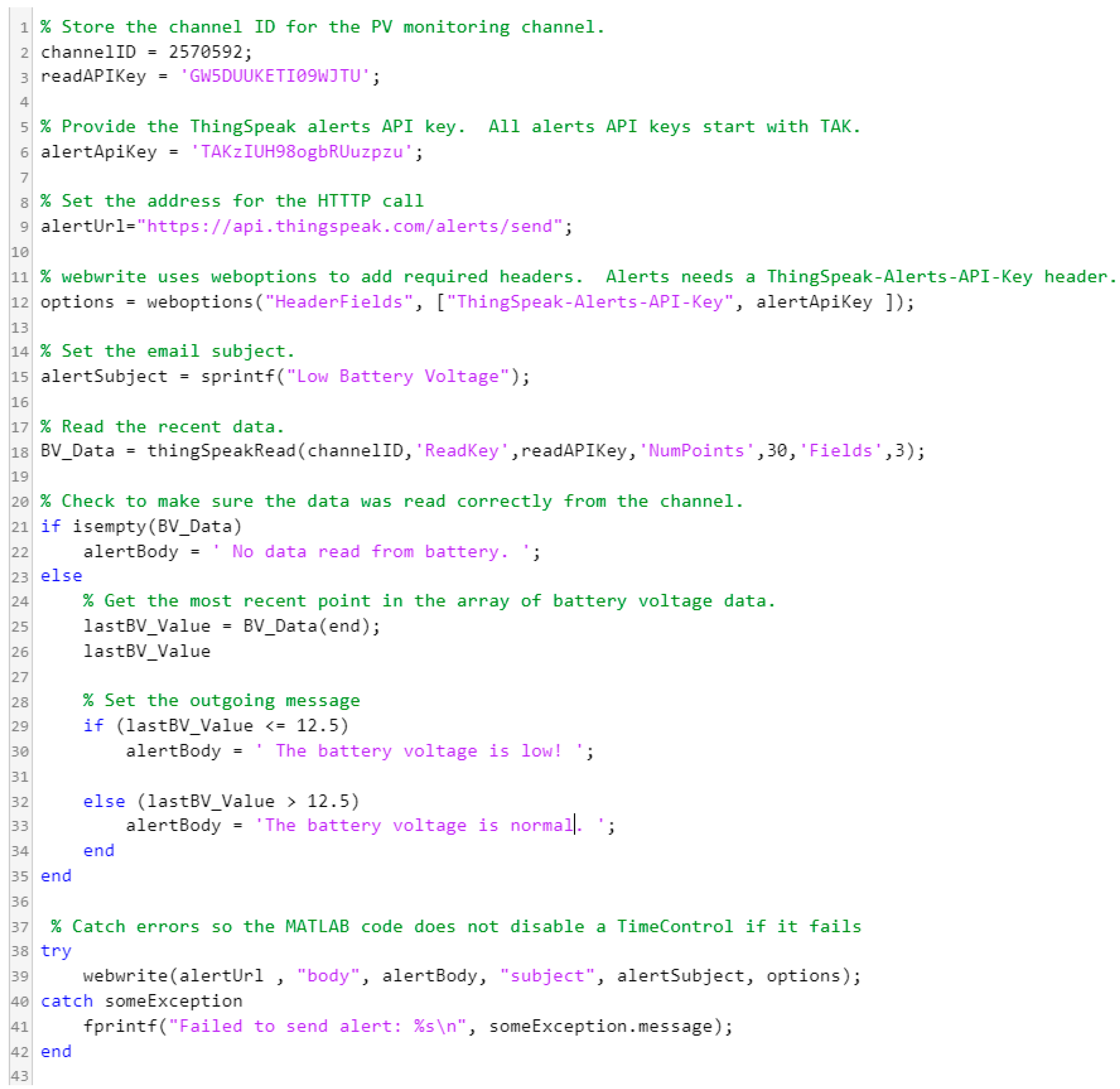
Another function is the email alert by ThingSpeak. Users can first read the ThingSpeak channel data, using the thingSpeakRead function. The Channel ID, read API key, numbers of data points, and field number in the channel should be configured in the function. Furthermore, an email alert can be configured with the HTTP POST method and triggered when conditions are met. To achieve this, Headers that include the user-specific ThingSpeak Alerts API key and Body parameters containing the monitored value are sent to the URL https://api.thingspeak.com/alerts/send by using webwrite function. To enable the automatic alert function, the TimeControl application in ThingSpeak helps to trigger an action at a specific time. The recurrence can be down to the minute level. By combining the TimeControl application and the email alert function, the battery voltage LOW condition can be alerted to the email account in no more than five minutes. The Matlab program can be found in Figure A1 in the Appendix A.
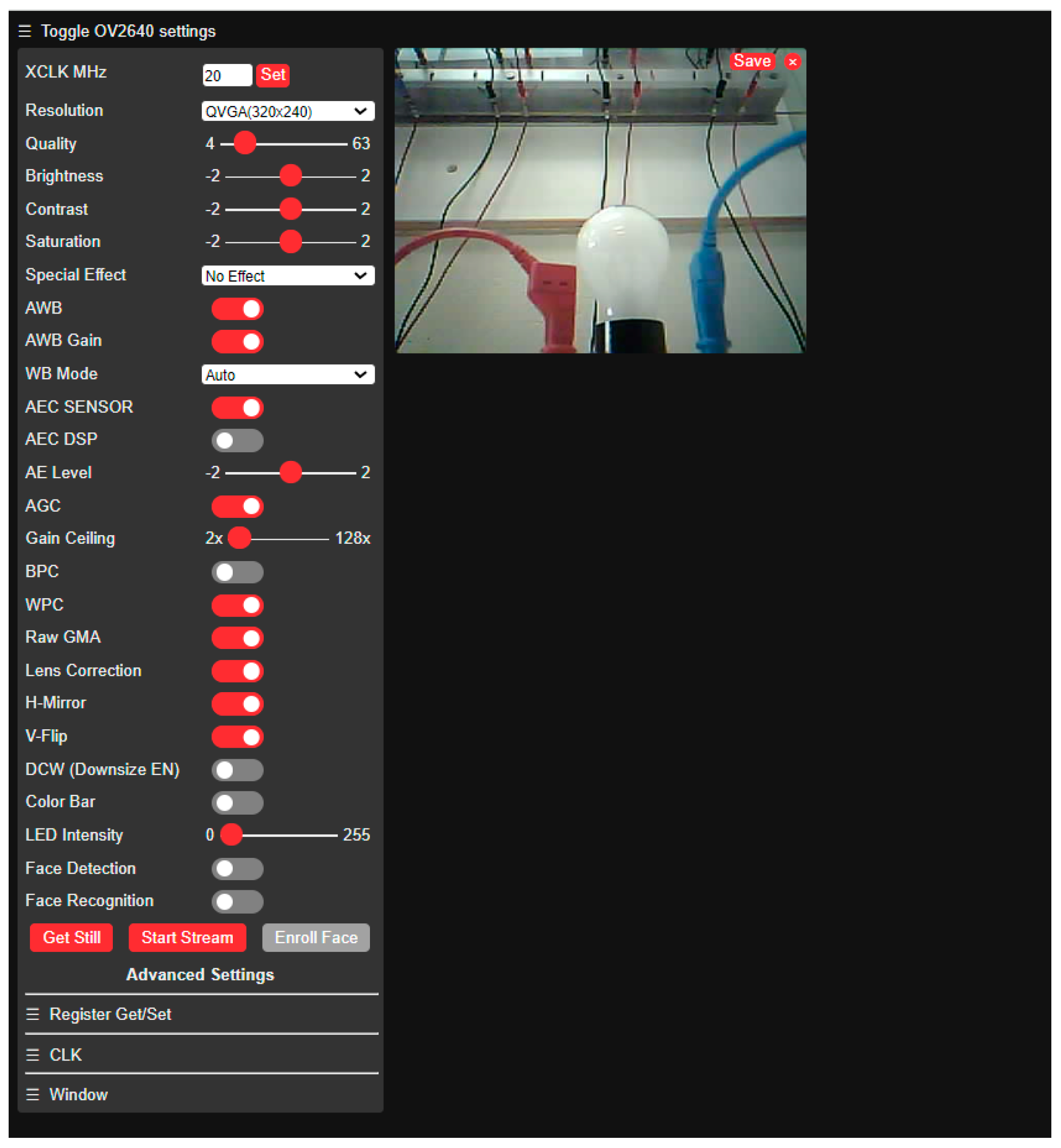
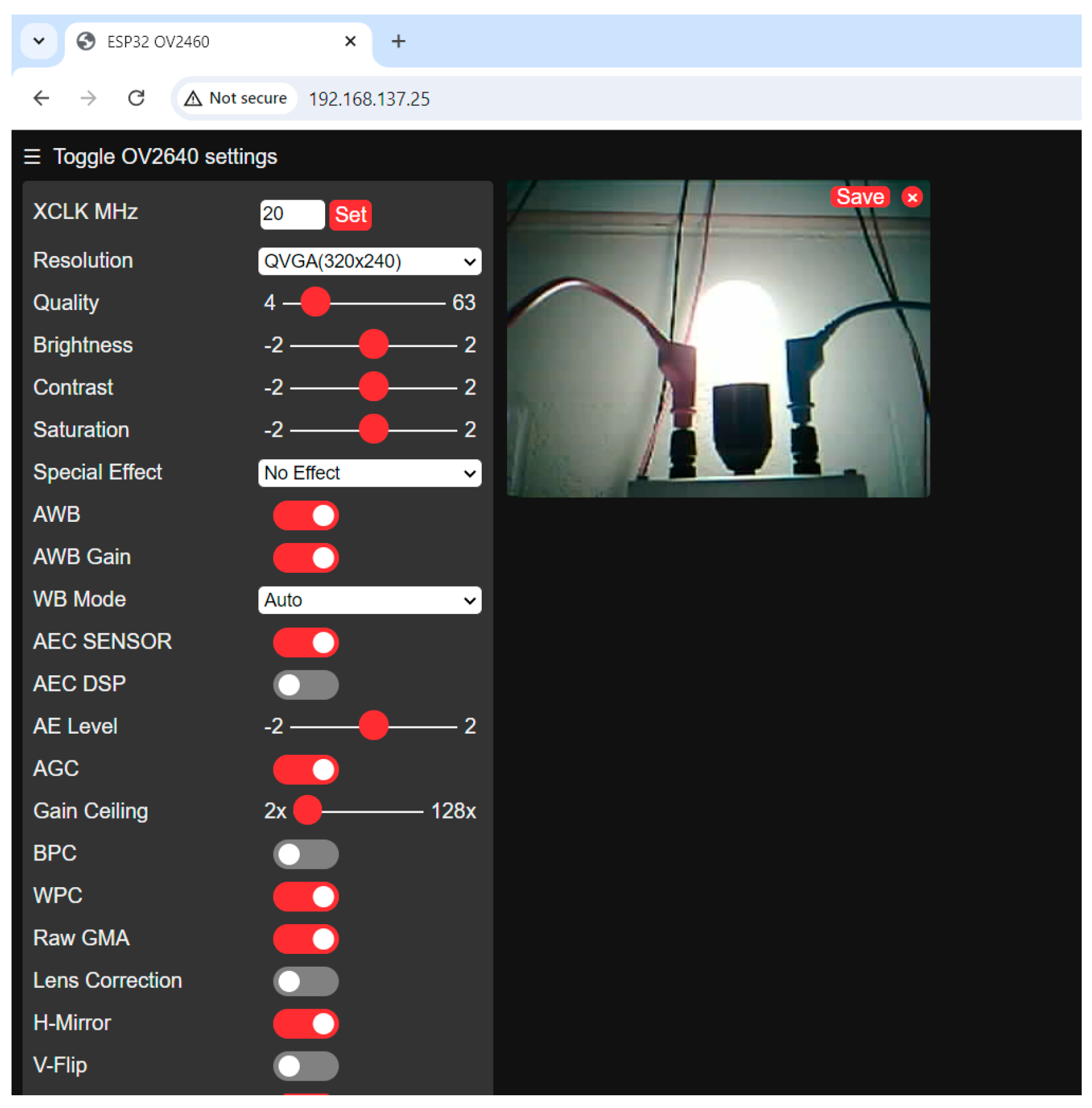
Finally, the camera web server is built on ESP32-S3. By typing the configured ESP32-S3 IP address with a default port number 80 in a web browser, the camera web server processes the HTTP request from the browser and sends back a response to the browser. Figure 10 shows the camera web server interface. On the left side there is a settings column, providing options to alter the OV2640 settings. The clock frequency, image resolution/brightness/contrast, H-Mirror, V-Filp, etc. are subject to the users’ preferences.
Figure 10. Camera webserver interface.

7. Results

From 23 June 2024, to 13 July 2024, 20-day results were recorded to validate the correct performance of the developed IoT-SCADA system. On 1 July, there was a scheduled maintenance for the Arduino Cloud from 08:17 UTC to 12:00 UTC, 2 July [38]. During that time, no data were recorded on the Arduino Cloud platform since the device connectivity was cut off. However, ThingSpeak received, stored, and displayed the data on 1 July as normal, without being affected. Based on the design of data redundancy, our developed system successfully maintained its function, even when the Arduino Cloud shut down the service.
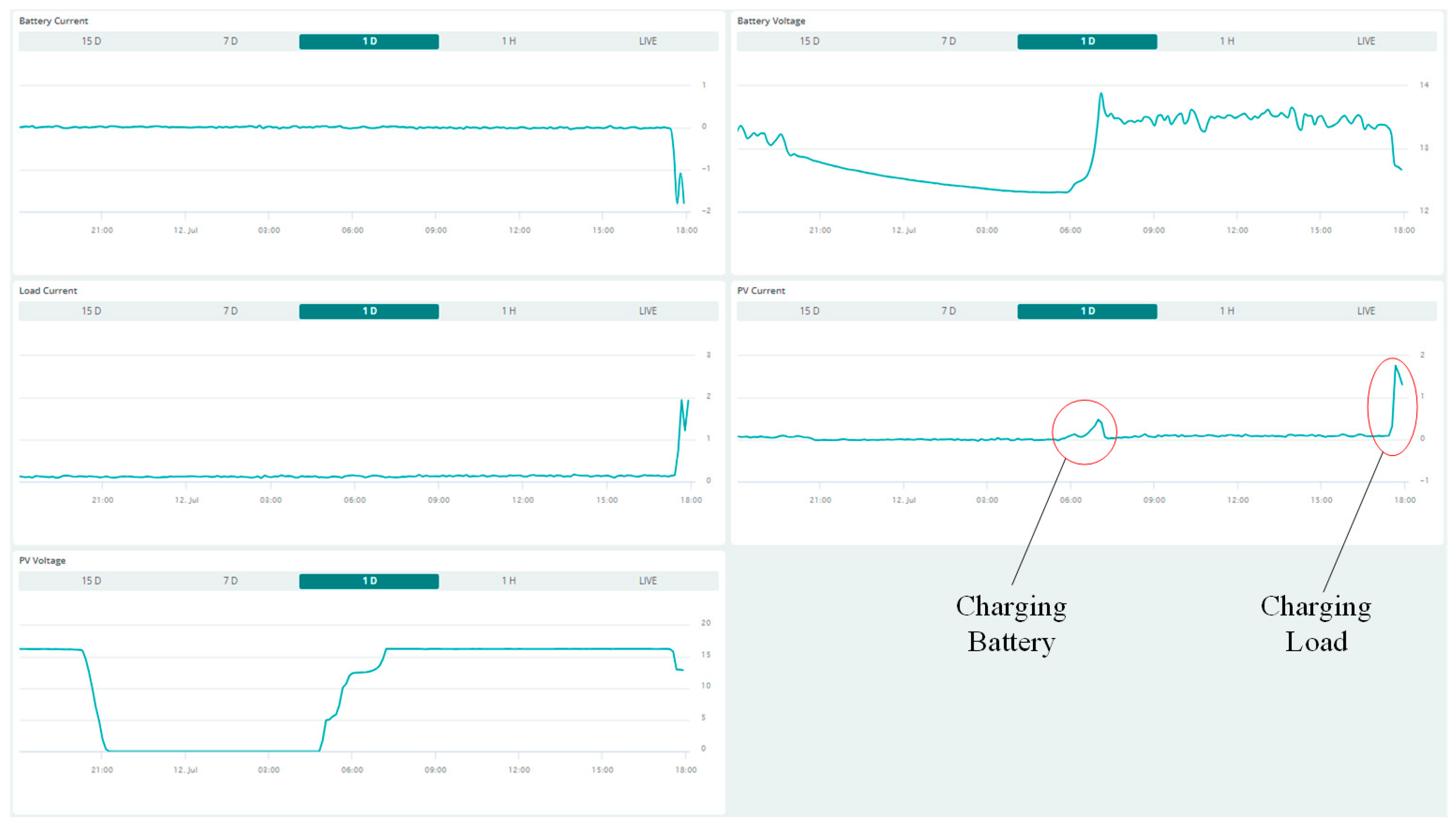
Figure 11 shows the dashboards displaying the recorded PV system parameters on 11 July and 12 July on the Arduino Cloud. Five digital meters (five Velleman DVM890L) were utilized to measure the PV system parameters simultaneously, the readings of which matched the IoT-SCADA system results. A ±0.5% accuracy for the DC voltage, ranging from 200 mV to 200 V, and ±0.8% accuracy for the DC current ranging, from 2 mA to 200 mA (±2% for 20 A) provide reliable measurement results. Furthermore, the validation process based on the commercially available measurement instrument DI-145 was covered in our previous paper [39]. To avoid repetitiveness, the details of the data verification are omitted in this paper. On 11 July, the PV module voltage dropped from 16.25 V to 0, at around 20:18 and 21:00. This is due to the decrease in the solar irradiance at St. John’s, Canada. The PV voltage remained at zero until the next morning. At 04:50 on 12 July, the PV voltage started to increase due to the sunrise, to a value of 16.3 V at 07:13. The battery voltage was decreasing until 05:46, due to the self-discharge current. After that, the battery voltage and the PV module current increased rapidly, showcasing that the PV module was charging the battery. The PV current entered a stable stage, which also kept the battery voltage invariant. There are two peaks for the PV current, one is for charging the battery and the other is for charging the load.
Figure 11. Arduino Cloud dashboards on 11 and 12 July, with the 1D time scale.
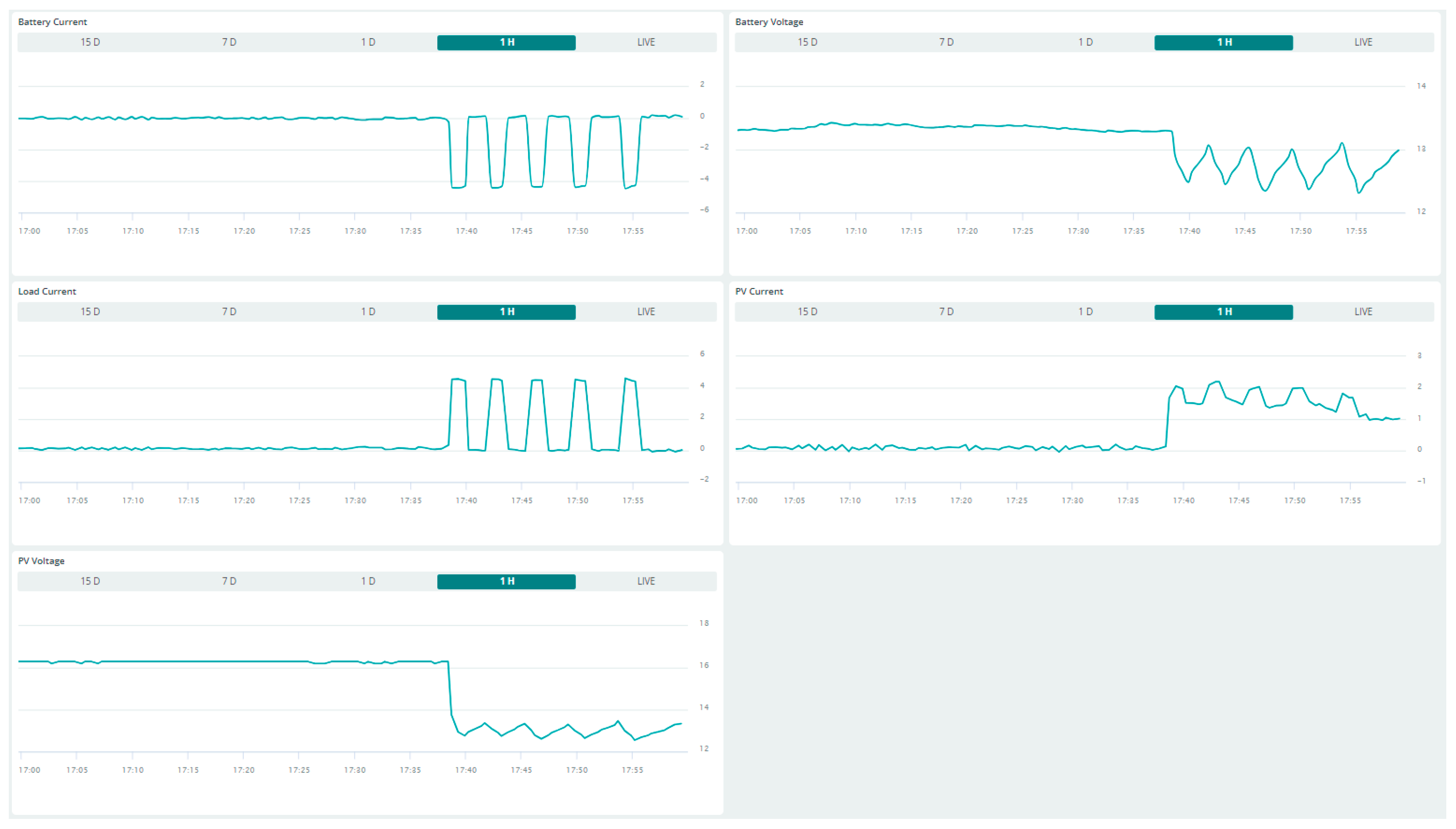
To test if the relay can be controlled by ESP32-E, after 17:38 on 12 July, the load and the relay were integrated into the system. The relay was designed to turn on when the battery voltage is larger 13.0 V and turn off below 12.5 V. Figure 12 is the 1H time scale data to present the details. The load current varied between 4.42 A to 0, corresponding to the ON/OFF state of the relay. Due to the relay mechanism, the battery voltage was oscillating between around 13.1 V and 12.3 V. The battery current was negative, indicating that it was charging the load.
Figure 12. Arduino Cloud dashboards on 12 July, with a 1H time scale.
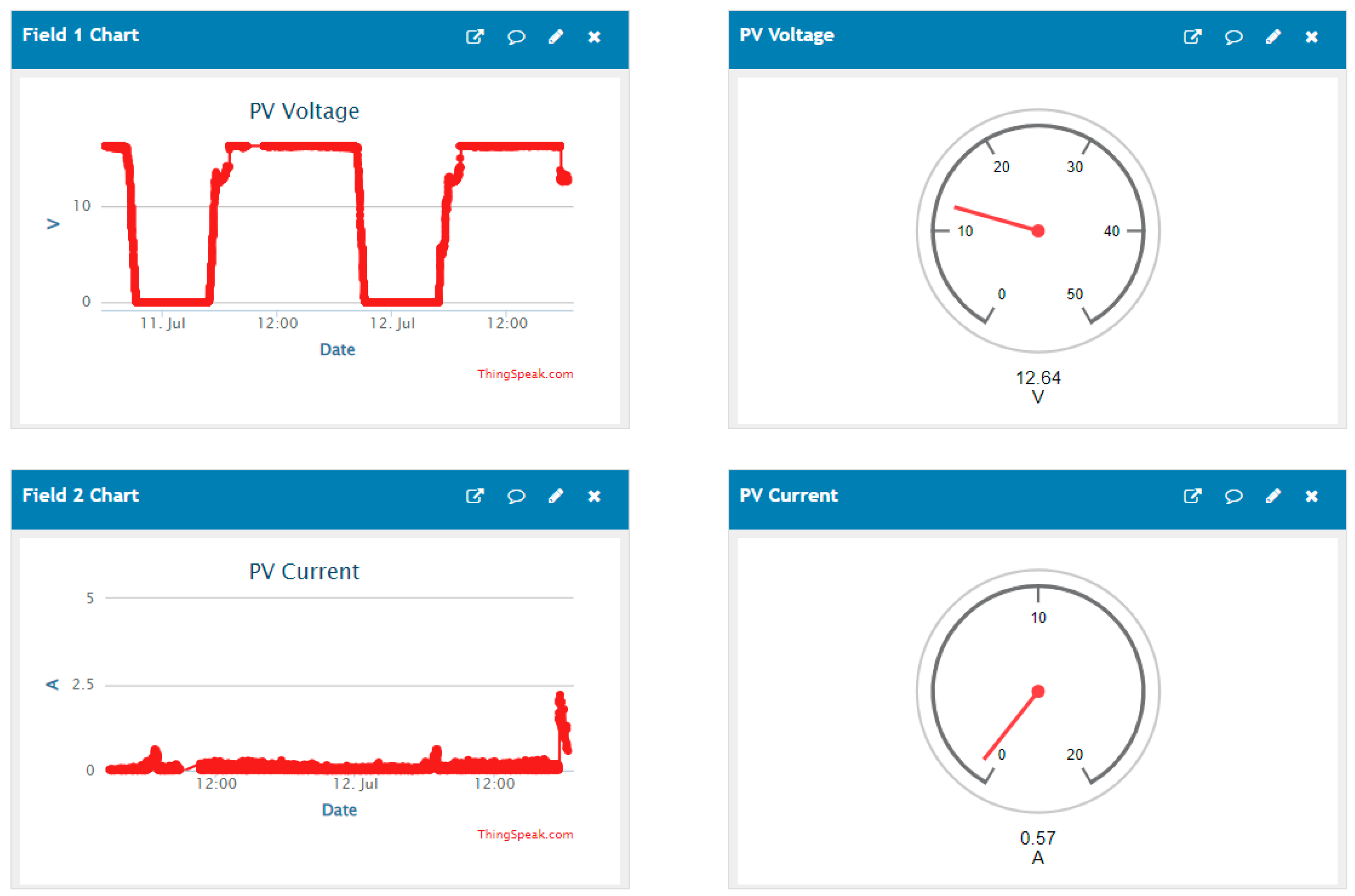
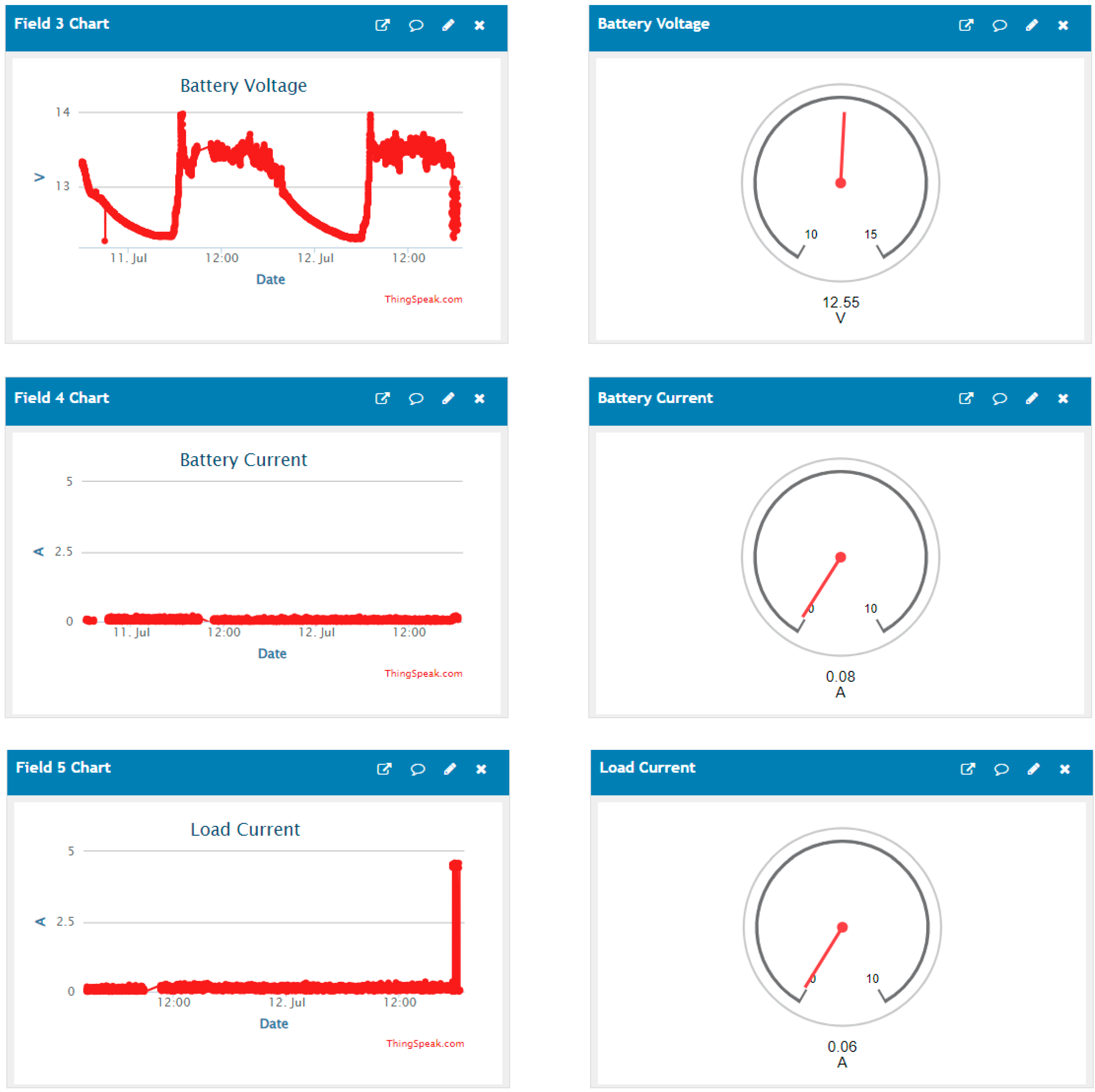
Furthermore, the data logging results were also displayed on ThingSpeak dashboards in Figure 13. The readings were presented in real time in the right column. A clear periodic pattern of the PV voltage and the battery voltage can be observed. The battery voltage was 12.55 V, which is larger than 12.5 V. The relay was still cut off, since the battery voltage must be larger than 13.0 V to turn it on. The relay state did not change when the battery voltage fell within 12.5 V and 13.0 V.
Figure 13. ThingSpeak dashboards displaying PV system parameters.
Figure 14 shows the lamp load to be turned on when the battery voltage is larger than 13.0 V.
Figure 14. Load when battery voltage is larger than 13.0 V.

8. Discussion

Several features of the proposed IoT-SCADA system are listed below, providing that our system design is practical and innovative.
  • Integration of dual IoT Platforms: The Arduino Cloud and ThingSpeak are two of the most popular IoT platforms, which facilitate easy and powerful IoT integration into SCADA systems. The communication layer, security layer, and application layer can all be implemented on the two platforms. The Arduino Cloud offers exclusive benefits over ThingSpeak, including the cloud programming environment, device management, and OTA updates. Comparatively, ThingSpeak provides advanced data analytics, customizable dashboards, integration with MATLAB, and powerful plugins. Both cloud services retain some data that could be accessed later. Using two cloud services at the same time adds highly desirable redundancy and diversity features to the design. This design also has great potential to develop new features in the future with the development and updates of the two IoT platforms.
  • Dual Microcontrollers: ESP32-E focuses on collecting the PV system parameters and control, which requires electrical connections with the PV system circuit through sensors and the relay. Meanwhile, ESP32-S3 is not involved in the physical connection with the PV system but handles image collection and data transmission. This separation of duties improves the system’s reliability at the hardware level. Furthermore, the use of dual microcontrollers provides flexibility in monitoring tasks. While it is possible to mount the camera module on the microcontroller that collects the system parameters, this setup would significantly limit the range of inspection objects. This limitation arises from the need to align both the system’s electrical ports and the inspection area simultaneously. For instance, if the inspected lamp load (or a PV panel in other scenarios) is located outdoors and the electrical ports are indoors, a single microcontroller would be insufficient to meet these requirements.
  • Real-time Monitoring and HMI design: The Arduino Cloud and ThingSpeak receive voltage and current data every 30 s. Fast responses to incidents can be made to prevent potential losses. Furthermore, the two platforms provide customizable and easy-to-use dashboards for HMI.
  • Data Redundancy: When the Arduino Cloud was offline, the IoT-SCADA system continued to log data on ThingSpeak, which ensures the overall system reliability and accessibility.
  • Image-based Load Monitoring: A low-cost camera web server allows users to capture images of the load. Visual surveillance ensures that no lamp is burned out and the surrounding environment remains safe, and it provides more intuitive feedback than electrical parameters alone. By observing the load image, operators obtain awareness of the load status without being onsite, saving on unnecessary technical service calls. Live feedback is a great tool to remotely oversee the monitored system.
  • Automatic Control and alert: A control method is employed in ESP32-E that controls the relay and the load locally. This operation protects the battery from over-discharging automatically. This novel design also has an auto low battery alert though email, which is a great tool to avoid battery dead discharge and extend the battery life.
  • System Security: Devices must provide their corresponding keys assigned by the Arduino Cloud to connect to it. Moreover, ThingSpeak requires the channel read/write API key to allow the read/write operation. This method guarantees that only authenticated devices have access to the platforms.
  • Cloud Data Storage: In our design, 5 messages are sent to ThingSpeak every 30 s. Since ThingSpeak supports 3 million messages per year free of charge, it can store up to 208 days of data.
  • Open-source: IoT platforms, microcontrollers, and actuators are all open source. Free software guides and hardware at a low price are available on the Internet and the market. This removes the barrier of replicating this design, facilitating its promotion.
  • Low power consumption: The average power consumptions of the ESP32-S3 with the camera and ESP32-E during working conditions are 0.92 W and 0.81 W, respectively. The total power consumption of the system is merely 2.38 W.

9. Conclusions

The proposed IoT-SCADA system design comprised a collection of sensors and the relay, ESP32-E and ESP32-S3 as the RTU and the MTU, various communication protocols, including HTTP and MQTT, and the Arduino Cloud with ThingSpeak as the IoT platforms. This design is demonstrated to have exceptional performance through experimental verification. The PV system was continuously monitored for 20 days, showcasing the robustness of the developed IoT-SCADA system even when Arduino Cloud was offline during 1 July 2024. Real-time monitoring of the PV system parameters, including the PV module voltage and current, the battery voltage and current, and the load current, was achieved on both the Arduino Cloud and ThingSpeak platforms. The load images were also available on the camera server built on ESP32-S3. On 11 and 12 July, the recorded parameters were displayed and analyzed. The periodic pattern of the parameters can be observed on a 1D time scale. When the load was turned on, the detailed changes of system parameters were analyzed on a 1H time scale. Additionally, ESP32-E also controls the load to turn off when the battery voltage is below 12.5 V, ensuring the safety of the battery. The email reporting the battery status was also received from ThingSpeak. The complete system realization proves its robustness, effectiveness, versatility, and precision against its rigorous design. Moreover, the use of two IoT platforms enhances systems robustness and the visual load surveillance, and verification of the load status detects the anomalies that may not be identified in traditional systems using only voltage and current sensors.

10. Future Work

This design lays a solid foundation for the development of advanced fault diagnosis for PV systems using artificial intelligence (AI). Future research could explore the integration of AI and computer vision algorithms to analyze the data collected by the camera, enabling predictive maintenance, real-time fault detection, and automatic alerts to the end user.

Author Contributions

W.H.: system design, experimental results, and writing of the manuscript. M.J.A.B. Supervised the research as a whole, review and revised the manuscript based on reviewers’ comments. M.T.I.: Supervised, contributed research ideas throughout the research, funding acquisition, provided the required resources, and components. All authors have read and agreed to the published version of the manuscript.

Funding

This research was funded by the Natural Sciences and Engineering Research Council of Canada (NSERC) and the School of Graduate Studies (SGS) at Memorial University.

Data Availability Statement

Data are contained within the article and references.

Conflicts of Interest

The authors declare that there is no conflict of interest regarding the publication of this paper.

Abbreviations

The following abbreviations are used in this manuscript:
SCADASupervisory Control and Data Acquisition
RTUsRemote Terminal Units
MTUsMaster Terminal Units
FIDsField Instrumentation Devices
HMIHuman–Machine Interface
IoTInternet of Things
GPIOGeneral-purpose Input/Output
IDEIntegrated Development Environment
PVPhotovoltaic
MPPTMaximum Power Point Tracker
RAMRandom Access Memory
UARTUniversal Asynchronous Receiver Transmitter Pins
MQTTMessage Queuing Telemetry Transport
HTTPHypertext Transfer Protocol

Appendix A

Figure A1. MATLAB program for email alert when the battery voltage is below 12.5 V.

References

  1. Aheleroff, S.; Xu, X.; Lu, Y.; Aristizabal, M.; Pablo Velásquez, J.; Joa, B.; Valencia, Y. IoT-enabled smart appliances under industry 4.0: A case study. Adv. Eng. Inform. 2020, 43, 101043. [Google Scholar] [CrossRef]
  2. Stavropoulos, T.G.; Papastergiou, A.; Mpaltadoros, L.; Nikolopoulos, S.; Kompatsiaris, I. IoT Wearable Sensors and Devices in Elderly Care: A Literature Review. Sensors 2020, 20, 2826. [Google Scholar] [CrossRef]
  3. Franco, J.; Aris, A.; Canberk, B.; Uluagac, A.S. A Survey of Honeypots and Honeynets for Internet of Things, Industrial Internet of Things, and Cyber-Physical Systems. IEEE Commun. Surv. Tutor. 2021, 23, 2351–2383. [Google Scholar] [CrossRef]
  4. Wang, Q.; Zhu, X.; Ni, Y.; Gu, L.; Zhu, H. Blockchain for the IoT and industrial IoT: A review. Internet Things 2020, 10, 100081. [Google Scholar] [CrossRef]
  5. Rejeb, A.; Rejeb, K.; Simske, S.; Treiblmaier, H.; Zailani, S. The big picture on the internet of things and the smart city: A review of what we know and what we need to know. Internet Things 2022, 19, 100565. [Google Scholar] [CrossRef]
  6. Mohamed, R.; Behiri, M.A.M.; Mohammed, J. Al shammri, Hegazy Rezk. Energy Performance Analysis of On-Grid Solar Photovoltaic System-a Practical Case Study. Int. J. Renew. Energy Res. IJRER 2019, 9, 1292–1301. [Google Scholar] [CrossRef]
  7. Yadav, G.; Paul, K. Architecture and security of SCADA systems: A review. Int. J. Crit. Infrastruct. Prot. 2021, 34, 100433. [Google Scholar] [CrossRef]
  8. Alanazi, M.; Mahmood, A.; Chowdhury, M.J.M. SCADA vulnerabilities and attacks: A review of the state-of-the-art and open issues. Comput. Secur. 2023, 125, 103028. [Google Scholar] [CrossRef]
  9. Sajid, A.; Abbas, H.; Saleem, K. Cloud-Assisted IoT-Based SCADA Systems Security: A Review of the State of the Art and Future Challenges. IEEE Access 2016, 4, 1375–1384. [Google Scholar] [CrossRef]
  10. Babayigit, B.; Abubaker, M. Industrial Internet of Things: A Review of Improvements Over Traditional SCADA Systems for Industrial Automation. IEEE Syst. J. 2024, 18, 120–133. [Google Scholar] [CrossRef]
  11. Pliatsios, D.; Sarigiannidis, P.; Lagkas, T.; Sarigiannidis, A.G. A Survey on SCADA Systems: Secure Protocols, Incidents, Threats and Tactics. IEEE Commun. Surv. Tutor. 2020, 22, 1942–1976. [Google Scholar] [CrossRef]
  12. Duair, J.J.; Majeed, A.I.; Ali, G.M. Design and Implementation of IoT-Based SCADA for a Multi Microgrid System. ECS Trans. 2022, 107, 17345. [Google Scholar] [CrossRef]
  13. Alhasnawi, B.N.; Jasim, B.H.; Alhasnawi, A.N.; Sedhom, B.E.; Jasim, A.M.; Khalili, A.; Bureš, V.; Burgio, A.; Siano, P. A Novel Approach to Achieve MPPT for Photovoltaic System Based SCADA. Energies 2022, 15, 8480. [Google Scholar] [CrossRef]
  14. de Arquer Fernández, P.; Fernández Fernández, M.Á.; Carús Candás, J.L.; Arboleya Arboleya, P. An IoT open source platform for photovoltaic plants supervision. Int. J. Electr. Power Energy Syst. 2021, 125, 106540. [Google Scholar] [CrossRef]
  15. Silva, F.M.Q.; Filho, B.J.C.; Pires, I.A.; Maia, T.A.C. Design of a SCADA System Based on Open-Source Tools. In Proceedings of the 2021 14th IEEE International Conference on Industry Applications (INDUSCON), Sao Paulo, Brazil, 15–18 August 2021; pp. 1323–1328. [Google Scholar]
  16. Melo, G.C.; Torres, I.C.; Araújo, Í.B.; Brito, D.B.; Barboza, E.D. A Low-Cost IoT System for Real-Time Monitoring of Climatic Variables and Photovoltaic Generation for Smart Grid Application. Sensors 2021, 21, 3293. [Google Scholar] [CrossRef]
  17. Hoarcă, I.C. Energy management for a photovoltaic power plant based on SCADA system. In Proceedings of the 2021 13th International Conference on Electronics, Computers and Artificial Intelligence (ECAI), Pitesti, Romania, 1–3 July 2021; pp. 1–9. [Google Scholar]
  18. Vujović, I.; Mladen, K.; Željko, Đ. Centralized controlling of distributed PV systems using cloud and IoT technologies. Telfor J. 2023, 15, 6. [Google Scholar] [CrossRef]
  19. Sarkar, S.; Rao, K.U.; Bhargav, J.; Sheshaprasad, S.; C.A, A.S. IoT Based Wireless Sensor Network (WSN) for Condition Monitoring of Low Power Rooftop PV Panels. In Proceedings of the 2019 IEEE 4th International Conference on Condition Assessment Techniques in Electrical Systems (CATCON), Piscataway, NJ, USA, 21–23 November 2019; pp. 1–5. [Google Scholar]
  20. Dupont, I.M.; Carvalho, P.C.M.; Jucá, S.C.S.; Neto, J.S.P. Novel methodology for detecting non-ideal operating conditions for grid-connected photovoltaic plants using Internet of Things architecture. Energy Convers. Manag. 2019, 200, 112078. [Google Scholar] [CrossRef]
  21. Seflahir, D.; Ahmad Faisal Mohamad, A.; Aliashim, A.; Abdurahman; Nurul, H.; Rivaldi, K.; Ojak Abdul, R. Real-time Analysis of Inverter Performance via SCADA Haiwell Online Monitoring. J. Adv. Res. Appl. Sci. Eng. Technol. 2024, 37, 99–114. [Google Scholar] [CrossRef]
  22. Mellit, A.; Benghanem, M.; Kalogirou, S.; Massi Pavan, A. An embedded system for remote monitoring and fault diagnosis of photovoltaic arrays using machine learning and the internet of things. Renew. Energy 2023, 208, 399–408. [Google Scholar] [CrossRef]
  23. Khelil, A.; Germanus, D.; Suri, N. Protection of SCADA Communication Channels. In Critical Infrastructure Protection: Information Infrastructure Models, Analysis, and Defense; Lopez, J., Setola, R., Wolthusen, S.D., Eds.; Springer: Berlin/Heidelberg, Germany, 2012; pp. 177–196. [Google Scholar]
  24. Aghenta, L.O.; Iqbal, M.T. Low-Cost, Open Source IoT-Based SCADA System Design Using Thinger.IO and ESP32 Thing. Electronics 2019, 8, 822. [Google Scholar] [CrossRef]
  25. He, W.; Baig, M.J.; Iqbal, M.T. An Open-Source Supervisory Control and Data Acquisition Architecture for Photovoltaic System Monitoring Using ESP32, Banana Pi M4, and Node-RED. Energies 2024, 17, 2295. [Google Scholar] [CrossRef]
  26. Naderi, E.; Asrari, A. A Deep Learning Framework to Identify Remedial Action Schemes Against False Data Injection Cyberattacks Targeting Smart Power Systems. IEEE Trans. Ind. Inform. 2024, 20, 1208–1219. [Google Scholar] [CrossRef]
  27. Naderi, E.; Aydeger, A.; Asrari, A. Detection of False Data Injection Cyberattacks Targeting Smart Transmission/Distribution Networks. In Proceedings of the 2022 IEEE Conference on Technologies for Sustainability (SusTech), Virtual, 21–23 April 2022; pp. 224–229. [Google Scholar]
  28. Naderi, E.; Asrari, A. Toward Detecting Cyberattacks Targeting Modern Power Grids: A Deep Learning Framework. In Proceedings of the 2022 IEEE World AI IoT Congress (AIIoT), Seattle, WA, USA, 6–9 June 2022; pp. 357–363. [Google Scholar]
  29. Cui, Y.; Liu, M.; Li, W.; Lian, J.; Yao, Y.; Gao, X.; Yu, L.; Wang, T.; Li, Y.; Yin, J. An exploratory framework to identify dust on photovoltaic panels in offshore floating solar power stations. Energy 2024, 307, 132559. [Google Scholar] [CrossRef]
  30. Yang, M.; Javed, W.; Guo, B.; Ji, J. Estimating PV Soiling Loss Using Panel Images and a Feature-Based Regression Model. IEEE J. Photovolt. 2024, 14, 661–668. [Google Scholar] [CrossRef]
  31. David, M.; Alonso-Montesinos, J.; Le Gal La Salle, J.; Lauret, P. Probabilistic Solar Forecasts as a Binary Event Using a Sky Camera. Energies 2023, 16, 7125. [Google Scholar] [CrossRef]
  32. Espressif Systems. ESP32-S3-WROOM-1 ESP32-S3-WROOM-1U Datasheet. Available online: https://www.espressif.com/sites/default/files/documentation/esp32-s3-wroom-1_wroom-1u_datasheet_en.pdf (accessed on 3 July 2024).
  33. Espressif Systems. ESP32-WROOM-32E ESP32-WROOM-32UE Datasheet. Available online: https://www.espressif.com/sites/default/files/documentation/esp32-wroom-32e_esp32-wroom-32ue_datasheet_en.pdf (accessed on 4 July 2024).
  34. Geekstory Voltage Tester Sensor Measurement Detection Module DC 0-25V Terminal Sensor Module for Arduino UNO Mega Robot Smart Car Geekstory (Pack of 10). Available online: https://www.amazon.ca/Voltage-Measurement-Detection-Arduino-Geekstory/dp/B07FVVSYYH (accessed on 5 June 2024).
  35. SparkFun Electronics. ACS712 Datasheet. Available online: https://www.sparkfun.com/datasheets/BreakoutBoards/0712.pdf (accessed on 5 July 2024).
  36. OmniVision. OV2640 Color CMOS UXGA (2.0 MegaPixel) CameraChip with OminiPixel2 Technology. Available online: https://www.uctronics.com/download/cam_module/OV2640DS.pdf (accessed on 5 July 2024).
  37. ArduCam. Arducam OV2640 Camera Module, 2MP Mini CCM Compact Camera Modules Compatible with Arduino ESP32 ESP8266 Development Board with DVP 24 Pin Interface. Available online: https://www.arducam.com/product/arducam-ov2640-camera-module-2mp-mini-ccm-compact-camera-modules-compatible-with-arduino_m0031esp32-esp8266-development-board-with-dvp-24-pin-interface_/ (accessed on 5 July 2024).
  38. Arduino Cloud. Scheduled Maintenance for Arduino Cloud. Available online: https://status.arduino.cc/incidents/3zbncwd7k7vl (accessed on 12 July 2024).
  39. He, W.; Iqbal, M.T. Power Consumption Minimization of a Low-Cost IoT Data Logger for Photovoltaic System. J. Electron. Electr. Eng. 2023, 2, 241–261. [Google Scholar] [CrossRef]
Disclaimer/Publisher’s Note: The statements, opinions and data contained in all publications are solely those of the individual author(s) and contributor(s) and not of MDPI and/or the editor(s). MDPI and/or the editor(s) disclaim responsibility for any injury to people or property resulting from any ideas, methods, instructions or products referred to in the content.

Article Metrics

Citations

Article Access Statistics

Multiple requests from the same IP address are counted as one view.