1. Introduction
Since 2024, spot Bitcoin and Ether exchange-traded funds (ETFs) have begun trading in major markets, notably in the United States and Hong Kong. As 2025 began, weekly net inflows into global crypto asset ETFs reached record highs, and BlackRock’s iShares Bitcoin Trust approached USD 100 billion in assets under management [
1,
2,
3,
4,
5]. Against this backdrop, the crypto asset market has been rapidly integrating into the regulated financial system, driven by technological and regulatory developments. Although it is often described as a global market operating 24/7, constraints on capital mobility, residency-based rules, exchange listing policies, and participant composition differ across jurisdictions. These differences make it difficult to regard it as a single integrated market. Repeated evidence of structural heterogeneity and market segmentation has been documented [
6].
In environments where multiple exchanges coexist, information is neither generated nor impounded into prices simultaneously. Empirical studies show that leadership in price discovery can rotate over time. Certain venues lead at some points, and the hierarchy reverses at others [
7,
8,
9,
10]. These findings suggest that incorporating exchange and region-level order flow information into the model’s state variables, summarizing for each asset who trades where, can materially affect trading decisions and performance.
The Korean crypto asset market is a systemically important venue cluster in global spot trading. Chainalysis reports that Eastern Asia accounted for 8.9% of global on-chain value between July 2023 and June 2024, with the Korean market receiving roughly USD 130 billion over this period. In KRW-denominated trading, activity is concentrated in altcoins and stablecoins, and net transfers from domestic exchanges to global platforms co-move with the Korea Premium Index [
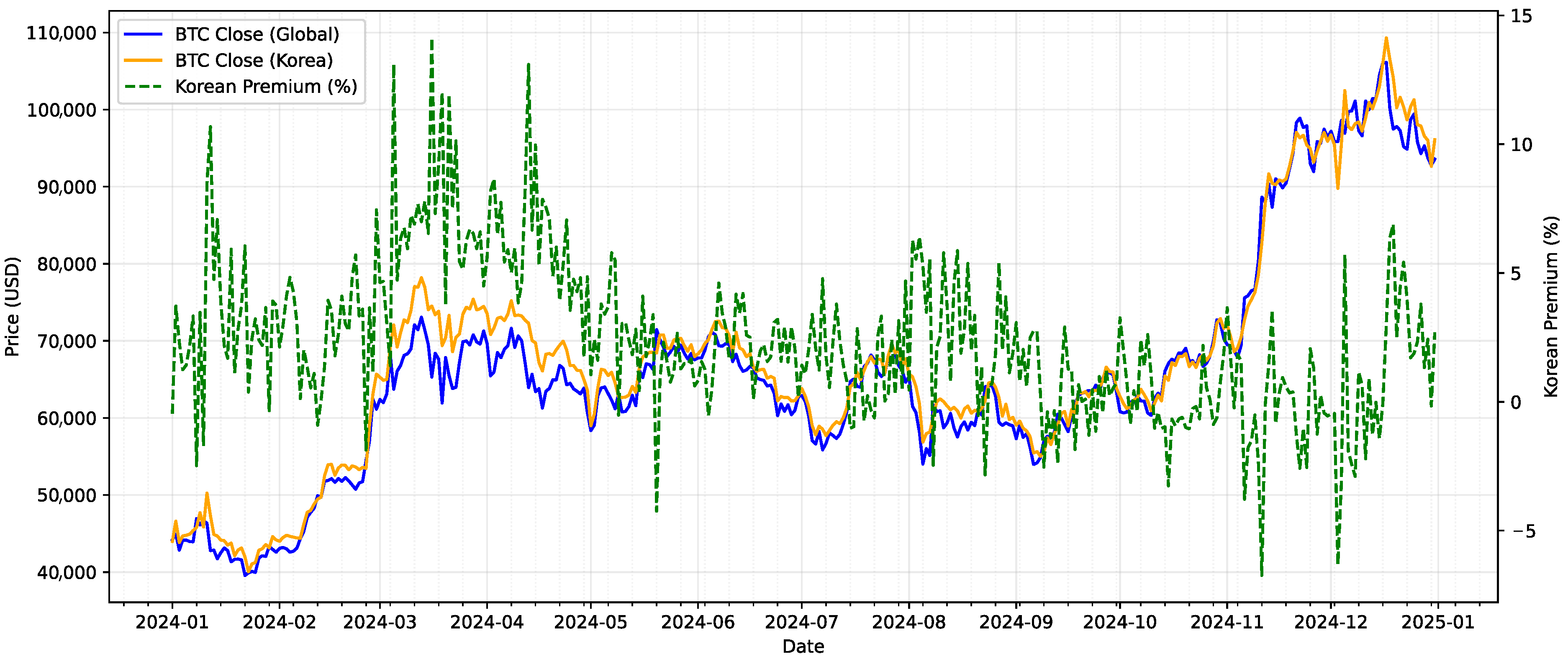
11]. These patterns indicate venue-specific price discovery and segmented liquidity. Taken together, these features make the Korean market a natural setting in which to study venue-specific dynamics and market segmentation. Consistent with this characterization, as shown in
Figure 1, prices on major Korean spot exchanges (e.g., Upbit, Bithumb) have repeatedly traded at a premium to those on major offshore venues (e.g., Binance), a phenomenon commonly termed the Korean premium (i.e., Kimchi premium). In the literature, this has been documented as a recurring violation of the Law of One Price for identical assets and is reported to exhibit a nonlinear, threshold-driven, multi-regime structure rather than a simple linear pattern [
12]. Institutional and operational frictions related to cross-border capital outflows and inflows impede the immediacy and completeness of arbitrage. Differences in access pathways for resident and non-resident investors further slow arbitrage. As a result, price discrepancies can persist for periods of time [
6,
13]. In this context, changes in regional exchanges’ shares of trading volume can function as an observable summary measure of the relative strength of local demand and supply, and this regionality is especially pronounced for small- and mid-cap altcoins led by Korean exchanges (often referred to as Kimchi coins).
Unlike equities and bonds, crypto assets lack well-established fundamental signals such as dividends or cash flows, which elevates the relative importance of order flow and microstructure factors. This has long motivated interest in data-driven systematic trading, and machine learning approaches, including reinforcement learning (RL), have spread rapidly in both empirical and applied work [
14,
15]. Nevertheless, many RL-based crypto asset trading studies incorporate price and volume, technical indicators, and sometimes on-chain variables. They do not explicitly include state variables that quantify exchange- or region-level liquidity concentration. For example, few studies use the venue share of a given cluster of regional exchanges in trading a specific asset. Moreover, in light of the time-varying leadership documented in the price discovery literature for cross-venue crypto asset markets [
7,
8,
9,
10] and the structural segmentation of the Korean market [
12,
13], connecting a measure that captures the strength of regional order imbalances to RL decision making is justified on both academic and practical grounds.
This study addresses this gap by defining KVSI, a venue-level indicator that uses the relative trading volume share between Korean and global exchanges. This study then systematically evaluates the incremental effect of including KVSI in the RL state space on trading performance. This motivation is grounded in prior evidence that leadership in price discovery within cross-venue spot and futures markets is decisively shaped by microstructure forces, including relative volume [
9,
10], and in empirical results indicating that the Korean market’s nonlinear behavior reflects regional order imbalance dynamics [
12,
13]. Based on this rationale, we propose the following hypothesis:
H1: Including KVSI in the RL state space improves trading performance relative to an otherwise identical model without KVSI.
The research design is summarized as follows. The training period is 2021–2023 and the test period is 2024, with evaluations conducted on a quarterly basis to mitigate seasonality and point-in-time dependence. The test universe is drawn from assets listed on Binance, Upbit, and Bithumb during 2021–2023. Using KVSI and trading volume observed, k-means clustering is applied, and only the middle cluster is retained to reduce biases that can arise near extreme KVSI regions (close to 0 or 1). The RL state space is built from daily OHLCV and technical indicators, and the full feature set is engineered to reduce noise in the input space and to help identify the incremental contribution of venue-level information. The proposed model augments this set with KVSI. To avoid algorithm-specific dependence, three representative algorithms widely used in RL-based systematic trading, namely PPO, A2C, and DQN, are employed, with implementations from the reproducible library Stable-Baselines3. The reward function uses the previous day’s log return to dampen feedback distortions from action synchronization, and executions are priced at the next day’s open to eliminate look-ahead bias. Performance is evaluated using CR, SR, and MDD, and results are averaged over repeated runs with multiple algorithms and independent seeds to reduce single-path dependence.
This paper makes the following main contributions: First, we directly model regional market segmentation in crypto asset trading by proposing KVSI, a simple scalar measure of cross-exchange relative liquidity that is embedded into the state space of RL-based trading agents. Second, we design a controlled experimental setup that compares agents with and without KVSI under identical architectures, preprocessing steps, trading rules, and reward definitions. This design allows the marginal effect of venue segmentation information to be isolated from algorithmic or implementation artifacts. Third, we construct a reproducible and interpretable evaluation pipeline. It is based on clearly specified preprocessing procedures, train–test splits, and multi-run backtests. This enables a transparent assessment of RL-based crypto trading systems and mitigates the risk of backtest overfitting. Finally, although KVSI is designed for the Korean premium setting, the same venue share design can be extended to construct similar region-level indicators for other major exchange clusters. Such extensions offer a general template for multi-market RL trading frameworks.
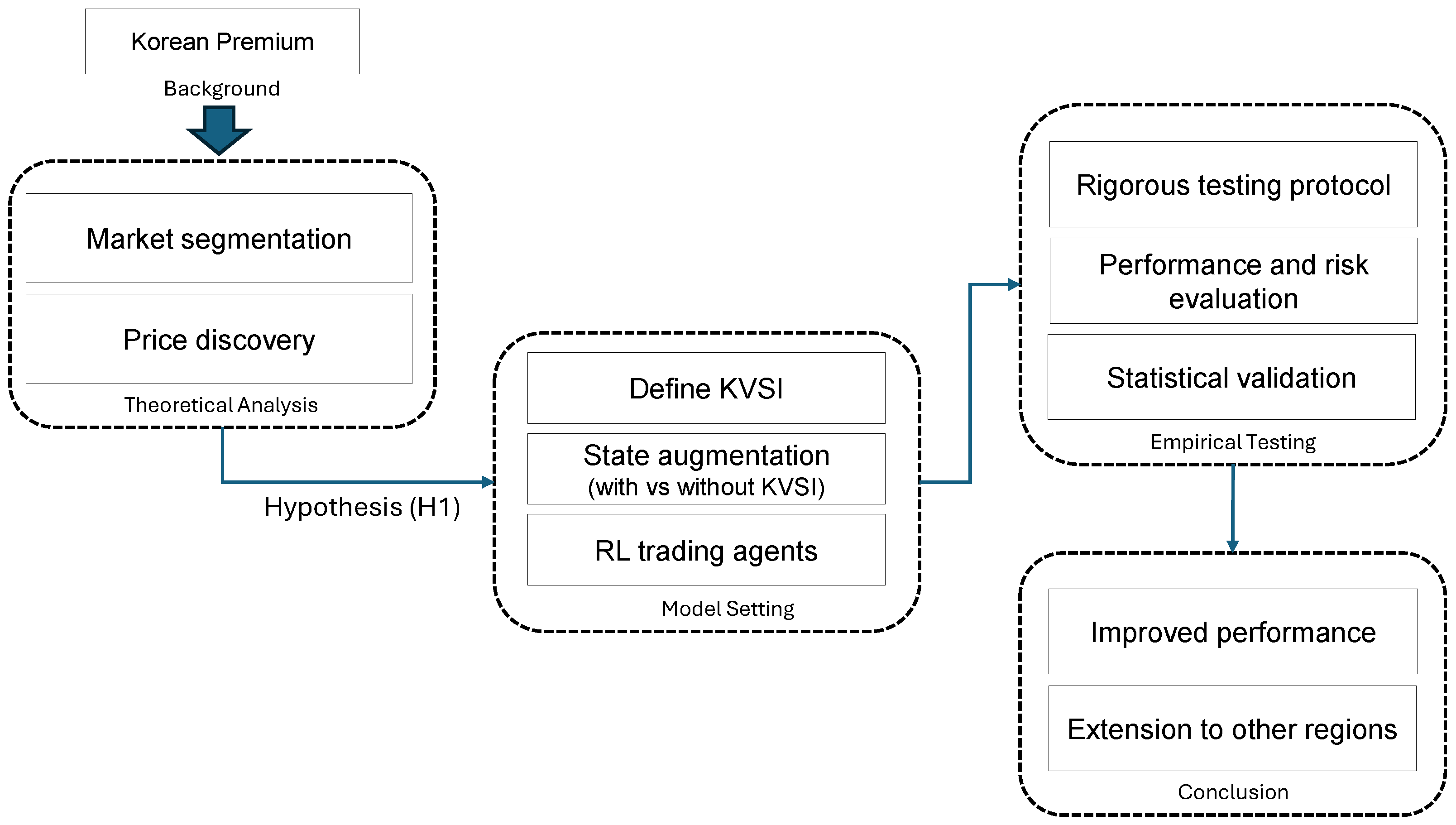
To synthesize the motivation and study design discussed above,
Figure 2 summarizes the research logic of this study. It links the theoretical foundations to the hypothesis, model setting, empirical tests, and conclusion.
This paper is organized as follows:
Section 2 reviews the literature on the Kimchi premium, price discovery, and systematic trading in the crypto asset market.
Section 3 describes the research methodology, including data collection and preprocessing and asset universe clustering.
Section 4 describes model training and the backtesting and evaluation procedures.
Section 5 presents the experimental setup and analyzes the empirical results.
Section 6 discusses the study’s contributions and limitations and outlines directions for future research.
2. Literature Review
Regarding market segmentation, Makarov and Schoar, using a multi-exchange, multi-country panel, document that cross-country price discrepancies are particularly large and can persist when arbitrage is constrained by capital controls and regulatory differences [
6]. In the Korean crypto asset market, the “Kimchi premium,” in which domestic prices trade above offshore levels, recurs. Recent studies identify nonlinear, threshold-dependent multi-regime dynamics and their determinants [
12]. Administrative and macroeconomic evidence further indicates that cash-out channels linked to cross-border remittances contributed to the persistence of the deviation during premium episodes [
13]. Taken together, these findings suggest that the assumption of instantaneous convergence to a single global price often fails in practice and that variables capturing regional liquidity concentration may provide information useful for prediction and trading.
The price discovery literature has focused on information leadership within multi-exchange settings that combine spot and derivative venues. Brandvold et al. document rotations in venue leadership and heterogeneous information contributions in the early Bitcoin spot market, underscoring the importance of exchange choice [
7]. Koutmos provides a systematic decomposition of price discovery across exchanges and shows that estimates are sensitive to venue-specific microstructure noise and to sampling frequency [
8]. Studies of the lead–lag relation between spots and futures likewise find that leadership varies with the sample period, metrics, and composition [
9,
10]. In particular, Entrop et al. attribute much of the variation in price discovery contributions to relative volume and relative trading costs [
9], while Alexander and Heck show that perpetuals and futures on unregulated derivative venues can play a dominant role [
10]. Taken together, leadership in price discovery is time-varying when relative liquidity and participant mix change, and this variation can be partially captured by order flow summaries such as venue share. The KVSI proposed in this study translates these insights into the state space of the RL model.
Beyond venue-level liquidity measures, a growing body of systems-oriented research emphasizes that information diffusion and collective behavior are shaped by the structure of interaction networks. Social network analysis provides a practical toolkit for characterizing network structure using summary statistics such as connectivity, centrality, and core–periphery patterns, and recent work also combines these measures with dynamic network models to study how networks evolve under external shocks [
16]. Complementary causal discovery approaches, such as dynamic Bayesian networks, have also been used to uncover time-varying causal relationships among financial variables and to visualize contemporaneous and lagged dependence structures [
17]. These perspectives suggest that KVSI may reflect not only cross-venue relative liquidity but also the underlying information diffusion and collective action mechanisms associated with region-specific investor communities.
As summarized in
Table 1, systematic trading studies in the crypto asset market span classical technical rules and machine learning-based signals, and this body of literature has expanded rapidly. Numerous studies report that simple rules such as moving averages (MAs) and trading range breakouts (TRBs) deliver statistically significant excess returns in specific samples or market conditions [
18], and broader searches evaluating nearly 15,000 rules find that some predictability remains even after data snooping corrections [
19]. Related evidence based on moving-average-distance timing signals also documents economically meaningful effects across international markets [
20]. At the same time, reality checks show that when transaction costs and slippage are modeled rigorously, or when multiple-testing adjustments are applied, statistical significance can weaken [
21]. These mixed findings motivate a conservative, reproducible design that prioritizes risk-adjusted performance in the high-volatility, low-signal setting characteristic of crypto markets. Against this backdrop, RL for crypto trading has expanded across policy gradient, value-based, and actor–critic families. For example, Jiang and Liang demonstrate a deep RL framework for cryptocurrency portfolio management [
22]. Reproducible libraries such as Stable-Baselines3 provide a common basis for comparative studies [
23], and empirical applications in crypto report heterogeneous outcomes depending on the asset universe, reward design, and sampling frequency. In a related pair trading formulation, PPO, DQN, and A2C exhibit materially different behaviors once leverage, transaction costs, and action constraints are imposed, underscoring the centrality of cost modeling and policy regularization [
24]. Other applications build state spaces that combine widely used technical indicators with on-chain covariates and report that attention-based aggregation improves interpretability and decision quality [
25,
26]. Microstructure evidence also reports informed trading in cryptocurrency markets using tick-by-tick data [
27]. Even so, few studies have quantified exchange- or region-level liquidity concentration and injected it into the RL state space to then systematically test its effects on policy behavior and risk-adjusted performance. This study differentiates itself by defining an interpretable indicator, KVSI, and evaluating a with-versus-without contrast under identical algorithms and benchmarks.
Methodologically, to ensure that our empirical findings from simulation-based trading are statistically credible, this study follows best practices identified in the backtesting and systematic trading literature. The design remains alert to selection bias and overfitting in repeated simulations [
28]. Accordingly, look-ahead bias is mitigated by executing trades at the next day’s open [
29], results are reported as averages over repeated experiments across quarters and independent seeds [
30], and multiple benchmarks, including Buy-and-Hold, MA Crossover, and Random Trader, are employed to contextualize RL performance [
31,
32,
33].
The prior literature documents time variation in both market segmentation and price discovery, as well as the promise and limits of technical and RL-based trading signals. However, few studies explicitly encode heterogeneity measures, such as regional exchange market share, into the RL state space and then systematically analyze their impact on policy structure and risk-adjusted performance. By defining KVSI, which summarizes cross-venue features of the Korean market, and by examining its effects through controlled, like-for-like contrasts under identical conditions, this study contributes at the intersection of the price discovery, market microstructure, and RL-based systematic trading literature.
3. Data and Feature Engineering
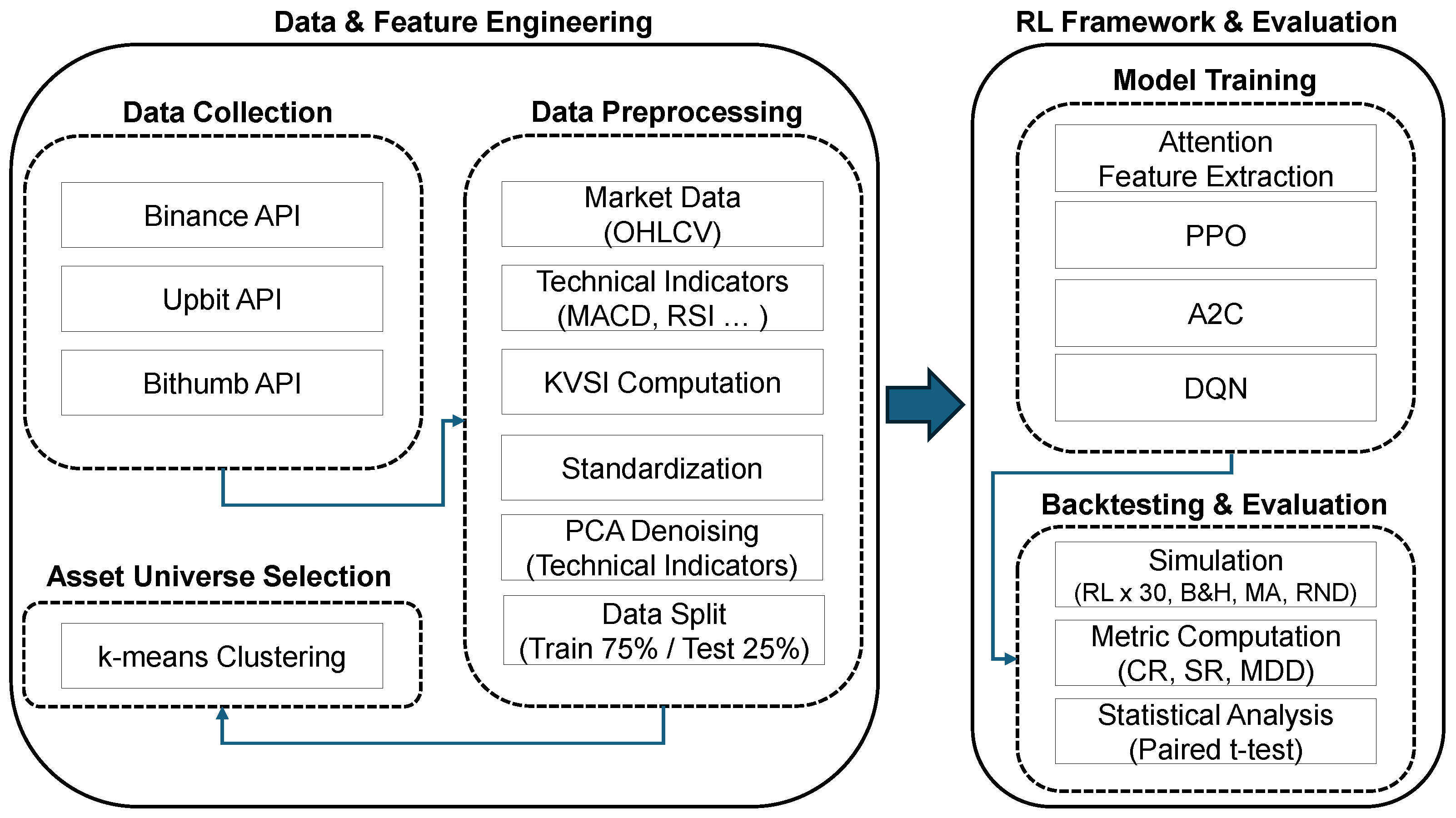
Figure 3 summarizes the end-to-end workflow of the study. This section describes data collection, KVSI computation, preprocessing, and universe selection, while
Section 4 details the RL framework, training protocol, and evaluation design.
We use daily spot market data retrieved via the official public APIs of two Korean exchanges (Upbit and Bithumb) and one large global exchange (Binance). This exchange set covers the dominant liquidity pools relevant to the Korean premium, as Upbit and Bithumb jointly accounted for approximately 96% of trading volume among major Korean spot exchanges in 2024 [
34], while Binance is the largest centralized exchange by spot trading volume, accounting for approximately 39% of global spot volume in 2024 [
35]. By capturing the bulk of trading activity on both the Korean and global sides, this exchange set provides an experimental setting that is well suited for defining an asset universe aligned with Korean premium dynamics.
Over the collection window (2021–2024), we retrieve all assets available via these APIs (307 in total). We compute OHLCV features, a set of technical indicators, and KVSI, and assemble the dataset for the model’s state space. To reduce noise and keep the KVSI ablation comparison transparent, we standardize the technical indicator series and apply PCA-based dimensionality reduction to the technical indicator block. Finally, to limit the influence of extreme KVSI profiles, we perform clustering and retain the middle cluster of assets for the main experiments. The resulting 2021–2024 sample is then split into a 2021–2023 training set (75%) and a 2024 test set (25%) for the RL training and evaluation.
3.1. Data Collection
The raw data for this study were collected via the public REST APIs of Binance, Upbit, and Bithumb, from which we obtained daily OHLCV time series and exchange-level volume aggregates [
36,
37,
38]. We built a Python (v3.9.7)-based pipeline that queried each exchange’s endpoints, standardized the responses to a common schema, and loaded them into a unified data lake. The implementation combined the Python HTTP libraries’ requests (v2.27.1) and aiohttp (v3.12.4) to enable asynchronous parallel collection, and included retry and session reactivation logic that respects exchange-specific rate limits and error codes. To ensure instrument concordance across venues, we mapped each exchange’s symbol convention to a common identifier (for example, Binance’s TICKERQUOTE, Upbit’s QUOTE-TICKER, and Bithumb’s TICKER were standardized to an asset-centric notation). For consistency in computing KVSI, we restricted the universe to spot instruments concurrently listed on all three exchanges and harmonized volumes by extracting the base asset-denominated volume field from each venue’s daily candle and summary endpoints.
The data generation pipeline proceeds as follows.
Retrieve instrument metadata by exchange and construct a unified symbol mapping table.
Collect daily OHLCV candles, prioritizing Binance first and otherwise preferring the longer available series.
Resample to a daily calendar in UTC and perform gap handling for missing observations.
For each asset, merge volumes from Binance, Upbit, and Bithumb to create the raw table used for KVSI computation.
This API-based collection framework ensures reproducibility and links naturally to subsequent preprocessing and feature engineering.
3.2. Data Preprocessing
Raw OHLCV series for crypto assets are non-stationary and highly noisy, and they do not readily capture exchange-specific microstructure heterogeneity across venues. It is therefore necessary to engineer features that summarize predictive signals (such as momentum and volatility) and regional liquidity concentration, while reducing scale disparities and multicollinearity so as to enhance training stability and out-of-sample generalization.
The data preprocessing pipeline in this study proceeds as follows.
Time ordering and harmonization of daily OHLCV.
Computation of technical indicators.
Computation of KVSI.
Application of standardization fitted on the training window.
PCA-based dimensionality reduction and noise attenuation applied only to the technical indicator block.
Time order-preserving split (training on 2021–2023 and testing quarterly in 2024) and assembly of the final dataset injected into the RL model’s state space.
3.2.1. Technical Indicators
The state space in this study is constructed from a classical family of indicators representing trend, momentum, volatility, and overheating conditions. All indicators are computed from daily OHLCV and standardized using statistics estimated on the training window, which are then held fixed when applied to the test window to prevent data leakage. To reduce informational redundancy, only the technical indicator block is compressed via PCA, while the price-level variables (OHLCV) and the proposed indicator (KVSI) are retained in their original form to preserve interpretability.
First, the simple moving average (SMA) is a fundamental tool for trend estimation that smooths noise [
39]. The formula is as follows.
Using short (5), medium (20), and long (60) windows in parallel allows simultaneous assessment of both the trend’s slope and the degree of alignment across multiple time scales. Rather than discrete golden/death cross flags, this study injects the continuous valued signals directly into the state space to reduce dependence on arbitrary thresholds.
The Relative Strength Index (RSI) [
40] is a representative overheating indicator that measures the relative magnitude of upward and downward pressure. Its standard form with Wilder’s averaging is given by
and represent the average upward and downward movements over the most recent 14 periods, respectively, and the RSI is calculated based on the ratio of these two values.
Although the conventional 70/30 thresholds are widely used in practice, they are highly dependent on the asset and market regime. Accordingly, this study feeds the raw RSI as a continuous variable to reduce sensitivity to arbitrary cut-offs. In extreme cases where the denominator becomes zero, boundary rules are applied to ensure numerical stability.
MACD [
41] captures trend momentum using the difference between short- and medium-term exponential moving averages. The exponential moving average (EMA) is defined as follows.
The MACD is calculated as the difference between the short-term
and the medium-term
. The MACD is defined as follows:
The signal is an exponential moving average of MACD that smooths short-term variation and is used to identify upward and downward crossovers.
Bollinger Bands [
42] are standard deviation-based, volatility-adaptive envelopes that jointly capture mean reversion pressure and price stretch. The formulas for the center line and the upper and lower bands are as follows.
The center line (Middle(t)) represents the simple moving average over the most recent 20 periods (), while the standard deviation () reflects the price volatility over the same interval. The upper and lower bands (Upper(t) and Lower(t)) are defined as the mean plus or minus twice the standard deviation, respectively. A narrowing of the band (squeeze) signals a volatility trough and potential expansion, whereas a rapid widening suggests overheated or panic regimes.
The Stochastic oscillator [
43] is a short-horizon overheating indicator that uses the current price’s relative position within the recent 14-day high-low range, defined as follows.
The highest and lowest prices over the most recent 14 periods are defined as and , respectively. represents the normalized position of the current price within a 0–100 range, while is calculated as the 3-period simple moving average (SMA) of .
Finally, momentum [
44] is a short-term trend indicator computed as the difference between the current close and the close 10 periods earlier. The formula is as follows.
greater than zero indicates a dominant 10-period upward momentum, values below zero indicate downward momentum, and higher absolute magnitudes indicate a stronger force.
When employing the above indicator set in the experiments, the input variables adopt the baseline parameter choices used in practitioner standard sets that have been repeatedly validated across diverse market conditions, as commonly recommended in the cited references.
3.2.2. KVSI Computation
The Korean crypto asset market has historically shown a microstructure distinct from offshore exchanges due to institutional and structural factors such as restrictions on capital mobility, participant composition, and listing policies. This heterogeneity is often observed as the “Korean premium (Kimchi premium)”. In this setting, the relative trading volume of Korea-domiciled exchanges offers an observable summary of how strongly local demand and supply dominate global order flow at a given point in time. It also serves as an indicator that partially captures time-varying leadership in price discovery. To embed this insight directly into the RL state space, this study defines the KVSI as follows.
Here, , , and denote the daily trading volumes of asset i on each exchange. KVSI takes values in , so interpretation is straightforward: values closer to 1 indicate Korea-centered liquidity, whereas values closer to 0 indicate offshore-centered liquidity. Because it is defined as a relative share rather than an absolute volume, shifts in the overall market level (for example, concurrent volume surges during rallies or panics) are largely absorbed by this normalization. In a multi-listing structure for the same asset, KVSI therefore directly quantifies liquidity concentration across venues.
KVSI is attractive for three reasons. First, in terms of information efficiency and microstructure consistency, it aligns with prior evidence that contributions to price discovery are explained by relative trading volume and trading costs [
9,
10]. Relative volume is observable, easy to compute, and of high data quality, allowing it to proxy shifts in information leadership while avoiding measurement error issues inherent in trading cost variables such as spreads and fees. Second, for internalizing regional heterogeneity, the structural segmentation of the Korean market and the nonlinear dynamics of the premium suggest that the strength of regional order flow can affect both the speed and direction of price adjustment. KVSI summarizes this regional liquidity state as a single scalar and supplies it as input to the RL policy. Third, for policy interpretability, unlike PCA-compressed technical indicators, KVSI has a clear economic meaning, improving the interpretability of attention weights and policy responses (for example, exposure adjustments during rising KVSI regimes).
In implementation, trading volumes are taken as daily totals from the exchanges’ raw APIs or databases, and the construction includes only assets that are simultaneously listed on all three venues. In summary, KVSI translates insights from the literature on determinants of price discovery in cross-venue settings into a form tailored to the Korean market. As a regional liquidity concentration indicator, it provides a systematic channel for injecting heterogeneity information into RL-based trading decisions.
3.2.3. Feature Engineering
To promote stable learning and generalization of the RL policy, this study mitigates scale disparities and multicollinearity among input features in advance. Technical indicators for financial time series exhibit strong correlations because their calculation windows overlap, and they are measured in heterogeneous units. If used as-is, gradient-based optimization can overreact to large-magnitude features, and the covariance matrix may become ill-conditioned, resulting in unstable estimates. To address these issues, we harmonize feature scales via value normalization (standardization). We then apply principal component analysis (PCA) [
45] only to the technical indicator block to remove low-variance, noise-like components.
Standardization is implemented as a z-score transformation using the mean and standard deviation estimated on the training window. For asset
i, time
t, and feature
k, the transformation is
Here,
and
are fitted exclusively on the 2021–2023 training data, and during the 2024 test period only the transform is applied to prevent information leakage. Standardization aligns the center and dispersion of the input distribution, reducing gradient imbalance and accelerating convergence during training [
46].
Denoising of the technical indicator block is performed via PCA. For the standardized indicator matrix
, the sample covariance is computed as
with columns centered. From the eigendecomposition
, the matrix
is formed by the top
k eigenvectors. The principal component representation of the observation
at time
t is then
This study sets , preserving approximately 92% of cumulative explained variance. Axes associated with small eigenvalues largely contain redundant or low-signal components and measurement noise. Removing them improves the signal-to-noise ratio and lowers the risk of overfitting through an effective reduction in parameter dimensionality. PCA also orthogonalizes correlations among indicators, mitigating ill-conditioning and stabilizing inputs to the policy and value networks. For interpretability and subsequent analysis of policy responses, OHLCV and KVSI are excluded from PCA.
In summary, value standardization removes heterogeneity in input scales to enhance optimization stability, while PCA reduces multicollinearity and noise among technical indicators to improve generalization. Both procedures are fitted solely on the training window and carried forward to the test window, thereby preserving temporal order and the causal information set of the RL environment.
3.3. Asset Universe Selection
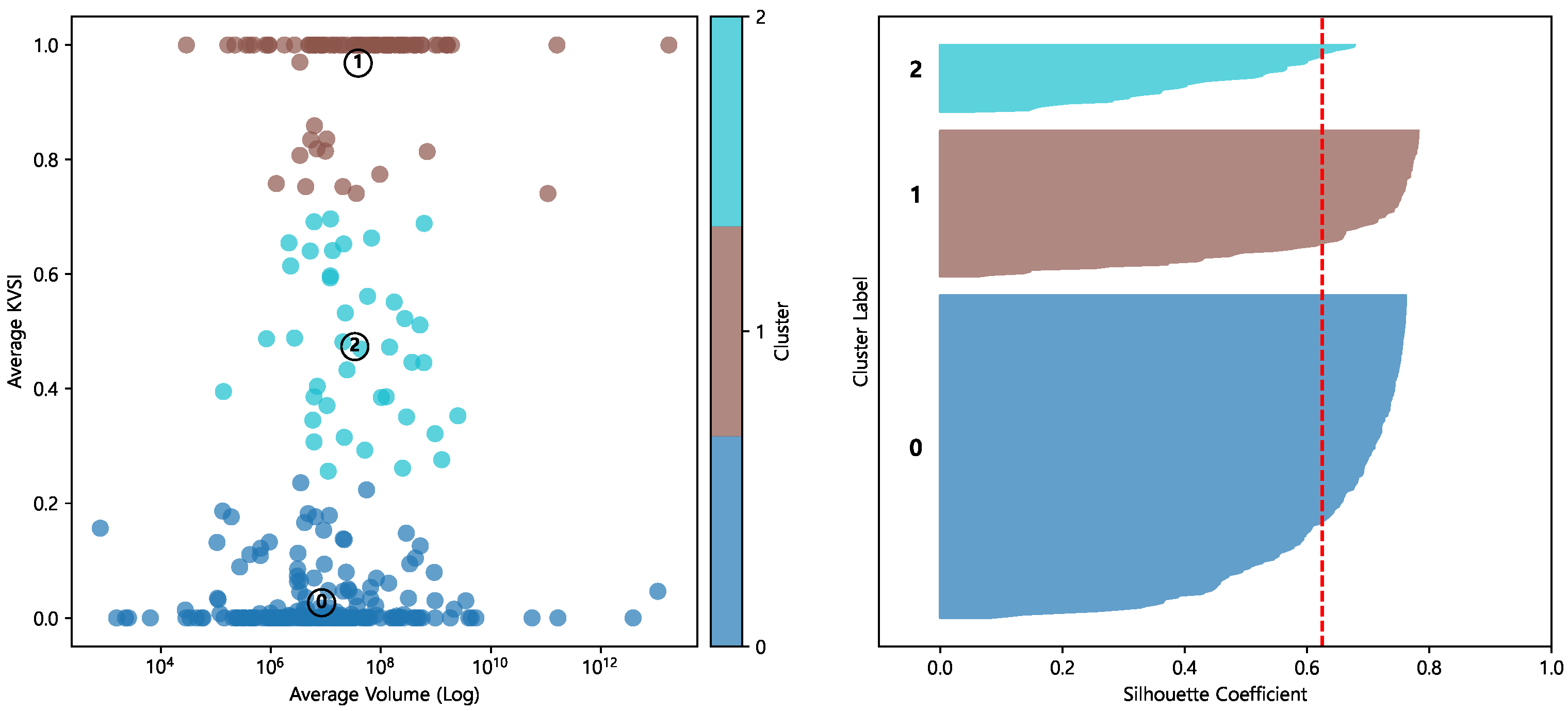
To preselect the test universe in a rule-based manner, this study applies k-means clustering [
47] to a two-dimensional feature set comprising each asset’s average KVSI and the log of average daily trading volume. The clustering is fitted on statistics from the training window (2021–2023), and in the test year (2024) assets are assigned to the fixed centroids to prevent information leakage. The silhouette index [
48] is used to assess the structural validity of the universe selection.
As shown in
Figure 4, two of the three clusters lie in extreme regions where the mean KVSI is close to 0 or 1. We exclude the extreme KVSI clusters because they tend to reflect highly unbalanced venue dominance and venue-specific microstructure or listing frictions, and they can also increase instability by letting a small number of assets drive high variance. Accordingly, we retain only the middle-KVSI cluster for the reasons below.
Identification in an ablation design: The extreme clusters can exhibit KVSI values persistently close to 0 or 1, leading to limited time variation in the indicator. In this case, KVSI provides little incremental information relative to the baseline and the with-versus-without contrast becomes harder to identify cleanly.
Control of confounders: The extreme clusters tend to rely excessively on listings and liquidity concentrated in a particular venue group, which elevates the influence of non-price factors such as trading halts, listing policies, and fee schedules. This can conflate price discovery with structural frictions and induce estimation bias. Focusing on the middle cluster mitigates confounding arising from microstructural idiosyncrasies.
Generalization and stability: The extreme clusters often concentrate a small number of very large or very small assets, inflating variance and creating sample imbalance. Excluding these observations reduces variance in training and evaluation and increases within-cluster cohesion, improving the fairness of comparisons.
In summary, we map the structure of the KVSI-volume space using k-means clustering and, based on considerations of confounder control and generalizability, adopt only the middle-KVSI cluster as the test universe. Because this procedure is unsupervised and does not use return information (selection on covariates), this minimizes the risk of selection bias.
4. RL Framework and Evaluation Design
Using the 2021–2023 training set, we train three RL algorithms with an attention layer (PPO, A2C, and DQN) under two model specifications (with and without KVSI) so that the results do not hinge on a particular algorithm. We then evaluate each trained model on the 2024 test set and compute quarterly performance and risk metrics. Each RL algorithm and model specification is evaluated 30 times with different random seeds. The resulting quarterly outcomes for models with and without KVSI are first averaged across PPO, A2C, and DQN within each seed. We then compute 30 seed-level paired differences. Finally, we apply paired t-tests to assess whether including KVSI leads to statistically significant differences in performance.
4.1. Model Training
To avoid reliance on any single learning algorithm, this study trains three representative RL-based algorithms, PPO, A2C, and DQN, under a common architecture and preprocessing method, and later reports results by averaging across independent runs.
DQN [
49] predicts an action value for each action with a neural network and selects the action with the highest value. Experiences are stored in a replay buffer and shuffled for reuse, which stabilizes training and improves sample efficiency. A2C [
50] jointly trains an actor and a critic to learn both “what to do” and “how good it is.” It collects data from multiple environments in parallel and performs batched updates. Since collected data are not reused, sample efficiency can be lower depending on the setting. PPO [
51] constrains the magnitude of policy updates and learns through small, incremental adjustments. This yields relatively stable training and is comparatively easy to tune. It often performs better than A2C in practice, though not universally.
RL algorithms in this study (PPO, A2C, and DQN) are implemented with the well-validated Stable-Baselines3 library. We follow the library defaults for hyperparameters, buffer management, and update pipelines, and we fix the total training budget to
environment timesteps per algorithm for a transparent comparison.
Table 2 summarizes the key default settings used in this study, and all remaining parameters follow the Stable-Baselines3 defaults.
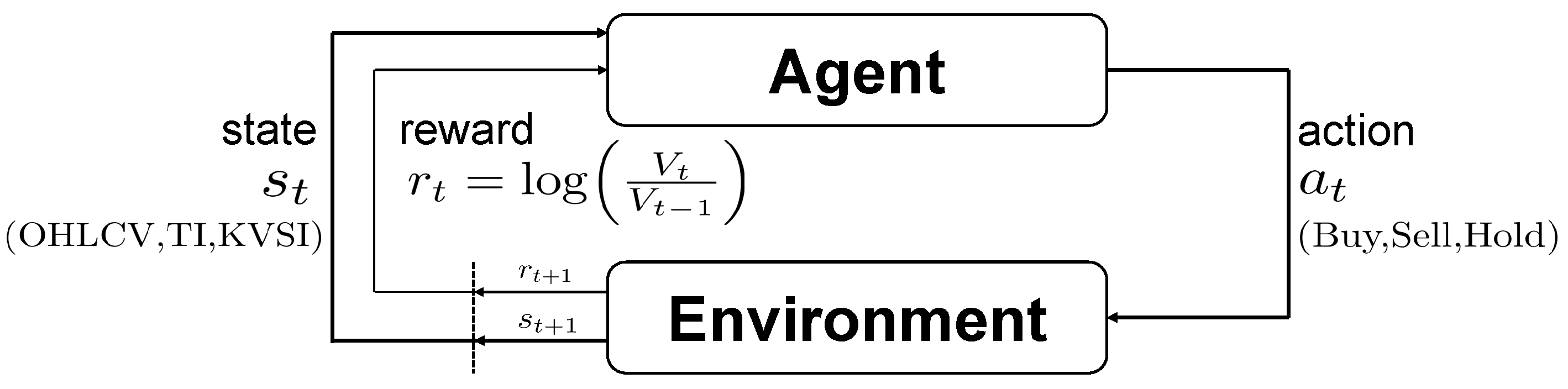
Figure 5 shows the agent–environment interaction, in which the environment provides a state
, the agent selects an action
, and the environment returns a reward
together with the next state
.
Algorithm 1 describes the learning procedure for all agents that share identical preprocessing. The state comprises principal components obtained from technical indicators together with KVSI and OHLCV. A lightweight attention layer is placed at the input front end. It estimates time-specific feature importance and passes a weighted representation to the policy and value networks. This improves the signal-to-noise ratio without complicating the architecture. The action space is discrete set {Buy, Sell, Hold}. The environment applies the chosen action at the next day’s open to avoid look-ahead bias. The per-step reward is the log return of the portfolio value (
), which provides a dense and stable training signal, given by
. On-policy algorithms (PPO, A2C) use a rollout buffer, and the off-policy algorithm (DQN) uses a replay buffer. When update conditions are met, parameters are updated according to each algorithm’s standard rules (PPO: clipped on-policy updates; A2C: synchronous actor–critic updates; DQN: replay and target network-based TD updates). All models share identical preprocessing methods, the same attention front end, equal network depth, and the same execution rule. This enables a fair comparison of learning dynamics.
| Algorithm 1 RL Training Loop |
| Input: asset set S with chosen RL algorithm attention feature extractor Let denote the portfolio value at the end of step t - 1:
for each asset do - 2:
Build training environment (2021–2023; features: OHLCV, TI, KVSI) - 3:
Reset , clear buffers, initialize , set - 4:
for iteration to do - 5:
Form state from features and compute - 6:
if then - 7:
Sample - 8:
else - 9:
▹ is DQN - 10:
With probability choose a random action, - 11:
otherwise set - 12:
end if - 13:
Execute from the next day’s open - 14:
Update portfolio to , then build - 15:
Compute reward - 16:
Store transition to rollout (PPO/A2C) or replay (DQN) buffer - 17:
if update condition then - 18:
PPO: clipped on-policy update - 19:
A2C: actor–critic update - 20:
DQN: TD update with target network - 21:
end if - 22:
- 23:
end for - 24:
Save checkpoint for asset i - 25:
end for
|
4.2. Backtesting and Evaluation
Backtesting is conducted independently by quarter, and all algorithms and models operate under the same environment rules. A position decided at time t is executed at the next day’s open to eliminate look-ahead bias.
Transaction costs and slippage are not fully modeled in the main experiments, so the primary results are the reported gross of costs. As a robustness check, we additionally report fee-adjusted results that apply a 0.1% Binance spot trading fee.
For each algorithm and quarter, we run 30 trials with independent seeds, resulting in runs per model (PM and BM) per quarter. Asset-level metrics are first aggregated to portfolio-level outcomes by cross-sectional averaging across the 40 assets. For statistical inference, we then average the portfolio-level outcomes across the three RL algorithms within each seed, so that each quarter contributes 30 algorithm-averaged seed-level observations for PM and BM. Comparisons are carried out side by side for the proposed and baseline models under identical data, hyperparameters, and seeds to ensure an unbiased contrast.
Statistical significance is assessed by paired t-tests across seeds, after averaging performance across the three RL algorithms for each seed, comparing PM and BM for each quarter. Reproducibility is ensured by fixing quarters and seeds, applying common preprocessing, maintaining identical network depth and execution rules, and using the same reward definition.
4.2.1. Evaluation Metrics
Cumulative Return
Over a horizon of
T days, the total compounded return of asset
i is
This statistic captures the overall growth of a unit investment over the evaluation window. Higher values indicate better performance. For quarterly reporting, the same expression is computed using only the days within the quarter.
Sharpe Ratio [52]
Assuming a zero daily risk-free rate, let
and
denote the sample mean and standard deviation of daily returns
. The annualized Sharpe ratio is
Since crypto assets trade 24/7 and returns are observed on all calendar days, is used as the annualization factor. For quarterly tables, and are computed from the quarter’s daily returns and the same annualization is applied. Higher Sharpe values indicate superior risk-adjusted performance.
Maximum Drawdown [53]
With the equity curve
and the running peak
, the maximum drawdown is
This measures the worst peak-to-trough loss over the horizon. Lower values are preferred. Quarterly MDD is computed using the same definition restricted to the quarter.
4.2.2. Benchmarks
To facilitate an objective comparison of the proposed model, we employ representative benchmarks commonly used in systematic trading research. All benchmarks adhere to the same execution rules and data splits and are evaluated with identical performance metrics.
Buy-and-Hold
All target assets are purchased at the start of the period and liquidated at the end. In this study, it serves as the market benchmark for the asset universe.
MA Crossover
To compare with a static model that relies on technical indicators, a simple moving average crossover strategy is used: when , when , and otherwise.
Random Trader
From the action set , actions are chosen with equal probability. Over the full sample, we generate 100 paths and report mean performance.
4.2.3. Statistical Analysis
For each quarter , RL algorithm , model , and metric , let denote the asset-level outcome for asset under seed .
We first form the cross-sectional mean across assets for each
:
To reduce algorithm-specific idiosyncrasies and focus on the average effect of each model, we then average these means across the three RL algorithms for each model, quarter, and seed:
The paired difference between models for the same quarter and seed is then defined as
This yields
paired observations per quarter (one algorithm-averaged observation per seed). The null hypothesis for each quarter is
. Let
We report two-sided paired
t-tests across seeds (
) with statistic
For the 2024 aggregate, we first average quarterly differences within each seed and then test across the resulting
observations:
All tests are two-sided. We report p-values and indicate the , , and significance levels in the tables, and we provide confidence intervals (CIs) for the mean differences. Metrics are computed as cross-sectional means across the 40 assets for each algorithm and then averaged across PPO, A2C, and DQN within each seed before testing. Under this design, pairing is performed at the seed level () by comparing PM and BM under the same seed, while algorithm-specific variation is treated as a nuisance factor and absorbed into the within-seed averages.
6. Concluding Remarks
This study introduces KVSI as an interpretable indicator of regional heterogeneity in cross-venue crypto markets and uses it as an additional state variable in RL trading models. All models share the same data, preprocessing, execution rule, and reward definition. The only difference between PM and BM is the inclusion of KVSI in the state space, which allows its incremental contribution to be isolated.
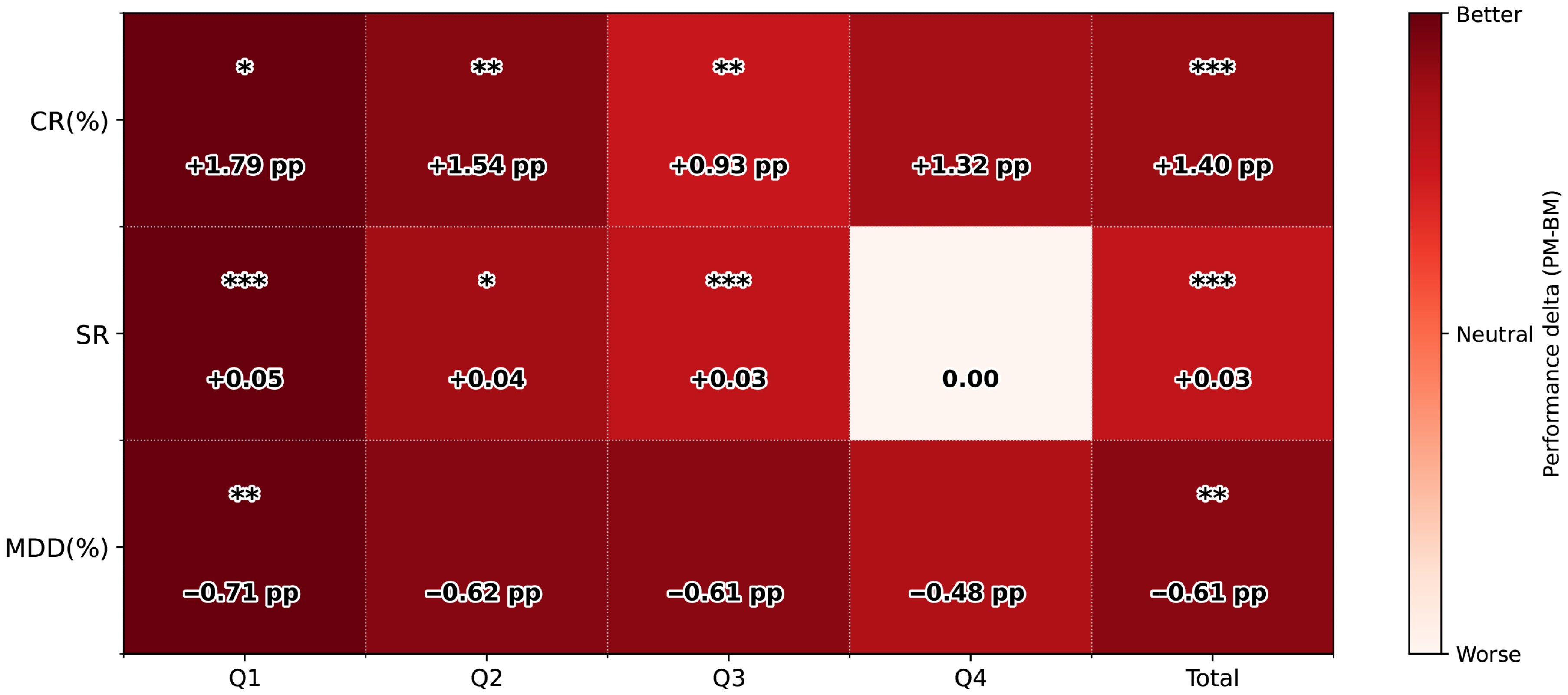
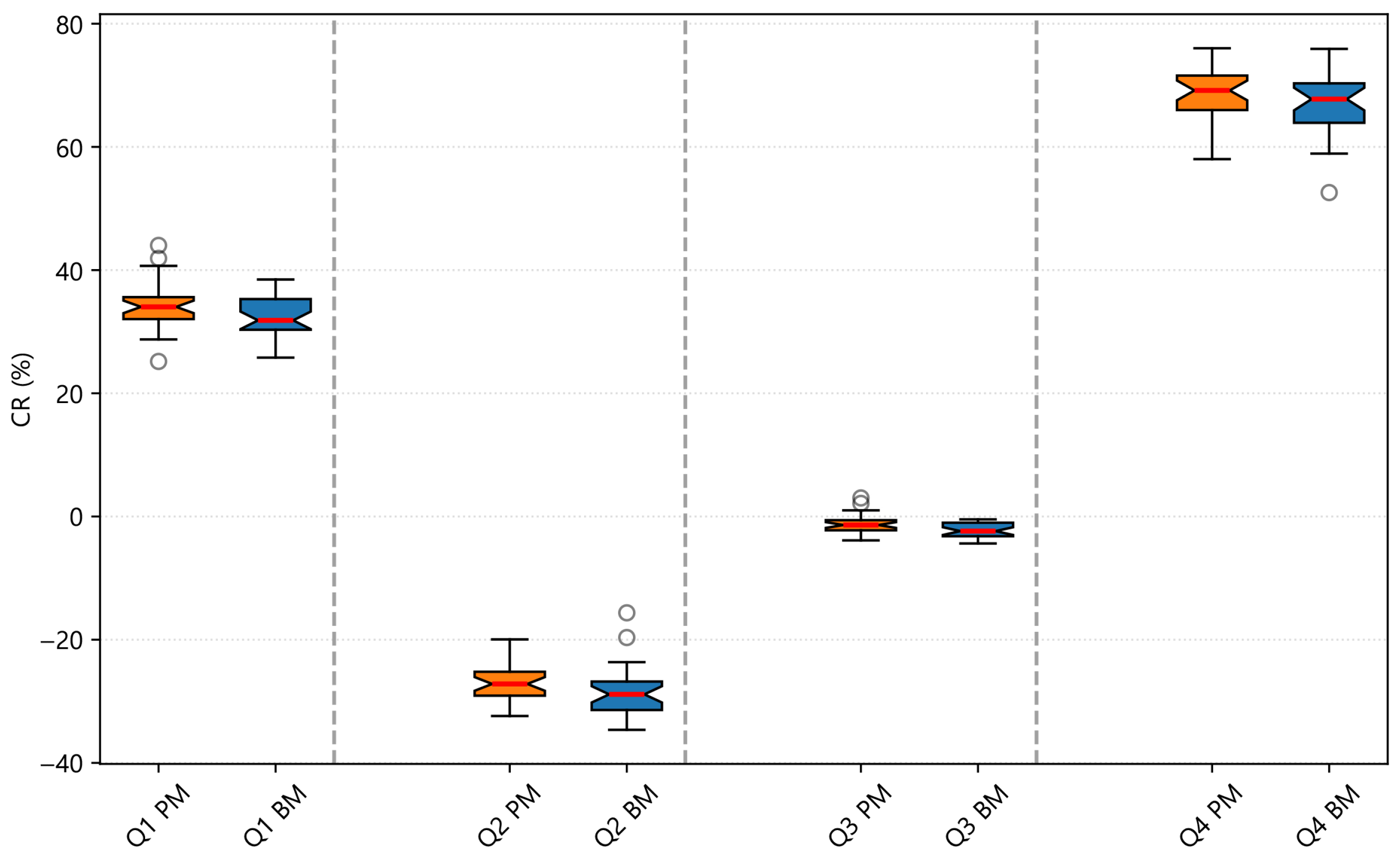
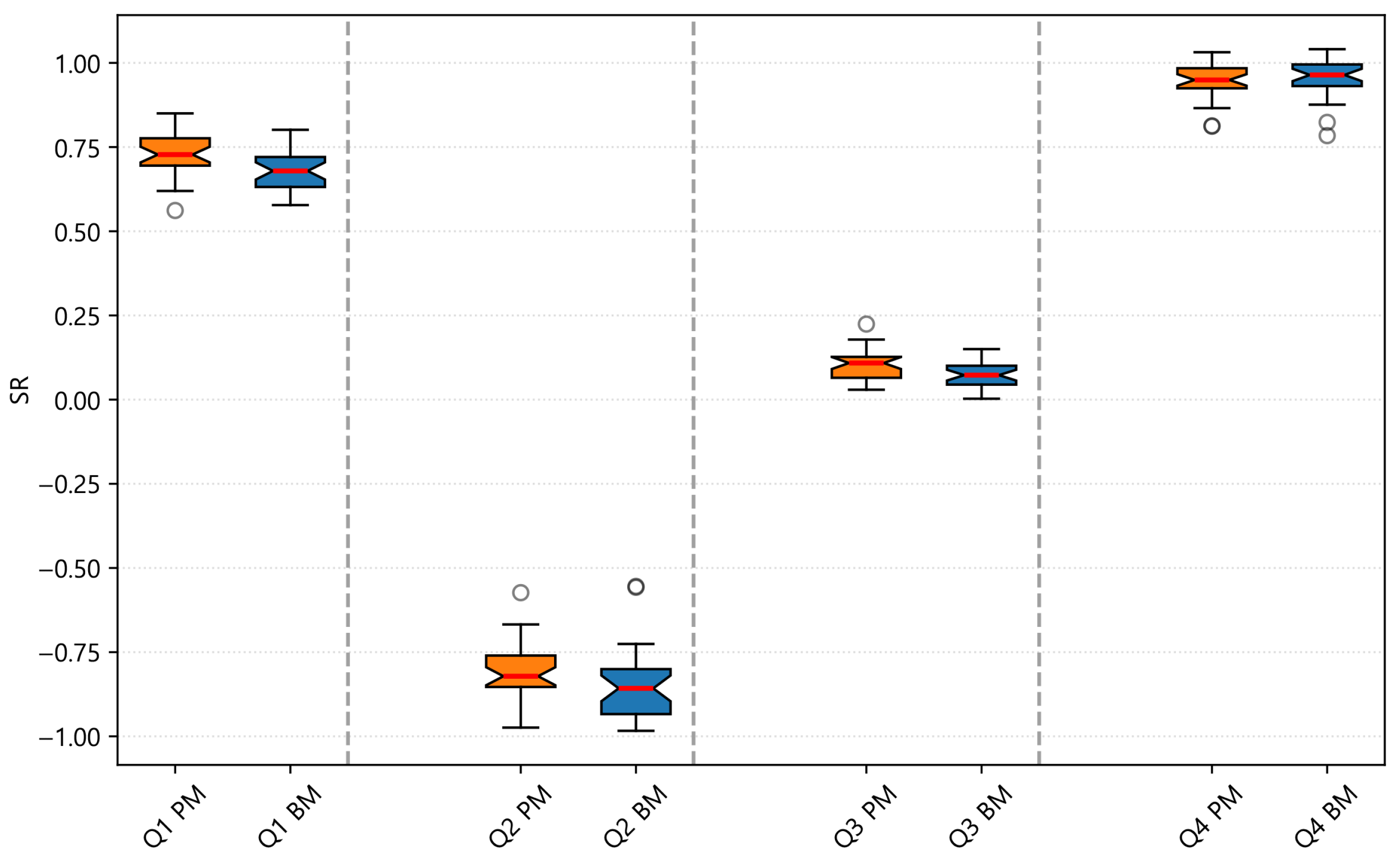
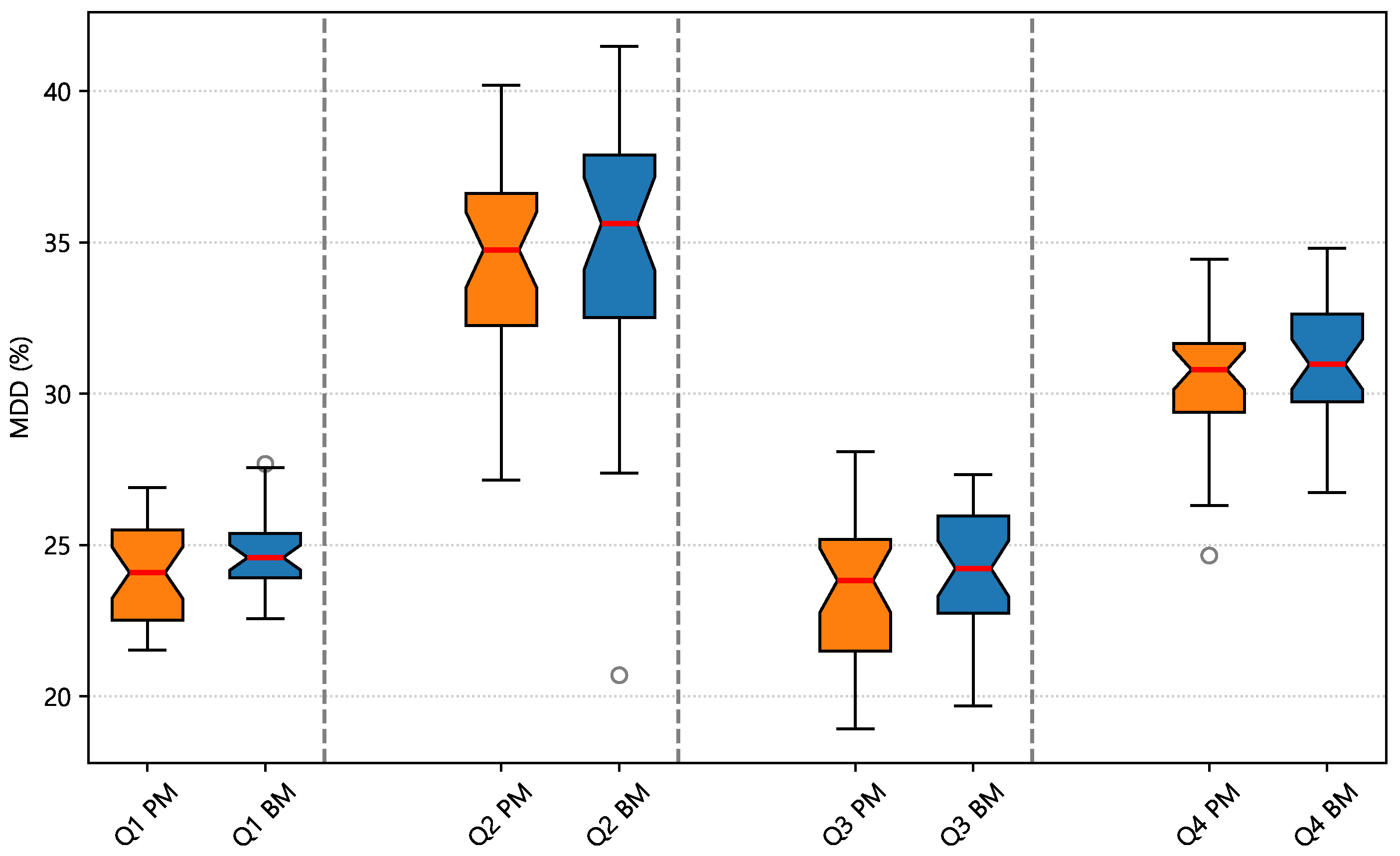
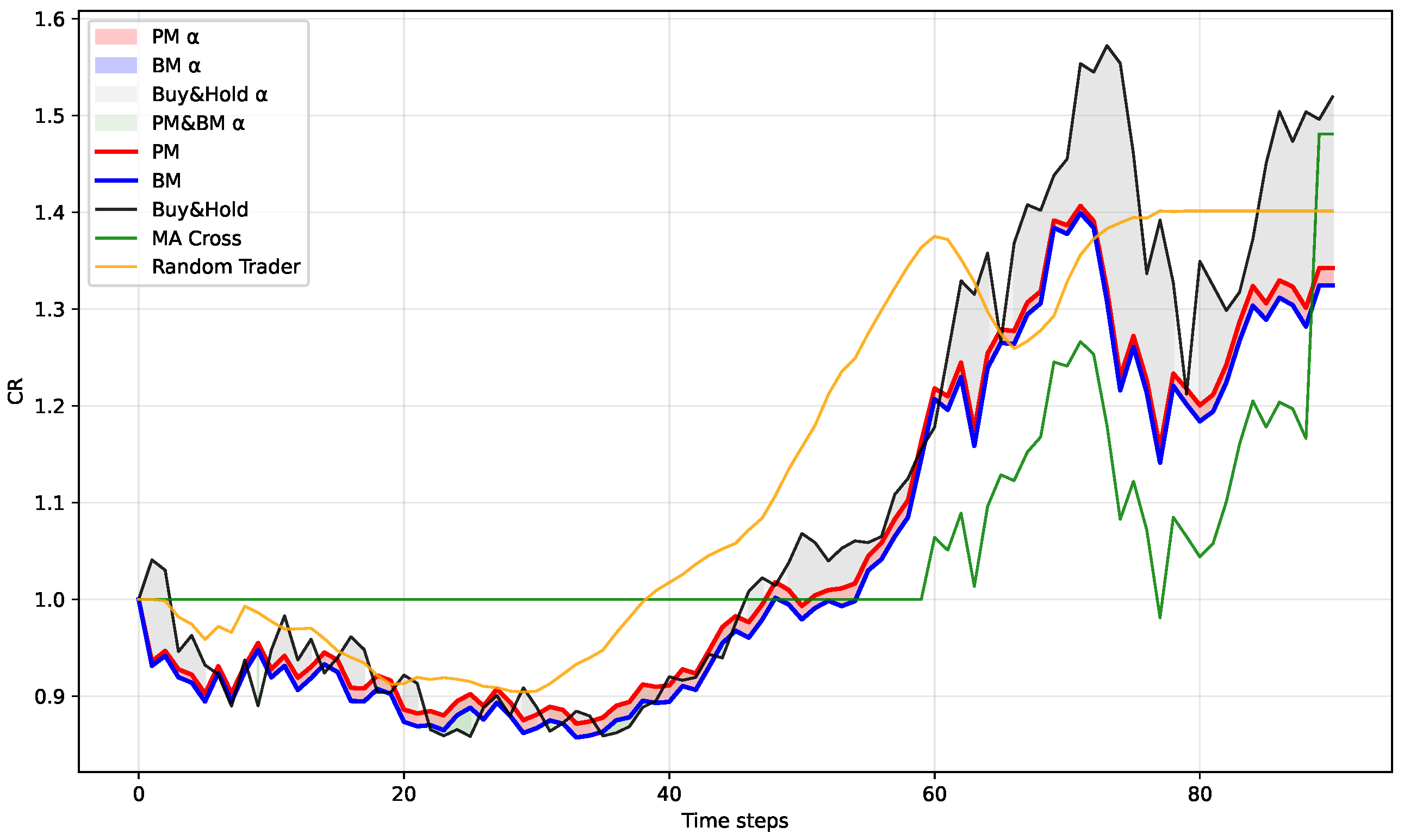
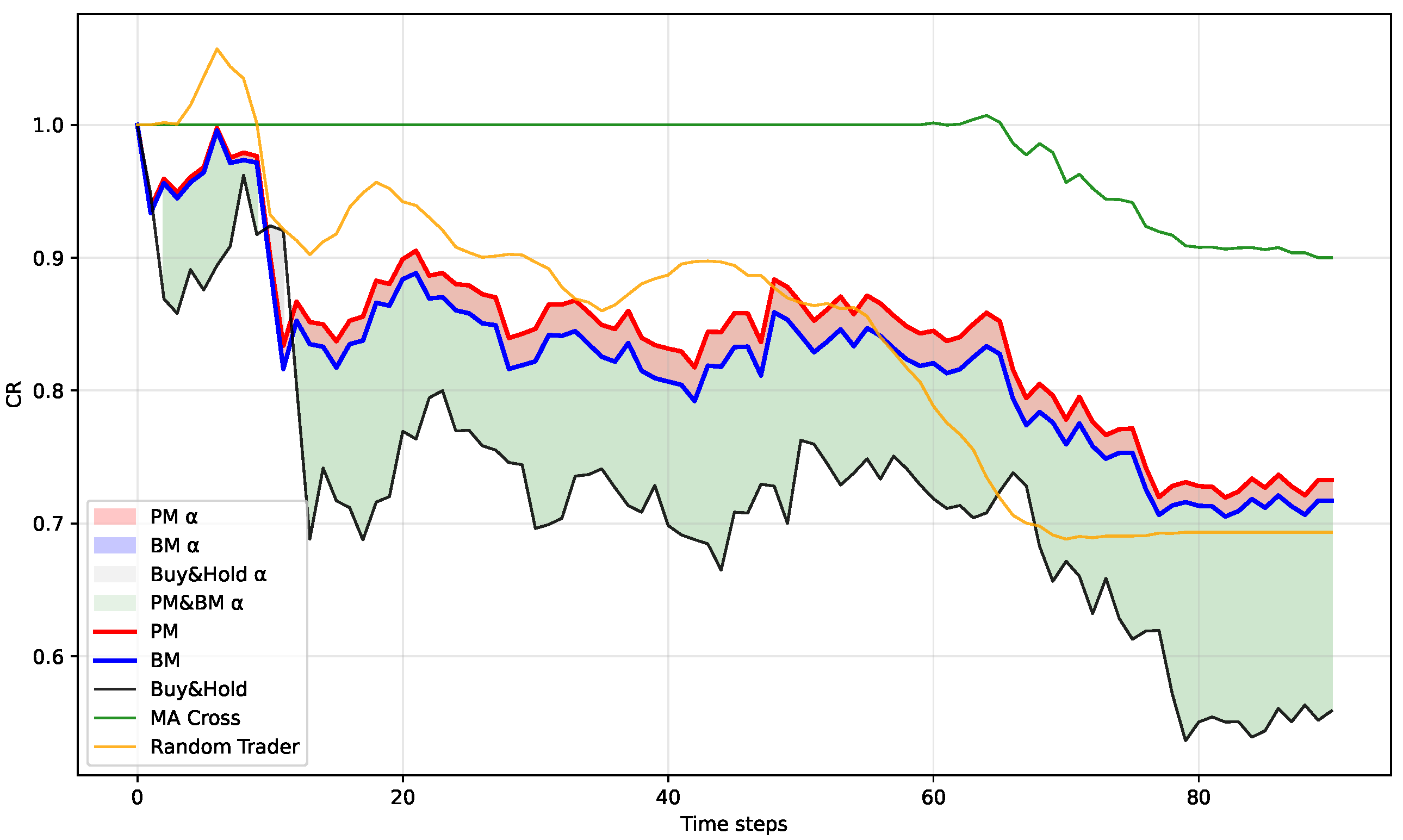
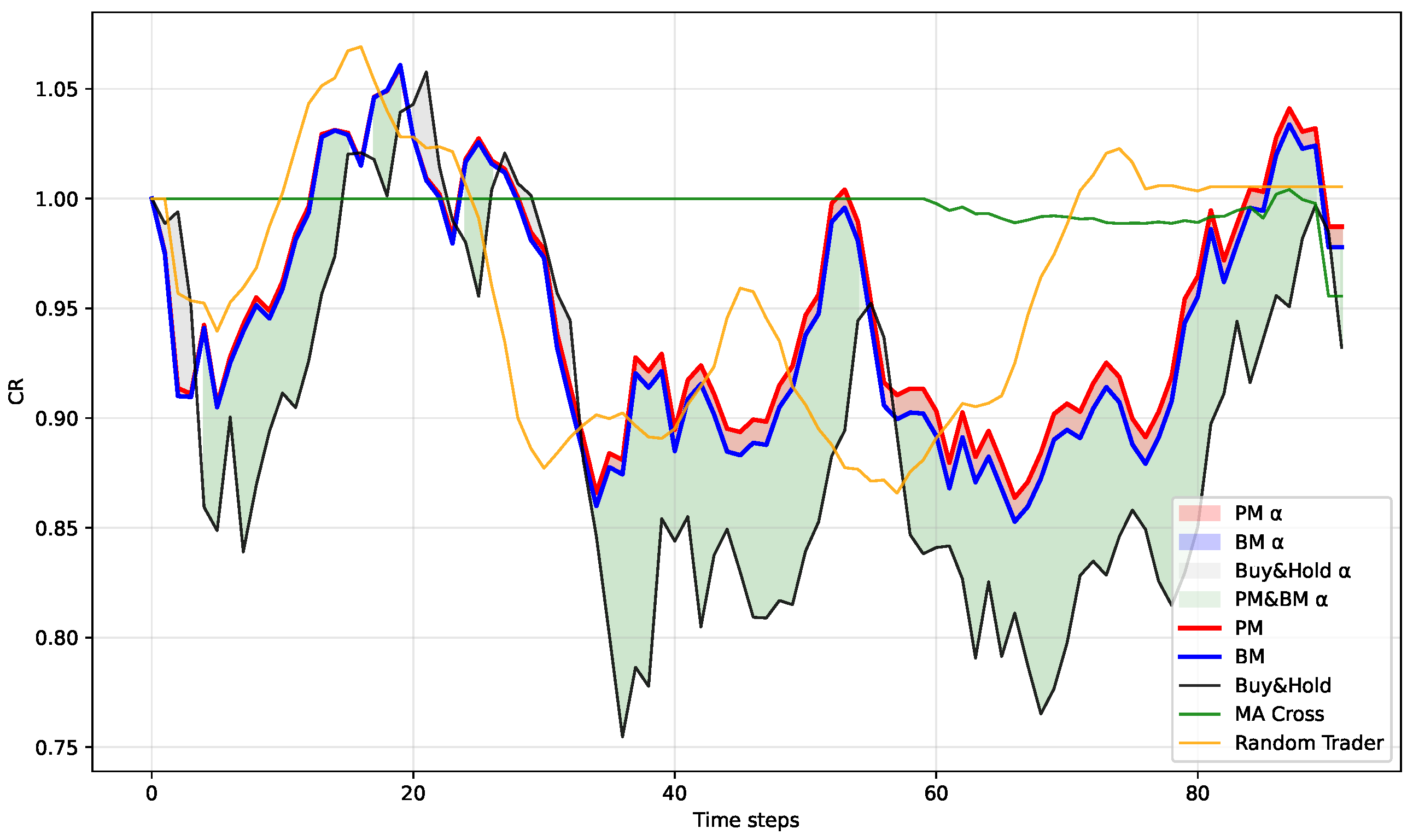
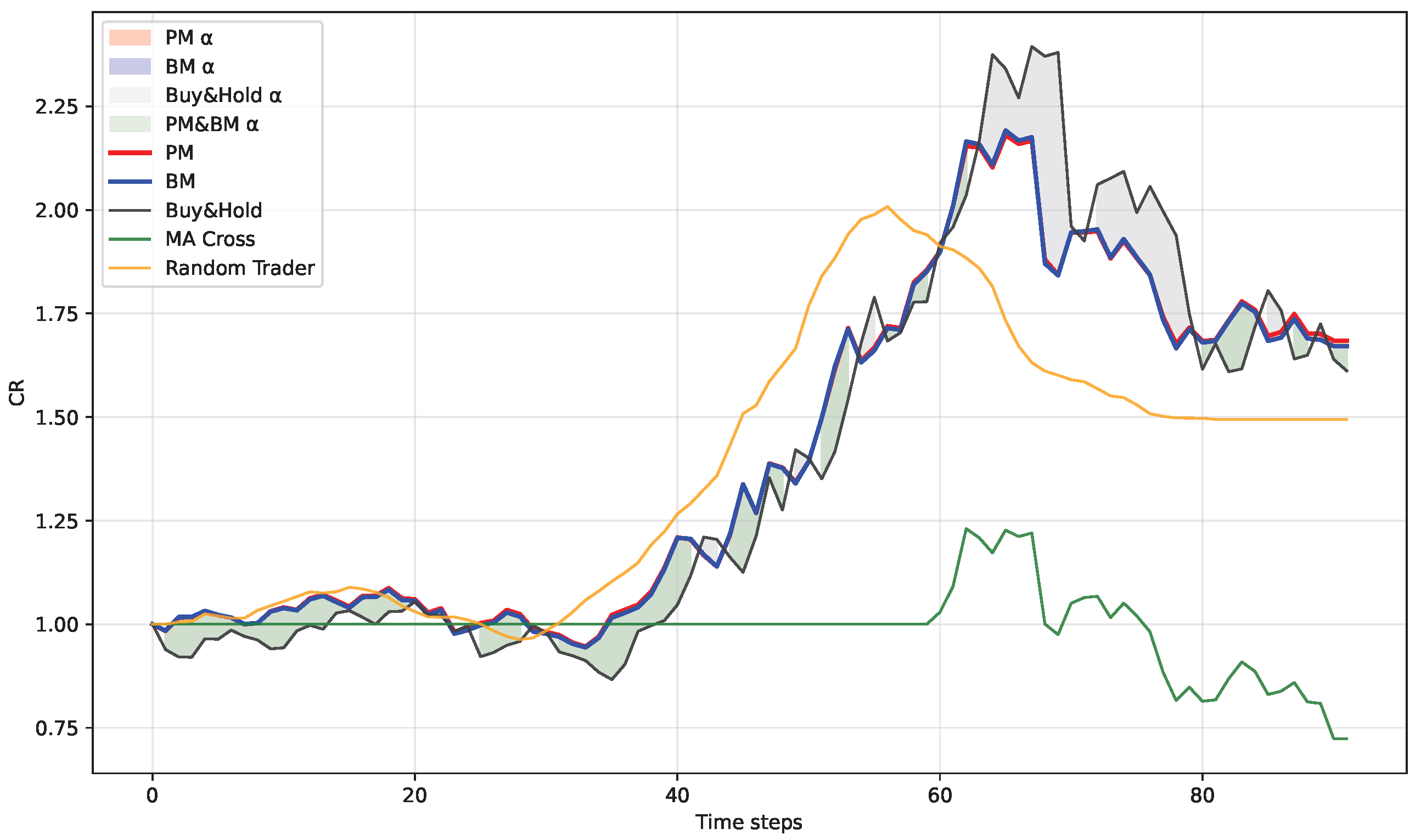
At the annual level, PM (with KVSI) achieves statistically significant improvements over BM (without KVSI) in CR, SR, and MDD, with , respectively (). The fee-adjusted robustness check that applies a 0.1% Binance spot trading fee yields qualitatively consistent results and supports the same conclusion. By quarter, CR and SR improvements are consistently positive and often statistically significant in Q1–Q3, with CR improving significantly in Q2, while differences largely wash out in the strongly trending Q4. The quarterly CR curves against Buy-and-Hold suggest a clear dependence on market regime. Alpha tends to widen in range-bound and declining regimes, remain modest in gentle advances with intermittent corrections, and narrow in pronounced uptrends. This regime dependence supports interpreting KVSI as a proxy for venue-level liquidity concentration that becomes most informative when segmentation frictions and limits to arbitrage are binding. More broadly, the same venue-share construction can be applied to other regional exchange clusters, providing a practical template for cross-market systematic trading and a policy-relevant lens on how market integration can compress segmentation-driven opportunities.
The contributions of this study are threefold. First, it directly models market segmentation: by quantifying cross-exchange relative liquidity with a single scalar indicator (KVSI) and integrating it into the RL state space, the models link regional market differences to trading decisions in a transparent way. Second, it identifies a clear effect of information expansion: a parallel comparison under identical networks, preprocessing, execution rules, and reward definitions, differing only in the information set (presence of KVSI), allows statistical analysis of the impact of expanding the state space rather than artifacts of algorithms or implementation. Third, it emphasizes reproducibility and interpretability: independent quarterly evaluation with three RL algorithms and 30 independent seeds, paired t-tests with 95% confidence intervals based on seed-level observations, and additional distributional and curve-based evidence together increase confidence in the results and keep the design transparent.
This study has several limitations. Since the trading policies are learned by RL algorithms, it does not fully characterize how KVSI shapes policy decisions across states beyond preliminary inspection of attention weights and selected trajectories. In addition, while we include an explicit fee-adjusted robustness check based on a 0.1% Binance spot trading fee, other trading frictions such as bid–ask spreads, market impact, and slippage are not modeled. Therefore, the backtest results should be interpreted as benchmark evidence on the incremental informational contribution of KVSI under a controlled execution setting. Finally, the out-of-sample evidence is based on a single test year (2024). Although this window was chosen to cover diverse market regimes, future work should validate the KVSI effect over additional test periods to assess generalizability.
Future research could extend this framework in several ways. One direction is to move beyond the Korean premium by defining and validating country-specific venue share indicators based on regional exchange shares—for example, a China Venue Share Indicator (CVSI)—and by exploring multi-indicator state spaces that capture multi-regional heterogeneity under more realistic trading frictions. Another direction is to analyze how the policy uses KVSI by comparing behavior and outcomes across regimes and by testing sensitivity with frozen-policy rollouts and simple randomization checks. This direction can be complemented by explainable AI methods to better characterize how the learned policies use KVSI across different market states. In addition, future work could also examine the information diffusion and collective action mechanisms that may underlie KVSI using social network analysis of crypto asset-related social media. Such analysis can quantify connectivity, centrality, and information isolation between the Korean community and global participants, which may help clarify how venue-level segmentation affects price discovery and systematic trading performance.
In conclusion, a small and transparent intervention that adds one interpretable indicator (KVSI) to the state space can improve RL trading performance and risk metrics in this setting. The study’s design and procedures provide a basis for extending venue-level indicators to other regional markets and for drawing more general conclusions about the role of cross-venue liquidity segmentation in systematic crypto asset trading.