Cutibacterium acnes: An Emerging Prostate Cancer Pathogen



Simple Summary
Abstract
1. Introduction
1.1. Prostate Cancer Progression
1.2. Microbial Pathogens and Cancer Development
1.3. Therapeutic Use of Pathogens in Oncology
2. Microbiome and Prostate Cancer
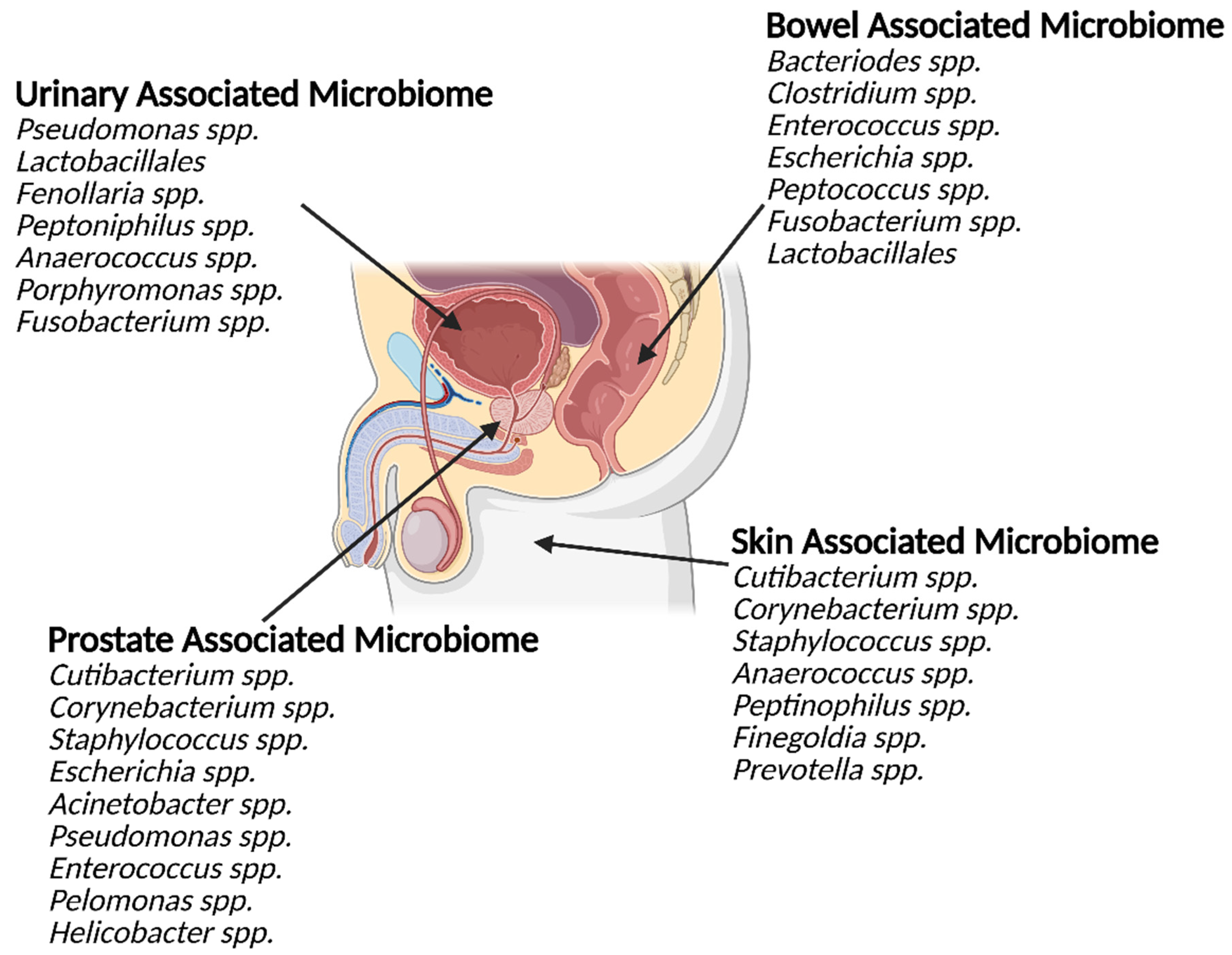
2.1. Role of the Urinary Microbiome in Prostate Cancer
2.2. Prostatic Tissue Microbiome and Prognostic Significance
3. Prevalence of Cutibacterium acnes in Tumour Microbiomes
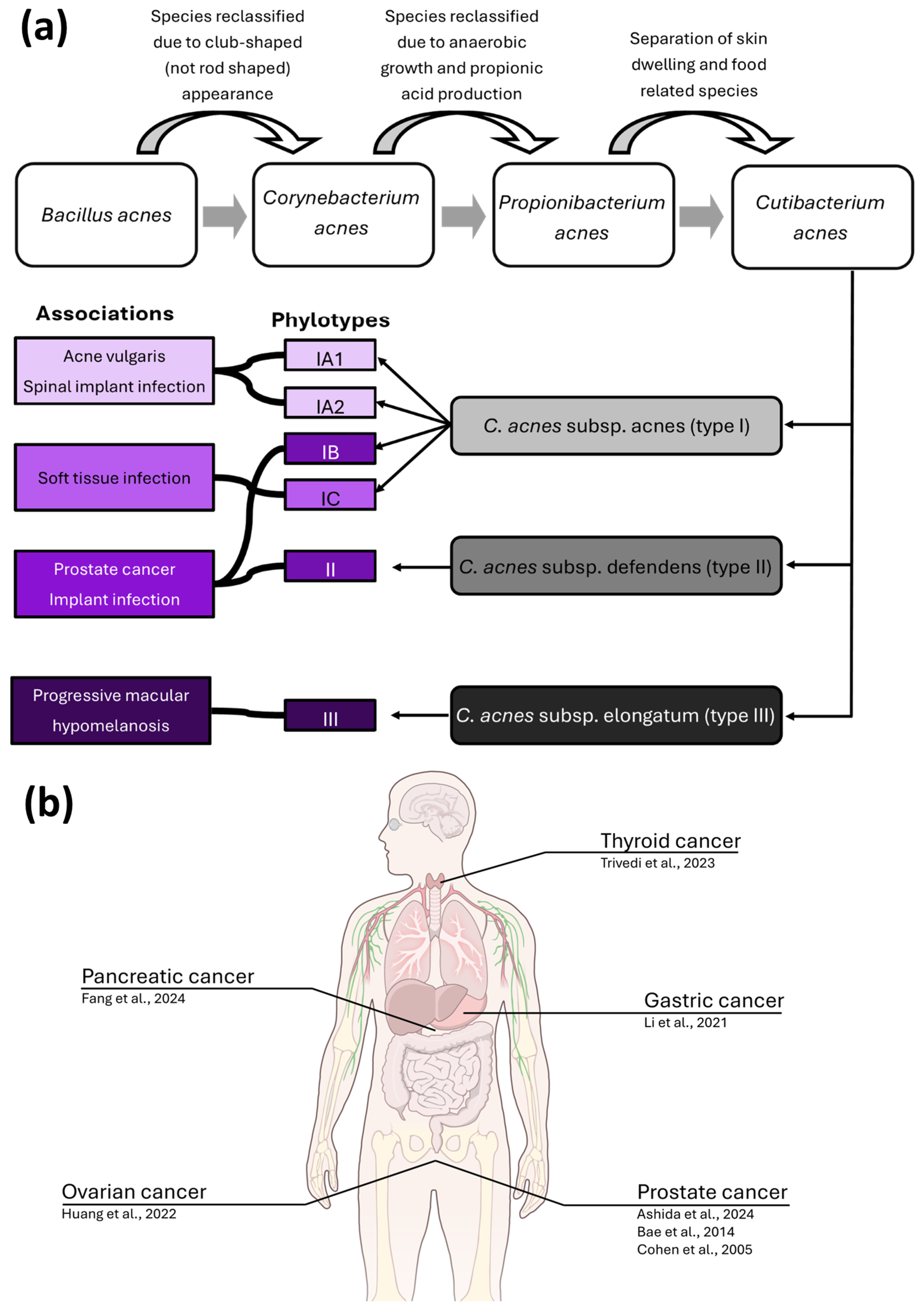
3.1. Occurrence of Cutibacterium acnes Across Cancer Types
3.2. Tumour Microenvironment and Cutibacterium acnes Persistence
4. Pathogenic Mechanisms of Cutibacterium acnes in Prostate Cancer
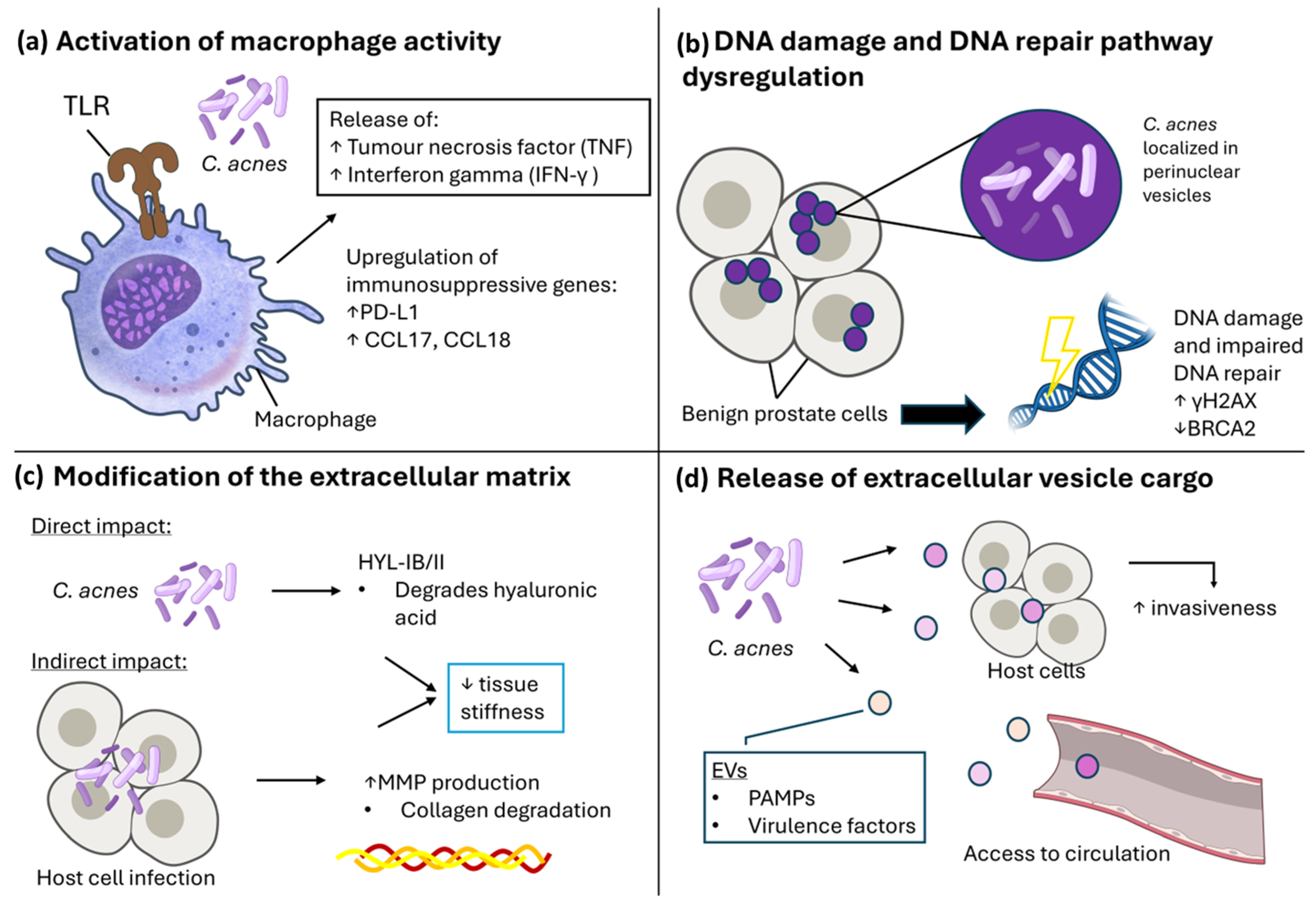
4.1. Inflammatory and Immune Effects of Cutibacterium acnes
4.2. Impact on DNA Repair and Metabolism
4.3. Extracellular Matrix Modification by Cutibacterium acnes
4.4. Tumorigenic Effects of Secreted Products and Vesicles
5. Therapeutic and Diagnostic Potential of Cutibacterium acnes
Potential Role in Prostate Cancer Treatment
6. Future Prospects
6.1. Beyond Biopsy Contamination
6.2. Adaptation Within the Prostate Niche
6.3. Challenges in Accessing Prostate Cancer Samples
6.4. Unresolved Mechanistic Questions
6.5. Translational Potential of Cutibacterium acnes Extracellular Vesicles
7. Conclusions
Author Contributions
Funding
Institutional Review Board Statement
Informed Consent Statement
Data Availability Statement
Acknowledgments
Conflicts of Interest
Abbreviations
| Abbreviation | Full Name |
| AR | Androgen receptor |
| bEVs | Bacterial extracellular vesicles |
| BPH | Benign prostate hyperplasia |
| BRCA2 | Breast cancer gene 2 |
| C. acnes | Cutibacterium acnes |
| CAMP | Christie–Atkins–Munch-Petersen |
| CCL | CC motif chemokine ligand |
| CCR-2 | CC chemokine receptor type 2 |
| CF | Cystic fibrosis |
| CM | Conditioned media |
| DDR | DNA damage response |
| ECM | Extracellular matrix |
| EMT | Epithelial-to-mesenchymal transition |
| EVs | Extracellular vesicles |
| GAPDH | Glyceraldehyde 3-phosphate dehydrogenase |
| GI | Gastrointestinal |
| GPAT | Glycerol-3-phosphate-acyltransferase |
| HA | Hyaluronic acid |
| HAase | Hyaluronidase |
| HRR | Homologous recombination repair |
| HYL | Hyaluronate lyase |
| IFN-γ | Interferon gamma |
| IL | Interleukin |
| IL-1β | Interleukin-1-beta |
| MIP | Macrophage inflammatory protein |
| MMP | Matrix metalloproteinase |
| MyD88 | Myeloid differentiation primary response 88 |
| NE | Neuroendocrine |
| NPC | Nasopharyngeal carcinoma |
| NSCLC | Non-small cell lung cancer |
| PCa | Prostate Cancer |
| PD-L1 | Immune checkpoint receptor PD1 ligand |
| PSA | Prostate-specific antigen |
| RAD51 | Radiation sensitive protein 5 |
| SCFA | Short chain fatty acids |
| TLR | Toll-like receptor |
| TNF-α | Tumour necrosis factor |
| Treg | Regulatory T-cells |
References
- Bray, F.; Laversanne, M.; Sung, H.; Ferlay, J.; Siegel, R.L.; Soerjomataram, I.; Jemal, A. Global Cancer Statistics 2022: GLOBOCAN Estimates of Incidence and Mortality Worldwide for 36 Cancers in 185 Countries. CA Cancer J. Clin. 2024, 74, 229–263. [Google Scholar] [CrossRef] [Scilit] [PubMed]
- James, N.D.; Tannock, I.; N’Dow, J.; Feng, F.; Gillessen, S.; Ali, S.A.; Trujillo, B.; Al-Lazikani, B.; Attard, G.; Bray, F.; et al. The Lancet Commission on Prostate Cancer: Planning for the Surge in Cases. Lancet 2024, 403, 1683–1722. [Google Scholar] [CrossRef] [Scilit] [PubMed]
- Rebbeck, T.R.; Devesa, S.S.; Chang, B.-L.; Bunker, C.H.; Cheng, I.; Cooney, K.; Eeles, R.; Fernandez, P.; Giri, V.N.; Gueye, S.M.; et al. Global Patterns of Prostate Cancer Incidence, Aggressiveness, and Mortality in Men of African Descent. Prostate Cancer 2013, 2013, 560857. [Google Scholar] [CrossRef] [Scilit]
- Kim, E.H.; Larson, J.A.; Andriole, G.L. Management of Benign Prostatic Hyperplasia. Annu. Rev. Med. 2016, 67, 137–151. [Google Scholar] [CrossRef] [Scilit]
- Sung, H.; Ferlay, J.; Siegel, R.L.; Laversanne, M.; Soerjomataram, I.; Jemal, A.; Bray, F. Global Cancer Statistics 2020: GLOBOCAN Estimates of Incidence and Mortality Worldwide for 36 Cancers in 185 Countries. CA Cancer J. Clin. 2021, 71, 209–249. [Google Scholar] [CrossRef] [Scilit]
- Georgiou, L.A.; Scarbrough, B.E. PSA Screening for Prostate Cancer in the United States: 30 Years of Controversy. J. Public Health Pol. 2024, 45, 552–561. [Google Scholar] [CrossRef] [Scilit]
- Lopez-Valcarcel, M.; Lopez-Campos, F.; Zafra-Martín, J.; Cienfuegos Belmonte, I.; Subiela, J.D.; Ruiz-Vico, M.; Fernandez Alonso, S.; Garcia Cuesta, J.A.; Couñago, F. Biomarkers in Localized Prostate Cancer: From Diagnosis to Treatment. Int. J. Mol. Sci. 2025, 26, 7667. [Google Scholar] [CrossRef] [Scilit]
- NHS Health Research Authority. OSCAR. Available online: https://www.hra.nhs.uk/planning-and-improving-research/application-summaries/research-summaries/oscar/ (accessed on 26 September 2025).
- Health Quality Ontario. Prolaris Cell Cycle Progression Test for Localized Prostate Cancer: A Health Technology Assessment. Ont. Health Technol. Assess. Ser. 2017, 17, 1–75. [Google Scholar]
- Hurst, R.; Meader, E.; Gihawi, A.; Rallapalli, G.; Clark, J.; Kay, G.L.; Webb, M.; Manley, K.; Curley, H.; Walker, H.; et al. Microbiomes of Urine and the Prostate Are Linked to Human Prostate Cancer Risk Groups. Eur. Urol. Oncol. 2022, 5, 412–419. [Google Scholar] [CrossRef] [Scilit]
- Kim, S.J.; Park, M.; Choi, A.; Yoo, S. Microbiome and Prostate Cancer: Emerging Diagnostic and Therapeutic Opportunities. Pharmaceuticals 2024, 17, 112. [Google Scholar] [CrossRef] [Scilit]
- Ashida, S.; Kawada, C.; Tanaka, H.; Kurabayashi, A.; Yagyu, K.; Sakamoto, S.; Maejima, K.; Miyano, S.; Daibata, M.; Nakagawa, H.; et al. Cutibacterium acnes Invades Prostate Epithelial Cells to Induce BRCAness as a Possible Pathogen of Prostate Cancer. Prostate 2024, 84, 1056–1066. [Google Scholar] [CrossRef] [Scilit]
- Banerjee, S.; Alwine, J.C.; Wei, Z.; Tian, T.; Shih, N.; Sperling, C.; Guzzo, T.; Feldman, M.D.; Robertson, E.S. Microbiome Signatures in Prostate Cancer. Carcinogenesis 2019, 40, 749–764. [Google Scholar] [CrossRef] [Scilit] [PubMed]
- Xin, L. Cells of Origin for Prostate Cancer. In Prostate Cancer; Dehm, S., Tindall, D., Eds.; Advances in Experimental Medicine and Biology; Springer: Cham, Switzerland, 2020; Volume 1210, pp. 67–86. ISBN 978-3-030-32656-2. [Google Scholar]
- Humphrey, P.A. Histopathology of Prostate Cancer. Cold Spring Harb. Perspect. Med. 2017, 7, a030411. [Google Scholar] [CrossRef] [Scilit]
- Park, J.W.; Lee, J.K.; Phillips, J.W.; Huang, P.; Cheng, D.; Huang, J.; Witte, O.N. Prostate Epithelial Cell of Origin Determines Cancer Differentiation State in an Organoid Transformation Assay. Proc. Natl. Acad. Sci. USA 2016, 113, 4482–4487. [Google Scholar] [CrossRef] [Scilit]
- Fettke, H.; Dai, C.; Kwan, E.M.; Zheng, T.; Du, P.; Ng, N.; Bukczynska, P.; Docanto, M.; Kostos, L.; Foroughi, S.; et al. BRCA-Deficient Metastatic Prostate Cancer Has an Adverse Prognosis and Distinct Genomic Phenotype. eBioMedicine 2023, 95, 104738. [Google Scholar] [CrossRef] [Scilit] [PubMed]
- Rebello, R.J.; Pearson, R.B.; Hannan, R.D.; Furic, L. Therapeutic Approaches Targeting MYC-Driven Prostate Cancer. Genes 2017, 8, 71. [Google Scholar] [CrossRef] [Scilit]
- Sandhu, S.; Moore, C.M.; Chiong, E.; Beltran, H.; Bristow, R.G.; Williams, S.G. Prostate Cancer. Lancet 2021, 398, 1075–1090. [Google Scholar] [CrossRef] [Scilit] [PubMed]
- Rebello, R.J.; Oing, C.; Knudsen, K.E.; Loeb, S.; Johnson, D.C.; Reiter, R.E.; Gillessen, S.; Van der Kwast, T.; Bristow, R.G. Prostate Cancer. Nat. Rev. Dis. Primers 2021, 7, 9. [Google Scholar] [CrossRef] [Scilit]
- Hanahan, D.; Weinberg, R.A. Hallmarks of Cancer: The next Generation. Cell 2011, 144, 646–674. [Google Scholar] [CrossRef] [Scilit]
- Alipour, M. Molecular Mechanism of Helicobacter pylori-Induced Gastric Cancer. J. Gastrointest. Cancer 2021, 52, 23–30. [Google Scholar] [CrossRef] [Scilit]
- Linz, B.; Sticht, H.; Tegtmeyer, N.; Backert, S. Cancer-Associated SNPs in Bacteria: Lessons from Helicobacter pylori. Trends Microbiol. 2024, 32, 847–857. [Google Scholar] [CrossRef] [Scilit] [PubMed]
- Boyanova, L.; Markovska, R.; Yordanov, D.; Gergova, R.; Hadzhiyski, P. Anaerobes in Specific Infectious and Noninfectious Diseases: New Developments. Anaerobe 2023, 81, 102714. [Google Scholar] [CrossRef] [Scilit] [PubMed]
- Peters, B.A.; Wu, J.; Pei, Z.; Yang, L.; Purdue, M.P.; Freedman, N.D.; Jacobs, E.J.; Gapstur, S.M.; Hayes, R.B.; Ahn, J. Oral Microbiome Composition Reflects Prospective Risk for Esophageal Cancers. Cancer Res. 2017, 77, 6777–6787. [Google Scholar] [CrossRef] [Scilit]
- Chen, Y.; Wei, J. Identification of Pathogen Signatures in Prostate Cancer Using RNA-Seq. PLoS ONE 2015, 10, e0128955. [Google Scholar] [CrossRef] [Scilit] [PubMed]
- Helmink, B.A.; Khan, M.A.W.; Hermann, A.; Gopalakrishnan, V.; Wargo, J.A. The Microbiome, Cancer, and Cancer Therapy. Nat. Med. 2019, 25, 377–388. [Google Scholar] [CrossRef] [Scilit]
- Zhou, S.; Gravekamp, C.; Bermudes, D.; Liu, K. Tumour-Targeting Bacteria Engineered to Fight Cancer. Nat. Rev. Cancer 2018, 18, 727–743. [Google Scholar] [CrossRef] [Scilit]
- Oladejo, M.; Paterson, Y.; Wood, L.M. Clinical Experience and Recent Advances in the Development of Listeria-Based Tumor Immunotherapies. Front. Immunol. 2021, 12, 642316. [Google Scholar] [CrossRef] [Scilit]
- Baird, J.R.; Fox, B.A.; Sanders, K.L.; Lizotte, P.H.; Cubillos-Ruiz, J.R.; Scarlett, U.K.; Rutkowski, M.R.; Conejo-Garcia, J.R.; Fiering, S.; Bzik, D.J. Avirulent Toxoplasma gondii Generates Therapeutic Antitumor Immunity by Reversing Immunosuppression in the Ovarian Cancer Microenvironment. Cancer Res. 2013, 73, 3842–3851. [Google Scholar] [CrossRef] [Scilit]
- Lotfalizadeh, N.; Sadr, S.; Morovati, S.; Lotfalizadeh, M.; Hajjafari, A.; Borji, H. A Potential Cure for Tumor-associated Immunosuppression by Toxoplasma gondii. Cancer Rep. 2023, 7, e1963. [Google Scholar] [CrossRef] [Scilit]
- Fox, B.A.; Butler, K.L.; Guevara, R.B.; Bzik, D.J. Cancer Therapy in a Microbial Bottle: Uncorking the Novel Biology of the Protozoan Toxoplasma gondii. PLoS Pathog. 2017, 13, e1006523. [Google Scholar] [CrossRef] [Scilit]
- Sadr, S.; Ghiassi, S.; Lotfalizadeh, N.; Simab, P.A.; Hajjafari, A.; Borji, H. Antitumor Mechanisms of Molecules Secreted by Trypanosoma cruzi in Colon and Breast Cancer: A Review. Anti-Cancer Agents Med. Chem. 2023, 23, 1710–1721. [Google Scholar] [CrossRef] [Scilit]
- Gao, S.; Yang, X.; Xu, J.; Qiu, N.; Zhai, G. Nanotechnology for Boosting Cancer Immunotherapy and Remodeling Tumor Microenvironment: The Horizons in Cancer Treatment. ACS Nano 2021, 15, 12567–12603. [Google Scholar] [CrossRef] [Scilit]
- Thomas, S.; Izard, J.; Walsh, E.; Batich, K.; Chongsathidkiet, P.; Clarke, G.; Sela, D.A.; Muller, A.J.; Mullin, J.M.; Albert, K.; et al. The Host Microbiome Regulates and Maintains Human Health: A Primer and Perspective for Non-Microbiologists. Cancer Res. 2017, 77, 1783–1812. [Google Scholar] [CrossRef] [Scilit]
- Cogdill, A.P.; Gaudreau, P.O.; Arora, R.; Gopalakrishnan, V.; Wargo, J.A. The Impact of Intratumoral and Gastrointestinal Microbiota on Systemic Cancer Therapy. Trends Immunol. 2018, 39, 900–920. [Google Scholar] [CrossRef] [Scilit]
- Hanahan, D. Hallmarks of Cancer: New Dimensions. Cancer Discov. 2022, 12, 31–46. [Google Scholar] [CrossRef] [Scilit] [PubMed]
- Laaraj, J.; Lachance, G.; Bergeron, A.; Fradet, Y.; Robitaille, K.; Fradet, V. New Insights into Gut Microbiota-Prostate Cancer Crosstalk. Trends Mol. Med. 2025, 31, 778–800. [Google Scholar] [CrossRef] [Scilit]
- Ohadian Moghadam, S.; Momeni, S.A. Human Microbiome and Prostate Cancer Development: Current Insights into the Prevention and Treatment. Front. Med. 2021, 15, 11–32. [Google Scholar] [CrossRef] [Scilit]
- Huang, T.Y.; Jiang, Y.E.; Scott, D.A. Culturable Bacteria in the Entire Acne Lesion and Short-Chain Fatty Acid Metabolites of Cutibacterium acnes and Staphylococcus epidermidis Isolates. Biochem. Biophys. Res. Commun. 2022, 622, 45–49. [Google Scholar] [CrossRef] [Scilit] [PubMed]
- Sanford, J.A.; O’Neill, A.M.; Zouboulis, C.C.; Gallo, R.L. Short-Chain Fatty Acids from Cutibacterium acnes Activate Both a Canonical and Epigenetic Inflammatory Response in Human Sebocytes. J. Immunol. 2019, 202, 1767–1776. [Google Scholar] [CrossRef] [Scilit]
- Nakamura, K.; O’Neill, A.M.; Williams, M.R.; Cau, L.; Nakatsuji, T.; Horswill, A.R.; Gallo, R.L. Short Chain Fatty Acids Produced by Cutibacterium acnes Inhibit Biofilm Formation by Staphylococcus epidermidis. Sci. Rep. 2020, 10, 21237. [Google Scholar] [CrossRef] [Scilit] [PubMed]
- Mjaess, G.; Karam, A.; Roumeguère, T.; Diamand, R.; Aoun, F.; McVary, K.; Moul, J.W.; De Nunzio, C.; Albisinni, S. Urinary Microbiota and Prostatic Diseases: The Key for the Lock? A Systematic Review. Prostate Cancer Prostatic Dis. 2023, 26, 451–460. [Google Scholar] [CrossRef] [Scilit]
- Gihawi, A.; Ge, Y.; Lu, J.; Puiu, D.; Xu, A.; Cooper, C.S.; Brewer, D.S.; Pertea, M.; Salzberg, S.L. Major Data Analysis Errors Invalidate Cancer Microbiome Findings. mBio 2023, 14, e01607–e01623. [Google Scholar] [CrossRef] [Scilit] [PubMed]
- Nejman, D.; Livyatan, I.; Fuks, G.; Gavert, N.; Zwang, Y.; Geller, L.T.; Rotter-Maskowitz, A.; Weiser, R.; Mallel, G.; Gigi, E.; et al. The Human Tumor Microbiome Is Composed of Tumor Type–Specific Intracellular Bacteria. Science 2020, 368, 973–980. [Google Scholar] [CrossRef] [Scilit]
- Cavarretta, I.; Ferrarese, R.; Cazzaniga, W.; Saita, D.; Lucianò, R.; Ceresola, E.R.; Locatelli, I.; Visconti, L.; Lavorgna, G.; Briganti, A.; et al. The Microbiome of the Prostate Tumor Microenvironment. Eur. Urol 2017, 72, 625–631. [Google Scholar] [CrossRef] [Scilit]
- Feng, Y.; Ramnarine, V.R.; Bell, R.; Volik, S.; Davicioni, E.; Hayes, V.M.; Ren, S.; Collins, C.C. Metagenomic and Metatranscriptomic Analysis of Human Prostate Microbiota from Patients with Prostate Cancer. BMC Genom. 2019, 20, 146. [Google Scholar] [CrossRef] [Scilit]
- Brede, C.M.; Shoskes, D.A. The Etiology and Management of Acute Prostatitis. Nat. Rev. Urol. 2011, 8, 207–212. [Google Scholar] [CrossRef] [Scilit]
- Kim, J.H.; Seo, H.; Kim, S.; Rahim, M.A.; Jo, S.; Barman, I.; Tajdozian, H.; Sarafraz, F.; Song, H.-Y.; Song, Y.S. Different Prostatic Tissue Microbiomes between High- and Low-Grade Prostate Cancer Pathogenesis. Int. J. Mol. Sci. 2024, 25, 8943. [Google Scholar] [CrossRef] [Scilit] [PubMed]
- Cohen, R.J.; Shannon, B.A.; McNeal, J.E.; Shannon, T.; Garrett, K.L. Propionibacterium acnes Associated with Inflammation in Radical Prostatectomy Specimens: A Possible Link to Cancer Evolution? J. Urol. 2005, 173, 1969–1974. [Google Scholar] [CrossRef] [Scilit] [PubMed]
- Bae, Y.; Ito, T.; Iida, T.; Uchida, K.; Sekine, M.; Nakajima, Y.; Kumagai, J.; Yokoyama, T.; Kawachi, H.; Akashi, T.; et al. Intracellular Propionibacterium acnes Infection in Glandular Epithelium and Stromal Macrophages of the Prostate with or without Cancer. PLoS ONE 2014, 9, e90324. [Google Scholar] [CrossRef] [Scilit]
- Delgado, S.; Suárez, A.; Mayo, B. Identification, Typing and Characterisation of Propionibacterium Strains from Healthy Mucosa of the Human Stomach. Int. J. Food Microbiol. 2011, 149, 65–72. [Google Scholar] [CrossRef] [Scilit]
- Beirne, C.; McCann, E.; McDowell, A.; Miliotis, G. Genetic Determinants of Antimicrobial Resistance in Three Multi-Drug Resistant Strains of Cutibacterium acnes Isolated from Patients with Acne: A Predictive in Silico Study. Access Microbiol. 2022, 4, acmi000404. [Google Scholar] [CrossRef] [Scilit]
- Boyanova, L. Cutibacterium acnes (Formerly Propionibacterium acnes): Friend or Foe? Future Microbiol. 2023, 18, 235–244. [Google Scholar] [CrossRef] [Scilit]
- Ahle, C.M.; Stødkilde, K.; Poehlein, A.; Bömeke, M.; Streit, W.R.; Wenck, H.; Reuter, J.H.; Hüpeden, J.; Brüggemann, H. Interference and Co-Existence of Staphylococci and Cutibacterium acnes within the Healthy Human Skin Microbiome. Commun. Biol. 2022, 5, 923. [Google Scholar] [CrossRef] [Scilit]
- Kaplan, J.B.; Assa, M.; Mruwat, N.; Sailer, M.; Regmi, S.; Kridin, K. Facultatively Anaerobic Staphylococci Enable Anaerobic Cutibacterium Species to Grow and Form Biofilms Under Aerobic Conditions. Microorganisms 2024, 12, 2601. [Google Scholar] [CrossRef] [Scilit]
- Dreno, B.; Dekio, I.; Baldwin, H.; Demessant, A.L.; Dagnelie, M.-A.; Khammari, A.; Corvec, S. Acne Microbiome: From Phyla to Phylotypes. J. Eur. Acad. Dermatol. Venereol. 2024, 38, 657–664. [Google Scholar] [CrossRef] [Scilit] [PubMed]
- Saha, S.; Joskowiak, D.; Marin-Cuartas, M.; De La Cuesta, M.; Weber, C.; Luehr, M.; Petrov, A.; Dzilic, E.; Sandoval-Boburg, R.; Marinos, S.L.; et al. Cutibacterium acnes Infective Endocarditis—An Emerging Pathogen. Eur. J. Cardio Thorac. Surg. 2024, 66, ezae422. [Google Scholar] [CrossRef] [Scilit]
- Davidsson, S.; Carlsson, J.; Greenberg, L.; Wijkander, J.; Söderquist, B.; Erlandsson, A. Cutibacterium acnes Induces the Expression of Immunosuppressive Genes in Macrophages and Is Associated with an Increase of Regulatory T-Cells in Prostate Cancer. Microbiol. Spectr. 2021, 9, e01497. [Google Scholar] [CrossRef] [Scilit] [PubMed]
- Mak, T.N.; Yu, S.; De Marzo, A.M.; Brüggemann, H.; Sfanos, K.S. Multilocus Sequence Typing (MLST) Analysis of Propionibacterium acnes Isolates from Radical Prostatectomy Specimens. Prostate 2013, 73, 770–777. [Google Scholar] [CrossRef] [Scilit]
- Podbielski, A.; Köller, T.; Warnke, P.; Barrantes, I.; Kreikemeyer, B. Whole Genome Sequencing Distinguishes Skin Colonizing from Infection-Associated Cutibacterium acnes Isolates. Front. Cell. Infect. Microbiol. 2024, 14, 1433783. [Google Scholar] [CrossRef] [Scilit] [PubMed]
- Cheung, C.T.; Lancien, U.; Corvec, S.; Mengeaud, V.; Mias, C.; Véziers, J.; Khammari, A.; Dréno, B. Pro-Inflammatory Activity of Cutibacterium acnes Phylotype IA and Extracellular Vesicles: An In Vitro Study. Exp. Dermatol. 2024, 33, e15150. [Google Scholar] [CrossRef] [Scilit]
- Dagnelie, M.-A.; Corvec, S.; Saint-Jean, M.; Bourdès, V.; Nguyen, J.-M.; Khammari, A.; Dréno, B. Decrease in Diversity of Propionibacterium acnes Phylotypes in Patients with Severe Acne on the Back. Acta Derm. Venereol. 2018, 98, 262–267. [Google Scholar] [CrossRef] [Scilit]
- Brüggemann, H.; Al-Zeer, M.A. Bacterial Signatures and Their Inflammatory Potentials Associated with Prostate Cancer. APMIS 2020, 128, 80–91. [Google Scholar] [CrossRef] [Scilit]
- Davidsson, S.; Mölling, P.; Rider, J.R.; Unemo, M.; Karlsson, M.G.; Carlsson, J.; Andersson, S.-O.; Elgh, F.; Söderquist, B.; Andrén, O. Frequency and Typing of Propionibacterium acnes in Prostate Tissue Obtained from Men with and without Prostate Cancer. Infect. Agents Cancer 2016, 11, 26. [Google Scholar] [CrossRef] [Scilit]
- Li, Q.; Wu, W.; Gong, D.; Shang, R.; Wang, J.; Yu, H. Propionibacterium acnes Overabundance in Gastric Cancer Promote M2 Polarization of Macrophages via a TLR4/PI3K/Akt Signaling. Gastric Cancer 2021, 24, 1242–1253. [Google Scholar] [CrossRef] [Scilit] [PubMed]
- Fang, Y.; Liu, X.; Ren, J.; Wang, X.; Zhou, F.; Huang, S.; You, L.; Zhao, Y. Integrated Analysis of Microbiome and Metabolome Reveals Signatures in PDAC Tumorigenesis and Prognosis. Microbiol. Spectr. 2024, 12, e0096224. [Google Scholar] [CrossRef] [Scilit] [PubMed]
- Trivedi, V.; Noronha, V.; Sreekanthreddy, P.; Desai, S.; Poojary, D.; Varghese, L.; Gowda, P.; Butle, A.; Mishra, R.; Bal, M.; et al. Association of Cutibacterium acnes with Human Thyroid Cancer. Front. Endocrinol. 2023, 14, 1152514. [Google Scholar] [CrossRef] [Scilit]
- Vendrell, J.A.; Cabello-Aguilar, S.; Senal, R.; Heckendorn, E.; Henry, S.; Godreuil, S.; Solassol, J. Dysbiosis in Human Urinary Microbiota May Differentiate Patients with a Bladder Cancer. Int. J. Mol. Sci. 2024, 25, 10159. [Google Scholar] [CrossRef] [Scilit] [PubMed]
- Huang, Q.; Wei, X.; Li, W.; Ma, Y.; Chen, G.; Zhao, L.; Jiang, Y.; Xie, S.; Chen, Q.; Chen, T. Endogenous Propionibacterium acnes Promotes Ovarian Cancer Progression via Regulating Hedgehog Signalling Pathway. Cancers 2022, 14, 5178. [Google Scholar] [CrossRef] [Scilit]
- Capoor, M.N.; Birkenmaier, C.; Wang, J.C.; McDowell, A.; Ahmed, F.S.; Brüggemann, H.; Coscia, E.; Davies, D.G.; Ohrt-Nissen, S.; Raz, A.; et al. A Review of Microscopy-Based Evidence for the Association of Propionibacterium acnes Biofilms in Degenerative Disc Disease and Other Diseased Human Tissue. Eur. Spine J. 2019, 28, 2951–2971. [Google Scholar] [CrossRef] [Scilit]
- Alexeyev, O.; Bergh, J.; Marklund, I.; Thellenberg-Karlsson, C.; Wiklund, F.; Grönberg, H.; Bergh, A.; Elgh, F. Association between the Presence of Bacterial 16S RNA in Prostate Specimens Taken during Transurethral Resection of Prostate and Subsequent Risk of Prostate Cancer (Sweden). Cancer Causes Control 2006, 17, 1127–1133. [Google Scholar] [CrossRef] [Scilit]
- Mollerup, S.; Friis-Nielsen, J.; Vinner, L.; Hansen, T.A.; Richter, S.R.; Fridholm, H.; Herrera, J.A.R.; Lund, O.; Brunak, S.; Izarzugaza, J.M.G.; et al. Propionibacterium acnes: Disease-Causing Agent or Common Contaminant? Detection in Diverse Patient Samples by Next-Generation Sequencing. J. Clin. Microbiol. 2016, 54, 980–987. [Google Scholar] [CrossRef] [Scilit]
- Levy, O.; Iyer, S.; Atoun, E.; Peter, N.; Hous, N.; Cash, D.; Musa, F.; Narvani, A.A. Propionibacterium acnes: An Underestimated Etiology in the Pathogenesis of Osteoarthritis? J. Shoulder Elb. Surg. 2013, 22, 505–511. [Google Scholar] [CrossRef] [Scilit] [PubMed]
- Foster, A.L.; Cutbush, K.; Ezure, Y.; Schuetz, M.A.; Crawford, R.; Paterson, D.L. Cutibacterium acnes in Shoulder Surgery: A Scoping Review of Strategies for Prevention, Diagnosis, and Treatment. J. Shoulder Elb. Surg. 2021, 30, 1410–1422. [Google Scholar] [CrossRef] [Scilit]
- Hudek, R.; Brobeil, A.; Brüggemann, H.; Sommer, F.; Gattenlöhner, S.; Gohlke, F. Cutibacterium acnes Is an Intracellular and Intra-Articular Commensal of the Human Shoulder Joint. J. Shoulder Elb. Surg. 2021, 30, 16–26. [Google Scholar] [CrossRef] [Scilit]
- Hong, C.-K.; Hsu, K.-L.; Kuan, F.-C.; Lee, Y.-T.; Tsai, P.-F.; Chen, P.-L.; Su, W.-R. Extended Skin Cleaning on the Shoulder with Chlorhexidine Reduces the Cutaneous Bacterial Load but Fails to Decrease Suture Contamination in Patients Undergoing Arthroscopy Rotator Cuff Repair. J. Shoulder Elb. Surg. 2023, 32, 744–750. [Google Scholar] [CrossRef] [Scilit] [PubMed]
- McKeown, S.R. Defining Normoxia, Physoxia and Hypoxia in Tumours—Implications for Treatment Response. Br. J. Radiol. 2014, 87, 20130676. [Google Scholar] [CrossRef] [Scilit]
- McKenna, D.J.; Errington, R.; Pors, K. Current Challenges and Opportunities in Treating Hypoxic Prostate Tumors. J. Cancer Metastasis Treat 2018, 4, 11. [Google Scholar] [CrossRef] [Scilit]
- Cove, J.H.; Holland, K.T.; Cunliffe, W.J. The Effects of Oxygen on Cutaneous Propionibacteria Grown in Continuous Culture. FEMS Microbiol. Lett. 1987, 43, 61–65. [Google Scholar] [CrossRef]
- Wang, Z.; Chen, J.; Veiga, M.C.; Kennes, C. Scalable Propionic Acid Production Using Cutibacterium acnes ZW-1: Insights into Substrate and pH-Driven Carbon Flux. Sci. Total Environ. 2025, 967, 178806. [Google Scholar] [CrossRef] [Scilit]
- Boedtkjer, E.; Pedersen, S.F. The Acidic Tumor Microenvironment as a Driver of Cancer. Annu. Rev. Physiol. 2020, 82, 103–126. [Google Scholar] [CrossRef] [Scilit] [PubMed]
- Bogdanov, A.; Bogdanov, A.; Chubenko, V.; Volkov, N.; Moiseenko, F.; Moiseyenko, V. Tumor Acidity: From Hallmark of Cancer to Target of Treatment. Front. Oncol. 2022, 12, 979154. [Google Scholar] [CrossRef] [Scilit]
- Warburg, O. On the Origin of Cancer Cells. Science 1956, 123, 309–314. [Google Scholar] [CrossRef] [Scilit] [PubMed]
- Escoll, P.; Buchrieser, C. Metabolic Reprogramming of Host Cells upon Bacterial Infection: Why Shift to a Warburg-like Metabolism? FEBS J. 2018, 285, 2146–2160. [Google Scholar] [CrossRef] [Scilit]
- Fassi Fehri, L.; Mak, T.N.; Laube, B.; Brinkmann, V.; Ogilvie, L.A.; Mollenkopf, H.; Lein, M.; Schmidt, T.; Meyer, T.F.; Brüggemann, H. Prevalence of Propionibacterium acnes in Diseased Prostates and Its Inflammatory and Transforming Activity on Prostate Epithelial Cells. Int. J. Med. Microbiol. 2011, 301, 69–78. [Google Scholar] [CrossRef] [Scilit]
- McLaughlin, J.; Watterson, S.; Layton, A.M.; Bjourson, A.J.; Barnard, E.; McDowell, A. Propionibacterium acnes and Acne Vulgaris: New Insights from the Integration of Population Genetic, Multi-Omic, Biochemical and Host-Microbe Studies. Microorganisms 2019, 7, 128. [Google Scholar] [CrossRef] [Scilit]
- Kim, H.J.; Lee, B.-J.; Kwon, A.-R. The Grease Trap: Uncovering the Mechanism of the Hydrophobic Lid in Cutibacterium acnes Lipase [S]. J. Lipid Res. 2020, 61, 722–733. [Google Scholar] [CrossRef] [Scilit]
- Fu, K.; Cheung, A.H.K.; Wong, C.C.; Liu, W.; Zhou, Y.; Wang, F.; Huang, P.; Yuan, K.; Coker, O.O.; Pan, Y.; et al. Streptococcus anginosus Promotes Gastric Inflammation, Atrophy, and Tumorigenesis in Mice. Cell 2024, 187, 882–896.e17. [Google Scholar] [CrossRef] [Scilit] [PubMed]
- Fischer, K.; Tschismarov, R.; Pilz, A.; Straubinger, S.; Carotta, S.; McDowell, A.; Decker, T. Cutibacterium acnes Infection Induces Type I Interferon Synthesis Through the cGAS-STING Pathway. Front. Immunol. 2020, 11, 571334. [Google Scholar] [CrossRef] [Scilit] [PubMed]
- Cros, M.P.; Mir-Pedrol, J.; Toloza, L.; Knödlseder, N.; Maruotti, J.; Zouboulis, C.C.; Güell, M.; Fábrega, M.-J. New Insights into the Role of Cutibacterium acnes-Derived Extracellular Vesicles in Inflammatory Skin Disorders. Sci. Rep. 2023, 13, 16058. [Google Scholar] [CrossRef] [Scilit]
- Siltari, A.; Syvälä, H.; Lou, Y.-R.; Gao, Y.; Murtola, T.J. Role of Lipids and Lipid Metabolism in Prostate Cancer Progression and the Tumor’s Immune Environment. Cancers 2022, 14, 4293. [Google Scholar] [CrossRef] [Scilit]
- Hansen, S.B.; Unal, B.; Kuzu, O.F.; Saatcioglu, F. Immunological Facets of Prostate Cancer and the Potential of Immune Checkpoint Inhibition in Disease Management. Theranostics 2024, 14, 6913–6934. [Google Scholar] [CrossRef] [Scilit]
- Shinohara, D.B.; Vaghasia, A.M.; Yu, S.; Mak, T.N.; Brüggemann, H.; Nelson, W.G.; De Marzo, A.M.; Yegnasubramanian, S.; Sfanos, K.S. A Mouse Model of Chronic Prostatic Inflammation Using a Human Prostate Cancer-derived Isolate of Propionibacterium acnes. Prostate 2013, 73, 1007–1015. [Google Scholar] [CrossRef] [Scilit] [PubMed]
- Mak, T.N.; Fischer, N.; Laube, B.; Brinkmann, V.; Metruccio, M.M.E.; Sfanos, K.S.; Mollenkopf, H.-J.; Meyer, T.F.; Brüggemann, H. Propionibacterium acnes Host Cell Tropism Contributes to Vimentin-Mediated Invasion and Induction of Inflammation. Cell. Microbiol. 2012, 14, 1720–1733. [Google Scholar] [CrossRef] [Scilit]
- Fischer, N.; Mak, T.N.; Shinohara, D.B.; Sfanos, K.S.; Meyer, T.F.; Brüggemann, H. Deciphering the Intracellular Fate of Propionibacterium acnes in Macrophages. BioMed. Res. Int. 2013, 2013, 603046. [Google Scholar] [CrossRef] [Scilit]
- Aubin, G.G.; Baud’huin, M.; Lavigne, J.-P.; Brion, R.; Gouin, F.; Lepelletier, D.; Jacqueline, C.; Heymann, D.; Asehnoune, K.; Corvec, S. Interaction of Cutibacterium (Formerly Propionibacterium) acnes with Bone Cells: A Step toward Understanding Bone and Joint Infection Development. Sci. Rep. 2017, 7, 42918. [Google Scholar] [CrossRef] [Scilit]
- Hanahan, D.; Weinberg, R.A. The Hallmarks of Cancer. Cell 2000, 100, 57–70. [Google Scholar] [CrossRef] [Scilit] [PubMed]
- Usui, Y.; Taniyama, Y.; Endo, M.; Koyanagi, Y.N.; Kasugai, Y.; Oze, I.; Ito, H.; Imoto, I.; Tanaka, T.; Tajika, M.; et al. Helicobacter pylori, Homologous-Recombination Genes, and Gastric Cancer. N. Engl. J. Med. 2023, 388, 1181–1190. [Google Scholar] [CrossRef] [Scilit]
- Stewart, M.D.; Merino Vega, D.; Arend, R.C.; Baden, J.F.; Barbash, O.; Beaubier, N.; Collins, G.; French, T.; Ghahramani, N.; Hinson, P.; et al. Homologous Recombination Deficiency: Concepts, Definitions, and Assays. Oncologist 2022, 27, 167–174. [Google Scholar] [CrossRef] [Scilit] [PubMed]
- Singh, V.; Jamwal, S.; Jain, R.; Verma, P.; Gokhale, R.; Rao, K.V.S. Mycobacterium tuberculosis-Driven Targeted Recalibration of Macrophage Lipid Homeostasis Promotes the Foamy Phenotype. Cell Host Microbe 2012, 12, 669–681. [Google Scholar] [CrossRef] [Scilit]
- Almoughrabie, S.; Cau, L.; Cavagnero, K.; O’Neill, A.M.; Li, F.; Roso-Mares, A.; Mainzer, C.; Closs, B.; Kolar, M.J.; Williams, K.J.; et al. Commensal Cutibacterium acnes Induce Epidermal Lipid Synthesis Important for Skin Barrier Function. Sci. Adv. 2023, 9, eadg6262. [Google Scholar] [CrossRef] [Scilit]
- Watt, M.J.; Clark, A.K.; Selth, L.A.; Haynes, V.R.; Lister, N.; Rebello, R.; Porter, L.H.; Niranjan, B.; Whitby, S.T.; Lo, J.; et al. Suppressing Fatty Acid Uptake Has Therapeutic Effects in Preclinical Models of Prostate Cancer. Sci. Transl. Med. 2019, 11, eaau5758. [Google Scholar] [CrossRef] [Scilit] [PubMed]
- Zhou, Y.; Zhao, H.; Ren, R.; Zhou, M.; Zhang, J.; Wu, Z.; Chen, Y.; Lei, J.; Chen, Y.; Yu, Y.; et al. GPAT3 Is a Potential Therapeutic Target to Overcome Sorafenib Resistance in Hepatocellular Carcinoma. Theranostics 2024, 14, 3470–3485. [Google Scholar] [CrossRef] [Scilit]
- Pellon-Maison, M.; Montanaro, M.A.; Lacunza, E.; Garcia-Fabiani, M.B.; Soler-Gerino, M.C.; Cattaneo, E.R.; Quiroga, I.Y.; Abba, M.C.; Coleman, R.A.; Gonzalez-Baro, M.R. Glycerol-3-Phosphate Acyltranferase-2 Behaves as a Cancer Testis Gene and Promotes Growth and Tumorigenicity of the Breast Cancer MDA-MB-231 Cell Line. PLoS ONE 2014, 9, e100896. [Google Scholar] [CrossRef] [Scilit]
- Yu, J.; Loh, K.; Song, Z.; Yang, H.; Zhang, Y.; Lin, S. Update on Glycerol-3-Phosphate Acyltransferases: The Roles in the Development of Insulin Resistance. Nutr. Diabetes 2018, 8, 34. [Google Scholar] [CrossRef] [Scilit]
- Josefsson, A.; Adamo, H.; Hammarsten, P.; Granfors, T.; Stattin, P.; Egevad, L.; Laurent, A.E.; Wikström, P.; Bergh, A. Prostate Cancer Increases Hyaluronan in Surrounding Nonmalignant Stroma, and This Response Is Associated with Tumor Growth and an Unfavorable Outcome. Am. J. Pathol. 2011, 179, 1961–1968. [Google Scholar] [CrossRef] [Scilit] [PubMed]
- Holland, C.; Mak, T.N.; Zimny-Arndt, U.; Schmid, M.; Meyer, T.F.; Jungblut, P.R.; Brüggemann, H. Proteomic Identification of Secreted Proteins of Propionibacterium acnes. BMC Microbiol. 2010, 10, 230. [Google Scholar] [CrossRef] [Scilit] [PubMed]
- Mayslich, C.; Grange, P.A.; Dupin, N. Cutibacterium acnes as an Opportunistic Pathogen: An Update of Its Virulence-Associated Factors. Microorganisms 2021, 9, 303. [Google Scholar] [CrossRef] [Scilit]
- Nazipi, S.; Stødkilde-Jørgensen, K.; Scavenius, C.; Brüggemann, H. The Skin Bacterium Propionibacterium acnes Employs Two Variants of Hyaluronate Lyase with Distinct Properties. Microorganisms 2017, 5, 57. [Google Scholar] [CrossRef] [Scilit]
- Spittaels, K.-J.; Ongena, R.; Zouboulis, C.C.; Crabbé, A.; Coenye, T. Cutibacterium acnes Phylotype I and II Strains Interact Differently With Human Skin Cells. Front. Cell. Infect. Microbiol. 2020, 10, 575164. [Google Scholar] [CrossRef] [Scilit]
- Cavallo, I.; Sivori, F.; Truglio, M.; De Maio, F.; Lucantoni, F.; Cardinali, G.; Pontone, M.; Bernardi, T.; Sanguinetti, M.; Capitanio, B.; et al. Skin Dysbiosis and Cutibacterium acnes Biofilm in Inflammatory Acne Lesions of Adolescents. Sci. Rep. 2022, 12, 21104. [Google Scholar] [CrossRef] [Scilit]
- Kang, S.; Cho, S.; Chung, J.H.; Hammerberg, C.; Fisher, G.J.; Voorhees, J.J. Inflammation and Extracellular Matrix Degradation Mediated by Activated Transcription Factors Nuclear Factor-κB and Activator Protein-1 in Inflammatory Acne Lesions in Vivo. Am. J. Pathol. 2005, 166, 1691–1699. [Google Scholar] [CrossRef] [Scilit]
- Vowels, B.R.; Yang, S.; Leyden, J.J. Induction of Proinflammatory Cytokines by a Soluble Factor of Propionibacterium acnes: Implications for Chronic Inflammatory Acne. Infect. Immun. 1995, 63, 3158–3165. [Google Scholar] [CrossRef] [Scilit] [PubMed]
- Bydoun, M.; Sterea, A.; Weaver, I.C.G.; Bharadwaj, A.G.; Waisman, D.M. A Novel Mechanism of Plasminogen Activation in Epithelial and Mesenchymal Cells. Sci. Rep. 2018, 8, 14091. [Google Scholar] [CrossRef] [Scilit]
- Trudel, D.; Fradet, Y.; Meyer, F.; Têtu, B. Matrix Metalloproteinase 9 Is Associated with Gleason Score in Prostate Cancer but Not with Prognosis. Hum. Pathol. 2010, 41, 1694–1701. [Google Scholar] [CrossRef] [Scilit]
- Reis, S.T.; Pontes-Junior, J.; Antunes, A.A.; De Sousa-Canavez, J.M.; Dall’Oglio, M.F.; Passerotti, C.C.; Abe, D.K.; Crippa, A.; Da Cruz, J.A.S.; Timoszczuk, L.M.S.; et al. MMP-9 Overexpression Due to TIMP-1 and RECK Underexpression Is Associated with Prognosis in Prostate Cancer. Int. J. Biol. Markers 2011, 26, 255–261. [Google Scholar] [CrossRef] [Scilit]
- Wood, M.; Fudge, K.; Mohler, J.L.; Frost, A.R.; Garcia, F.; Wang, M.; Stearns, M.E. In Situ Hybridization Studies of Metalloproteinases 2 and 9 and TIMP-1 and TIMP-2 Expression in Human Prostate Cancer. Clin. Exp. Metastasis 1997, 15, 246–258. [Google Scholar] [CrossRef] [Scilit]
- Huang, H. Matrix Metalloproteinase-9 (MMP-9) as a Cancer Biomarker and MMP-9 Biosensors: Recent Advances. Sensors 2018, 18, 3249. [Google Scholar] [CrossRef] [Scilit]
- Huang, J.; Zhang, L.; Wan, D.; Zhou, L.; Zheng, S.; Lin, S.; Qiao, Y. Extracellular Matrix and Its Therapeutic Potential for Cancer Treatment. Signal Transduct. Target. Ther. 2021, 6, 153. [Google Scholar] [CrossRef] [Scilit] [PubMed]
- Luthold, C.; Hallal, T.; Labbé, D.P.; Bordeleau, F. The Extracellular Matrix Stiffening: A Trigger of Prostate Cancer Progression and Castration Resistance? Cancers 2022, 14, 2887. [Google Scholar] [CrossRef] [Scilit] [PubMed]
- Kaarijärvi, R.; Kaljunen, H.; Niemi, O.; Räsänen, M.; Paakinaho, V.; Ketola, K. Matrix Stiffness Modulates Androgen Response Genes and Chromatin State in Prostate Cancer. NAR Cancer 2025, 7, zcaf010. [Google Scholar] [CrossRef] [Scilit] [PubMed]
- Luo, Z.-W.; Xia, K.; Liu, Y.-W.; Liu, J.-H.; Rao, S.-S.; Hu, X.-K.; Chen, C.-Y.; Xu, R.; Wang, Z.-X.; Xie, H. Extracellular Vesicles from Akkermansia muciniphila Elicit Antitumor Immunity Against Prostate Cancer via Modulation of CD8+ T Cells and Macrophages. Int. J. Nanomed. 2021, 16, 2949–2963. [Google Scholar] [CrossRef] [Scilit] [PubMed]
- Xie, J.; Haesebrouck, F.; Hoecke, L.V.; Vandenbroucke, R.E. Bacterial Extracellular Vesicles: An Emerging Avenue to Tackle Diseases. Trends Microbiol. 2023, 31, 1206–1224. [Google Scholar] [CrossRef] [Scilit] [PubMed]
- Jeon, J.; Mok, H.J.; Choi, Y.; Park, S.C.; Jo, H.; Her, J.; Han, J.-K.; Kim, Y.-K.; Kim, K.P.; Ban, C. Proteomic Analysis of Extracellular Vesicles Derived from Propionibacterium acnes. Proteom. Clin. Appl. 2017, 11, 1600040. [Google Scholar] [CrossRef] [Scilit]
- Jingushi, K.; Kawashima, A.; Tanikawa, S.; Saito, T.; Yamamoto, A.; Uemura, T.; Sassi, N.; Ishizuya, Y.; Yamamoto, Y.; Kato, T.; et al. Cutibacterium acnes-Derived Extracellular Vesicles Promote Tumor Growth in Renal Cell Carcinoma. Cancer Sci. 2024, 115, 2578–2587. [Google Scholar] [CrossRef] [Scilit]
- Zhu, S.; Wang, Y.-Y.; Hu, X.-Y.; Zhou, H.-L.; Wang, G.; Chen, H.-X.; Zeng, H.-B.; Xie, H.; Wang, Z.-X.; Xu, R. Akkermansia muciniphila-Derived Extracellular Vesicles Mitigate Smoking-Induced Prostate Inflammation and Fibrosis. Int. Immunopharmacol. 2025, 149, 114195. [Google Scholar] [CrossRef] [Scilit]
- Kumar, M.A.; Baba, S.K.; Sadida, H.Q.; Marzooqi, S.A.; Jerobin, J.; Altemani, F.H.; Algehainy, N.; Alanazi, M.A.; Abou-Samra, A.-B.; Kumar, R.; et al. Extracellular Vesicles as Tools and Targets in Therapy for Diseases. Signal Transduct. Target. Ther. 2024, 9, 27. [Google Scholar] [CrossRef] [Scilit]
- Matson, V.; Fessler, J.; Bao, R.; Chongsuwat, T.; Zha, Y.; Alegre, M.-L.; Luke, J.J.; Gajewski, T.F. The Commensal Microbiome Is Associated with Anti-PD-1 Efficacy in Metastatic Melanoma Patients. Science 2018, 359, 104–108. [Google Scholar] [CrossRef] [Scilit] [PubMed]
- Routy, B.; Le Chatelier, E.; Derosa, L.; Duong, C.P.M.; Alou, M.T.; Daillère, R.; Fluckiger, A.; Messaoudene, M.; Rauber, C.; Roberti, M.P.; et al. Gut Microbiome Influences Efficacy of PD-1-Based Immunotherapy against Epithelial Tumors. Science 2018, 359, 91–97. [Google Scholar] [CrossRef] [Scilit]
- Diop, K.; Mbaye, B.; Nili, S.; Filin, A.; Benlaifaoui, M.; Malo, J.; Renaud, A.S.; Belkaid, W.; Hunter, S.; Messaoudene, M.; et al. Coupling Culturomics and Metagenomics Sequencing to Characterize the Gut Microbiome of Patients with Cancer Treated with Immune Checkpoint Inhibitors. Gut Pathog. 2025, 17, 21. [Google Scholar] [CrossRef] [Scilit]
- Liu, J.; Xu, C.; Wang, R.; Huang, J.; Zhao, R.; Wang, R. Microbiota and Metabolomic Profiling Coupled with Machine Learning to Identify Biomarkers and Drug Targets in Nasopharyngeal Carcinoma. Front. Pharmacol. 2025, 16, 1551411. [Google Scholar] [CrossRef] [Scilit]
- Halpern, B.N.; Prevot, A.R.; Biozzi, G.; Stiffel, C.; Mouton, D.; Morard, J.C.; Bouthillier, Y.; Decreusefond, C. Stimulation of the Phagocytic activity of the Reticuloendothelial System by Corynebacterium parvum. J. Reticuloendothel. Soc. 1964, 1, 77–96. [Google Scholar]
- Halpern, B.N.; Biozzi, G.; Stiffel, C.; Mouton, D. Inhibition of Tumour Growth by Administration of Killed Corynebacterium parvum. Nature 1966, 212, 853–854. [Google Scholar] [CrossRef] [Scilit] [PubMed]
- Woodruff, M.F.A.; McBride, W.H.; Dunbar, N. Tumour Growth, Phagocytic Activity and Antibody Response in Corynebacterium parvum-Treated Mice. Clin. Exp. Immunol. 1974, 17, 509–518. [Google Scholar] [PubMed]
- Mussalem, J.S.; Vasconcelos, J.R.C.; Squaiella, C.C.; Ananias, R.Z.; Braga, E.G.; Rodrigues, M.M.; Longo-Maugéri, I.M. Adjuvant Effect of the Propionibacterium acnes and Its Purified Soluble Polysaccharide on the Immunization with Plasmidial DNA Containing a Trypanosoma cruzi Gene. FEMS Microbiol. Immunol. 2006, 50, 253–263. [Google Scholar] [CrossRef] [Scilit] [PubMed]
- Palmieri, B.; Vadalà, M.; Roncati, L.; Garelli, A.; Scandone, F.; Bondi, M.; Cermelli, C. The Long-standing History of Corynebacterium parvum, Immunity, and Viruses. J. Med. Virol. 2020, 92, 2429–2439. [Google Scholar] [CrossRef] [Scilit]
- Teixeira, D.; Ishimura, M.E.; Apostólico, J.d.S.; Viel, J.M.; Passarelli, V.C.; Cunha-Neto, E.; Rosa, D.S.; Longo-Maugéri, I.M. Propionibacterium acnes Enhances the Immunogenicity of HIVBr18 Human Immunodeficiency Virus-1 Vaccine. Front. Immunol. 2018, 9, 177. [Google Scholar] [CrossRef] [Scilit]
- Kennedyl, J.D.; Conley, F.K. Effect of Intracerebrally Injected Corynebacterium parvum on Implanted Brain Tumor in Mice. J. Neuro Oncol. 1989, 7, 89–101. [Google Scholar] [CrossRef] [Scilit]
- Keller, R.; Keist, R.; van der Meide, P.H. Modulation of Tumoricidal Activity, Induced in Bone-Marrow-Derived Mononuclear Phagocytes by Interferon γ or Corynebacterium parvum, by Interferon β, Tumor Necrosis Factor, Prostaglandin E2, and Transforming Growth Factor β. Int. J. Cancer Res. 1991, 49, 796–800. [Google Scholar] [CrossRef] [Scilit]
- Ludwig Lung Cancer Study Group. Adverse Effect of Intrapleural Corynebacterium parvum as Adjuvant Therapy in Resected Stage I and II Non-Small Cell Carcinoma of the Lung. J. Thorac. Cardiovasc. Surg. 1985, 89, 842–847. [Google Scholar] [CrossRef] [Scilit]
- Tsuda, K.; Yamanaka, K.; Linan, W.; Miyahara, Y.; Akeda, T.; Nakanishi, T.; Kitagawa, H.; Kakeda, M.; Kurokawa, I.; Shiku, H.; et al. Intratumoral Injection of Propionibacterium acnes Suppresses Malignant Melanoma by Enhancing Th1 Immune Responses. PLoS ONE 2011, 6, e29020. [Google Scholar] [CrossRef] [Scilit]
- Chan, A.A.; Noguti, J.; Maverakis Ramirez, N.; Navarrete, M.; Lee, D.J. Primary Cutaneous Melanoma Microbiome Is Associated with Overall Survival and Recurrence. J. Investig. Dermatol. 2025; in press. [CrossRef] [Scilit]
- Bidaud, A.L.; Karam, G.; Kandel-Aznar, C.; Ruffier d’Epenoux, L.; Guillouzouic, A.; Bémer, P.; Leroy, A.G.; Corvec, S. Low Prevalence of Cutibacterium acnes in Prostatic Tissue Biopsies in a French Hospital. Anaerobe 2020, 66, 102286. [Google Scholar] [CrossRef] [Scilit]
- Ugge, H.; Carlsson, J.; Söderquist, B.; Fall, K.; Andén, O.; Davidsson, S. The Influence of Prostatic Cutibacterium acnes Infection on Serum Levels of IL6 and CXCL8 in Prostate Cancer Patients. Infect. Agents Cancer 2018, 13, 34. [Google Scholar] [CrossRef] [Scilit] [PubMed]
- Yow, M.A.; Tabrizi, S.N.; Severi, G.; Bolton, D.M.; Pedersen, J.; Giles, G.G.; Southey, M.C. Characterisation of Microbial Communities within Aggressive Prostate Cancer Tissues. Infect. Agents Cancer 2017, 12, 4. [Google Scholar] [CrossRef] [Scilit] [PubMed]
- Sfanos, K.S.; Isaacs, W.B. An Evaluation of PCR Primer Sets Used for Detection of Propionibacterium acnes in Prostate Tissue Samples. Prostate 2008, 68, 1492–1495. [Google Scholar] [CrossRef] [Scilit] [PubMed]
- Packer, J.R.; Maitland, N.J. The Molecular and Cellular Origin of Human Prostate Cancer. Biochim. Biophys. Acta Mol. Cell Res. 2016, 1863, 1238–1260. [Google Scholar] [CrossRef] [Scilit]
- Mall, M.A.; Burgel, P.-R.; Castellani, C.; Davies, J.C.; Salathe, M.; Taylor-Cousar, J.L. Cystic Fibrosis. Nat. Rev. Dis. Primers 2024, 10, 53. [Google Scholar] [CrossRef] [Scilit]
- Rossi, E.; La Rosa, R.; Bartell, J.A.; Marvig, R.L.; Haagensen, J.A.J.; Sommer, L.M.; Molin, S.; Johansen, H.K. Pseudomonas aeruginosa Adaptation and Evolution in Patients with Cystic Fibrosis. Nat. Rev. Microbiol. 2021, 19, 331–342. [Google Scholar] [CrossRef] [Scilit]
- Iwańska, A.; Trafny, E.A.; Czopowicz, M.; Augustynowicz-Kopeć, E. Phenotypic and Genotypic Characteristics of Pseudomonas aeruginosa Isolated from Cystic Fibrosis Patients with Chronic Infections. Sci. Rep. 2023, 13, 11741. [Google Scholar] [CrossRef] [Scilit]
- Portillo, M.E.; Corvec, S.; Borens, O.; Trampuz, A. Propionibacterium acnes: An Underestimated Pathogen in Implant-Associated Infections. BioMed Res. Int. 2013, 2013, 804391. [Google Scholar] [CrossRef] [Scilit]
- Zhao, H.; Wu, L.; Yan, G.; Chen, Y.; Zhou, M.; Wu, Y.; Li, Y. Inflammation and Tumor Progression: Signaling Pathways and Targeted Intervention. Signal Transduct. Target. Ther. 2021, 6, 263. [Google Scholar] [CrossRef] [Scilit]
- Fitz-Gibbon, S.; Tomida, S.; Chiu, B.-H.; Nguyen, L.; Du, C.; Liu, M.; Elashoff, D.; Erfe, M.C.; Loncaric, A.; Kim, J.; et al. Propionibacterium acnes Strain Populations in the Human Skin Microbiome Associated with Acne. J. Investig. Dermatol. 2013, 133, 2152–2160. [Google Scholar] [CrossRef] [Scilit] [PubMed]
- O’Neill, A.M.; Gallo, R.L. Host-Microbiome Interactions and Recent Progress into Understanding the Biology of Acne Vulgaris. Microbiome 2018, 6, 177. [Google Scholar] [CrossRef] [Scilit] [PubMed]
- Henig, N.R. Sputum Induction as a Research Tool for Sampling the Airways of Subjects with Cystic Fibrosis. Thorax 2001, 56, 306–311. [Google Scholar] [CrossRef] [Scilit]
- Das, C.J.; Razik, A.; Sharma, S.; Verma, S. Prostate Biopsy: When and How to Perform. Clin. Radiol. 2019, 74, 853–864. [Google Scholar] [CrossRef] [Scilit]
- Djavan, B.; Remzi, M.; Schulman, C.C.; Marberger, M.; Zlotta, A.R. Repeat Prostate Biopsy: Who, How and When?: A Review. Eur. Urol 2002, 42, 93–103. [Google Scholar] [CrossRef] [Scilit] [PubMed]
- Tang, S.; Cheng, H.; Zang, X.; Tian, J.; Ling, Z.; Wang, L.; Xu, W.; Jiang, J. Small Extracellular Vesicles: Crucial Mediators for Prostate Cancer. J. Nanobiotechnol. 2025, 23, 230. [Google Scholar] [CrossRef] [Scilit]
- Liang, A.; Korani, L.; Yeung, C.L.S.; Tey, S.K.; Yam, J.W.P. The Emerging Role of Bacterial Extracellular Vesicles in Human Cancers. J. Extracell. Vesicles 2024, 13, e12521. [Google Scholar] [CrossRef] [Scilit]
- Tieu, M.-V.; Pham, D.-T.; Cho, S. Bacteria-Based Cancer Therapy: Looking Forward. Biophys. Acta Rev. Cancer 2024, 1879, 189112. [Google Scholar] [CrossRef] [Scilit]



| Source | Location | Methods | Main Findings | Limitations |
|---|---|---|---|---|
| Ashida et al., 2024 [12] | Japan | Radical prostatectomy samples from 20 patients. Candidate samples derived by RNA-seq with de-novo assembly of non-human reads, PCR, and immunohistochemistry. | C. acnes among four main pathogen candidates. Identified in 15/20 samples from RNA-seq and 19/20 samples by immunohistochemistry. Predominantly identified in prostatic intraepithelial neoplasia (PIN). | No PCR results for C. acnes due to lack of optimisation. |
| Bidaud et al., 2020 [144] | France | Samples isolated using transrectal needle biopsy (‘biopsy sterile gun’). Colonies identified using MALDI-TOF mass spectrometry, followed by molecular typing of C. acnes strains detected | C. acnes observed in 5.6% (2/36) of samples belonging to phylotypes IA1, IB, and II. Prostate adenocarcinoma patient (n = 1) had phylotype IA1 usually on skin. Cutibacterium avidum also found in three patients. | Contamination risk from needle biopsy. |
| Feng et al., 2019 [47] | China | A total of 65 radical prostatectomy samples and matched normal tissue analysed by shotgun integrated metagenomic and meta transcriptomic analysis. | C. acnes identified among most abundant genera in prostatic tissue. No difference in alpha diversity between benign and malignant tissue microbiota, including C. acnes, or between different tumour stages. | Matched normal tissue used as control. |
| Ugge et al., 2018 [145] | Sweden | Pre-operative biopsy samples were taken from PC patients who later underwent radical prostatectomy. Serum levels of IL6 and CXCL8 (pro-inflammatory mediators) in blood from patients prior to surgery determined by ELISA. | C. acnes identified in 60 out of 99 patient samples. C. acnes associated with PCa in case-control setting, like in previous studies. C. acnes induced IL6 and CXCL8 secretion by prostate epithelial cells. No statistical difference in serum IL6 and CXCL8 levels between samples with or without C. acnes infection. Authors conclude that inflammation caused by C. acnes may be low grade with no impact on systemic IL6 and CXCL8 levels. | Samples used stem from pre-operative biopsy rather than radical prostatectomy. Authors critique themselves the lack of CRP as measure of systemic inflammation and wider panel of pro- and anti-inflammatory markers needed. |
| Yow et al., 2017 [146] | Australia | Two approaches to massively parallel sequencing (MPS) using 20 snap-frozen prostate tissue cores from “aggressive” (as defined by Gleason score and TNM stage) PCa cases (removed by radical prostatectomy). | Identified Enterobacteriaceae common in all samples. Other operational taxonomic unit (OTU)s in 95% of samples included P. acnes among Enterobacteriaceae and Streptococcaceae, Staphylococcus, Escherichia, Moraxella, Propionibacterium acnes and Streptococcus pseudopneumoniae. These OTUs contribute large proportion of relative abundance of total community sequences across 20 samples. Relative contribution of each of the seven was relatively consistent across samples. | Lack of control tissue, just PCa tissue. |
| Davidsson et al., 2016 [65] | Sweden | Radical prostatectomy samples from 100 men with PCa and 50 controls (bladder cancer patients). Cultures were grown from six biopsies each for seven days. Each isolate was sequenced to the species level. Subsequent infection cell work to assess acute and chronic presence. | C. acnes more common in prostate carcinoma than controls (however some still grew in controls). Multivariable analysis—men with C. acnes have a 4-fold risk of prostate cancer diagnosis adjusted for age, year of surgery and smoking status. In cellular co-culture with prostate cell line PNT1A an increase in proliferation and cytokine/chemokine secretion in infected cells was recorded. | Controls are not healthy—men with bladder cancer. |
| Bae et al., 2014 [51] | Japan | Bacterial screen of radical prostatectomy samples from 28 prostate cancer patients and 18 bladder cancer patients using enzyme immunohistochemistry with C. acnes specific monoclonal antibody (PAL) and NF-kB antibody. | Immunohistochemistry of PAL Ab showed small, round bodies in non-cancerous glandular epithelium and stromal macrophages. PC samples had higher freq. cytoplasmic C. acnes or nuclear NF-kB expression of glandular epithelium. Increased number of stromal macrophages with C. acnes and nuclear NF-kB more frequent in glands with C. acnes. Number of stromal macrophages with C. acnes correlated with grade of inflammation. Suggesting that intraepithelial C. acnes infection in non-cancerous prostate glands as well as inflammation caused by C. acnes may contribute to tumorigenesis. “ | Controls are not healthy—men with bladder cancer. |
| Fassi et al., 2011 [86] | Germany | 10 swabs taken from central zone of prostate specimens after needle biopsy were identified using in situ immunofluorescence (ISIF). Isolates were then co-cultured with PCa cell line RWPE1, after which microarray and transcriptome analysis were performed. | C. acnes was found in 81.7% of PC samples (58/71), and none of the healthy controls (n = 20) and other malignant tissue (mamma carcinoma, n = 59). No correlation between presence of C. acnes and Gleason score. Infection of prostate cells resulted in inflammatory host cell response, inc. secretion of IL-6 and IL-8, likely mediated by activated transcriptional factors NF-kB and STAT3. Longer term exposure impacted cell proliferation and growth, associated with cellular transformation. | Needle biopsy—contamination risk. |
| Sfanos et al., 2008 [147] | USA | Tested 170 samples of prostate tissue core as well as seminal vesicles (SV) from 30 cancer patients by universal eubacterial PCR, looking for 16S rDNA gene sequences. Positive PCR products were then cloned and sequenced. In addition, samples from 30 patients were cultured microbiologically, as well as using DNA samples from another 200 patients to test by organism-specific PCR including C. acnes. | A total of 83 distinct microorganisms were found by 16S sequencing, while microbiological culture isolated significantly fewer species. No sig. association between any species and histologic indication of acute or chronic inflammation. C. acnes found in 8/200 (4%) of prostate core and 2 SV samples. | Analysis using 16S rDNA sequencing could have picked up on microbial DNA from engulfment by phagocytic immune cells like macrophages. |
| Alexeyev et al., 2006 [72] | Sweden | Using archival prostate samples from 352 patients with BPH, common microbes were identified and evaluated differences between those who later went on to develop prostate cancer. 16S RNA. | In 27% of samples, 16S RNA was detected. C. acnes was the most common organism at 23% of RNA-pos samples. A total of 62% of these samples exhibited severe histological inflammation vs. 50% in bacteria-negative samples. Presence of C. acnes associated with development of prostate cancer. | Archival samples—tissue preservation may have impacted microbial communities. Prostate samples were acquired through transurethral resection of prostate (TURP), so exposure to contaminants is viable via this route. |
Disclaimer/Publisher’s Note: The statements, opinions and data contained in all publications are solely those of the individual author(s) and contributor(s) and not of MDPI and/or the editor(s). MDPI and/or the editor(s) disclaim responsibility for any injury to people or property resulting from any ideas, methods, instructions or products referred to in the content. |
© 2025 by the authors. Licensee MDPI, Basel, Switzerland. This article is an open access article distributed under the terms and conditions of the Creative Commons Attribution (CC BY) license.
Share and Cite
Brajdic, L.; Reed, E.K.; Pearson, H.B.; Brown, H.L. Cutibacterium acnes: An Emerging Prostate Cancer Pathogen. Biology 2026, 15, 30. https://doi.org/10.3390/biology15010030
Brajdic L, Reed EK, Pearson HB, Brown HL. Cutibacterium acnes: An Emerging Prostate Cancer Pathogen. Biology. 2026; 15(1):30. https://doi.org/10.3390/biology15010030
Chicago/Turabian StyleBrajdic, Luka, Ella K. Reed, Helen B. Pearson, and Helen L. Brown. 2026. "Cutibacterium acnes: An Emerging Prostate Cancer Pathogen" Biology 15, no. 1: 30. https://doi.org/10.3390/biology15010030
APA StyleBrajdic, L., Reed, E. K., Pearson, H. B., & Brown, H. L. (2026). Cutibacterium acnes: An Emerging Prostate Cancer Pathogen. Biology, 15(1), 30. https://doi.org/10.3390/biology15010030