You are currently viewing a new version of our website. To view the old version click .
Biology
  • Article
  • Open Access

9 December 2025

Comparative Transcriptomics as a Key to Understanding the Adaptation Mechanisms of Baikal Sculpins to the Deep-Water Habitat


,
,
,
,

,
,
,
,
and
Limnological Institute, Siberian Branch of the Russian Academy of Sciences, 3 Ulan-Batorskaya, Irkutsk 664033, Russia
*
Author to whom correspondence should be addressed.
This article belongs to the Special Issue Living Resources of the Deep Sea: Biological Profiles and Environmental Linkages

Simple Summary

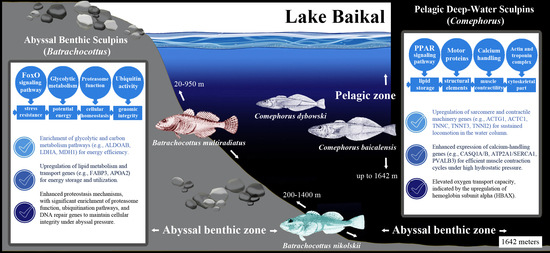
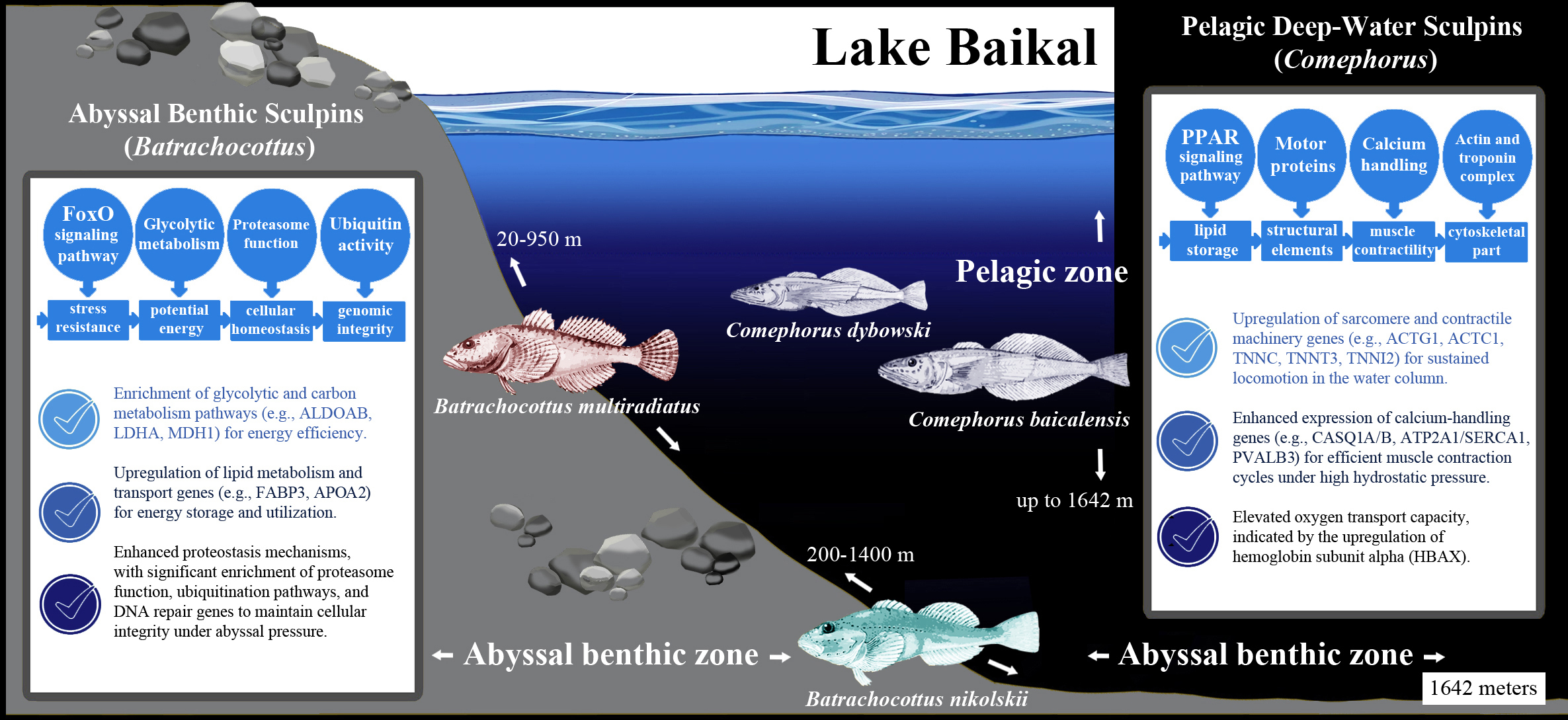
The deep-water environments of lakes and oceans, characterized by perpetual darkness and high pressure, present extreme challenges for animal life. Understanding how organisms genetically adapt to these conditions is a fundamental goal in evolutionary biology. Lake Baikal provides a unique natural laboratory, as its endemic sculpin fish (Cottoidei) have diversified to occupy all depth zones, including the deep abyssal zone (up to 1642 m). Our research investigated the genetic mechanisms underlying this adaptation by comparing pelagic open-water species with benthic (demersal) abyssal dwellers. We found that pelagic sculpins use genes suited for sustained swimming. In contrast, benthic sculpins activate a specific set of genes related to efficient energy use, cellular maintenance, and structural integrity, which are crucial for conserving energy and withstanding high pressure. These findings reveal a core set of genetic principles for survival in deep freshwater habitats. This knowledge is crucial for conserving the unique biodiversity of ancient ecosystems like Lake Baikal, especially as they face increasing pressures from climate change and human activity.

Abstract

Understanding the molecular mechanisms that enable vertebrate adaptation to deep-water environments remains a central goal in evolutionary biology. This study used comparative transcriptomics of skeletal muscle tissue to investigate these mechanisms in four endemic sculpin fish species (Cottoidei) from Lake Baikal, which inhabit different depth niches ranging from pelagic to benthic-abyssal zones up to 1642 m. Pelagic species showed increased activity in genes involved in sarcomere structure, calcium handling, and motor proteins, indicating adaptations for sustained locomotion. In contrast, deep-benthic specialists showed enrichment in pathways for glycolytic metabolism, proteasome function, and ubiquitination, reflecting adaptations for energy efficiency and protein homeostasis in a high-pressure environment. We conclude that the colonization of the Baikal abyssal zone by sculpins relies on a suite of shared molecular mechanisms, with distinct ecological pressures driving specific transcriptional changes in motility, metabolic strategy, and cellular integrity. This study provides a systems-level model for deep-water adaptation in vertebrates.

1. Introduction

Lake Baikal, a UNESCO World Heritage Site, serves as a natural freshwater laboratory for evolutionary biology and comparative genomics. Its ancient origin, tectonic history, and unique hydrological conditions have fostered an extraordinary endemic fauna. In particular, its fish assemblage represents a remarkable model for studying adaptive radiation and speciation [1,2]. Among the most diverse and ecologically significant groups, which make up to 80% of the lake’s total fish biomass, are the sculpins of the group Cottoidei [3]. Baikal sculpins are a phylogenetically closely related group that radiated from a common marine ancestor within the last 2–2.5 million years [1,4]. This radiation has produced about 40 endemic species that occupy a wide range of ecological niches [5]. This diversification is especially evident along the bathymetric gradient, with species adapted to specific depths ranging from shallow waters to the abyssal zone (up to 1642 m). The evolutionary history and ecology of these fish are well-documented, providing a solid foundation for comparative studies [2,3,4,5,6,7,8,9,10,11,12,13,14,15]. Understanding the mechanisms underlying their ecological adaptations is crucial for revealing the evolutionary processes that shape biodiversity in such isolated ecosystems.
The deep-water habitat of Lake Baikal presents formidable physiological challenges for aquatic life. These include low temperatures consistently near 4 °C, high hydrostatic pressure (over 160 atm) and perpetual darkness [15]. However, a key factor that distinguishes Baikal from other deep lakes and enables its rich deep-water fauna is the persistent presence of dissolved oxygen throughout the entire water column. Oxygen concentrations are high (9–14 mg/dm3) and, critically, oxygen saturation in the bottom waters rarely falls below 70%, due to unique seasonal deep-water renewal mechanisms [16]. This oxygen-rich environment mitigates a challenge that typically constrains life in the deep zones of most freshwater ecosystems. Nevertheless, for vertebrates, high hydrostatic pressure remains a pervasive stressor that can disrupt protein folding, membrane fluidity, and the function of neuronal and contractile tissues, posing a significant barrier to colonization [17,18,19]. Thus, how Baikal sculpins have overcome these constraints to thrive in deep waters is a central question in evolutionary physiology.
In the post-genomic era, transcriptomics has emerged as a powerful tool for understanding the molecular basis of phenotypic adaptation. By quantifying gene expression levels across tissues and conditions, transcriptomic analyses can identify key metabolic pathways, stress responses, and structural modifications critical for environmental adaptation [20,21]. Comparative transcriptomics, which compares expression profiles between closely related species from different habitats, is particularly effective. This approach allows for the identification of conserved core molecular functions and those altered by natural selection to cope with specific environmental pressures [20,22]. Such studies have successfully revealed adaptive mechanisms in other deep-water organisms, showing changes in genes related to energy metabolism and apoptosis in response to high pressure [22,23,24,25,26]. While adaptations in marine deep-sea fish are increasingly studied, systematic investigations of shared molecular principles in freshwater deep-water ecosystems remain scarce. To our knowledge, this is the first comparative transcriptomic study of endemic freshwater sculpins (Cottoidei, Scorpaeniformes) inhabiting contrasting deep-water niches (pelagic versus benthic-abyssal). Additionally, it provides the first transcriptomic data for the deep-water freshwater Cottoidei. To address this gap and provide a comprehensive, systems-level model for adaptation in a unique ancient deep-water ecosystem, we developed a comparative framework that includes two species from each ecological group: pelagic and benthic-abyssal.
In this study, we apply a comparative transcriptomic framework to investigate the molecular adaptations of endemic Baikal sculpin species from two different genera: the benthic (demersal) abyssal Batrachocottus (or Adipocottus, according to [5]) and the pelagic Comephorus, which inhabits the water column. The selection of these species is based on their distinct and well-documented bathymetric distributions and ecological strategies, providing a strong comparative framework for studying depth-related adaptations. The two benthic-abyssal sculpins, the fatty sculpin Batrachocottus (Adipocottus) nikolskii (Berg, 1900) and the spotty-fins sculpin Batrachocottus (Adipocottus) multiradiatus (Berg, 1907), inhabit muddy bottoms at depths of 200 to 1400 m and 15–20 to 950 m, respectively, with B. multiradiatus being more eurybathic than B. nikolskii [3,5,6,27]. In contrast, the two pelagic species, the big golomyanka Comephorus baicalensis (Pallas, 1776) and the small golomyanka Comephorus dybowski (Korotneff, 1905), are secondary pelagic fishes, characterized by viviparity and a lack of association with the bottom, inhabiting the entire water column of the open lake down to maximum depths of 1642 m [3,6,15], although individual Comephorus specimens touching soft sediments have been noted previously [28]. These species, which lack a swim bladder, perform extensive vertical migrations and do not form schools [3,7,8]. Unlike typical marine pelagic fish, Comephorus species are not highly active swimmers. Instead, they hover in the water column, maintained by neutral buoyancy and their elongated, broad pectoral fins [3,29]. However, significant activity during feeding has also been observed in these species, indicating they can be in continuous motion [15]. This phylogenetic context, comparing closely related sculpin species that have diverged to occupy contrasting deep-water niches (benthic-abyssal versus pelagic), allows for a focused investigation into the molecular mechanisms underlying adaptive specialization.
In this work, we focus on skeletal muscle as a key tissue. This tissue was selected because it is the dominant tissue in fish, comprising a major portion of body mass, and plays a vital role in metabolic balance and serves as the primary motor for swimming, a fundamental and defining activity of these vertebrates [20,30]. Furthermore, as a key metabolic organ, skeletal muscle provides critical insights into adaptations for energy efficiency and proteostasis under high hydrostatic pressure [20,22,30], making it an ideal system to uncover the molecular mechanisms underlying ecological specialization. From a practical standpoint, skeletal muscle is an easily accessible tissue that allows rapid sampling from deep-water, wild-caught specimens, which was critical for minimizing RNA degradation and ensuring high-quality data. While studying other tissues would provide a more comprehensive view, skeletal muscle offers a powerful and rational starting point [20,22,30].
For the first time, we describe and compare the transcriptional profiles of skeletal muscle in these species, focusing on identifying the genetic signatures associated with a deep-water lifestyle. We hypothesize that deep-water benthic (demersal) sculpins will show distinct expression patterns in genes involved in pressure sensing, membrane composition, metabolic reprogramming, and cellular stress response compared to pelagic species. This research aims to provide a deeper, systems-level understanding of the molecular mechanisms that underpin the successful adaptation of vertebrate life to the abyssal environment of Lake Baikal.

2. Materials and Methods

2.1. Field Sampling and Trawl Operations

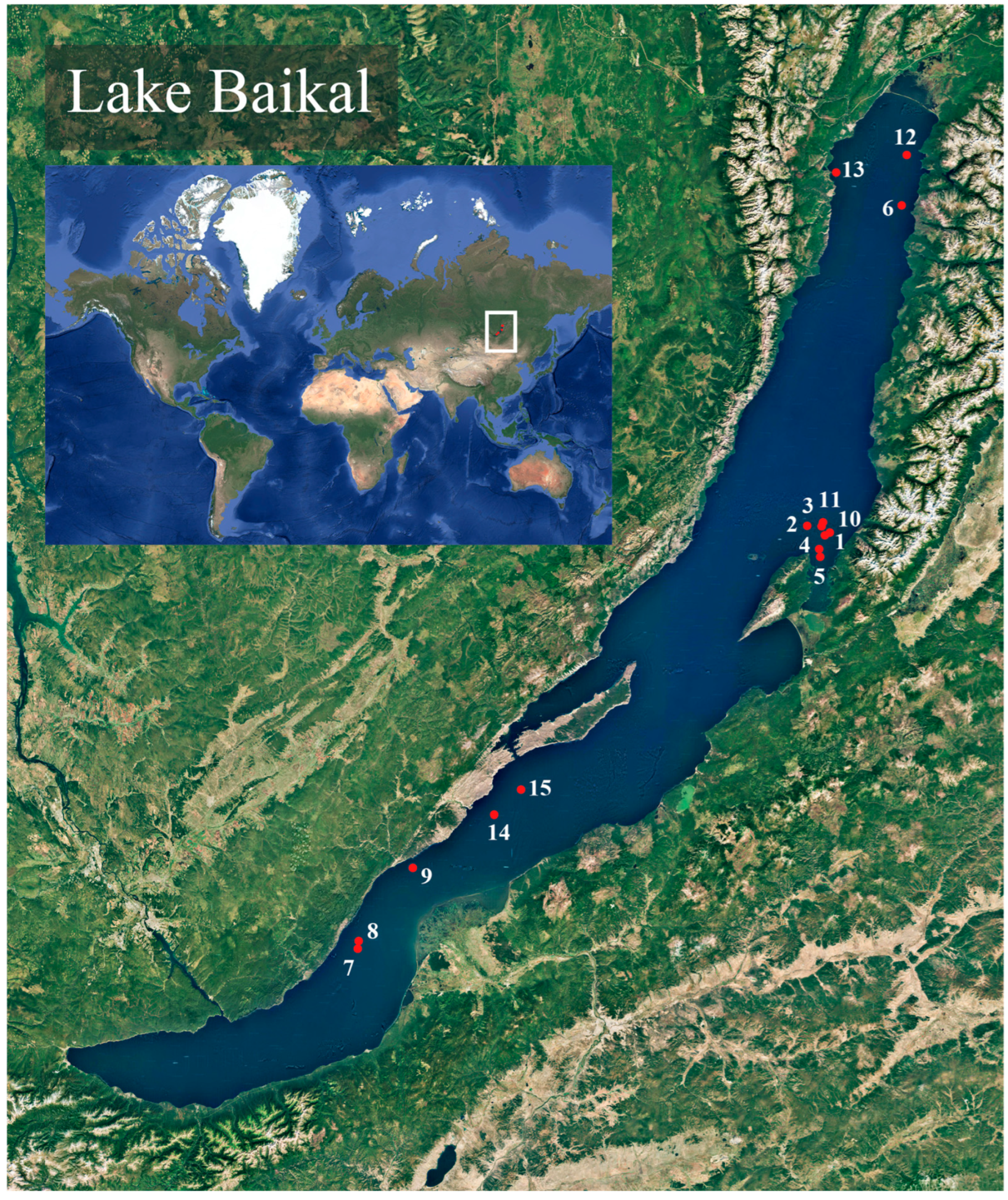
Specimens of deep-water endemic sculpins (Cottoidei) were collected during a research expedition aboard the research vessel G. Yu. Vereshchagin (operated by the Center for Collective Use «Research vessels Center of LIN SB RAS on Lake Baikal»), managed by the Limnological Institute of the Russian Academy of Sciences, in August 2023 and 2024. Sampling was conducted in the central and northern basins of Lake Baikal, specifically at depths ranging from 218 to 1397 m (Table 1, Figure 1).
Table 1. Summary of trawling conducted.
Figure 1. Map of trawling locations on Lake Baikal. Red dots represent trawling start points, corresponding to the trawl numbers in Table 1. This map was created using QGIS v.3.40.12.
A beam trawl, equipped with a fine-mesh cod-end liner (10 mm mesh) to minimize physical damage to the specimens, was deployed as the primary sampling gear. To reduce the duration of stress and prevent degradation of tissue quality, trawl hauls were designed to be short, typically lasting 40–60 min at the target depth. Upon retrieval, the trawl was immediately brought on deck, and the cod-end contents were carefully emptied into a large, insulated tank continuously supplied with fresh, chilled lake water.
Baikal sculpin species were identified in the field before tissue sampling based on macroscopic morphology, guided by published keys and assisted by I.V. Khanaev. Only live, actively respiring, and morphologically intact individuals of the target species were selected for sampling. To exclude the influence of major ontogenetic shifts in gene expression, sampling was limited to sexually mature adult representatives of each species. Selected specimens were rapidly euthanized by incising the spinal cord, a method that minimizes the physiological stress response. Within a critical window of 60–90 s post-euthanasia, the target tissue (skeletal muscle) was dissected. Dissections were performed using sterile, RNase-free forceps and scalpels.
Immediately upon dissection, approximately 20–30 mg of each tissue sample was placed into a pre-labeled, pre-chilled 0.6 mL cryovial containing 0.3 mL of Reagent for ExtractRNA (BC032, an analog of TRIzol, Evrogen, Moscow, Russia). TRIzol, a monophasic solution of guanidine isothiocyanate and phenol, acts as a powerful denaturant, instantly inactivating RNases and preserving the RNA’s integrity at the moment of fixation. A total of 84 specimens (18–23 fish per species) were sampled (Table 2).
Table 2. Characteristics of Baikal sculpins used in the study.
The Ethics Committee of the Limnological Institute SB RAS accepted the experiments and the publication of the results in the press in accordance with Russian laws, standards and guidelines on animal welfare (Protocol #3, 1 November 2025).

2.2. RNA Extraction and Subsequent Preparation

Total RNA was extracted from skeletal muscle samples using Reagent for ExtractRNA (BC032, an analog of TRIzol, Evrogen, Moscow, Russia) and subsequently treated with RNase-Free DNase (Magen Biotechnology Co., Guangzhou, China) in accordance with the manufacturer’s protocol to eliminate potential genomic DNA contamination. DNase was inactivated by adding EDTA to a final concentration of 0.017 M, followed by incubation at 70 °C for 10 min, and the samples were then purified with the Amplitech RNA-100 kit (Amplitech, Moscow, Russia). RNA integrity and concentration were assessed via spectrophotometry (EzDrop1000, Bluy-Ray Biotech, New Taipei City, Taiwan), agarose gel electrophoresis method and Agilent 2100 (Agilent Technologies, Santa Clara, CA, USA) analysis. All RNA samples had a high integrity, with an RNA Integrity Number (RIN) of no less than 7, ensuring the reliability of subsequent transcriptomic analysis. To address the problem of limited biological replicates, 18–23 individuals per group were included in the analysis, and their RNA was combined to create representative RNA pools for the library preparation.
The pooled RNA sampling strategy was used due to the significant logistical constraints of obtaining deep-water sculpin specimens from the abyssal zone of Lake Baikal. The primary objective was to identify constitutive transcriptional signatures underlying major ecological adaptations between pelagic and benthic lineages, rather than to assess individual variation. To ensure the robustness of our findings despite this approach, two different species were used within each ecological group. Moreover, we applied stringent statistical thresholds (p < 0.0001, logFC = 3) to identify high-confidence differentially expressed genes (see Section 2.4). In addition, the key transcriptional patterns identified were successfully validated using qPCR on unpooled individual biological replicates, confirming the reliability of the major interspecific differences reported (see Section 2.5).

2.3. Library Construction and Sequencing

The messenger RNA was separated from the total RNA using poly-T oligo-attached magnetic beads. Following mRNA fragmentation, first-strand cDNA synthesis was primed with random hexamers, and a second strand was synthesized using dTTP to generate a non-directional library. This library was then finalized through a series of preparative steps, including end repair, A-tailing, adapter ligation, size selection, amplification, and purification. The resulting libraries were quantified and assessed for size distribution using Qubit and real-time PCR, followed by equimolar pooling. High-throughput sequencing was performed by Novogene on an Illumina NovaSeq 6000 platform (Novogen Co., Beijing, China), using a NovaSeq 6000 Reagent Kit v.1.5 (Illumina, San Diego, CA, USA) to generate 150 bp paired-end reads. Base-call quality, expressed as Phred scores (Qphred) on the Illumina platform, was derived from the error probability (e) using the equation Qphred = −10log10(e). Finally, raw reads were filtered with Trimmomatic v.0.36 [31] to eliminate adapter sequences and low-quality sequences, yielding a refined set of clean reads for subsequent analysis.

2.4. De Novo Assembly and Differential Gene Expression Analysis

Due to the lack of a high-quality reference genome for these non-model species and their considerable phylogenetic divergence (approximately 2.5 million years), a de novo assembly approach was employed to obtain a comprehensive transcript catalog. Given that the studied species belong to distinct taxa, transcriptome assembly was performed separately for each species using Trinity v.2.13.2 software package [32]. The combined assembly was then processed using CD-HIT v.4.8.1 [33] to remove duplicate sequences and identify common genes. Sequences with ≥95% homology were clustered and reduced to unique representatives. To assign unique identifiers, numerical suffixes in ascending order were appended to all sequence names using a custom script (‘add_counters.js’, available at: https://github.com/tuyana-bot/add_counters, accessed on 26 November 2025). Subsequently, a gene-to-transcript map file (name.gene_trans_map), which correlates gene identifiers with their corresponding transcript (isoform) identifiers, was generated using the script ‘get_Trinity_gene_to_trans_map.pl’ (available at: https://github.com/tuyana-bot/get_Trinity_gene_to_trans_map, accessed on 26 November 2025). A transcriptome index for expression quantification was built using the command ‘salmon index -t name.fasta -i name_index’ (Salmon v.1.10.0) [34]. Transcript expression levels were estimated using the script ‘align_and_estimate_abundance.pl’. Next, the script ‘abundance_estimates_to_matrix.pl’ was used. This step converted the individual transcript expression estimates into a single matrix of counts, TPM, and FPKM values, suitable for subsequent differential expression analysis and data visualization.
Differential expression analysis was performed using the R package EdgeR v.4.0.3 [35]. EdgeR provides the statistical foundation for identifying differential expression by applying an overdispersed Poisson model, with an integrated empirical Bayes method employed to moderate the degree of overdispersion across genes [36]. The dispersion parameter was set to 0.2 to account for the anticipated degree of biological variability between samples. This value was selected because the studied individuals were wild-caught rather than reared in a controlled laboratory environment, and were therefore expected to exhibit greater variability in gene expression. Transcripts were initially considered differentially expressed (DE) using a significance threshold of p-value < 0.001 and an absolute logarithmic fold-change of 2 (logFC = 2), that is, at least a fourfold change in expression. The p-values were adjusted for multiple testing. This stringent parameter was used to reduce the likelihood of false positive results. In addition, to isolate the most prominent changes, the analysis was subsequently refined to focus on the highly differentially expressed genes (top-DEGs) through the implementation of more stringent filters (adjusted p-value < 0.0001, logFC = 3). A distance matrix was calculated using the Pearson correlation method to support the clustering of functionally similar genes [37], and the resulting relationships were visualized in a heatmap generated with the R package pheatmap v1.0.12. The identified differentially expressed genes (DEGs) were then annotated by homology search via the GenBank v.254 database using BLAST (https://www.ncbi.nlm.nih.gov/geo/query/blast.html, accessed on 26 November 2025), applying a stringent e-value threshold of p-value < 0.001 to ensure high-confidence functional assignments. Subsequent functional prediction and classification were conducted with the EggNOG mapper (orthologous groups of genes, http://eggnog5.embl.de, accessed on 26 November 2025) [38], followed by enrichment analysis performed using KOBAS software v.3.0 [39] in conjunction with Gene Ontology (GO) terms and Kyoto Encyclopedia of Genes and Genomes (KEGG) pathways. Terms and pathways with a corrected p-value < 0.05 were considered statistically significant, highlighting their potential biological importance.

2.5. Validation of Transcriptomic Data via qPCR

RNA extraction and subsequent preparation were performed as described in Section 2.2. cDNA was synthesized from the extracted RNA using random hexamer primers and the Reverta-L reagent kit (AmpliSens, Moscow, Russia), according to the manufacturer’s protocol.
The transcriptome data accuracy was validated on individual biological replicates (18–23 per species). Several highly expressed genes were selected for quantitative PCR (qPCR) analysis. The Recombination Activating Gene 1 (RAG1) served as the reference gene based on its documented stability in prior studies [12]. Primers were designed in Primer-BLAST (https://www.ncbi.nlm.nih.gov/tools/primer-blast/, accessed on 26 November 2025) and conformed to MIQE guidelines [40]. Primer specificity was confirmed by melting curve analysis, and through transcriptome alignment to verify efficiency. The primer sequences are listed in Table 3.
Table 3. Primers designed for qPCR analysis.
qPCR was conducted on a BIO RAD CFX96 Touch Real-Time PCR Detection System (BioRad, Hercules, CA, USA) using a reaction mixture composed of 0.25 mM dNTPs, 0.3 U 1× Encyclo-polymerase (Evrogen, Moscow, Russia), 1× Encyclo-buffer, 0.5× SYBR Green (Lumiprobe, Hunt Valley, MD, USA), 0.5–0.6 ng of cDNA, and 0.5 pmol of each primer. The reference and target genes were amplified using a touchdown PCR protocol, which involved progressively lowering the primer annealing temperature from 67 to 60 °C over the course of the first seven cycles. The thermal profile of each cycle began with DNA polymerase activation at 95 °C for 3 min, followed by 40 cycles of amplification (95 °C for 10 s, 60 °C for 15 s, and 72 °C for 15 s), with a melting curve analysis performed post-amplification to confirm product specificity.
Relative gene expression was determined via the ΔΔCq method using the BIO RAD system’s integrated software v.3.1. Statistical comparisons of expression levels were performed with the Kruskal–Wallis test in the Statistica 10 package, considering p < 0.05 as statistically significant.

3. Results

3.1. Transcriptome Sequencing and De Novo Assembly

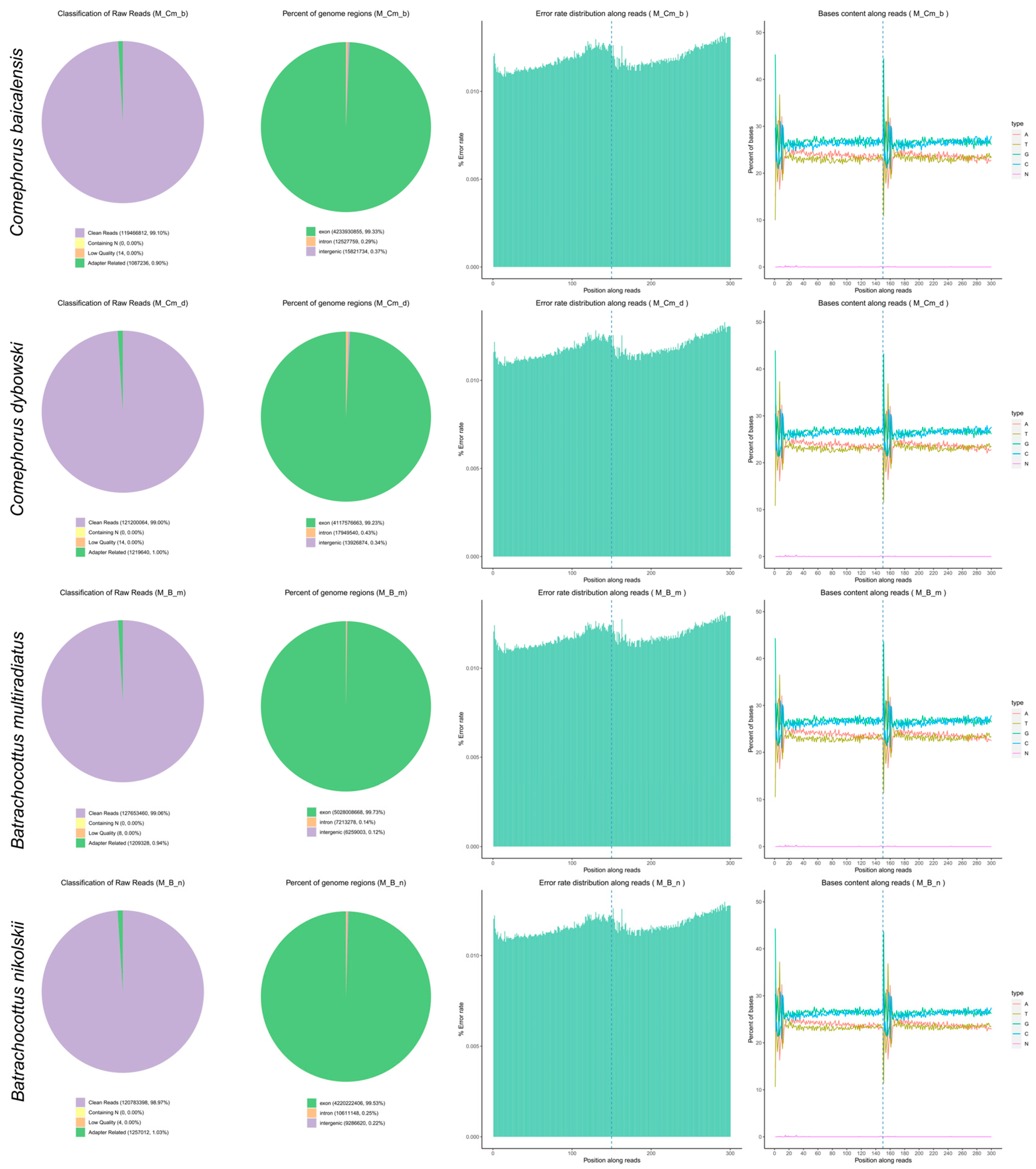
Sequencing quality metrics are summarized in Table 4, and the distribution of sequencing reads mapping to exons, introns, and intergenic regions across all samples is depicted in Figure A1. The non-stranded library preparation resulted in a balanced GC/AT nucleotide composition throughout sequencing (Table 4).
Table 4. Sequencing data quality statistics.
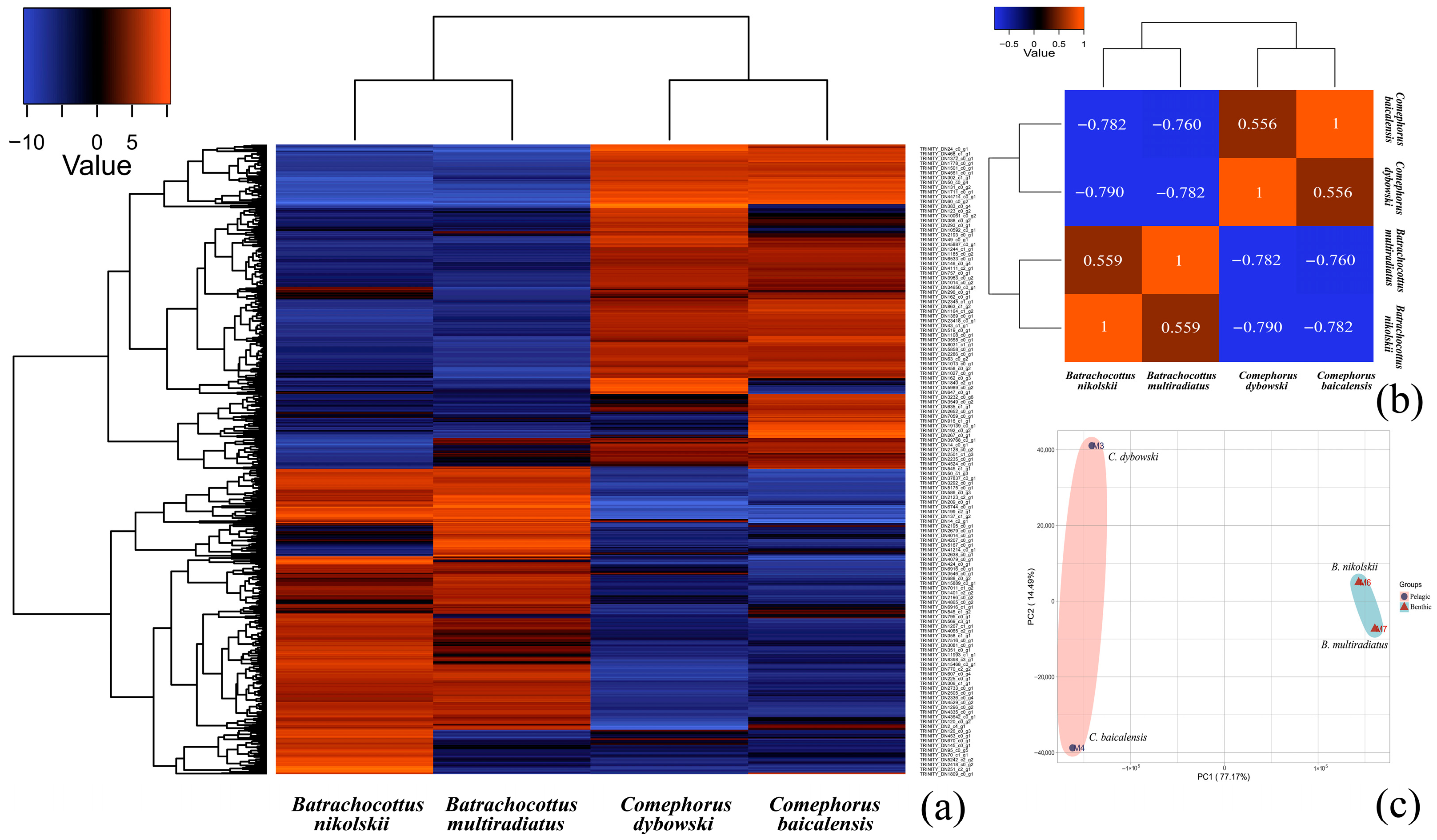
All raw sequence data are available in the NCBI Gene Expression Omnibus (GEO) under accession number GSE308109 (https://www.ncbi.nlm.nih.gov/geo/query/acc.cgi?acc=GSE308109, accessed on 26 November 2025). A subsequent de novo transcriptome assembly generated 152,088 contigs with a total length of 121,871,112 bp and a maximum contig length of 11,944 bp, the details of which are available in Supplementary Materials S1 and S2; this assembly is also accessible within the same GEO repository. To identify transcriptional differences among Baikal sculpin species, a differential gene expression analysis was conducted. Applying a significance threshold of p < 0.001 (logFC = 2) when comparing all four species, a total of 793 differentially expressed genes (DEGs) were identified, as presented in Figure 2. Comprehensive lists of these DEGs, including functional annotations, are provided in Supplementary Materials S3, which catalogs all DEGs without a threshold, and S4 with a significance threshold set at p-value < 0.001 (logFC = 2).
Figure 2. Analysis of differentially expressed genes (DEGs) in Baikal sculpins. (a)—a heatmap displays log2 fold-change (logFC = 2) values (p < 0.001). Genes are clustered by expression pattern similarity (Pearson correlation), with the color key indicating high (red) and low (blue) expression. Complete logCPM and logFC data are archived in Supplementary Materials S5 and S6. (b)—The Pearson correlation coefficient matrix shows division into pelagic and benthic groups. The closer the correlation coefficient is to 1, the higher similarity the expression patterns have. (c)—PCA analysis on the gene expression value (TPM) for pelagic and benthic groups. PC1 shows the primary adaptation to different ecological niches, while PC2 reflects species differences within each group.
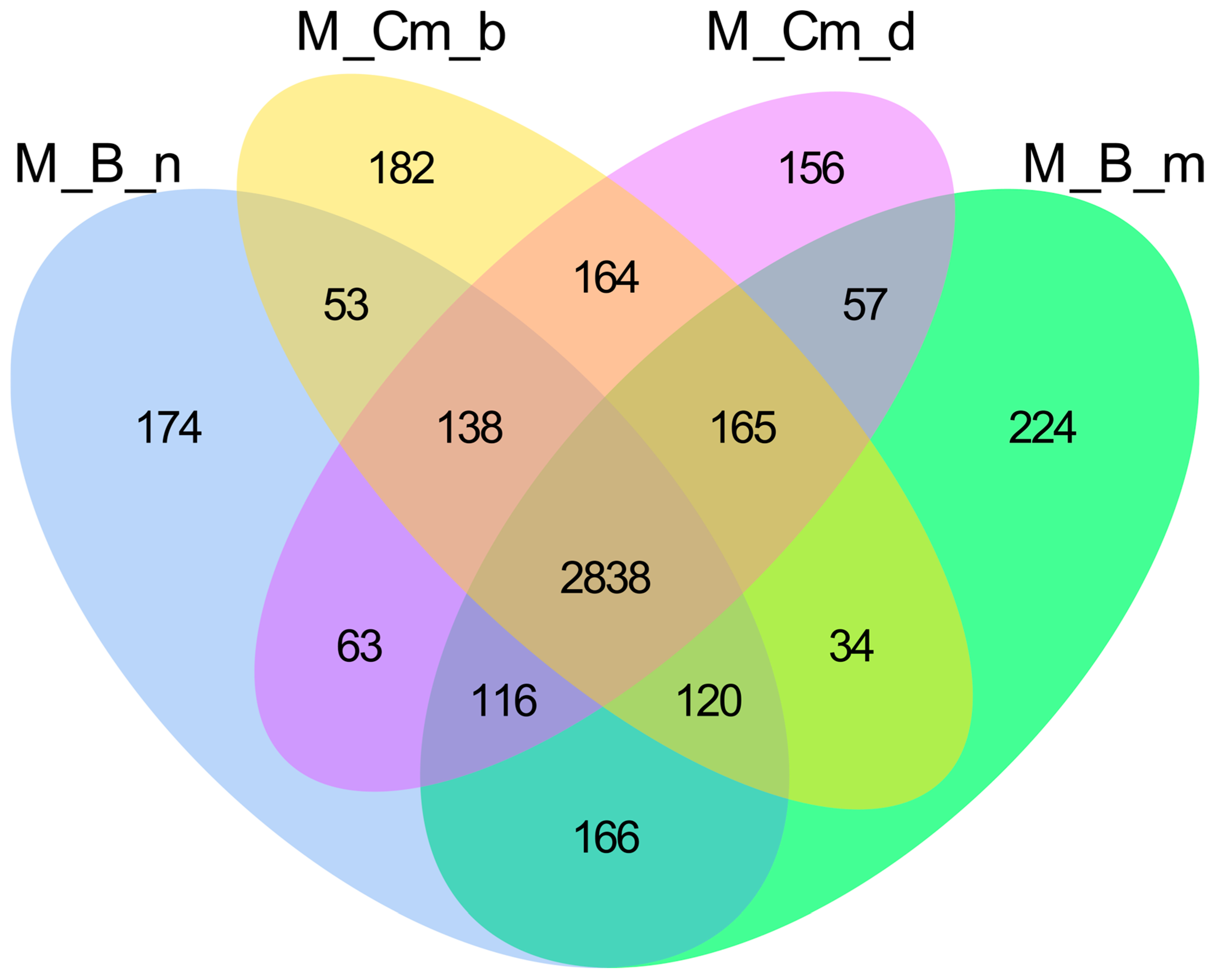
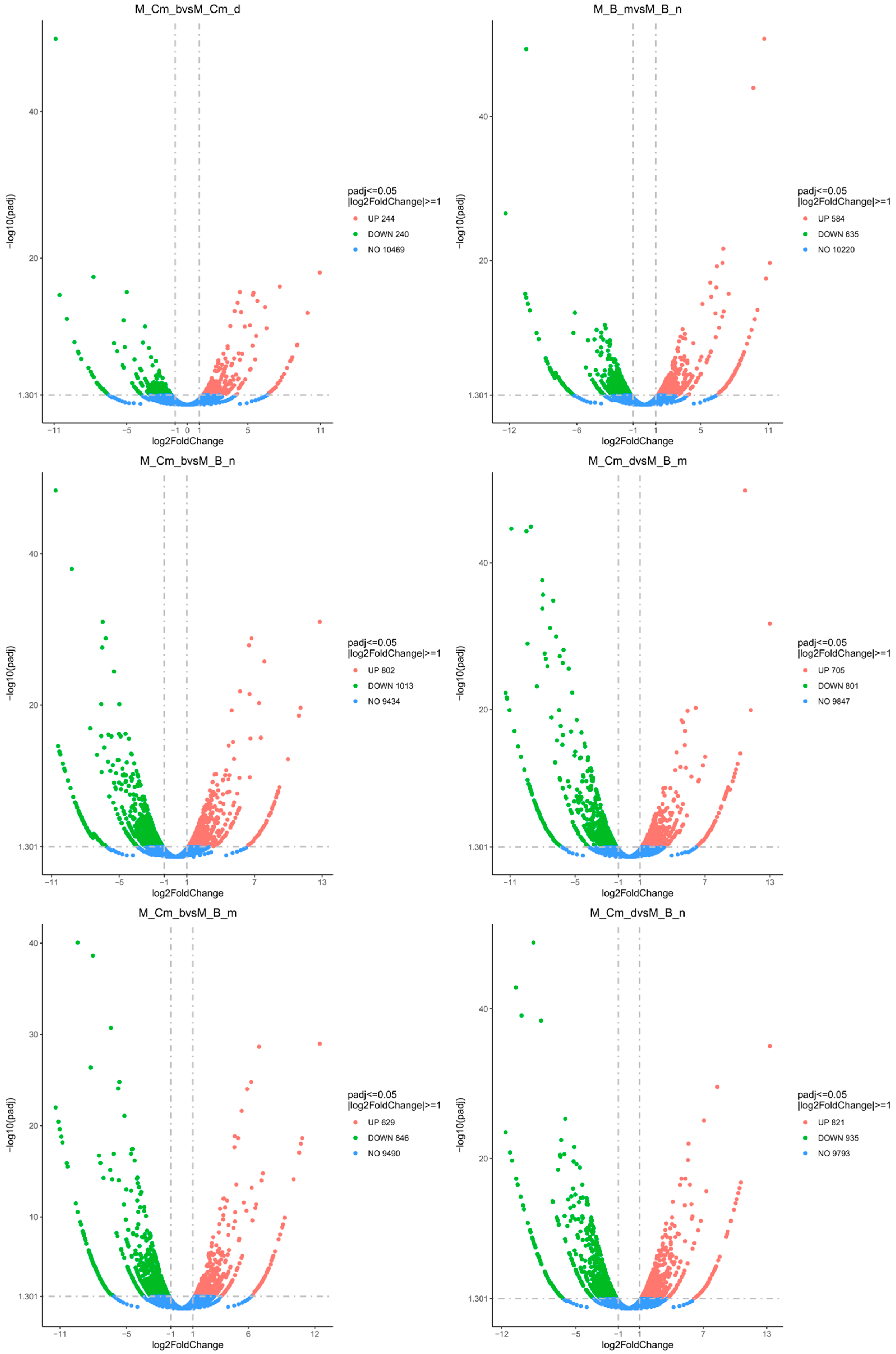
The statistical analysis showed that the differences between the ecological groups—pelagic (C. baicalensis and C. dybowski) versus benthic (B. multiradiatus and B. nikolskii)—were more pronounced than the differences between species within each group (Figure 2b,c). In addition, an analysis of the overall distribution of differentially expressed genes (DEGs) also showed the smallest number of differences in the pairwise comparison between the two species within the same genus (Figure A3). In contrast, comparisons between different genera revealed the highest number of DEGs, with a maximum of 821 up-regulated and 935 down-regulated DEGs identified between C. dybowski and B. nikolskii (Figure A2 and Figure A3). Nevertheless, species within the genus Comephorus exhibited greater divergence from each other than species within the genus Batrachocottus (Figure 2c), as confirmed by the comparison of significantly different terms and pathways in the GO and KEGG analyses (see Section 3.2: Figure 3 and Figure 4).

3.2. GO and KEGG Analysis of DEGs

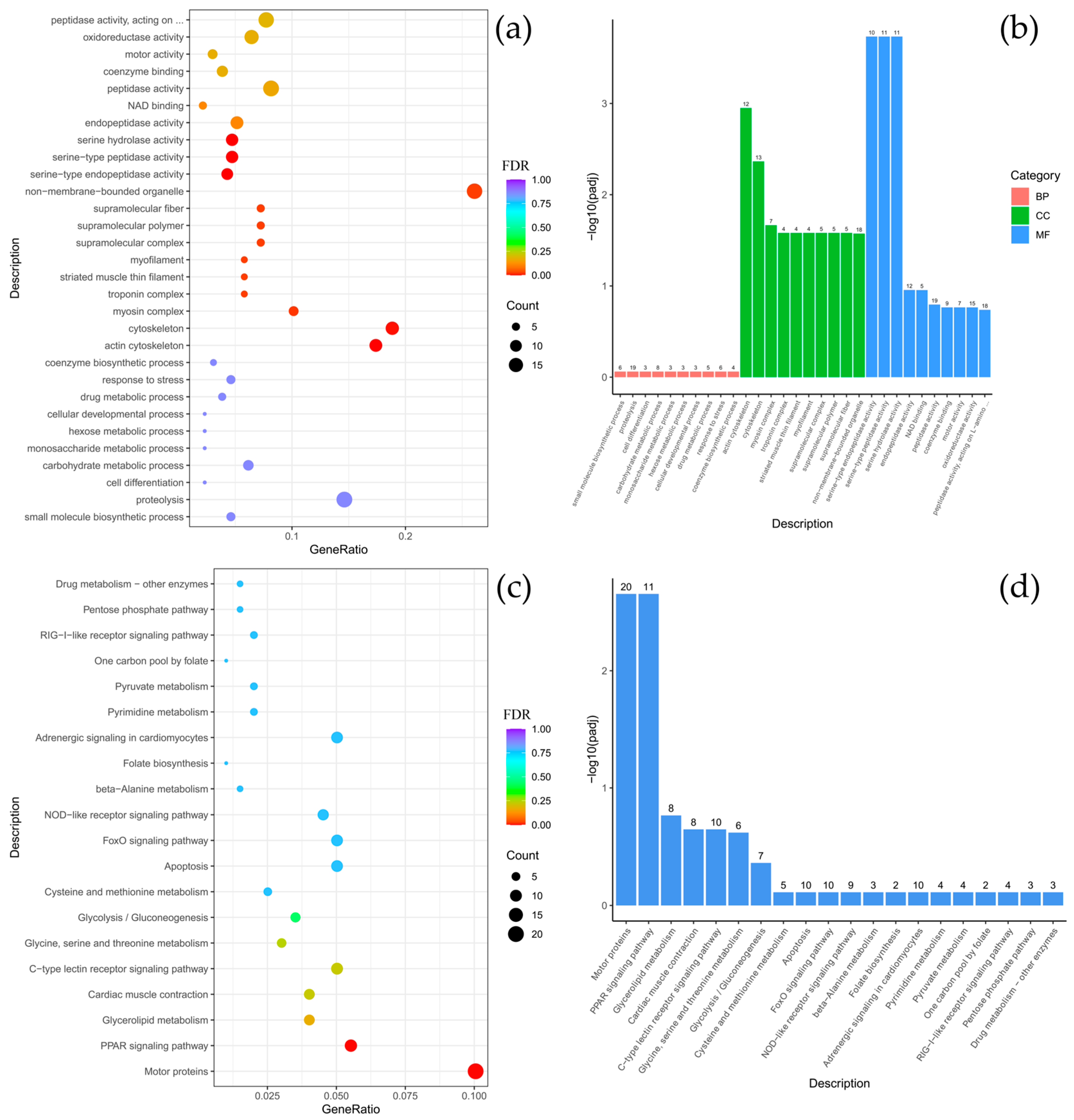
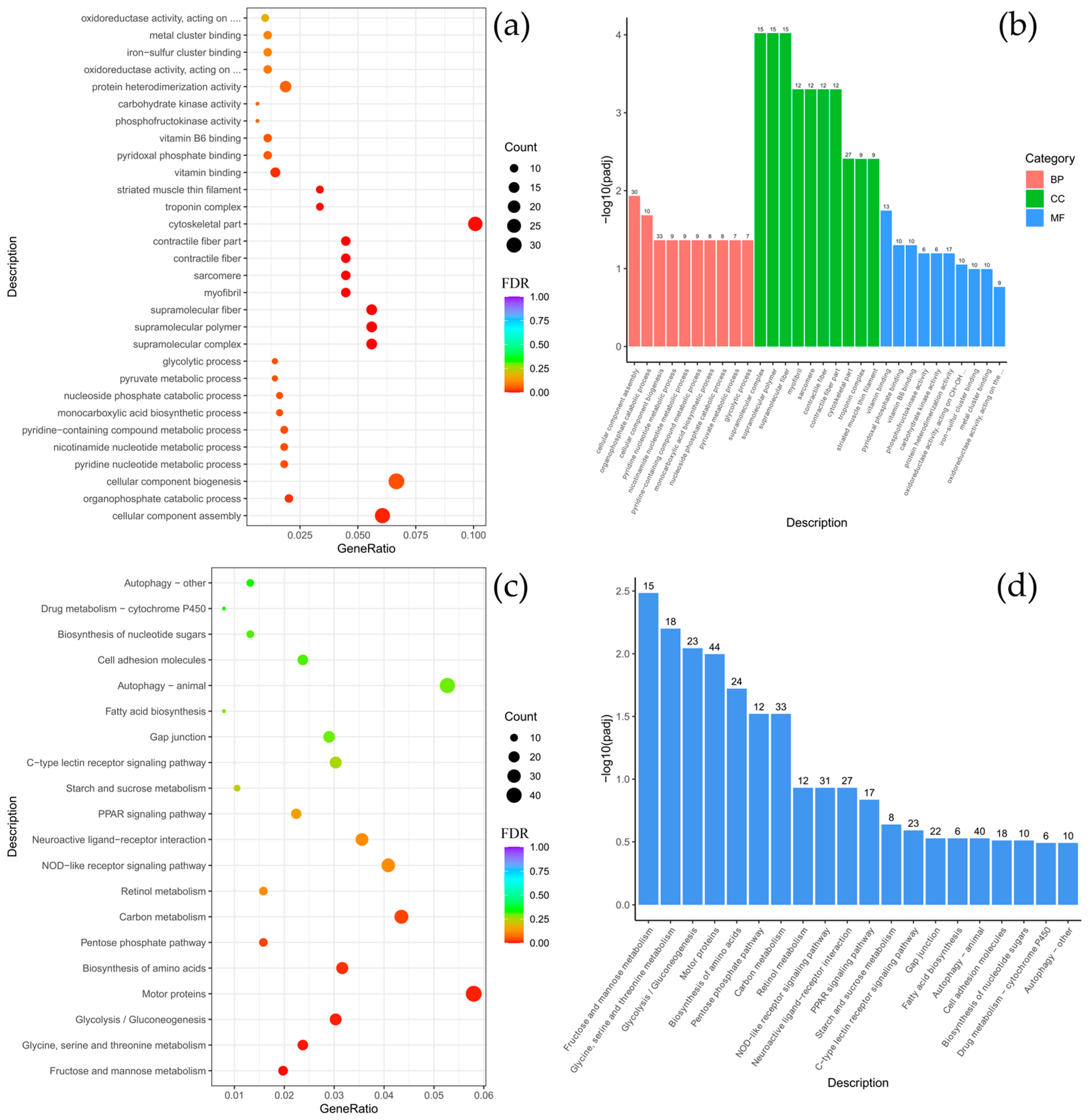
To clarify the biological functions of the differentially expressed genes (DEGs) between C. baicalensis and C. dybowski, Gene Ontology (GO) and KEGG pathway enrichment analyses were performed. The GO analysis revealed a significant enrichment of DEGs in specific functional categories, particularly within the cellular component (CC) category for structural elements such as the cytoskeleton, myofilament, striated muscle thin filament, and associated complexes including myosin and troponin. There were classified under the broader terms of supramolecular polymers and fibers, as well as non-membrane-bounded organelles. In the molecular function (MF) category, there was notable enrichment for serine-based enzymatic activities, including serine-type endopeptidase and peptidase activity, as well as serine hydrolase activity (Figure 3a,b). The KEGG pathway analysis further indicated that the DEGs were significantly enriched in key signaling and functional pathways, with the highest gene count enrichment observed for motor proteins, followed by the peroxisome proliferator-activated receptor (PPAR) signaling pathway (Figure 3c,d).
Figure 3. Comparison of Comephorus baicalensis and Comephorus dybowski: GO and KEGG enrichment analysis of DEGs. (a,b)—the most significant terms from the GO databases, including biological processes (BP), cellular components (CC), molecular function (MF); (c,d)—the top enriched terms for KEGG enrichment. The size of a point (a,c) and numbers above columns (b,d) represent the number of genes annotated to a specific term. Terms with FDR < 0.05 are considered significant.
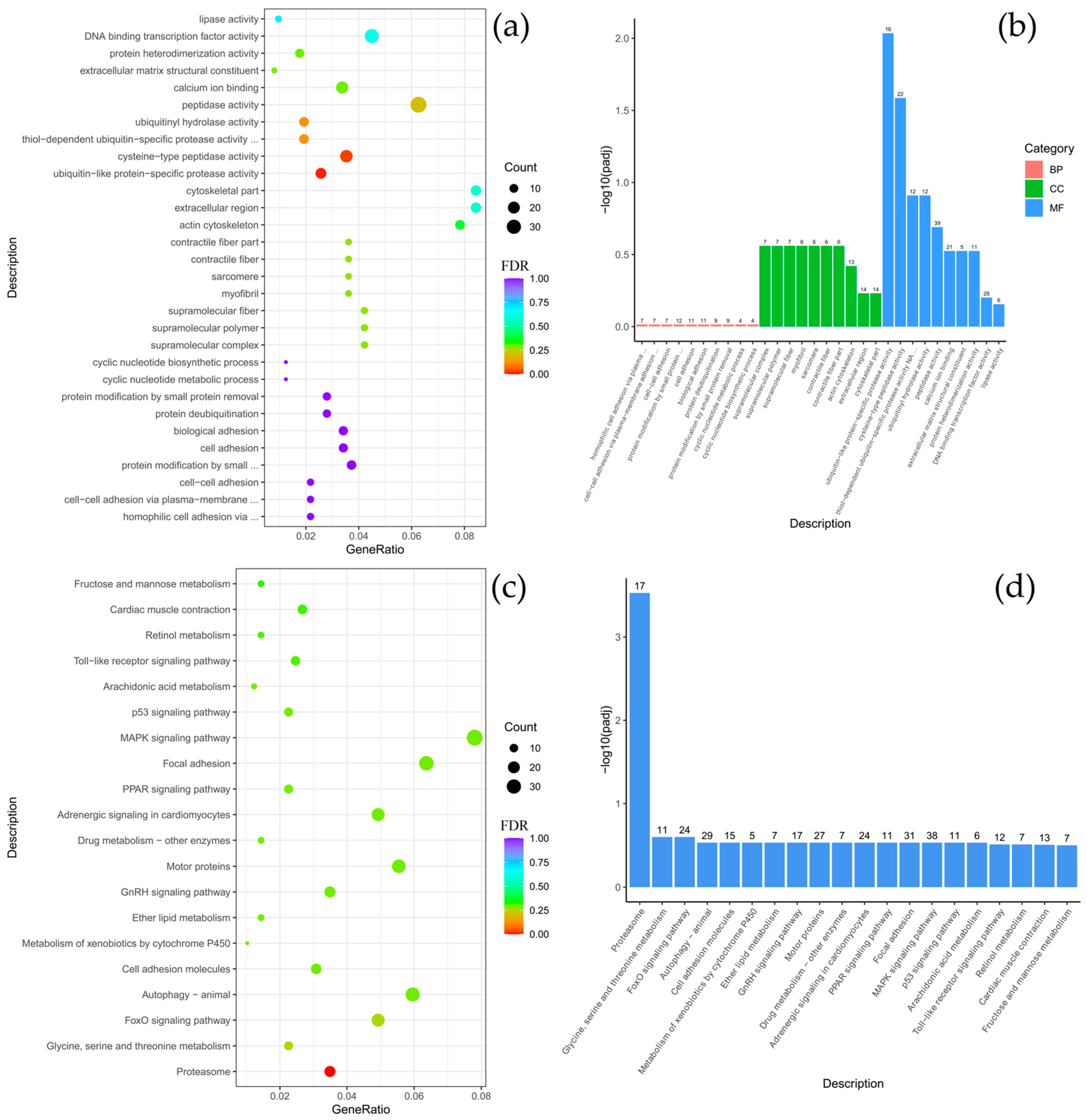
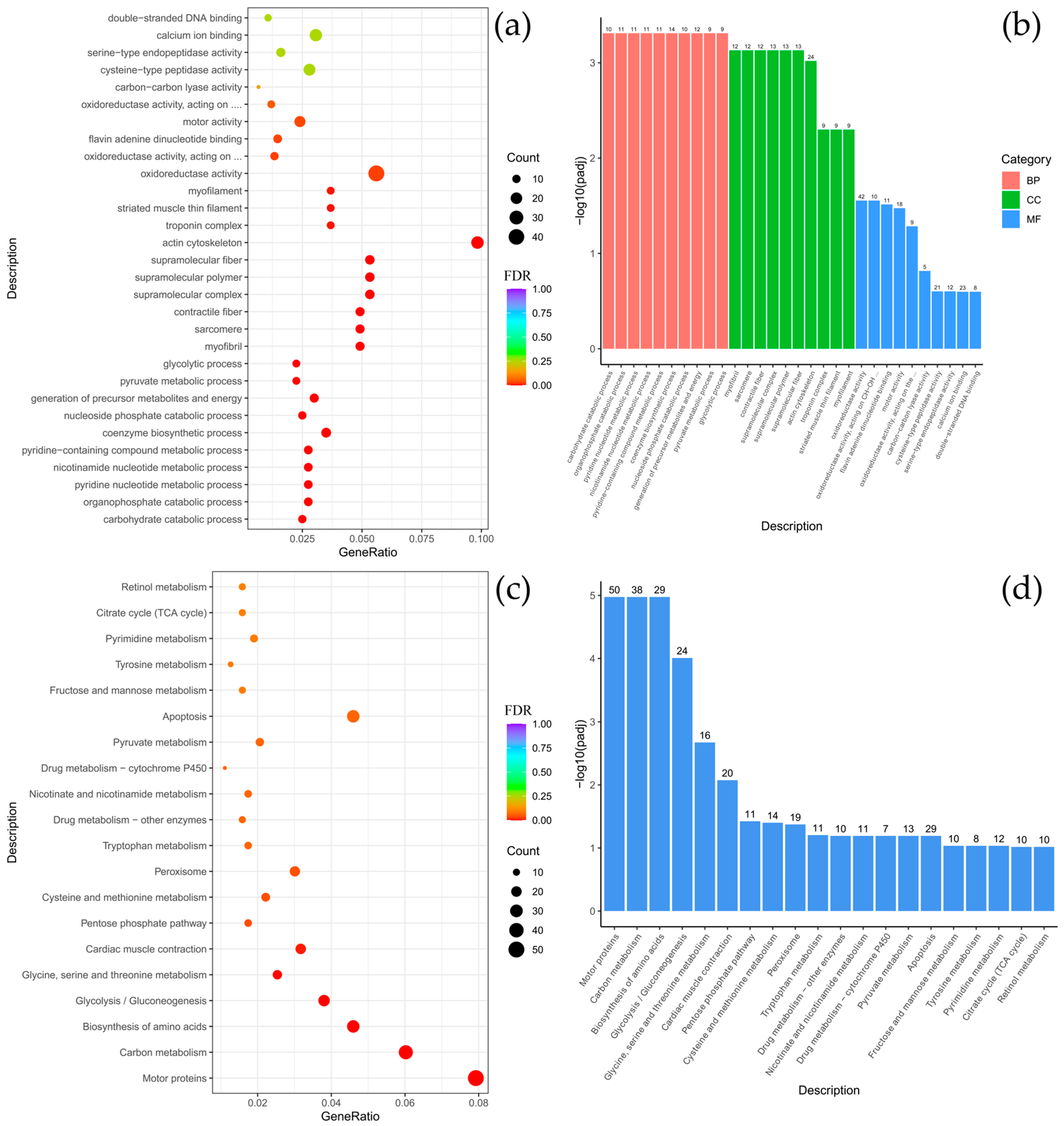
Comparative analysis between B. multiradiatus and B. nikolskii revealed the least pronounced differential gene expression among the groups studied. GO enrichment analysis indicated that the differentially expressed genes (DEGs) were exclusively and highly enriched in the molecular function (MF) category, specifically for cysteine-type peptidase activity and ubiquitin-like protein-specific protease activity (Figure 4a,b). Supporting these findings, KEGG pathway analysis demonstrated significant enrichment for proteasome-related functions. Furthermore, the highest numbers of gene enrichments were identified in pathways critical for cellular signaling and homeostasis, including MAPK signaling, focal adhesion, adrenergic signaling in cardiomyocytes, motor proteins, autophagy, and the FoxO signaling pathway (Figure 4c,d).
Figure 4. Comparison of Batrachocottus multiradiatus and Batrachocottus nikolskii: GO and KEGG enrichment analysis of DEGs. (a,b)—the most significant terms from the GO databases, including biological processes (BP), cellular components (CC), molecular function (MF); (c,d)—the top enriched terms for KEGG enrichment. The size of a point (a,c) and numbers above columns (b,d) represent the number of genes annotated to a specific term. Terms with FDR < 0.05 are considered significant.
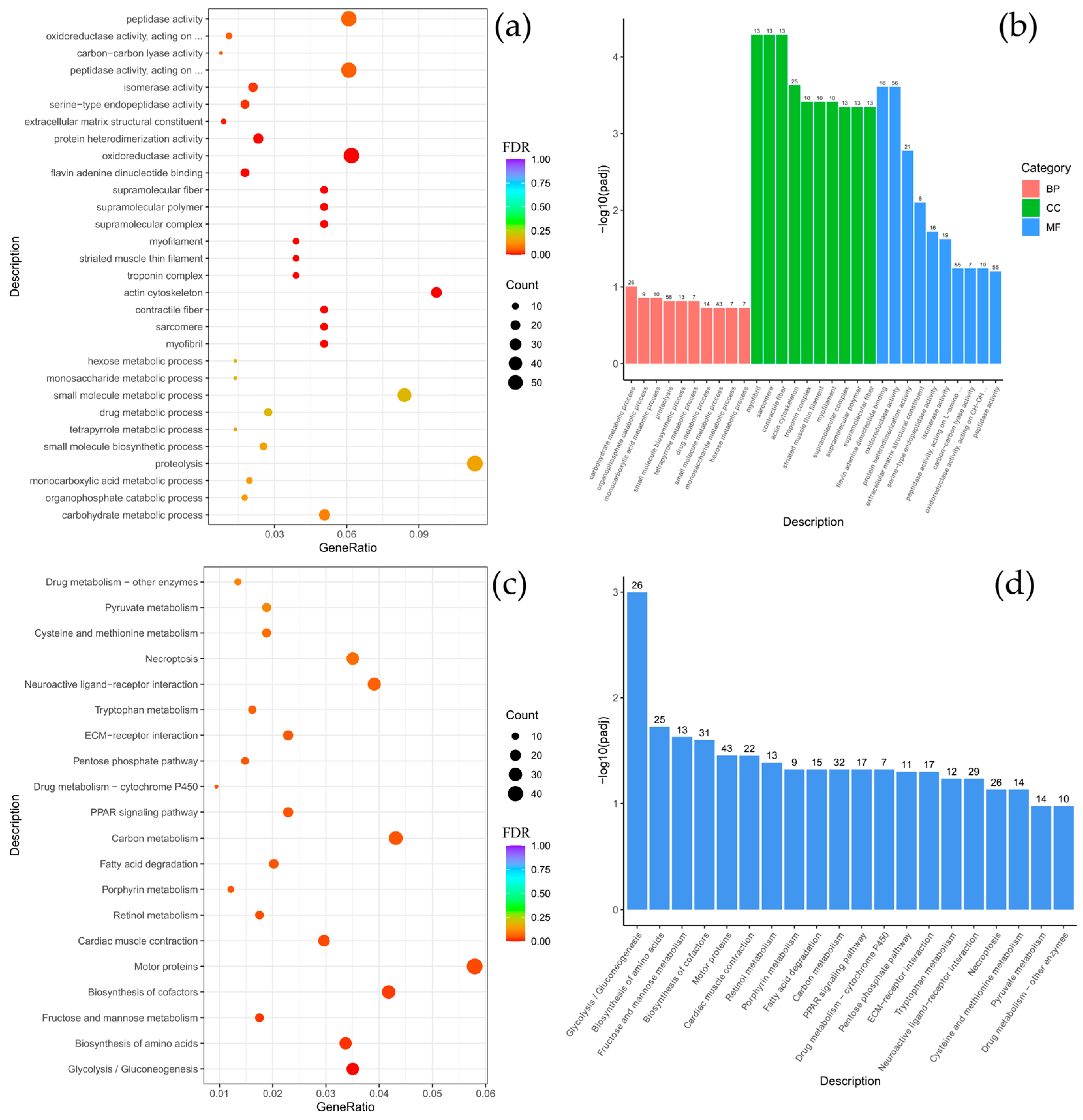
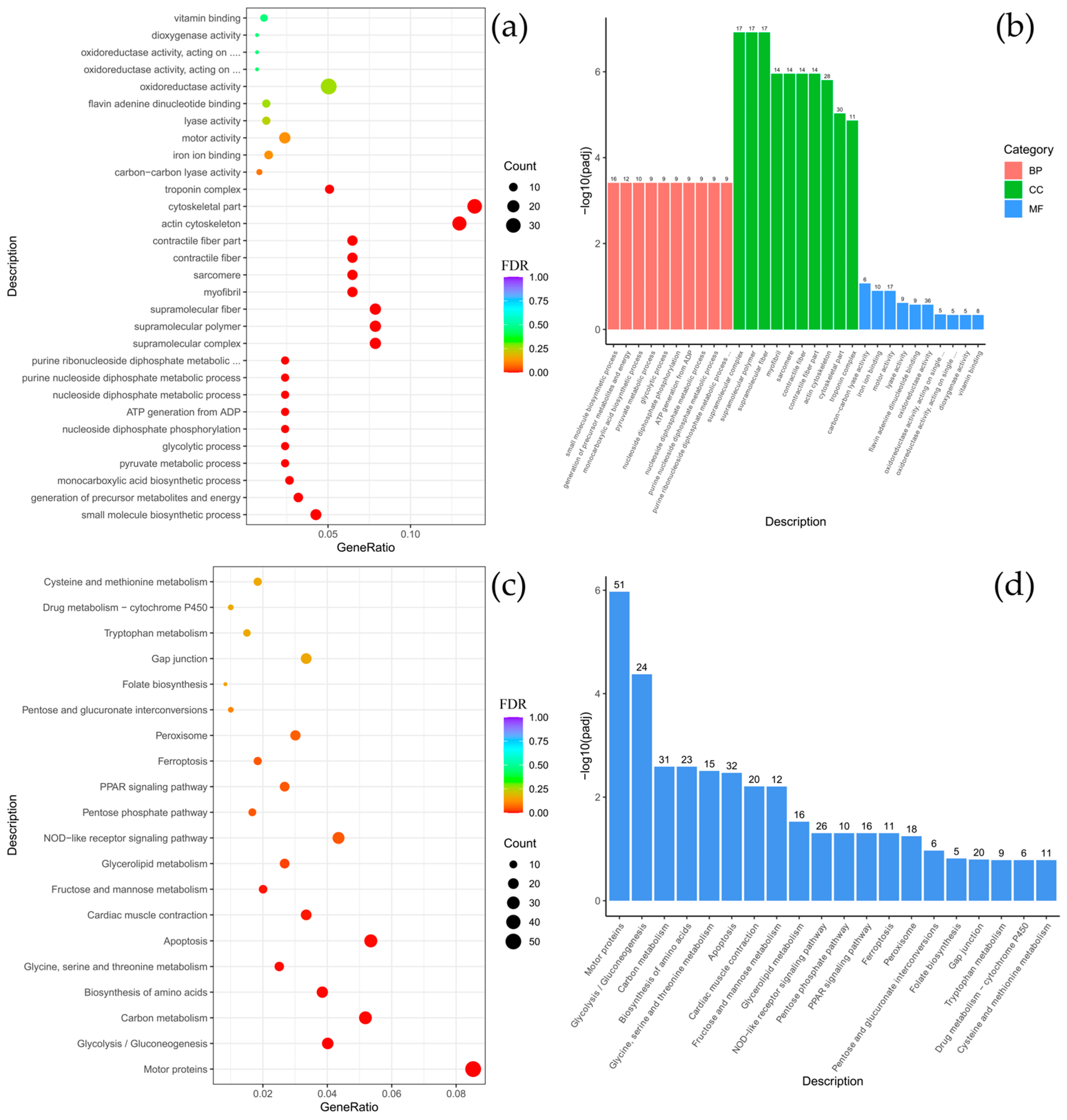
As expected, comparative analysis between different fish genera inhabiting distinct ecological niches revealed greater divergence in functional and pathway annotations than comparisons between species of the same genus living in similar conditions. Specifically, the comparison between species of the genera Batrachocottus and Comephorus identified DEGs significantly enriched in the following categories: within the biological process (BP) category, enrichment was predominantly observed for glycolytic and pyruvate metabolic processes. Concurrently, in the cellular components (CC) category, significant enrichment was observed for genes associated with the troponin complex, contractile fibers, the sarcomere, myofibrils, and various supramolecular structures, including fibers, polymers, and complexes (Figure 5, Figure A4, Figure A5 and Figure A6).
Figure 5. Comparison of Comephorus dybowski and Batrachocottus nikolskii: GO and KEGG enrichment analysis of DEGs. (a,b)—the most significant terms from the GO databases, including biological processes (BP), cellular components (CC), molecular function (MF); (c,d)—the top enriched terms for KEGG enrichment. The size of a point (a,c) and numbers above columns (b,d) represent the number of genes annotated to a specific term. Terms with FDR < 0.05 are considered significant.
Further interspecific comparisons highlighted species-specific functional specializations. The contrast between C. dybowski and benthic Batrachocottus species demonstrated that the largest number of DEGs was associated with oxidoreductase activity (Figure 4a,b and Figure A5a,b). In contrast, C. baicalensis displayed a different pattern when compared with the same benthic Batrachocottus species, with significant enrichment of genes related to the cytoskeleton, specifically those annotated to cytoskeletal part processes (Figure A4a,b and Figure A6a,b).
According to the KEGG analysis, DEGs were enriched in pathways such as carbon metabolism, pentose phosphate pathway, biosynthesis of amino acids, motor proteins, glycolysis/gluconeogenesis, and fructose and mannose metabolism when comparing species of the genera Batrachocottus and Comephorus. The highest number of enrichments was observed in the pathways of carbon metabolism, biosynthesis of amino acids, motor proteins, and glycolysis/gluconeogenesis (Figure 5c,d, Figure A4c,d, Figure A5c,d and Figure A6c,d).

3.3. Analysis of Top-DEGs: Key Metabolic and Structural Genes

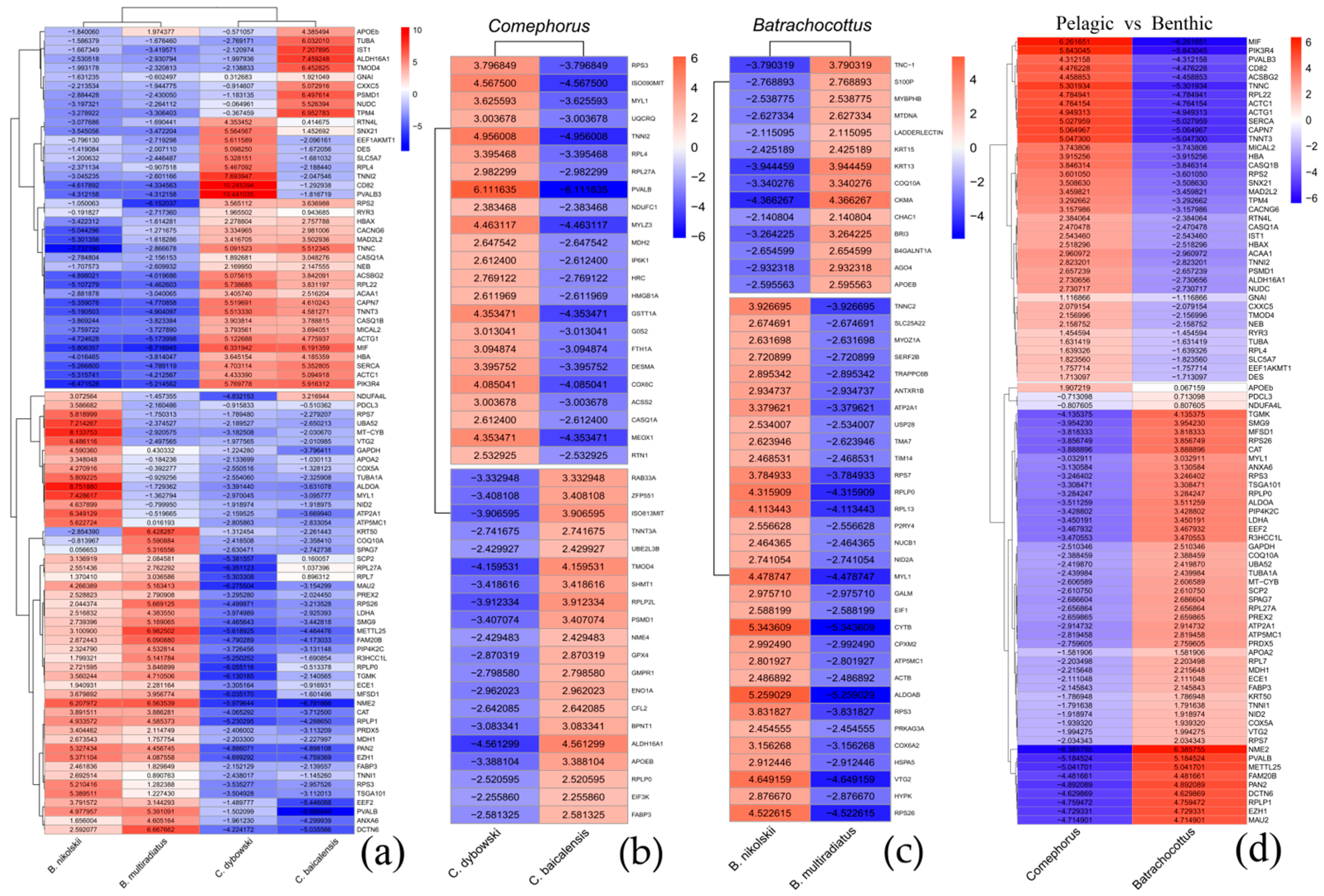
To delineate the most robust transcriptional signatures in Baikal sculpins, the significance threshold was stringently set at p-value < 0.0001 (logFC = 3) to identify the top differentially expressed genes (top-DEGs). Their expression profiles clearly separate the pelagic and benthic genera (Figure 6).
Figure 6. The top-DEGs in Baikal sculpins. The heatmap shows the log2 fold-change (logFC = 3, p < 0.0001). (ac)—Transcripts are clustered according to similar expression patterns in the groups (Pearson correlation method); (d)—Hierarchical clustering of transcripts based on Euclidean distance. Red indicates genes with high expression levels (up-regulated DEGs), and blue indicates genes with low expression levels (down-regulated DEGs). (a)—Comparison of all four species; (b)—Comparison of Comephorus species; (c)—Comparison of Batrachocottus species; (d)—Comparison of two different genera, the benthic-abyssal Batrachocottus and the pelagic Comephorus.
Transcriptomic analysis of muscle tissue revealed distinct expression profiles between the two genera of deep-water sculpin fishes, Comephorus and Batrachocottus (Figure 6). In general, the pelagic Comephorus species (C. dybowski and C. baicalensis) exhibited pronounced upregulation of genes associated with the sarcomeric complex and oxygen transport. Both species showed high expression levels of actin cytoplasmic (ACTG1), actin alpha cardiac muscle (ACTC1), F-actin-monooxygenase (MICAL2), troponin C (TNNC) and troponin T (TNNT3), indicating specializations in muscle contraction dynamics. Troponin I fast skeletal muscle (TNNI2) was upregulated in C. dybowski, while tropomyosin 4 (TPM4) and tropomodulin (TMOD4) showed high expression in C. baicalensis. Furthermore, elevated expression of hemoglobin subunit alpha (HBAX) was observed. The gene encoding reticulon 4 (RTN4L) was also significantly upregulated in C. dybowski, suggesting potential neural or endoplasmic reticulum specializations.
In contrast, the benthic species of the Batrachocottus genus displayed a markedly different transcriptomic signature, characterized by enhanced expression of genes involved in mitochondrial energy metabolism and lipid utilization. The deep-water benthic B. nikolskii showed dramatic upregulation of cytochrome b (MT-CYB) and cytochrome c oxidase (COX5A), key components of the mitochondrial electron transport chain. This species also exhibited elevated levels of fatty acid-binding protein 3 (FABP3) and apolipoprotein A-II (APOA2), which facilitate intracellular fatty acid transport. The eurybenthic B. multiradiatus showed a similar trend in lipid metabolism, with high expression of FABP3 and phosphatidylinositol-5-phosphate 4-kinase type 2 gamma (PIP4K2C), but was uniquely characterized by strong upregulation of keratin 50 (KRT50).
Several genes demonstrated reciprocal expression patterns that further highlight divergent ecological adaptations. For example, troponin T (TNNT3), hemoglobin subunit alpha (HBAX), guanine nucleotide-binding protein (GNAI), and actin cytoplasmic (ACTG1) were highly expressed in Comephorus, but strongly downregulated in Batrachocottus. Conversely, genes such as fatty acid-binding protein 3 (FABP3), endothelin converting enzyme (ECE1) and phosphatidylinositol-5-phosphate 4-kinase type 2 gamma (PIP4K2C) were upregulated in the benthic species but downregulated in the pelagic ones. The glycolytic enzymes, malate dehydrogenase 1 (MDH1) and L-lactate dehydrogenase A (LDHA), were also downregulated in both Comephorus species but upregulated in Batrachocottus, suggesting differences in metabolic potential or a possible switch to other mechanisms of energy production in Comephorus species, as confirmed by activation of the PPAR signaling pathway in these species (Figure 3c,d). Similarly, nidogen 2 (NID2) and phosducin-like 3 (PDCL3) were upregulated in B. nikolskii, indicating potential specializations in extracellular matrix organization and G-protein signaling, respectively, which are less prominent in the pelagic genus.
In summary, the transcriptomic profiles clearly differentiate the pelagic Comephorus genus, which emphasizes muscle contraction and oxygen transport genes, from the benthic Batrachocottus genus, which shows increased expression of genes involved in cellular resilience and lipid metabolism.

3.4. Validation of Transcriptomic Data via qPCR

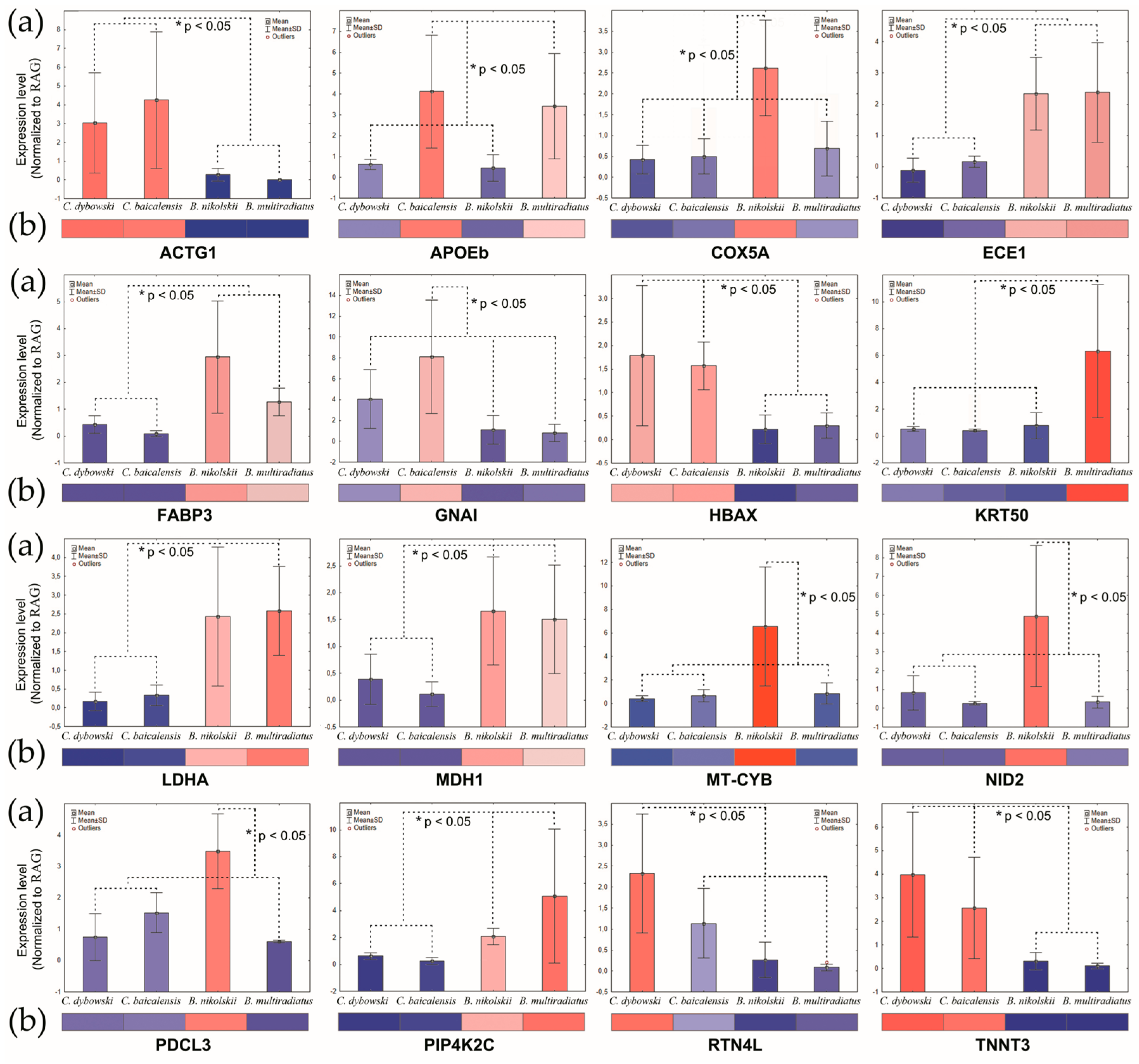
The expression of key genes was validated using quantitative PCR (qPCR). The qPCR results (Figure 7a) exhibited a strong concordance with the RNA-Seq data (Figure 6 and Figure 7b), thereby confirming the reliability of the transcriptomic findings.
Figure 7. Comparison of the expression levels of DEGs detected by qPCR (a) and the data of gene-corresponding patterns from RNA-seq (b) in Baikal sculpins. Significant statistical differences between the species are indicated by an asterisk: * p < 0.05 (Kruskal–Wallis test).

4. Discussion

4.1. The Pelagic Signature: Rewiring Musculoskeletal and Metabolic Systems for a Life in the Water Column

The pelagic Comephorus genus, which undergoes diel vertical migration through the oxygenated bathyal zone, showed significant upregulation of genes encoding structural and contractile proteins (Figure 6 and Figure 7). These included actin cytoplasmic (ACTG1, logFC = 4.78 in C. baicalensis and logFC = 5.12 in C. dybowski), actin alpha cardiac muscle (ACTC1, logFC = 5.09 and logFC = 4.43, respectively), F-actin-monooxygenase (MICAL2, logFC = 3.69 and logFC = 3.79, respectively), troponin C (TNNC, logFC = 5.51 and logFC = 5.09, respectively) and troponin T (TNNT3, logFC = 4.58 and logFC = 5.51, respectively) in both species. We also observed upregulation of troponin I fast skeletal muscle (TNNI2, logFC = 7.69) in C. dybowski, and tropomyosin 4 (TPM4, logFC = 6.95) and tropomodulin (TMOD4, logFC = 6.45) in C. baicalensis. This pattern indicates specialized skeletal muscle physiology. This conclusion is further supported by the increased expression of hemoglobin alpha (HBAX, logFC = 2.76 and logFC = 2.28, respectively) in both species of Comephorus, which aligns with previous physiological and biochemical data on hemoglobin fractions [13]. This adaptation likely enhances oxygen saturation in the cold pelagic environment by improving blood oxygen affinity. This mechanism could compensate for the reduced gill surface area in Comephorus [41], which is considered an energy-saving adaptation [42].
The upregulation of key structural and contractile elements indicates a musculoskeletal system specialized for continuous locomotion and maneuverability in a three-dimensional environment. This represents a major shift from the benthic “sit-and-wait” strategy and corresponds with the highly derived morphology of Comephorus species. This is evidenced by their elongated, laterally flattened body; a head lacking armament; long and broad, fan-shaped pectoral fins; flexible skull bones; and a lightweight skeleton. Their diet also reflects this pelagic lifestyle. Adults primarily consume the pelagic amphipod Macrohectopus branickii (Dybowsky, 1874), which they hunt by performing vertical migrations to follow their prey, as well as juvenile fish of their own genus. The juveniles feed on the copepod Epischura baikalensis (Sars, 1900) [3,6,43]. This molecular profile is further reinforced by the upregulation of calcium-handling genes such as calsequestrin-1a (CASQ1A, logFC = 3.05 in C. baicalensis and logFC = 1.89 in C. dybowski), calsequestrin-1b (CASQ1B, logFC = 3.79 and logFC = 3.90, respectively) and sarcoplasmic/endoplasmic reticulum calcium ATPase 1 (SERCA/ATP2A, logFC = 5.35 and logFC = 4.70, respectively), which are crucial for the efficient cycling required for sustained muscle contraction (Figure 6). The enrichment of the “motor proteins” KEGG pathway supports the idea that efficient muscle function under high hydrostatic pressure is a key adaptation for pelagic life. This molecular signature of enhanced contractile machinery and calcium cycling is also characteristic of active fish species with a swim bladder and has been documented in other comparative studies of fish with varying activity levels [44].
We also found distinct transcriptional profiles between C. dybowski and C. baicalensis, indicating species-specific specializations. The most notable divergence between the two species is in their muscle contractile and calcium-handling machinery. The marked up-regulation of parvalbumin 3 (PVALB3, logFC = 10.44) and fast skeletal troponin I (TNNI2) in C. dybowski suggests an adaptation for rapid calcium cycling and potentially faster contraction kinetics (Figure 6). Parvalbumin acts as a soluble calcium buffer, accelerating muscle relaxation, which is crucial for sustained swimming [45]. In contrast, the up-regulation of tropomodulin-4 (TMOD4) in C. baicalensis, a regulator of actin filament length and stability, suggests a different strategy, possibly favoring structural stability over speed. This dichotomy indicates that even within the same genus and habitat, divergent evolutionary paths can be taken for muscle performance. The down-regulation of several ribosomal protein genes in C. dybowski, along with the up-regulation of contractile proteins, may reflect a shift in metabolic investment from protein synthesis to the specialized function of the muscle apparatus.
Another finding is the significant up-regulation of apolipoprotein Eb (APOEb, logFC = 4.39) in C. baicalensis (Figure 6 and Figure 7). This is consistent with previously obtained data on the lipid composition of species from this genus [46]. In particular, among the secondary pelagic fishes of Lake Baikal, only C. baicalensis is characterized by a high lipid content, constituting 38.9% of its wet body mass, whereas this value is only 4.7% in C. dybowski [47]. Our data indicate that this high lipid content in C. baicalensis is likely supported by the upregulation of mitochondrial genes involved in electron transport and energy metabolism, such as NADH:ubiquinone oxidoreductase subunits (e.g., NDUFA4L, logFC = 3.22) and ATP synthase subunits (ATP5F1B, logFC = 4.93) (Figure 6). This suggests a multi-level genomic rewiring of energy balance to support their lifestyle across a wide range of depths and pressures. This may be explained by the fact that sculpins lacking a swim bladder have evolved various adaptations for inhabiting the water column, including increased lipid deposition to reduce overall body density [46]. In the marine context, deep-sea fishes often exhibit substantial lipid deposition as a buoyancy adaptation, reducing their metabolic cost of maintaining position in the water column, a well-documented strategy in lieu of a swim bladder [48].
Although C. dybowski has a lower total body lipid content than C. baicalensis, the transcriptomic profiles suggest this difference may result from a divergence in lipid metabolism dynamics. This is supported by the concurrent up-regulation in C. dybowski of key enzymes involved in mitochondrial fatty acid β-oxidation, such as long-chain-fatty-acid-CoA ligase (ACSBG2, logFC = 5.08), which activates fatty acids for degradation, and 3-ketoacyl-CoA thiolase (ACAA1, logFC = 3.41), a terminal enzyme in the β-oxidation spiral (Figure 6). Moreover, ACAA1 may elevate the proportion of polyunsaturated fatty acids (PUFAs) within membrane phospholipids [49,50,51] and potentially preserve essential membrane fluidity and functionality even at near-freezing temperatures [52,53]. The data suggest that C. dybowski maintains a state of high lipid flux and turnover, necessitating efficient transport and mobilization, rather than long-term storage, representing a synergistic solution to high hydrostatic pressure stressors in the water column. The high lipid content in C. baicalensis likely represents a more static energy reserve. This is confirmed by the high activity of the peroxisome proliferator-activated receptor (PPAR) signaling pathway (Figure 3), which plays a crucial role in systemic cell metabolism, regulating lipid expenditure, energy homeostasis, and immune response inhibition [54,55,56].
Finally, we observed adaptations for managing cellular stress in the deep pelagic zone. The up-regulation of glutathione S-transferase theta-1a (GSTT1A, logFC = 4.35) in C. baicalensis (Figure 6b) implies a reinforced system for detoxification and oxidative stress management. The significant upregulation of the pleiotropic macrophage migration inhibitory factor in both Comephorus species (MIF, logFC = 6.19, logFC = 6.33) may represent another layer of adaptation, potentially regulating glucose metabolism and cellular stress response [57]. This is a common challenge for deep-water organisms, which must cope with increased oxidative stress potentially induced by hydrostatic pressure [53,58]. The parallel up-regulation of cytochrome c oxidase (COX6C, logFC = 4.09), the terminal complex of eukaryotic oxidative phosphorylation in mitochondria, in C. baicalensis (Figure 6b) further suggests species-specific fine-tuning of aerobic respiration. Such modifications in the electron transport chain components are known to be sensitive to hydrostatic pressure and could represent an adaptation to maintain efficient ATP production under deep-water conditions [52].
The data reveal a compelling set of candidate genes for deep-water pelagic adaptation in freshwater sculpins. The obtained patterns observed, involving key structural and contractile elements, calcium-mediated muscle contractility, lipid transport, stress response, and mitochondrial efficiency, closely mirror the functional categories identified in studies of marine deep-sea species. This suggests a degree of convergent molecular evolution across distinct deep-water environments, both marine and freshwater.

4.2. The Benthic Blueprint: Metabolic Flexibility and Cellular Resilience in the Abyssal Zone

The benthic Batrachocottus species exhibited profound adaptations in metabolism and cellular homeostasis. Significant enrichment of pathways such as carbon metabolism, glycolysis/gluconeogenesis, including aldolase A (ALDOA) and glyceraldehyde-3-phosphate dehydrogenase (GAPDH), as well as the pentose phosphate pathway was especially pronounced in the deep-benthic specialist B. nikolskii (logFC = 8.75 and logFC = 4.59, respectively) (Figure 4, Figure 5 and Figure 6). This profile should not be interpreted as a high metabolic rate, but rather as a signature of metabolic flexibility. This species, restricted to deep soft bottoms with abundant detritus [3,43], appears to have developed this metabolic plasticity to efficiently capitalize on nutrient inputs. It has also been suggested that B. nikolskii can employ a hunting strategy involving brief bursts of speed. Although the primary diet of adult B. nikolskii consists of benthic gammarids and fish, juveniles of pelagic Comephorus species are a common prey item, occurring in up to 20% of samples [43]. The mechanism by which this sedentary species, as observed with the help of “Pisces” and “Mir” deep-water submersibles, captures such pelagic prey remains unclear and requires further investigation [15,43]. The ability to rapidly utilize available carbon sources through glycolysis and gluconeogenesis is likely crucial for feeding behavior and survival in environments where energy conservation is essential. Genes such as aldolase a fructose-bisphosphate b (ALDOAB, logFC = 8.75), which is highly upregulated in B. nikolskii, also indicate adaptations in glycolytic flux. The upregulation of cytochrome b (MT-CYB, logFC = 8.13) and cytochrome c oxidase (COX5A, logFC = 4.27) further highlights optimization of oxidative phosphorylation under high hydrostatic pressure, maintaining energy homeostasis in an energy-limited environment (Figure 6 and Figure 7). This is complemented by significant upregulation of genes central to muscle contraction and calcium handling, including myosin light chain 1 (MYL1, logFC = 7.43), tubulin alpha (TUBA1A, logFC = 5.81) and sarcoplasmic/endoplasmic reticulum calcium ATPase 1 (ATP2A1, logFC = 6.35) (Figure 6). SERCA1, encoded by ATP2A1, is critical for the reuptake of calcium into the sarcoplasmic reticulum, enabling rapid relaxation cycles in skeletal muscle [59], which is necessary for benthic predators.
The comparison between the deep-water benthic B. nikolskii and the eurybathic B. multiradiatus reveals a set of candidate genes that may underlie their distinct ecological specializations. The transcriptomic profile of B. multiradiatus suggests adaptations for a more active lifestyle across a broader depth range. The observed upregulation of creatine kinase (CKMA, logFC = 4.37) in B. multiradiatus aligns with its more active lifestyle (Figure 6c). Creatine kinase plays a pivotal role in cellular energy homeostasis by facilitating the rapid regeneration of ATP from phosphocreatine [60]. In a eurybathic predator, increased CKMA expression may represent an adaptation for maintaining energy efficiency during activities such as prey capture, ensuring rapid ATP availability for muscle contraction without requiring a high baseline metabolic rate. This finding is consistent with metabolic adaptations observed in other deep-water organisms [23]. The upregulation of the mitochondrial coenzyme Q-binding protein COQ10 homolog A (COQ10A, logFC = 5.59), which is involved in the electron transport chain, further supports a metabolic phenotype geared toward robust oxidative phosphorylation to meet higher energy demands (Figure 6a,c). The stress-responsive gene BRI3 (logFC = 3.26), which was also upregulated in this species (Figure 6c), is associated with mechanisms that optimize mitochondrial function and mitigate cellular stress [61]. In addition, the eurybenthic B. multiradiatus showed high expression of phosphatidylinositol-5-phosphate 4-kinase type 2 gamma, which potentially may safeguard against pressure-induced cytoskeletal collapse and membrane damage [50], (PIP4K2C, logFC = 4.53), as well as in the closely related B. nikolskii (PIP4K2C, logFC = 2.32), but was uniquely characterized by strong upregulation of keratin 50 (KRT50, logFC = 6.43) (Figure 6a,c and Figure 7). Thus, the upregulation of the identified gene expression profile in B. multiradiatus indicates a different, eurybathic adaptation favoring activity.
The transcriptional patterns obtained in both Batrachocottus species are remarkably consistent with the distinct muscle biochemical phenotypes in benthic-abyssal Baikal sculpins described by Radnaeva et al. [62] and are supported by research in other systems [60]. In particular, changes in the activity of the following key enzymes may indicate a shift toward MUFA and homeoviscous adaptation in B. nikolskii and B. multiradiatus: sterol carrier protein (SCP2, logFC = 3.14 and logFC = 2.08, respectively), fatty acid-binding protein (FABP3, logFC = 2.46 and logFC = 1.83, respectively) in both species (Figure 6 and Figure 7), apolipoprotein A-II (APOA2, logFC = 3.35) in B. nikolskii and apolipoprotein Eb (APOEb, logFC = 1.97) in B. multiradiatus. Thus, the observed metabolic plasticity in deep-water organisms may be compensated by homeoviscous adaptation of cell membranes [63,64,65].
This adaptation to pressure is complemented by a strong enrichment of proteasome-related functions and ubiquitination pathways, such as E3 ubiquitin-protein ligases. Notably, there is pronounced upregulation of ribosomal protein genes in both Batrachocottus species, including 40S ribosomal protein S26 (RPS26, logFC = 2.04 and logFC = 5.67, respectively), 40S ribosomal protein S3 (RPS3, logFC = 5.21 and logFC = 1.28, respectively), 60S acidic ribosomal protein P0 (RPLP0, logFC = 2.72 and logFC = 3.85, respectively), as well as ubiquitin ribosomal protein eL40 (UBA52, logFC = 7.21) in B. nikolskii. These findings align with earlier ultrastructural observations showing an extensive organellar network and a high abundance of ribosomes in the cells of B. nikolskii compared to pelagic sculpin species [66]. These findings indicate a heightened capacity for protein synthesis [67] and the presence of DNA repair mechanisms, underscoring the critical importance of maintaining proteostasis and genomic integrity under the protein-denaturing conditions of high pressure in the abyssal zone [68,69,70,71].
Additionally, the transcriptomic data revealed several key antioxidant-related genes that were significantly upregulated in both B. nikolskii and B. multiradiatus. Notably, genes encoding enzymes such as catalase (CAT, logFC = 3.89 and logFC = 3.88, respectively) and peroxiredoxin-5 (PRDX5, logFC = 3.40 and logFC = 2.11, respectively) showed increased expression, indicating enhanced antioxidant defense mechanisms in these species (Figure 6). The maintenance of mitochondrial function under high hydrostatic pressure, whether optimized for efficiency in B. nikolskii or for higher output in B. multiradiatus combined with the protein-denaturing effects of this environment, can promote the generation of reactive oxygen species (ROS). As a result, the simultaneous enhancement of the antioxidant system serves as a critical compensatory adaptation to mitigate oxidative stress and protect cellular integrity. This finding is consistent with the increased antioxidants capacity and broader physiological challenges observed in other deep-water organisms, such as the Mariana Trench snailfish Pseudoliparis swirei (Gerringer and Linley, 2017), which is adapted to the hadal zone at depths greater than 7000 m [58,72].
In summary, the analysis reveals distinct molecular strategies for deep-water adaptation in two closely related sculpins. The benthic-abyssal specialist B. nikolskii displays a transcriptional profile focused on energy conservation and metabolic flexibility, optimizing pathways for opportunistic nutrient utilization (e.g., glycolysis and gluconeogenesis), efficient oxidative phosphorylation, and rapid muscle contraction. In contrast, the eurybathic B. multiradiatus demonstrates adaptations for a more active lifestyle, characterized by molecular machinery for rapid energy turnover and robust oxidative metabolism. The distinct regulatory state of the FoxO signaling pathway (Figure 4) between these species likely orchestrates their divergent metabolic and stress-response strategies, reflecting their different ecological constraints. Despite these differences, both species share compensatory adaptations to universal deep-water challenges, including enhanced antioxidant defenses to mitigate oxidative stress and increased protein synthesis and ubiquitination mechanisms to maintain proteostasis under high pressure. These transcriptional differences provide a foundation for understanding the molecular mechanisms that underpin niche partitioning in closely related species inhabiting distinct environments.

4.3. Parallel Paths in Adaptation: Baikal Sculpins in a Global Context

The evolutionary trajectory of deep-water teleosts, historically divided into ancient forms (e.g., Gadiformes) and secondary colonists (e.g., Ophidiidae and Liparidae) living at depths over 6000 m [73], provides perspective for interpreting the transcriptional adaptations of deep-water sculpins of Lake Baikal. Our findings show that Baikal freshwater sculpins, as secondary deep-water colonists, have converged on molecular solutions remarkably similar to those of their marine counterparts [22,23,24,26,50,51,52,53,58,73,74,75,76].
The specialization of the pelagic Comephorus species for locomotion is highlighted by significant enrichment of genes encoding cytoskeletal, myofilament, and troponin complex proteins. This emphasis on the contractile apparatus aligns with research on the evolutionary adaptation of functional genes to high pressure, which identified unique amino acid substitutions in α-skeletal actin (ACT) and myosin heavy chain (MyHC) proteins in deep-water fish [77,78,79]. For example, studies on the hadal snailfish P. swirei also revealed adaptations in protein turnover and muscle contraction genes with specific mutations in myosin heavy chains related to low temperature and high pressure [49,58]. Moreover, this focus coincided with analyses of 36 bathypelagic and abyssopelagic fish species that identified genes involved in responding to mechanical forces, such as PIK3CA and VCL, as targets of positive selection in deep-water fishes [50]. This convergence is further supported by studies on the deep-sea fish Aldrovandia affinis (Günther, 1877), where positively selected genes were implicated in microtubule regulation, a system known to be highly sensitive to hydrostatic pressure [23]. Interestingly, the upregulation of key contractile and calcium-cycling genes (e.g., PVALB3, TNNI2) in Comephorus is functionally analogous to the transcriptional responses observed in exercised the rainbow trout Oncorhynchus mykiss (Walbaum, 1792), where sustained swimming activity upregulates critical genes for muscle development and function, including myosin heavy chain (MyHC) and myosin light chain (MyLC) [20]. Nevertheless, the similar specialization of the contractile apparatus in Comephorus apparently supports not high-speed swimming, but rather a metabolic and muscular machinery essential for sustained fin flapping and position holding in the water column.
For benthic specialists, particularly B. nikolskii, the focus shifts toward metabolic flexibility and cellular integrity. The enrichment of glycolytic and proteasome pathways indicates an adaptation for efficient energy use and rigorous protein turnover in a stable, low-temperature environment. Key muscular enzymes such as lactate dehydrogenase (LDH) and malate dehydrogenase (MDH), present in the transcriptomic signature of both Batrachocottus species, show adaptively altered expression levels in other deep-water species, such as the black scabbardfish Aphanopus carbo (Lowe, 1839) [22,80,81,82].
The strong emphasis on proteostasis, including ubiquitination pathways, is also a recognized evolutionary response to protein-denaturing conditions. This is evidenced in the deep-sea mussels Bathymodiolus platifrons (Hashimoto and Okutani, 1994) and Gigantidas platifrons (Hashimoto and Okutani, 1994), which exhibits positive selection in genes linked to ubiquitination and protein repair as a specialized adaptation to persistent high hydrostatic pressure [26,83]. Similarly, the enrichment of DNA repair mechanisms in B. nikolskii parallels genomic studies of deep-water A. affinis and hadal fish and amphipods, which show positive selection in genes related to DNA repair and genetic information processing [23,84]. This collective evidence underscores that maintaining genomic and proteomic fidelity is fundamental to deep-water adaptation, further supported by the observation of lower mutation rates but elevated protein evolution rates (Ka/Ks) in deep-water teleosts globally [51].
These patterns find compelling parallels in other freshwater systems undergoing adaptive radiation along the benthic–pelagic axis. A striking and direct parallel is found in Arctic charr Salvelinus alpinus (Linnaeus, 1758), where a genetically distinct deep-water morph shows genomic signatures of selection on pathways for DNA repair, cardiac function, and neural synapse assembly, underscoring universal molecular challenges of deep freshwater colonization [21,85]. Similarly, studies on sympatric pairs of whitefish (Coregonus spp.) in postglacial lakes, which have independently diverged into benthic and pelagic ecomorphs, reveal a remarkable convergence in transcriptomic adaptations with Baikal sculpins. Pelagic whitefish ecotypes consistently upregulate genes associated with enhanced activity, including energy metabolism (e.g., oxidative phosphorylation genes), muscle contraction (e.g., specific parvalbumin variants), and lipid metabolism, reflecting a transcriptomic trade-off favoring survival and locomotion over growth [86,87,88,89]. In contrast, benthic forms upregulate genes related to protein synthesis, cell cycle, and growth [87]. This mirrors our findings where the pelagic Comephorus emphasizes metabolic and contractile machinery, while benthic Batrachocottus shows enrichment in ribosomal proteins and proteostatic pathways. The parallelism extends to the Baikal ecosystem itself. In particular, comparative transcriptomics of the sympatric benthic Baikal whitefish Coregonus baicalensis (Dybowski, 1874) and pelagic Baikal omul Coregonus migratorius (Georgi, 1775) revealed a similar dichotomy, with pelagic omul overexpressing metabolism genes (e.g., cytochrome c oxidase subunits) and benthic whitefish overexpressing protein synthesis and regulatory genes [90]. This pattern of benthic–pelagic specialization is a recurring theme in the broader Baikal sculpin radiation, where genomic studies indicate that diversification within genera like Cottocomephorus is driven by adaptation along this fundamental ecological gradient [89].
Moreover, the principles of adaptive genetic remodeling extend beyond depth-related pressures to other major aquatic transitions, highlighting convergent functional targets. For instance, genomic analyses of freshwater-adapted ecotypes in Pacific herring Clupea pallasii (Valenciennes, 1847) and diadromous sculpins, such as roughskin sculpin Trachidermus fasciatus (Heckel, 1837), reveal that adaptation to novel osmotic environments repeatedly targets pathways for osmoregulation, cellular homeostasis, and stress response, functional categories analogous to those under selection in deep-water adaptation [91,92]. Large-scale comparative genomic analyses further support that adaptation to novel ecological niches, whether along salinity, depth, or habitat gradients, consistently reshapes a core set of physiological systems, including ion transport, metabolism, sensory perception, and cellular integrity, despite species-specific genetic variations [93]. This is exemplified in marine threadfin breams (Nemipterus spp.), where deeper-dwelling species show positive selection in genes for osmoregulation, thermal response, energy metabolism, and skeletal integrity, highlighting a convergent molecular toolkit for deep-water life across phylogenetically distant fish [94].
In summary, the molecular adaptations of Baikal sculpins are not isolated phenomena but part of a convergent evolutionary narrative spanning both marine and freshwater deep-water environments. The patterns observed in cytoskeletal stability, lipid metabolism, proteostasis, and stress response align closely with findings from other species. Critically, comparisons with other freshwater radiations demonstrate that the ecological axis “benthic versus pelagic” is a powerful driver of divergent selection, leading to functional transcriptomic outcomes, even when the underlying genomic architecture may differ [21,88]. This underscores the paramount importance of ecological niche in shaping adaptive molecular evolution. Future work should also clarify the role of intersexual differences and ontogenetic changes in the expression of key genes in unique freshwater Baikal sculpins. This is particularly relevant for species whose pelagic larvae transition to a benthic lifestyle upon maturation. Furthermore, integrating transcriptomic data with proteomic, metabolomic, and epigenetic analyses will be crucial for building a comprehensive, mechanistic model of adaptation. Understanding these adaptations will ultimately reveal the limits of stability in living systems and elucidate how these unique species have evolved to not only survive but thrive in their deep-water environment.

5. Conclusions

The transcriptomic signatures of Lake Baikal sculpins demonstrate a range of convergent molecular adaptations, driven by distinct ecological pressures and evolutionary diversification. The transcriptomic divergence between the pelagic Comephorus and the benthic Batrachocottus species reflects fundamental ecological zonation, as well as fine-scale specializations within deep-benthic micro-niches. As secondary deep-water colonists with benthic ancestry, the pelagic Comephorus have undergone a radical evolutionary transformation. This is demonstrated by the upregulation of cytoskeletal, sarcomeric, and calcium-handling genes, which create a musculoskeletal system capable of sustained locomotion in a three-dimensional, high-pressure environment. In contrast, the benthic-abyssal specialists of both Batrachocottus species represent an alternative adaptive strategy, that prioritizes metabolic flexibility and strengthens cellular integrity through enhanced proteasome activity, ubiquitination, and DNA repair pathways. The transcriptomic divergences we identified not only reflect the specific ecological specializations of these Baikal sculpin species but also closely align with convergent adaptive strategies observed in marine and freshwater deep-water organisms. The focus on biomolecular stability, consistent with findings in hadal organisms, highlights that deep-water adaptation relies on systemic reinforcement of core molecular and cellular processes.

Supplementary Materials

The following supporting information can be downloaded at: https://www.mdpi.com/article/10.3390/biology14121762/s1, S1: Transcriptome assembly report; S2: Trinity gene counts; S3: Annotation of all DEGs without a threshold; S4: Annotation of DEGs with a significance threshold set at p = 0.001 (logFC = 2); S5: DEG counts, logCPM; S6: DEG counts, logFC.

Author Contributions

Conceptualization, project administration and data curation were performed by Y.P.S., A.G.K. and I.V.K. Investigation was performed by Y.P.S., A.G.K., T.V.S., E.A.V., A.A.E. and V.M.Y. Funding acquisition was performed by Y.P.S., S.A.P., L.V.S., T.V.B. and I.V.K. Y.P.S., V.M.Y., S.V.K., T.V.B., I.A.N. and I.V.K. provided resources. Y.P.S., T.V.S., S.A.P., S.V.K., I.A.N. and I.V.K. participated in the development of the methodology. T.V.S., E.A.V., A.A.E. and S.A.P. handled the software. Formal analysis was performed by A.G.K., T.V.S., E.A.V., A.A.E., S.A.P., V.M.Y., L.V.S., S.V.K. and T.V.B. Data validation was performed by Y.P.S., A.G.K., E.A.V. and A.A.E. Visualization was performed by Y.P.S. and T.V.S. The original draft was written by Y.P.S. and approved by all authors. Manuscript reviewing and editing was performed by Y.P.S., A.G.K., T.V.S., E.A.V., A.A.E., S.A.P., V.M.Y., L.V.S., S.V.K., T.V.B., I.A.N. and I.V.K. All authors have read and agreed to the published version of the manuscript.

Funding

This study was carried out at the Limnological Institute SB RAS and supported by the project No. 0279-2021-0005 (121032300224-8), Ministry of Science and Higher Education of the Russian Federation.

Institutional Review Board Statement

The experiments and sampling were conducted under the animal welfare laws, guidelines, and policies of Russia, and approved by the Ethics Committee of the Limnological Institute SB RAS (Protocol #3, 1 November 2025).

Data Availability Statement

The raw sequence data have been submitted to the Gene Expression Omnibus (NCBI-GEO) repository (accession number: GSE308109, https://www.ncbi.nlm.nih.gov/geo/query/acc.cgi?acc=GSE308109, accessed on 26 November 2025).

Acknowledgments

We are grateful to the crew of the research vessel G. Yu. Vereshchagin (the Center for Collective Use «Research vessels Center of LIN SB RAS on Lake Baikal») for their assistance in collecting samples. We thank E.V. Dzyuba, T.Yu. Mayor, P.N. Anoshko, and A.P. Fedotov for their help in preparing the manuscript. We extend our appreciation to the Academic Editors of the Special Issue and the anonymous reviewers for their valuable and critical comments.

Conflicts of Interest

The authors declare no conflicts of interest.

Appendix A

Figure A1. Sample sequencing overview, including data filtering, genomic region mapping of sequencing reads, sequencing data error rate distribution, and GC content distribution.
Figure A2. Venn diagram of gene co-expression across Baikal sculpin species. The diagram shows the number of uniquely expressed genes for each species, with overlapping areas indicating genes co-expressed in two or more groups. M_B_n—Batrachocottus nikolskii, M_Cm_b—Comephorus baicalensis, M_Cm_d—Comephorus dybowski, M_B_m—Batrachocottus multiradiatus.
Figure A3. Volcano plots of differential gene expression in pairwise Baikal sculpin species comparisons. Red dots represent up-regulation genes and green dots represent down-regulation genes. The gray dashed line indicates the threshold line for differential gene screening criteria. M_B_n—Batrachocottus nikolskii, M_Cm_b—Comephorus baicalensis, M_Cm_d—Comephorus dybowski, M_B_m—Batrachocottus multiradiatus.
Figure A4. Comparison of Comephorus baicalensis and Batrachocottus nikolskii: GO and KEGG enrichment analysis of DEGs. (a,b)—the most significant terms from the GO databases, including biological processes (BP), cellular components (CC), molecular function (MF); (c,d)—the top enriched terms for KEGG enrichment. The size of a point (a,c) and numbers above columns (b,d) represent the number of genes annotated to a specific term. Terms with FDR < 0.05 are considered significant.
Figure A5. Comparison of Comephorus dybowski and Batrachocottus multiradiatus: GO and KEGG enrichment analysis of DEGs. (a,b)—the most significant terms from the GO databases, including biological processes (BP), cellular components (CC), molecular function (MF); (c,d)—the top enriched terms for KEGG enrichment. The size of a point (a,c) and numbers above columns (b,d) represent the number of genes annotated to a specific term. Terms with FDR < 0.05 are considered significant.
Figure A6. Comparison of Comephorus baicalensis and Batrachocottus multiradiatus: GO and KEGG enrichment analysis of DEGs. (a,b)—the most significant terms from the GO databases, including biological processes (BP), cellular components (CC), molecular function (MF); (c,d)—the top enriched terms for KEGG enrichment. The size of a point (a,c) and numbers above columns (b,d) represent the number of genes annotated to a specific term. Terms with FDR < 0.05 are considered significant.

References

  1. Kontula, T.; Kirilchik, S.V.; Väinölä, R. Endemic diversification of the monophyletic cottoid fish species flock in Lake Baikal explored with mtDNA sequencing. Mol. Phylogenet. Evol. 2003, 27, 143–155. [Google Scholar] [CrossRef]
  2. Sandel, M.W.; Aguilar, A.; Kirilchik, S.; Neely, D.A.; Bogdanov, B.E.; Fast, K.M.; Millwood, J.D. Sink or swim: Phylogenomic analysis of Baikal sculpins reveals multiple transformations to pelagic, bathybenthic, and lotic ecomorphologies. Mol. Phylogenet. Evol. 2025, 213, 108451. [Google Scholar] [CrossRef]
  3. Sideleva, V.G. The Endemic Fishes of Lake Baikal; Backhuys Publishers: Leiden, The Netherlands, 2003; p. 270. [Google Scholar]
  4. Kirilchik, S.V.; Slobodyanyuk, S.Y. Evolution of the cytochrome b gene fragment from mitochondrial DNA in some Baikalian and non-Baikalian Cottoidei fishes. Mol. Biol. 1997, 31, 141–148. [Google Scholar]
  5. Bogdanov, B.E. The Sculpins (Perciformes: Cottidae) of Lake Baikal and Baikal region: Updated checklist with the description of new tax. Limnol. Freshw. Biol. 2023, 6, 63–95. [Google Scholar] [CrossRef]
  6. Taliev, D.N. Baikal Sculpin Gobies (Cottoidei); Publishing House of the USSR Academy of Sciences: Moscow-Leningrad, Russia, 1955; p. 604. [Google Scholar]
  7. Koryakov, E.A. Pelagic Sculpins of Baikal; USSR Academy of Sciences, Siberian Branch, Limnological Institute: Moscow, Russia, 1972; p. 156. [Google Scholar]
  8. Starikov, G.V. Baikal Oilfishes; Pastukhov, V.D., Ed.; USSR Academy of Sciences, Siberian Branch, Limnological Institute; Nauka: Novosibirsk, Russia, 1977; p. 95. [Google Scholar]
  9. Teterina, V.; Bogdanov, B.; Kirilchik, S. Complete mitochondrial genomes and phylogenetic analysis of four Baikal endemic Batrachocottus species (Scorpaeniformes: Cottoidei). Mitochondrial DNA B Resour. 2022, 7, 123–124. [Google Scholar] [CrossRef]
  10. Dzyuba, E.M.; Belkova, N.L.; Denikina, N.N. A Study of the Intestinal Microbiomes of the Lake Baikal Oilfishes (Cottoidei, Comephoridae). Biol. Bull. Russ. Acad. Sci. 2016, 6, 658–662. [Google Scholar] [CrossRef]
  11. Sapozhnikova, Y.P.; Klimenkov, I.V.; Khanaev, I.V.; Makarov, M.M.; Belous, A.A. Ultrastructure of saccular epithelium sensory cells of four sculpin fish species (Cottoidei) of Lake Baikal in relation to their way of life. J. Ichthyol. 2016, 56, 289–297. [Google Scholar] [CrossRef]
  12. Sapozhnikova, Y.P.; Koroleva, A.G.; Yakhnenko, V.M.; Khanaev, I.V.; Glyzina, O.Y.; Avezova, T.N.; Volkova, A.A.; Mushinskaya, A.V.; Tyagun, M.L.; Shagun, A.N.; et al. Sex Associated Effects of Noise Pollution in Stone Sculpin (Paracottus knerii) as a Model Object in the Context of Human-Induced Rapid Environmental Change. Biology 2021, 10, 1063. [Google Scholar] [CrossRef] [PubMed]
  13. Yakhnenko, V.M.; Klimenkov, I.V.; Sudakov, N.P.; Kirilchik, S.V.; Nebesnykh, I.A.; Khanaev, I.V. Organization of blood oxygen transport system for cottoid fishes of Lake Baikal. Limnol. Freshw. Biol. 2020, 4, 826–827. [Google Scholar] [CrossRef]
  14. Anoshko, P.N.; Makarov, M.M. Length-weight relationships of Baikal oilfish (Cottoidei: Comephorus). Limnol. Freshw. Biol. 2022, 6, 1720–1723. [Google Scholar] [CrossRef]
  15. Sideleva, V.G.; Sitnikova, T.Y. Differentiation of communities of macroinvertebrates and cottoid fish associated with methane seeps of different bottom landscapes of Lake Baikal. Proc. Zool. Inst. RAS 2021, 325, 469–484. [Google Scholar] [CrossRef]
  16. Sakirko, M.V.; Domysheva, V.M. Interannual dynamics of dissolved gases and biogenic elements in the pelagic of Lake Baikal. In Monitoring the State and Pollution of the Environment: Surface Climate, Pollutants, and Climate-Active Substances; IGKE: Moscow, Russia, 2023; pp. 299–303. [Google Scholar]
  17. Gorovits, B.M.; Horowitz, P.M. High hydrostatic pressure can reverse aggregation of protein folding intermediates and facilitate acquisition of native structure. Biochemistry 1998, 37, 6132–6135. [Google Scholar] [CrossRef] [PubMed]
  18. Treberg, J.R.; Driedzic, W.R. Elevated levels of trimethylamine oxide in deep-sea fish: Evidence for synthesis and intertissue physiological importance. J. Exp. Zool. 2002, 293, 39–45. [Google Scholar] [CrossRef] [PubMed]
  19. Downing, A.B.; Wallace, G.T.; Yancey, P.H. Organic osmolytes of amphipods from littoral to hadal zones: Increases with depth in trimethylamine N-oxide, scyllo-inositol and other potential pressure counteractants. Deep Sea Res. Part I Oceanogr. Res. Pap. 2018, 138, 1–10. [Google Scholar] [CrossRef]
  20. Palstra, A.P.; Beltran, S.; Burgerhout, E.; Brittijn, S.A.; Magnoni, L.J.; Henkel, C.V.; Jansen, H.J.; van den Thillart, G.E.E.J.M.; Spaink, H.P.; Planas, J.V. Deep RNA sequencing of the skeletal muscle transcriptome in swimming fish. PLoS ONE 2013, 8, e53171. [Google Scholar] [CrossRef]
  21. Brachmann, M.K.; Parsons, K.; Skúlason, S.; Gaggiotti, O.; Ferguson, M. Variation in the genomic basis of parallel phenotypic and ecological divergence in benthic and pelagic morphs of Icelandic Arctic charr (Salvelinus alpinus). Mol. Ecol. 2022, 31, 4688–4706. [Google Scholar] [CrossRef]
  22. Stefanni, S.; Bettencourt, R.; Pinheiro, M.; De Moro, G.; Bongiorni, L.; Pallavicini, A. Transcriptome of the Deep-Sea Black Scabbardfish, Aphanopus carbo (Perciformes: Trichiuridae): Tissue-Specific Expression Patterns and Candidate Genes Associated to Depth Adaptation. Int. J. Genom. 2014, 2014, 267482. [Google Scholar] [CrossRef]
  23. Lan, Y.; Sun, J.; Xu, T.; Chen, Z.; Tian, Y.; Zhang, P.; Sun, Y.; Zhang, X.; Zhou, Y.; Zhang, H.; et al. De novo transcriptome assembly and positive selection analysis of an individual deep-sea fish. BMC Genom. 2018, 19, 394. [Google Scholar] [CrossRef]
  24. Burns, J.A.; Daniels, J.; Becker, K.P.; Casagrande, D.; Roberts, P.; Orenstein, E.C.; Vogt, D.M.; Teoh, Z.E.; Wood, R.; Yin, A.H.; et al. Transcriptome sequencing of seven deep marine invertebrates. Sci. Data 2024, 11, 679. [Google Scholar] [CrossRef]
  25. Zhang, H.; Yao, G.; He, M. Transcriptome analysis of gene expression profiling from the deep sea in situ to the laboratory for the cold seep mussel Gigantidas haimaensis. BMC Genom. 2022, 23, 828. [Google Scholar] [CrossRef]
  26. Zhong, Z.; Guo, Y.; Zhou, L.; Chen, H.; Lian, C.; Wang, H.; Zhang, H.; Cao, L.; Sun, Y.; Wang, M.; et al. Transcriptomic responses and evolutionary insights of deep-sea and shallow-water mussels under high hydrostatic pressure condition. Sci. Total Environ. 2024, 949, 175185. [Google Scholar] [CrossRef]
  27. Bogdanov, B.E. Phenetic relations and the problem of species identification of sculpins of the genus Batrachocottus (Pisces: Cottidae). Hydrobiol. J. 2016, 52, 45–53. [Google Scholar] [CrossRef]
  28. Kozhova, O.M.; Sidelev, G.N.; Rezenkov, N.C. Observations of planktonic and nektobenthic communities. In Geological, Geomorphological and Underwater Research of Lake Baikal; Nauka: Moscow, Russia, 1979; pp. 87–91. [Google Scholar]
  29. Jakubowski, M.; Tugarina, P.Y.; Zuwała, K. Pectoral fin development in the Baikalian viviparous golomyankas (Comephoridae; Cottoidei), with a remark on eggs and embryos of Comephorus baicalensis (Pallas). J. Anat. 2003, 203, 317–322. [Google Scholar] [CrossRef]
  30. Gao, K.; Wang, Z.; Zhou, X.; Wang, H.; Kong, D.; Jiang, C.; Wang, X.; Jiang, Z.; Qiu, X. Comparative transcriptome analysis of fast twitch muscle and slow twitch muscle in Takifugu rubripes. Comp. Biochem. Physiol. Part D Genom. Proteom. 2017, 24, 79–88. [Google Scholar] [CrossRef]
  31. Bolger, A.M.; Lohse, M.; Usadel, B. Trimmomatic: A flexible trimmer for Illumina sequence data. Bioinformatics 2014, 30, 2114–2120. [Google Scholar] [CrossRef]
  32. Haas, B.; Papanicolaou, A.; Yassour, M.; Grabherr, M.; Blood, P.D.; Bowden, J.; Couger, M.B.; Eccles, D.; Li, B.; Lieber, M.; et al. De novo transcript sequence reconstruction from RNA-seq using the Trinity platform for reference generation and analysis. Nat. Protoc. 2013, 8, 1494–1512. [Google Scholar] [CrossRef] [PubMed]
  33. Li, W.; Godzik, A. Cd-hit: A fast program for clustering and comparing large sets of protein or nucleotide sequences. Bioinformatics 2006, 22, 1658–1659. [Google Scholar] [CrossRef] [PubMed]
  34. Patro, R.; Duggal, G.; Love, M.; Irizarry, R.A.; Kingsford, C. Salmon provides fast and bias-aware quantification of transcript expression. Nat. Methods 2017, 14, 417–419. [Google Scholar] [CrossRef] [PubMed]
  35. Chen, Y.; Lun, A.T.L.; Smyth, G.K. From reads to genes to pathways: Differential expression analysis of RNA-Seq experiments using Rsubread and the edgeR quasi-likelihood pipeline. F1000Research 2016, 5, 1438. [Google Scholar] [CrossRef]
  36. Robinson, M.D.; McCarthy, D.J.; Smyth, G.K. edgeR: A Bioconductor package for differential expression analysis of digital gene expression data. Bioinformatics 2010, 26, 139–140. [Google Scholar] [CrossRef]
  37. Gibbons, F.D.; Roth, F. Judging the quality of gene expression-based clustering methods using gene annotation. Genome Res. 2002, 12, 1574–1581. [Google Scholar] [CrossRef]
  38. Huerta-Cepas, J.; Szklarczyk, D.; Heller, D.; Hernández-Plaza, A.; Forslund, S.K.; Cook, H.; Mende, D.R.; Letunic, I.; Rattei, T.; Jensen, L.J.; et al. eggNOG 5.0: A hierarchical, functionally and phylogenetically annotated orthology resource based on 5090 organisms and 2502 viruses. Nucleic Acids Res. 2019, 47, D309–D314. [Google Scholar] [CrossRef]
  39. Bu, D.; Luo, H.; Huo, P.; Wang, Z.; Zhang, S.; He, Z.; Wu, Y.; Zhao, L.; Liu, J.; Guo, J.; et al. KOBAS-i: Intelligent prioritization and exploratory visualization of biological functions for gene enrichment analysis. Nucleic Acids Res. 2021, 49, W317–W325. [Google Scholar] [CrossRef]
  40. Bustin, S.A.; Benes, V.; Garson, J.A.; Hellemans, J.; Huggett, J.; Kubista, M.; Mueller, R.; Nolan, T.; Pfaffl, M.W.; Shipley, G.L.; et al. The MIQE Guidelines: Minimum Information for Publication of Quantitative Real-Time PCR Experiments. Clin. Chem. 2009, 55, 611–622. [Google Scholar] [CrossRef]
  41. Jakubowski, M. Gill structure and morphometry of its respiratory components in the Baikalian golomyankas (Comephoridae; Cottoidei; Pisces). J. Morphol. 1996, 228, 19–26. [Google Scholar] [CrossRef]
  42. Aaskov, M.L.; Ishimatsu, A.; Nyengaard, J.R.; Malte, H.; Lauridsen, H.; Ha, N.T.K.; Huong, D.T.T.; Bayley, M. Modulation of gill surface area does not correlate with oxygen loss in Chitala ornata. Proc. Biol. Sci. 2024, 291, 20241884. [Google Scholar] [CrossRef]
  43. Reshetnikov, Y.S. Atlas of Freshwater Fish of Russia; Science: Moscow, Russia, 2003; p. 379. [Google Scholar]
  44. Liu, X.; Zeng, S.; Liu, S.; Wang, G.; Lai, H.; Zhao, X.; Bi, S.; Guo, D.; Chen, X.; Yi, H.; et al. Identifying the Related Genes of Muscle Growth and Exploring the Functions by Compensatory Growth in Mandarin Fish (Siniperca chuatsi). Front. Physiol. 2020, 11, 553563. [Google Scholar] [CrossRef] [PubMed]
  45. Berchtold, M.W.; Brinkmeier, H.; Müntener, M. Calcium ion in skeletal muscle: Its crucial role for muscle function, plasticity, and disease. Physiol. Rev. 2000, 80, 1215–1265. [Google Scholar] [CrossRef]
  46. Sideleva, V.G.; Kozlova, T.A. Comparative study of endemic cottoid fishes (Cottidae, Comephoridae) in connection with adaptation to habitation in the pelagic zone of Lake Baikal. Trans. Zool. Inst. Russ. Acad. Sci. 2010, 314, 433–447. [Google Scholar] [CrossRef]
  47. Kozlova, T.A.; Khotimchenko, S.V. Lipids and fatty acids of two pelagic cottoid fishes (Comephorus spp.) endemic to Lake Baikal. Comp. Biochem. Physiol. B Biochem. Mol. Biol. 2000, 126, 477–485. [Google Scholar] [CrossRef] [PubMed]
  48. Voronin, V.P.; Nemova, N.N.; Ruokolainen, T.R.; Artemenkov, D.V.; Rolskii, A.Y.; Orlov, A.M.; Murzina, S.A. Into the Deep: New Data on the Lipid and Fatty Acid Profile of Redfish Sebastes mentella Inhabiting Different Depths in the Irminger Sea. Biomolecules 2021, 11, 704. [Google Scholar] [CrossRef] [PubMed]
  49. Wang, K.; Shen, Y.; Yang, Y.; Gan, X.; Liu, G.; Hu, K.; Li, Y.; Gao, Z.; Zhu, L.; Yan, G.; et al. Morphology and genome of a snailfish from the Mariana Trench provide insights into deep-sea adaptation. Nat. Ecol. Evol. 2019, 3, 823–833. [Google Scholar] [CrossRef]
  50. Bo, J.; Xu, H.; Lv, W.; Wang, C.; He, S.; Yang, L. Molecular Mechanisms of the Convergent Adaptation of Bathypelagic and Abyssopelagic Fishes. Genome Biol. Evol. 2022, 14, evac109. [Google Scholar] [CrossRef] [PubMed]
  51. Xu, H.; Fang, C.; Xu, W.; Wang, C.; Song, Y.; Zhu, C.; Fang, W.; Fan, G.; Lv, W.; Bo, J.; et al. Evolution and genetic adaptation of fishes to the deep sea. Cell 2025, 188, 1393–1408.e13. [Google Scholar] [CrossRef]
  52. Simonato, F.; Campanaro, S.; Lauro, F.M.; Vezzi, A.; D’Angelo, M.; Vitulo, N.; Valle, G.; Bartlett, D.H. Piezophilic adaptation: A genomic point of view. J. Biotechnol. 2006, 126, 11–25. [Google Scholar] [CrossRef]
  53. Mao, L. Adaptation of Fish to the Extreme Environment in the Deep Sea. Theor. Nat. Sci. 2025, 117, 152–157. [Google Scholar] [CrossRef]
  54. Xue, M.; Xu, P.; Wen, H.; Chen, J.; Wang, Q.; He, J.; He, C.; Kong, C.; Song, C.; Li, H. Peroxisome Proliferator-Activated Receptor Signaling-Mediated 13-S-Hydroxyoctadecenoic Acid Is Involved in Lipid Metabolic Disorder and Oxidative Stress in the Liver of Freshwater Drum, Aplodinotus grunniens. Antioxidants 2023, 12, 1615. [Google Scholar] [CrossRef]
  55. Wu, N.; Wen, H.; Xu, P.; Chen, J.; Xue, M.; Li, J.; Wang, M.; Song, C.; Li, H. PPAR Signaling Maintains Metabolic Homeostasis under Hypothermia in Freshwater Drum (Aplodinotus grunniens). Metabolites 2023, 13, 102. [Google Scholar] [CrossRef]
  56. Ye, W.; Zheng, Y.; Sun, Y.; Li, Q.; Zhu, H.; Xu, G. Transcriptome analysis of the response of four immune related organs of tilapia (Oreochromis niloticus) to the addition of resveratrol in feed. Fish Shellfish Immunol. 2023, 133, 108510. [Google Scholar] [CrossRef] [PubMed]
  57. Song, S.; Xiao, Z.; Dekker, F.J.; Poelarends, G.J.; Melgert, B.N. Macrophage migration inhibitory factor family proteins are multitasking cytokines in tissue injury. Cell. Mol. Life Sci. 2022, 79, 105. [Google Scholar] [CrossRef]
  58. Xu, H.; Fang, C.; Wang, C.; Gan, X.; He, S. Lipidome and proteome analyses provide insights into Mariana Trench Snailfish (Pseudoliparis swirei) adaptation to the hadal zone. Water Biol. Secur. 2024, 3, 100295. [Google Scholar] [CrossRef]
  59. Xu, H.; Van Remmen, H. The SarcoEndoplasmic Reticulum Calcium ATPase (SERCA) pump: A potential target for intervention in aging and skeletal muscle pathologies. Skelet. Muscle 2021, 11, 25. [Google Scholar] [CrossRef]
  60. Andres, R.H.; Ducray, A.D.; Schlattner, U.; Wallimann, T.; Widmer, H.R. Functions and effects of creatine in the central nervous system. Brain Res. Bull. 2008, 76, 329–343. [Google Scholar] [CrossRef]
  61. Poska, H.; Leppert, A.; Tigro, H.; Zhong, X.; Kaldmäe, M.; Nilsson, H.E.; Hebert, H.; Chen, G.; Johansson, J. Recombinant Bri3 BRICHOS domain is a molecular chaperone with effect against amyloid formation and non-fibrillar protein aggregation. Sci. Rep. 2020, 10, 9817. [Google Scholar] [CrossRef]
  62. Radnaeva, L.D.; Popov, D.V.; Grahl-Nielsen, O.; Khanaev, I.V.; Bazarsadueva, S.V.; Käkelä, R. Fatty acid composition in the white muscle of Cottoidei fishes of Lake Baikal reflects their habitat depth. Environ. Biol. Fish 2017, 100, 1623–1641. [Google Scholar] [CrossRef][Green Version]
  63. Ntambi, J.M. Regulation of stearoyl-CoA desaturase by polyunsaturated fatty acids and cholesterol. J. Lipid Res. 1999, 40, 1549–1558. [Google Scholar] [CrossRef] [PubMed]
  64. Hazel, J.R. Thermal adaptation in biological membranes: Is homeoviscous adaptation the explanation? Annu. Rev. Physiol. 1995, 57, 19–42. [Google Scholar] [CrossRef] [PubMed]
  65. Werbrouck, E.; Van Gansbeke, D.; Vanreusel, A.; De Troch, M. Temperature affects the use of storage fatty acids as energy source in a benthic copepod (Platychelipus littoralis, Harpacticoida). PLoS ONE 2016, 11, e0151779. [Google Scholar] [CrossRef] [PubMed]
  66. Klimenkov, I.V.; Sudakov, N.P.; Pastukhov, M.V.; Kositsyn, N.S. Cytochemical features of olfactory receptor cells in benthic and pelagic sculpins (Cottoidei) from Lake Baikal. Arch. Biol. Sci. 2016, 68, 345–353. [Google Scholar] [CrossRef]
  67. Doherty, L.; Sheen, M.R.; Vlachos, A.; Choesmel, V.; O’Donohue, M.F.; Clinton, C.; Schneider, H.E.; Sieff, C.A.; Newburger, P.E.; Ball, S.E.; et al. Ribosomal protein genes RPS10 and RPS26 are commonly mutated in Diamond-Blackfan anemia. Am. J. Hum. Genet. 2010, 86, 222–228. [Google Scholar] [CrossRef]
  68. Gross, M.; Jaenicke, R. Proteins under pressure. The influence of high hydrostatic pressure on structure, function and assembly of proteins and protein complexes. Eur. J. Biochem. 1994, 221, 617–630. [Google Scholar] [CrossRef] [PubMed]
  69. Ritchie, H.; Jamieson, A.J.; Piertney, S.B. Heat-shock protein adaptation in abyssal and hadal amphipods. Deep Sea Res. Part II Top. Stud. Oceanogr. 2018, 155, 61–69. [Google Scholar] [CrossRef]
  70. Roche, J.; Royer, C.A. Lessons from pressure denaturation of proteins. J. R. Soc. Interface 2018, 15, 20180244. [Google Scholar] [CrossRef]
  71. Weber, A.A.; Hugall, A.F.; O’Hara, T.D. Convergent Evolution and Structural Adaptation to the Deep Ocean in the Protein-Folding Chaperonin CCTα. Genome Biol. Evol. 2020, 12, 1929–1942. [Google Scholar] [CrossRef]
  72. Gerringer, M.E.; Dias, A.S.; von Hagel, A.A.; Orr, J.W.; Summers, A.P.; Farina, S. Habitat influences skeletal morphology and density in the snailfishes (family Liparidae). Front. Zool. 2021, 18, 16. [Google Scholar] [CrossRef]
  73. Priede, I.G.; Froese, R. Colonization of the deep sea by fishes. J. Fish Biol. 2013, 83, 1528–1550. [Google Scholar] [CrossRef]
  74. Cheng, J.; Hui, M.; Li, Y.; Sha, Z. Genomic evidence of population genetic differentiation in deep-sea squat lobster Shinkaia crosnieri (crustacea: Decapoda: Anomura) from Northwestern Pacific hydrothermal vent and cold seep. Deep Sea Res. Part I Oceanogr. Res. Pap. 2020, 156, 103188. [Google Scholar] [CrossRef]
  75. Bakiu, R.; Piva, E.; Pacchini, S.; Santovito, G. Antioxidant Systems in Extremophile Marine Fish Species. J. Mar. Sci. Eng. 2024, 12, 1280. [Google Scholar] [CrossRef]
  76. Musilova, Z.; Cortesi, F. An (omics) perspective on the evolution of vision in deep-sea fishes reveals exceptional adaptations to life in the extreme. Funct. Ecol. 2025, 39, 2601–2610. [Google Scholar] [CrossRef]
  77. Morita, T. Structure-based analysis of high pressure adaptation of alpha-actin. J. Biol. Chem. 2003, 278, 28060–28066. [Google Scholar] [CrossRef]
  78. Morita, T. Comparative sequence analysis of myosin heavy chain proteins from congeneric shallow- and deep-living rattail fish (genus Coryphaenoides). J. Exp. Biol. 2008, 211, 1362–1367. [Google Scholar] [CrossRef]
  79. Morita, T. High-pressure adaptation of muscle proteins from deep-sea fishes, Coryphaenoides yaquinae and C. armatus. Ann. N. Y. Acad. Sci. 2010, 1189, 91–94. [Google Scholar] [CrossRef]
  80. Somero, G.N. Adaptations to high hydrostatic pressure. Annu. Rev. Physiol. 1992, 54, 557–577. [Google Scholar] [CrossRef]
  81. Sebert, P. Fish at high pressure: A hundred year history. Comp. Biochem. Physiol. A Mol. Integr. Physiol. 2002, 131, 575–585. [Google Scholar] [CrossRef] [PubMed]
  82. Brindley, A.A.; Pickersgill, R.W.; Partridge, J.C.; Dunstan, D.J.; Hunt, D.M.; Warren, M.J. Enzyme sequence and its relationship to hyperbaric stability of artificial and natural fish lactate dehydrogenases. PLoS ONE 2008, 3, e2042. [Google Scholar] [CrossRef]
  83. Sun, J.; Zhang, Y.; Xu, T.; Zhang, Y.; Mu, H.; Zhang, Y.; Lan, Y.; Fields, C.J.; Hui, J.H.L.; Zhang, W.; et al. Adaptation to deep-sea chemosynthetic environments as revealed by mussel genomes. Nat. Ecol. Evol. 2017, 1, 121. [Google Scholar] [CrossRef]
  84. Mu, Y.; Bian, C.; Liu, R.; Wang, Y.; Shao, G.; Li, J.; Qiu, Y.; He, T.; Li, W.; Ao, J.; et al. Whole genome sequencing of a snailfish from the Yap Trench (~7000 m) clarifies the molecular mechanisms underlying adaptation to the deep sea. PLoS Genet. 2021, 17, e1009530. [Google Scholar] [CrossRef]
  85. Kess, T.; Dempson, J.B.; Lehnert, S.J.; Layton, K.K.S.; Einfeldt, A.; Bentzen, P.; Salisbury, S.J.; Messmer, A.M.; Duffy, S.; Ruzzante, D.E.; et al. Genomic basis of deep-water adaptation in Arctic Charr (Salvelinus alpinus) morphs. Mol. Ecol. 2021, 30, 4415–4432. [Google Scholar] [CrossRef]
  86. Derome, N.; Duchesne, P.; Bernatchez, L. Parallelism in gene transcription among sympatric lake whitefish (Coregonus clupeaformis Mitchill) ecotypes. Mol. Ecol. 2006, 15, 1239–1249. [Google Scholar] [CrossRef] [PubMed]
  87. Bernatchez, L.; Renaut, S.; Whiteley, A.R.; Derome, N.; Jeukens, J.; Landry, L.; Lu, G.; Nolte, A.W.; Ostbye, K.; Rogers, S.M.; et al. On the origin of species: Insights from the ecological genomics of lake whitefish. Philos. Trans. R. Soc. Lond. B Biol. Sci. 2010, 365, 1783–1800. [Google Scholar] [CrossRef] [PubMed]
  88. Evans, M.; Bernatchez, L. Oxidative phosphorylation gene transcription in whitefish species pairs reveals patterns of parallel and nonparallel physiological divergence. J. Evol. Biol. 2012, 25, 1823–1834. [Google Scholar] [CrossRef]
  89. St John, C.A.; Buser, T.J.; Kee, V.E.; Kirilchik, S.; Bogdanov, B.; Neely, D.; Sandel, M.; Aguilar, A. Diversification along a benthic to pelagic gradient contributes to fish diversity in the world’s largest lake (Lake Baikal, Russia). Mol. Ecol. 2022, 31, 238–251. [Google Scholar] [CrossRef]
  90. Bychenko, O.S.; Sukhanova, L.V.; Azhikina, T.L.; Skvortsov, T.A.; Belomestnykh, T.V.; Sverdlov, E.D. Differences in brain transcriptomes of closely related Baikal coregonid species. Biomed. Res. Int. 2014, 2014, 857329. [Google Scholar] [CrossRef] [PubMed]
  91. Liu, T.; Huang, K.; Xu, A.; Lü, Z.; Gong, L.; Liu, J.; Tang, M.; Liu, L. Genome sequencing provides novel insights into diadromous migration adaptations in the roughskin sculpin, Trachidermus fasciatus (Scorpaeniformes, Cottidae). Zookeys 2025, 1256, 293–316. [Google Scholar] [CrossRef] [PubMed]
  92. Nedoluzhko, A.; Orlova, S.Y.; Kurnosov, D.S.; Orlov, A.M.; Galindo-Villegas, J.; Rastorguev, S.M. Genomic Signatures of Freshwater Adaptation in Pacific Herring (Clupea pallasii). Genes 2022, 13, 1856. [Google Scholar] [CrossRef] [PubMed]
  93. Qian, S.; Zhao, Y.; Liu, F.; Li, H.; Wang, Y.; Huang, Z.; Wang, L.; Du, Y.; Liu, J.; Zhu, Y.; et al. Identification of key genes for fish adaptation to freshwater and seawater based on attention mechanism. BMC Genom. 2025, 26, 875. [Google Scholar] [CrossRef]
  94. Dang, Z.; Wu, Q.; Zhou, Y.; Wang, L.; Liu, Y.; Yang, C.; Liu, M.; Xie, Q.; Chen, C.; Ma, S.; et al. Comparative Transcriptomic Analysis for Identification of Environmental-Responsive Genes in Seven Species of Threadfin Breams (Nemipterus). Int. J. Mol. Sci. 2025, 26, 7118. [Google Scholar] [CrossRef]
Disclaimer/Publisher’s Note: The statements, opinions and data contained in all publications are solely those of the individual author(s) and contributor(s) and not of MDPI and/or the editor(s). MDPI and/or the editor(s) disclaim responsibility for any injury to people or property resulting from any ideas, methods, instructions or products referred to in the content.

Article Metrics

Citations

Article Access Statistics

Multiple requests from the same IP address are counted as one view.