


Abstract
The overall knowledge structure, developmental context, and research frontiers in the field of bronze cultural relic corrosion and protection are lacking. This study employs bibliometric methods to comprehensively analyze 2614 relevant publications from 1906 to 2025 in the Web of Science Core Collection, utilizing the software Citespace 6.2.R3 to construct a knowledge map. The research results based on the number of publications and keyword statistics indicate that the research in this field has undergone a temporal evolution of research trends. Since 2010, the annual number of publications has grown rapidly, peaking in 2024, which reflects the continuously increasing academic attention given to the subject. Globally, China, Italy, and the United States are the leading contributors, forming a closely knit international cooperation network. Among these, China leads in total publications, though there remains room for improvement in its centrality within the collaborative network. Major research institutions are primarily large scientific organizations, such as the National Research Council of Italy and the Chinese Academy of Sciences. Keyword analysis demonstrates that research hotspots have long centered on “corrosion mechanisms and control” and “innovative protection materials and technologies”. Temporal evolution analysis further indicates that the research paradigm is shifting: from the early investigations of mechanisms, through a middle phase focused on material development, to the current emphasis on the development of preventative and intelligent protection systems via multidisciplinary integration. This study systematically reviews the field’s evolutionary trajectory, collaboration networks, and thematic dynamics, providing a comprehensive reference for research planning and future development.
1. Introduction
As epoch-making material carriers in the history of human civilization, bronzewares are not only crucial physical evidence for studying the development of ancient societies, economies, and technologies, but also invaluable cultural treasures embodying historical information and artistic value [1,2,3]. From the ritual vessels of China’s Shang and Zhou dynasties to the classical sculptures of the Mediterranean, bronze artifacts form the core collections of museums worldwide [4,5]. However, after being buried for centuries or exposed to the atmosphere, these precious objects face severe threats of corrosion, the most prominent of which is bronze disease [6,7]. This self-catalyzed corrosion process, involving cuprous chloride (CuCl) in oxygen-rich and humid environments, can completely powderize bronzewares within a short time, making it one of the most crucial challenges in artifact conservation [8,9].
The conservation of bronze artifacts has dual objectives. It aims not only to slow deterioration and prolong lifespan, but also to preserve historical information and maintain the original appearance as fully as possible [10,11,12]. As such, conservation practice must adhere to the principles of minimal intervention and reversibility, effectively inhibiting corrosion while minimizing the use of foreign materials and disturbances to the artifact’s intrinsic historical and artistic value [13,14,15]. Advances in conservation philosophy, science, and technology have transformed bronze artifact conservation. Consequently, the field has evolved from early experience-based craftsmanship to a comprehensive discipline integrating materials science, chemistry, physics, environmental science, and digital technology [16,17].
In recent years, research in this field has shown significant developmental trends and undergone gradual paradigm shifts [18]. Regarding corrosion mechanisms, understanding has progressed from early theories of self-catalytic cycles to deeper investigations into corrosion kinetics and microscopic mechanisms in complex environments [19,20]. Advanced in situ analytical techniques, such as synchrotron radiation and micro-area X-ray diffraction, now enable researchers to conduct nanoscale analyses of corrosion products and processes [21,22]. In terms of conservation technologies, the application of traditional corrosion inhibitors such as benzotriazole has expanded to include innovative approaches like nanocomposite materials, green corrosion inhibitors, and photo-induced passivation. This marks a strategic shift from “interventional repair” to “preventive protection” [23,24]. Furthermore, conservation practices are becoming more systematic, refined, and intelligent. This shift is driven by the integration of multidisciplinary methods, including non-destructive testing, microenvironment monitoring, and digital modeling.
Although research on the corrosion and conservation of bronze artifacts has produced a substantial body of literature, the continuous annual growth in publications poses challenges of information overload and difficulty in systematically grasping the overall landscape of the field [25]. This situation risks fragmenting research directions and obscuring knowledge structures, thereby hindering innovation in conservation techniques and the advancement of practical applications [26,27]. Most existing reviews focus on specific subfields and lack the systematic analysis of the overall knowledge structure, the distribution of research forces, and the development trends within bronze artifact corrosion and conservation.
Therefore, this study adopted bibliometric methods [28,29,30], utilized data from the core collection of ScienceNet (1906–2025), and conducted a panoramic analysis of the corrosion and preservation of bronze ware for the first time using the software CiteSpace. Specifically, this study (1) reveals publication trends, developmental stages, and international cooperation networks in this field; (2) identifies core countries, institutions, and academic collaboration groups; and (3) elucidates the structure of research hotspots and frontier dynamics through the analyses of keyword co-occurrence, clustering, and evolutionary pathways. Through these analyses, this study provides a reference for research planning, collaboration, and innovation in the field, supporting more systematic and sustainable conservation practices.
2. Methods
2.1. Data Sources and Retrieval Strategy
All the relevant literature published from June 1906 to November 2025 was comprehensively retrieved from the WOS Core Collection. The phrases “bronze corrosion”, “bronze corrode”, “bronze conservation”, and “bronze protection” were used as the “Topic” (search title, abstract, keyword plus, and author keywords). After screening, the included documents consisted of three types: articles, review articles, and proceeding papers. The bibliometric analysis software Citespace 6.2.R3 (Philadelphia, USA) was employed to analyze the literature data related to corrosion and protection of bronze relics. All data retrieval was conducted on 24 November 2025 to ensure data consistency and to avoid potential deviations caused by daily database updates.
2.2. Data Collection and Analysis
This study retrieved the literature from the WOS Core Collection on 24 November 2025 using the topic searches. After excluding 6 papers from 2026, a total of 2614 articles published between 1906 and 2025 on the topics of bronze relic corrosion and conservation were ultimately selected. Among these, 2092 papers were related to bronze relic corrosion, and 1009 papers were related to bronze relics protection. The data were analyzed using the software Citespace 6.2.R3.
3. Results
3.1. Trend of Global Publications and Citations
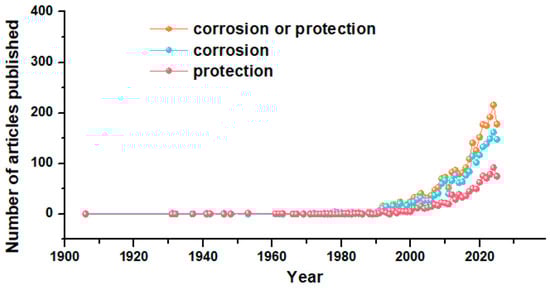
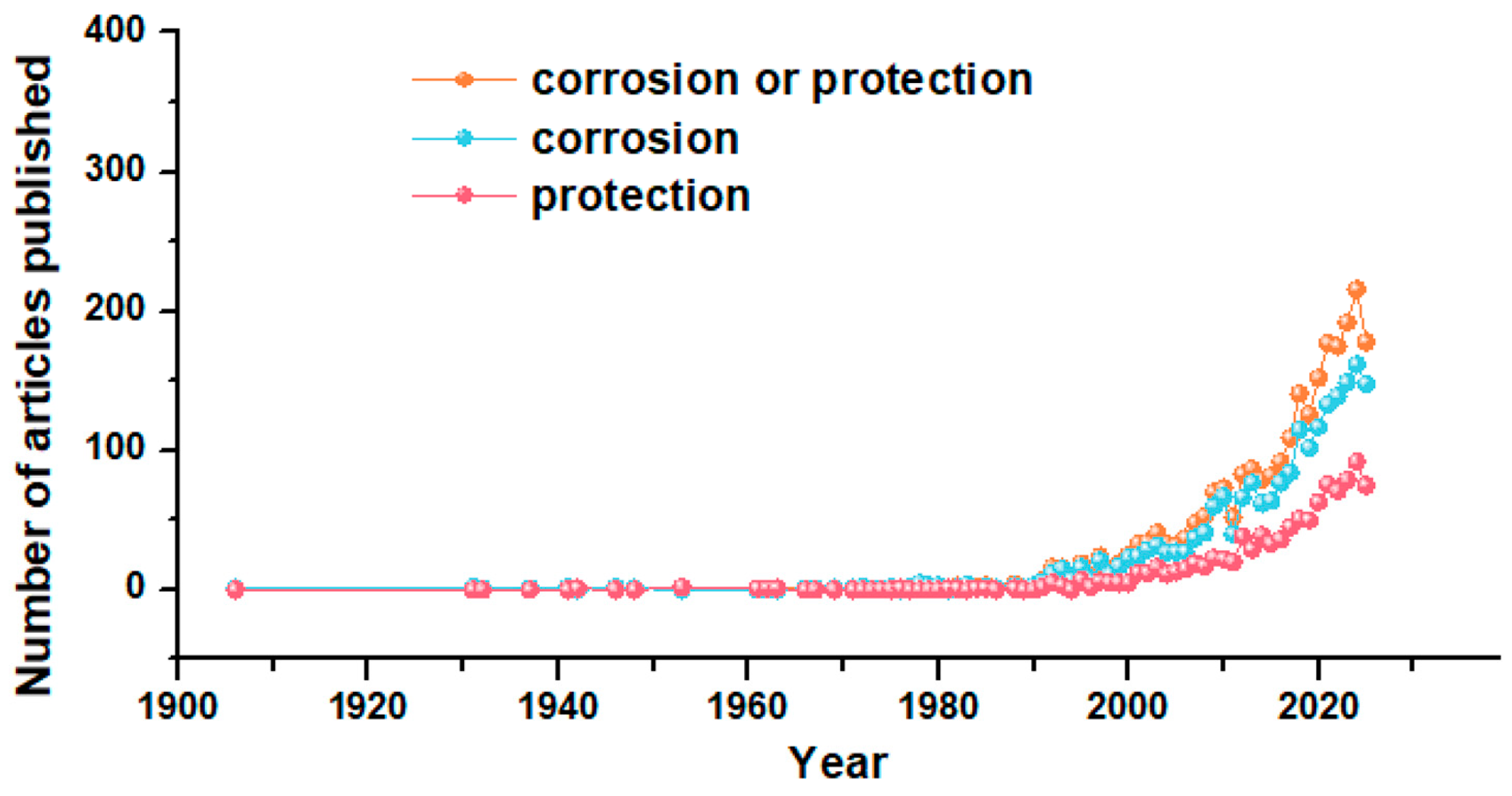
As shown in Figure 1, the earliest paper related to the corrosion and protection of bronze relics was published in 1906. Before 1991, the annual number of publications on the corrosion and protection of bronze cultural relics was relatively low, with fewer than 10 articles published each year. Over time, the overall volume of studies showed a gradual upward trend. After 1991, the number of studies began to increase more steadily, surpassing 100 articles in 2017 (with 109 articles), and reaching a peak of 216 articles in 2024. Over the years, the annual number of publications on bronze corrosion research exhibited a fluctuating upward trend, while the number of publications focused on the protection of bronze relics showed a relatively stable increase. Furthermore, both the total and annual numbers of publications on bronze corrosion research were significantly higher than those on bronze protection research.
Figure 1.
Annual publications on the corrosion and protection of bronze relics.
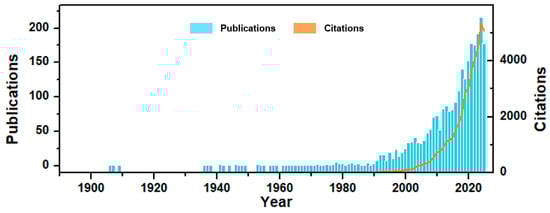
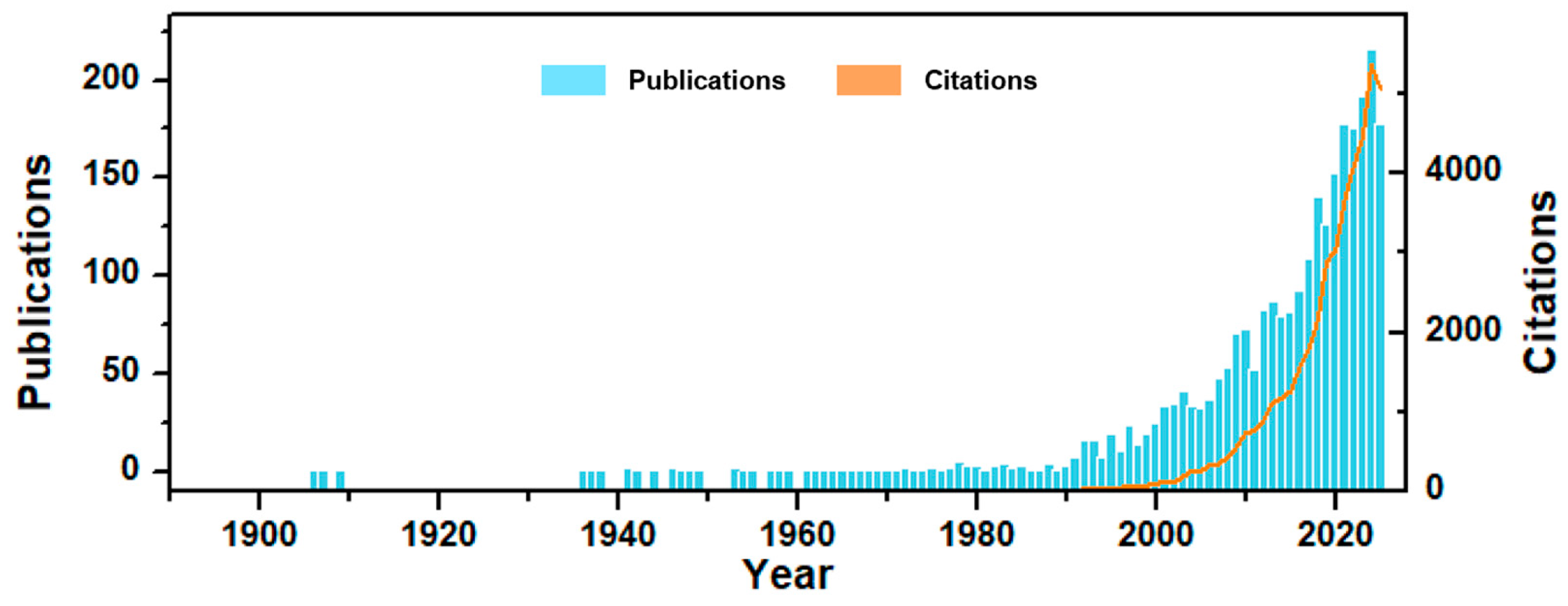
Figure 2 presents the statistics from the WOS Core Collection database, indicating that there are currently 2614 papers on the corrosion and protection of bronze cultural relics, with a total of 43,373 citations and an average annual citation count of 364.48. Before 1991, the annual citation count for related research did not exceed 15, and the overall citation trend remained relatively flat. After 1992, annual citations began to rise, surpassing 100 in 2001, exceeding 1000 in 2013, and reaching a record high of 5365 citations in 2024. This demonstrates that the research on the corrosion and protection of bronze cultural relics has attracted increasing attention from scholars over the years.
Figure 2.
Annual publications and citations on the corrosion and protection of bronze relics.
3.2. Contribution of Countries to Global Publications
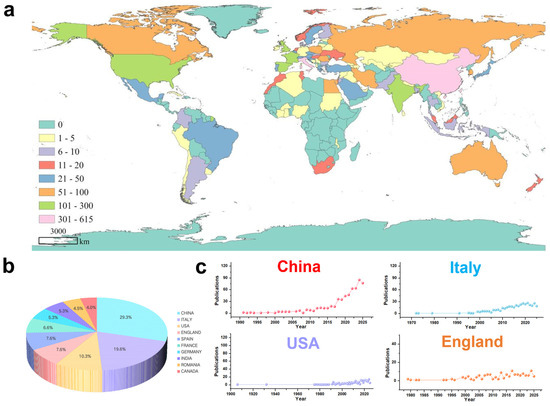
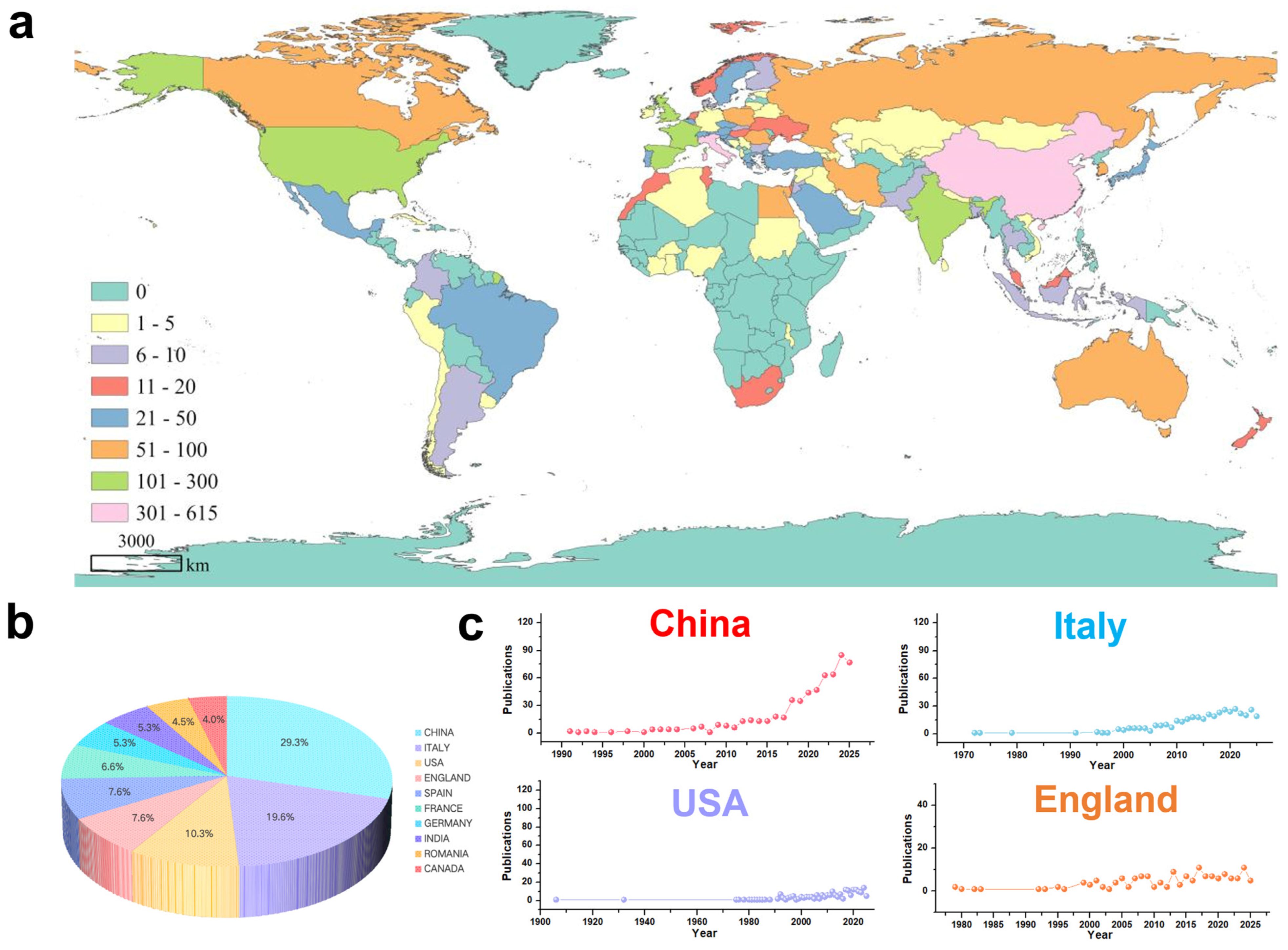
Figure 3 and Table 1 show the contributions of different countries/regions to the research on the corrosion and preservation of bronze cultural relics. The top ten countries/regions in terms of publication numbers are China, Italy, the United States, England, Spain, France, Germany, India, Romania, and Canada. China ranks first with 601 publications, followed by Italy (401), the United States (212), and England (156), which rank second, third, and fourth, respectively. Together, the top four countries account for as much as 66.8% of the total publications among the top ten, highlighting their pivotal roles in the global research on bronze cultural relics. It is noteworthy that the United States was among the earliest countries to begin research on the corrosion and protection of bronzeware. However, the number of related publications has not grown rapidly, indicating a limited level of attention to this field. In contrast, although China started its research relatively late, its number of publications has ranked first since 2015 and continues to grow rapidly, demonstrating China’s strong emphasis on the study of bronze cultural relics.
Figure 3.
(a) The contribution of different countries in corrosion and protection of bronze cultural relics research; (b) the percentage distribution of each country/region in the top ten countries/regions for publishing articles; (c) the growth curve and trend of publications in the top 4 ranked countries.
Table 1.
Top 10 most contributed countries/regions in corrosion and protection of cultural relics research.
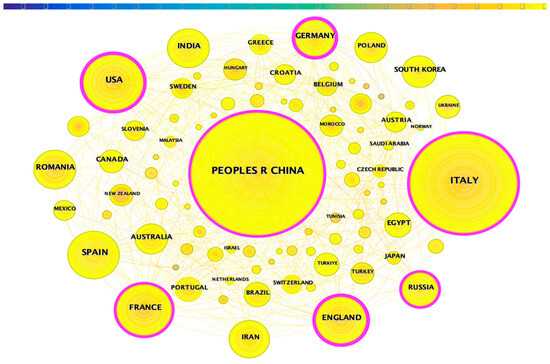
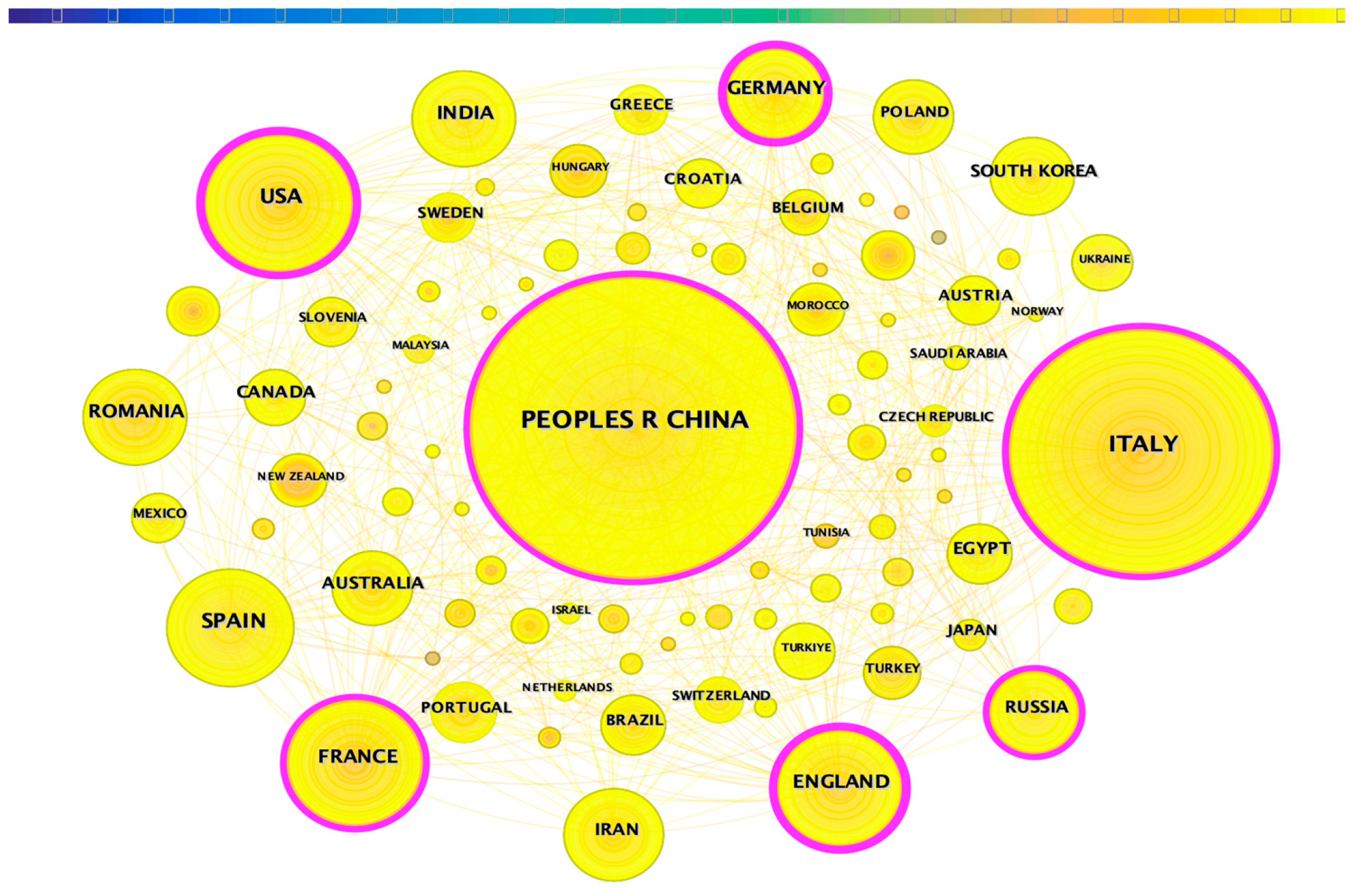
Figure 4 displays the network visualization among different countries/regions that have published at least 15 papers on the corrosion and protection of bronze relics. The font size and circle area size represent the number of published papers while the circle area colors indicate the year, and the link lines among different countries/regions indicate the collaboration activity. In addition, the USA, England, Germany, Italy, France, China, and Russia have many international collaborations with other countries or regions. This trend indicates a move towards growing international cooperation in the research on the corrosion and protection of bronze relics. Sharing data is beneficial for enhancing research efforts and speeding up progress.
Figure 4.
Network visualization among different countries/regions that have published at least 15 papers. (The color gradient from left to right represents the period from 1906 to 2025.)
3.3. Contribution of Countries to Institutes, Journals, and Main Authors
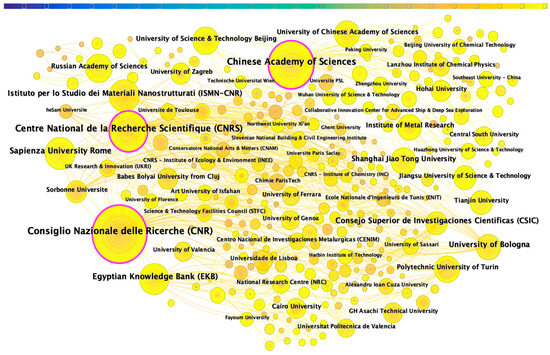
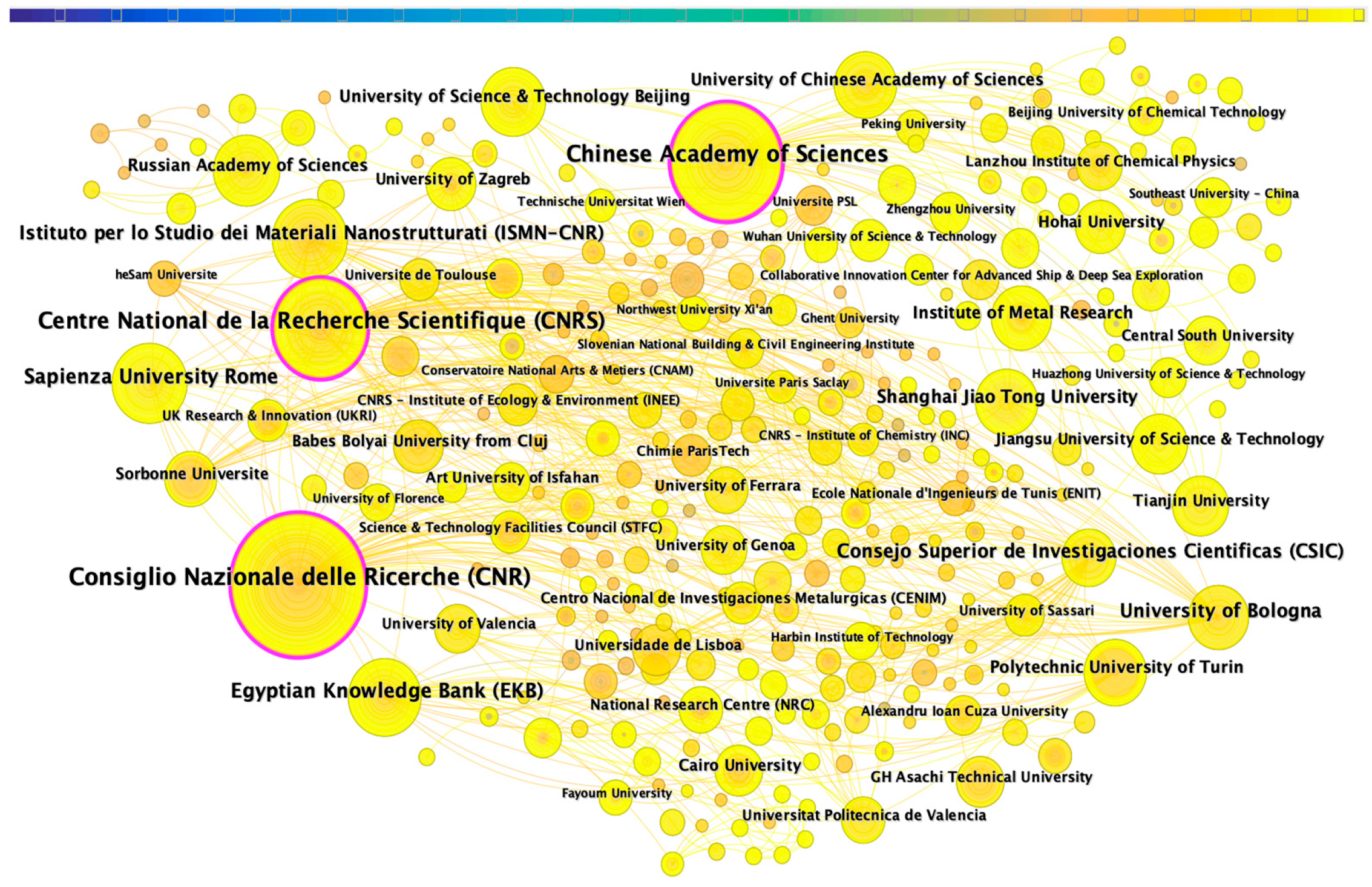
Figure 5 displays the network visualization among different institutions that have published at least 10 papers on the corrosion and protection of bronze relics. The larger the circle area, the more papers the institution publishes. The top 10 institutions that have published papers on the corrosion and protection of bronze relics were as follow: Consiglio Nazionale delle Ricerche (CNR), Chinese Academy of Sciences, Centre National de la Recherche Scientifique (CNRS), Egyptian Knowledge Bank (EKB), Sapienza University Rome, Istituto per lo Studio dei Materiali Nanostrutturati (ISMN-CNR), Consejo Superior de Investigaciones Cientificas (CSIC), University of Bologna, Shanghai Jiao Tong University, and Russian Academy of Sciences. Among them, Consiglio Nazionale delle Ricerche (CNR) leads in the number of publications, with 140 papers on the corrosion and protection of bronze relics, while the second institution was Chinese Academy of Sciences with 108 papers, and the third was Centre National de la Recherche Scientifique (CNRS) with 91 papers. In addition, Centre National de la Recherche Scientifique (CNRS), Consiglio Nazionale delle Ricerche (CNR), and Chinese Academy of Sciences have many academic collaborations with other institutions.
Figure 5.
Network visualization among different institutions that have published at least 10 papers. (The color gradient from left to right represents the period from 1906 to 2025.)
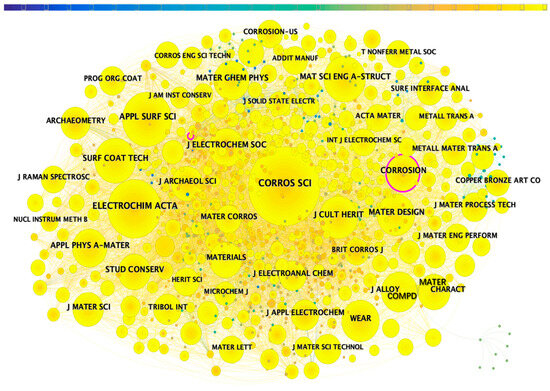
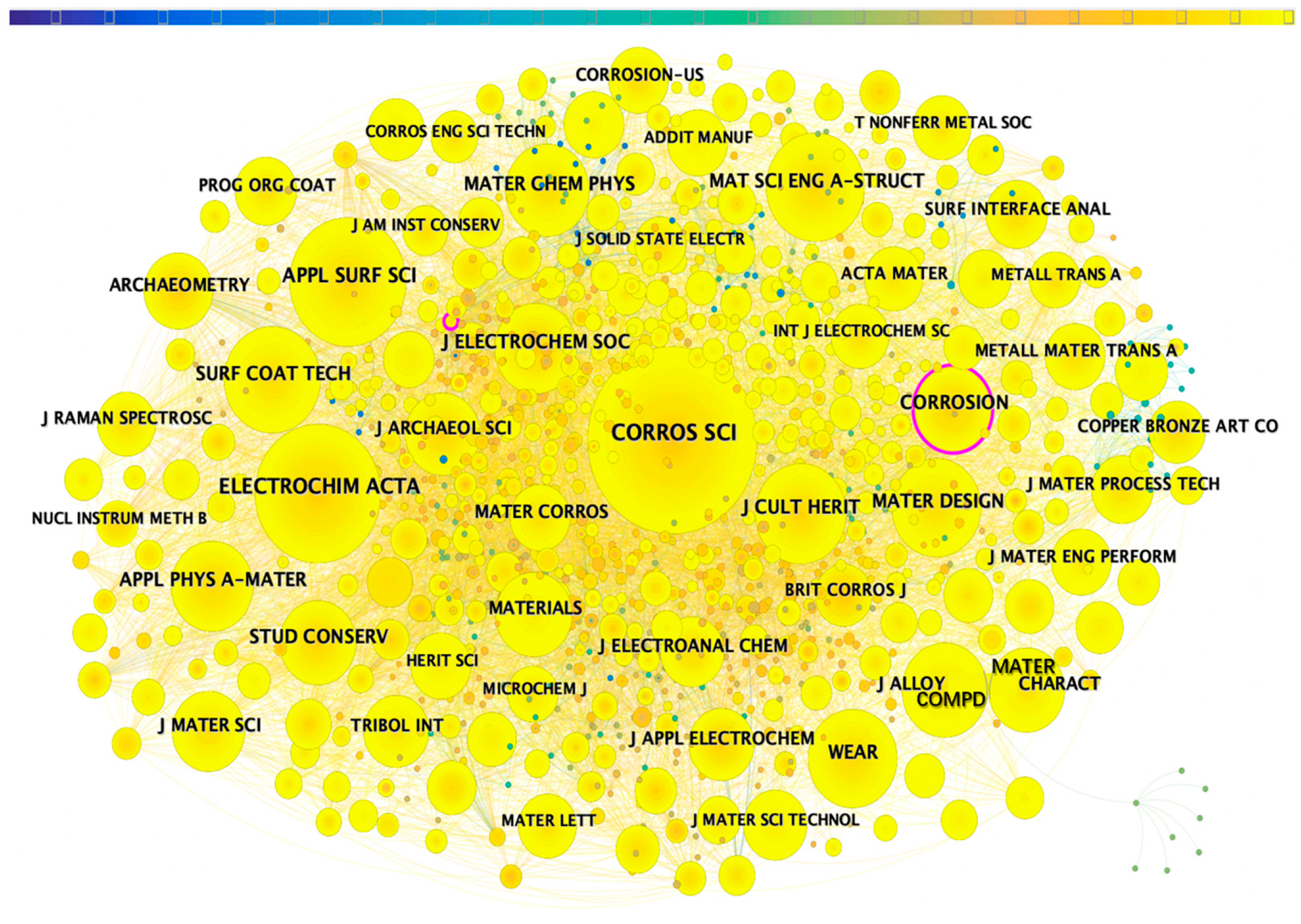
Figure 6 and Table 2 displays the network visualization among different cited journals that have been cited at least 100 times on the corrosion and protection of bronze relics. The font size and circle area size represent the number of citations of journal articles, the color of the circle area represents the year, and the link lines between different journals represent citation relationships. The top 10 cited journals that have been cited by the corrosion and protection of bronze relics were as follow: CORROS SCI, ELECTROCHIM ACTA, APPL SURF SCI, J ELECTROCHEM SOC, SURF COAT TECH, MAT SCI ENG A-STRUCT, CORROSION, J CULT HERIT, APPL PHYS A-MATER, and WEAR. Among them, CORROS SCI leads in the number of citations, with 1290 citations on the corrosion and protection of bronze relics, while the second most cited journal was ELECTROCHIM ACTA with 763 citations, and the third was APPL SURF SCI with 630 citations. The citation count and distribution of these journal articles reflect the core knowledge exchange platform in the field. It is worth noting that journals like J CULT HERIT are also on the list, revealing the unique interdisciplinary nature of bronze corrosion research, with its knowledge base coming from materials/electrochemistry and cultural heritage science.
Figure 6.
Network of cited journals on corrosion and protection of bronze cultural relics. (The color gradient from left to right represents the period from 1906 to 2025.)
Table 2.
TopJournals cited by over 100 times in corrosion and protection of cultural relics research.
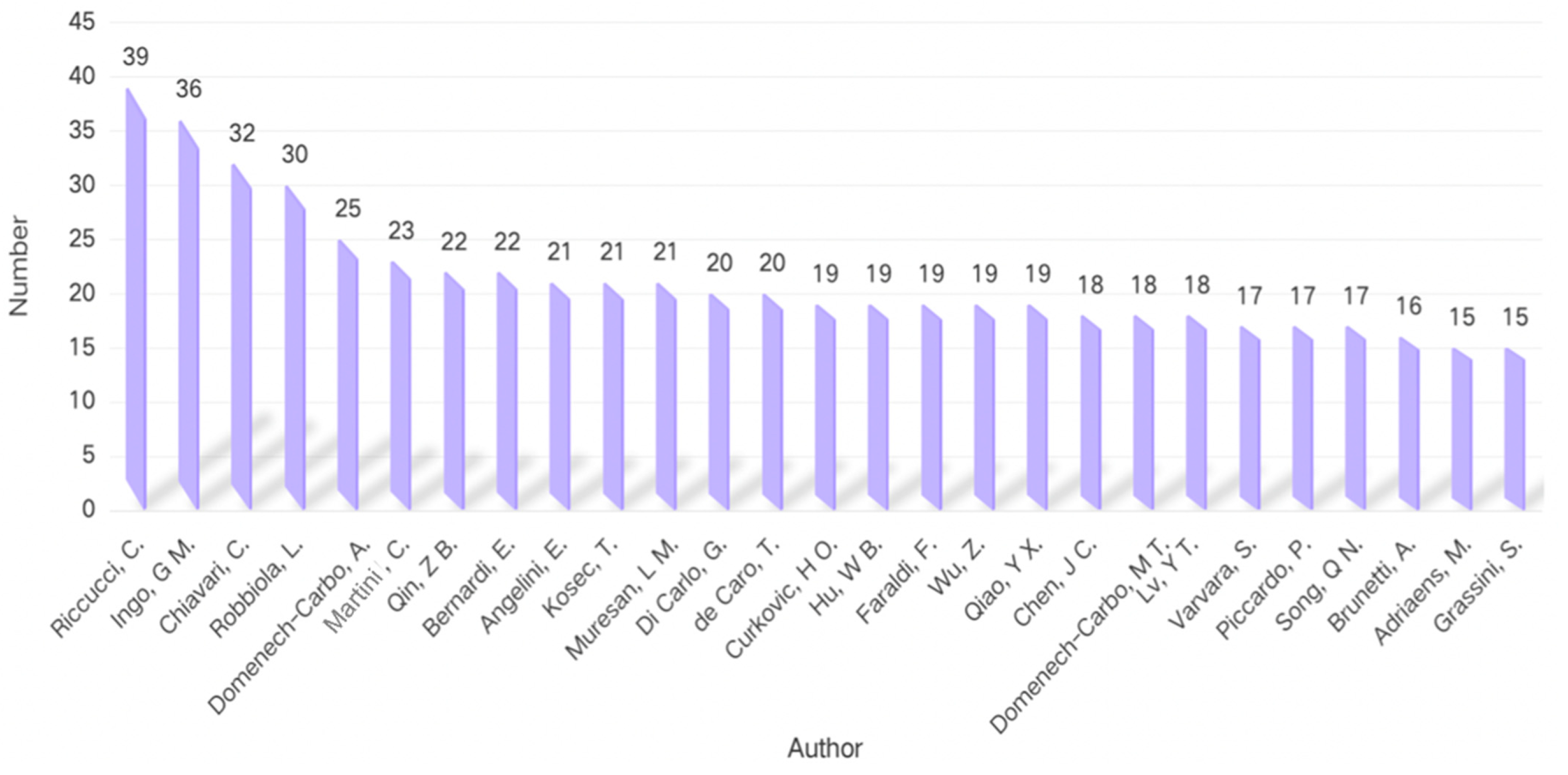
Figure 7 displays the authors that have published at least 15 papers on the corrosion and protection of bronze relics. The top 10 authors that have published papers on the corrosion and protection of bronze relics were as follow: Riccucci, C., Ingo, G M., Chiavari, C., Robbiola, L., Domenech-Carbo, A., Martini, C., Qin, Z B., Bernardi, E., and Angelini, E. Among them, Riccucci, C. leads in the number of publications with 39 papers on the corrosion and protection of bronze relics, while the second author was Ingo, G M. with 36 papers, and the third was Chiavari, C. with 32 papers.
Figure 7.
Column chart of author’s publication volume on corrosion and protection of bronze cultural relics (authors with 15 or more publications).
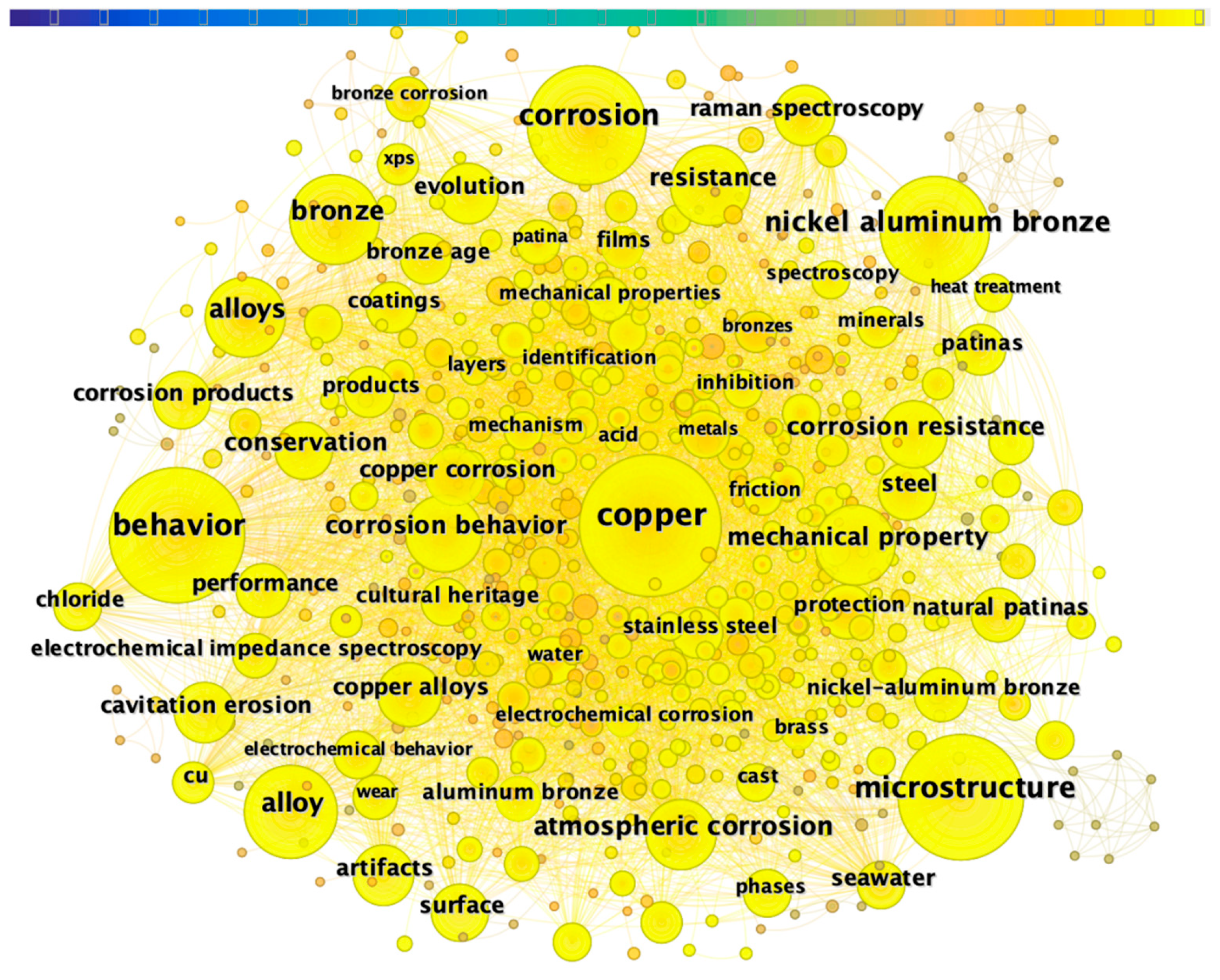
Figure 8 and Table 3 illustrate the network visualization among different keywords of least 30 bronze relic corrosion and protection-related papers. From 1906 to 2025, the top 10 keywords were copper, behavior, corrosion, microstructure, nickel aluminum bronze, alloy, bronze, atmospheric corrosion, alloys, and corrosion behavior. The word “copper” appears 388 times, “behavior” appears 325 times, “corrosion” appears 279 times, “microstructure” appears 250 times, and “nickel aluminum bronze” appears 178 times, which means they are still the research hotspots. Importantly, “conservation” appears 112 times. This indicates that the conservation of bronze relics has also attracted the attention of many scholars. In addition, high-frequency keywords such as copper, behavior, corrosion, nickel aluminum bronze, bronze, atmospheric corrosion, alloys, and corrosion behavior have attracted scholars’ attention at a relatively early stage. Among them, keywords such as copper, conservation, behavior, alloys, and corrosion exhibit stronger centrality than other keywords, indicating that these keywords have significant research influence and their related thematic studies have a broader reach. Particularly, research related to keywords such as copper and conservation constitutes the central theme of bronze relic corrosion and protection. Significantly, the research on nickel aluminum bronze is very extensive, especially in advanced characterization and protection. This is because many actual bronze artifacts cannot be directly used for research on protection technology, and nickel aluminum bronze is often chosen as a substitute material to evaluate the effectiveness of protection technology. This establishes a crucial knowledge base that can provide information and inspiration for protecting heritage bronze artifacts with similar components.
Figure 8.
Network visualization among different keywords in bronze relic corrosion and protection research-related papers. (The color gradient from left to right represents the period from 1906 to 2025.)
Table 3.
The top 30 high-frequency keywords in bronze cultural relic corrosion and protection research.
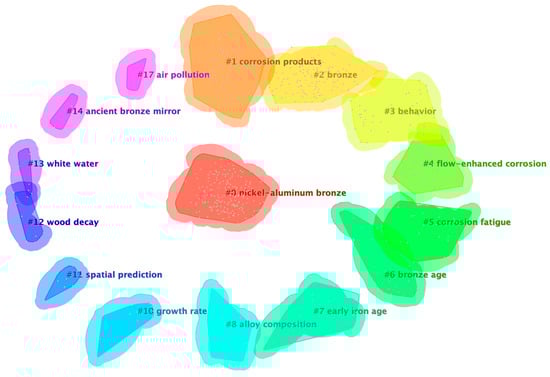
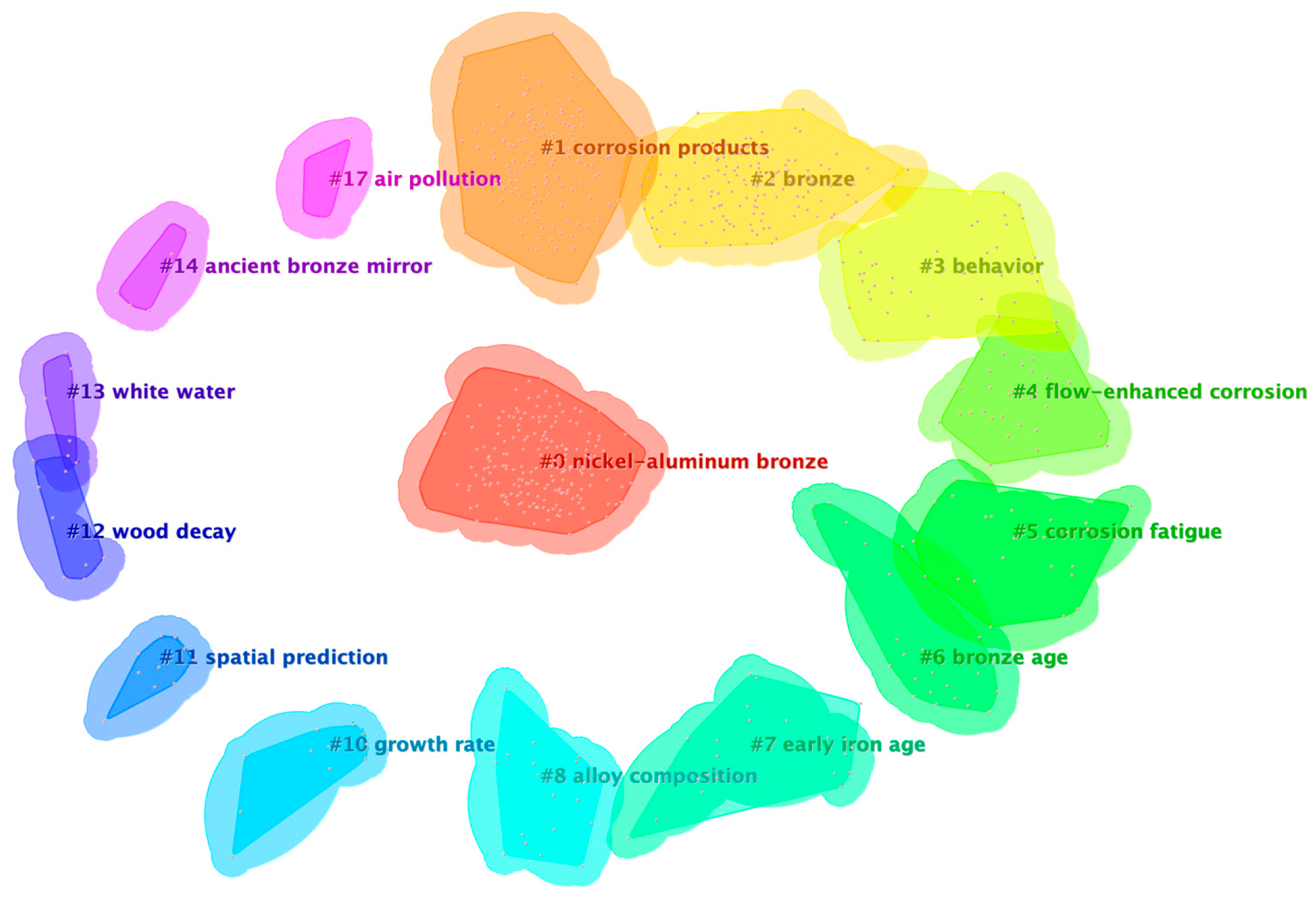
The clusters of keywords from an analysis of bronze relic corrosion and protection research are presented in Figure 9 and Table 4. By classifying the keywords and analyzing the related literature, the research on corrosion and protection of bronze relics could be generally grouped into 15 categories. The first nine clusters of keywords on corrosion and protection of bronze relics are listed in Table 4. The first cluster is nickel aluminum bronze with 189 keywords, including microstructure, nickel aluminum bronze, alloy, corrosion behavior, resistance, mechanical property, etc. The second cluster is corrosion products with 135 keywords, including conservation, artifacts, copper alloys, Raman spectroscopy, corrosion products, patinas, cultural heritage, etc. The third cluster is bronze with 131 keywords, including copper, bronze, atmospheric corrosion, alloys, natural patinas, surface, copper corrosion, etc. The fourth cluster is behavior with 38 keywords, including behavior, metals, air, atmosphere, acid rain, X-ray diffraction, stress corrosion cracking, etc. The fifth cluster is flow-enhanced corrosion with 31 keywords, including water, chloride media, galvanic corrosion, rotating cylinder electrode, chloride solutions, kinetics, sea-water, etc.
Figure 9.
Network visualization among the clusters of keywords in bronze relic corrosion and protection research-related papers.
Table 4.
The clusters of keywords in bronze cultural relic corrosion and protection research.
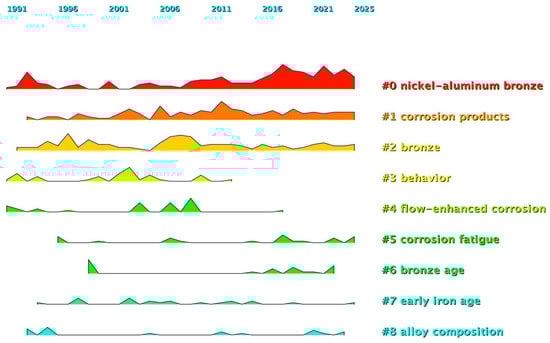
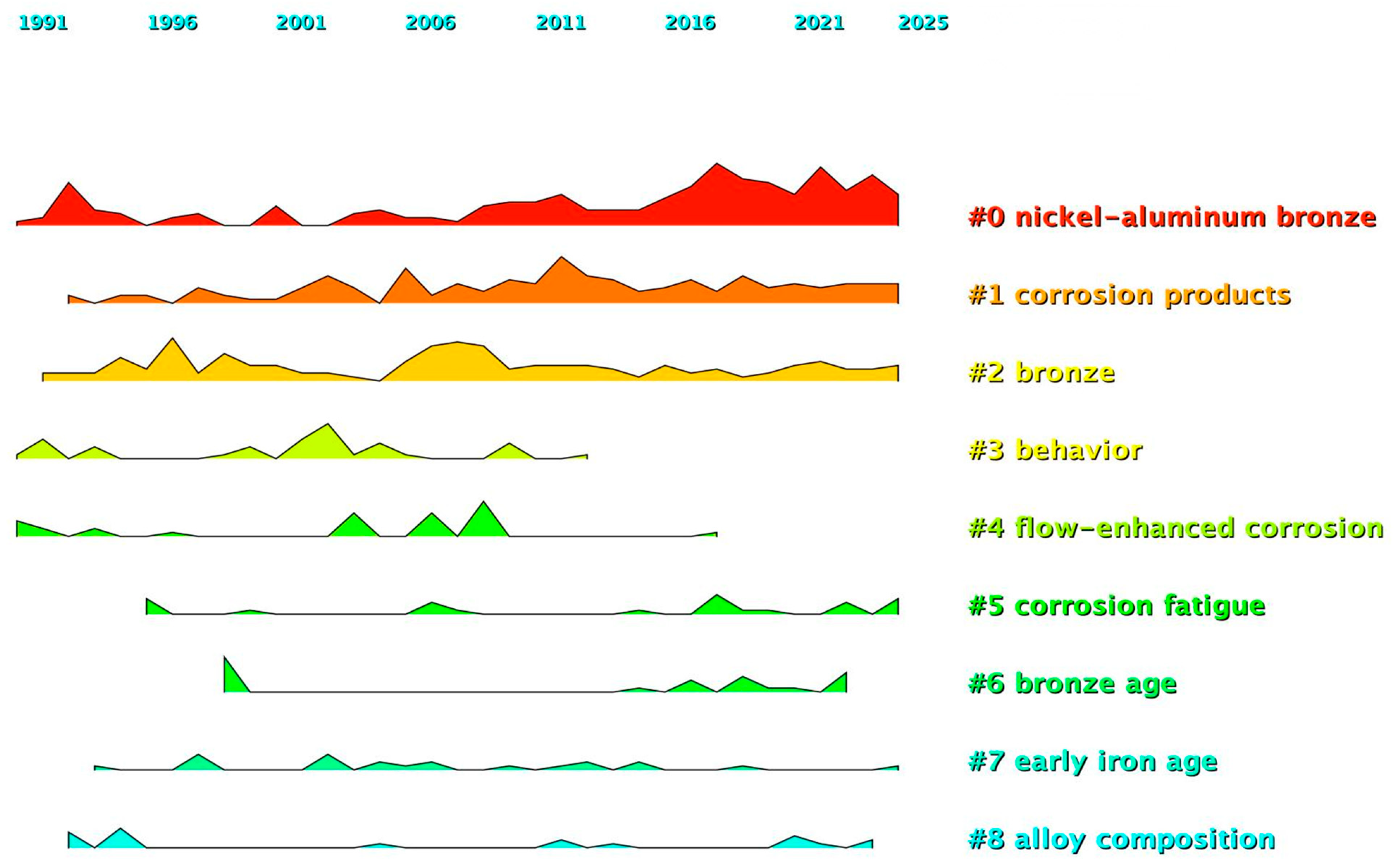
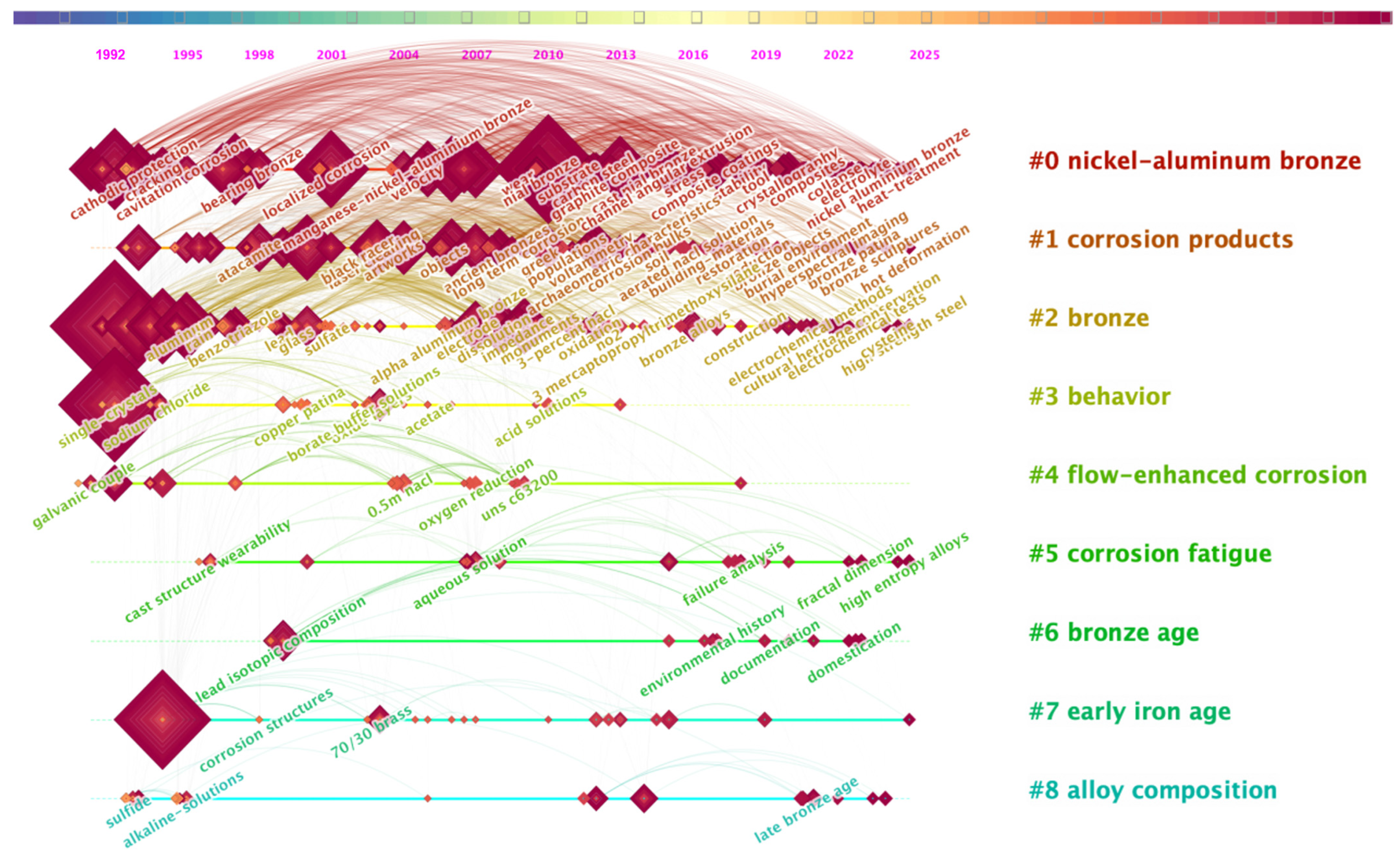
Figure 10 illustrates the evolution over time of the top nine keyword categories in the research on the corrosion and protection of bronze cultural relics. As shown in Figure 11, the topics of nickel aluminum bronze, corrosion products, and bronze have consistently attracted significant attention within the academic community. For more than 30 years, these research areas have been consistently present throughout the study of the corrosion and protection of bronze cultural relics. Specifically, the research on nickel aluminum bronze began in 1991, drawing considerable attention between 1991 and 1995. Although its popularity declined thereafter, it began to attract renewed interest from 2008 onwards and reached its highest level of scholarly attention after 2016. Since then, studies on nickel aluminum bronze have continued to maintain a relatively high profile, making it a key area of research within this field. Investigations into corrosion products commenced in 1993, with growing attention after 2002 and peaking in 2011. Since that peak, the topic has continued to interest researchers. Research focusing directly on bronze originated in 1992 and was of particular interest during 1995–1997 and 2005–2008; subsequently, it has sustained a moderate level of research attention. By contrast, the other research topics have generally attracted less scholarly interest, remaining at a relatively low level throughout most periods.
Figure 10.
Landscape view of research keywords on the corrosion and protection of bronze relics.
Figure 11.
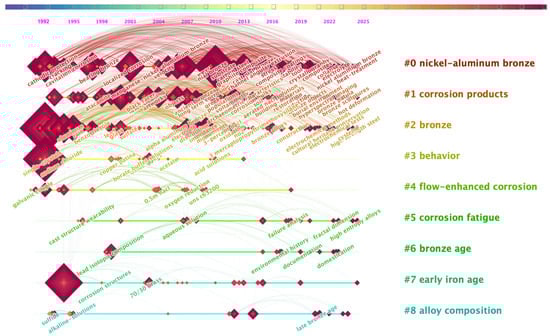
Timeline diagram of research keywords on the corrosion and protection of bronze relics.
Figure 11 presents the timeline of keywords within the top nine clusters in research on the corrosion and protection of bronze artifacts. The timeline graph, generated based on keyword co-occurrence and clustering, displays the co-occurrence of keywords along a timeline, reflecting both their time span and historical development. A time zone graph presents nodes within the same time frame, arranged in a chronological order from past to present. In these graphs, each node represents a keyword; the size of a node corresponds to the frequency of keyword occurrence, while its position indicates the time when the keyword first appeared. Lines between nodes denote the occurrence relationships between keywords. Overlapping nodes indicate that these keywords received attention during the same or similar periods. In the field of nickel aluminum bronze, the two most important keywords “microstructure” and “nickel aluminum bronze” first appeared in 2010 and 1992, respectively. Over time, these topics have been continuously explored, resulting in a substantial body of research. Related studies are expected to continue attracting significant attention in the future. In the research cluster focused on corrosion products, the most important keyword, “conservation”, emerged in 2000. Since then, the volume of relevant research has steadily increased, drawing considerable interest from scholars. In the bronze research cluster, “copper” stands out as the primary keyword; since its initial appearance in 1992, it has steadily become a central focus in the studies of bronze corrosion and protection, garnering widespread scholarly attention. Additionally, within the behavior research cluster, the keyword “behavior” has emerged as a significant topic since 1992, subsequently attracting considerable research interest within this field. Meanwhile, in the early iron age research cluster, the keyword “corrosion” first appeared in 1994 and has since attracted growing scholarly attention, now ranking among the top three research areas in the field of bronze corrosion and protection.
4. Discussion
Based on the bibliometric data, the research on the corrosion and protection of bronze cultural relics has experienced significant development and paradigm shifts over the past century. As shown in Figure 1 and Figure 2, the period before 1991 was characterized by gradual progress, with very few publications per year and largely scattered research efforts. During this stage, the focus was primarily on fundamental scientific questions, with the core objective being to elucidate the mechanisms of bronze corrosion, especially in unearthed cultural relics. The most landmark achievement of this period was the systematic clarification of “bronze disease,” which highlighted the key roles of chloride ions and humidity in the deterioration of bronzeware, thus laying a crucial theoretical foundation for subsequent conservation practices. Since the 1990s, the research field entered a phase of steady development, with annual publication volumes exhibiting consistent growth. A distinguishing feature of this period was a shift in focus from fundamental mechanisms to applied technologies, marking a transition from empirical restoration to conservation approaches rooted in materials science. Corrosion inhibitors, especially benzotriazole, have become a major research hotspot and standard practice. Extensive research aims to optimize their performance, reveal their mechanisms of action, and evaluate their limitations. Concurrently, significant work was carried out on the development, performance evaluation, and modification of various polymer coating materials, greatly enhancing the systematic and targeted nature of research. After 2010, the field entered an era of integrated innovation and rapid development, evidenced by a sharp increase in annual publications, peaking in 2024. This stage is marked by remarkable depth and interdisciplinarity. On the one hand, advanced in situ and non-destructive analysis techniques such as synchrotron radiation, micro-area X-ray diffraction, and high-resolution spectroscopic analysis can provide unprecedented precision in analyzing the phase composition, microstructure, and formation pathways of complex corrosion products, deepening our understanding of corrosion mechanisms. On the other hand, cutting-edge research directions have emerged, including new protective materials and technologies such as nanocomposites, green corrosion inhibitors, biomimetic coatings, and photo-induced passivation techniques [31,32,33,34,35]. Additionally, the concept of preventive protection has received widespread attention, and the research on microenvironment control, real-time corrosion monitoring, and intelligent warning systems is becoming increasingly active, indicating the strong driving force of interdisciplinary integration for the development of this field [36,37,38].
Analysis of contributions by countries/regions and institutions clearly outlines the global academic landscape of this field. As shown in Table 1 and Figure 3, Figure 4 and Figure 5, China, Italy, and the United States constitute the “three pillars” of research on the corrosion and protection of bronze relics. Although China entered the field relatively late (post-1991), it has rapidly risen to the first place in both the total number of publications and total citations, thanks to its abundant cultural heritage resources, large research teams, and sustained investment, demonstrating strong research vitality and productive capacity. Italy, as a traditional leader in cultural heritage conservation, has a longer research history (since 1972) and maintains a core influence through its deep academic foundations and high-quality research output. The United States, building on its pioneering early work (the earliest paper dating back to 1906) and robust research capabilities, continues to play an important role in the field. Collaboration network data (Figure 4) reveal dense cooperative links among major contributor countries, including the United States, Italy, Germany, France, England, and China, indicating that extensive international collaborations have become the norm. Such cross-national cooperation not only facilitates the sharing of rare relic samples and data but also promotes the integration of complementary academic traditions and technical strengths, collectively addressing complex conservation challenges. However, centrality indicators show that China’s hub role in the cooperation network (centrality: 0.14) does not fully correspond to its publication volume, being lower than that of the United States (0.27) and Spain (0.26). This suggests that, in the future, while maintaining a high output, Chinese researchers could further deepen strategic cooperation with leading international teams to enhance the country’s global influence and leadership in the field. At the institutional level (Figure 5), major national research institutions, such as the Italian National Research Council (CNR), the Chinese Academy of Sciences, and the French National Center for Scientific Research (CNRS), are major contributors to knowledge production. Their strong multidisciplinary backgrounds and stable research investment provide crucial support for sustained fundamental research. In addition, journal analysis indicates that research results in the field of bronze corrosion and conservation are primarily published in the leading journals of corrosion science, electrochemistry, cultural heritage, and archeological science. According to publication statistics, journals most favored by researchers in this field include Corrosion Science, Applied Surface Science, Journal of Cultural Heritage, and Electrochimica Acta, which serve as core platforms for the dissemination and exchange of knowledge related to corrosion and heritage conservation.
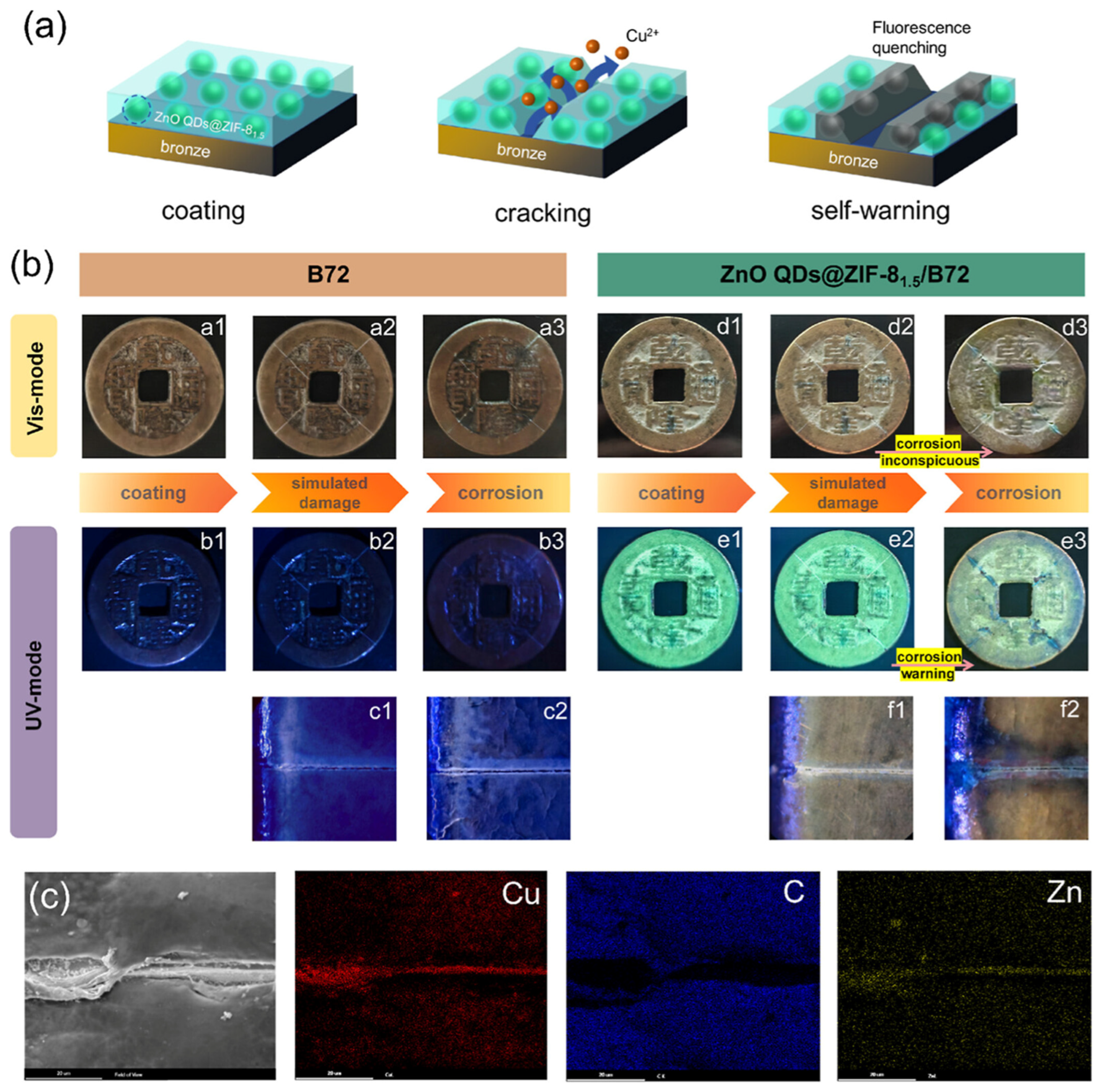
Keyword co-occurrence, clustering, and timeline analyses intuitively reveal the persistence and evolution of research hotspots (Figure 8, Figure 9, Figure 10 and Figure 11 and Table 3 and Table 4). Over the long term, core research hotspots have consistently centered around “corrosion mechanisms and control,” as evidenced by high-frequency keywords such as “copper,” “corrosion,” “behavior,” “microstructure,” “nickel–aluminum bronze,” and “atmospheric corrosion.” Early research predominantly focused on chloride-induced corrosion. Later, it was expanded to encompass the corrosion in marine, soil, and other burial environments, the effects of alloying elements (such as tin and lead) on corrosion behavior, and studies on the phase stabilization of complex corrosion products. The second largest hotspot cluster focuses on “innovative protective materials and technologies,” with “conservation” emerging as an influential independent keyword since 2000. This area seeks to address the limitations of traditional materials, such as the toxicity of BTA and polymer aging, by exploring high-performance nanocomposites, environmentally friendly corrosion inhibitors, and advanced surface modification techniques, including plasma treatment and photo-induced passivation (Figure 12) [39]. In recent years, an increasingly prominent hotspot has been “multidisciplinary methods and preventive conservation systems,” as reflected in keyword clusters related to the analysis of “corrosion products” and studies on “archaeological context.” This strategic shift towards proactive prevention has defined new research frontiers. They focus on applying technologies like portable XRF and 3D modeling to achieve non-destructive assessment, virtual restoration, and digital display of relics. Timeline analyses (Figure 10 and Figure 11) show a recent resurgence in “nickel aluminum bronze” research, now enhanced by advanced microstructural characterization methods. Meanwhile, the ongoing intersection of topics such as “corrosion products” and “conservation” highlights the increasingly inseparable link between scientific research and conservation practice. Overall, research hotspots in bronze corrosion and protection have evolved from understanding intrinsic mechanisms to developing targeted tools and integrated, intelligent prevention systems.
Figure 12.
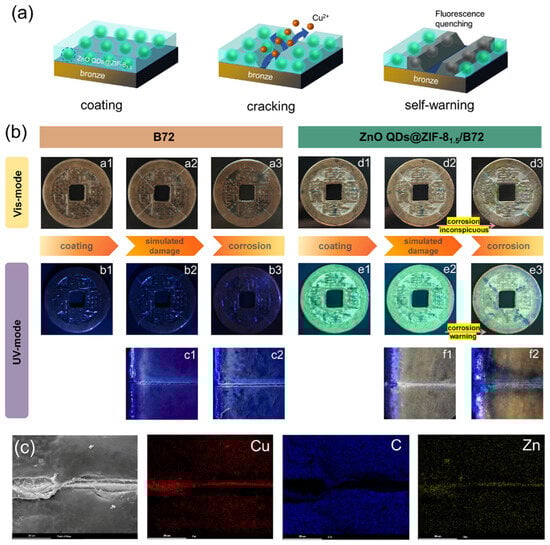
Self-warning performance of ZnO QDs@ZIF-8 1.5 pubs.acs.org/Langmuir Article/B72 coatings: (a) schematic of coating states, (b) visible and UV–fluorescence images showing corrosion progression, (c) SEM morphology, and EDS elemental maps (Cu, Zn, C) of crack regions [39] (reprinted/adapted with permission from American Chemical Society, 2025).
5. Conclusions and Prospects
This study, through a systematic bibliometric analysis, reveals the developmental trajectory, knowledge structure, and evolutionary trends in the field of corrosion and protection of bronze cultural relics over more than a century. This field has evolved from the early studies on corrosion mechanisms to a mid-stage focus on protective applications, and now to a new era of multidisciplinary innovation led by preventive conservation and smart monitoring. The global research landscape is predominantly shaped by China, Italy, and the United States, with a robust international cooperation network already established. However, there is scope to enhance both the depth and balance of such collaborations. Keyword evolution analysis reveals that the research focus has gradually expanded from the fundamental understanding of corrosion mechanisms and single-material protection to a comprehensive disciplinary system encompassing green materials, advanced characterization techniques, and systematic risk management. Looking ahead, research should prioritize the development of a closer international collaborative network to facilitate the sharing of data, standards, and technology. Multidisciplinary integration must be deepened, especially by combining artificial intelligence and sensing technology with traditional conservation science, to develop intelligent monitoring and risk assessment approaches. Simultaneously, ongoing progress in the development and long-term performance evaluation of environmentally friendly conservation materials is essential. By pursuing these research directions, the field is expected to evolve in a more systematic, precise, and sustainable manner, thereby providing a strong foundation for the scientific conservation and preservation of bronze cultural relics.
Author Contributions
Conceptualization, L.Z., C.J., and C.Y.; methodology, L.Z.; software, L.Z., C.J., and C.Y.; validation, C.Y. and L.Z.; formal analysis, C.Y.; investigation, C.J.; resources, L.Z.; data curation, L.Z. and C.Y.; writing—original draft preparation, L.Z. and Y.G.; writing—review and editing, C.Y., C.J., and Y.G.; visualization, C.Y.; supervision, C.Y.; project administration, L.Z. and C.J.; Y.G., and C.Y.; funding acquisition, L.Z., C.J., and C.Y. All authors have read and agreed to the published version of the manuscript.
Funding
This work was financially supported by the Social Science Foundation of Fujian Province (Lingling Zhang, FJ2024BF046); the Innovation Strategy Research Program of Fujian Province (Lingling Zhang, 2025R0059); Startup Fund for Advanced Talents of Putian University (Lingling Zhang, 2024154); and the National Natural Science Foundation of China (Yingzhi Guo, 72074053).
Institutional Review Board Statement
Not applicable.
Informed Consent Statement
Not applicable.
Data Availability Statement
Data are contained within the article.
Conflicts of Interest
The authors declare no conflicts of interest.
References
- Robbiola, L.; Blengino, J.M.; Fiaud, C. Morphology and mechanisms of formation of natural patinas on archaeological Cu-Sn alloys. Corros. Sci. 1998, 40, 2083–2111. [Google Scholar] [CrossRef] [Scilit]
- Thunberg, J.; Emmerson, N.; Watkinson, D. New Evidence of the Relationship Between Oxidative Hydrolysis of CuCl “Bronze Disease” and Relative Humidity (RH) for Management of Archaeological Copper Alloys. Heritage 2025, 8, 350. [Google Scholar] [CrossRef] [Scilit]
- Nord, A.G.; Mattsson, E.; Tronner, K. Factors Influencing the Long-term Corrosion of Bronze Artefacts in Soil. Prot. Met. 2005, 41, 309–319. [Google Scholar] [CrossRef] [Scilit]
- Patterson, N.; Isakov, M.; Booth, T.; Büster, L.; Fischer, C.-E.; Olalde, I.; Ringbauer, H.; Akbari, A.; Cheronet, O.; Bleasdale, M.; et al. Large-scale migration into Britain during the Middle to Late Bronze Age. Nature 2022, 601, 588–594. [Google Scholar] [CrossRef] [Scilit]
- Li, H.; Zhang, Z.; Guo, H.; Ren, C.; Liu, C.; Xiang, L. Recent Progress on Corrosion Behavior, Mechanism, and Protection Strategies of Bronze Artefacts. Heritage 2025, 8, 340. [Google Scholar] [CrossRef] [Scilit]
- Liu, W.; Li, M.; Wu, N.; Liu, S.; Chen, J. A new application of Fiber optics reflection spectroscopy (FORS): Identification of “bronze disease” induced corrosion products on ancient bronzes. J. Cult. Herit. 2021, 49, 19–27. [Google Scholar] [CrossRef] [Scilit]
- Kwon, H. Corrosion Behaviors of Artificial Chloride Patina for Studying Bronze Sculpture Corrosion in Marine Environments. Coatings 2023, 13, 1630. [Google Scholar] [CrossRef] [Scilit]
- Tian, H.; Wang, M.; Zhang, J.; Ma, Y.; Cui, H.; Zhao, J.; Dong, Q.; Cui, Q.; Liu, B. Pressure-Induced Variation of the Crystal Stacking Order in the Hydrogen-Bonded Quasi-Two-Dimensional Layered Material Cu(OH)Cl. Materials 2021, 13, 5019. [Google Scholar] [CrossRef] [Scilit]
- Feifer, R.A.; Schiffer, J. Intermolecular Coupling of Water Molecules in Copper Chloride Dihydrate. J. Chem. Phys. 1971, 54, 5097–5102. [Google Scholar] [CrossRef] [Scilit]
- Zhao, S.; Liu, X.; Chen, Z.; Zhang, S.; Niu, Q.; Zhao, X. Study on the Bronze Weapons Excavated from Xichuan, China. Metals 2024, 14, 395. [Google Scholar] [CrossRef] [Scilit]
- Wood, J.R.; Liu, Y.A. Multivariate Approach to Investigate Metallurgical Technology: The Case of the Chinese Ritual Bronzes. J. Archaeol. Method Theory 2023, 30, 707–756. [Google Scholar] [CrossRef] [Scilit]
- Pagano, S.; Balassone, G.; Germinario, C.; Grifa, C.; Izzo, F.; Mercurio, M.; Munzi, P.; Pappalardo, L.; Spagnoli, E.; Verde, M.; et al. Archaeometric Characterisation and Assessment of Conservation State of Coins: The Case-Study of a Selection of Antoniniani from the Hoard of Cumae (Campania Region, Southern Italy). Heritage 2023, 6, 2038–2055. [Google Scholar] [CrossRef] [Scilit]
- Muşkara, Ü.; Aras, O.; Işıklı, M. Chemical analyses of Urartian bronze objects from the Ayanis fortress. J. Archaeol. Sci. Rep. 2023, 49, 104018. [Google Scholar] [CrossRef] [Scilit]
- Saint, A.-C.; Dritsa, V.; Koui, M. Development of an Optimized NDT Methodology for the Investigation of Ancient Greek Copper-Based Artifacts. Corros. Mater. Degrad. 2021, 2, 325–340. [Google Scholar] [CrossRef] [Scilit]
- De Ryck, I.; Adriaens, A.; Adams, F. An overview of Mesopotamian bronze metallurgy during the 3rd millennium BC. J. Cult. Herit. 2005, 6, 261–268. [Google Scholar] [CrossRef] [Scilit]
- Oudbashi, O.; Emami, S.M.; Ahmadi, H.; Davami, P. Micro-stratigraphical investigation on corrosion layers in ancient Bronze artefacts by scanning electron microscopy energy dispersive spectrometry and optical microscopy. Herit. Sci. 2013, 1, 21. [Google Scholar]
- Scott, A.D. Periodic corrosion phenomena in bronze antiquities. Stud. Conserv. 1985, 33, 49–57. [Google Scholar] [CrossRef] [Scilit]
- Song, X.W.; He, Z.W.; Chen, N.N.; Zhang, W.D.; Xu, K.Y.; Liu, Q.Q.; Lu, L.; Zhang, Q.; Tan, Y.; Yuan, J.X.; et al. Corrosion behavior and mechanism of beryllium bronze induced by Aspergillus brasiliensis in space. Corros. Sci. 2026, 258, 113421. [Google Scholar]
- Chiavari, C.; Bernardi, E.; Ospitali, F.; Robbiola, L.; Martini, C.; Morselli, L. Atmospheric corrosion of outdoor bronzes: Artificial ageing tests. Corros. Sci. 2009, 101, 45–54. [Google Scholar]
- Organ, R.M. Aspects of bronze patina and its treatment. Stud. Conserv. 1963, 8, 1–9. [Google Scholar] [CrossRef] [Scilit]
- Luvidi, L.; Casanova Municchia, A.; Konstantakopoulou, E.; Orazi, N.; Ferretti, M.; Caruso, G. Combined Use of Non-Destructive Analysis Techniques to Investigate Ancient Bronze Statues. Sensors 2025, 25, 1727. [Google Scholar] [CrossRef] [Scilit]
- Carlomagno, G.M.; Di Maio, R.; Meola, C.; Roberti, N. Infrared thermography and geophysical techniques in cultural heritage conservation. Quant. InfraRed Thermogr. J. 2005, 2, 5–24. [Google Scholar] [CrossRef] [Scilit]
- Zhou, S.; Zhao, Z.S.; Mao, H.Y.; Wang, L.; Chen, J.Y.; Chen, J.C.; Huang, X. Bronze preservation by using composite hydrogel coating-loaded corrosion inhibitors. Herit. Sci. 2022, 10, 116. [Google Scholar] [CrossRef] [Scilit]
- Wang, T.; Wang, J.; Wu, Y. The inhibition effect and mechanism of l-cysteine on the corrosion of bronze covered with a CuCl patina. Corros. Sci. 2015, 97, 89–99. [Google Scholar] [CrossRef] [Scilit]
- Zhang, L.; Yang, C.; Guo, Y. Corrosion and Protection of Chinese Bronze Relics: A Review. Coatings 2024, 14, 1196. [Google Scholar] [CrossRef] [Scilit]
- Varvara, S. Reusing an Expired Drug as a Sustainable Corrosion Inhibitor for Bronze in 3.5% NaCl and Simulated Acid Rain Solutions. Appl. Sci. 2025, 15, 6637. [Google Scholar] [CrossRef] [Scilit]
- de Oliveira, F.J.R.; Lago, D.C.B.; Senna, L.F.; de Miranda, L.R.M.; D’Elia, E. Study of patina formation on bronze specimens. Mater. Chem. Phys. 2009, 115, 761–770. [Google Scholar] [CrossRef] [Scilit]
- Tran, N.P.; Hoque, A.; Le, T. ESG Signals, Investor Psychology and Corporate Financial Policy: A Bibliometric Study. J. Risk Financ. Manag. 2025, 18, 697. [Google Scholar] [CrossRef] [Scilit]
- Rodrigues Loiola, R.; Kimura, H.; Melo Souza, L.D. Sustainable Finance, Green Bonds and Financial Performance—A Literature Review. Int. J. Financ. Stud. 2025, 13, 233. [Google Scholar] [CrossRef] [Scilit]
- Al Shubbar, M.D.; Alhojailan, R.A.; Alzahrani, S.A.; Hobani, A.; Alabdulqader, H.H.; Alharbi, A.A.; Alotibi, S.A.; Almuzil, N.S.; Al Jama, A. Global Research Trends and Hotspots in Cardiac Devices: A Bibliometric and Visual Analysis. Healthcare 2025, 13, 3144. [Google Scholar] [CrossRef] [Scilit]
- Constantinides, I.; Adriaens, A.; Adams, F. Surface characterization of artificial corrosion layers on copper alloy reference materials. Appl. Surf. Sci. 2002, 189, 90–101. [Google Scholar] [CrossRef] [Scilit]
- Ingo, G.M.; de Caro, T.; Riccucci, C.; Angelini, E.; Grassini, S.; Balbi, S.; Bernardini, P.; Salvi, D.; Bousselmi, L.; Çilingiroglu, A.; et al. Large scale investigation of chemical composition, structure and corrosion mechanism of bronze archeological artefacts from Mediterranean basin. Appl. Phys. A 2006, 83, 513–520. [Google Scholar] [CrossRef] [Scilit]
- Li, X.D.; Zhu, X.; Feng, A.L.; An, M.M.; Liu, P.T.; Zu, Y.Q. Electrochemical and surface analysis investigation of corrosion inhibition performance: 6-Thioguanine, benzotriazole, and phosphate salt on simulated patinas of bronze relics. J. Mater. Res. Technol. 2024, 29, 5667–5680. [Google Scholar] [CrossRef] [Scilit]
- Hong, S.; Chen, W.; Zhang, Y.; Luo, H.Q.; Li, M.; Li, N.B. Investigation of the inhibition effect of trithiocyanuric acid on corrosion of copper in 3.0wt.% NaCl. Corros. Sci. 2013, 66, 308–314. [Google Scholar] [CrossRef] [Scilit]
- Qafsaoui, W.; Et Taouil, A.; Kendig, M.W.; Heintz, O.; Cachet, H.; Joiret, S.; Takenouti, H. Corrosion protection of bronze using 2,5-dimercapto-1,3,4-thiadiazole as organic inhibitor: Spectroscopic and electrochemical investigations. J. Appl. Electrochem. 2019, 49, 823–837. [Google Scholar] [CrossRef] [Scilit]
- Varvara, S.; Caniglia, G.; Izquierdo, J.; Bostan, R.; Gaina, L.; Bobis, O.; Souto, R.M. Multiscale electrochemical analysis of the corrosion control of bronze in simulated acid rain by horse-chestnut (Aesculus hippocastanum L.) extract as green inhibitor. Corros. Sci. 2020, 165, 108381. [Google Scholar] [CrossRef] [Scilit]
- Chen, Z.R.; Liu, X.X.; Chen, H.N.; Li, J.L.; Wang, X.F.; Zhu, J.F. Application of epoxy resin in cultural relics protection. Chin. Chem. Lett. 2024, 35, 109194. [Google Scholar] [CrossRef] [Scilit]
- Guo, L.; Wang, L.Q.; Zhang, S.Y.; Wang, L.B.; Pan, Z.D.; Leng, X.; Ma, Z.; Zhao, X. Superhydrophobic coating for protecting bronze artefacts from electrolyte and gas corrosion. Surf. Coat. Tech. 2025, 518, 132907. [Google Scholar] [CrossRef] [Scilit]
- Zhu, H.B.; Wang, Z.; Yuan, L.; Xie, J.K.; Guo, Y.N. Self-Assembled ZnO QDs@ZIF-8 Fillers for Low-Cost Bronze Artifacts Corrosion Monitoring. Langmuir 2025, 41, 28080−28090. [Google Scholar] [CrossRef] [Scilit]

Disclaimer/Publisher’s Note: The statements, opinions and data contained in all publications are solely those of the individual author(s) and contributor(s) and not of MDPI and/or the editor(s). MDPI and/or the editor(s) disclaim responsibility for any injury to people or property resulting from any ideas, methods, instructions or products referred to in the content. |
© 2026 by the authors. Licensee MDPI, Basel, Switzerland. This article is an open access article distributed under the terms and conditions of the Creative Commons Attribution (CC BY) license.