Advancing Lateral Flow Detection in CRISPR/Cas12a Systems Through Rational Understanding and Design Strategies of Reporter Interactions

 , ,
, ,  , ,
, ,  and
and 
Abstract
1. Introduction
2. Materials and Methods
2.1. Chemicals and Materials
2.2. Synthesis of Gold Nanoparticles (GNPs)
2.3. Synthesis of GNP–Antibody Conjugates
2.4. Characterization of GNPs and GNP–Antibody Conjugates
2.5. Determination of Active Binding Sites for antiFAM–GNP Conjugates
2.6. Preparation of Lateral Flow Test Strips for Reporter Detection
2.7. Detection of Reporters Using Lateral Flow Test Strips of Different Compositions
2.8. Numerical Modeling of Interaction Kinetics in Conventional NALFA for CRISPR/Cas12a
2.9. Preparation of dsDNA Target for CRISPR/Cas12a
2.10. LAMP Amplification Prior to CRISPR/Cas12a Reaction
2.11. Detection of dsDNA Target with CRISPR/Cas12a
3. Results and Discussion
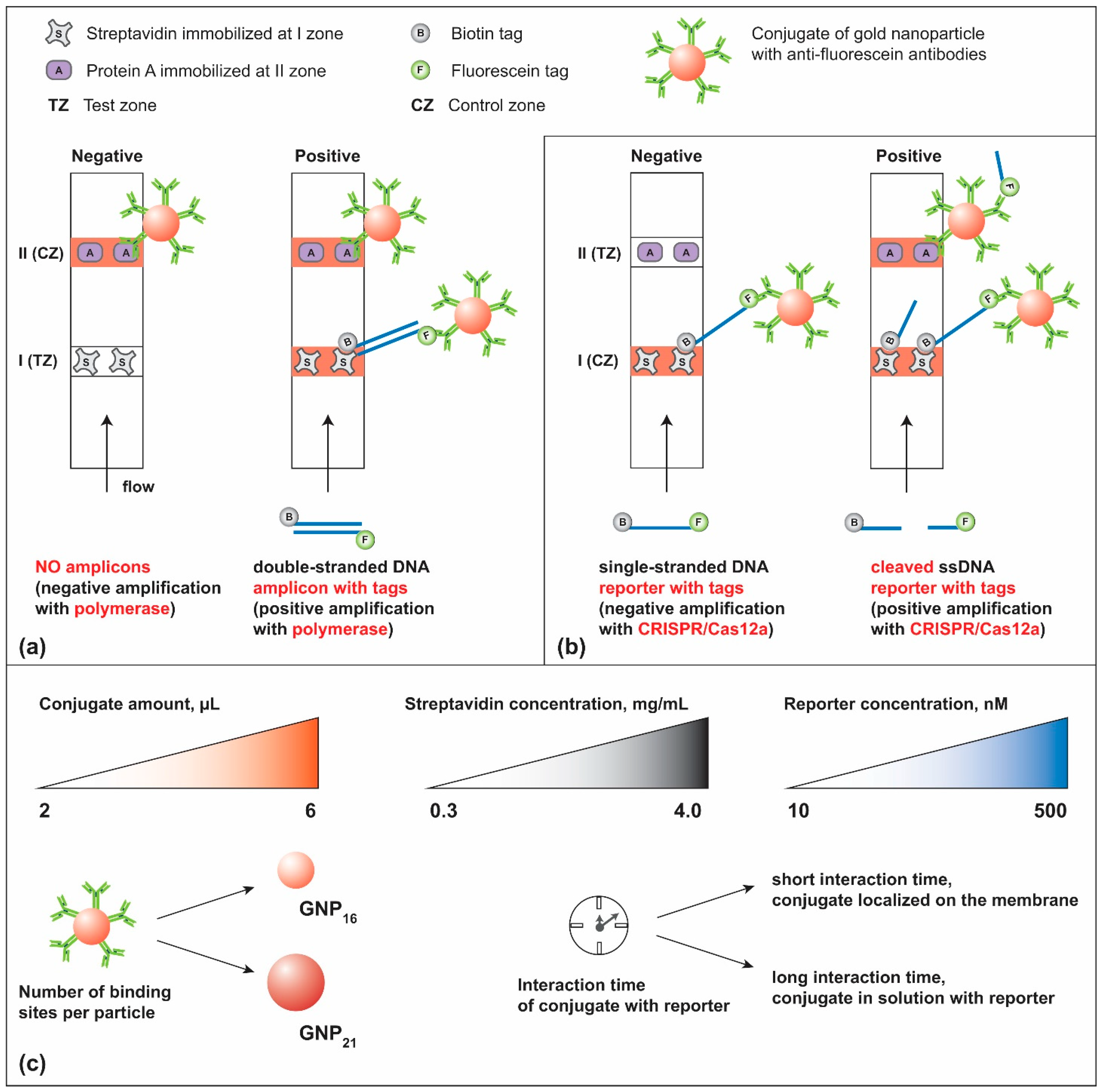
3.1. Design of Strategies to Improve of Conventional CRISPR/Cas12a–LFT System
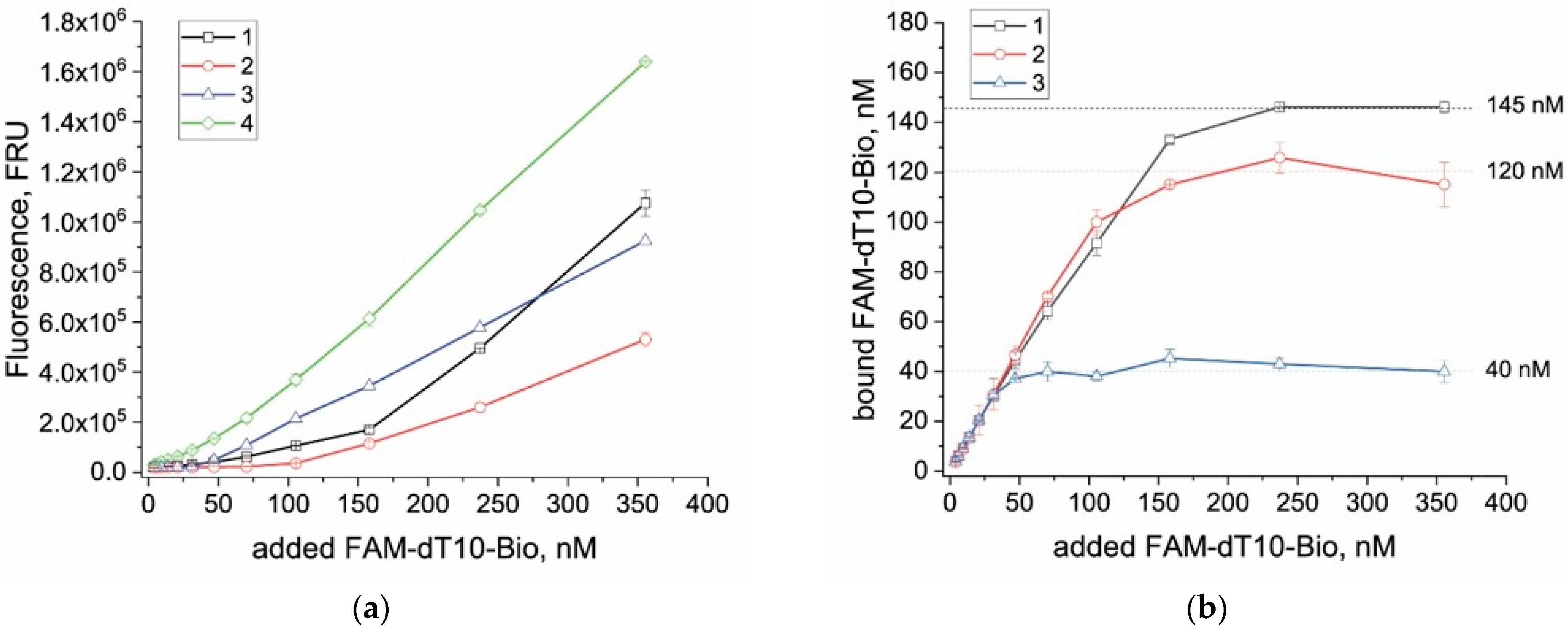
3.2. Preparation and Characterization of antiFAM–GNP Conjugates for LFT Detection of Reporters in CRISPR/Cas12a
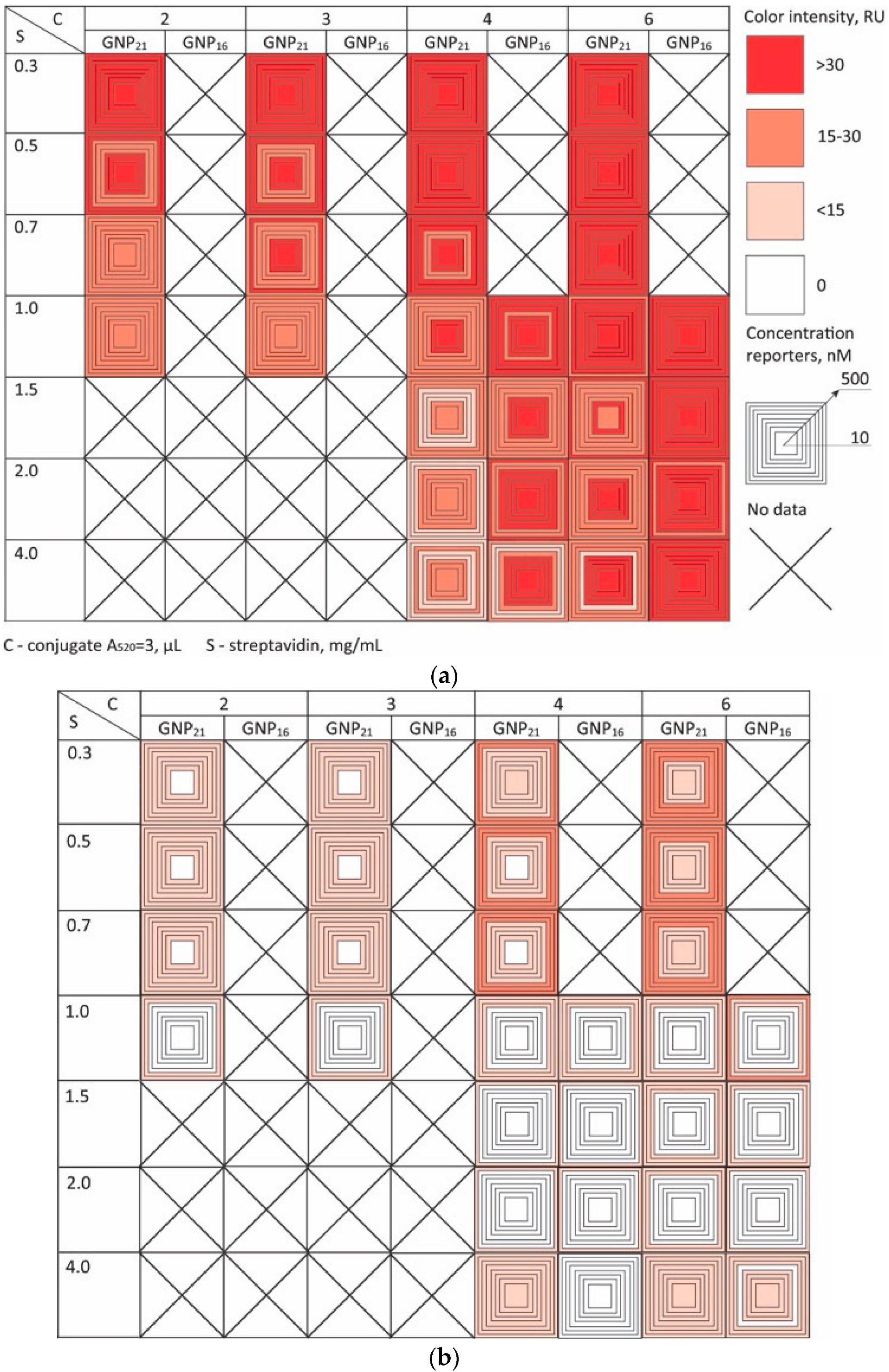
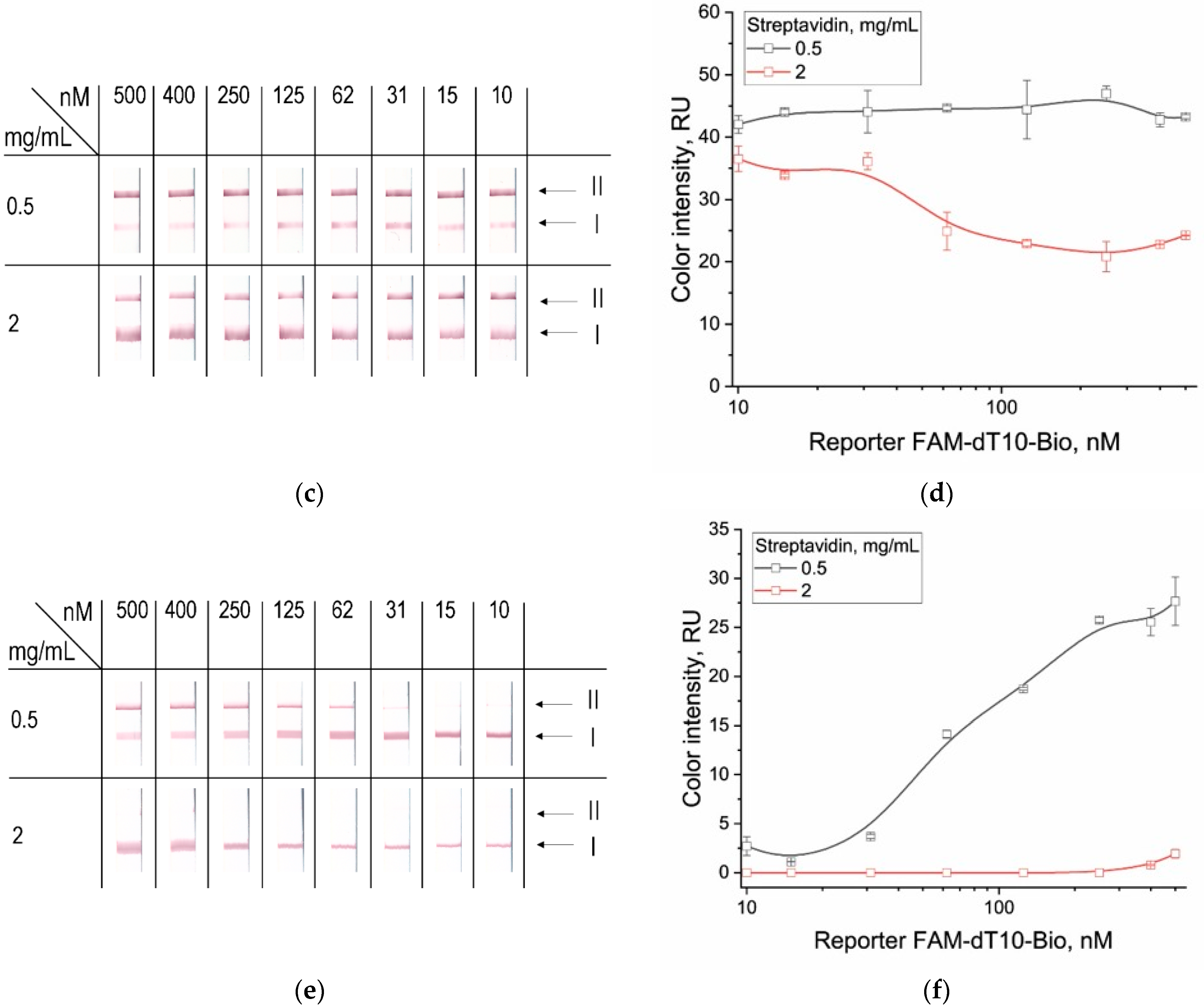
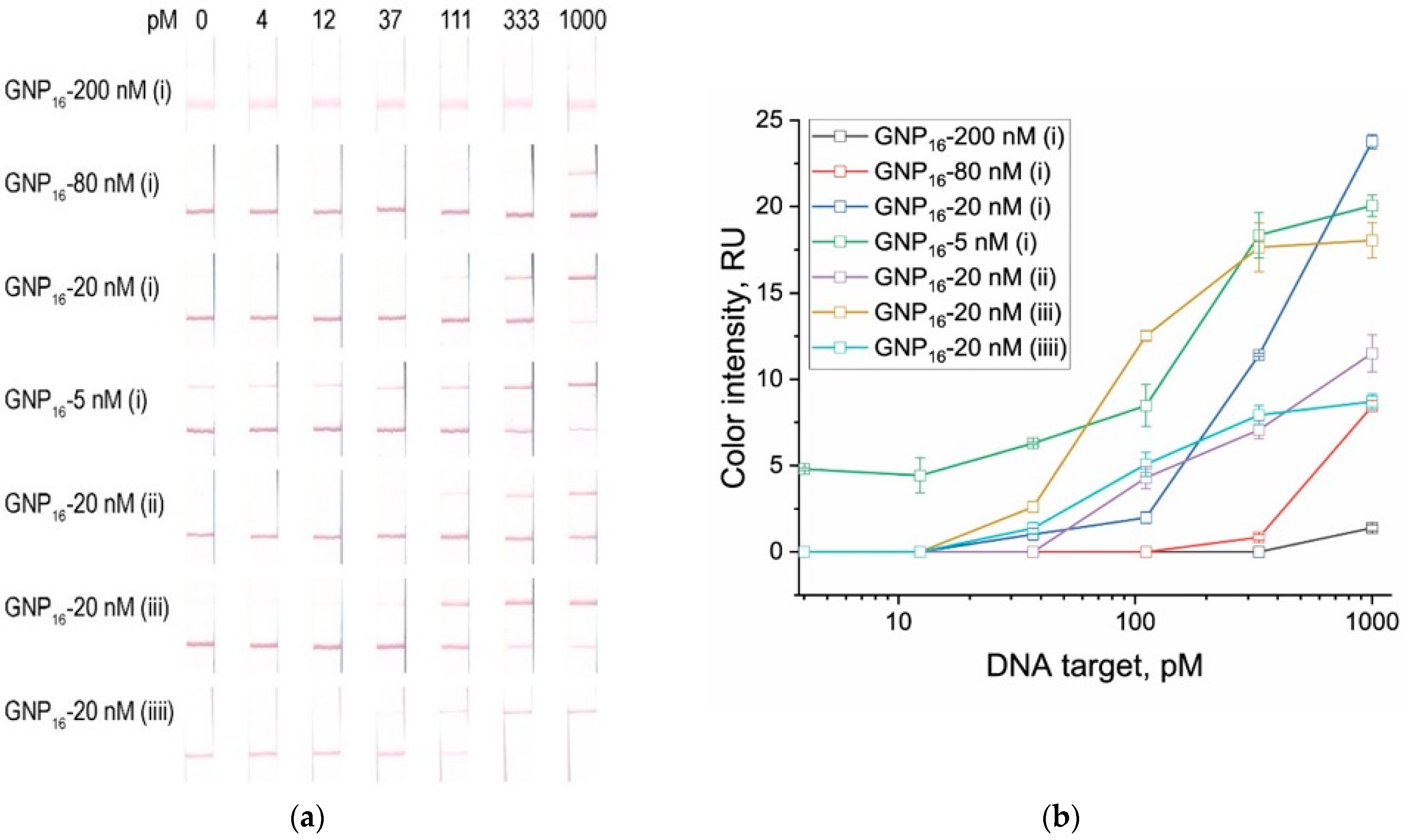
3.3. Characterization of Reporter/LFT Systems with Different Compositions in the Absence of Cleaved Reporters (Negative Experiment)
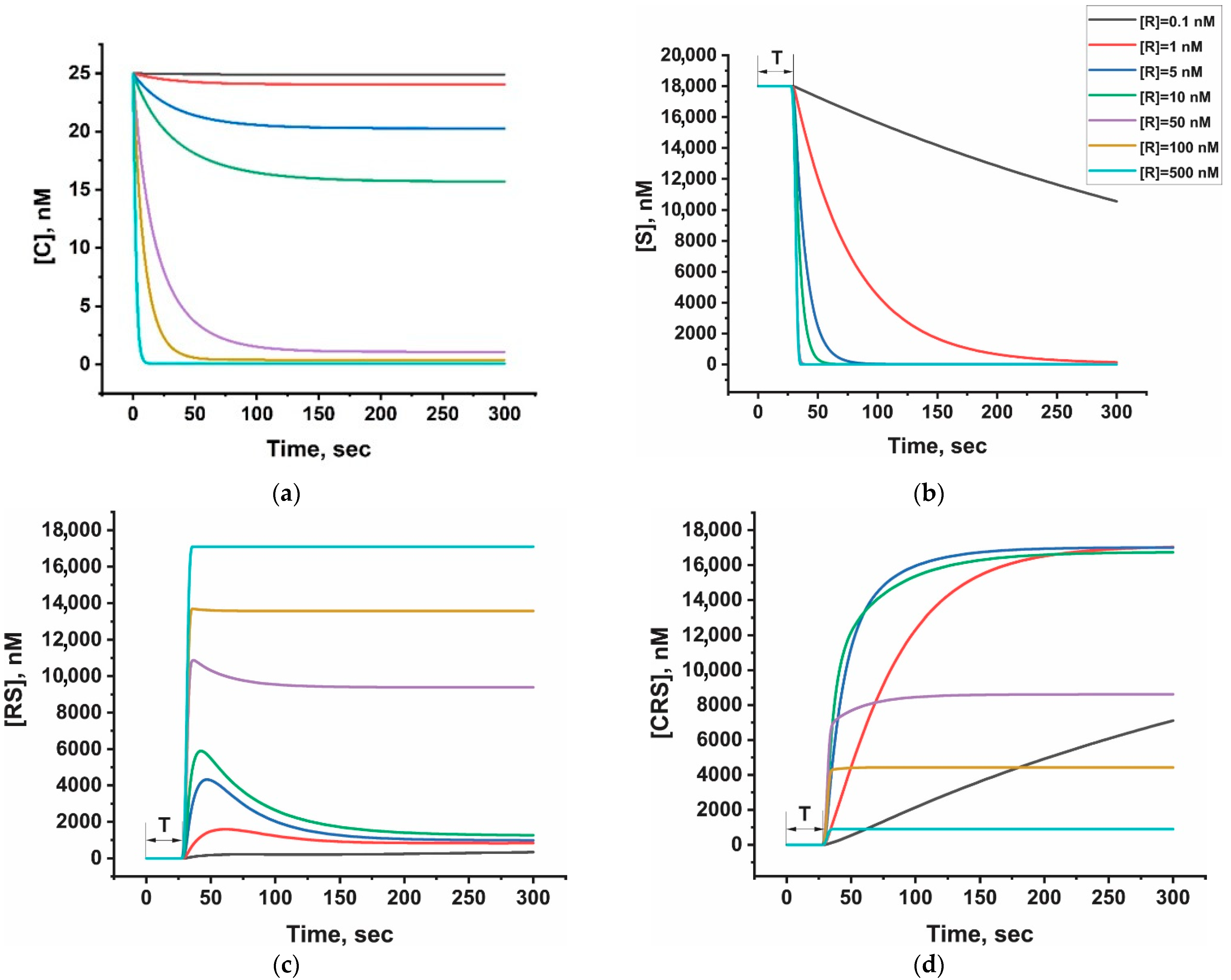
3.4. Evaluation of Interaction Processes in the LFT by Numerical Modeling
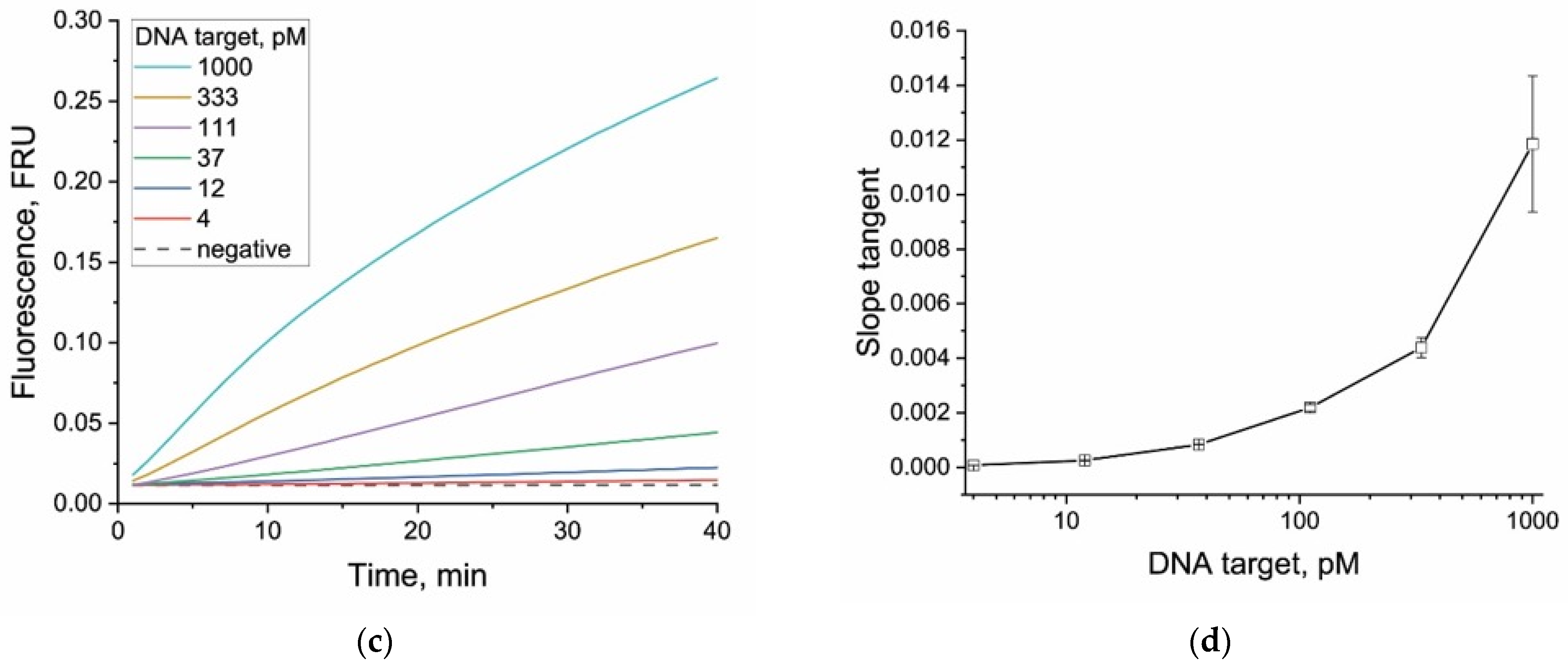
3.5. Detection of dsDNA Targets in the CRISPR/Cas12a System with LFT Reporter Readout
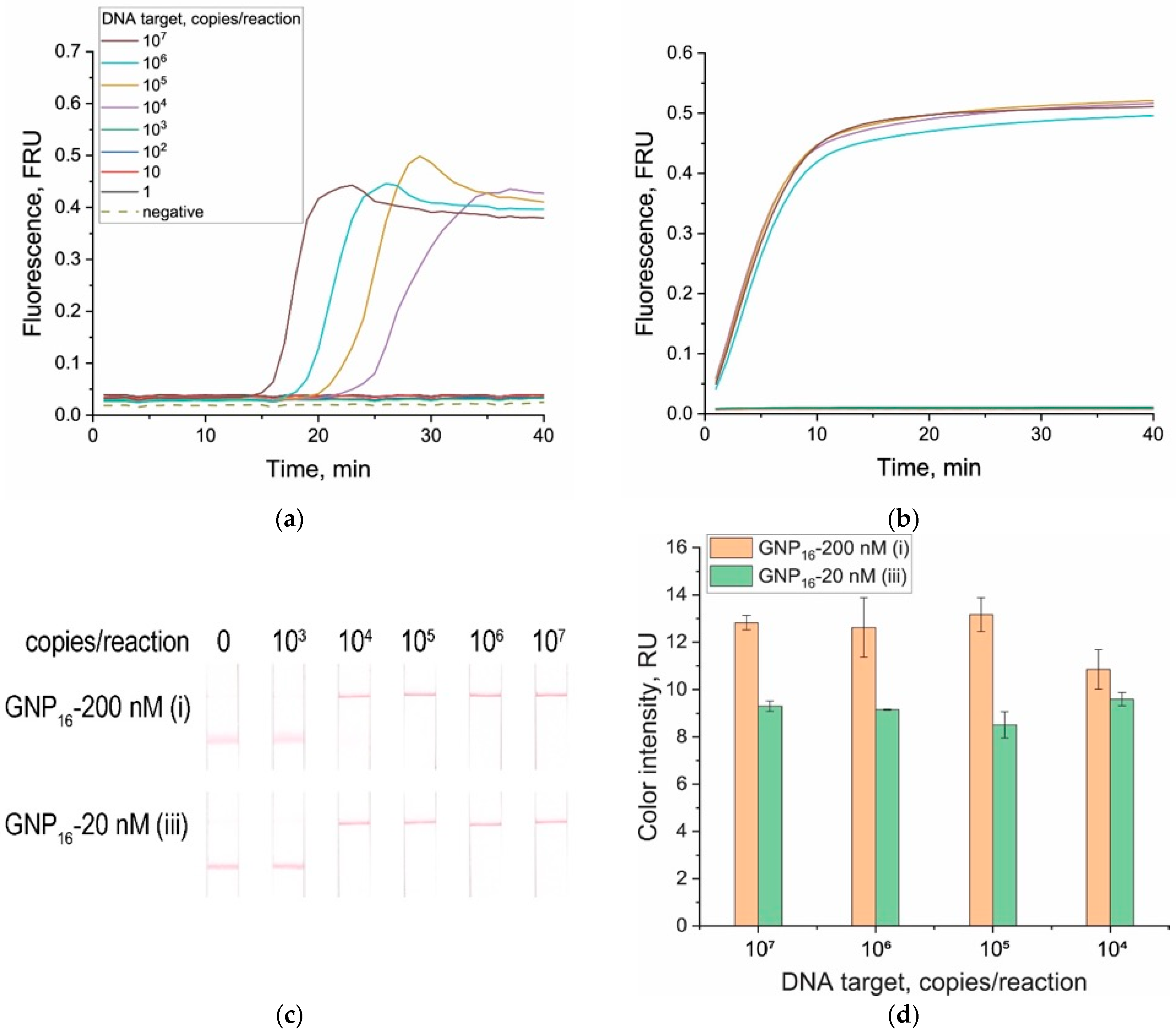
3.6. Applications of CRISPR/Cas12a–LFT Using the Conventional Reporter
4. Conclusions
Supplementary Materials
Author Contributions
Funding
Institutional Review Board Statement
Informed Consent Statement
Data Availability Statement
Acknowledgments
Conflicts of Interest
References
- Khan, A.R.; Hussain, W.L.; Shum, H.C.; Hassan, S.U. Point-of-care testing: A critical analysis of the market and future trends. Front. Lab Chip Technol. 2024, 3, 1394752. [Google Scholar] [CrossRef]
- Plebani, M.; Nichols, J.H.; Luppa, P.B.; Greene, D.; Sciacovelli, L.; Shaw, J.; Khan, A.I.; Carraro, P.; Freckmann, G.; Dimech, W.; et al. Point-of-care testing: State-of-the art and perspectives. Clin. Chem. Lab. Med. (CCLM) 2025, 63, 35–51. [Google Scholar] [CrossRef]
- Sukumaran, R.A.; Deviramma, C.Y.; Rahul, P.K.; Anjana, S.; Lakavath, K.; Panicker, L.R.; Kotagiri, Y.G. Chapter 11–Emerging healthcare technologies for next-generation portable point-of-care testing devices. In Point-of-Care Technology for Portable Testing Devices; Vairaperumal, T., Selvaraj, D., Liu, P.-Y., Eds.; Academic Press: London, UK, 2025; pp. 309–340. [Google Scholar]
- Shang, M.; Guo, J.; Guo, J. Point-of-care testing of infectious diseases: Recent advances. Sens. Diagn. 2023, 2, 1123–1144. [Google Scholar] [CrossRef]
- Kakkar, S.; Gupta, P.; Singh Yadav, S.P.; Raj, D.; Singh, G.; Chauhan, S.; Mishra, M.K.; Martín-Ortega, E.; Chiussi, S.; Kant, K. Lateral flow assays: Progress and evolution of recent trends in point-of-care applications. Mater. Today Bio 2024, 28, 101188. [Google Scholar] [CrossRef] [PubMed]
- Zhang, J.; Chai, F.; Li, J.a.; Wang, S.; Zhang, S.; Li, F.; Liang, A.; Luo, A.; Wang, D.; Jiang, X. Weakly ionized gold nano-particles amplify immunoassays for ultrasensitive point-of-care sensors. Sci. Adv. 2024, 10, eadn5698. [Google Scholar] [CrossRef] [PubMed]
- Chai, F.; Wang, D.; Shi, F.; Zheng, W.; Zhao, X.; Chen, Y.; Mao, C.; Zhang, J.; Jiang, X. Dual Functional Ultrasensitive Point-of-Care Clinical Diagnosis Using Metal–Organic Frameworks-Based Immunobeads. Nano Lett. 2023, 23, 9056–9064. [Google Scholar] [CrossRef]
- Chang, Z.; Fu, Q.; Wang, M.; Duan, D. Advances of Nanozyme-Driven Multimodal Sensing Strategies in Point-of-Care Testing. Biosensors 2025, 15, 375. [Google Scholar] [CrossRef] [PubMed]
- Mousavi, S.M.; Kalashgrani, M.Y.; Gholami, A.; Omidifar, N.; Binazadeh, M.; Chiang, W.-H. Recent Advances in Quantum Dot-Based Lateral Flow Immunoassays for the Rapid, Point-of-Care Diagnosis of COVID-19. Biosensors 2023, 13, 786. [Google Scholar] [CrossRef]
- Bellassai, N.; D’Agata, R.; Spoto, G. Advancements in the integration of isothermal nucleic acid amplification methods for point-of-care testing in resource-limited settings. Sens. Actuators Rep. 2025, 9, 100285. [Google Scholar] [CrossRef]
- De Felice, M.; De Falco, M.; Antonacci, A.; Colella, S.; Vedi, V.; Isticato, R.; Romano, A.M.; Nocerino, V.; Miranda, B.; De Stefano, L.; et al. Latest trends in biosensors powered by nucleic acid isothermal amplification for the diagnosis of joint infections: From sampling to identification towards the point-of-care. TrAC Trends Anal. Chem. 2024, 181, 118036. [Google Scholar] [CrossRef]
- Vindeirinho, J.M.; Pinho, E.; Azevedo, N.F.; Almeida, C. Nucleic Acid Lateral Flow Assays–A Review on Oligonucleotide-Based Methods. Crit. Rev. Anal. Chem. 2025, 1–13. [Google Scholar] [CrossRef]
- Ghouneimy, A.; Aman, R.; Jiang, W.; Ali, Z.; Mahfouz, M. Harnessing CRISPR-Cas systems for point-of-care diagnostic applications. TrAC Trends Anal. Chem. 2025, 193, 118417. [Google Scholar] [CrossRef]
- Chen, J.S.; Ma, E.; Harrington, L.B.; Da Costa, M.; Tian, X.; Palefsky, J.M.; Doudna, J.A. CRISPR-Cas12a target binding unleashes indiscriminate single-stranded DNase activity. Science 2018, 360, 436–439. [Google Scholar] [CrossRef]
- Hall, T.; Gulati, S.; Sang, R.; Jia, Z.; McKinnirey, F.; Vesey, G.; Goldys, E.; Deng, F. CRISPR biosensing with lateral flow assays for point of care Diagnostics: Overcoming commercial development challenges. TrAC Trends Anal. Chem. 2025, 189, 118275. [Google Scholar] [CrossRef]
- Tang, Y.; Qi, L.; Liu, Y.; Guo, L.; Zhao, R.; Yang, M.; Du, Y.; Li, B. CLIPON: A CRISPR-Enabled Strategy that Turns Commercial Pregnancy Test Strips into General Point-of-Need Test Devices. Angew. Chem. Int. Ed. 2022, 134, e202115907. [Google Scholar] [CrossRef]
- Zuo, T.; Chen, X.; Yu, Y.; Qin, L.; Xu, G.; Wei, F.; Yang, J.; Zhou, C.; Fan, L.; Hu, Q.; et al. BE-CATCH: Bioamplifier-Equipped CRISPR-Cas12a Transduction System Coupled with Commercial Pregnancy Test Strips to Harness Signal-on Point-of-Care Detection. Anal. Chem. 2025, 97, 8947–8956. [Google Scholar] [CrossRef]
- Ivanov, A.V.; Safenkova, I.V.; Zherdev, A.V.; Dzantiev, B.B. DIRECT2: A novel platform for a CRISPR–Cas12-based assay comprising universal DNA–IgG probe and a direct lateral flow test. Biosens. Bioelectron. 2022, 208, 114227. [Google Scholar] [CrossRef]
- Safenkova, I.V.; Kamionskaya, M.V.; Ivanov, A.V.; Zherdev, A.V.; Dzantiev, B.B. A novel tripod probe and lateral flow test to improve CRISPR/Cas12a assay: Benefits of branched probe based on trebler phosphoramidite modification. Microchim. Acta 2025, 192, 711. [Google Scholar] [CrossRef] [PubMed]
- Sun, H.; Bu, S.; Wang, C.; Wang, J.; Gao, Y.; Xu, M.; Zhang, M.; Feng, X.; Li, C.; Wan, J. A novel CRISPR/Cas13a biosensing platform comprising dual hairpin probe and traditional lateral flow assays. Sens. Actuators B Chem. 2025, 423, 136752. [Google Scholar] [CrossRef]
- Vanneste, J.L. Fire Blight: The Disease and Its Causative Agent, Erwinia amylovora; Cabi Publishing: Wallingford, UK, 2000. [Google Scholar]
- Frens, G. Controlled nucleation for the regulation of the particle size in monodisperse gold suspensions. Nat. Phys. Sci. 1973, 241, 20–22. [Google Scholar] [CrossRef]
- Sotnikov, D.V.; Byzova, N.; Zherdev, A.V.; Dzantiev, B.B. Changes in antigen-binding ability of antibodies caused by immobilization on gold nanoparticles: A case study for monoclonal antibodies to fluorescein. Biointer. Res. Appl. Chem 2023, 13, 550. [Google Scholar]
- Safenkova, I.V.; Ivanov, A.V.; Slutskaya, E.S.; Samokhvalov, A.V.; Zherdev, A.V.; Dzantiev, B.B. Key significance of DNA-target size in lateral flow assay coupled with recombinase polymerase amplification. Anal. Chim. Acta 2020, 1102, 109–118. [Google Scholar] [CrossRef] [PubMed]
- Byzova, N.A.; Safenkova, I.V.; Gorbatov, A.A.; Biketov, S.F.; Dzantiev, B.B.; Zherdev, A.V. Lateral Flow Immunosensing of Salmonella Typhimurium Cells in Milk: Comparing Three Sequences of Interactions. Microorganisms 2024, 12, 2555. [Google Scholar] [CrossRef] [PubMed]
- Sotnikov, D.V.; Byzova, N.A.; Zvereva, E.A.; Bartosh, A.V.; Zherdev, A.V.; Dzantiev, B.B. Mathematical modeling of immunochromatographic test systems in a competitive format: Analytical and numerical approaches. Biochem. Eng. J. 2020, 164, 107763. [Google Scholar] [CrossRef]
- Sotnikov, D.V.; Zherdev, A.V.; Dzantiev, B.B. Mathematical modeling of bioassays. Biochemistry (Moscow) 2017, 82, 1744–1766. [Google Scholar] [CrossRef] [PubMed]
- Ivanov, A.V.; Safenkova, I.V.; Drenova, N.V.; Zherdev, A.V.; Dzantiev, B.B. Comparison of Biosensing Methods Based on Different Isothermal Amplification Strategies: A Case Study with Erwinia amylovora. Biosensors 2022, 12, 1174. [Google Scholar] [CrossRef] [PubMed]
- Bühlmann, A.; Pothier, J.F.; Rezzonico, F.; Smits, T.H.M.; Andreou, M.; Boonham, N.; Duffy, B.; Frey, J.E. Erwinia amylovora loop-mediated isothermal amplification (LAMP) assay for rapid pathogen detection and on-site diagnosis of fire blight. J. Microbiol. Methods 2013, 92, 332–339. [Google Scholar] [CrossRef]
- Lv, H.; Wang, J.; Zhang, J.; Chen, Y.; Yin, L.; Jin, D.; Gu, D.; Zhao, H.; Xu, Y.; Wang, J. Definition of CRISPR Cas12a Trans-Cleavage Units to Facilitate CRISPR Diagnostics. Front. Microbiol. 2021, 12, 766464. [Google Scholar] [CrossRef]
- Watt, R.M.; Voss, E.W. Mechanism of quenching of fluorescein by anti-fluorescein IgG antibodies. Immunochemistry 1977, 14, 533–541. [Google Scholar] [CrossRef]
- Li, H.; Xie, Y.; Chen, F.; Bai, H.; Xiu, L.; Zhou, X.; Guo, X.; Hu, Q.; Yin, K. Amplification-free CRISPR/Cas detection technology: Challenges, strategies, and perspectives. Chem. Soc. Rev. 2023, 52, 361–382. [Google Scholar] [CrossRef]
- Lim, J.; Van, A.B.; Koprowski, K.; Wester, M.; Valera, E.; Bashir, R. Amplification-free, OR-gated CRISPR-Cascade reaction for pathogen detection in blood samples. Proc. Natl. Acad. Sci. USA 2025, 122, e2420166122. [Google Scholar] [CrossRef]
- Chen, H.; Song, F.; Wang, B.; Huang, H.; Luo, Y.; Han, X.; He, H.; Lin, S.; Wan, L.; Huang, Z.; et al. Ultrasensitive detection of clinical pathogens through a target-amplification-free collateral-cleavage-enhancing CRISPR-CasΦ tool. Nat. Commun. 2025, 16, 3929. [Google Scholar] [CrossRef] [PubMed]
- Shi, C.; Yu, Z.; Tan, H.; Li, W.; Wang, Y.; Wang, Y.; Zhang, Q.; Man, Y. One-Pot CRISPR-Based Isothermal Amplification for Nucleic Acid Detection: A Comparative Review of Different Strategies. ACS Sens. 2025. [Google Scholar] [CrossRef] [PubMed]
- Sotnikov, D.V.; Byzova, N.A.; Zherdev, A.V.; Dzantiev, B.B. Ability of Antibodies Immobilized on Gold Nanoparticles to Bind Small Antigen Fluorescein. Int. J. Mol. Sci. 2023, 24, 16967. [Google Scholar] [CrossRef] [PubMed]
- Chivers, C.E.; Crozat, E.; Chu, C.; Moy, V.T.; Sherratt, D.J.; Howarth, M. A streptavidin variant with slower biotin dissociation and increased mechanostability. Nat. Methods 2010, 7, 391–393. [Google Scholar] [CrossRef]


Disclaimer/Publisher’s Note: The statements, opinions and data contained in all publications are solely those of the individual author(s) and contributor(s) and not of MDPI and/or the editor(s). MDPI and/or the editor(s) disclaim responsibility for any injury to people or property resulting from any ideas, methods, instructions or products referred to in the content. |
© 2025 by the authors. Licensee MDPI, Basel, Switzerland. This article is an open access article distributed under the terms and conditions of the Creative Commons Attribution (CC BY) license (https://creativecommons.org/licenses/by/4.0/).
Share and Cite
Safenkova, I.V.; Kamionskaya, M.V.; Sotnikov, D.V.; Biketov, S.F.; Zherdev, A.V.; Dzantiev, B.B. Advancing Lateral Flow Detection in CRISPR/Cas12a Systems Through Rational Understanding and Design Strategies of Reporter Interactions. Biosensors 2025, 15, 812. https://doi.org/10.3390/bios15120812
Safenkova IV, Kamionskaya MV, Sotnikov DV, Biketov SF, Zherdev AV, Dzantiev BB. Advancing Lateral Flow Detection in CRISPR/Cas12a Systems Through Rational Understanding and Design Strategies of Reporter Interactions. Biosensors. 2025; 15(12):812. https://doi.org/10.3390/bios15120812
Chicago/Turabian StyleSafenkova, Irina V., Maria V. Kamionskaya, Dmitriy V. Sotnikov, Sergey F. Biketov, Anatoly V. Zherdev, and Boris B. Dzantiev. 2025. "Advancing Lateral Flow Detection in CRISPR/Cas12a Systems Through Rational Understanding and Design Strategies of Reporter Interactions" Biosensors 15, no. 12: 812. https://doi.org/10.3390/bios15120812
APA StyleSafenkova, I. V., Kamionskaya, M. V., Sotnikov, D. V., Biketov, S. F., Zherdev, A. V., & Dzantiev, B. B. (2025). Advancing Lateral Flow Detection in CRISPR/Cas12a Systems Through Rational Understanding and Design Strategies of Reporter Interactions. Biosensors, 15(12), 812. https://doi.org/10.3390/bios15120812