Research on Optimizing Electronic Nose Sensor Arrays for Oyster Cold Chain Detection Based on Multi-Algorithm Collaborative Optimization


 ,
,
Abstract
1. Introduction
2. Materials and Methods
2.1. Experimental Materials
2.2. Electronic Nose System
2.3. Test Methods
Electronic Nose Detection Test Protocol
- (1)
- Sensor Pre-calibration: After array integration into the system, continuous preheating for 7 days ensures response stability.
- (2)
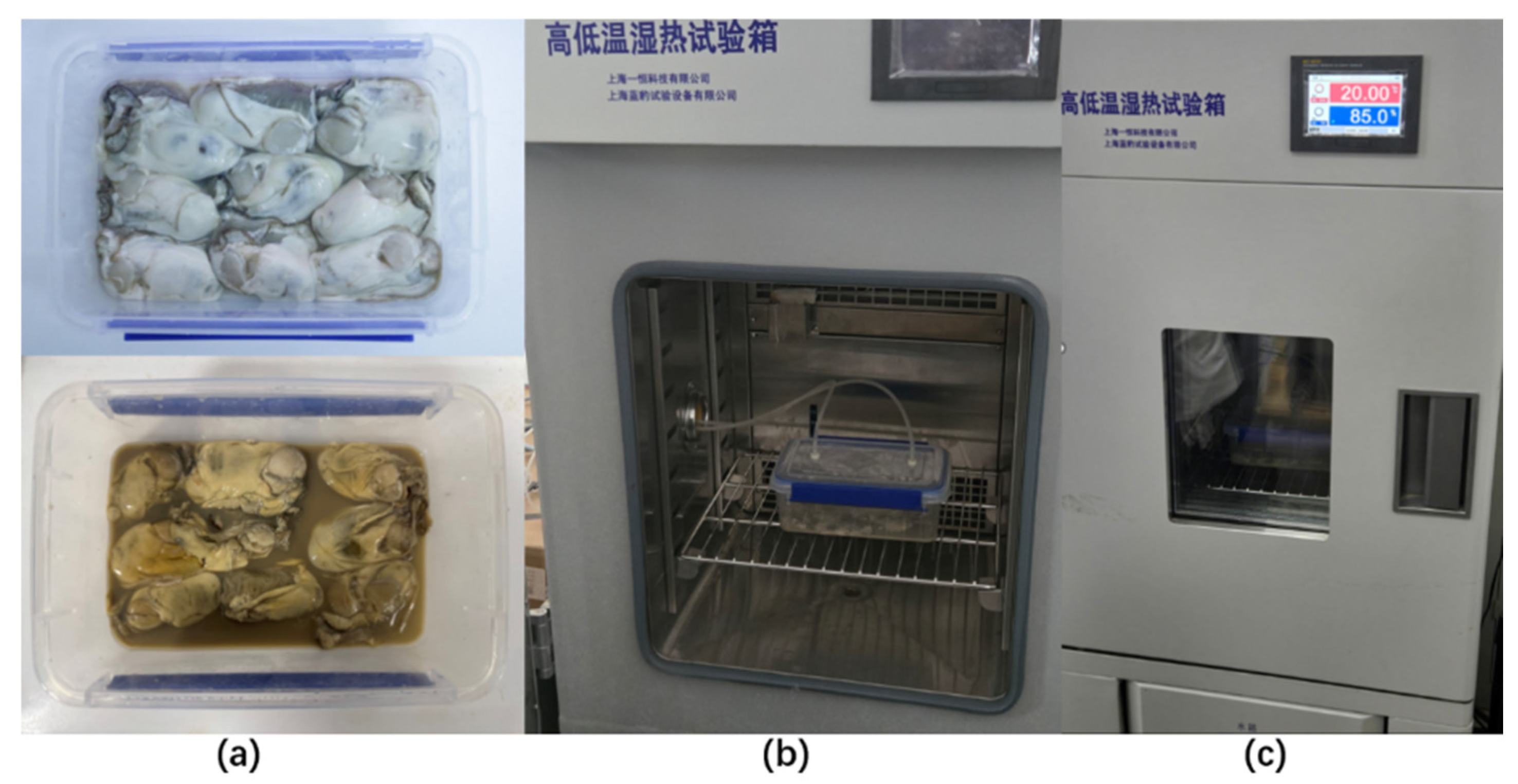
- Sample Preparation and Environmental Simulation: Place 9 oysters in a sealed polypropylene chamber (19 cm × 12.5 cm × 7.5 cm) and simulate cold chain temperature gradients using a temperature and humidity test chamber.
- (3)
- Data Acquisition and Control: The chamber interfaces with the detection system to initiate closed-loop airflow control. The host computer triggers continuous data collection until sample spoilage occurs.
- (4)
- Data Processing: Data from three replicate experiments are categorized, labeled, and averaged. The dynamic changes in volatile gas components are analyzed for their correlation with product quality.

2.4. Optimization of Electronic Nose Sensor Array
2.4.1. Sensor Array Optimization Method
2.4.2. Construction of Feature Correlation Functions
- (a)
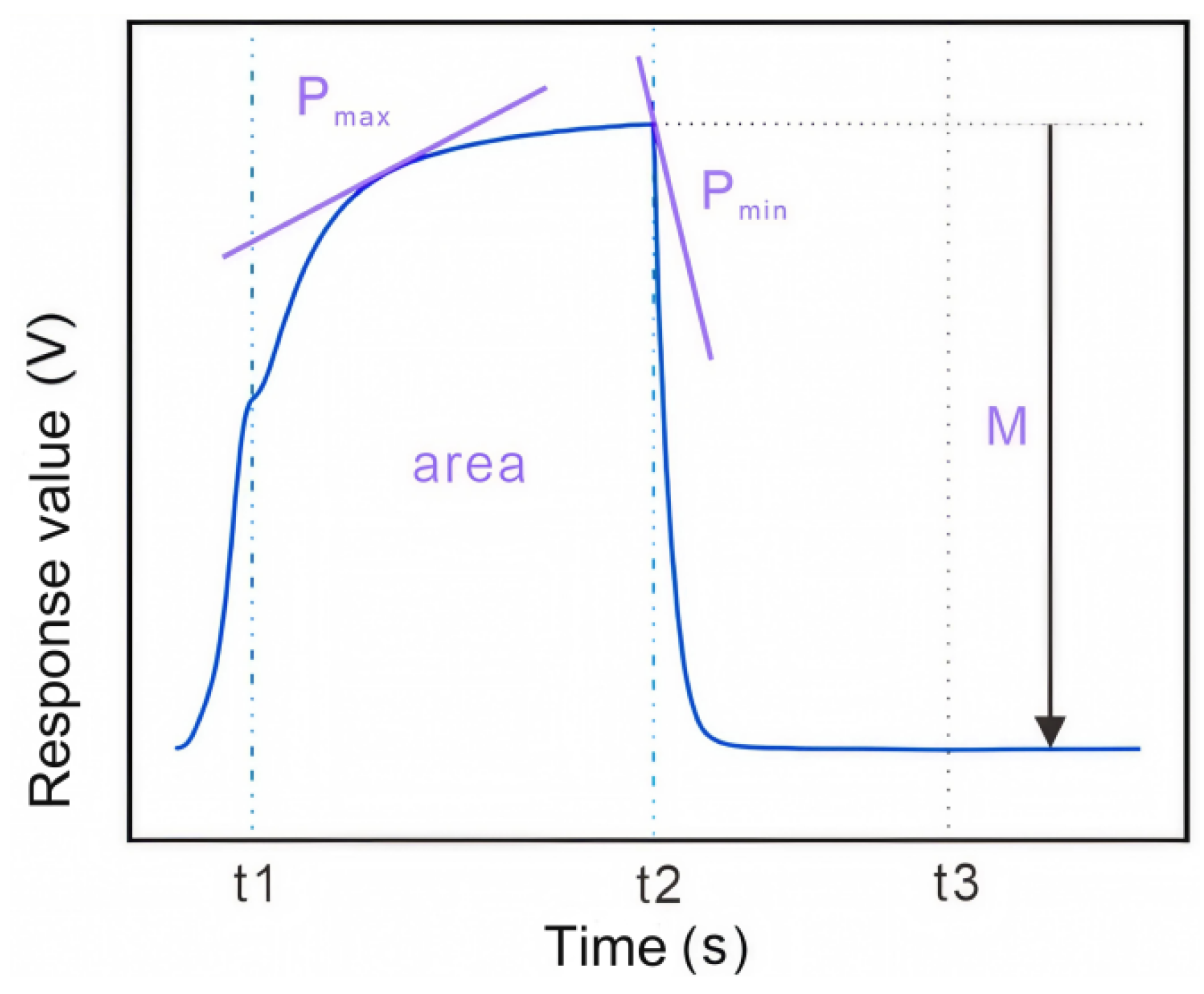
- Maximum response value Pmax:
- (b)
- Maximum response value Pmin:
- (c)
- Reaction equilibrium time T
- (d)
- Response surface integral area:
- (e)
- Response time: t1, t2, t3

2.4.3. Sensor Array Optimization Modeling Method Based on Feature Correlation Functions
- (1)
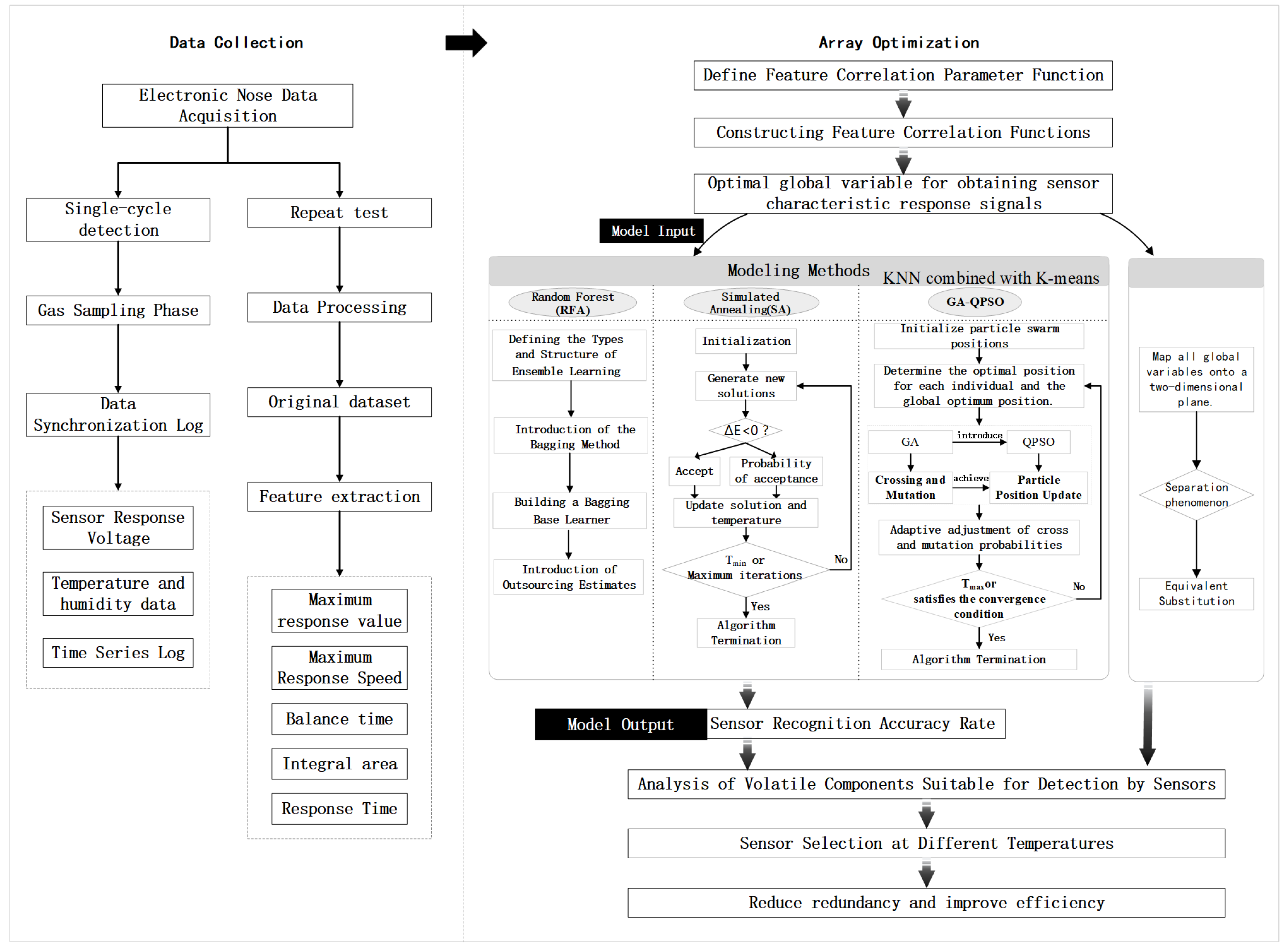
- Random Forest (RFA): Based on ensemble learning theory, multiple independent decision tree models are generated via the Bagging method. The base learners output sensor recognition accuracy metrics, while out-of-bag estimates evaluate model generalization capabilities, ensuring robust optimization results [15,16,17,18].
- (2)
- (3)
- GA-QPSO (Genetic Algorithm-Quantum Particle Swarm Optimization): Integrates the global search capability and population diversity of genetic algorithms (GA) with the quantum behavior characteristics and rapid convergence advantages of quantum particle swarm optimization (QPSO). An adaptive update mechanism dynamically adjusts crossover and mutation probabilities to balance global exploration and local search capabilities [23,24].
2.4.4. KNN Combined with K-Means for Sensor Array Optimization
2.4.5. Analysis of Sensor Detection Performance for Target Gas Components
3. Results and Analysis
3.1. Sensor Array Optimization Results
3.1.1. Sensor Array Optimization Results for Three Models
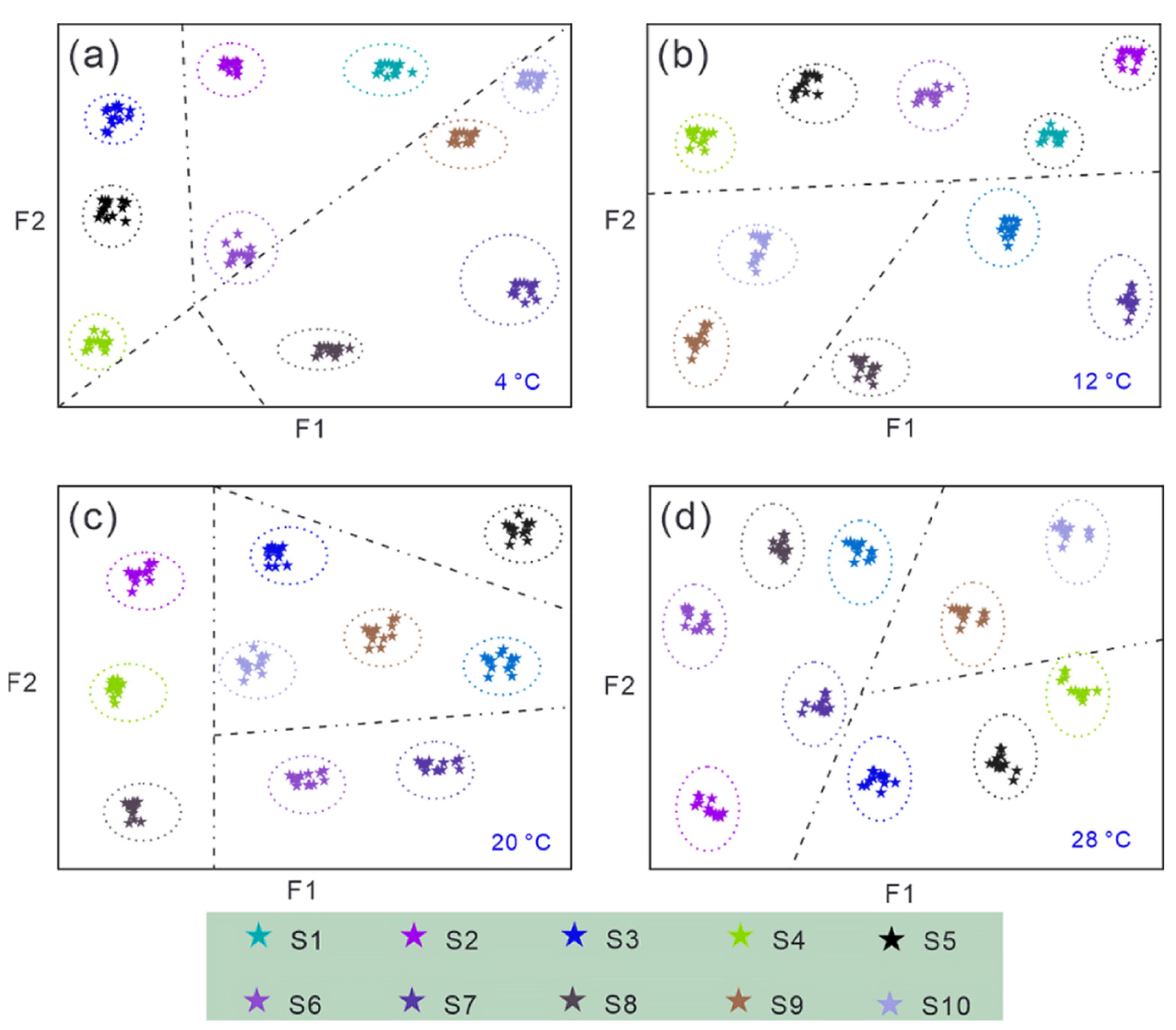
3.1.2. Optimization Results of Sensor Arrays Using KNN Combined with K-Means Algorithm
3.1.3. Analysis of Detection Performance for Target Gas Components by Each Sensor
- (1)
- Hydrogen sulfide detection: S1, S2, and S6 all cover hydrogen sulfide detection but with different ranges (S1: 1–30 ppm, S6: 10–1000 ppm). S2 exhibits broad-spectrum response to sulfur-based malodorous substances, while S6 demonstrates higher sensitivity for ammonia and sulfides, creating complementary sensitivity and detection range characteristics.
- (2)
- Amine detection: S5 specializes in amine detection (5–500 ppm), while S2 exhibits cross-sensitivity between amines and sulfur compounds, establishing a primary-secondary relationship in amine detection.
- (3)
- Ethanol and alkane detection: S3, S7, S8, S9, S10 all cover ethanol and alkanes, but S9 and S10 additionally detect CO and organic solvents, offering greater functional scalability.

| 4 °C | 12 °C | 20 °C | 28 °C | |
|---|---|---|---|---|
| Final Optimization Results | S1, S2, S3, S4, S5, S10 | S1, S2, S3, S4, S5, S9 | S1, S2, S3, S4, S5 | S1, S2, S3, S4, S5 |
3.1.4. Final Optimization Results for Sensor Array
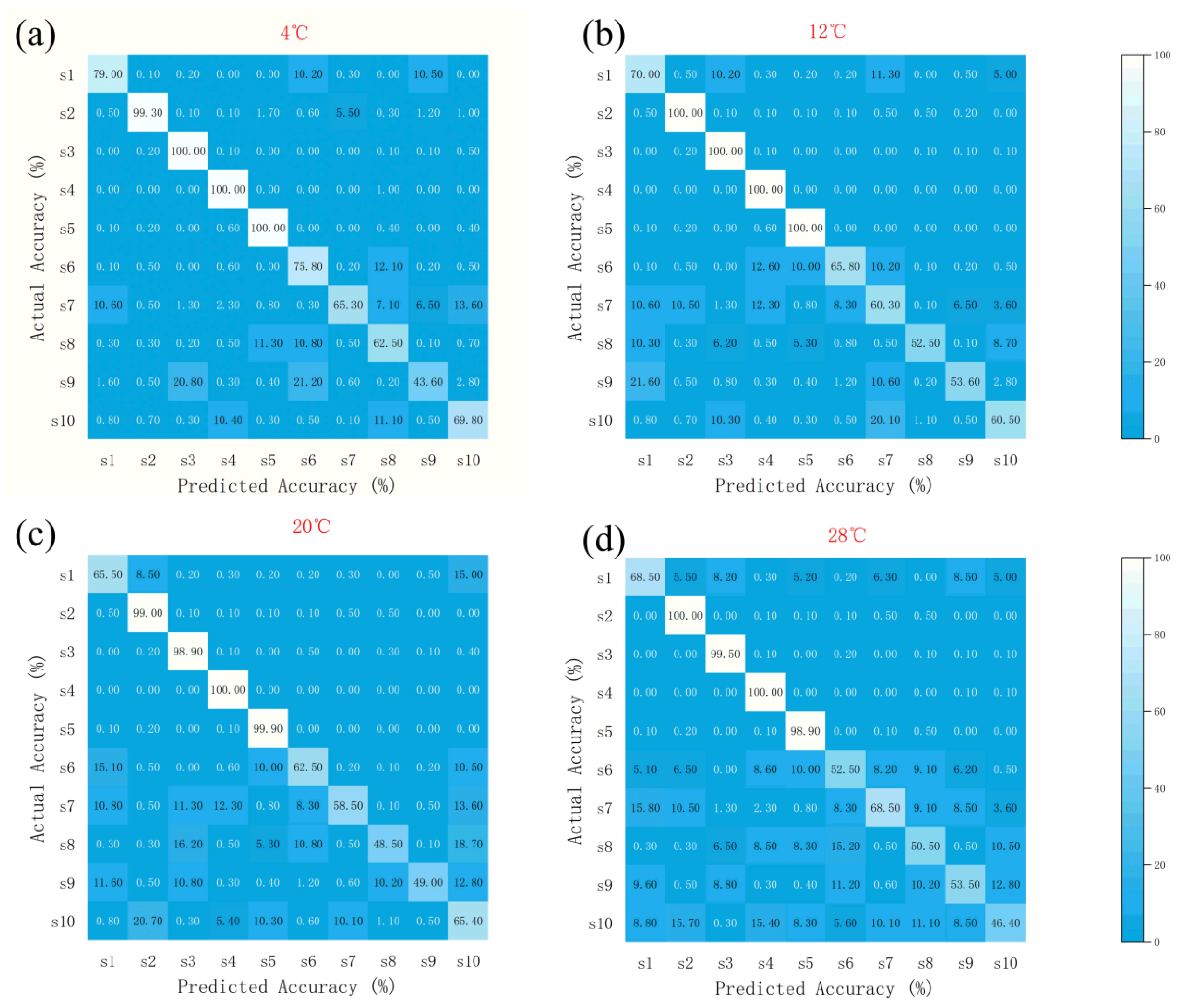
3.1.5. Ablation Study and Comparative Evaluation
4. Conclusions
- (1)
- Electronic Nose System Implementation: An integrated electronic nose system combining hardware (sensor array, gas chamber, temperature/humidity control module) and software (data acquisition, interactive interface) was designed and developed, enabling automated collection and real-time online detection of volatile gas components emitted by oysters.
- (2)
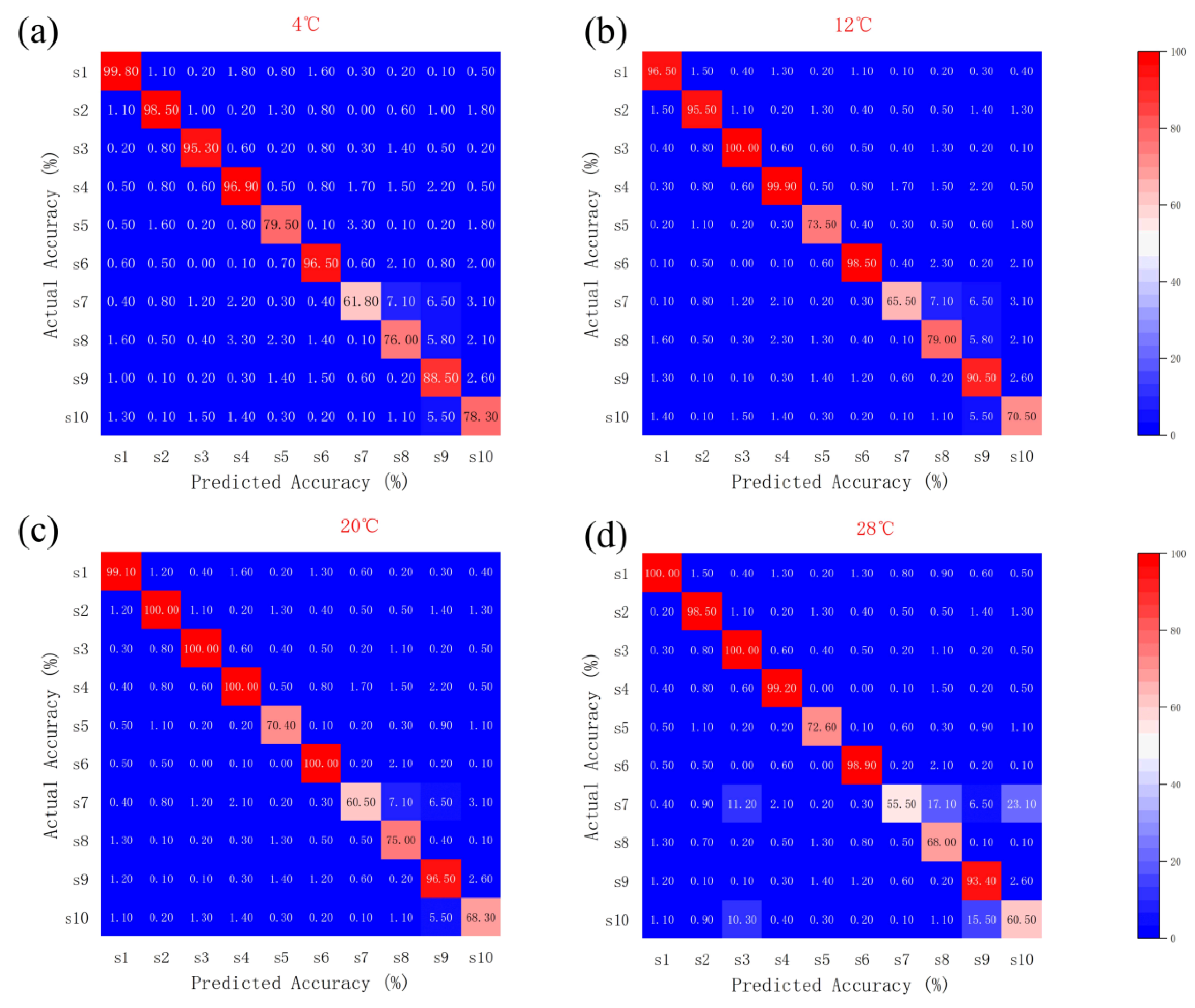
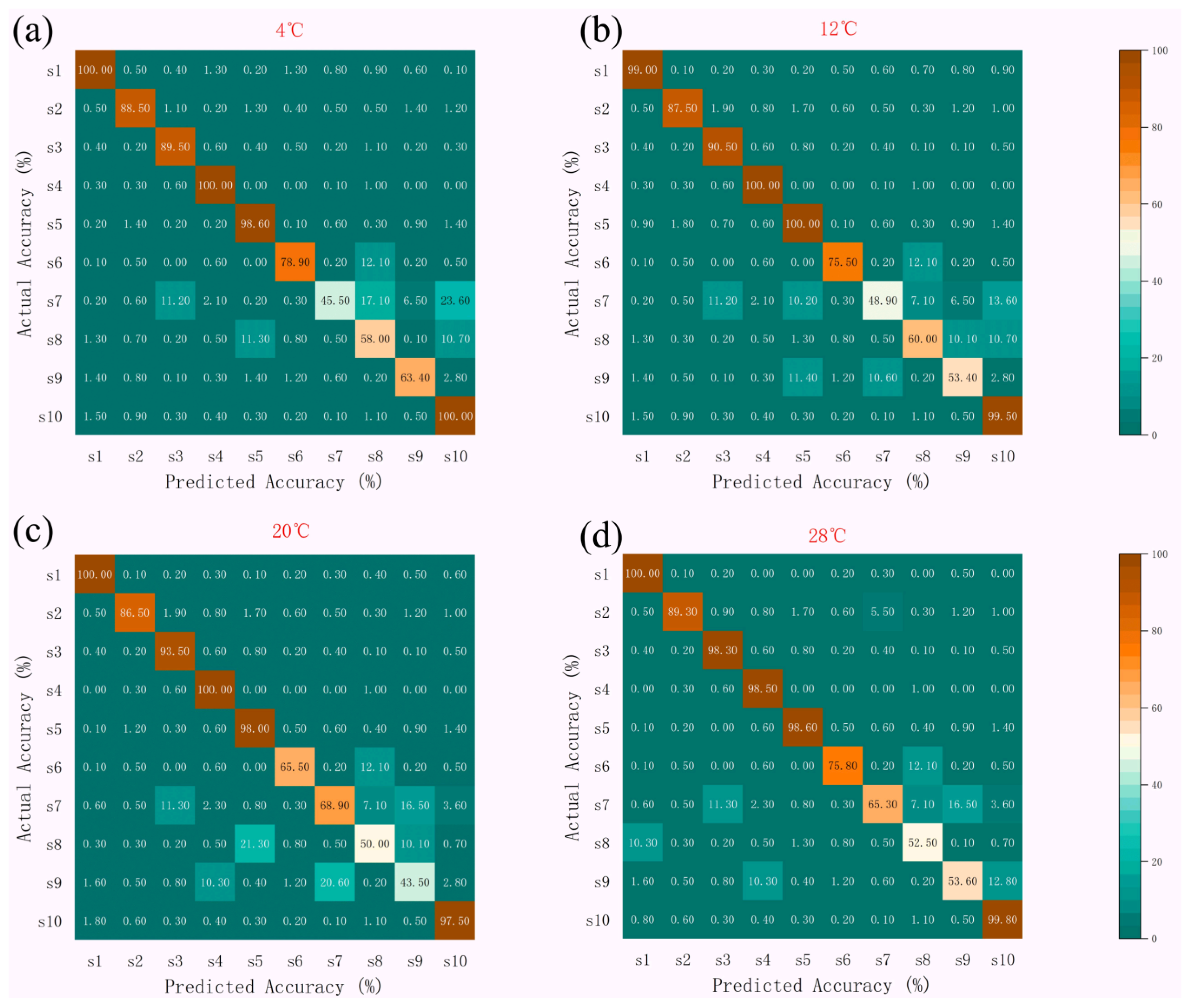
- Array Optimization Method Effectiveness: Under cold chain conditions at 4 °C, 12 °C, 20 °C, and 28 °C, the number of sensors was optimized from 10 to 6, 6, 5, and 5, respectively. Redundancy was significantly reduced (≤6 sensors), with recognition accuracy exceeding 90% in all cases.
- (3)
- Performance of the optimized solution: The optimized sensor array maintains high stability and adaptability under varying temperature conditions. This validates the effectiveness of the multi-algorithm collaborative strategy in enhancing resource utilization efficiency (reducing redundancy by >40%) and recognition accuracy (>95%), providing technical support for the reliability and environmental dynamic response capability of oyster cold chain quality inspection.
Author Contributions
Funding
Institutional Review Board Statement
Informed Consent Statement
Data Availability Statement
Conflicts of Interest
References
- He, C.; Korposh, S.; Correia, R.; Liu, L.; Hayes-Gill, B.R.; Morgan, S.P. Optical fibre sensor for simultaneous temperature and relative humidity measurement: Towards absolute humidity evaluation. Sens. Actuators B Chem. 2021, 344, 130154. [Google Scholar] [CrossRef]
- Ahmad, W.; Wang, J.; Li, H.; Jiao, T.; Chen, Q. Trends in the bacterial recognition patterns used in surface enhanced Raman spectroscopy. TrAC Trends Anal. Chem. 2021, 142, 116310. [Google Scholar] [CrossRef]
- Saevels, S.; Lammertyn, J.; Berna, A.Z.; Veraverbeke, E.A.; Di Natale, C.; NicolaÏ, B.M. An electronic nose and a mass spectrometry-based electronic nose for assessing apple quality during shelf life. Postharvest Biol. Technol. 2004, 31, 9–19. [Google Scholar] [CrossRef]
- Cosio, M.S.; Ballabio, D.; Benedetti, S.; Gigliotti, C. Evaluation of different storage conditions of extra virgin olive oils with an innovative recognition tool built by means of electronic nose and electronic tongue. Food Chem. 2007, 101, 485–491. [Google Scholar] [CrossRef]
- Quere, J.-L.L.; Etievant, P.X. Flavour Research at the Dawn of the Twenty-First Century. In Proceedings of the 10th Weurman Flavour Research Symposium, Beaune, France, 25–28 June 2002; pp. 528–531. [Google Scholar]
- Pardo, M.; Sberveglieri, G. Classification of electronic nose data with support vector machines. Sens. Actuators B Chem. 2005, 107, 730–737. [Google Scholar] [CrossRef]
- Wang, T.; Wu, Y.; Zhang, Y.; Lv, W.; Chen, X.; Zeng, M.; Yang, J.; Su, Y.; Hu, N.; Yang, Z. Portable electronic nose system with elastic architecture and fault tolerance based on edge computing, ensemble learning, and sensor swarm. Sens. Actuators B Chem. 2023, 375, 132925. [Google Scholar] [CrossRef]
- Luo, D.; Hosseini, H.G.; Stewart, J.R. Application of ANN with extracted parameters from an electronic nose in cigarette brand identification. Sens. Actuators B Chem 2004, 99, 253–257. [Google Scholar] [CrossRef]
- Gil, M.; Rudy, M.; Duma-Kocan, P.; Stanisławczyk, R. Electronic Sensing Technologies in Food Quality Assessment: A Comprehensive Literature Review. Appl. Sci. 2025, 15, 1530. [Google Scholar] [CrossRef]
- Güney, S.; Atasoy, A. Multiclass classification of n-butanol concentrations with k-nearest neighbor algorithm and support vector machine in an electronic nose. Sens. Actuators B Chem 2012, 166, 721–725. [Google Scholar] [CrossRef]
- Mehmet, M. The electronic nose: A critical global review of advances in analytical methods and real-world applications. Microchem. J. 2025, 218, 115363. [Google Scholar] [CrossRef]
- Peris, M.; Escuder-Gilabert, L. A 21st century technique for food control: Electronic noses. Anal. Chim. Acta 2009, 638, 1–15. [Google Scholar] [CrossRef] [PubMed]
- Saricaoglu, F.T.; Gul, O.; Tural, S.; Turhan, S. Potential application of high pressure homogenization (HPH) for improving functional and rheological properties of mechanically deboned chicken meat (MDCM) proteins. J. Food Eng. 2017, 215, 161–171. [Google Scholar] [CrossRef]
- Martí, M.P.; Busto, O.; Guasch, J.; Boqué, R. Electronic noses in the quality control of alcoholic beverages. TrAC Trends Anal. Chem 2005, 24, 57–66. [Google Scholar] [CrossRef]
- Kamiwaki, Y.; Fukuda, S. Multi-sensor fusion using random forests for predicting plant height and yield in radish cultivation. Smart Agric. Technol. 2025, 12, 101436. [Google Scholar] [CrossRef]
- Breiman, L. Random Forests. Mach. Learn. 2001, 45, 5–32. [Google Scholar] [CrossRef]
- Makwana, S.; Vaghela, D.; Chan, C.K.; Naik, N. Novel Hybrid Approach of Random Forest and Stacking Ensemble to Improve Fresh Water Yield Prediction in Mobile Wick Solar Still. Desalination Water Treat. 2025, 324, 101490. [Google Scholar] [CrossRef]
- Rittger, K.; Krock, M.; Kleiber, W.; Bair, E.H.; Brodzik, M.J.; Stephenson, T.R.; Rajagopalan, B.; Bormann, K.J.; Painter, T.H. Multi-sensor fusion using random forests for daily fractional snow cover at 30 m. Remote Sens. Environ. 2021, 264, 112608. [Google Scholar] [CrossRef]
- Ren, H.; Yan, L.; Liu, M.; Wang, Y.; Liu, X.; Liu, C.; Liu, K.; Zeng, L.; Liu, A. Green tide biomass templated synthesis of molybdenum oxide nanorods supported on carbon as efficient nanozyme for sensitive glucose colorimetric assay. Sens. Actuators B Chem. 2019, 296, 126517. [Google Scholar] [CrossRef]
- Nastovjak, A.; Shterental, D.; Shwartz, N. Simulation of GaAs nanowire annealing. Comput. Mater. Sci. 2023, 228, 112310. [Google Scholar] [CrossRef]
- Chikhi, N.F. Simulated annealing-based text clustering. Pattern Recognit. Lett. 2025, 193, 128–134. [Google Scholar] [CrossRef]
- Sodeifian, G.; Sajadian, S.A.; Ardestani, N.S. Experimental optimization and mathematical modeling of the supercritical fluid extraction of essential oil from Eryngium billardieri: Application of simulated annealing (SA) algorithm. J. Supercrit. Fluids 2017, 127, 146–157. [Google Scholar] [CrossRef]
- Mao, Y.; Kessels, R. Optimal designs for mixture choice experiments by simulated annealing. Chemom. Intell. Lab. Syst. 2025, 257, 105305. [Google Scholar] [CrossRef]
- Khan, S.; Mazhar, T.; Shahzad, T.; Ali, T.; Ayaz, M.; Ghadi, Y.Y.; Aggoune, E.-H.M.; Hamam, H. Optimizing load demand forecasting in educational buildings using quantum-inspired particle swarm optimization (QPSO) with recurrent neural networks (RNNs):a seasonal approach. Sci. Rep. 2025, 15, 19349. [Google Scholar] [CrossRef]
- Keller, F.; Nepomuceno, C.C.T.; Carvalho, D.H.D.V. A refined k-means clustering approach for optimizing urban police facility placement. Decis. Anal. J. 2025, 16, 16100603. [Google Scholar] [CrossRef]
- Ma, J.; Li, N.Y.; Yu, X.X.; Cheng, S.J.; Qin, H.C.; Han, C.; Zhang, Y. A method for determining the charge yield distribution of fission fragments based on K-means clustering algorithm. Eur. Phys. J. A 2025, 61, 159. [Google Scholar] [CrossRef]
- Narkhede, P.U.; Adhiya, K.P. Evaluation of Modified K-Means Clustering Algorithm in Crop Prediction. Int. J. Adv. Comput. Res. IJACR 2025, 4, 799–807. [Google Scholar]




| Number | Sensor Type | Volatile Compounds | Scope of Inspection |
|---|---|---|---|
| S1 | TGS2602 | ethanol, hydrogen, ammonia, hydrogen sulfide, toluene | 1~30 ppm |
| S2 | TGS2603 | ethanol, hydrogen, amine-based, sulfur-based malodorous substances | 1~10 ppm |
| S3 | TGS2612 | ethanol, hydrogen, alkanes | 1~25% LEL |
| S4 | TGS2630 | hydrogen, mildly flammable refrigerant | 1000~10,000 ppm |
| S5 | MQ137 | amines | 5~500 ppm |
| S6 | MQ135 | ammonia gas, sulfides, benzene vapors | 10~1000 ppm |
| S7 | TGS2611 | ethanol, hydrogen, alkanes | 1~25% LEL |
| S8 | TGS2610 | ethanol, hydrogen, alkanes | 1~25% LEL |
| S9 | TGS2620 | ethanol, hydrogen, organic solvents, CO, alkanes | 50~5000 ppm |
| S10 | TGS2600 | ethanol, hydrogen, carbon monoxide, alkanes | 1~30 ppm |
| Model Optimization | 4 °C | 12 °C | 20 °C | 28 °C |
|---|---|---|---|---|
| RFA | S1, S2, S3, S4,S6 | S1, S2, S3, S4, S6, S9 | S1, S2, S3, S4, S6, S9 | S1, S2, S3, S4, S6, S9 |
| SA | S2, S3, S4, S5 | S2, S3, S4, S5 | S2, S3, S4, S5 | S2, S3, S4, S5 |
| GA-QPSO | S1, S4, S5, S10 | S1, S3, S4, S5, S10 | S1, S3, S4, S5, S10 | S1, S3, S4, S5, S10 |
| Model | Accuracy (%) 4 °C | Accuracy (%) 12 °C | Accuracy (%) 20 °C | Accuracy (%) 28 °C | Macro-Accuracy (%) | Sensors Retained (#) | Redundancy Reduction (%) | Relative Gain vs. Best Single (%) |
|---|---|---|---|---|---|---|---|---|
| RFA | 97.4 | 97 | 99.3 | 98.3 | 98 | 6 | 40 | — |
| SA | 99.8 | 100 | 99.5 | 99.6 | 99.7 | 4 | 60 | +1.7 |
| GA-QPSO | 99.7 | 97.8 | 97.8 | 99 | 98.6 | 5 | 50 | +0.6 |
| Tri-Algorithm (RFA → SA → GA-QPSO) | 99.6 | 99.8 | 99.5 | 99.4 | 99.6 | 5 | 50 | +1.6 (over SA) |
Disclaimer/Publisher’s Note: The statements, opinions and data contained in all publications are solely those of the individual author(s) and contributor(s) and not of MDPI and/or the editor(s). MDPI and/or the editor(s) disclaim responsibility for any injury to people or property resulting from any ideas, methods, instructions or products referred to in the content. |
© 2025 by the authors. Licensee MDPI, Basel, Switzerland. This article is an open access article distributed under the terms and conditions of the Creative Commons Attribution (CC BY) license (https://creativecommons.org/licenses/by/4.0/).
Share and Cite
Kong, Y.; Guo, Z.; Kong, W.; Li, H.; Li, X.; Zhang, X.; Liu, X.; Wu, R.; Wang, B. Research on Optimizing Electronic Nose Sensor Arrays for Oyster Cold Chain Detection Based on Multi-Algorithm Collaborative Optimization. Biosensors 2025, 15, 772. https://doi.org/10.3390/bios15120772
Kong Y, Guo Z, Kong W, Li H, Li X, Zhang X, Liu X, Wu R, Wang B. Research on Optimizing Electronic Nose Sensor Arrays for Oyster Cold Chain Detection Based on Multi-Algorithm Collaborative Optimization. Biosensors. 2025; 15(12):772. https://doi.org/10.3390/bios15120772
Chicago/Turabian StyleKong, Yirui, Zhenhua Guo, Weifu Kong, Hongjuan Li, Xinrui Li, Xiaoshuan Zhang, Xinzhe Liu, Ruihan Wu, and Baichuan Wang. 2025. "Research on Optimizing Electronic Nose Sensor Arrays for Oyster Cold Chain Detection Based on Multi-Algorithm Collaborative Optimization" Biosensors 15, no. 12: 772. https://doi.org/10.3390/bios15120772
APA StyleKong, Y., Guo, Z., Kong, W., Li, H., Li, X., Zhang, X., Liu, X., Wu, R., & Wang, B. (2025). Research on Optimizing Electronic Nose Sensor Arrays for Oyster Cold Chain Detection Based on Multi-Algorithm Collaborative Optimization. Biosensors, 15(12), 772. https://doi.org/10.3390/bios15120772