

Effect of Immersion in Quaternary Ammonium Methacryloxy Silane Mixed Monomer on the Mechanical Properties and Antibacterial Activity of a 3D-Printed Urethane Dimethacrylate Denture Base Resin


Abstract
1. Introduction
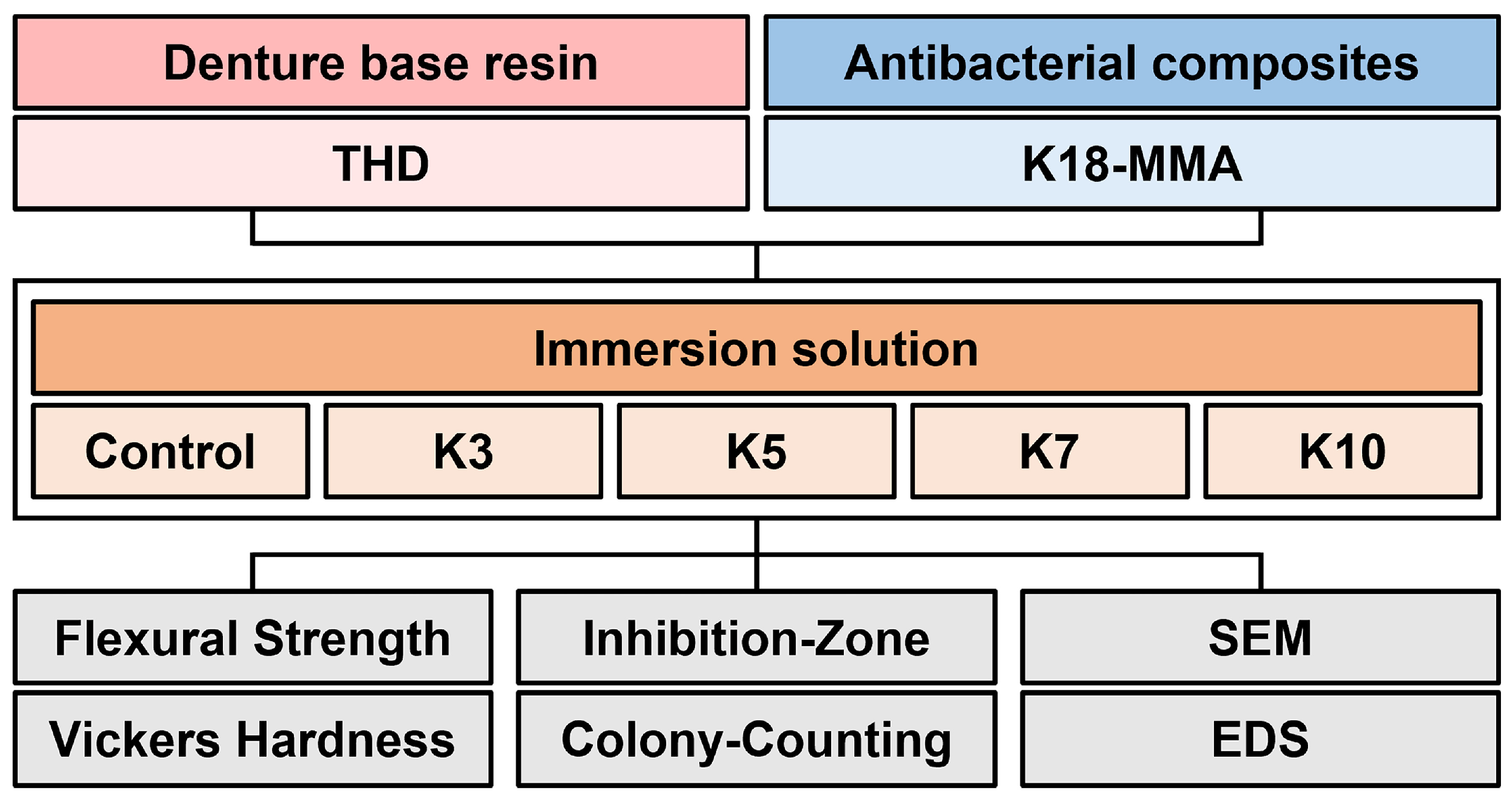
2. Materials and Methods
2.1. Specimen Preparation
2.2. Flexural Strength and Flexural Modulus
2.3. Vickers Hardness Test
2.4. Antibacterial Activity Assay
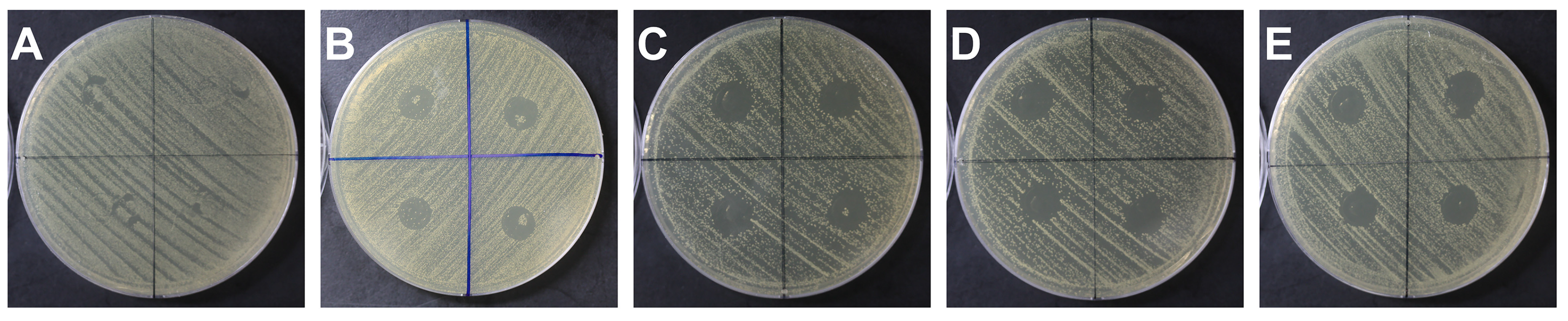
2.4.1. Inhibition Zone Test
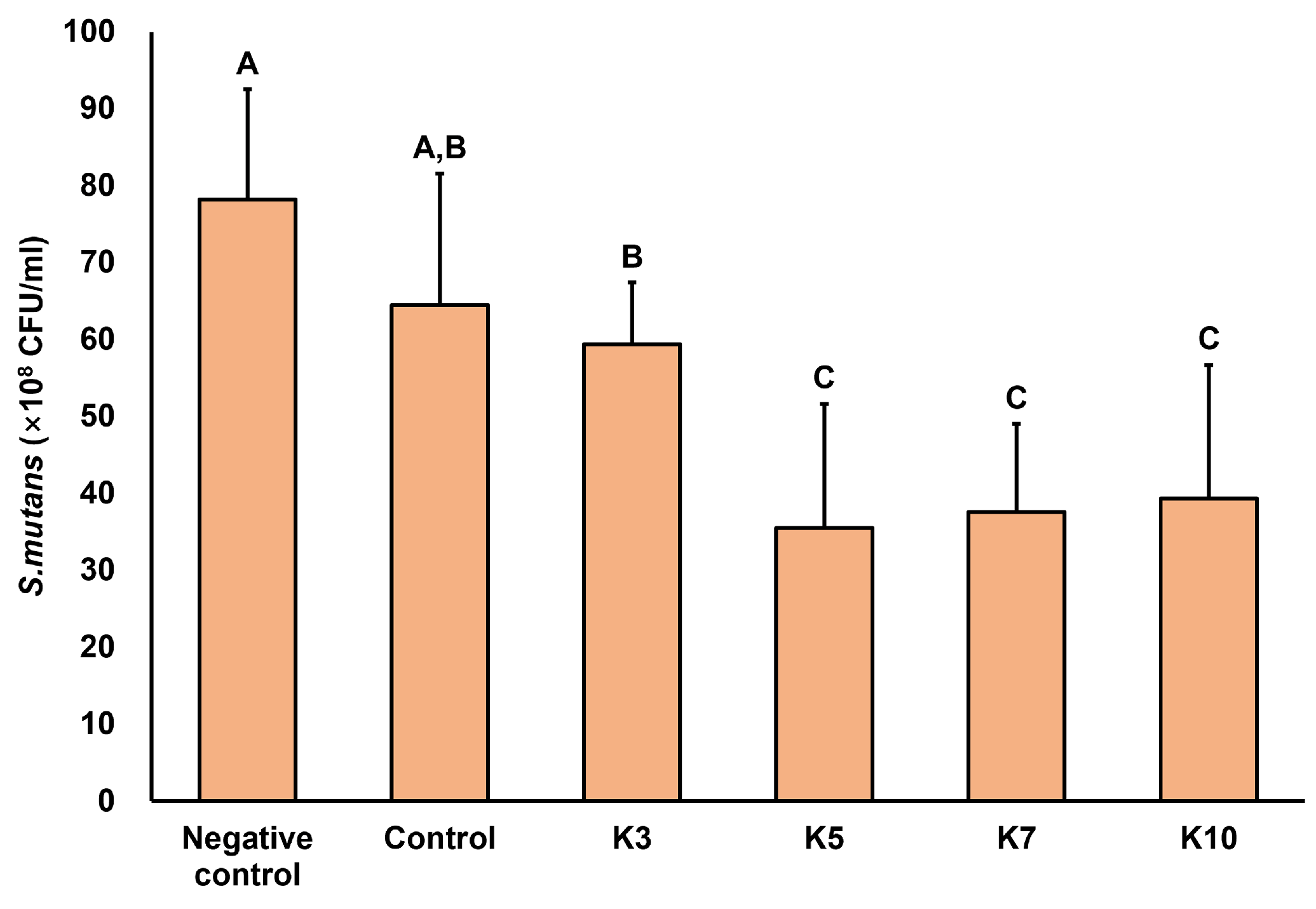
2.4.2. Colony-Counting Test
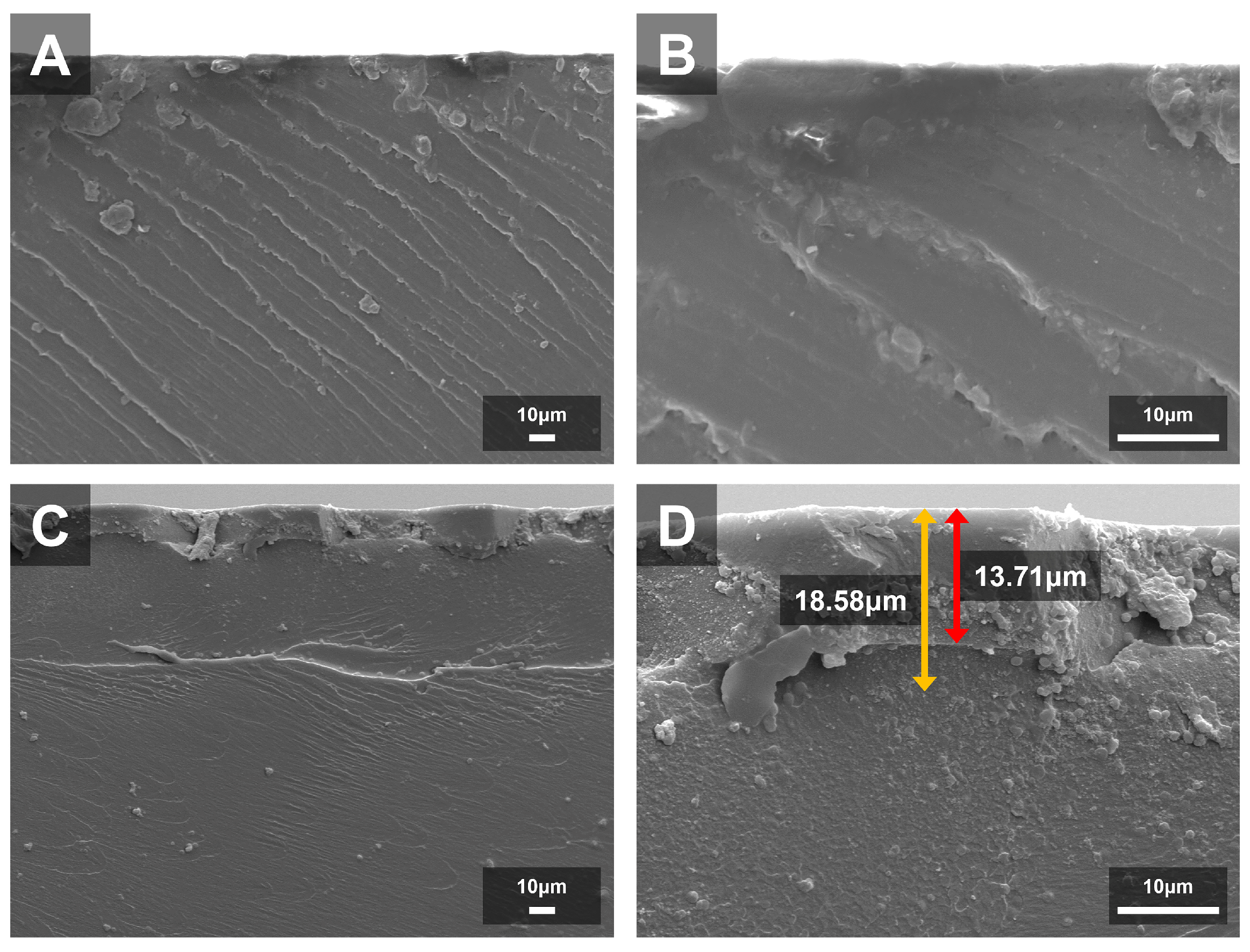
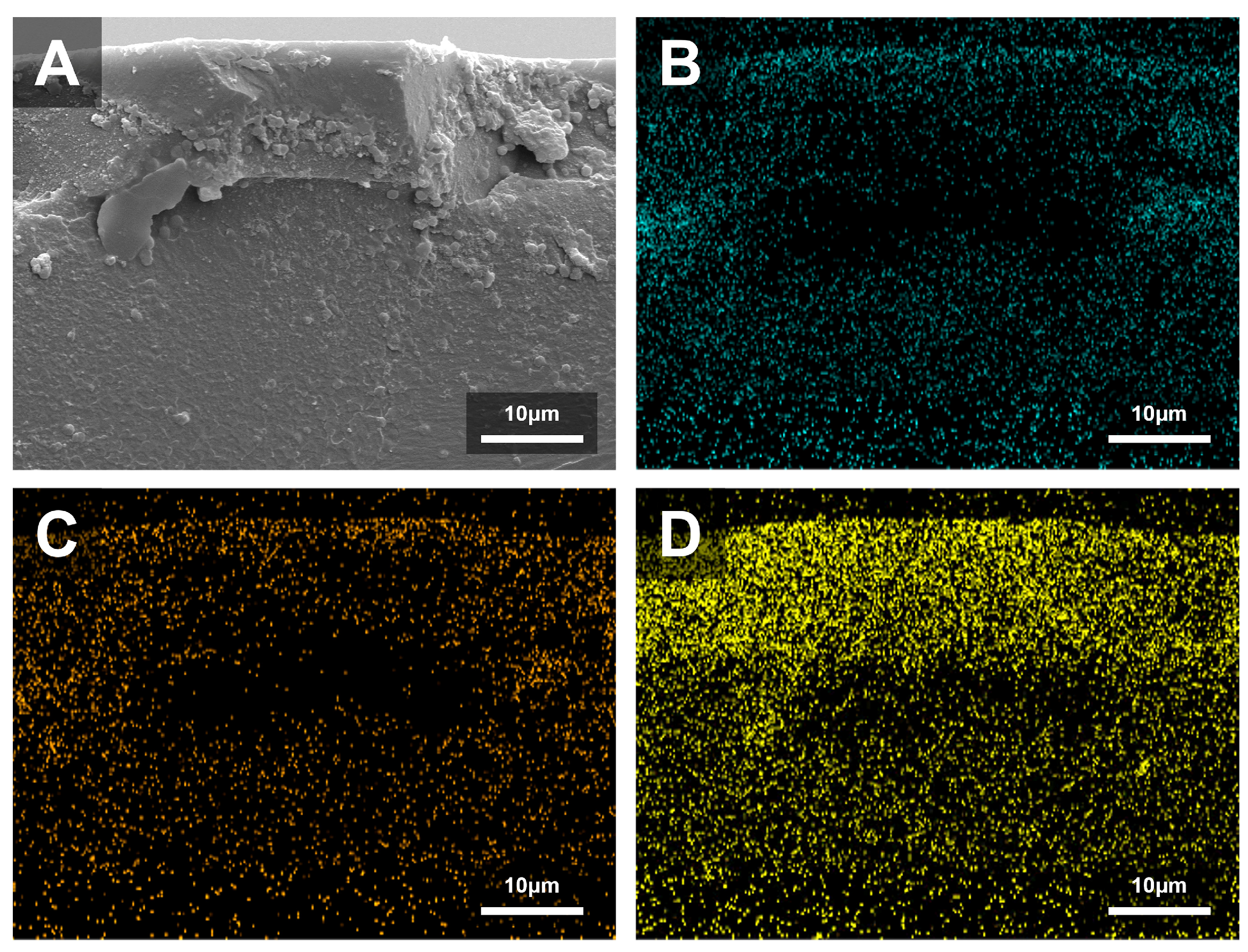
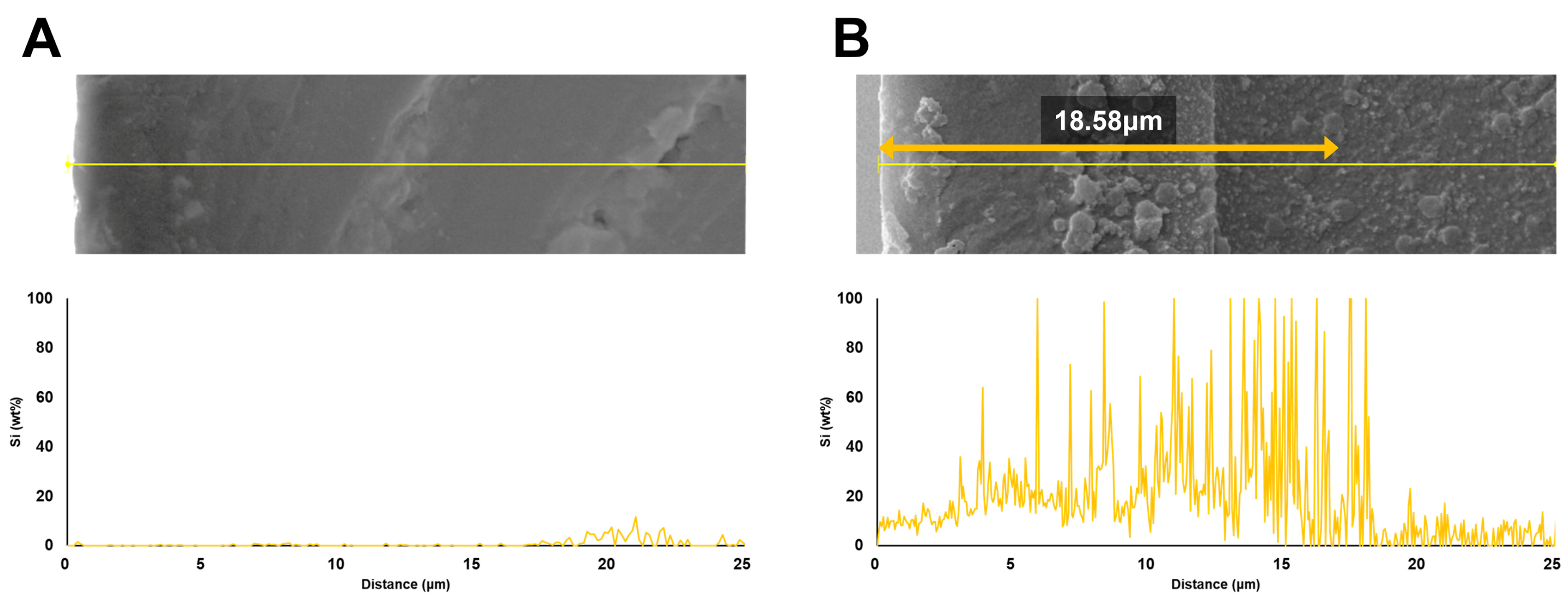
2.5. SEM, Energy-Dispersive X-Ray Spectroscopy (EDS)
2.6. Statistical Analysis
3. Results
3.1. Analysis of Mechanical Properties
3.1.1. Flexural Strength and Flexural Modulus
3.1.2. Vickers Hardness
3.2. Analysis of Antibacterial Properties
3.2.1. Inhibition-Zone Test
3.2.2. Colony-Counting Test
3.3. SEM, EDS
4. Discussion
5. Conclusions
Author Contributions
Funding
Institutional Review Board Statement
Informed Consent Statement
Data Availability Statement
Acknowledgments
Conflicts of Interest
Abbreviations
| BHI | Brain heart infusion |
| CFU | Colony-forming units |
| EDS | Energy-dispersive X-ray spectroscopy |
| QAC | Quaternary ammonium compounds |
| QAMS | Quaternary ammonium methacryloxy silane |
| SD | Standard deviation |
| CAD | Computer-aided design |
| CAM | Computer-aided manufacturing |
| MMA | Methacrylate |
| SEM | Scanning Electron Microscope |
References
- Kreve, S.; Dos Reis, A.C. Bacterial adhesion to biomaterials: What regulates this attachment? A review. Jpn. Dent. Sci. Rev. 2021, 57, 85–96. [Google Scholar] [CrossRef]
- Maier, T. Oral microbiome in health and disease: Maintaining a healthy, balanced ecosystem and reversing dysbiosis. Microorganisms 2023, 11, 1453. [Google Scholar] [CrossRef]
- Wade, W.G. The oral microbiome in health and disease. Pharmacol. Res. 2013, 69, 137–143. [Google Scholar] [CrossRef]
- Teixeira, A.B.V.; Valente, M.L.d.C.; Sessa, J.P.N.; Gubitoso, B.; Schiavon, M.A.; Dos Reis, A.C. Adhesion of biofilm, surface characteristics, and mechanical properties of antimicrobial denture base resin. J. Adv. Prosthodont. 2023, 15, 80–92. [Google Scholar] [CrossRef] [PubMed]
- Gendreau, L.; Loewy, Z.G. Epidemiology and etiology of denture stomatitis. J. Prosthodont. 2011, 20, 251–260. [Google Scholar] [CrossRef] [PubMed]
- Le Bars, P.; Kouadio, A.A.; Amouriq, Y.; Bodic, F.; Blery, P.; Bandiaky, O.N. Different polymers for the base of removable dentures? Part II: A narrative review of the dynamics of microbial plaque formation on dentures. Polymer 2023, 16, 40. [Google Scholar] [CrossRef]
- Khoury, Z.H.; Vila, T.; Puthran, T.R.; Sultan, A.S.; Montelongo-Jauregui, D.; Melo, M.A.S.; Jabra-Rizk, M.A. The role of Candida albicans secreted polysaccharides in augmenting Streptococcus mutans adherence and mixed biofilm formation: In vitro and in vivo Studies. Front. Microbiol. 2020, 11, 307. [Google Scholar] [CrossRef] [PubMed]
- Perić, M.; Miličić, B.; Pfićer, J.K.; Živković, R.; Arsenijević, V.A. A Systematic Review of Denture Stomatitis: Predisposing Factors, Clinical Features, Etiology, and Global Candida spp. Distribution. J. Fungi 2024, 10, 328. [Google Scholar] [CrossRef]
- Alzamil, H.; Wu, T.T.; van Wijngaarden, E.; Mendoza, M.; Malmstrom, H.; Fiscella, K.; Kopycka-Kedzierawski, D.T.; Billings, R.J.; Xiao, J. Removable denture wearing as a risk predictor for pneumonia incidence and time to event in older adults. JDR Clin. Transl. Res. 2021, 8, 23800844211049406. [Google Scholar] [CrossRef]
- Nakajima, M.; Umezaki, Y.; Takeda, S.; Yamaguchi, M.; Suzuki, N.; Yoneda, M.; Hirofuji, T.; Sekitani, H.; Yamashita, Y.; Morita, H. Association between oral candidiasis and bacterial pneumonia: A retrospective study. Oral. Dis. 2019, 26, 234–237. [Google Scholar] [CrossRef]
- Lim, T.W.; Li, K.Y.; Burrow, M.F.; McGrath, C. Prevalence of respiratory pathogens colonizing on removable dental prostheses in healthy older adults: A systematic review and meta-analysis. J. Prosthodont. 2023, 33, 417–426. [Google Scholar] [CrossRef] [PubMed]
- Sjogren, P.; Nilsson, E.; Forsell, M.; Johansson, O.; Hoogstraate, J. A systematic review of the preventive effect of oral hygiene on pneumonia and respiratory tract infection in elderly people in hospitals and nursing homes: Effect estimates and methodological quality of randomized controlled trials. J. Am. Geriatr. Soc. 2008, 56, 2124–2130. [Google Scholar] [CrossRef]
- Dimitrova, M.; Corsalini, M.; Kazakova, R.; Vlahova, A.; Chuchulska, B.; Barile, G.; Capodiferro, S.; Kazakov, S. Comparison between conventional PMMA and 3D printed resins for denture bases: A narrative review. J. Compos. Sci. 2022, 6, 87. [Google Scholar] [CrossRef]
- Srinivasan, M.; Kamnoedboon, P.; McKenna, G.; Angst, L.; Schimmel, M.; Ozcan, M.; Muller, F. CAD-CAM removable complete dentures: A systematic review and meta-analysis of trueness of fit, biocompatibility, mechanical properties, surface characteristics, color stability, time-cost analysis, clinical and patient-reported outcomes. J. Dent. 2021, 113, 103777. [Google Scholar] [CrossRef]
- Alqarawi, F.K.; Gad, M.M. Tendency of microbial adhesion to denture base resins: A systematic review. Front. Oral Health 2024, 5, 1375186. [Google Scholar] [CrossRef]
- Choi, J.J.E.; Uy, C.E.; Ramani, R.S.; Waddell, J.N. Evaluation of surface roughness, hardness and elastic modulus of nanoparticle containing light-polymerized denture glaze materials. J. Mech. Behav. Biomed. Mater. 2020, 103, 103601. [Google Scholar] [CrossRef]
- Kraemer Fernandez, P.; Unkovskiy, A.; Benkendorff, V.; Klink, A.; Spintzyk, S. Surface characteristics of milled and 3D printed denture base materials following polishing and coating: An in-vitro study. Materials 2020, 13, 3305. [Google Scholar] [CrossRef]
- da Silva, M.D.D.; Nunes, T.S.B.S.; Viotto, H.E.D.C.; Coelho, S.R.G.; de Souza, R.F.; Pero, A.C. Microbial adhesion and biofilm formation by Candida albicans on 3D-printed denture base resins. PLoS ONE 2023, 18, e0292430. [Google Scholar] [CrossRef] [PubMed]
- Nayak, S.R.; Mantri, S.S.; Nitin, S.K.; Gupta, P.; Bhasin, A. Comparative evaluation of surface roughness in CAD/CAM-milled, 3D-printed, and conventional polymethyl methacrylate denture base resin materials: An in-vivo study. J. Clin. Diadn. Res. 2025, 19, ZC39–ZC43. [Google Scholar] [CrossRef]
- Ryu, H.S.; Lee, E.-H.; Kwon, H.-B.; Lim, Y.-J.; Lee, S.-W.; Kim, M.-J. The effects of fabrication methods and build orientation on Candida albicans adhesion on 3D-printed and conventional denture resin: An in vitro comparative study. BMC Oral Health 2025, 25, 1788. [Google Scholar] [CrossRef] [PubMed]
- Tseng, C.-F.; Sung, C.-C.; Yang, Y.-T.; Chen, F.-N.; Mine, Y.; Chiang, Y.-C.; Lin, Z.-C.; Fang, M.-L.; Chen, H.-M.; Kok, S.-H.; et al. Impacts of surface characteristics on biological responses and biofilm formation of 3D-printed denture base resins: An in vitro study. J. Dent. Sci. 2025, 20, 1716–1722. [Google Scholar] [CrossRef]
- AlBin-Ameer, M.A.; Alsrheed, M.Y.; Aldukhi, I.A.; Matin, A.; Khan, S.Q.; Abualsaud, R.; Gad, M.M. Effect of protective coating on surface properties and Candida albicans adhesion to denture base materials. J. Prosthodont. 2019, 29, 80–86. [Google Scholar] [CrossRef]
- Hirasawa, M.; Tsutsumi-Arai, C.; Takakusaki, K.; Oya, T.; Fueki, K.; Wakabayashi, N. Superhydrophilic co-polymer coatings on denture surfaces reduce Candida albicans adhesion—An in vitro study. Arch. Oral Biol. 2018, 87, 143–150. [Google Scholar] [CrossRef]
- Teixeira, A.B.V.; Carvalho-Silva, J.M.; Ferreira, I.; Schiavon, M.A.; Dos Reis, A.C. Silver vanadate nanomaterial incorporated into heat-cured resin and coating in printed resin - Antimicrobial activity in two multi-species biofilms and wettability. J. Dent. 2024, 145, 104984. [Google Scholar] [CrossRef] [PubMed]
- Makvandi, P.; Nikfarjam, N.; Sanjani, N.S.; Qazvini, N.T. Effect of silver nanoparticle on the properties of poly(methyl methacrylate) nanocomposite network made by in situ photoiniferter-mediated photopolymerization. Bull. Mater. Sci. 2015, 38, 1625–1631. [Google Scholar] [CrossRef]
- Aati, S.; Aneja, S.; Kassar, M.; Leung, R.; Nguyen, A.; Tran, S.; Shrestha, B.; Fawzy, A. Silver-loaded mesoporous silica nanoparticles enhanced the mechanical and antimicrobial properties of 3D printed denture base resin. J. Mech. Behav. Biomed. Mater. 2022, 134, 105421. [Google Scholar] [CrossRef]
- Takamiya, A.S.; Monteiro, D.R.; Gorup, L.F.; Silva, E.A.; Camargo, E.R.; Gomes-Filho, J.E.; de Oliveira, S.H.P.; Barbosa, D.B. Biocompatible silver nanoparticles incorporated in acrylic resin for dental application inhibit Candida albicans biofilm. Mater. Sci. Eng. C 2019, 118, 111341. [Google Scholar] [CrossRef]
- Bettencourt, A.F.; Costa, J.; Ribeiro, I.A.C.; Goncalves, L.; Arias-Moliz, M.T.; Dias, J.R.; Franco, M.; Alves, N.M.; Portugal, J.; Neves, C.B. Development of a chlorhexidine delivery system based on dental reline acrylic resins. Int. J. Pharm. 2022, 631, 122470. [Google Scholar] [CrossRef]
- Fan, C.; Chu, L.; Rawls, H.R.; Norling, B.K.; Cardenas, H.L.; Whang, K. Development of an antimicrobial resin—A pilot study. Dent. Mater. 2011, 27, 322–328. [Google Scholar] [CrossRef]
- Durner, J.; Stojanovic, M.; Urcan, E.; Hickel, R.; Reichl, F.-X. Influence of silver nano-particles on monomer elution from light-cured composites. Dent. Mater. 2011, 27, 631–636. [Google Scholar] [CrossRef] [PubMed]
- Yue, J.; Zhao, P.; Gerasimov, J.Y.; van de Lagemaat, M.; Grotenhuis, A.; Rustema-Abbing, M.; van der Mei, H.C.; Busscher, H.J.; Herrmann, A.; Ren, Y. 3D-printable antimicrobial composite resins. Adv. Funct. Mater. 2015, 25, 6756–6767. [Google Scholar] [CrossRef]
- Makvandi, P.; Jamaledin, R.; Jabbari, M.; Nikfarjam, N.; Borzacchiello, A. Antibacterial quaternary ammonium compounds in dental materials: A systematic review. Dent. Mater. 2018, 34, 851–867. [Google Scholar] [CrossRef]
- Jiao, Y.; Niu, L.-N.; Ma, S.; Li, J.; Tay, F.R.; Chen, J.-H. Quaternary ammonium-based biomedical materials: State-of-the-art, toxicological aspects and antimicrobial resistance. Prog. Polym. Sci. 2017, 71, 53–90. [Google Scholar] [CrossRef]
- Zhang, Y.; Chen, Y.; Hu, Y.; Huang, F.; Xiao, Y. Quaternary ammonium compounds in dental restorative materials. Dent. Mater. J. 2018, 37, 183–191. [Google Scholar] [CrossRef] [PubMed]
- Childs, T.; Chu, L.; Barrera, L.; Ballard, C.; Fung, E.; Whang, K. Antimicrobial dental composites with K18-methyl methacrylate and K18-filler. Dent. Mater. 2023, 40, 59–65. [Google Scholar] [CrossRef] [PubMed]
- Bapat, R.A.; Parolia, A.; Chaubal, T.; Yang, H.J.; Kesharwani, P.; Phaik, K.S.; Lin, S.L.; Daood, U. Recent update on applications of quaternary ammonium silane as an antibacterial biomaterial: A novel drug delivery approach in dentistry. Front. Microbiol. 2022, 13, 927282. [Google Scholar] [CrossRef] [PubMed]
- Lee, S.-E.; Kwon, J.-S. Influence of thermocycling on the antifungal properties of 3D printed denture base material containing zwitterionic and quaternary ammonium compounds. Sci. Rep. 2025, 15, 39690. [Google Scholar] [CrossRef]
- Patel, M.; Barrera, L.; Chu, L.; Whang, K. Development of an antimicrobial, 3D printable denture base material with K18 quaternary ammonium silane-functionalized methyl methacrylate and filler. J. Prosthet. Dent. 2024, 131, 1251.e1–1251.e8. [Google Scholar] [CrossRef]
- Zhou, W.; Zhao, H.; Li, Z.; Huang, X. Autopolymerizing acrylic repair resin containing low concentration of dimethylaminohexadecyl methacrylate to combat saliva-derived bacteria. J. Mater. Sci. Mater. Med. 2022, 33, 49. [Google Scholar] [CrossRef] [PubMed]
- Liang, X.; Soderling, E.; Liu, F.; He, J.; Lassila, L.V.J.; Vallittu, P.K. Optimizing the concentration of quaternary ammonium dimethacrylate monomer in bis-GMA/TEGDMA dental resin system for antibacterial activity and mechanical properties. J. Mater. Sci. Mater. Med. 2014, 25, 1387–1393. [Google Scholar] [CrossRef]
- Han, A.; Kim, K.-M.; Kwon, J.-S. Physical/mechanical properties and anti-fungal effects of denture base resin incorporated with cationic quaternary ammonium compounds. Dent. Mater. 2025, 41, e38. [Google Scholar] [CrossRef]
- Daood, U.; Matinlinna, J.P.; Pichika, M.R.; Mak, K.K.; Nagendrababu, V.; Fawzy, A.S. A quaternary ammonium silane antimicrobial triggers bacterial membrane and biofilm destruction. Sci. Rep. 2020, 10, 10970. [Google Scholar] [CrossRef]
- Fitebac. K18 Novel Broad-Spectrum Microbicide Antimicrobial Technical Data Sheet. Available online: https://fitebactechnology.com/wp-content/uploads/2021/07/K18-Technical-Data-Sheet-AC7.9.21.pdf (accessed on 10 December 2025).
- Liu, S.-Y.; Tonggu, L.; Niu, L.-N.; Gong, S.-Q.; Fan, B.; Wang, L.; Zhao, J.-H.; Huang, C.; Pashley, D.H.; Tay, F.R. Antimicrobial activity of a quaternary ammonium methacryloxy silicate-containing acrylic resin: A randomised clinical trial. Sci. Rep. 2016, 6, 21882. [Google Scholar] [CrossRef]
- Gong, S.-Q.; Epasinghe, J.; Rueggeberg, F.A.; Niu, L.-N.; Mettenberg, D.; Yiu, C.K.Y.; Blizzard, J.D.; Wu, C.D.; Mao, J.; Drisko, C.L.; et al. An ORMOSIL-containing orthodontic acrylic resin with concomitant improvements in antimicrobial and fracture toughness properties. PLoS ONE 2012, 7, e42355. [Google Scholar] [CrossRef]
- Gong, S.-Q.; Niu, L.-N.; Kemp, L.K.; Yiu, C.K.; Ryou, H.; Qi, Y.-P.; Blizzard, J.D.; Nikonov, S.; Brackett, M.G.; Messer, R.L.; et al. Quaternary ammonium silane-functionalized, methacrylate resin composition with antimicrobial activities and self-repair potential. Acta Biomater. 2012, 8, 3270–3282. [Google Scholar] [CrossRef] [PubMed]
- Gong, S.-Q.; Epasinghe, D.J.; Zhou, B.; Niu, L.-N.; Kimmerling, K.A.; Rueggeberg, F.A.; Yiu, C.K.; Mao, J.; Pashley, D.H.; Tay, F.R. Effect of water-aging on the antimicrobial activities of an ORMOSIL-containing orthodontic acrylic resin. Acta Biomater. 2013, 9, 6964–6973. [Google Scholar] [CrossRef] [PubMed]
- Bellusa, S.; Chu, L.; Fung, E.; Whang, K. Antimicrobial hard denture reliners using quaternary ammonium methacryloxy silicate (K18 QAMS) and K18-functionalized filler. J. Appl. Biomater. Funct. Mater. 2024, 22, 22808000241284431. [Google Scholar] [CrossRef] [PubMed]
- Jeon, S.; Jo, Y.-H.; Yoon, H.-I.; Han, J.-S. Effect of phytochemical-filled microcapsules with antifungal activity on material properties and dimensional accuracy of denture base resin for three-dimensional printing. BMC Oral Health 2022, 22, 178. [Google Scholar] [CrossRef]
- Sasany, R.; Jamjoom, F.Z.; Yilmaz, B. Mechanical and optical properties of additively manufactured denture base resin in different colors modified with antimicrobial substances: An in vitro study. J. Prosthet. Dent. 2025, 133, 890.e1–890.e8. [Google Scholar] [CrossRef]
- Fathy, S.M.; Abdel-Halim, M.S.; El-Safty, S.; El-Ganiny, A.M. Evaluation of polymethyl-methacrylate and acetal denture base resins processed by two different techniques before and after nano-chlorohexidine surface treatment. BMC Oral Health 2023, 23, 985. [Google Scholar] [CrossRef]
- Sahrir, C.D.; Lin, W.-S.; Wang, C.-S.; Lin, H.-E.; Wang, C.-W.; Lin, W.-C. Effects of 3D-printers and manufacturer-specified post-curing units on the dimensional accuracy, compressive strength, and degree of conversion of resin for fixed dental prostheses. J. Dent. Sci. 2025, 20, 1699–1708. [Google Scholar] [CrossRef]
- ISO20795-1:2013; Dentistry-Base Polymers-Part1: Denture Base Polymers. ISO: Geneva, Switzerland, 2013.
- Pinto, C.T.; Pankowski, J.A.; Nano, F.E. The anti-microbial effect of food wrap containing beeswax products. J. Microbiol. Biotechnol. Food Sci. 2017, 7, 145–148. [Google Scholar] [CrossRef][Green Version]
- Aati, S.; Akram, Z.; Shrestha, B.; Patel, J.; Shih, B.; Shearston, K.; Ngo, H.; Fawzy, A. Effect of post-curing light exposure time on the physico-mechanical properties and cytotoxicity of 3D-printed denture base material. Dent. Mater. 2022, 38, 57–67. [Google Scholar] [CrossRef]
- Floyd, C.J.; Dickens, S.H. Network structure of Bis-GMA- and UDMA-based resin systems. Dent. Mater. 2006, 22, 1143–1149. [Google Scholar] [CrossRef]
- Li, P.; Lambart, A.-L.; Stawarczyk, B.; Reymus, M.; Spintzyk, S. Postpolymerization of a 3D-printed denture base polymer: Impact of post-curing methods on surface characteristics, flexural strength, and cytotoxicity. J. Dent. 2021, 115, 103856. [Google Scholar] [CrossRef]
- Mirizadeh, A.; Atai, M.; Ebrahimi, S. Fabrication of denture base materials with antimicrobial properties. J. Prosthet. Dent. 2018, 119, 292–298. [Google Scholar] [CrossRef] [PubMed]
- Bettencourt, A.F.; Neves, C.B.; de Almeida, M.S.; Pinheiro, L.M.; e Oliveira, S.A.; Lopes, L.P.; Castro, M.F. Biodegradation of acrylic based resins: A review. Dent. Mater. 2010, 26, e171–e180. [Google Scholar] [CrossRef]
- Devlin, H.; Kaushik, P. The effect of water absorption on acrylic surface properties. J. Prosthodont. 2005, 14, 233–238. [Google Scholar] [CrossRef] [PubMed]
- Vallittu, P.; Ruyter, I. The swelling phenomenon of acrylic resin polymer teeth at the interface with denture base polymers. J. Prosthet. Dent. 1997, 78, 194–199. [Google Scholar] [CrossRef] [PubMed]
- Han, M.S.; Seo, W.J.; Paik, H.S.; Paik, H.S.; Hyun, J.C.; Lee, J.W.; Kim, W.N. Rheological properties and phase inversion of polypropylene and poly(styrene-co-acrylonitrile) blends. Polym. J. 2003, 35, 127–136. [Google Scholar] [CrossRef]
- Adedeji, A.; Jamieson, A.M.; Hudson, S.D. Phase inversion in compatibilized immiscible polymer blends with exothermic interfacial mixing. Macromolecules 1995, 28, 5255–5261. [Google Scholar] [CrossRef]
- Kirby, S.; Pesun, I.; Nowakowski, A.; França, R. Effect of Different Post-Curing Methods on the Degree of Conversion of 3D-Printed Resin for Models in Dentistry. Polymers 2024, 16, 549. [Google Scholar] [CrossRef]
- Jang, W.; Kook, G.-S.; Kang, J.-H.; Kim, Y.; Yun, Y.; Lee, S.-K.; Park, S.-W.; Lim, H.-P.; Yun, K.-D.; Park, C. Effect of washing condition on the fracture strength, and the degree of conversion of 3D printing resin. Appl. Sci. 2021, 11, 11676. [Google Scholar] [CrossRef]
- Ling, L.; Lai, T.; Malyala, R. Mechanical Properties and Degree of Conversion of a Novel 3D-Printing Model Resin. Polymers 2024, 16, 3562. [Google Scholar] [CrossRef] [PubMed]
- Al-Qarni, F.D.; Gad, M.M. Printing accuracy and flexural properties of different 3D-printed denture base resins. Materials 2022, 15, 2410. [Google Scholar] [CrossRef] [PubMed]
- Liang, X.; Yu, B.; Ye, L.; Lin, D.; Zhang, W.; Zhong, H.-J.; He, J. Recent advances in quaternary ammonium monomers for dental applications. Materials 2024, 17, 345. [Google Scholar] [CrossRef] [PubMed]
- Srinivasan, M.; Chien, E.C.; Kalberer, N.; Alambiaga Caravaca, A.M.A.; Castelleno, A.L.; Kamnoedboon, P.; Sauro, S.; Ozcan, M.; Muller, F.; Wismeijer, D. Analysis of the residual monomer content in milled and 3D-printed removable CAD-CAM complete dentures: An in vitro study. J. Dent. 2022, 120, 104094. [Google Scholar] [CrossRef]
- Van Landuyt, K.L.; Nawrot, T.; Geebelen, B.; De Munck, J.; Snauwaert, J.; Yoshihara, K.; Scheers, H.; Godderis, L.; Hoet, P.; Van Meerbeek, B.; et al. How much do resin-based dental materials release? A meta-analytical approach. Dent. Mater. 2011, 27, 723–747. [Google Scholar] [CrossRef]
- Alansy, A.S.; Saeed, T.A.; Guo, Y.; Yang, Y.; Liu, B.; Fan, Z. Antibacterial dental resin composites: A narrative review. Open J. Stomatol. 2022, 12, 147–165. [Google Scholar] [CrossRef]
- Jin, G.; Liu, Y.; Zhang, Z.; Yim, Y.; Lee, D.G.; Shim, M.S.; Kim, R.; Kim, J.-E. Effect of thermal aging on a urethane acrylate-based 3D printing resin incorporated with antibacterial quaternary ammonium methacrylate. J. Mech. Behav. Biomed. Mater. 2025, 169, 107063. [Google Scholar] [CrossRef]
- Lee, Y.-S.; Mun, S.-J.; Kang, J.-Y.; Han, S.-Y. Effect of Streptococcus mutans on the autofluorescence of pathogens causing aspiration pneumonia. Photodiagnosis. Photodyn. Ther. 2024, 50, 104395. [Google Scholar] [CrossRef]
- da Silva, F.C.; Kimpara, E.T.; Mancini, M.N.G.; Balducci, I.; Jorge, A.O.C.; Koga-Ito, C.Y. Effectiveness of six different disinfectants on removing five microbial species and effects on the topographic characteristics of acrylic resin. J. Prosthodont. 2008, 17, 627–633. [Google Scholar] [CrossRef] [PubMed]
- Pereira-Cenci, T.; Deng, D.M.; Kraneveld, E.A.; Manders, E.M.; Del Bel Cury, A.A.; Ten Cate, J.M.; Crielaard, W. The effect of Streptococcus mutans and Candida glabrata on Candida albicans biofilms formed on different surfaces. Arch. Oral Biol. 2008, 53, 755–764. [Google Scholar] [CrossRef] [PubMed]
- Yip, K.H.K.; Smales, R.J. Implications of oral biofilms in medically at risk persons. J. Biomed. Res. 2012, 26, 1–7. [Google Scholar] [CrossRef] [PubMed][Green Version]
- Brown, J. Oral biofilms, periodontitis and pulmonary infections. Oral Dis. 2007, 13, 513–514. [Google Scholar] [CrossRef]



| Group Name | THD (%) | K18-MMA (%) |
|---|---|---|
| Control | 100 | 0 |
| K3 | 70 | 30 |
| K5 | 50 | 50 |
| K7 | 30 | 70 |
| K10 | 0 | 100 |
| Group Name | Flexural Strength (MPa) | Flexural Modulus (GPa) |
|---|---|---|
| Control | 66.34 ± 7.31 A | 1.98 ± 0.21 A |
| K3 | 60.66 ± 4.36 A | 1.86 ± 0.07 AB |
| K5 | 59.08 ± 6.34 A | 1.81 ± 0.13 B |
| K7 | 61.30 ± 11.33 A | 1.97 ± 0.09 AB |
| K10 | 63.73 ± 5.51 A | 1.97 ± 0.13 AB |
| Group Name | Vickers Hardness (HV) |
|---|---|
| Control | 20.40 ± 4.39 A |
| K3 | 19.51 ± 0.82 A |
| K5 | 19.58 ± 1.48 A |
| K7 | 20.02 ± 1.41 A |
| K10 | 19.51 ± 1.06 A |
| Group Name | Mean ± SD (mm) |
|---|---|
| K3 | 10.78 ± 0.46 C |
| K5 | 12.81 ± 0.25 A |
| K7 | 12.66 ± 0.34 AB |
| K10 | 12.15 ± 0.64 B |
| Elemental Composition (wt%) | Control (%) | K7 (%) |
|---|---|---|
| C | 88.25 | 67.70 |
| O | 11.57 | 20.04 |
| Si | 0.18 | 12.26 |
| Total | 100.00 | 100.00 |
Disclaimer/Publisher’s Note: The statements, opinions and data contained in all publications are solely those of the individual author(s) and contributor(s) and not of MDPI and/or the editor(s). MDPI and/or the editor(s) disclaim responsibility for any injury to people or property resulting from any ideas, methods, instructions or products referred to in the content. |
© 2025 by the authors. Licensee MDPI, Basel, Switzerland. This article is an open access article distributed under the terms and conditions of the Creative Commons Attribution (CC BY) license (https://creativecommons.org/licenses/by/4.0/).
Share and Cite
Kim, K.-M.; Park, Y.; Kim, J.; Cho, M.-Y.; Kim, J.-H. Effect of Immersion in Quaternary Ammonium Methacryloxy Silane Mixed Monomer on the Mechanical Properties and Antibacterial Activity of a 3D-Printed Urethane Dimethacrylate Denture Base Resin. J. Funct. Biomater. 2025, 16, 462. https://doi.org/10.3390/jfb16120462
Kim K-M, Park Y, Kim J, Cho M-Y, Kim J-H. Effect of Immersion in Quaternary Ammonium Methacryloxy Silane Mixed Monomer on the Mechanical Properties and Antibacterial Activity of a 3D-Printed Urethane Dimethacrylate Denture Base Resin. Journal of Functional Biomaterials. 2025; 16(12):462. https://doi.org/10.3390/jfb16120462
Chicago/Turabian StyleKim, Kun-Min, Yeseul Park, Jimin Kim, Mu-Yeol Cho, and Jee-Hwan Kim. 2025. "Effect of Immersion in Quaternary Ammonium Methacryloxy Silane Mixed Monomer on the Mechanical Properties and Antibacterial Activity of a 3D-Printed Urethane Dimethacrylate Denture Base Resin" Journal of Functional Biomaterials 16, no. 12: 462. https://doi.org/10.3390/jfb16120462
APA StyleKim, K.-M., Park, Y., Kim, J., Cho, M.-Y., & Kim, J.-H. (2025). Effect of Immersion in Quaternary Ammonium Methacryloxy Silane Mixed Monomer on the Mechanical Properties and Antibacterial Activity of a 3D-Printed Urethane Dimethacrylate Denture Base Resin. Journal of Functional Biomaterials, 16(12), 462. https://doi.org/10.3390/jfb16120462