You are currently viewing a new version of our website. To view the old version click .
Journal of Intelligence
  • This is an early access version, the complete PDF, HTML, and XML versions will be available soon.
  • Article
  • Open Access

15 December 2025

Determinants of Trust: Evidence from Elementary School Classrooms


and
Institute of Education, CIAE, University of Chile, Santiago 8320000, Chile
*
Author to whom correspondence should be addressed.
This article belongs to the Special Issue Social Cognition and Emotions

Abstract

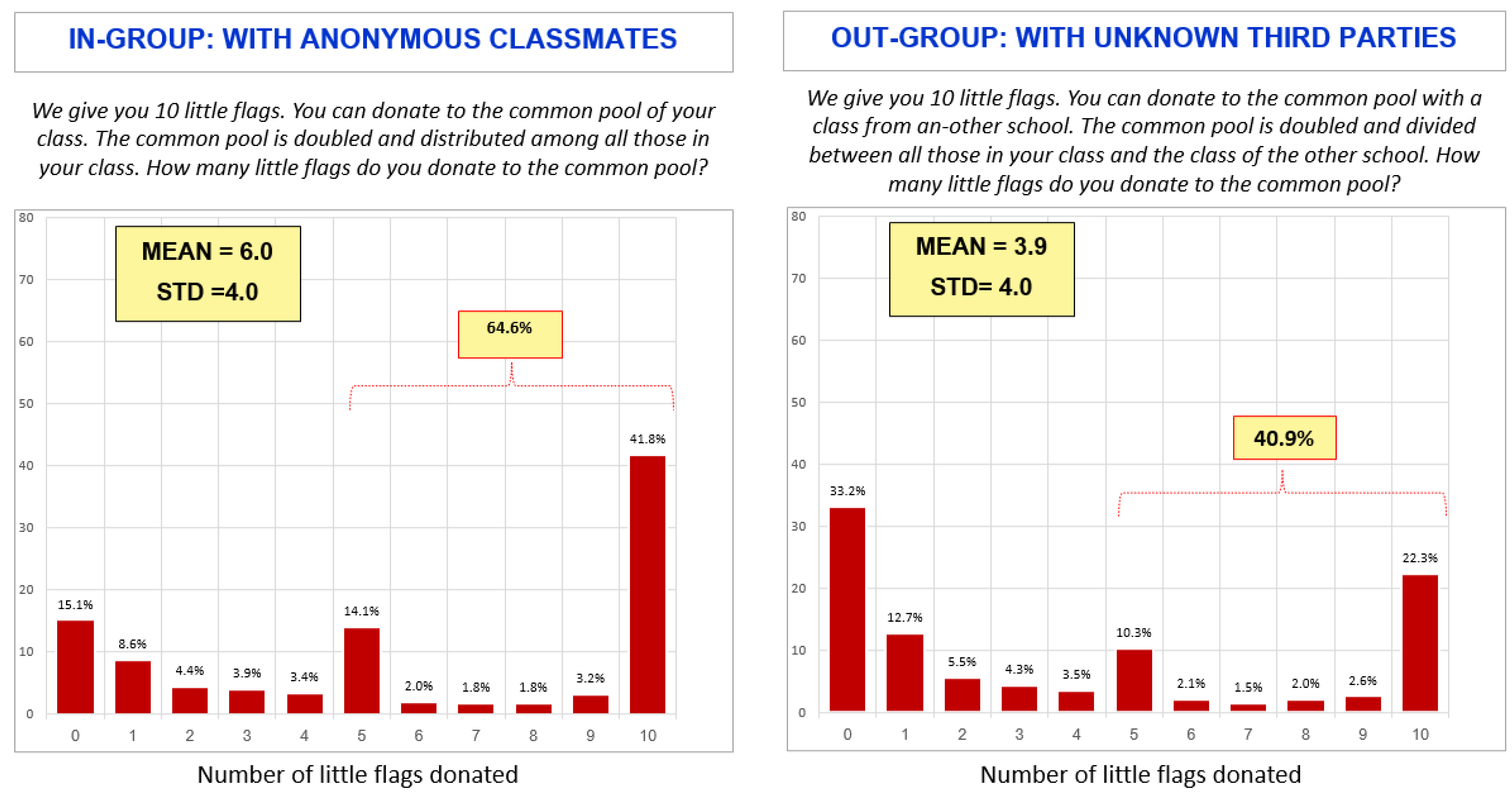
Emotional intelligence (EI), specifically the capacity to recognize and understand one’s own emotions and those of others, is pivotal for developing the interpersonal skills that foster effective collaboration. This is especially crucial for developing trust in others, which serves as the necessary foundation for functioning in our increasingly impersonal contemporary society. Although extensive research has been conducted on trust in adults, empirical evidence for children remains limited. Quantifying the extent to which trust exists in young children, whether it differs from trust in adults, and how it changes with age, gender, and various psychological and school culture factors is essential for understanding how educational environments can foster its development. In this article, we analyze trust among almost 3000 fourth-grade children from 135 schools, measured based on behaviors exhibited during a Public Goods Game. The results align with other studies, showing that trust is substantially higher towards the in-group (classmates) than the out-group. A notable gender effect was observed, with boys exhibiting significantly higher levels of trust than girls. Trust was also higher in municipal schools compared to state-subsidized private schools. Personality traits, measured via the Big Five model using the Pictorial Personality Traits Questionnaire for Children (PPTQ-C), also emerged as influential. Specifically, elevated levels of Agreeableness and Conscientiousness predicted increased trust in both in-groups and out-groups. Extraversion and Openness to Experience also played a role, although to a lesser extent.

Article Metrics

Citations

Article Access Statistics

Multiple requests from the same IP address are counted as one view.