


Abstract
Traditional religious knowledge widely incorporates traditional religious expressions and other forms of traditional knowledge, such as ecological knowledge, medicinal knowledge, elements of languages, and so on. Traditional religious knowledge is a subset of cultural heritage, of which the inheritance and spread have attracted considerable attention from the global society. A series of international conventions have been reached to provide an international forum to negotiate the issues concerning the safeguard of traditional cultural knowledge. China has joined several important international conventions. Nowadays, the domestic laws that can be applied in safeguarding traditional religious knowledge include the intellectual property laws, the Law on Intangible Cultural Heritage, and other sui generis rules. Despite considerable achievements, the shortcomings of the existing rules make them insufficient to protect the interests and rights of traditional religious knowledge and prevent its misappropriation. Therefore, China should make further efforts to solve these challenges to optimize the environment for preserving and spreading traditional religious knowledge.
1. Introduction
China has been a multi-religion country for 2000 years. In China’s long history, religions and religious beliefs have deeply influenced Chinese politics, culture, and public psychology. The major religions practiced in China include Daoism, Buddhism, Islam, and Christianity. Other than Daoism that originated from China, many religions were introduced from other countries [1]. China also has various folk religions. For example, Mazuism and Yellow Emperor worship have been widely accepted by Chinese people, and some forms of local worship, such as Land Secretary (土地爷), are very popular in rural China [2]. Both the non-traditional and traditional religions have developed their native ethics, philosophy, background, and ritual, into which local fundamentals are integrated. Some religions also create medicine prescriptions, clinic treatment methods, and means of constructing health and fitness [3]. The religious knowledge, which Chinese believers carry with them for years and years, shapes their psychology and daily experience. From the perspective of the wide mass base and social function of religions, the religious content should be regarded as an important section of Chinese traditional culture. Moreover, religious knowledge reflects distinguished Chinese traditional culture and has significant historical, literary, artistic, or scientific value. With the development of technology and culture, the value of traditional religious knowledge is more comprehensively recognized and addressed. Religious stories, customs, rituals, sports, and music are commercially utilized. For example, religious music and rituals are performed on stage, religious stories are edited and published, temple names are registered as trademarks, and so on. Although such new exploitation can benefit spreading traditional culture, it would also raise the possibility of the misappropriation of religious knowledge, such as accessing the protected knowledge without prior informed consent, and using a community’s traditional knowledge without identifying the origins of the used knowledge or appropriate compensation. Any misappropriation would be harmful to the preservation of traditional religious knowledge. On the other hand, some minority religions are facing the danger of extinction due to the lack of inheritors. Therefore, the protection of Chinese traditional religious knowledge is essential.
2. Forms of Traditional Religious Knowledge
Traditional religious knowledge widely incorporates traditional expressions and technical knowledge, such as verbal expression, musical expression, expression by action, and products created by traditional technical methods. It has certain attributes of a specific group and is often handed down from generation to generation. Some traditional religious expressions and traditional technical knowledge are eligible to be categorized as cultural heritage.
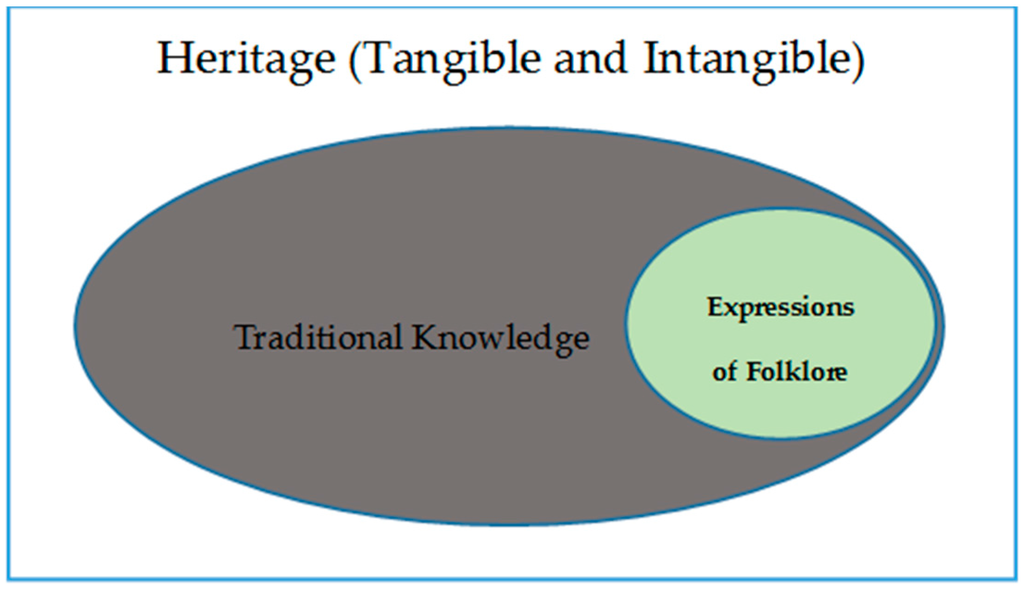
The issues concerning cultural heritage have attracted considerable attention from the global society. The World Intellectual Property Organization (WIPO) defines traditional knowledge and gives an explanation about the relationship between heritage, traditional knowledge, and traditional expressions [4]. The term “traditional knowledge” used in the WIPO reports refers to the same kind of subject matter, including “tradition-based literary, artistic or scientific works; performances; inventions; scientific discoveries; designs; marks, names and symbols; undisclosed information; and all other tradition-based innovations and creations resulting from intellectual activity in the industrial, scientific, literary or artistic fields” [4]. The categories of traditional knowledge broadly include agricultural knowledge, scientific knowledge, technical knowledge, ecological knowledge, medicinal knowledge, traditional expressions (also used in the term of “expressions of folklore”), elements of languages, and movable cultural properties [4]. From the WIPO’s perspective, traditional expression or the expression of folklore is a subset of traditional knowledge, and traditional knowledge is a subset of cultural heritage (Figure 1). It should be noted that the aforementioned definition is not singular or exclusive. Other definitions given by scholars and international organizations indicate that the term “traditional knowledge” encompasses a wide array of meanings. However, despite difficulties regarding definition of the term “traditional knowledge,” this does not prevent the protection of the subject matter, considering that such a situation is not a new matter in the international intellectual property (IP) field. For example, the Berne Convention for the Protection of Literary and Artistic Works (the Berne Convention) defines the term of “literary and artistic works” by offering a non-exhaustive enumeration of subject matter.
Figure 1.
The relationship between heritage, traditional knowledge, and traditional expressions.
As shown in Table 1, traditional religious knowledge involves various forms of traditional knowledge. For example, Chinese Daoism, China’s oldest traditional religion, has developed its unique intangible culture since the time of ancient China, including philosophy, ethics, medicine and remedies, ecological theories, healthy food recipes, and martial arts. The thought and practices of Daoism focus on explaining nature, increasing human longevity, ordering life morally, and regulating consciousness and diet [5]. Daoism has developed a series of health cultivation practices, such as Taiji (太极), Qi Gong (气功), Wu Qin Xi (五禽戏), and Tai He Quan (太和拳), which are very popular among Chinese people. Furthermore, Daoist music has its own content and tone, with a unique rhythm, and permeated by specific religious beliefs and aesthetics. In Daoist concepts, the music is not only a section of rituals, ceremonies, and performance, but also affects human health cultivation [6]. Daoist medical practices have made remarkable achievements in Chinese history. Plenty of prescriptions and medical academic works were developed by Daoists, which are still widely used to date [7]. In this regard, traditional religious knowledge is considerably valuable.
Table 1.
Main forms of traditional religious knowledge.
3. Characteristics of Traditional Knowledge and Frame of Legal Protection
3.1. Characteristics of Traditional Knowledge
It has been comprehensively recognized that traditional knowledge is a valuable heritage for the indigenous communities, nationalities, and the world as a whole [8]. It is an important part of the cultural identities and plays an essential role in people’s daily lives. Moreover, in some circumstances, traditional knowledge is related to food security, people’s health, and affordable treatment [9].
Discussion about legal protection for traditional knowledge cannot be isolated from analyzing the specific nature of traditional knowledge. First, traditional knowledge has a distinct collective character. It establishes a close relationship between people and their community. Within a community, people have and develop a social identity, beliefs, spirituality, and values. As a result, traditional knowledge should be regarded as cultural property created by the specific group as a whole, rather than by some individuals. Second, traditional knowledge is an inherent and valuable resource, which has the nature and merits of property. It is common sense that property can be used and transferred. Similarly, traditional knowledge has been commercially exploited in various ways. This exploitation causes concerns regarding the misappropriation of traditional knowledge, difficulties in identifying the origins of the used knowledge, and unfair allocation of benefits from the uses. Third, the existence of traditional knowledge is threatened by modern technology and culture. It existed historically and is rooted in the past. The fundamental circumstances in which traditional knowledge existed has gone. As for modern life, traditional culture does not necessarily mean “good.” Indeed, some aspects of traditional culture are no longer relevant to modern life. In this sense, traditional knowledge inevitably needs to face the challenges of being gradually eroded away. Fourth, traditional knowledge is often related to a particular geographical region. It embodies unique ethnic characteristics of a geographical region, which are mutually affected by the natural environment of that region. Generation, evolution, and transmission of traditional knowledge are closely linked to the geographical location. Therefore, geographical elements cannot be ignored when seeking approaches of protecting traditional knowledge.
3.2. International Negotiations and Treaties
As for the issue regarding the objectives and measures of protecting traditional knowledge, the international negotiations have gone through a long process. The endeavor made by international organizations and nations merits noting.
The original legal source that can be invoked to protect traditional knowledge is the Berne Convention (the version of 1971). Article 15(4) of the Berne Convention states that, “in the case of unpublished works where the identity of the author is unknown, but where there is every ground to presume that he is a national of a country of the Union, it shall be a matter for legislation in that country to designate the competent authority which shall represent the author and shall be entitled to protect and enforce his rights in the countries of the Union” [10]. This article provides legal basis for member countries to provide copyright protection for traditional knowledge if it is eligible to be copyrighted work. However, there are at least two problems with this solution. The scope of protection is limited to copyrightable work, which cannot cover all categories of traditional knowledge. Additionally, in the case of traditional knowledge, the author is the indigenous group instead of being unknown. Therefore, this article only applies to some particular cases of traditional knowledge.
After that, the United Nations Educational, Scientific, and Cultural Organization (UNESCO) and the WIPO jointly enacted Tunis Model Law on Copyright for Developing Countries (Tunis Model Law) in 1976. Tunis Model Law expressly states that works of national folklore are the subject matter of copyright protection. It also proposes an approach of protection, through which partial moral rights and economic rights of authors shall be exercised by the competent authority [11]. Although it indicates that the international community has realized and accepted the importance of national folklore, this approach of protection is still limited to the copyright scheme. In addition, Dr. Mihaly J. Ficsor, the former Assistant Director General, criticized that Tunis Model Law resulted in different national legislation with little coherence or continuity [12].
In view of the insufficiency of copyright protection, the General Conference of UNESCO adopted the Recommendation on the Safeguarding of Traditional Cultures and Folklore (Recommendation) in November 1989. The Recommendation proposes measures regarding the identification, conservation, preservation, dissemination, and protection of folklore, and the development of international co-operation [13]. It also provides that folklore is deserving of being protected in the manner of IP protection and other legal protection.
It is also worth noting more recent developments. In September 2000, the WIPO established the Intergovernmental Committee on IP and Genetic Resources, Traditional Knowledge and Folklore (the Committee), which offered a forum for governments to discuss IP-related matters. This intergovernmental committee undertakes negotiations with the objectives of reaching agreements within a global scale [14]. The scope of negotiation includes definition, beneficiary, the duration of protection, exceptions or limitations to the rights, and the treatment of foreign rights holders. In this sense, the Committee has been attempting to give a feasible protection model under the IP system.
In addition, the UNESCO adopted the Convention for the Safeguarding of the Intangible Cultural Heritage in October 2003, which entered into force in 2006. This convention works on both national and international levels, with objectives of protecting intangible cultural heritage. The convention defines the term of “intangible cultural heritage” as “the practices, representations, expressions, knowledge, (and) skills…transmitted from generation to generation,” specifically providing a legal basis for safeguarding traditional knowledge [15].
3.3. Different Routes to Traditional Knowledge Protection
In regards this issue, the WIPO and UNESCO stand at different points respectively. In view of the property characteristic of traditional knowledge, the WIPO attempts to use IP doctrines to protect interests and rights created in exploiting and disseminating traditional knowledge, as well as to prevent misappropriation. Under the IP system, three aspects of traditional knowledge should be concerned: (1) whether the content, substance or idea of traditional knowledge is an eligible subject matter of patent, trade secrets or plant variety protection; (2) whether the form, expression or representation of traditional culture is an eligible subject matter of copyright, industrial designs or performer’s rights; (3) whether the reputation or distinctive nature of signs, symbols or indications associated with traditional cultures is an eligible subject matter of trademarks or geographical indications, symbols under the Paris Convention, or unfair competition law in general [16]. Use of the conventional IP rights and certain modifications of the existing IP rules can solve some issues of traditional knowledge protection from the perspective of private rights. In detail, products made with traditional knowledge can be protected by geographical indications or collective marks; innovations made by practitioners of traditional medicine can be protected by patent rights; distinctive signs, symbols and terms associated with traditional knowledge can be protected by trademark rights; specific traditional expressions can be protected by copyright; and misappropriation of traditional knowledge or other unfair practices can be prevented by unfair competition law [16].
Nevertheless, international communities have found the existing IP system is not completely suitable for traditional knowledge protection. For example, traditional knowledge was created by particular groups and passed down from generation to generation, which might not fit well into the capitalist philosophy and the prevailing concept of individual authorship or inventorship of IP rights [8]. Moreover, the IP system is seemingly insufficient to ensure the preservation and development of traditional knowledge.
In contrast to the WIPO, the UNESCO has been seeking protection approaches based on the cultural nature of traditional knowledge. In a series of international conventions, such as the Universal Declaration on Cultural Diversity, the Convention for the Safeguarding of the Intangible Cultural Heritage, and the Istanbul Declaration on Cultural Diversity, the UNESCO highlights the importance of effectively enriching and supplementing cultural heritage, addresses the necessity of building awareness of safeguarding cultural heritage, and stresses the values of cultural heritage for ensuring human rights. It is clear from the statement that “the wide diffusion of culture, and the education of humanity for justice and liberty and peace are indispensable to the dignity of man and constitute a sacred duty which all the nations must fulfil in a spirit of mutual assistance and concern,” the UNESCO regards the preservation and promotion of cultural diversity as guarantees of human rights [17]. In this regard, the UNESCO provides an international forum to discuss the safeguard of cultural heritage from the perspective of public policies rather than IP laws.
4. The Scheme of Protection for Traditional Religious Knowledge in China and Challenges
China, a large and ancient country, has abundant religious cultural heritage, both tangible and intangible. The Chinese central government successively released four catalogues of the representative items of intangible cultural heritage at China’s national level, in which plenty of religious items are included [18]. As presented in Table 2, the religious music, folk literature, rituals or celebrations, acrobatics and athletic competition, traditional skills, traditional drama, and traditional medicine reflect distinguished Chinese traditional culture and have significant historical, literary, artistic, or scientific value. Nevertheless, traditional religious knowledge is being threatened with misappropriation and extinction. In modern society, more and more traditional religious knowledge is being used for profit, such as commercially performing religious music, and registering religious terms as trademarks. Some commercial institutions attempt to develop new techniques based on traditional religious knowledge. These activities may benefit the preservation and development of traditional religious knowledge; however, on the other hand, any misappropriation may harm the valuable knowledge and interests of the specific communities. In addition, some minority religions encounter serious difficulties in preserving their traditional knowledge due to the lack of inheritors. In view of these, it is sensible to seek protection of traditional religious knowledge under legal rules.
Table 2.
Religious items included in the Catalogue of the Representative Items of Intangible Cultural Heritage at China’s National Level [18].
As a beneficiary and successor of a great ancient civilization, China has actively promoted traditional knowledge protection both at the international level and the national level. China has joined a series of important international treaties and at the same time adopted feasible approaches through domestic legislation and enforcement.
After entering into the Convention for the Safeguarding of the Intangible Cultural Heritage, China enacted the Law on Intangible Cultural Heritage (Cultural Heritage Law) [19]. It presented China’s ambition of promoting a distinguished traditional culture and strengthening the protection and preservation of intangible cultural heritage. This is the first time the Chinese People’s Congress has made a law concerning the issue. The Cultural Heritage Law stipulates the procedures of investigating intangible cultural heritage, the ways of establishing the catalogue of the representative items of intangible cultural heritage, the obligations of the government and the representative inheritors in the inheritance and spread of the representative items, and the legal liabilities of violating this law.
From the perspective of a historical view, the achievement of this law is notable. It establishes a channel through which intangible cultural heritage, which reflects traditional culture and has significant historical, literary, artistic, or scientific value, can be recommended to be items of protection under this law. The referees may be citizens, legal persons, or other organizations. Apart from the government that has an obligation to carry out investigations into items of intangible cultural heritage, citizens, legal persons, or other organizations may conduct and participate in the investigations [20]. Moreover, it specifies the responsible persons. Under this law, the government above the country level should adopt suitable measures to support the activities of inheriting and spreading intangible cultural heritage. The representative inheritors of intangible cultural heritage who are determined by the Chinese government have the obligations of carrying out inheritance activities, keeping the relevant physical objects and information properly, and participating in activities that benefit the public interest [21]. In addition, the law stipulates the legal liabilities in the case of violation. Subject to this law, violating the provisions may cause administrative liability, or criminal liability.
There are still some problems that exist in the Chinese legal practice of protection. Above all, the law does not expressly stipulate the acquisition and ownership of religious property, including religious knowledge. China’s Cultural Heritage Law only provides that the Chinese government, schools, and public cultural institutions such as libraries, cultural centers, museums, and academic research institutions have their respective obligations to support protection, education, research, and spread of traditional religious knowledge. However, it does not clearly define the ownership of traditional knowledge. Other legal sources stipulating this issue are inconsistent as well. For example, religious property may be owned by the whole society, the country, Chinese religious associations, collective groups of religious believers, and so on [22]. As a result, it is unclear as to who is eligible to claim interests generated from traditional religious knowledge and who is eligible to claim against misappropriation.
Second, China’s Cultural Heritage Law provides the administrative liability and criminal liability in the limited circumstances. For instance, the staff of the departments in charge of traditional culture and other relevant departments, who offend against the customs when conducting the investigation of intangible cultural heritage, abuse power, or practice favoritism in the work, would face administrative liability or criminal liability [23]. The administrative liability and criminal liability will also be imposed upon the overseas organizations or individuals who illegally conduct investigations of intangible cultural heritage within China’s territory [24]. Moreover, under this law, the civil liability is only limited to the circumstance where someone illegally damages the physical objects and premises that are a constituent part of intangible cultural heritage [25]. However, these rules are insufficient to protect traditional religious knowledge because much of the misappropriation that damages traditional religious knowledge does not occur in the administrative process or the investigation process, but in the commercial utilization. Supposing that a pharmaceutical company used traditional religious medicine to develop new medical products but wholly ignored an appropriate compensation arrangement or representation of the contribution made by traditional religious knowledge, neither the administrative liability or civil liability could be established under China’s Cultural Heritage Law. The pharmaceutical company was not an administrative institution but a business entity, and did not damage the tangible property of traditional knowledge, either. In this regard, China’s Cultural Heritage Law cannot be invoked to claim such damages.
Unfortunately, the IP rules cannot completely solve the aforementioned difficulties, either. Although IP rules are comprehensively used to protect intangible property, they are not necessarily suitable for dealing with the issues of traditional religious knowledge. Under the IP system, the standard of eligible subject matters is quite strict such that traditional religious knowledge can hardly meet the requirements of novelty or originality. Moreover, the duration of IP rights means the exclusive rights are only granted within a limited term. Obviously, such limitation is not suitable for traditional religious knowledge.
In order to solve these problems, it is necessary to establish an integrated system that includes IP rules, sui generis and other legal rules.
First, both the IP laws and China’s Cultural Heritage Law shall expressly state the acquisition of traditional rights. The WIPO have recommended two means: acquisition automatically and acquisition through registration [16]. In comparison, the latter facilitates right holders to provide evidence of ownership and to exploit rights. China adopts this model that requires registration as a condition for sui generis protection.
Second, considering that traditional religious knowledge is generally perceived as a product of a collective community, the ownership of the rights over traditional religious knowledge should be granted to the concerned community rather than to individuals. As for subsequent intellectual creations, the private rights may be granted to its creators and innovators. This approach is compatible with the existing IP doctrines because the IP system need not be separately held by distinct individuals [16]. For example, the geographic indication is a classical collective right under the trademark law. Definition of the ownership is helpful to identify the party who may take actions against certain acts and who may seek remedies or injunctions. The identified right holders should have legal personality under the laws, or be designated by the specific traditional community as the right holder in trust. Moreover, there should be sufficient connections between the identified right holder and the traditional religious knowledge in law or in practices. Some religious institutions establish independent companies that have legal personality to manage religious intangible property, which may be specified as the right holder of their traditional knowledge. The representative example is Henan Shaolin Intangible Assets Management Co., Ltd., which is wholly owned by China Songshan Shaolin Temple. On the other hand, in Chinese religious practices, the majority of religious institutions do not have legal personality. Generally, in this case, the religious associations may act on behalf of the traditional religious communities to deal with the disputes and issues in relation to religious matters.
In Shanghai Cheng Huang Jewelry Co., Ltd. v. Trademark Review and Adjudication Board of the State Administration for Industry & Commerce of China, the Daoist Association of China participated in the proceeding as a third party [26]. This administrative proceeding was related to a dispute over the cancellation of a registered trademark “城隍” (Cheng Huang). In 1998, Shanghai Cheng Huang Jewelry Co., Ltd. (Shanghai Cheng Huang) registered “城隍” as its trademark, which was approved to use for the goods included in the fifteenth category of the prescribed classification of goods, such as precious stones, diamonds, pearls, jade, and other jewelry. In 2011, the “城隍” trademark owned by Shanghai Cheng Huang was identified as a well-known trademark. However, in Daoist concepts, “城隍” referred to gods in charge of fighting evil and bringing peace, which was included in deities of ancient Daoism since the time of ancient China. Worship of “城隍” was not only quite popular in the old time in China, Vietnam, and the Korean Peninsula, but also continues in the contemporary era in the places populated by Chinese people. The Daoists believed that the registration of the “城隍” trademark did serious harm to their religious feelings and the dignity of Daoism. Consequently, the Daoist Association of China filed an application to request the Trademark Review and Adjudication Board to make an adjudication to cancel such a registered trademark. The Trademark Review and Adjudication Board found that such registration was in violation of Article 8 of China’s Trademark Law that prohibited the use of words or devices in trademarks detrimental to the morals or customs of the society, or having other unhealthy influences. Based on its findings, the Trademark Review and Adjudication Board canceled this registered trademark. Shanghai Cheng Huang disagreed with the adjudication and brought the suit mentioned before. In this case, the Daoist Association of China acted on behalf of the Daoist communities to protect traditional Daoist Knowledge. In this regard, it is clearly a feasible approach to take actions against the misuse of traditional religious knowledge.
Third, multiple policies shall be introduced to deal with the issue concerning the expiration of rights. The duration of the right is an important method to balance IP rights and public interests. Generally, when the IP right expires, it can be used by the public without authorization. Traditional religious knowledge is passed down from generation to generation; therefore, the IP expiration rule cannot be applied appropriately to all the cases of traditional religious cases. It is sensible to categorize traditional religious knowledge into several types that different policies may be implemented on. In detail, the rights over traditional religious expressions of folklore must remain an inseparable part of the specific communities. The subsequent works created based on traditional expressions but incorporating isolated elements can be protected within the duration of protection under the copyright rules. Other forms of traditional religious knowledge, such as ecological knowledge, medicinal knowledge, religious names, and symbols may be granted traditional rights in specific terms of protection, but the term may be renewed, similar to the protection mechanism for trademarks.
Fourth, the laws should stipulate the civil liabilities in the event of misappropriating traditional religious knowledge. Misappropriation of traditional knowledge generally shows disrespect to the human dignity of the specific community. Under the civil law, the damage to human dignity establishes civil liability. Similarly, the acts of damaging the collective dignity of religions by misappropriation should establish civil liability as well. The cases of misappropriation should include disrespecting the customary rules, using a community’s traditional knowledge without just and appropriate compensation to the recognized holders of the knowledge, accessing the protected knowledge in violation of legal measures that require prior informed consent, and misrepresenting or giving misleading information in relation to the originality of religious traditional knowledge. Based on the civil liability rules, the following measures can be adopted in the case of misappropriation: claiming for equitable sharing and distribution of benefits, claiming for injunctions, and claiming for the correction of misrepresentation.
5. Conclusions
China has abundant traditional religious knowledge. The preservation and spread of traditional religious knowledge is of significance for guaranteeing the human rights of specific communities and promoting cultural diversity on a global scale. However, technological development facilitates the misappropriation of traditional religious knowledge. Subject to international conventions that China has entered into, China has established a legal frame incorporating multiple models to protect the relevant rights. Despite considerable achievements, the shortcomings of the existing legal system make it insufficient to protect traditional religious knowledge and prevent its misappropriation. It is necessary for China to find suitable ways to rule the acquisition of traditional rights, the ownership and beneficiary of religious knowledge, the term of protection, and the civil liability of misappropriation. In addition, China should promote international cooperation to improve the protection of traditional religious knowledge.
Conflicts of Interest
The author declares no conflict of interest.
References and Notes
- Herbert A. Giles. “Religions of Ancient China.” Available online: http://www.gutenberg.org/files/2330/2330-h/2330-h.htm (accessed on 26 March 2016).
- Xulong Liang. “Whether Chinese folk beliefs belong to religions? ” Available online: http://www.mzb.com.cn/html/Home/report/413468-1.htm (accessed on 26 March 2016).
- Annie Wu. “Chinese Daoism.” Available online: http://www.chinahighlights.com/travelguide/taoism.htm (accessed on 26 March 2016).
- World Intellectual Property Organization (WIPO). “Intellectual Property Needs and Expectations of Traditional Knowledge Holders.” WIPO Report on Fact-Finding Missions on Intellectual Property and Traditional Knowledge (1998–1999). Geneva, Switzerland: WIPO, 2001, 25–26. [Google Scholar]
- Ronnie Littlejohn. “Daoist Philosophy.” Available online: http://www.iep.utm.edu/daoism/ (accessed on 17 March 2016).
- Anonymous. “Function of Daoist Music on Health.” Available online: http://www.wudangpai.com/zhishi/djys/550.html (accessed on 16 March 2016).
- Dao Wen. “Eight Traditional Cultural Symbols of Daoism.” Available online: http://www.wudangpai.com/zhishi/djys/1416.html (accessed on 16 March 2016).
- Peter K. Yu. “Traditional Knowledge, Intellectual Property, and Indigenous Culture: An Introduction.” Cardozo Journal of International & Comparative Law 11 (2003): 239–45. [Google Scholar]
- Stephen B. Brush. “Whose Knowledge, Whose Genes, Whose Rights? ” In Valuing Local Knowledge: Indigenous People and Intellectual Property Rights. Edited by Stephen B. Brush and Doreen Stabinsky. Washington: Island Press, 1996, pp. 1–10. [Google Scholar]
- The Berne Convention, article 15(4).
- Tunis Model Law, section 4, 5, and 6.
- Mihaly Ficsor. “Attempts to Provide International Protection for Folklore by Intellectual Property Rights.” In Paper presented at UNESCO—WIPO World Forum on the Protection of Folklore, Phuket, Thailand, 8–10 April 1997; pp. 213–15.
- UNESDOC. “Recommendation on the Safeguarding of Traditional Culture and Folklore.” 15 November 1989. Available online: http://portal.unesco.org/en/ev.php-URL_ID=13141&URL_DO=DO_TOPIC&URL_SECTION=201.html (accessed on 5 September 2016).
- WIPO. “Intergovernmental Committee.” Available online: http://www.wipo.int/tk/en/igc/ (accessed on 1 April 2016).
- Convention for the Safeguarding of the Intangible Cultural Heritage, article 2.
- WIPO. “Traditional Knowledge: Policy and Legal Options.” In Paper presented at the Sixth Session of Intergovernmental Committee on Intellectual Property and Genetic Resources, Traditional Knowledge and Folklore, Geneva, Switzerland, 15 March 2004; Available online: http://www.wipo.int/edocs/mdocs/tk/en/wipo_grtkf_ic_6/wipo_grtkf_ic_6_4.pdf (accessed on 1 April 2016).
- Universal Declaration on Cultural Diversity (September 2002), preamble.
- The Central People’s Government of the People’s Republic of China. “Catalogues of the Representative Items of Intangible Cultural Heritage at China’s National Level. ” Available online: http://www.gov.cn/zfwj/gwyfw.htm (accessed on 8 April 2016).
- The National People’s Congress Standing Committee of China. “Law of the P. R. China on Intangible Cultural Heritage.” February 2011. Available online: http://www.gov.cn/flfg/2011-02/25/content_1857449.htm (accessed on 2 September 2016). [Google Scholar]
- Law of the P. R. China on Intangible Cultural Heritage, article 14, and 20.
- Law of the P. R. China on Intangible Cultural Heritage, article 30, and 31.
- Yonghui Qiu. Annual Report on Religious in China 2015 (中国宗教报告 2015). Beijing: Social Science Academic Press, 2015. [Google Scholar]
- Law of the P. R. China on Intangible Cultural Heritage, article 38, and 39.
- Law of the P. R. China on Intangible Cultural Heritage, article 41.
- Law of the P. R. China on Intangible Cultural Heritage, article 40.
- Gao Xin Zhong Zi No. 539 (2014) ((2014) 高行终字第539号).

© 2016 by the author; licensee MDPI, Basel, Switzerland. This article is an open access article distributed under the terms and conditions of the Creative Commons Attribution (CC-BY) license (http://creativecommons.org/licenses/by/4.0/).