Abstract
Fire accidents on ships and offshore structures lead to complex non-linear material and geometric behavior, which can cause structural collapse. This not only results in significant casualties, but also environmental catastrophes such as oil spills. Thus, for the fire safety design of structures, precise prediction of the structural response to fire using numerical and/or experimental methods is essential. This study aimed to validate the two-way fluid-structure interaction (FSI) method for predicting the non-linear structural response of H-beams to a propane burner fire by comparison with experimental results. To determine the interaction between a fire simulation and structural analysis, the Fire-Thermomechanical Interface model was introduced. The Fire Dynamics Simulator and ANSYS Parametric Design Language were used for computational fluid dynamics and the finite element method, respectively. This study validated the two-way FSI method for precisely predicting the non-linear structural response of H-beams to a propane burner fire and proposed the proper time increment for two-way FSI analysis.
1. Introduction
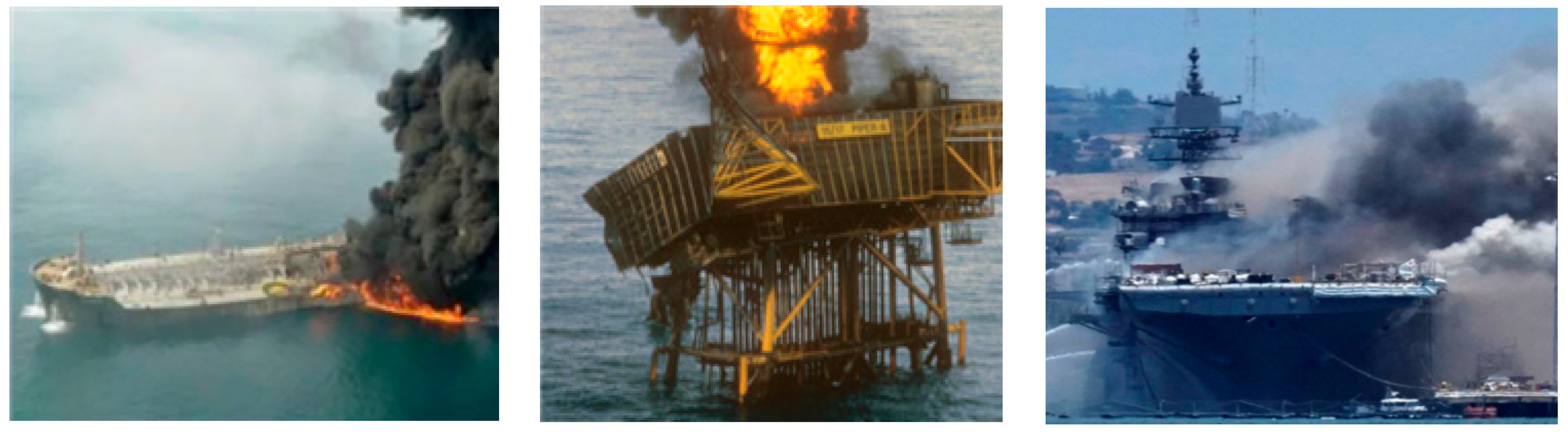
Ships and offshore structures carrying oil and gas are exposed to demanding oceanic and industrial environments with significant fire and explosion hazards. Their structural collapse during fires causes not only significant casualties, but also environmental catastrophes such as oil spills [1]. Many fire accidents on ships and offshore structures have been reported, such as the Sanchi oil tanker accident on 6 January 2018 in the East China Sea and the Piper Alpha accident on 6 July 1998 in the North Sea and the U.S.S. Bonhomme Richard accident on 12 July 2020 in San Diego shown in Figure 1 [2,3].
Figure 1.
Sanchi oil tanker (left), Piper Alpha (middle) and U.S.S. Bonhomme Richard (right) accidents.
To prevent the collapse of such large steel structures during fire accidents, structural components must meet the fire resistance ratings of prescriptive codes. These codes were determined based on standard fire-resistance tests, which involved limited structural components and were subjected to a specified time-temperature curve [4]. Fire safety design based on these prescriptive codes is difficult to cover with the actual fire conditions and their structural behavior that a structure is exposed to because they are determined as standard fire load profiles [5,6]. Thus, conventional approaches need to be supplemented by integrated fire safety design approaches based on performance [7,8], which should combine computational fluid dynamics (CFD) and the finite element method (FEM) [8,9,10].
CFD techniques are a common strategy in fire safety engineering to calculate the multiphysical interactions that occur during a fire [11]. CFD enables fire modeling by solving the basic conservation equations of mass, energy and momentum and using accurate three-dimensional (3D) topological models of structures [7]. CFD code-based software, which is typically represented by FLUENT, CFX, KFX and Fire Dynamics Simulator (FDS), is capable of modeling fire action and has been chosen by researchers to model many fire conditions [12]. CFD modeling has successfully solved various fire safety problems [13]. Paik et al. [7] developed a modeling technique for CFD simulations of fire actions as part of fire engineering of floating production storage and offloading systems.
The FDS developed by the National Institute of Standards and Technology has been widely introduced in fire engineering divisions for modeling various fire scenarios [14]. Many studies have validated the FDS [11,15,16,17,18,19]. The FDS can accurately calculate the values of gas-phase environments, such as temperature, heat flux, velocity and species concentrations, in a variety of fire simulations by comparison with experimental databases [20,21]. The FDS was applied to simulate a medium-scale methanol pool fire and demonstrated reliable predictions of most important parameters of the fire scene compared with experimental results [22]. The FDS was also suggested for modeling jet fire scenarios in process modules to analyze the load characteristics based on experimental data [12].
Many studies have been conducted on the interactions between fire simulations using CFD and structural analysis with the FEM to determine the non-linear structural response to fire. Prasad and Baum [23] proposed formulae to generate realistic thermal boundary conditions using the FDS for coupled transient 3D finite codes. The FDS was used to predict the thermal behaviors of steel columns exposed to localized fires and was validated by comparison with experimental results [24]. Chen et al. [25] developed the Abaqus Fire Interface Simulator Toolkit by integrating the FDS with a customized Abaqus structural analyzer via two-way coupling. Alos-Moya et al. [26] analyzed the non-linear structural response of a bridge to fire based on CFD to create a fire model and finite element software to determine the thermomechanical response. Application of the Eurocode standard and hydrocarbon fires along the full length of the bridge did not adequately represent the fire response of a real bridge. Silva et al. [4,27] validated the Fire-Thermomechanical Interface (FTMI) model to transfer data from the FDS to ANSYS, and compared the experimental results of both the thermal and structural responses of a steel column in a localized fire test. Kim et al. [28] investigated the effect of time increments on the two-way fluid-structure interaction (FSI) analysis of structures subjected to jet fire and suggested an adequate time increment ().
To improve the numerical approach of a two-way FSI for non-linear structural analysis in a propane burner fire, several simulations were conducted and compared with the experimental results of an H-beam. The aims of this study were to (i) perform FSI analysis of an H-beam under a propane burner fire through one-way and two-way analyses, and to then compare the results with experimental data [29], (ii) compare the results of these analyses, depending on the in two-way analysis and (iii) propose an appropriate for two-way FSI analysis.
2. Numerical Approach
2.1. Heat Transfer from Fires
Fire heat energy is transferred from flames and hot gases to the exposed surfaces of a structure by radiation and convection. The total heat flux ( is the sum of the radiative heat flux () and convective heat flux (), as shown in Equation (1) [30].
Kirchhoff’s law of thermal radiation defines the equality between emissivity () and absorptivity; thus, they can be combined and can be expressed as Equation (2) [30].
where is the radiative energy absorbed by the exposed surfaces, is the Stefan–Boltzmann constant and is the temperature of the exposed surface in Kelvin. Based on Newton’s law of cooling, is defined as the difference between the gas temperature () adjacent to the exposed surface and multiplied by the convective heat transfer coefficient (), as shown in Equation (3) [30]. Based on the defined and , can be calculated by Equation (4) [30].
2.2. Adiabatic Surface Temperature
The FDS provides results that characterize the 3D evolution of a fire, including the on the exposed surfaces and . However, these results are not capable of accurately reflecting the temperature distribution on exposed surfaces; thus, cannot be precisely calculated in fire simulations [27]. Adiabatic surface temperature () was introduced to improve these results [31]. This method replaces the real surfaces to the perfectly insulated surfaces. The of the ideal surface is defined as zero in Equation (5) [31].
Based on the equal and between the adiabatic surface and the real surface, is derived by Equation (6). The FDS provides the calculated by Equation (6) and reduces the complexity of the fire simulation into simple scalar data [32,33,34,35].
According to the normative procedures of Eurocode 3 [30], is generally considered to be a constant. However, it varies depending on the fire scenario and relative to [27]. Thus, the two variables ( and h) were measured in the fire simulations and Equation (6) was used to precisely reflect the heat flux.
2.3. FTMI Method
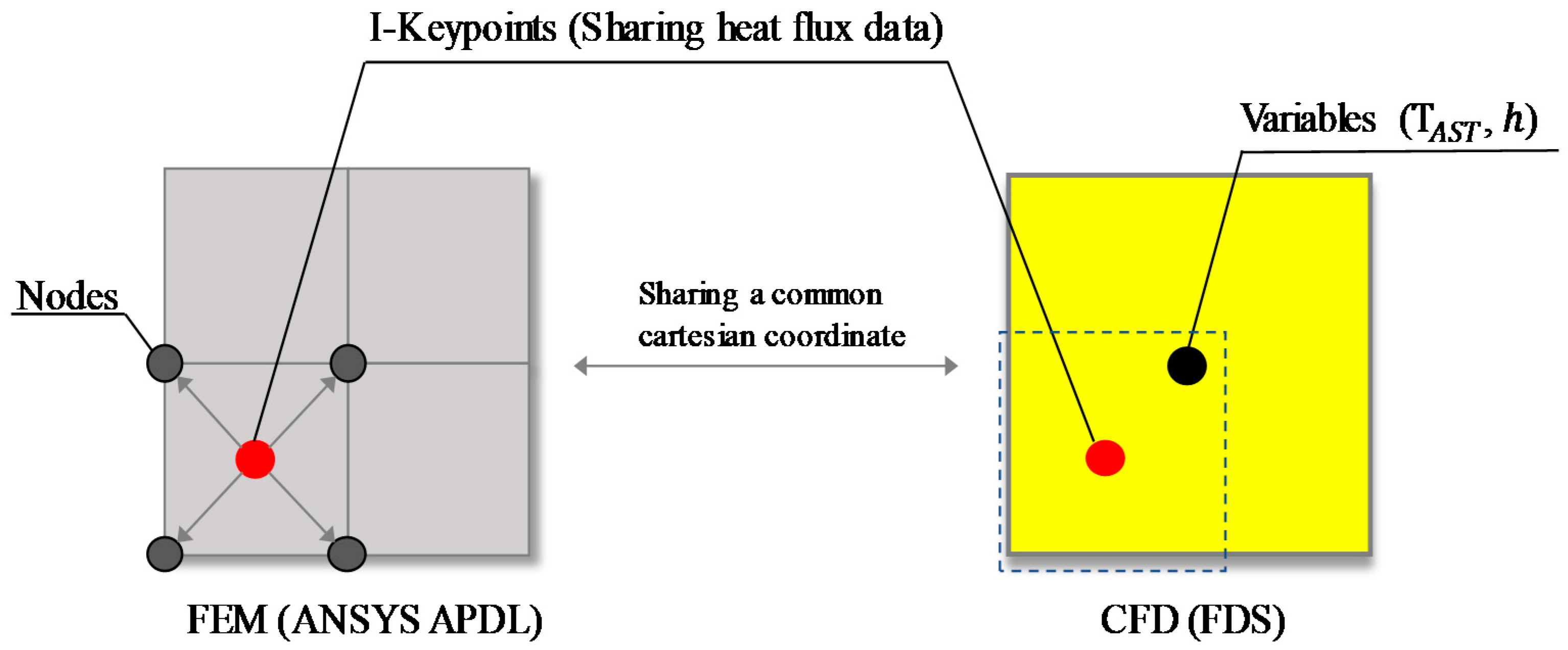
The FTMI was developed by Zhang et al. [4] to create an appropriate boundary condition between the fire simulation of the FDS and the thermomechanical analysis of ANSYS Parametric Design Language (APDL). To correctly map the calculated heat flux from the CFD to FEM models, these models must share the same exposed surfaces. Figure 2 shows a collection of I-keypoints (of x coordinates) positioned at the center of each exposed surface (with normal n) to realize the coupling procedure. The position and the number of I-keypoints are based on the mesh of the FEM model. The coupling procedure can be achieved for different discretization levels. Thus, the FTMI does not require identical meshes between the CFD and FEM models.
Figure 2.
Extent of the concept of the mapping procedure between the finite element method (FEM) and a computational fluid dynamics (CFD) method. FDS: Fire Dynamics Simulator; TAST: adiabatic surface temperature; h: convective heat transfer coefficient; APDL: ANSYS Parametric Design Language.
2.4. Numerical Approach for Two-Way FSI
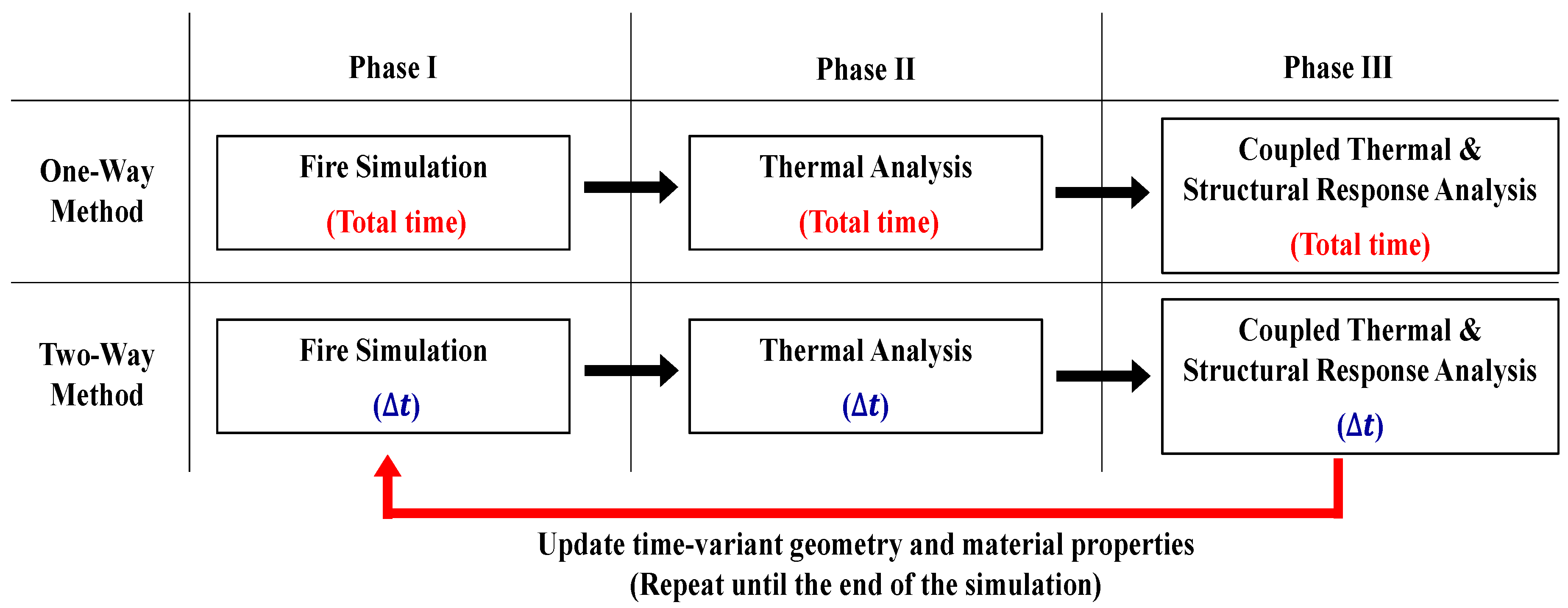
One-way FSI analysis is generally used for non-linear structural analysis because it is a time-consuming task. However, to precisely reflect the actual structural response to fire load, two-way FSI is necessary. The two-way analysis is affected by the , for which the geometry and fire loads are updated [28]. Figure 3 illustrates the difference between the one-way and two-way FSI for analyzing the non-linear structural response to fire load. The two-way FSI is repeated with updated geometry and material property until the total simulation time.
Figure 3.
Differences between the schemes of the one-way and two-way fluid-structure interaction methods for determining the non-linear structural response to fire. : time increment.
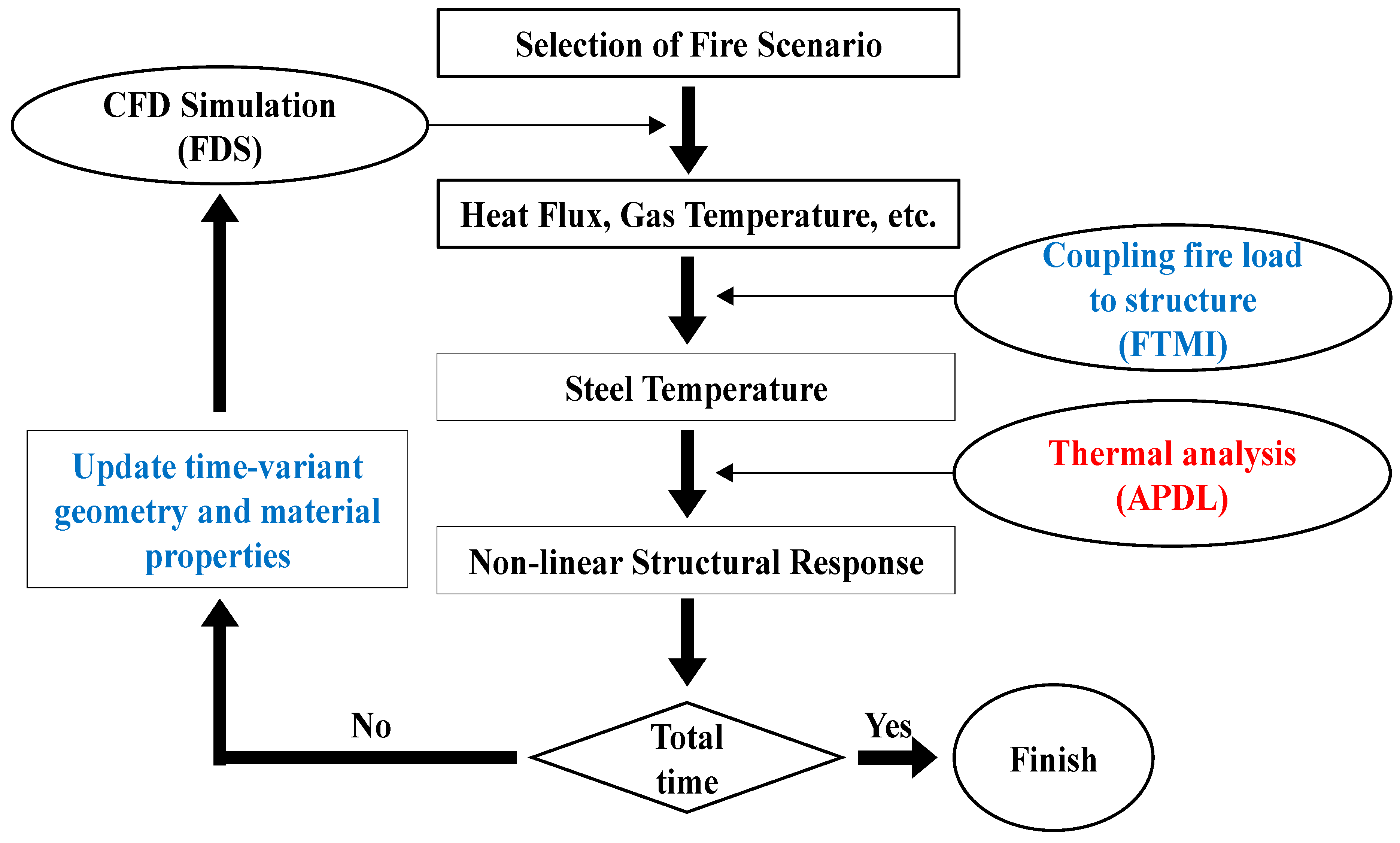
Figure 4 shows the analytical logic of a two-way FSI for the non-linear structural analysis of fire in this study. This scheme included the following steps:
Figure 4.
Analytical logic of the two-way fluid-structure interaction for determining the non-linear structural response to fire. FDS: Fire Dynamics Simulator; FTMI: Fire-Thermochemical Interface; APDL: ANSYS Parametric Design Language.
- CFD simulation by using the FDS
- Heat transfer analysis and non-linear FEM according to the CFD simulation results
- CFD simulation until the second , and updating the geometry with the previous non-linear FEM
- Repetition of the CFD simulation with the updated geometry and FEM until completion of the fire scenario
This analytical logic can determine the proper for two-way FSI to analyze the non-linear structural response to fire. Generally, the accuracy of the two-way FSI method increases as the decreases. In this study, five different values (4000, 2000, 1000, 500 and 250 s) were introduced to determine the appropriate . If the was the same as the total simulation time (4000 s), this indicated one-way FSI analysis.
- Case I: 4000 s
- Case II: 2000 s
- Case III: 1000 s
- Case IV: 500 s
- Case V: 250 s
Based on the concept of the two-way FSI method, this study introduced the analytical logic with , as shown in Figure 4, and used the FTMI to interact the results of fire simulations of the FDS with the thermal analyses of APDL.
3. Validation Study
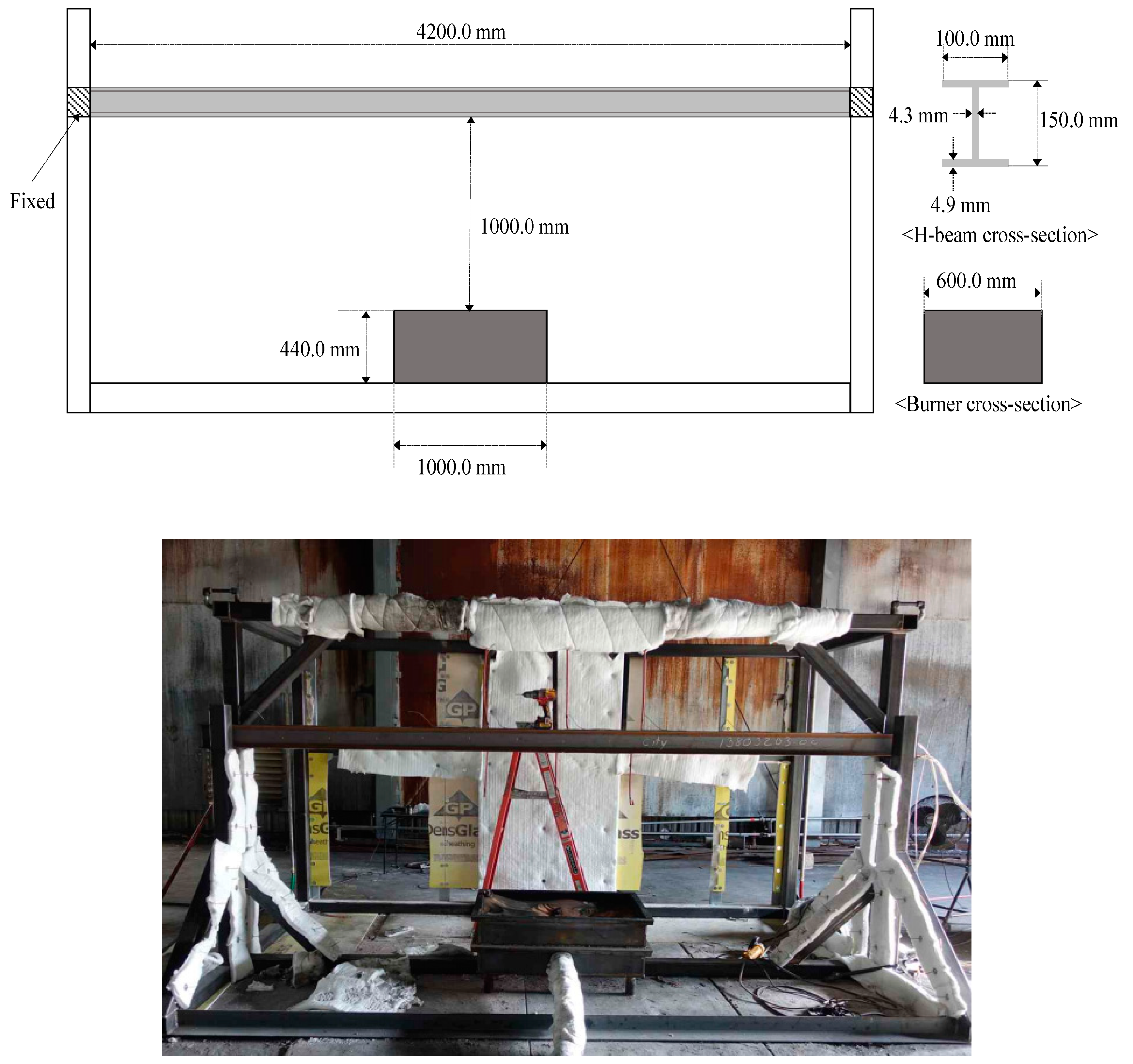
A fire experiment on an H-beam commonly used for structural reinforcement in ships and offshore platforms was conducted to obtain data for verification of the thermal-structural analysis technology [29]. The H-beam was 4.20 m in length with a cross-section of 0.10 m (flange) × 0.15 m (web), a 4.90-mm-thick flange and a 4.30-mm-thick web. ASTM A572-50 steel () was used to form the H-beam. The boundary condition of the structure was fixed at both ends without a mechanical load. A sand-diffused propane burner (1.00 m × 0.60 m × 0.44 m) was used as the fuel and the target heat-release rate (HRR) of 1.8 MW verified with a Coriolis mass flow meters was maintained in the experiment. The fire was extinguished after 60 min. The , steel surface temperature and vertical displacement during combustion were measured. Figure 5 shows the experimental setup [29].
Figure 5.
Experimental setup of the H-beam in the propane burner fire.
3.1. Material Properties
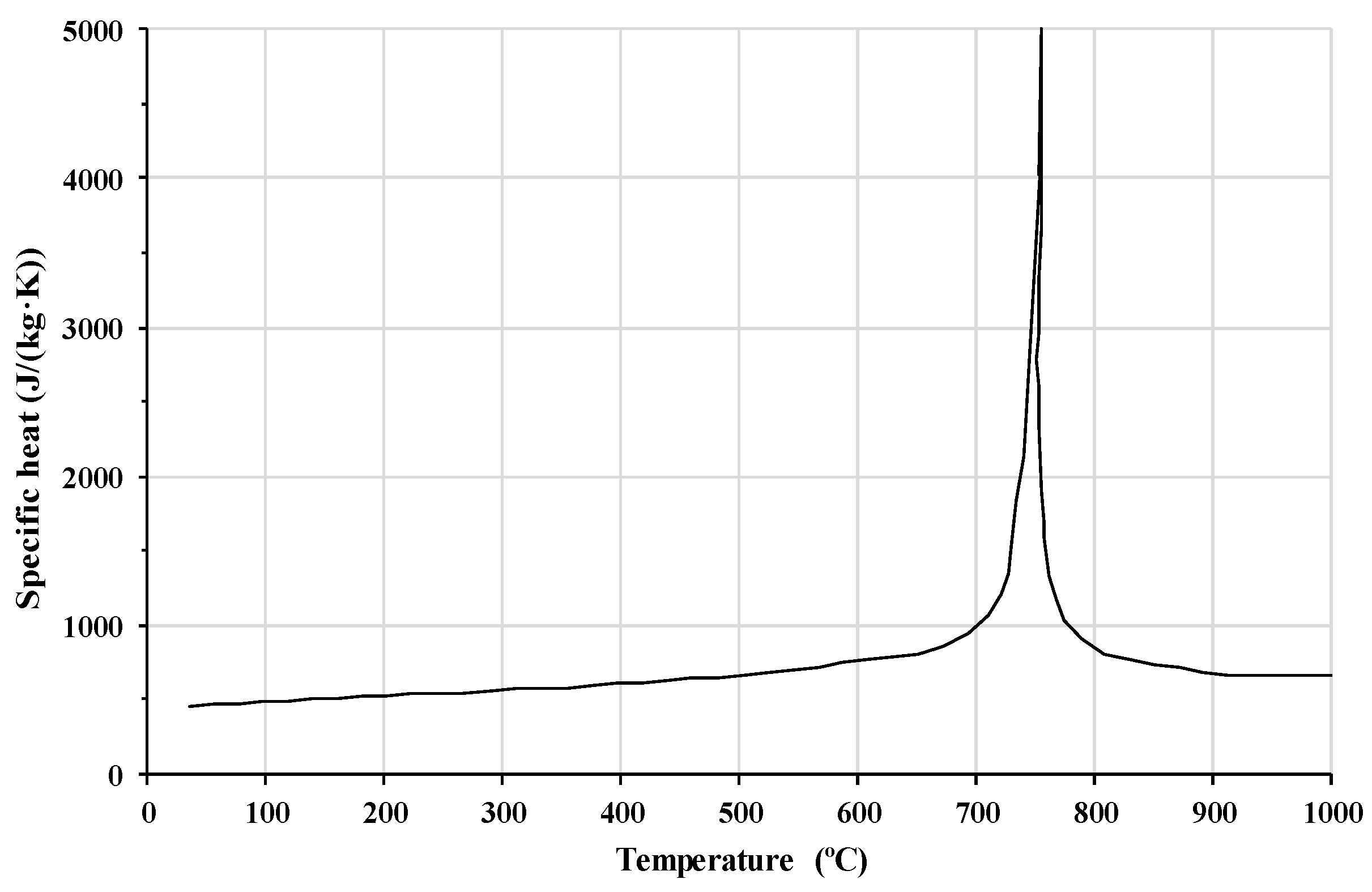
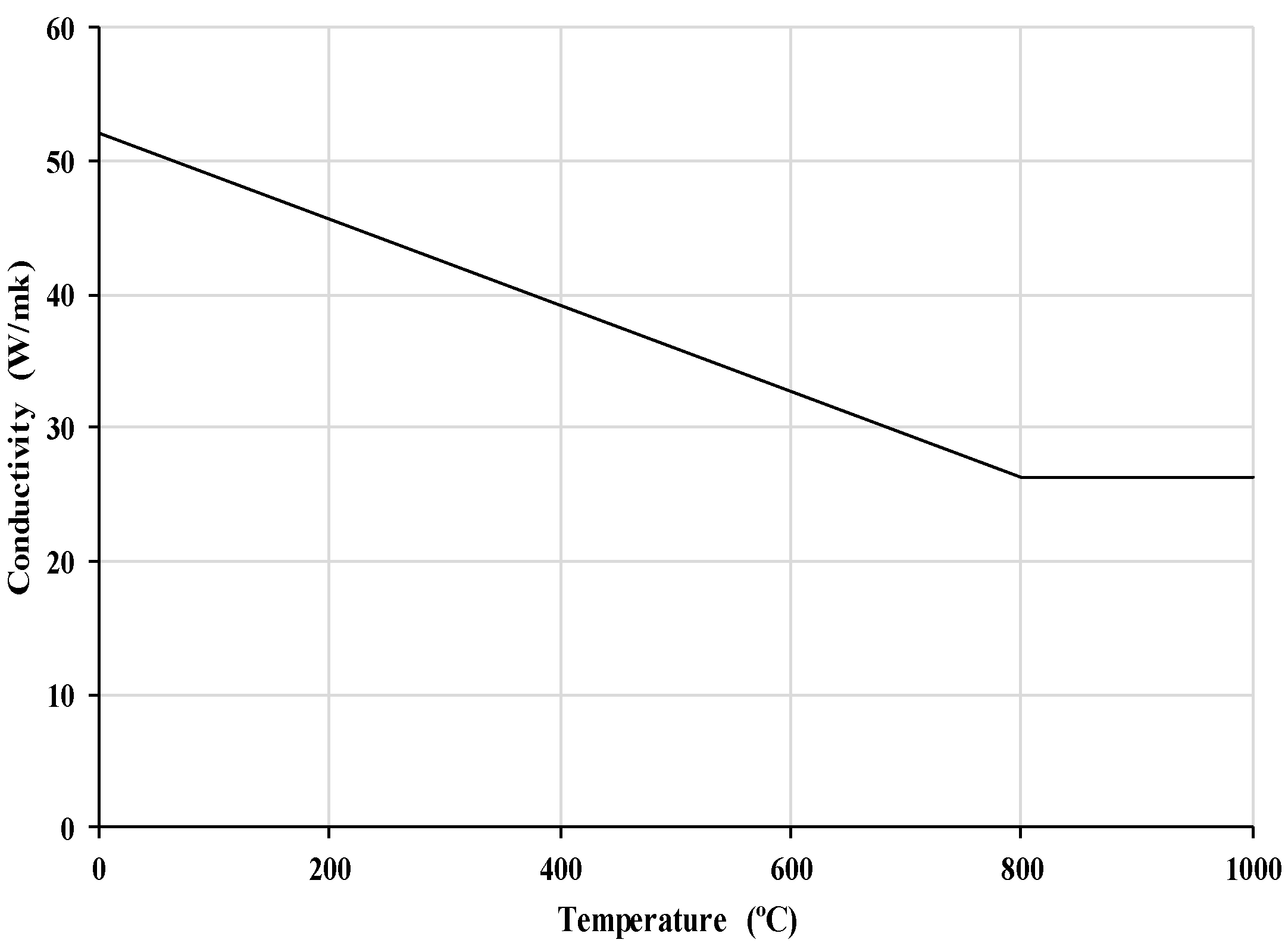
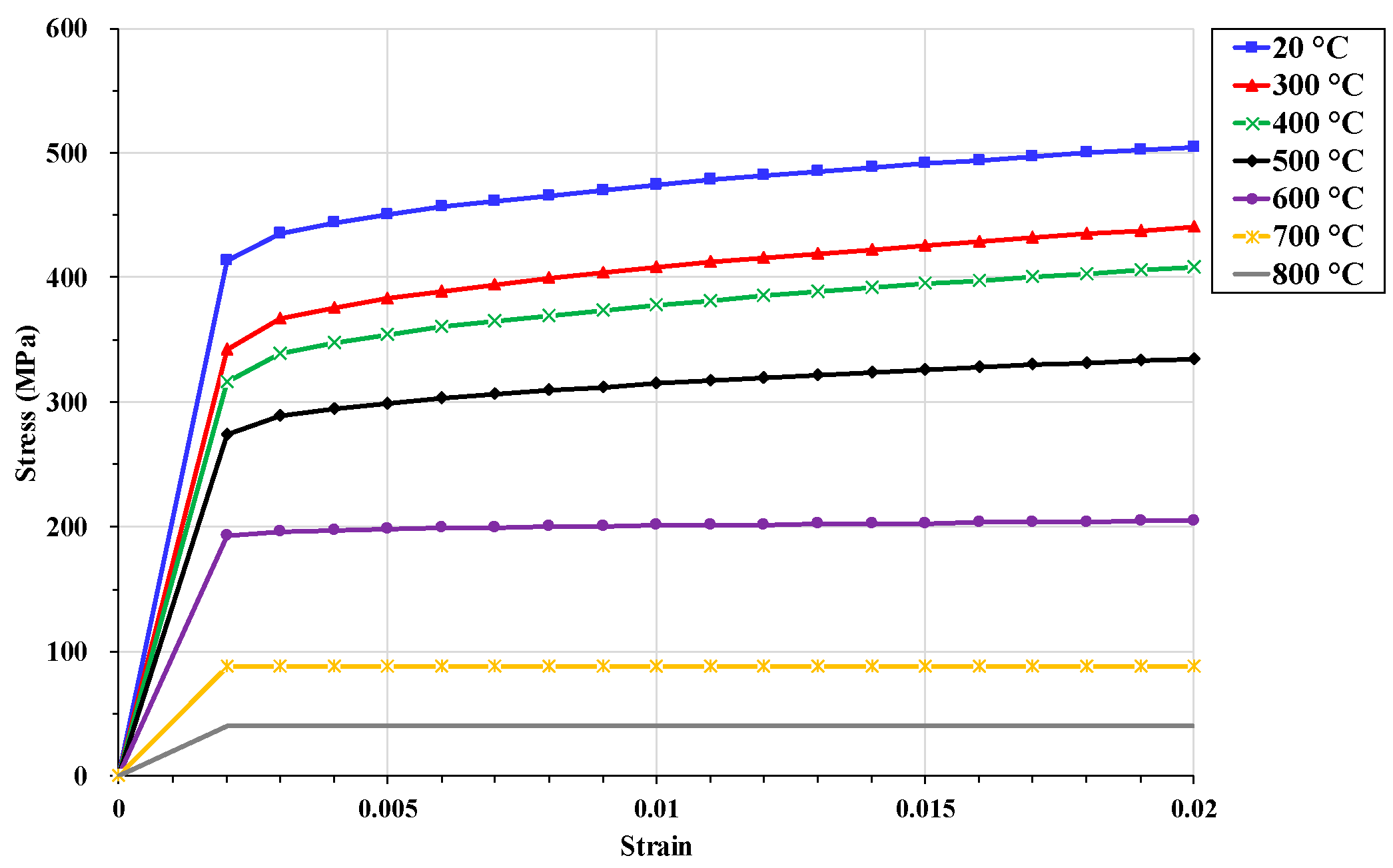
The thermal properties of the structural steel in this study were defined according to the Eurocode [30]. The typical of steel in fire is 0.9. Figure 6 and Figure 7 show the specific heat and thermal conductivity depending on temperature, respectively. To define the stress-strain curve of steel, the representative equations developed by Luecke [36] (Equations (7)–(8)) with , °C, , and are introduced. The elastic modulus and yield strength under elevated temperature are defined by Equations (9)–(10) [36].
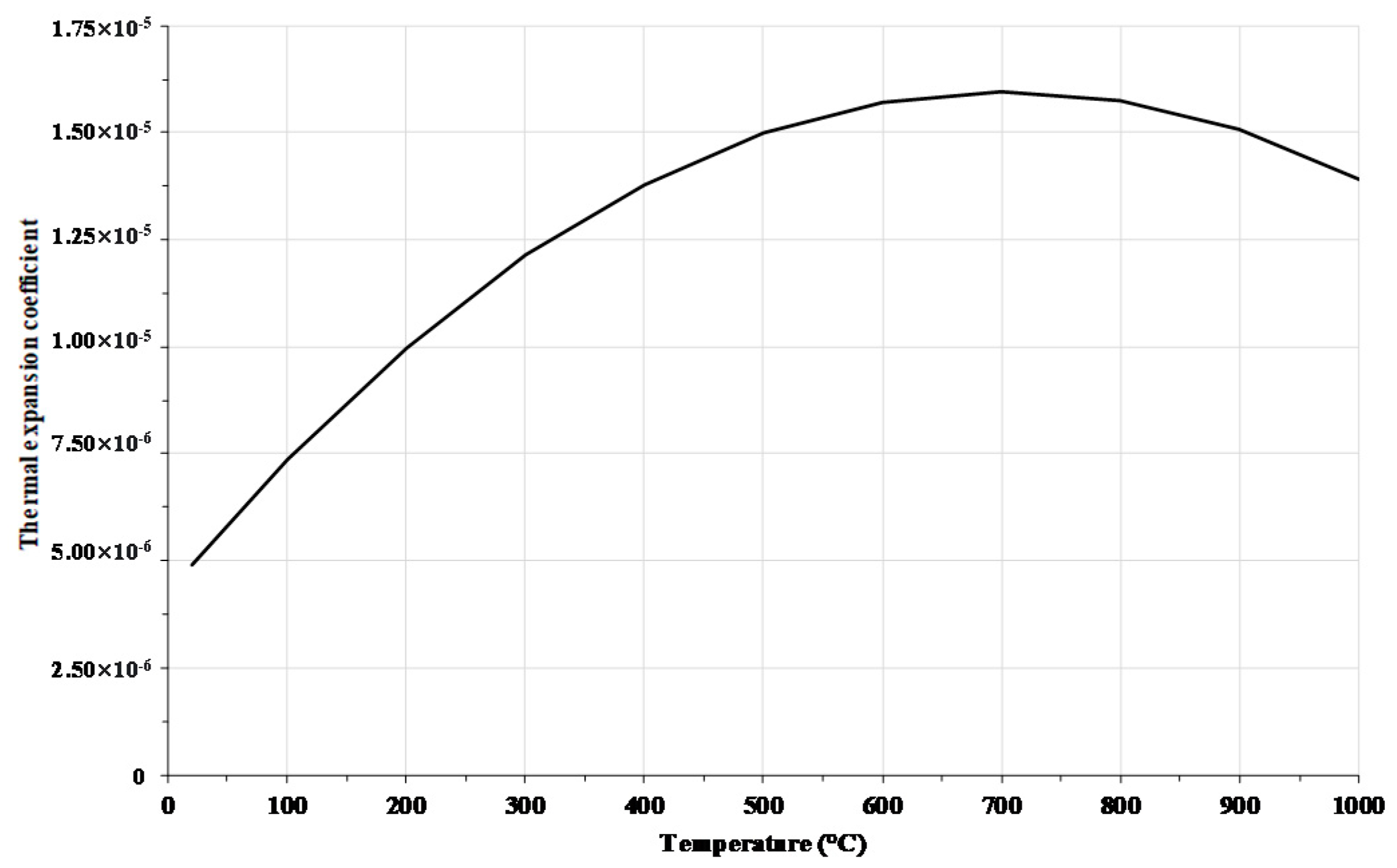
where and are the elastic modulus of steel at room temperature and elevated temperature, respectively and and are the yield strengths of steel at room temperature and elevated temperature, respectively. Figure 8 shows the stress-strain curves calculated by Equations (7)–(10) using the ambient temperature elastic modulus and yield strength of ASTM A572-50 steel (). Equation (11), which was derived by Luecke [36], was used to determine the thermal expansion coefficient () of steel as the temperature increased. Figure 9 shows the of ASTM A572-50 steel as the temperature increased.
Figure 6.
Specific heat of carbon steel as a function of temperature.
Figure 7.
Thermal conductivity of carbon steel as a function of temperature.
Figure 8.
Stress-strain curve for ASTM A572-50 steel.
Figure 9.
Thermal expansion coefficient of ASTM A572-50 steel.
3.2. FDS Simulation of Propane Burner Fire
3.2.1. FDS Model Geometry and Computational Mesh
To obtain an accurate numerical CFD result, an appropriate grid-size composition is crucial [14]. McGrattan et al [14] proposed Equation (12) to determine the necessary spatial resolution for an appropriate large-eddy simulation for a free burning fire in terms of the characteristic diameter of a plume ( [14].
where is the HRR, is the ambient density, is the specific heat of air at constant pressure, is the ambient temperature and is the acceleration of gravity. The spatial resolution () of a numerical grid was derived from Equation (13), where is the length of a grid cell [14].
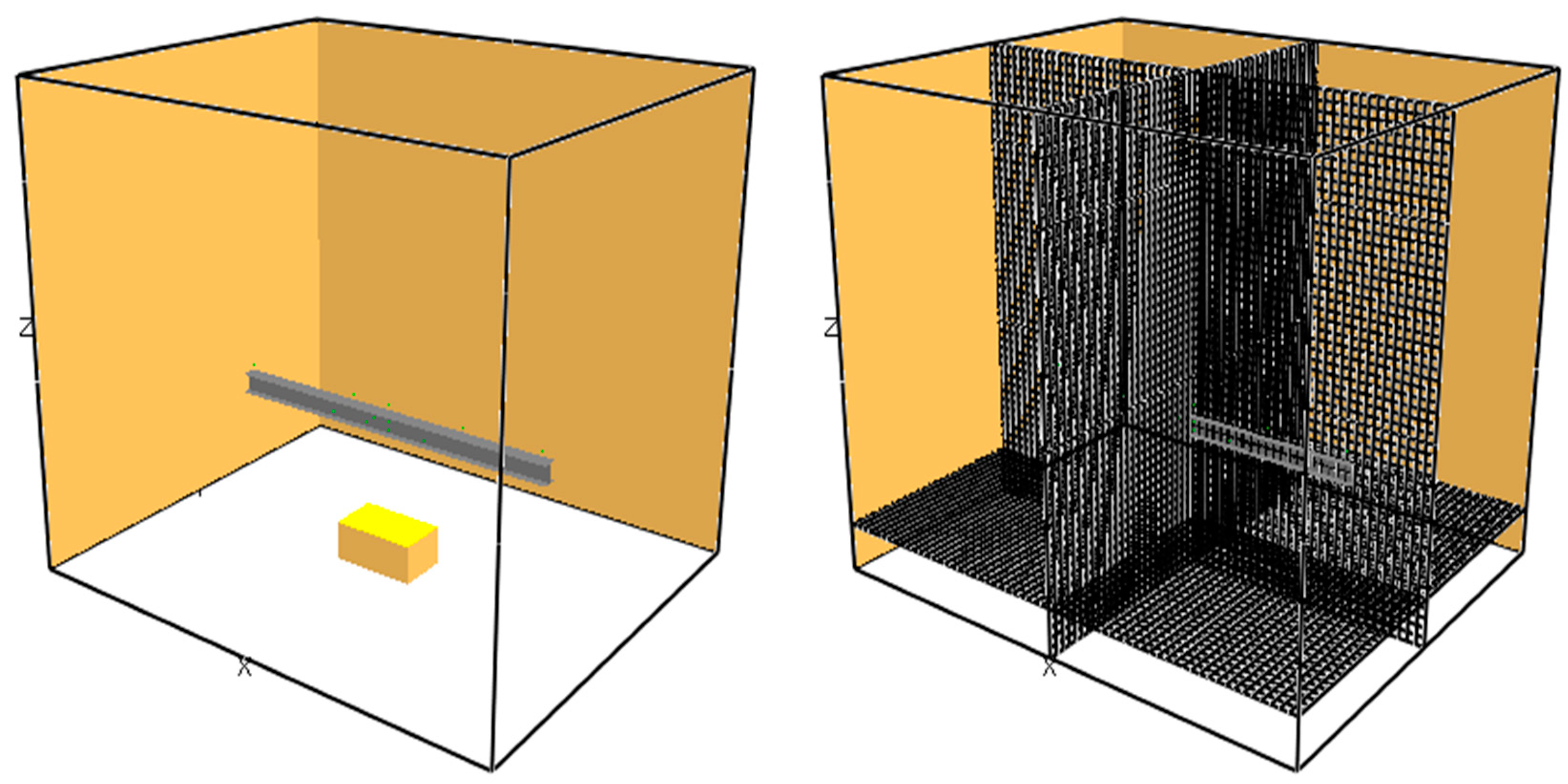
Figure 10 shows the FDS model geometry and the grid composition of all of the planes. The FDS model had a uniform grid size of 0.05 m in all directions, based on .
Figure 10.
Extent of the Fire Dynamics Simulator model geometry (left) and the grid composition (right).
3.2.2. FDS Results and Discussion
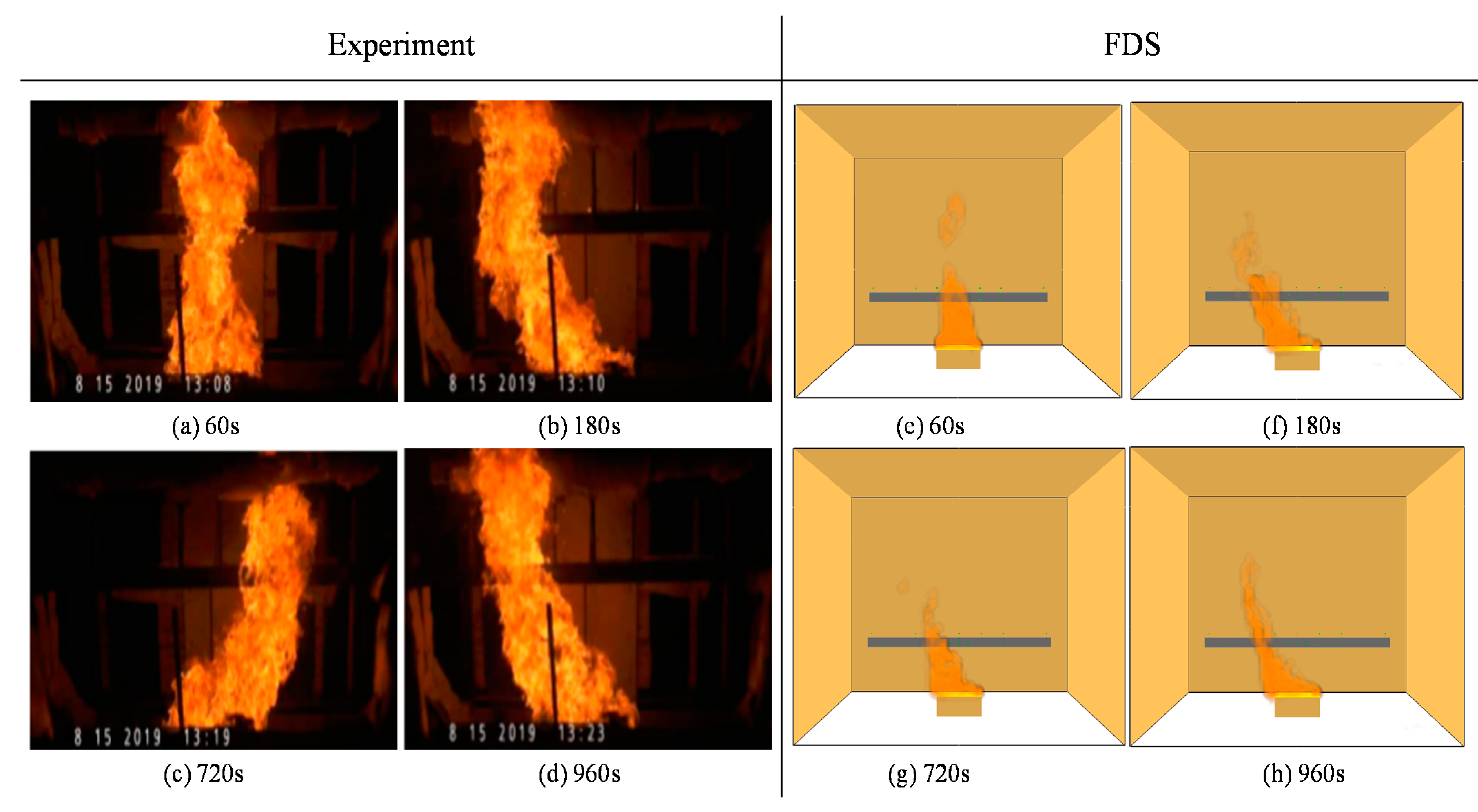
The movement of a flame greatly affects the temperature distribution. However, owing to the asymmetric installation of insulated walls around the experimental setup, the flame movement in the experiment was irregular under an uncontrolled wind flow [29]. Figure 11 shows the difference in the movement of the flame at 60, 180, 720 and 960 s between the experiment [29] and the FDS.
Figure 11.
Experimental and computational fluid dynamics scenes of flame movement. FDS: Fire Dynamics Simulator.
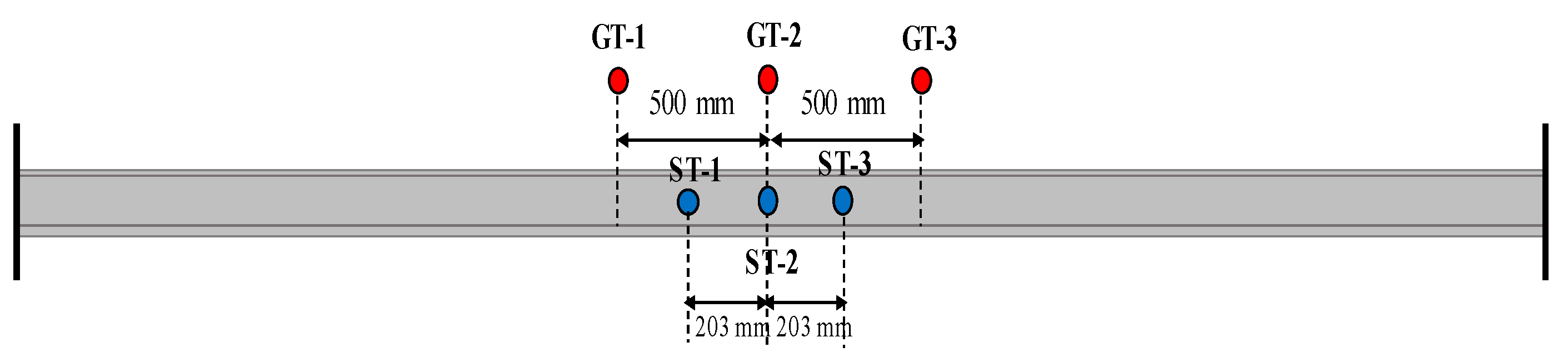
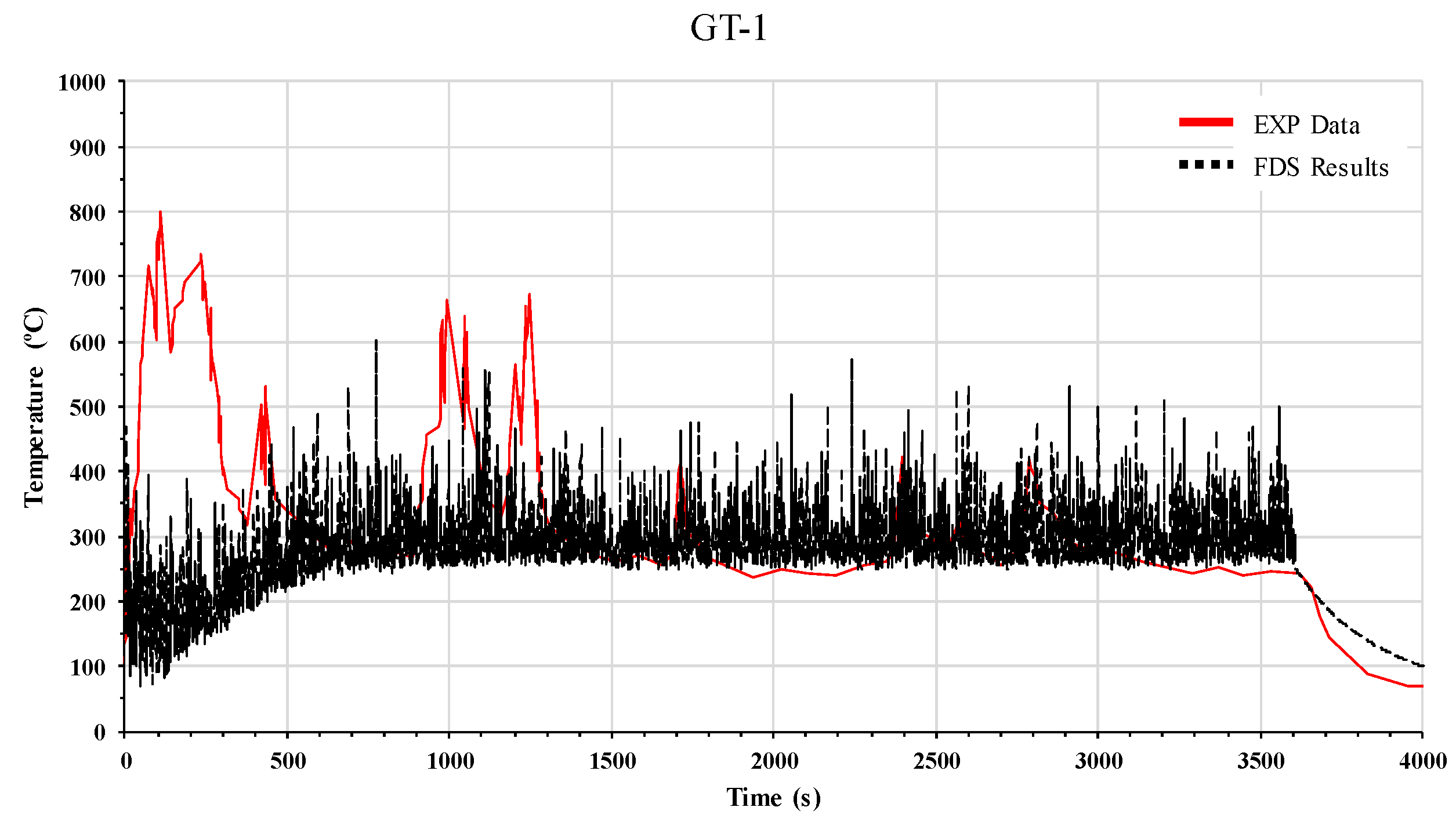
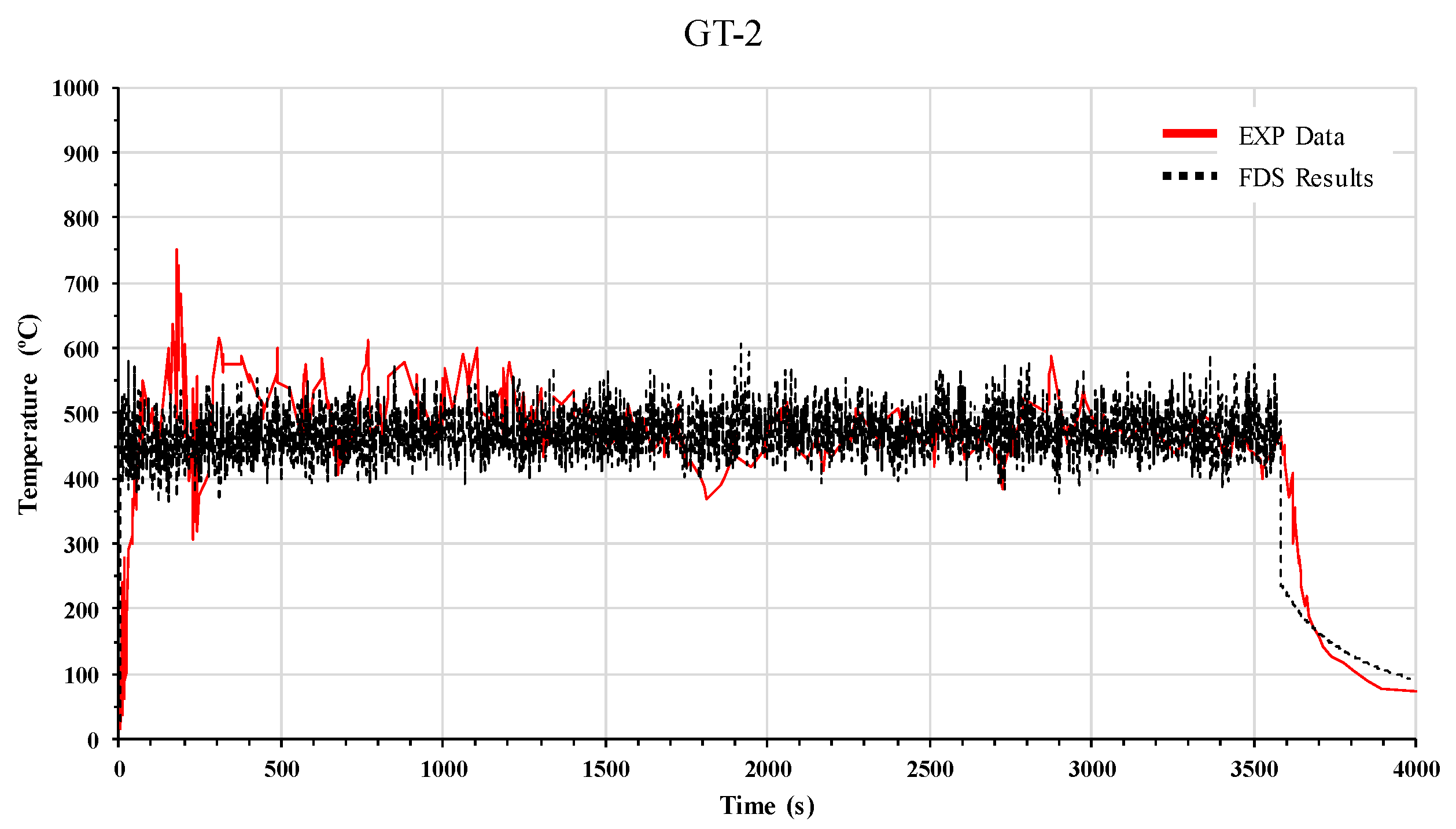
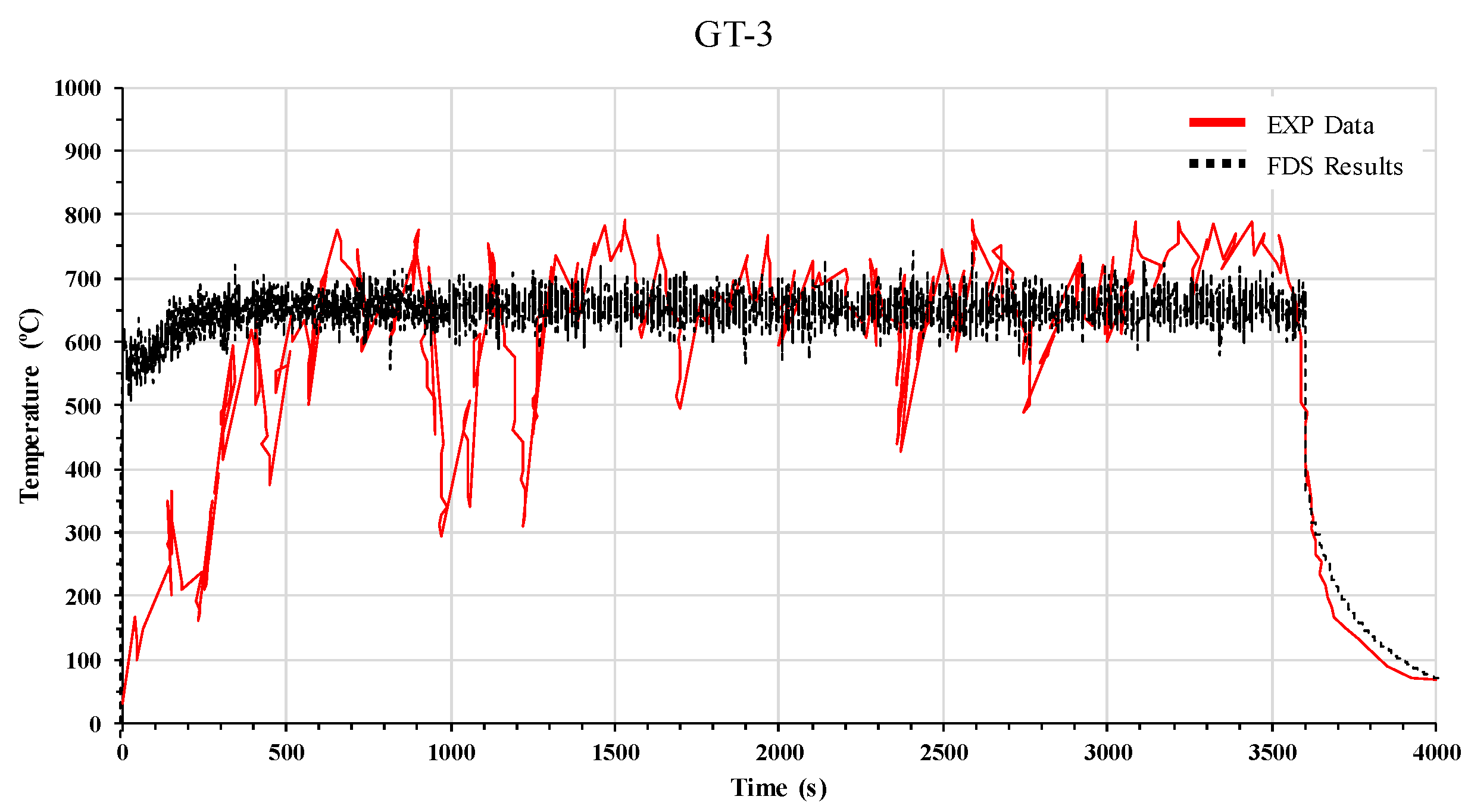
The gas cloud temperature was measured at three points, namely GT-1, GT-2, and GT-3, as shown in Figure 12. Figure 13, Figure 14 and Figure 15 show the gas cloud temperature of the experiments and the FDS. Compared with the experimental results, there were clear differences at all three points in the initial period (approximately 0–500 s). The difference would be caused by various factors in the experiment. This is presumed to be owing to the unexpected movement of the flame, the irregularly condensed fuel, and the ignition delay in the uncontrolled experimental conditions. However, after the initial period, the gas cloud temperatures in the experiment and FDS showed good agreement at the three points.
Figure 12.
Monitoring point locations for the gas cloud temperature and steel temperature.
Figure 13.
Gas cloud temperature over time at GT-1.
Figure 14.
Gas cloud temperature over time at GT-2.
Figure 15.
Gas cloud temperature over time at GT-3.
3.3. Thermal Analysis
To apply the fire load to the structural analysis, must be converted to steel temperature. There are two methods that are used for this process, namely thermal analysis and a heat transfer equation (EN 1993-1-2). Thermal analysis applies the heat flux to the exposed structure using the FTMI. The heat transfer equation calculates the steel temperature using Equation (14) [30]. This equation uses limited monitoring points to measure the time-variant data by the net heat flux, with consideration of convection and radiation. This equation assumes that there is an equivalent uniform temperature distribution throughout the cross-section [30].
where is the surface temperature of the steel member, is the correction factor for the shadow effect, is the section factor for the unprotected steel member, is the specific heat of steel, is the mass density of steel and is the net heat flux.
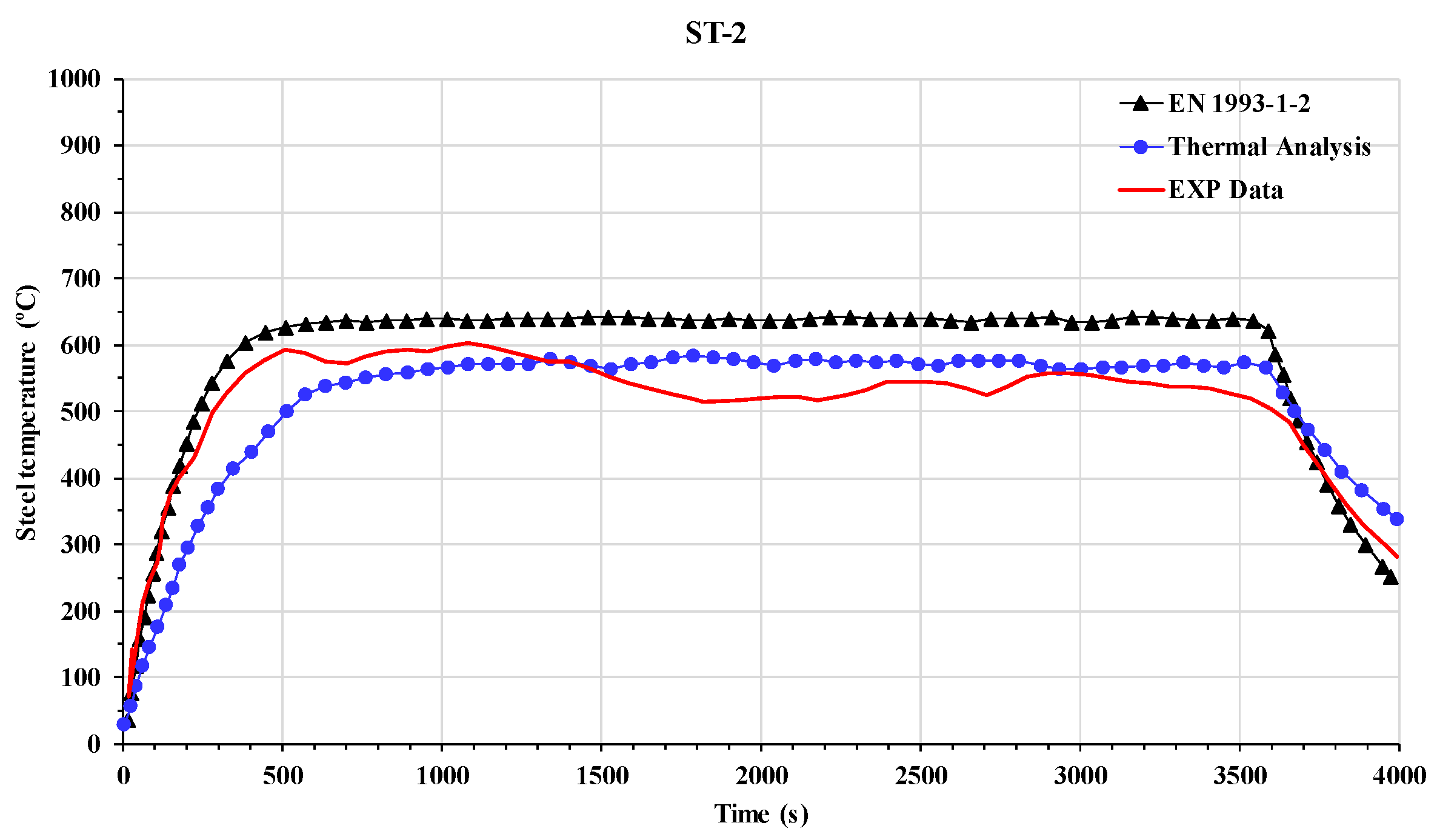
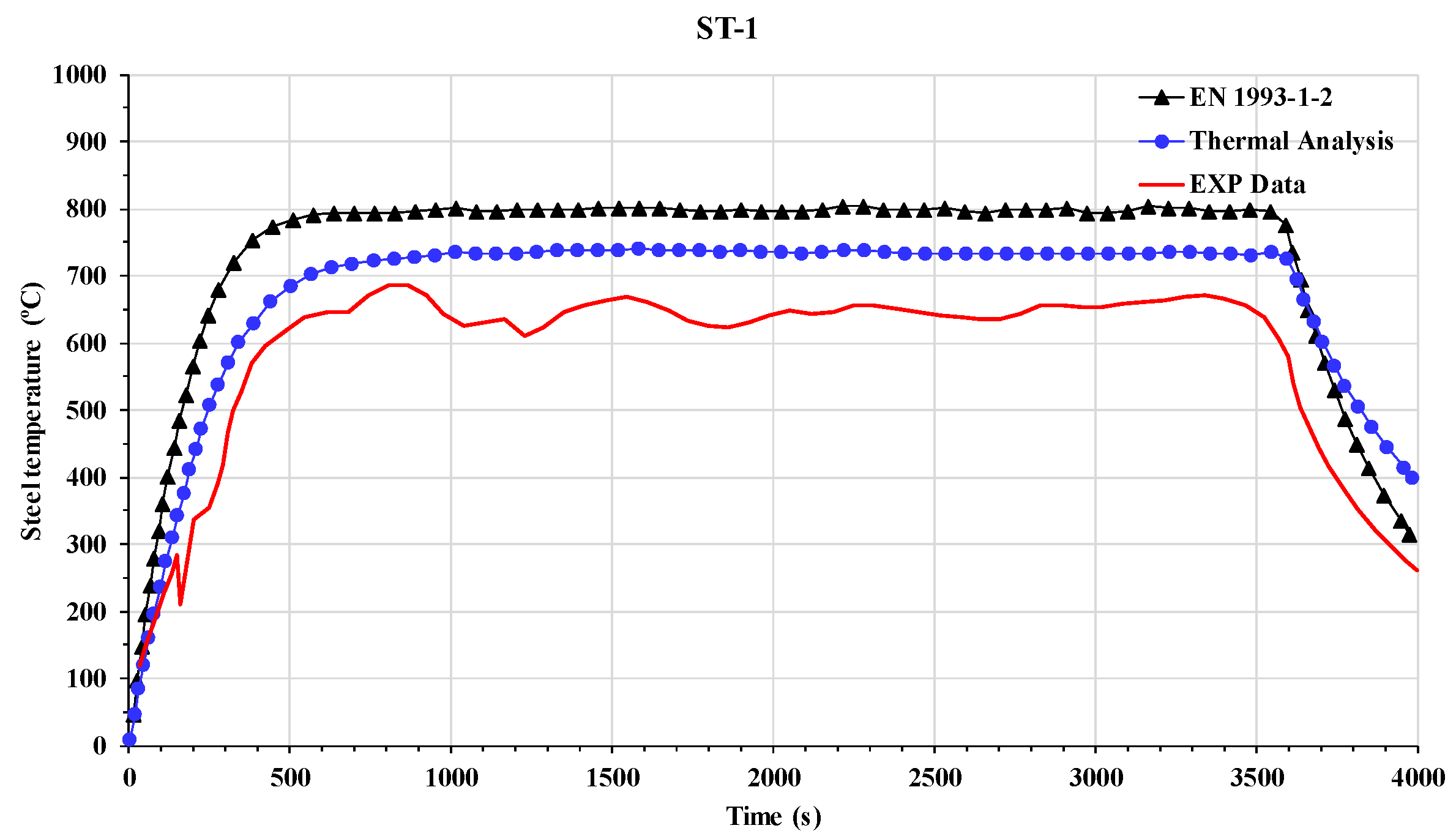
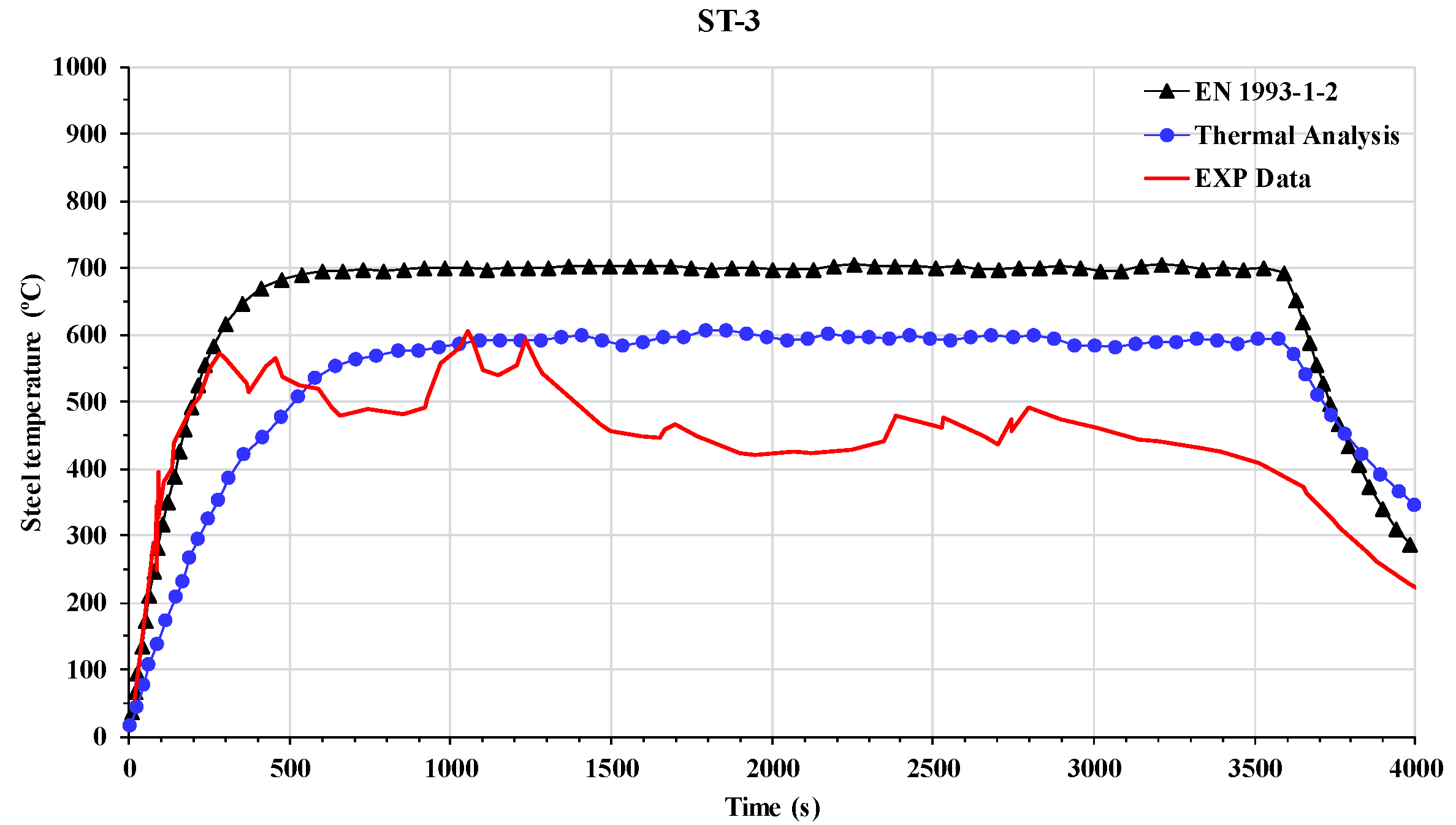
The steel temperatures at the three points in Figure 12 were calculated using two methods and compared with the experimental data of the steel surface, as shown in Figure 16, Figure 17 and Figure 18. The steel temperatures calculated by the heat transfer equation show a similar rising curve slop at three measuring points with the experimental data during the initial period (0–150 s). However, after the initial period, the steel temperatures using the heat transfer equation at all of the points were higher than the other values. Thus, this would afford a non-linear structural analysis, and thereby lead to an overestimated fire load for the fire safety design of ships and offshore structures.
Figure 16.
Steel temperature over time at ST-1.
Figure 17.
Steel temperature over time at ST-2.
Figure 18.
Steel temperature over time at ST-3.
In Figure 17 and Figure 18, the rising curve slopes of the steel temperatures calculated by the thermal analysis lead to underestimated fire load during the intimal period (0–500 s). However, except for the initial period, the thermal analysis results showed relatively good agreement with the experimental results. Comparing to the results of the steel temperatures calculated by the heat transfer equations, the thermal analysis results reduce the difference with the experimental results. Thus, this numerical method improves the accuracy of the non-linear structural analysis.
4. Results and Discussion
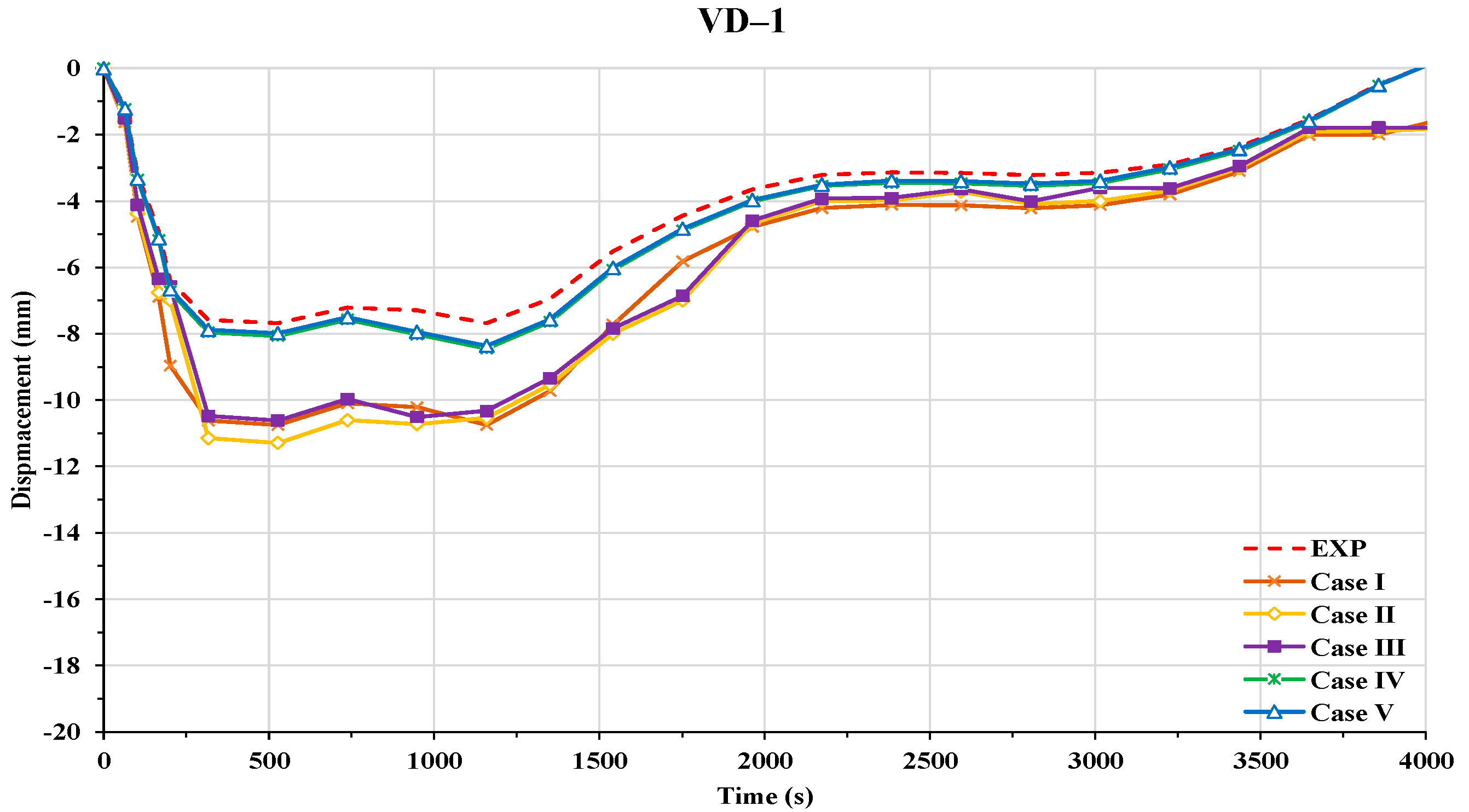
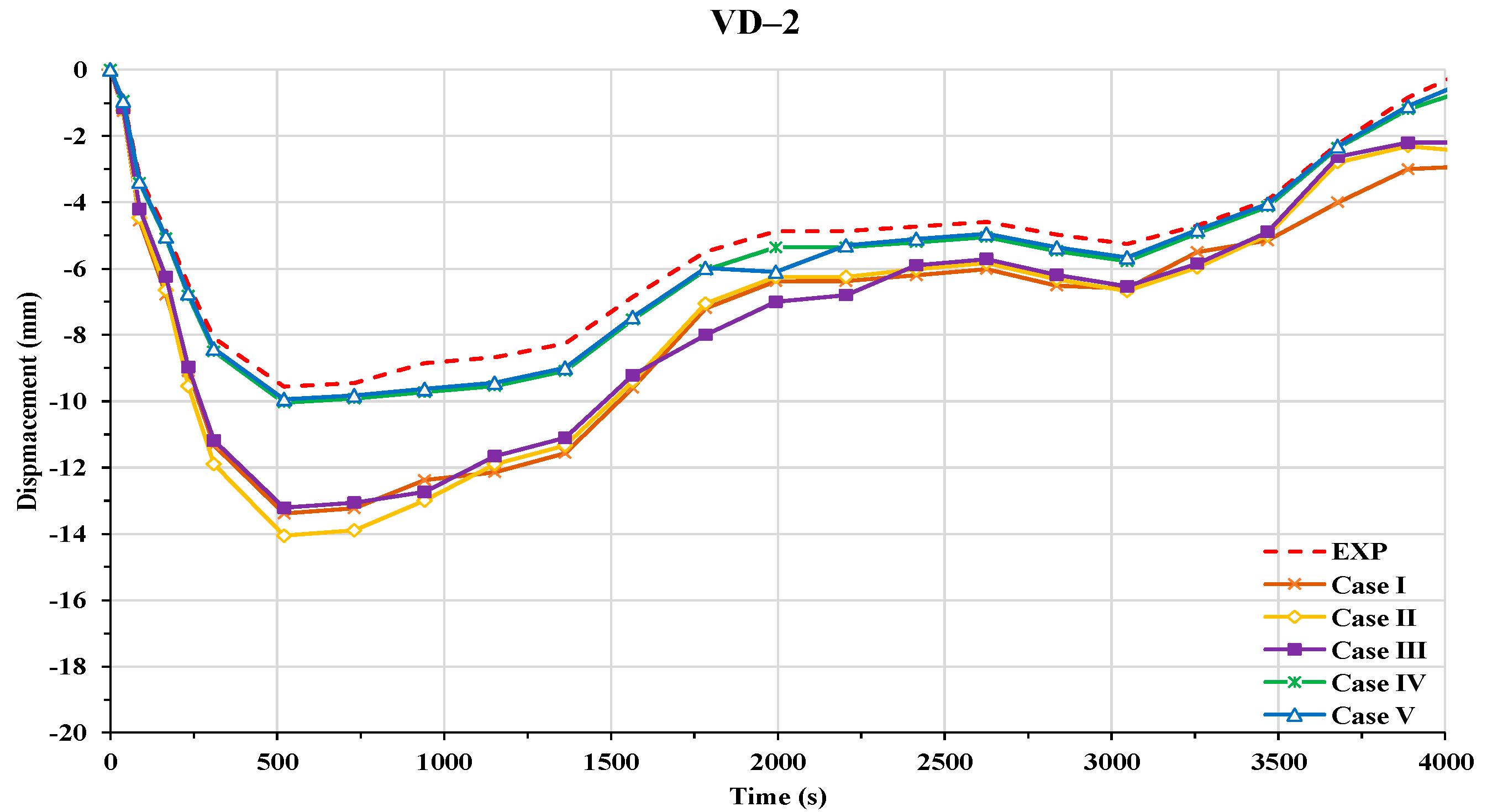
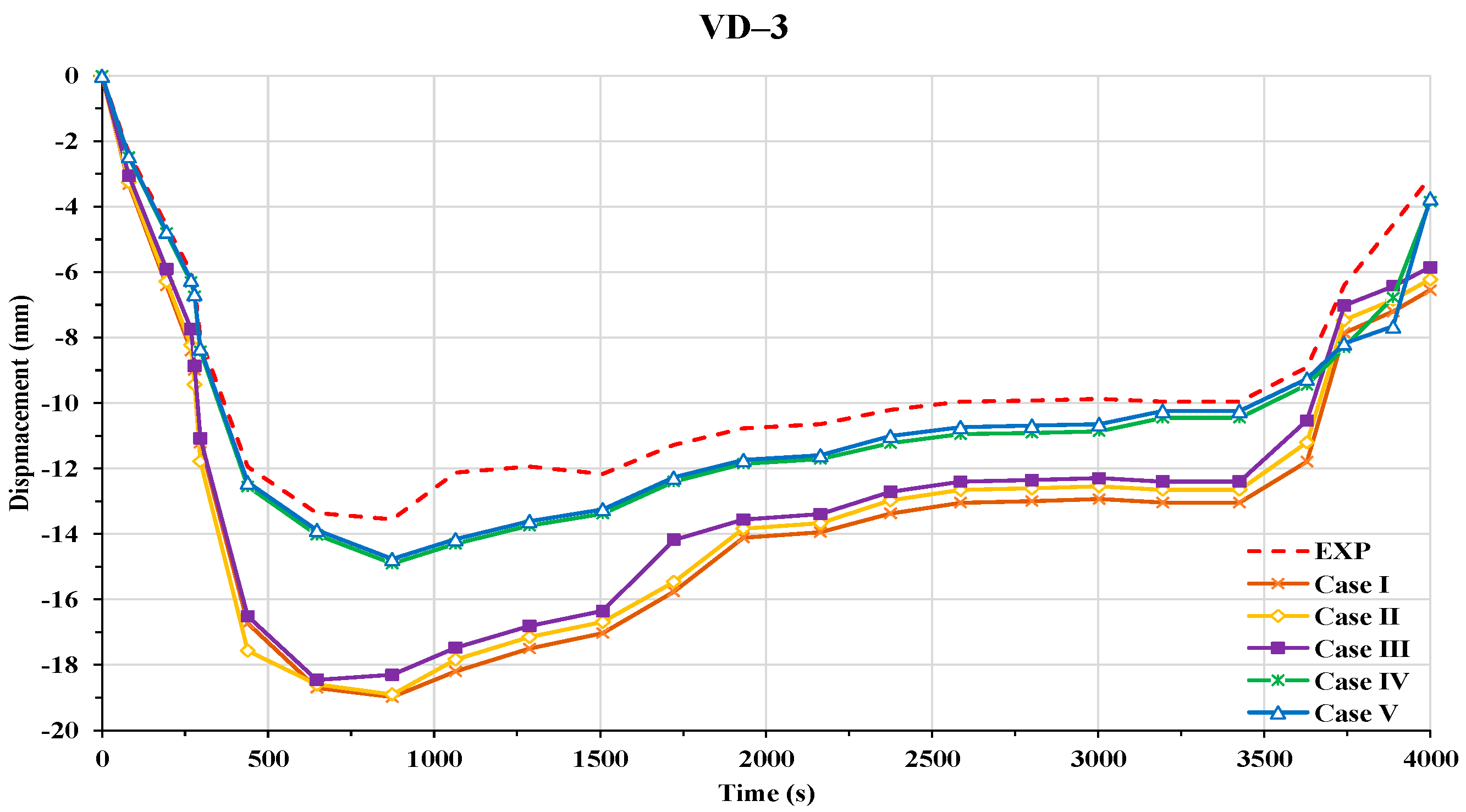
Five cases were considered to determine the appropriate top use in two-way FSI to determine the non-linear structural response of an H-beam to a propane burner fire. The representative values used to determine the effect of the difference in , namely vertical displacements, were measured at three points, namely VD-1, VD-2, and VD-3, as shown in Figure 19.
Figure 19.
Measuring points for z-axis displacement over time.
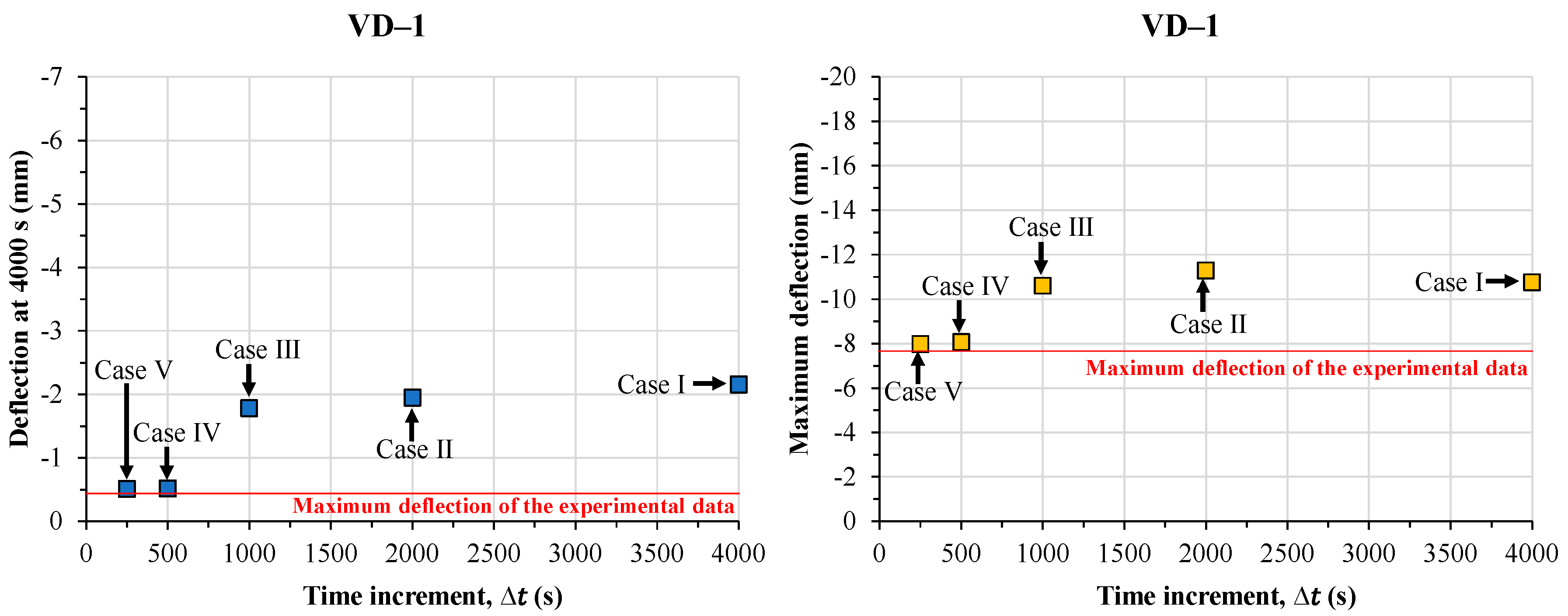
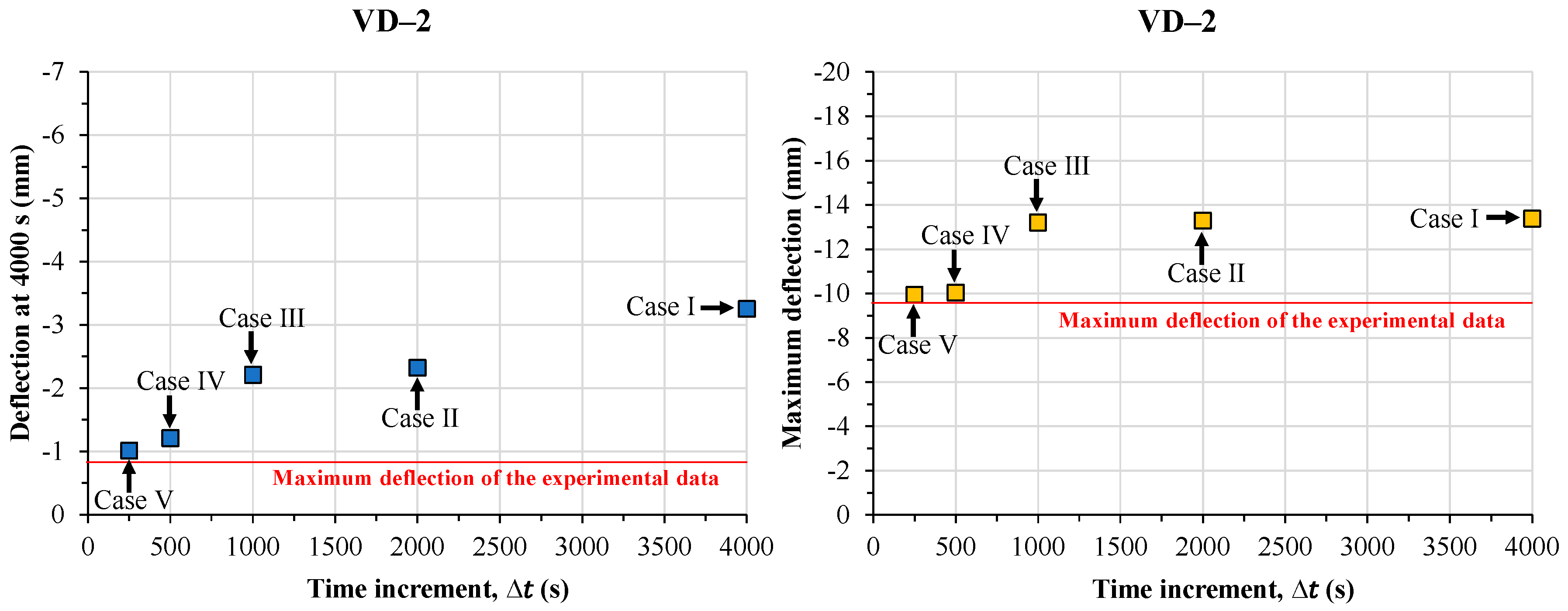
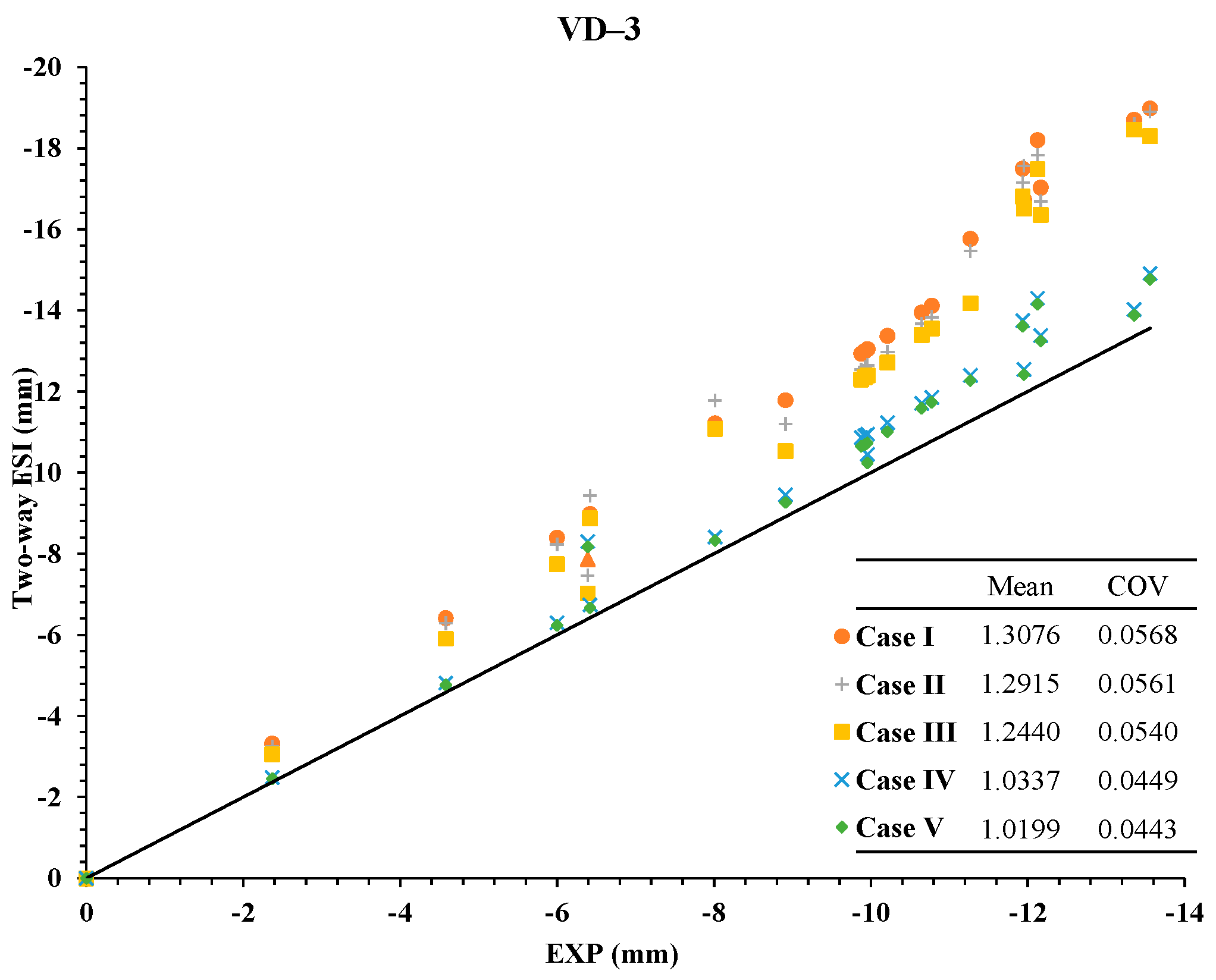
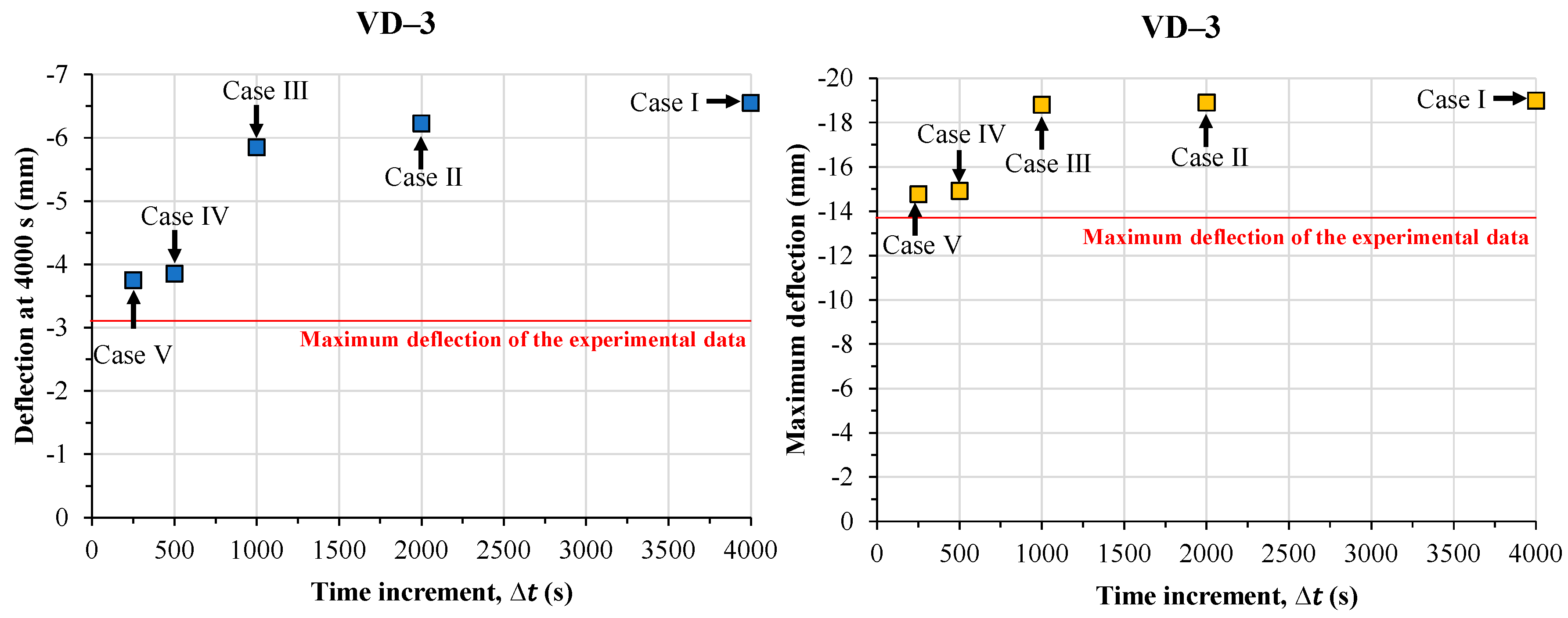
Figure 20, Figure 21 and Figure 22 show the structural response of the H-beam to a propane burner fire by comparing experimental results with two-way FSI analyses performed using five different values. The variation shows that two-way FSI analyses should be performed with a fine . Cases IV and V show good agreement in all of the vertical displacement periods. At the final moment (4000 s), Cases IV and V show the difference with the experimental data as 0.09 mm, 0.08 mm at ZD-1, 0.21 mm, 0.19 mm at ZD-2, and 0.56 mm, 0.49 mm at ZD-3 respectively. The numerical predictions lead to errors of less than 21.2%. However, Cases I, II, and III show highly overestimated deformations from approximately 300 s to 1500 s, compared with the experimental data and the final moment (4000 s). Figure 23, Figure 24 and Figure 25 illustrate the structural responses at 4000 s and the maximum deflection throughout the simulation versus the of two-way FSI to determine the converged . Compared with the experimental results, the of 500 s (Case IV) and 250 s (Case V) are the most suitable for two-way FSI of the H-beam subjected to propane burner fire. The of 500 s (Case IV) is the most efficient for precisely and quickly predicting the structural response of the H-beam to propane burner fire.
Figure 20.
Displacement over time at VD-1.
Figure 21.
Displacement over time at VD-2.
Figure 22.
Displacement over time at VD-3.
Figure 23.
Deflection at 4000 s and maximum deflection versus time increments () at VD-1.
Figure 24.
Deflection at 4000 s and maximum deflection versus time increments () at VD-2.
Figure 25.
Deflection at 4000 s and maximum deflection versus time increments () at VD-3.
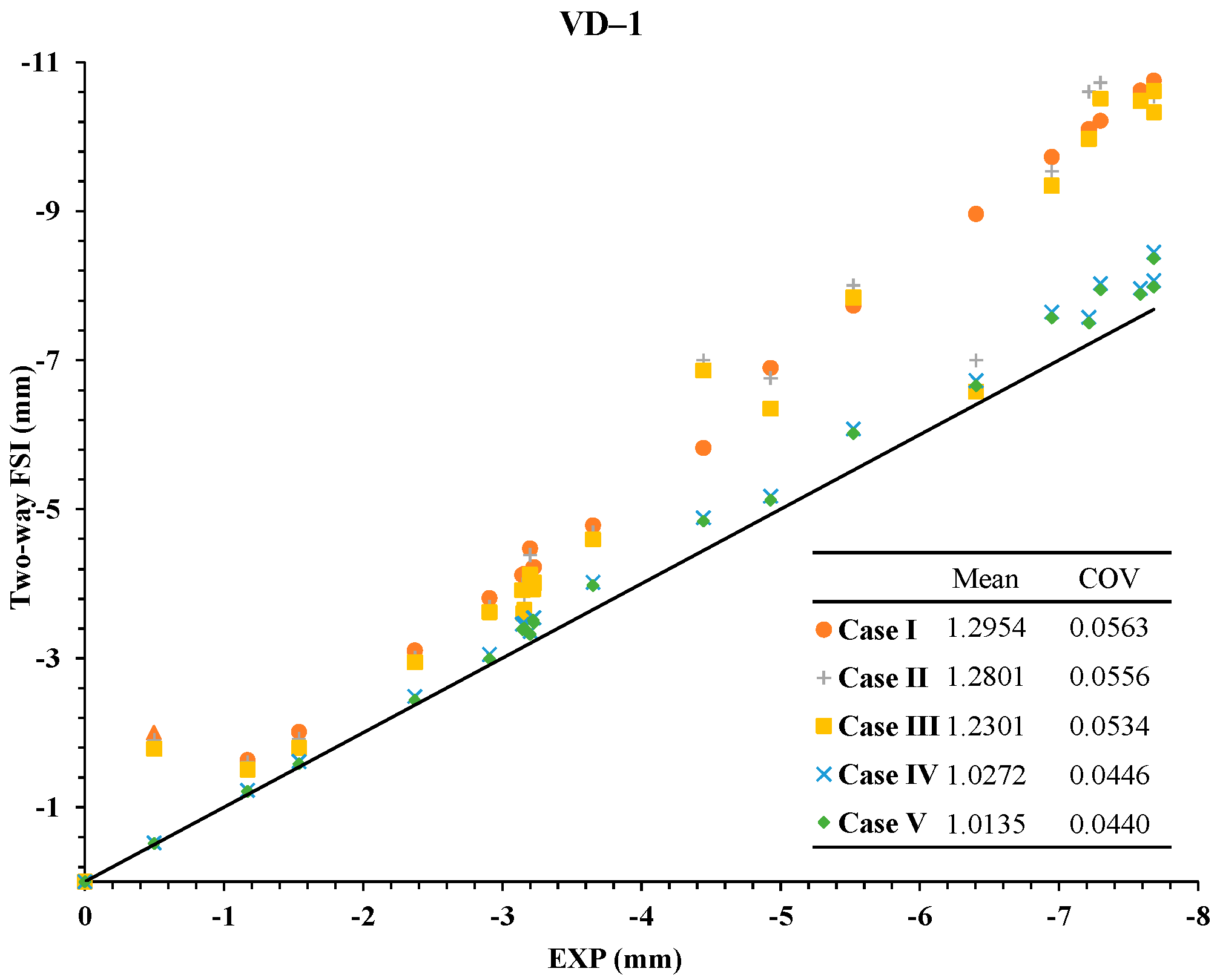
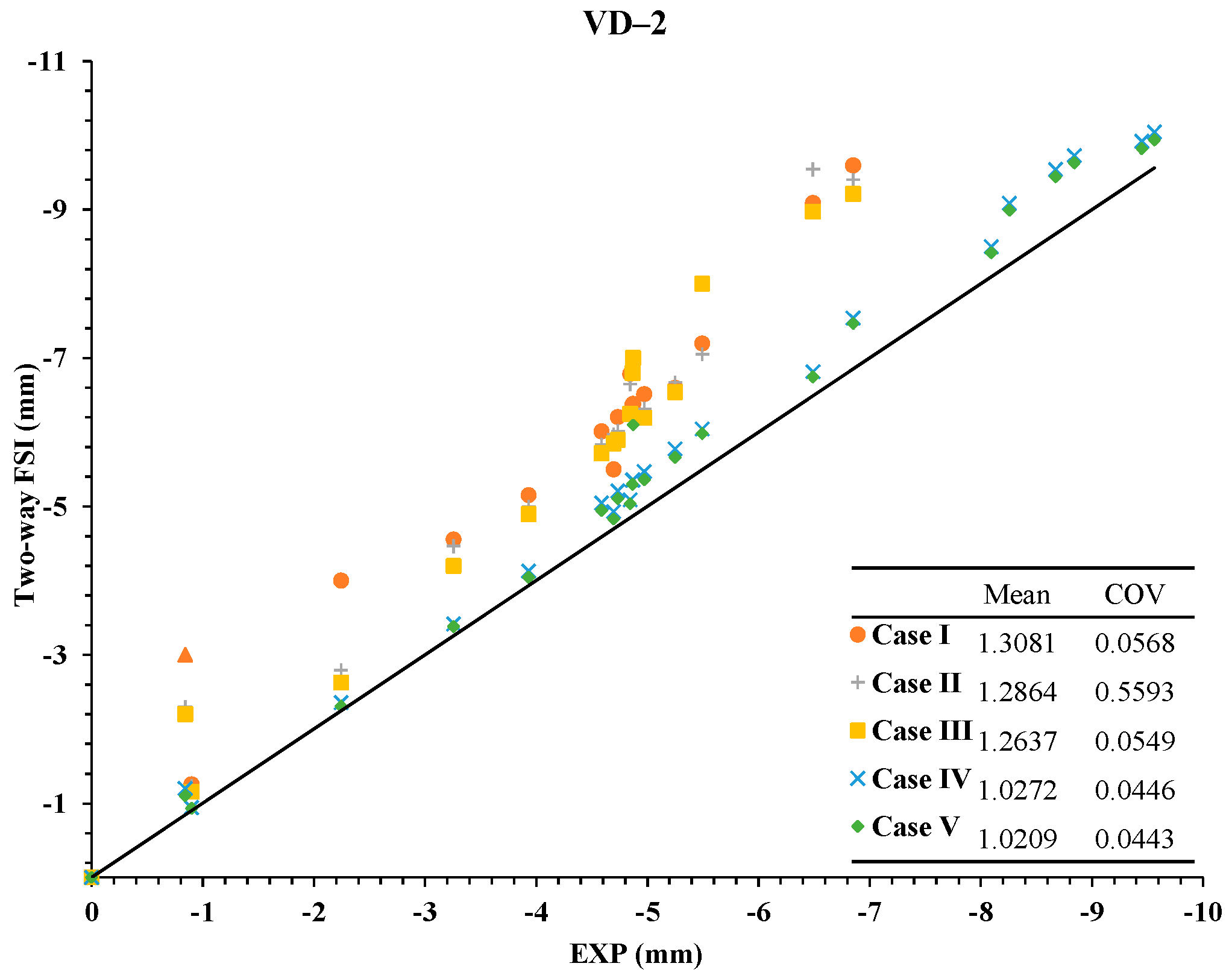
Figure 26, Figure 27 and Figure 28 analyze the reliability of two-FSI for deflection versus time increments () comparing to experimental data. In Figure 26, Figure 27 and Figure 28, the mean of Case IV and Case V are 1.0272 and 1.0135 at VD-1; 1.0272 and 1.0209 at VD-2; 1.0337 and 1.0199 at VD-3 respectively. Thus, Cases IV and V have good agreement in all of the vertical displacement periods. Additionally, Case IV and Case V have lower COV than other cases as shown in tables in Figure 26, Figure 27 and Figure 28.
Figure 26.
Statistical analysis results of two-way FSI for deflection versus time increments () at VD-1.
Figure 27.
Statistical analysis of two-way FSI for deflection versus time increments () at VD-2.
Figure 28.
Statistical analysis of two-way FSI for deflection versus time increments () at VD-3.
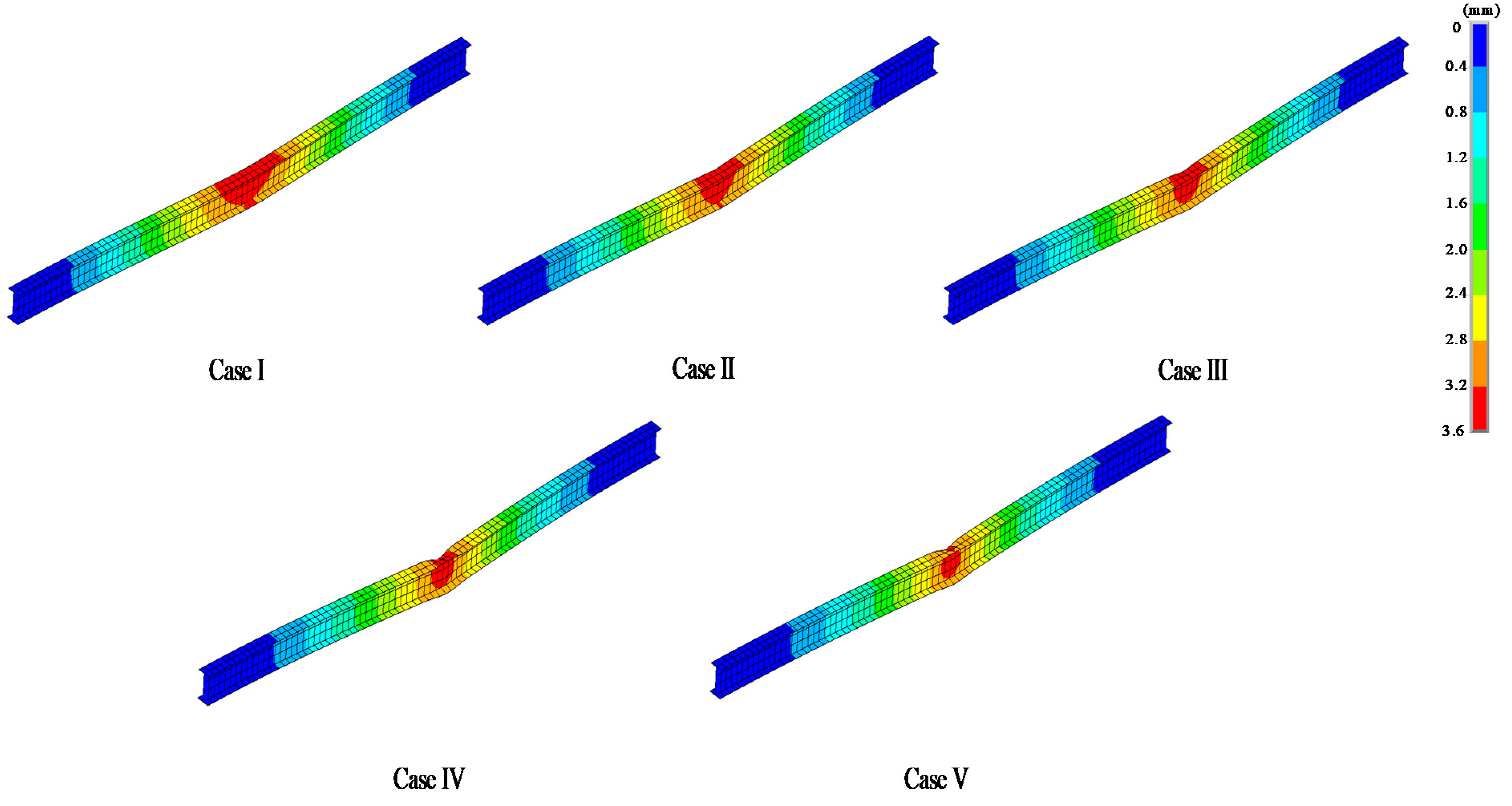
Figure 29 shows the deformed shapes of the H-beam under a propane burner fire at 4000 s generated by the non-linear structural analysis with different values of .
Figure 29.
Deflection of the H-beam under a propane burner fire at 4000 s.
5. Conclusions
The objectives of this study were to investigate the interactions between fire loads and time-variant geometry under a propane burner fire and the effect of in a two-way FSI analysis. The following conclusions and recommendations for further studies can be drawn.
- One-way FSI tended to overestimate the structural consequences of exposing an H-beam to propane burner fire compared with the experimental results.
- One-way FSI may result in the overestimation of the fire safety design requirements for ships and offshore structures.
- For an H-beam under a propane burner fire, a of 500 s was appropriate for two-way FSI. This use of this also led to a similar structural behavior prediction as that obtained by using a smaller (250 s), both of which were similar to the experimental results.
- As the structural consequences increased over time, the differences between the one-way and two-way FSI methods became more significant. This was a result of the one-way FSI being unable to readjust the fire load characteristics, due to changes in the time-variant geometry.
The appropriate for two-way FSI, with consideration of various fire scenarios and offshore instalments, will be investigated in a future study.
Author Contributions
Conceptualization, data curation, investigation, methodology, validation, writing—original draft, writing—review and editing, and supervision: J.K.S.; conceptualization, software, data curation, investigation, and writing—original draft: D.W. All authors have read and agreed to the published version of the manuscript.
Funding
We would like to acknowledge the financial support from Defense Industry Technology Center (DITC) of Korea (Project code 912849501).
Conflicts of Interest
The authors declare no conflict of interest.
Nomenclature
| Abbreviation | |
| FSI | Fluid-Structure Interaction |
| FDS | Fire Dynamic Simulator |
| FEM | Finite Element Method |
| CFD | Computational Fluid Dynamics |
| CoV | Coefficient of Variation |
| Symbols | |
| Total heat flux [W/m2] | |
| Radiative heat flux [W/m2] | |
| Convective heat flux [W/m2] | |
| Emissivity | |
| Radiative energy absorbed by the surfaces [J] | |
| Stefan–Boltzmann constant | |
| Gas temperature [°C] | |
| Multiplied by the convective heat transfer coefficient [°C] | |
| Convective heat transfer coefficient [W/(m2 K)] | |
| Adiabatic surface temperature [°C] | |
| Increment time [s] | |
| Elastic modulus of steel at room temperature [GPa] | |
| Elastic modulus of steel at elevated temperature [GPa] | |
| Yield strengths of steel at room temperature [MPa] | |
| Yield strengths of steel at elevated temperature [MPa] | |
| Expansion coefficient [1/K] | |
| Diameter of a plume [m] | |
| Heat release rate [W] | |
| Ambient density [ kg/m3] | |
| Specific heat of air at constant pressure [kJ/kg·K] | |
| Length of a grid cell [m] | |
| Spatial resolution | |
| Surface temperature of the steel member [°C] | |
| Correction factor for the shadow effect | |
| Section factor for the unprotected steel member [m−1] | |
| Specific heat of steel [kJ/kg·K] | |
| Mass density of steel [kg/m3] | |
| Net heat flux [W/m2] | |
References
- Paik, J.K.; Czujko, J.; Kim, B.J.; Seo, J.K.; Ryu, H.S.; Ha, Y.C.; Janiszewski, P.; Musial, B. Quantitative assessment of hydrocarbon explosion and fire risks in offshore installations. Mar. Struct. 2011, 24, 73–96. [Google Scholar] [CrossRef]
- Vinnem, J.E. Offshore Risk Assessment; Springer: Dordrecht, The Netherlands, 1999. [Google Scholar]
- Liping, Y.; Zhang, M.; Zhang, Y.; Fangli, Q. Sanchi collision in the East China Sea. Acta Oceanol. Sin. 2018, 37, 69–72. [Google Scholar]
- Zhang, C.; Silva, J.G.; Weinschenk, C.G.; Kamikawa, D.; Hasemi, Y. Simulation Methodology for Coupled Fire-Structure Analysis: Modeling Localized Fire Tests on a Steel Column. Fire Technol. 2016, 52, 239–262. [Google Scholar] [CrossRef]
- Lamont, S.; Lane, B.; Usmani, A. The Behaviour of Multi-storey Composite Steel Framed Structures in Response to Compartment Fires. Fire Saf. Sci. 2005, 8, 177–188. [Google Scholar] [CrossRef]
- Bisby, L.; Gales, J.; Maluk, C. A contemporary review of large-scale non-standard structural fire testing. Fire Sci. Rev. 2013, 2, 1. [Google Scholar] [CrossRef]
- Paik, J.K.; Kim, B.J.; Jeong, J.S.; Kim, S.H.; Jang, Y.S.; Kim, G.S.; Woo, J.H.; Kim, Y.S.; Chun, M.J.; Shin, Y.S.; et al. CFD simulations of gas explosion and fire actions. Ships Offshore Struct. 2010, 5, 3–12. [Google Scholar] [CrossRef]
- Salem, A. Fire engineering tools used in consequence analysis. Ships Offshore Struct. 2010, 5, 155–187. [Google Scholar] [CrossRef]
- Shetty, N.; Soares, C.G.; Thoft-Christensen, P.; Jensen, F. Fire safety assessment and optimal design of passive fire protection for offshore structures. Reliab. Eng. Syst. Saf. 1998, 61, 139–149. [Google Scholar] [CrossRef]
- Soares, C.G.; Teixeira, A. Strength of plates subjected to localized heat loads. J. Constr. Steel Res. 2000, 53, 335–358. [Google Scholar] [CrossRef]
- Bernardi, P.; Michelini, E.; Sirico, A.; Rainieri, S.; Corradi, C. Simulation methodology for the assessment of the structural safety of concrete tunnel linings based on CFD fire—FE thermo-mechanical analysis: A case study. Eng. Struct. 2020, 225, 111193. [Google Scholar] [CrossRef]
- Sun, L.; Yan, H.; Liu, S.; Bai, Y. Load characteristics in process modules of offshore platforms under jet fire: The numerical study. J. Loss Prev. Process. Ind. 2017, 47, 29–40. [Google Scholar] [CrossRef]
- Novozhilov, V. Computational fluid dynamics modeling of compartment fires. Prog. Energy Combust. Sci. 2001, 27, 611–666. [Google Scholar] [CrossRef]
- McGrattan, K.; Hostikka, S.; McDermott, R.; Floyd, J.; Weinschenk, C.; Overholt, K. Fire Dynamics Simulator User’s Guide; VTT Technical Research Centre of Finland: Esbo, Finland, 2013. [Google Scholar]
- Brohez, S.; Caravita, I. Fire induced pressure in airthigh houses: Experiments and FDS validation. Fire Saf. J. 2020, 114, 103008. [Google Scholar] [CrossRef]
- Cicione, A.; Beshir, M.; Walls, R.S.; Rush, D. Full-Scale Informal Settlement Dwelling Fire Experiments and Development of Numerical Models. Fire Technol. 2019, 56, 639–672. [Google Scholar] [CrossRef]
- Rahmani, A.; Salem, M. Simulation of Fire in Super High-Rise Hospitals Using Fire Dynamics Simulator (FDS). Electron. J. Gen. Med. 2020, 17, em200. [Google Scholar] [CrossRef]
- Suh, H.W.; Im, S.M.; Park, T.H.; Kim, H.J.; Kim, H.S.; Choi, H.K.; Chung, J.H.; Bae, S.C. Fire spread of thermal insulation materials in the ceiling of piloti-type structure: Comparison of numerical simulation and experimental fire tests using small- and real-scale models. Sustainability 2019, 11, 3389. [Google Scholar] [CrossRef]
- Zong, L.; Wang, Y.; Wu, B. Risk assessment framework for fire accidents in the ship engine room. In Proceedings of the 2017 4th International Conference on Transportation Information and Safety, Banff, AB, Canada, 8–10 August 2017; pp. 1093–1098. [Google Scholar]
- Jahn, W.; Rein, G.; Torero, J.L. A posteriori modelling of the growth phase of Dalmarnock Fire Test One. Build. Environ. 2011, 46, 1065–1073. [Google Scholar] [CrossRef]
- Zhang, C.; Li, G.Q. Fire dynamic simulation on thermal actions in localized fires in large enclosure. Adv. Steel Constr. 2012, 8, 124–136. [Google Scholar] [CrossRef]
- Wen, J.; Kang, K.; Donchev, T.; Karwatzki, J. Validation of FDS for the prediction of medium-scale pool fires. Fire Saf. J. 2007, 42, 127–138. [Google Scholar] [CrossRef]
- Prasad, K.; Baum, H.R. Coupled fire dynamics and thermal response of complex building structures. Proc. Combust. Inst. 2005, 30, 2255–2262. [Google Scholar] [CrossRef]
- Zhang, C.; Li, G.Q. Thermal Response of Steel Columns Exposed to Localized Fires-Numerical Simulation and Comparison with Experimental Results. J. Struct. Fire Eng. 2011, 2, 311–318. [Google Scholar] [CrossRef]
- Chen, L.; Luo, C.; Lua, J. FDS and abaqus coupling toolkit for fire simulation and thermal and mass flow prediction. Fire Saf. Sci. 2011, 10, 1465–1477. [Google Scholar] [CrossRef]
- Alos-Moya, J.; Paya-Zaforteza, I.; Garlock, M.; Loma-Ossorio, E.; Schiffner, D.; Hospitaler, A. Analysis of a bridge failure due to fire using computational fluid dynamics and finite element models. Eng. Struct. 2014, 68, 96–110. [Google Scholar] [CrossRef]
- Silva, J.C.G.; Landesmann, A.; Ribeiro, F.L.B. Fire-thermomechanical interface model for performance-based analysis of structures exposed to fire. Fire Saf. J. 2016, 83, 66–78. [Google Scholar] [CrossRef]
- Kim, S.J.; Lee, J.; Kim, S.H.; Seo, J.K.; Kim, B.J.; Ha, Y.C.; Paik, J.K.; Lee, K.S.; Park, B.; Ki, M.S.; et al. Nonlinear structural response in jet fire in association with the interaction between fire loads and time-variant geometry and material properties. Ocean Eng. 2017, 144, 118–134. [Google Scholar] [CrossRef][Green Version]
- Ki, M.S.; Park, B.J.; Lee, K.; Park, B.; Fernandez, K.; Nho, I.S. An Experimental Study on the H-Beam Under Fire Load in Open Space. J. Ocean Eng. Technol. 2021, 35, 59–74. [Google Scholar] [CrossRef]
- European Committee for Standardization. EN 1993-1-2: Eurocode 3: Design of Steel Structures: Part 1–2: General Rules-Structural Fire Design; European Committee for Standardization: Brussels, Belgium, 2005. [Google Scholar]
- Wickström, U. Heat transfer by radiation and convection in fire testing. Fire Mater. 2004, 28, 411–415. [Google Scholar] [CrossRef]
- Wickström, U.; Duthinh, D.; McGrattan, K. Adiabatic surface temperature for calculating heat transfer to fire exposed structures. In Proceedings of the 11th International Interflam Conference, London, UK, 3–5 September 2005. [Google Scholar]
- Shen, T.S.; Huang, Y.H.; Chien, S.W. Using fire dynamic simulation (FDS) to reconstruct an arson fire scene. Build. Environ. 2008, 43, 1036–1045. [Google Scholar] [CrossRef]
- Duthinh, D.; McGrattan, K.; Khaskia, A. Recent advances in fire: Structure analysis. Fire Saf. J. 2008, 43, 161–167. [Google Scholar] [CrossRef][Green Version]
- Sandström, J.; Wickström, U.; Veljkovic, M. Adiabatic surface temperature: A sufficient input data for a thermal model. In Application of Structural Fire Engineering; 19/02/2009–20/02/2009; Czech Technical University in Prague: Prague, Czech Republic, 2009. [Google Scholar]
- Luecke, W.; Banovic, S.W.; McColskey, J.D. High-Temperature Tensile Constitutive Data and Models for Structural Steels in Fire; NIST Technical Note 1714; National Institute of Standards and Technology: Gaithersburg, MD, USA, 2015. [Google Scholar]
Publisher’s Note: MDPI stays neutral with regard to jurisdictional claims in published maps and institutional affiliations. |
© 2021 by the authors. Licensee MDPI, Basel, Switzerland. This article is an open access article distributed under the terms and conditions of the Creative Commons Attribution (CC BY) license (https://creativecommons.org/licenses/by/4.0/).