1. Introduction
Global energy demand continues to rise with societal development. Despite fossil fuels remaining dominant in the energy market, growing concerns over greenhouse gas emissions and resource depletion have expedited the transition to cleaner and more sustainable energy sources [
1]. While hydropower was once the fastest-growing renewable energy source, solar energy has now surpassed it and is receiving increasing global attention [
2].
Solar energy technologies are primarily divided into photovoltaic (PV) and solar thermal systems. Among these, PV technology, which directly converts solar radiation into electricity through semiconductor materials, has gained widespread adoption due to its scalability, modularity, and rapidly decreasing costs [
3]. Recent studies have further explored system-level approaches to enhance photovoltaic energy utilization efficiency through advanced optical and thermal management concepts, demonstrating that improving PV performance remains an active research focus beyond conventional module-level optimization [
4]. However, land-based PV systems typically require large land areas, which may disrupt terrestrial ecosystems, while distributed PV installations generally offer limited generation capacity. In contrast, the abundance of coastal and inland water resources in many countries makes floating photovoltaic (FPV) systems an attractive solution to land-use limitations [
5].
Compared to land-based PV installations, FPV systems offer several key advantages. First, PV panels placed on water are naturally cooled, improving conversion efficiency and extending equipment lifespan [
6]. Second, shading from the arrays reduces light penetration, suppresses algal growth, and helps maintain better water quality [
7]. Third, FPV systems lower surface water temperatures and reduce evaporation losses in reservoirs and ponds [
8]. Additionally, the open environment of water bodies simplifies array layout and installation [
9]. Finally, FPV platforms can be integrated with offshore wind or wave energy converters to create hybrid renewable systems that share mooring and power conditioning infrastructure, enhancing space utilization and total energy output [
10].
Currently, FPV systems are primarily deployed in freshwater environments, such as lakes, reservoirs, and wastewater treatment ponds [
11]. However, concerns about land use and ecological impact in sensitive freshwater areas have shifted focus to the vast potential of marine environments [
12]. Recent review studies have highlighted that offshore and nearshore FPV is increasingly viewed as a strategic direction for large-scale renewable energy deployment, especially in coastal waters where space is abundant and hybridization with other marine energy systems is feasible [
13]. At the same time, these studies also emphasize that FPV still faces significant engineering barriers to full offshore commercialization, including survivability under harsh wave and wind conditions, mooring reliability, corrosion resistance, and long-term maintainability [
14,
15]. Large-scale commercial deployment in open seas has not yet been achieved, and current projects remain in the prototype testing and small-scale demonstration phases [
14]. Nevertheless, the maturity of land-based PV systems provides valuable technical insights and design references for the development of offshore FPV [
16].
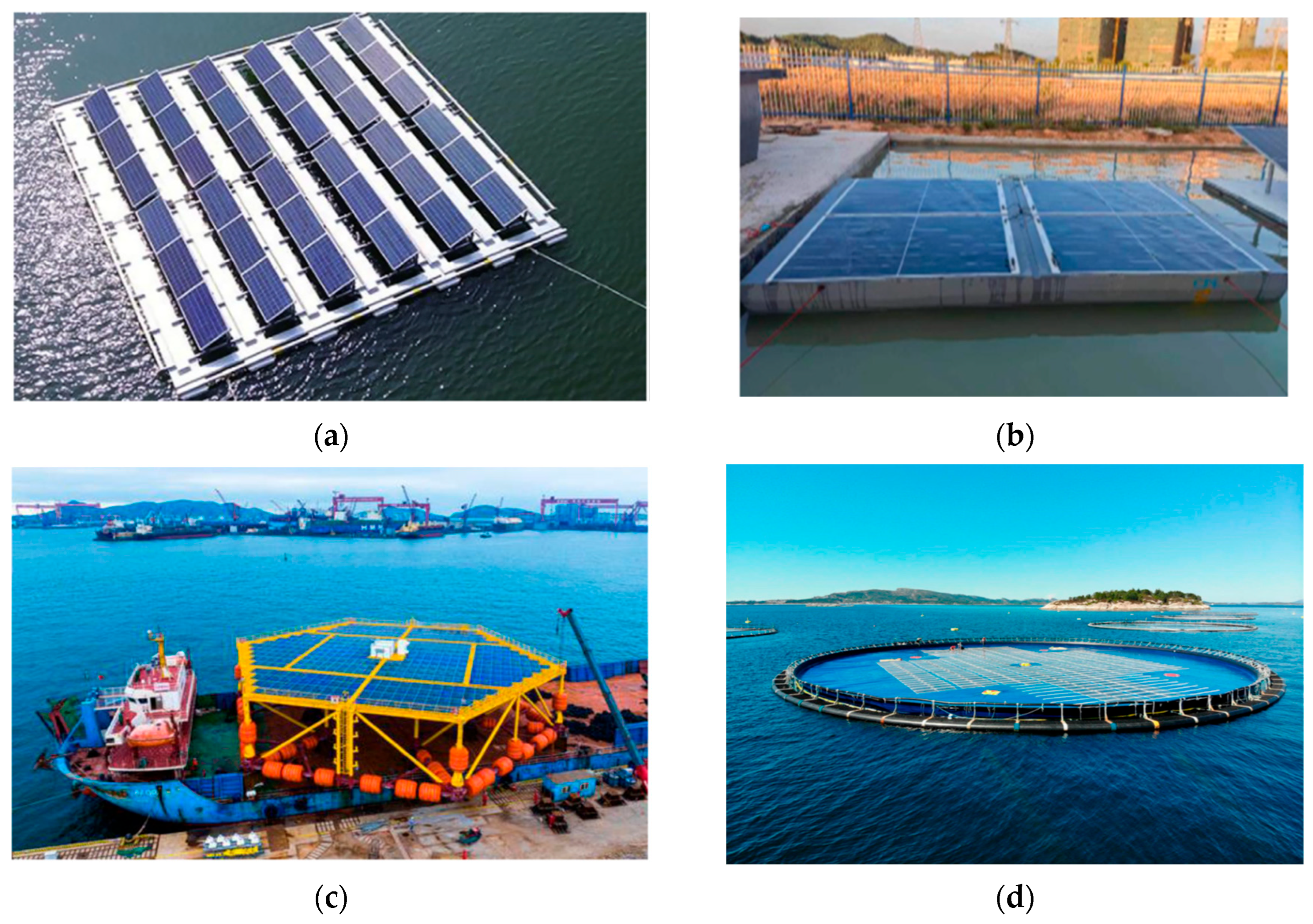
Marine FPV systems are generally categorized into four main structural types: (1) pontoon-type or tubular float structures, (2) high-performance concrete floaters, (3) semi-submersible truss platforms, and (4) flexible membrane structures.
Figure 1 presents representative examples of these platforms currently in use [
17,
18,
19], and
Table 1 summarizes their main advantages and disadvantages [
17].
Recent studies on dynamic response and safety evaluation of engineering structures under complex environmental loading have emphasized the critical role of coupled response mechanisms in determining system stability, which is directly relevant to offshore floating photovoltaic arrays subjected to wave excitation [
20].
Numerical studies have significantly advanced the understanding of offshore FPV system dynamics and design. Chen et al. [
21] developed a coupled hydrodynamic–structural model using the finite element method and static condensation, achieving high computational efficiency and improved accuracy for large floating arrays. Ou et al. [
22] employed computational fluid dynamics (CFD) to assess the seakeeping performance of box-shaped and catamaran-type pontoons, demonstrating that catamaran configurations enhance station-keeping and reduce mooring forces under wave action. Song et al. [
23] investigated single-row FPV systems subjected to combined wind, wave, and current loads, finding that wave forces dominate the dynamic response, with resonance occurring when the wavelength approaches the system length. Jifaturrohman et al. [
24] analyzed multibody single-row FPV configurations under various wave spectra, showing that increasing the number of floating modules effectively reduces heave, pitch, and roll, thereby improving overall platform stability. Xiong et al. [
19] numerically demonstrated that membrane-type FPV systems maintain good seakeeping and stability under coupled wave–current conditions. Magkouris et al. [
25] used the boundary element method (BEM) to investigate catamaran-type FPV systems in different water depths, revealing that wave-induced motion can lead to up to a 15% variation in power output depending on sea state. Xu et al. [
26] constructed a fully coupled wind–wave–current model to evaluate array layouts, concluding that rectangular configurations offer superior system stability. Shi et al. [
27] adopted the beam-connected rigid body module (BCDM) method in the frequency domain to analyze hydroelastic responses, highlighting significant motion amplitudes of internal floaters under certain wave conditions. In terms of connection optimization, Ma et al. [
28] found that rigid pontoon connectors improve deployment feasibility and load transfer compared to conventional polyester rope. He et al. [
29] validated a flexible multibody connection scheme using smooth particle hydrodynamics (SPH) simulations and experiments, confirming its adaptability to wave action. Finally, Wang et al. [
30] proposed a novel star-type FPV system and found that its mooring response is more sensitive to wave conditions than to connector stiffness variations.
Physical model experiments have provided crucial insights into the hydrodynamic performance of offshore FPV systems. Friel et al. [
31] conducted tests on horizontally semi-submerged cylindrical FPV structures and observed that surge forces increase with wave steepness, with dual-cylinder configurations experiencing greater loads. Yang et al. [
32] compared conventional flat-type and catamaran-type FPV platforms in wave flume tests, demonstrating that the catamaran design offers better wave resistance in long-wave conditions and, when combined with breakwaters, significantly reduces wave-induced motions and mooring loads. Xue et al. [
33] evaluated the dynamic response of a PV support platform equipped with a U-shaped tuned liquid column damper (TLCD), finding that the TLCD effectively suppresses vibrations near the system’s natural frequency. Saw et al. [
34] investigated mechanical loads on FPV platforms through physical testing and proposed an improved stress measurement methodology. Zhang et al. [
18] analyzed the hydrodynamic impact of different mooring configurations for membrane-type FPV systems, concluding that both the number and length of mooring chains substantially affect platform motions and mooring forces.
Although studies on pontoon-type offshore floating photovoltaic (FPV) structures began earlier than those on other FPV configurations, most have focused on the dynamics of single floaters or basic array arrangements. Systematic analysis of the coupled effects of key structural parameters, such as array scale, connection stiffness, and floater size, with wave period is still lacking. Moreover, most existing studies primarily rely on numerical simulations and lack sufficient validation through physical experiments.
Despite these efforts, significant hydrodynamic research gaps remain. Current studies seldom quantify how array scale influences collective motion modes, how connector stiffness modifies load transfer and damping behavior, or how floater size governs motion responses and overtopping risks across different wave conditions. Additionally, the absence of large-scale physical validation limits confidence in the applicability of numerical results to offshore deployment. Addressing these gaps is critical for developing reliable design guidelines for offshore FPV systems.
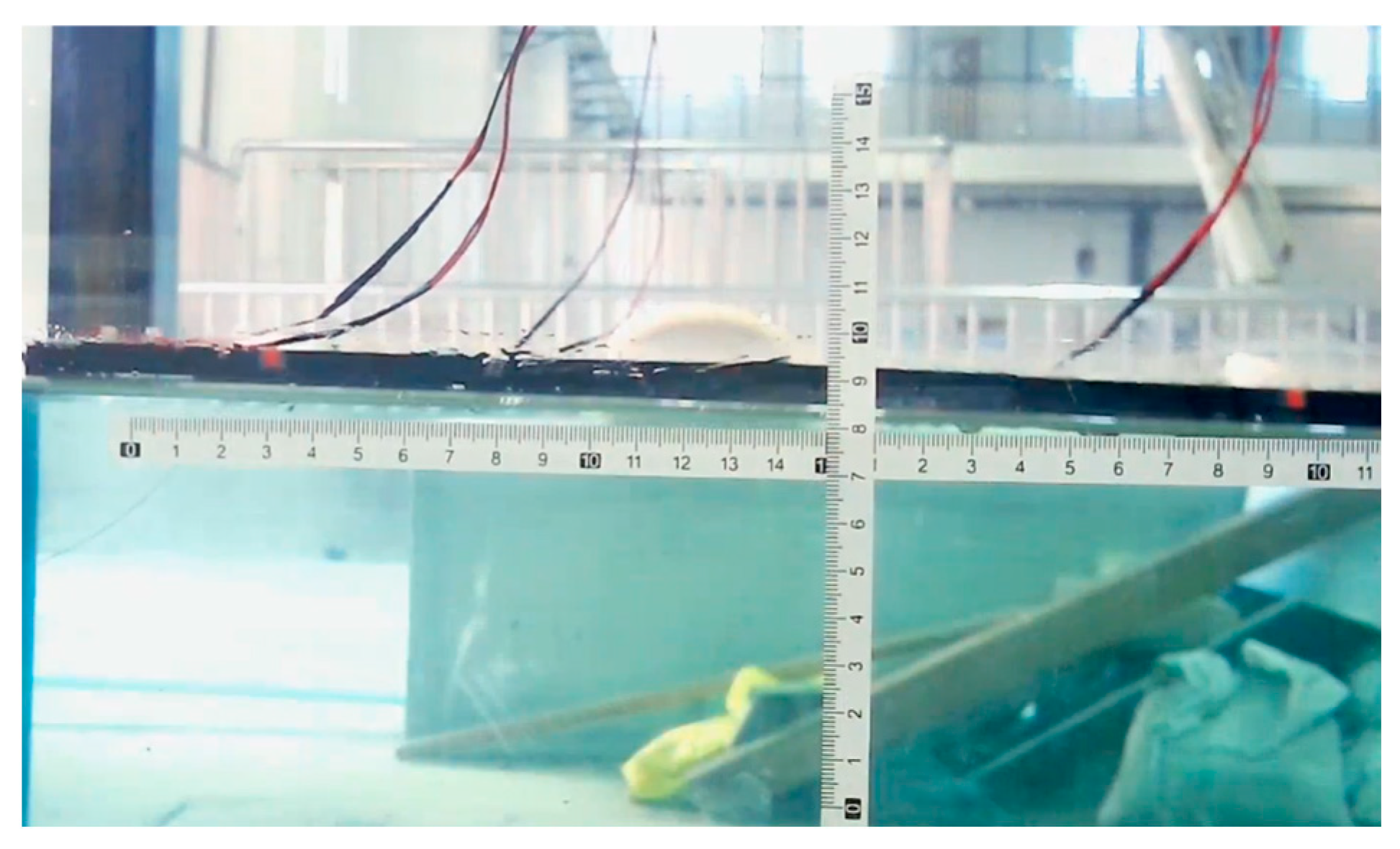
To address these research gaps, this study investigates the hydrodynamic performance of a novel pontoon-type offshore FPV structure through physical model experiments. The experimental setup is designed to systematically examine the effects of array scale, connector stiffness, and floater size on platform motion responses. Furthermore, wave overtopping events were visually recorded, and overtopping frequency maps were generated for different array regions, enabling the quantitative evaluation of overtopping behavior.
2. Theoretical Basis
2.1. Similarity Criteria
For conventional offshore engineering structures, motions in the ocean are generally regarded as rigid-body motions. However, for box-type floating arrays, hydroelastic responses are highly significant and even dominate the overall dynamic behavior of the structure. This requires the experimental model to satisfy geometric similarity, hydrodynamic similarity, and structural similarity. Only under these similarity conditions can the correct hydrodynamic response data of the structure be obtained. In the following description, the subscript p denotes the prototype quantities, while m denotes the model quantities.
(1) Geometric similarity
Geometric similarity means that a fixed proportional relationship exists between the linear variables of the prototype and the model, i.e., the ratio of corresponding linear dimensions remains constant. Thus, the length scale ratio is
where
l is the geometric length. From this, the area and volume scale ratios can be derived.
(2) Hydrodynamic similarity
For fluids dominated by gravitational forces, the Froude similarity criterion must be satisfied:
where
v is velocity,
g is gravitational acceleration, and
l is the characteristic length.
For periodic unsteady flows associated with wave motions, the Strouhal similarity criterion must also be satisfied:
where
v is velocity,
T is wave period, and
l is the characteristic length.
(3) Structural similarity
For novel pontoon-type floating arrays, it is necessary to ensure deflection similarity between the prototype and the model, which yields
where
Y is deflection,
F is structural load,
E is elastic modulus, and
I is moment of inertia.
Through dimensional analysis, it follows that
In the box-type array structure, the boxes are connected by ear plates without gaps. The loads on the ear plates are provided by the relative rotation and sidewall deformation of the connected boxes. Therefore, the structural model must also satisfy the similarity of sidewall elastic deformation:
Through dimensional analysis, it follows that
where Δ
l is compressive deformation,
F is structural load,
E is elastic modulus, and
A is cross-sectional area.
Based on the above similarity criteria, the model scale relationships can be derived, and they are summarized in
Table 2.
2.2. Wave Generation Theory
In the description of regular waves, linear wave kinematics is generally adopted as the basis. Linear theory assumes small wave steepness and incompressible fluid under potential flow conditions, and it presents the free surface as
where
ζ is the wave amplitude,
k = 2π/
L is the wave number, ω = 2π/
T is the angular frequency,
L is the wavelength, and
T is the wave period. These parameters satisfy the dispersion relation:
where
d is the water depth and
g is the gravitational acceleration. This relationship is employed to convert between period and wavelength, providing the basis for the unified coordinate system used in subsequent results.
However, considering that the box-type array investigated in this study is located in intermediate and shallow water, with relatively large wave steepness, the linear theory alone is insufficient to capture the asymmetry between crests and troughs. To better reproduce realistic conditions, second-order Stokes wave theory is applied for the generation of regular waves. The free surface elevation is expressed as
where
H is the wave height, and the other parameters are the same as above. The first term represents the primary linear component, while the second term is the second-order correction, reflecting the nonlinear characteristics of the wave profile.
Therefore, in this study, the conversion between wavelength and period still follows the linear dispersion relation, whereas the incident wave profiles are generated based on the second-order Stokes approximation. This ensures geometric similarity while more accurately reproducing nonlinear wave features under intermediate and shallow water conditions.
2.3. Response Amplitude Operator (RAO)
The Response Amplitude Operator (RAO) is defined under the assumption of a linear relationship between the hydrodynamic response of a floating system and the incident wave excitation. Specifically, when subjected to monochromatic (regular) waves, the RAO is expressed as the ratio of the response amplitude of the system to the incident wave amplitude at the corresponding wave period. For the novel offshore floating photovoltaic (FPV) box-type array considered in this study, the RAO can be applied to different response components, including floater motion responses, connector stresses, and mooring line tensions. The general definition is given by
where
xT is the amplitude of the system dynamic response (e.g., surge, heave, pitch, connector stress, or mooring tension),
AT is the incident wave amplitude, and
T denotes the incident wave period.
This formulation provides a normalized, dimensionless transfer function that characterizes the frequency-dependent response behavior of the FPV platform. By analyzing RAOs, the dynamic amplification, resonant features, and energy dissipation mechanisms of the structure can be systematically evaluated under different wave conditions.
2.4. Simplified Chain Model of the Pontoon Array
The tested arrays consist of multiple pontoons arranged in columns, with the transverse number fixed while the longitudinal array length is gradually increased (e.g., 5, 10, 15, 20 units). Under regular wave excitation aligned with the array’s longitudinal axis, transverse effects are relatively weak, and the measurement stations are located along the wave incidence direction. Hence, the global dynamics of the system can be reasonably approximated by a one-dimensional chain representation, where each pontoon column is modeled as a rigid body and the inter-column lugs are represented as torsional springs.
In this one-dimensional mass–torsional spring chain model, each unit is characterized by its effective rotational inertia Ie about the hinge axis, and adjacent units are connected by rotational springs with stiffness kθ. The mooring system at both ends is simplified as fixed boundary conditions.
For a chain of
N units with fixed–fixed boundaries, the angular frequency of the m-th mode ω
m (
m = 1, 2, …,
N) is given by
This simplified chain model provides a clear description of the longitudinal modal characteristics and offers a practical reference for subsequent comparison with finite-element predictions and experimental observations. Nevertheless, the chain-model framework is used here as a qualitative interpretative tool to explain length-dependent response trends rather than to provide a full modal identification for each array configuration.
4. Hydrodynamic Response Analysis of the Novel Offshore FPV Box Array Structure
4.1. Coupled Effects of Array Scale and Wave Period on Floating Box Motion
4.1.1. Variation in Motion Responses at Identical Locations with Array Scale
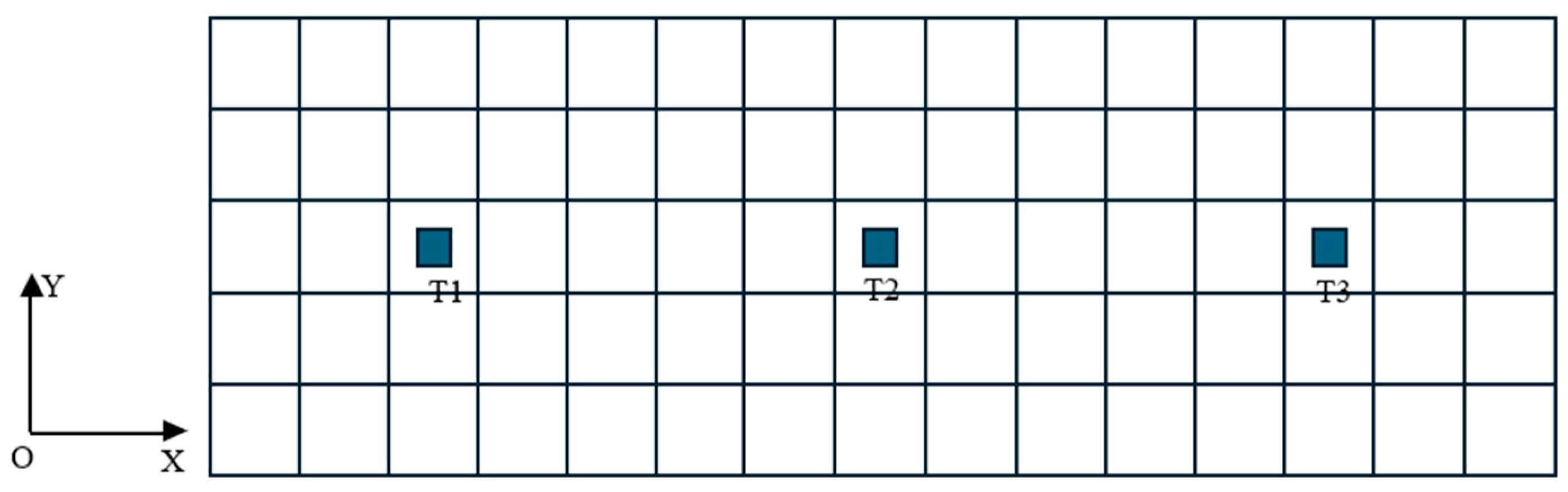
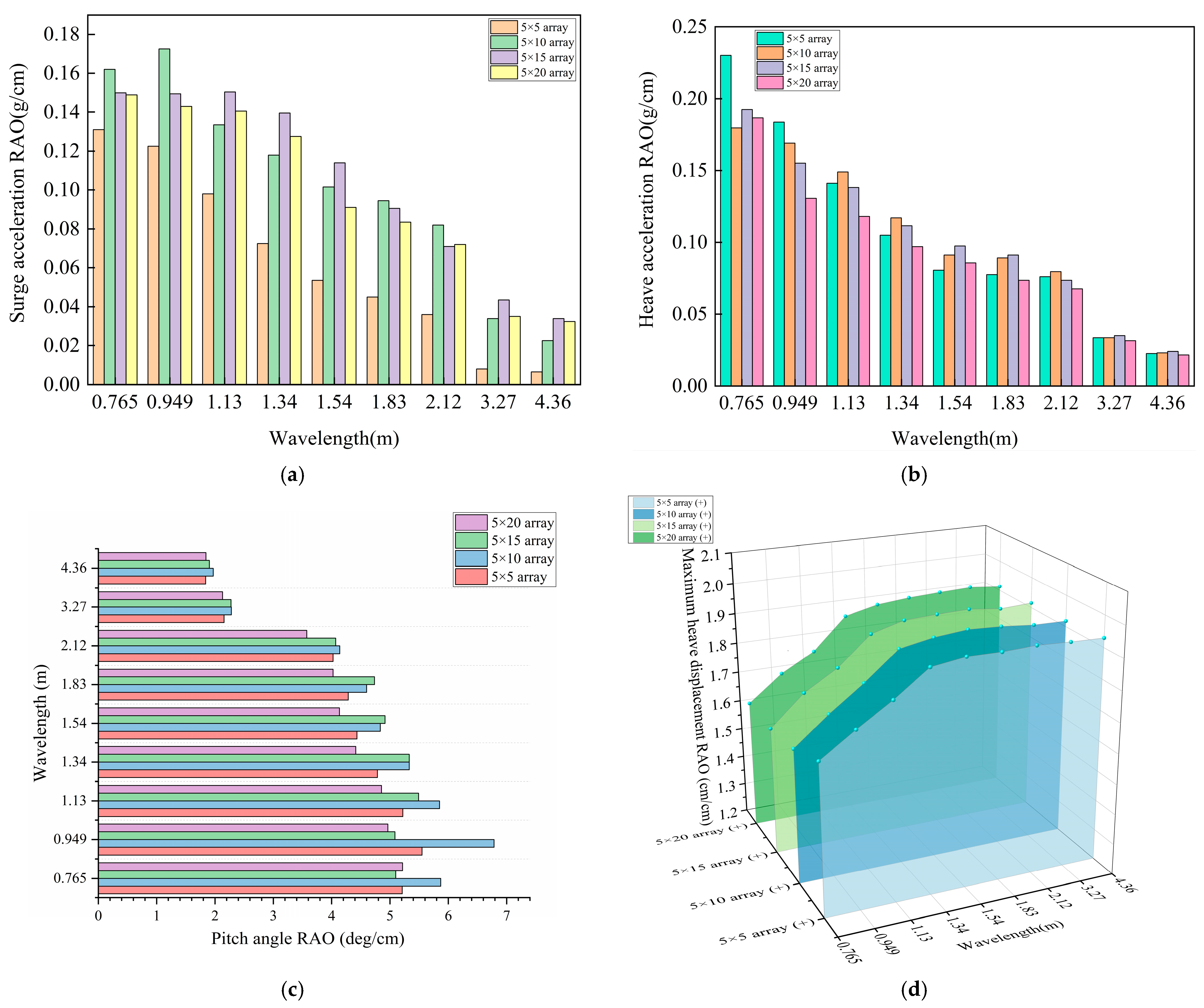
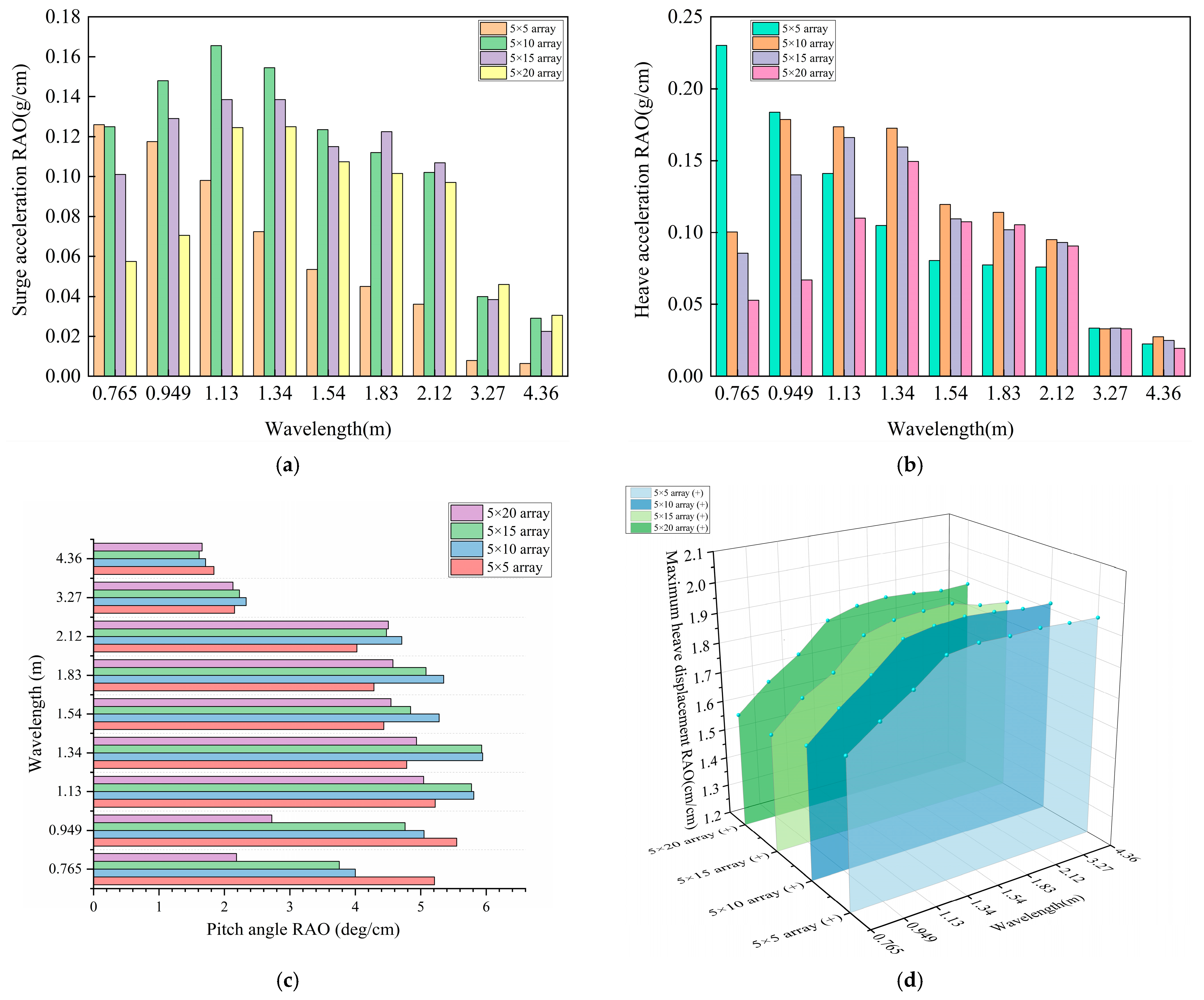
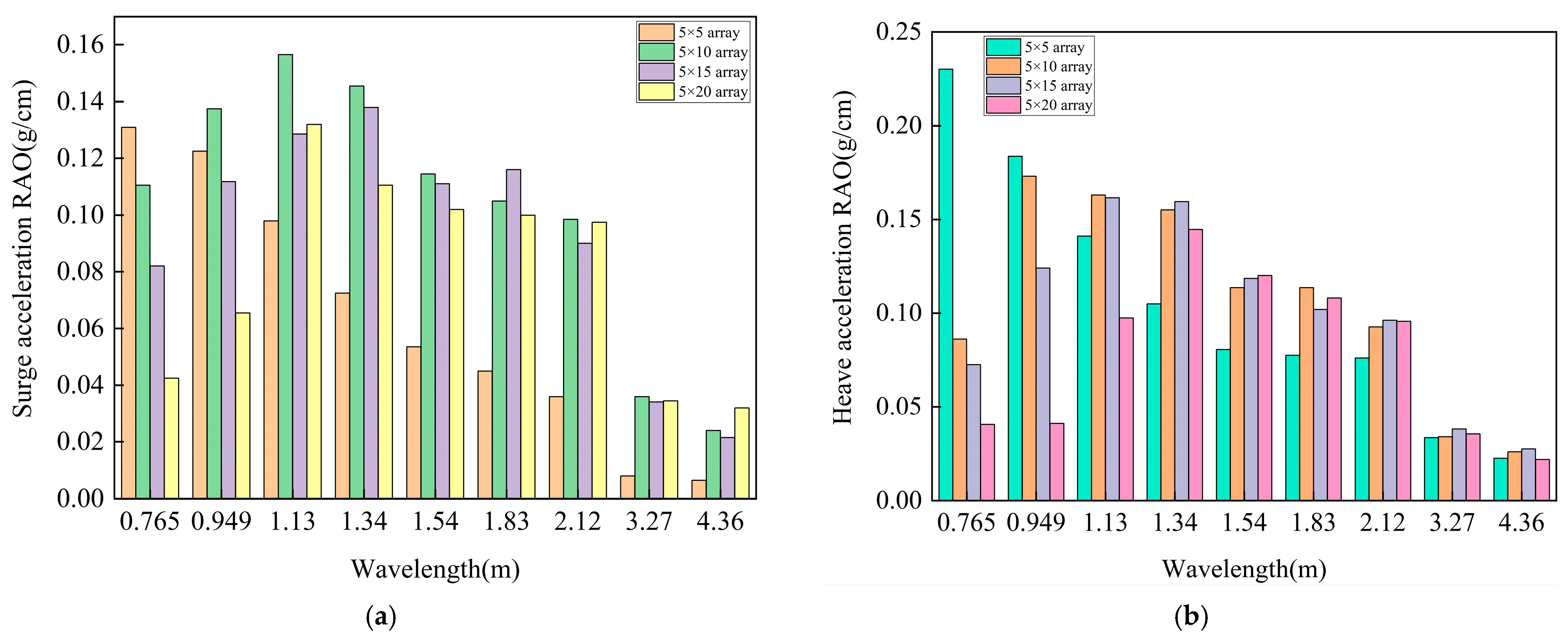
This section analyzes the motion responses of floating boxes at three representative positions, namely the wave-facing (T1), mid-array (T2), and leeward (T3), under regular wave conditions. The focus is on how the responses at these locations change with different array lengths and wave periods. The measured motion parameters include surge acceleration, heave acceleration, pitch angle, and heave displacement.
Based on the experimental configurations, four array scales (5 × 5, 5 × 10, 5 × 15, and 5 × 20) were tested. For each scale, motion responses at the designated monitoring points were recorded under various regular wave periods. The 5 × 5 array had only one monitoring location; considering both its absolute and relative position, this point served as a reference for characteristic locations in larger arrays. Thus, its responses were compared with those at T1, T2, and T3 in the other configurations to provide a comprehensive understanding of the influence of array length and position on dynamic behavior.
All experiments used regular waves, and the average peak values of the response signals were used to quantify motion intensity. For heave motion, the average peak displacement was taken as the evaluation metric. Because array length was a key variable, wave period was converted to wavelength, so that all results could be analyzed with wavelength as the horizontal axis.
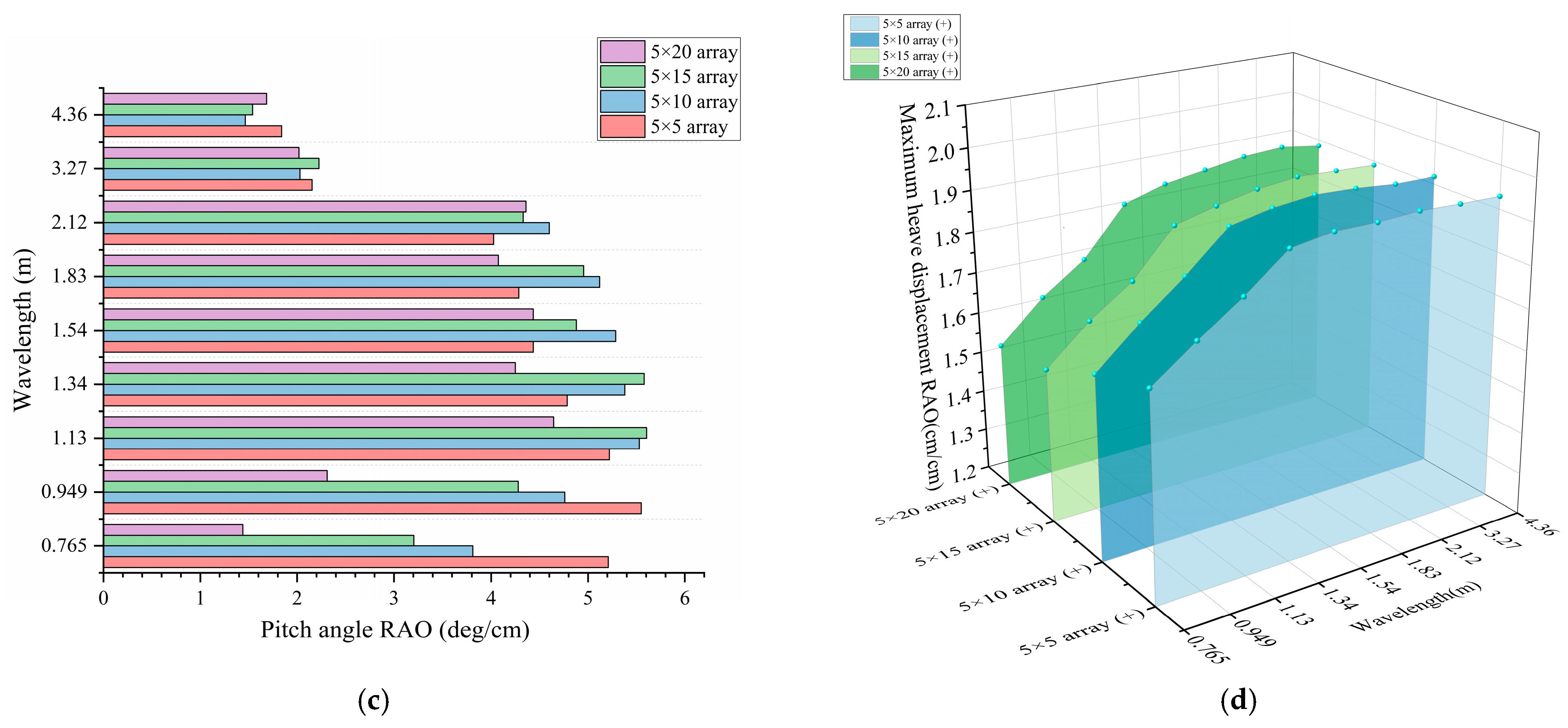
Figure 12,
Figure 13 and
Figure 14 show the trends in motion responses at different monitoring points for the four array scales, plotted as functions of wave wavelength.
At the wave-facing location, T1, the motion responses of different array scales exhibit nearly identical wavelength-dependent trends. Surge acceleration, heave acceleration, and pitch decrease monotonically with increasing wavelength, whereas heave displacement shows only weak sensitivity to array length.
Excluding the 5 × 5 case, the response amplitudes at T1 generally decrease slightly as the array length increases, while the differences among the 5 × 10, 5 × 15, and 5 × 20 arrays remain minor. This indicates that T1 lies within a wave-facing response region dominated by direct incident wave forcing, where upstream shielding is minimal and the local response is primarily governed by the absolute position at the array front.
The relatively high accelerations observed in the 5 × 5 array are attributed to its short length, which places the entire array within the wave-facing region and eliminates downstream boundary effects. In longer arrays, elastic deformation of downstream units modifies the effective boundary conditions through both horizontal shielding and vertical constraints, thereby slightly reducing surge and heave responses at T1.
Once the array length exceeds the spatial extent of the wave-facing region, further downstream extension has little influence on the T1 response, and the differences among the 5 × 10, 5 × 15, and 5 × 20 arrays become negligible. Pitch responses remain nearly unchanged across all scales, indicating that rotational motion at the wave-facing edge is governed mainly by local wave loading and immediate neighboring units.
At downstream positions T2 and T3, the array length exerts a dominant influence on the motion responses. Across the 5 × 10, 5 × 15, and 5 × 20 arrays, all four motion parameters exhibit consistent wavelength-dependent trends, with response amplitudes decreasing systematically as the array becomes longer, particularly under short-wavelength conditions. A key feature is the systematic migration of the heave-acceleration peaks toward longer wavelengths as the array length increases.
The tested wave periods were selected to cover representative site conditions rather than to intentionally excite structural resonance; therefore, the observed peaks cannot be regarded as natural frequencies. Nevertheless, the modal properties of the array still govern the backbone of the frequency response. As the array length increases, the natural frequencies decrease, causing the entire response spectrum to shift toward longer periods. As a result, even though the experimental peaks represent forced-response maxima rather than strictly resonance-dominated free vibrations, their migration toward longer wavelengths reflects the length-dependent shift in the array’s dynamic response characteristics predicted by the chain-model framework.
The observed attenuation arises from two coupled mechanisms. First, the addition of upstream units modifies the effective boundary conditions at a given downstream location through cumulative structural flexibility and localized deformation. Second, wave energy is progressively dissipated and redistributed as it propagates through the array, resulting in a weakened wave field downstream.
Collectively, these results demonstrate that the number of upstream floating boxes exerts a dominant control over the downstream motion responses, especially at the mid-array (T2) and leeward (T3) positions. Longer arrays not only reduce response amplitudes but also shift the dominant forced-response amplification toward lower frequencies, even in the absence of strict resonance. Accordingly, the observed peaks correspond to forced-response maxima under harmonic excitation rather than exact natural frequencies.
The terms “wave-facing” and “non-wave-facing” regions are introduced here only as qualitative descriptors to facilitate the discussion of the spatial response patterns along the array, rather than as rigorously defined zonal classifications.
4.1.2. Influence of Array Scale on Relative Motion Responses at Different Locations
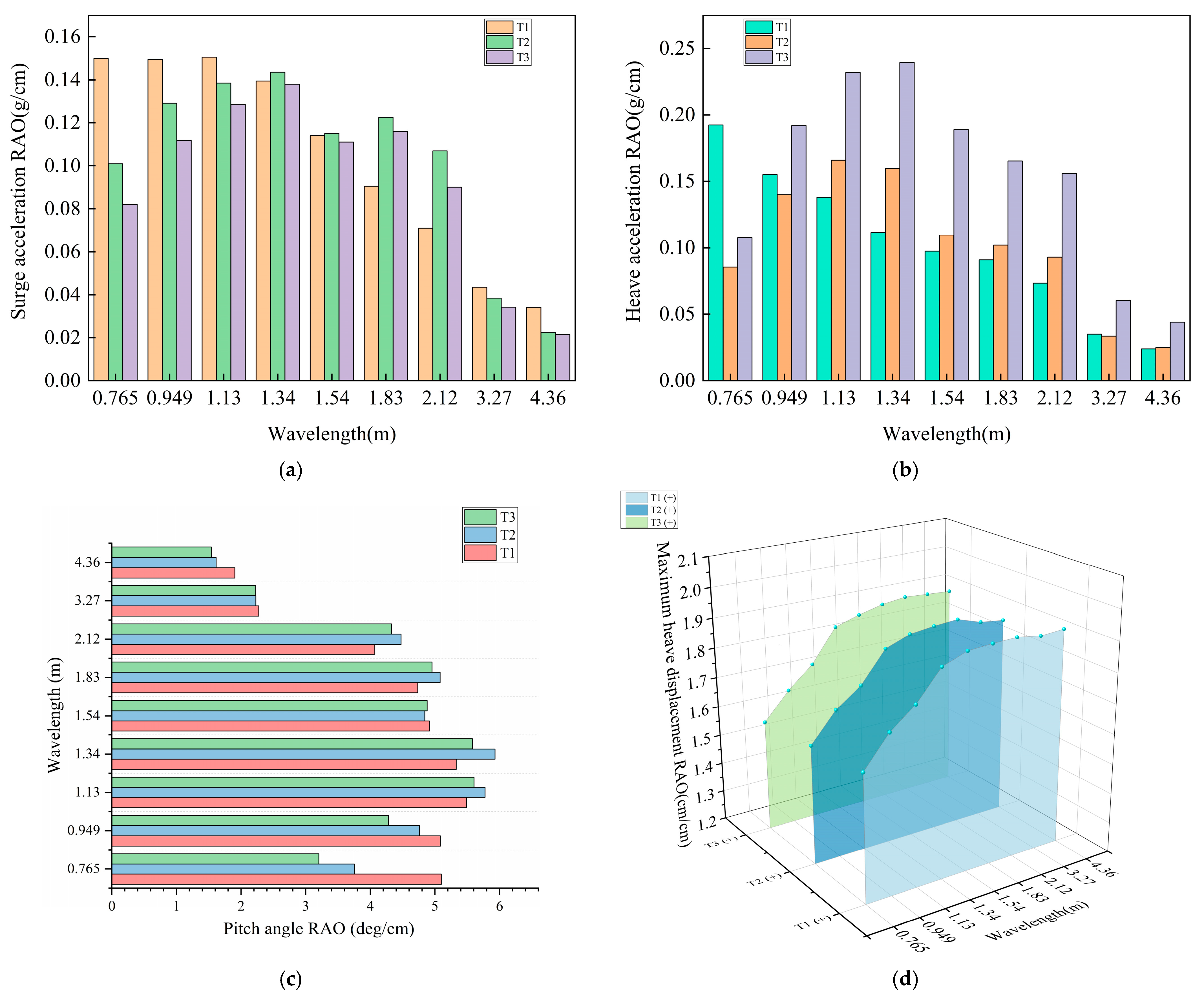
To further explore how array scale affects the motion behavior of individual boxes, the relative responses at different monitoring points within the 5 × 15 and 5 × 20 arrays were compared, as illustrated in
Figure 15 and
Figure 16.
Figure 15 and
Figure 16 show that the relative motion relationships among T1, T2, and T3 in the 5 × 15 and 5 × 20 arrays are largely consistent. In summary, the motion response characteristics of the floating box array exhibit a pronounced distinction between the wave-facing and non-wave-facing regions, each governed by different dynamic mechanisms.
These results have direct implications for engineering design and model testing. Increasing the array scale reduces the absolute motion responses, especially at mid-array and leeward locations, and enhances the shielding and energy dissipation effects provided by upstream units. However, if the array is too short and entirely within the wave-facing region, the observed motion may be unrepresentatively high, potentially leading to conservative or non-representative design estimates. Therefore, for both physical and numerical modeling, it is essential to ensure that the array length exceeds the spatial extent of the wave-facing region; this can be assessed by comparing the motion responses of the front and rear boxes. Only when their behaviors converge can the model be considered sufficiently long to reflect full-scale offshore performance, ensuring the reliability of hydrodynamic evaluation and the practical relevance of test results.
4.2. Coupled Effects of Connection Stiffness and Wave Period on Floating Box Motion
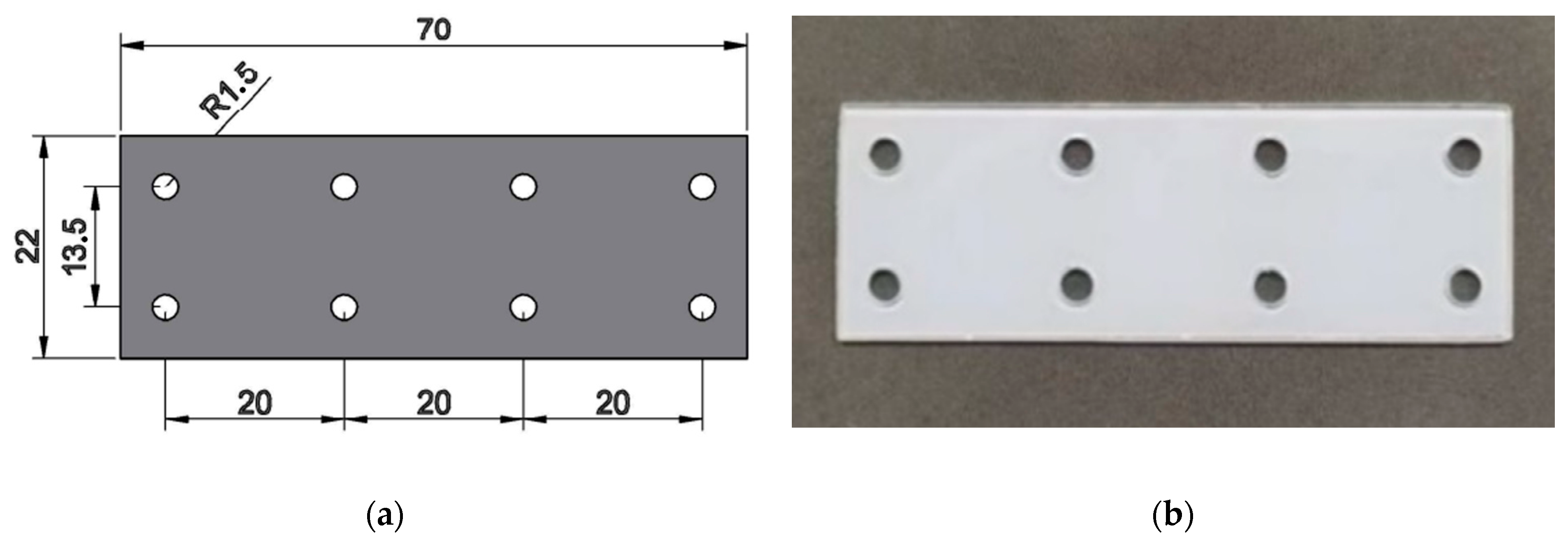
It is important to note that the range of connection stiffness tested in these experiments did not change the fundamental characteristics of the floating box array. Specifically, the flexural rigidity of the floating boxes was about three orders of magnitude greater than that of the connector lugs. Based on the lug geometry and an effective free length of about 1 mm, the rotational stiffness per joint can be estimated as
for a single lug. For two and three lugs in parallel, the values increase proportionally to 3.30 and 4.95 N·m/rad, respectively.
This is evident in the heave response curves, which show that the vertical motion of the boxes always closely follows the wave profile, regardless of connection stiffness. The array’s hydroelastic deformation is similar to or even greater than the draft of the floating boxes, confirming that the structure consistently behaves as a vertically flexible floating structure (VFFS). In this study, the term “vertically flexible floating structure (VFFS)” is used in a descriptive sense to denote a floating array whose global vertical deformation is governed by the flexibility of inter-unit connections. Therefore, the observed trends related to stiffness variation remain robust across the tested parameter range.
For the structural design of floating box arrays, the two key parameters are the geometry of the floating box and the flexural stiffness of the connector lugs. The size and shape of the boxes are usually dictated by photovoltaic module dimensions, which limits design flexibility. In contrast, the stiffness of the connectors can be more easily adjusted. Based on the sensitivity of motion responses to stiffness changes, it can be concluded that when the connectors’ flexural rigidity is much lower than that of the boxes, and VFFS behavior is ensured, the effect of connection stiffness on the overall response becomes minimal at longer wavelengths. Nonetheless, stiffness still plays a clear role in response amplitudes, making it a practical design variable for tuning local dynamics.
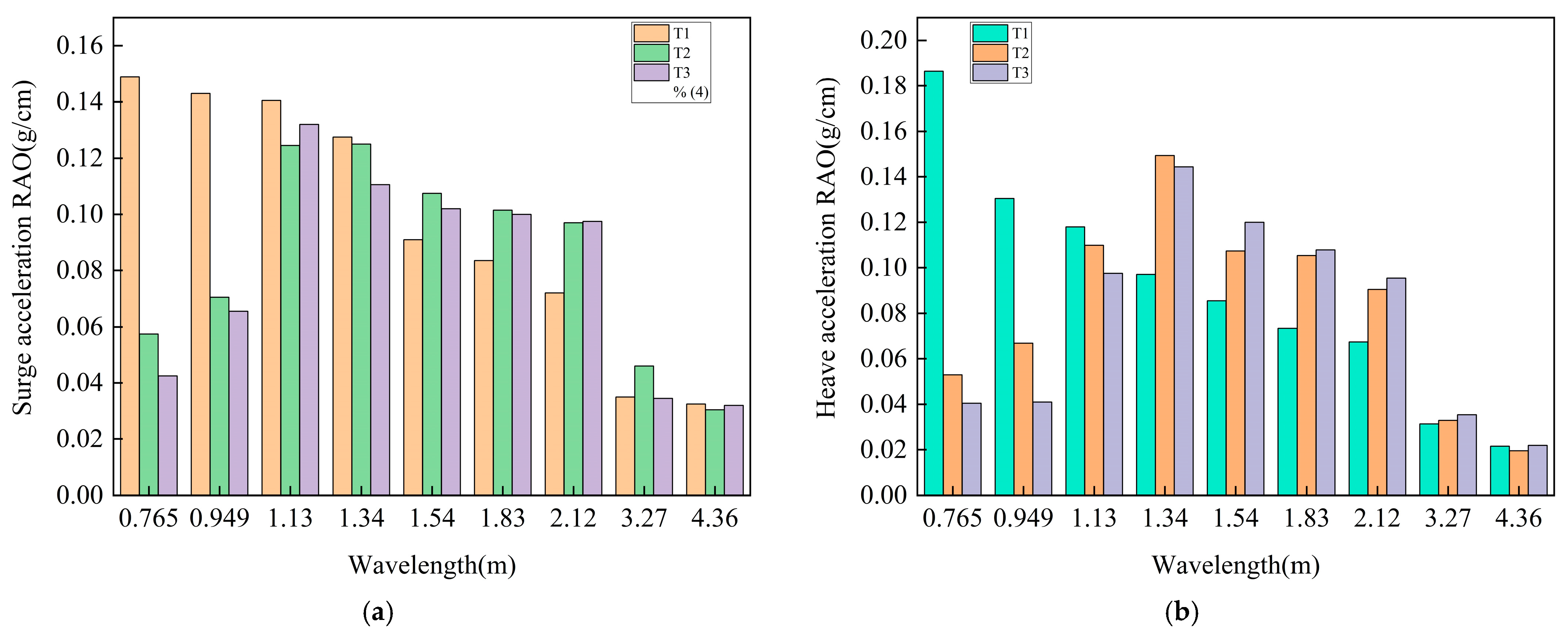
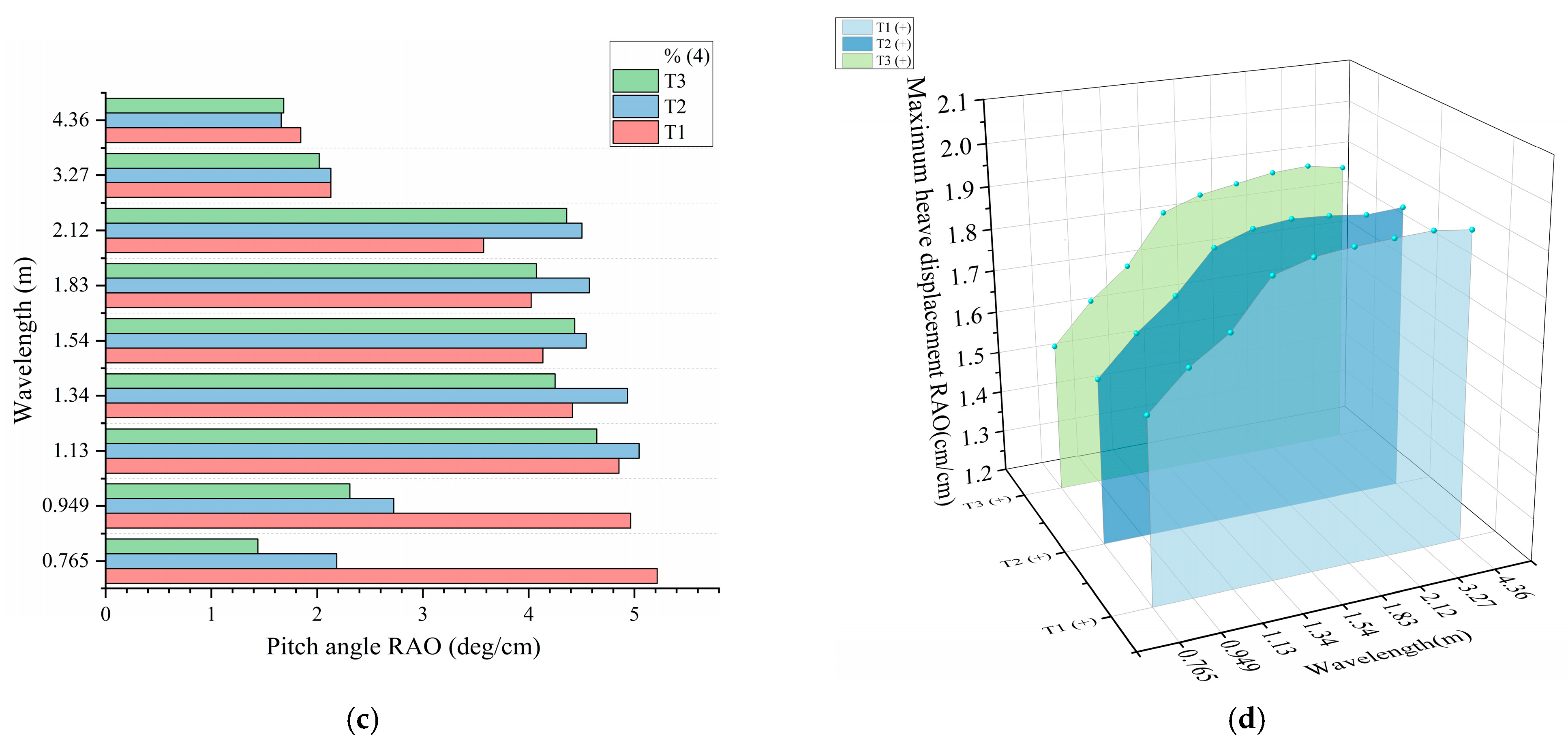
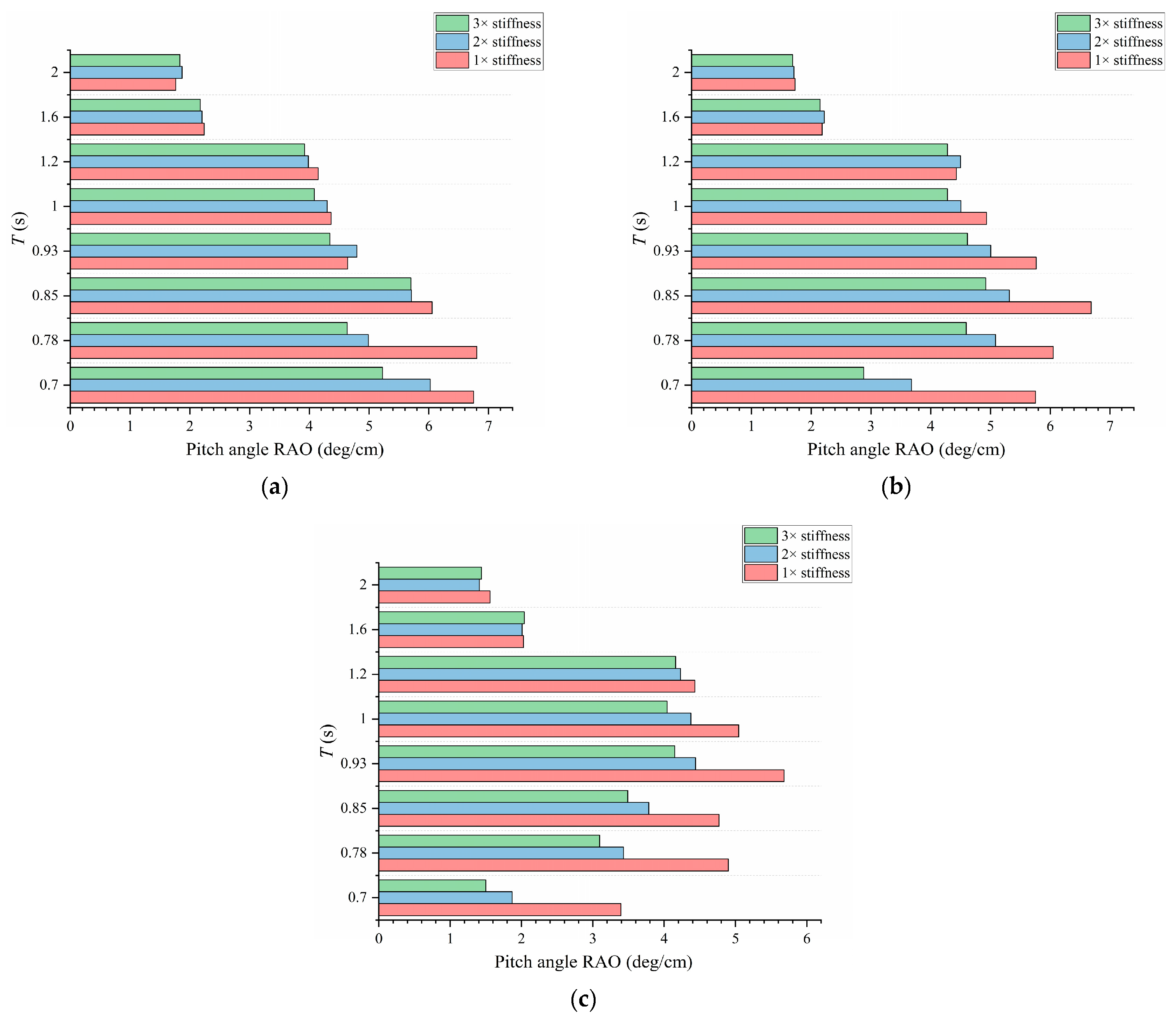
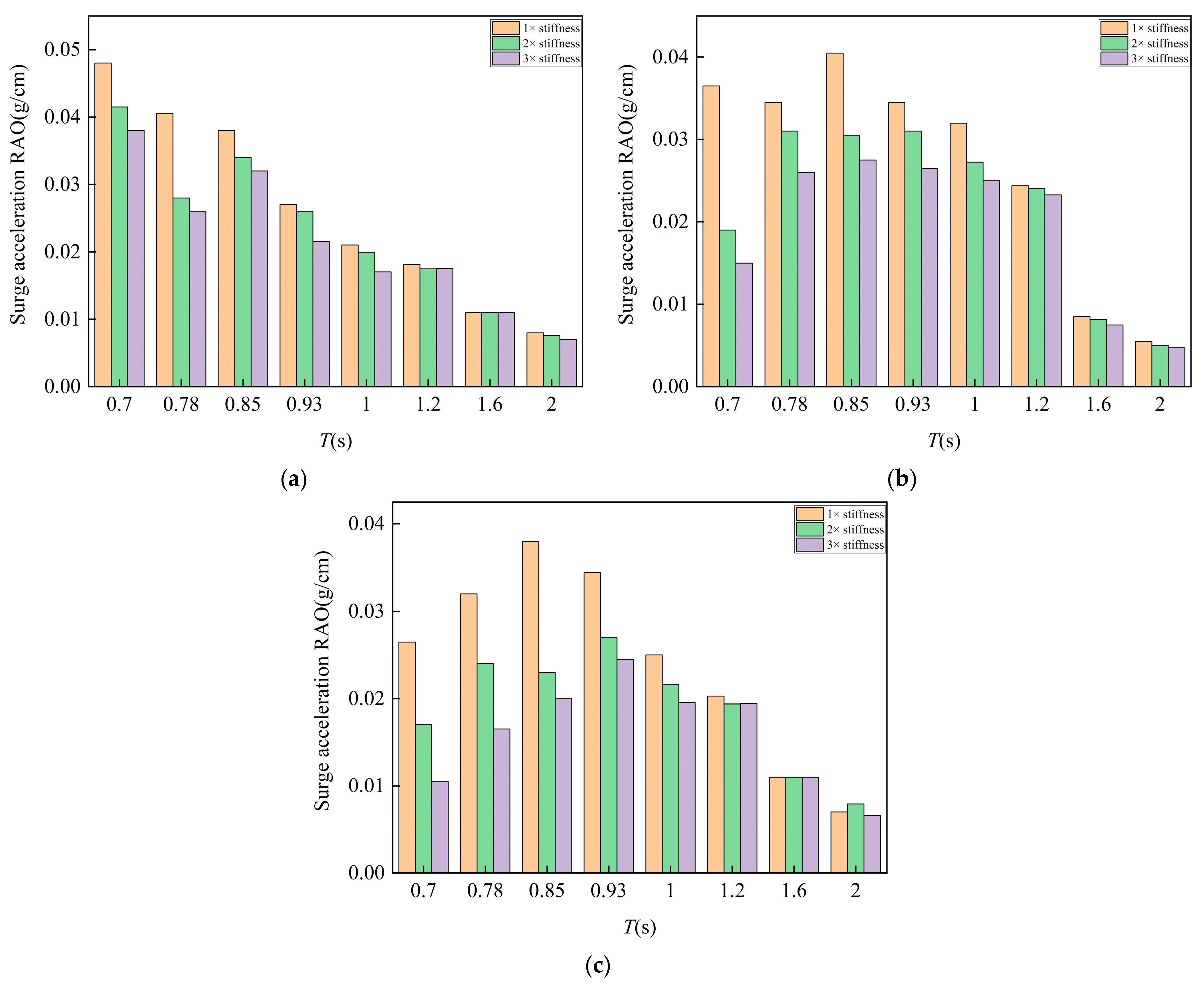
Figure 17,
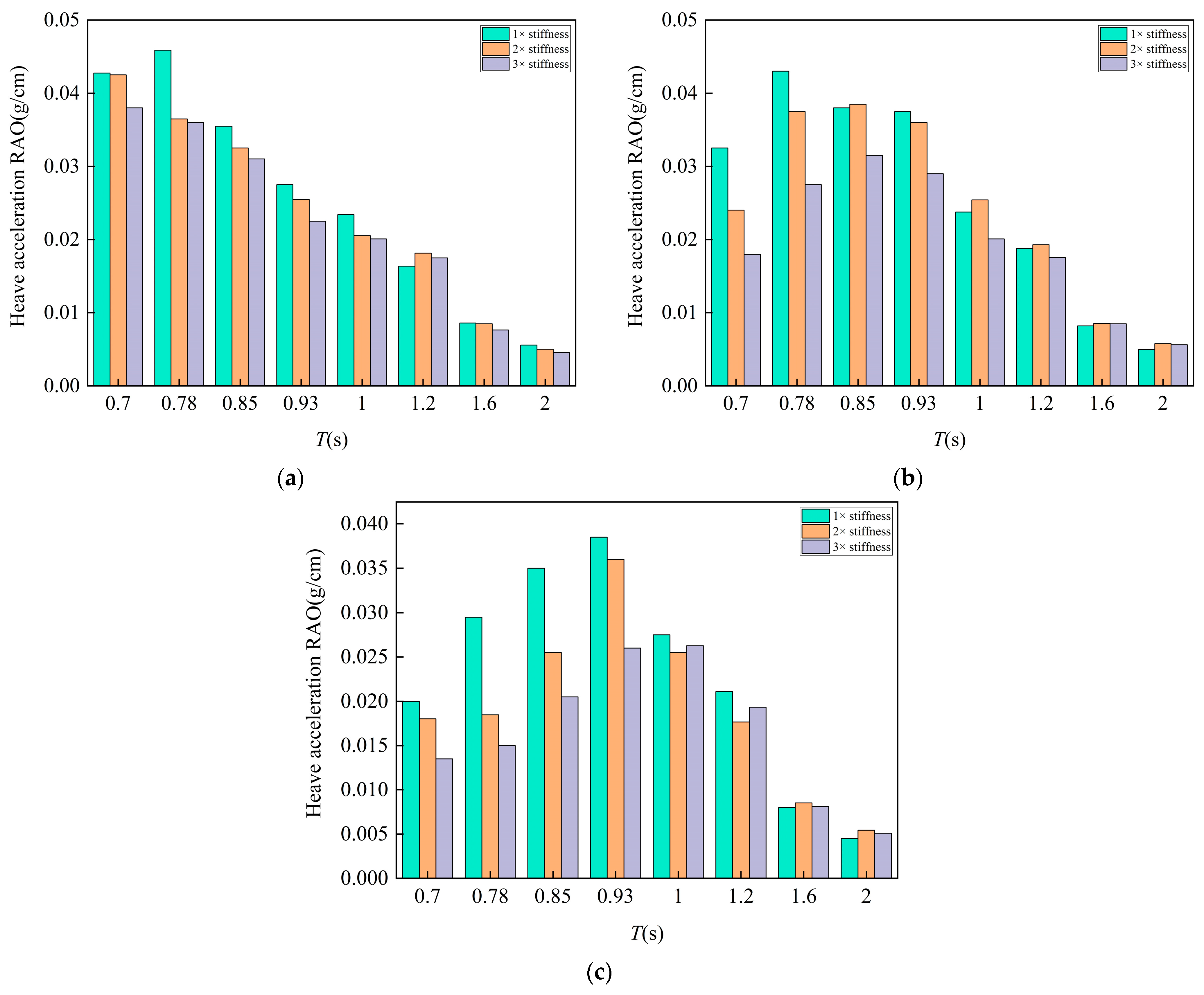
Figure 18,
Figure 19 and
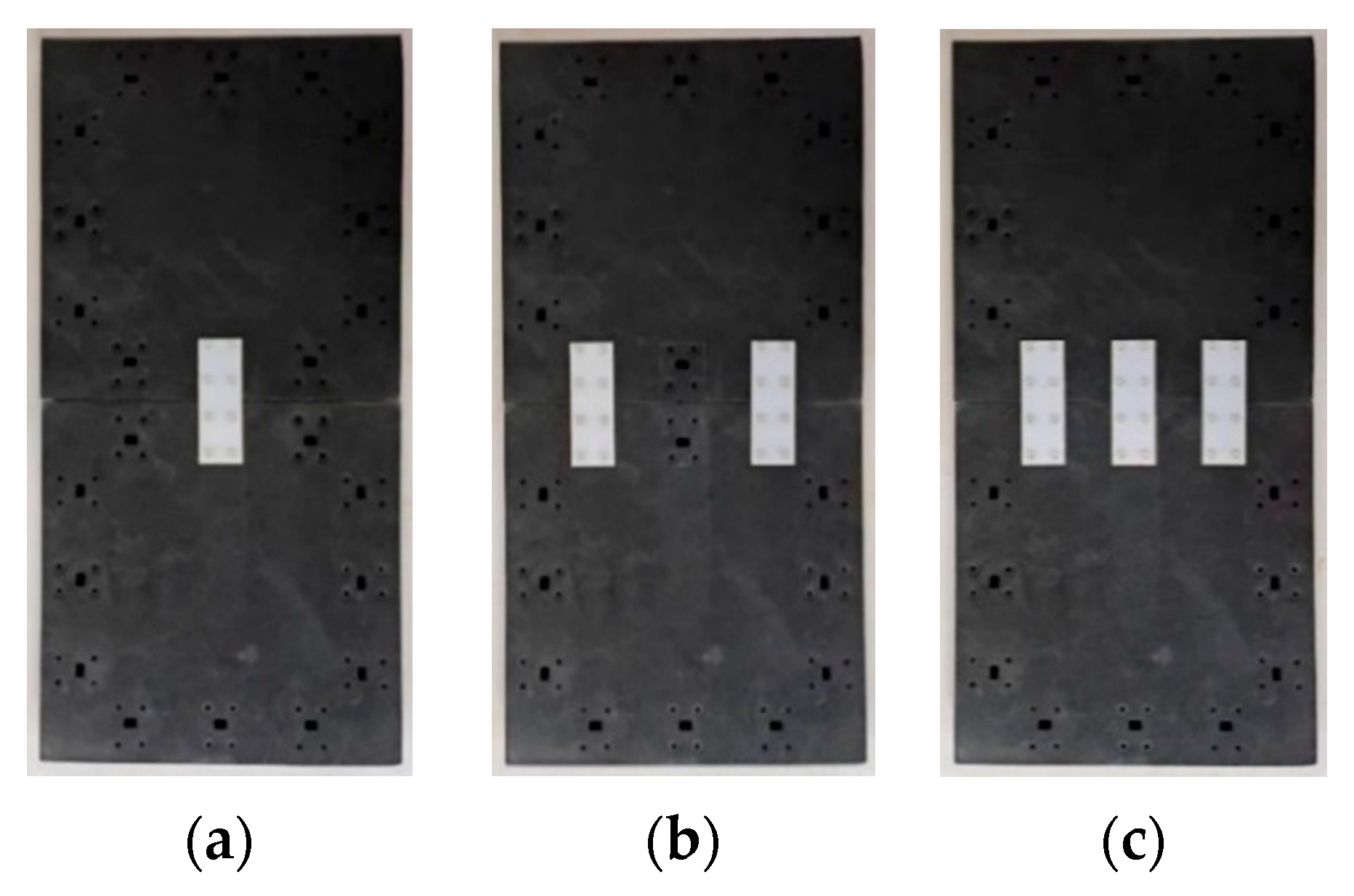
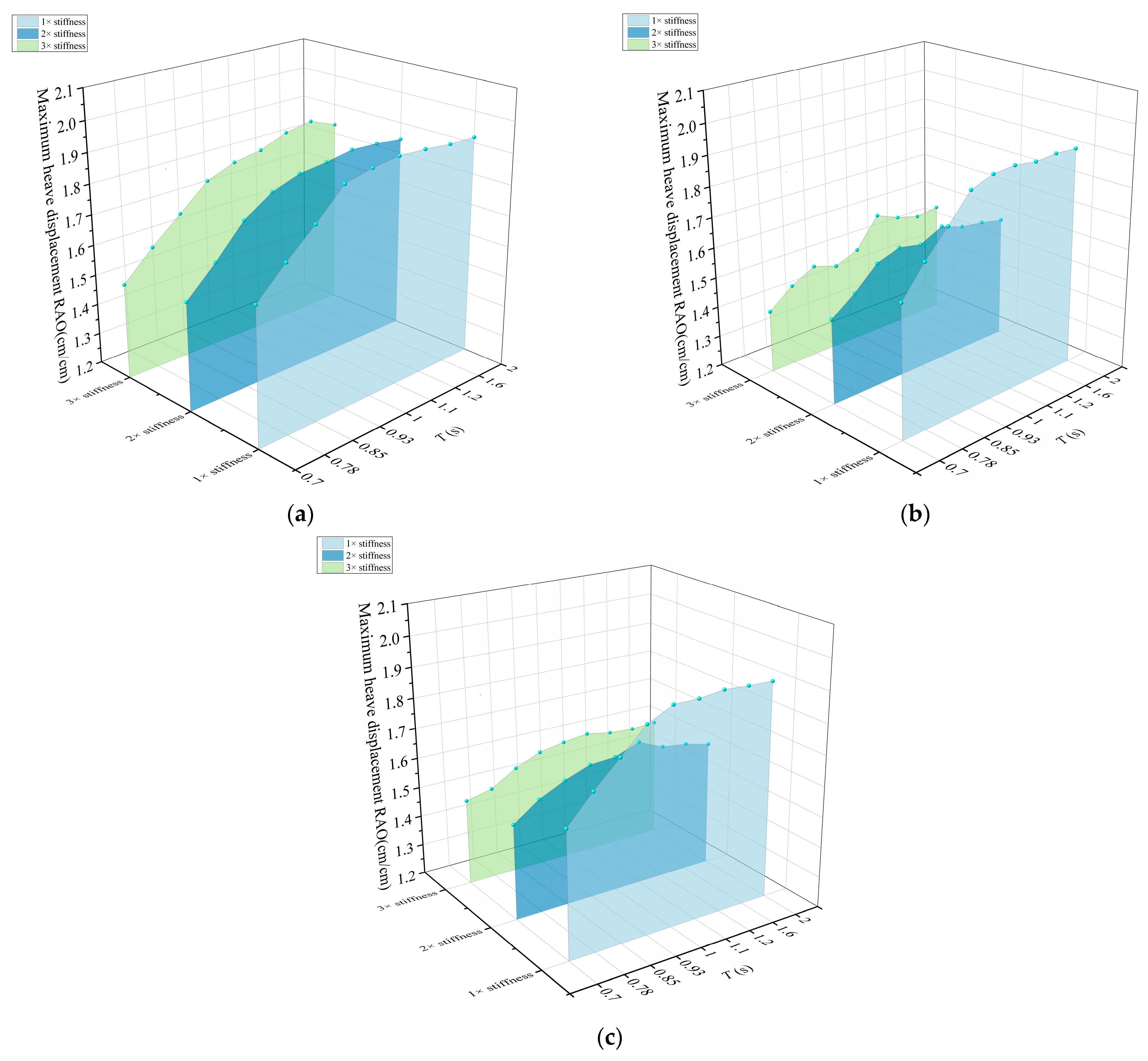
Figure 20 show the changes in surge acceleration, heave acceleration, pitch angle, and heave displacement at T1, T2, and T3 under regular wave conditions for arrays with single, double, and triple connection stiffness. All tests used the same array configuration, allowing the influence of connection stiffness to be isolated across different wave periods.
Figure 17,
Figure 18,
Figure 19 and
Figure 20 illustrate the influence of connection stiffness on surge acceleration, heave acceleration, pitch angle, and heave displacement. Across all responses, increasing stiffness reduces amplitudes, with the strongest improvements obtained when stiffness increases from single to double, while the difference between double and triple stiffness is minor. The overall frequency-dependent trends remain similar, confirming that stiffness primarily affects amplitudes rather than shifting response patterns.
In terms of differences among motion types, surge acceleration is most sensitive at T2 under short-period waves, while heave acceleration shows the strongest reduction at T3, highlighting the downstream amplification of stiffness effects. Pitch responses decrease moderately with stiffness, with downstream locations again more affected than the wave-facing T1. For heave displacement, T1 shows the largest amplitudes but minimal sensitivity to stiffness, whereas T2 and T3 display smaller amplitudes but stronger relative suppression, indicating that downstream regions benefit more from stiffness tuning.
The spatial variation in stiffness sensitivity can be attributed to different governing mechanisms along the array. At the wave-facing T1, responses are dominated by direct incident forcing, so the influence of local connector stiffness is relatively weak. By contrast, at T2 and T3, wave energy has already interacted with multiple units, and the cumulative structural flexibility becomes increasingly important. In these downstream regions, higher stiffness more effectively suppresses deformation and motion, explaining the stronger sensitivity observed.
These findings highlight that connector stiffness should be treated as a tunable parameter, with optimization focused on downstream regions where structural flexibility and cumulative wave–array interactions make its influence most pronounced. Within the discrete stiffness levels examined in the present experiments, excessive stiffening yields limited hydrodynamic benefits while adding fabrication and installation challenges, so a balanced stiffness design is recommended.
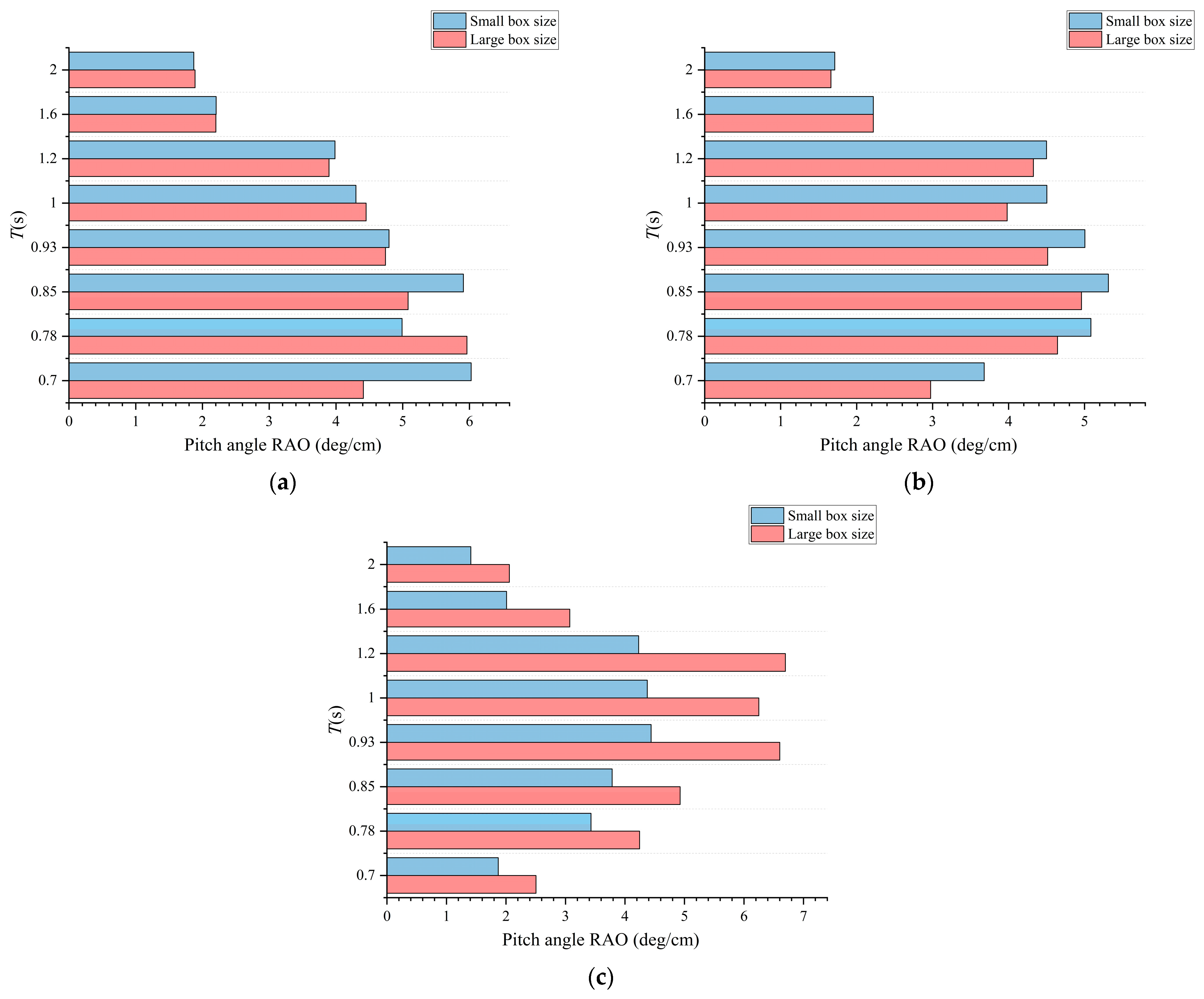
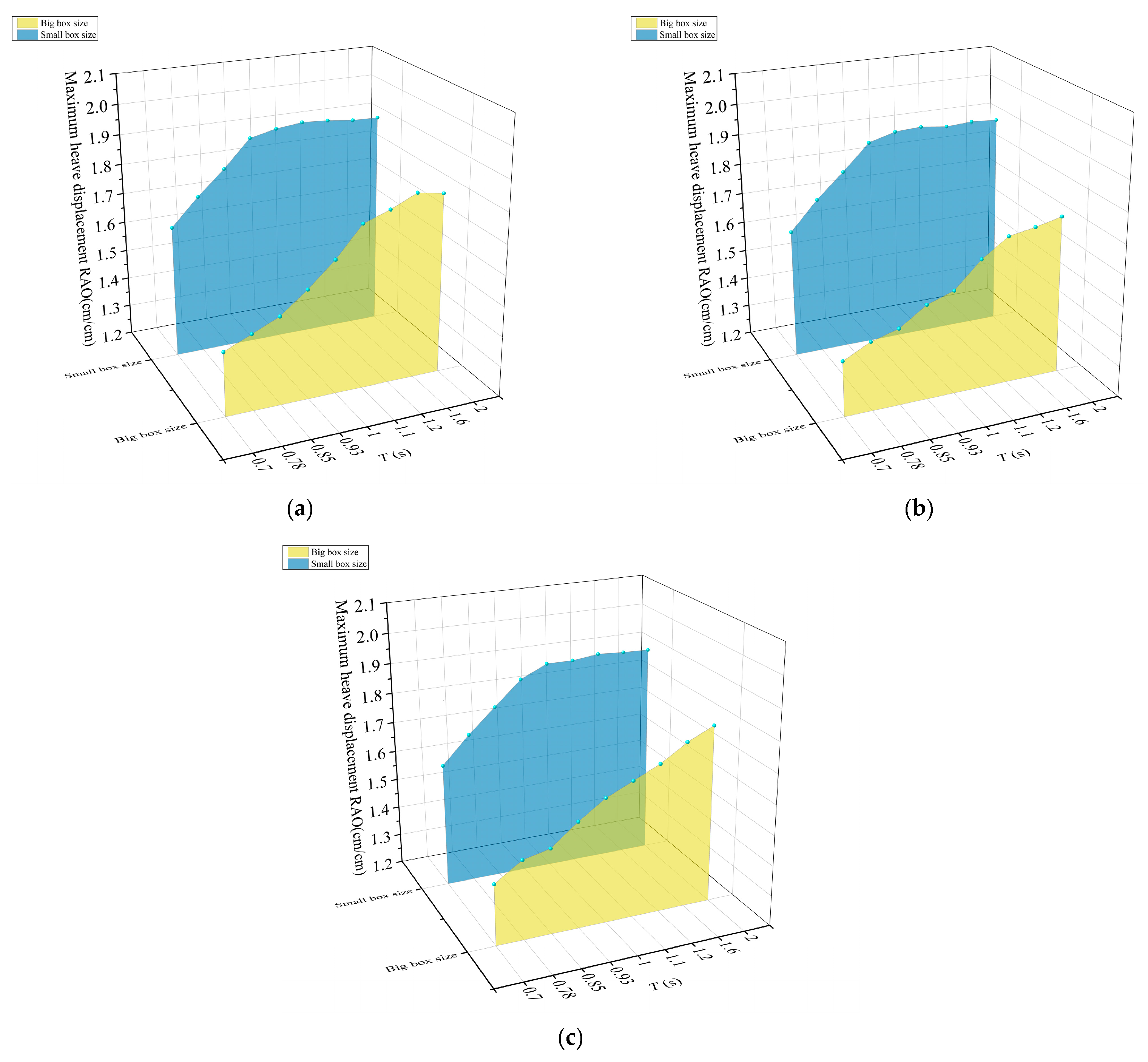
4.3. Coupled Effects of Floater Size and Wave Period on Floating Box Motion
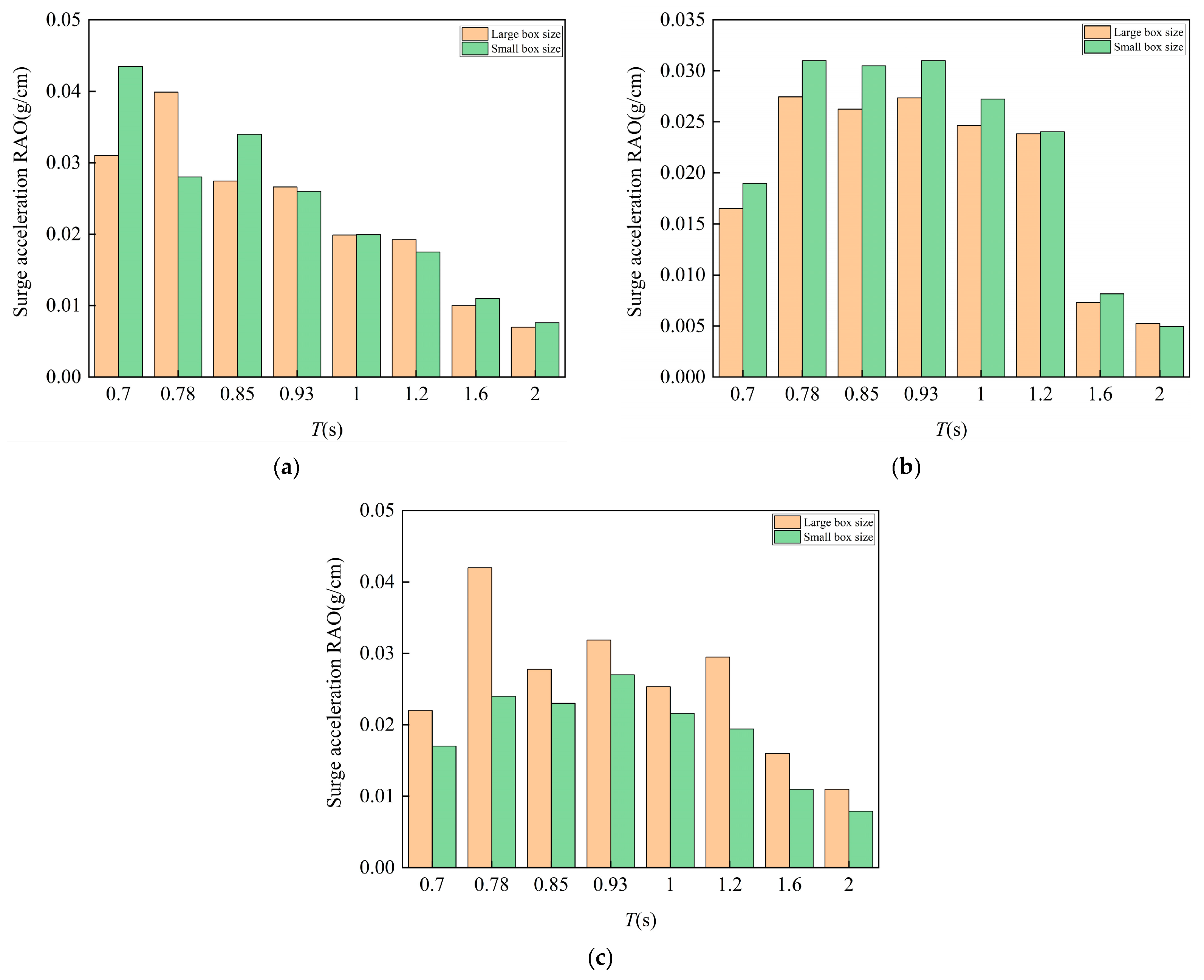
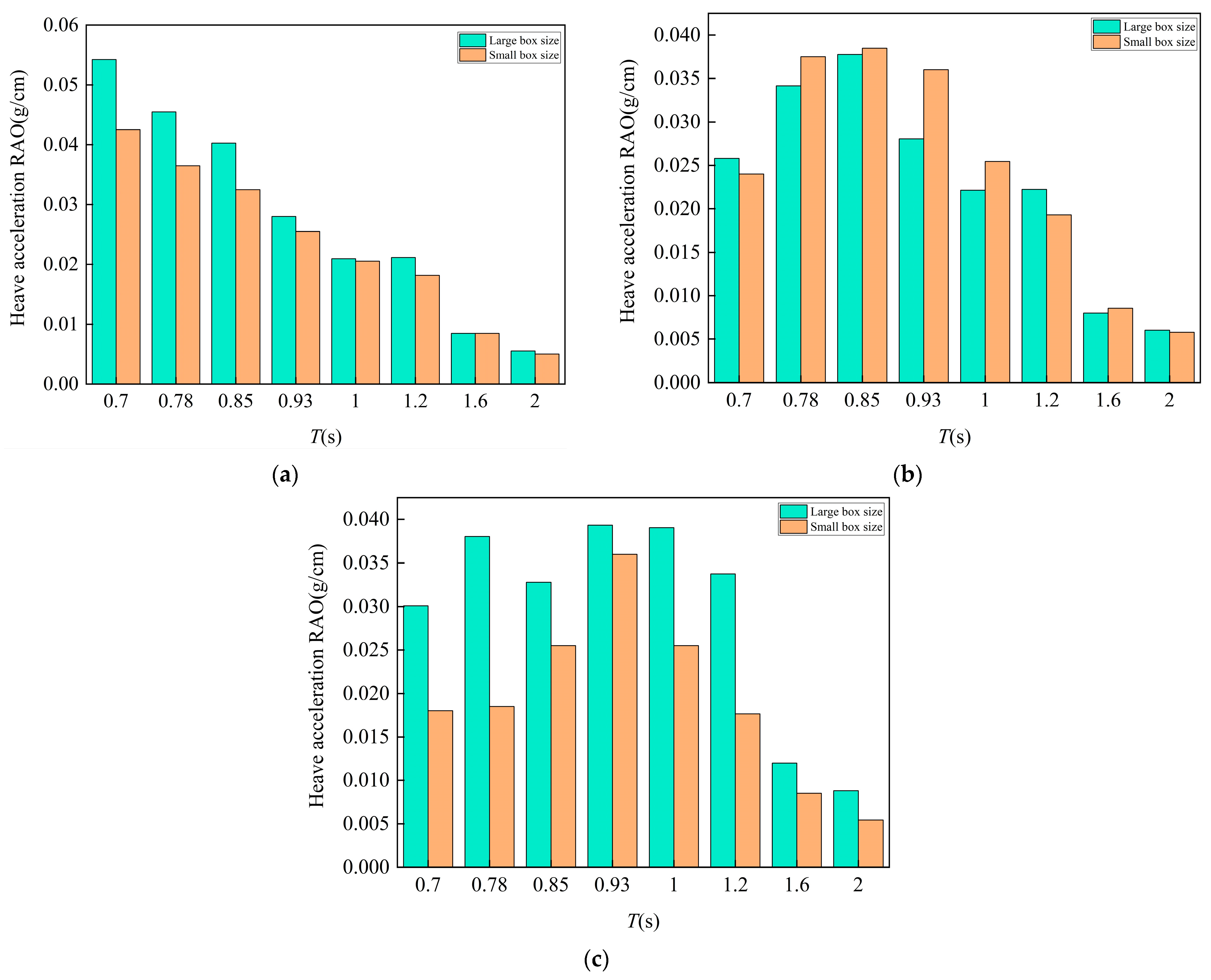
Figure 21,
Figure 22,
Figure 23 and
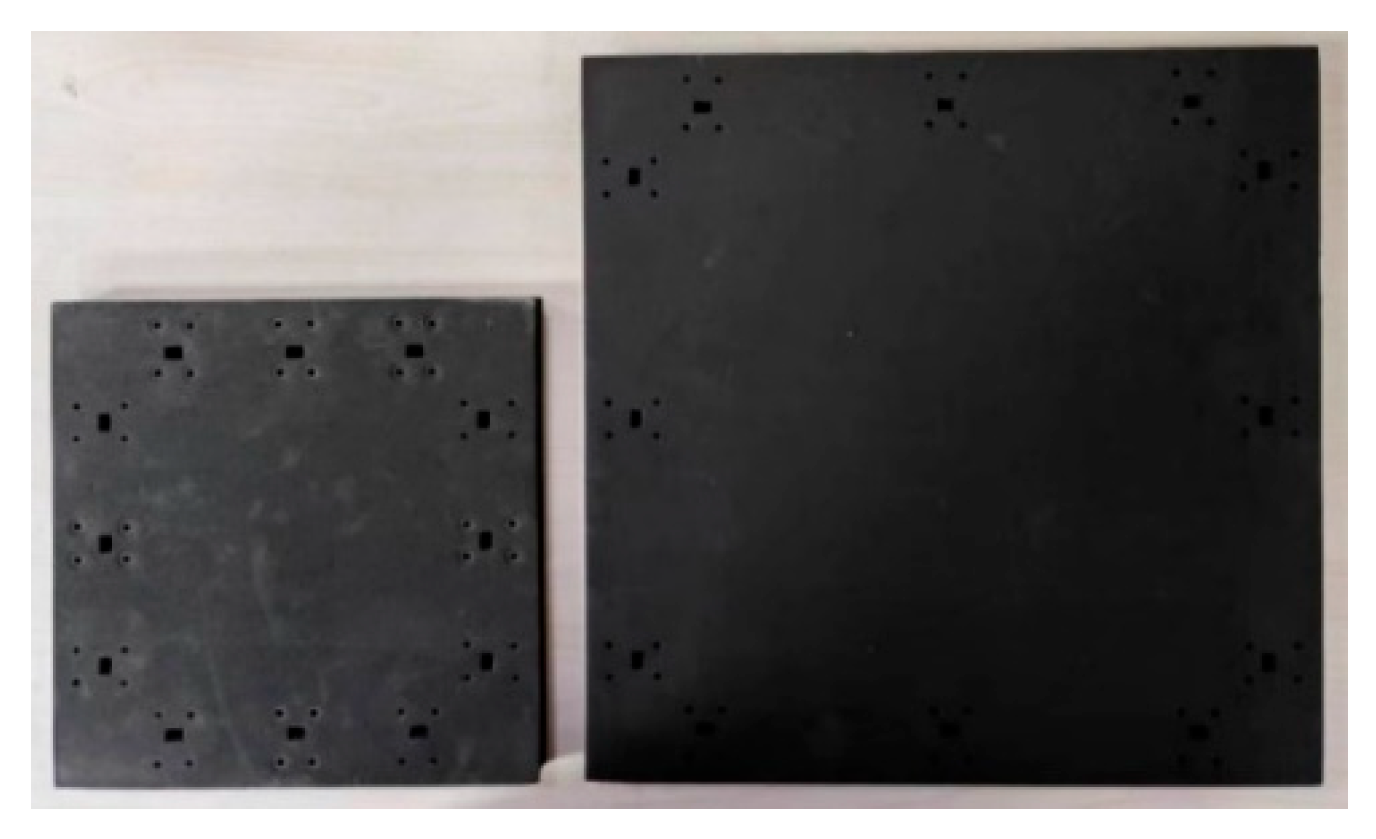
Figure 24 present the variations in surge acceleration, heave acceleration, pitch angle, and heave displacement at measurement points T1, T2, and T3 under regular wave conditions for both large and small floating box models.
Figure 21,
Figure 22,
Figure 23 and
Figure 24 compare the responses of arrays composed of small and large floating boxes under regular waves. While the surge acceleration and pitch angle responses of large floating boxes follow trends similar to their smaller counterparts, the response amplitudes are generally lower—particularly for heave-related motions, where substantial differences are observed.
These differences become increasingly evident at downstream positions (e.g., T3), where resonance peaks in small boxes are largely suppressed in the large-box configurations.
These disparities primarily stem from structural and hydrodynamic factors. For a given array footprint, using larger floaters reduces the total number of connection points, which significantly increases the overall flexural stiffness of the array. This enhanced stiffness effectively suppresses hydroelastic deformation, particularly under short-period wave conditions where structural rigidity is most influential. Additionally, the increased hydrodynamic scale of large floaters offers stronger wave resistance and greater inertia, further contributing to reduced motion responses under identical wave environments.
Notably, the influence of floater size is more prominent in vertical motion components than in horizontal or rotational responses. This suggests that vertical flexibility and wave-following behavior are especially sensitive to the structural continuity and stiffness properties introduced by floater scaling. These findings suggest that increasing floater size is an effective means of reducing vertical motion responses in offshore FPV arrays, particularly in downstream regions, within the two representative floater scales examined here.
However, it is important to acknowledge that these findings are based solely on regular wave tests in a controlled flume environment. In real offshore deployments, the dynamic behavior of floating arrays is affected by a broader set of environmental forces, including irregular wave spectra, wind loads, and currents, as well as mooring-induced constraints. These factors may alter both the magnitude and nature of structural responses observed here.
In addition, preliminary examination of the measured mooring and connector load data indicates that configurations exhibiting reduced motion responses generally correspond to lower structural load levels. Based on this initial analysis, the load variations are strongly influenced by local connection geometry and load redistribution effects, so the relationship is not strictly proportional to the global motion amplitudes.
Therefore, future studies should aim to incorporate irregular wave conditions and multi-directional loadings through both advanced numerical simulations and in situ field measurements. Such work is essential for validating the observed trends, refining structural designs, and improving the long-term stability and operational reliability of large-scale offshore FPV systems.
5. Conclusions
This study presented a comprehensive series of physical model experiments on a novel floating pontoon-type offshore photovoltaic (OFPV) structure. The investigation systematically explored how key structural parameters, including array scale, connection stiffness, and floater size, influence the hydrodynamic responses of the array under wave loading. The principal findings and engineering implications are summarized as follows:
The floating box array exhibited pronounced spatial non-uniformity in its dynamic responses under wave loading, allowing the structure to be classified into two distinct zones, the wave-facing region and the non-wave-facing region, each characterized by fundamentally different motion mechanisms. In the wave-facing region, where floaters are directly exposed to incident waves with minimal upstream shielding, the response amplitudes decreased monotonically as wavelength increased, without distinct resonance peaks. By contrast, in the non-wave-facing region, interference and wave transformation caused by upstream floaters led to response amplitudes that initially increased with wavelength, reached a prominent peak, and subsequently decreased, indicative of resonance-like behavior. Under short-period waves, motion responses were generally more pronounced in the wave-facing region, whereas under long-period wave conditions, the zone of dominant response shifted downstream into the non-wave-facing region.
Expanding the array scale significantly reduced the motion responses of the structure, mainly due to the effective shielding and energy dissipation provided by upstream floaters, a phenomenon that was especially evident under short-period wave conditions. Compared with the 5 × 5 array, the downstream (T3) heave-acceleration RAOs under short-period wave conditions were reduced by approximately 30–70% for the 5 × 15 array and by 30–80% for the 5 × 20 array, with the largest reductions occurring at the shortest tested wavelengths. In contrast, smaller-scale arrays, which may be entirely confined within the wave-facing region, lacked upstream hydrodynamic interaction, thus limiting the representativeness of their observed responses for full-scale applications. For engineering practice, this implies that the array length should be sufficiently increased so that part of the system extends into the non-wave-facing zone, thereby improving overall motion stability and ensuring more reliable offshore performance.
Increasing the connection stiffness between adjacent floating boxes was shown to effectively attenuate the amplitude of motion responses while maintaining the vertically flexible floating structure (VFFS) behavior of the array. Although variations in stiffness had only a minor effect on the overall response trends, the sensitivity of motion reduction varied spatially, with the non-wave-facing region exhibiting greater responsiveness to stiffness changes. Increasing the connection stiffness from the baseline level to approximately twice the baseline reduced the downstream (T3) heave-acceleration RAOs by about 20–35% under short-period wave conditions, whereas further stiffening to three times the baseline provided no systematic additional reduction and in some cases even led to marginal increases, demonstrating a clear diminishing-return effect.
Significant differences in vertical motion responses were observed between large and small floating boxes, while horizontal motion responses remained largely comparable. Comparative tests demonstrated that both types followed similar trends in surge acceleration and pitch angle across different wave periods, with large boxes consistently exhibiting lower amplitudes. However, for vertical motions, particularly heave displacement, large floating boxes showed a clear advantage by suppressing resonance-like peaks observed in small-box arrays, especially under short-period wave conditions. Under short-period wave conditions, the large floaters reduced the downstream (T3) steady-state heave amplitude by approximately 13–17% relative to the small-floater configuration, with the most pronounced reductions occurring in the period range of 0.85–0.93 s. These effects highlight the superior capability of large floaters to reduce vertical motion instabilities and improve overall structural stability.
From an engineering-design perspective, a minimum array length exceeding the spatial extent of the wave-facing region is required to ensure representative hydrodynamic behavior. In the present experiments, arrays longer than 5 × 10 floating units exhibited response convergence between front and rear boxes and substantially reduced downstream motions. With respect to connection stiffness, increasing stiffness from the baseline level to approximately twice the baseline yields the most pronounced motion reduction, whereas further stiffening provides only marginal hydrodynamic benefits, indicating an optimal stiffness range and the need to avoid over-stiffness. Moreover, increasing floater size is more effective than increasing connection stiffness for suppressing vertical motion responses, particularly under short-period wave conditions. Floater scaling enhances hydrostatic restoring forces and inertia, whereas stiffness tuning mainly serves as a secondary parameter for fine-scale adjustment of downstream flexibility.
In summary, this study quantitatively examined the influence of array scale, connector stiffness, and floater size on the hydrodynamic responses of pontoon-type offshore FPV platforms. The results clarify the mechanisms underlying response characteristics across different structural configurations and provide useful reference data for guiding array design in engineering applications. Under the regular-wave excitation considered here, the response behavior is primarily governed by frequency-controlled wave forcing, whereas irregular excitation and additional environmental effects such as wind loading and mooring dynamics are expected to modify the spectral distribution of array responses. Future work will consider irregular waves, combined wind–wave–current effects, and long-term operational conditions to further support the design and assessment of offshore FPV systems in realistic marine environments.





 and
and