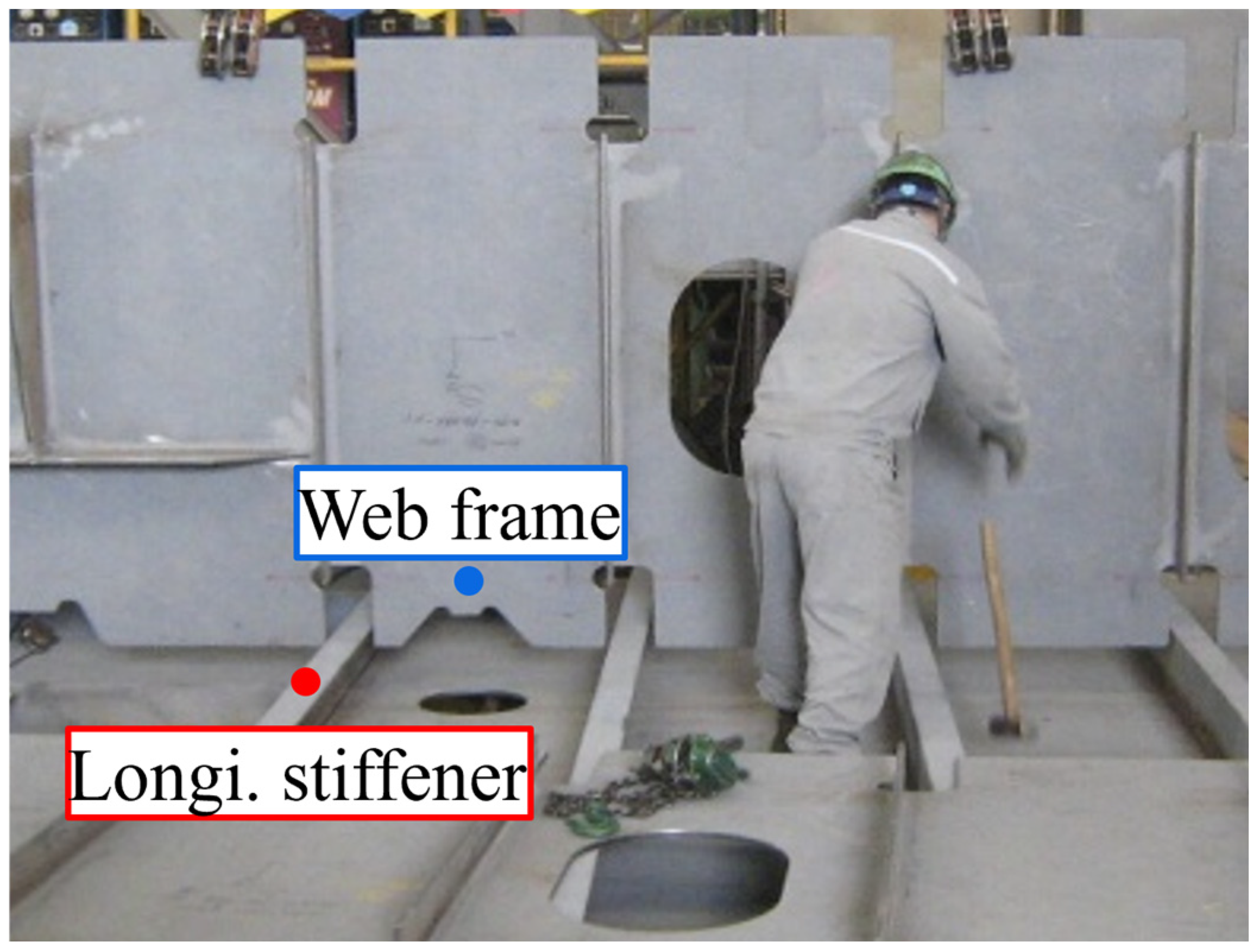
Figure 1.
Double-bottom structure of a ship showing the web frame and longitudinal stiffener (Longi. Stiffener). Reproduced with permission from Ref. [
1]. Copyright 2024 JL Heavy Industries Co., Ltd.
Figure 1.
Double-bottom structure of a ship showing the web frame and longitudinal stiffener (Longi. Stiffener). Reproduced with permission from Ref. [
1]. Copyright 2024 JL Heavy Industries Co., Ltd.
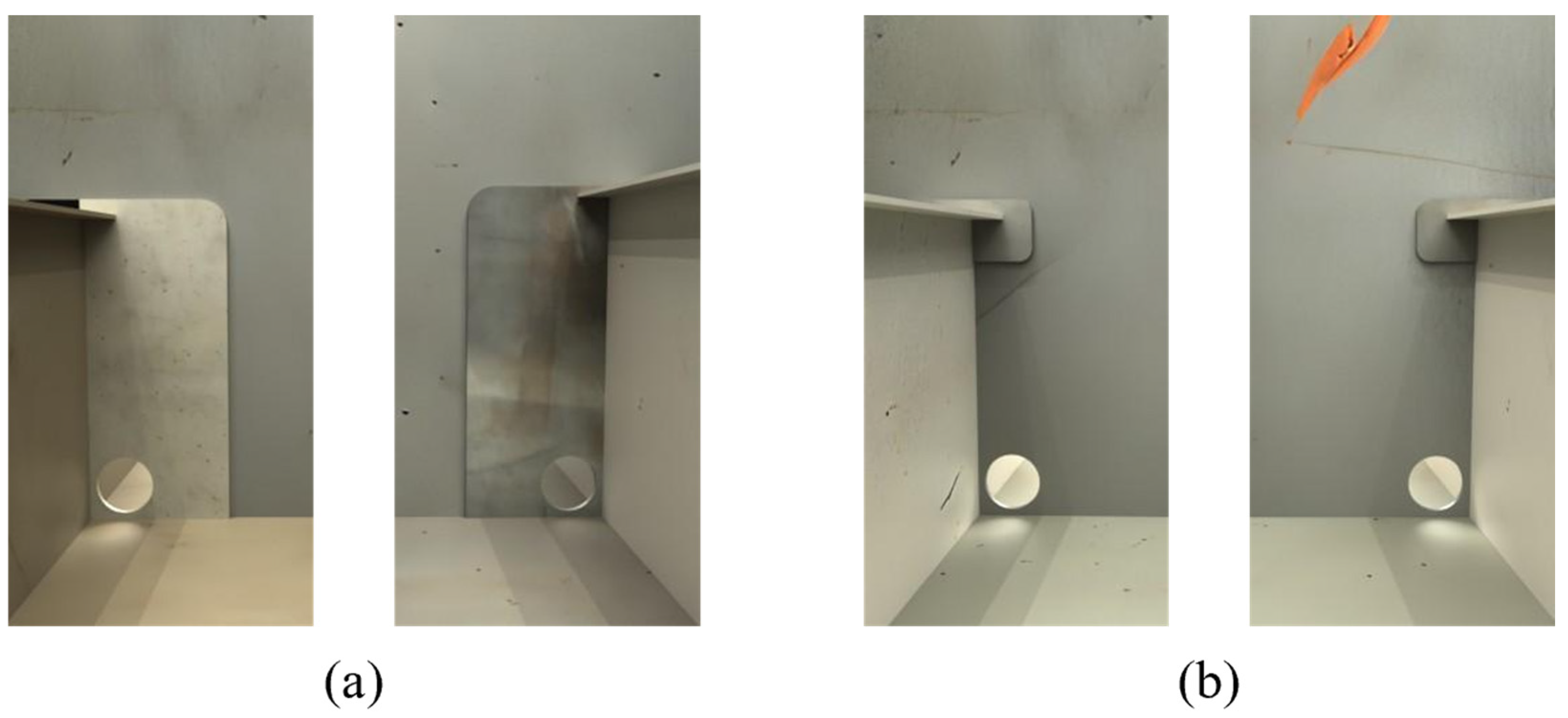
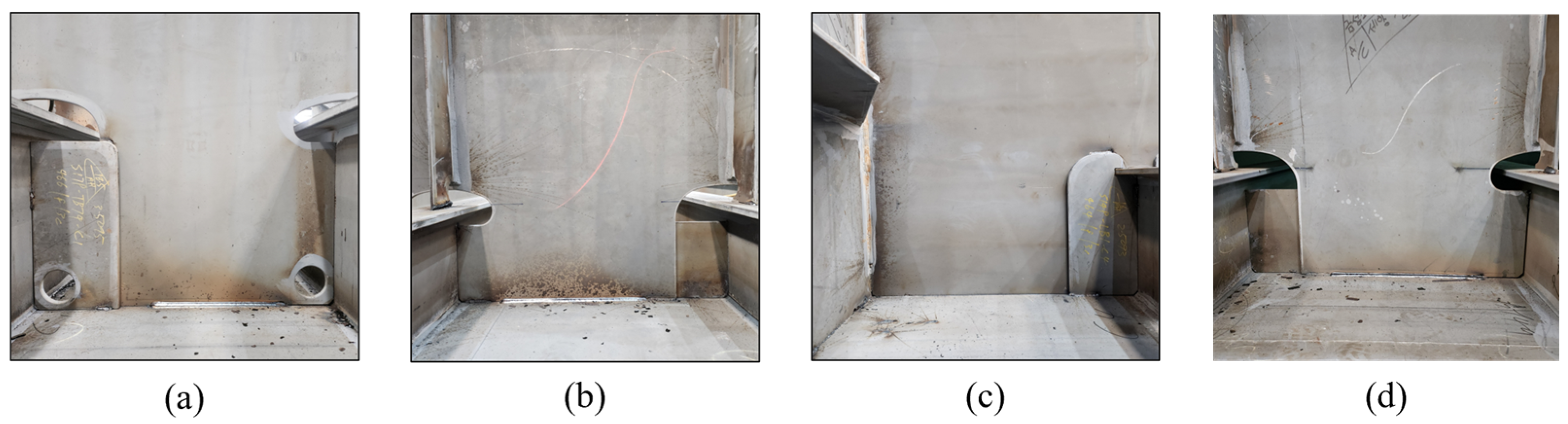
Figure 2.
Various shapes of U-shaped weld joints: (a) T6ASNWNG; (b) T7NSNWNG; (c) T8NSRWLG; (d) T9NSNWNG.
Figure 2.
Various shapes of U-shaped weld joints: (a) T6ASNWNG; (b) T7NSNWNG; (c) T8NSRWLG; (d) T9NSNWNG.
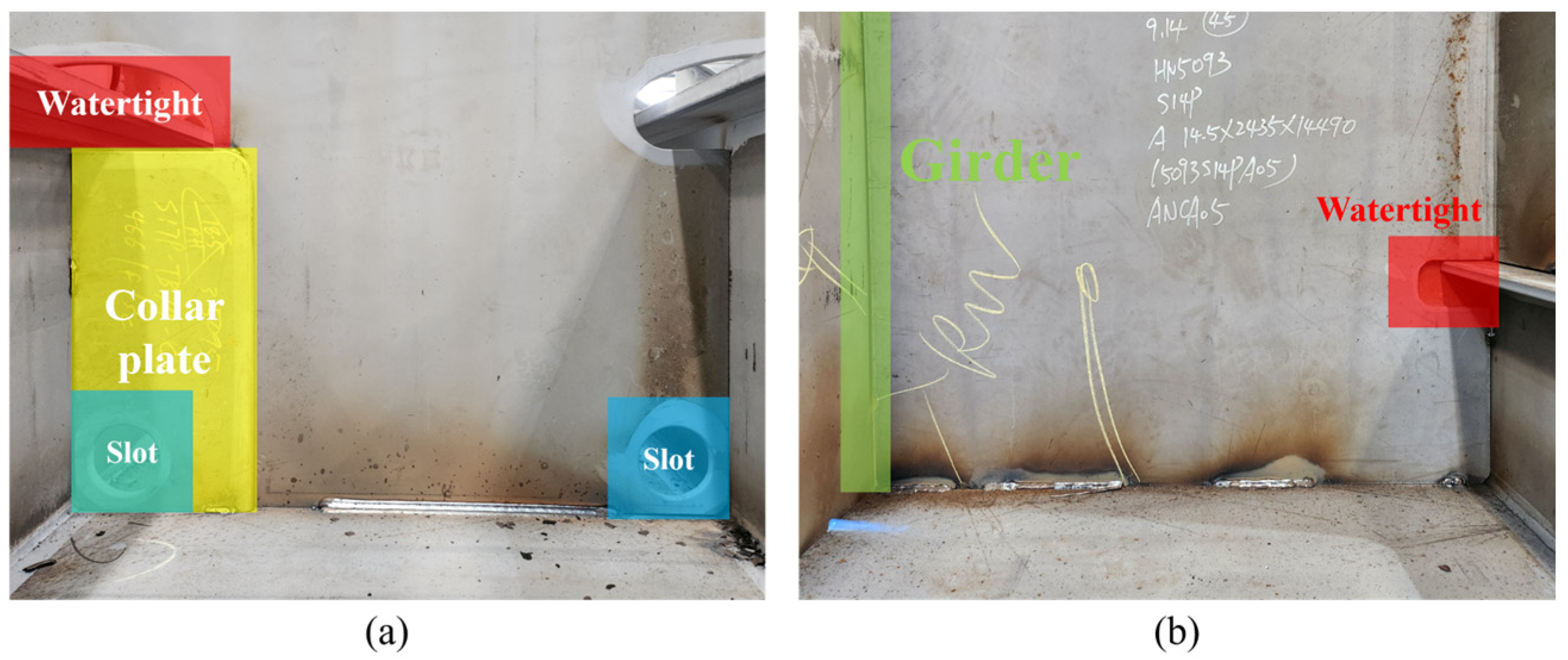
Figure 3.
Structural components of U-shaped weld joints in a double-bottom ship structure: (a) collar plate, slot, and watertight feature; (b) girder and watertight feature.
Figure 3.
Structural components of U-shaped weld joints in a double-bottom ship structure: (a) collar plate, slot, and watertight feature; (b) girder and watertight feature.
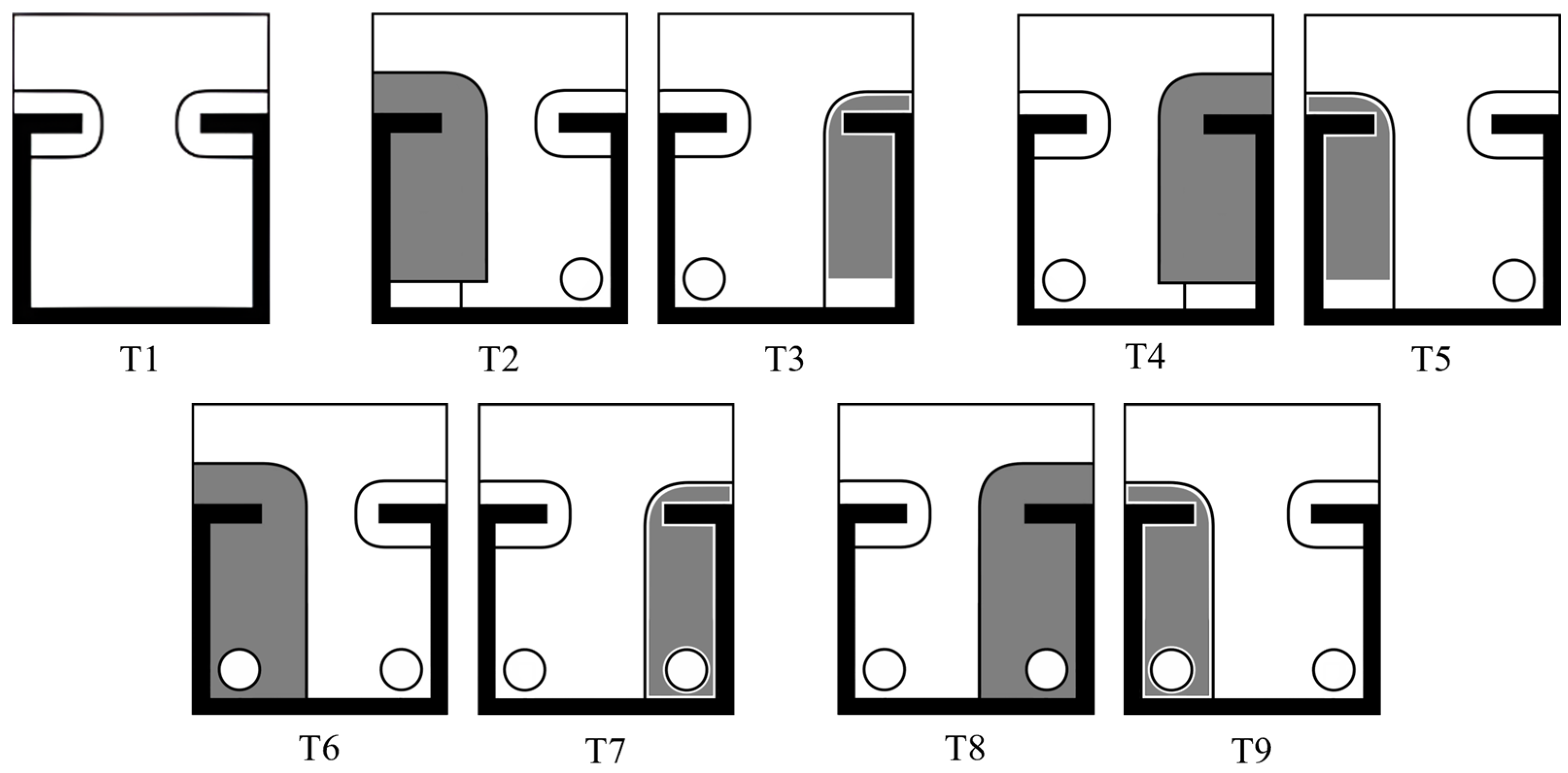
Figure 4.
Differentiation by collar plate types: T1, T2, T3, T4, T5, T6, T7, T8, and T9.
Figure 4.
Differentiation by collar plate types: T1, T2, T3, T4, T5, T6, T7, T8, and T9.
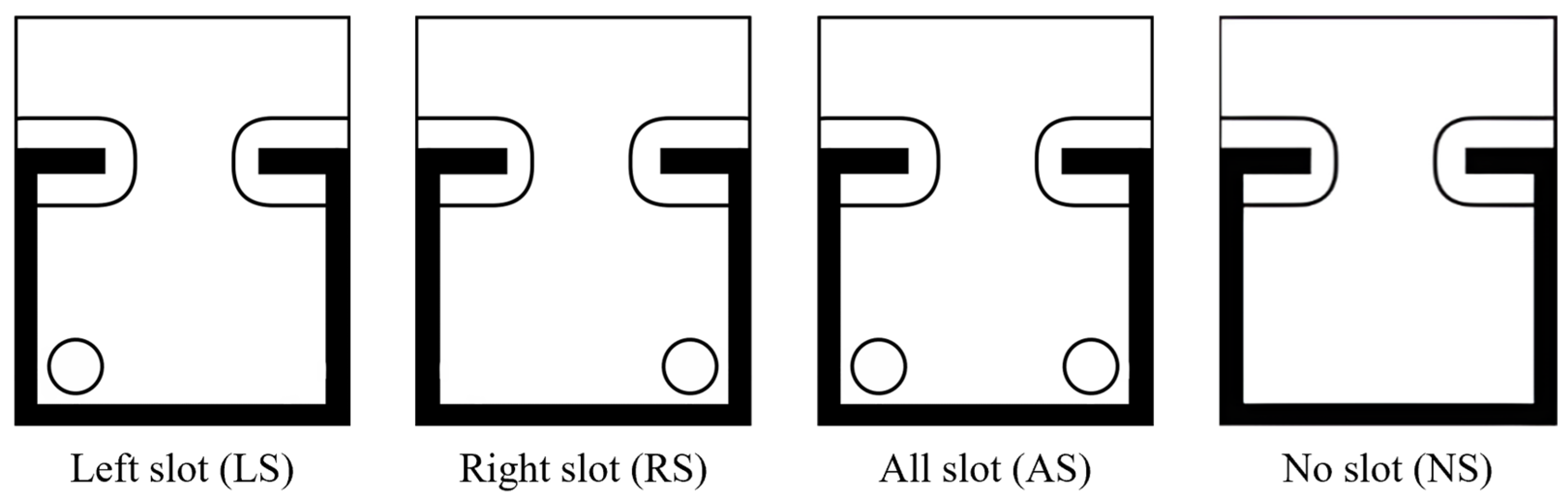
Figure 5.
Differentiation by slot: left slot (LS), right slot (RS), all slot (AS), and no slot (NS).
Figure 5.
Differentiation by slot: left slot (LS), right slot (RS), all slot (AS), and no slot (NS).
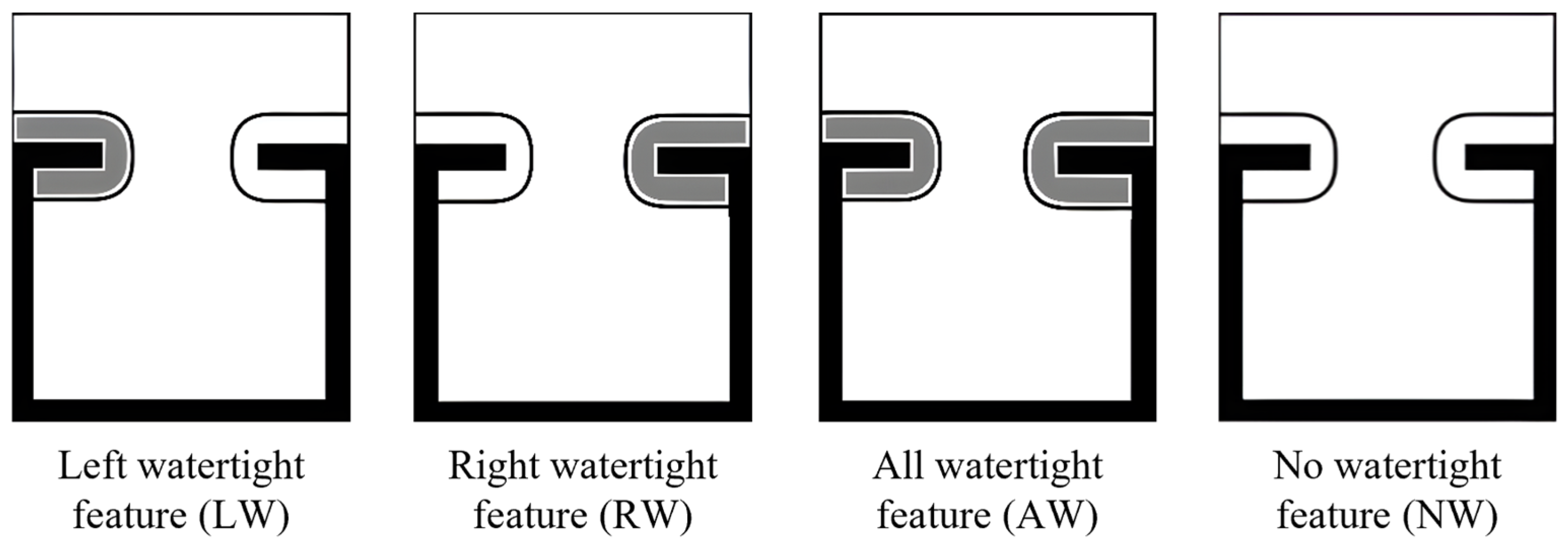
Figure 6.
Differentiation by watertight feature: left watertight feature (LW), right watertight feature (RW), all watertight feature (AW), and no watertight feature (NW).
Figure 6.
Differentiation by watertight feature: left watertight feature (LW), right watertight feature (RW), all watertight feature (AW), and no watertight feature (NW).
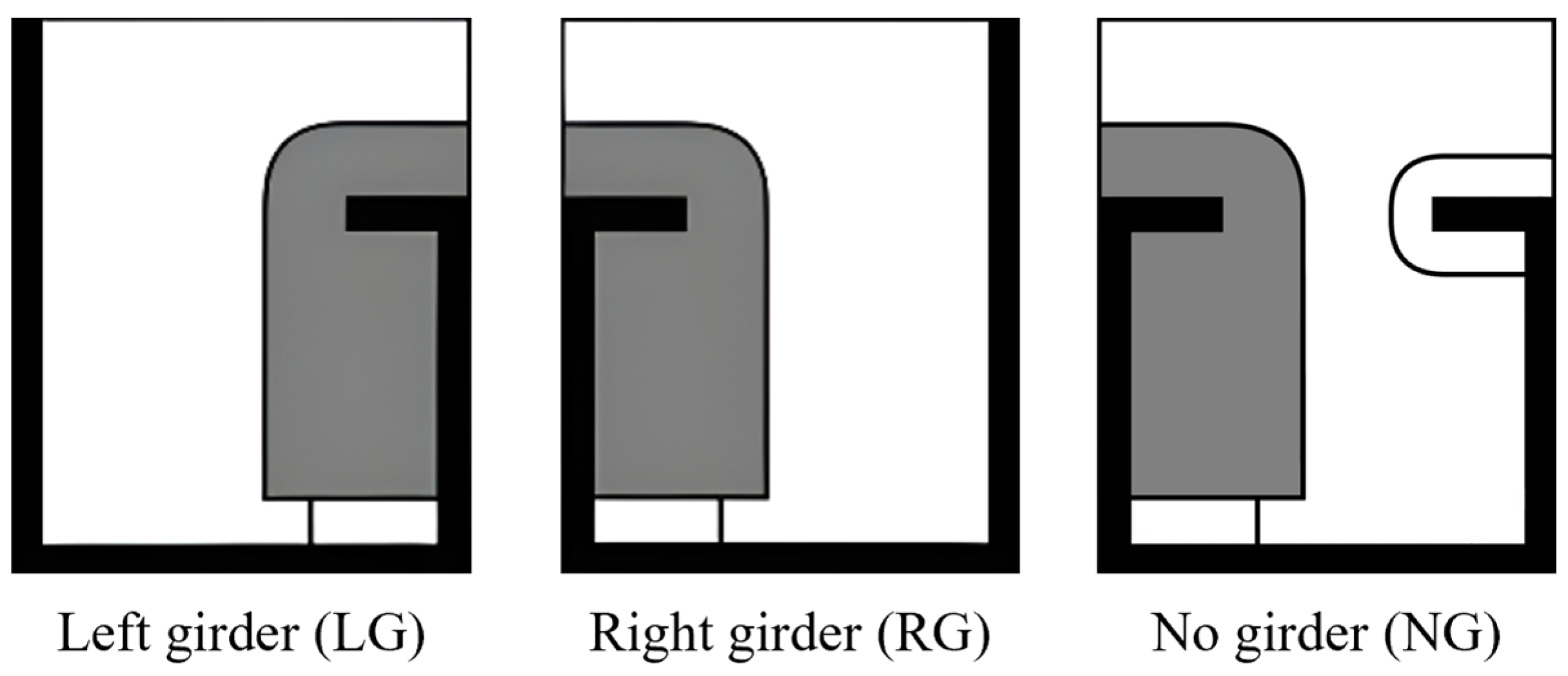
Figure 7.
Differentiation by girder: left girder (LG), right girder (RG), and no girder (NG).
Figure 7.
Differentiation by girder: left girder (LG), right girder (RG), and no girder (NG).
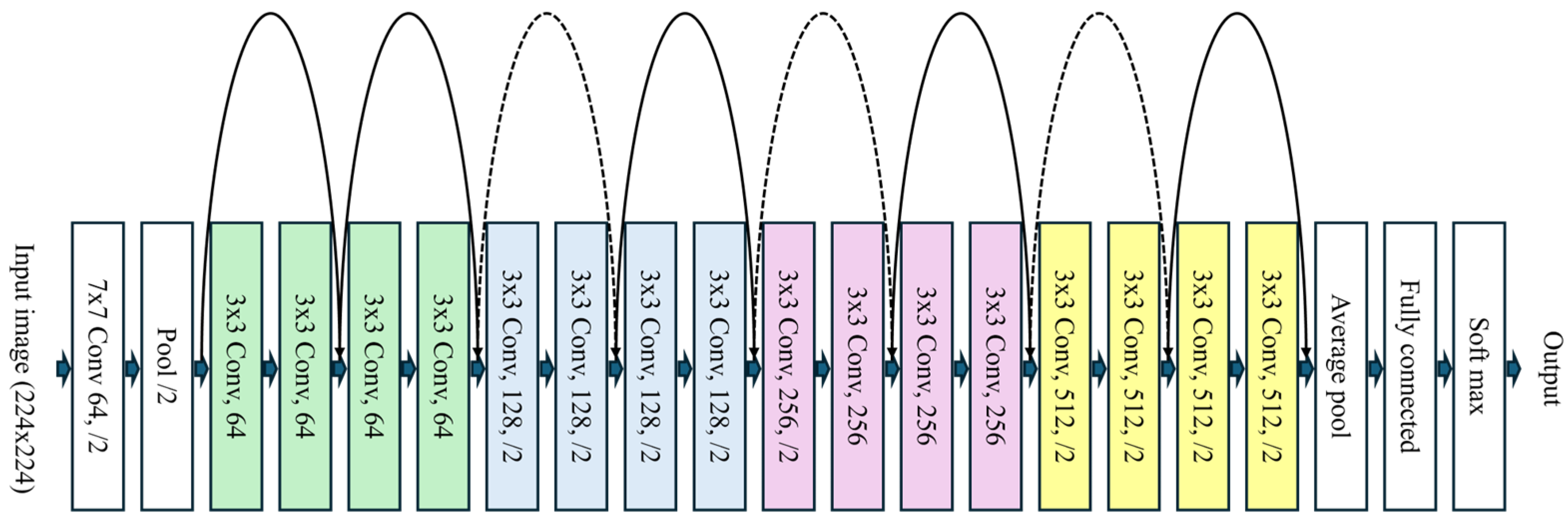
Figure 8.
Residual learning structure of ResNet-18 (schematic illustration by the authors based on [
15]).
Figure 8.
Residual learning structure of ResNet-18 (schematic illustration by the authors based on [
15]).
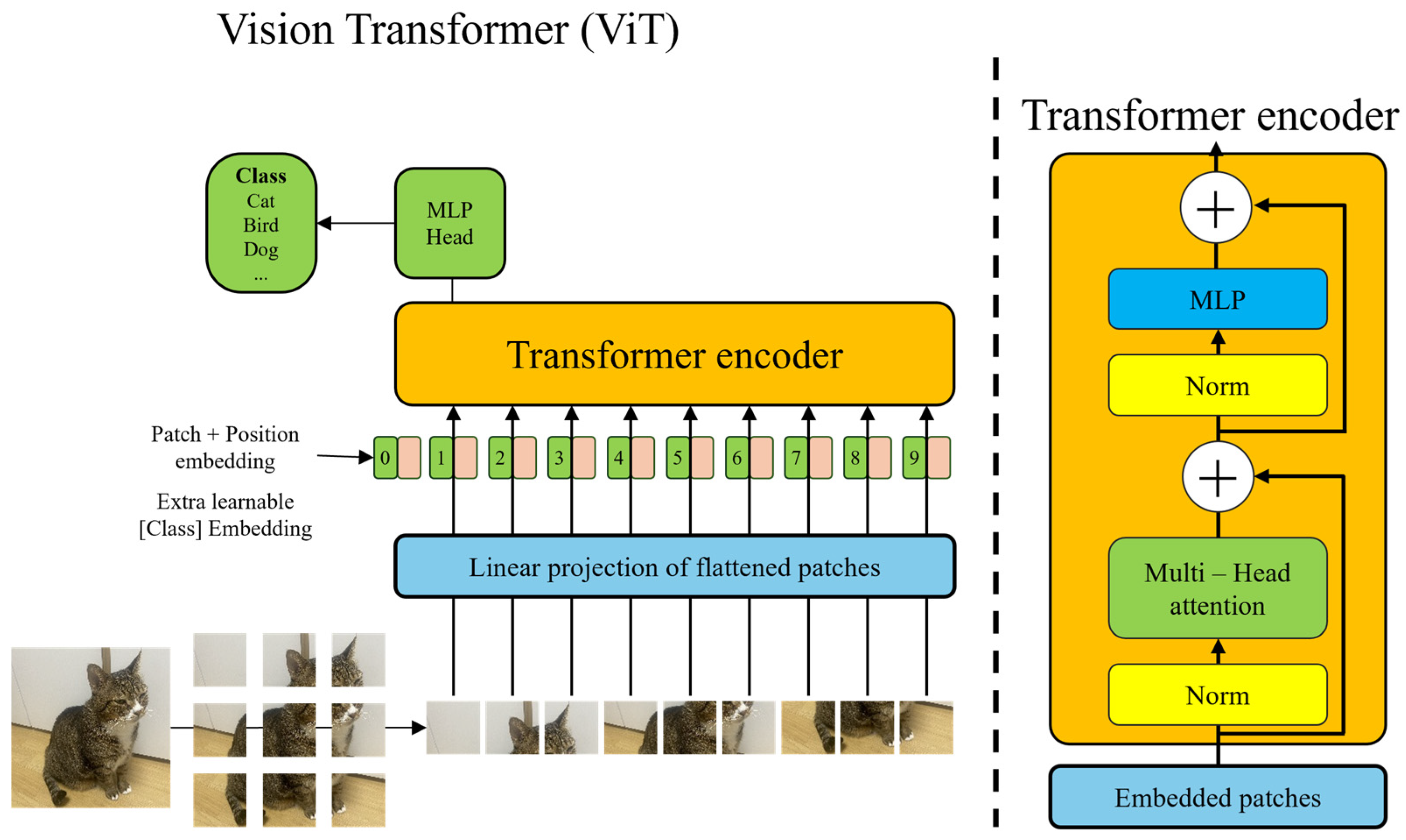
Figure 9.
Vision Transformer structure (schematic illustration by the authors based on [
16]).
Figure 9.
Vision Transformer structure (schematic illustration by the authors based on [
16]).
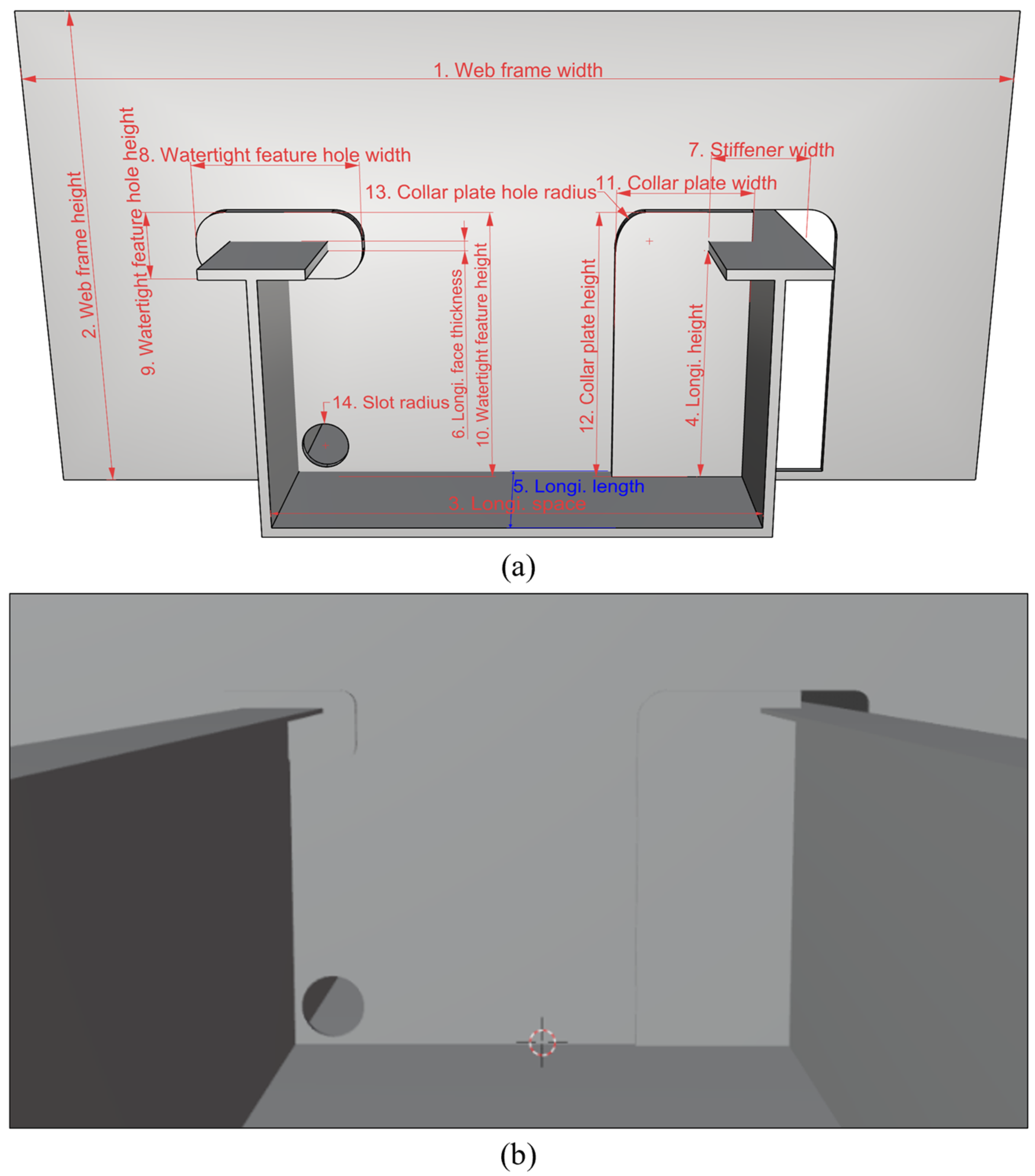
Figure 10.
Example of dimensional parameters for a U-shaped weld joint: (
a) U-shaped weld joint modeling parameters; (
b) CAD model generated using the parameters listed in
Table 1.
Figure 10.
Example of dimensional parameters for a U-shaped weld joint: (
a) U-shaped weld joint modeling parameters; (
b) CAD model generated using the parameters listed in
Table 1.
Figure 11.
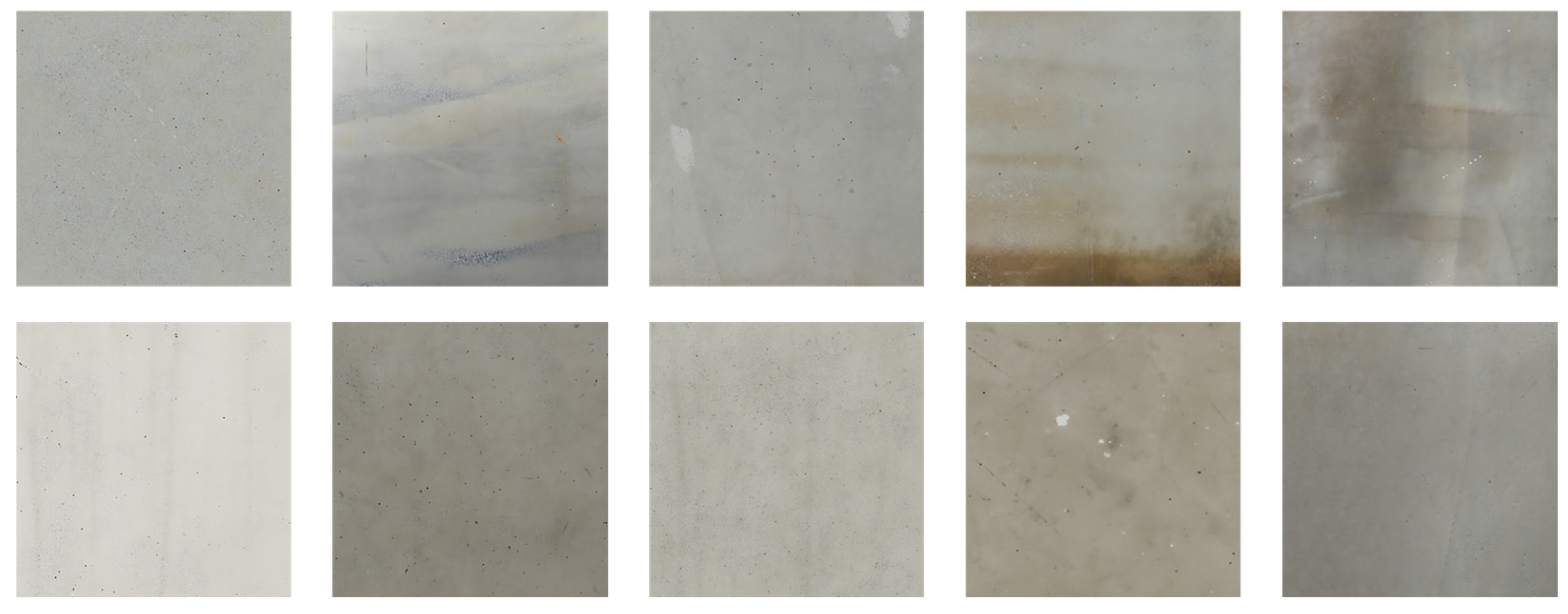
Steel plate textures collected from shipyard environments.
Figure 11.
Steel plate textures collected from shipyard environments.
Figure 12.
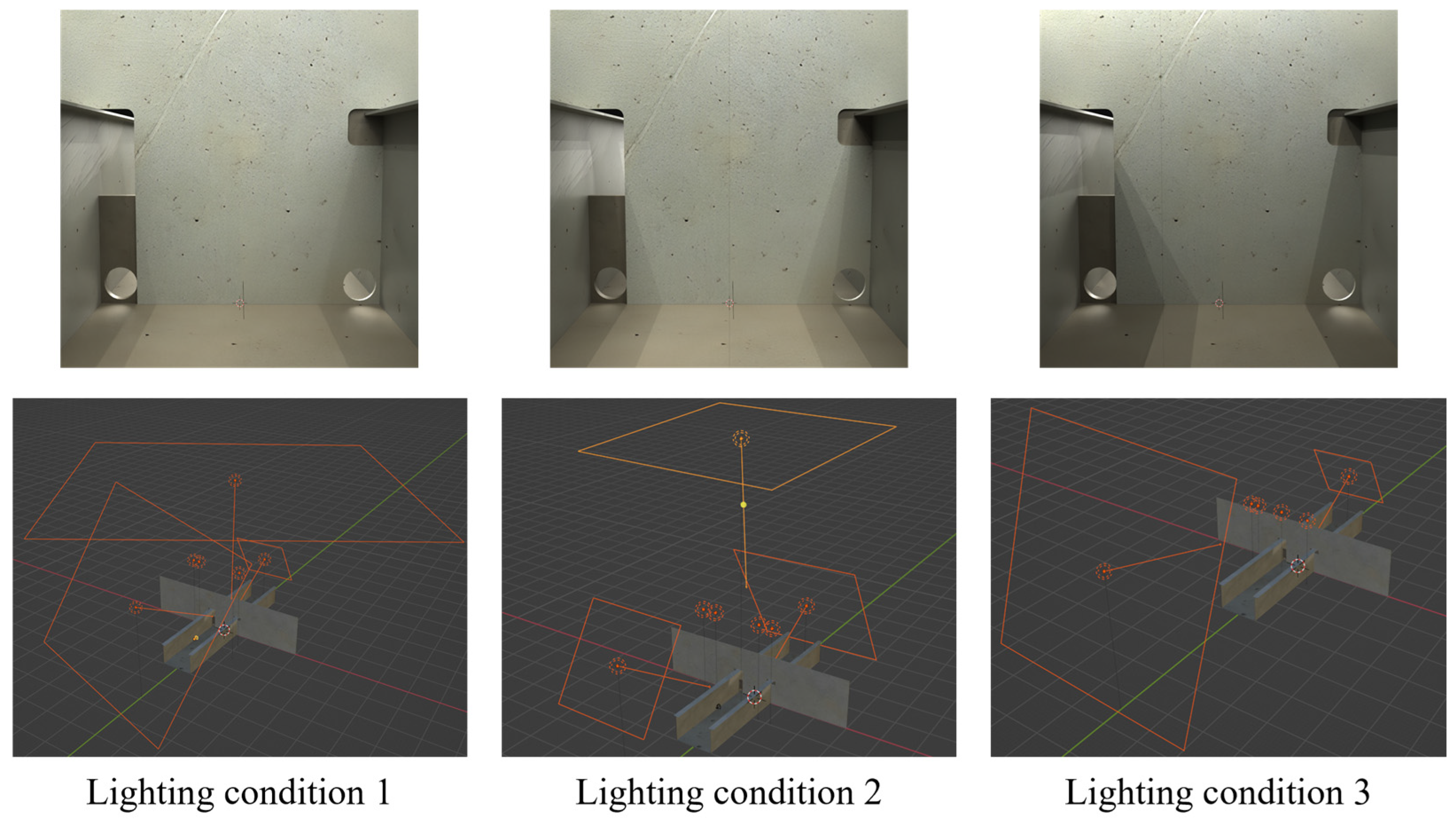
Three lighting conditions configured in Blender and the corresponding rendered examples for synthetic image generation.
Figure 12.
Three lighting conditions configured in Blender and the corresponding rendered examples for synthetic image generation.
Figure 13.
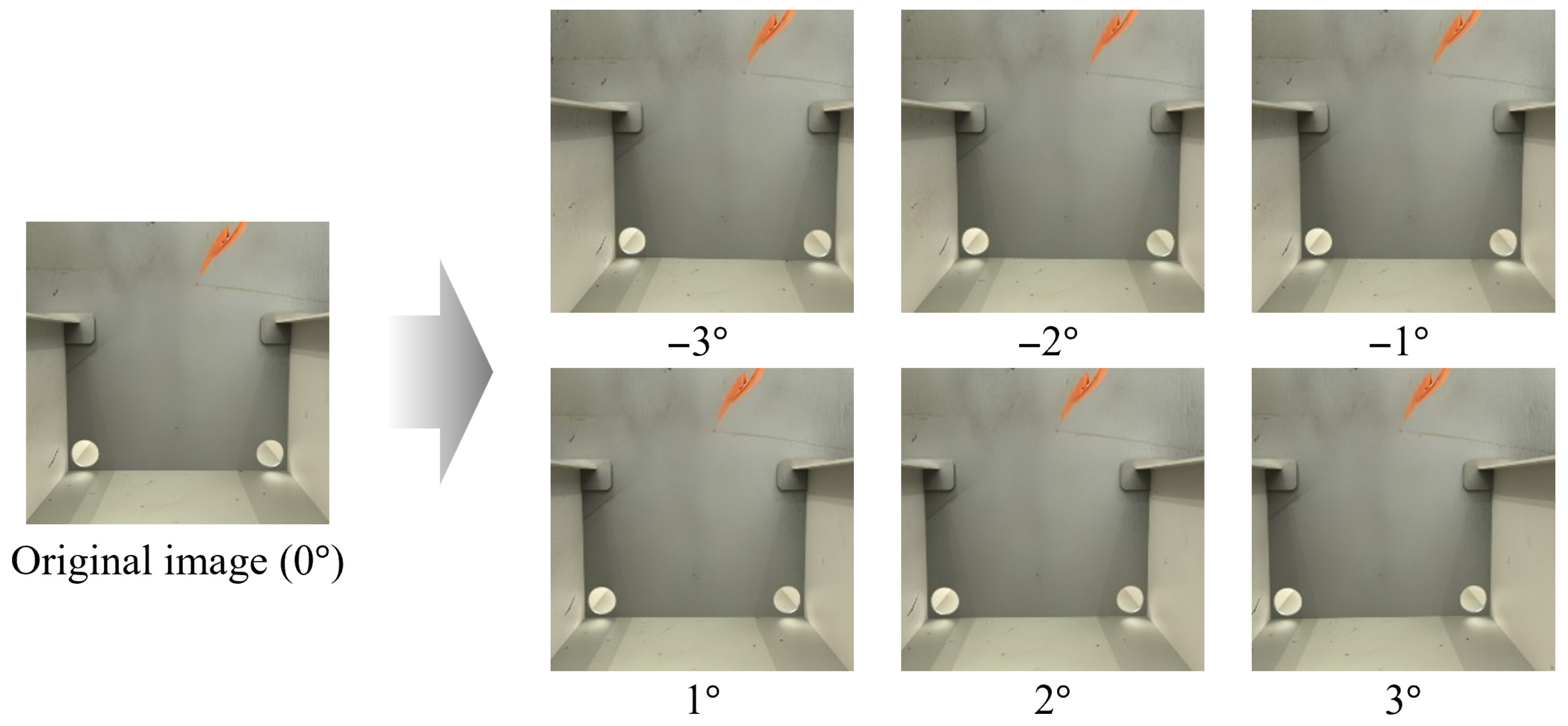
Synthetic renderings of U-shaped weld joints rendered at seven camera angles ().
Figure 13.
Synthetic renderings of U-shaped weld joints rendered at seven camera angles ().
Figure 14.
Rendering Development Process of U-shaped weld joints.
Figure 14.
Rendering Development Process of U-shaped weld joints.
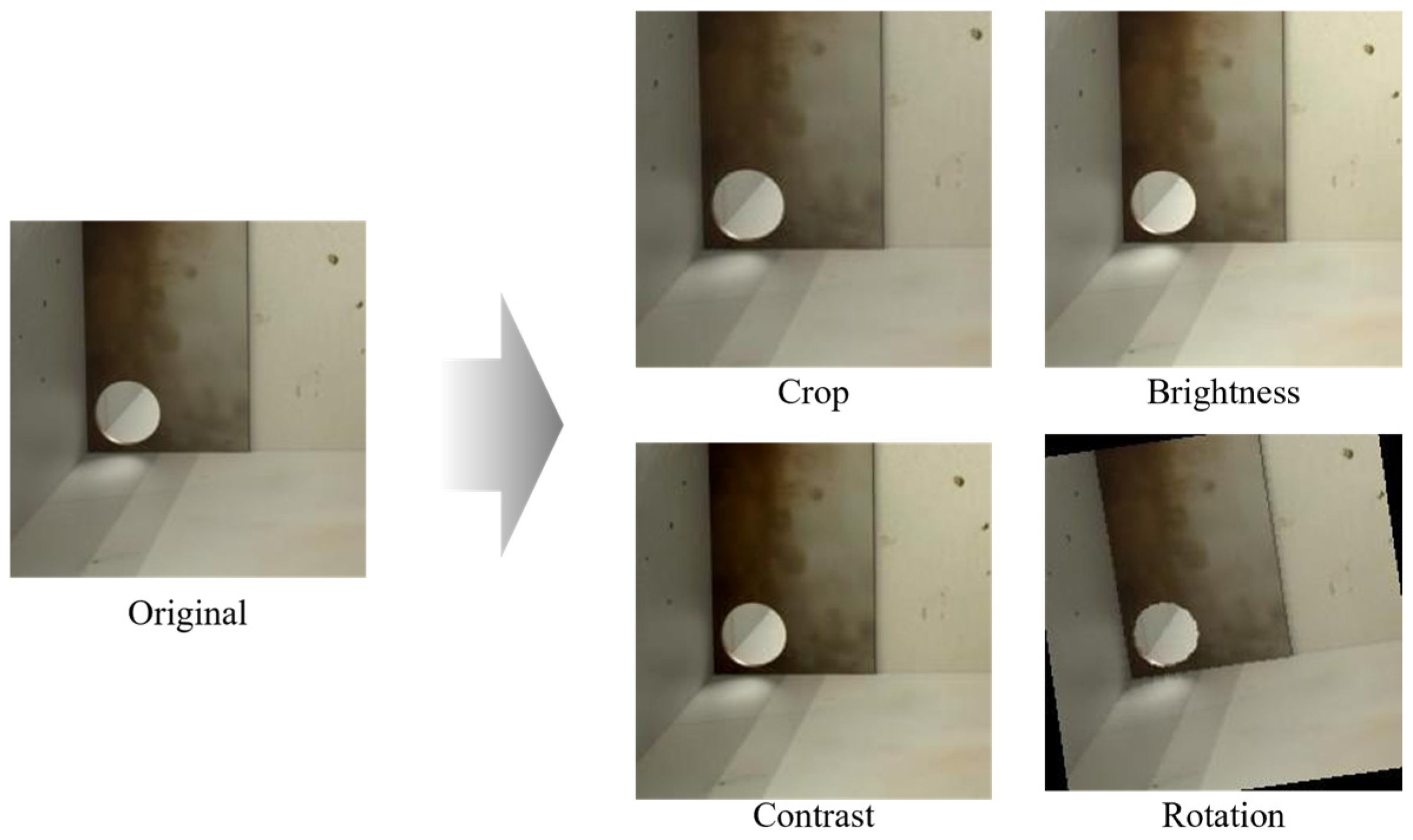
Figure 15.
Examples of data augmentation methods used in this study.
Figure 15.
Examples of data augmentation methods used in this study.
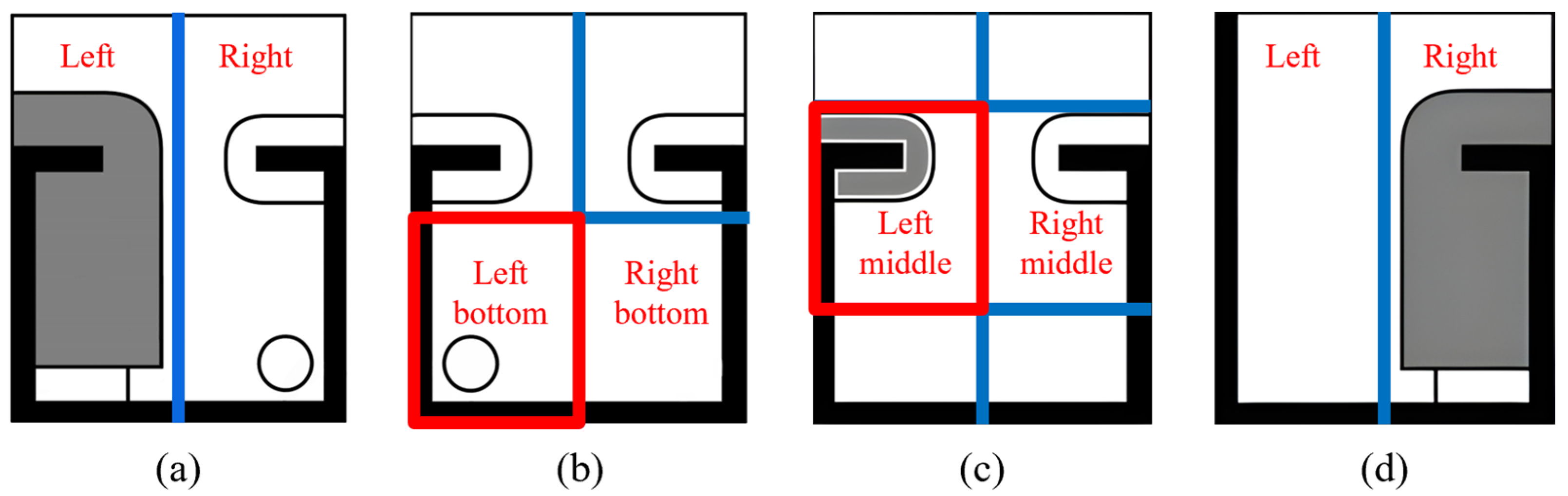
Figure 16.
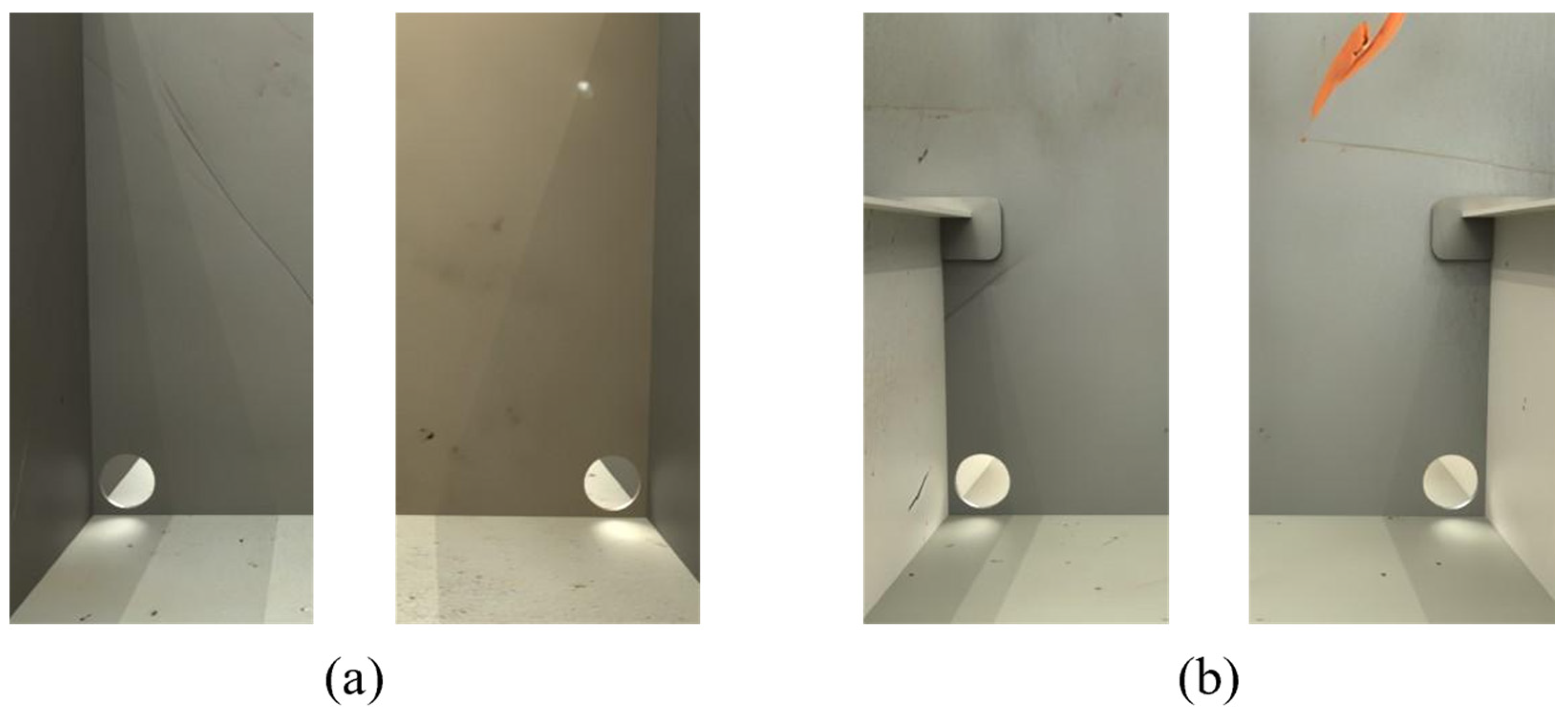
Split regions for each feature category: (a) Collar plate type; (b) Slot; (c) Watertight feature; (d) Girder.
Figure 16.
Split regions for each feature category: (a) Collar plate type; (b) Slot; (c) Watertight feature; (d) Girder.
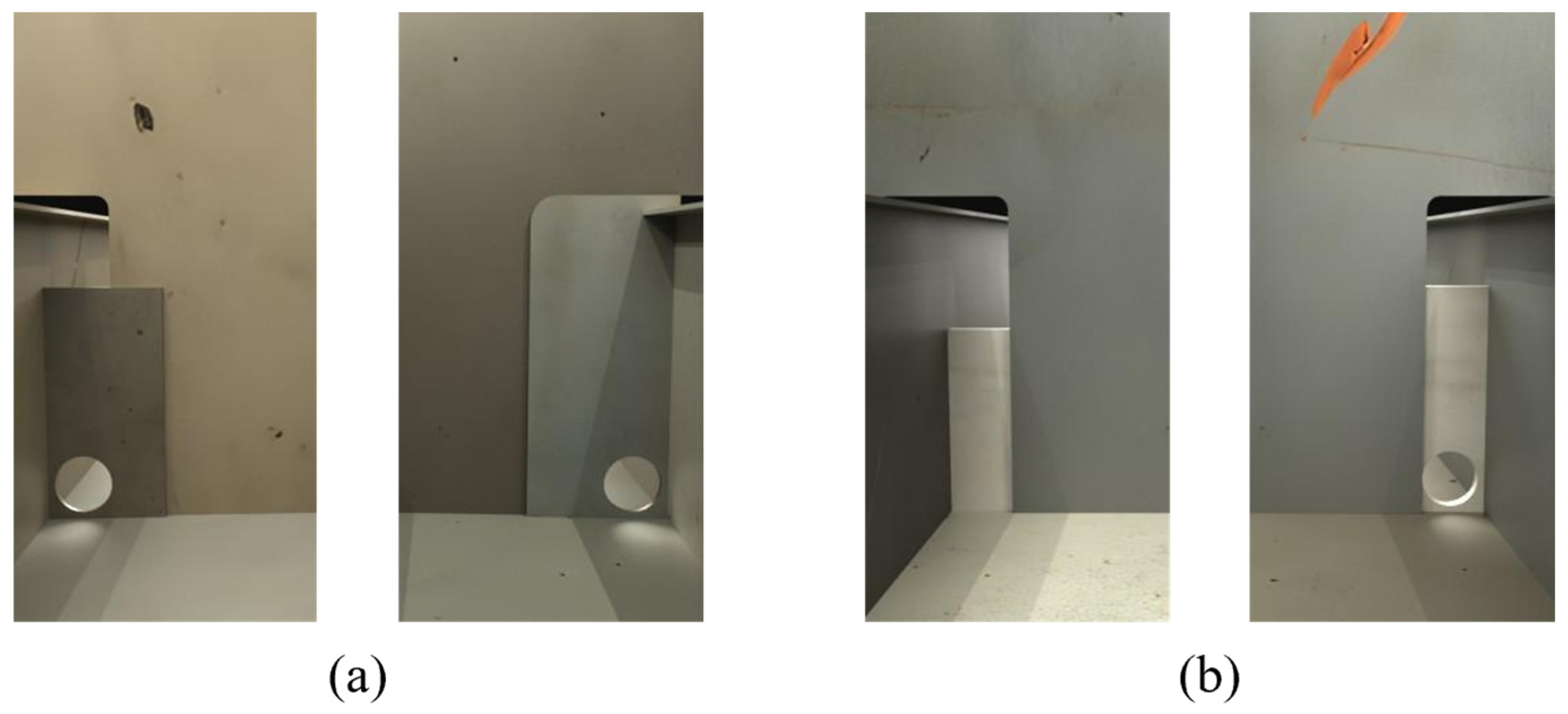
Figure 17.
Class composition based on the presence or absence of a collar plate: (a) Collar plate present; (b) Collar plate absent.
Figure 17.
Class composition based on the presence or absence of a collar plate: (a) Collar plate present; (b) Collar plate absent.
Figure 18.
Class composition according to the front or rear position of the collar plate: (a) Collar plate front; (b) Collar plate rear.
Figure 18.
Class composition according to the front or rear position of the collar plate: (a) Collar plate front; (b) Collar plate rear.
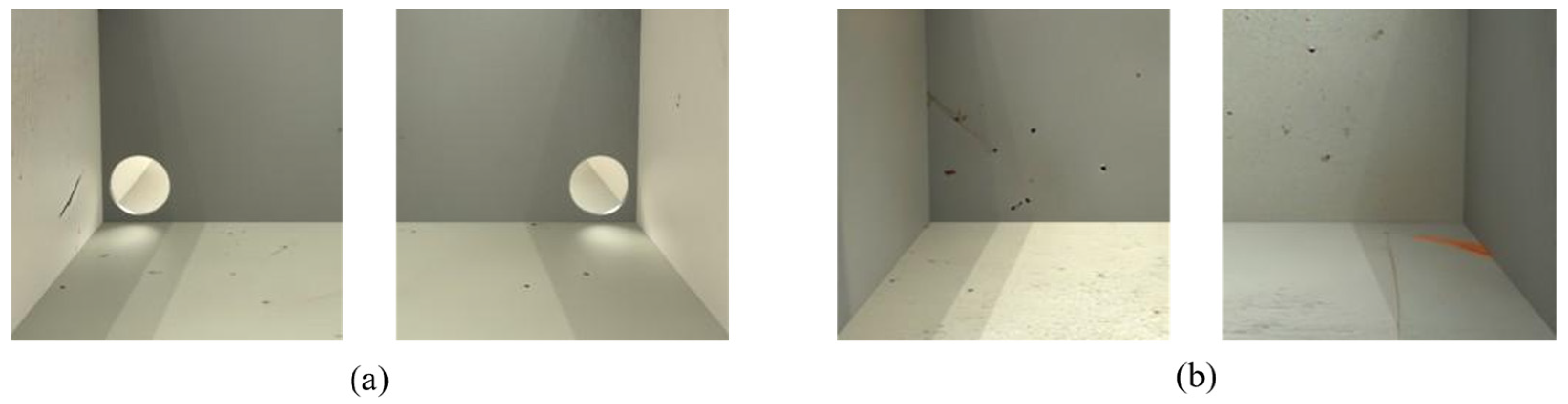
Figure 19.
Class composition based on the presence or absence of a slot: (a) Slot present; (b) Slot absent.
Figure 19.
Class composition based on the presence or absence of a slot: (a) Slot present; (b) Slot absent.
Figure 20.
Class composition based on the presence or absence of a watertight feature: (a) Watertight feature present; (b) Watertight feature absent.
Figure 20.
Class composition based on the presence or absence of a watertight feature: (a) Watertight feature present; (b) Watertight feature absent.
Figure 21.
Class composition based on the presence or absence of a girder: (a) Girder present; (b) Girder absent.
Figure 21.
Class composition based on the presence or absence of a girder: (a) Girder present; (b) Girder absent.
Table 1.
Parameters used for U-shaped weld joint modeling.
Table 1.
Parameters used for U-shaped weld joint modeling.
| Parameter Number | Parameter | Value (mm) |
|---|
| 1 | Web Frame Width | 2400 |
| 2 | Web Frame Height | 1200 |
| 3 | Longi. Space | 840 |
| 4 | Longi. Height | 560 |
| 5 | Longi. Length | 1200 |
| 6 | Longi. Face Thickness | 12 |
| 7 | Stiffener Width | 48 |
| 8 | Watertight Feature Hole Width | 65 |
| 9 | Watertight Feature Hole Height | 56 |
| 10 | Watertight Feature Height | 588 |
| 11 | Collar Plate Width | 264 |
| 12 | Collar Plate Height | 400 |
| 13 | Collar plate Hole Radius | 24 |
| 14 | Slot Radius | 48 |
Table 2.
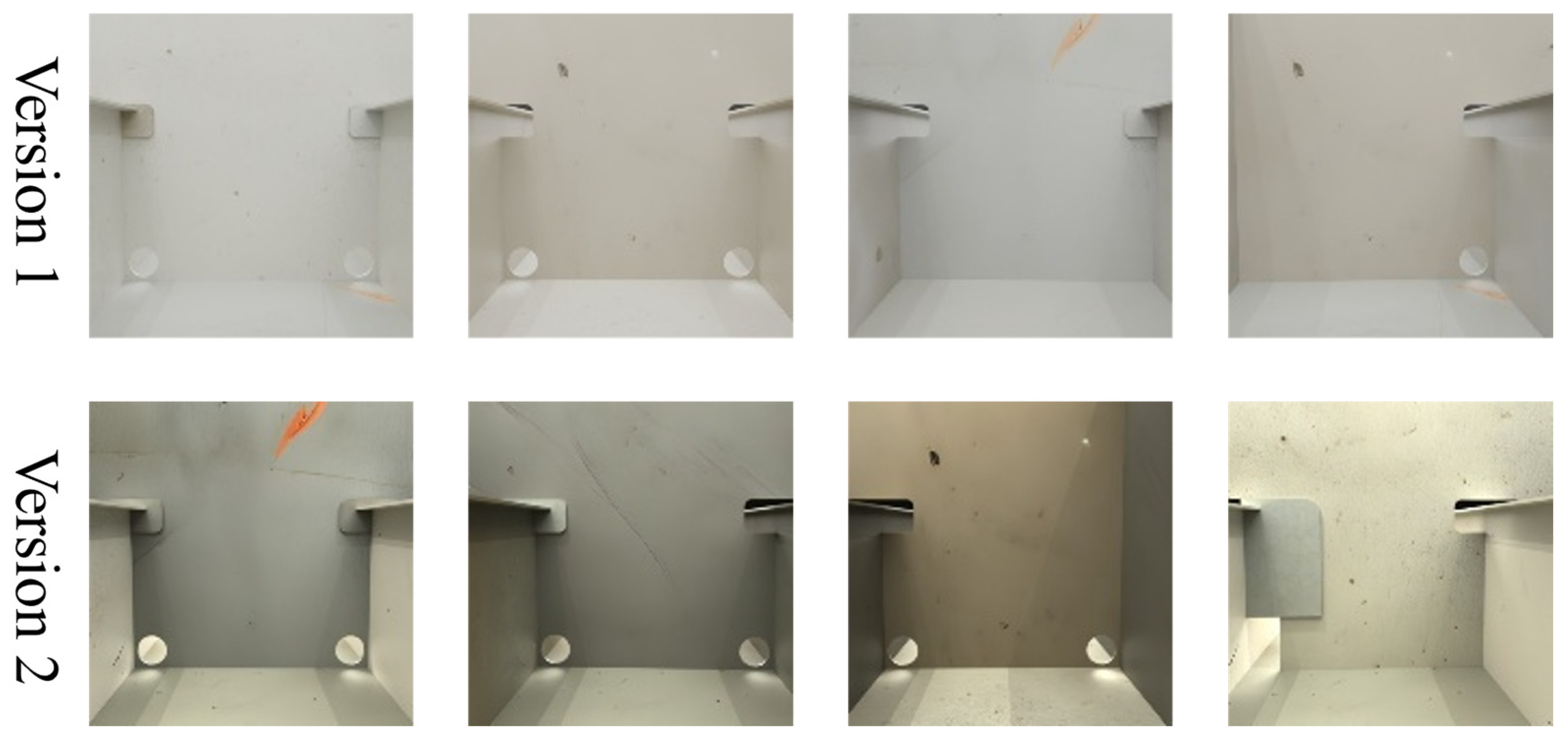
Changes in Blender rendering settings.
Table 2.
Changes in Blender rendering settings.
| | Version 1 | Version 2 |
|---|
| Noise Threshold | Enabled (0.01) | Disabled |
| View Transform | Filmic | Raw |
Table 3.
Comparison of classification results across slot synthetic image versions 1–2.
Table 3.
Comparison of classification results across slot synthetic image versions 1–2.
| | Number of Classes | Classification Model | Accuracy (%) |
|---|
| Version 1 | 4 | ResNet-18 | 75.44 |
| ViT | 67.25 |
| Version 2 | 4 | ResNet-18 | 76.02 |
| ViT | 71.53 |
Table 4.
Classification performance using full-shape images for four feature types.
Table 4.
Classification performance using full-shape images for four feature types.
| Feature | Number of Classes | Classification Model | Accuracy (%) |
|---|
| Collar Plate Type | 5 | ResNet-18 | 52.63 |
| ViT | 59.45 |
| Slot | 4 | ResNet-18 | 76.02 |
| ViT | 71.53 |
| Watertight Feature | 4 | ResNet-18 | 54.97 |
| ViT | 36.45 |
| Girder | 3 | ResNet-18 | 87.13 |
| ViT | 84.99 |
Table 5.
Comparison of splitting schemes for the slot feature using a ResNet-18 model.
Table 5.
Comparison of splitting schemes for the slot feature using a ResNet-18 model.
| Classification Model | Split Part | Split Scheme | Learning Rate | Accuracy (%) |
|---|
| ResNet-18 | Left | 2-Region (L/R) | 0.001 | 86.55 |
| Right | 0.001 | 92.20 |
| Left | 4-Region (T/B/L/R) | 0.001 | 97.08 |
| Right | 0.001 | 95.30 |
| Left | 6-region | 0.001 | 92.59 |
| Right | 0.001 | 96.69 |
Table 6.
Distribution of synthetic training images and real test images across five weld-joint categories.
Table 6.
Distribution of synthetic training images and real test images across five weld-joint categories.
| Feature | Split Part | Classification Criterion | Number of Train Image | Number of Test Image |
|---|
| Collar Plate Type | Left | Presence | 2016 | 171 |
| Absence | 3360 | 342 |
| Front | 1008 | 65 |
| Rear | 1008 | 106 |
| Right | Presence | 2016 | 75 |
| Absence | 3360 | 438 |
| Front | 1008 | 23 |
| Rear | 1008 | 52 |
| Slot | Left | Presence | 3192 | 127 |
| Absence | 4200 | 386 |
| Right | Presence | 3192 | 186 |
| Absence | 4200 | 327 |
| Watertight feature | Left | Presence | 3024 | 162 |
| Absence | 4368 | 351 |
| Right | Presence | 3024 | 177 |
| Absence | 4368 | 336 |
| Girder | Left | Presence | 1344 | 73 |
| Absence | 6048 | 440 |
| Right | Presence | 1344 | 34 |
| Absence | 6048 | 479 |
Table 7.
Comparison of recognition performance and computational cost for collar plate presence/absence classification using image splitting.
Table 7.
Comparison of recognition performance and computational cost for collar plate presence/absence classification using image splitting.
| Classification Model | Split Part | Learning Rate | Time/Epoch (s) | Peak VRAM (GB) | Accuracy (%) |
|---|
| ResNet-18 | Left | 0.001 | 7.17 | 1.82 | 91.23 |
| Right | 0.001 | 7.24 | 1.82 | 98.25 |
| ViT | Left | 0.0001 | 14.45 | 6.35 | 92.29 |
| Right | 0.0001 | 14.85 | 6.35 | 95.90 |
| VGG16 | Left | 0.001 | 19.64 | 11.78 | 91.42 |
| Right | 0.001 | 19.85 | 11.78 | 98.64 |
| ResNet-50 | Left | 0.001 | 14.35 | 7.99 | 91.81 |
| Right | 0.001 | 14.31 | 7.99 | 98.64 |
Table 8.
Comparison of recognition performance and computational cost for collar plate front/rear classification using image splitting.
Table 8.
Comparison of recognition performance and computational cost for collar plate front/rear classification using image splitting.
| Classification Model | Split Part | Learning Rate | Time/Epoch (s) | Peak VRAM (GB) | Accuracy (%) |
|---|
| ResNet-18 | Left | 0.001 | 4.86 | 1.82 | 96.29 |
| Right | 0.001 | 4.93 | 1.82 | 100.00 |
| ViT | Left | 0.0001 | 5.39 | 6.35 | 94.15 |
| Right | 0.0001 | 5.46 | 6.35 | 94.66 |
| VGG16 | Left | 0.001 | 9.84 | 11.78 | 97.66 |
| Right | 0.001 | 9.62 | 11.78 | 96.00 |
| ResNet-50 | Left | 0.001 | 7.83 | 7.99 | 92.98 |
| Right | 0.001 | 7.64 | 7.99 | 100.00 |
Table 9.
Comparison of recognition performance and computational cost for slot presence/absence classification using image splitting.
Table 9.
Comparison of recognition performance and computational cost for slot presence/absence classification using image splitting.
| Classification Model | Split Part | Learning Rate | Time/Epoch (s) | Peak VRAM (GB) | Accuracy (%) |
|---|
| ResNet-18 | Left | 0.001 | 7.95 | 1.82 | 97.08 |
| Right | 0.001 | 8.04 | 1.82 | 95.30 |
| ViT | Left | 0.0001 | 20.34 | 6.35 | 96.10 |
| Right | 0.0001 | 20.12 | 6.35 | 94.15 |
| VGG16 | Left | 0.001 | 26.15 | 11.78 | 93.37 |
| Right | 0.001 | 26.31 | 11.78 | 91.03 |
| ResNet-50 | Left | 0.001 | 18.38 | 7.98 | 97.47 |
| Right | 0.001 | 18.46 | 7.98 | 92.20 |
Table 10.
Comparison of recognition performance and computational cost for watertight feature presence/absence classification using image splitting.
Table 10.
Comparison of recognition performance and computational cost for watertight feature presence/absence classification using image splitting.
| Classification Model | Split Part | Learning Rate | Time/Epoch (s) | Peak VRAM (GB) | Accuracy (%) |
|---|
| ResNet-18 | Left | 0.001 | 8.20 | 1.82 | 86.72 |
| Right | 0.001 | 8.11 | 1.82 | 80.86 |
| ViT | Left | 0.0001 | 20.06 | 6.35 | 82.81 |
| Right | 0.0001 | 20.20 | 6.35 | 74.60 |
| VGG16 | Left | 0.001 | 25.70 | 11.78 | 80.31 |
| Right | 0.001 | 25.57 | 11.78 | 73.68 |
| ResNet-50 | Left | 0.001 | 18.67 | 7.98 | 76.61 |
| Right | 0.001 | 18.59 | 7.98 | 74.46 |
Table 11.
Comparison of recognition performance and computational cost for girder presence/absence classification using image splitting.
Table 11.
Comparison of recognition performance and computational cost for girder presence/absence classification using image splitting.
| Classification Model | Split Part | Learning Rate | Time/Epoch (s) | Peak VRAM (GB) | Accuracy (%) |
|---|
| ResNet-18 | Left | 0.001 | 8.03 | 1.82 | 96.88 |
| Right | 0.001 | 8.01 | 1.82 | 94.54 |
| ViT | Left | 0.0001 | 20.04 | 6.35 | 97.46 |
| Right | 0.0001 | 20.07 | 6.35 | 93.76 |
| VGG16 | Left | 0.001 | 25.90 | 11.78 | 96.10 |
| Right | 0.001 | 25.83 | 11.78 | 95.32 |
| ResNet-50 | Left | 0.001 | 18.12 | 7.98 | 95.71 |
| Right | 0.001 | 18.35 | 7.98 | 94.35 |