


- Errors in Figures
In the original publication, there were some errors in Figures 9–16. The errors and the corrected figures appear below. The authors state that the scientific conclusions are unaffected. This correction was approved by the Academic Editor. The original publication has also been updated.
The updates in Figures 9–14 are a result of adjustments to the small range step used in the simulation. This adjustment improved the resolution and accuracy of the transmission loss (TL) calculations, allowing for clearer visualization of the TL trends. Moreover, no changes were made to the underlying data, equations, results, or methodology, ensuring consistency with the originally published content. The purpose of these updates is to enhance the graphical quality for better reader comprehension.
- b.
Figures 15 and 16 required amendments due to a minor calculation error in the simulation of the sound field and transmission loss. This minor error originated from a typographical error in the input parameters during the plotting process. The updated figures now accurately reflect the sound field and TL trends, specifically concerning the effects of incoherent TL at different frequencies (Figure 15) and at different receiver depths (Figure 16). Despite this correction, the trends remain consistent with the original published figures, and the changes do not affect the scientific interpretations. Moreover, the trends regarding frequency, receiver depths, and TL remain consistent with the original published figures, reflecting no significant deviations in the conclusions or interpretations.
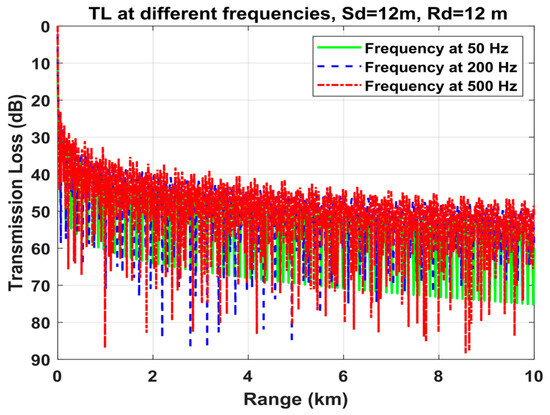
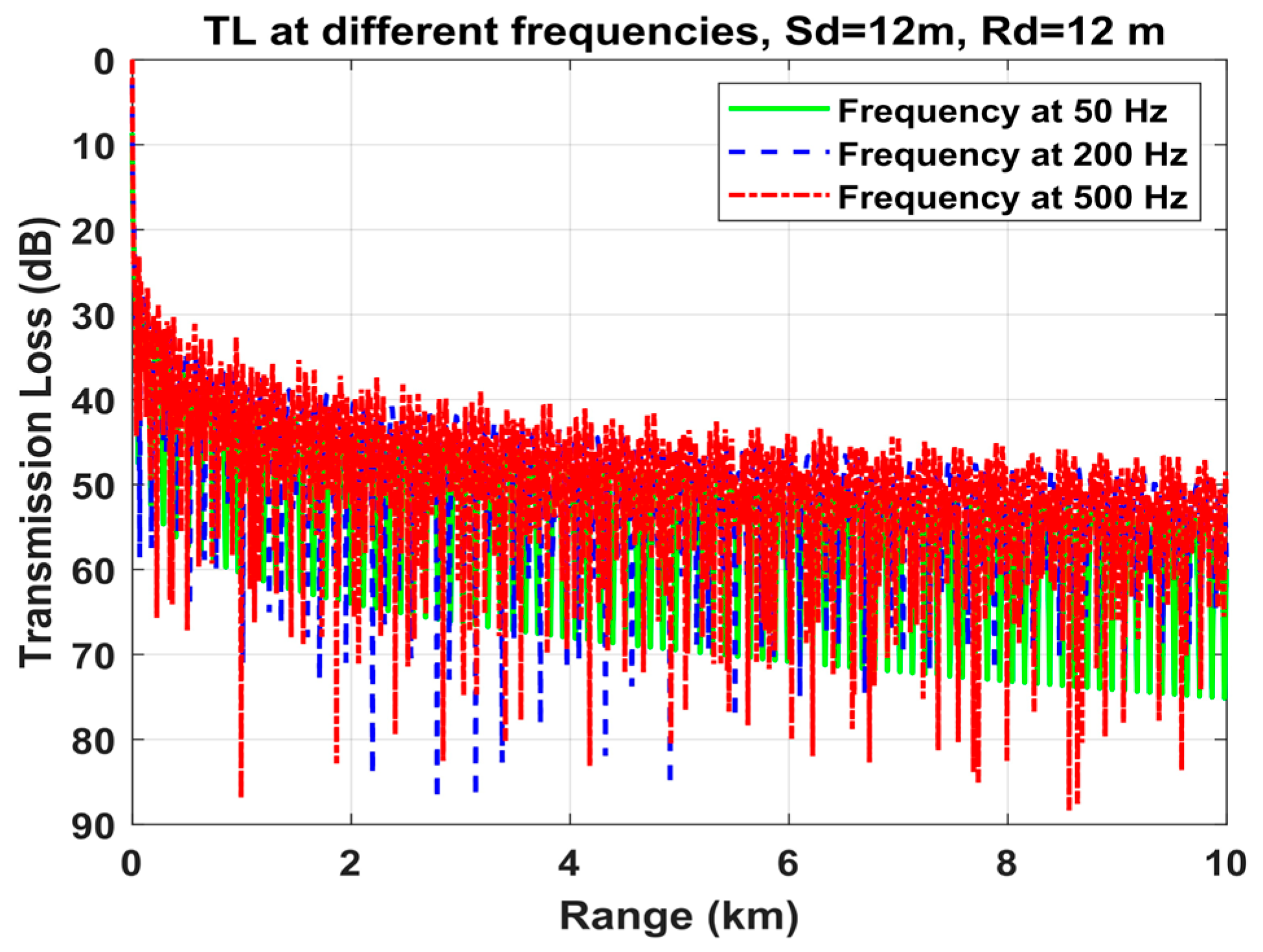
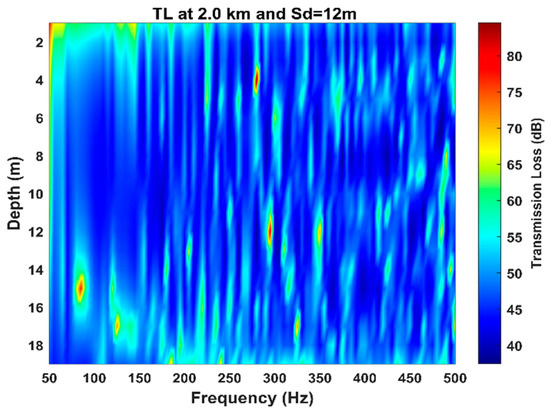
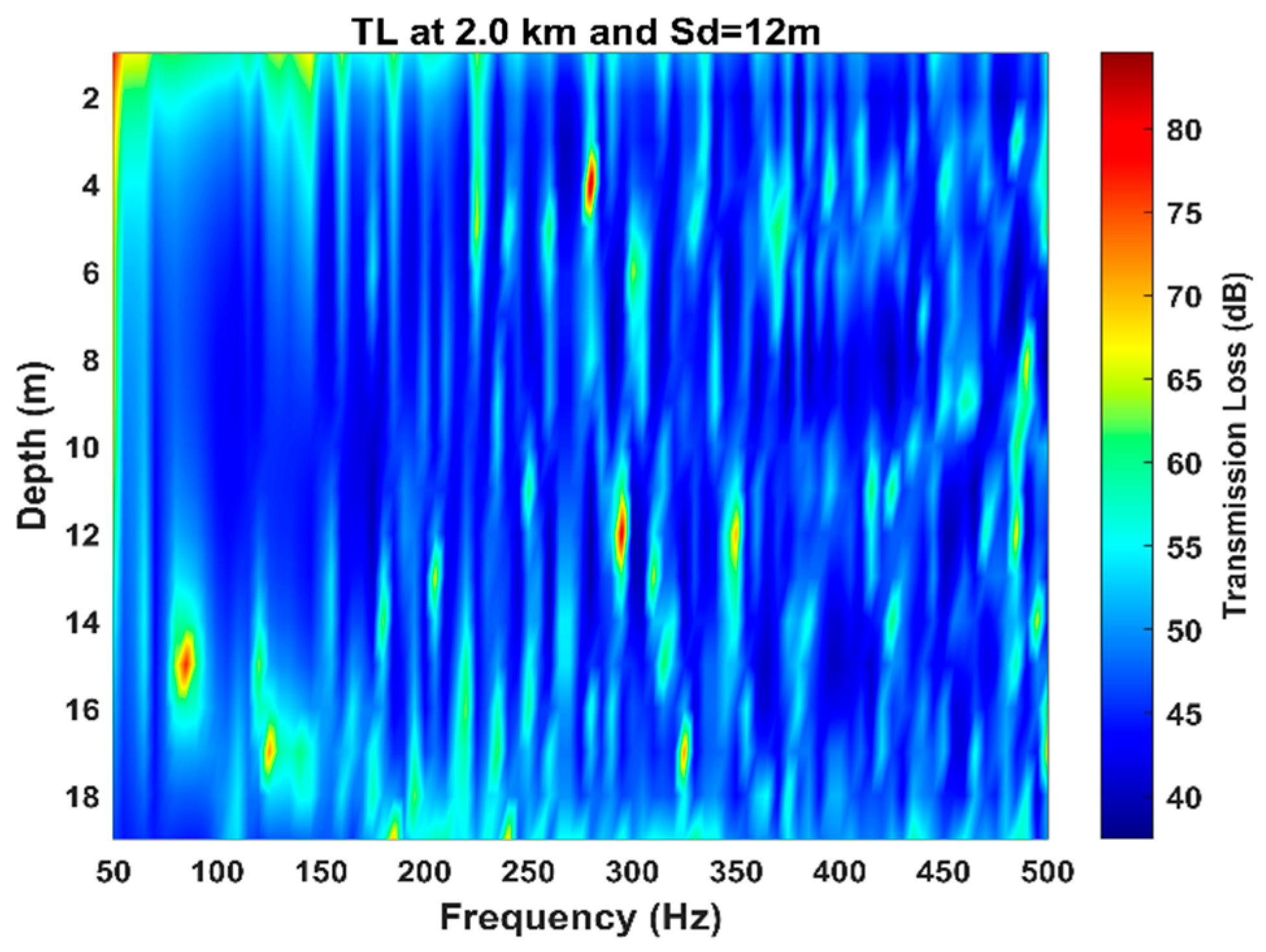
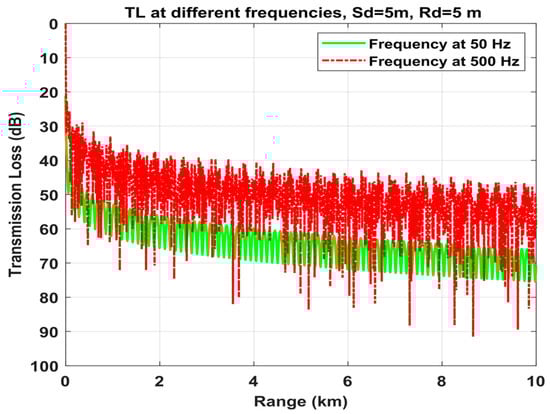
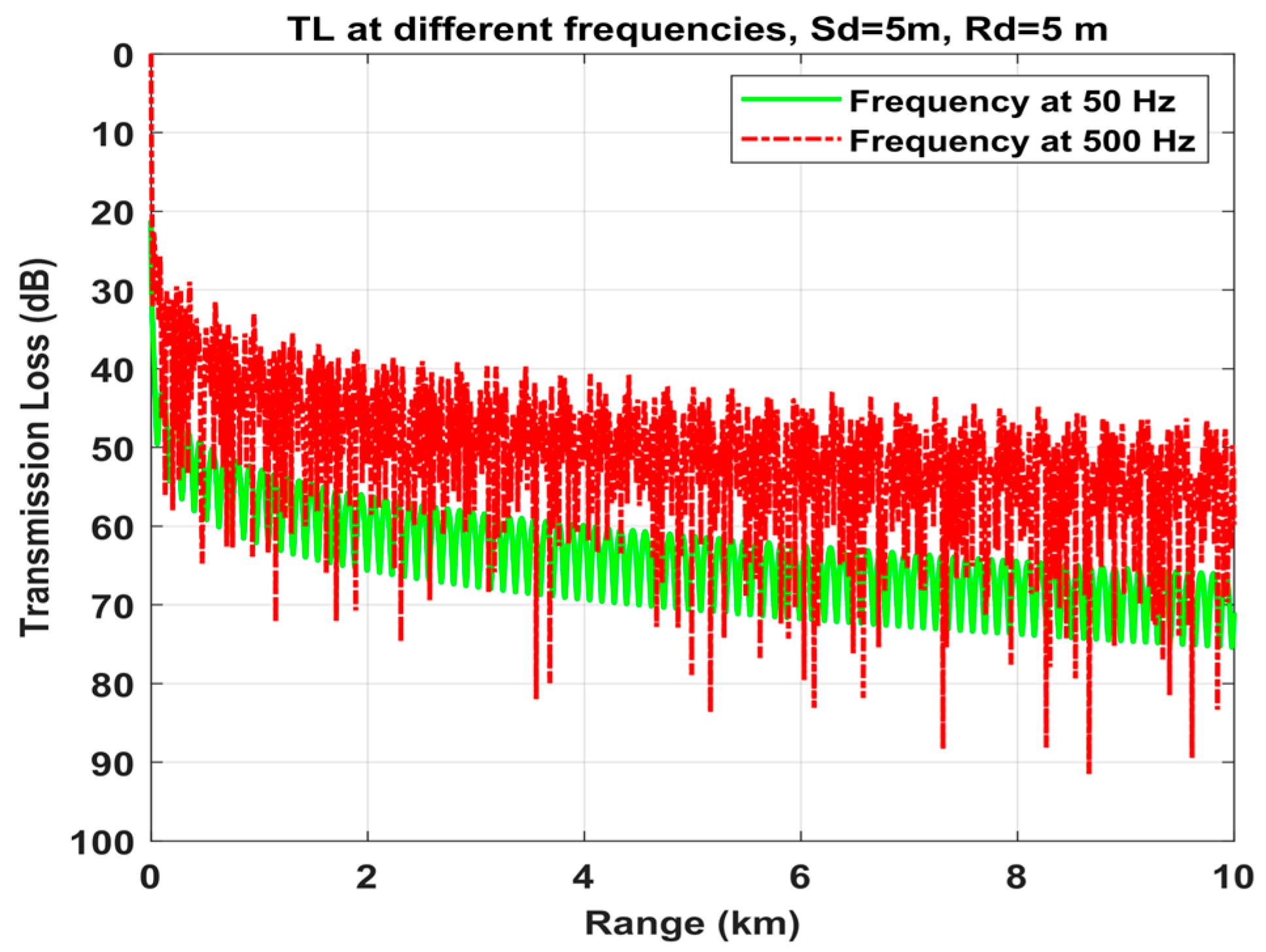
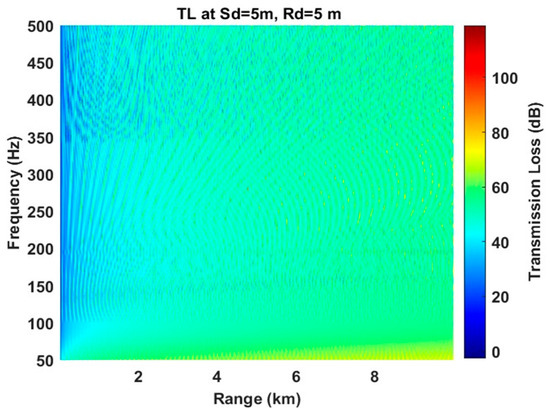
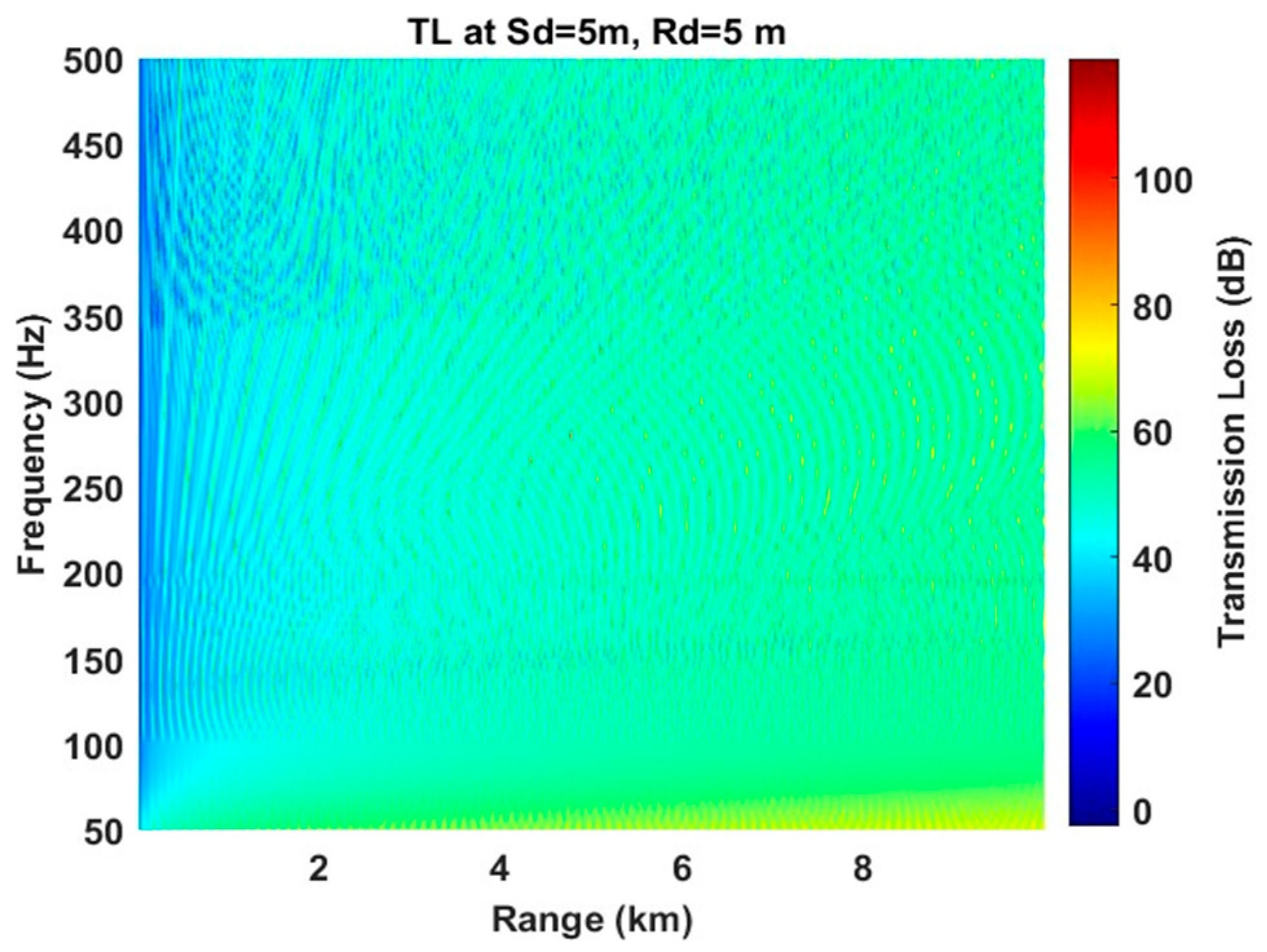
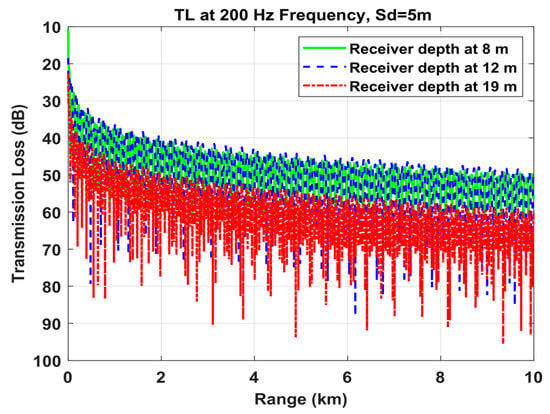
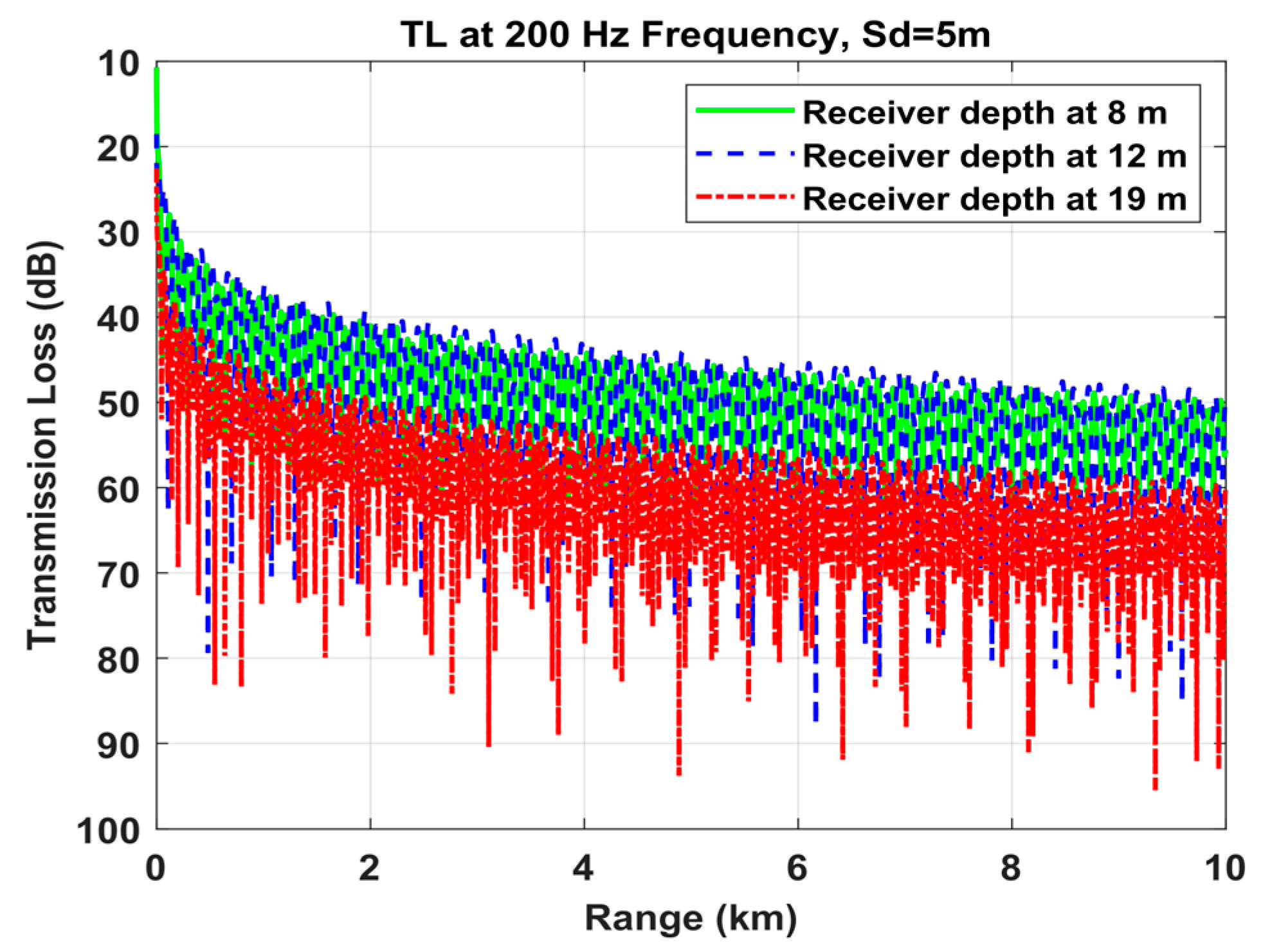
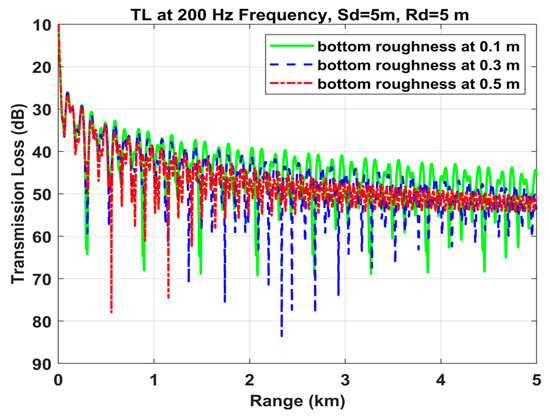
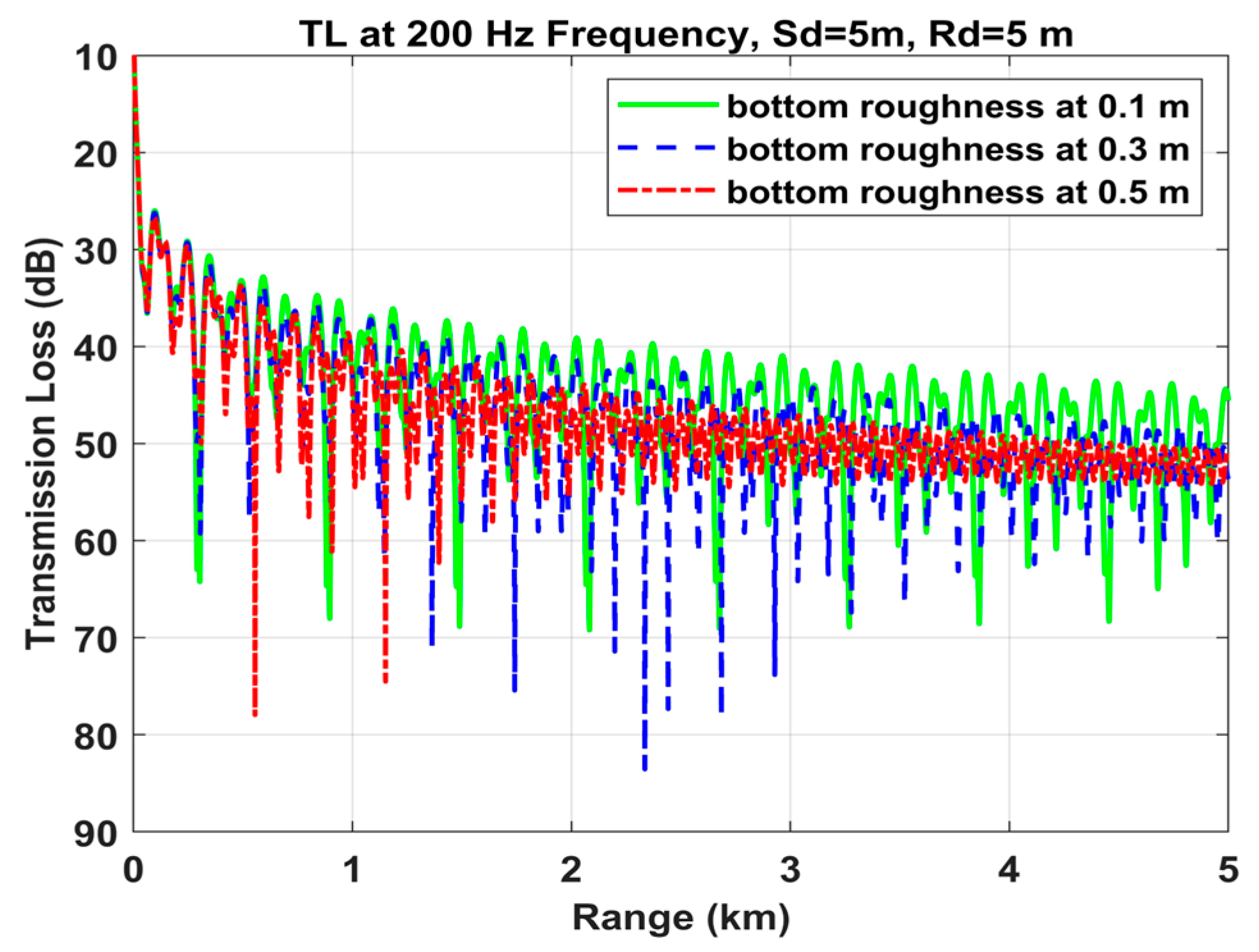
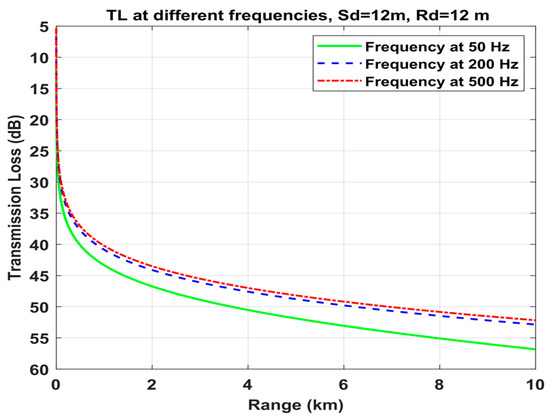
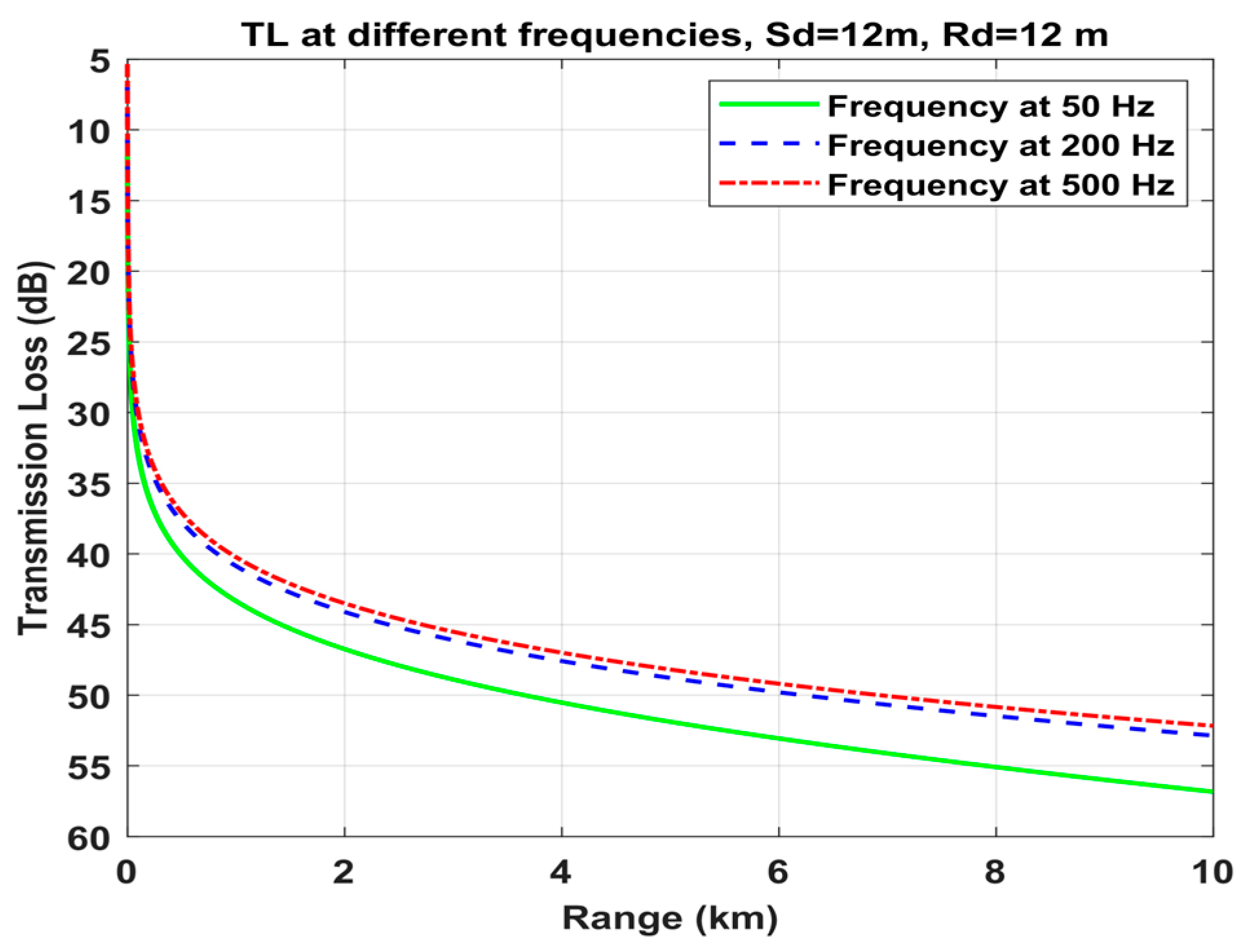
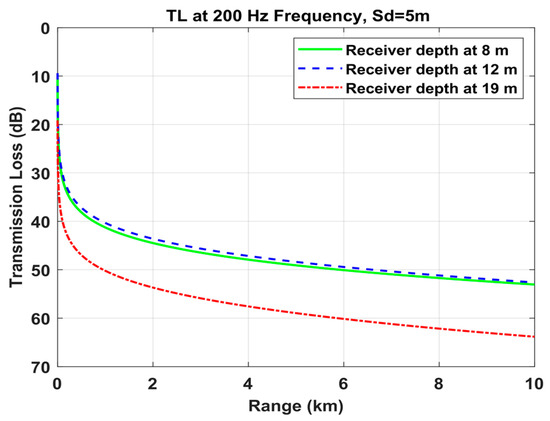
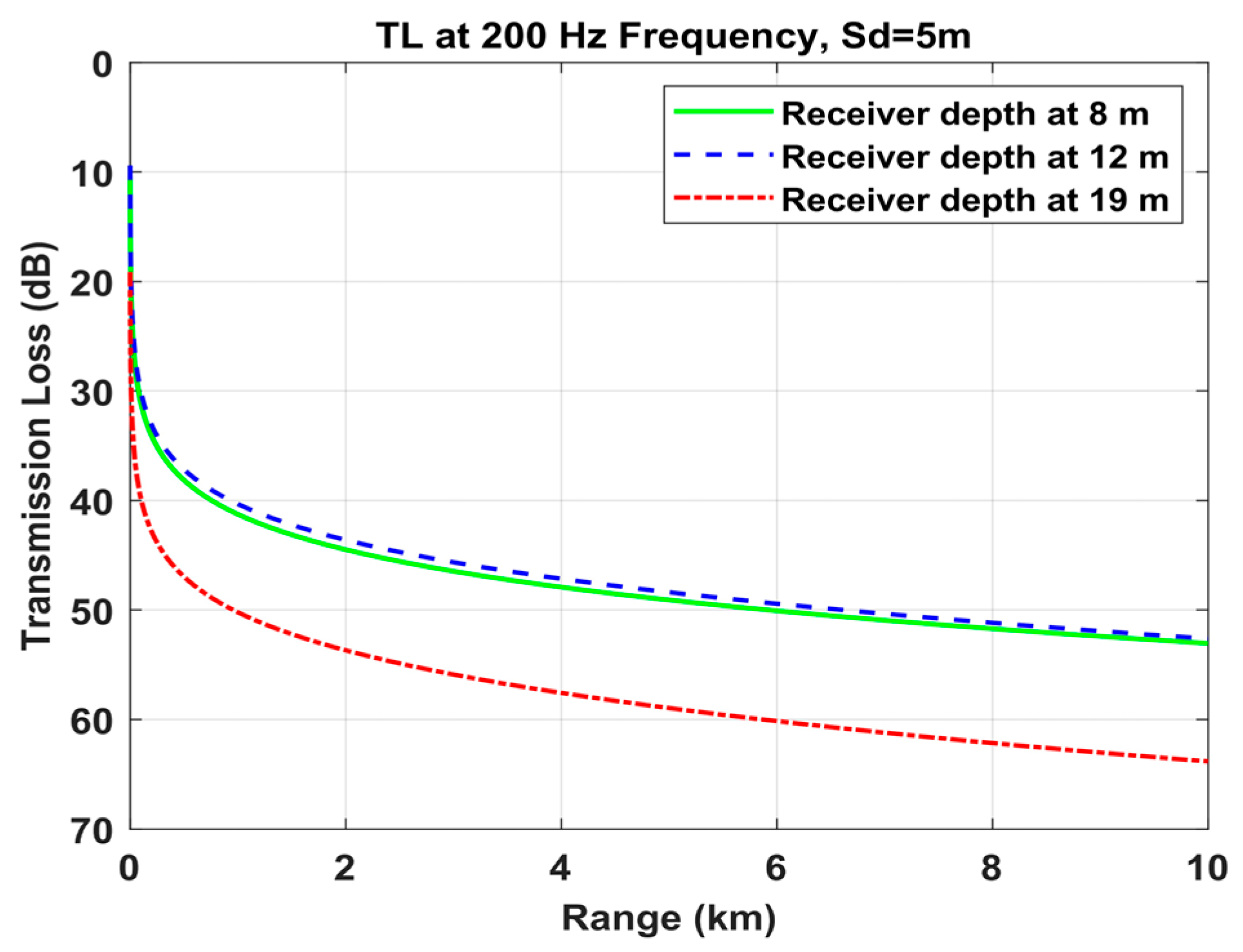
Figure 9.
TL for different frequencies.
Figure 9.
TL for different frequencies.
Figure 10.
Transmission loss for 2.0 km range.
Figure 10.
Transmission loss for 2.0 km range.
Figure 11.
TL versus range for low and high-frequency waves.
Figure 11.
TL versus range for low and high-frequency waves.
Figure 12.
TL for frequencies of 50–500 Hz.
Figure 12.
TL for frequencies of 50–500 Hz.
Figure 13.
Variation in TL with different receiver depths.
Figure 13.
Variation in TL with different receiver depths.
Figure 14.
TL for different bottom roughness.
Figure 14.
TL for different bottom roughness.
Figure 15.
Incoherent TL at different frequencies.
Figure 15.
Incoherent TL at different frequencies.
Figure 16.
Incoherent TL at different receiver depths.
Figure 16.
Incoherent TL at different receiver depths.
Reference
- Shaikh, S.; Huang, Y.; Alharbi, A.; Bilal, M.; Shaikh, A.S.; Zuberi, H.H.; Dars, M.A. Acoustic Propagation and Transmission Loss Analysis in Shallow Water of Northern Arabian Sea. J. Mar. Sci. Eng. 2024, 12, 2256. [Google Scholar] [CrossRef]
Disclaimer/Publisher’s Note: The statements, opinions and data contained in all publications are solely those of the individual author(s) and contributor(s) and not of MDPI and/or the editor(s). MDPI and/or the editor(s) disclaim responsibility for any injury to people or property resulting from any ideas, methods, instructions or products referred to in the content. |
© 2025 by the authors. Licensee MDPI, Basel, Switzerland. This article is an open access article distributed under the terms and conditions of the Creative Commons Attribution (CC BY) license (https://creativecommons.org/licenses/by/4.0/).