Numerical Simulation of Gas Production Behavior Using Radial Lateral Well and Horizontal Snake Well Depressurization Mining of Hydrate Reservoir in the Shenhu Sea Area of the South China Sea

 , , ,
, , ,
Abstract
1. Introduction
2. Methodology
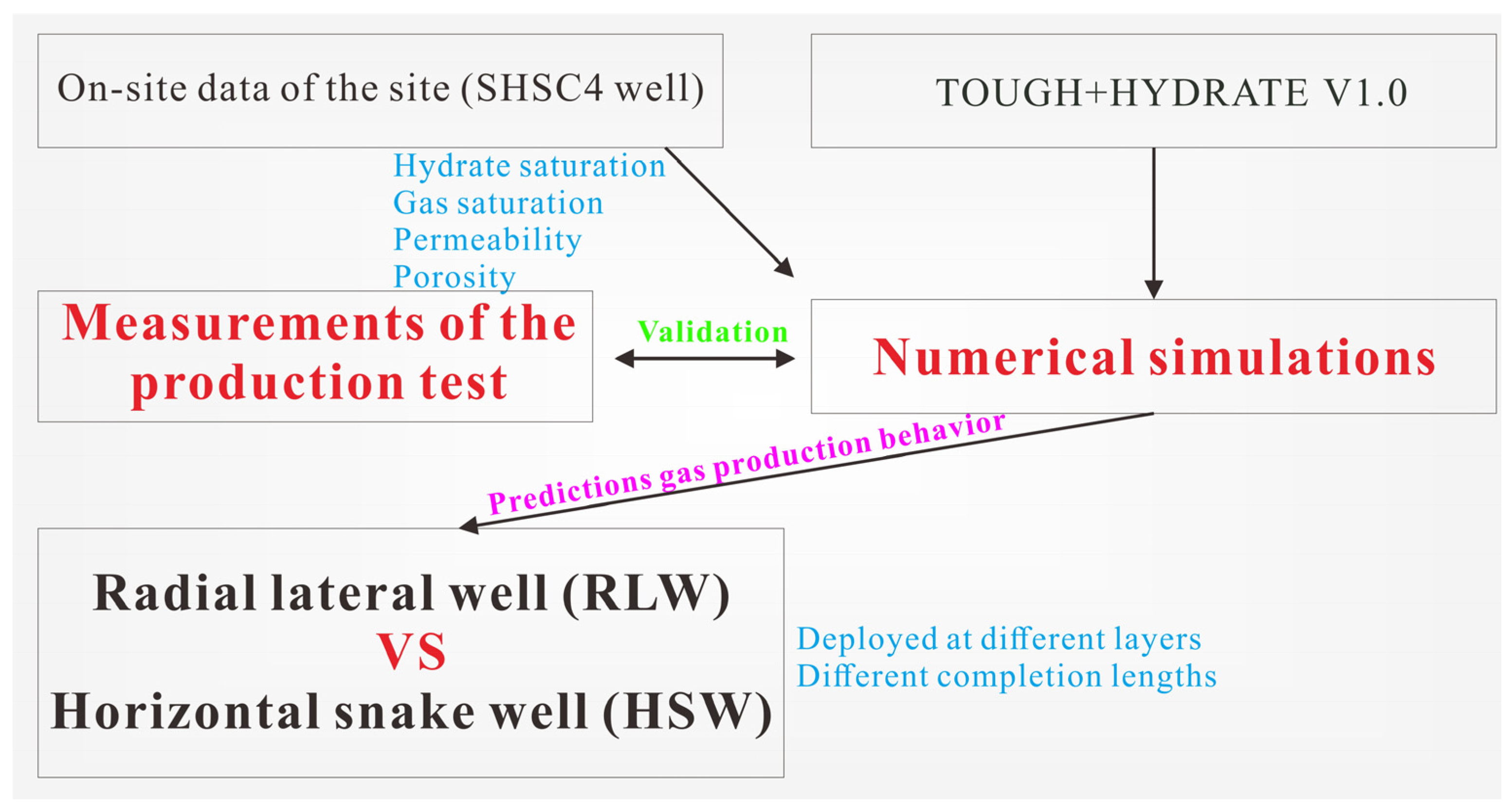
2.1. Method and Process
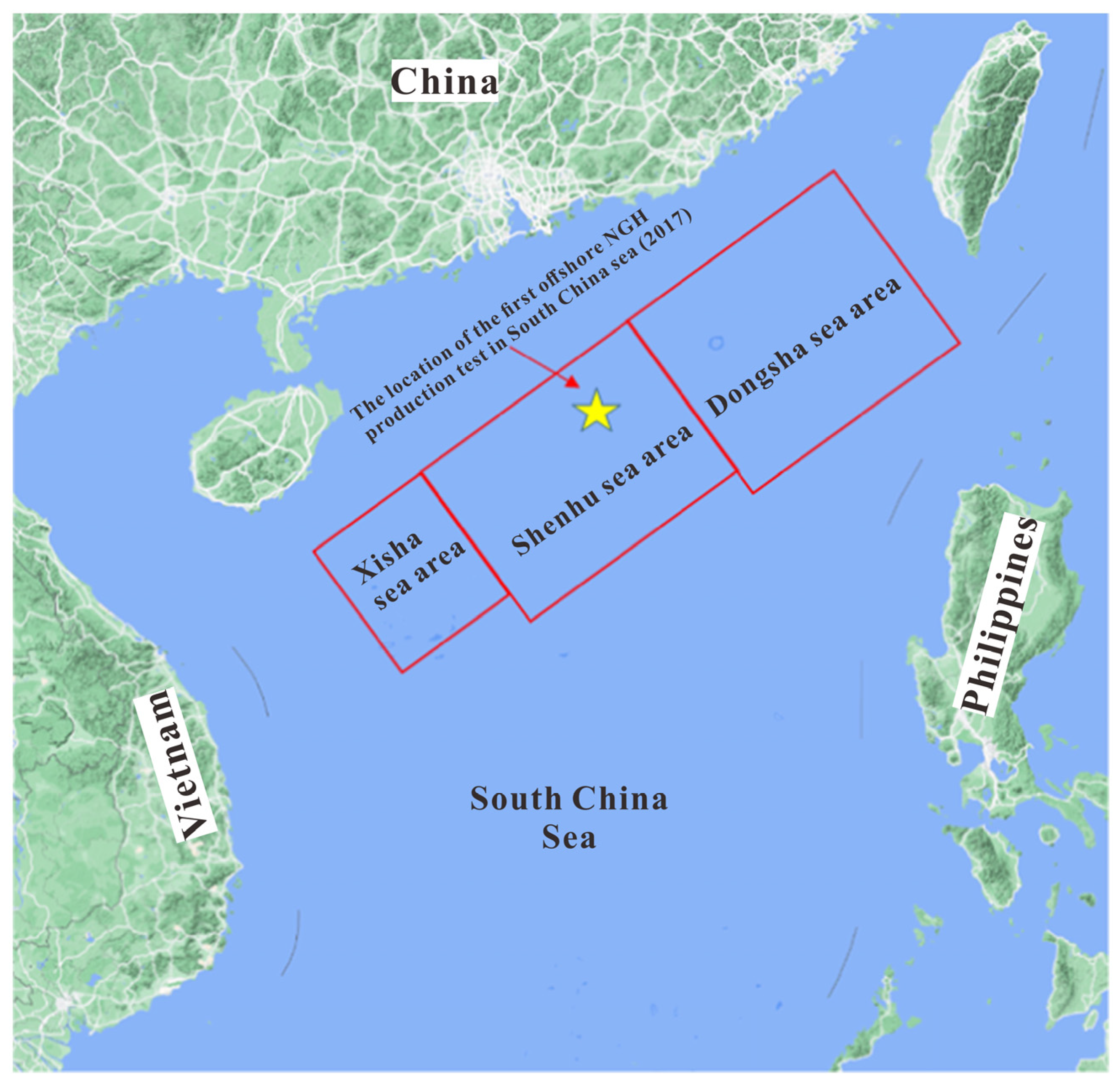
2.2. Geological Background
2.3. Simulator Code
- Mass conservation equation
- 2.
- Energy conservation equation
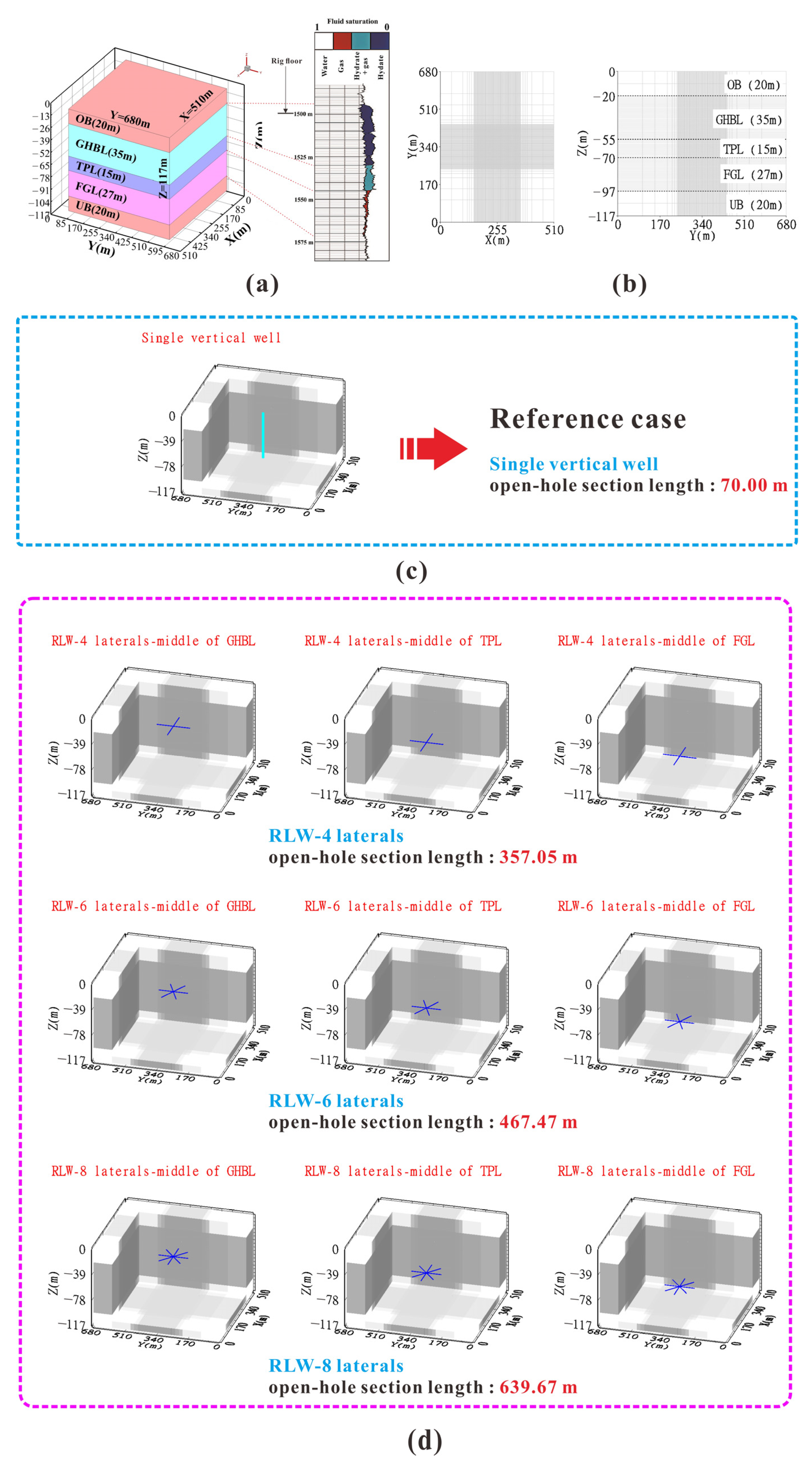
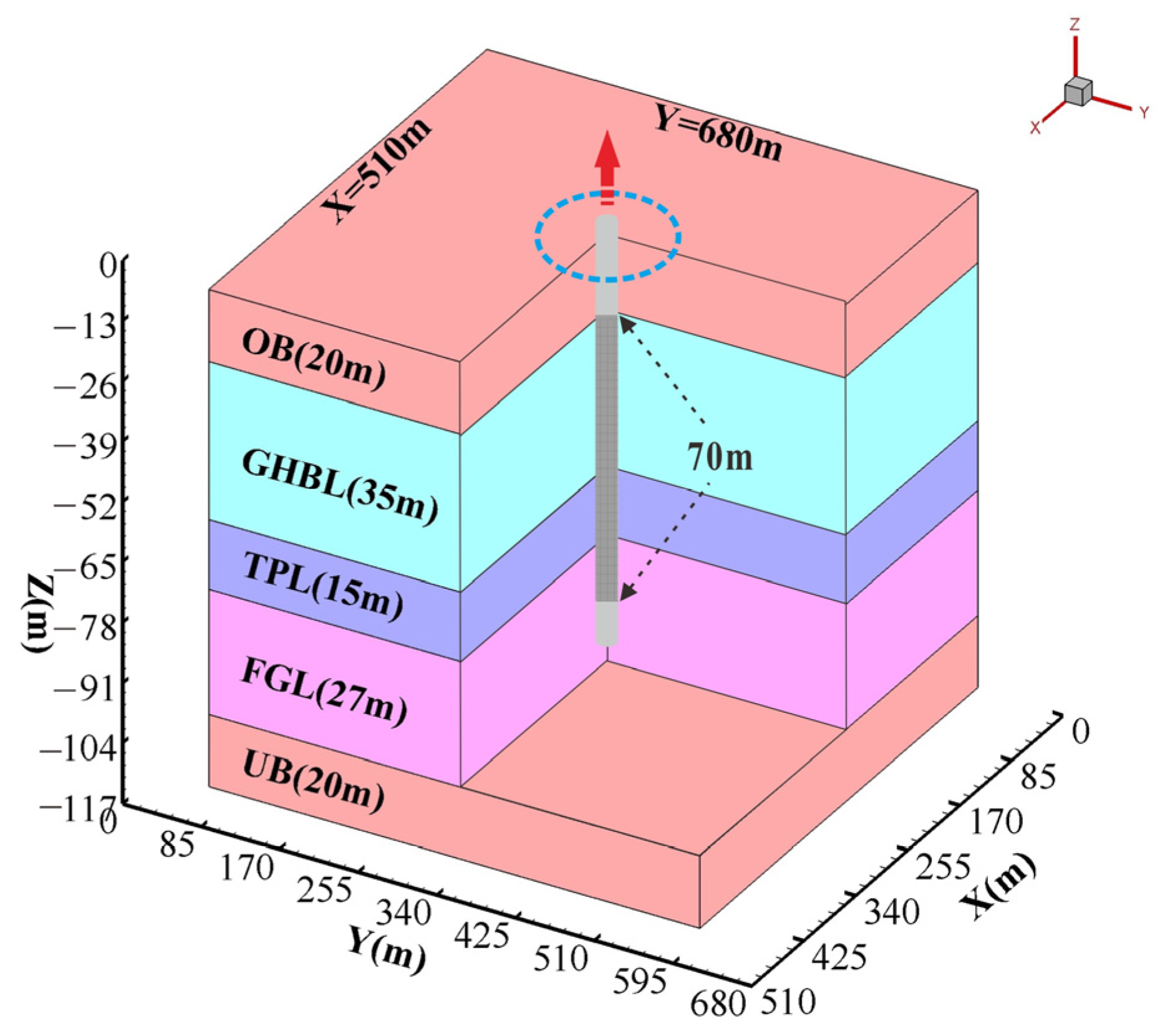
2.4. Model Discretization and Simulation Scenarios
2.5. Model Initialization
2.6. Model Validation
3. Results and Discussion
3.1. RLW and HSW Deployed at GHBL
3.1.1. Evolution of Gas and Water Characteristics
3.1.2. Physical Characteristics of the Reservoir
3.2. RLW and HSW Deployed at TPL
3.2.1. Evolution of Gas and Water Characteristics
3.2.2. Physical Characteristics of the Reservoir
3.3. RLW and HSW Deployed at FGL
3.3.1. Evolution of Gas and Water Characteristics
3.3.2. Physical Characteristics of the Reservoir
3.4. Discussion
3.4.1. Comparison of Production Capacity
3.4.2. Summary and Recommendations
4. Conclusions
Author Contributions
Funding
Institutional Review Board Statement
Informed Consent Statement
Data Availability Statement
Conflicts of Interest
Nomenclature
| Abbreviations | |||
| L | Open hole completion length of wellbore (m) | OB | Overburden layer |
| l | Length of each lateral wellbore (m) | UB | Underburden layer |
| n | Quantity of lateral wellbore | GHBL | Gas hydrate bearing layer |
| Mass accumulation of component κ, (kg/m3) | TPL | Three phase layer | |
| Mass flux of component κ, kg/(m2·s) | FGL | Free gas layer | |
| Sink/source of component κ, kg/(m3·s) | NGH | Natural gas hydrate | |
| Energy accumulation (J/m3) | RLW | Radial lateral well | |
| Energy flux, J/(m2·s) | HSW | Horizontal snake well | |
| Sink/source of heat, J/(m3·s) | |||
| Volume (m3) | |||
| Surface area (m2) | |||
| t | Times (s) | ||
| φ | Porosity | ||
| Qg | Gas production rates at well (m3/d) | ||
| Qw | Water production rates at well (m3/d) | ||
| Vg | Cumulative gas production at well (m3/d) | ||
| Rgw | Ratio of cumulative gas to cumulative gas (ST m3 of CH4/m3 of H2O) | ||
| J | Specific production index (-) | ||
| β | Phase, β = A, G, H, I is aqueous, gas, hydrate and ice, respectively | ||
| κ | Component, κ = w, m, i, h is water, methane, salt, and hydrate, respectively | ||
| Sβ | Saturation of phase β | ||
| T | Temperature (°C) | ||
| Pcap cap | Capillary pressure (Pa) | ||
| P0 | Initial capillary pressure (Pa) | ||
| S* | Saturation for capillary pressure model | ||
| SmxA | Maximum aqueous saturation | ||
| SirA | Irreducible saturation of aqueous phase | ||
| SirG | Irreducible saturation of gas phase | ||
| nA | Permeability reduction index for aqueous phase | ||
| nG | Permeability reduction index for gas phase | ||
| λ | Porosity distribution index | ||
| k | Permeability (m2) | ||
| g | Gravity acceleration (m/s2) | ||
| krβ | Relative permeability of phase β | ||
References
- Sloan, E. Fundamental principles and applications of natural gas hydrates. Nature 2003, 426, 353–359. [Google Scholar] [CrossRef] [PubMed]
- Boswell, R. Is gas hydrate energy within reach? Science 2009, 325, 957–958. [Google Scholar] [CrossRef] [PubMed]
- Chong, Z.; Yang, S.; Babu, P.; Linga, P.; Li, X. Review of natural gas hydrates as an energy resource: Prospects and challenges. Appl. Energy 2016, 162, 1633–1652. [Google Scholar] [CrossRef]
- Boswell, R.; Collett, T. Current perspectives on gas hydrate resources. Energy Environ. Sci. 2011, 4, 1206–1215. [Google Scholar] [CrossRef]
- Yamamoto, K.; Terao, Y.; Fujii, T.; Ikawa, T.; Seki, M.; Matsuzawa, M.; Kanno, T. Operational Overview of the First Offshore Production Test of Methane Hydrates in the Eastern Nankai Trough. In Proceedings of the Offshore Technology Conference, Houston, TX, USA, 5–8 May 2014; OnePetro: Richardson, TX, USA, 2014. [Google Scholar]
- Yamamoto, K.; Wang, X.; Tamaki, M.; Suzuki, K. The second offshore production of methane hydrate in the Nankai Trough and gas production behavior from a heterogeneous methane hydrate reservoir. RSC Adv. 2019, 9, 25987–26013. [Google Scholar] [CrossRef] [PubMed]
- Li, J.; Ye, J.; Qin, X.; Qiu, H.; Wu, N.; Lu, H.; Xie, W.; Lu, J.; Peng, F.; Xu, Z.; et al. The first offshore natural gas hydrate production test in South China Sea. China Geol. 2018, 1, 5–16. [Google Scholar] [CrossRef]
- Ye, J.; Qin, X.; Xie, W.; Lu, H.; Ma, B.; Qiu, H.; Liang, J.; Lu, J.; Kuang, Z.; Lu, C.; et al. The second natural gas hydrate production test in the South China Sea. China Geol. 2020, 3, 197–209. [Google Scholar] [CrossRef]
- Wu, N.; Li, Y.; Wan, Y.; Sun, J.; Huang, L.; Mao, P. Prospect of marine natural gas hydrate stimulation theory and technology system. Nat. Gas Ind. B 2021, 40, 173–187. [Google Scholar] [CrossRef]
- Ye, H.; Wu, X.; Li, D. Numerical Simulation of Natural Gas Hydrate Exploitation in Complex Structure Wells: Productivity Improvement Analysis. Mathematics 2021, 9, 2184. [Google Scholar] [CrossRef]
- Mao, P.; Wan, Y.; Sun, J.; Li, Y.; Hu, G.; Ning, F.; Wu, N. Numerical study of gas production from fine-grained hydrate reservoirs using a multilateral horizontal well system. Appl. Energy 2021, 301, 117450. [Google Scholar] [CrossRef]
- Xin, X.; Li, S.; Xu, T.; Yuan, Y. Numerical investigation on gas production performance in methane hydrate of multilateral well under depressurization in Krishna-Godavari basin. Geofluids 2021, 2021, 9936872. [Google Scholar] [CrossRef]
- Ye, H.; Wu, X.; Li, D.; Jiang, Y. Numerical simulation of productivity improvement of natural gas hydrate with various well types: Influence of branch parameters. J. Nat. Gas Sci. Eng. 2022, 103, 104630. [Google Scholar] [CrossRef]
- Hao, Y.; Yang, F.; Wang, J.; Fan, M.; Li, S.; Yang, S.; Wang, C.; Xiao, X. Dynamic analysis of exploitation of different types of multilateral wells of a hydrate reservoir in the South China sea. Energy Fuels 2022, 36, 6083–6095. [Google Scholar] [CrossRef]
- Jin, G.; Peng, Y.; Liu, L.; Su, Z.; Liu, J.; Li, T.; Wu, D. Enhancement of gas production from low-permeability hydrate by radially branched horizontal well: Shenhu Area, South China Sea. Energy 2022, 253, 124129. [Google Scholar] [CrossRef]
- He, J. Numerical simulation of a Class I gas hydrate reservoir depressurized by a fishbone well. Processes 2023, 11, 771. [Google Scholar] [CrossRef]
- Cao, X.; Sun, J.; Qin, F.; Ning, F.; Mao, P.; Gu, Y.; Li, Y.; Zhang, H.; Yu, Y.; Wu, N. Numerical analysis on gas production performance by using a multilateral well system at the first offshore hydrate production test site in the Shenhu area. Energy 2023, 270, 126690. [Google Scholar] [CrossRef]
- Cinelli, S.; Kamel, A. Novel technique to drill horizontal laterals revitalizes aging field. In Proceedings of the SPE/IADC Drilling Conference and Exhibition, Amsterdam, The Netherlands, 5–7 March 2013. [Google Scholar]
- Kamel, A. RJD: A cost effective frackless solution for production enhancement in marginal fields. In Proceedings of the SPE Eastern Regional Meeting, Canton, OH, USA, 13–15 September 2016. [Google Scholar]
- Kamel, A. Radial Jet Drilling: A Technical Review. In Proceedings of the SPE Middle East Oil & Gas Show and Conference, Manama, UK, 8 March 2017. [Google Scholar]
- Kamel, A. A technical review of radial jet drilling. J. Pet. Gas Eng. 2017, 8, 79–89. [Google Scholar]
- Huang, Z.; Huang, Z. Review of Radial Jet Drilling and the key issues to be applied in new geo-energy exploitation. Energy Procedia 2019, 158, 5969–5974. [Google Scholar] [CrossRef]
- Wan, L.; Shaibu, R.; Hou, X.; Guo, B. A feasibility study of producing natural gas from subsea hydrates with horizontal snake wells. In Proceedings of the Offshore Technology Conference Brasil. OTC, Rio de Janeiro, Brasil, 29–31 October 2019. D011S014R006. [Google Scholar]
- Li, G.; Tian, S.; Zhang, Y. Research progress on key technologies of natural gas hydrate exploitation by cavitation jet drilling of radial wells. Pet. Sci. Bull. 2020, 5, 349–365. [Google Scholar]
- Mahmood, M.; Guo, B. Productivity comparison of radial lateral wells and horizontal snake wells applied to marine gas hydrate reservoir development. Petroleum 2021, 7, 407–413. [Google Scholar] [CrossRef]
- Zhang, P.; Tian, S.; Zhang, Y.; Li, G.; Zhang, W.; Khan, W.; Ma, L. Numerical simulation of gas recovery from natural gas hydrate using multi-branch wells: A three-dimensional model. Energy 2020, 220, 119549. [Google Scholar] [CrossRef]
- Zhang, P.; Tian, S.; Zhang, Y.; Li, G.; Wu, X.; Wang, Y. Production simulation of natural gas hydrate using radial well depressurization. Pet. Sci. Bull. 2021, 3, 417–428. [Google Scholar]
- Zhang, P.; Zhang, Y.; Wang, W.; Wang, T.; Tian, S. Experimental study on natural gas hydrate extraction with radial well depressurization. Pet. Sci. Bull. 2022, 03, 382–393. [Google Scholar]
- Wan, T.; Yu, M.; Lu, H.; Chen, Z.; Li, Z.; Tian, L.; Li, K.; Huang, N.; Wang, J. Numerical Simulation of Vertical Well Depressurization with Different Deployments of Radial Laterals in Class 1-Type Hydrate Reservoir. Energies 2024, 17, 1139. [Google Scholar] [CrossRef]
- Zhang, W.; Liang, J.; Lu, J.; Wei, J.; Su, P.; Fang, Y.; Guo, Y.; Yang, S.; Zang, G. Accumulation features and mechanisms of high saturation natural gas hydrate in shenhu area, northern south china sea. Pet. Explor. Dev. 2017, 44, 708–719. [Google Scholar] [CrossRef]
- Moridis, G.; Kowalsky, M.; Pruess, K. TOUGH+ Hydrate V1.0 User’s Manual; Report LBNL-0149E; Lawrence Berkeley National Laboratory: Berkeley, CA, USA, 2008.
- Zhang, K.; Moridis, G.; Wu, Y.; Pruess, K. A domain decompositionapproach for large-scale simulations of flow processes in hydrate-bearing geologic media. In Proceedings of the 6th International Conference on Gas Hydrates, ICGH 2008, Vancouver, BC, Canada, 6–10 July 2008. [Google Scholar]
- Kowalsky, M.; Moridis, G. Comparison of kinetic and equilibrium reaction models in simulating gas hydrate behavior in porous media. Energy Convers. Manag. 2007, 48, 1850–1863. [Google Scholar] [CrossRef]
- Sun, J.; Zhang, L.; Ning, F.; Lei, H.; Liu, T.; Hu, G.; Lu, H.; Lu, J.; Liu, C.; Jiang, G.; et al. Production potential and stability of hydrate-bearing sediments at the site GMGS3-W19 in the South China Sea: A preliminary feasibility study. Mar. Pet. Geol. 2017, 86, 447–473. [Google Scholar] [CrossRef]
- Yuan, Y.; Xu, T.; Xin, X.; Xia, Y. Multiphase Flow Behavior of Layered Methane Hydrate Reservoir Induced by Gas Production. Geofluids 2017, 2017, 7851031. [Google Scholar] [CrossRef]
- Sun, J.; Ning, F.; Li, S.; Zhang, K.; Liu, T.; Zhang, L.; Jiang, G.; Wu, N. Numerical simulation of gas production from hydrate-bearing sediments in the Shenhu area by depressurising: The effect of burden permeability. J. Unconv. Oil Gas Resour. 2015, 12, 23–33. [Google Scholar] [CrossRef]
- Moridis, G.; Kowalsky, M.; Pruess, K. Depressurization-induced gas production from class 1 hydrate deposits. SPE Reserv. Eval. Eng. 2007, 10, 458–481. [Google Scholar] [CrossRef]
- Feng, Y.; Chen, L.; Suzuki, A.; Kogawa, T.; Okajima, J.; Komiya, A.; Maruyama, S. Enhancement of gas production from methane hydrate reservoirs by the combination of hydraulic fracturing and depressurization method. Energy Convers. Manag. 2019, 184, 194–204. [Google Scholar] [CrossRef]
- Yuan, Y.; Xu, T.; Jin, C.; Zhu, H.; Gong, Y.; Wang, F. Multiphase flow and mechanical behaviors induced by gas production from clayey-silt hydrate reservoirs using horizontal well. J. Clean. Prod. 2021, 328, 129578. [Google Scholar] [CrossRef]
- Sun, Y.; Ma, X.; Guo, W.; Jia, R.; Li, B. Numerical simulation of the short- and long-term production behavior of the first offshore gas hydrate production test in the South China Sea. J. Pet. Sci. Eng. 2019, 181, 106196. [Google Scholar] [CrossRef]
- Ma, X.; Sun, Y.; Liu, B.; Guo, W.; Jia, R.; Li, B.; Li, S. Numerical study of depressurization and hot water injection for gas hydrate production in China’s first offshore test site. J. Nat. Gas Sci. Eng. 2020, 83, 103530. [Google Scholar] [CrossRef]
- Yu, T.; Guan, G.; Wang, D.; Song, Y.; Abudula, A. Numerical investigation on the long-term gas production behavior at the 2017 Shenhu methane hydrate production-site. Appl. Energy 2021, 285, 116466. [Google Scholar] [CrossRef]
- Li, S.X.; Yu, X.; Li, S. Prediction of gas production of Shenhu hydrate reservoir by depressurization and its simulation treatment. China Offshore Oil Gas 2020, 32, 122–127. [Google Scholar]
- Qin, X.; Liang, Q.; Ye, J.; Yang, L.; Qiu, H.; Xie, W.; Liang, J.; Lu, J.; Lu, C.; Lu, H.; et al. The response of temperature and pressure of hydrate reservoirs in the first gas hydrate production test in South China Sea. Appl. Energy 2020, 278, 115649. [Google Scholar] [CrossRef]





| Author | Year | Input | Work Summary | Output |
|---|---|---|---|---|
| Cinelli et al. [18] | 2013 | Technical review | Introduced the equipment and technical process of coiled tubing drilling, using a low permeability oilfield as an example to detail the completion process and production statistics for radial jet drilling. | Coiled tubing drilling technique is a low-cost and environmentally friendly method to improve productivity. |
| Kamel et al. [19,20] | 2016, 2017 | Technical review | Introduced the theoretical, and technological progress, procedures, applications, and challenges of coiled tubing drilling technique. Several global case studies were discussed. | Coiled tubing drilling technique is effective for increasing production, and is a feasible and cost-effective alternative to marginal oilfield fracturing. |
| Huang et al. [22] | 2019 | Technical review | Introduced the technical characteristics, advantages, and limitations of coiled tubing drilling technique. Discussed the drilling performance and trajectory measurement methods. | Coiled tubing drilling technique is a flexible new geo-energy development technology. |
| Wan et al. [23] | 2019 | Analytical model | Explored the feasibility of developing NGHs v HSW. Provided an analytical model to calculate the maximum achievable wellbore length (MAWL). Predict the production capacity based on the Furui equation. | The HSW mining technology is feasible for offshore NGHs, and demonstrates how to evaluate its productivity and economy. |
| Li et al. [24] | 2020 | Analytical model, experiment, and numerical simulation | Introduced the process flow of developing NGHs via radial lateral wells, the ability of jet rock breaking drilling, the feeding method and extension limit of jet drill bits, wellbore trajectory measurement, and control. | A new approach was proposed to develop marine NGHs using an integrated method of cavitation jet drilling radial horizontal wells and screen tube completion. |
| Mahmood et al. [25] | 2021 | Analytical model | Compared the production potential of HSW and RLW using the developed analytical model and on-site case data of NGH reservoirs in the South China Sea. | RLW produce slightly higher gas productivity than HSW. |
| Zhang et al. [26,27] | 2020, 2021 | Numerical simulation | Studied the performance of gas hydrate development by combining radial lateral wells with depressurization. | Radial lateral wells can improve gas recovery rates in the early stages of production and slow down secondary hydrates generation. The recovery rate of hydrates is linearly related to the lateral length. |
| Zhang et al. [28] | 2022 | Experimental | Experimental studies were conducted on the depressurization and extraction of hydrated sediments in both gas-rich and water-rich using vertical and radial lateral wells, respectively. | When extracting rich gas hydrate sediments, the gas production behavior of vertical and radial lateral wells is almost the same. When extracting rich water hydrate sediments, the cumulative gas production of radial lateral well increased by 20.16% compared to vertical well. |
| Wan et al. [29] | 2024 | Numerical simulation | A numerical evaluation was conducted on the gas production capacity of Class-1 type hydrate reservoirs using different radial lateral well deployment schemes. | Compared to a single vertical well, the cumulative gas production of a radial lateral well increased by approximately 208.53%. |
| Case | Parameter Settings | |||
|---|---|---|---|---|
| L/(m) | l/(m) | n | Wellbore Location | |
| Single vertical well | 70 | - | - | - |
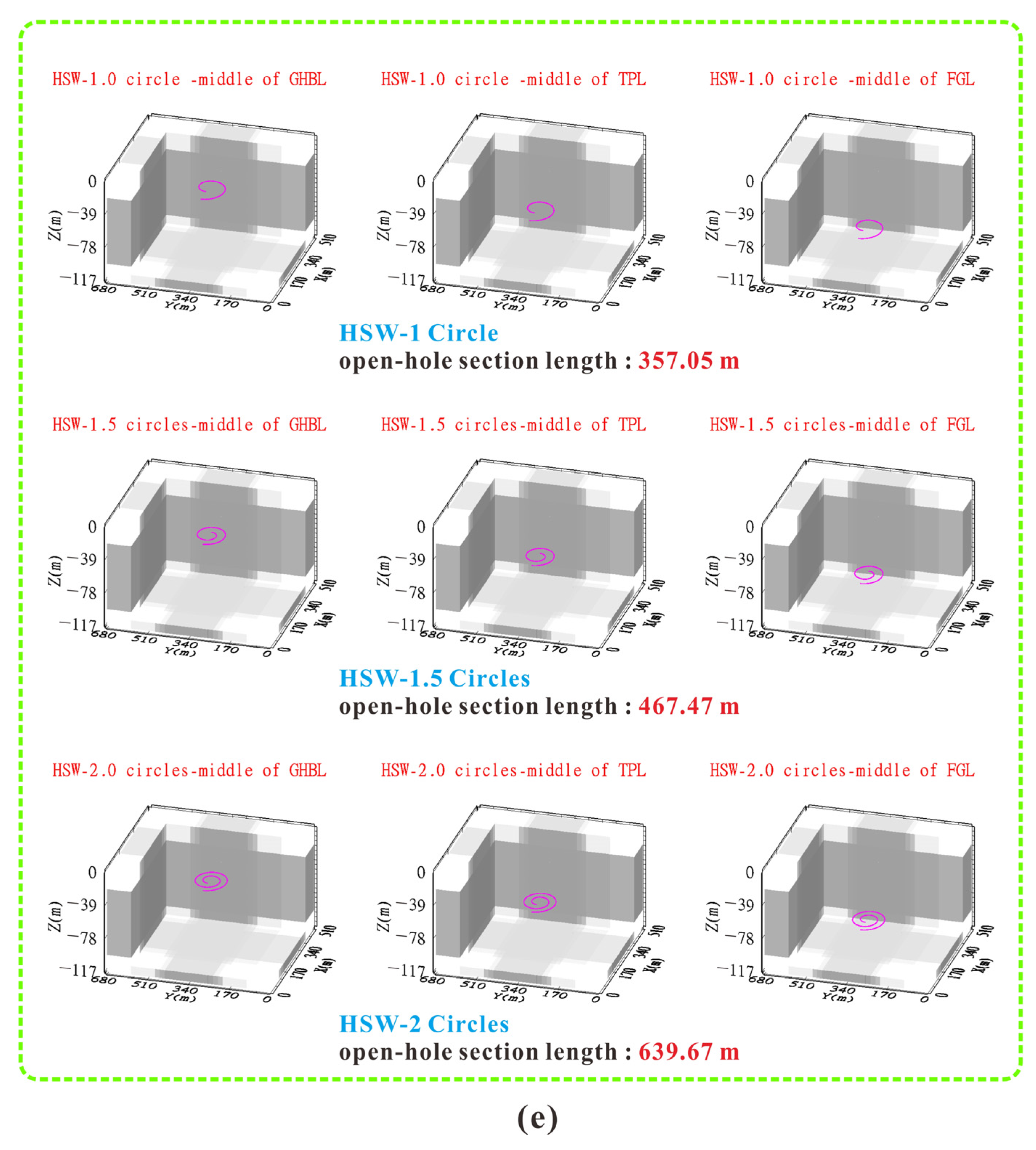
| RLW-4 laterals | 357.05 | 89.26 | 4 | Middle of GHBL/TPL/FGL |
| RLW-6 laterals | 467.47 | 77.91 | 6 | |
| RLW-8 laterals | 639.67 | 79.95 | 8 | |
| HSW-1 circle | 357.05 | - | - | |
| HSW-1.5 circles | 467.47 | - | - | |
| HSW-2 circles | 639.67 | - | - | |
| Parameter | Value and Unit | Data Sources |
|---|---|---|
| Overburden (OB) and Underburden (UB)’s thickness | 20 m | [39] |
| GHBL’s thickness | 35 m | [40] |
| TPL’s thickness | 15 m | [40] |
| FGL’s thickness | 27 m | [40] |
| OB and UB’s permeability | 2.0 mD | - |
| GHBL’s permeability | 2.9 mD | [40] |
| TPL’s permeability | 1.5 mD | [40] |
| FGL’s permeability | 7.4 mD | [40] |
| OB and UB’s porosity | 0.30 | [40] |
| GHBL’s porosity | 0.35 | [40] |
| TPL’s porosity | 0.33 | [40] |
| FGL’s porosity | 0.32 | [40] |
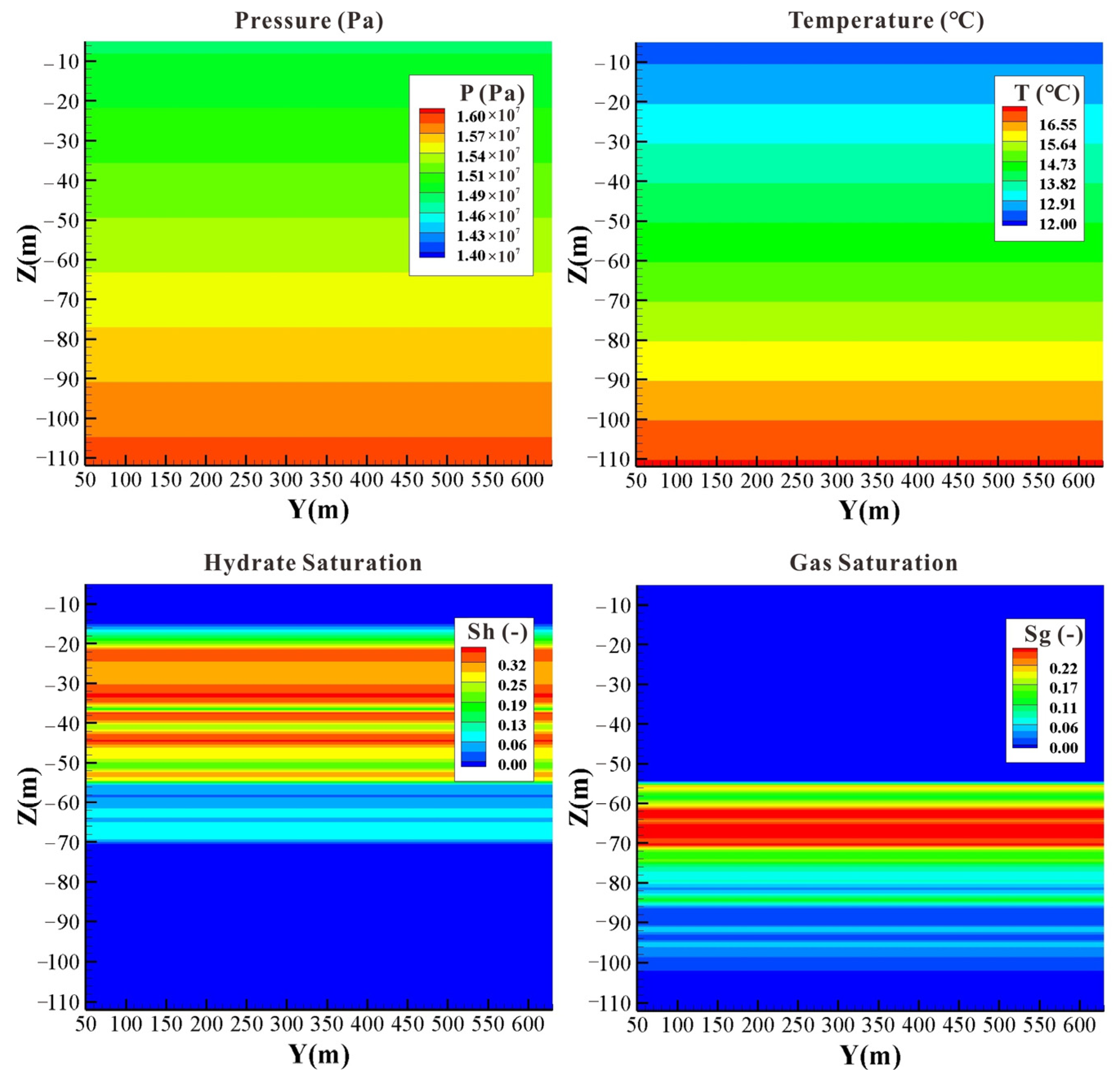
| GHBL and TPL’s hydrate saturation FGL’s gas saturation | Extract from logging curve (Figure 3a) | [7] |
| Single vertical wellbore radius | 0.1 m | [25] |
| Radial lateral wellbore radius | 0.05 m | [25] |
| Horizontal snake wellbore radius | 0.05 m | [25] |
| Production pressure difference | 6.0 MPa | - |
| Salinity | 3.0% | [40,41,42] |
| Grain density | 2650 kg/m3 | [40,41,42] |
| Geothermal gradient | 46 °C/km | [30] |
| Grain specific heat | 1000 J·kg−1·K−1 | [40,41,42] |
| Dry thermal conductivity | 1.0 W·m−1·K−1 | [40,41,42] |
| Wet thermal conductivity | 3.1 W·m−1·K−1 | [40,41,42] |
| Capillary pressure model | - | |
| Maximum aqueous saturation SmxA | 1 | [40,41,42] |
| Porosity distribution index λ | 0.45 | [40,41,42] |
| Initial capillary pressure P0 | 104 Pa | [40,41,42] |
| Relative permeability model | KrA = [(SA − SirA)/(1 − SirA)]nA, KrG = [(SG − SirG)/(1 − SirA)]nG | - |
| Aqueous phase permeability reduction index nA | 3.5 | [41] |
| Gas phase permeability reduction index nG | 2.5 | [41] |
| Irreducible gas saturation SirG | 0.03 | [41] |
| Irreducible aqueous saturation SirA | 0.30 | [41] |
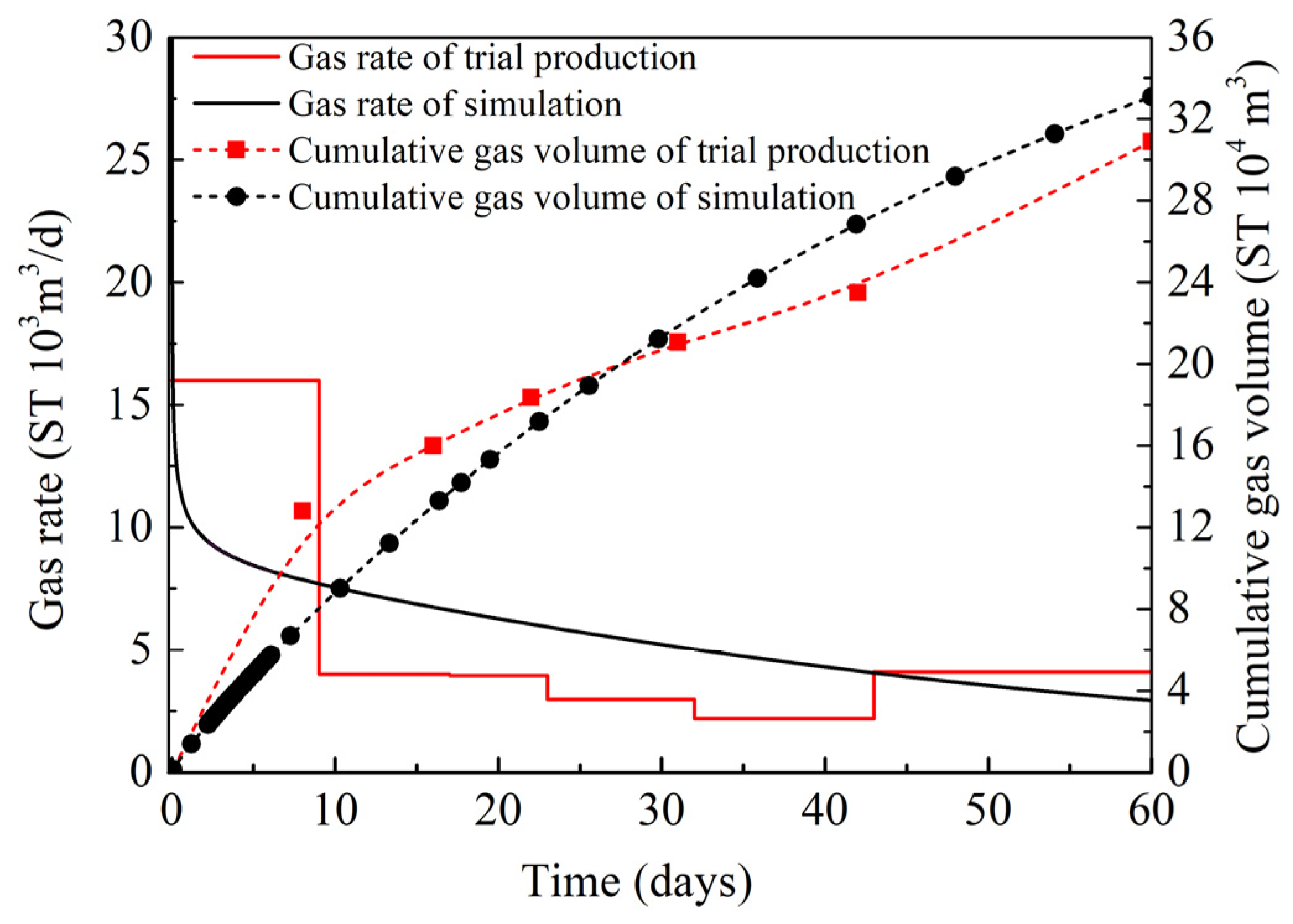
| Duration/d | Cumulative Gas Volume/104 m3 | Gas Rate/103 m3·d−1 |
|---|---|---|
| 0–8 | 12.80 | 16.00 |
| 9–16 | 3.20 | 4.00 |
| 17–22 | 2.37 | 3.95 |
| 23–31 | 2.71 | 2.98 |
| 32–42 | 2.42 | 2.20 |
| 43–60 | 7.40 | 4.11 |
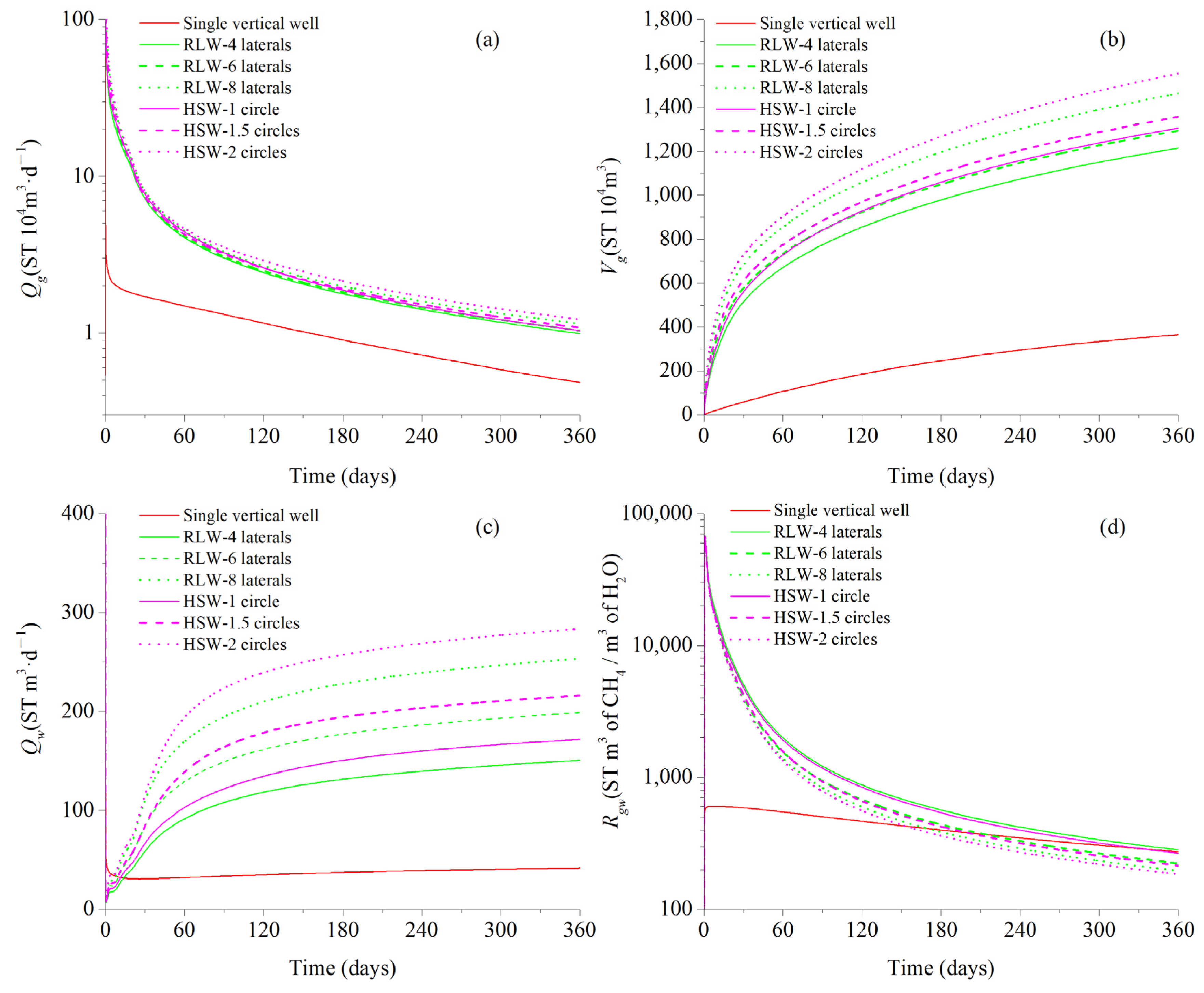
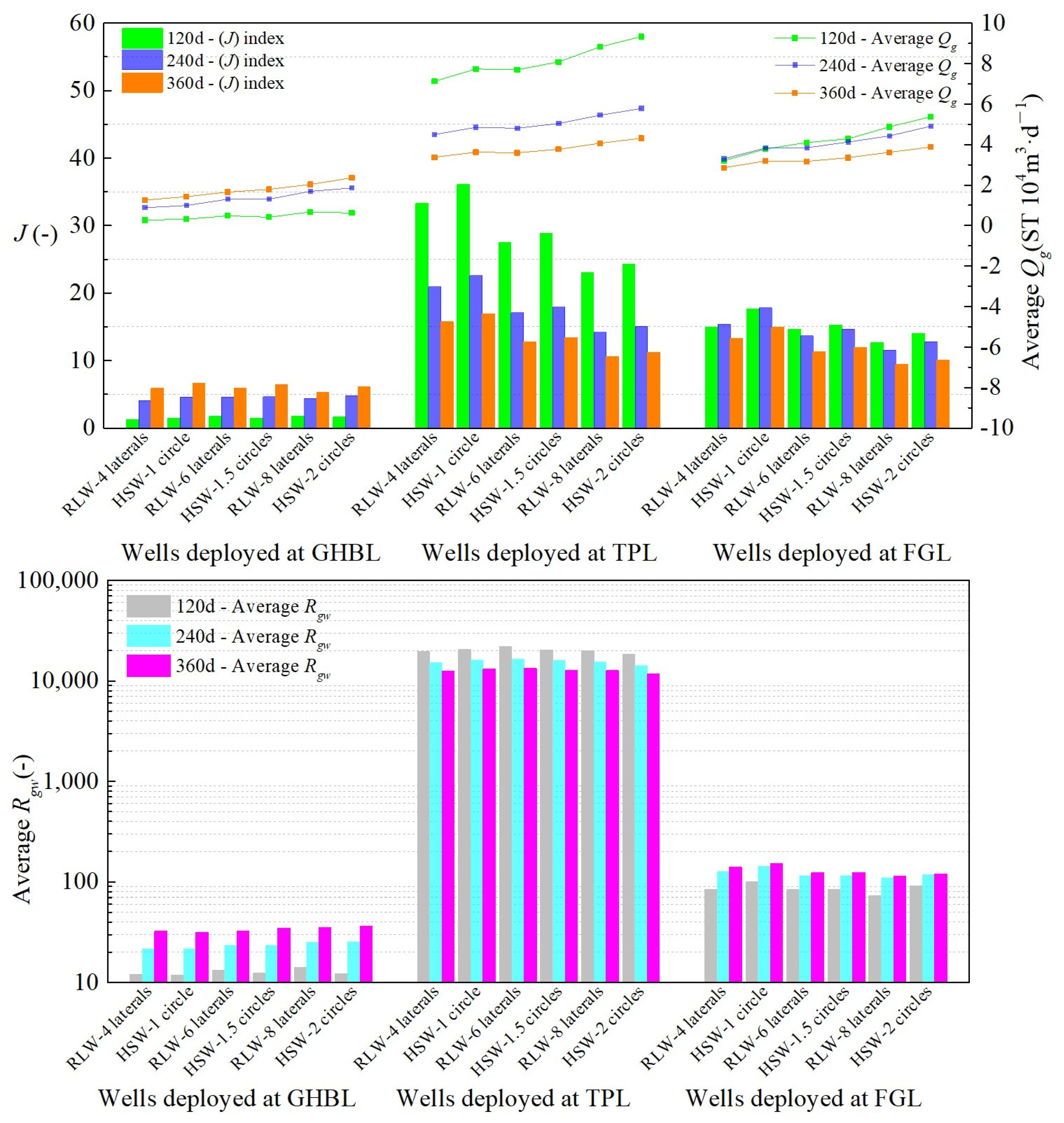
| Case | Average Qg (104 m3/d) | Vg (104 m3) | Compared to VW (Ref) |
|---|---|---|---|
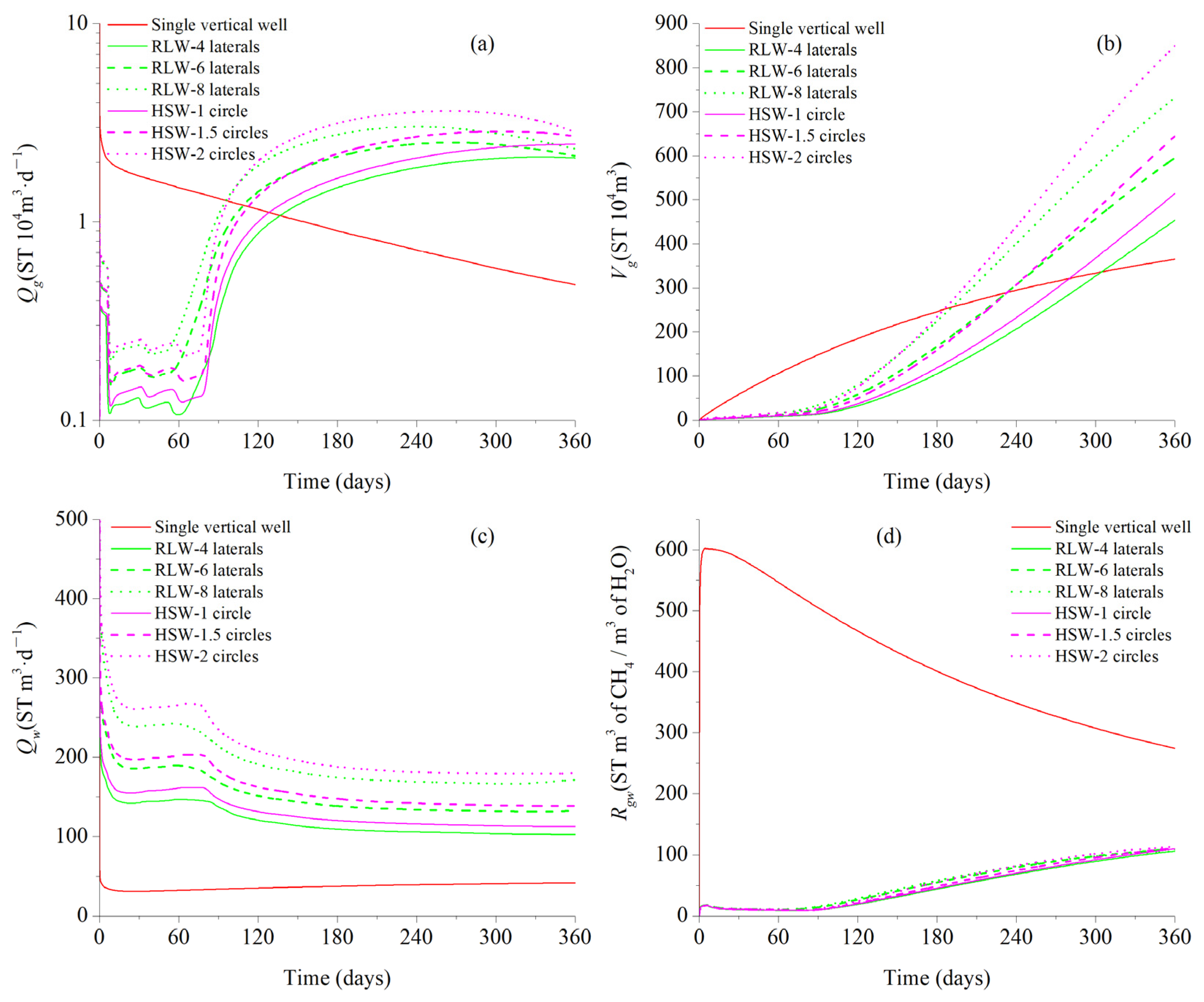
| HSW-2 circles | 2.36 | 849.53 | 232.53% |
| RLW-8 laterals | 2.03 | 731.84 | 200.31% |
| HSW-1.5 circles | 1.79 | 644.57 | 176.42% |
| RLW-6 laterals | 1.66 | 596.20 | 163.19% |
| HSW-1 circle | 1.43 | 514.16 | 140.73% |
| RLW-4 laterals | 1.26 | 453.83 | 124.22% |
| Single vertical well | 1.01 | 365.35 | 100.00% |
| Case | Average Qg (104 m3/d) | Vg (104 m3) | Compared to VW (Ref) |
|---|---|---|---|
| HSW-2 circles | 4.32 | 1554.73 | 425.54% |
| RLW-8 laterals | 4.07 | 1463.54 | 400.58% |
| HSW-1.5 circles | 3.77 | 1356.88 | 371.39% |
| HSW-1 circle | 3.63 | 1305.72 | 357.39% |
| RLW-6 laterals | 3.60 | 1294.38 | 354.29% |
| RLW-4 laterals | 3.38 | 1215.12 | 332.59% |
| Single vertical well | 1.01 | 365.35 | 100.00% |
| Case | Average Qg (104 m3/d) | Vg (104 m3) | Compared to VW (Ref) |
|---|---|---|---|
| HSW-2 circles | 3.88 | 1396.74 | 382.30% |
| RLW-8 laterals | 3.62 | 1303.45 | 356.77% |
| HSW-1.5 circles | 3.35 | 1207.33 | 330.46% |
| HSW-1 circle | 3.19 | 1148.70 | 314.41% |
| RLW-6 laterals | 3.17 | 1141.27 | 312.38% |
| RLW-4 laterals | 2.85 | 1027.71 | 281.29% |
| Single vertical well | 1.01 | 365.35 | 100.00% |
Disclaimer/Publisher’s Note: The statements, opinions and data contained in all publications are solely those of the individual author(s) and contributor(s) and not of MDPI and/or the editor(s). MDPI and/or the editor(s) disclaim responsibility for any injury to people or property resulting from any ideas, methods, instructions or products referred to in the content. |
© 2024 by the authors. Licensee MDPI, Basel, Switzerland. This article is an open access article distributed under the terms and conditions of the Creative Commons Attribution (CC BY) license (https://creativecommons.org/licenses/by/4.0/).
Share and Cite
Wan, T.; Wen, M.; Lu, H.; Li, Z.; Chen, Z.; Tian, L.; Li, Q.; Qu, J.; Wang, J. Numerical Simulation of Gas Production Behavior Using Radial Lateral Well and Horizontal Snake Well Depressurization Mining of Hydrate Reservoir in the Shenhu Sea Area of the South China Sea. J. Mar. Sci. Eng. 2024, 12, 1204. https://doi.org/10.3390/jmse12071204
Wan T, Wen M, Lu H, Li Z, Chen Z, Tian L, Li Q, Qu J, Wang J. Numerical Simulation of Gas Production Behavior Using Radial Lateral Well and Horizontal Snake Well Depressurization Mining of Hydrate Reservoir in the Shenhu Sea Area of the South China Sea. Journal of Marine Science and Engineering. 2024; 12(7):1204. https://doi.org/10.3390/jmse12071204
Chicago/Turabian StyleWan, Tinghui, Mingming Wen, Hongfeng Lu, Zhanzhao Li, Zongheng Chen, Lieyu Tian, Qi Li, Jia Qu, and Jingli Wang. 2024. "Numerical Simulation of Gas Production Behavior Using Radial Lateral Well and Horizontal Snake Well Depressurization Mining of Hydrate Reservoir in the Shenhu Sea Area of the South China Sea" Journal of Marine Science and Engineering 12, no. 7: 1204. https://doi.org/10.3390/jmse12071204
APA StyleWan, T., Wen, M., Lu, H., Li, Z., Chen, Z., Tian, L., Li, Q., Qu, J., & Wang, J. (2024). Numerical Simulation of Gas Production Behavior Using Radial Lateral Well and Horizontal Snake Well Depressurization Mining of Hydrate Reservoir in the Shenhu Sea Area of the South China Sea. Journal of Marine Science and Engineering, 12(7), 1204. https://doi.org/10.3390/jmse12071204