Vibration Characteristics Analysis of the Header Assembly of Combine Harvester Under Multi-Source Coupled Excitation



Abstract
1. Introduction
2. Materials and Methods
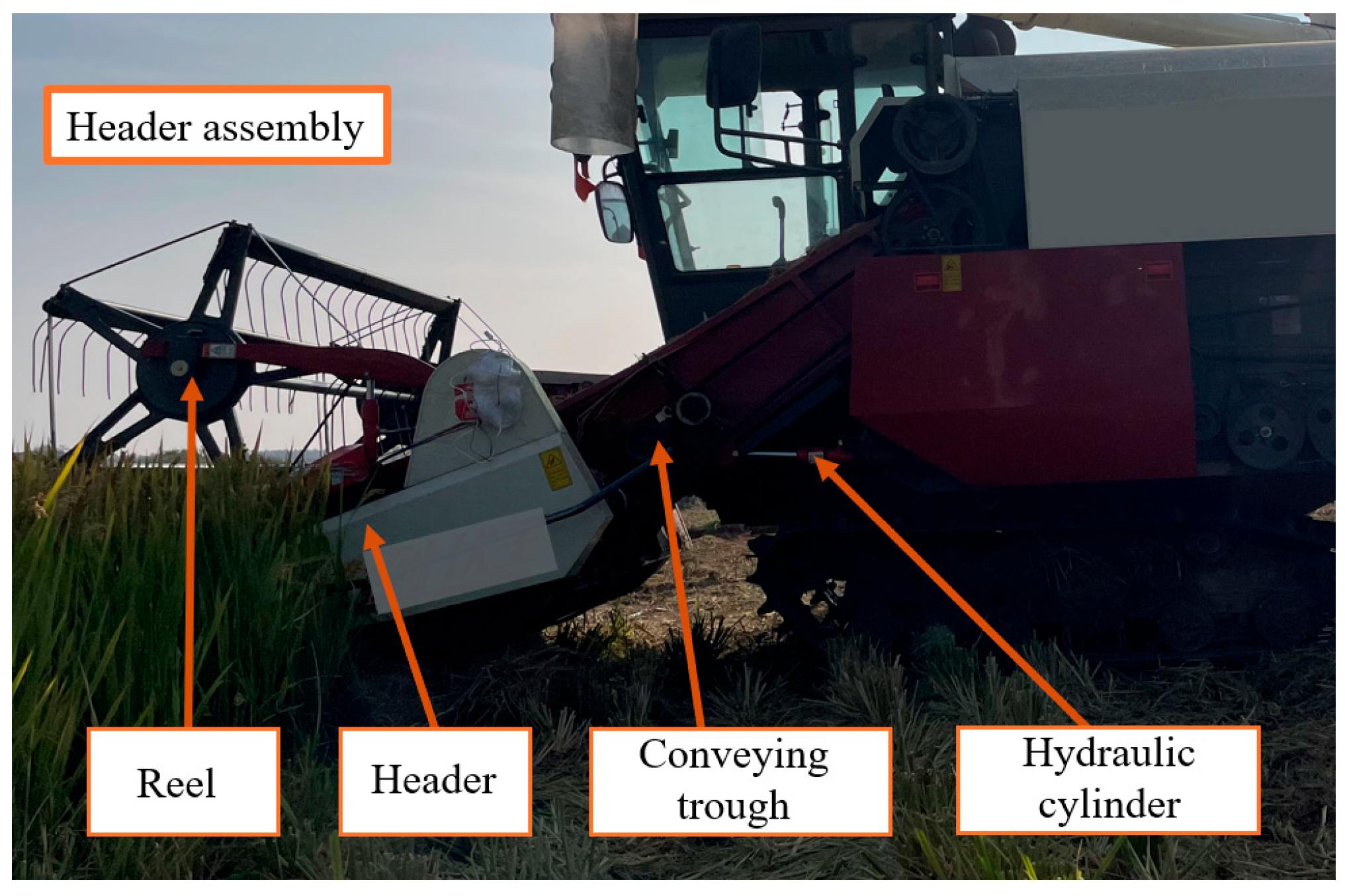
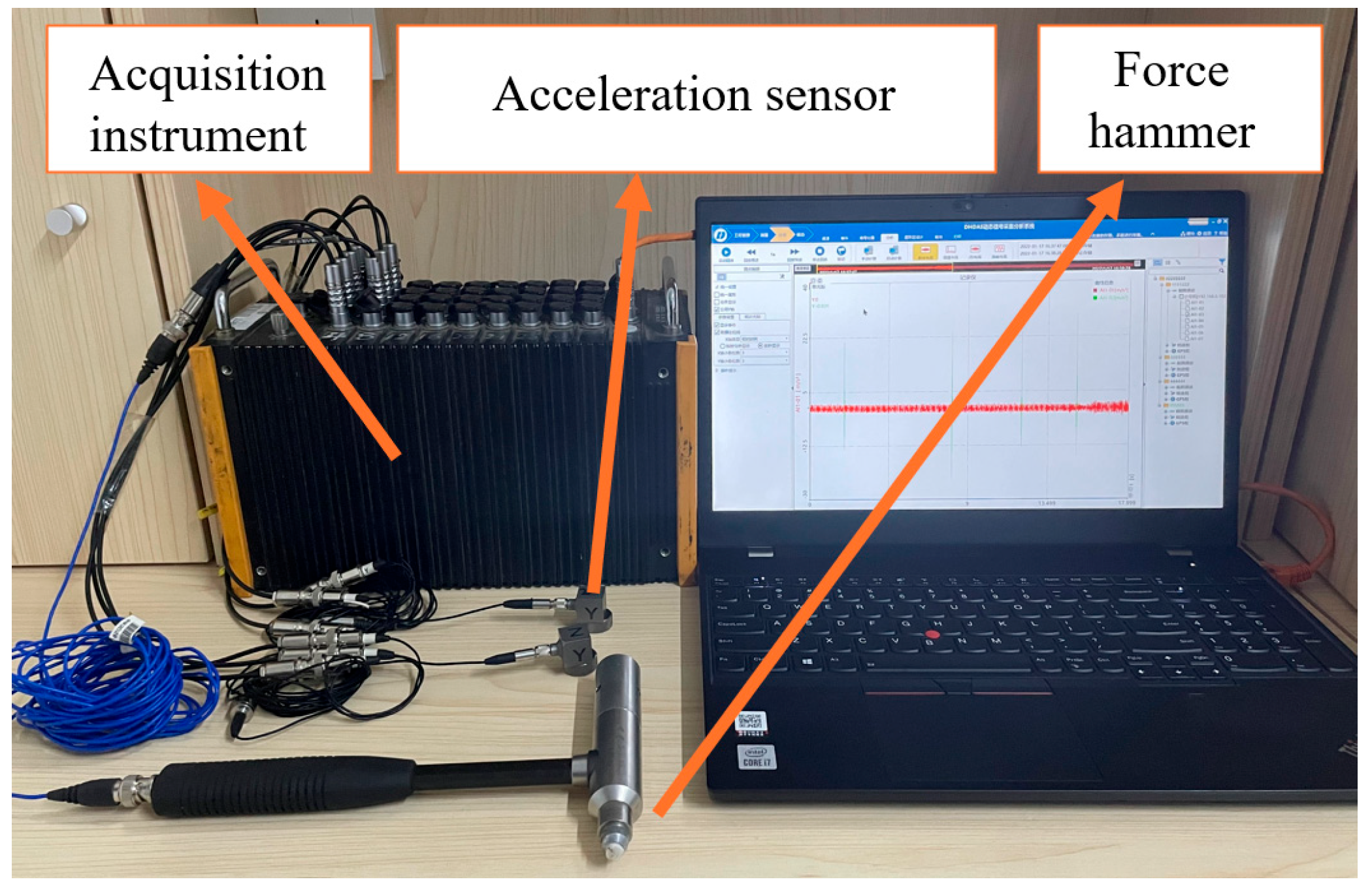
2.1. Experimental Setup and Instruments
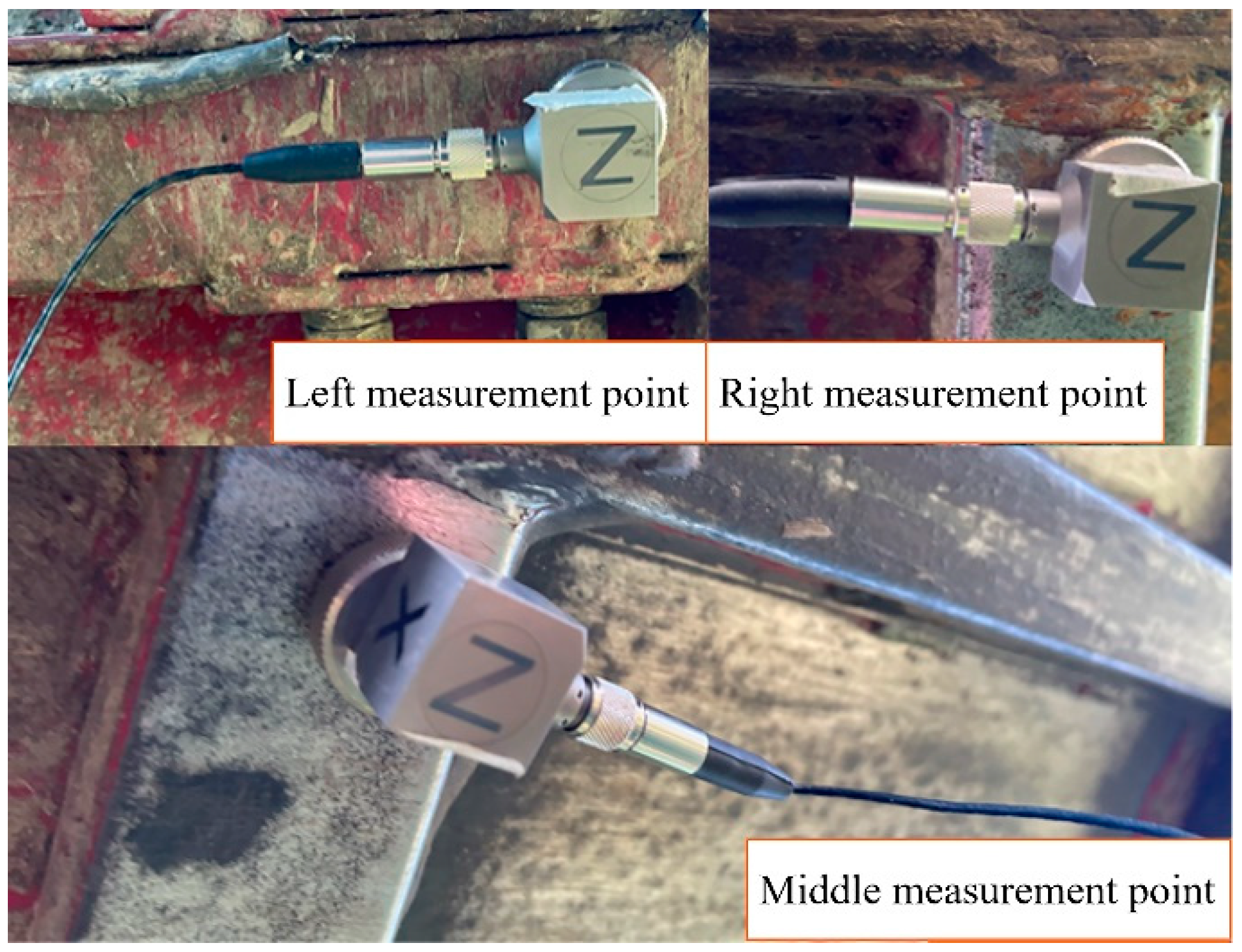
2.2. Output Response Test of the Header at Different Positions
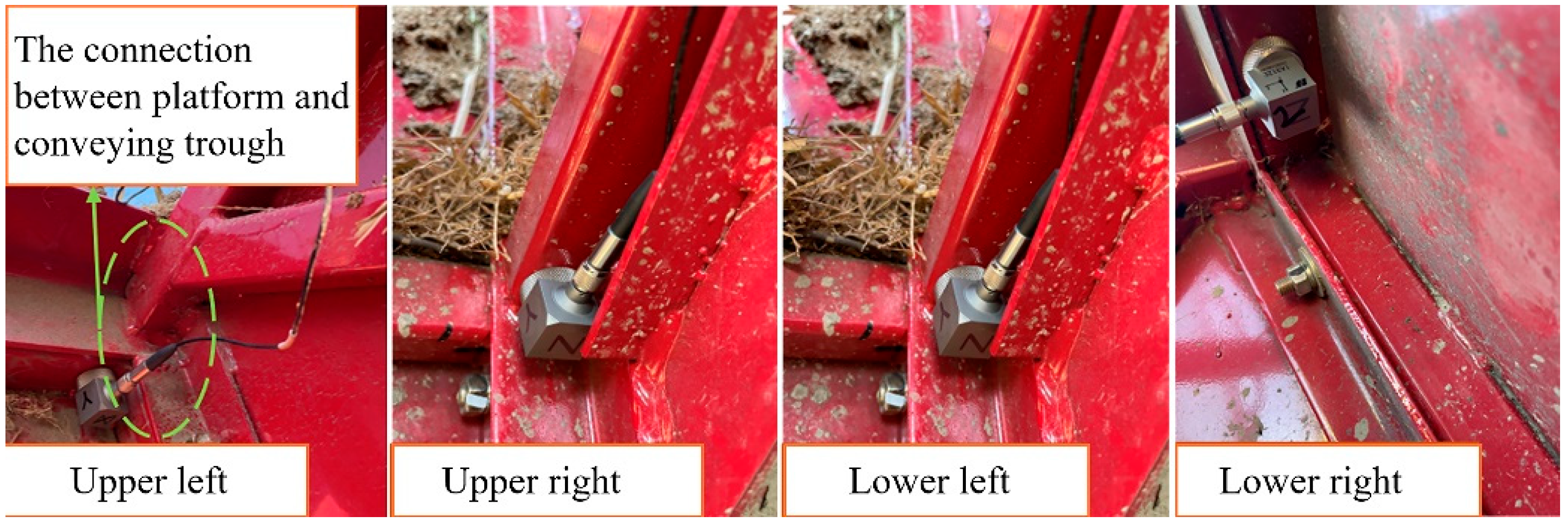
2.3. Output Response Test of the Conveying Trough at Different Positions
2.4. Output Response Test of the Hydraulic Cylinder at Different Positions
2.5. Damped Pendulum Model of the Conveying Trough Based on Lagrange Method
3. Results and Discussion
3.1. Header Output Response Test Results and Analysis
3.2. Conveying Trough Output Response Test Results and Analysis
3.3. Hydraulic Cylinder Output Response Test Results and Analysis
3.4. Output Response Analysis and Experimental Verification of the Conveying Trough
4. Conclusions
- (1)
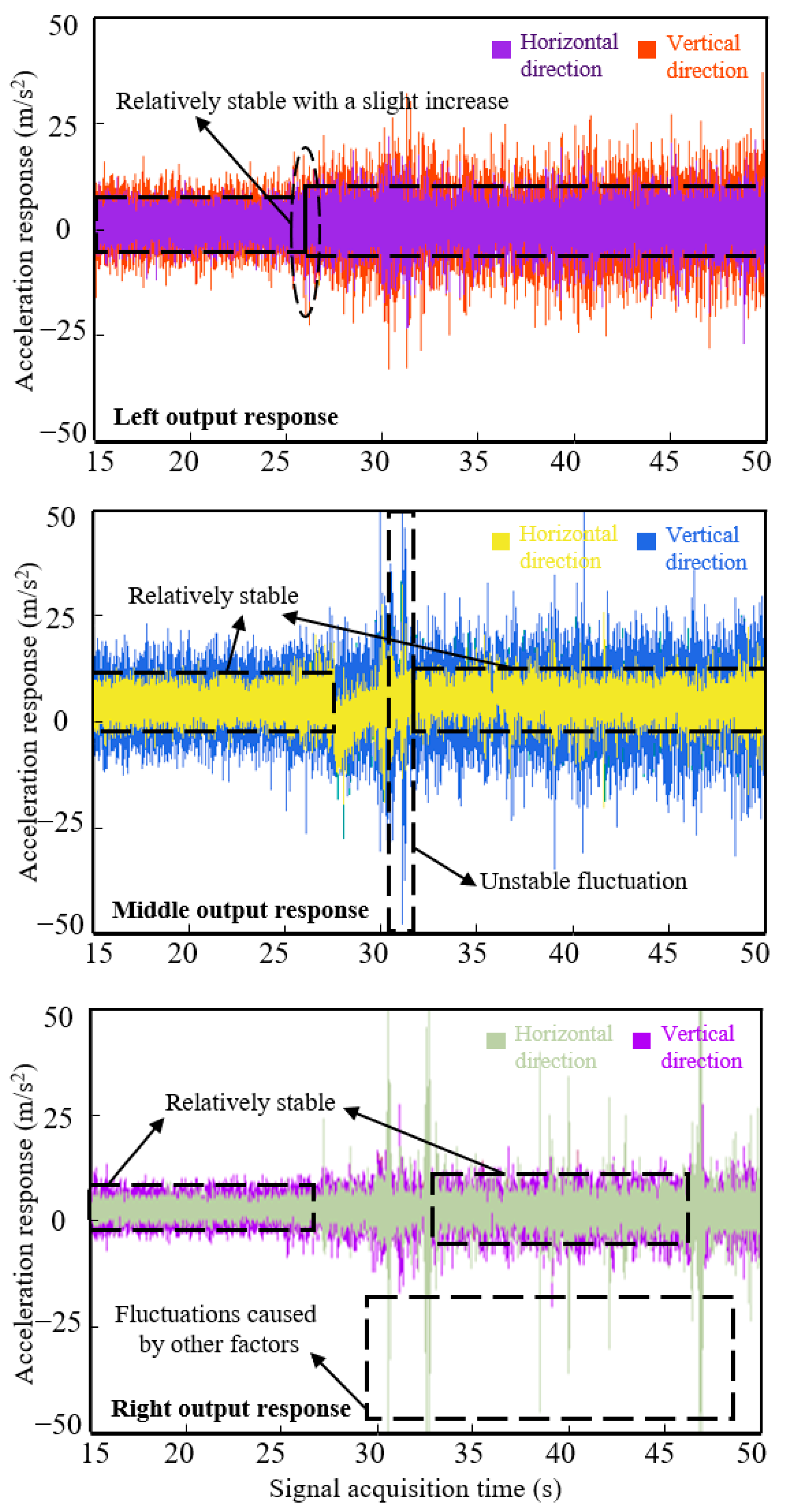
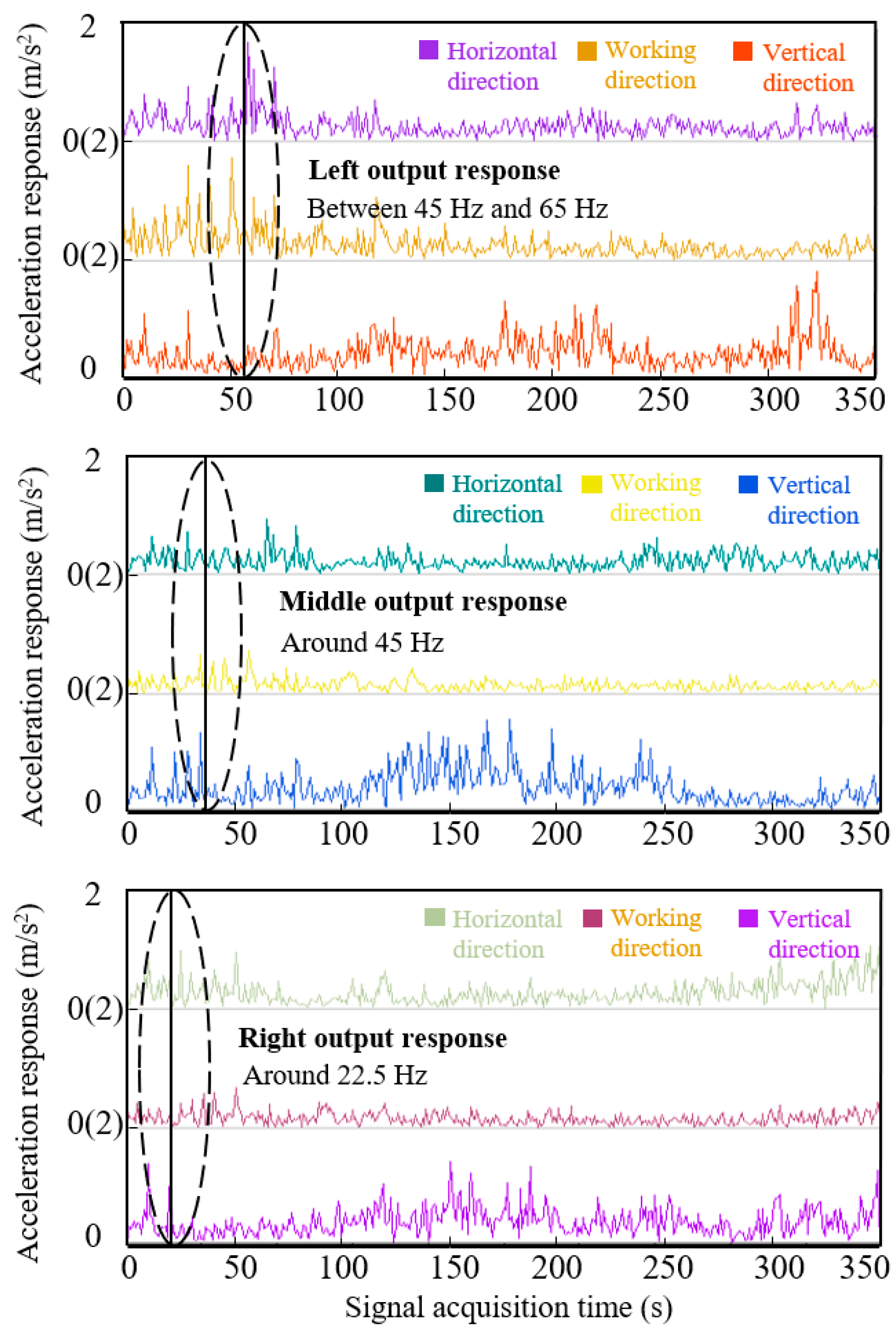
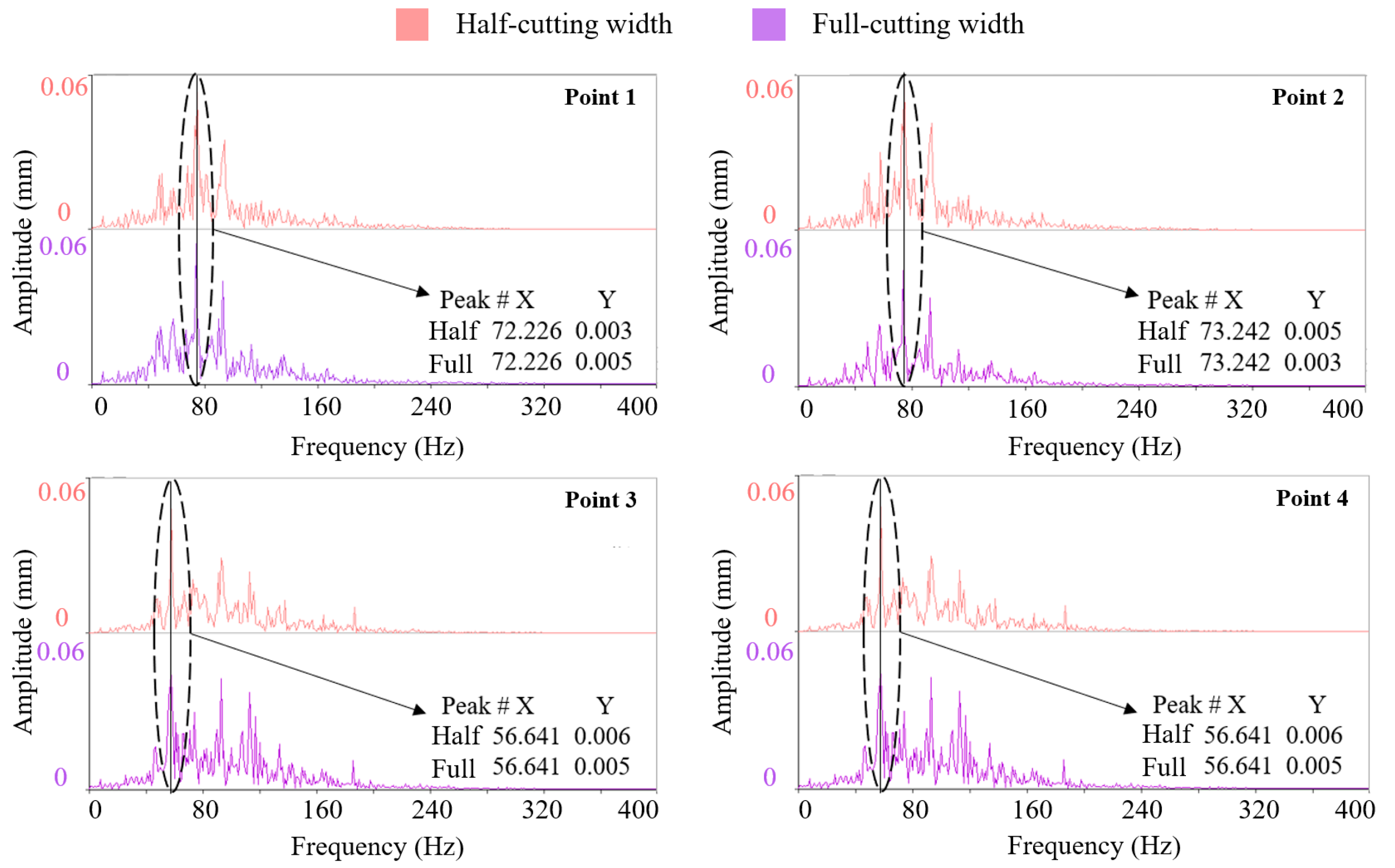
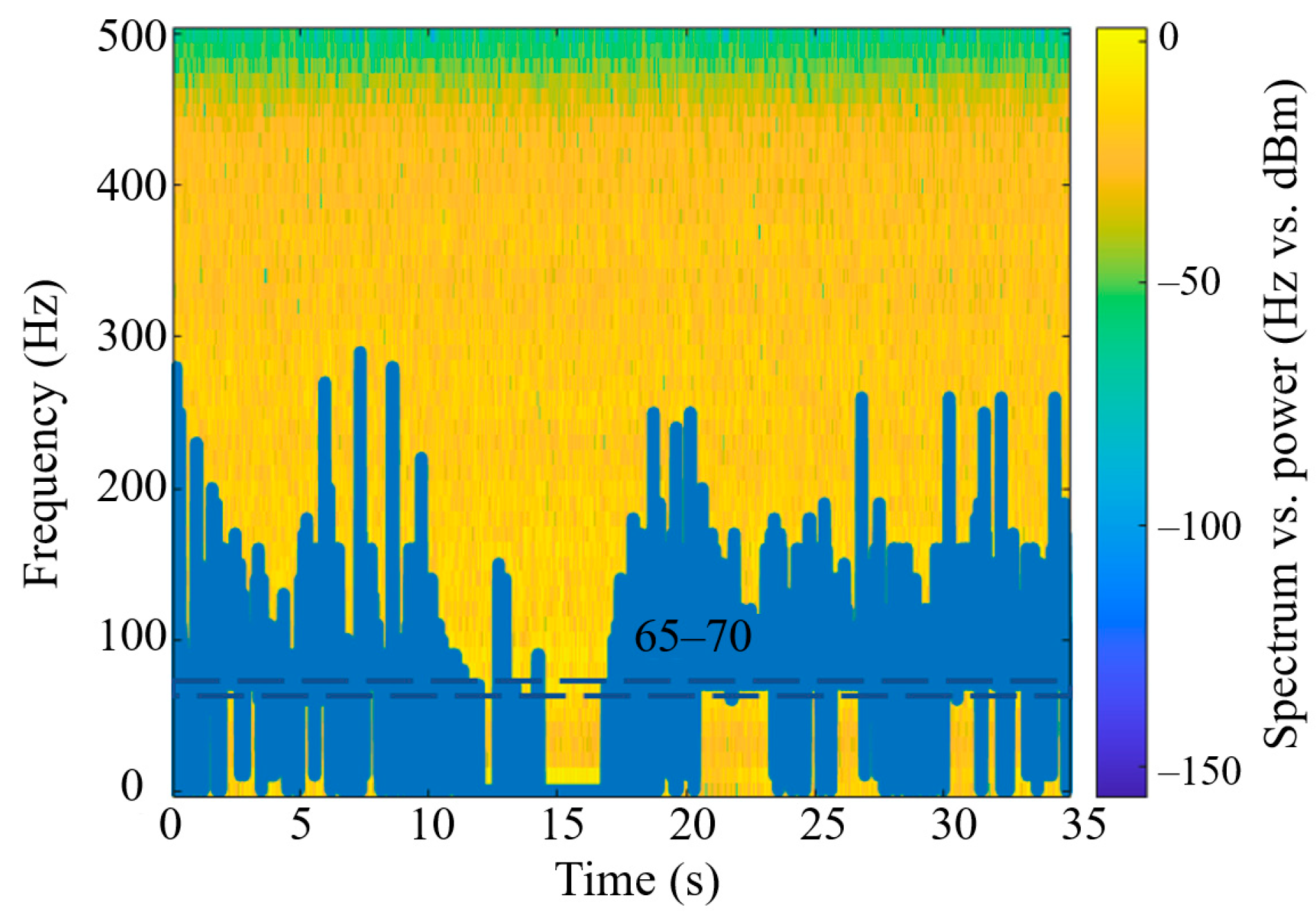
- The header vibration response exhibits distinct multi-source excitation characteristics. Time-domain and frequency-domain analyses indicate that the header is subjected not only to direct excitation from the rice crop but also to significant coupled excitation from other components of the combine harvester. Frequency analysis revealed that the dominant vibration frequencies on the left and right sides of the header coincide with the 3rd and 1.5th harmonics of the threshing drum’s operating frequency, respectively, confirming dynamic coupling effects within the integrated system.
- (2)
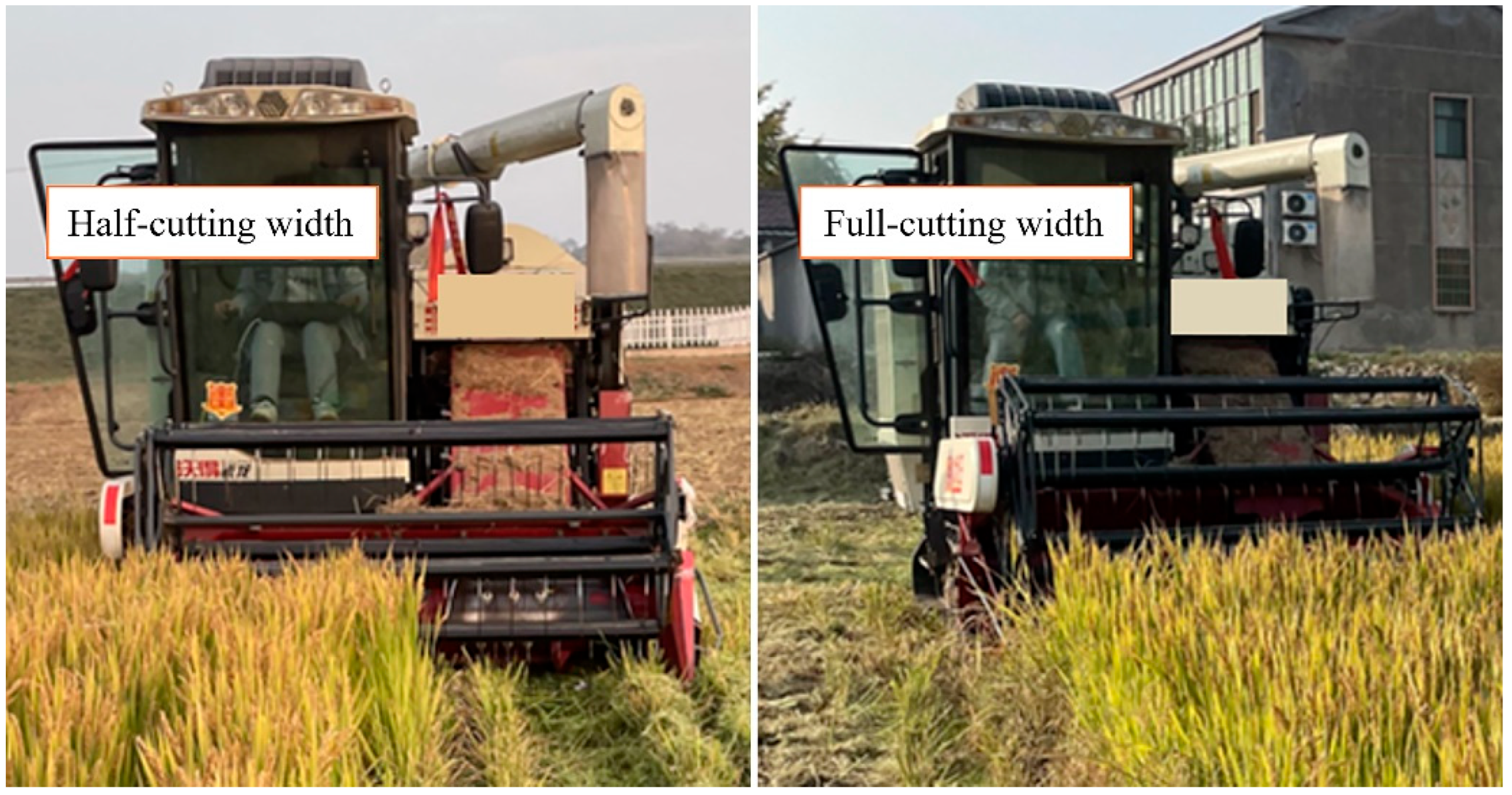
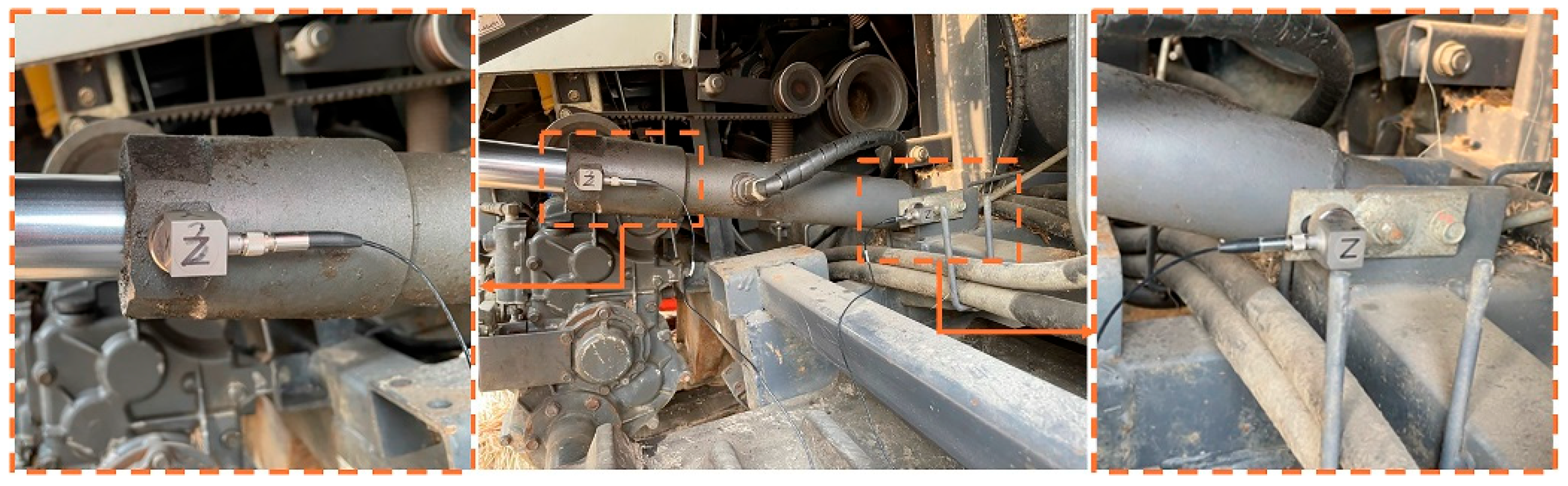
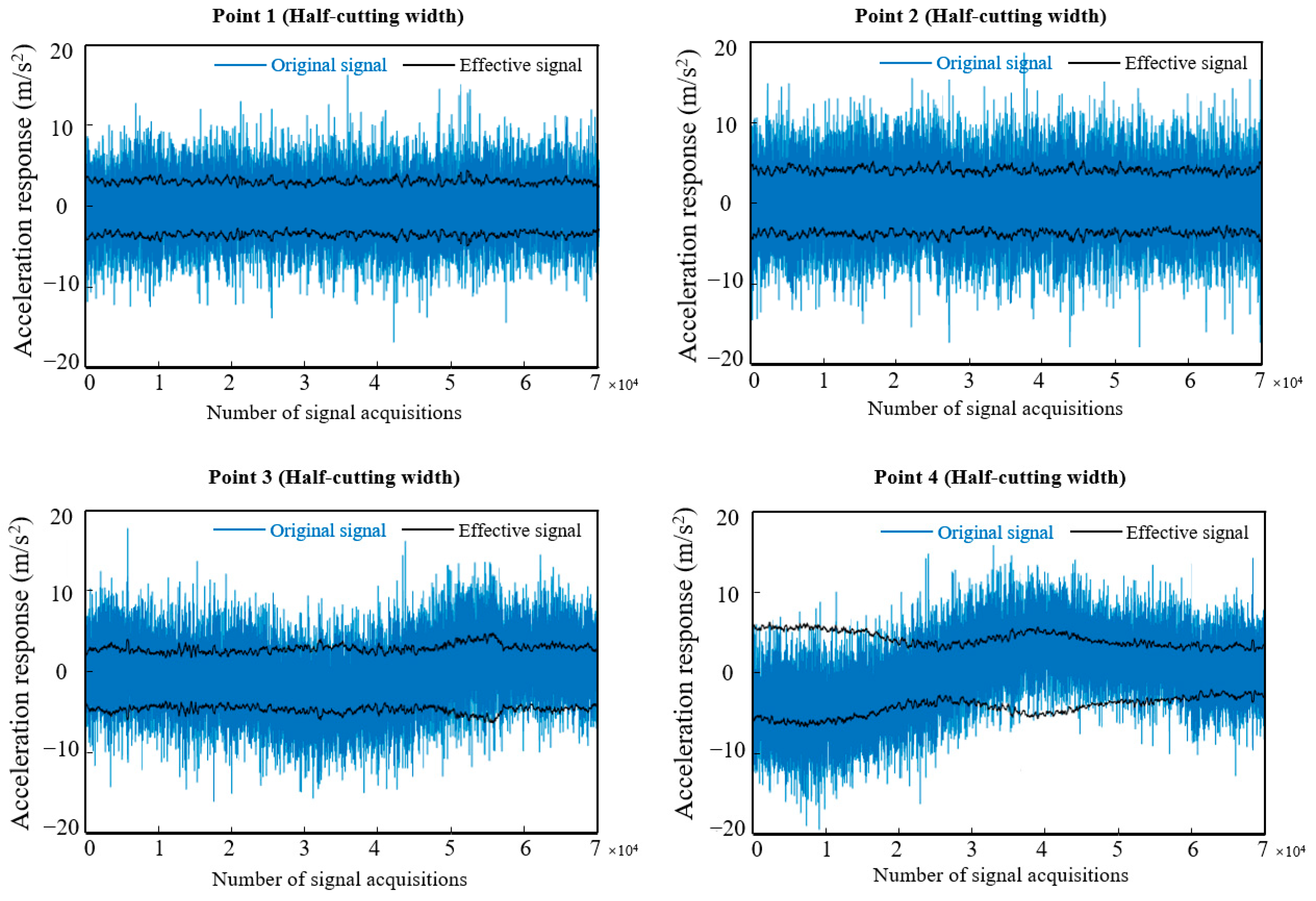
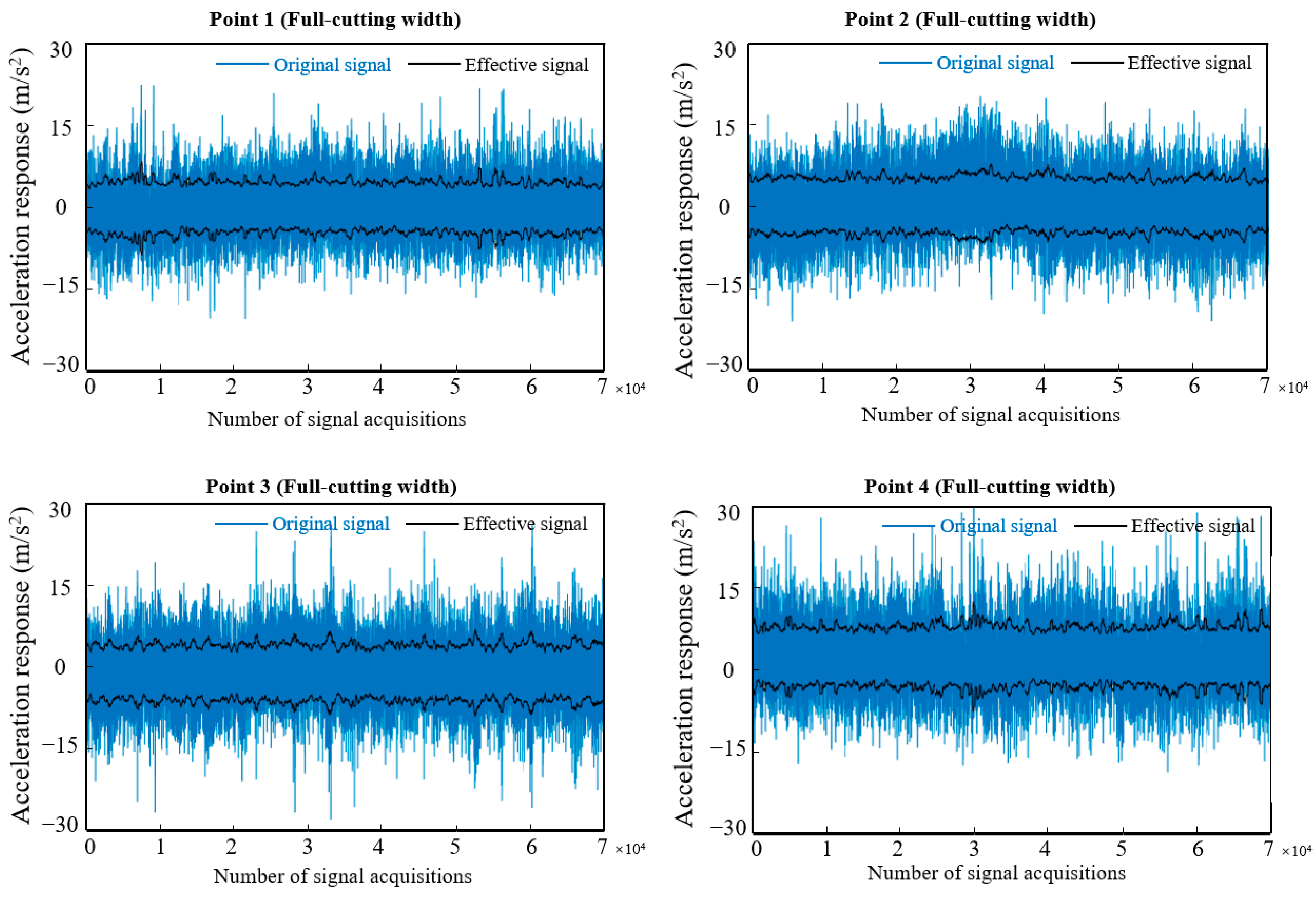
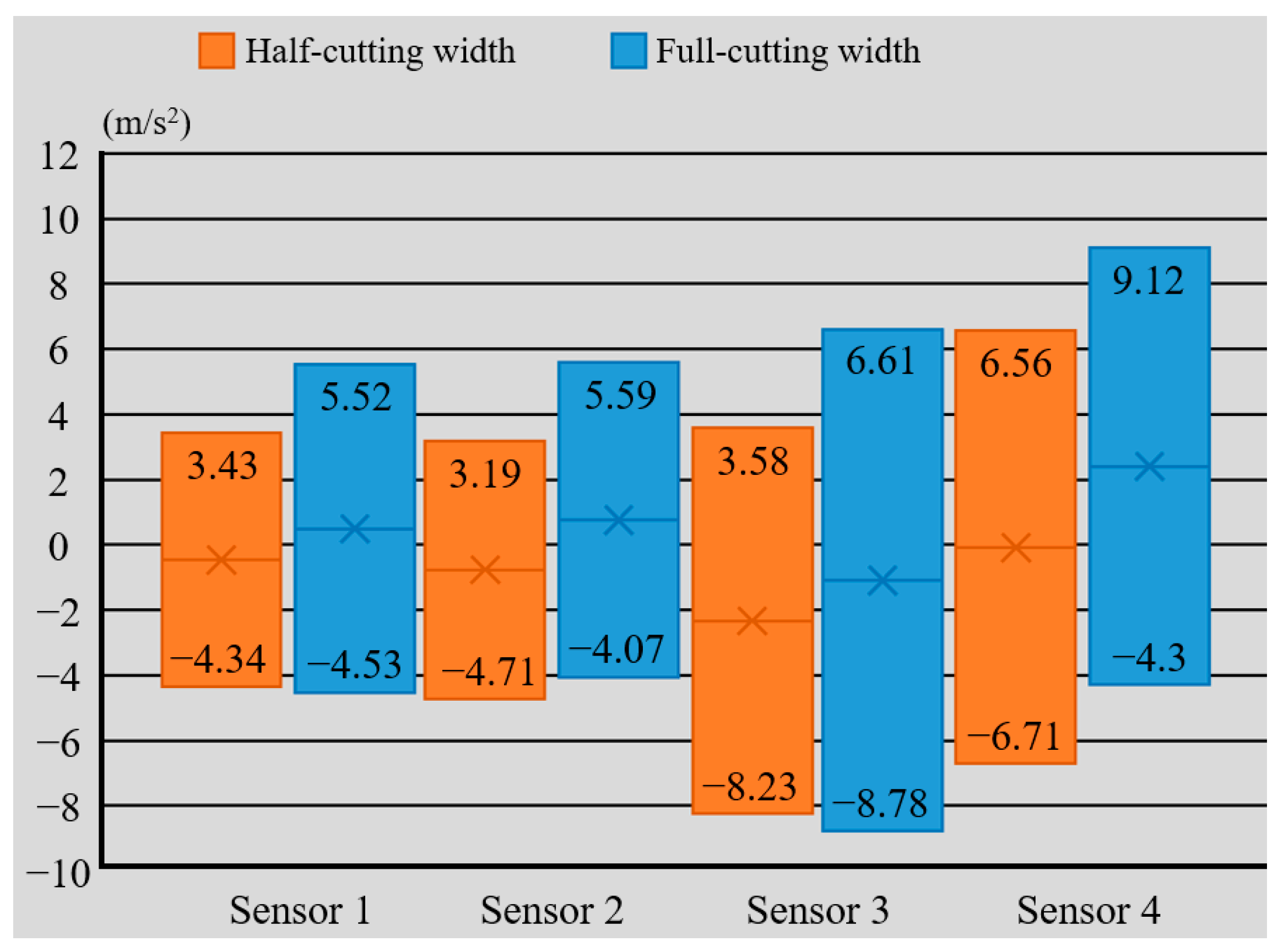
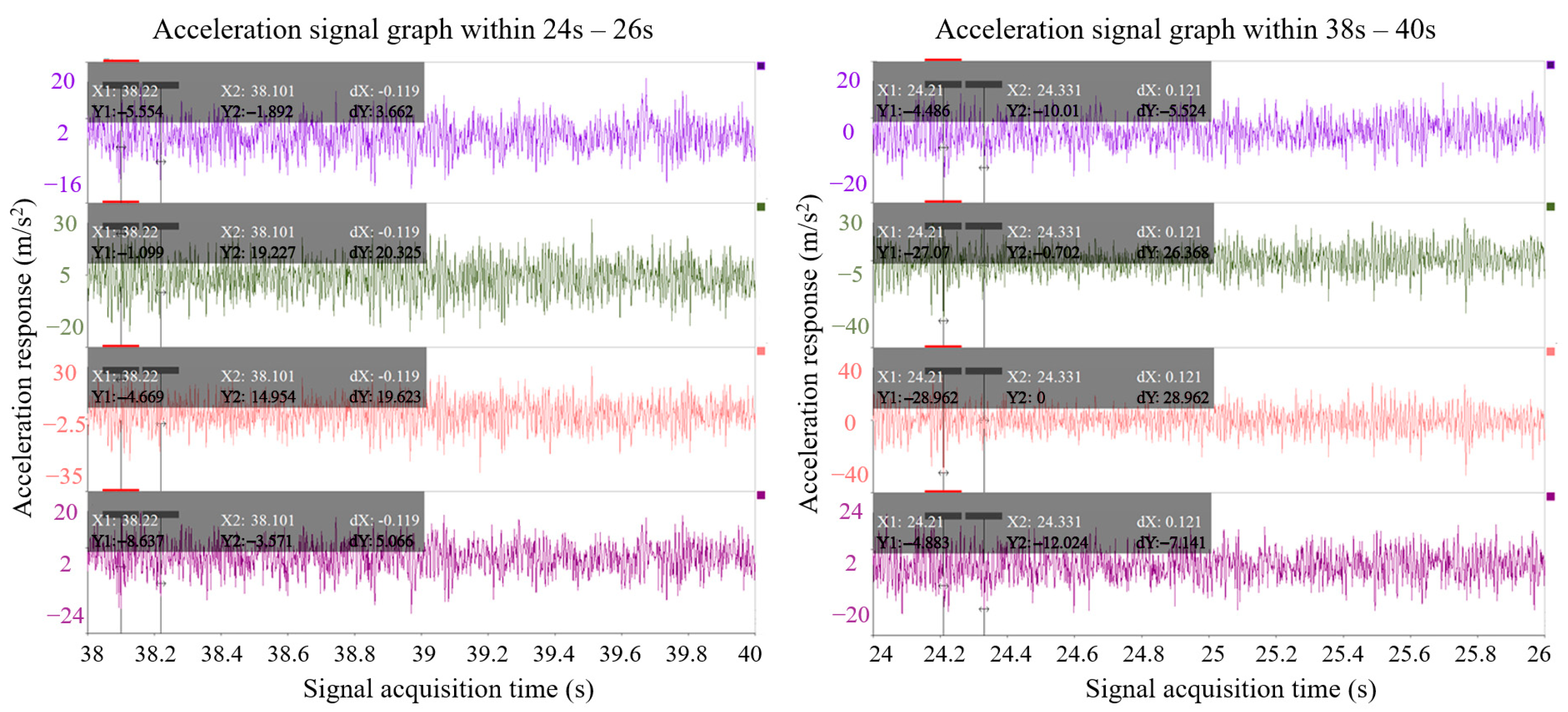
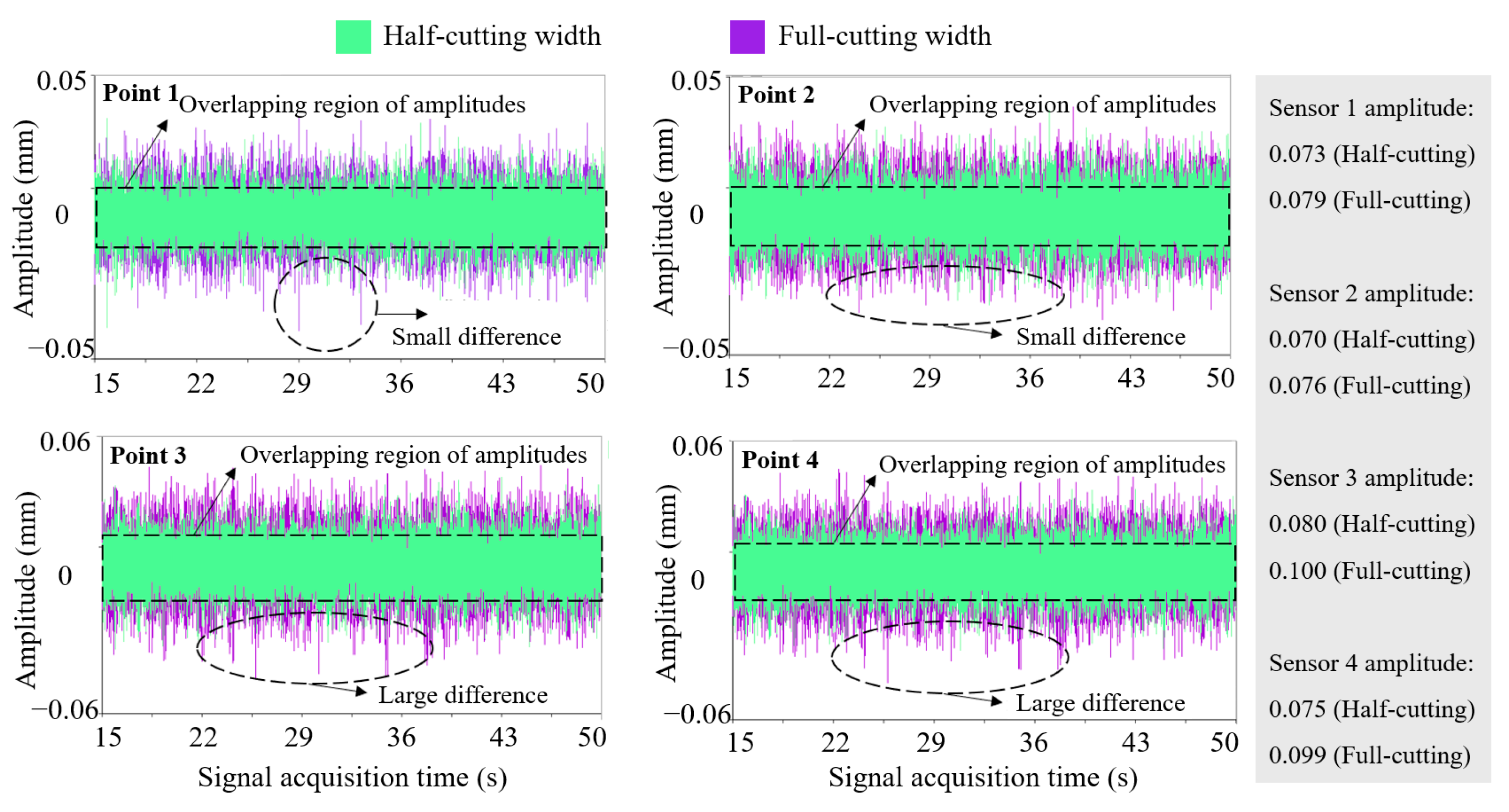
- The excitation force at the connection between the header and the conveying trough is positively correlated with the feed quantity. Acceleration response tests under different cutting-width conditions showed that the peak acceleration at the connection under full-cutting width was significantly higher than that under half-cutting width. The vibration was more pronounced at measurement points located below the connection. The excitation force can be approximately characterized as a sinusoidal function with an amplitude dependent on the feed quantity, providing an effective boundary condition for system modeling.
- (3)
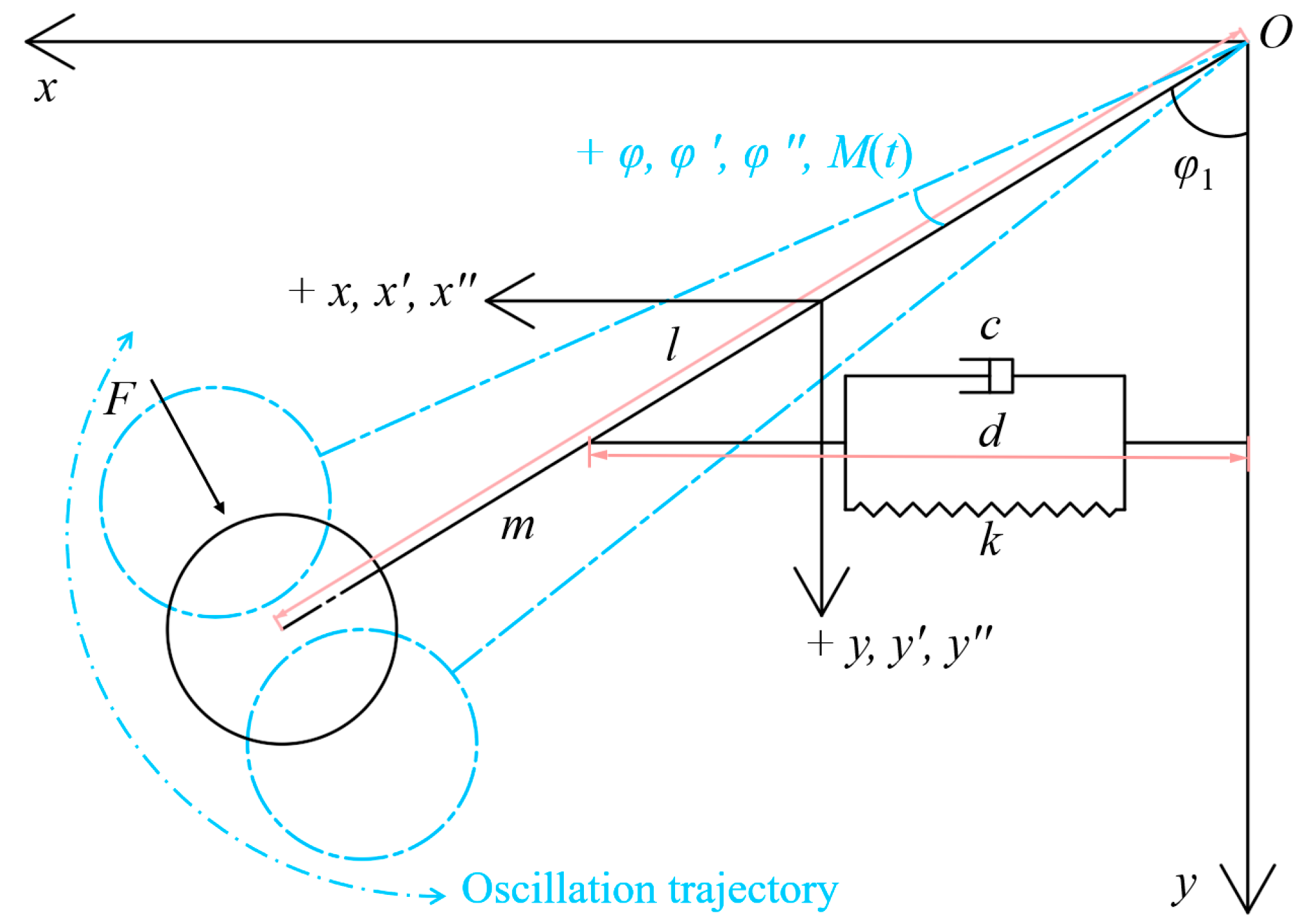
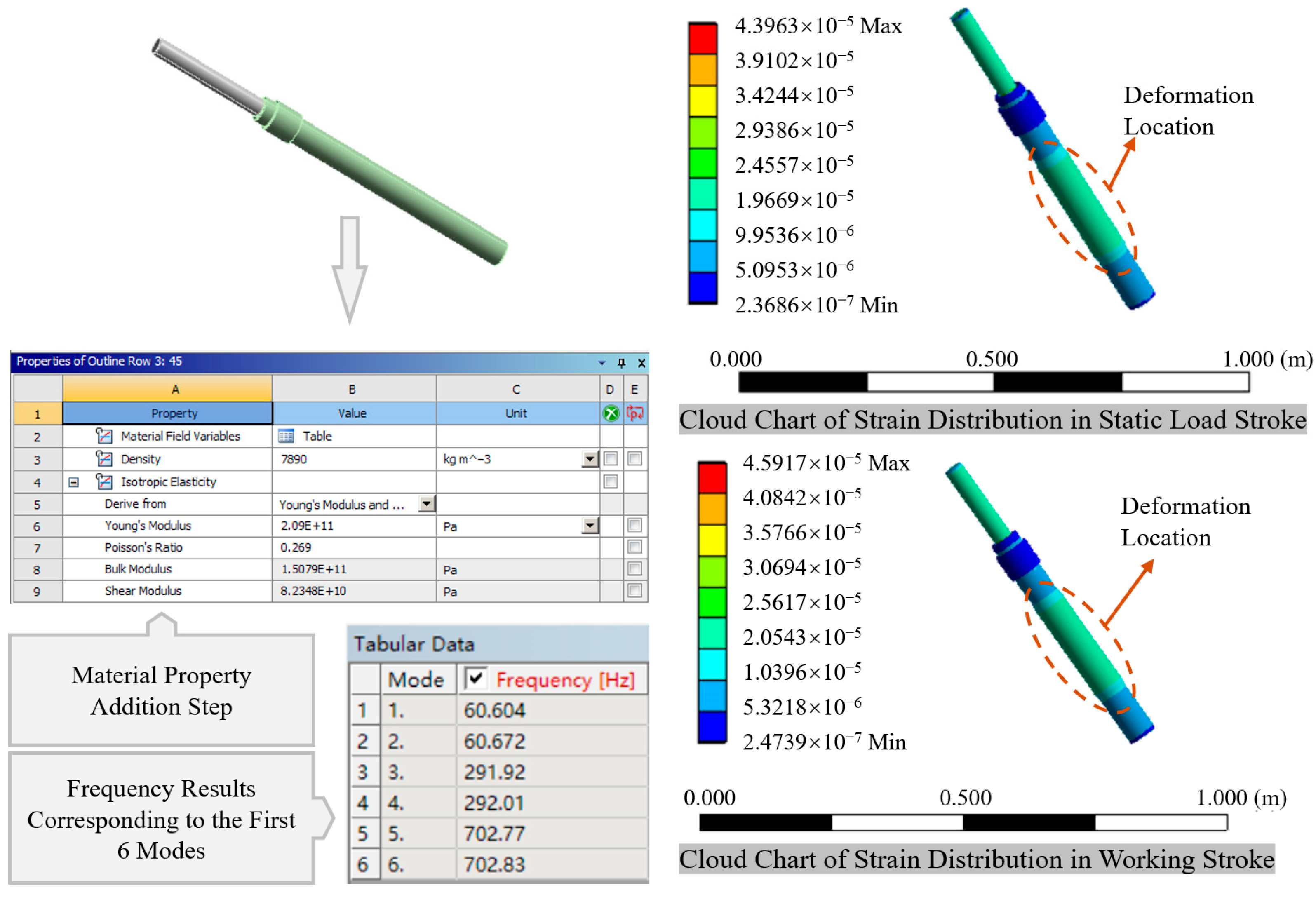
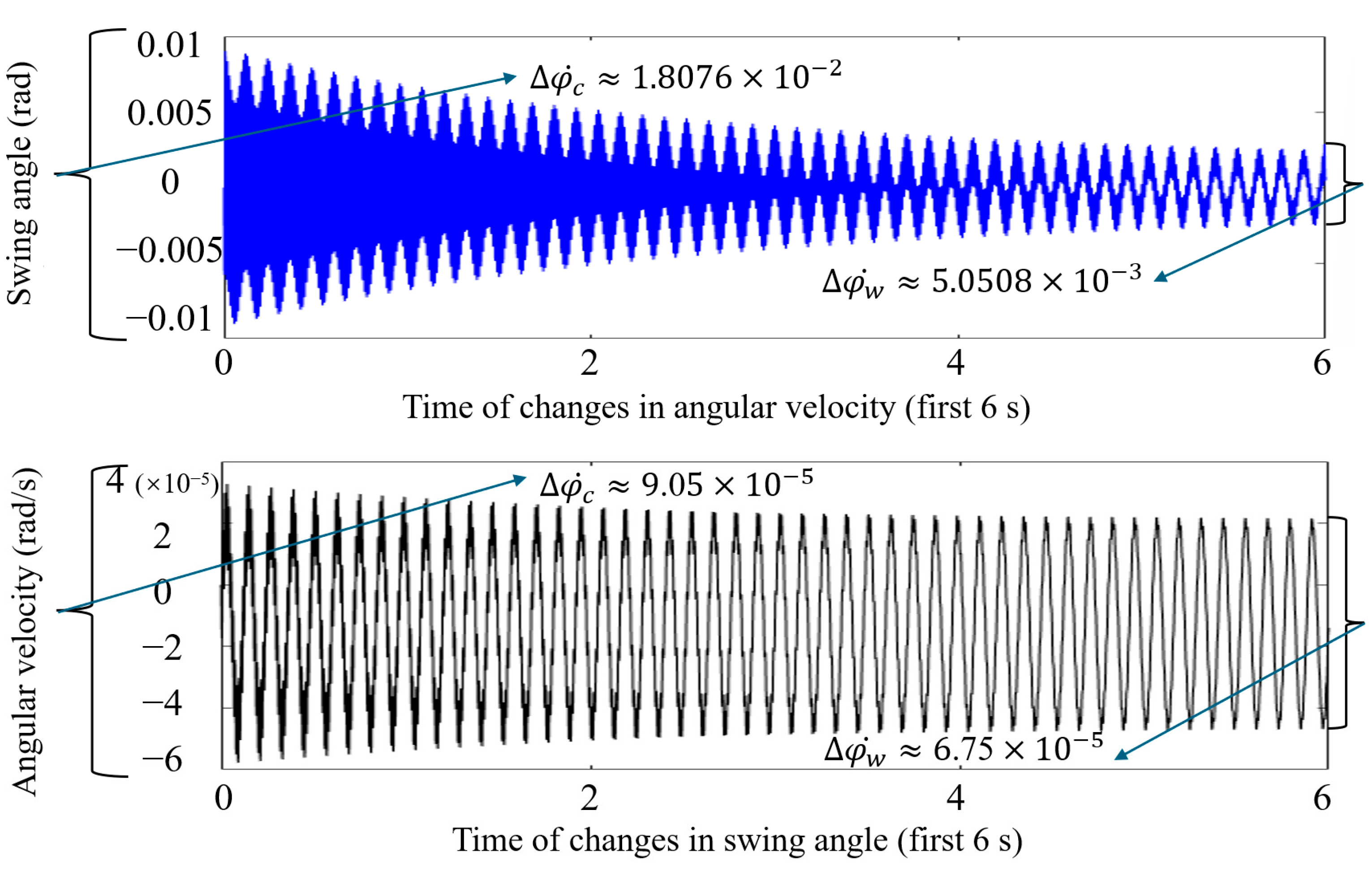
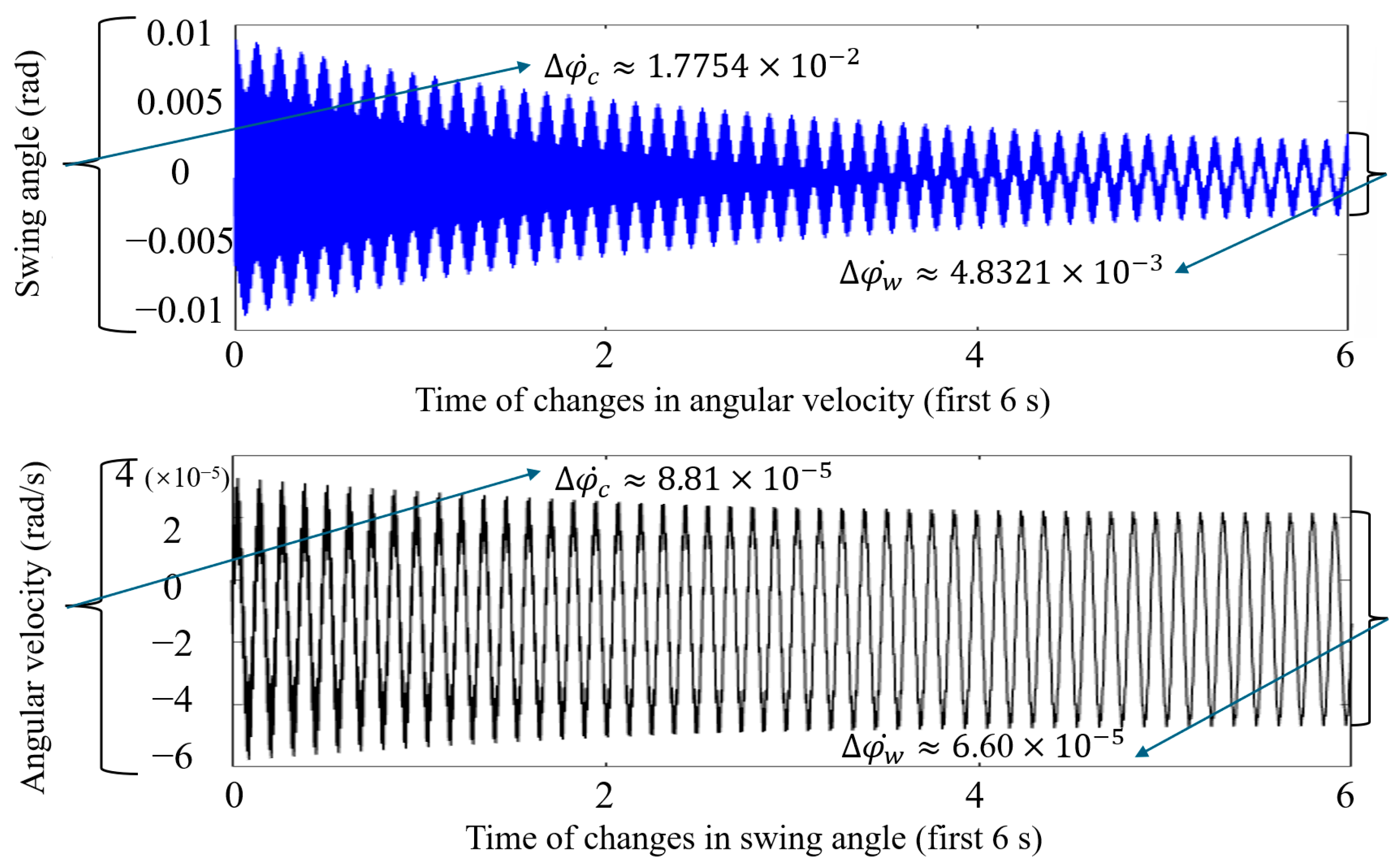
- The damped pendulum model established based on the Lagrange equation demonstrates good predictive capability under the tested conditions. The theoretical steady-state swing amplitude calculated by the model differed from the field-measured values by only 1.11% to 4.3%, verifying that the model accurately reflects the swinging behavior of the conveying trough under external excitation. This model provides a reliable theoretical tool for the dynamic performance evaluation and optimization of the header assembly.
Author Contributions
Funding
Data Availability Statement
Conflicts of Interest
References
- Chen, T.; Xu, L.; Ahn, H.S.; Lu, E.; Liu, Y.; Xu, R. Evaluation of headland turning types of adjacent parallel paths for combine harvesters. Biosyst. Eng. 2023, 233, 93–113. [Google Scholar] [CrossRef]
- Chen, J.; Ji, J.; Ji, K.; Chen, Y. Deep Learning-Driven Predictive Control Method for Optimizing Combine Harvester Operation Speed. Eng. Agrícola 2025, 45, e20240150. [Google Scholar] [CrossRef]
- Pu, C.; Jia, Y.; Zhang, Z.; Luo, H.; Ren, M.; Wang, J.; Qian, P. Intelligent optimization of air-floating piston core parameters for homemade frictionless pneumatic actuators based on a new multi-objective particle swarm optimization algorithm with Gaussian mutation and fuzzy logic. Eng. Appl. Artif. Intell. 2025, 154, 111053. [Google Scholar] [CrossRef]
- Hu, J.; Yu, Y.; Ma, T.; Liu, P.; Xu, L. Design of attitude-adjustable chassis and dynamic stress analysis of key components for crawler combine harvester. J. Agric. Eng. 2024, 56. [Google Scholar] [CrossRef]
- Gu, X.; Tang, Z.; Wang, B. Sensor-Centric Intelligent Systems for Soybean Harvest Mechanization in Challenging Agro-Environments of China: A Review. Sensors 2025, 25, 6695. [Google Scholar] [CrossRef] [PubMed]
- Hussain, S.; Jianjun, H.; Yong, C.; Ali, A.; Song, H.; Zheng, D.; Farid, M.U.; Ghafoor, A.; Ahmed, M. CFD study of self-cleaning system of multi-stage tangential roller threshing unit for precise buckwheat breeding. Heliyon 2024, 10, e27180. [Google Scholar] [CrossRef] [PubMed]
- Tian, K.; Zhang, B.; Ji, A.; Huang, J.; Liu, H.; Shen, C. Design and experiment of the bionic disc cutter for kenaf harvesters. Int. J. Agric. Biol. Eng. 2023, 16, 116–123. [Google Scholar] [CrossRef]
- Yu, Z.; Li, Y.; Du, X.; Liu, Y. Threshing cylinder unbalance detection using a signal extraction method based on parameter-adaptive variational mode decomposition. Biosyst. Eng. 2024, 244, 26–41. [Google Scholar] [CrossRef]
- Jia, Y.; Qian, S.; Zhang, Z.; Zhou, H.; Liu, L.; Li, X.; Páez, L.M.R.; Qian, P. Intelligent selection of parameters for air-floating piston based on improved multi-objective grey wolf optimisation algorithm. Int. J. Hydromechatron. 2025, 8, 121–147. [Google Scholar] [CrossRef]
- Chen, S.; Qi, J.; Gao, J.; Chen, W.; Fei, J.; Meng, H.; Ma, Z. Research on the Control System for the Conveying and Separation Experimental Platform of Tiger Nut Harvester Based on Sensing Technology and Control Algorithms. Agriculture 2025, 15, 115. [Google Scholar] [CrossRef]
- Shen, Y.; Gao, J.; Jin, Z. Research on Acoustic Signal Identification Mechanism and Denoising Methods of Combine Harvesting Loss. Agronomy 2024, 14, 1816. [Google Scholar] [CrossRef]
- Qian, P.; Pu, C.; Liu, L.; Luo, H.; Wu, J.; Jia, Y.; Liu, B.; Ruiz Páez, L.M. Ultra-high-precision pneumatic force servo system based on a novel improved particle swarm optimization algorithm integrating Gaussian mutation and fuzzy theory. ISA Trans. 2024, 152, 453–466. [Google Scholar] [CrossRef]
- Lian, Y.; Wang, B.; Sun, M.; Que, K.; Xu, S.; Tang, Z.; Huang, Z. Design of a Conveyer Trough Bolt Signal Acquisition System and Bayesian Ensemble Identification Method for Working State. Agriculture 2025, 15, 970. [Google Scholar] [CrossRef]
- Guo, Z.; Xiao, H.; Dai, Z.; Wang, C.; Sun, C.; Watson, N.; Povey, M.; Zou, X. Identification of apple variety using machine vision and deep learning with multi-head attention mechanism and GLCM. J. Food Meas. Charact. 2025, 19, 6540–6558. [Google Scholar] [CrossRef]
- Chai, X.; Zhou, Y.; Xu, L.; Li, Y.; Li, Y.; Lv, L. Effect of guide strips on the distribution of threshed outputs and cleaning losses for a tangential-longitudinal flow rice combine harvester. Biosyst. Eng. 2020, 198, 223–234. [Google Scholar] [CrossRef]
- Qian, P.; Luo, H.; Liu, L.; Lv, P.; Pu, C.; Meng, D.; Páez, L.M.R. A hybrid Gaussian mutation PSO with search space reduction and its application to intelligent selection of piston seal grooves for homemade pneumatic cylinders. Eng. Appl. Artif. Intell. 2023, 122, 106156. [Google Scholar] [CrossRef]
- Liu, Y.; Li, Y.; Ji, K.; Yu, Z.; Ma, Z.; Xu, L.; Niu, C. Development of a hydraulic variable-diameter threshing drum control system for combine harvester part II: Controller design and field performance. Biosyst. Eng. 2025, 254, 104160. [Google Scholar] [CrossRef]
- Gu, X.; Wang, B.; Tang, Z.; Wang, H. Sensor-Based Monitoring of Bolted Joint Reliability in Agricultural Machinery: Performance and Environmental Challenges. Sensors 2025, 25, 5098. [Google Scholar] [CrossRef] [PubMed]
- Zheng, M.; Min, H.; Yaoming, L.; Shuncheng, Y.; Farman Ali, C. Comparing kernel damage of different threshing components using high-speed cameras. Int. J. Agric. Biol. Eng. 2020, 13, 215–219. [Google Scholar] [CrossRef]
- Balasubramani, M.A.; Venkatakrishnaiah, R.; Raju, K.V.B. A mayfly optimisation method to predict load settlement of reinforced railway tracks on soft subgrade with multi-layer geogrid. Int. J. Hydromechatron. 2023, 6, 159–176. [Google Scholar] [CrossRef]
- Qian, Y.; Quan, L. Cooperative Control Strategy of Multi-Component Speed of Distributed Electric Drive Combine Harvester. Appl. Eng. Agric. 2025, 41, 205–215. [Google Scholar] [CrossRef]
- Liu, Y.; Li, Y.; Zhang, T.; Huang, M. Effect of concentric and non-concentric threshing gaps on damage of rice straw during threshing for combine harvester. Biosyst. Eng. 2022, 219, 1–10. [Google Scholar] [CrossRef]
- Pang, J.; Li, Y.; Ji, J.; Xu, L. Vibration excitation identification and control of the cutter of a combine harvester using triaxial accelerometers and partial coherence sorting. Biosyst. Eng. 2019, 185, 25–34. [Google Scholar] [CrossRef]
- Pu, C.; Jia, Y.; Zhang, Z.; Zhou, H.; Liu, L.; Qian, P.; Iqbal, N.; Emzir, M.F. A fuzzy adaptive particle swarm optimization algorithm with Gaussian mutation for constrained engineering problems. Appl. Soft Comput. 2025, 185, 113908. [Google Scholar] [CrossRef]
- Gao, Y.; Yang, Y.; Fu, S.; Feng, K.; Han, X.; Hu, Y.; Zhu, Q.; Wei, X. Analysis of Vibration Characteristics of Tractor–Rotary Cultivator Combination Based on Time Domain and Frequency Domain. Agriculture 2024, 14, 1139. [Google Scholar] [CrossRef]
- Chen, S.; Zhou, Y.; Tang, Z.; Lu, S. Modal vibration response of rice combine harvester frame under multi-source excitation. Biosyst. Eng. 2020, 194, 177–195. [Google Scholar] [CrossRef]
- Gao, Z.; Xu, L.; Li, Y.; Wang, Y.; Sun, P. Vibration measure and analysis of crawler-type rice and wheat combine harvester in field harvesting condition. Trans. Chin. Soc. Agric. Eng. (Trans. CSAE) 2017, 33, 48–55. [Google Scholar] [CrossRef]
- Wang, W.; Shi, P.; Chu, H.; Deng, L.; Yan, B. Deep Learning Framework for Total Stress Detection of Steel Components. J. Bridge Eng. 2021, 26, 04020113. [Google Scholar] [CrossRef]
- Zong, K.; Fu, S.; Wu, M. Modeling and response analysis of the attitude angles of roadheader for steep coal seam. SN Appl. Sci. 2021, 3, 735. [Google Scholar] [CrossRef]
- Zhao, L.-j.; Qin, Y.-x.; Zhang, L. Research on Jib Performance of Crane in Hoisting Wind Generator. J. Fail. Anal. Prev. 2020, 20, 1794–1802. [Google Scholar] [CrossRef]
- Popescu, F.; Radu, S.; Kotwica, K.; Andras, A.; Brînaș, I.; Dinescu, S. Vibration analysis of a bucket wheel excavator boom using rayleigh’s damping model. N. Trends Prod. Eng. 2019, 2, 233–241. [Google Scholar] [CrossRef]
- Wei, W.; Zhu, H.; Li, Y.; Jin, P. Finite element analysis of the vertical roller mill based on ANSYS Workbench. Int. J. Eng. Syst. Model. Simul. 2019, 11, 102–111. [Google Scholar] [CrossRef]
- Liu, S.; Liu, J.; Zhang, K.; Meng, L. The dynamic stability analysis of telescopic booms of the crane based on the energy method. IOP Conf. Ser. Mater. Sci. Eng. 2018, 399, 012033. [Google Scholar] [CrossRef]
- Liu, W.; Zeng, S.; Chen, X. Design and Experiment of Adaptive Profiling Header Based on Multi-Body Dynamics–Discrete Element Method Coupling. Agriculture 2024, 14, 105. [Google Scholar] [CrossRef]
- Ma, Z.; Wu, Z.; Li, Y.; Song, Z.; Yu, J.; Li, Y.; Xu, L. Study of the grain particle-conveying performance of a bionic non-smooth-structure screw conveyor. Biosyst. Eng. 2024, 238, 94–104. [Google Scholar] [CrossRef]
- Song, Z.; Du, C.; Chen, Y.; Han, D.; Wang, X. Development and test of a spring-finger roller-type hot pepper picking header. J. Agric. Eng. 2024, 55. [Google Scholar] [CrossRef]
- Cong, C.; Guangqiao, C.; Jinlong, Z.; Jianping, H. Dynamic Monitoring of Harvester Working Progress Based on Traveling Trajectory and Header Status. Eng. Agrícola 2023, 43, e20220196. [Google Scholar] [CrossRef]
- Yu, Z.; Li, Y.; Xu, L.; Du, X.; Ji, K. Unbalanced variation after assembly and double-speed influence coefficient method in the threshing drum. Int. J. Agric. Biol. Eng. 2023, 16, 1–10. [Google Scholar] [CrossRef]
- Chen, J.; Chen, J.; Zhang, Z.; Zhang, Z.; Li, Y.; Li, Y.; Guan, Z.; Guan, Z.; Tang, X.; Tang, X. Research on Following Suction and Discharging Motion Control Method of Vacuum-vibration Precision Seeding Manipulator. Appl. Eng. Agric. 2022, 38, 873–883. [Google Scholar] [CrossRef]
- Gu, X.; Zhang, B.; Tang, Z.; Zhang, H.; Wang, H. Structural Optimization of Combine Harvester Plate–Shell Undergoing Multi-Source Excitation. Appl. Sci. 2022, 12, 5930. [Google Scholar] [CrossRef]
- Jeyanthi, S.; Venkatakrishnaiah, R.; Raju, K.V.B. Multilayer geocell-reinforced soils using mayfly optimisation predicts circular foundation load settlement. Int. J. Hydromechatron. 2024, 7, 31–48. [Google Scholar] [CrossRef]
- Zhang, H.; Tang, Z.; Gu, X.; Zhang, B. Understanding the Lubrication and Wear Behavior of Agricultural Components Under Rice Interaction: A Multi-Scale Modeling Study. Lubricants 2025, 13, 388. [Google Scholar] [CrossRef]
- Liu, Z.; Wang, E.; Mao, H.; Zuo, Z.; Peng, H.; Zhao, M.; Yu, Y.; Li, Z. Design and Testing of an Electric Side-Mounted Cabbage Harvester. Agriculture 2024, 14, 1741. [Google Scholar] [CrossRef]
- Yao, M.; Hu, J.; Liu, W.; Shi, J.; Jin, Y.; Lv, J.; Sun, Z.; Wang, C. Precise Servo-Control System of a Dual-Axis Positioning Tray Conveying Device for Automatic Transplanting Machine. Agriculture 2024, 14, 1431. [Google Scholar] [CrossRef]
- Han, N.; Li, Z. The oscillating periodic solutions of a classical pendulum system with smooth and discontinuous dynamics. Eur. Phys. J. Plus 2021, 136, 277. [Google Scholar] [CrossRef]
- Pavlačková, M.; Ženčák, P. Dirichlet Boundary Value Problem for an Impulsive Forced Pendulum Equation with Viscous and Dry Frictions. Appl. Math. 2021, 66, 57–68. [Google Scholar] [CrossRef]
- Le Bot, A.; Duval, G.; Klein, P.; Lelong, J. Analytical solution for bending vibration of a thin-walled cylinder rolling on a time-varying force. R. Soc. Open Sci. 2018, 5, 180639. [Google Scholar] [CrossRef] [PubMed]
- Rubio, R.M.; Salamanca, J.J. An analytical approach to the external force-free motion of pendulums on surfaces of constant curvature. J. Geom. Phys. 2018, 129, 200–207. [Google Scholar] [CrossRef]
- Liang, Z.; Zhou, Z. Stable and Unstable Periodic Solutions of the Forced Pendulum of Variable Length. Taiwan. J. Math. 2017, 21, 791–806. [Google Scholar] [CrossRef]
- Xu, B.; Liu, J.; Jin, Y.; Yang, K.; Zhao, S.; Peng, Y. Vibration–Collision Coupling Modeling in Grape Clusters for Non-Damage Harvesting Operations. Agriculture 2025, 15, 154. [Google Scholar] [CrossRef]
- Cunegatto, E.H.T.; Zinani, F.S.F.; Rigo, S.J. Multi-objective optimisation of micromixer design using genetic algorithms and multi-criteria decision-making algorithms. Int. J. Hydromechatron. 2024, 7, 224–249. [Google Scholar] [CrossRef]
- Liu, Y.; Li, Y.; Ji, K.; Yu, Z.; Ma, Z.; Xu, L.; Niu, C. Development of a hydraulic variable-diameter threshing drum control system for combine harvester part I: Adaptive monitoring method. Biosyst. Eng. 2025, 250, 174–182. [Google Scholar] [CrossRef]
- Zhang, L.; Zhang, B.; Zhang, H.; Yang, W.; Hu, X.; Cai, J.; Wu, C.; Wang, X. Multi-Source Feature Fusion Network for LAI Estimation from UAV Multispectral Imagery. Agronomy 2025, 15, 988. [Google Scholar] [CrossRef]
- Zhao, J.; Fan, S.; Zhang, B.; Wang, A.; Zhang, L.; Zhu, Q. Research Status and Development Trends of Deep Reinforcement Learning in the Intelligent Transformation of Agricultural Machinery. Agriculture 2025, 15, 1223. [Google Scholar] [CrossRef]
- Nariman, N.A. Crack propagation control for a pre-stressed concrete beam utilising coupled sensitivity indices-Pareto optimisation method. Int. J. Hydromechatron. 2024, 7, 328–346. [Google Scholar] [CrossRef]



| Location | Axis | Channel | Direction of Vibration |
|---|---|---|---|
| Left side | X | 1 | Horizontal direction |
| Y | 2 | Working direction | |
| Z | 3 | Vertical direction | |
| Middle | X | 4 | Horizontal direction |
| Y | 5 | Working direction | |
| Z | 6 | Vertical direction | |
| Right side | X | 7 | Horizontal direction |
| Y | 8 | Working direction | |
| Z | 9 | Vertical direction |
| Working Condition | Sensor 1 | Sensor 2 | Sensor 3 | Sensor 4 | |
|---|---|---|---|---|---|
| Half-cut width | Peak (m/s2) | 3.34 | 3.91 | 3.58 | 5.56 |
| Valley (m/s2) | −4.43 | −4.17 | −5.23 | −5.71 | |
| Full-cut width | Peak (m/s2) | 5.25 | 5.95 | 6.01 | 9.15 |
| Valley (m/s2) | −5.53 | −5.07 | −7.78 | −4.29 | |
| Peak | X Value | Y Value |
|---|---|---|
| 1 | 1.970 | 2.289 |
| 2 | 1.974 | 2.319 |
| 3 | 1.979 | 1.740 |
| Peak | X Value | Y Value |
|---|---|---|
| 1 | 1.970 | 0.001 |
| 2 | 1.974 | 0.002 |
| 3 | 1.979 | 0.001 |
Disclaimer/Publisher’s Note: The statements, opinions and data contained in all publications are solely those of the individual author(s) and contributor(s) and not of MDPI and/or the editor(s). MDPI and/or the editor(s) disclaim responsibility for any injury to people or property resulting from any ideas, methods, instructions or products referred to in the content. |
© 2025 by the authors. Licensee MDPI, Basel, Switzerland. This article is an open access article distributed under the terms and conditions of the Creative Commons Attribution (CC BY) license (https://creativecommons.org/licenses/by/4.0/).
Share and Cite
He, Q.; Tian, L.; Qian, P.; Tang, Z.; Zhang, Z.; Lu, T. Vibration Characteristics Analysis of the Header Assembly of Combine Harvester Under Multi-Source Coupled Excitation. Agriculture 2025, 15, 2488. https://doi.org/10.3390/agriculture15232488
He Q, Tian L, Qian P, Tang Z, Zhang Z, Lu T. Vibration Characteristics Analysis of the Header Assembly of Combine Harvester Under Multi-Source Coupled Excitation. Agriculture. 2025; 15(23):2488. https://doi.org/10.3390/agriculture15232488
Chicago/Turabian StyleHe, Qi, Liquan Tian, Pengfei Qian, Zhong Tang, Zhaoming Zhang, and Ting Lu. 2025. "Vibration Characteristics Analysis of the Header Assembly of Combine Harvester Under Multi-Source Coupled Excitation" Agriculture 15, no. 23: 2488. https://doi.org/10.3390/agriculture15232488
APA StyleHe, Q., Tian, L., Qian, P., Tang, Z., Zhang, Z., & Lu, T. (2025). Vibration Characteristics Analysis of the Header Assembly of Combine Harvester Under Multi-Source Coupled Excitation. Agriculture, 15(23), 2488. https://doi.org/10.3390/agriculture15232488