1. Introduction
In recent years, water scarcity has become an increasingly severe issue worldwide [
1]. Among 233 global countries and regions, 58 countries are facing food crises [
2]. These countries have a total population of approximately 693 million, with shortages exacerbated by water shortages among other factors [
2]. Currently, two primary approaches address water scarcity in agricultural regions. The first, based on “physical water” [
3], involves reallocating limited resources through diversion projects and transfer initiatives. However, relying solely on physical water redistribution is no longer sufficient. Growing populations and socio-economic development prevent it from meeting the demands of arid regions.
The second approach adopts a “virtual water” perspective. It aims to optimize the industrial structure to facilitate virtual water trade (VWT) [
4]. This method enables the optimal allocation of water resources embedded in products [
4]. British scholar Tony Allan observed that substantial water is consumed during product manufacturing. This led to the concept of “virtual water”—defined as the water embedded within products [
5]. Research on virtual water trade helps optimize agricultural industrial structures [
6]. It holds significant practical importance for sustainable water resource allocation [
6].
Research on agricultural virtual water trade addresses basic livelihood security. This security is crucial for regions experiencing food scarcity—often attributable to drought or limited land resources. Accurate calculation of virtual water is the foundational step toward its rational allocation. Currently, primary virtual water accounting methods include the “production tree approach” [
7] and the “input–output method” [
8]. The production tree approach aggregates water consumption throughout the production process up to the final product stage. In contrast, the input–output method is used for comprehensive accounting. It calculates virtual water content across multiple industrial sectors. Given that agricultural production involves multiple crop growth stages, this study adopts the production tree approach. This method calculates crop virtual water content [
9]. It incorporates regional climate data and estimates total water requirements throughout germination, seedling, and maturation stages [
9]. Through this process, the total virtual water volume of crops can be derived. The per capita virtual water amount by region can also be calculated. Significant disparities in water resources and agricultural conditions exist among Chinese provinces and cities. Northern China possesses more arable land than the South, while the South enjoys higher water availability. This has led to a virtual water flow pattern. It is characterized by “grain transport from North to South” [
10].
Economic and social factors are key drivers influencing changes in virtual water allocation to crops. Ref. [
11] applied the Logarithmic Mean Divisia Index (LMDI) decomposition method. They also used multiple regression models to analyze key natural and socioeconomic drivers of virtual water flows (VWF) associated with grain trade in China [
12]. They constructed a dynamic, interactive framework integrating socio-hydrological and metacoupling systems. Yan computed China’s food water footprints (WFs) and interprovincial virtual water flows [
13]. They also assessed unsustainable blue water footprints (UVBW) and water scarcity footprints (WSF) from 2015 to 2019 [
13]. Synthesizing these two studies reveals that farmers—as key agents in agricultural production—exhibit strong economic rationality. This occurs against the backdrop of China’s rapid economic growth and people-oriented development policies. Generally, farmers prioritize profit maximization. At the same time, crop trade is significantly influenced by government macro-regulation.
However, a notable research gap remains regarding the interplay between farmer incentives and policy intervention. There is a lack of in-depth studies proposing specific institutional designs and allocation mechanisms. These mechanisms would achieve equitable distribution of limited grain resources within this complex context. Under constrained grain supply, should priority be given to ensuring basic subsistence needs in poorer regions? Alternatively, should it go to fulfilling higher-level market demand in more developed areas [
14]? This issue touches not only on allocation efficiency. More profoundly, it concerns social equity and the foundation of the national food security strategy. To address coordination challenges in grain allocation, Cheng et al. developed a multi-objective optimization model [
14]. This model is centered on water-saving capacity and the economic benefits of virtual water [
14]. It focused on enhancing the economic efficiency of the grain system. Complementarily, Jiang (2024) proposed a multi-scale analytical framework for the Yangtze River Economic Belt [
15]. This framework aimed to unravel complex interactions among economic, policy, and social dimensions. Particular emphasis was placed on social equity and regional coordination in grain distribution. While these two studies advance the discussion on grain allocation from distinct methodological angles—economic and social, respectively—neither successfully integrates the other’s prioritized dimension. Each exhibits a clear limitation in perspective. Each also shows a lack of systemic coupling. Within the complex system of grain allocation, achieving synergistic integration of economic and social benefits is essential. This integration has become crucial for deepening research in this field.
This study introduces systematic methodological innovations in the allocation strategy of virtual water trade. First, the virtual water content of typical crops in the study area was accurately measured using the “production tree approach,” providing a reliable data foundation for subsequent allocation analysis. Subsequently, the per capita virtual water occupancy of grain across 31 provinces and municipalities in China was evaluated, thereby identifying core regions and vulnerable nodes experiencing grain shortages. In designing the allocation mechanism, the research does not confine itself to a single perspective. Instead, it integrates classical microeconomic and macroeconomic distribution theories to construct a multi-objective collaborative framework that couples both economic and social goals, leading to the proposed TS allocation scheme. This study systematically couples two critical dimensions—economic and social benefits—in the allocation of virtual water trade. From the economic standpoint, it focuses on the efficiency of resource allocation and cost–benefit outcomes, promoting the flow of water resources toward high-value and high-efficiency uses. Socially, it emphasizes regional equity, food security, and the basic subsistence rights of vulnerable groups, preventing further marginalization of underdeveloped areas attributable to purely market-driven logic. The integration of these two aspects significantly enhances the comprehensiveness and feasibility of the virtual water allocation scheme [
16].
2. Materials and Methods
2.1. Data Sources
The data used in this study include meteorological data, remote sensing data, and social data, as shown in
Table 1.
2.2. Study Area
China’s water resources display a spatial pattern characterized by greater abundance in the south and scarcity in the north, whereas northern regions possess more extensive cultivated land resources [
17]. As one of the world’s three major black soil regions, Heilongjiang Province has vast territory and relatively abundant water resources (province-wide average annual precipitation 647.7 mm, equivalent to water volume 2934.51 × 10
8 m
3; total water resources 1196.28 × 10
8 m
3, including surface water 1020.53 × 10
8 m
3 and groundwater 362.7 × 10
8 m
3), having become an important grain production base in China. The province’s total grain output surpassed Shandong Province in 2009 and exceeded Henan Province in 2011; currently, its total grain output, commodity grain volume, and grain transfer volume all rank first nationally. The province has 28 large reservoirs and 101 medium-sized reservoirs, with total year-end water storage of 129.66 × 10
8 m
3, providing favorable water resource conditions for agricultural development [
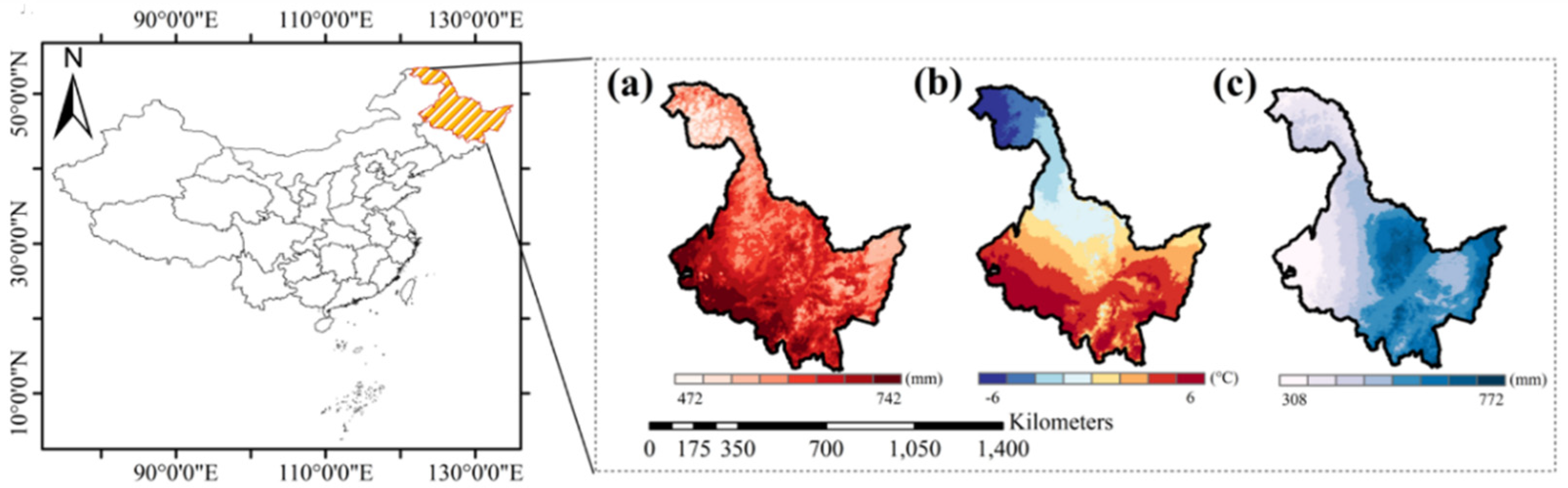
18]. For the meteorological characteristics, see
Figure 1.
According to data from the Heilongjiang Statistical Yearbook and Water Resources Bulletin, the province’s cultivated area is 1444.12 × 10
8 m
3, total grain output is 7898.92 × 10
4 t, and annual average agricultural irrigation water requirement is 281.95 × 10
8 m
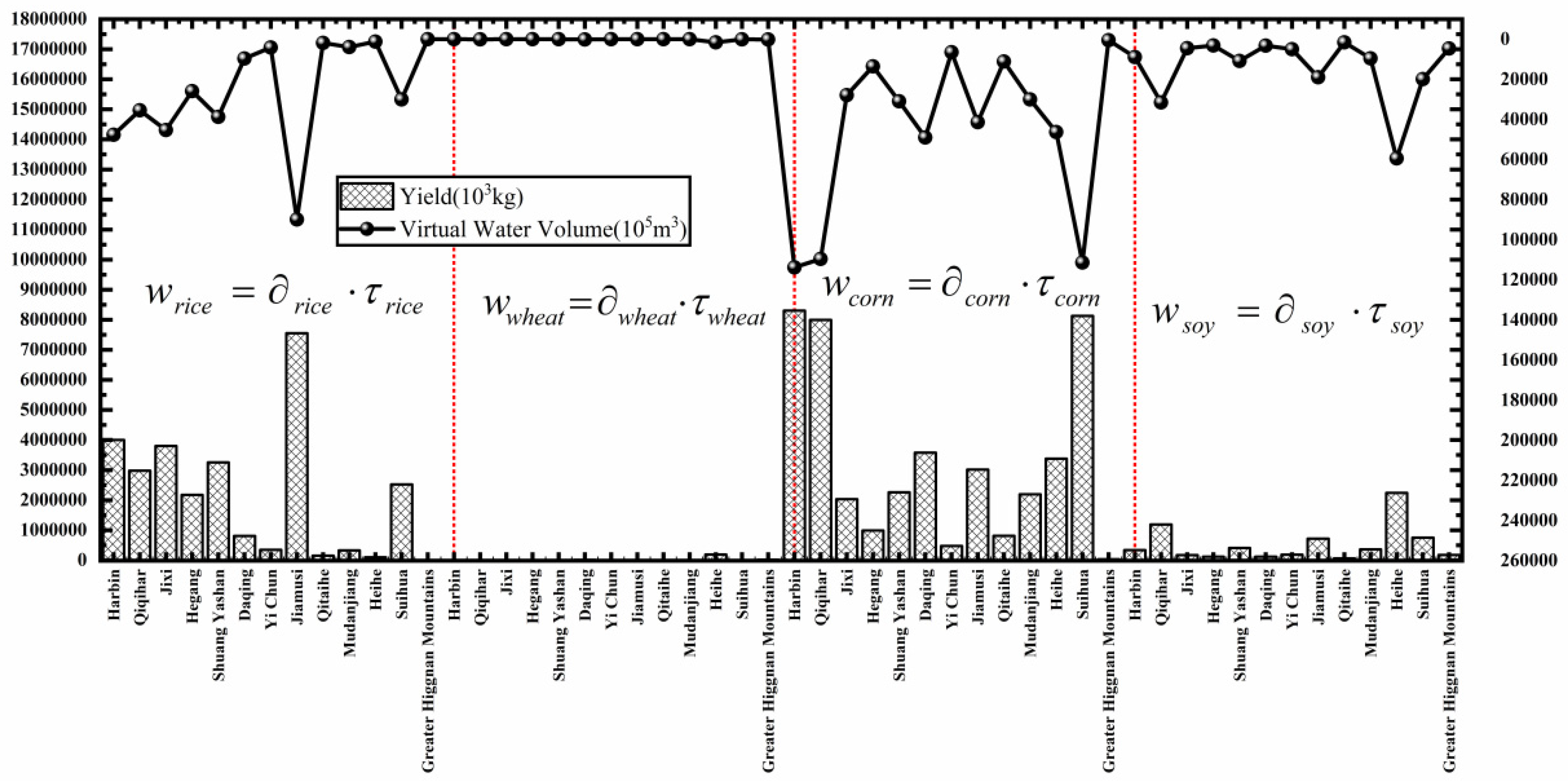
3. Among the 13 prefecture-level cities (regions), approximately 68.92% of cultivated land is concentrated in five areas: Qiqihar, Harbin, Jiamusi, Heihe, and Suihua, with Qiqihar City having the largest cultivated area and the Greater Khingan Mountains region having the smallest. Among the four major crops studied (rice, wheat, corn, soybeans), corn has the largest planting area while wheat has the smallest. Specifically, Jiamusi City has the largest rice planting area (no cultivation in the Greater Khingan Mountains region); Heihe City has the largest wheat planting area, Hegang City the smallest; Qiqihar City has the largest corn planting area, Greater Khingan Mountains region the smallest; and Heihe City has the largest soybean planting area, Qitaihe City the smallest [
19]. For the grain crop spatial distribution characteristics, see
Figure 1.
2.3. Calculation of Virtual Water Content in Crops
Since the concept of virtual water was proposed by British scholar Tony Allan in 1993, it has been widely implemented to measure water consumption in the crop production process [
20]. In this study, common rice, wheat, corn, and soybean varieties in Heilongjiang Province were selected to calculate the virtual water content (w
rice, w
wheat, w
corn, w
soy) of the four crops [
21]. The selected typical crop varieties are shown in
Table 2.
The calculation of virtual water content in crops is based on their entire life cycle, which includes the sowing, growth, and maturation stages. It is determined through a comprehensive analysis of water supply and demand balance. On the supply side, this primarily involves precipitation, artificial irrigation, and groundwater recharge. The demand side encompasses soil evaporation, crop transpiration, and water consumed during growth. Furthermore, by accounting for the influence of environmental factors—such as solar radiation, air temperature, humidity, wind speed, among others—on water consumption, the virtual water content per unit output is derived by calculating the ratio of total water consumption during crop growth to the final yield. This approach allows for extrapolation of the crop’s virtual water level. The principle of calculating the virtual moisture content of crops is shown in
Figure S1 of the Supplementary Materials.
During the crop growth cycle, its water supply sources mainly include artificial irrigation (including surface water and groundwater utilization) and natural precipitation. However, the proportion of water actually absorbed and used for crop growth is extremely small; most water dissipates through evaporation and transpiration processes under environmental factors (such as temperature, solar radiation). The calculation of virtual water content in crop products essentially constitutes an estimation of total evapotranspiration (ET) throughout their entire growth cycle [
16], with the specific calculation process shown as follows:
2.3.1. Calculation of Water Evapotranspiration from Crop Evapotranspiration
The Penman-Monteith formula is the method with a small error for calculating the amount of evapotranspiration from reference crops [
22]. The formula is as follows:
In Equation (1), “” indicates the evapotranspiration water for crop growth in mm/d; “” indicates the net radiation on the crop surface in MJ/(m2·d), , “” represents net shortwave radiation, “” represents net longwave radiation, which were obtained through remote sensing data processing; “G” indicates the soil heat flux in MJ/(m2·d), , “” represents the thermal capacity of the soil; “T” indicates the average temperature in °C; “” indicates the wind speed at a height of h meters above the ground in m/s; “” indicates the vapor pressure at saturation in kPa; “” indicates the actual vapor pressure in kPa; “” indicates the difference in vapor pressure in kPa. “” indicates the slope of the vapor pressure curve in kPa/°C, ; and “” indicates the dryness and humidity constant in kPa/°C, .
2.3.2. Calculation of Water Demand per Unit Area of Crops
Crop water demand is generally calculated by summing crop evapotranspiration (
) during each growing period, considering various growth stages with reference to
and the corresponding crop coefficient “
” [
23]. The equations are as follows:
In Equation (2), “
” indicates the cumulative evapotranspiration during the growth and development of crops per unit area, i.e., the amount of water required for crop growth in m
3/hm
2; “
” indicates the crop coefficient, which captures differences in vegetation cover, aerodynamic resistance as well as physiological and physical characteristics between the actual crop and the reference crop.
In Equation (3), “” indicates the water requirement per unit area of crops in m3/hm2; “” indicates the coefficient converting water depth index (mm) into water volume (m3), set at 10; “” is the duration of crop growth in d; “” indicates the duration of different growth stages in d.
2.3.3. Calculating Crop Blue-Green Virtual Water Requirements
The crop water footprint can be specifically categorized into a blue virtual water footprint and a green virtual water footprint, which correspond to when and where the respective water footprints occur. The blue virtual water footprint is the consumption of blue water (surface and groundwater resources) by a product in its supply chain, and depletion is the loss of available surface and groundwater within a watershed. Water loss occurs through evaporation, outflow from the watershed, reaching the sea, or incorporation into the product. Conversely, the green virtual water footprint is the depletion of green water (rainwater that does not become runoff) resources [
24].
In Equation (4), “” indicates the green water demand per unit area of crops in m3/hm2; “” indicates the blue water demand per unit area of crops in m3/hm2; “ ” indicates effective rainfall; “” indicates virtual water content per unit of crop in m3/kg; “” indicates crop yield per unit area in m3/hm2; “” indicates the amount of evapotranspiration of green water during the reproductive period of the crop; “” indicates the amount of evapotranspiration of blue water during the reproductive period of the crop.
2.4. Screening of Grain-Deficit Regions
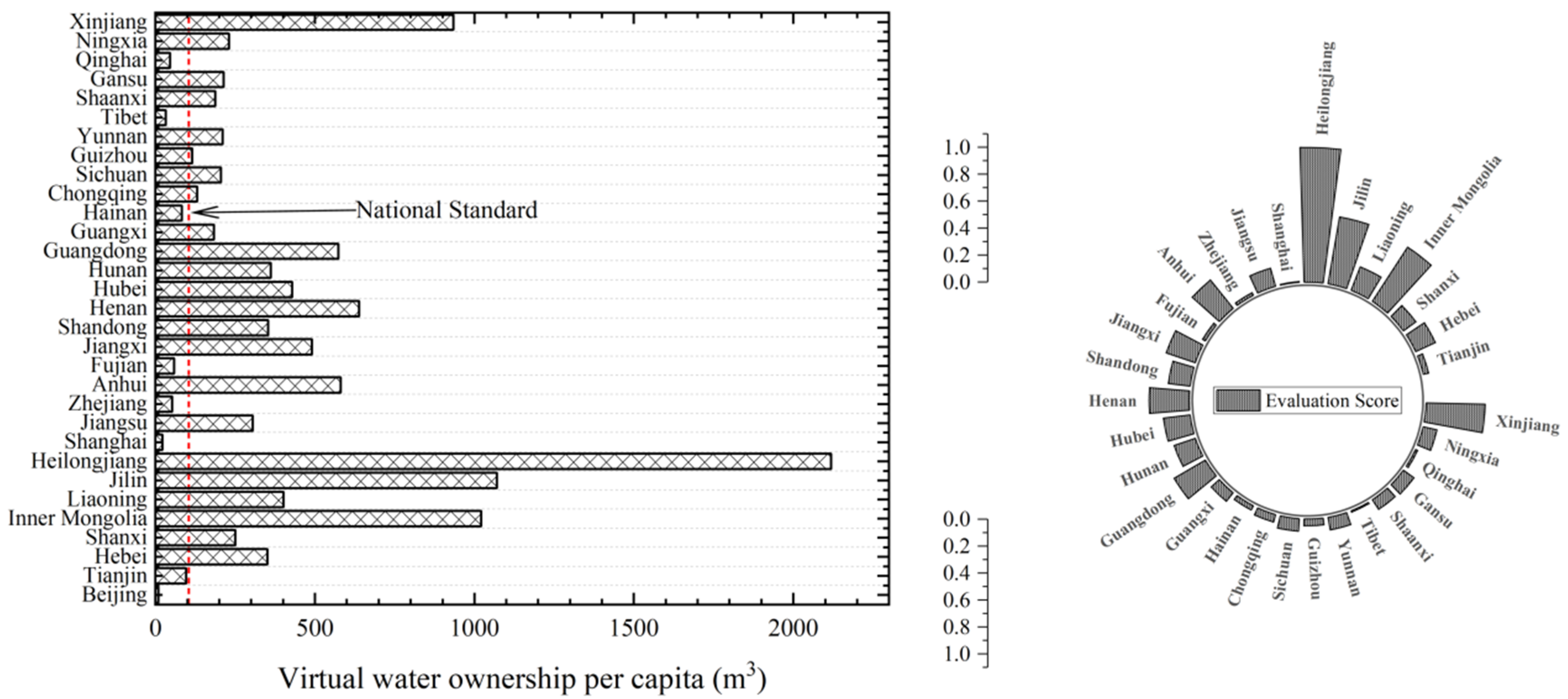
Food security represents a global challenge, particularly in populous countries like China, where uneven regional resource distribution can lead to certain areas relying on external grain supplies. The concept of virtual water is introduced to quantify the water resources required for grain production, thereby indirectly reflecting food self-sufficiency capacity. This study identifies grain-deficient regions by calculating per capita virtual water availability and comparing it with the national average. This approach assists policymakers in allocating resources in a more targeted manner to ensure a stable grain supply. Per capita virtual water availability serves as a key indicator for assessing whether a region requires grain imports. Thus, this study evaluated 31 Chinese provinces and municipalities, identifying those with per capita virtual water availability below the national average as primary grain-importing regions to facilitate optimized resource allocation [
25]. The screening process is detailed below.
In Equation (5), “” indicates the difference between the per capita virtual water availability in a given region and the national standard; “−“ indicates that it falls below the national standard, while “+” indicates that it is above the national standard; “” indicates total virtual water for crops in a region; “” indicates population size; and “” indicates the national standard for per capita virtual water availability.
This step quantifies the extent to which each region deviates from the national average. By dividing total virtual water by population size, the actual per capita virtual water availability is obtained and then compared against the national benchmark, enabling the identification of potentially grain-deficient areas. This method not only considers the absolute volume of water resources but also incorporates demographic factors, making the assessment more realistic. For instance, if a region exhibits a negative
value, it indicates insufficient per capita virtual water availability, suggesting a potential need to compensate for the deficit through grain imports. This highlights the importance of virtual water indicators in resource optimization. Furthermore, this deviation calculation lays the foundation for subsequent normalization, enhancing data comparability and analytical utility.
In Equation (6), “n” indicates the degree of scarcity of virtual water per capita in each province.
Using the min-max normalization method, the values for each region are converted into a relative scarcity index (n). This process eliminates the influence of measurement units, enabling more intuitive and equitable comparisons across regions. For example, when n approaches 1, it signifies the highest degree of per capita virtual water scarcity in that region, potentially indicating severe food insecurity. Conversely, when n approaches 0, it reflects lower scarcity and stronger food self-sufficiency capacity. This step improves the operational applicability of the research, providing clear prioritization for policy formulation. After normalization, “hotspot” regions can be more easily identified, allowing concentrated resources to address the most urgent food shortages. Simultaneously, this approach accounts for relative differences between regions, avoiding potential biases associated with absolute thresholds.
2.5. Virtual Water Allocation Model
At present, two mainstream approaches to resource allocation prevail; one is based on “microeconomic theory” and “demand-determined supply” allocation ideas [
26], while the other is based on “macroeconomic theory” and “supply-driven demand” allocation principles [
3]. Based on the interaction between input and output of four major crops based on VWT in various provinces and cities in China, this study selects food-scarce regions and then allocates crops in Heilongjiang Province using both microeconomics and macroeconomics theories.
After grain production in Heilongjiang Province, transportation via rail, road, or waterway incurs some grain loss. After reaching the point of sale, grains are stored in warehouses and sold in batches. This process causes additional transport and management costs. The theoretical output of the virtual water content of grain in Heilongjiang Province, “wt”, is the total amount of virtual water in Heilongjiang Province minus the locally required virtual water amount, as shown below.
In Equation (7), “” indicates the population size; and “” indicates the virtual water requirement per capita.
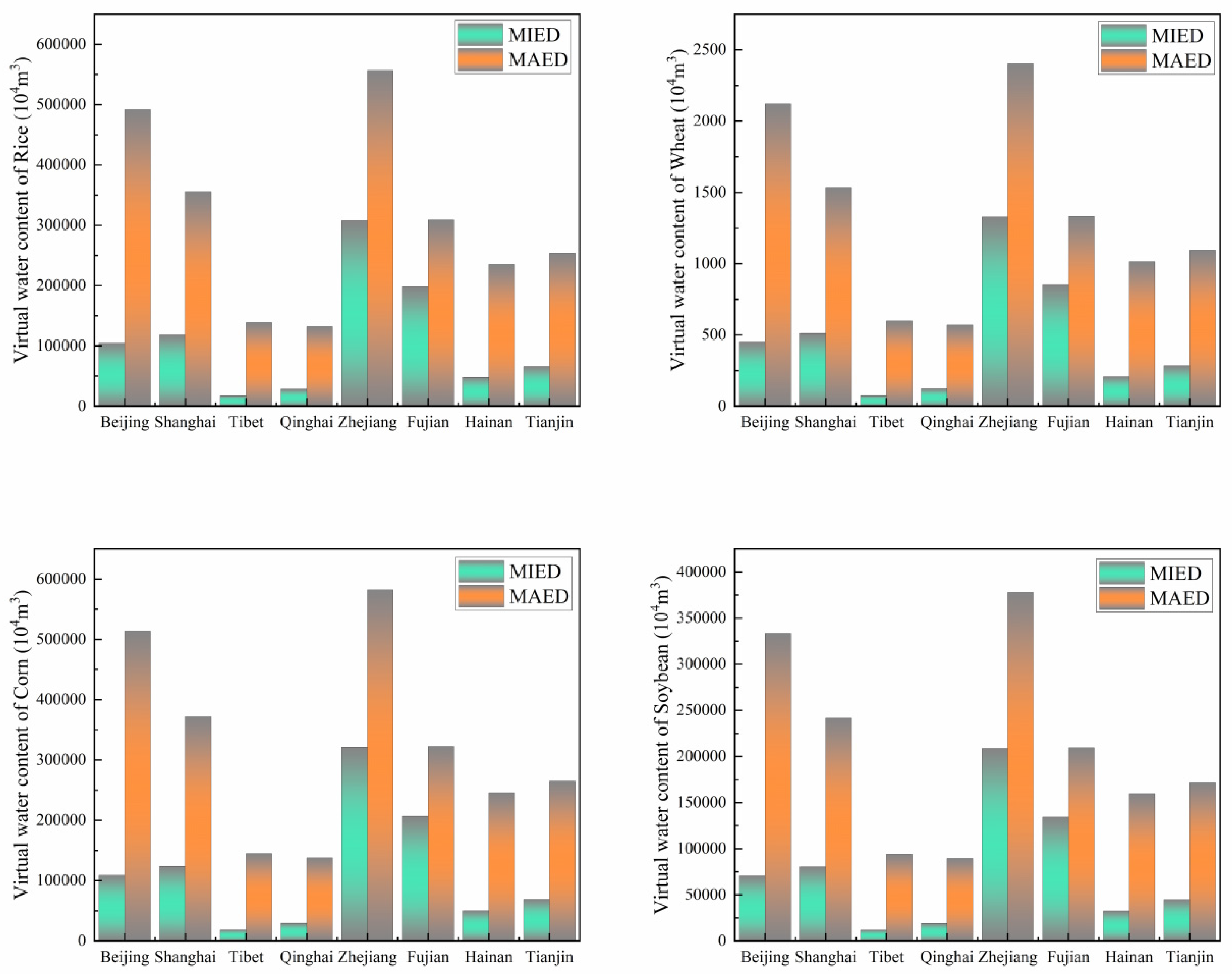
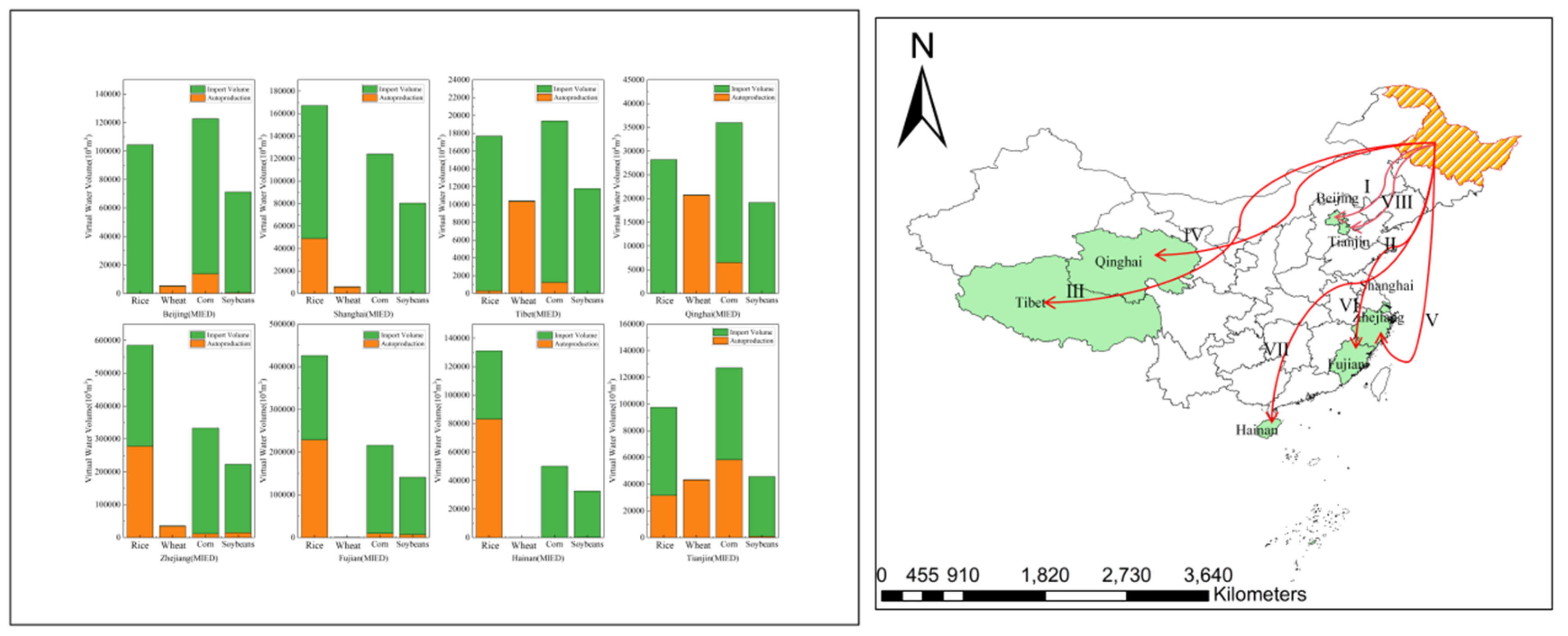
2.5.1. MIED Scenario Allocation Model
The allocation idea is based on the principle that in the context of a market economy, the allocation of social resources tends to prioritize economic efficiency maximization. Because of the different development rates among Chinese provinces and cities, the consumption level of citizens also varies, leading to different prices of goods across provinces and cities. As food is a necessity for human survival, food producers prefer to sell food to areas with high prices to boost their income [
27].
In this study, the maximization of economic efficiency was selected as the objective function (obj) chosen to optimize the allocation of four crop types—rice, wheat, soybean, and maize—is the maximization of economic efficiency. The decision variable is the dummy water quantity (x
ij), where “i” denotes the grain input region and “j” denotes the grain type.
In Equation (8), “” indicates the economic income from food exports in CNY; “” indicates the cost in CNY. The cost of production remains consistent regardless of the export destination, so production costs are not considered in this study; “sr” indicates the loss rate in %; “x” indicates the virtual water input in m3 for each region; “t” indicates the virtual water unit price in CNY /m3; “” indicates unit transport costs in CNY/m3; “” indicates management and labor costs in CNY/m3.
These three parameters all represent the unit virtual water cost: “” is derived from grain market prices, “” originates from management labor costs in the production areas, and “” is determined by transport distance and freight costs. The data are sourced from the Heilongjiang Statistical Bulletin.
In this study, to optimize the allocation of virtual water in Heilongjiang province, virtual water balance constraints, input and output regional virtual water supply and demand balance constraints, and non-negative constraints are set as constraints (st) [
10].
In Equation (9), “” indicates the maximum exportable virtual water in Heilongjiang Province in m3; “” indicates the consumable virtual water in a region in m3; “” indicates the virtual water contained in the self-produced grain in a region in m3.
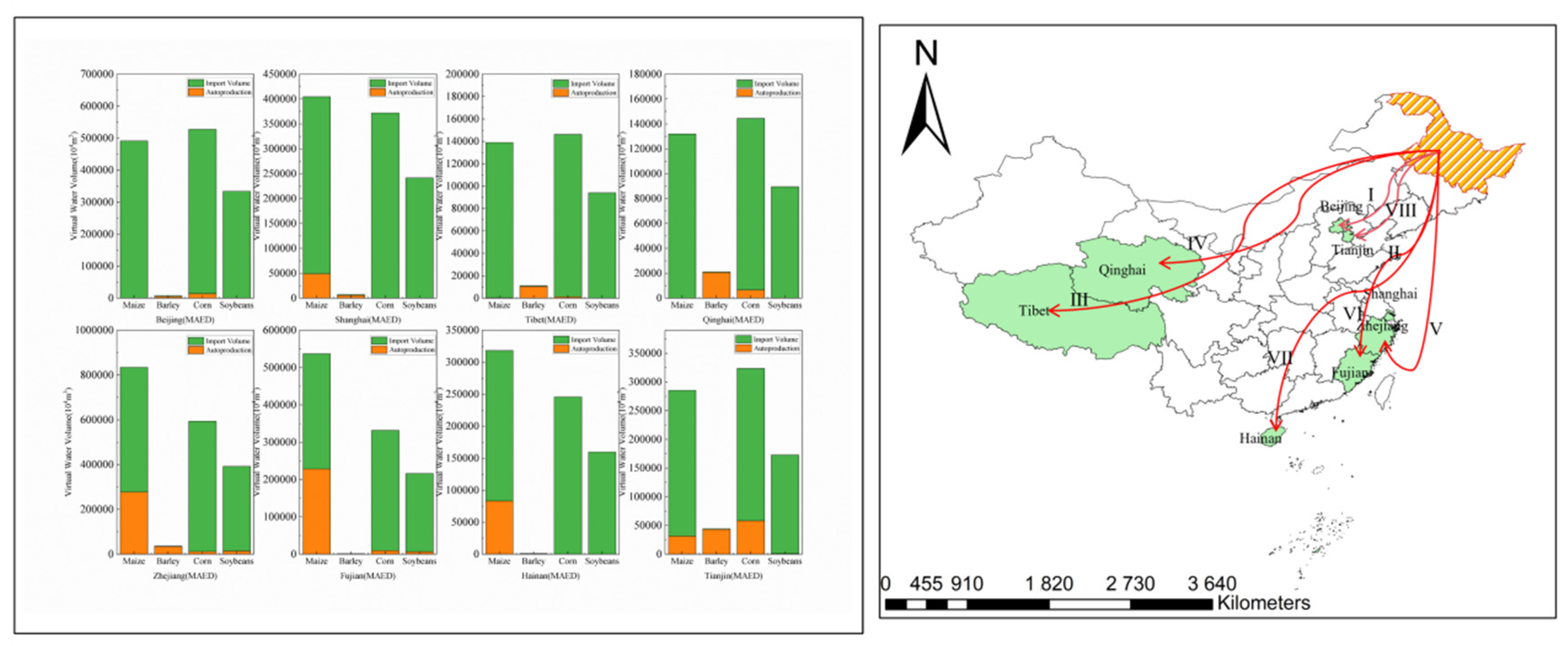
2.5.2. MAED Scenario Allocation Model
This allocation idea posits that virtual water resources trade forms an integral component based on the natural-social-economic synergistic system. It needs a comprehensive consideration of regional development directions and statuses, along with a series of indicators, including political and social factors. This allocation idea mainly relies on the government’s macro-control capabilities and resource availability for productivity layout. It emphasizes the rational development and utilization of resources to ensure reasonable and rapid development [
28].
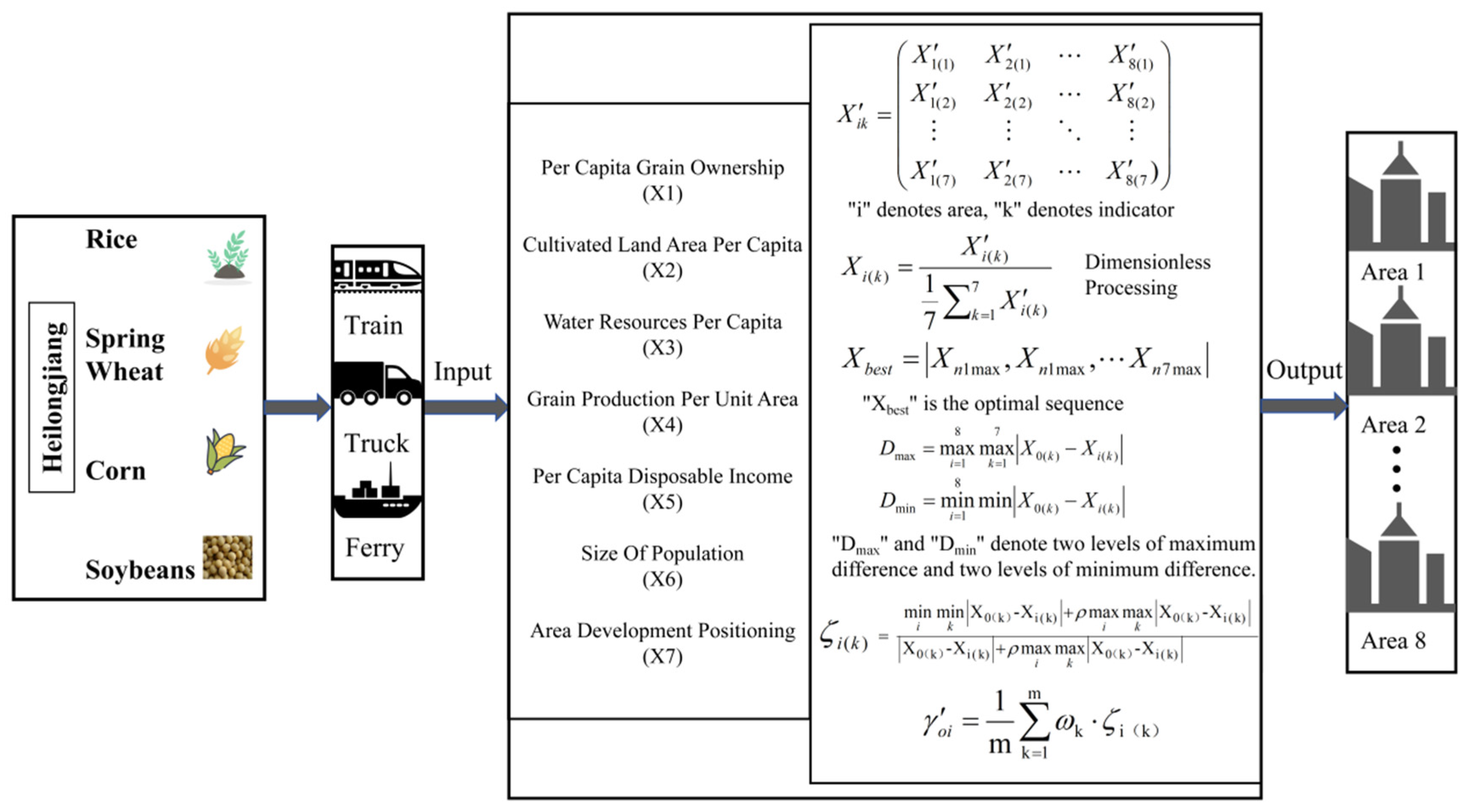
In this study, a series of indicators such as per capita food ownership, per capita water resources, and per capita disposable income are selected to evaluate each food-scarce region, and then the virtual water allocation for food in Heilongjiang Province is carried out according to the evaluation results [
29]. The research process is shown in
Figure 2.
2.6. TS Scenario Allocation Model (Transition)
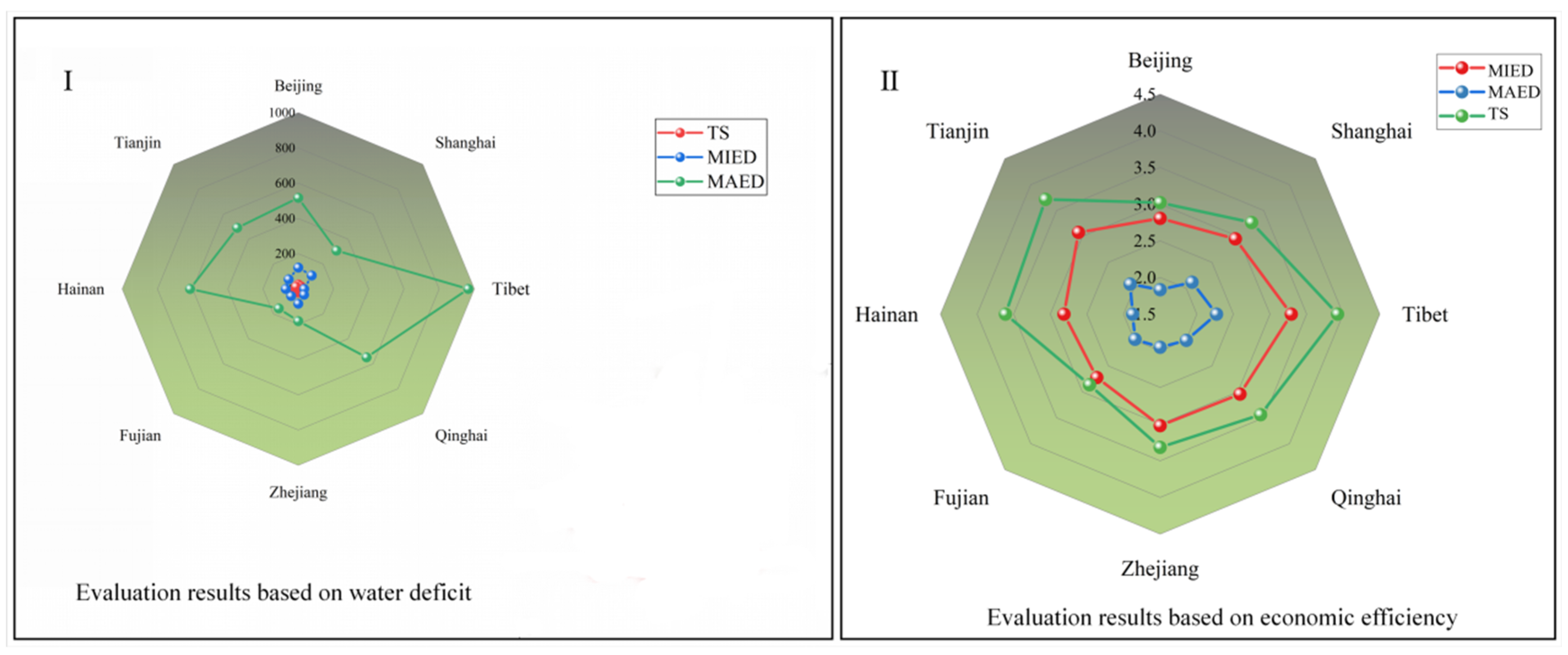
The MIED configuration model takes economic benefit maximization as its core objective, while the MAED model prioritizes ensuring resource demands for all regions. Given the limitations of both models, this study integrates their advantages to propose a set of transition schemes (TS scenarios). Under the TS scenario, resource allocation is subject to the synergistic effect of market mechanisms and government regulation; the market drives resources to flow towards benefit maximization, while the government imposes mandatory constraints to ensure the fulfillment of basic resource demands (such as per capita food demand in regions) [
30]. Its price formation mechanism follows market rules: oversupply causes prices to fall, while supply–demand equilibrium maintains price stability.
Within the food supply system for eight provinces/municipalities, the TS scenario sets the following core constraints: (1) per capita food demand in each region must be satisfied and (2) regional economic development orientation, dietary habits (affecting food prices and consumption structure), and market price factors must be comprehensively considered. To maximize the overall system benefit (such as social welfare or economic efficiency), the allocation of the four crops requires optimization [
31].
The essence of the TS scenario lies in enhancing the comprehensive benefits of the virtual water trade system by coordinating the relationship among food import regions, export regions, and the government [
32]. Furthermore, to better reflect the objective of demand guarantee, this study also introduces a unified new objective function into both the MIED and MAED scenarios: minimization of the total shortage of the four foods across all regions. The TS scenario study process is shown in
Figure S2 of the Supplementary Materials.
In the TS scenario, the objective function aims to maximize overall benefit while minimizing water deficit [
33]:
In Equation (10), “” denotes the total benefit, CNY; “” denotes the integrated benefit conversion factor; “” denotes the total water deficit in m3; and “” denotes the virtual water demand of each region in m3.
4. Discussion and Policy Recommendations
4.1. Interpretation of Key Findings and Virtual Water Flow Patterns
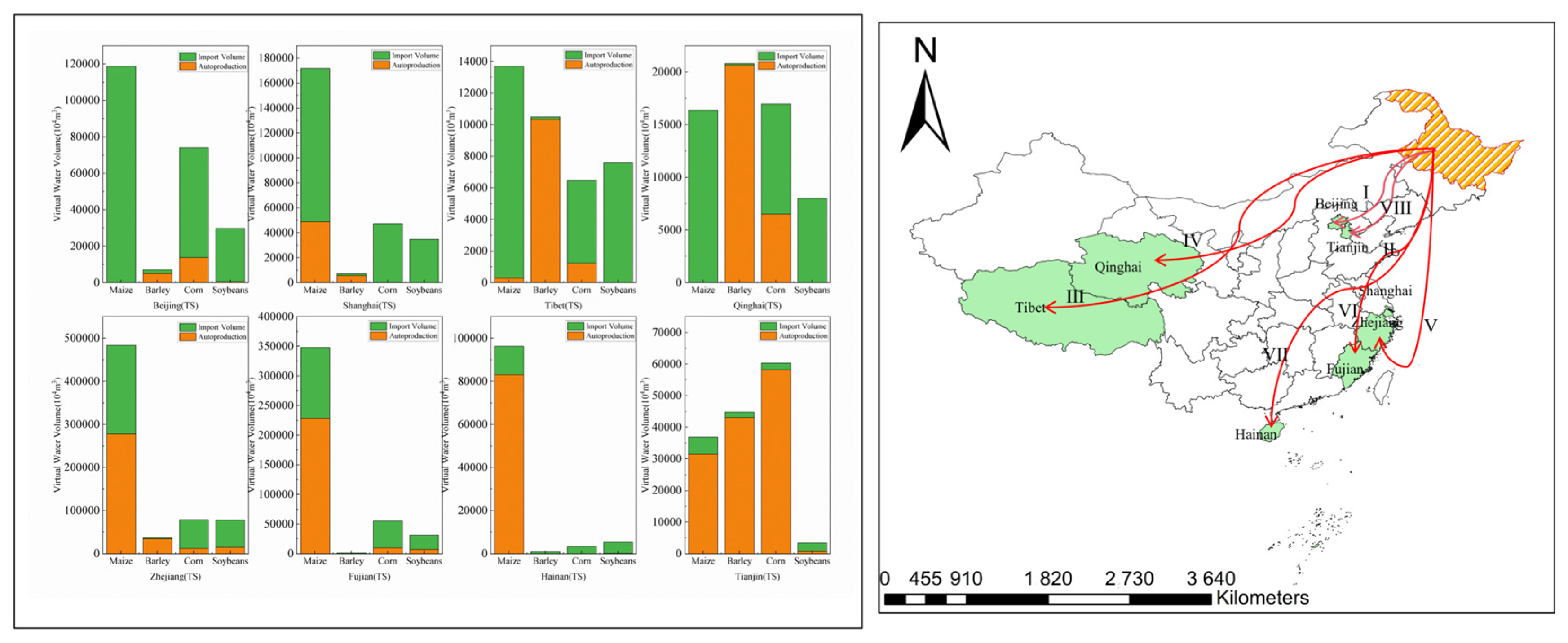
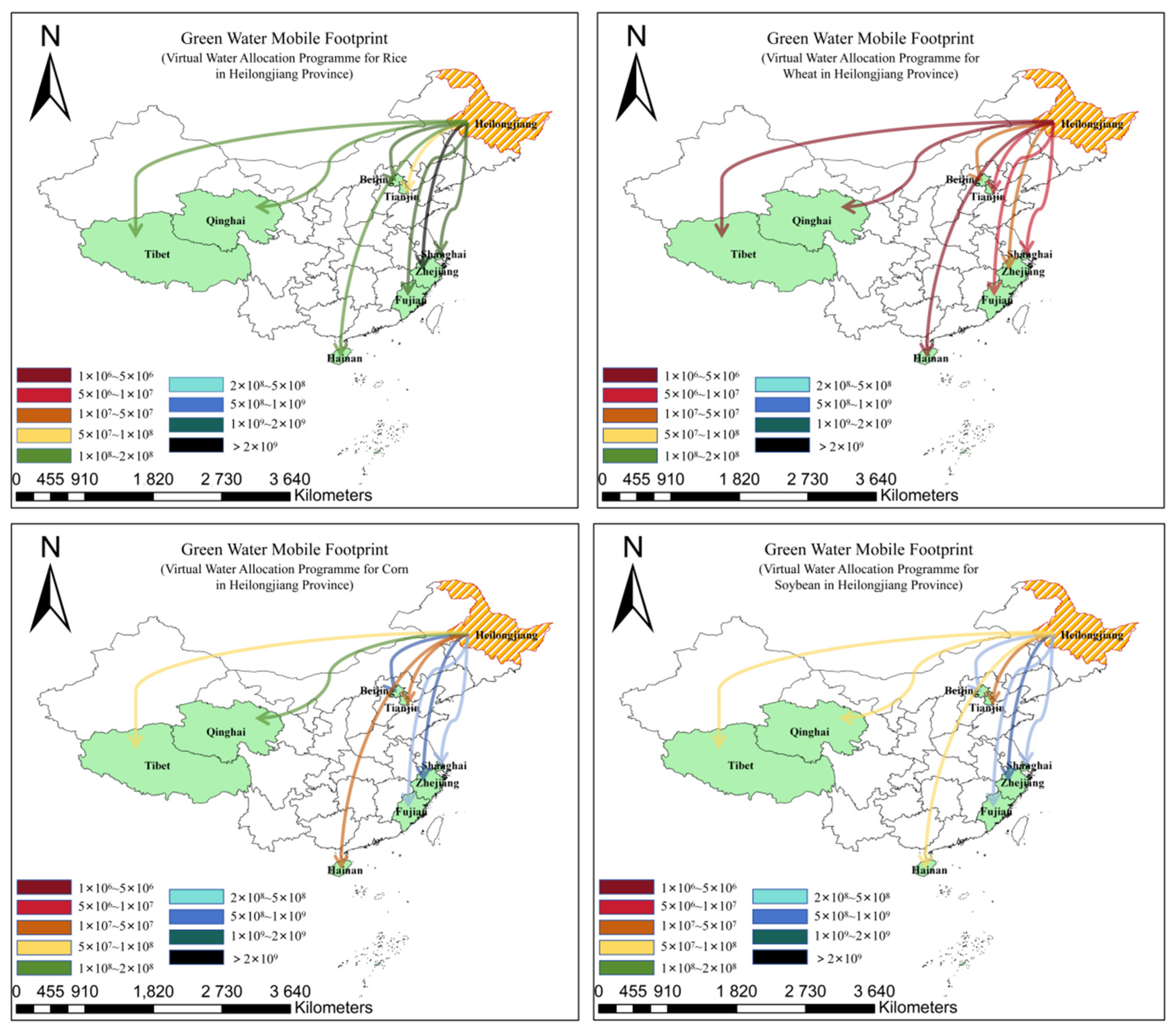
This study quantifies the virtual water (VW) flows associated with grain redistribution from Heilongjiang Province to eight food-deficit regions. The socio-hydrological analysis identifies Zhejiang and Fujian as the primary VW inflow regions. This aligns with their high population density and economic development levels. The alignment results in intensified local water scarcity and grain demand [
34]. The optimal allocation model is based on a “comprehensive benefit” objective. It successfully distributes four major crops. he distribution meets the per capita grain requirements of all deficit regions [
35]. The distribution outcomes reveal significant disparities in VW allocation volumes [
36]. Zhejiang received the highest allocation (33.96 × 10
8 m
3), reflecting its substantial demand, whereas Tianjin received the lowest (1.20 × 10
8 m
3) [
10]. This pattern is rationally determined by the model’s integration of factors such as population, regional grain deficits, and economic efficiency [
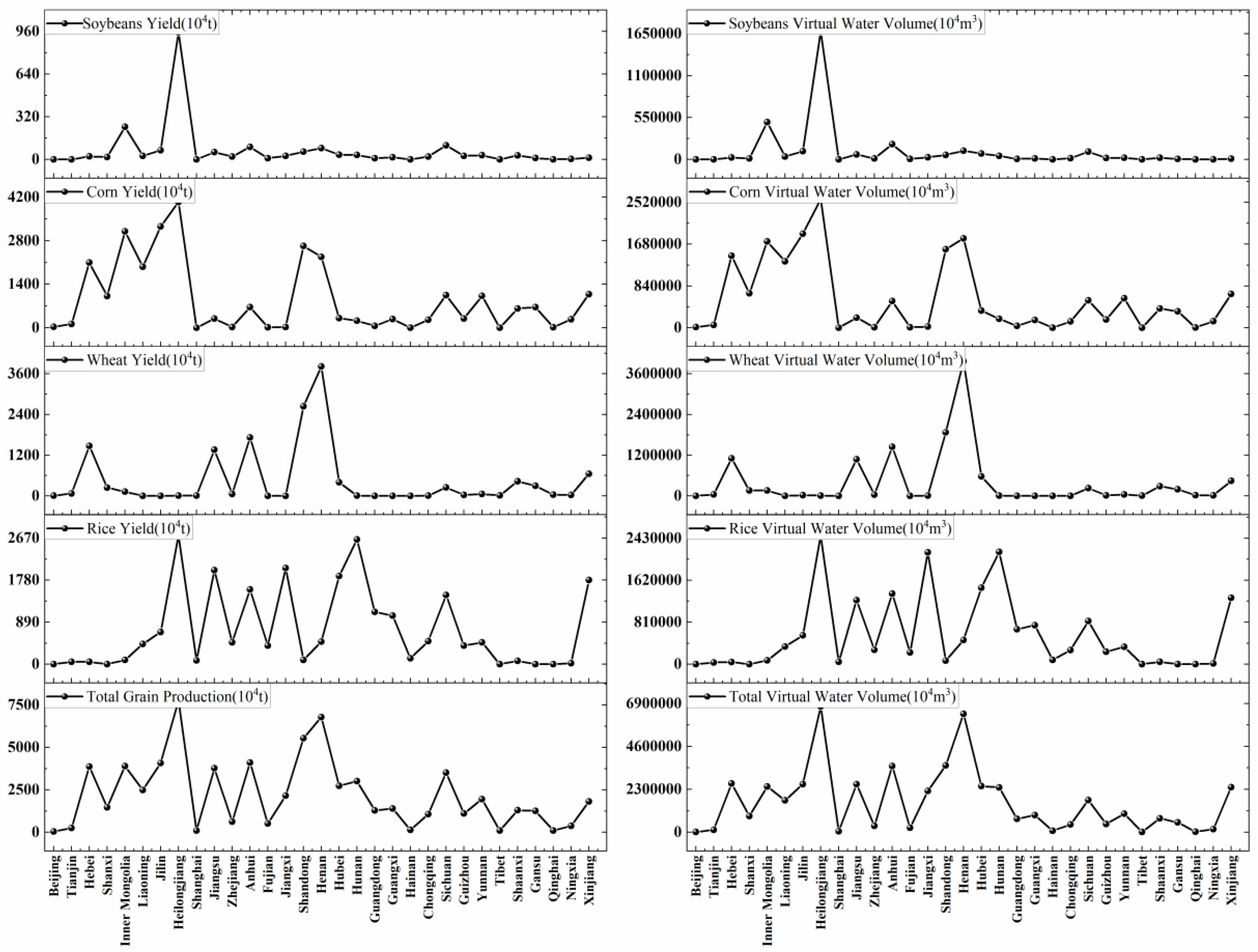
37]. Beyond the primary Heilongjiang-centric system, the analysis of national grain production data suggests that Heilongjiang, Henan, and Shandong form a robust foundation for a multi-province VW export system. This conclusion is supported by their dominant and stable grain output trends from 2011 to 2023.
4.2. Policy Recommendations Derived from Model Results
The model’s outputs provide a quantitative basis for targeted policy interventions:
Differentiated Subsidies for Export Hubs: The government should prioritize Heilongjiang, Henan, and Shandong as core VW export hubs. Economic subsidies and eco-compensation mechanisms should be calibrated based on their quantified export volumes (as exemplified by Heilongjiang’s central role in this study). This will incentivize sustained grain production and VW outflows.
Infrastructure Investment for Key Corridors: Given the large VW transfers to Zhejiang, Fujian, and other southeastern regions, policy should focus on minimizing losses in the physical grain supply chain. Investments in “green channels” for north-to-south grain transport, intelligent logistics, and modern storage infrastructure are crucial. These investments will preserve the virtual water embedded in allocated grains, directly supporting the model’s efficiency objective.
Promotion of Inter-regional Cooperation: The government should facilitate partnerships between grain-importing regions (e.g., technologically advanced zones like Beijing and Shanghai) and exporting provinces. Such cooperation could focus on R&D for water-efficient agricultural technologies and modernized supply chain management. This will enhance the resilience of the VW trade network identified in this study.
4.3. Research Limitations and Future Directions
While this study provides a viable framework for inter-regional grain allocation, several limitations must be acknowledged, which also chart the course for future research.
Model Simplifications and Assumptions: The current model is a static equilibrium analysis. It does not account for climatic variability, future market price fluctuations, or technological progress. The assumption of fixed water footprints and transportation costs introduces uncertainty over the long term [
38].
Data Gaps and Resolution: The analysis relies on provincial-level data. Higher spatial resolution (e.g., prefectural/county level) could yield more precise allocation schemes. Furthermore, the virtual water calculations are based on standard crop coefficients and evapotranspiration data; localized, real-time measurements could improve accuracy [
39].
Future Modeling Enhancements: To address these limitations, future work should focus on the following:
Developing dynamic stochastic programming or Agent-Based Models (ABM) to simulate VWT under climate scenarios (e.g., RCPs) and policy shocks (e.g., carbon tax).
Integrating sensitivity and uncertainty analysis for key input variables (e.g., crop evapotranspiration (ET), crop coefficients (Kc), commodity prices, and transport costs) to assess the robustness of the allocation results.
Expanding the objective function to include multi-dimensional sustainability indicators, such as the carbon footprint or gray water footprint, thereby evaluating the VW trade within a water–energy–food–carbon nexus framework.
Methodological Reproducibility: For full transparency and reproducibility, a subsequent technical note will detail the optimization software, solver specifications, algorithm parameters, and complete parameterization process used in this study.
5. Conclusions
This study developed an integrated economic model to optimize the inter-regional allocation of four major crops from Heilongjiang Province to eight grain-deficient regions in China. By introducing a “comprehensive benefit” objective and a transitional scenario balancing efficiency and equity, the model generated a feasible distribution plan. The results indicate that this strategy can meet the per capita grain requirements of the deficit regions while improving overall economic and resource efficiency. Zhejiang and Fujian were identified as the largest virtual water recipients, consistent with their socio-economic profiles.
The findings offer a theoretical foundation and a practical starting point for policymakers to enhance national food and water security through virtual water trade. However, the conclusions are contingent upon the model’s specific assumptions and parameters. The implementation of the proposed allocation strategy requires complementary policies—including targeted subsidies, infrastructure investment, and inter-regional cooperation—as well as a critical consideration of the model’s limitations, particularly its static nature. Future research should focus on developing dynamic, multi-objective models and conducting rigorous sensitivity analyses to build a more resilient and adaptive national virtual water management system.




 ,
,