Abstract
Research on dual-clutch transmissions in agricultural tractors is on the rise. Dual-clutch transmissions provide a smooth driving experience and easy operation compared to manual transmissions, as they eliminate power interruptions. Accordingly, there is ongoing research to improve the conventional synchronizer pre-selection method. The study introduces a new control strategy to enhance shifting quality by focusing on shift force and timing. Specifically, the goal is to optimize the impact of pre-selection-induced shock and delayed shift time, minimizing discomfort for the driver. According to the experimental results, it was determined that factors influencing the impact of preselect engagement on gear shift shock were absent, while factors capable of affecting shift time were identified in the form of shift force. However, it was concluded that optimizing shift force and shift timing based on the number of shifts can enhance the quality of gear shifting. Even during preselect disengagement, the factor influencing gear shift shock was identified as the shift timing, with no discernible factor affecting shift time. Nevertheless, it was judged that optimizing shift force and shift timing based on the number of shifts can lead to an improvement in gear shifting quality. In conclusion, the control strategy determined through the parameter study is expected to improve the shifting quality of tractors equipped with dual-clutch transmission. These findings have the potential to support efficient and convenient tractor operation in the agricultural sector.
1. Introduction
Tractors, as quintessential agricultural machinery, are instrumental in executing diverse farm tasks such as towing, driving, and transporting by employing various implements. The power transmission system of a tractor, a vital component used during farm work, facilitates the transfer of output generated from the power source to the driving mechanism (pneumatic tires, etc.), converting it into the appropriate speed and torque for the task. To achieve this, it comprises a clutch, transmission, differential, final drive, brakes, and power take-off device [1]. To promptly respond to load variations during farm work, the power transmission system needs to adjust to the optimal working speed for each situation, necessitating frequent gear changes. The transmission in the power transmission system is responsible for these intricate functions [2].
Transmission, a system that controls the speed or rotational force of a vehicle, can be categorized into manual transmission (MT) and automatic transmission (AT). Tractors with MT possess a simple structure, high power transmission efficiency, and relative cost-effectiveness. However, they require the driver to manually operate the clutch and gear shifts, making operation and multi-stage shifting challenging [3]. This manual operation increases driver fatigue, reduces work efficiency and convenience, and heightens the risk of accidents due to misoperation [4]. Particularly, disengaging the power transmitted through the clutch to shift gears during work causes the vehicle to stop, leading to a loss of continuity in the task [5].
To address these issues, power shift transmission, which minimizes power disruption, has been developed and installed in tractors. However, it has a complex structure due to the combination of multiple clutches for gear shifts and lower power transmission efficiency compared to MT. To mitigate these disadvantages, dual-clutch transmission (DCT), offering continuous power without interruption and high power transmission efficiency similar to MT, has been developed and is increasingly adopted in tractors, particularly by leading foreign companies [6,7,8,9].
DCT consists of two main shafts and an intermediate shaft connected to the engine. The two main shafts are divided into odd and even numbers, and the final shift is achieved through alternating clutches located at the ends of each shaft to shift to the selected gear ratio. DCT’s ability to shift gears without power interruption is attributed to the use of a preselect method by the synchronizer [10]. This method involves keeping the synchronizer engaged in the next gear on the non-power transmitting shaft while power is being transmitted through the clutch on one shaft. This is based on the assessment of the driving or working state and the user’s intent to shift gears. Therefore, before the driver shifts to the desired gear, the synchronizer for the next gear is already synchronized and waiting, based on the command generated by the gear shift control system.
In DCT, the preselection process of the synchronizer is crucial during shifting. If this preselection is too slow, it can cause sudden changes in rotational inertia, failure in synchronizing relative speeds, delayed shifting, and ultimately damage to the synchronizer. Conversely, if preselection is too rapid, it adds unrelated rotational inertia to the entire power transmission system, leading to a decrease in overall efficiency and quality due to drag torque. Additionally, due to structural limitations of the synchronizer and issues during the shifting process, if preselection does not occur smoothly, it can lead to delayed clutch shifting [11]. Therefore, the shifting quality of a DCT depends on when and how the preselection is performed. Hence, to improve the shifting quality of DCT, research on strategies regarding when and how to preselect the synchronizer is necessary.
Various studies have been conducted on the shifting performance of DCT. Jae-Ho Yoon (2005), Han-Lim Song (2005), and others developed a DCT vehicle shifting performance simulator, analyzed shifting performance characteristics through clutch pressure control, demonstrated that no power interruption occurs during DCT shifting through upward shifting simulations, and proposed a method to optimize clutch pressure profiles to reduce fluctuations in clutch transfer torque [12,13]. Manish Kulkarni (2007) and others developed a dynamic model and shifting control logic for integrated vehicles based on MATLAB Simulink to study the dynamic characteristics of DCT shifting [14]. They conducted and analyzed DCT vehicle shifting dynamics simulations using an integrated model comprising the engine, transmission, and vehicle environment. Hongtao Hao (2015) and others suggested hydraulic actuator operation as a key factor influencing wet DCT [15]. They analyzed the operating principle and performed hydraulic actuator modeling using dynamic equations of Variable Force Solenoids (VFS) and wet clutches. Woo-Seok Choi (2018) and others developed a simulator to analyze the dynamic characteristics of vehicles equipped with wet DCT and developed clutch and gear actuator control logic, as well as launch and shifting control logic [16]. The simulation results confirmed that the clutch control logic impacts the drivability of the vehicle.
Previous studies on improving the shifting quality of DCT focused on creating dynamic models and analyzing performance through clutch control. However, the shifting process involves not only the clutch but also gear forks, synchronizers, actuators, and other elements. All these elements affect shifting quality, influencing shift time, shift shock, and the overall performance of the system. Especially in DCT gear shifting, since it uses synchronizers, enhancing shifting quality requires considering control algorithms that accurately reflect the dynamic characteristics of the synchronization process through the synchronizer. Mohammad Adhitya (2013) and others compared sports mode and comfort mode as preselection strategies. In sports mode, gear preselection occurred almost immediately after shifting to prepare the next gear [17]. Conversely, in comfort mode, the strategy was set to execute gear preselection before the gear shift occurs. As a result, sports mode showed longer slip clutch times, leading to higher drag losses compared to comfort mode. To address this issue, a strategy was proposed to perform the synchronizer engagement action almost simultaneously with clutch-clutch power shifting, and this strategy was proven to reduce the workload of the DCT system and decrease clutch drag torque. Ke Zheng (2019) and others proposed an optimal method for control parameters based on a dynamic model [18]. The control parameters were shifting force and shifting timing, which determine smoothness and speediness and were analyzed for their impact on the quality and economy of pre-shifting. The analysis concluded that shifting force does not affect the speed of pre-shifting, while pre-shifting timing influences the quality of pre-shifting.
This study aims to propose a synchronizer preselection control strategy for improving the shifting quality of tractor DCTs, focusing on deriving the optimal shifting force, shifting timing, and preselection method using a DCT system.
2. Synchronizer Control Algorithm
2.1. Synchronizer System
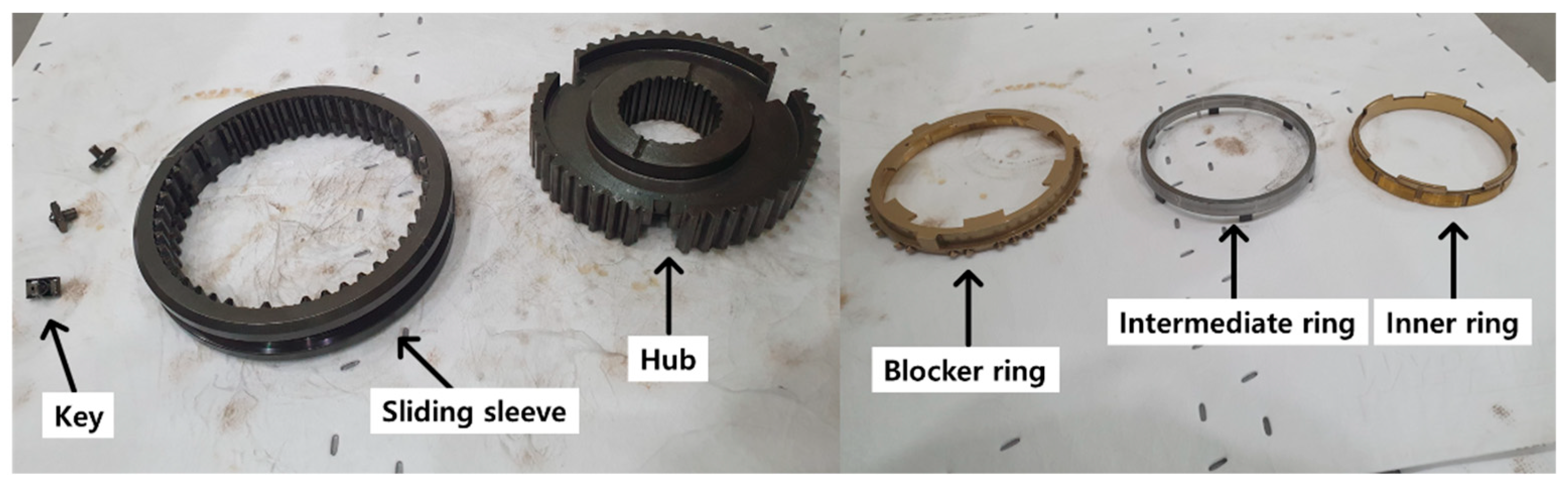
The structure of the synchronizer, as shown in Figure 1, consists of a sleeve, hub, key, and ring; in this study, a double cone type synchronizer is applied [19,20]. Shifting in the synchronizer occurs when a linkage device connected to the synchronizer sleeve moves the shift fork, which then moves the synchronizer to mesh the selected gear with the shaft [21]. When the shift lever is in neutral, the output shaft gear of the main shaft does not mesh with the shaft and revolves freely, causing power interruption and applying drag torque to the shaft due to the viscosity and interference of the synchronizer lubricant.
Figure 1.
Synchronizer in a dual-clutch transmission.
The synchronizer decelerates the relative speed through friction during gear shifting, allowing the shifting gear and sleeve to rotate at the same speed for smooth meshing [22]. This process of matching different gears to the same speed is referred to as synchronization. Moreover, while the vehicle is driving at the speed of the current gear, the gear corresponding to the next gear’s speed is preselected and engaged in advance. Consequently, the engagement and synchronization of the gear do not occur simultaneously with the clutch shifting process.
To understand the parameters related to the behavior of the synchronizer, it is essential to analyze the precise movement of the sleeve. Thus, the preselection process of the synchronizer can be divided into six stages, as shown in Table 1, based on the relative positions of the components [23].
Table 1.
Synchronizer preselection process for dual-clutch.
Stage 1: Start of movement of the sleeve. In this stage, the sleeve moves axially to eliminate the gap between the ring and cone of the gear to be engaged.
where,
- : sum mass of sleeve, kg
- : shift force, N
- : axial friction force between components, N
- : equivalent moment of inertia at target gear, kg*m2
- : angular velocity of target gear, rad/s
- : angular velocity of sleeve, rad/s
- : ratio of current gear
- : ratio of target gear
- : drag torque at input shaft
Stage 2: Breaking through key. In this stage, the sleeve overcomes the resistance caused by the key and then breaks through it.
where,
- : braking through load, N
- : coefficient of friction between the ring and the cone
- : mean radius of the cone, mm
- : tape angle of the cone, rad
Stage 3: Synchronizing. In this stage, frictional torque occurs between the surface of the ring and cone to eliminate the difference in angular velocity.
Stage 4: Unblocking the ring. In this stage, the sleeve moves through and past the ring.
where,
- : coefficient of friction between chamfer surface
- : chamfer angle, rad
- : radius of sleeve, mm
Stage 5: Second sleeve movement. In this stage, the sleeve moves through the gap between the ring and the target gear.
Stage 6: Final engagement. In this stage, the sleeve rotates the target gear to complete the meshing.
2.2. Synchronizer Control System
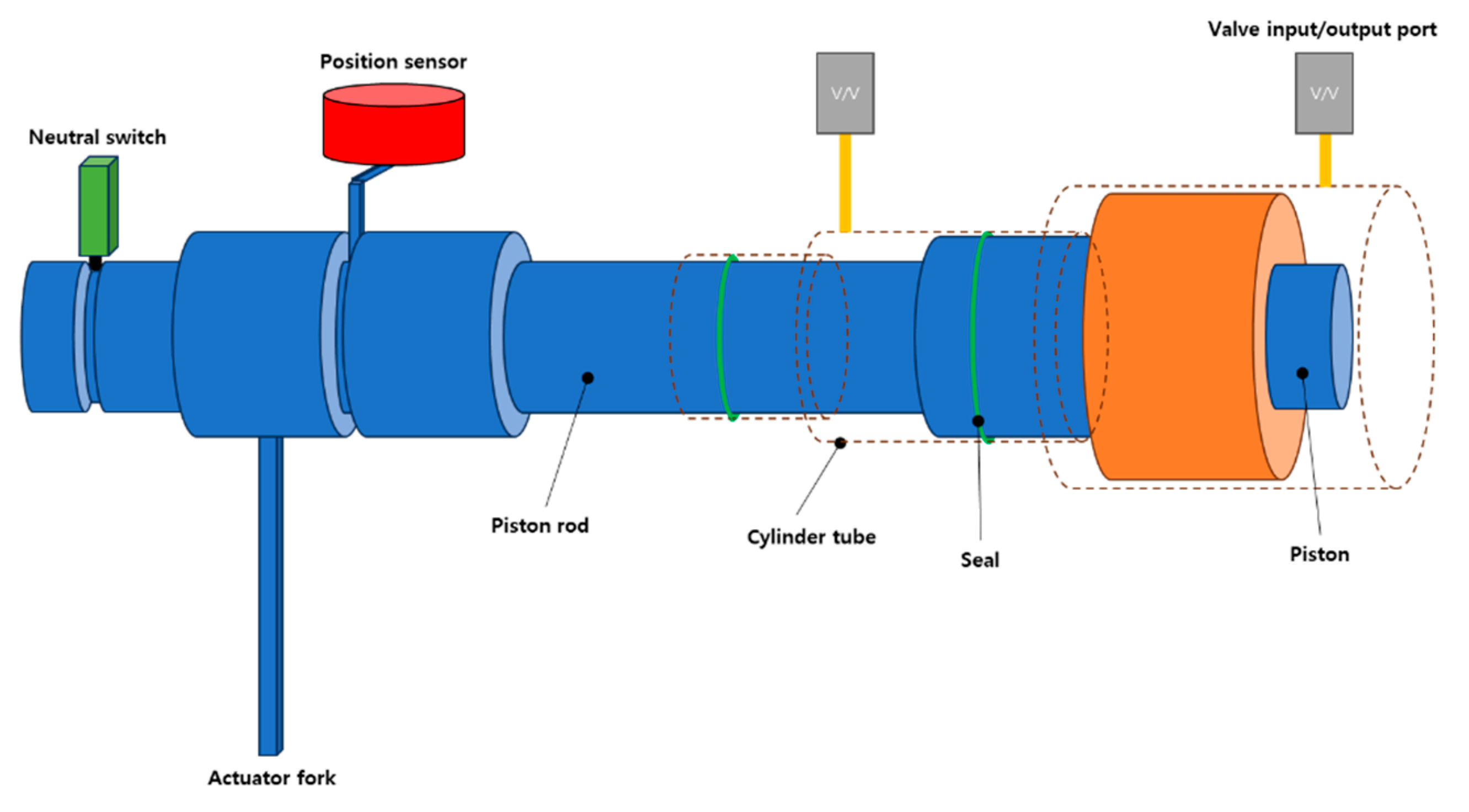
The control system for the synchronizer under study is configured as shown in Figure 2. To prevent simultaneous engagement of the synchronizer, a dual-acting cylinder with mechanical neutrality and an integrated actuator with a position sensor and neutral switch capable of detecting the position of the synchronizer are used for control.
Figure 2.
Structure of synchronizer actuator.
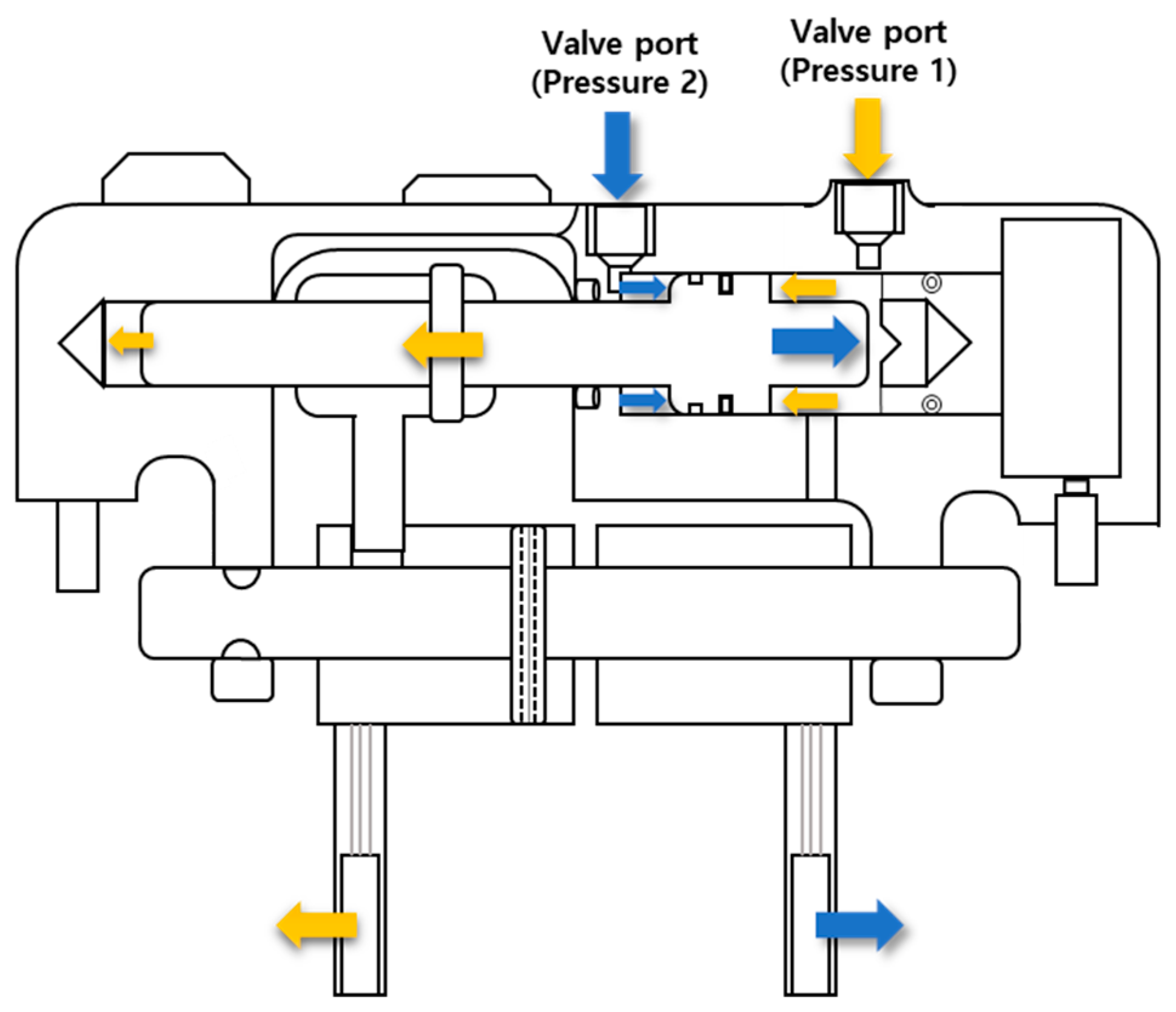
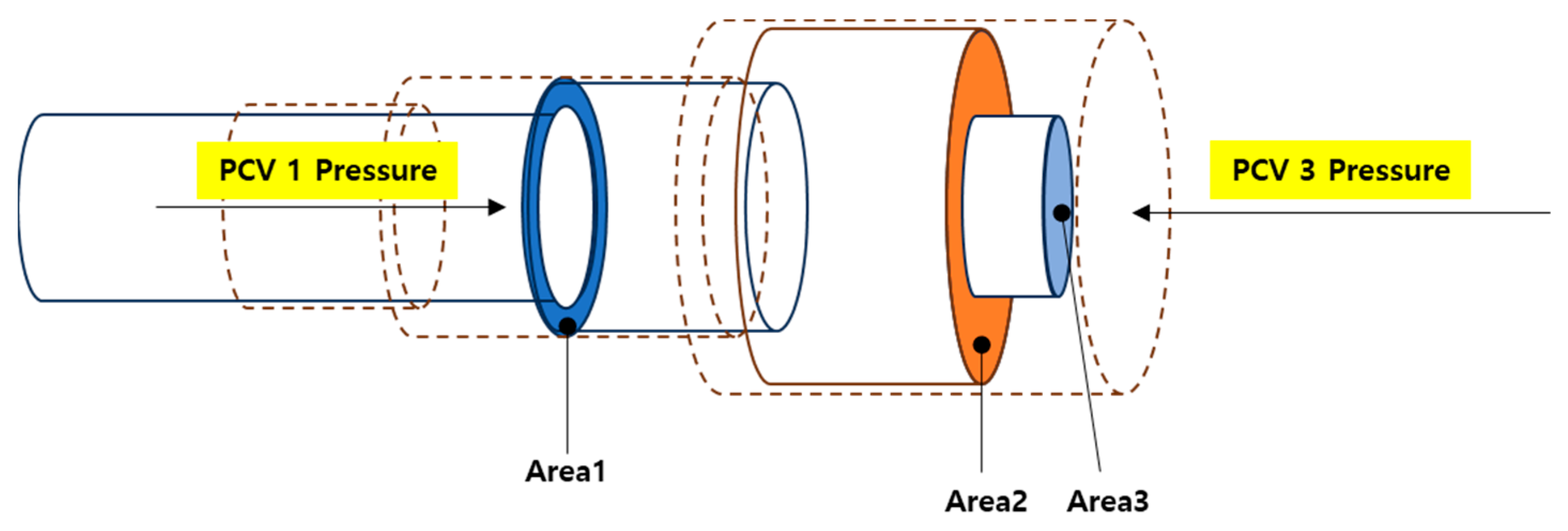
The integrated actuator with mechanical neutrality used in this study is designed as a unit with two forks on one shaft connected to a single rail, and has separate inlets for hydraulic operating fluid to mechanically prevent both gears from engaging simultaneously. Additionally, there are individual valves to control the amount of hydraulic operating fluid and a position sensor to detect the position of the synchronizer sleeve, along with a neutral switch for more accurate detection. The synchronizer actuator in the shifting system is a device used to synchronize or adjust the gear and synchronizer, and the motion equation based on the pressure control of this actuator is as shown in Figure 3.
Figure 3.
Detailed synchronizer actuator.
The basic principle is as in Equation (11) [24]:
where,
- : pressure applied to actuator cylinder, bar
- : area to which current is applied, mm2
- : axial force, N
Equation (12) represents the equation when moving the sleeve to the left, and Equation (13) represents the equation when moving it to the right. Equation (14) represents the situation when the sleeve is in the neutral position.
The operating principle of the hydraulic system is designed such that a linkage device connected to the piston rod moves the shift fork according to the direction of the incoming hydraulic pressure. The shift fork moves the synchronizer to help mesh the selected gear with the shaft. As shown in Figure 4, when flow enters the right (indicated by the yellow arrow) valve input/output port, the synchronizer engages the left gear. If the same flow enters both valve input/output ports, mechanical neutrality is maintained due to structural constraints of the ring and cylinder. A proportional pressure relief valve in a hydraulic system operates by maintaining a specific pressure level. When the pressure increases, the valve closes to reduce fluid inflow, and when the pressure decreases, it opens to increase fluid inflow, thereby ensuring system stability. This mechanism is utilized for precise pressure control within the system [25]. Therefore, the key parameters for controlling the synchronizer are the shifting force applied to the hydraulic cylinder of the synchronizer actuator and the pre-shift timing determining when the shift occurs.
Figure 4.
The operating principle of the hydraulic system of the actuator.
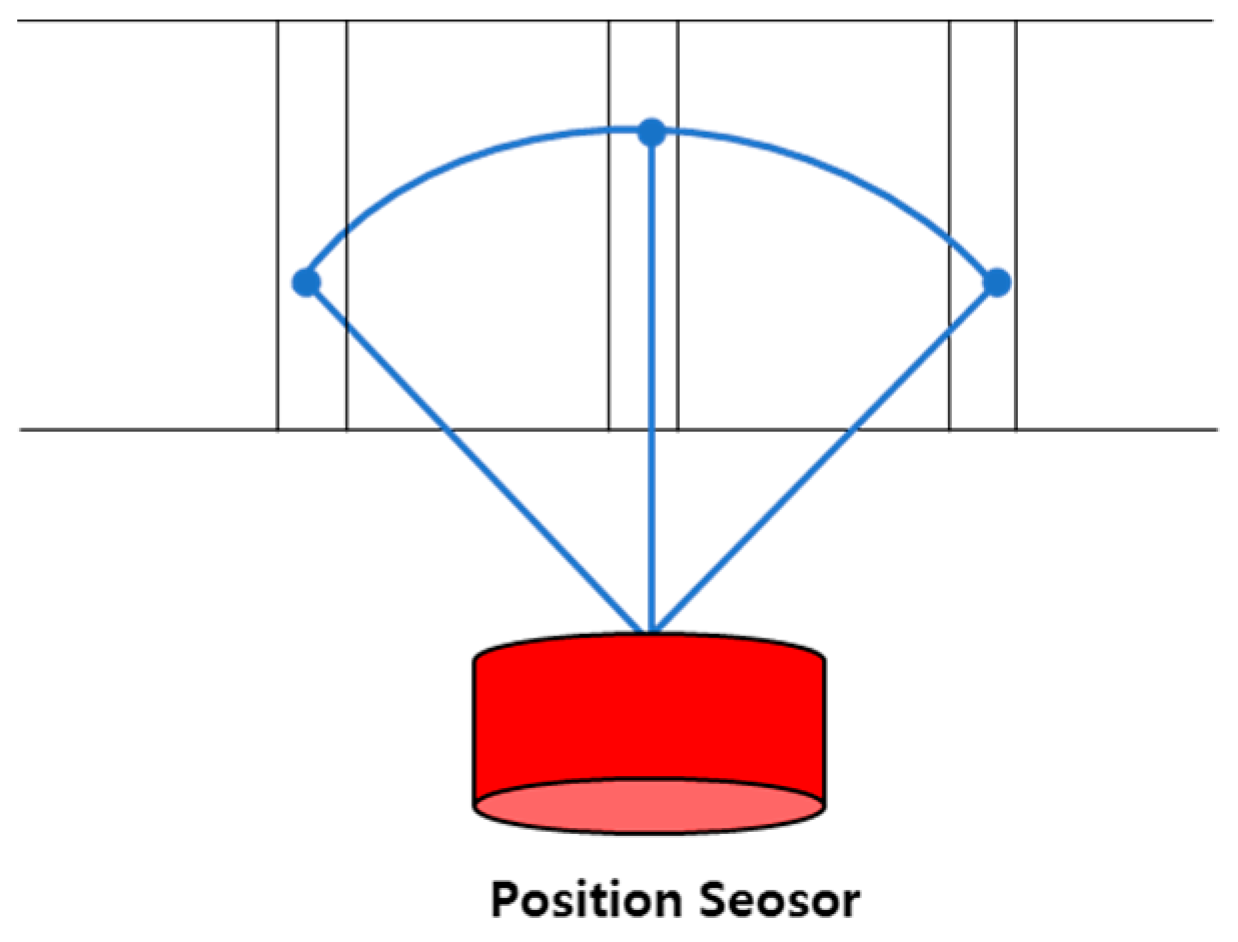
The position of the synchronizer is detected using a rotary position sensor, which is used to detect the position of a moving object, as shown in Figure 5. This position sensor, mounted on the hydraulic cylinder rod, detects position using voltage values that change according to the rotation angle [26]. The voltage value in response to the electrical signal changes with the movement angle, allowing the measurement of the synchronizer’s moving position. The speed of the synchronizer can also be determined based on the measured position through differentiation. Differentiating the measured position once gives the speed, and differentiating it twice yields the value of acceleration.
Figure 5.
Position sensor of the actuator.
To control the position of the synchronizer sleeve, the pressure applied to the cylinder is controlled using a proportional pressure-reducing valve. The specifications of the valve used in this study are as shown in Table 2.
Table 2.
Registration standard for Proportional pressure reduction valve.
3. Dual-Clutch Transmission under Study
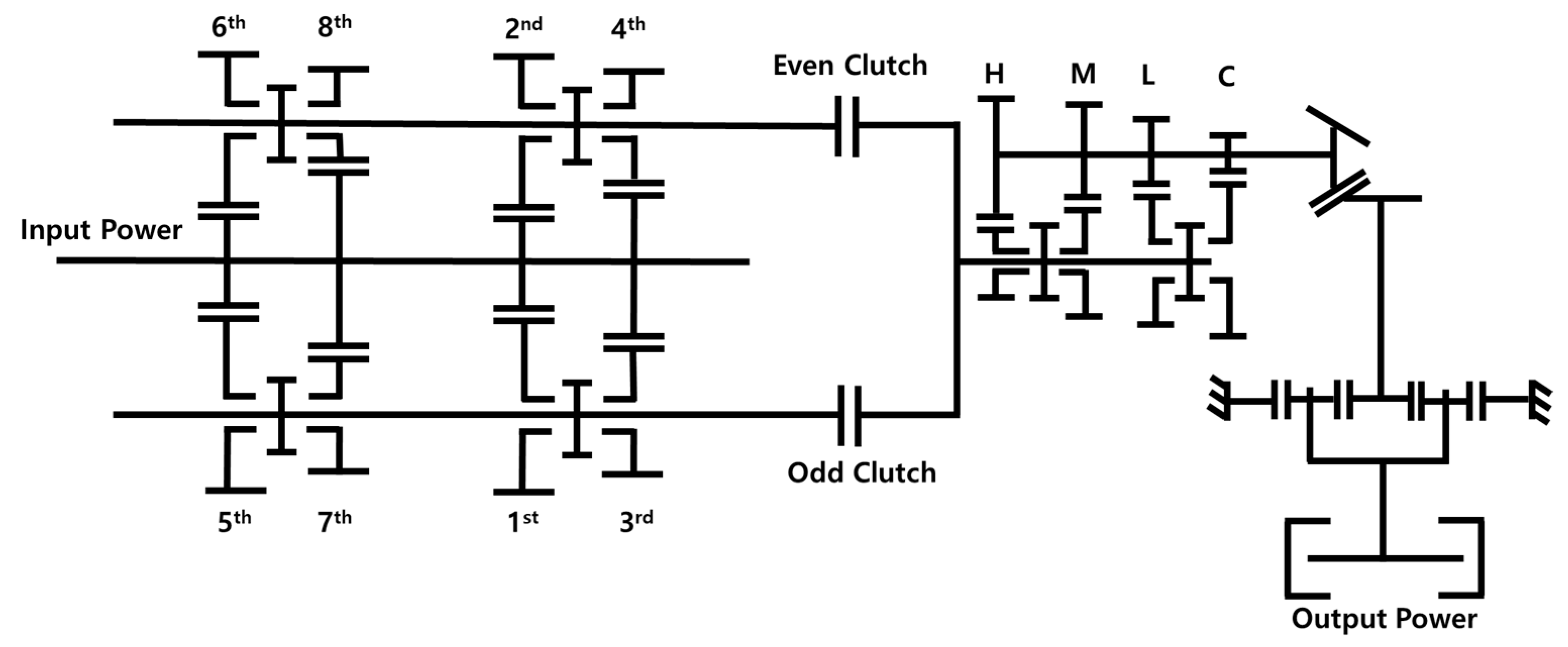
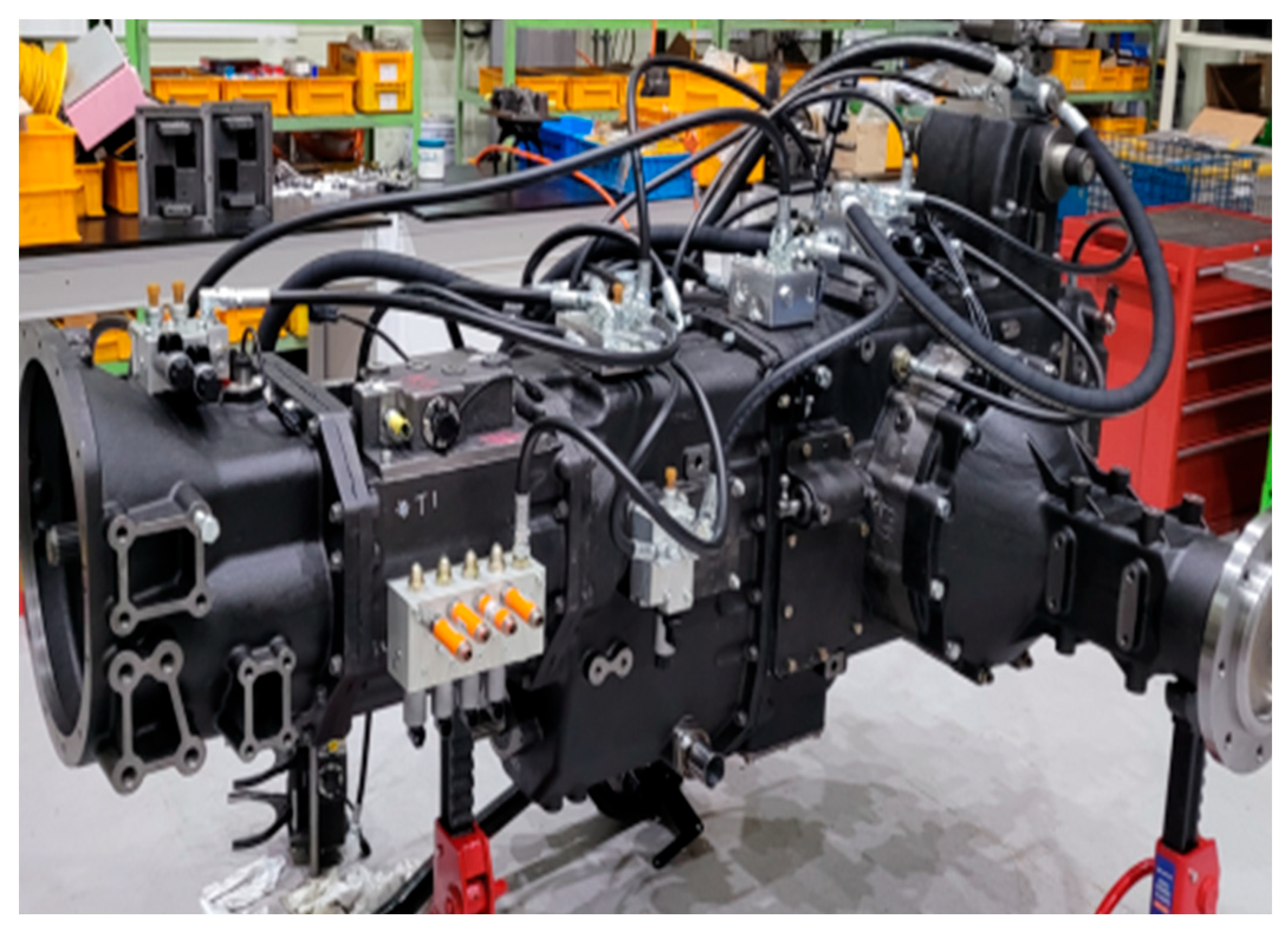
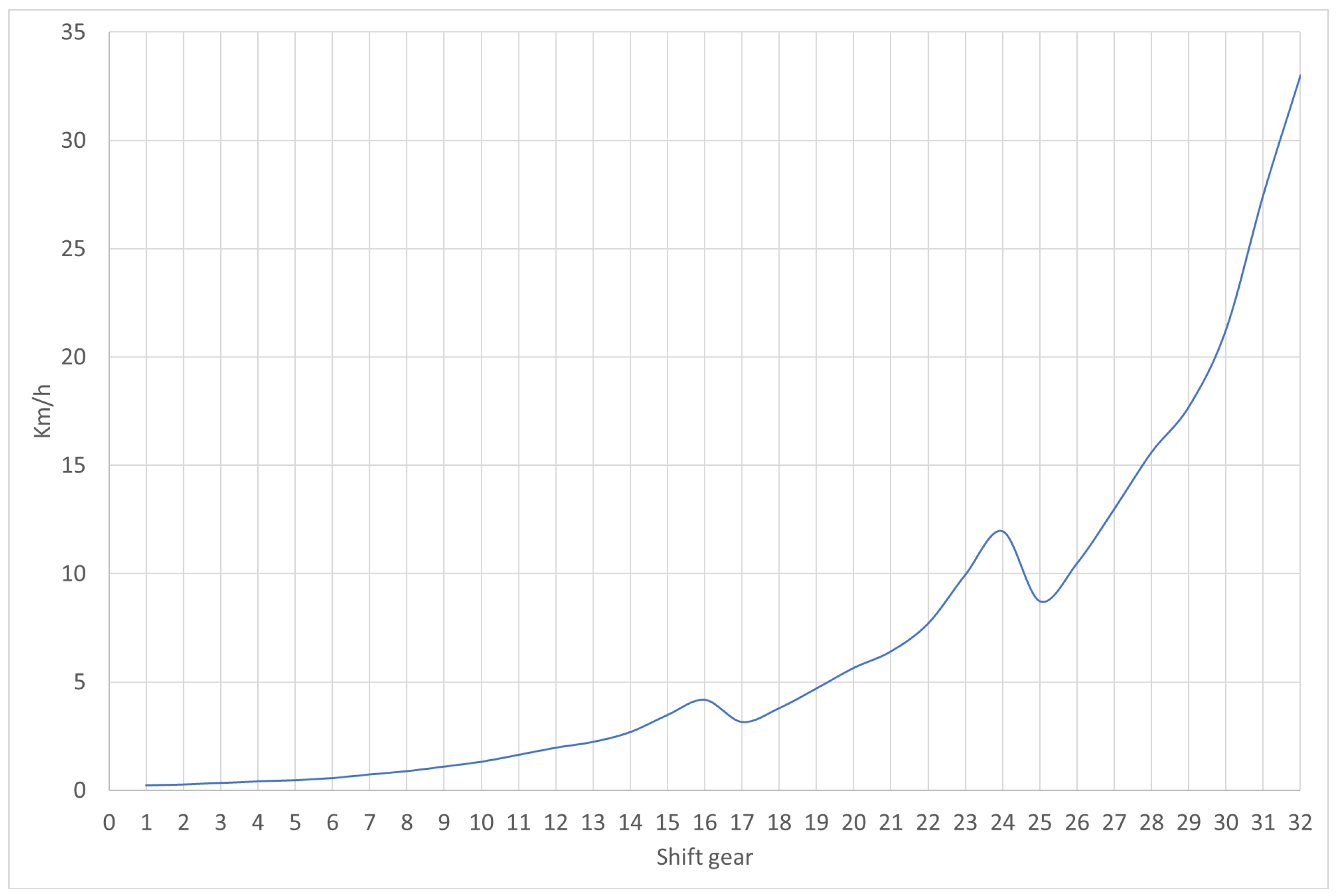
The DCT under study in this research is as shown in Figure 6. The target transmission consists of a main transmission with eight speeds and a sub-transmission with four speeds, resulting in a structure with 32 forward and reverse gears each, as shown in Figure 7, with the speed configuration of each gear shown in Table 3 and Figure 8.
Figure 6.
Tractor transmission used in this study.
Figure 7.
Schematic diagram of DCT used in the target transmission.
Table 3.
Speed by stage.
Figure 8.
Transmission speed graph used in this study.
4. Test Method
To observe the shift shock and shift time caused by synchronizer preselection, a dynamometer bench test was conducted using the target DCT. The bench test assumed constant forward speed and simulated preselection occurring upon receiving a command to shift to the next gear, under various conditions with repeated tests.
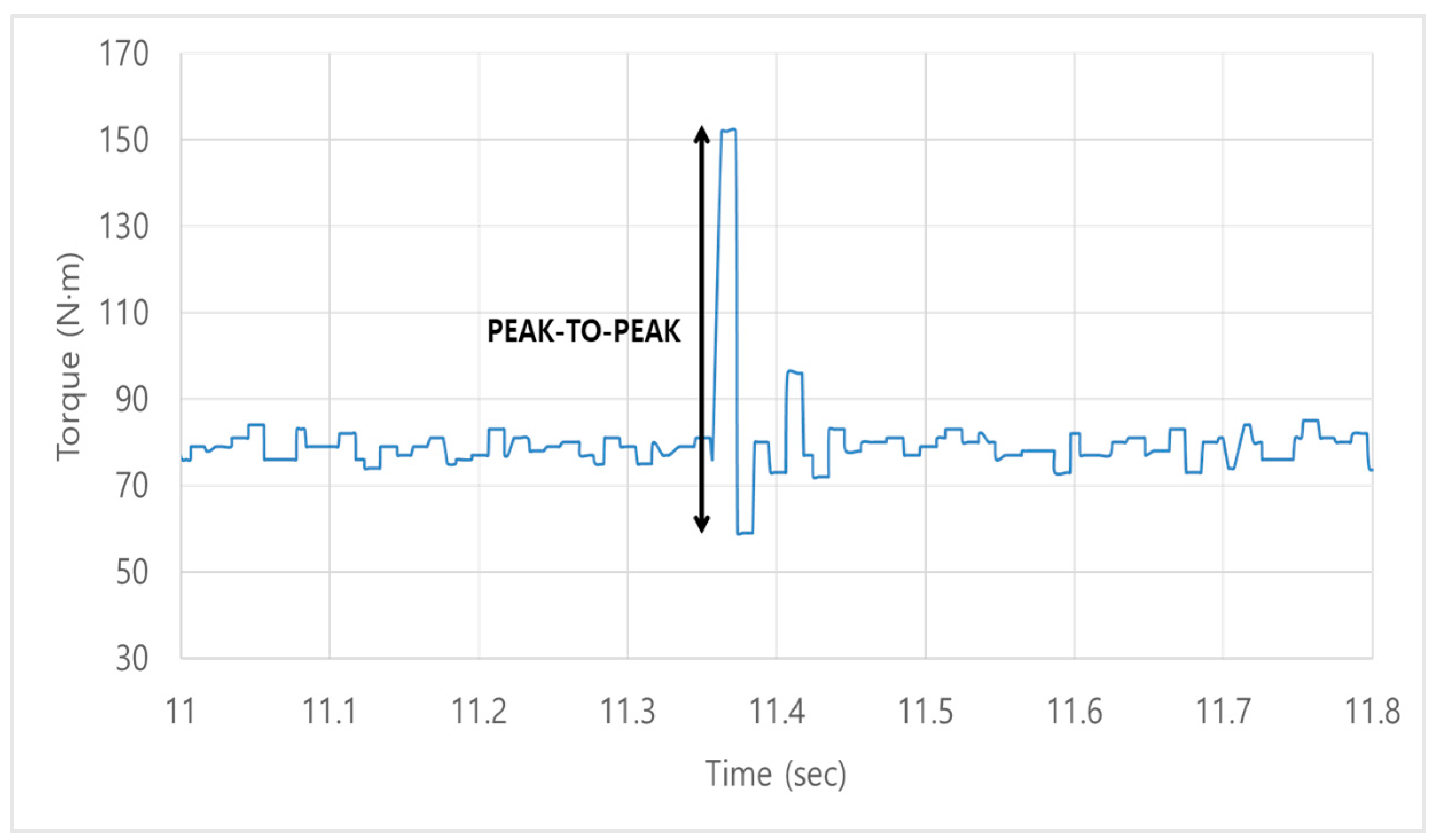
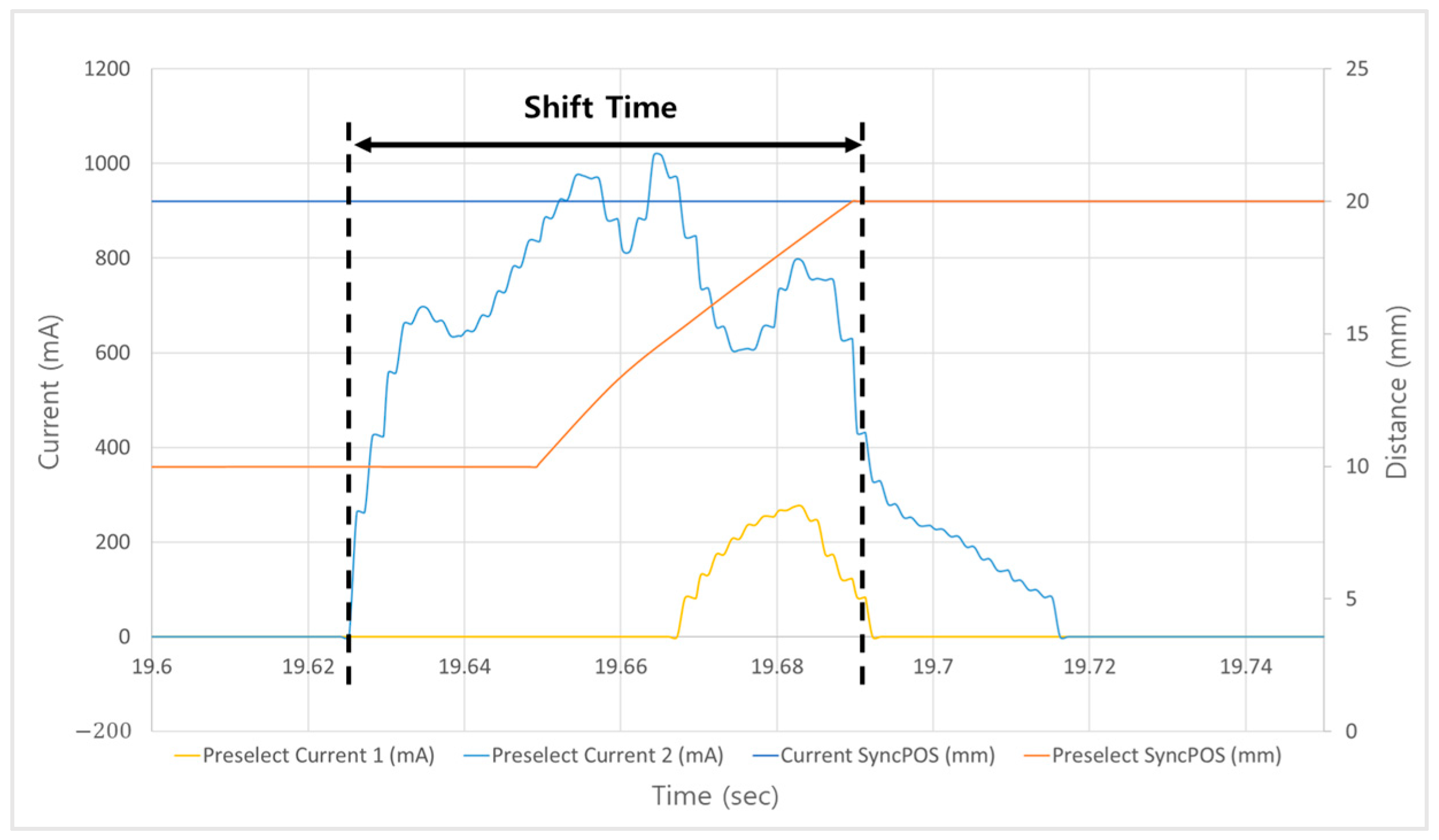
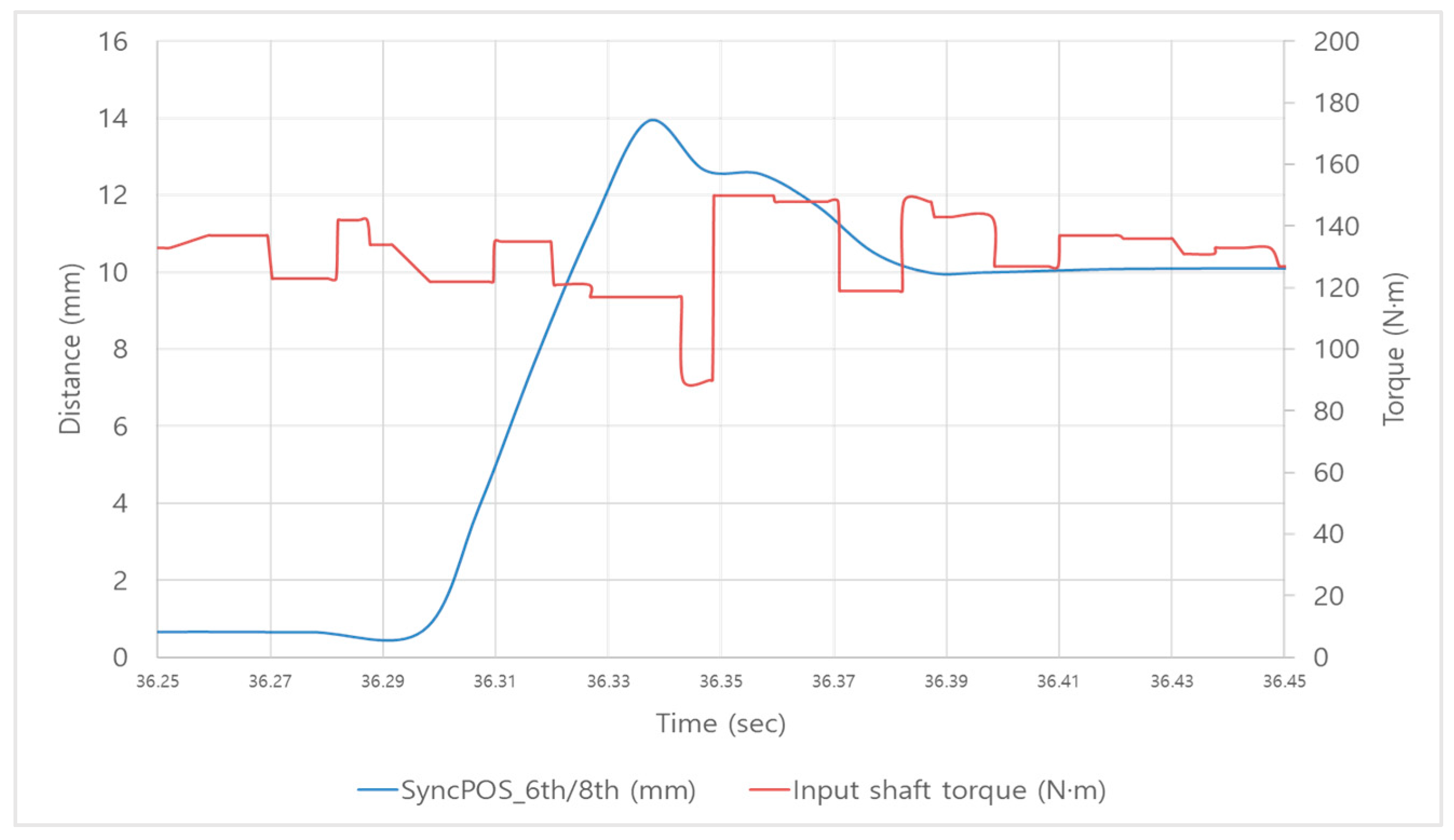
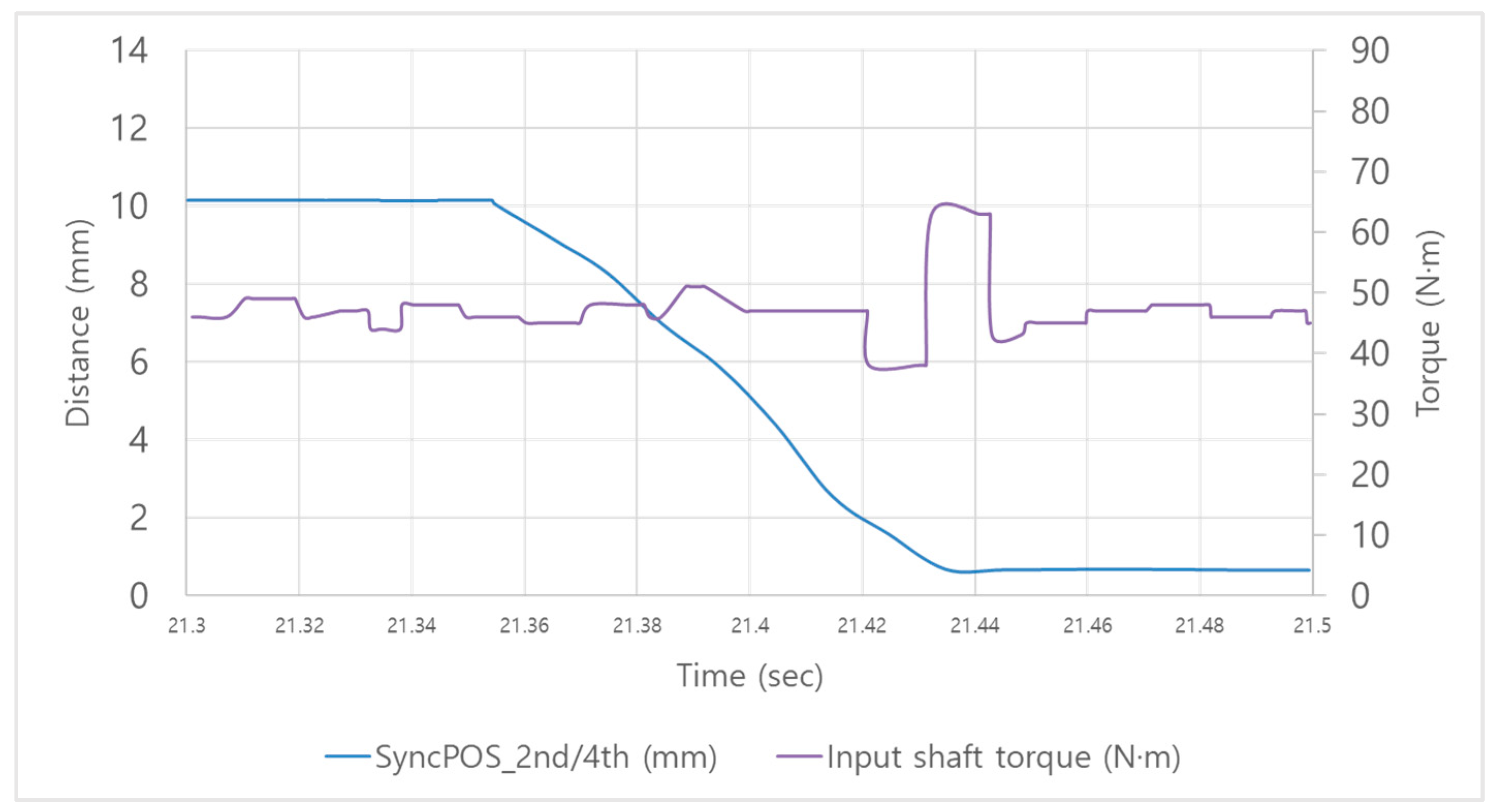
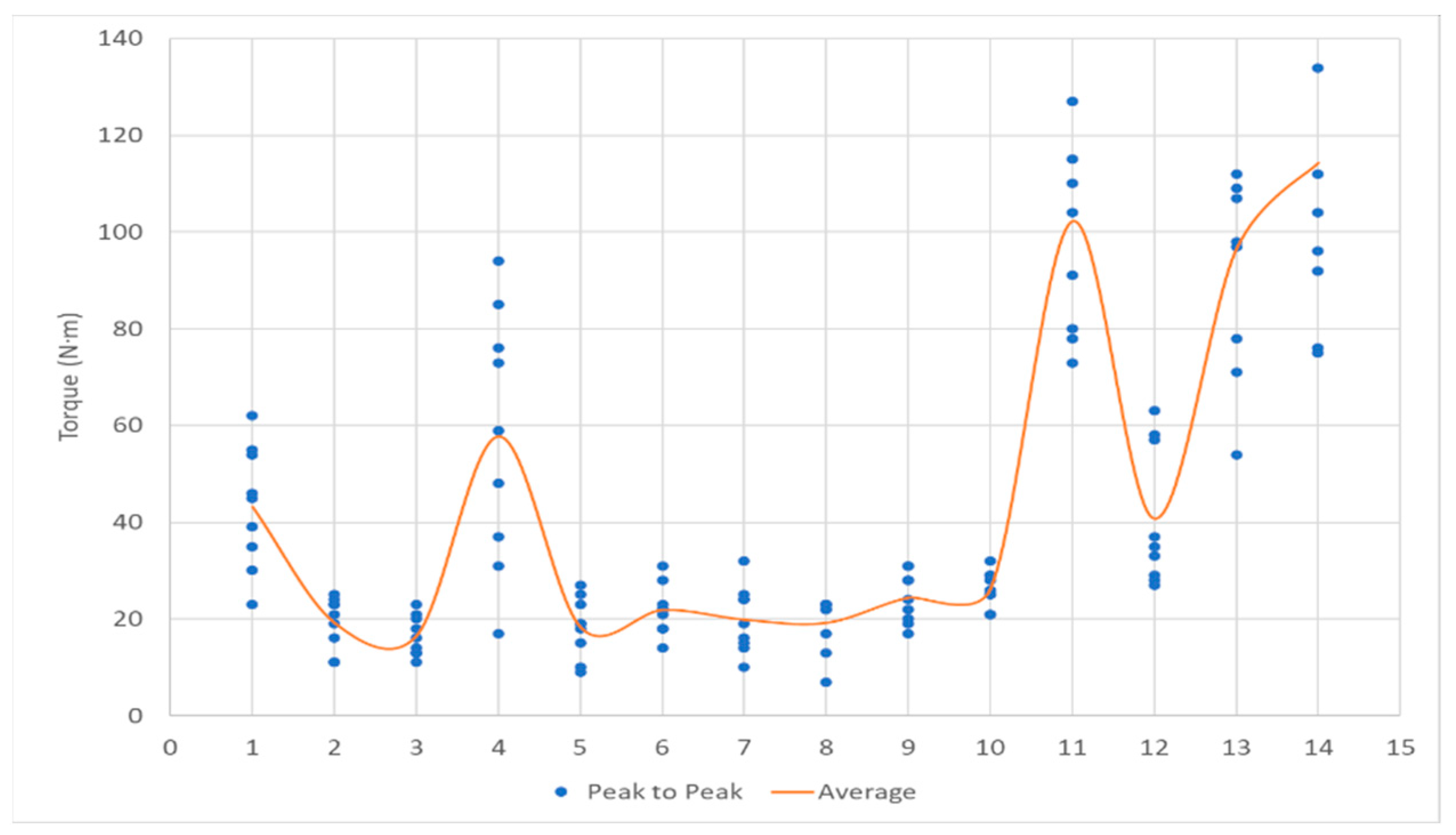
Since the dynamometer bench is not an actual vehicle, it was impossible to measure the shift shock occurring during real driving; therefore, the torque fluctuations on the dynamometer’s input shaft motor caused by synchronizer preselection were considered as the shift shock. In vehicles, shifting involves hydraulic operation of one or more engaging and disengaging components, and the shift shock during shifting is determined by output fluctuations of the engine caused by changes in operating components like the clutch or synchronizer [27]. Therefore, torque fluctuations according to current were represented as the difference between the maximum and minimum points of input shaft torque fluctuation during the synchronizer engagement and disengagement process, shown as peak-to-peak in Figure 9. Shift time was defined as the time from the driver’s shift command to the engagement of the synchronizer gear, as shown in Figure 10. Furthermore, the preselection process was divided into the engagement process (preselect) when the gear is engaged and the disengagement process (neutral) when the engaged gear is disengaged, and tests were conducted accordingly.
Figure 9.
Definition of peak-to-peak.
Figure 10.
Definition of shift time.
The bench test to understand the correlation between shifting force and shifting quality was conducted under 14 different preselection conditions possible in driving shift stages H1, H2, H3, H4, H5, H6, H7, H8, as in Table 4, setting the input shaft motor speed at 500 rpm, load at 2000 Nm, and oil temperature at 30–40 °C, while measuring input shaft torque according to the variations in conditions. The current is set in intervals starting from the maximum specification of the hydraulic proportional pressure-reducing valve, which is 885 mA, down to 400 mA, which is the theoretically calculated synchronizer neutral disengagement condition, at 400 mA (5.15 bar), 500 mA (8.5 bar), 600 mA (12.05 bar), 700 mA (15.5 bar), 800 mA (18.9 bar), 900 mA (20 bar).
Table 4.
The experimental conditions of the shifting force testing.
The bench test to determine the correlation between shift timing and shift quality was conducted under 14 different preselection conditions from H1 to H8, with a load of 2000 Nm, and oil temperature set at 30–40 °C, as in Table 5. The input shaft motor speed was increased from 500 rpm to 1000 rpm over 10 s, and preselection was performed at 550 rpm, 750 rpm, and 950 rpm.
Table 5.
The experimental conditions of the shift timing testing.
All tests were repeated three times to ensure statistical significance. All preselection cases that can occur from H1 to H8 are as shown in Table 6 and Table 7.
Table 6.
Preselection shifting process for preselection.
Table 7.
Preselection shifting process for neutral.
5. Test Configuration
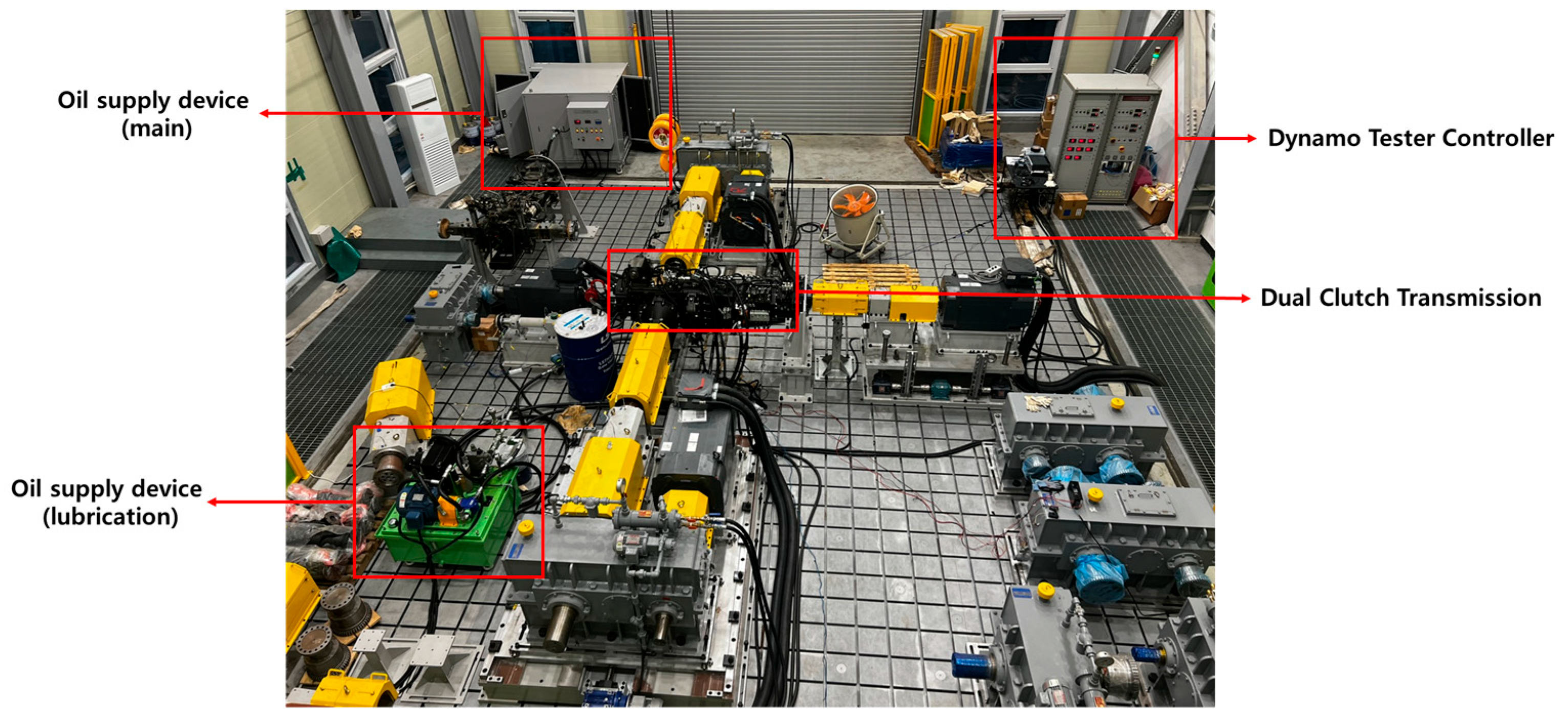
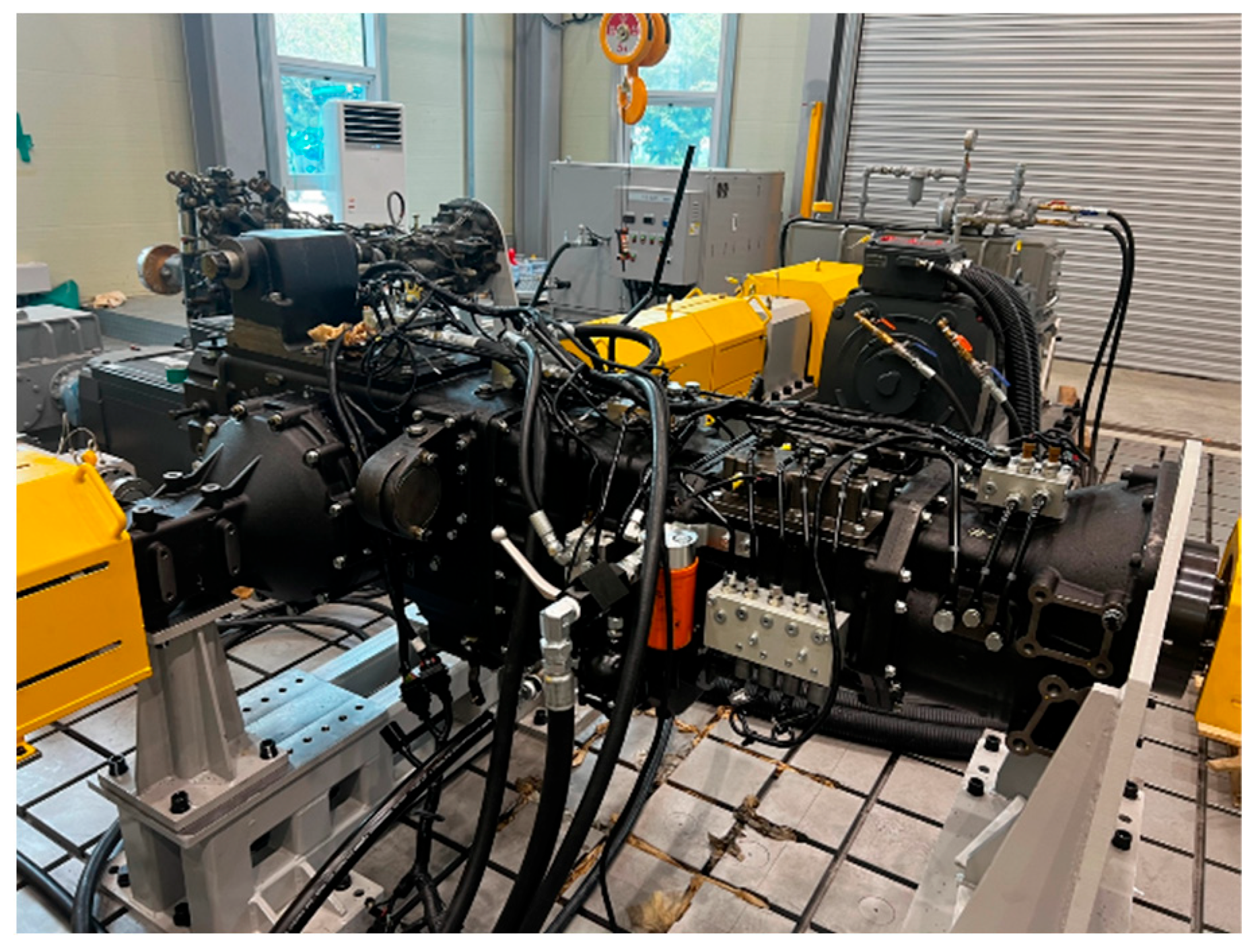
Test photos and layout diagrams for the dual-clutch transmission are shown in Figure 11 and Figure 12. In order to minimize external factors of the transmission, the test was conducted by mounting the transmission unit on a dynamo.
Figure 11.
Picture of test layout of dynamo bench test.
Figure 12.
Layout of dynamo bench test.
Torque and rotation speed were measured using a torque meter of the input/output motor mounted on the dynamo. The pressure of the current applied to the cylinder was measured using the shunt resistance inside the controller. The specifications of the main devices used in the test are listed in Table 8.
Table 8.
Specifications required to perform the test.
6. Test Results
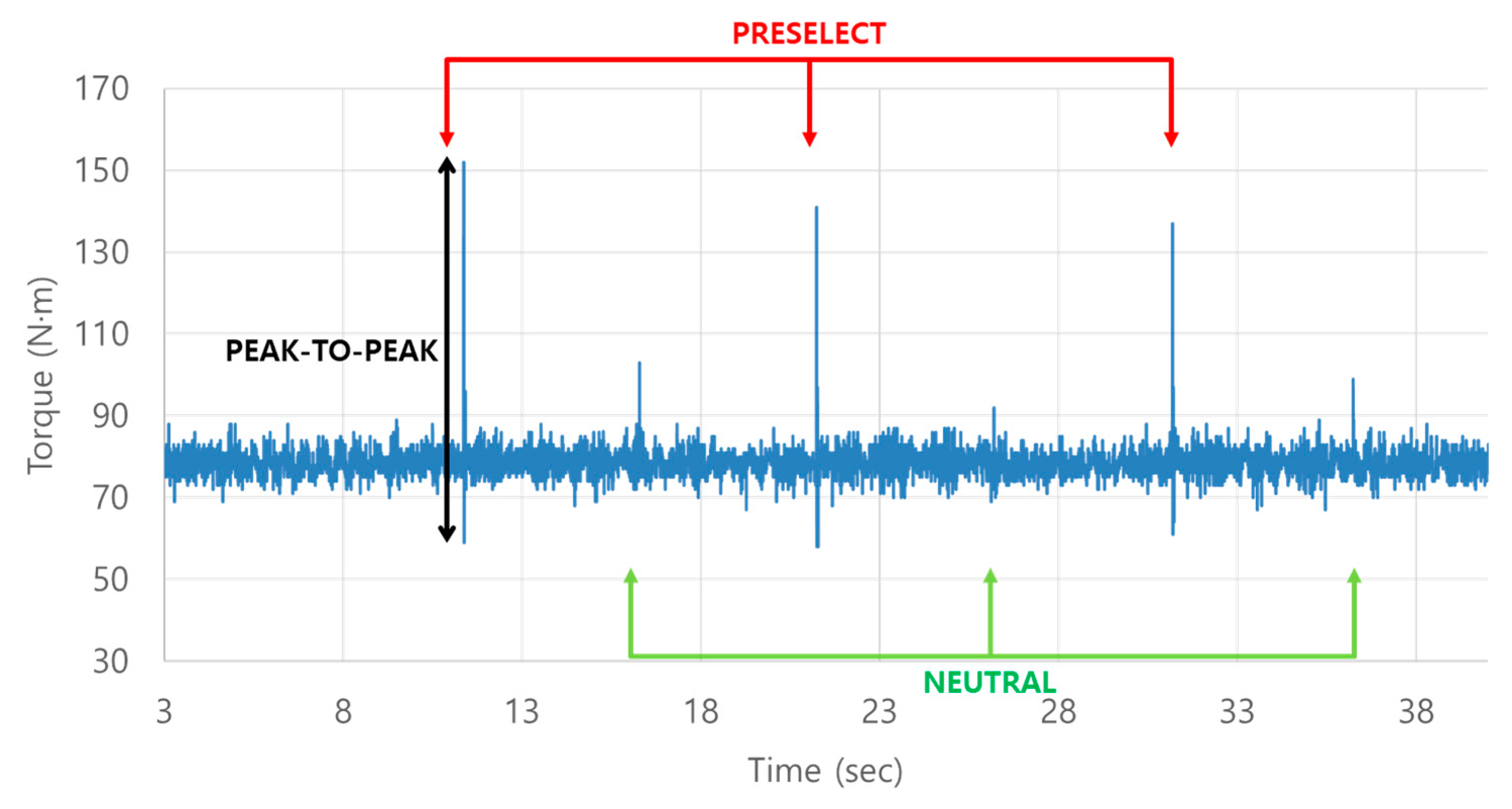
The graph below Figure 13 shows the input shaft torque fluctuations resulting from synchronizer control. As evidenced, as synchronizer control is performed, there is a significant change in torque at the point of synchronizer engagement or disengagement compared to the existing transfer torque. This implies that synchronizer control for preselection can induce fluctuations in input shaft torque, which ultimately may cause shift shock.
Figure 13.
Results of input torque measurement in bench test.
For the tests evaluating the degree of influence of the current, currents ranging from the theoretical synchronizer operating point of 400 mA to 500 mA (8.5 bar) were deemed unable to drive the synchronizer due to component variance and hydraulic friction. Thus, results from 600 mA (12.05 bar) and above were used in the analysis for this study.
To analyze the correlation of parameters, one-way ANOVA, a statistical method of variance analysis, was utilized; a significance probability (p-value) greater than 0.05 indicates statistically non-significant results, whereas smaller values suggest the rejection of the null hypothesis and the acceptance of the alternative hypothesis, indicating statistical significance [28].
6.1. Preselection Engagement (Preselect)
The test for preselection engagement according to shifting force was conducted with a one-way ANOVA to determine if there were any differences in the input shaft torque peak-to-peak and synchronizer shift time resulting from changes in current applied to the cylinder. The results of the one-way ANOVA for input shaft torque peak-to-peak according to shifting force within the same shift stages are shown in Table 9. In Cases 1, 2, 3, 4, 5, 6, 8, 10, 11, 12, and 14, it appeared to be statistically non-significant based on a significance level of 0.05, meaning that changes in shifting force do not create a significant difference in the mean of input shaft torque peak-to-peak among the conditions. In some conditions (7, 9, and 13), a statistically significant difference was observed as the values were low based on a significance level of 0.05. As shown in Table 8, in Case 7, the lowest average value was at 900 mA and the highest average value was at 700 mA; in Case 9, the lowest average value was at 700 mA and the highest average value was at 800 mA; and in Case 13, the lowest average value was at 600 mA and the highest average value was at 700 mA. Consequently, it has been determined that the magnitude of the applied pressure based on the current influences torque fluctuations in only some preselection stages according to the p-value of each case. Additionally, the reason the optimal current is different for each case is because each gear ratio is different, and the relative speed is also different. Therefore, shifting force is considered to be a factor affecting shift shock only in certain preselection stages.
Table 9.
Torque peak-to-peak according to current when preselected.
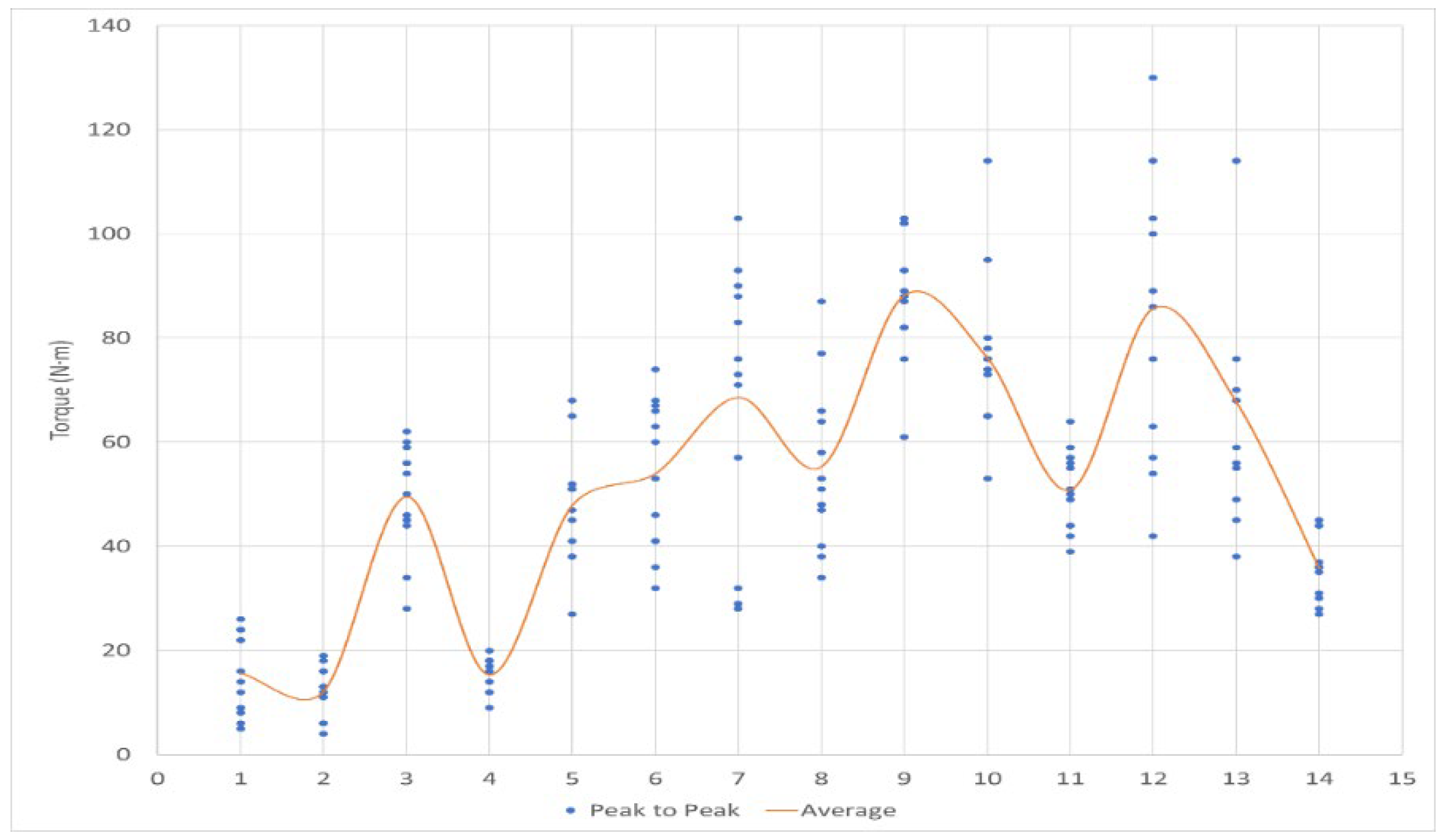
The differences in the means of input shaft torque peak-to-peak according to shift stages within the same shifting force were analyzed as shown in Table 10. According to the results, the p-values for each condition were lower than the significance level of 0.05, indicating statistically significant differences in shift stages within the same shifting force conditions. Particularly, as shown in Figure 14, the shift stages increased, a gradual increase in torque peak-to-peak was observed, and it is considered that taking this tendency into account in shift strategies could improve shift quality.
Table 10.
Torque peak-to-peak depending on the shift gear when preselected under the same current condition.
Figure 14.
The graph of torque according to shift gear when preselected.
Additionally, upshifts and downshifts were analyzed separately as shown in Table 11. The results showed p-values higher than the significance level of 0.05, confirming that there is no significant difference in the average peak-to-peak input shaft torque between upshifts and downshifts.
Table 11.
Torque peak-to-peak according to shift gear (up/down).
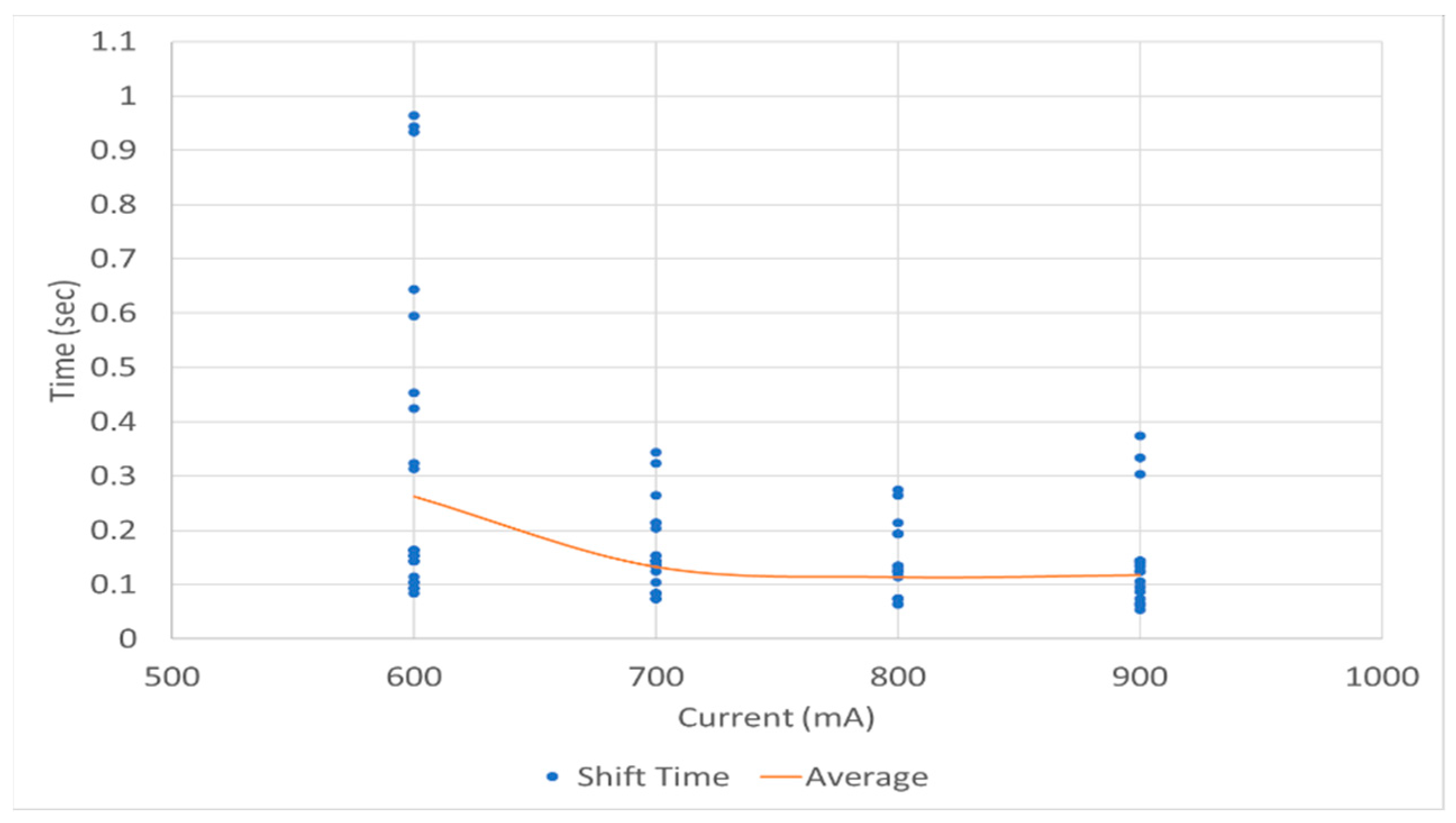
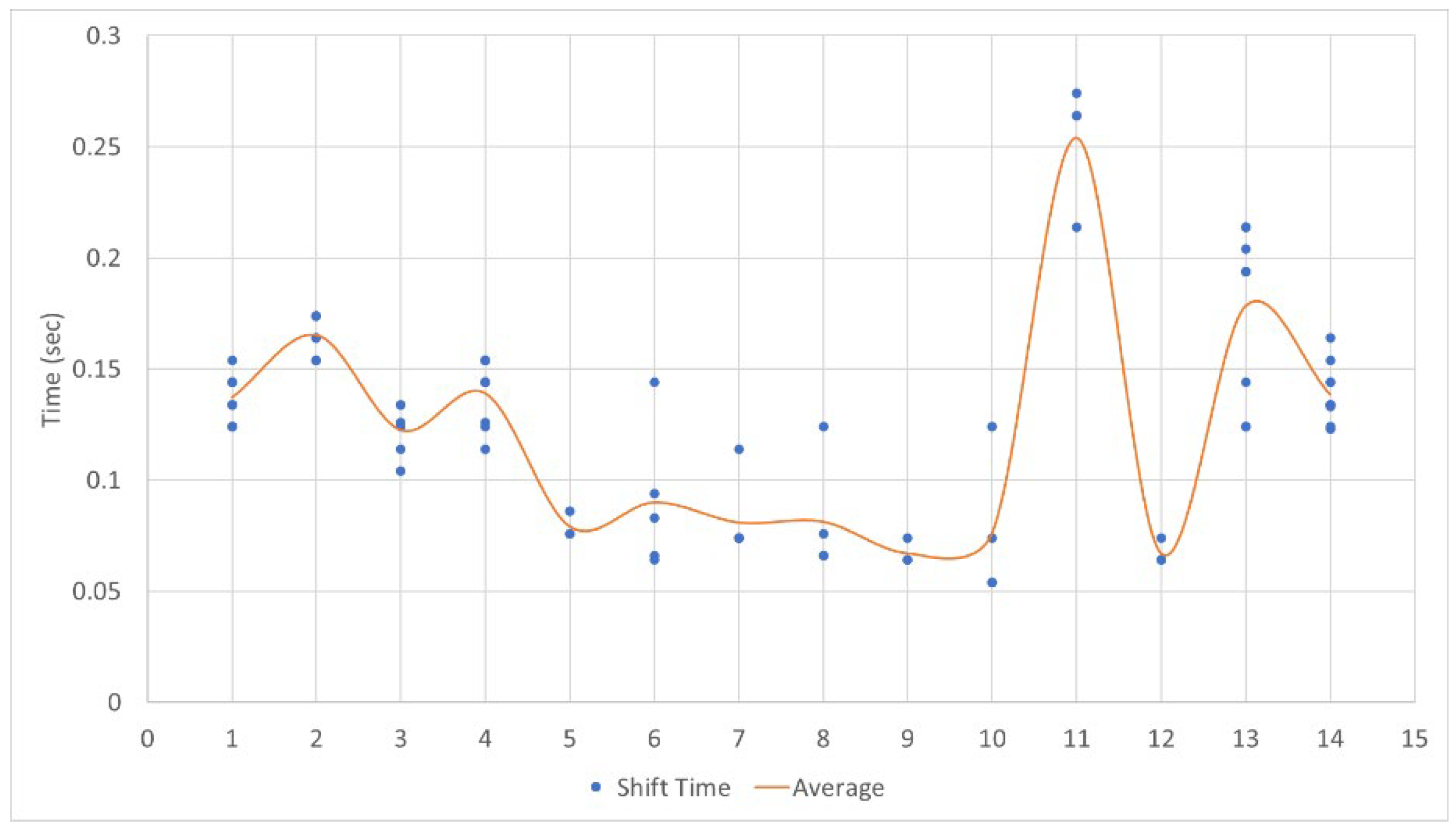
The results for shift time according to shifting force within the same shift stages are shown in Table 12. In Cases 2, 5, 6, 8, 10, and 12, no statistically significant difference was shown based on the significance level of 0.05. In Cases 1, 3, 4, 7, 9, 11, 13, and 14, a statistically significant difference was observed based on the significance level of 0.05. Figure 15 separately illustrates the relationship between shift time and shifting force for Cases 1, 3, 4, 7, 9, 11, 13, and 14, which showed significant differences. At a current of 600 mA, a significantly longer shift time (0.262 s) was shown compared to other independent conditions, and a comparison of shift times at 700 mA (0.133 s), 800 mA (0.114 s), and 900 mA (0.118 s) showed that the condition at 800 mA had the shortest average shift time. In conclusion, the results indicate that in the control of the synchronizer, when a shifting force above a certain range is applied, there is no difference in shift time due to changes in shifting force.
Table 12.
Shift time according to current when preselected.
Figure 15.
Shift time depending on current when preselected under influencing conditions.
Additionally, the differences in the average shift time according to shift stages within the same shifting force were analyzed as shown in Table 13. According to the results, all conditions showed p-values below the significance level of 0.05, indicating statistical significance. This means that there are differences in the average shift time depending on the shift stages. Therefore, shift stages are considered to be a parameter factor affecting shift quality.
Table 13.
Shift time according to shift gear when preselected under the same current condition.
A comprehensive analysis reveals that except for Case 11, all conditions resulted in shifting within 0.05 s to 0.2 s. Case 11 showed the highest average shift time at 0.254 s.
The difference in shift quality due to the magnitude of relative speed required for speed synchronization during synchronizer engagement was compared. The relative speeds at both ends of the synchronizer during preselection are as shown in Table 14, and the highest relative speed difference was observed in Figure 16, Case 11. Consequently, as shown Figure 17, the difference in relative speeds at both ends of the synchronizer affects the time it takes to synchronize the synchronizer and the shift shock, with an increase in relative speed leading to longer shift times. Thus, changes in the level of relative speed have been confirmed to influence shift time.
Table 14.
Relative speed resulting from preselection.
Figure 16.
The graph of the shift time according to the shift level when preselected.
Figure 17.
Shift number and shift time data in 11 conditions.
Subsequently, tests were conducted to determine the changes in shifting force and shift time depending on the shift timing at which preselection begins, and input shaft torque peak-to-peak and shift time were analyzed using one-way ANOVA. The average values of input shaft torque peak-to-peak according to the shift timing are shown in Table 15. Except for Case 1, all shifting processes were not statistically significant as they showed p-values higher than the significance level of 0.05, confirming that there were no differences in the averages of torque peak-to-peak due to changes in shift timing. In Case 1, the p-value was lower than the significance level of 0.05, suggesting that there is a significant effect on the average of input shaft torque peak-to-peak according to different shift timings. Therefore, it was determined that changes in the shift timing affect the input shaft torque peak-to-peak only in Case 1, while generally, it does not have an impact.
Table 15.
Torque peak-to-peak according to shift timing when preselected.
The shift shock according to shift stages within the same shift timing was analyzed as shown in Table 16. The results of the one-way ANOVA showed that there are significant differences in the average input shaft torque peak-to-peak according to the shift stages. This suggests that adjusting shift timings according to the characteristics of the shift stages can lead to changes in shift shock.
Table 16.
Shift time according to shift gear at the same shift timing when preselected.
The results for shift time according to shift timing were analyzed as shown in Table 17. Except for Case 4, all shifting processes were statistically non-significant as they showed p-values higher than the significance level of 0.05, confirming that there are no differences in the average shift time due to changes in shift timing. For Case 4, the p-value was lower than the significance level of 0.05, confirming that there is a difference in the average shift time according to the shift timing. Hence, the results indicate that shift timing affects shift quality only in Case 4.
Table 17.
Shift time depending on shift timing when preselected.
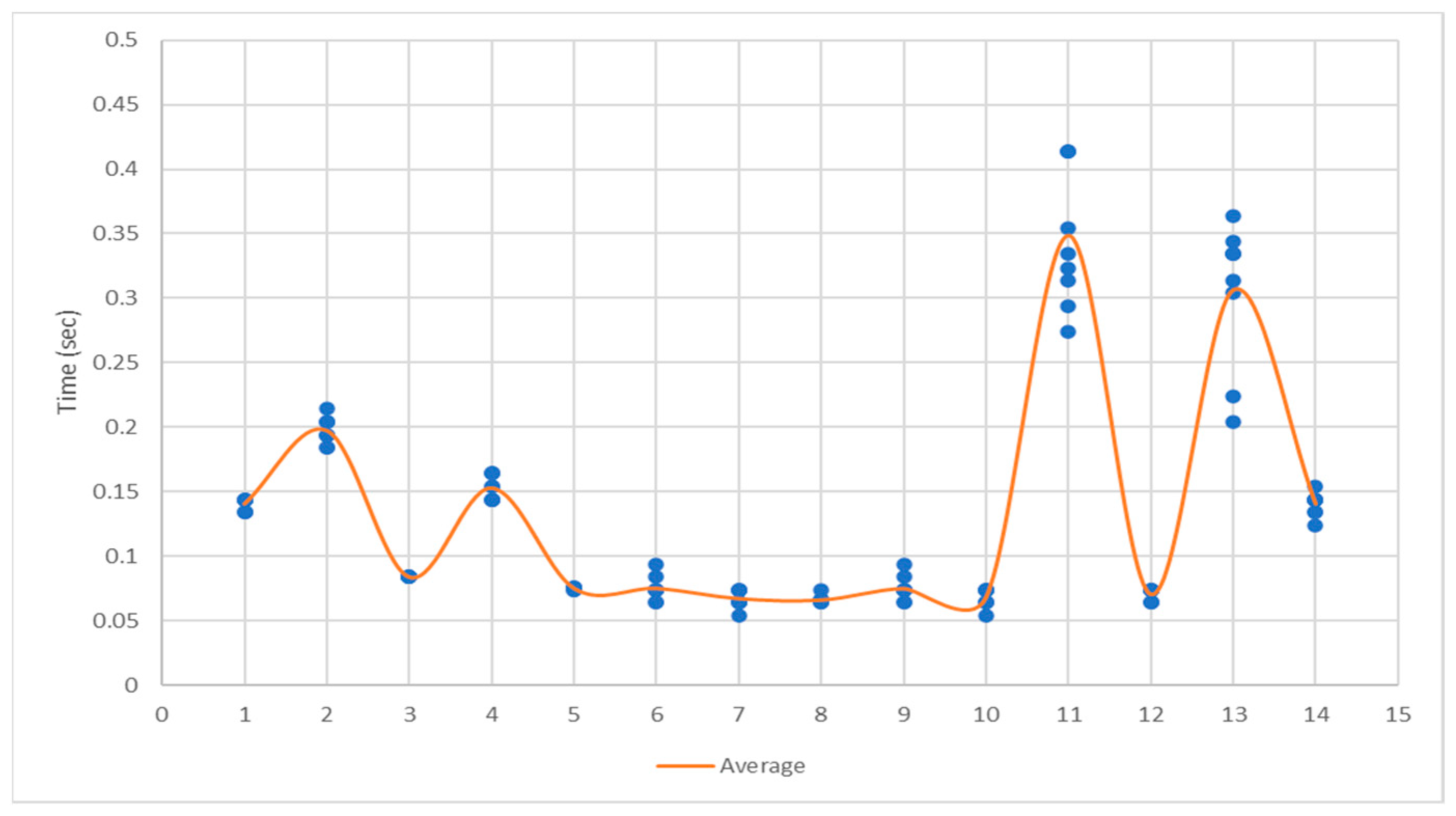
Additionally, the differences in shift time according to changes in shift stages within the same shift timing were analyzed. The results of the one-way ANOVA shown in Table 18 and Figure 18 confirmed that there are differences in the average shift time according to the shift stages. This suggests that shift stages should be considered as a key factor, and control strategies should be established by adjusting shift timings accordingly.
Table 18.
Shift time according to shift gear when preselected at the same shift timing.
Figure 18.
The graph of the shift time according to shift gear when preselection.
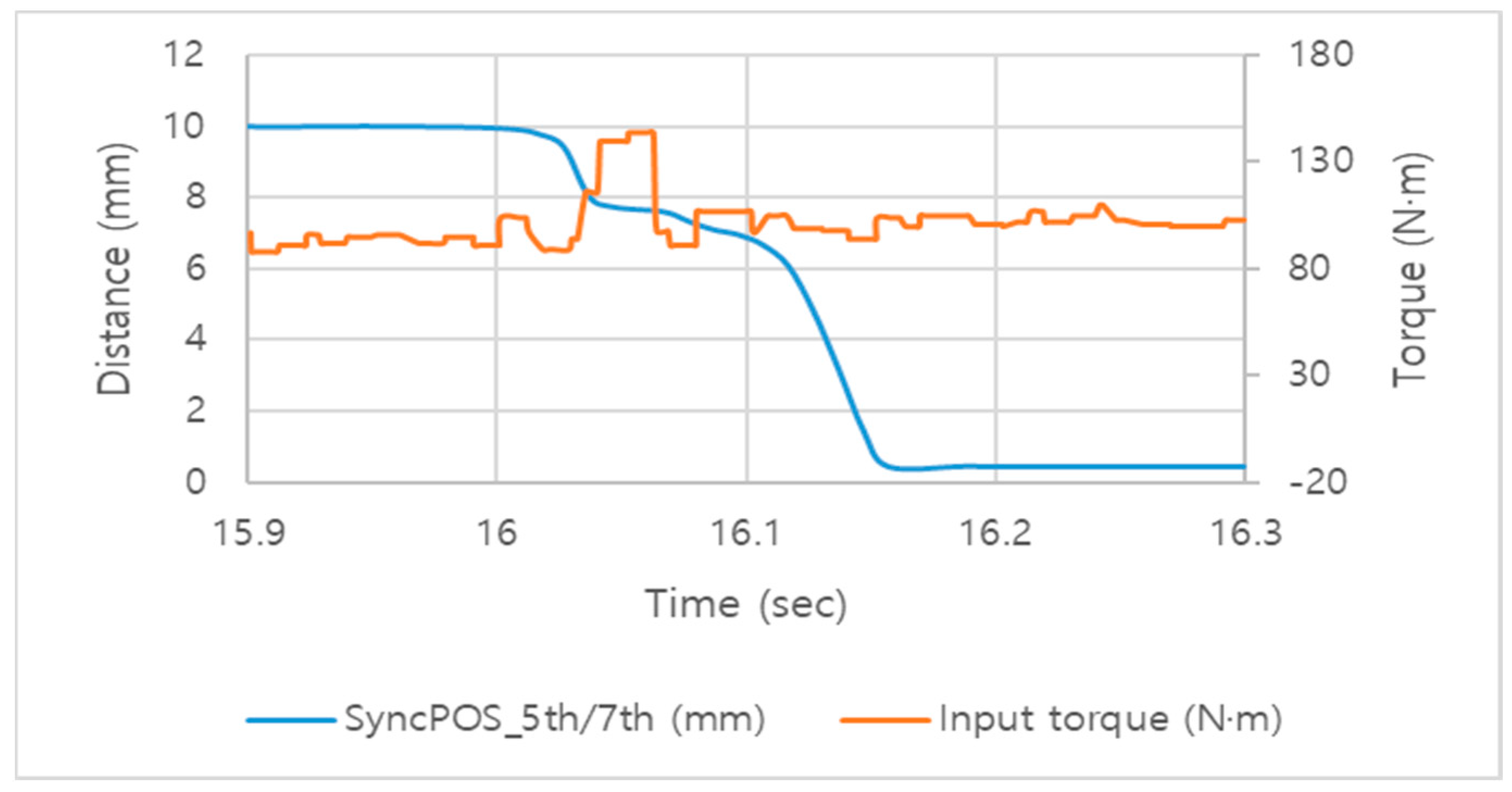
Lastly, the change in input shaft torque peak-to-peak according to the position of the synchronizer sleeve was analyzed as shown in Table 19 and Figure 19. The test results showed that in the lowest gear, first gear, the preselection as shown in Figure 20 did not cause shift shock during the synchronization process as the rate of change in the sleeve position was constant over time, but a peak occurred in the process of engaging the gear after synchronization was completed. For gears other than first gear, significant torque fluctuations occurred both during the synchronization process and the engagement process that follows. The cause of these torque fluctuations can be summarized as follows. Torque fluctuations during synchronization occurred due to attempting to start synchronization with rapid and excessive force, and the torque fluctuations during the engagement process occurred due to excessive force applied, causing a strong collision with the hard object fixing the gear.
Table 19.
Peak occurrence timing in the synchronizer section for preselect.
Figure 19.
Position of input shaft peak-to-peak according to synchronizer position in preselect.
Figure 20.
Preselection in Case 1.
In conclusion, factors to improve shift shock and shift time, which are criteria for determining shift quality, were analyzed through preselection action tests for each shift stage according to changes in shifting force and shift timing. As in Table 20, shifting force and shift timing are factors that can influence shift shock, and they have also been adopted as factors that can affect shift time. However, results that occur only under specific conditions cannot be determined as factors to improve overall shift quality due to a lack of universality. Therefore, this study focused on overall trends, and it is judged that strategies to improve shift quality through separate control techniques should be established for these specific conditions. Additionally, upon analyzing the difference in relative speeds of the synchronizer for each shift stage condition, it was determined that the major input shaft torque fluctuations and shift time are significantly influenced by relative speed, which affects both shift shock and shift time. Hence, relative speed should be considered as a control factor for improving shift quality.
Table 20.
Correlation between key factors when preselecting and improving shifting quality.
6.2. Preselection Disengagement (Neutral)
Tests for preselection disengagement according to shifting force were conducted using one-way ANOVA to see if there were any differences in the average torque peak-to-peak and shift time due to the current applied to the cylinder. Within the same shift stages, the results for torque peak-to-peak according to shifting force are statistically shown in Table 21. In Cases 1, 7, 10, 13, and 14, the p-values were below the significance level of 0.05, indicating statistical significance, confirming that there are differences in the average input shaft torque peak-to-peak according to shifting force. In Cases 2, 3, 4, 5, 6, 8, 9, 11, and 12, the p-values were above the significance level of 0.05, indicating no statistical significance and therefore no average differences. Consequently, it is determined that the magnitude of the applied pressure due to shifting force influences torque fluctuations only in certain neutral stages.
Table 21.
Torque peak-to-peak according to current in neutral.
The differences in the means of input shaft torque peak-to-peak according to shift stages within the same shifting force were analyzed as shown in Table 22. The results showed statistical significance with p-values below the significance level of 0.05, confirming that there are differences in the average input shaft torque peak-to-peak according to the shift stages. As shown in Table 23, these average differences can occur due to the difference in relative speeds, indicating that shift stages considering relative speed are factors that can influence shift quality.
Table 22.
Torque peak-to-peak according to shift gear in neutral under the same current conditions.
Table 23.
Relative speed resulting from neutral.
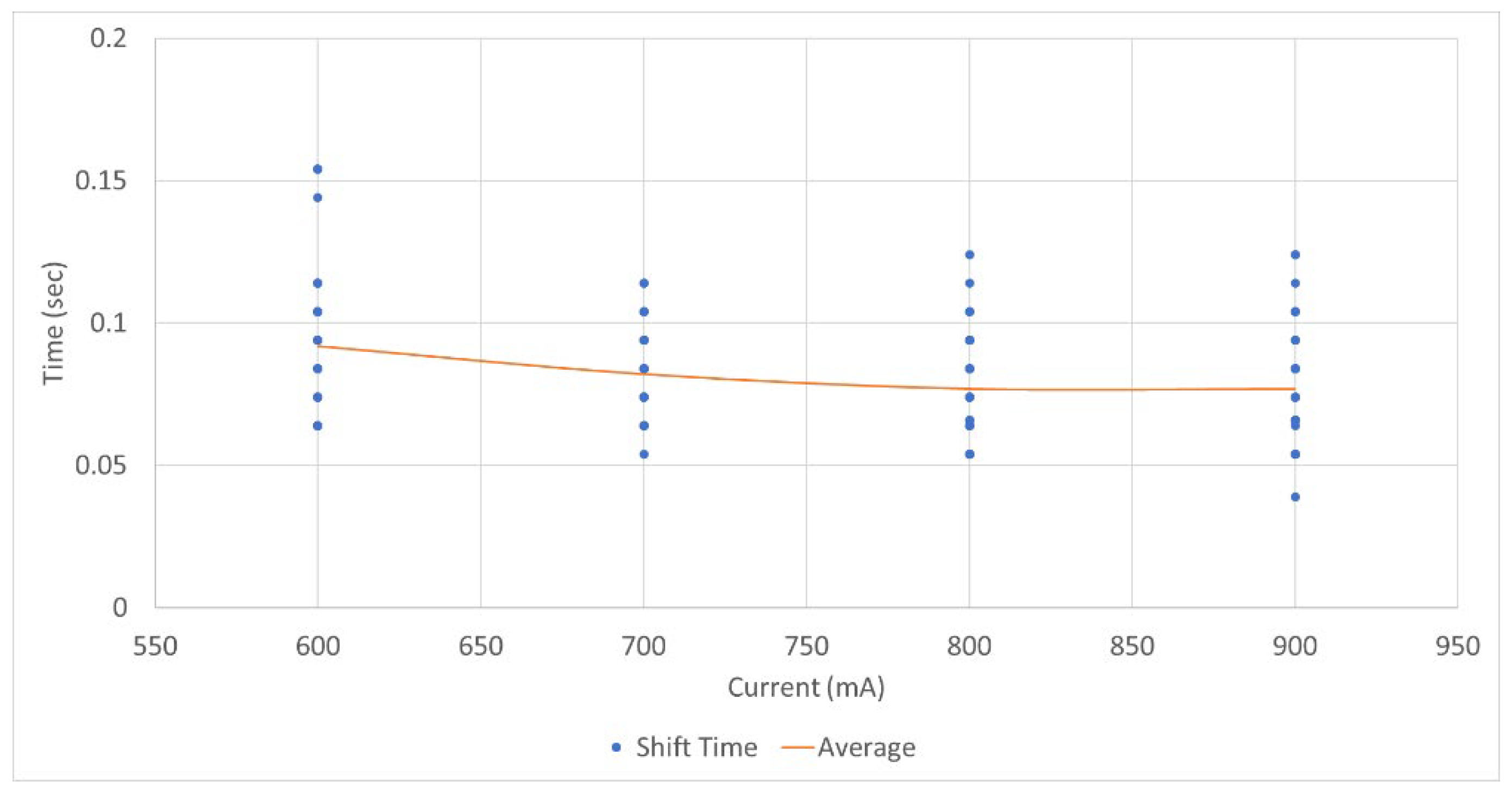
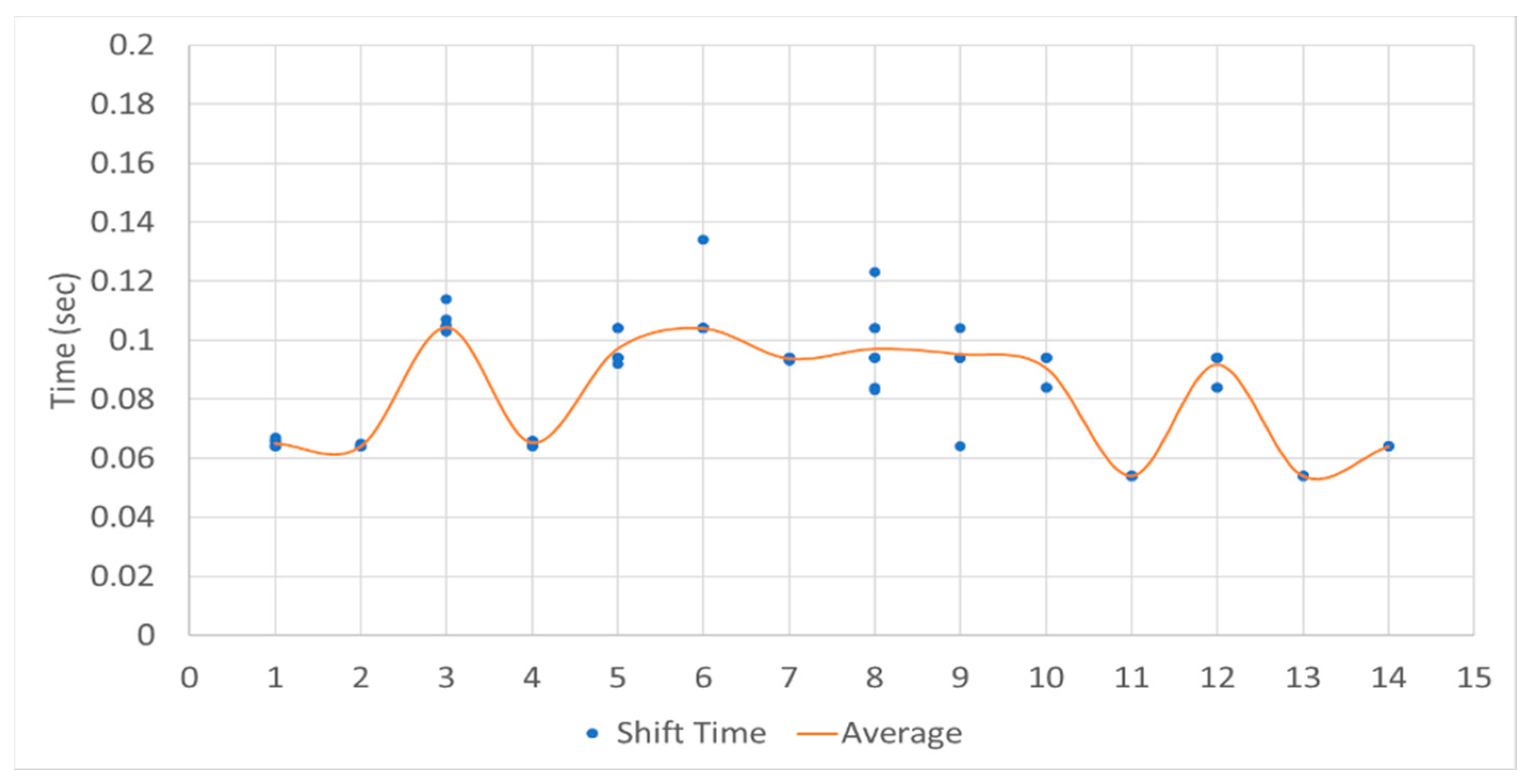
The results showing the change in shift time according to shifting force within the same shift stages are presented in Table 24. In all cases except for 1, 2, and 4, the p-values were higher than the significance level of 0.05, indicating that there is no average difference in shift time according to shifting force. Therefore, changes in shift time according to shifting force were observed only in some shift stages. As shown in Figure 21, a comprehensive analysis of all data showed that as the shifting force increased from 600 mA (0.0919 s) to 700 mA (0.0821 s) to 800 mA (0.077 s) to 900 mA (0.0769 s), there was a tendency for the average shift time to decrease.
Table 24.
Shift time according to current in neutral.
Figure 21.
The graph of shift time according to current in neutral.
The differences in the average shift time according to shift stages within the same shifting force were analyzed as shown in Table 25. The results showed that all conditions were statistically significant with p-values below the significance level of 0.05. This means that there are differences in the average shift time according to the shift stages. However, a comprehensive analysis as shown in Figure 22 reveals that all gears show a shift time within 0.06 s to 0.012 s. Therefore, since no significant differences in shift time were observed across different shift stages, it is determined that shift stages are not a factor affecting shift time.
Table 25.
Shift time according to shift gear under same current conditions in neutral.
Figure 22.
The graph of shift time according to shift gear in neutral.
Subsequent tests for preselection disengagement according to shift timing were conducted, and input shaft torque peak-to-peak and shift time were analyzed using one-way ANOVA. The differences in the average values of input shaft torque peak-to-peak according to shift timing are as shown in Table 26. In Cases 3, 4, 5, 6, 12, and 14, the p-values were below the significance level of 0.05, confirming that there are differences in the average shift time according to shift timing. In Cases 1, 2, 7, 8, 9, 10, 11, and 13, no differences were found in the average input shaft torque peak-to-peak according to shift timing. Analyzing the cases with p-values below the significance level of 0.05, it was confirmed that the highest values of input shaft torque peak-to-peak occur immediately after preselection when the current gear is shifted to neutral. Therefore, it is determined that shift timing is a factor that can influence shift quality.
Table 26.
Torque peak-to-peak according to shift timing in neutral.
Additionally, the input shaft torque peak-to-peak according to shift stages within the same shift timing was analyzed as shown in Table 27 and Figure 23. The results confirmed that there are differences in the average input shaft torque peak-to-peak for each shift stage. This suggests that shift stages can be a factor affecting shift quality. Among them, Case 11 showed a higher torque fluctuation compared to other gears before and after.
Table 27.
Torque peak-to-peak depending on the shift gear at the same shift timing in neutral.
Figure 23.
The graph of torque peak-to-peak according to shift gear in neutral.
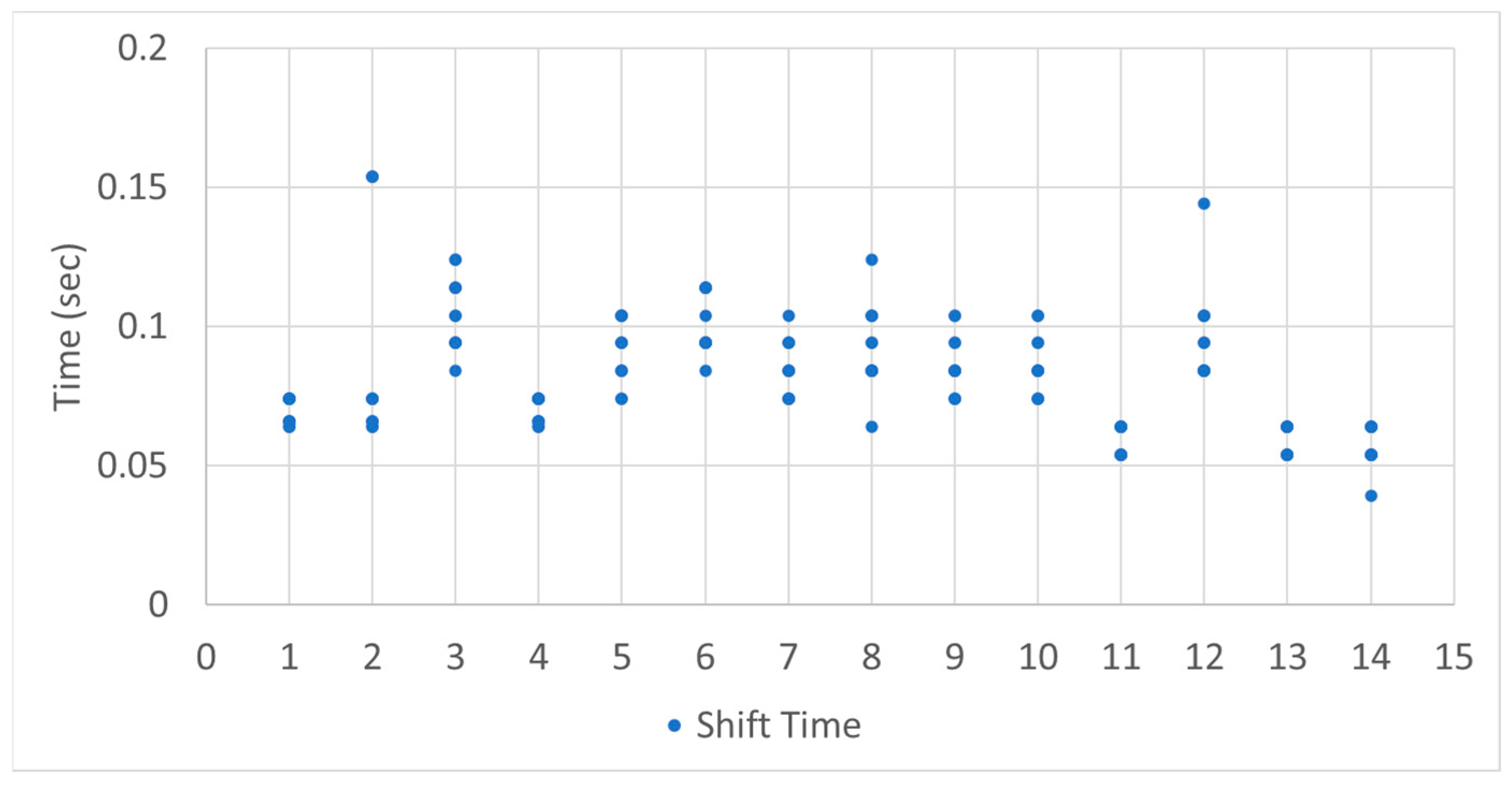
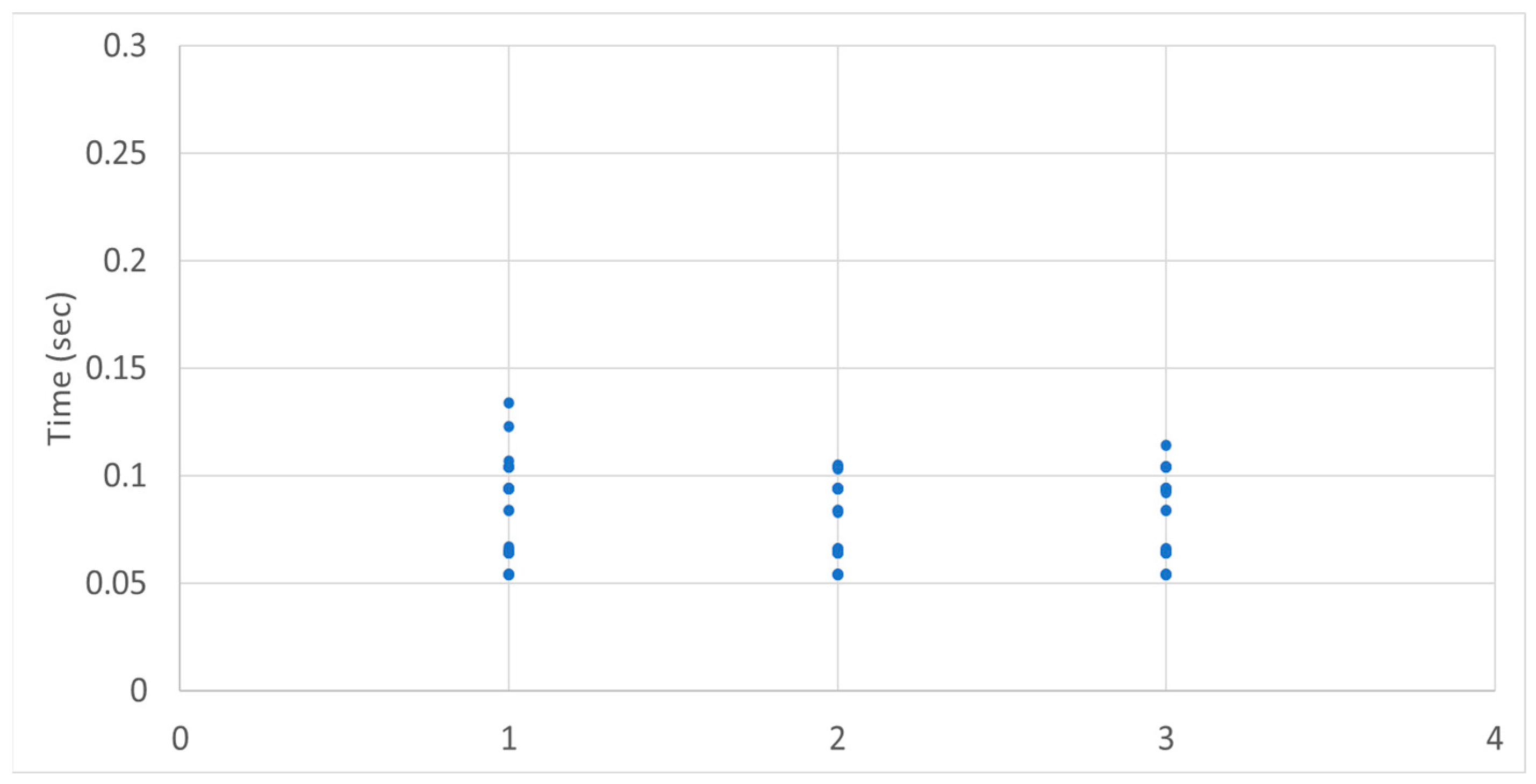
The results for shift time according to shift timing were analyzed as shown in Figure 24. After preselection, the average shift time for neutral immediately following the shift (1) was 0.082 s, during driving at the preselected gear (2) was 0.082 s, and just before shifting from the preselected gear (3) was 0.081 s, showing no significant difference in average shift time according to shift timing. Also, as shown in Figure 25, no correlation was found between shift stages and shift time. Therefore, it was determined that shift timing does not influence shift time.
Figure 24.
Shift time according to shift timing in neutral.
Figure 25.
Shift time according to shift gear in neutral.
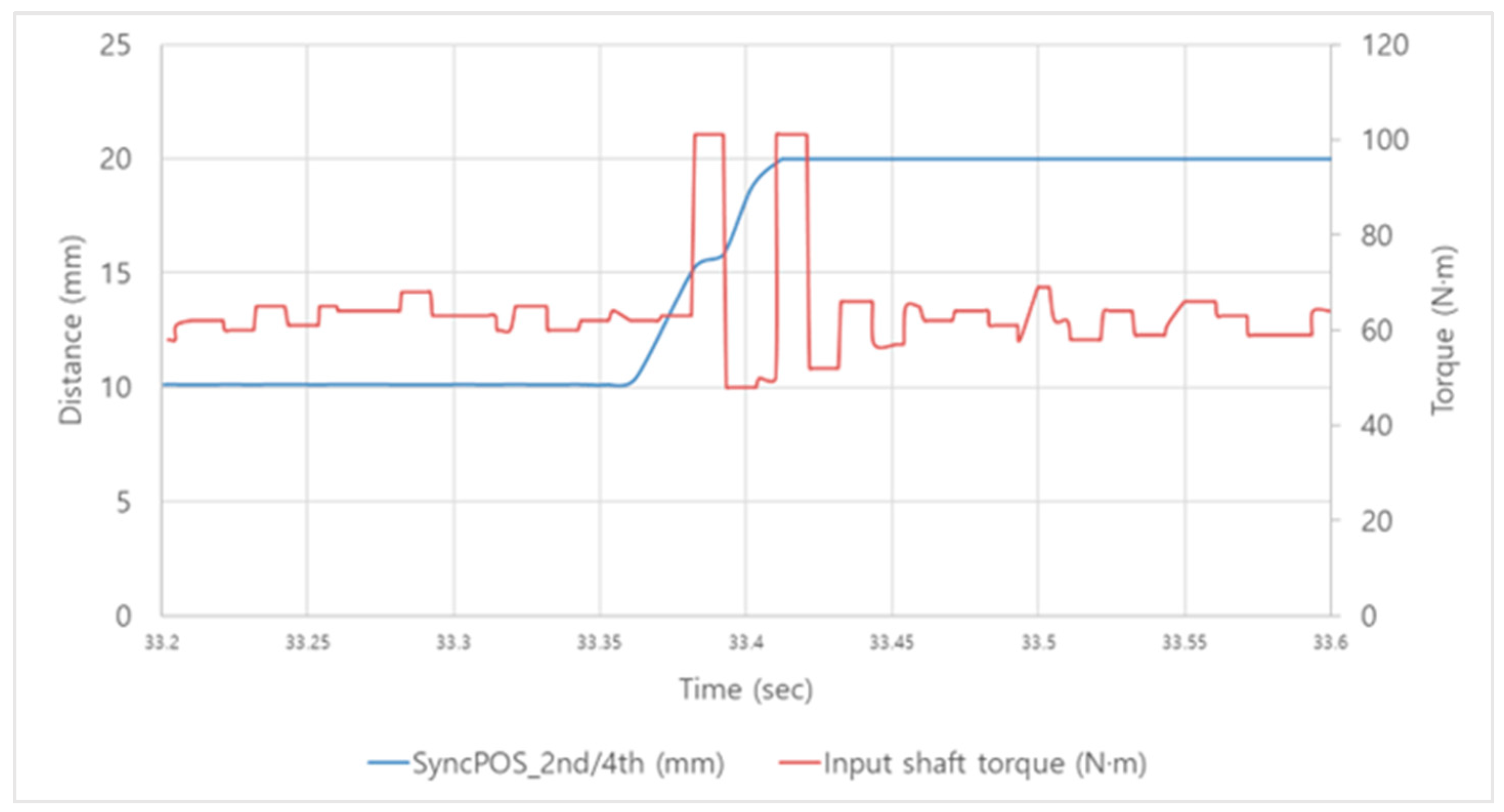
Lastly, the change in input shaft torque peak-to-peak according to the position of the synchronizer sleeve was analyzed as shown in Figure 26 and Table 28. Analysis of the data showed torque peak-to-peak after disengagement in all shifting processes. These fluctuations are likely caused by disengaging the gear in a short time with excessive force, leading to the gear leaving its engagement point, and the subsequent additional position control for reaching the final location causes sudden changes in the synchronizer sleeve’s position, resulting in inertia changes that cause shift shock.
Figure 26.
Position of input shaft peak-to-peak according to synchronizer position in neutral.
Table 28.
Peak occurrence timing in the synchronizer section for neutral.
In conclusion, factors to improve shift shock and shift time, which are criteria for determining shift quality, were analyzed through preselection action tests for each shift stage according to changes in shifting force and shift timing. As in Table 29, shifting force and shift timing were adopted as factors that could influence shift shock. Shifting force was adopted as a factor that could influence shift time. However, results that occur only under specific conditions cannot be determined as factors to improve overall shift quality due to a lack of universality. Therefore, this study focused on overall trends, and it is judged that specific conditions require separate control techniques. Furthermore, an analysis based on shift stages indicated that shift stages are appropriate factors for improving shift quality as they influence both shift shock and shift time.

Table 29.
Correlation between key factors when neutral and improving shifting quality.
7. Conclusions
As tractors performing agricultural work require frequent shifting, interest is growing in research on tractor DCTs, which have no power interruption. While the existing transmission synchronizer preselection method simply applied pressure to the cylinder, the control strategy developed in this study operates with shifting force and shift timing as the main parameters. When preselecting gears in advance for shifting, the resulting shift shock and delayed shift time can cause significant discomfort to the driver, so it is essential to reduce shift shock that occurs during preselection and ensure smooth shifting for improving the shift quality of DCT.
Methods to improve shift quality in DCT include analyzing the correlation between shifting force and shift shock to reduce the impact when the synchronizer engages the gear, and setting appropriate shift times after the driver’s command for the synchronizer to engage. Generally, instead of changing the structure of the transmission, it is simpler to establish control strategies suitable for the situation and these can later be used in real vehicle tests; thus, this study aimed to improve the shift quality of DCT through research on preselection control parameters.
This study was conducted as foundational research to establish control strategies for improving the shift quality of DCT and involved testing major control parameters to understand their actual impact on shift quality. Summarizing the results of adjusting each control parameter on preselection control quality, the following can be concluded.
- (1)
- To propose a control strategy for improving the shift quality of the DCT under study, the correlation between control parameters was analyzed. The impact of control parameter variations on shift quality was assessed using peak-to-peak values of input shaft torque fluctuations and shift time, and the main factors affecting shift quality were identified.
- (2)
- The shift shock and shift time according to shifting force during preselection engagement were analyzed. The results for shift shock showed that since changes in shift shock occurred only in specific gears according to shifting force, shifting force is not a factor influencing shift shock. Additionally, the shift shock and shift time according to shift timing were analyzed. The results for shift shock showed that since the average difference in shift shock according to shift timing occurred only in specific gears, shift timing is not a factor that reduces shift shock. Significant effects on shift time were also only observed in limited conditions, leading to the conclusion that shift timing is not a major factor affecting shift time. Furthermore, differences in the averages of shift shock and shift time were observed across different shift gears. It was found that shift shock increases with higher gears, and shift time lengthens with gears that have a greater difference in relative speed. Lastly, the input shaft torque peak-to-peak during preselection occurred during the synchronization process and just before engagement after synchronization. In conclusion, to improve shift quality, we propose to present an integrated control strategy not only considering shifting force and shift stages but also to reduce the shift shock at the points where torque fluctuations occur.
- (3)
- The shift shock and shift time according to shifting force during preselection disengagement were analyzed. Since changes in shift shock and shift time according to shifting force were observed only in certain gears, it was determined that shifting force is not a factor influencing shift quality. Additionally, the shift shock and shift time according to shift timing were analyzed. It was determined that shift timing can be a factor affecting shift shock, but it does not influence shift time. Furthermore, it was observed that shift shock increases with higher gears, leading to the conclusion that shift stages can be a factor affecting shift shock. Additionally, when considering the impact of relative speed on shift shock, a very high correlation was observed between relative speed and shift shock, which is determined to represent the difference in relative speed necessary for the synchronizer’s synchronization between gears. Lastly, torque fluctuations during preselection disengagement occur after the synchronizer gear engagement. Therefore, a comprehensive control strategy for preselection disengagement, like the engagement strategy, should consider the main factors affecting shift quality and the points of torque fluctuation.
Author Contributions
Author Contributions: Conceptualization, J.-W.L. and Y.-J.P.; methodology, S.-J.B., J.-K.P., Y.-J.P. and J.-W.L.; software, J.-K.P. and J.-W.L.; validation, S.-J.B. and S.-J.K.; investigation S.-J.B. and S.-J.K.; supervision, J.-W.L. and Y.-J.P.; writing—original draft preparation, S.-J.B.; writing—review and editing, J.-W.L. and Y.-J.P.; project administration, J.-W.L.; funding acquisition, J.-W.L. All authors have read and agreed to the published version of the manuscript.
Funding
This study was conducted with the support of the Korea Institute of Industrial Technology as “Development of localization technology for automatic transmission for autonomous agricultural working tractors. (kitech JA-23-0012)”.
Institutional Review Board Statement
Not applicable.
Data Availability Statement
The data presented in this study are available on request from the corresponding author. The data are not publicly available due to the request for the funding of the scientific research projects.
Conflicts of Interest
The authors declare no conflict of interest.
References
- Shin, B.-S.; Kim, D.-C.; Kim, Y.-J.; Kim, H.-J.; Kim, H.-J.; Nam, J.-S.; Park, Y.-J.; Shin, S.-B.; Lee, D.-H.; Lee, J.-W.; et al. Tractor Engineering; Moonwoondang: Seoul, Republic of Korea, 2021; pp. 151–152. [Google Scholar]
- Park, J.Y.; Hur, J.W.; Jung, G.H.; Lee, K.I.; Kim, K.S. The Modeling and Analysis of the Powertrain in a Automatic Transmission for the Construction Vehicle. In Proceedings of the Spring and Fall Conference of the Korean Society of Automotive Engineers, Yongin-si, Gyeonggi-do, Republic of Korea, 28–29 November 1999; Korean Society of Automotive Engineers: Seoul, Republic of Korea, 1999; pp. 748–754. [Google Scholar]
- Lee, D.H.; Kim, Y.J.; Choi, J.W.; Choi, C.H.; Lee, S.H.; Jung, S.C.; Choi, C.H. Development of Electric Actuator for Clutch Control of Automated Manual Transmission. Korean Soc. Agric. Mach. Acad. Present. Pap. 2012, 17, 234–240. [Google Scholar]
- Moon, S.-P.; Moon, S.-G.; Kim, J.-S.; Sohn, J.-H.; Kim, Y.-J.; Kim, S.-C. Transmission Efficiency of Dual-clutch Transmission in Agricultural Tractors. Drive·Control 2022, 19, 43–50. [Google Scholar]
- Choi, C.-H.; Park, J.-G.; Yun, H.-W.; Kim, Y.-J.; Lee, S.-H.; Kim, S.-C.; Jung, S.-C. Development of Clutch Actuator Position Control System. Proc. Korean Soc. Agric. Mach. 2011, 16, 145–150. [Google Scholar]
- Kwon, D.W.; Shin, D.; Lee, H. Development of Fault Diagnosis Algorithm for DCT-equipped Agricultural Tractor. In Proceedings of the Korean Society of Automotive Engineers Spring Conference, Jeju City, Republic of Korea, 9–11 May 2019; Korean Society of Automotive Engineers: Seoul, Republic of Korea, 2019; pp. 12–14. [Google Scholar]
- Ahn, H.J.; Park, Y.J.; Kim, S.C.; Choi, C. Theoretical Calculations and Experimental Studies of Power Loss in Dual-Clutch Transmission of Agricultural Tractors. Agriculture 2023, 13, 1225. [Google Scholar] [CrossRef]
- Han, G.; Ahn, D.V.; Kwon, D.; Kim, H.S.; Park, Y.J.; Lee, J.W. Development of a Real-Time Tractor Model for Gear Shift Performance Verification. Agriculture 2023, 13, 2133. [Google Scholar] [CrossRef]
- Oh, S.-M.; Sim, K.; Namkoong, C.; Lee, J.-S.; Han, K.-S.; Hwang, S.-H. Analysis of Shift Performance of Dry Dual Clutch Transmission with Engine Control. In Proceedings of the Korean Society of Mechanical Engineers Spring and Autumn Conference, Jeongseon-gun, Republic of Korea, 14–16 December 2016; Korean Society of Mechanical Engineers: Seoul, Republic of Korea, 2016; pp. 2789–2790. [Google Scholar]
- Byeon, S.-J.; Park, J.-G.; Park, Y.-J.; Lee, J.-W. Synchronizer preselection study to improve shift quality of tractor dual-clutch transmission. J. Korean Agric. Mach. Soc. Acad. Present. 2023, 28, 13. [Google Scholar]
- Jang, J.-D.; Lee, W.-C. Developing Trends of Dual Clutch Transmissions. Auto J. 2015, 37, 22–28. [Google Scholar]
- Youn, J.-H.; Lee, S.-M.; Kim, H.-S. Analysis of Shift Performance for a Wet Type Dual Clutch Transmission. In Proceedings of the Korean Society of Automotive Engineers Spring/Fall Conference, Anseong-si, Republic of Korea, 24–26 November 2005; Korean Society of Automotive Engineers: Seoul, Republic of Korea, 2005; Volume 2, pp. 860–865. [Google Scholar]
- Song, H.-R. DCT Shift Characteristics and Control Algorithm. Korea High. Vocat. Educ. Assoc. 2005, 6, 405–412. [Google Scholar]
- Kulkarni, M.; Shim, T.; Zhang, Y. Shift dynamics and control of dual-clutch transmissions. Mech. Mach. Theory 2007, 42, 168–182. [Google Scholar] [CrossRef]
- Hao, H.T.; Lu, T.L.; Zhang, J.W.; Zhou, B. Modeling of the electro-hydraulic actuator for a dual clutch transmission. Appl. Mech. Mater. 2015, 742, 525–530. [Google Scholar] [CrossRef]
- Choi, W.-S.; Lee, W.-S. Development of the Control Logic of Wet-type Duel Clutch Transmission to Improve the Driving Quality. In Proceedings of the Korean Society of Automotive Engineers Spring Conference, Busan, Republic of Korea, 7–9 June 2018; Korean Society of Automotive Engineers: Seoul, Republic of Korea, 2018; p. 1374. [Google Scholar]
- Adhitya, M.; Mustafa, R.; Plötner, A.; Küçükay, F. A new control strategy of wet dual clutch transmission (DCT) clutch and synchronizer for seamless gear preselect. SAE Int. J. Passeng. Cars-Mech. Syst. 2013, 6, 535–551. [Google Scholar] [CrossRef]
- Zheng, K.; Hu, J.; Wu, B.; Wang, Y. Optimization Design and Analysis for Pre-Shift Control Parameters of Wet Dual Clutch Transmissions Based on Dynamic Modeling of Synchronizer. In Proceedings of the International Design Engineering Technical Conferences and Computers and Information in Engineering Conference, Anaheim, CA, USA, 18–21 August 2019; American Society of Mechanical Engineers: New York, NY, USA, 2019; Volume 59308, p. V010T11A003. [Google Scholar]
- Mastinu, G.; Gobbi, M.; Miano, C.; Mastinu, G.; Gobbi, M.; Miano, C. Optimal Design of a Double-Cone Synchroniser. In Optimal Design of Complex Mechanical Systems; Springer: Berlin/Heidelberg, Germany, 2006; pp. 245–262. [Google Scholar]
- Razzacki, S.T.; Hottenstein, J.E. Synchronizer Design and Development for Dual Clutch Transmission (DCT) (No. 2007-01-0114); SAE Technical Paper; SAE International: Warrendale, PA, USA, 2007. [Google Scholar]
- Kim, K.; Jeong, J.; Won, J.; Jeong, J. Fatigue Study for a Shift Fork of a Dual Clutch Transmission. J. Auto-Veh. Saf. Assoc. 2012, 4, 23–26. [Google Scholar]
- Lee, S.-H.; Jang, S.-Y. Study of drag characteristics by lubricant supply and spindle rotation speed of AMT synchronizer system. Trans. Korean Soc. Automot. Eng. 2022, 30, 319–327. [Google Scholar] [CrossRef]
- Li, H.K.; Lu, T.L.; Zhang, J.W. Adaptive switch control of synchronizer for dual clutch transmission. Appl. Mech. Mater. 2015, 742, 500–504. [Google Scholar] [CrossRef]
- Lu, T.; Li, H.; Zhang, J.; Hao, H. Supervisor control strategy of synchronizer for wet DCT based on online estimation of clutch drag torque. Mech. Syst. Signal Process. 2016, 66, 840–861. [Google Scholar] [CrossRef]
- Liu, J.; Xie, H.; Hu, L.; Yang, H.; Fu, X. Realization of direct flow control with load pressure compensation on a load control valve applied in overrunning load hydraulic systems. Flow Meas. Instrum. 2017, 53, 261–268. [Google Scholar] [CrossRef]
- Ebbesson, C. Rotary Position Sensors: Comparative Study of Different Rotary Position Sensors for Electrical Machines Used in an Hybrid Electric Vehicle Application. Master’s Thesis, Lund University, Lund, Sweden, 2011. [Google Scholar]
- Jeon, B.-W.; Jeong, Y.-C.; Lee, H.-Y.; Kim, G.-A. A study on automatic matching of automatic transmission shift feel in the target environment. In Proceedings of the Korean Society of Automotive Engineers Spring Conference, Incheon Metropolitan City, Republic of Korea, 24–26 November 2009; Korean Society of Automotive Engineers: Seoul, Republic of Korea, 2009; pp. 695–701. [Google Scholar]
- Sahu, P.K.; Sahu, P.K. Analysis of Variance. Applied Statistics for Agriculture, Veterinary, Fishery, Dairy and Allied Fields; Springer: Berlin/Heidelberg, Germany, 2016; pp. 277–318. [Google Scholar]
Disclaimer/Publisher’s Note: The statements, opinions and data contained in all publications are solely those of the individual author(s) and contributor(s) and not of MDPI and/or the editor(s). MDPI and/or the editor(s) disclaim responsibility for any injury to people or property resulting from any ideas, methods, instructions or products referred to in the content. |
© 2024 by the authors. Licensee MDPI, Basel, Switzerland. This article is an open access article distributed under the terms and conditions of the Creative Commons Attribution (CC BY) license (https://creativecommons.org/licenses/by/4.0/).