1. Introduction
Depression and hazardous alcohol use are among the most pressing and burdensome public health concerns affecting university students worldwide [
1]. The World Health Organization (WHO) estimates that more than 264 million people globally experience depression, with young adults representing a particularly vulnerable demographic as they navigate the psychosocial and academic transitions of higher education [
2]. This life stage often coincides with increased autonomy, exposure to peer influences, and heightened academic pressures, factors that may contribute to maladaptive coping strategies, including problematic alcohol use [
3]. Across Europe, North America, and Asia, studies consistently show high rates of binge drinking and risky alcohol consumption among university populations, often exceeding those observed in older adult groups [
4].
Cross-cultural studies have demonstrated considerable variability in the prevalence and correlates of alcohol use and depression among university students. Research conducted in Ethiopian university students reported high rates of both depression and substance use, with significant associations between these conditions [
5,
6]. Similarly, studies among German university students have examined social norms and interventions targeting heavy drinking, highlighting the widespread nature of hazardous alcohol consumption in European academic settings [
7]. In Asian contexts, research has documented distinct patterns of drinking behavior influenced by cultural norms and academic pressures [
8]. Studies from the United States have consistently shown high comorbidity between depressive symptoms and alcohol misuse in college populations, with gender-specific patterns in help-seeking behavior [
9]. Despite this growing body of international literature, Central and Eastern European student populations remain underrepresented, with limited data available from countries such as Romania where cultural attitudes toward alcohol and mental health stigma may differ substantially from Western contexts [
10,
11]. These differences have been further accentuated by the COVID-19 pandemic, which constituted a major disruption in the developmental trajectory of today’s young adults [
11]. In Romania, the pandemic unfolded against a distinctive socio-political and economic backdrop, compounding vulnerabilities and shaping behavioral outcomes such as alcohol consumption [
12]. Although the present study does not analyze pandemic influence directly, this context remains a crucial backdrop for understanding emerging health trends in this region. To better understand the mechanisms underlying these observed behavioral patterns, it is important to explore the bidirectional relationship between depression and alcohol misuse.
Emerging evidence also suggests that pandemic-related lifestyle disruptions, such as altered sleep–wake cycles, increased screen time, and reduced social and daylight exposure, have led to dysregulation in circadian rhythms and hormonal functioning [
13]. Specifically, changes in melatonin secretion and elevated cortisol levels have been associated with emotional dysregulation, impaired cognitive functioning, and greater susceptibility to maladaptive coping behaviors such as alcohol use [
14]. These physiological disruptions may underlie both depressive symptomatology and increased alcohol consumption in the post-pandemic period, offering a complementary explanatory framework for the behavioral patterns observed among university students.
Both depression and excessive alcohol use exert substantial individual and societal costs. Depression impairs cognitive functioning, motivation, and social relationships, while alcohol misuse increases the likelihood of accidents, violence, and poor academic outcomes. Crucially, these two conditions frequently co-occur [
15]. The comorbidity between depressive symptoms and alcohol misuse has been attributed to shared etiological pathways, such as dysregulation in serotonergic and dopaminergic systems, genetic predisposition, and overlapping environmental stressors [
16]. The self-medication hypothesis posits that individuals experiencing depressive affect may use alcohol to alleviate negative mood states, which in turn reinforces dependence and exacerbates depressive symptoms over time [
17]. Conversely, chronic alcohol consumption can precipitate neurochemical changes that heighten vulnerability to depression, suggesting a bidirectional relationship that complicates both diagnosis and treatment [
18].
Beyond these immediate mechanisms, it is increasingly recognized that the broader public health context shaped by the COVID-19 pandemic continues to influence the wellbeing of today’s young adults, even several years after its onset. A growing body of research has shown that pandemic-related restrictions, lifestyle disruptions, and prolonged social isolation have left lasting imprints on both mental and physical health. For example, evidence from adolescents in Northern Ireland indicates that lockdowns were associated with worsened mental health, particularly among females and sexual minority youth, with young people reporting heightened psychological distress, concerns about educational outcomes, and a sense of being deprioritized during the crisis [
19]. Similarly, studies among Slovak young adults have documented significant pandemic-related declines in physical health markers, including reductions in bone mineral density and bone mineral content [
20], alongside notable long-term psychological and physiological symptoms following COVID-19 infection, such as memory difficulties, concentration problems, headaches, decreased physical fitness, and menstrual cycle changes in women [
21]. Together, these findings illustrate that the pandemic has created a unique developmental and environmental backdrop for this generation, shaping coping behaviors, stress responses, and overall vulnerability to mental health difficulties, including depressive symptoms and alcohol-related risk behaviors. Incorporating this wider epidemiological context is therefore essential for understanding contemporary student health profiles, as the pandemic represents a generational event with sustained implications for emotional functioning and health-related behaviors.
Despite extensive literature on clinical populations, relatively fewer studies have examined the depression–alcohol nexus within non-clinical university cohorts. Student populations offer a unique context, as they are typically characterized by high-functioning individuals whose risk behaviors may remain subclinical yet still confer long-term mental health consequences [
22]. Cross-sectional studies using validated screening instruments such as the Patient Health Questionnaire-9 (PHQ-9) and the Alcohol Use Disorders Identification Test (AUDIT) have revealed striking prevalence rates. Moreover, maladaptive coping strategies, particularly avoidance and emotion-focused coping, have been linked to both increased drinking and heightened depressive symptomatology in student populations [
23,
24].
Gender differences in the presentation and interplay of these conditions further complicate this picture. Research suggests that male students are more likely to engage in heavy episodic drinking, possibly as a culturally reinforced coping mechanism for stress, while findings regarding internalizing symptoms are mixed, with some studies showing higher rates in females and others finding comparable levels across genders [
9]. Some evidence indicates that depressive symptoms in men may manifest more through anhedonia or irritability, whereas women may exhibit more affective and ruminative features [
25]. The intersection of gender, alcohol use, and depression thus represents a key area for targeted prevention, as interventions that neglect these distinctions may fail to reach the most at-risk subgroups.
Understanding how depression and hazardous drinking co-occur in university settings carries significant implications for prevention and intervention. Campus-based health programs can play a pivotal role in early identification by employing brief, validated screening tools such as the PHQ-9 and AUDIT to flag at-risk students before clinical thresholds are reached. Furthermore, integrating psychoeducation about alcohol’s impact on mood regulation and cognitive performance into university curricula may mitigate misconceptions about its use as a coping strategy. Evidence suggests that students often underestimate the severity of their drinking behaviors while overestimating the social acceptability of alcohol consumption [
7].
Although previous research has explored the association between alcohol use and depression, most studies have focused on clinical or treatment-seeking populations, with far fewer examining non-clinical cohorts of university students using validated psychometric instruments [
26,
27]. Moreover, the evidence remains inconsistent regarding the moderating role of gender in this relationship, as findings vary across cultural and educational contexts. Importantly, data from Eastern European student populations, where social drinking norms and mental health stigma differ markedly from those in Western settings, are particularly scarce [
6].
Therefore, this study aimed to investigate the relationship between alcohol consumption and depressive symptoms among university students, and to explore potential gender differences in this association. By addressing this gap in the literature, the present research contributes region-specific evidence from a Central–Eastern European context to a field largely dominated by Western studies. This regional and cultural perspective is crucial for informing locally adapted, gender-sensitive screening and intervention strategies in university health services.
4. Discussion
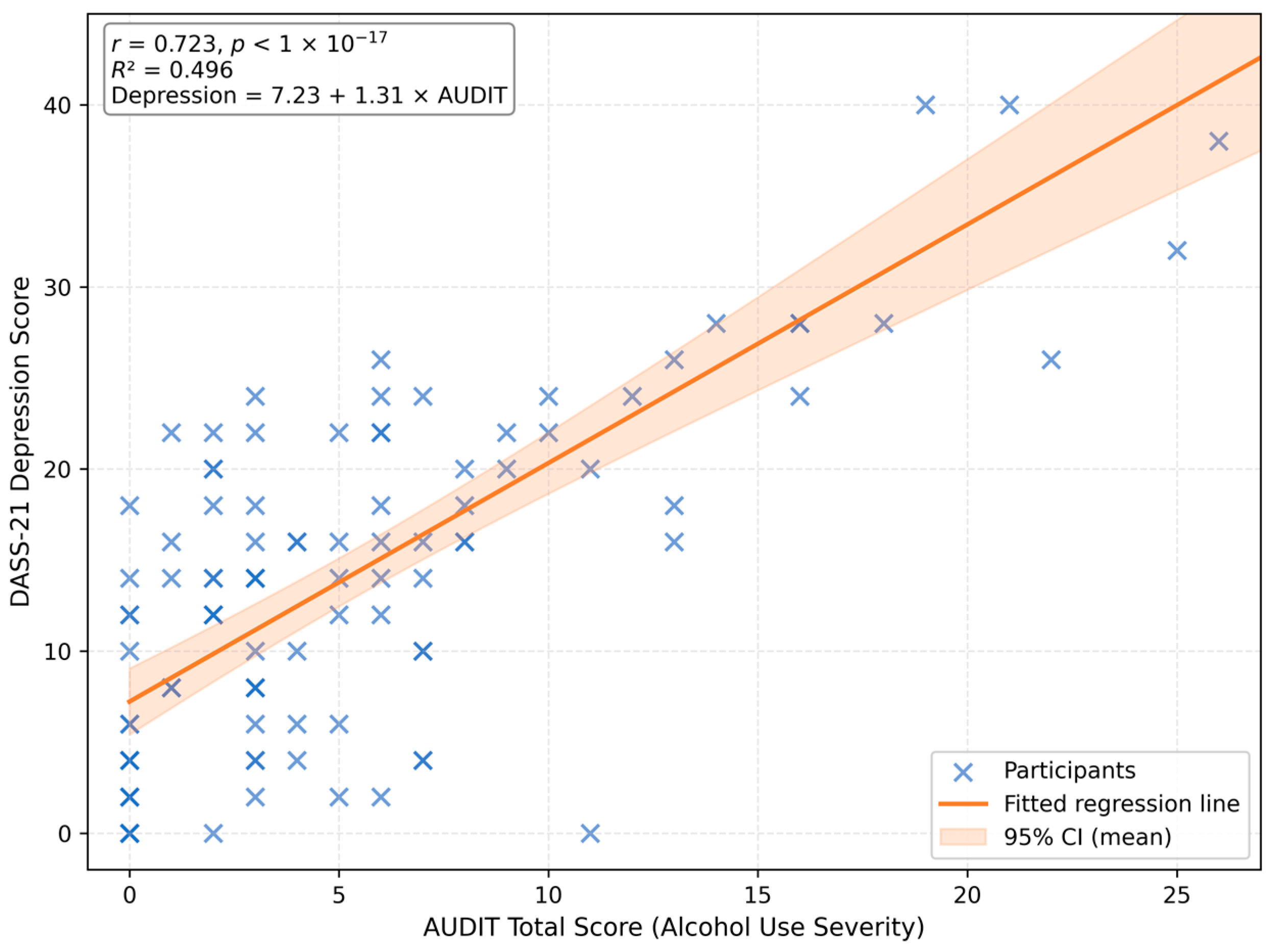
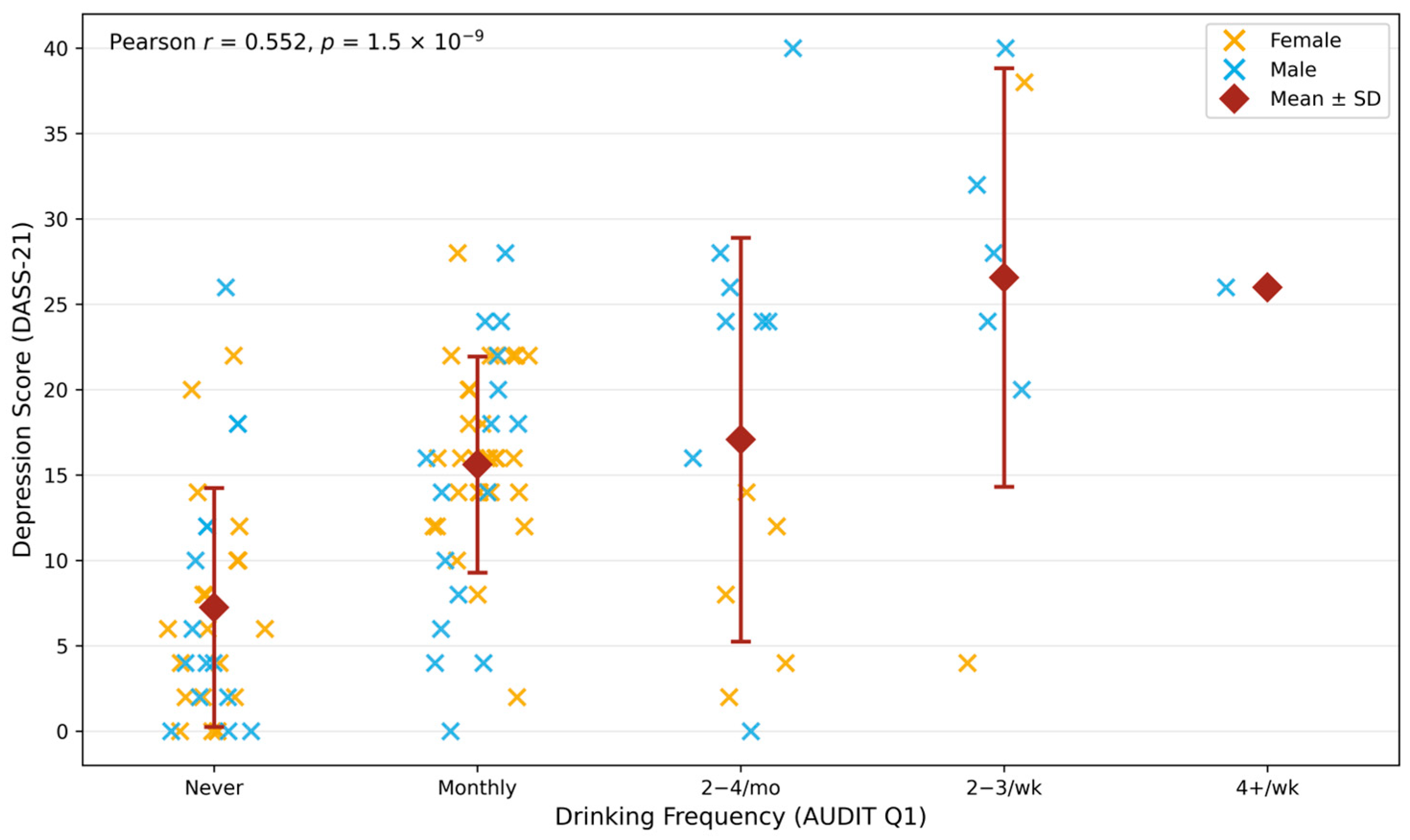
Our findings demonstrate a robust positive association between alcohol consumption and depressive symptoms among Romanian university students, with alcohol-use severity explaining nearly half of the variance in depressive symptoms. This suggests that even moderate hazardous drinking may signal clinically relevant emotional distress. This aligns with a growing body of literature on the bidirectional relationship between substance use and mood disorders in young adults [
29].
From a mechanistic standpoint, this relationship is supported by both psychological and biological factors. Behaviorally, alcohol is often used as a maladaptive coping strategy to regulate negative affect, academic stress, or social pressures [
30]. Neurobiologically, prolonged alcohol misuse disrupts serotonergic and dopaminergic neurotransmission, impairs the HPA axis, and alters neuroplasticity—factors also implicated in depressive pathophysiology [
17]. Furthermore, alcohol-related sleep disruption, cognitive decline, and social withdrawal can perpetuate low mood and functional impairment [
31,
32].
Recent evidence also underscores the enduring impact of the COVID-19 pandemic on student mental health [
33]. As noted earlier, pandemic-related circadian and hormonal disruptions may contribute to the observed association [
14]. These physiological disruptions may partially explain the co-occurrence of depressive symptoms and alcohol misuse in this population, particularly in post-pandemic student cohorts.
Sociocultural factors likely amplify this relationship in the Romanian context [
11]. Students in the region may face additional barriers including mental health stigma and limited support services [
34]. These regional particularities underline the importance of context-specific interventions and reinforce the novelty of our findings, as very few studies to date have explored these patterns in post-pandemic, Eastern European student populations.
The strong positive correlation we observed between alcohol consumption and depressive symptoms (
r = 0.72) is consistent with findings from university student populations worldwide, although our effect size appears larger than those typically reported. Studies among first-year college students in the United States have documented significant associations between depressive symptoms and alcohol consumption, with heavy drinkers exhibiting markedly higher Beck Depression Inventory scores than their peers [
35]. Similarly, research among Australian university students demonstrated that hazardous drinking was significantly associated with both depression and anxiety, with female students showing particular vulnerability to mental health problems associated with hazardous alcohol use [
36]. A meta-analysis examining 42 cohort studies (
n = 338,426) confirmed that alcohol use disorders are associated with a 57% increased risk of subsequent depressive symptoms (RR = 1.57, 95% CI 1.41–1.76) [
37]. In European contexts, Slovak university students during the COVID-19 pandemic displayed significant positive correlations between perceived stress, depression, and alcohol use disorders, with gender-specific patterns comparable to our findings [
38].
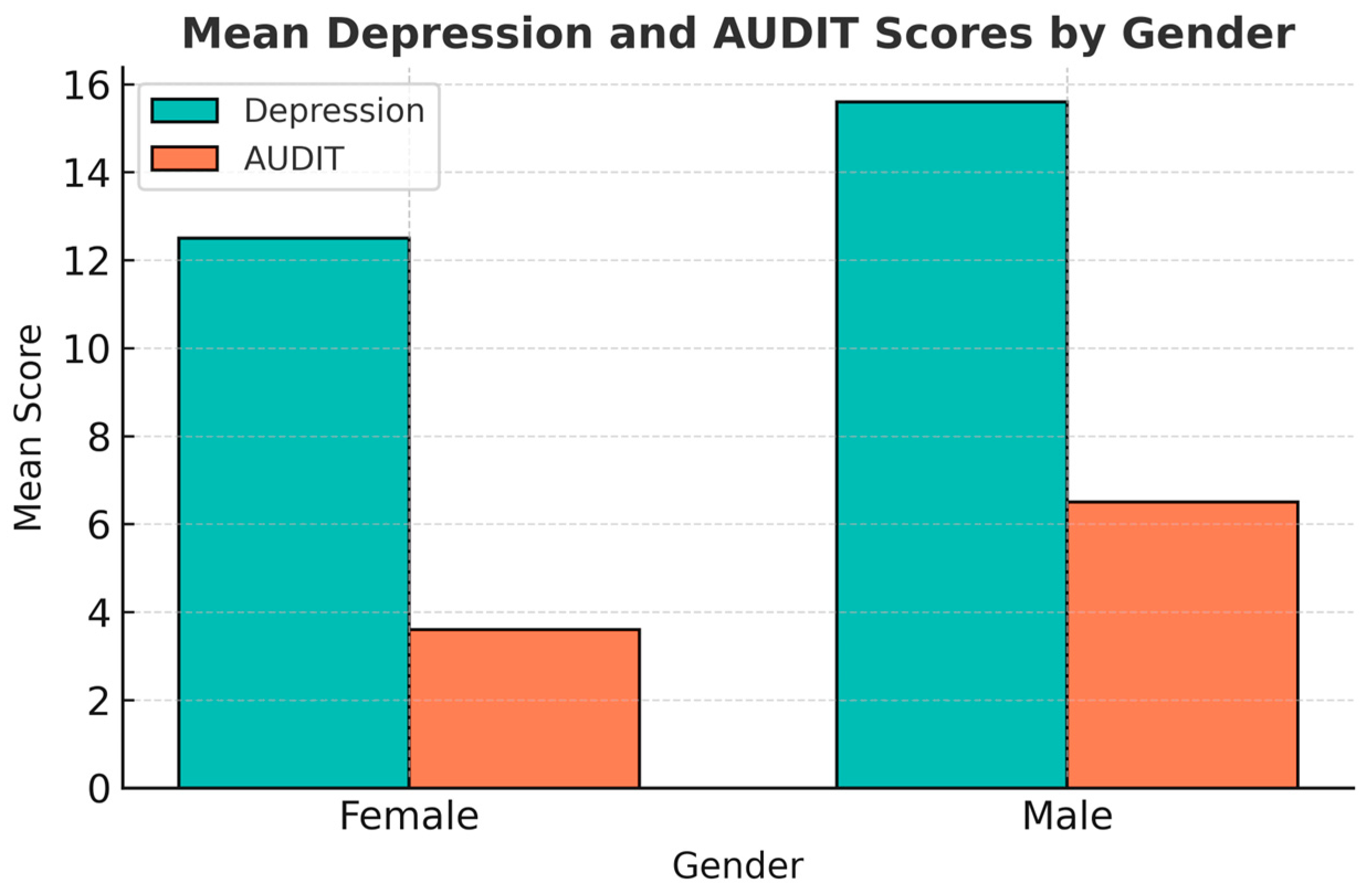
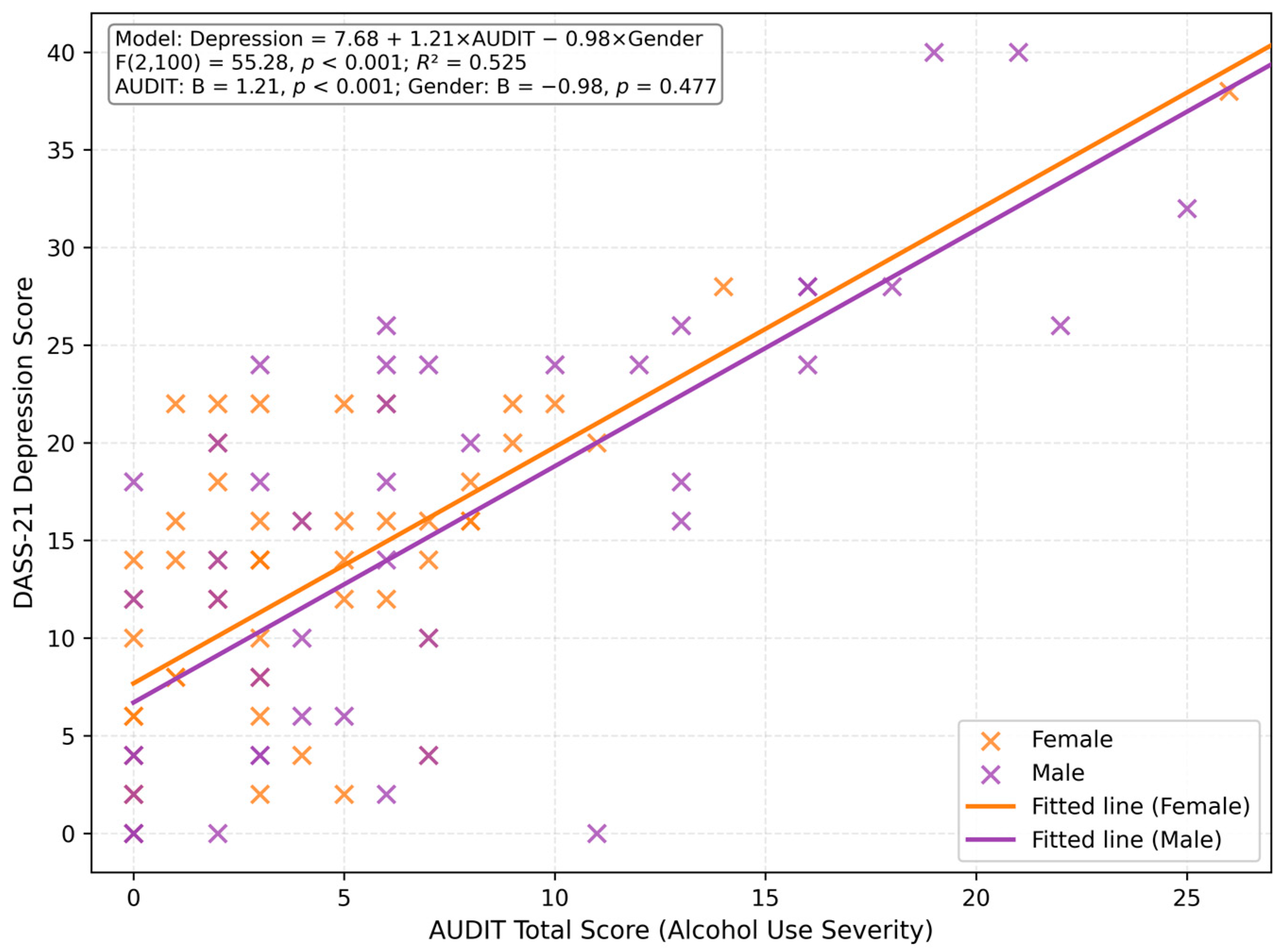
With respect to gender, male students in our sample reported significantly higher alcohol-use severity and marginally elevated depressive symptoms, though the latter did not reach statistical significance. Notably, males showed significantly greater anhedonia, which aligns with research suggesting that men may express depressive symptoms through loss of positive affect rather than sadness or guilt. Despite these mean-level differences, the strength of the alcohol–depression association was comparable across genders, indicating that hazardous drinking carries similar emotional correlates regardless of sex [
39,
40,
41]. Research among US college students found that the association between major depressive disorder and higher alcohol intoxication during heavy drinking episodes was actually stronger in female than male students, suggesting that depressed women may be at particular risk when they engage in heavy drinking [
9]. Furthermore, studies have indicated that men demonstrate a stronger relationship between psychological distress and weekly alcohol consumption, and that elevated sadness predicts subsequent alcohol use more strongly in male than female college students [
9,
42]. Conversely, longitudinal research found that depression predicted alcohol problems in women but not in men, with women more likely to experience depression before developing alcohol use disorders whereas men typically develop alcohol problems first [
43]. These inconsistencies suggest that cultural context may play a significant role in shaping gender-specific pathways. In our Romanian sample, the comparable strength of the alcohol–depression correlation across genders (males:
r = 0.74; females:
r = 0.69) may reflect either shared sociocultural influences on drinking behaviors or the specific characteristics of post-pandemic student populations in Eastern Europe, where traditional gender roles regarding alcohol use may differ from Western contexts.
Emerging research also suggests that sex-specific hormonal fluctuations (e.g., testosterone, estrogen) may modulate reward sensitivity and drinking behavior, yet our study did not assess biological factors. Future research integrating hormonal, neuroendocrine, and chronobiological variables may help elucidate the biological underpinnings of gendered coping mechanisms.
This study’s strengths include its use of psychometrically validated tools (AUDIT, DASS-21), its high internal consistency (α = 0.91; α = 0.89), and its focus on non-clinical young adults, a population often overlooked in mental health surveillance. However, the cross-sectional design limits causal inference, and self-report measures may be prone to bias. Additionally, confounders such as trauma history, academic workload, or concurrent anxiety symptoms were not assessed and may partly account for the observed relationships. Perceived and received social support were not directly assessed either, which limits conclusions regarding the potential buffering role of social support in the association between stress, depressive symptoms, and alcohol use.
Moving forward, longitudinal studies should explore causal pathways between mood symptoms and alcohol use, while also incorporating biomarkers (e.g., cortisol levels, sleep actigraphy) and psychosocial mediators (e.g., peer norms, coping styles). Preventive interventions that target both emotional wellbeing and alcohol use, ideally adapted to regional cultural norms and post-pandemic realities, may prove especially effective in supporting vulnerable student populations.
Limitations
Although coping strategies were not directly measured, alcohol use, particularly hazardous and binge drinking, may be interpreted as a maladaptive coping behavior within the self-medication framework. However, the absence of validated coping-style instruments (e.g., Brief COPE) limits the ability to distinguish between adaptive and maladaptive stress-response strategies. Similarly, risk awareness and health literacy were not directly assessed, which constrains conclusions regarding participants’ understanding of alcohol-related and mental-health risks.
Alcohol consumption was assessed via self-report and may therefore be subject to recall bias or social-desirability effects, despite the use of a well-validated screening instrument. In addition, cultural norms surrounding alcohol use and mental-health stigma in Central–Eastern Europe may have influenced both drinking behaviors and symptom reporting, potentially limiting the generalizability of the findings to other cultural contexts. Finally, several potential confounding factors, including socioeconomic status, sleep quality, anxiety symptoms, lifestyle behaviors, and prior mental health history, were not fully assessed and may have contributed to the observed associations.





 ,
,