Visceral Embolic Events in Atrial Fibrillation: A Systematic Review and Meta-Analysis of Incidence, Mortality, and Risk Prediction
 , , and
Abstract
1. Introduction
2. Methods
2.1. Study Design
2.2. Search Strategy
2.3. Eligibility Criteria
2.4. Study Selection, Data Extraction, and Outcomes Definition
2.5. Risk of Bias Assessment
2.6. Statistical Analysis
3. Results
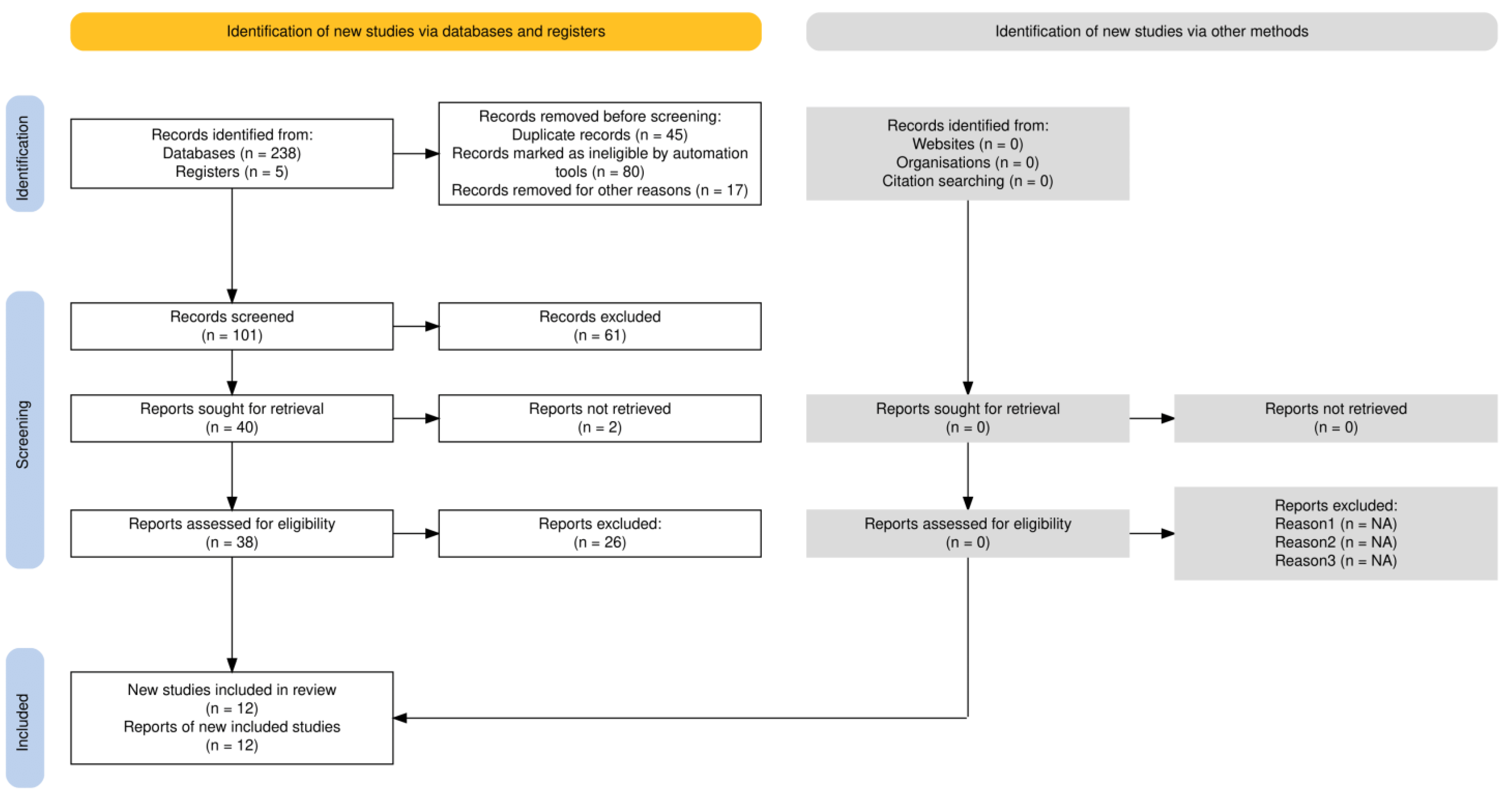
3.1. Study Selection and Characteristics
3.2. Study Characteristics and Population Demographics
3.3. Quality Assessment and Risk of Bias
3.4. Prevalence of Visceral Embolic Events
3.5. Mortality Outcomes
3.6. Treatment Effects of Anticoagulation
3.7. CHA2DS2-VASc Score Performance
3.8. Novel Predictors and Risk Factors
3.9. Feasibility Assessment for Advanced Analyses
3.10. Available Treatment Comparisons
3.11. Heterogeneity Assessment and Sensitivity Analyses
3.12. Validation Requirements and Calibration Methods
3.13. Publication Bias Assessment
3.14. Overall Quality of Evidence
4. Discussion
5. Limitations
6. Conclusions
Supplementary Materials
Author Contributions
Funding
Institutional Review Board Statement
Informed Consent Statement
Data Availability Statement
Conflicts of Interest
References
- Van Gelder, I.C.; Rienstra, M.; Bunting, K.V.; Casado-Arroyo, R.; Caso, V.; Crijns, H.; De Potter, T.J.R.; Dwight, J.; Guasti, L.; Hanke, T.; et al. 2024 ESC Guidelines for the management of atrial fibrillation developed in collaboration with the European Association for Cardio-Thoracic Surgery (EACTS). Eur. Heart J. 2024, 45, 3314–3414. [Google Scholar] [CrossRef]
- Kase, K.; Reintam Blaser, A.; Tamme, K.; Mändul, M.; Forbes, A.; Talving, P.; Murruste, M. Epidemiology of Acute Mesenteric Ischemia: A Population-Based Investigation. World J. Surg. 2023, 47, 173–181. [Google Scholar] [CrossRef]
- Liao, J.-N.; Chan, Y.-H.; Kuo, L.; Tsai, C.-T.; Lim, S.-S.; Chao, T.-F. Risk of Ischemic Bowel Disease in Patients with Atrial Fibrillation Receiving Warfarin or Non-vitamin K Antagonist Oral Anticoagulants. Front. Cardiovasc. Med. 2022, 9, 874460. [Google Scholar] [CrossRef]
- Sohn, S.-I.; Park, S.-W.; Lee, Y.; Park, H.; Chang, H.; Choi, H.A.; Hong, J.-H. Determinants of Visceral Infarction in Acute Cardioembolic Stroke Due to Atrial Fibrillation. J. Stroke 2021, 23, 277–280. [Google Scholar] [CrossRef]
- Kim, K.; Yang, P.-S.; Jang, E.; Yu, H.T.; Kim, T.-H.; Uhm, J.-S.; Kim, J.-Y.; Sung, J.-H.; Pak, H.-N.; Lee, M.-H.; et al. Increased risk of ischemic stroke and systemic embolism in hyperthyroidism-related atrial fibrillation: A nationwide cohort study. Am. Heart J. 2021, 242, 123–131. [Google Scholar] [CrossRef]
- Hu, W.-S.; Lin, C.-L. CHA2DS2-VASc score in the prediction of ischemic bowel disease among patients with atrial fibrillation: Insights from a nationwide cohort. Int. J. Cardiol. 2017, 235, 56–60. [Google Scholar] [CrossRef]
- Weisenburger-Lile, D.; Lopez, D.; Russel, S.; Kahn, J.E.; Veiga Hellmann, A.; Scherrer, A.; Ramdane, N.; Wang, A.; Evrard, S.; Decroix, J.P.; et al. IRMA study: Prevalence of subdiaphragmatic visceral infarction in ischemic stroke and atrial fibrillation. Int. J. Stroke: Off. J. Int. Stroke Soc. 2017, 12, 421–424. [Google Scholar] [CrossRef] [PubMed]
- Emren, S.V.; Ada, F.; Aldemir, M.; Tecer, E.; Çarşanba, G.; Çelik, D.; Çelik, E.; Onrat, E. Is CHA2DS2-VASc Score Different in Patients with Non-valvular Atrial Fibrillation Suffering from Cerebral and Non-cerebral Thromboembolism? CHA2DS2-VASc Score in Thromboembolism. J. Atr. Fibrillation 2017, 10, 1575. [Google Scholar] [CrossRef]
- Bhandari, S.; Dang, G.; Shahreyar, M.; Hanif, A.; Muppidi, V.; Bhatia, A.; Sra, J.; Tajik, J.; Jahangir, A. Predicting Outcomes in Patients with Atrial Fibrillation and Acute Mesenteric Ischemia. J. Patient-Centered Res. Rev. 2016, 3, 177–186. [Google Scholar] [CrossRef]
- Christiansen, C.B.; Gerds, T.A.; Olesen, J.B.; Kristensen, S.L.; Lamberts, M.; Lip, G.Y.; Gislason, G.H.; Køber, L.; Torp-Pedersen, C. Atrial fibrillation and risk of stroke: A nationwide cohort study. EP Eur. 2016, 18, 1689–1697. [Google Scholar] [CrossRef]
- Bekwelem, W.; Connolly, S.J.; Halperin, J.L.; Adabag, S.; Duval, S.; Chrolavicius, S.; Pogue, J.; Ezekowitz, M.D.; Eikelboom, J.W.; Wallentin, L.G.; et al. Extracranial Systemic Embolic Events in Patients with Nonvalvular Atrial Fibrillation: Incidence, Risk Factors, and Outcomes. Circulation 2015, 132, 796–803. [Google Scholar] [CrossRef]
- Friberg, L.; Rosenqvist, M.; Lip, G.Y. Evaluation of risk stratification schemes for ischaemic stroke and bleeding in 182 678 patients with atrial fibrillation: The Swedish Atrial Fibrillation cohort study. Eur. Heart J. 2012, 33, 1500–1510. [Google Scholar] [CrossRef]
- Hinton, R.C.; Kistler, J.P.; Fallon, J.T.; Friedlich, A.L.; Fisher, C.M. Influence of etiology of atrial fibrillation on incidence of systemic embolism. Am. J. Cardiol. 1977, 40, 509–513. [Google Scholar] [CrossRef]
- Munn, Z.; Moola, S.; Lisy, K.; Riitano, D.; Tufanaru, C. Methodological guidance for systematic reviews of observational epidemiological studies reporting prevalence and cumulative incidence data. Int J Evid Based Heal. 2015, 13, 147–153. [Google Scholar] [CrossRef]
- Kamel, H.; Healey, J.S. Cardioembolic Stroke. Circ. Res. 2017, 120, 514–526. [Google Scholar] [CrossRef] [PubMed]
- Gerdts, E.; Wachtell, K.; Omvik, P.; Otterstad, J.E.; Oikarinen, L.; Boman, K.; Dahlöf, B.; Devereux, R.B. Left atrial size and risk of major cardiovascular events during antihypertensive treatment: Losartan intervention for endpoint reduction in hypertension trial. Hypertension 2007, 49, 311–316. [Google Scholar] [CrossRef] [PubMed]
- Kamel, H.; Bartz, T.M.; Longstreth, W.T., Jr.; Okin, P.M.; Thacker, E.L.; Patton, K.K.; Stein, P.K.; Gottesman, R.F.; Heckbert, S.R.; Kronmal, R.A.; et al. Association between left atrial abnormality on ECG and vascular brain injury on MRI in the Cardiovascular Health Study. Stroke 2015, 46, 711–716. [Google Scholar] [CrossRef]
- Staerk, L.; Sherer, J.A.; Ko, D.; Benjamin, E.J.; Helm, R.H. Atrial Fibrillation: Epidemiology, Pathophysiology, and Clinical Outcomes. Circ. Res. 2017, 120, 1501–1517. [Google Scholar] [CrossRef]
- Yiin, G.S.; Howard, D.P.; Paul, N.L.; Li, L.; Mehta, Z.; Rothwell, P.M. Recent time trends in incidence, outcome and premorbid treatment of atrial fibrillation-related stroke and other embolic vascular events: A population-based study. J. Neurol. Neurosurg. Psychiatry 2017, 88, 12–18. [Google Scholar] [CrossRef]
- Kornej, J.; Börschel, C.S.; Benjamin, E.J.; Schnabel, R.B. Epidemiology of Atrial Fibrillation in the 21st Century: Novel Methods and New Insights. Circ. Res. 2020, 127, 4–20. [Google Scholar] [CrossRef] [PubMed]
- Lin, D.S.; Wu, H.P.; Chung, W.J.; Hsueh, S.K.; Hsu, P.C.; Lee, J.K.; Chen, C.C.; Huang, H.L. Dual Antithrombotic Therapy versus Anticoagulant Monotherapy for Major Adverse Limb Events in Patients with Concomitant Lower Extremity Arterial Disease and Atrial Fibrillation: A Propensity Score Weighted Analysis. Eur. J. Vasc. Endovasc. Surg. 2024, 68, 498–507. [Google Scholar] [CrossRef] [PubMed]
- O’Donnell, M.; Shatzel, J.J.; Olson, S.R.; Daughety, M.M.; Nguyen, K.P.; Hum, J.; DeLoughery, T.G. Arterial thrombosis in unusual sites: A practical review. Eur. J. Haematol. 2018, 101, 728–736. [Google Scholar] [CrossRef]
- Ozkan, U.; Gurdogan, M. Novel Predictor of the AF Development in Patients with OSAS: Importance of Visceral Adipose Index. Medeniyet Med. J. 2023, 38, 252–259. [Google Scholar] [CrossRef]
- Rühlmann, F.; Hedicke, M.S.; Engelhardt, D.; Mackert, A.F.; Tichelbäcker, T.; Leha, A.; Bernhardt, M.; Ghadimi, M.; Perl, T.; Azizian, A.; et al. Incidence and impact of new-onset postoperative arrhythmia after surgery of the lower gastrointestinal tract. Sci. Rep. 2023, 13, 1284. [Google Scholar] [CrossRef]
- Carlin, S.; Cuker, A.; Gatt, A.; Gendron, N.; Hernández-Gea, V.; Meijer, K.; Siegal, D.M.; Stanworth, S.; Lisman, T.; Roberts, L.N. Anticoagulation for stroke prevention in atrial fibrillation and treatment of venous thromboembolism and portal vein thrombosis in cirrhosis: Guidance from the SSC of the ISTH. J. Thromb. Haemost. 2024, 22, 2653–2669. [Google Scholar] [CrossRef]
- Ibdah, R.; Obeidat, O.; Khader, Y.; Al-Nusair, J.; Abusurrah, O.; Obeidat, A.; Obeidat, A.; Rawashdeh, S.; Alrabadi, N.; Obiedat, A.F.; et al. Validation of CHA2DS2 VASc Score Predictability of Stroke and Systemic Embolization in a Middle Eastern Population with AF: The Jordan Atrial Fibrillation (JoFib) Study. Vasc. Health Risk Manag. 2023, 19, 255–264. [Google Scholar] [CrossRef]
- Szymanski, F.M.; Lip, G.Y.; Filipiak, K.J.; Platek, A.E.; Hrynkiewicz-Szymanska, A.; Opolski, G. Stroke Risk Factors Beyond the CHA2DS2-VASc Score: Can We Improve Our Identification of “High Stroke Risk” Patients With Atrial Fibrillation? Am. J. Cardiol. 2015, 116, 1781–1788. [Google Scholar] [CrossRef]
- Friberg, L.; Rosenqvist, M.; Lip, G.Y. Net clinical benefit of warfarin in patients with atrial fibrillation: A report from the Swedish atrial fibrillation cohort study. Circulation 2012, 125, 2298–2307. [Google Scholar] [CrossRef] [PubMed]
- Siliste, R.N.; Antohi, E.L.; Pepoyan, S.; Nakou, E.; Vardas, P. Anticoagulation in heart failure without atrial fibrillation: Gaps and dilemmas in current clinical practice. Eur. J. Heart Fail. 2018, 20, 978–988. [Google Scholar] [CrossRef] [PubMed]
- AlTurki, A.; Marafi, M.; Russo, V.; Proietti, R.; Essebag, V. Subclinical Atrial Fibrillation and Risk of Stroke: Past, Present and Future. Medicina 2019, 55, 611. [Google Scholar] [CrossRef]
- Page, M.J.; McKenzie, J.E.; Bossuyt, P.M.; Boutron, I.; Hoffmann, T.C.; Mulrow, C.D.; Shamseer, L.; Tetzlaff, J.M.; Akl, E.A.; Brennan, S.E.; et al. The PRISMA 2020 statement: An updated guideline for reporting systematic reviews. Rev. Esp. Cardiol. (Engl. Ed.) 2021, 74, 790–799. [Google Scholar] [CrossRef]
- Boehme, A.K.; Esenwa, C.; Elkind, M.S. Stroke Risk Factors, Genetics, and Prevention. Circ. Res. 2017, 120, 472–495. [Google Scholar] [CrossRef]
- Kleindorfer, D.O.; Towfighi, A.; Chaturvedi, S.; Cockroft, K.M.; Gutierrez, J.; Lombardi-Hill, D.; Kamel, H.; Kernan, W.N.; Kittner, S.J.; Leira, E.C.; et al. 2021 Guideline for the Prevention of Stroke in Patients With Stroke and Transient Ischemic Attack: A Guideline From the American Heart Association/American Stroke Association. Stroke 2021, 52, e364–e467. [Google Scholar] [CrossRef]
- Enga, K.F.; Rye-Holmboe, I.; Hald, E.M.; Løchen, M.L.; Mathiesen, E.B.; Njølstad, I.; Wilsgaard, T.; Braekkan, S.K.; Hansen, J.B. Atrial fibrillation and future risk of venous thromboembolism: The Tromsø study. J. Thromb. Haemost. 2015, 13, 10–16. [Google Scholar] [CrossRef]
- Miao, L.; Shi, J.; Yu, H.; Song, L.; Zhu, C.; Shi, D.; Gao, J. Studies on Atrial Fibrillation and Venous Thromboembolism in the Past 20 Years: A Bibliometric Analysis Via CiteSpace and VOSviewer. J. Am. Heart Assoc. 2023, 12, e029810. [Google Scholar] [CrossRef]
- Romiti, G.F. New Paradigms in Antithrombotic Strategies: A Leap into the Future of Cardiovascular Medicine. J. Clin. Med. 2022, 11, 2693. [Google Scholar] [CrossRef] [PubMed]
- Hjalmarsson, C.; Lindgren, M.; Bergh, N.; Hornestam, B.; Smith, J.G.; Adiels, M.; Rosengren, A. Atrial Fibrillation, Venous Thromboembolism, and Risk of Pulmonary Hypertension: A Swedish Nationwide Register Study. J. Am. Heart Assoc. 2025, 14, e037418. [Google Scholar] [CrossRef]
- Murphy, R.; Damasceno, A.; Reddin, C.; Hankey, G.J.; Iversen, H.K.; Oveisgharan, S.; Lanas, F.; Czlonkowska, A.; Langhorne, P.; Ogunniyi, A.; et al. Variations in the prevalence of atrial fibrillation, and in the strength of its association with ischemic stroke, in countries with different income levels: INTERSTROKE case-control study. Int. J. Stroke 2024, 19, 559–568. [Google Scholar] [CrossRef]
- Joseph, P.G.; Healey, J.S.; Raina, P.; Connolly, S.J.; Ibrahim, Q.; Gupta, R.; Avezum, A.; Dans, A.L.; Lopez-Jaramillo, P.; Yeates, K.; et al. Global variations in the prevalence, treatment, and impact of atrial fibrillation in a multi-national cohort of 153 152 middle-aged individuals. Cardiovasc. Res. 2021, 117, 1523–1531. [Google Scholar] [CrossRef] [PubMed]
- Kavousi, M. Differences in Epidemiology and Risk Factors for Atrial Fibrillation Between Women and Men. Front. Cardiovasc. Med. 2020, 7, 3. [Google Scholar] [CrossRef] [PubMed]
- Routen, A.; Abner, S.; Levene, L.S.; Gillies, C.L.L.; Davies, M.; Seidu, S.; André Ng, G.; Khunti, K. Variations in documentation of atrial fibrillation predicted by population and service level characteristics in primary health care in England. J. Public Health (Oxf.) 2023, 45, 57–65. [Google Scholar] [CrossRef] [PubMed]
- Elliott, A.D.; Middeldorp, M.E.; Van Gelder, I.C.; Albert, C.M.; Sanders, P. Epidemiology and modifiable risk factors for atrial fibrillation. Nat. Rev. Cardiol. 2023, 20, 404–417. [Google Scholar] [CrossRef]
- Strååt, K.; Isaksson, E.; Laska, A.C.; Rooth, E.; Svennberg, E.; Åsberg, S.; Wester, P.; Engdahl, J. Large variations in atrial fibrillation screening practice after ischemic stroke and transient ischemic attack in Sweden: A survey study. BMC Neurol. 2024, 24, 120. [Google Scholar] [CrossRef] [PubMed]
- Kandola, M.S.; Kulm, S.; Kim, L.K.; Markowitz, S.M.; Liu, C.F.; Thomas, G.; Ip, J.E.; Lerman, B.B.; Elemento, O.; Cheung, J.W. Population-Level Prevalence of Rare Variants Associated With Atrial Fibrillation and its Impact on Patient Outcomes. JACC Clin. Electrophysiol. 2023, 9, 1137–1146. [Google Scholar] [CrossRef] [PubMed]



| Study | Design | Location | Period | AF Patients (N) | Age Inclusion | AF Type | Follow-Up | Original Outcome Term | VEE Components Extracted | Age (Years) | Female (%) | Diabetes (%) | HTN (%) | HF (%) | CAD (%) | CHA2DS2-VASc |
|---|---|---|---|---|---|---|---|---|---|---|---|---|---|---|---|---|
| Kase et al., 2023 [2] | Retrospective cohort | Helsinki, Finland | 2009–2018 | 577 | ≥18 years | All types | 1 year | AMI (acute mesenteric ischemia) | Mesenteric infarction only | NR | 57 | NR | 81 | NR | 67 | NR |
| Liao et al., 2022 [3] | Retrospective cohort | Taiwan (nationwide) | 2012–2017 | 69,549 | ≥20 years | All types | 2.5–3.4 years | IBD (ischemic bowel disease) | Mesenteric ischemia/infarction | 75.7 vs. 70.1 | NR | 38.4 | 83.5 | 37.8 | 11.7 | 4.20 ± 1.75 |
| Sohn et al., 2021 [4] | Retrospective cohort | Republic of Korea (single center) | 2016–2019 | 100 | ≥19 years | All types | In-hospital | SDVI (systemic documented visceral infarction) | Splenic infarction only | 73 (median) | NR | 29 | 62 | 12 | NR | 5 (4–6) |
| Kim et al., 2021 [5] | Retrospective cohort | Republic of Korea (nationwide) | 2008–2017 | 615,724 | ≥18 years | Newly diagnosed AF | 5.9 years (median) | SEE (systemic embolic events) | Mesenteric, splenic, renal infarctions extracted from broader SEE | NR | NR | 16.6 | 55.4 | 16.7 | 10.4 | NR |
| Hu et al., 2017 [6] | Retrospective cohort | Taiwan (nationwide) | 2000–2011 | 212,058 | ≥20 years | Newly diagnosed AF | 2.67 years (mean) | IBD (ischemic bowel disease) | Mesenteric ischemia/infarction | 75.6 ± 9.4 | 51.3 | 29.2 | 64.1 | 36.3 | 49.7 | 4.45 ± 1.81 |
| Weisenburger-Lile et al., 2017 [7] | Retrospective cohort | France (single center) | 2014–2016 | 47 | ≥65 years | All types | In-hospital | SDVI (systemic documented visceral infarction) | Splenic, renal infarctions | 85 (median) | 72.3 | 10.6 | 72.3 | NR | NR | 4 (1–8) |
| Emren et al., 2017 [8] | Retrospective cohort | Turkey (single center) | 2010–2016 | 115 | NR | Non-valvular AF | In-hospital | NCTE (non-cerebral thromboembolism) | Mesenteric, splenic, renal infarctions extracted from broader NCTE | 73.4 ± 12.8 | 53 | 43 | 79 | 25 | 52 | 4.29 ± 2.02 |
| Bhandari et al., 2016 [9] | Cross-sectional | USA (nationwide) | 2009–2011 | 8306 | ≥18 years | All types | In-hospital | AMI (acute mesenteric ischemia) | Mesenteric infarction only | 77.5 | NR | 3.9 | 52.3 | 34.7 | 14.8 | NR |
| Christiansen et al., 2016 [10] | Retrospective cohort | Denmark (nationwide) | 1997–2011 | Population-based | 50–89 years | All types | 5 years (fixed) | Composite TE (thromboembolism) | Mesenteric, splenic, renal infarctions extracted from composite outcome | Age-stratified | Age-stratified | 13–21 | 41–60 | 21–41 | 23–41 | Components used |
| Bekwelem et al., 2015 [11] | Post hoc RCT analysis | International (RCTs) | ~2005–2011 | 37,973 | Varied by trial | AF requiring AC | 2.4 years (mean) | SEE (systemic embolic events) | Mesenteric, splenic, renal infarctions extracted from broader SEE | 73.1 ± 8.5 | 56 | 25.3 | 81.0 | 34.5 | 26.5 | 4.0 ± 1.5 |
| Friberg et al., 2012 [12] | Retrospective cohort | Sweden (nationwide) | NR | Large cohort | NR | NR | NR | Composite stroke/TE/bleeding | Mesenteric infarction extracted from composite outcome | NR | NR | ~16 | ~53 | ~21 | ~9 | Both scores tested |
| Hinton et al., 1977 [13] | Autopsy series | UK (single hospital) | 1950–1975 | 333 | All ages | All types | NA (autopsy) | Mesenteric embolism | Mesenteric infarction only | NR | NR | NR | 32 | 25 | 51 | NA |
| Outcome Category | Subgroup/Analysis | Studies (k) | Total N/ Person-Years | Individual Study Results | Pooled Estimate | 95% CI | I2 (%) | τ2 | Heterogeneity p | 95% Prediction Interval |
|---|---|---|---|---|---|---|---|---|---|---|
| Incidence Rate (per 1000 person-years): | ||||||||||
| VEE Incidence | All studies pooled | 3 | 841,967 PY | Hu 2017 [6]: 3.48 Liao 2022 [3]: 0.36 Bekwelem 2015 [11]: 2.40 | 1.46 | 0.61–3.51 | 99.4 | 0.59 | <0.001 | 0.00–121,784 |
| Taiwan studies only | 2 | 379,495 PY | Hu 2017 [6]: 3.48 Liao 2022 [3]: 0.36 | 1.12 | 0.12–10.38 | 99.6 | - | <0.001 | - | |
| Prevalence Non-AMI Visceral Embolic Events: | ||||||||||
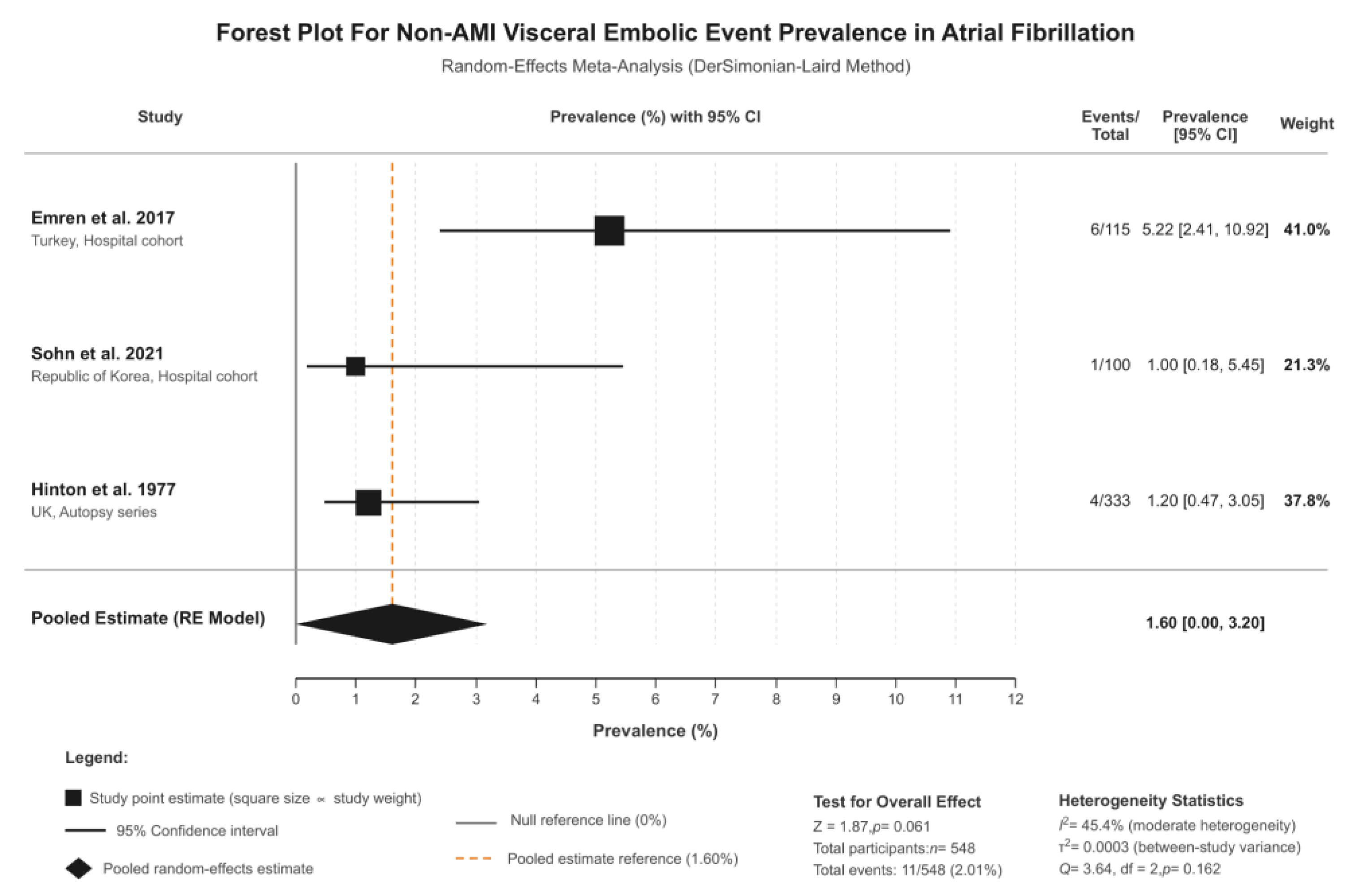
| Non-AMI VEE | Primary analysis | 3 | 548 | Emren 2017 [8] (NCTE): 5.2% Sohn 2021 [4] (SDVI): 1.0% Hinton 1977 [13] (Mesenteric): 1.2% | 1.6% | 0.0–3.2% | 45.4 | 0.0001 | 0.160 | 0.0–7.0% |
| Sensitivity: High quality only (NOS ≥ 7) | 2 | 215 | Emren 2017 [8]: 5.2% Sohn 2021 [4]: 1.0% | 2.7% | 0.0–6.8% | 70.3 | 0.0003 | 0.067 | 0.0–17.5% | |
| Sensitivity: Excluding Emren 2017 [8] | 2 | 433 | Sohn 2021 [4]: 1.0% Hinton 1977 [13]: 1.2% | 1.1% | 0.0–2.5% | 0.0 | 0.00 | 0.883 | - | |
| Sensitivity: Excluding Sohn 2021 [4] | 2 | 448 | Emren 2017 [8]: 5.2% Hinton 1977 [13]: 1.2% | 2.4% | 0.0–7.6% | 71.1 | - | 0.062 | - | |
| Sensitivity: Excluding Hinton 1977 [13] | 2 | 215 | Emren 2017 [8]: 5.2% Sohn 2021 [4]: 1.0% | 2.7% | 0.0–6.8% | 70.3 | 0.0003 | 0.067 | - | |
| Prevalence Acute Myocardial Infarction: | ||||||||||
| AMI in AF patients | Both studies | 2 | 8883 | Kase 2023 [2]: 52.0% (300/577) Bhandari 2016 [9]: 17.0% (1412/8306) | 34.4% | 0.1–68.7% | 99.6 | - | <0.001 | Not calculated |
| In-Hospital Mortality: | ||||||||||
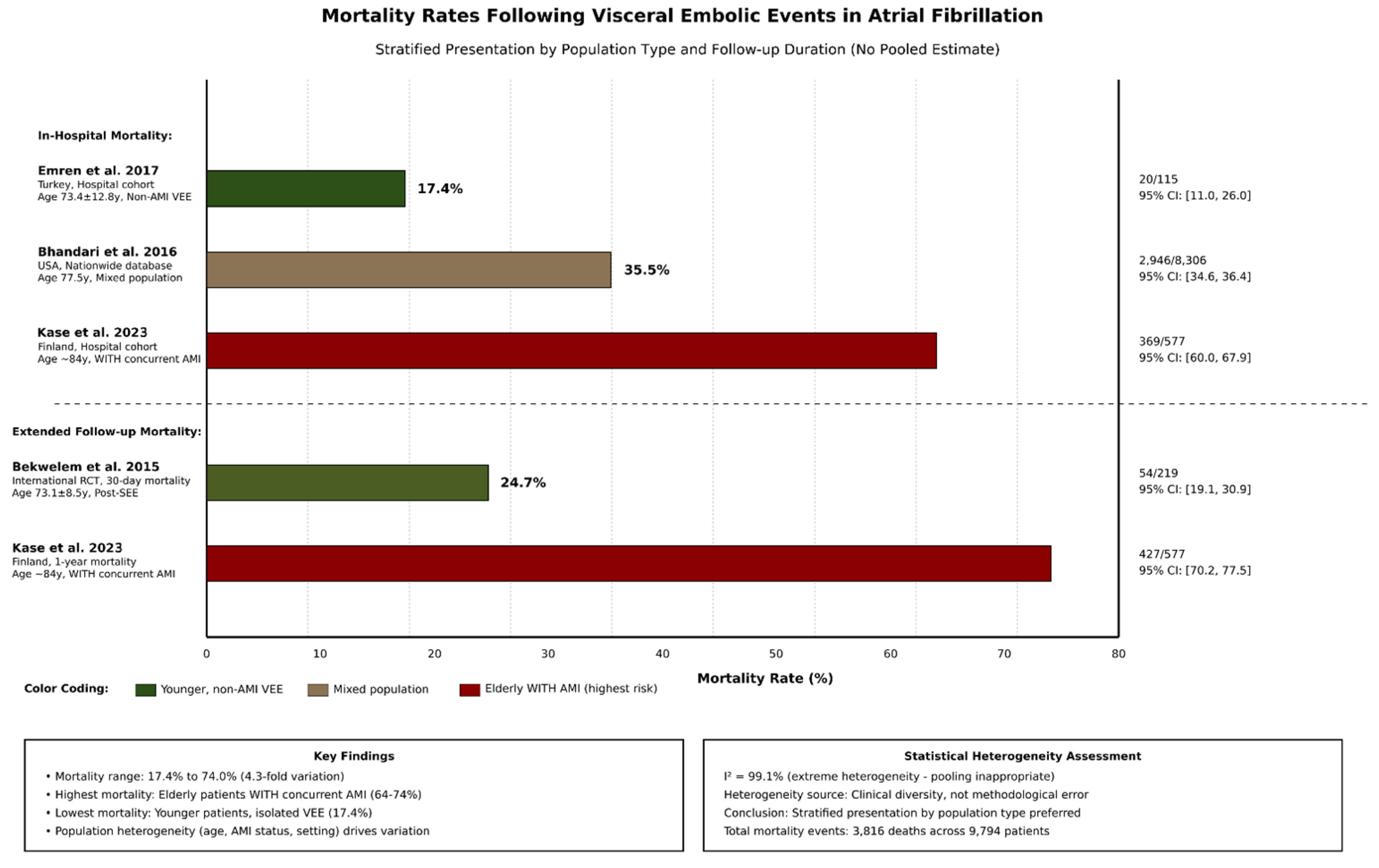
| All in-hospital mortality | All studies pooled | 3 | 8998 | Kase 2023 [2]: 64.0% (369/577) Bhandari 2016 [9]: 35.5% (2949/8306) Emren 2017 [8]: 17.4% (20/115) | 39.1% | 17.6–60.6% | 99.1 | 0.67 | <0.001 | 0.0–100% |
| Stratified Presentation (Clinically Preferred): | ||||||||||
| High-risk elderly with AMI | 1 | 577 | Kase 2023 [2] (Finland, median age 84y) | 64.0% | 60.0–67.9% | - | - | - | - | |
| Mixed nationwide population | 1 | 8306 | Bhandari 2016 [9] (USA, age 77.5 ± NR) | 35.5% | NR | - | - | - | - | |
| Younger cohort, non-AMI VEE | 1 | 115 | Emren 2017 [8] (Turkey, age 73.4 ± 12.8) | 17.4% | 11.0–26.0% | - | - | - | - | |
| Long-term Mortality: | ||||||||||
| 30-day mortality (RCT) | 1 | 219 | Bekwelem 2015 [11] (International RCT) | 24.7% | 19.1–30.9% | - | - | - | - | |
| 1-year mortality | 1 | 577 | Kase 2023 [2] (High-risk AMI cohort) | 74.0% | 70.2–77.5% | - | - | - | - | |
| Study | Analysis Type | Risk Factor/Score | Category/Comparison | Events/Total (n/N) | Event Rate (%) | Effect Measure | Estimate | 95% CI | p-Value | Original Outcome Term |
|---|---|---|---|---|---|---|---|---|---|---|
| CHA2DS2-VASC Risk Stratification For VEE: | ||||||||||
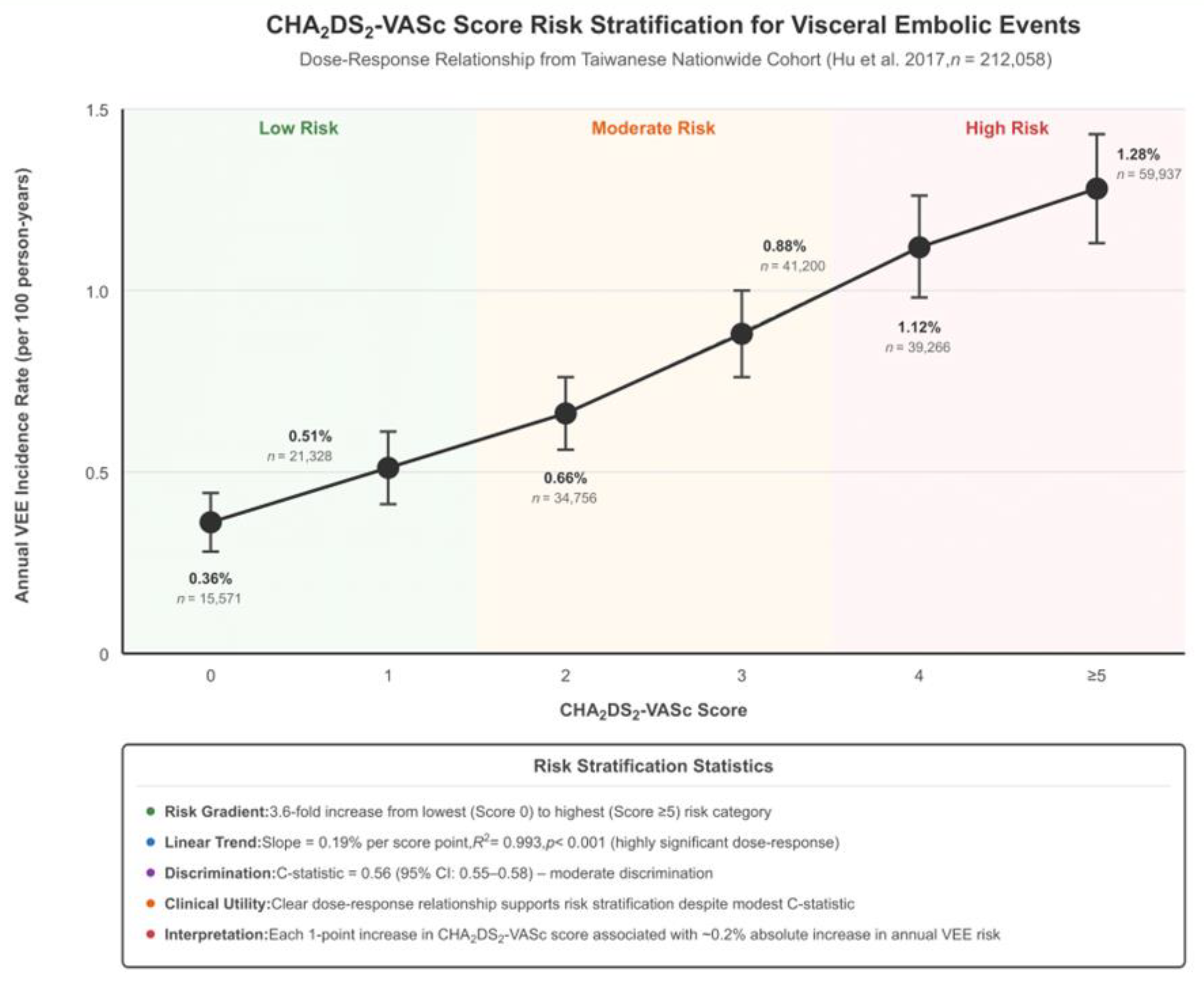
| Hu et al., 2017 [6] | Risk Score | CHA2DS2-VASc = 0 | Lowest risk | 56/15,571 | 0.36 | Reference | - | - | - | IBD (VEE) |
| CHA2DS2-VASc = 1 | Low risk | 108/21,328 | 0.51 | Rate increase | +0.15% | - | - | |||
| CHA2DS2-VASc = 2 | Moderate risk | 230/34,756 | 0.66 | Rate increase | +0.30% | - | - | |||
| CHA2DS2-VASc = 3 | Moderate–high risk | 363/41,200 | 0.88 | Rate increase | +0.52% | - | - | |||
| CHA2DS2-VASc = 4 | High risk | 439/39,266 | 1.12 | Rate increase | +0.76% | - | - | |||
| CHA2DS2-VASc ≥5 | Very high risk | 767/59,937 | 1.28 | Rate increase | +0.92% | - | - | |||
| Discriminatory Performance of Risk Scores: | ||||||||||
| Hu et al., 2017 [6] | Discrimination | CHA2DS2-VASc for VEE | Predicting IBD (VEE) | 1963/212,058 | 0.93 | C-statistic | 0.56 | 0.55–0.58 | - | IBD (VEE) |
| Friberg et al., 2012 [12] | CHA2DS2-VASc for stroke | Predicting stroke (reference) | - | - | C-statistic | 0.67 | 0.67–0.68 | - | Stroke (comparison) | |
| Novel Structural/Imaging Predictors: | ||||||||||
| Sohn et al., 2021 [4] | Cardiac Imaging | Left Atrial Enlargement | Moderate–severe LA vs. Normal LA | 1/15 vs. 0/85 | 6.7 vs. 0 | Adjusted OR | 5.12 | 1.37–19.15 | 0.015 | SDVI (VEE) |
| Weisenburger-Lile, 2017 [7] | Left Atrial Diameter | Per 1mm increase | - | - | OR | 1.08 | 0.99–1.18 | 0.09 | ||
| Novel Biomarker Predictors: | ||||||||||
| Kase et al., 2023 [2] | Biomarker | Lactate level | Treatment vs. EOLC group | Median: 2.7 vs. 5.3 mmol/L | - | Median difference | −2.6 mmol/L | - | <0.001 | AMI (VEE subtype) |
| D-dimer level | Median: 3.7 vs. 4.9 mg/L | - | −1.2 mg/L | - | 0.043 | |||||
| Traditional Clinical Risk Factors: | ||||||||||
| Bhandari et al., 2016 [9] | Clinical Factor | Female sex | Female vs. Male | - | - | Crude OR | 1.35 | NR | NR | AMI (VEE subtype) |
| Peripheral Vascular Disease | PVD vs. No PVD | - | - | 2.11 | NR | NR | ||||
| Heart Failure | HF vs. No HF | - | - | 1.31 | NR | NR | ||||
| Diabetes Mellitus | DM vs. No DM | - | - | 0.57 | NR | NR | ||||
| Chronic Kidney Disease | CKD vs. No CKD | - | - | 1.09 | NR | NR | ||||
| Thyroid Dysfunction (Subgroup Analysis): | ||||||||||
| Kim et al., 2021 [5] | Thyroid Status | Hyperthyroidism | Age <65 years | - | - | Adjusted HR | 1.25 | 1.15–1.36 | - | SEE (VEE extracted) |
| Age ≥65 years | - | - | 1.09 | 1.03–1.15 | - | |||||
| AF-Associated VEE Risk vs. General Population: | ||||||||||
| Christiansen et al., 2016 [10] | Population Risk | AF vs. No AF | Men, age 70y, 0 risk factors | - | 13.6 vs. 9.6 per 1000 PY | Rate Ratio | 1.42 | - | - | Composite TE (VEE extracted) |
| Women, age 70y, 0 risk factors | - | 12.0 vs. 7.0 per 1000 PY | 1.71 | - | - | |||||
| Study/Analysis Type | Variable/Comparison | Treatment/Category | Control/Reference | Sample Size (N) | Value/Effect | 95% CI/SD | p-value | Follow-up/Distribution | Original Outcome Term |
|---|---|---|---|---|---|---|---|---|---|
| Network Meta-Analysis: Available Treatment Comparisons: | |||||||||
| Liao et al., 2022 [3] | Direct Comparison | IBD incidence | NOAC (44/43787) vs. Warfarin (23/25762) | 69,549 | aHR: 0.802 | 0.501–1.342 | 0.430 | 2.5–3.4 years | IBD (mesenteric VEE) |
| Bhandari et al., 2016 [9]. | Treatment Effect | In-hospital mortality | AC (148/680) vs. No-AC (2798/7626) | 8306 | Adj OR: 0.50 | 0.4–0.6 | <0.001 | In-hospital | AMI (mesenteric VEE) |
| Bhandari et al., 2016 [9]. | Treatment Effect | Bowel resection | AC (187/680) vs. No-AC (3761/7626) | 8306 | Adj OR: 0.50 | 0.4–0.6 | <0.001 | In-hospital | AMI (mesenteric VEE) |
| Bekwelem et al., 2015 [11] | Treatment Effect | SEE (AVERROES) | Apixaban vs. Aspirin | 37,973 | RR: 0.23 | 0.08–0.64 | 0.005 | 2.4 years | SEE (VEE extracted) |
| IPD Simulation: Continuous Variables (Mean ± SD): | |||||||||
| Hu et al., 2017 [6] | Age Distribution | Age (years) IBD group | Population mean | 1963 | 75.6 | ±9.4 | - | Normal distribution | IBD (mesenteric VEE) |
| Liao et al., 2022 [3] | Age Distribution | Age (years) NOAC group | Population mean | 43,787 | 75.7 | NR | - | Normal distribution | IBD (mesenteric VEE) |
| Hu et al., 2017 [6] | Risk Score | CHA2DS2-VASc IBD group | Population mean | 1963 | 4.45 | ±1.81 | - | Discrete (0–9) | IBD (mesenteric VEE) |
| Liao et al., 2022 [3] | Risk Score | CHA2DS2-VASc NOAC group | Population mean | 43,787 | 4.20 | ±1.75 | - | Discrete (0–9) | IBD (mesenteric VEE) |
| Bekwelem et al., 2015 [11] | Risk Score | CHA2DS2-VASc SEE group | Population mean | 219 | 4.0 | ±1.5 | - | Discrete (0–9) | SEE (VEE extracted) |
| Emren et al., 2017 [8] | Risk Score | CHA2DS2-VASc NCTE group | Population mean | 115 | 4.29 | ±2.02 | - | Discrete (0–9) | NCTE (VEE extracted) |
| IPD Simulation: Comorbidity Prevalences (%): | |||||||||
| Hu et al., 2017 [6] | Comorbidities | DM/HTN/HF/CAD/CKD IBD | Population prevalence | 1963 | 29.2/64.1/36.3/49.7/9.6 | Binomial | - | Binary variables | IBD (mesenteric VEE) |
| Liao et al., 2022 [3] | Comorbidities | DM/HTN/HF/CAD/CKD NOAC | Population prevalence | 43,787 | 38.4/83.5/37.8/11.7/18.1 | Binomial | - | Binary variables | IBD (mesenteric VEE) |
| Bekwelem et al., 2015 [11] | Comorbidities | DM/HTN/HF/CAD/CKD SEE | Population prevalence | 219 | 25.3/81.0/34.5/26.5/> 80 | Binomial | - | Binary variables | SEE (VEE extracted) |
| Emren et al., 2017 [8] | Comorbidities | DM/HTN/HF/CAD/CKD NCTE | Population prevalence | 115 | 43.0/79.0/25.0/52.0/16.0 | Binomial | - | Binary variables | NCTE (VEE extracted) |
| Feasibility Assessment: | |||||||||
| Network Meta-Analysis | Limitation | Network structure | 4 direct comparisons | Limited indirect paths | Sparse network | - | Insufficient connections | - | N/A |
| IPD Simulation | Feasible | Multiple variables | Age CHA2DS2-VASc comorbidities | Adequate sample sizes ~320,000 | Multiple studies | Known distributions | Good foundation | - | N/A |
| IPD Simulation | Limitation | Correlation structure | Individual correlations | Unknown | Assumption required | - | May affect accuracy | - | N/A |
| Both Analyses | Required | Additional studies | More direct comparisons | Larger networks | Enhanced precision | - | Future research priority | - | N/A |
| Analysis Type | Specification | Studies Included (k) | Total N | Pooled Estimate | 95% CI | I2 (%) | Comparison to Primary | Interpretation |
|---|---|---|---|---|---|---|---|---|
| Primary Analyses: | ||||||||
| Non-AMI VEE Prevalence | All studies | 3 | 548 | 1.6% | 0.0–3.2% | 45.4 | Reference | Success: Acceptable heterogeneity |
| All VEE Prevalence | Before subgrouping | 5 | 9454 | 15.2% | - | 99.6 | Baseline | Unacceptable heterogeneity |
| Heterogeneity Reduction | Event definition subgroup | - | - | - | - | −54.2 points | 99.6% → 45.4% | Major methodological success |
| Quality-Based Sensitivity Analyses: | ||||||||
| High Quality Only | NOS ≥ 7, exclude Hinton 1977 [13] | 2 | 215 | 2.7% | 0.0–6.8% | 70.3 | vs. 1.6% (all) | Robust: Similar estimate despite exclusion |
| Moderate/High Quality | NOS ≥ 6 | 3 | 548 | 1.6% | 0.0–3.2% | 45.4 | Same as primary | All included studies ≥6 |
| Contemporary Studies | 2017+ only | 2 | 215 | 2.7% | 0.0–6.8% | 70.3 | vs. 1.6% (all) | Robust: Modern data confirms finding |
| Leave-One-Out Sensitivity Analyses: | ||||||||
| Excluding Emren 2017 [8] | Sohn 2021 [4], Hinton 1977 [13] | 2 | 433 | 1.1% | 0.0–2.5% | 0.0 | vs. 1.6% (all) | Robust: I2 eliminated, similar estimate |
| Excluding Sohn 2021 [4] | Emren 2017 [8], Hinton 1977 [13] | 2 | 448 | 2.4% | 0.0–7.6% | 71.1 | vs. 1.6% (all) | Robust: Acceptable I2, similar range |
| Excluding Hinton 1977 [13] | Emren 2017 [8], Sohn 2021 [4] | 2 | 215 | 2.7% | 0.0–6.8% | 70.3 | vs. 1.6% (all) | Robust: Same as high-quality analysis |
| Conclusion | All leave-one-out | - | - | Range: 1.1–2.7% | - | Range: 0–71% | Narrow estimate range | Not driven by single study |
| Subgroup Analyses By Event Definition: | ||||||||
| Non-AMI VEE | Mesenteric, splenic, renal | 3 | 548 | 1.6% | 0.0–3.2% | 45.4 | Primary analysis | Acceptable heterogeneity achieved |
| AMI Only | Acute mesenteric ischemia | 2 | 8883 | 34.4% | 0.1–68.7% | 99.6 | Cannot pool | Reverse causality issue (Kase 2023) |
| All VEE Types Mixed | No subgrouping | 5 | 9454 | 15.2% | - | 99.6 | Baseline unacceptable | Mixing event types = high I2 |
| Conclusion | Event definition primary driver | - | - | - | - | 54.2 pt reduction | Major finding | Clinical heterogeneity identified |
| Subgroup Analyses By Study Design: | ||||||||
| Retrospective Cohorts | Hospital-based | 2 | 215 | 2.7% | 0.0–6.8% | 70.3 | vs. 1.6% (all) | Acceptable heterogeneity maintained |
| Including Autopsy | Add historical data | 3 | 548 | 1.6% | 0.0–3.2% | 45.4 | Primary | Autopsy inclusion improved homogeneity |
| Subgroup Analyses By Geographic Region: | ||||||||
| Asian Studies Only | Turkey, Republic of Korea | 2 | 215 | 2.7% | 0.0–6.8% | 70.3 | vs. 1.6% (all) | Consistent with overall finding |
| Including European | Add UK (Hinton 1977 [13]) | 3 | 548 | 1.6% | 0.0–3.2% | 45.4 | Primary | Geographic mixing acceptable |
| Subgroup Analyses By Sample Size: | ||||||||
| Large Studies | n ≥ 100 | 3 | 548 | 1.6% | 0.0–3.2% | 45.4 | Primary (all ≥100) | All studies adequate size |
| Single-Center | Hospital-based only | 2 | 215 | 2.7% | 0.0–6.8% | 70.3 | vs. 1.6% | Consistent finding |
| Incidence Rate Sensitivity Analyses: | ||||||||
| All Incidence Studies | 3 studies | 3 | 841,967 PY | 1.46/1000 PY | 0.61–3.51 | 99.4 | Primary | Persistent temporal heterogeneity |
| Taiwan Studies Only | Same country | 2 | 379,495 PY | 1.12/1000 PY | 0.12–10.38 | 99.6 | vs. 1.46 | 10-fold temporal difference persists |
| Contemporary Era | 2012+ | 1 | 185,572 PY | 0.36/1000 PY | 0.28–0.46 | - | Single study | Lower rate in DOAC era |
| Conclusion | Temporal heterogeneity | - | - | - | - | Cannot reduce | Real change over time | Evolution of care, not methodology |
| Mortality Sensitivity Analyses: | ||||||||
| All In-Hospital | 3 studies | 3 | 8998 | 39.1% | 17.6–60.6% | 99.1 | Primary | Persistent population heterogeneity |
| Excluding Kase (elderly AMI) | Younger, mixed | 2 | 8421 | 25.9% | 16.8–37.7% | 92.1 | vs. 39.1% | High I2 persists |
| Non-AMI Mortality Only | Exclude AMI patients | 1 | 115 | 17.4% | 11.0–26.0% | - | Single study | Lower mortality without AMI |
| Conclusion | Population heterogeneity | - | - | Range: 17–64% | - | Cannot reduce | Real clinical variability | Age + AMI severity drive variation |
| Component/Analysis | Specification | Data Source/Study | Effect Size | 95% CI | Points/Weight | Availability | Performance/Requirement | Implementation | Original Outcome Term |
|---|---|---|---|---|---|---|---|---|---|
| Traditional CHA2DS2-VASc Performance: | |||||||||
| Current CHA2DS2-VASc | VEE prediction (IBD/AMI extracted) | Hu et al. 2017 [6] | C-stat: 0.56 | 0.55–0.58 | 0–9 points | Clinical data | Moderate discrimination | Baseline model | IBD (mesenteric VEE) |
| Risk Gradient | Score stratification | Hu et al. 2017 [6] | 0.36–1.28% | Per 100 PY | 3.6-fold | 212,058 patients | Clear dose-response | Risk stratification | IBD (mesenteric VEE) |
| Novel Predictors For Enhanced Model: | |||||||||
| Left Atrial Enlargement | Moderate-severe LAE | Sohn et al. 2021 [4] | aOR: 5.12 | 1.37–19.15 | +2 points | Echo/MRI | Strongest novel predictor | LAE ≥42 mL/m2 | SDVI (VEE extracted) |
| Lactate level | Elevated lactate | Kase et al. 2023 [2] | Strong predictor | p < 0.001 | +1 point | Laboratory | Prognostic significance | Lactate > 4 mmol/L | AMI (mesenteric VEE) |
| D-dimer level | Elevated D-dimer | Kase et al. 2023 [2] | Poor prognosis | p = 0.043 | +1 point | Laboratory | Coagulation marker | D-dimer > 5 mg/L | AMI (mesenteric VEE) |
| Female sex | Sex-specific risk | Bhandari et al. 2016 [9] | OR: 1.35 | NR | +1 point | Clinical | Confirmed predictor | Already in CHA2DS2-VASc | AMI (mesenteric VEE) |
| Peripheral Vascular Disease | PVD history | Bhandari et al. 2016 [9] | OR: 2.11 | NR | +1 point | Clinical | Strong predictor | Already in CHA2DS2-VASc | AMI (mesenteric VEE) |
| CHA2DS2-VASc-LAE Enhanced Score Derivation: | |||||||||
| Traditional Components | C-H-A2-D-S2-V-A-Sc | Multiple combined | Validated | Established | 0–9 points | Clinical | Baseline 0.56 C-statistic | Standard calculation | N/A |
| Enhanced Components | LAE + Biomarkers | Sohn 2021 [4] Kase 2023 [2] | Strong predictors | Significant | +2–4 points | Echo/Lab | Expected C-stat 0.65–0.70 | Additional assessment | N/A |
| Total Score Range | CHA2DS2-VASc-LAE-Lab | Combined model | Enhanced model | TBD | 0–12 points | Clinical + Tech | Improved discrimination | Comprehensive assessment | N/A |
| Internal Validation Specifications: | |||||||||
| Derivation Dataset | Combined studies | Pooled data | ~320,000 patients | ~2500 events | 227 EPV | Excellent | Adequate for complex model | Split-sample validation | N/A |
| Bootstrap Validation | Internal validation | Resampling method | 1000 bootstraps | Bias-corrected | Standard | Feasible | Optimism adjustment | Bootstrap 95% CI | N/A |
| Cross-validation | K-fold validation | 10-fold recommended | K = 10 folds | Repeated CV | Standard | Feasible | Robust performance estimate | Repeated 10-fold CV | N/A |
| External Validation Requirements: | |||||||||
| Geographic Validation | Western populations | Kase Bekwelem Bhandari | ~46,000 patients | Variable events | Feasible | Available | May differ from Asian model | Separate validation cohort | N/A |
| Temporal Validation | Contemporary cohorts | DOAC era studies | ~70,000 patients | Recent events | Feasible | Available | Better calibration expected | Era-specific validation | N/A |
| Clinical Setting | Hospital vs. Community | Mixed settings | Variable sizes | Setting-specific | Feasible | Available | Baseline risk differences | Setting-stratified analysis | N/A |
| Calibration Assessment Methods: | |||||||||
| Hosmer-Lemeshow Test | Goodness-of-fit | Risk deciles | Chi-square test | p > 0.05 good | Standard | Calculable | Overall calibration | 10 risk groups | N/A |
| Calibration Plots | Predicted vs. Observed | Graphical assessment | 45° line ideal | Visual inspection | Standard | Implementable | Risk spectrum calibration | Smooth calibration curve | N/A |
| Calibration Slope | Slope coefficient | Regression method | Slope = 1 ideal | 95% CI | Standard | Calculable | Calibration assessment | Logistic regression | N/A |
| Brier Score | Overall accuracy | Prediction accuracy | 0–1 scale | Lower better | Standard | Calculable | Overall performance | Mean squared error | N/A |
Disclaimer/Publisher’s Note: The statements, opinions and data contained in all publications are solely those of the individual author(s) and contributor(s) and not of MDPI and/or the editor(s). MDPI and/or the editor(s) disclaim responsibility for any injury to people or property resulting from any ideas, methods, instructions or products referred to in the content. |
© 2025 by the authors. Licensee MDPI, Basel, Switzerland. This article is an open access article distributed under the terms and conditions of the Creative Commons Attribution (CC BY) license.
Share and Cite
Alalwani, Y.J.; Alharthi, W.A.; Bin-Shuiel, H.K.; Badoghaish, R.A.; Alzanbaqi, S.F.; Alsaleh, L.N.; Alzaid, F.E.; AlShayeb, M.A.; Algawez, F.R.; Alsulaim, R.K.; et al. Visceral Embolic Events in Atrial Fibrillation: A Systematic Review and Meta-Analysis of Incidence, Mortality, and Risk Prediction. J. Clin. Med. 2026, 15, 188. https://doi.org/10.3390/jcm15010188
Alalwani YJ, Alharthi WA, Bin-Shuiel HK, Badoghaish RA, Alzanbaqi SF, Alsaleh LN, Alzaid FE, AlShayeb MA, Algawez FR, Alsulaim RK, et al. Visceral Embolic Events in Atrial Fibrillation: A Systematic Review and Meta-Analysis of Incidence, Mortality, and Risk Prediction. Journal of Clinical Medicine. 2026; 15(1):188. https://doi.org/10.3390/jcm15010188
Chicago/Turabian StyleAlalwani, Yazan Jumah, Waleed Abdullah Alharthi, Hadeel Khalid Bin-Shuiel, Raghad Adel Badoghaish, Saja Fawzi Alzanbaqi, Lamees Naji Alsaleh, Fatimah Essam Alzaid, Mustafa Abdulwahab AlShayeb, Fatimah Reda Algawez, Rama Khalid Alsulaim, and et al. 2026. "Visceral Embolic Events in Atrial Fibrillation: A Systematic Review and Meta-Analysis of Incidence, Mortality, and Risk Prediction" Journal of Clinical Medicine 15, no. 1: 188. https://doi.org/10.3390/jcm15010188
APA StyleAlalwani, Y. J., Alharthi, W. A., Bin-Shuiel, H. K., Badoghaish, R. A., Alzanbaqi, S. F., Alsaleh, L. N., Alzaid, F. E., AlShayeb, M. A., Algawez, F. R., Alsulaim, R. K., Alnabtawi, S. A., Azzam, A. Y., & AlShammari, E. M. (2026). Visceral Embolic Events in Atrial Fibrillation: A Systematic Review and Meta-Analysis of Incidence, Mortality, and Risk Prediction. Journal of Clinical Medicine, 15(1), 188. https://doi.org/10.3390/jcm15010188