3. Results
3.1. Perfusion
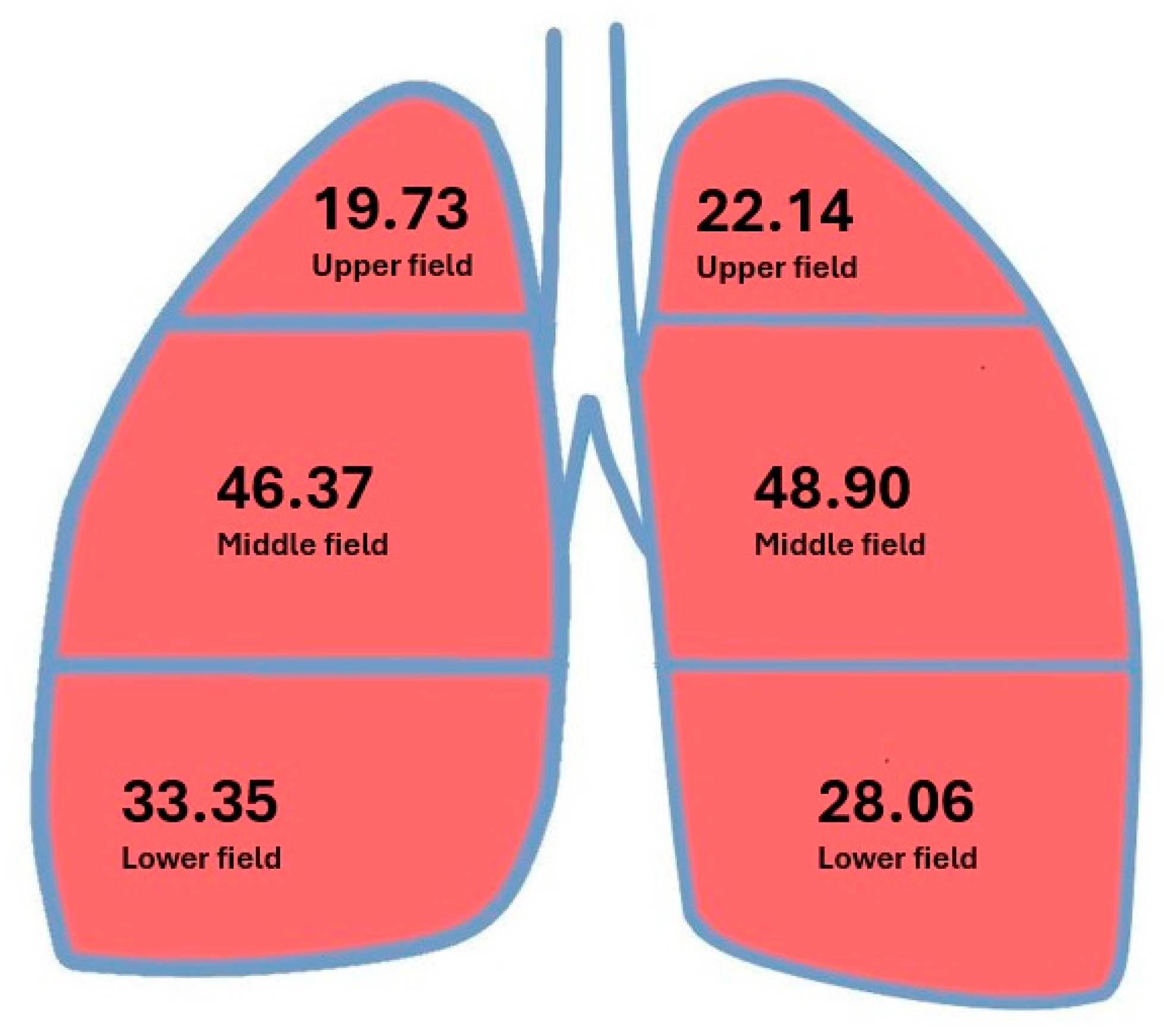
The mean flow value in the upper field of the right lung did not exceed 20% of total lung perfusion, and flow in the combined lower and middle fields was almost 80%.
The mean flow value in the upper field of the left lung exceeded 20% of total lung perfusion, and perfusion in the combined middle and lower fields was <80% of total lung perfusion.
The mean flow value in the upper field regardless of side exceeded 20% of total lung perfusion, and perfusion in the combined middle and lower fields was <80% of total lung perfusion.
3.2. Ventilation
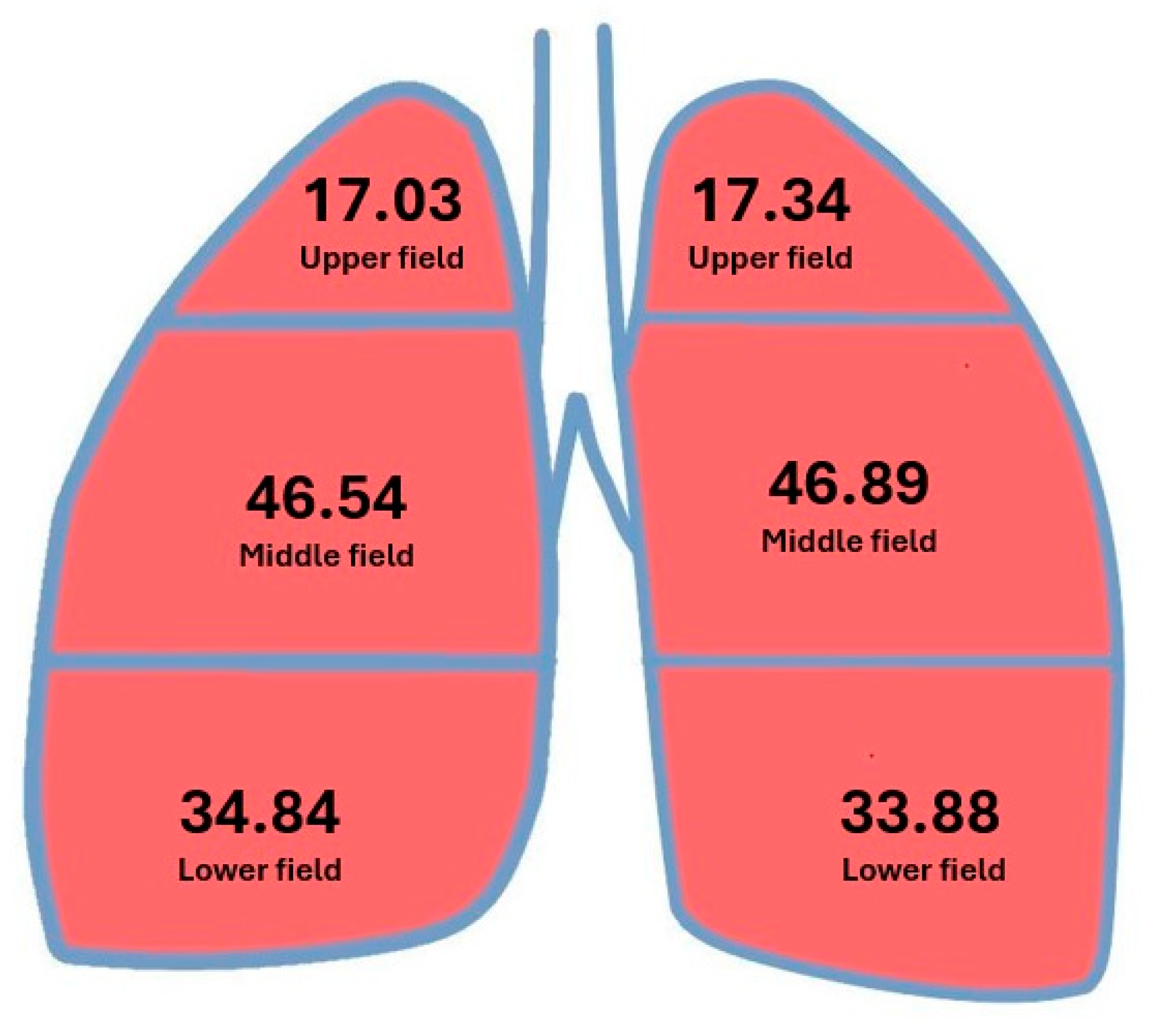
Ventilation values in individual lung fields are presented in
Figure 4 and
Table 5.
The mean ventilation value in the upper field of the right lung did not exceed 18% of the total lung ventilation, and ventilation in the combined middle and lower fields exceeded 80% of the total lung ventilation. The mean ventilation value in the lower field exceeded the ventilation in the upper field by >2 times (34.84% vs. 17.03%).
The mean ventilation values in the upper field of the left lung did not exceed 18% of the total lung ventilation, and ventilation in the combined middle and lower fields slightly exceeded 80% of the total lung ventilation. The mean ventilation value in the lower field exceeded the ventilation in the upper field by almost 2 times (33.88% vs. 17.34%).
The mean ventilation values in the upper lung field did not exceed 18% of the total lung ventilation regardless of side. Ventilation in the combined middle and lower lung fields slightly exceeded 80% of the total lung ventilation, and ventilation in the lower field exceeded the ventilation in the upper field by nearly 2 times (34.28% vs. 17.21%).
3.3. Ventilation–Perfusion Ratio
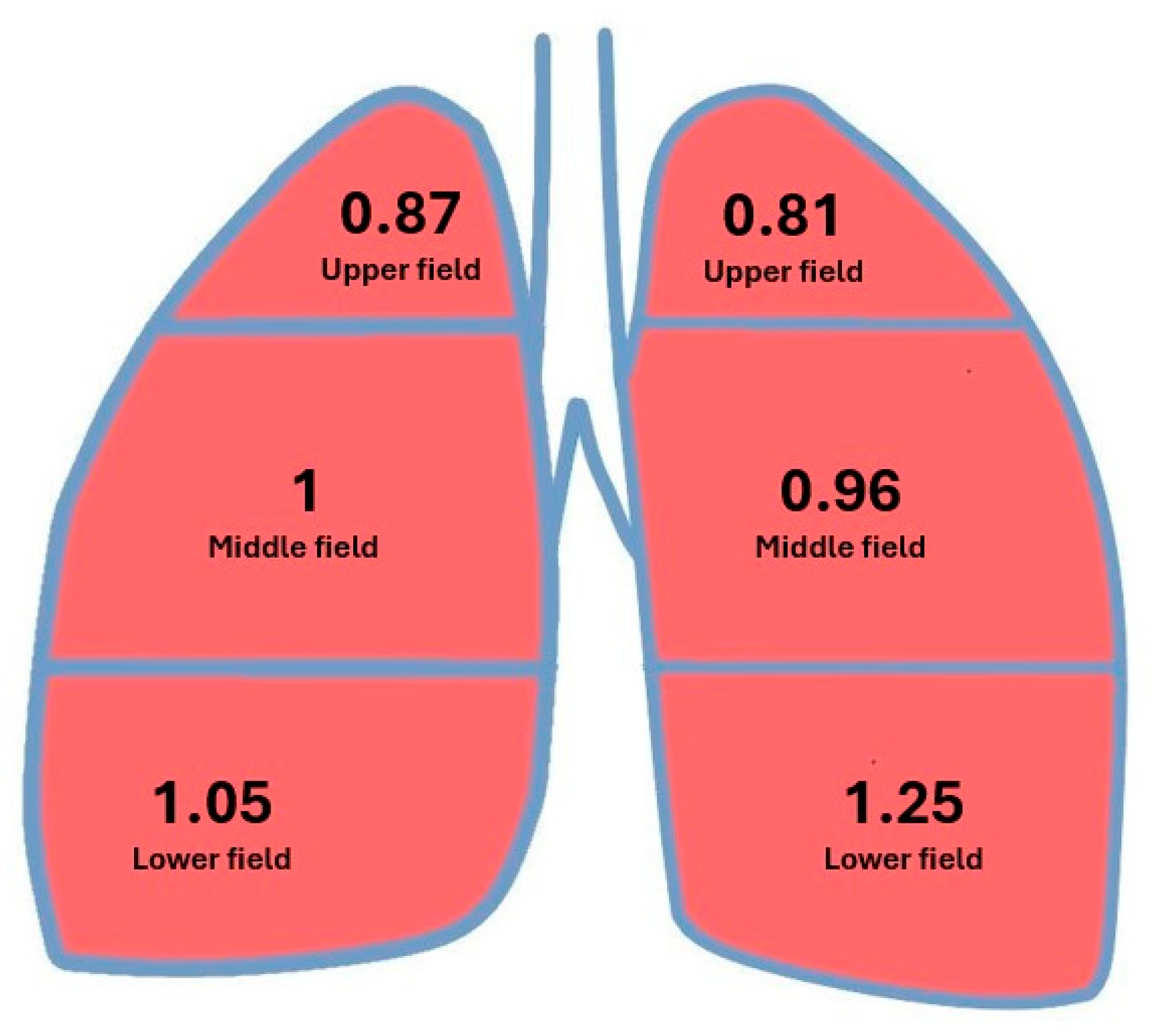
The V/Q in individual fields in the right and left lung and the ratio of the V/Q value in the lower field to the V/Q value in the upper field (lower field/upper field—L/U) regardless of the side examined are presented in
Figure 5 and
Table 6 and
Table 7.
The mean value of the V/Q in the upper field of the right lung did not exceed 1.0, whereas the mean value of the V/Q in the middle field was 1, and the mean value of the V/Q in the lower field and the combined middle and lower fields exceeded 1.0.
The mean value of the V/Q in the upper and middle fields of the left lung did not exceed 1.0, whereas the mean value of the V/Q in both the lower field and the combined middle and lower fields exceeded 1.0.
The mean value of the V/Q in the upper and middle lung fields did not exceed 1.0, whereas the mean value of the V/Q in both the lower lung field and the combined middle and lower lung fields exceeded 1.0.
The mean value of the V/Q ratio in the upper field was 0.84, whereas the mean V/Q ratio in the lower field was 1.16. The mean value of the ratio of V/Q in the lower lung field to V/Q in the upper lung field (L/U) was 1.38. The minimal value of the L/U ratio was 0.5, whereas the maximal value was 2.83. The standard deviation was 0.64.
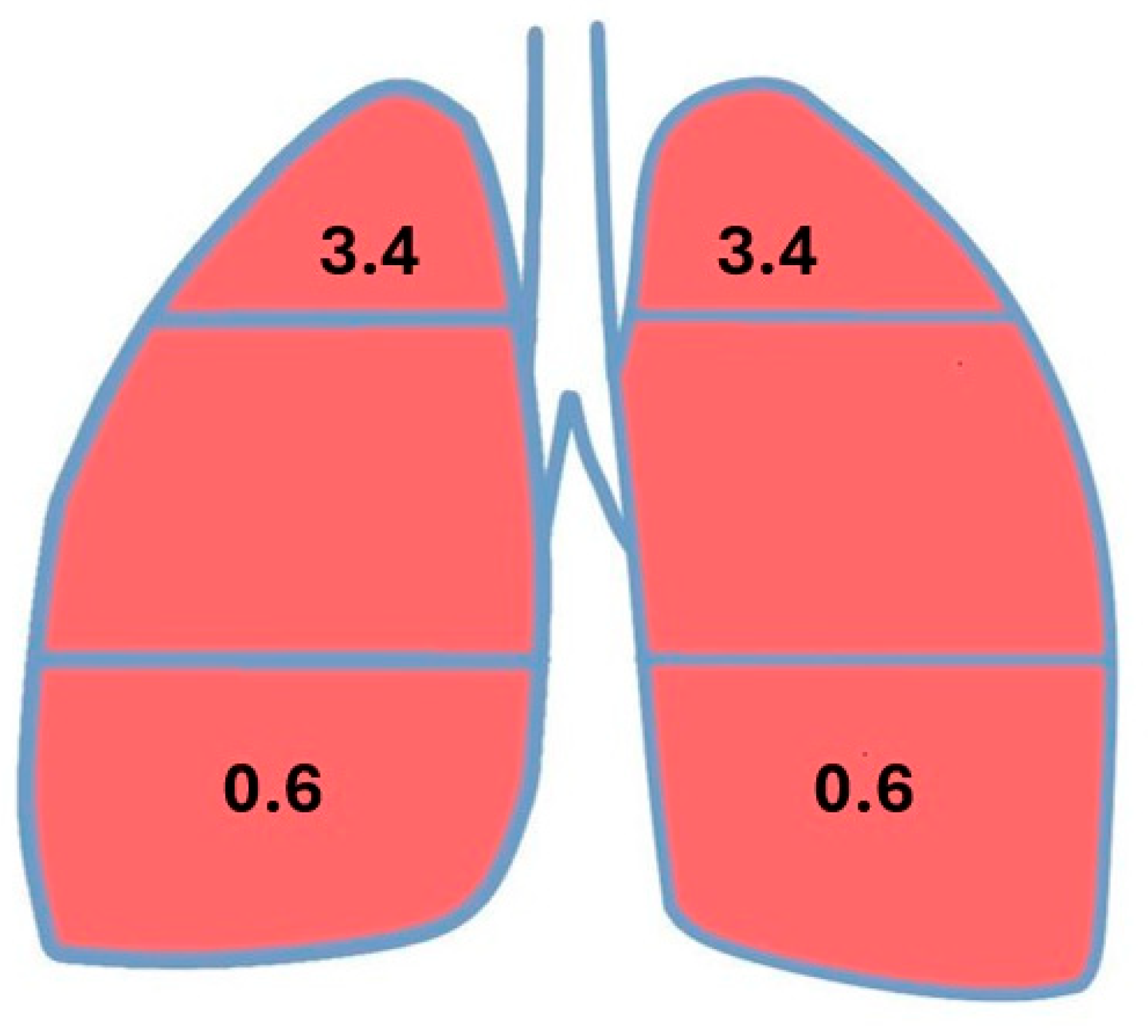
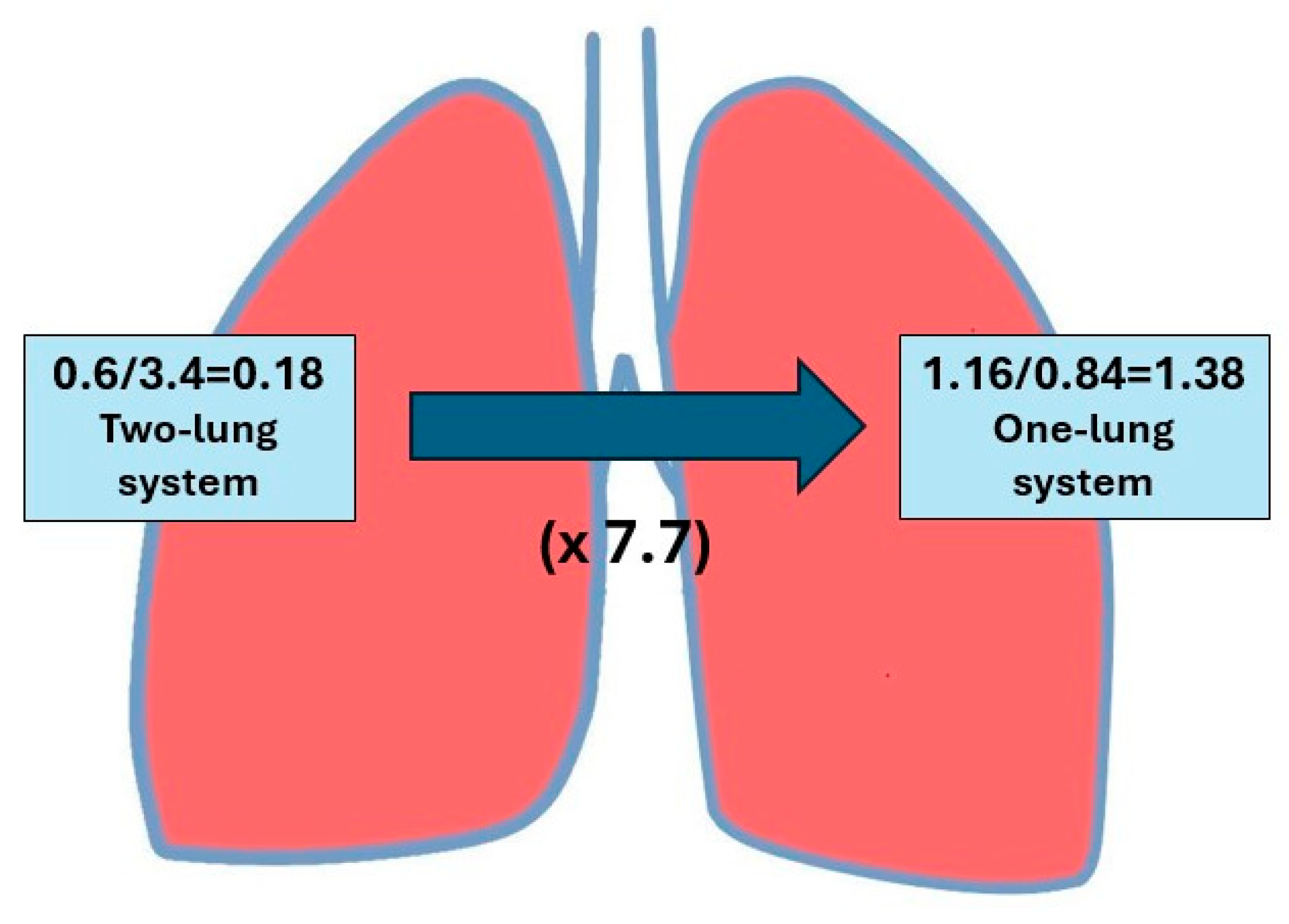
The ratio of the mean V/Q value in the lower field (1.16) to the mean V/Q in the upper field (0.84) regardless of side was 1.38. Under physiological conditions in the two lungs before pneumonectomy (two-lung system), the ratio of V/Q at the base of the lung (0.6) to V/Q in the apex (3.4) was 0.18, indicating a 7.7-fold increase (1.39/0.18 = 7.7) in the remaining lung (single-lung system) compared to physiological norms (
Figure 6). The increase was greater on the left side (1.54/0.18 = 8.5) than on the right side (1.20/0.18 = 6.7). Perfusion, ventilation, and V/Q by operated side are presented in
Table 7,
Table 8,
Table 9,
Table 10 and
Table 11.
The mean perfusion value in the lower field of the right lung was significantly higher than the perfusion in the corresponding field of the left lung (p = 0.001). No significant difference was found between the right and left sides for the perfusion in other lung fields.
The mean ventilation values in lung fields were not significantly different between the right and left sides.
Comparative analysis of the mean V/Q in individual lung fields between the right and left sides showed that, in the upper pulmonary fields, V/Q values were <1.0 and in the lower pulmonary fields, they were >1.0. The mean value of V/Q in the lower field of the left lung was significantly higher than the value in the lower field of the right lung (1.25 vs. 1.05, p = 0.034). In other fields, comparisons between the right and left lungs did not reveal significant differences.
The difference in L/U between the right and left lungs approached significance (p = 0.058).
The mean V/Q (
Table 11) exceeded the literature norms (0.8–0.9, mean 0.85).
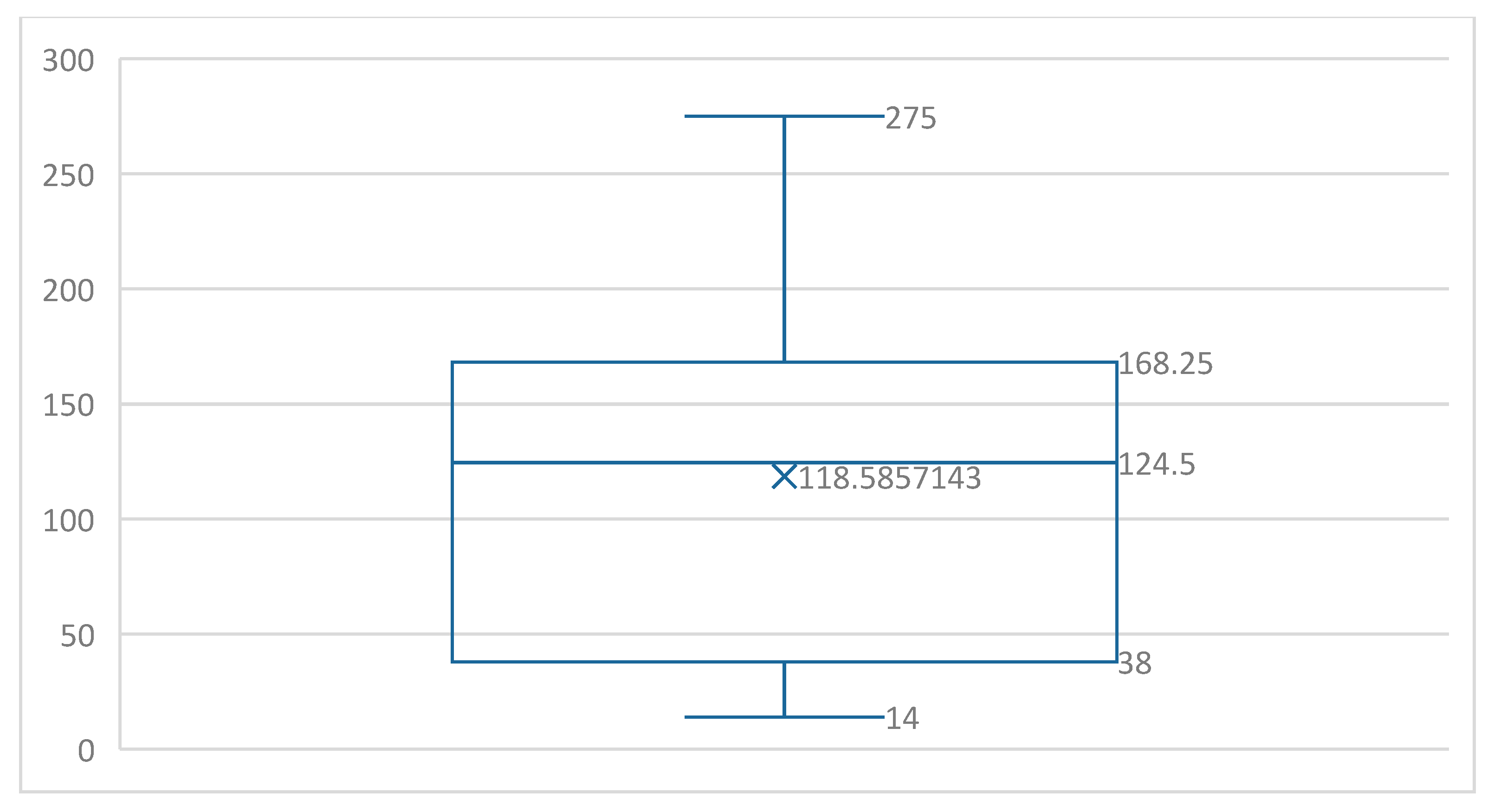
3.4. Results Depending on Time from Pneumonectomy and Sex: Correlations
The results of ventilation, perfusion, and V/Q ratio depending on time from pneumonectomy are presented in
Table 12.
The results of perfusion and ventilation and V/Q ratio depending on sex are presented in
Table 13,
Table 14 and
Table 15.
No significant differences in perfusion, ventilation, or V/Q were found depending on sex and time from pneumonectomy to scintigraphy.
The nature of correlations between select flow parameters, ventilation parameters, and other features was determined regardless of which side was examined. A positive correlation was found between upper-field ventilation and the upper-field V/Q (0.73, p < 0.0001) and between ventilation and flow in the combined middle and lower fields (0.45, p = 0.01). In addition, a number of negative correlations were found. For example, we identified a negative correlation between ventilation in the upper field and the V/Q of the combined middle and lower fields (−0.59, p = 0.0004) and between ventilation in the combined middle and lower fields and the V/Q of the upper field (−0.61, p = 0.0002). Furthermore, a negative correlation was found between the V/Q in the upper field and the V/Q in the combined middle and lower fields (0.91, p < 0.0001), as well as between the V/Q in the upper field and the V/Q in the lower field (−0.68, p < 0.0001). A negative correlation was also found between the ventilation in the upper field and the ventilation in the combined middle and lower fields (−0.92, p < 0.0001) and between the ventilation values in the upper and lower fields (−0.42, p = 0.018). In the lower field, a strong negative correlation was found between the V/Q and the flow in this field (−0.71, p < 0.0001). However, a positive correlation was found between the V/Q and the ventilation in the lower field (0.4, p = 0.027). Perfusion in the upper field had a negative correlation with the V/Q in the upper field (−0.42, p = 0.02) and with perfusion in the lower field (−0.66, p < 0.0001) and perfusion in the combined middle and lower fields (−0.96, p < 0.0001). Flow in the lower field had a positive correlation with the V/Q in the upper field (0.46, p = 0.008). No significant correlations were found between perfusion and ventilation in the upper field (0.23, p = 0.2). No significant correlations were found between perfusion, ventilation, and V/Q depending on time from pneumonectomy.
4. Discussion
The popularity of pneumonectomy as a treatment for lung cancer has significantly declined in favor of other less extensive lung resections, especially those utilizing minimally invasive techniques [
10,
11,
12,
13,
14]. According to the German Thorax Registry Study, the in-hospital mortality after pneumonectomy is 7% in general but 25% among cases with pulmonary complications [
15]. Therefore, the number of novel reports on functional assessments of the single remaining lung is rather low [
16,
17]. Over 80 years of experience in this group of patients has allowed the long-term consequences of pneumonectomy to be described. These consequences include postural deformities associated with scoliosis and autothoracoplasty on the operated side, compensatory emphysema of the remaining lung with a shift of the mediastinum to the operated side, and anatomical changes (e.g., augmentation of the right ventricle and right atrium, dilatation of the pulmonary artery) associated with the development of pulmonary hypertension and lower tolerance of physical activity [
18,
19,
20,
21,
22,
23,
24,
25,
26]. On the other hand, many patients with one lung demonstrate cardiorespiratory performance allowing for regular physical activity, even playing sports, which justifies continuation of the functional assessment [
25,
27]. Available studies have focused on the analysis of ventilation function by spirometry, the analysis of gas diffusion, blood oxygenation levels, and exercise tolerance, and echocardiographic assessment of the heart and pulmonary artery [
17,
27,
28,
29]. Analysis of the ventilation and perfusion of the lungs is currently possible using scintigraphic techniques [
3,
4,
5,
6,
17,
30]. Combining ventilation and perfusion enables determination of the V/Q [
3,
9], which allows each lung to be analyzed in terms of selected areas of activity and, thus, the efficiency of the two most important respiratory functions, as well as the respiratory function of the lungs as a whole. Combined isotope studies have been used to predict postoperative lung function, which is useful in planning the range of lung resection [
29,
31,
32,
33]. Moneke et al. demonstrated that perfusion SPECT/CT can be used to predict lung function after resection with efficacy similar to perfusion scintigraphy [
34]. Ventilation SPECT/CT is another diagnostic modality with similar efficacy and can be used to predict lung function after resection for lung cancer. Jeong and Lee reported that postoperative forced expiratory volume in 1 s (FEV
1) and DLCO values predicted by ventilation SPECT/CT strongly correlated with those predicted by perfusion SPECT/CT (correlation coefficient r = 0.939 for postoperative FEV
1%,
p < 0.001; r = 0.938 for postoperative DLCO%,
p < 0.001) [
35].
Postoperative isotope assessment of lung function has been the subject of numerous studies at our center. Two such studies included a group of patients who underwent pneumonectomy. In both studies, perfusion scintigraphy was used to assess the pulmonary blood flow in the remaining lung [
36,
37]. The current study is a continuation of previous research on single-lung function, but we utilized a ventilation scan in addition to the perfusion scan.
The perfusion results were consistent with previous reports, which showed that flow increases in each lung field after pneumonectomy, with possible further variation in flow depending on the side of the examination and the perfusion of individual lung regions. According to the literature, the flow in the combined lower and middle pulmonary fields (mean 78.16%) is higher than the flow in the upper pulmonary field (mean 21.1%); however, the flow in the upper field is more than twice the physiological flow in this field (<10%) for the two-lung system, indicating increased utilization of the flow reserve [
2,
36,
37,
38]. Increased flow in the upper field of the remaining lung is one of the initial mechanisms counteracting the development of pulmonary hypertension after pneumonectomy and, during longer follow-up, flow in the upper field reflects the use of the flow reserve in the remaining lung [
16,
36,
37]. We also demonstrated differences in pulmonary flow in individual lung fields depending on the operated side. The mean flow in the upper field of the right lung was lower than the mean flow in the upper field of the left lung (19.73 vs. 22.14,
p = 0.06), and the mean flow in the combined middle and lower fields of the right lung was higher than the mean flow in the combined middle and lower fields of the left lung (79.72 vs. 76.95,
p = 0.071). Both observations did not reach significance, but they may be real and related to the physiological difference in the size of the right (50–55% of pulmonary perfusion) and left lungs (45–50% of pulmonary perfusion) [
39]. Significant differences were found in the flow in the lower field. The mean perfusion in the lower field of the right lung was significantly higher than the mean perfusion in the lower field of the left lung (33.35 vs. 28.05,
p = 0.001;
Table 13), which can also be explained by the difference in volume between the right and left lungs and the effect of gravity on pulmonary blood flow [
39]. These observations were also reflected in the analysis of the correlation of flow factors, as the dependence of the flow in the upper field in relation to the flow in the lower field (−0.66,
p < 0.0001) and in the combined middle and lower fields (−0.96,
p < 0.001) showed negative and significant correlations regardless of side. Moreover there was also a negative correlation between flow in the upper field and flow in the combined middle lower and middle fields on the right (−0.97,
p < 0.001) and left sides (−0.9,
p < 0.001).
Unlike the results for perfusion, ventilation was very similar for the right and left lungs. The mean ventilation value in the upper pulmonary field ranged from 17% to 18%, and in the combined middle and lower pulmonary fields, it ranged from 80% to 81.5%. Interestingly, this value was almost identical in the upper and middle fields of the right and left lungs, and the ventilation values in individual fields of the right and left lungs did not differ significantly (
Table 5 and
Table 8). Limiting ventilation to a single lung was associated with a greater ratio of ventilation in the lower fields to ventilation in the upper fields compared to a two-lung system (~2 vs. 1.5). According to Konturek, basal ventilation can be up to 3-times greater than apex ventilation, though such a comparison concerns lung areas smaller than a lobe [
9]. Higher ventilation and perfusion in the combined middle and lower fields compared with the upper field mimic the conditions previously reported in a two-lung system [
17,
40]. The introduction of aerosol scintigraphy revealed the phenomenon of so-called hot spots on the image of the examined area. This phenomenon is caused by an accumulation of radiopharmaceuticals in areas of flow obstruction in the bronchial tree. This phenomenon did not affect the results obtained in our study group because the condition of the bronchial tree was examined by bronchofiberoscopy.
A number of compensatory processes occur after pneumonectomy [
41,
42]. For example, so-called compensatory emphysema develops due to excessive expansion of the remaining lung parenchyma, compensating for the loss of lung volume [
41,
43,
44,
45,
46,
47,
48,
49]. According to Mergoni and Rossi, compensatory emphysema is characterized by ventilation of the remaining lung at a lower intrathoracic pressure and lesser changes in gas exchange compared to emphysema in the course of, for example, chronic obstructive pulmonary disease, in which an increased lung volume is accompanied by normal intrathoracic pressure and impaired gas diffusion. This situation positively affects the efficiency of ventilation in patients with one lung [
50].
Interestingly, the postoperative increase in lung volume depends on the type of resection. Shibazaki et al. reported that expansion of the middle lobe was greater after right lower lobectomy than after right upper lobectomy [
51]. In another study, among patients observed for 3 to 20 years after pneumonectomy, the vast majority had lung volumes greater than expected based on the amount of parenchyma removed. In these patients, total lung capacity and forced vital capacity (FVC) were within the normal range and exhibited compensatory growth [
49]. Shibazaki reported a positive correlation between the residual lung expansion ratio and FEV1 ratio [
52]. In a study by Topaloglu et al., a cohort with a postoperative residual lung volume ratio of at least 1.2 had a higher postoperative FVC [
45].
Radiological features of compensatory emphysema typically appear 4–5 years after pneumonectomy. Compensatory emphysema appeared in our study group, but we did not find significant differences in flow, ventilation, or the V/Q in the upper, lower, and combined lower and middle pulmonary fields according to time from pneumonectomy.
Maintenance of normal respiratory function requires adequate ventilation combined with optimal pulmonary flow. Impaired flow in the presence of normal, or even increased, ventilation creates a state of so-called dead space, whereas insufficient ventilation but maintained flow leads to the development of a so-called pulmonary shunt with ventilation–perfusion mismatch [
53,
54].
The normal mean V/Q for the entire lungs is 0.8–0.9. The V/Q differs between the apical and basal parts of the lung due to individual lung areas being located above or below the level of the heart. Both blood flow and ventilation increase from the apical to the basal segments of the lung, but the increase in perfusion is greater, mainly due to gravity and the hydrostatic pressure of blood. The perfusion pressure at the base of the lung is equal to the sum of the mean pulmonary artery pressure and the difference between the hydrostatic pressure at the level of the heart and the value of this pressure at the base of the lung [
9]. The influence of hydrostatic pressure is reduced in the apical segments of the lung, which can result in low flow pressure. Moreover, hydrostatic pressure sometimes reaches values lower than the pressure in the alveoli, leading to vascular compression and flow disruption, constituting the area of the so-called lung perfusion reserve [
9].
Ventilation values in the lungs depend on their compliance (so-called lung distensibility index). The lung base has a better ability to change the volume and intensity of ventilation [
55]. The lower lung fields are ventilated approximately 1.5-times more intensively than the upper lung fields, with a greater change in their volume. A 9-fold increase in perfusion in the basal regions of the lungs compared to the apical regions results in an increased V/Q in the apical fields (3.4) and a decreased V/Q at the lung base (0.6) [
8,
9]. A V/Q > 3 in the upper pulmonary field indicates a large, preserved perfusion reserve (i.e., <10% of the total perfusion of a given lung), which occurs most often in young individuals without any chronic diseases, who have optimal respiratory performance. Patients in the present study were in the 5th to 8th decade of life, with possible changes in pulmonary perfusion and ventilation, but they still met the strict eligibility criteria for pneumonectomy.
In healthy individuals with a two-lung system, effective pulmonary flow is >94% of the total perfusion, and effective alveolar ventilation is >70% of total ventilation [
53]. In the present study, a significant increase in both perfusion and ventilation was demonstrated in the remaining lung. Mean perfusion values were 99.44% for the right side and 99.09% for the left side. Mean ventilation values were 98.37% for the right side and 98.10% for the left side. The obtained results demonstrate the degree of intensification of respiratory processes in the single-lung system. The mean V/Q regardless of operated side was 0.98, indicating a rather proportional increase in both ratio components in the assessment of both the right and left lungs, which was consistent with the results of the study published by Martin [
40]. However, this exceeded the literature norms (0.8–0.9, mean 0.85), but none of the mean V/Q values (right, left, either) exceeded 1.0.
Further analysis revealed both similarities and differences in the mean V/Q values for individual lung fields. Differences concerned the values in the upper pulmonary fields compared to the values in the middle, combined middle and lower, and lower pulmonary fields, as well as between the lower fields of both lungs. Similarities were observed for parallel fields assessed in both lungs. The V/Q in the upper fields of both lungs ranged from 0.8 to 0.9, whereas in the middle lung fields it was approximately 1 (0.96–1). The mean V/Q values in the lower fields, but also in the combined middle and lower fields, exceeded 1. This is in contrast to the distribution of V/Q values described in the literature. The V/Q value in the upper field was reduced 4-fold (0.84 vs. 3.4), whereas the V/Q value in the lower field increased nearly 2-fold (1.16 vs. 0.6), which reflects the increase in the V/Q from the apical to the basal segments of the lung.
The reason for the described changes is an increase (up to >2-fold) in the upper field flow and increase (nearly 2-fold) in the ventilation in the lower field of the examined lung. Significant differences between the right and left side were demonstrated for the V/Q in the lower field (1.05 vs. 1.25, p = 0.034). The lower V/Q in the lower field on the right side indicates a relative increase in perfusion, which is reflected by the higher flow in the lower field on the right side compared to the left side (33.35 vs. 28.05, p = 0.001). Analysis of the association between perfusion, ventilation, and the V/Q revealed a negative correlation of V/Q in the upper field with perfusion in the upper field (−0.42, p = 0.02), as well as a strong, positive correlation of V/Q in the upper field with ventilation in the upper field (0.73, p < 0.0001). Similarly, a strong negative correlation of the V/Q in the lower field with lower field perfusion (−0.71, p < 0.0001) was demonstrated as well as a positive correlation of the V/Q in the lower field with lower field ventilation (0.40, p = 0.027).
Under physiological conditions in the two-lung system, the ratio of the V/Q in the basal regions (0.6) to the V/Q in the apical regions (3.4) is 0.18. The mean value of the ratio of V/Q in the lower field to the V/Q in the upper field in the study group was 1.38, indicating a 7.7-fold increase in the one-lung system compared to physiological norms. The increase was greater on the left side (1.54/0.18 = 8.5) than on the right side (1.20/0.18 = 6.7) (
Figure 6,
Table 9).
The obtained results describe the principle of mutual dependence between processes occurring in the assessed lung areas. Processes occurring in the upper lung field and in the rest of the lung are in opposing relationships, which causes an increase in perfusion and ventilation in the upper lung field to be accompanied by a decrease in perfusion and ventilation in the remaining lung area. According to this principle, a strong negative correlation was demonstrated between the V/Q values in the upper lung field and the combined middle and lower lung fields (−0.91, p < 0.0001), as well as between the upper and lower lung fields (−0.68, p < 0.0001). Negative correlations concerned the relationships with the V/Q and the mutual relationships of perfusion and ventilation between the individual lung fields. At the same time, no correlations were found between perfusion and ventilation within the upper field (0.23, p = 0.2), though such a relationship was found within the combined middle and lower fields (0.45, p = 0.01). Furthermore, no correlations were found for the V/Q depending on time from pneumonectomy.
The results of the present study provide insight into the processes occurring in the remaining lung after pneumonectomy. A sudden increase in blood flow in the remaining lung alters the perfusion conditions of the lung and forces the use of flow reserves, which is especially visible in the upper field. The differences between the left and right lung in this regard should be investigated further. Moreover, greater perfusion in the lower field of the right lung compared to the lower field of the left lung could be associated with anatomical differences between the right and left lung.
Changes in ventilation develop differently. Here, increased lower lung field ventilation occurred without significant differences between the right and left lung, which together with changes in perfusion influences the characteristics of the V/Q. The ratio did not exceed physiological limits within the upper lung fields and increased towards the basal pulmonary regions. Significant differences in flow in the lower field between the right and left side contributed to significantly larger values of the V/Q on the left side. Changes in the V/Q in the upper and lower fields indicate a blurring of the differences between these fields and an intensification of ventilation and perfusion in the single lung after pneumonectomy. In further follow-up, the practical implications of the obtained results may be significant in cases of infiltrative diseases of a single lung, with the development of V/Q mismatch, or in predictive assessment of qualification for procedures known as resections greater than pneumonectomy [
56]. Moreover, the understanding of the changes in ventilation and perfusion measured by means of scintigraphy after pneumonectomy paves the way for further research on the use of ventilation/perfusion scintigraphy in monitoring patients after pneumonectomy. V/Q scan, if possible in combination with echocardiography, could be used in further research to assess the development of pulmonary hypertension and its pharmacological control after pneumonectomy.
The main limitation of this evaluation is the small size of the study group and the heterogeneity of the interval between pneumonectomy and scintigraphy. Because of decreasing number of pneumonectomies, this type of analysis may require multicenter studies in the future.




 ,
,