Meta-Analysis of AI Integration in Abdominal Imaging for Liver Fibrosis and MASLD: Evaluating Diagnostic Accuracy and Clinical Impact
 , and
, and
Abstract
1. Introduction
2. Materials and Methods
2.1. Inclusion and Exclusion Criteria
2.2. Search Strategy
2.3. Screening and Selection Process
2.4. Data Extraction
2.5. Quality Assessment of the Studies
2.6. Data Syntheses and Analyses
3. Results
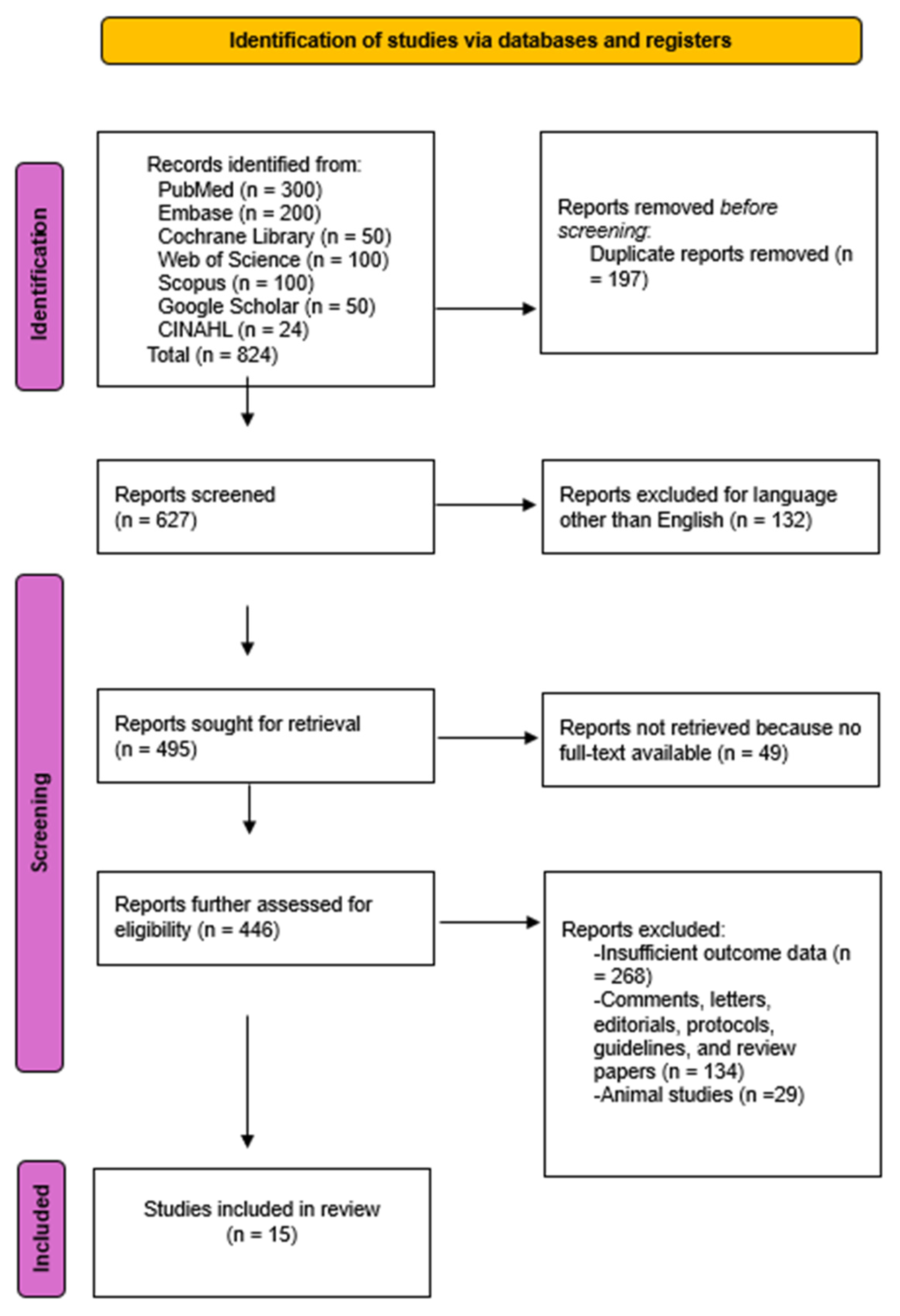
3.1. Study Selection
3.2. Study Characteristics
3.3. Assessment of Risk of Bias
3.4. Publication Bias
3.5. Findings
3.5.1. Liver Fibrosis
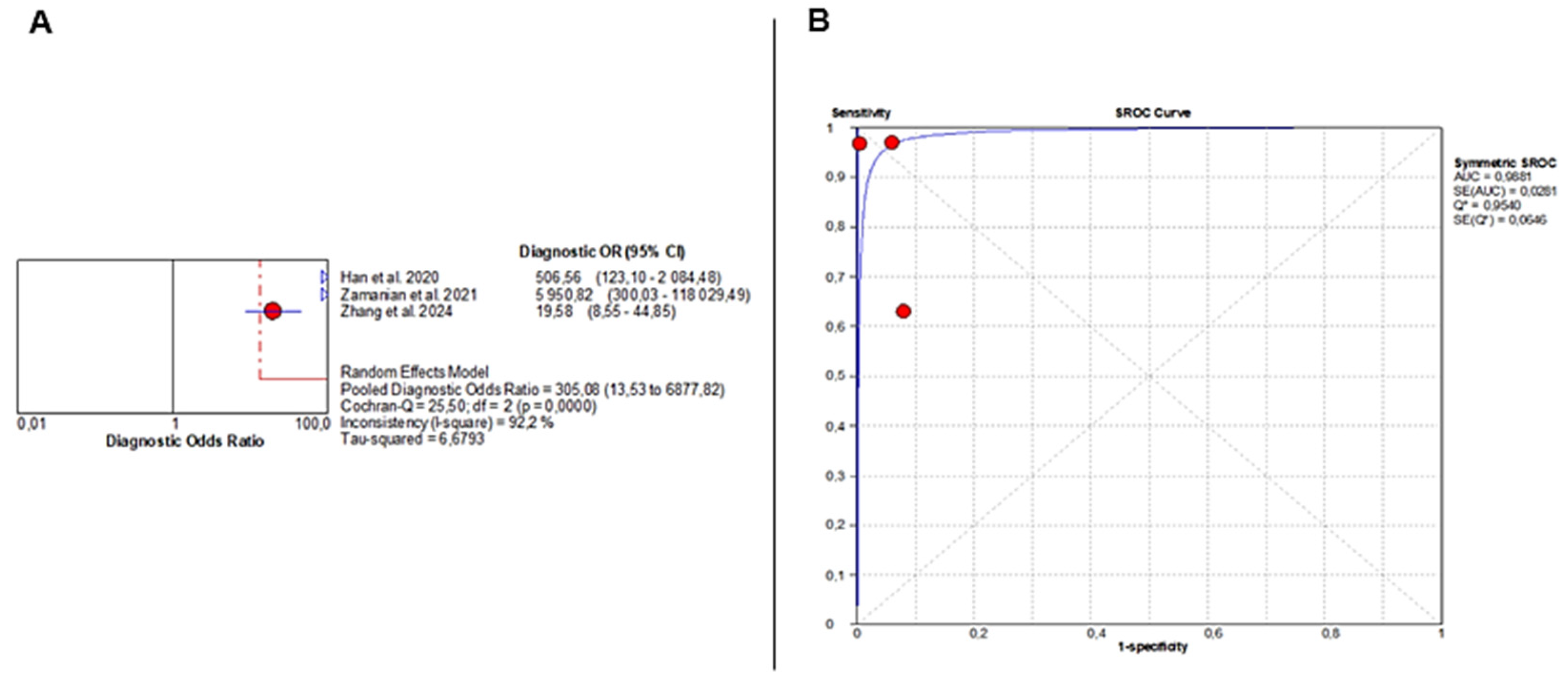
3.5.2. MASLD (Previously NAFLD)
3.6. Subgroup Analyses
4. Discussion
5. Conclusions
Supplementary Materials
Author Contributions
Funding
Institutional Review Board Statement
Informed Consent Statement
Data Availability Statement
Conflicts of Interest
References
- Decharatanachart, P.; Chaiteerakij, R.; Tiyarattanachai, T.; Treeprasertsuk, S. Application of artificial intelligence in chronic liver diseases: A systematic review and meta-analysis. BMC Gastroenterol. 2021, 21, 10. [Google Scholar] [CrossRef] [PubMed] [PubMed Central]
- Paudyal, R.; Shah, A.D.; Akin, O.; Do, R.K.G.; Konar, A.S.; Hatzoglou, V.; Mahmood, U.; Lee, N.; Wong, R.J.; Banerjee, S.; et al. Artificial Intelligence in CT and MR Imaging for Oncological Applications. Cancers 2023, 15, 2573. [Google Scholar] [CrossRef] [PubMed] [PubMed Central]
- Primakov, S.P.; Ibrahim, A.; van Timmeren, J.E.; Wu, G.; Keek, S.A.; Beuque, M.; Granzier, R.W.Y.; Lavrova, E.; Scrivener, M.; Sanduleanu, S.; et al. Automated detection and segmentation of non-small cell lung cancer computed tomography images. Nat. Commun. 2022, 13, 3423. [Google Scholar] [CrossRef] [PubMed]
- Dercle, L.; McGale, J.; Sun, S.; Marabelle, A.; Yeh, R.; Deutsch, E.; Mokrane, F.-Z.; Farwell, M.; Ammari, S.; Schoder, H.; et al. Artificial intelligence and radiomics: Fundamentals, applications, and challenges in immunotherapy. J. Immunother. Cancer 2022, 10, e005292. [Google Scholar] [CrossRef] [PubMed]
- Abdar, M.; Pourpanah, F.; Hussain, S.; Rezazadegan, D.; Liu, L.; Ghavamzadeh, M.; Fieguth, P.; Cao, X.; Khosravi, A.; Acharya, U.R.; et al. A review of uncertainty quantification in deep learning: Techniques, applications and challenges. Inf. Fus. 2021, 76, 243–297. [Google Scholar] [CrossRef]
- Le Berre, C.; Sandborn, W.J.; Aridhi, S.; Devignes, M.-D.; Fournier, L.; Smaïl-Tabbone, M.; Danese, S.; Peyrin-Biroulet, L. Application of artificial intelligence to gastroenterology and hepatology. Gastroenterology 2020, 158, 76–94. [Google Scholar] [CrossRef]
- Diaz, O.; Kushibar, K.; Osuala, R.; Linardos, A.; Garrucho, L.; Igual, L.; Radeva, P.; Prior, F.; Gkontra, P.; Lekadir, K. Data preparation for artificial intelligence in medical imaging: A comprehensive guide to open-access platforms and tools. Phys. Med. 2021, 83, 25–37. [Google Scholar] [CrossRef]
- Yu, J.H.; Lee, H.A.; Kim, S.U. Noninvasive imaging biomarkers for liver fibrosis in nonalcoholic fatty liver disease: Current and future. Clin. Mol. Hepatol. 2023, 29 (Suppl. S1), S136–S149. [Google Scholar] [CrossRef]
- Frank, R.A.; Bossuyt, P.M.; McInnes, M.D.F. Systematic reviews and meta-analyses of diagnostic test accuracy: The PRISMA-DTA statement. Radiology 2018, 288, 313–314. [Google Scholar] [CrossRef]
- Maleki Varnosfaderani, S.; Forouzanfar, M. The Role of AI in Hospitals and Clinics: Transforming Healthcare in the 21st Century. Bioengineering 2024, 11, 337. [Google Scholar] [CrossRef] [PubMed] [PubMed Central]
- Zhang, X.; Zhang, Y.; Zhang, G.; Qiu, X.; Tan, W.; Yin, X.; Liao, L. Deep learning with radiomics for disease diagnosis and treatment: Challenges and potential. Front. Oncol. 2022, 12, 773840. [Google Scholar] [CrossRef] [PubMed] [PubMed Central]
- European Association for the Study of the Liver; European Association for the Study of Diabetes; European Association for the Study of Obesity. EASL–EASD–EASO Clinical Practice Guidelines on the management of metabolic dysfunction-associated steatotic liver disease (MASLD): Executive Summary. Diabetologia 2024, 67, 2375–2392. [Google Scholar] [CrossRef]
- Rajan, V.; Das, A.; Venkatachalam, J.; Lohani, K.K.; Lahariya, C. Managing Metabolic Dysfunction-associated Steatotic Liver Disease (MASLD) in Primary Care Settings: A Review. Prev. Med. Res. Rev. 2025, 2, 183–191. [Google Scholar] [CrossRef]
- Liberati, A.; Altman, D.G.; Tetzlaff, J.; Mulrow, C.; Gotzsche, P.C.; A Ioannidis, J.P.; Clarke, M.; Devereaux, P.J.; Kleijnen, J.; Moher, D. The PRISMA statement for reporting systematic reviews and meta-analyses of studies that evaluate healthcare interventions: Explanation and elaboration. BMJ 2009, 21, 339. [Google Scholar] [CrossRef]
- McHugh, M.L. Interrater reliability: The kappa statistic. Biochem. Med. 2012, 22, 276–282. [Google Scholar] [CrossRef] [PubMed] [PubMed Central]
- Whiting, P.F.; Rutjes, A.W.S.; Westwood, M.E.; Mallett, S.; Deeks, J.J.; Reitsma, J.B.; Leeflang, M.M.G.; Sterne, J.A.C.; Bossuyt, P.M.M.; QUADAS-2 Group. QUADAS-2: A revised tool for the quality assessment of diagnostic accuracy studies. Ann. Intern. Med. 2011, 155, 529–536. [Google Scholar] [CrossRef] [PubMed]
- Gopalakrishna, G.; Mustafa, R.A.; Davenport, C.; Scholten, R.J.; Hyde, C.; Brozek, J.; Schünemann, H.J.; Bossuyt, P.M.; Leeflang, M.M.; Langendam, M.W. Applying grading of recommendations assessment, development and evaluation (GRADE) to diagnostic tests was challenging but doable. J. Clin. Epidemiol. 2014, 67, 760–768. [Google Scholar] [CrossRef]
- Dettori, J.R.; Norvell, D.C.; Chapman, J.R. Fixed-Effect vs Random-Effects Models for Meta-Analysis: 3 Points to Consider. Glob. Spine J. 2022, 12, 1624–1626. [Google Scholar] [CrossRef] [PubMed] [PubMed Central]
- Patel, A.; Cooper, N.; Freeman, S.; Sutton, A. Graphical enhancements to summary receiver operating characteristic plots to facilitate the analysis and reporting of meta-analysis of diagnostic test accuracy data. Res. Synth. Methods 2021, 12, 34–44. [Google Scholar] [CrossRef]
- Higgins, J.P.; Thompson, S.G.; Deeks, J.J.; Altman, D.G. Measuring inconsistency in meta-analyses. BMJ 2003, 327, 557–560. [Google Scholar] [CrossRef] [PubMed] [PubMed Central]
- Thorlund, K.; Imberger, G.; Johnston, B.C.; Walsh, M.; Awad, T.; Thabane, L.; Gluud, C.; Devereaux, P.J.; Wetterslev, J. Evolution of heterogeneity (I2) estimates and their 95% confidence intervals in large meta-analyses. PLoS ONE 2012, 7, e39471. [Google Scholar] [CrossRef] [PubMed] [PubMed Central]
- Rovetta, A. Raiders of the Lost Correlation: A Guide on Using Pearson and Spearman Coefficients to Detect Hidden Correlations in Medical Sciences. Cureus 2020, 12, e11794. [Google Scholar] [CrossRef] [PubMed] [PubMed Central]
- Deeks, J.J.; Macaskill, P.; Irwig, L. The performance of tests of publication bias and other sample size effects in systematic reviews of diagnostic test accuracy was assessed. J. Clin. Epidemiol. 2005, 58, 882–893. [Google Scholar] [CrossRef] [PubMed]
- Ahmed, Y.; Hussein, R.S.; Basha, T.A.; Khalifa, A.M.; Ibrahim, A.S.; Abdelmoaty, A.S.; Abdella, H.M.; Fahmy, A.S. Detecting liver fibrosis using a machine learning-based approach to the quantification of the heart-induced deformation in tagged MR images. NMR Biomed. 2019, 33, e4215. [Google Scholar] [CrossRef] [PubMed]
- Choi, K.J.; Jang, J.K.; Lee, S.S.; Sung, Y.S.; Shim, W.H.; Kim, H.S.; Yun, J.; Choi, J.-Y.; Lee, Y.; Kang, B.-K.; et al. Development and validation of a deep learning system for staging liver fibrosis using contrast agent-enhanced CT images. Radiology 2018, 289, 688–697. [Google Scholar] [CrossRef]
- Hectors, S.J.; Kennedy, P.; Huang, K.-H.; Stocker, D.; Carbonell, G.; Greenspan, H.; Friedman, S.; Taouli, B. Fully automated prediction of liver fibrosis using deep learning analysis of gadoxetic acid-enhanced MRI. Eur. Radiol. 2021, 31, 3805–3814. [Google Scholar] [CrossRef]
- Lee, J.H.; Joo, I.; Kang, T.W.; Paik, Y.H.; Sinn, D.H.; Ha, S.Y.; Kim, K.; Choi, C.; Lee, G.; Yi, J.; et al. Deep learning with ultrasonography: Automated classification of liver fibrosis using a deep convolutional neural network. Eur. Radiol. 2020, 30, 1264–1273. [Google Scholar] [CrossRef]
- Li, W.; Huang, Y.; Zhuang, B.-W.; Liu, G.-J.; Hu, H.-T.; Li, X.; Liang, J.-Y.; Wang, Z.; Huang, X.-W.; Zhang, C.-Q.; et al. Multiparametric ultrasomics of significant liver fibrosis: A machine learning-based analysis. Eur. Radiol. 2019, 29, 1496–1506. [Google Scholar] [CrossRef]
- Li, Q.; Yu, B.; Tian, X.; Cui, X.; Zhang, R.; Guo, Q. Deep residual nets model for staging liver fibrosis on plain CT images. Int. Comput. Assist. Radiol. Surg. 2020, 15, 1399–1406. [Google Scholar] [CrossRef]
- Wang, K.; Lu, X.; Zhou, H.; Gao, Y.; Zheng, J.; Tong, M.; Wu, C.; Liu, C.; Huang, L.; Jiang, T.; et al. Deep learning radiomics of shear wave elastography significantly improved diagnostic performance for assessing liver fibrosis in chronic hepatitis B: A prospective multicentre study. Gut 2019, 68, 729–741. [Google Scholar] [CrossRef]
- Yasaka, K.; Akai, H.; Kunimatsu, A.; Abe, O.; Kiryu, S. Liver fibrosis: Deep convolutional neural network for staging by using gadoxetic acid-enhanced hepatobiliary phase MR images. Radiology 2017, 287, 146–155. [Google Scholar] [CrossRef]
- Yasaka, K.; Akai, H.; Kunimatsu, A.; Abe, O.; Kiryu, S. Deep learning for staging liver fibrosis on CT: A pilot study. Eur. Radiol. 2018, 28, 4578–4585. [Google Scholar] [CrossRef]
- Yin, Y.; Yakar, D.; Dierckx, R.A.J.O.; Mouridsen, K.B.; Kwee, T.C.; de Haas, R.J. Liver fibrosis staging by deep learning: A visual-based explanation of diagnostic decisions of the model. Eur. Radiol. 2021, 31, 9620–9627. [Google Scholar] [CrossRef] [PubMed]
- Zhu, Z.; Lv, D.; Zhang, X.; Wang, S.-H.; Zhu, G. Deep learning in the classification of stage of liver fibrosis in chronic hepatitis B with magnetic resonance ADC images. Contrast Media Mol. Imaging 2021, 2021, 2015780. [Google Scholar] [CrossRef] [PubMed]
- Zhang, L.; Li, Q.-Y.; Duan, Y.-Y.; Yan, G.-Z.; Yang, Y.-L.; Yang, R.-J. Artificial neural network aided non-invasive grading evaluation of hepatic fibrosis by duplex ultrasonography. BMC Med. Inform. Dec. Mak. 2012, 12, 55. [Google Scholar] [CrossRef] [PubMed]
- Han, A.; Byra, M.; Heba, E.; Andre, M.P.; Erdman, J.J.W.; Loomba, R.; Sirlin, C.B.; O’brien, W.D. Noninvasive diagnosis of nonalcoholic fatty liver disease and quantification of liver fat with radiofrequency ultrasound data using one-dimensional convolutional neural networks. Radiology 2020, 295, 342–350. [Google Scholar] [CrossRef]
- Zamanian, H.; Mostaar, A.; Azadeh, P.; Ahmadi, M. Implementation of Combinational Deep Learning Algorithm for Non-alcoholic Fatty Liver Classification in Ultrasound Images. J. Biomed. Phys. Eng. 2021, 11, 73–84. [Google Scholar] [CrossRef] [PubMed] [PubMed Central]
- Zhang, L.; Huang, Y.; Huang, M.; Zhao, C.H.; Zhang, Y.J.; Wang, Y. Development of cost-effective fatty liver disease prediction models in a Chinese population: Statistical and machine learning approaches. JMIR Form. Res. 2024, 8, e53654. [Google Scholar] [CrossRef]
- Kleiner, D.E.; Brunt, E.M.; Van Natta, M.; Behling, C.; Contos, M.J.; Cummings, O.W.; Ferrell, L.D.; Liu, Y.-C.; Torbenson, M.S.; Unalp-Arida, A.; et al. Design and validation of a histological scoring system for nonalcoholic fatty liver disease. Hepatology 2005, 41, 1313–1321. [Google Scholar] [CrossRef]
- Mienye, I.D.; Swart, T.G.; Obaido, G.; Jordan, M.; Ilono, P. Deep Convolutional Neural Networks in Medical Image Analysis: A Review. Information 2025, 16, 195. [Google Scholar] [CrossRef]
- Patil, P.U.; Lande, S.B.; Nagalkar, V.J.; Nikam, S.B.; Wakchaure, G.C. Grading and sorting technique of dragon fruits using machine learning algorithms. J. Agric. Food Res. 2021, 4, 100118. [Google Scholar] [CrossRef]
- Borawar, L.; Kaur, R. ResNet: Solving vanishing gradient in deep networks. In Proceedings of the International Conference on Recent Trends in Computing, Delhi, India, 5–6 July 2023; Springer: Berlin/Heidelberg, Germany, 2023; pp. 235–247. [Google Scholar] [CrossRef]
- Calabrese, E.; Rudie, J.D.; Rauschecker, A.M.; Villanueva-Meyer, J.E.; Clarke, J.L.; Solomon, D.A.; Cha, S. Combining radiomics and deep convolutional neural network features from preoperative MRI for predicting clinically relevant genetic biomarkers in glioblastoma. Neurooncol. Adv. 2022, 4, vdac060. [Google Scholar] [CrossRef] [PubMed] [PubMed Central]
- Kufel, J.; Bargieł-Łączek, K.; Kocot, S.; Koźlik, M.; Bartnikowska, W.; Janik, M.; Czogalik, Ł.; Dudek, P.; Magiera, M.; Lis, A.; et al. What is machine learning, artificial neural networks, and deep learning?—Examples of practical applications in medicine. Diagnostics 2023, 13, 2582. [Google Scholar] [CrossRef] [PubMed] [PubMed Central]
- Schonlau, M.; Zou, R.Y. The random forest algorithm for statistical learning. Stata J. Promot. Commun. Stat. Stata 2020, 20, 3–29. [Google Scholar] [CrossRef]
- Nam, D.; Chapiro, J.; Paradis, V.; Seraphin, T.P.; Kather, J.N. Artificial intelligence in liver diseases: Improving diagnostics, prognostics and response prediction. JHEP Rep. 2022, 4, 100443. [Google Scholar] [CrossRef] [PubMed] [PubMed Central]
- Alshagathrh, F.M.; Househ, M.S. Artificial intelligence for detecting and quantifying fatty liver in ultrasound images: A systematic review. Bioengineering 2022, 9, 748. [Google Scholar] [CrossRef]
- Karalis, V.D. The Integration of Artificial Intelligence into Clinical Practice. Appl. Biosci. 2024, 3, 14–44. [Google Scholar] [CrossRef]
- Pinto-Coelho, L. How Artificial Intelligence Is Shaping Medical Imaging Technology: A Survey of Innovations and Applications. Bioengineering 2023, 10, 1435. [Google Scholar] [CrossRef] [PubMed] [PubMed Central]
- Al Kuwaiti, A.; Nazer, K.; Al-Reedy, A.; Al-Shehri, S.; Al-Muhanna, A.; Subbarayalu, A.V.; Al Muhanna, D.; Al-Muhanna, F.A. A Review of the Role of Artificial Intelligence in Healthcare. J. Pers. Med. 2023, 13, 951. [Google Scholar] [CrossRef] [PubMed] [PubMed Central]
- Angulo, P.; Hui, J.M.; Marchesini, G.; Bugianesi, E.; George, J.; Farrell, G.C.; Enders, F.; Saksena, S.; Burt, A.D.; Bida, J.P.; et al. The NAFLD fibrosis score: A noninvasive system that identifies liver fibrosis in patients with NAFLD. Hepatology 2007, 45, 846–854. [Google Scholar] [CrossRef] [PubMed]
- Njei, B.; Osta, E.; Njei, N.; Al-Ajlouni, Y.A.; Lim, J.K. An explainable machine learning model for prediction of high-risk nonalcoholic steatohepatitis. Sci. Rep. 2024, 14, 8589. [Google Scholar] [CrossRef] [PubMed]
- Alowais, S.A.; Alghamdi, S.S.; Alsuhebany, N.; Alqahtani, T.; Alshaya, A.I.; Almohareb, S.N.; Aldairem, A.; Alrashed, M.; Bin Saleh, K.; Badreldin, H.A.; et al. Revolutionizing healthcare: The role of artificial intelligence in clinical practice. BMC Med. Educ. 2023, 23, 689. [Google Scholar] [CrossRef] [PubMed]
- Pugliese, N.; Bertazzoni, A.; Hassan, C.; Schattenberg, J.M.; Aghemo, A. Revolutionizing MASLD: How Artificial Intelligence Is Shaping the Future of Liver Care. Cancers 2025, 17, 722. [Google Scholar] [CrossRef] [PubMed] [PubMed Central]
- McTeer, M.; Applegate, D.; Mesenbrink, P.; Ratziu, V.; Schattenberg, J.M.; Bugianesi, E.; Geier, A.; Gomez, M.R.; Dufour, J.-F.; Ekstedt, M.; et al. Machine learning approaches to enhance diagnosis and staging of patients with MASLD using routinely available clinical information. PLoS ONE 2024, 19, e0299487. [Google Scholar] [CrossRef] [PubMed] [PubMed Central]
- Apell, P.; Eriksson, H. Artificial intelligence (AI) healthcare technology innovations: The current state and challenges from a life science industry perspective. Technol. Anal. Strateg. Manag. 2023, 35, 179–193. [Google Scholar] [CrossRef]
- Javed, H.; El-Sappagh, S.; Abuhmed, T. Robustness in deep learning models for medical diagnostics: Security and adversarial challenges towards robust AI applications. Artif. Intell. Rev. 2025, 58, 12. [Google Scholar] [CrossRef]
- Rinella, M.E.; Lazarus, J.V.; Ratziu, V.; Francque, S.M.; Sanyal, A.J.; Kanwal, F.; Romero, D.; Abdelmalek, M.F.; Anstee, Q.M.; Arab, J.P.; et al. A multisociety Delphi consensus statement on new fatty liver disease nomenclature. J. Hepatology 2023, 79, 1542–1556. [Google Scholar] [CrossRef]
- Bourganou, M.V.; Chondrogianni, M.E.; Kyrou, I.; Flessa, C.-M.; Chatzigeorgiou, A.; Oikonomou, E.; Lambadiari, V.; Randeva, H.S.; Kassi, E. Unraveling Metabolic Dysfunction-Associated Steatotic Liver Disease Through the Use of Omics Technologies. Int. J. Mol. Sci. 2025, 26, 1589. [Google Scholar] [CrossRef]
- Riedl, R. Is trust in artificial intelligence systems related to user personality? Review of empirical evidence and future research directions. Electron. Mark. 2022, 32, 2021–2051. [Google Scholar] [CrossRef]
- Chen, R.J.; Wang, J.J.; Williamson, D.F.K.; Chen, T.Y.; Lipkova, J.; Lu, M.Y.; Sahai, S.; Mahmood, F. Algorithmic fairness in artificial intelligence for medicine and healthcare. Nat. Biomed. Eng. 2023, 7, 719–742. [Google Scholar] [CrossRef] [PubMed] [PubMed Central]
- Kharchenko, V.; Fesenko, H.; Illiashenko, O. Quality models for artificial intelligence systems: Characteristic-based approach, development and application. Sensors 2022, 22, 4865. [Google Scholar] [CrossRef]
- Qadri, Y.A.; Shaikh, S.; Ahmad, K.; Choi, I.; Kim, S.W.; Vasilakos, A.V. Explainable Artificial Intelligence: A Perspective on Drug Discovery. Pharmaceutics 2025, 17, 1119. [Google Scholar] [CrossRef]
- Lu, F.; Liu, J.; She, B.; Yang, H.; Ji, F.; Zhang, L. Global Trends and Inequalities of Liver Complications Related to Metabolic Dysfunction-Associated Steatotic Liver Disease: An Analysis From 1990 to 2021. Liver Int. 2025, 45, e16120. [Google Scholar] [CrossRef] [PubMed] [PubMed Central]
- Bin Rashid, A.; Kausik, A.K. AI revolutionizing industries worldwide: A comprehensive overview of its diverse applications. Hybrid Adv. 2024, 7, 100277. [Google Scholar] [CrossRef]
- Koçak, B.; Ponsiglione, A.; Stanzione, A.; Bluethgen, C.; Santinha, J.; Ugga, L.; Huisman, M.; Klontzas, M.E.; Cannella, R.; Cuocolo, R. Bias in artificial intelligence for medical imaging: Fundamentals, detection, avoidance, mitigation, challenges, ethics, and prospects. Diagn. Interv. Radiol. 2025, 31, 75–88. [Google Scholar] [CrossRef] [PubMed] [PubMed Central]
- Jimenez Ramos, M.; Kendall, T.J.; Drozdov, I.; Fallowfield, J.A. A data-driven approach to decode metabolic dysfunction-associated steatotic liver disease. Ann. Hepatol. 2024, 29, 101278. [Google Scholar] [CrossRef] [PubMed] [PubMed Central]



| Study/Year | Journal | Country | Study Design | Imaging Modality | Stage | Total Patients | AI Classifier | Type of Set | Sensitivity | Specificity | Accuracy |
|---|---|---|---|---|---|---|---|---|---|---|---|
| Ahmed et al., 2019 | NMR in Biomedicine | Egypt | Prospective | MRI | F1–F4 | 37 | SVM | Validation | 81.8% | 86.6% | 83.7% |
| Choi et al., 2018 | Radiology | Republic of Korea | Retrospective | CT | ≥F2 | 7461 | CNNs | Test | 95.5% | 89.9% | 94.1% |
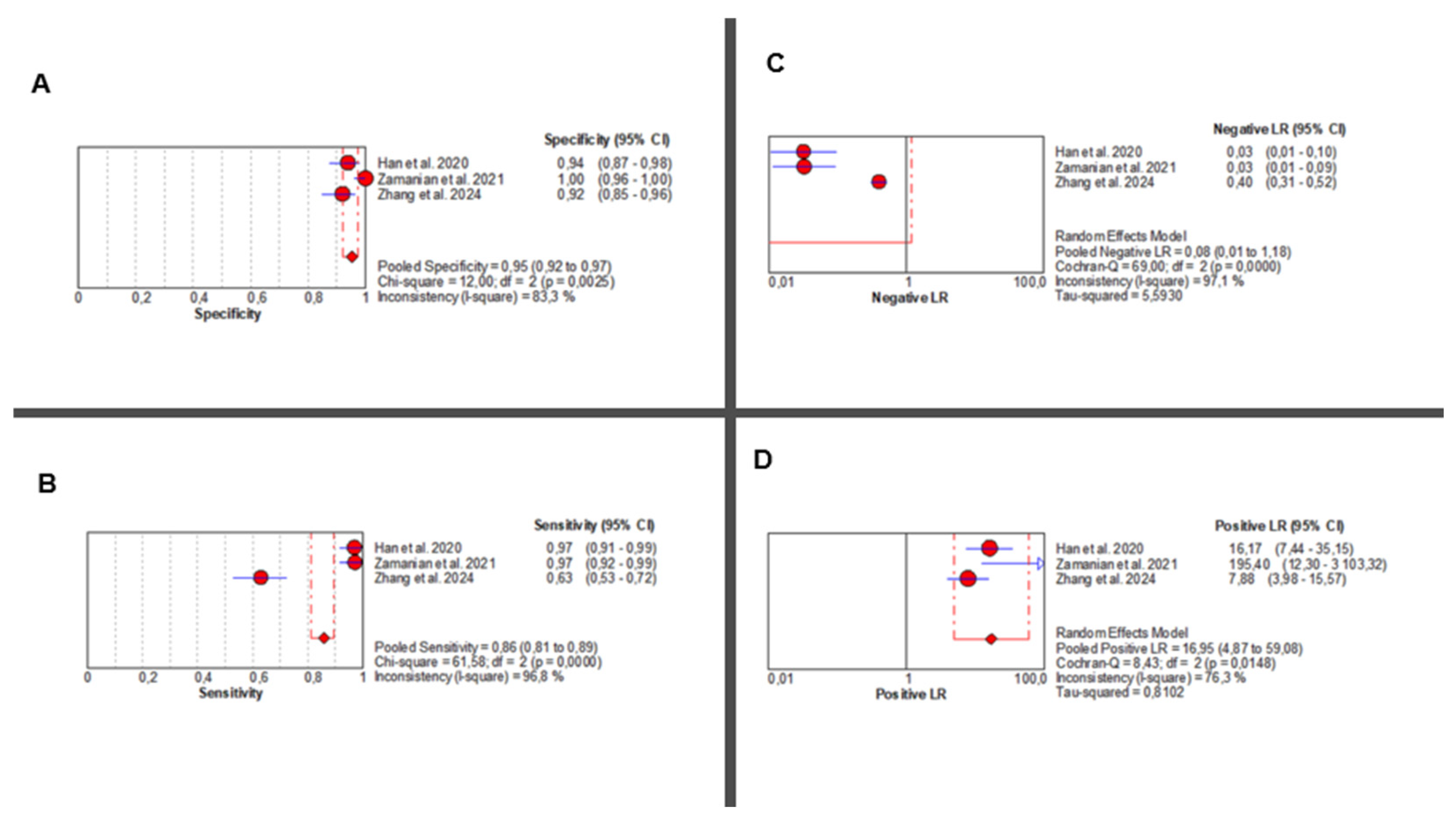
| Han et al., 2020 | Radiology | USA | Prospective | MRI | NS | 204 | CNNs | Test | 97% | 94% | 96% |
| Hectors et al., 2021 | Eur Radiol | USA | Retrospective | MRI | ≥F2 | 355 | CNNs | Test | 82% | 93% | 85% |
| Lee et al., 2020 | Eur Radiol | Republic of Korea | Retrospective | Ultrasonography | ≥F2 | 3446 | DCNN | External Test | 91.3% | 82.4% | 86.6% |
| Li et al., 2019 | Eur Radiol | China | Prospective | Ultrasound | ≥F2 | 144 | SVMs | Validation | 93.8% | 69.2% | 81.5% |
| Li et al., 2020 | Int J CARS | China | Retrospective | CT | ≥F2 | 347 | ResNet | Test | 83% | 59% | 74% |
| Wang et al., 2019 | Gut | China | Prospective | SWE | ≥F2 | 398 | CNN | Validation | 69.1% | 90.9% | 81% |
| Yasaka et al., 2017 | Radiology | Japan | Retrospective | MRI | ≥F2 | 634 | DCNN | Test | 84% | 65% | 79% |
| Yasaka et al., 2018 | Eur Radiol | Japan | Retrospective | CT | ≥F2 | 286 | DCNN | Test | 74% | 76% | 75% |
| Yin et al., 2021 | Eur Radiol | Netherlands | Retrospective | CT | ≥F2 | 252 | CNN | Test | 83.0% | 91.7% | 88.3% |
| Zamanian et al., 2021 | J Biomed Phys Eng | Iran | Prospective | Ultrasonography | NS | 55 | SVMs | Test | 97.2% | 100% | 98.64% |
| Zhang et al., 2012 | BMC Med Inform Decis Mak | China | Prospective | Duplex US | F1–F3 | 239 | ANNs | Validation | 95.0% | 85.0% | 88.3% |
| Zhang et al., 2024 | JMIR Form Res | China | Prospective | TE | NS | 916 | Random Forest | Test | 62% | 90% | 84% |
| Zhu et al., 2021 | Contrast Media and Molecular Imaging | China | Prospective | MRI | F0–F4 | 123 | CNN | Test | 81.45% | 91.12% | 88.13% |
| AI-Based Abdominal Imaging Modality | Sensitivity (95%CI) | Specificity (95%CI) | PLR (95%CI) | NLR (95%CI) | DOR (95%CI) | AUC |
|---|---|---|---|---|---|---|
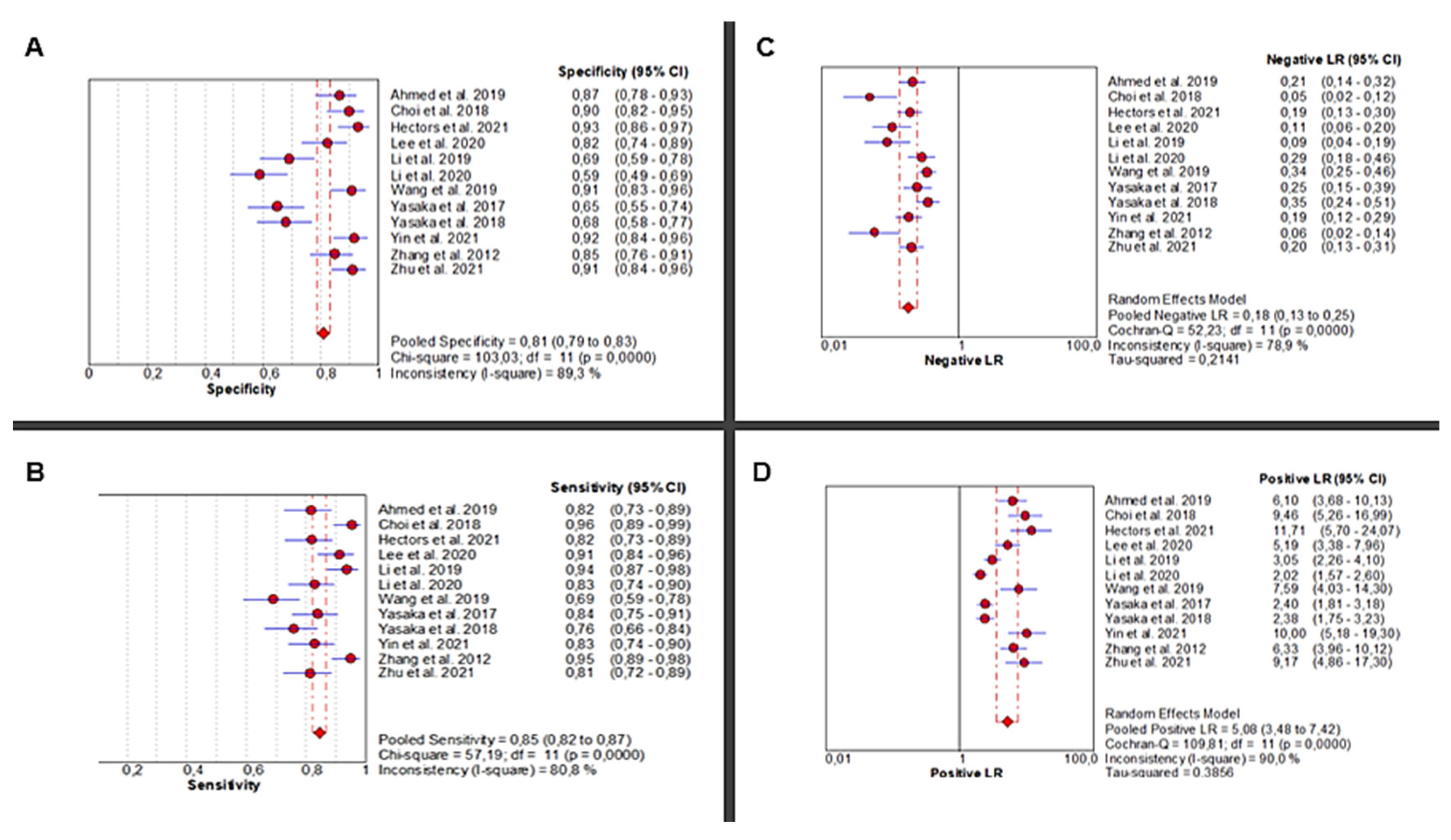
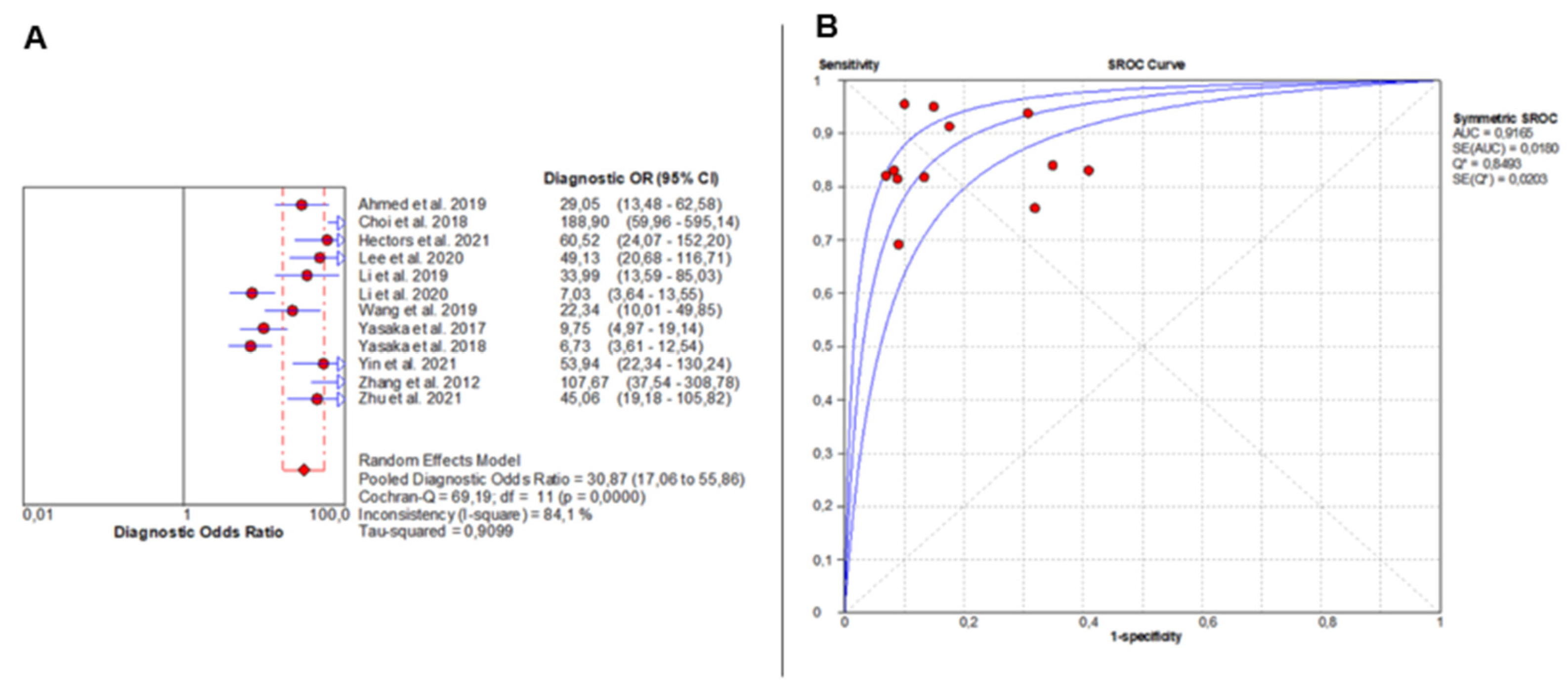
| Overall | 0.85 (0.82–0.87) | 0.81 (0.79–0.83) | 5.08 (3.48–7.42) | 0.18 (0.13–0.25) | 30.87 (17.06–55.86) | 0.9165 |
| Imaging modality MRI CT Ultrasonography Shear wave elastography p = 0.6962 | 0.82 (0.78–0.86) 0.84 (0.80–0.88) 0.93 (0.90–0.96) NA | 0.84 (0.80–0.87) 0.77 (0.73–0.81) 0.79 (0.74–0.83) NA | 6.10 (2.53–14.70) 4.41 (1.99–9.77) 4.52 (2.81–7.30) NA | 0.21 (0.17–0.26) 0.19 (0.10–0.37) 0.09 (0.06–0.13) NA | 28.59 (12.46–65.57) 24.74 (6.03–101.52) 53.86 (28.78–100.79) NA | 0.8958 0.9147 0.9628 NA |
| AI classifier CNN SVM Resnet Radiomics of elastography ANN p = 0.5479 | 0.85 (0.82–0.87) 0.88 (0.82–0.92) NA NA NA | 0.83 (0.80–0.86) 0.78 (0.72–0.83) NA NA NA | 5.80 (3.27–10.30) 4.19 (2.07–8.49) NA NA NA | 0.18 (0.13–0.26) 0.15 (0.06–0.34) NA NA NA | 34.82 (14.55–83.33) 30.99 (17.20–55.82) NA NA NA | 0.9226 0.9037 NA NA NA |
| Study Excluded | DOR (95% CI) |
|---|---|
| Ahmed et al., 2019 | 20,763 (16,140–26,709) (p = 0.000) |
| Choi et al., 2018 | 19,431 (15,214–24,818) (p = 0.000) |
| Hectors et al., 2021 | 19,904 (15,535–25,500) (p = 0.000) |
| Lee et al., 2020 | 20,029 (15,614–25,692) (p = 0.000) |
| Li et al., 2019 | 20,742 (16,188–26,577) (p = 0.000) |
| Li et al., 2020 | 25,440 (19,675–32,892) (p = 0.000) |
| Wang et al., 2019 | 21,367 (16,629–27,454) (p = 0.000) |
| Yasaka et al., 2017 | 24,034 (18,606–31,044) (p = 0.000) |
| Yasaka et al., 2018 | 26,225 (20,237–33,985) (p = 0.000) |
| Yin et al., 2021 | 53.88 (44.75–64.57) (p = 0.000) |
| Zhang et al., 2012 | 19,934 (15,546–25,561) (p = 0.000) |
| Zhu et al., 2021 | 20,137 (15,694–25,837) (p = 0.000) |
Disclaimer/Publisher’s Note: The statements, opinions and data contained in all publications are solely those of the individual author(s) and contributor(s) and not of MDPI and/or the editor(s). MDPI and/or the editor(s) disclaim responsibility for any injury to people or property resulting from any ideas, methods, instructions or products referred to in the content. |
© 2025 by the authors. Licensee MDPI, Basel, Switzerland. This article is an open access article distributed under the terms and conditions of the Creative Commons Attribution (CC BY) license (https://creativecommons.org/licenses/by/4.0/).
Share and Cite
Pugliesi, R.A.; Ben Mansour, K.; Apitzsch, J.; Papachristodoulou, A.; Rafailidis, V.; Katz, D.S. Meta-Analysis of AI Integration in Abdominal Imaging for Liver Fibrosis and MASLD: Evaluating Diagnostic Accuracy and Clinical Impact. J. Clin. Med. 2025, 14, 8466. https://doi.org/10.3390/jcm14238466
Pugliesi RA, Ben Mansour K, Apitzsch J, Papachristodoulou A, Rafailidis V, Katz DS. Meta-Analysis of AI Integration in Abdominal Imaging for Liver Fibrosis and MASLD: Evaluating Diagnostic Accuracy and Clinical Impact. Journal of Clinical Medicine. 2025; 14(23):8466. https://doi.org/10.3390/jcm14238466
Chicago/Turabian StylePugliesi, Rosa Alba, Karim Ben Mansour, Jonas Apitzsch, Angeliki Papachristodoulou, Vasileios Rafailidis, and Douglas S. Katz. 2025. "Meta-Analysis of AI Integration in Abdominal Imaging for Liver Fibrosis and MASLD: Evaluating Diagnostic Accuracy and Clinical Impact" Journal of Clinical Medicine 14, no. 23: 8466. https://doi.org/10.3390/jcm14238466
APA StylePugliesi, R. A., Ben Mansour, K., Apitzsch, J., Papachristodoulou, A., Rafailidis, V., & Katz, D. S. (2025). Meta-Analysis of AI Integration in Abdominal Imaging for Liver Fibrosis and MASLD: Evaluating Diagnostic Accuracy and Clinical Impact. Journal of Clinical Medicine, 14(23), 8466. https://doi.org/10.3390/jcm14238466