Stroke Survivors Have Almost Three Times Higher Risk of Depression: A Systematic Review and Meta-Analysis


Abstract
1. Introduction
2. Methods
2.1. Study Design and Search Strategy
2.2. Inclusion and Exclusion Criteria
2.3. Data Extraction and Quality Assessment
2.3.1. Risk of Bias Assessment
2.3.2. Assessment of Evidence Certainty
2.4. Statistical Analysis
3. Results
3.1. Search Results
3.2. Studies and Patients’ Characteristics
3.3. Quality Assessment
3.4. Meta-Analysis Results and Frequency Analysis
3.5. Subgroup Analysis
4. Discussion
4.1. Result Analysis
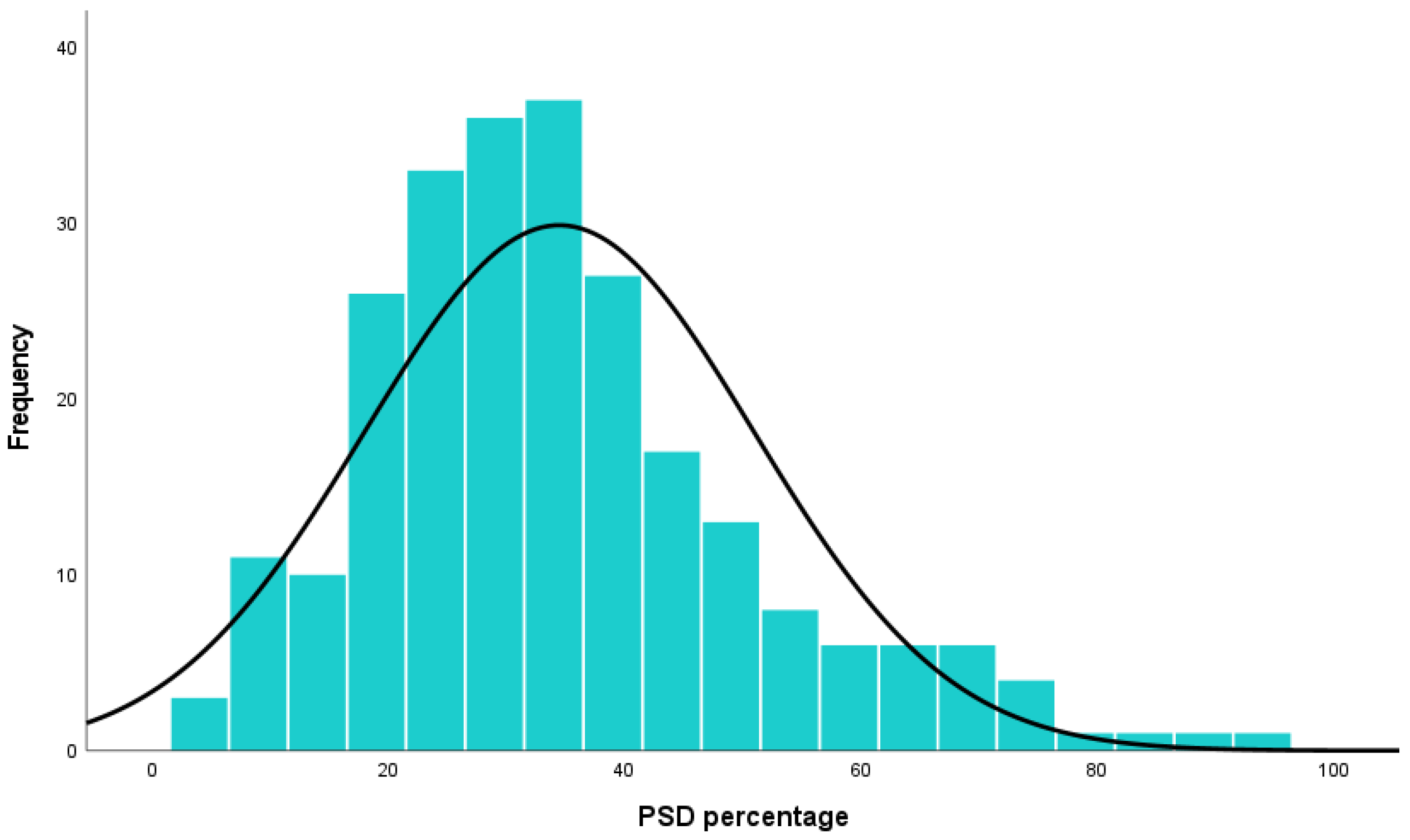
4.1.1. OR and Frequency
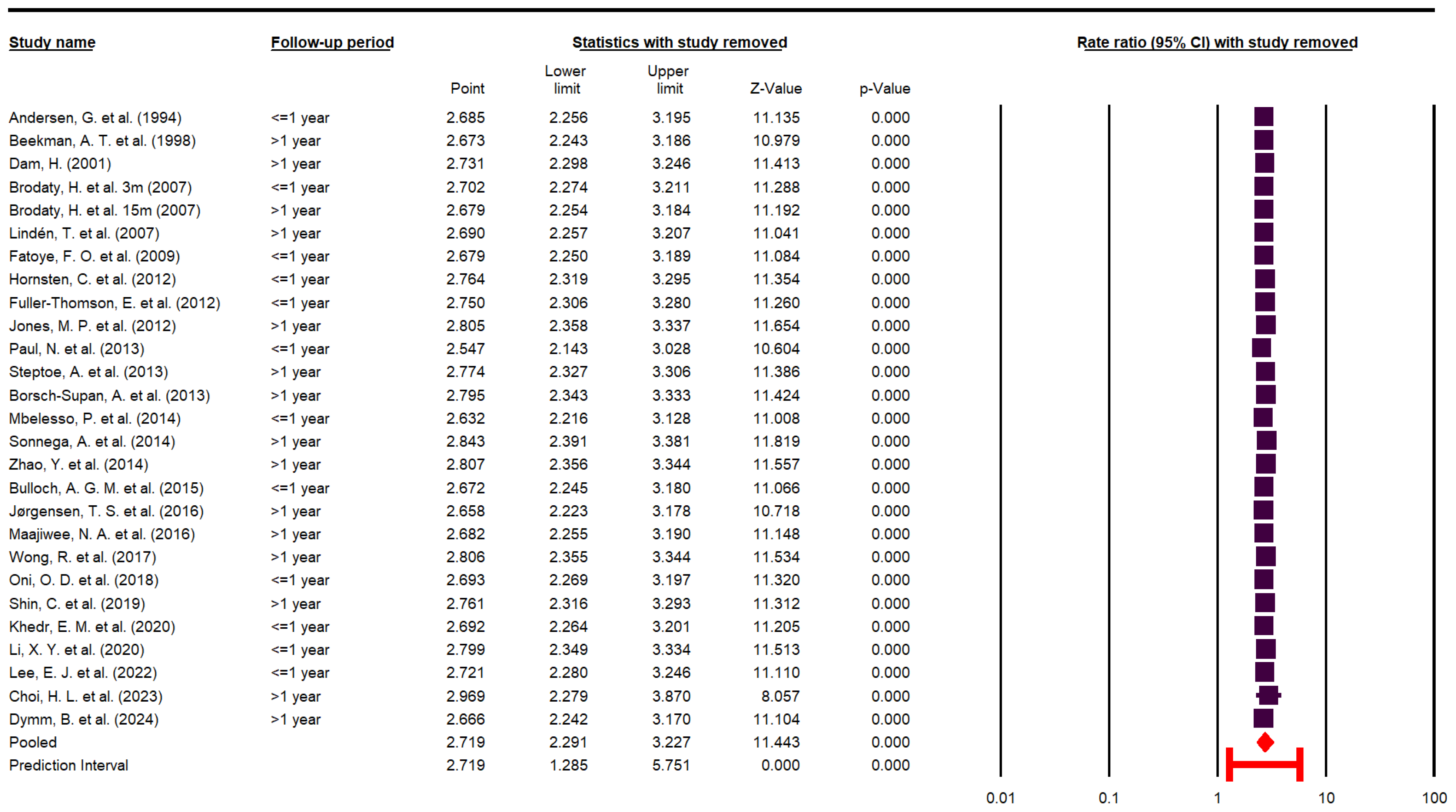
4.1.2. Heterogeneity
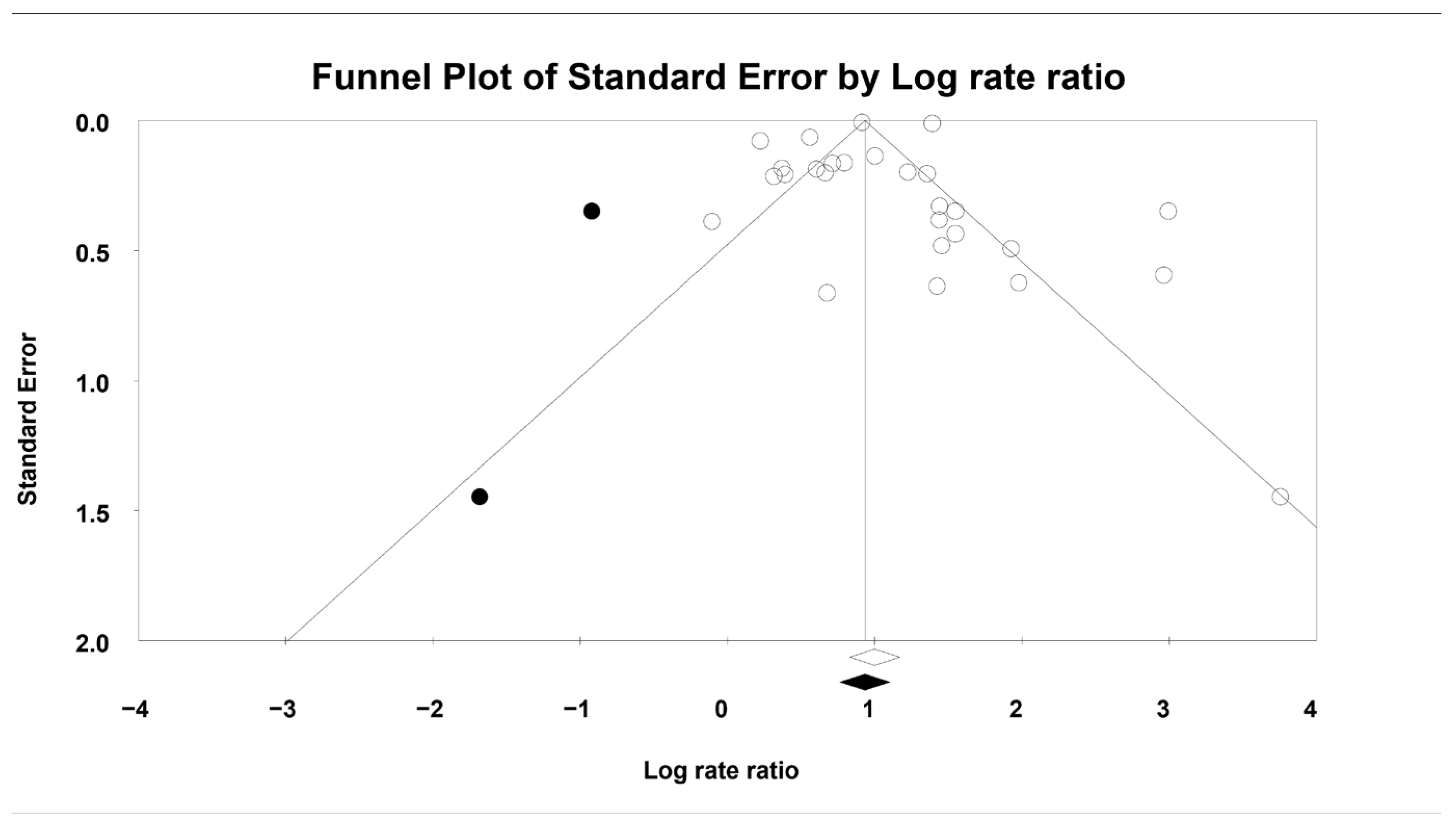
4.1.3. Publication Bias
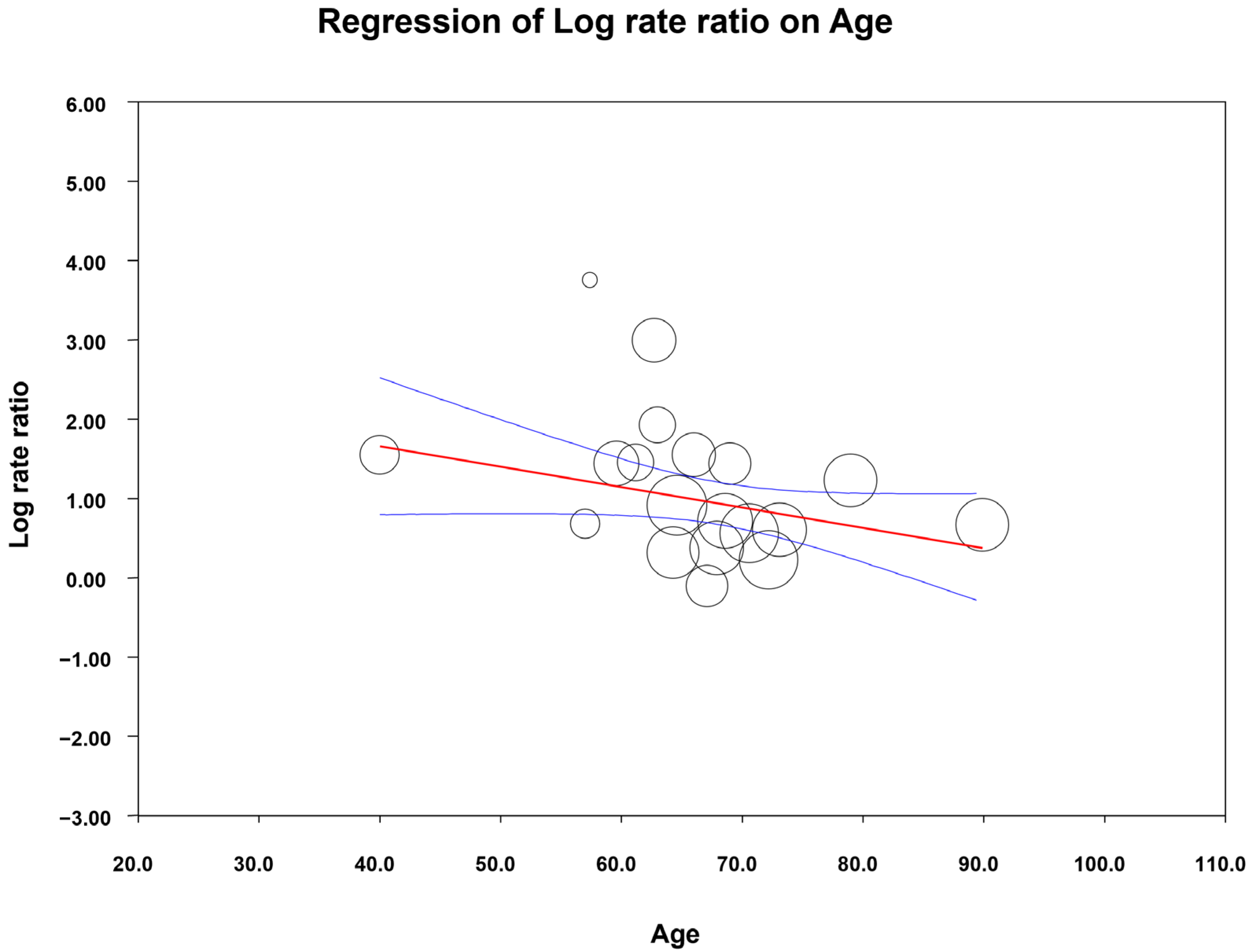
4.2. Subgroup Analysis
4.3. Other Studies
4.3.1. Meta-Analysis
4.3.2. Original Papers
5. Limitations and Strengths
6. Conclusions
Supplementary Materials
Funding
Institutional Review Board Statement
Informed Consent Statement
Conflicts of Interest
References
- Murphy, S.J.; Werring, D.J. Stroke: Causes and clinical features. Medicine 2020, 48, 561–566. [Google Scholar] [CrossRef]
- Katan, M.; Luft, A. Global Burden of Stroke. Semin. Neurol. 2018, 38, 208–211. [Google Scholar] [CrossRef]
- Albertson, M.; Sharma, J. Stroke: Current concepts. South Dak. Med. 2014, 67, 455, 457–461, 463–465. [Google Scholar]
- Tadi, P.; Lui, F. Acute Stroke. In StatPearls; StatPearls Publishing LLC.: Treasure Island, FL, USA, 2024. [Google Scholar]
- Nemani, K.; Gurin, L. Neuropsychiatric Complications after Stroke. Semin. Neurol. 2021, 41, 85–100. [Google Scholar] [CrossRef] [PubMed]
- Kim, J.S. Post-stroke Mood and Emotional Disturbances: Pharmacological Therapy Based on Mechanisms. J. Stroke 2016, 18, 244–255. [Google Scholar] [CrossRef]
- Guo, J.; Wang, J.; Sun, W.; Liu, X. The advances of post-stroke depression: 2021 update. J. Neurol. 2022, 269, 1236–1249. [Google Scholar] [CrossRef] [PubMed]
- Liu, L.; Xu, M.; Marshall, I.J.; Wolfe, C.D.; Wang, Y.; O’Connell, M.D. Prevalence and natural history of depression after stroke: A systematic review and meta-analysis of observational studies. PLoS Med. 2023, 20, e1004200. [Google Scholar] [CrossRef] [PubMed]
- Bartoli, F.; Di Brita, C.; Crocamo, C.; Clerici, M.; Carrà, G. Early Post-stroke Depression and Mortality: Meta-Analysis and Meta-Regression. Front. Psychiatry 2018, 9, 530. [Google Scholar] [CrossRef]
- Jørgensen, T.S.; Wium-Andersen, I.K.; Wium-Andersen, M.K.; Jørgensen, M.B.; Prescott, E.; Maartensson, S.; Kragh-Andersen, P.; Osler, M. Incidence of Depression After Stroke, and Associated Risk Factors and Mortality Outcomes, in a Large Cohort of Danish Patients. JAMA Psychiatry 2016, 73, 1032–1040. [Google Scholar] [CrossRef]
- Frank, D.; Gruenbaum, B.F.; Zlotnik, A.; Semyonov, M.; Frenkel, A.; Boyko, M. Pathophysiology and Current Drug Treatments for Post-Stroke Depression: A Review. Int. J. Mol. Sci. 2022, 23, 15114. [Google Scholar] [CrossRef]
- Lenzi, G.L.; Altieri, M.; Maestrini, I. Post-stroke depression. Rev. Neurol. 2008, 164, 837–840. [Google Scholar] [CrossRef]
- Liu, L.; Marshall, I.J.; Pei, R.; Bhalla, A.; Wolfe, C.D.; O’Connell, M.D.; Wang, Y. Natural history of depression up to 18 years after stroke: A population-based South London Stroke Register study. Lancet Reg. Health Eur. 2024, 40, 100882. [Google Scholar] [CrossRef] [PubMed]
- Szumilas, M. Explaining odds ratios. J. Can. Acad. Child Adolesc. Psychiatry 2010, 19, 227–229. [Google Scholar] [PubMed]
- Page, M.J.; McKenzie, J.E.; Bossuyt, P.M.; Boutron, I.; Hoffmann, T.C.; Mulrow, C.D.; Shamseer, L.; Tetzlaff, J.M.; Akl, E.A.; Brennan, S.E.; et al. The PRISMA 2020 statement: An updated guideline for reporting systematic reviews. BMJ 2021, 372, n71. [Google Scholar] [CrossRef]
- Wells, G.A.; Shea, B.; O’Connell, D.; Peterson, J.; Welch, V.; Losos, M.; Tugwell, P. The Newcastle-Ottawa Scale (NOS) for Assessing the Quality of Nonrandomised Studies in Meta-Analyses. 2000. Available online: https://www.ohri.ca/programs/clinical_epidemiology/nos_manual.pdf (accessed on 12 November 2025).
- Ryan, R.; Hill, S. How to GRADE the Quality of the Evidence; Cochrane Consumers and Communication Group: Melbourne, Australia, 2016; Volume 3. [Google Scholar]
- Guyatt, G.H.; Oxman, A.D.; Vist, G.E.; Kunz, R.; Falck-Ytter, Y.; Alonso-Coello, P.; Schünemann, H.J. GRADE: An emerging consensus on rating quality of evidence and strength of recommendations. BMJ 2008, 336, 924–926. [Google Scholar] [CrossRef]
- Guyatt, G.H.; Oxman, A.D.; Kunz, R.; Vist, G.E.; Falck-Ytter, Y.; Schünemann, H.J. What is “quality of evidence” and why is it important to clinicians? BMJ 2008, 336, 995–998. [Google Scholar] [CrossRef]
- Thornton, A.; Lee, P. Publication bias in meta-analysis: Its causes and consequences. J. Clin. Epidemiol. 2000, 53, 207–216. [Google Scholar] [CrossRef]
- Shi, X.; Nie, C.; Shi, S.; Wang, T.; Yang, H.; Zhou, Y.; Song, X. Effect comparison between Egger’s test and Begg’s test in publication bias diagnosis in meta-analyses: Evidence from a pilot survey. Int. J. Res. Stud. Biosci. 2017, 5, 14–20. [Google Scholar]
- Sonnega, A.; Faul, J.D.; Ofstedal, M.B.; Langa, K.M.; Phillips, J.W.; Weir, D.R. Cohort Profile: The Health and Retirement Study (HRS). Int. J. Epidemiol. 2014, 43, 576–585. [Google Scholar] [CrossRef] [PubMed]
- Steptoe, A.; Breeze, E.; Banks, J.; Nazroo, J. Cohort profile: The English longitudinal study of ageing. Int. J. Epidemiol. 2013, 42, 1640–1648. [Google Scholar] [CrossRef]
- Börsch-Supan, A.; Brandt, M.; Hunkler, C.; Kneip, T.; Korbmacher, J.; Malter, F.; Schaan, B.; Stuck, S.; Zuber, S. Data Resource Profile: The Survey of Health, Ageing and Retirement in Europe (SHARE). Int. J. Epidemiol. 2013, 42, 992–1001. [Google Scholar] [CrossRef]
- Zhao, Y.; Hu, Y.; Smith, J.P.; Strauss, J.; Yang, G. Cohort profile: The China Health and Retirement Longitudinal Study (CHARLS). Int. J. Epidemiol. 2014, 43, 61–68. [Google Scholar] [CrossRef] [PubMed]
- Shin, C. Korean Longitudinal Study of Ageing. In Encyclopedia of Gerontology and Population Aging; Gu, D., Dupre, M.E., Eds.; Springer International Publishing: Cham, Switzerland, 2019; pp. 1–4. [Google Scholar]
- Wong, R.; Michaels-Obregon, A.; Palloni, A. Cohort Profile: The Mexican Health and Aging Study (MHAS). Int. J. Epidemiol. 2017, 46, e2. [Google Scholar] [CrossRef] [PubMed]
- Le, P.; Zhang, J.; Li, N.; Jin, Y.; Zheng, Z.J. Depressive symptoms occurring after stroke by age, sex and socioeconomic status in six population-based studies: Longitudinal analyses and meta-analyses. Asian J. Psychiatr. 2023, 79, 103397. [Google Scholar] [CrossRef]
- Li, X.; Wang, X. Relationships between stroke, depression, generalized anxiety disorder and physical disability: Some evidence from the Canadian Community Health Survey-Mental Health. Psychiatry Res. 2020, 290, 113074. [Google Scholar] [CrossRef]
- Jones, M.P.; Howitt, S.C.; Jusabani, A.; Gray, W.K.; Aris, E.; Mugusi, F.; Swai, M.; Walker, R.W. Anxiety and depression in incident stroke survivors and their carers in rural Tanzania: A case-control follow-up study over five years. Neurol. Psychiatry Brain Res. 2012, 18, 122–128. [Google Scholar] [CrossRef]
- Dam, H. Depression in stroke patients 7 years following stroke. Acta Psychiatr. Scand. 2001, 103, 287–293. [Google Scholar] [CrossRef]
- Andersen, G.; Vestergaard, K.; Riis, J.; Lauritzen, L. Incidence of post-stroke depression during the first year in a large unselected stroke population determined using a valid standardized rating scale. Acta Psychiatr. Scand. 1994, 90, 190–195. [Google Scholar] [CrossRef] [PubMed]
- Beekman, A.T.; Penninx, B.W.; Deeg, D.J.; Ormel, J.; Smit, J.H.; Braam, A.W.; van Tilburg, W. Depression in survivor of stroke: A community-based study of prevalence, risk factors and consequences. Soc. Psychiatry Psychiatr. Epidemiol. 1998, 33, 463–470. [Google Scholar] [CrossRef]
- Brodaty, H.; Withall, A.; Altendorf, A.; Sachdev, P.S. Rates of depression at 3 and 15 months poststroke and their relationship with cognitive decline: The Sydney Stroke Study. Am. J. Geriatr. Psychiatry 2007, 15, 477–486. [Google Scholar] [CrossRef]
- Lindén, T.; Blomstrand, C.; Skoog, I. Depressive disorders after 20 months in elderly stroke patients: A case-control study. Stroke 2007, 38, 1860–1863. [Google Scholar] [CrossRef]
- Fatoye, F.O.; Mosaku, S.K.; Komolafe, M.A.; Eegunranti, B.A.; Adebayo, R.A.; Komolafe, E.O.; Fatoye, G.K. Depressive symptoms and associated factors following cerebrovascular accident among Nigerians. J. Ment. Health 2009, 18, 224–232. [Google Scholar] [CrossRef]
- Hornsten, C.; Molander, L.; Gustafson, Y. The prevalence of stroke and the association between stroke and depression among a very old population. Arch. Gerontol. Geriatr. 2012, 55, 555–559. [Google Scholar] [CrossRef]
- Fuller-Thomson, E.; Tulipano, M.J.; Song, M. The association between depression, suicidal ideation, and stroke in a population-based sample. Int. J. Stroke 2012, 7, 188–194. [Google Scholar] [CrossRef]
- Paul, N.; Das, S.; Hazra, A.; Ghosal, M.K.; Ray, B.K.; Banerjee, T.K.; Chaudhuri, A.; Sanyal, D.; Basu, A.; Das, S.K. Depression among stroke survivors: A community-based, prospective study from Kolkata, India. Am. J. Geriatr. Psychiatry 2013, 21, 821–831. [Google Scholar] [CrossRef]
- Mbelesso, P.; Senekian, V.P.; Yangatimbi, E.; Tabo, A.; Zaoro-Kponsere, A.J.; Kette, G.C.; Oundagnon, B. Depression post stroke in Africa: Myth or reality? Bull. Soc. Pathol. Exot. 2014, 107, 350–355. [Google Scholar] [CrossRef] [PubMed]
- Bulloch, A.G.; Fiest, K.M.; Williams, J.V.; Lavorato, D.H.; Berzins, S.A.; Jetté, N.; Pringsheim, T.M.; Patten, S.B. Depression--a common disorder across a broad spectrum of neurological conditions: A cross-sectional nationally representative survey. Gen. Hosp. Psychiatry 2015, 37, 507–512. [Google Scholar] [CrossRef] [PubMed]
- Maaijwee, N.A.; Tendolkar, I.; Rutten-Jacobs, L.C.; Arntz, R.M.; Schaapsmeerders, P.; Dorresteijn, L.D.; Schoonderwaldt, H.C.; van Dijk, E.J.; de Leeuw, F.E. Long-term depressive symptoms and anxiety after transient ischaemic attack or ischaemic stroke in young adults. Eur. J. Neurol. 2016, 23, 1262–1268. [Google Scholar] [CrossRef]
- Oni, O.D.; Olagunju, A.T.; Olisah, V.O.; Aina, O.F.; Ojini, F.I. Post-stroke depression: Prevalence, associated factors and impact on quality of life among outpatients in a Nigerian hospital. S. Afr. J. Psychiatr. 2018, 24, 1058. [Google Scholar] [CrossRef] [PubMed]
- Khedr, E.M.; Abdelrahman, A.A.; Desoky, T.; Zaki, A.F.; Gamea, A. Post-stroke depression: Frequency, risk factors, and impact on quality of life among 103 stroke patients—Hospital-based study. Egypt. J. Neurol. Psychiatry Neurosurg. 2020, 56, 66. [Google Scholar] [CrossRef]
- Lee, E.J.; Kwon, O.D.; Kim, S.J. Prevalence, awareness, and treatment of depression among community-dwelling stroke survivors in Korea. Sci. Rep. 2022, 12, 4050. [Google Scholar] [CrossRef]
- Choi, H.L.; Yang, K.; Han, K.; Kim, B.; Chang, W.H.; Kwon, S.; Jung, W.; Yoo, J.E.; Jeon, H.J.; Shin, D.W. Increased Risk of Developing Depression in Disability after Stroke: A Korean Nationwide Study. Int. J. Environ. Res. Public Health 2023, 20, 842. [Google Scholar] [CrossRef]
- Dymm, B.; Goldstein, L.B.; Unnithan, S.; Al-Khalidi, H.R.; Koltai, D.; Bushnell, C.; Husseini, N.E. Depression following small vessel stroke is common and more prevalent in women. J. Stroke Cerebrovasc. Dis. 2024, 33, 107646. [Google Scholar] [CrossRef] [PubMed]
- Lépine, J.P.; Briley, M. The increasing burden of depression. Neuropsychiatr. Dis. Treat. 2011, 7, 3–7. [Google Scholar] [CrossRef] [PubMed]
- McHugh, M.L. The odds ratio: Calculation, usage, and interpretation. Biochem. Medica 2009, 19, 120–126. [Google Scholar] [CrossRef]
- Patra, A.; Nitin, K.; Devi, N.M.; Surya, S.; Lewis, M.G.; Kamalakannan, S. Prevalence of Depression among Stroke Survivors in India: A Systematic Review and Meta-Analysis. Front. Neurol. Neurosci. Res. 2021, 2, 100008. [Google Scholar] [CrossRef]
- Dalvand, S.; Gheshlagh, R.G.; Kurdi, A. Prevalence of poststroke depression in Iranian patients: A systematic review and meta-analysis. Neuropsychiatr. Dis. Treat. 2018, 14, 3073–3080. [Google Scholar] [CrossRef]
- Primeau, F. Post-stroke depression: A critical review of the literature. Can. J. Psychiatry 1988, 33, 757–765. [Google Scholar] [CrossRef]
- Langan, D. Assessing Heterogeneity in Random-Effects Meta-analysis. Methods Mol. Biol. 2022, 2345, 67–89. [Google Scholar] [CrossRef] [PubMed]
- IntHout, J.; Ioannidis, J.P.; Rovers, M.M.; Goeman, J.J. Plea for routinely presenting prediction intervals in meta-analysis. BMJ Open 2016, 6, e010247. [Google Scholar] [CrossRef]
- Simmonds, M. Quantifying the risk of error when interpreting funnel plots. Syst. Rev. 2015, 4, 24. [Google Scholar] [CrossRef] [PubMed]
- Ayerbe, L.; Ayis, S.; Crichton, S.; Wolfe, C.D.; Rudd, A.G. The natural history of depression up to 15 years after stroke: The South London Stroke Register. Stroke 2013, 44, 1105–1110. [Google Scholar] [CrossRef] [PubMed]
- Gaete, J.M.; Bogousslavsky, J. Post-stroke depression. Expert Rev. Neurother. 2008, 8, 75–92. [Google Scholar] [CrossRef] [PubMed]
- Ayerbe, L.; Ayis, S.; Wolfe, C.D.; Rudd, A.G. Natural history, predictors and outcomes of depression after stroke: Systematic review and meta-analysis. Br. J. Psychiatry 2013, 202, 14–21. [Google Scholar] [CrossRef]
- Taylor-Rowan, M.; Momoh, O.; Ayerbe, L.; Evans, J.J.; Stott, D.J.; Quinn, T.J. Prevalence of pre-stroke depression and its association with post-stroke depression: A systematic review and meta-analysis. Psychol. Med. 2019, 49, 685–696. [Google Scholar] [CrossRef]
- Hackett, M.L.; Pickles, K. Part I: Frequency of depression after stroke: An updated systematic review and meta-analysis of observational studies. Int. J. Stroke 2014, 9, 1017–1025. [Google Scholar] [CrossRef]
- Hackett, M.L.; Yapa, C.; Parag, V.; Anderson, C.S. Frequency of depression after stroke: A systematic review of observational studies. Stroke 2005, 36, 1330–1340. [Google Scholar] [CrossRef]
- Zeng, Y.Y.; Cheng, H.R.; Cheng, L.; Huang, G.; Chen, Y.B.; Tang, W.J.; He, J.C. Comparison of poststroke depression between acute ischemic and hemorrhagic stroke patients. Int. J. Geriatr. Psychiatry 2021, 36, 493–499. [Google Scholar] [CrossRef]
- Robinson, R.G.; Jorge, R.E. Post-Stroke Depression: A Review. Am. J. Psychiatry 2016, 173, 221–231. [Google Scholar] [CrossRef]
- Colita, D.; Burdusel, D.; Glavan, D.; Hermann, D.M.; Colita, C.I.; Colita, E.; Udristoiu, I.; Popa-Wagner, A. Molecular mechanisms underlying major depressive disorder and post-stroke affective disorders. J. Affect Disord. 2024, 344, 149–158. [Google Scholar] [CrossRef]
- Zhan, Q.; Kong, F. Mechanisms associated with post-stroke depression and pharmacologic therapy. Front. Neurol. 2023, 14, 1274709. [Google Scholar] [CrossRef] [PubMed]
- Gao, H.; Sai, Y.; Shang, R.; Zhong, X.; Kong, L.; Liu, J.; Wang, K. Post stroke depression: Pathogenesis and molecular mechanisms of natural product-based interventions. Front. Pharmacol. 2025, 16, 1595160. [Google Scholar] [CrossRef] [PubMed]
- Krick, S.; Koob, J.L.; Latarnik, S.; Volz, L.J.; Fink, G.R.; Grefkes, C.; Rehme, A.K. Neuroanatomy of post-stroke depression: The association between symptom clusters and lesion location. Brain Commun. 2023, 5, fcad275. [Google Scholar] [CrossRef] [PubMed]
- Nickel, A.; Thomalla, G. Post-Stroke Depression: Impact of Lesion Location and Methodological Limitations—A Topical Review. Front. Neurol. 2017, 8, 498. [Google Scholar] [CrossRef]



| Downgrade criteria | Domain | General Principles in GRADE | Criteria for Judgment in Our Study |
| Risk of bias | Confidence in the recommendations decreases when the included studies present important methodological flaws that may distort the estimated associations. Flaws such as inadequate control of confounding factors, inconsistent outcome assessment or lack of transparency in analytical procedures can compromise the validity of results. | In the present study, we evaluated the risk of bias using the Newcastle-Ottawa Scale (NOS), as all included studies were observational in design. All studies demonstrated acceptable methodological quality in relation to our research question. The certainty of the evidence was downgraded when the NOS score was ≤5. | |
| Inconsistency | Substantial differences in the magnitude or direction of results are referred to as inconsistency. When point estimates diverge markedly or confidence intervals show minimal overlap, the certainty of the evidence may be downgraded. Such variability often reflects unexpected differences in study populations, methodological approaches, or other contextual factors that influence the observed effects. | Inconsistency was explored by examining the variability of individual effect estimates. As a complementary approach, odds ratios lying beyond two standard deviations from the overall mean were considered potential outliers. This threshold (±2 SD) was used to identify studies contributing disproportionately to heterogeneity in the pooled analysis. | |
| Indirectness | Evidence is considered indirect when the research question of primary studies does not fully correspond to the specific question being evaluated. Indirectness may result from differences in population characteristics, exposure definitions, or outcome measures, thereby limiting the applicability of findings. | Studies that were not primarily designed to assess depression or psychological outcomes after stroke were considered indirect. In such cases, the original study objectives did not fully align with the research question, which may reduce the precision or depth of outcome assessment relevant to this analysis. | |
| Imprecision | Imprecision arises when estimated effects are surrounded by considerable uncertainty, often reflected in wide confidence intervals. This may result from small sample sizes, few outcome events, or marked variability between study groups, which limit the ability to draw firm conclusions about the true effect. | Studies were considered imprecise when the ratio between the upper and lower limits of the 95% confidence interval exceeded three. In such cases, the certainty of the evidence was downgraded by one level due to the wide uncertainty surrounding the estimated effect. | |
| Publication bias | The certainty of the evidence may decrease if relevant studies remain unpublished or if results are selectively reported, particularly when studies with null or small effects are less likely to be available. Suspicion of such bias increases when only few studies are published and most are commercially funded. | Publication bias was considered possible when the available evidence suggested selective reporting or incomplete dissemination of results. Studies funded by commercial entities or presenting exclusively positive findings were judged as more prone to this limitation. | |
| Upgrade criteria | Large magnitude of effect | A large or very large effect size observed consistently across studies can increase the certainty of the evidence. When the estimated association is strong and unlikely to be fully explained by residual bias or confounding, confidence in the observed relationship may be upgraded. | Studies showing an odds ratio greater than 2 were upgraded by one level, as such effect sizes indicate a large and consistent association unlikely to be fully explained by residual bias or confounding. |
| Plausible confounding | The certainty of the evidence may increase when all plausible sources of bias or unmeasured confounding would reduce, rather than increase, the observed effect. In such cases, the true association is likely to be at least as strong as that reported. | Studies that explicitly adjusted the odds of depression between case and control groups were upgraded by one level. | |
| Dose-response gradient | A consistent trend showing greater effect with increasing exposure or intensity of the intervention strengthens causal inference. The presence of such a dose–response relationship supports upgrading the quality of the evidence. | Studies that explicitly addressed the association between the severity of depression and stroke severity were upgraded by one level. |
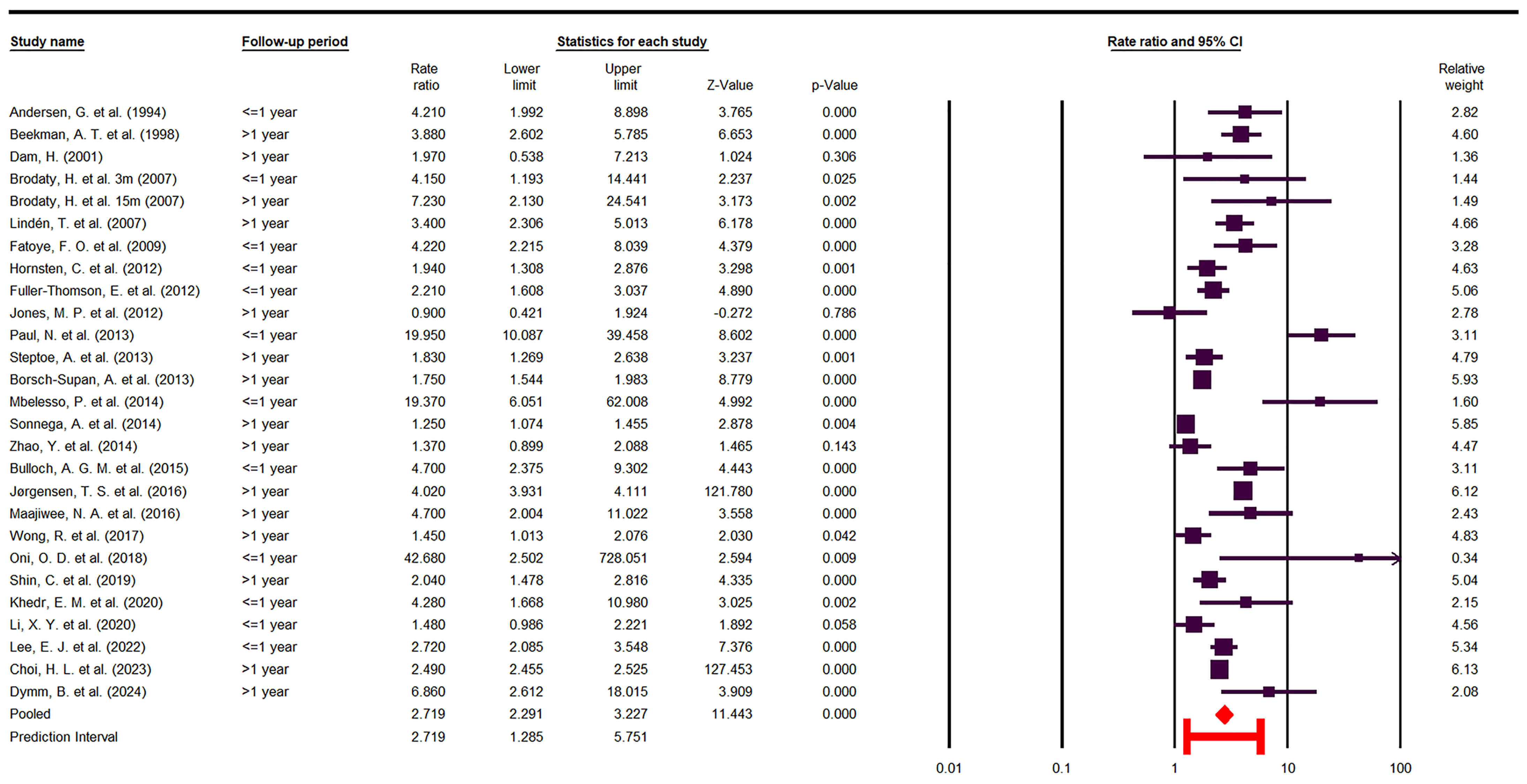
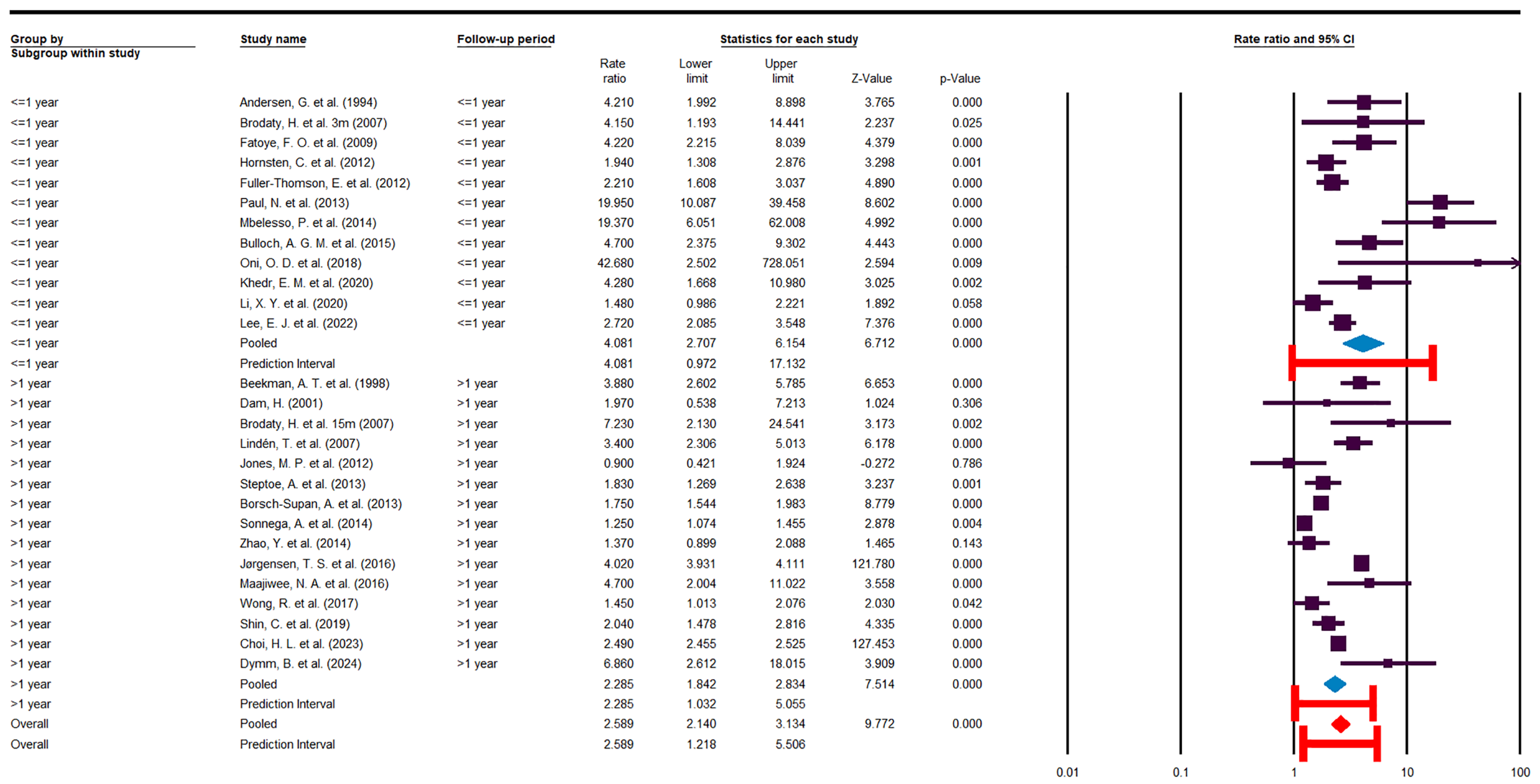
| First Author’s Name | Publication Year | Stroke Patients’ Age | Sex (Male%) | Sample Size | Depression Prevalence (Among Stroke Patients) | Follow-Up Duration | Depresion Assesment Scale | Study Type | Country | Odds Ratio [95% CI] |
|---|---|---|---|---|---|---|---|---|---|---|
| Andersen, G. et al. [32]. | 1994 | 69 | 55% | Stroke: 211 Control: 122 | 25.1% | 1 year | HDRS | Prospective case- control | Denmark | 4.21 [1.99–8.89] |
| Beekman, A. T. et al. [33] | 1998 | N/A | N/A | Stroke: 173 Control: 1026 | 27.2% | 10 years | CES-D | Longitudinal | Netherlands | 3.88 [2.60–5.78] |
| Dam, H. [31] | 2001 | 57 ± 8.5 | 65.7% | Stroke: 99 Control: 28 | 19.2% | 7 years | HDRS, BDI | Cohort | Denmark | 1.97 [0.54–7.24] |
| Brodaty, H. et al. 3m [34] | 2007 | N/A | N/A | Stroke: 158 Control: 100 | 12.0% | 3 months | DSM-IV | Longitudinal | Australia | 4.15 [1.19–14.41] |
| Brodaty, H. et al. 15m [34] | 2007 | N/A | N/A | Stroke: 140 Control: 100 | 20.7% | 15 months | DSM-IV | Longitudinal | Australia | 7.23 [2.13–24.54] |
| Lindén, T. et al. [35] | 2007 | 79 ± 5.3 | 35% | Stroke: 149 Control: 745 | 33.6% | 20 months | DSM III-R | Case-control | Sweden | 3.40 [2.30–5.00] |
| Fatoye, F. O. et al. [36] | 2009 | 59.6 ± 10.5 | 57.6% | Stroke: 118 Control: 118 | 39.6% | 11 months | BDI | Case-control | Nigeria | 4.22 [2.21–8.02] |
| Hornsten, C. et al. [37] | 2012 | 89.9 ± 4.5 | 30.2% | Stroke: 129 Control: 472 | 50.4% | N/A | GDS-15, MADRS, OBS | Cross- sectional | Sweden | 1.94 [1.31–2.88] |
| Fuller-Thomson, E. et al. [38] | 2012 | N/A | N/A | Stroke: 858 Control: 65,855 | 7.4% | N/A | CIDI-SF | Cross- sectional | Canada | 2.21 [1.61–3.04] |
| Jones, M. P. et al. [30] | 2012 | 67.1 | 28% | Stroke: 51 Control: 58 | 51% | 3 years | HADS | Longitudinal | Tanzania | 0.90 [0.42–1.92] |
| Paul, N. et al. [39] | 2013 | 62.7 ± 13.04 | 49% | Stroke: 241 Control: 262 | 46.8% | 8–10 months (average 10.79) | bGDS | Case-control within a prospective cohort | India | 19.95 [10.09–39.47] |
| Steptoe, A. et al. [23] | 2013 | 73.1 ± 7.9 | 53.5% | Stroke: 127 Control: 4852 | 37.8% | 7.8 years | CESD-8 | Cohort | England | 1.83 [1.27–2.64] |
| Börsch-Supan, A. et al. [24] | 2013 | 70.6 ± 9.3 | 55.4% | Stroke: 1082 Control: 25,485 | 39.6% | 3.8 years | EURO-D | Cohort | Europe | 1.75 [1.55–1.99] |
| Mbelesso, P. et al. [40] | 2014 | N/A | 57.1% | Stroke: 35 Control: 70 | 88.6% | N/A | MADRS | Cross-sectional case-control | Central Africa Republic | 19.37 [6.05–62.00] |
| Sonnega, A. et al. [22] | 2014 | 72.2 ± 10.5 | 49.6% | Stroke: 820 Control: 12,991 | 31.6% | 6.9 years | CESD-8 | Cohort | USA | 1.25 [1.07–1.45] |
| Zhao, Y. et al. [25] | 2014 | 64.3 ± 8.4 | 56.2% | Stroke: 89 Control: 4932 | 48.3% | 6.9 years | CESD-10 | Cohort | China | 1.37 [0.90–2.09] |
| Bulloch, A.G.M. et al. [41] | 2015 | 66 | 51.6% | Not Specified | 22.7% | N/A | CIDI-SFMD | Cross-sectional | Canada | 4.70 [2.40–9.40] |
| Jørgensen, T. S. et al. [10] | 2016 | N/A | N/A | Stroke: 135,417 Control: 145,499 | 25.4% | 2 years | ICD-10 | Cohort | Denmark | 4.02 [3.93–4.11] |
| Maaijwee, N. A. et al. [42] | 2016 | 40 | N/A | Stroke: 325 Control: 147 | 19.5% | 10 years | HADS | Cohort | Netherlands | 4.70 [2.00–11.00] |
| Wong, R. et al. [27] | 2017 | 67.9 ± 9.1 | 49.6% | Stroke: 135 Control: 6855 | 35.5% | 6 years | CESD-9 | Cohort | Mexico | 1.45 [1.01–2.07] |
| Oni, O. D. et al. [43] | 2018 | 57.4 ± 9.67 | 54.3% | Stroke: 70 Control: 70 | 22.9% | N/A | ICD-10 | Cross-sectional case-control | Nigeria | 42.68 [2.50–727.47] |
| Shin, C. et al. [26] | 2019 | 68.6 ± 8.8 | 56.1% | Stroke: 157 Control: 4625 | 57.3% | 7.9 years | CESD-10A & B | Cohort | Korea | 2.04 [1.48–2.82] |
| Khedr, E. M. et al. [44] | 2020 | 61.2 ± 14.7 | 60.2% | Stroke: 103 Control: 50 | 36.9% | N/A | DSM IV TR | Cross-sectional | Egypt | 4.28 [1.67–10.99] |
| Li, X. Y. et al. [29] | 2020 | N/A | N/A | Stroke: 374 Control: 18,784 | 6.9% | N/A | WMH-CIDI | Cross-sectional | Canada | 1.48 [0.99–2.23] |
| Lee, E. J. et al. [45] | 2022 | N/A | 53.7% | Stroke: 343 Control: 10,779 | 21.8% | N/A | PHQ9 | Cross-sectional | Korea | 2.72 [2.08–3.54] |
| Choi, H. L. et al. [46] | 2023 | 64.6 ± 12.11 | 62.4% | Stroke: 207,678 Control: 294,506 | 33.6% | 2 years | ICD-10 | Retrospective cohort | Korea | 2.49 [2.46–2.53] |
| Dymm, B. et al. [47] | 2024 | 63 ± 12 | 51.6% | Stroke: 161 Control: 79 | 31.7% | 2 years | PHQ8 | Retrospective analysis of a prospective cohort study | USA | 6.86 [2.61–18.00] |
| Study Name | Selection | Comparability | Outcome | NOS Score (Risk of Bias Category) | Certainty of Evidence (GRADE) |
|---|---|---|---|---|---|
| Andersen, G. et al. (1994) [32] | ★★★✰ | ★✰ | ★★★ | 7 (low) | ⊕⊕◯◯ |
| Beekman, A. T. et al. (1998) [33] | ★★✰✰ | ★★ | ★★★ | 7 (low) | ⊕⊕⊕◯ |
| Dam, H. (2001) [31] | ★★★★ | ★★ | ★★★ | 9 (low) | ⊕◯◯◯ |
| Brodaty, H, et al. (2007) [34] | ★★★✰ | ★★ | ★★★ | 8 (low) | ⊕⊕◯◯ |
| Lindén, T. et al. (2007) [35] | ★★★✰ | ★★ | ★★★ | 8 (low) | ⊕⊕⊕◯ |
| Fatoye, F. O. et al. (2009) [36] | ★★✰✰ | ★★ | ★★✰ | 6 (average) | ⊕⊕◯◯ |
| Hornsten, C. et al. (2012) [37] | ★✰★(★★) | ★ | (★★)★ | 8 (low) | ⊕⊕⊕◯ |
| Fuller-Thomson, E. et al. (2012) [38] | ★★★(★✰) | ★ | (★★)★ | 8 (low) | ⊕⊕⊕⊕ |
| Jones, M. P. et al. (2012) [30] | ★★★✰ | ★★ | ★★★ | 8 (low) | ⊕◯◯◯ |
| Paul. N. et al. (2013) [39] | ★★★★ | ★★ | ★★★ | 9 (low) | ⊕⊕◯◯ |
| Steptoe, A. et al. (2013) [23] | ★★★✰ | ✰✰ | ★★★ | 6 (average) | ⊕⊕◯◯ |
| Börsch_supan, A. et al. (2013) [24] | ★★★✰ | ✰✰ | ★★★ | 6 (average) | ⊕⊕◯◯ |
| Mbelesso, P. et al. (2014) [40] | ★✰✰(★★) | ✰ | (★★)✰ | 5 (average) | ⊕◯◯◯ |
| Sonnega, A. et al. (2014) [22] | ★★★✰ | ✰✰ | ★★★ | 6 (average) | ⊕⊕◯◯ |
| Zhao, Y. et al. (2014) [25] | ★★★✰ | ✰✰ | ★★★ | 6 (average) | ⊕⊕◯◯ |
| Bulloch, A. G. M. et al. (2015) [41] | ★★★(✰✰) | ★ | (★★)★ | 7 (low) | ⊕⊕⊕◯ |
| Jørgensen T. S. et al. (2016) [10] | ★★★★ | ★★ | ★★★ | 9 (low) | ⊕⊕⊕⊕ |
| Maaijwee, N. A. et al. (2016) [42] | ★★★✰ | ★★ | ★★★ | 8 (low) | ⊕⊕⊕◯ |
| Wong, R. et al. (2017) [27] | ★★★✰ | ✰✰ | ★★★ | 6 (average) | ⊕⊕◯◯ |
| Oni, O. D. et al. (2018) [43] | ★★★(★★) | ✰ | (★★)★ | 8 (low) | ⊕⊕◯◯ |
| Shin, C. et al. (2019) [26] | ★★★✰ | ✰✰ | ★★★ | 6 (average) | ⊕⊕⊕◯ |
| Khedr, E. M. et al. (2020) [44] | ★✰✰(★★) | ✰ | (★★)★ | 6 (average) | ⊕⊕◯◯ |
| Li, X. Y. et al. (2020) [29] | ★★✰(★✰) | ★ | (★★)★ | 7 (low) | ⊕⊕⊕◯ |
| Lee, E. J. et al. (2022) [45] | ★★★(★★) | ✰ | (★★)★ | 8 (low) | ⊕⊕⊕◯ |
| Choi, H. L. et al. (2023) [46] | ★★★★ | ★★ | ★★✰ | 8 (low) | ⊕⊕⊕⊕ |
| Dymm, B. et al. (2024) [47] | ★★★✰ | ✰✰ | ★★★ | 6 (average) | ⊕⊕⊕◯ |
Disclaimer/Publisher’s Note: The statements, opinions and data contained in all publications are solely those of the individual author(s) and contributor(s) and not of MDPI and/or the editor(s). MDPI and/or the editor(s) disclaim responsibility for any injury to people or property resulting from any ideas, methods, instructions or products referred to in the content. |
© 2025 by the authors. Licensee MDPI, Basel, Switzerland. This article is an open access article distributed under the terms and conditions of the Creative Commons Attribution (CC BY) license (https://creativecommons.org/licenses/by/4.0/).
Share and Cite
Naghedi, A.; Delgado-Mederos, R.; Vives-Bauza, C. Stroke Survivors Have Almost Three Times Higher Risk of Depression: A Systematic Review and Meta-Analysis. J. Clin. Med. 2025, 14, 8410. https://doi.org/10.3390/jcm14238410
Naghedi A, Delgado-Mederos R, Vives-Bauza C. Stroke Survivors Have Almost Three Times Higher Risk of Depression: A Systematic Review and Meta-Analysis. Journal of Clinical Medicine. 2025; 14(23):8410. https://doi.org/10.3390/jcm14238410
Chicago/Turabian StyleNaghedi, Aryan, Raquel Delgado-Mederos, and Cristofol Vives-Bauza. 2025. "Stroke Survivors Have Almost Three Times Higher Risk of Depression: A Systematic Review and Meta-Analysis" Journal of Clinical Medicine 14, no. 23: 8410. https://doi.org/10.3390/jcm14238410
APA StyleNaghedi, A., Delgado-Mederos, R., & Vives-Bauza, C. (2025). Stroke Survivors Have Almost Three Times Higher Risk of Depression: A Systematic Review and Meta-Analysis. Journal of Clinical Medicine, 14(23), 8410. https://doi.org/10.3390/jcm14238410