Abstract
Background and Objectives: Smoking has adverse effects on both maternal and fetal health and its incidence varies among different countries. The aim of this study was to identify the prevalence of smoking during pregnancy and to identify factors associated with smoking. Materials and Methods: This was a retrospective study conducted at the Third Department of Obstetrics and Gynecology, School of Medicine, Faculty of Health Sciences, Aristotle University of Thessaloniki, Greece, during an 11-year period (2013–2023). All women receiving antenatal care in our unit were eligible to participate when they attended the prenatal unit for the first trimester nuchal translucency scan (11+0–13+6 weeks). Results: Of the 12,074 pregnant women included in the study, 5005 (41.5%) reported themselves as smokers before pregnancy; the smoking cessation rate due to pregnancy was 70.2% (3516/5005) and the prevalence of smoking in pregnancy was 12.3% (1489/12,074). Multiparity was associated with less odds of smoking before pregnancy (OR: 0.79; 95% CI: 0.73–0.85), whereas advanced maternal age (OR: 1.17; 95% CI: 1.07–1.27) and obesity (OR: 1.44; 95% CI: 1.29–1.6) were associated with higher odds of smoking before pregnancy. Smoking prevalence in pregnancy was lower in women that conceived via assisted reproductive techniques (ARTs) (OR: 0.52; 95% CI: 0.38–0.70) and higher in cases of multiparity (OR: 1.12; 95% CI: 1.008–1.26) and maternal obesity (OR: 1.55; 95% CI: 1.20–2.00). Conception via ARTs was associated with higher odds of smoking cessation (OR: 1.9; 95% CI: 1.38–2.69), whereas multiparous (OR: 0.7; 95% CI: 0.62–0.8) and obese women (OR: 0.72; 95% CI: 0.61–0.85) were less likely to quit smoking. Conclusions: Pregnancy is a strong motivator for women to quit smoking, especially in primiparous women and those undergoing ARTs. Our findings highlight the need for more consistent smoking prevention and health promotion strategies in Greece as a very high proportion of women smoke before pregnancy and a substantial proportion continue in pregnancy.
1. Introduction
Smoking has been associated with detrimental effects on both maternal and fetal health, including miscarriage, congenital anomalies, stillbirth, small-for-gestational-age neonates, preterm birth, perinatal morbidity, and mortality [1,2,3]. Furthermore, with regards to long-term consequences, an increased risk of sudden infant death syndrome, as well as neurocognitive and developmental disorders, has been linked to smoking during pregnancy [4,5]. For these reasons, the World Health Organization advises against smoking during pregnancy, citing well-documented adverse obstetric and perinatal outcomes [6].
The prevalence of smoking during pregnancy varies across countries with similar economic levels. After 2015, smoking rates ranged from 4.2% in Sweden to 16.6% in France, with significant links to socio-economic factors [7]. In Canada, France, and the United States, smoking rates during pregnancy decreased among women with a higher socio-economic status, highlighting the disparities in maternal smoking within these countries [7]. Globally, the estimated prevalence of smoking during pregnancy was 1.7%; the European region reported the highest rates (8.1%), while the Eastern Mediterranean and African regions had the lowest (0.9% and 0.8% respectively) [8]. Most pregnant women who smoked during pregnancy were reported to be daily but light smokers [8].
Previously published data have shown that almost two-thirds of pregnant women cease smoking, probably motivated by their pregnancy status [9]. Native origin, nulliparity, and conception via assisted reproductive techniques (ARTs) have been identified as independent predictors of smoking cessation in pregnancy [9]. On the contrary, spontaneous conception and obesity have been identified as independent contributors to smoking during pregnancy [9].
Given the limited data on the prevalence of smoking during pregnancy in Greece, this study aimed to examine smoking rates among pregnant women and the potential factors associated with this addiction.
2. Material and Methods
This was a retrospective study conducted at the Third Department of Obstetrics and Gynecology, School of Medicine, Faculty of Health Sciences, Aristotle University of Thessaloniki, Greece, during an 11-year period (1/2013–12/2023). This unit is a tertiary referral center for a large area in northern Greece. All women receiving antenatal care in our unit were eligible to participate when they attended the prenatal unit for the routine first trimester nuchal translucency scan (11+0–13+6 weeks).
As part of standard prenatal care, a detailed obstetric and medical history was collected for each participant. This included maternal demographic factors (age, parity, and method of conception), lifestyle factors (smoking status and body mass index—BMI), and pregnancy-specific variables (type of gestation, history of pregnancy complications, etc.). Smoking status was categorized as ex- or current smokers, with further details on smoking cessation during pregnancy. Height and weight were measured at the first prenatal visit to calculate each patient’s BMI.
Women consented to the anonymity of their data and its potential use for future research purposes, with no incentives provided. Following the policy for observational studies that do not involve any interventions or modifications to routine patient care, no institutional board review was required for this study [10].
Participants were categorized based on maternal age (cut off: 35 years), parity (nulliparous or multiparous), method of conception (spontaneous or ARTs), and booking BMI (cut off: 30 kg/m²). Continuous variables were presented as mean ± standard deviations (SDs) and categorical variables as frequencies (percentages). The prevalence of smoking before and during pregnancy, along with the percentage of women who ceased smoking due to their pregnancy (quit smoking rate), were estimated. Univariate analyses of qualitative (dichotomous-categorical) variables were conducted using the chi-square test or Fisher’s exact test. A multivariate logistic regression model (enter method) was employed to identify factors independently associated with smoking status (current smoking, smoking before pregnancy, or smoking cessation, which were the dependent variables in each model). Estimated associations were reported as odds ratios (ORs) with 95% confidence intervals (CIs). Statistical significance was set at 0.05 and all analyses were carried out using the Statistical Package SPSS v. 28.0.
3. Results
Overall, 12,074 pregnant women attended the unit during the study period. The mean maternal age was 32 (SD: 5.2) and the mean booking BMI was 24.3 kg/m2 (SD: 5.0). Of these 12,074 pregnant women, 5005 (41.5%) reported themselves as smokers before pregnancy. Of these 5005 smokers, 3516 (70.2%) reported smoking cessation due to their pregnancy. Therefore, the overall prevalence of smoking in pregnancy was 12.3% (1489/12,074) (Table 1).
Table 1.
Sociodemographic and obstetric characteristics of pregnant women attending the Fetal and Maternal Unit for a routine first trimester ultrasound (n = 12,074).
The univariate analysis revealed that the prevalence of smoking in pregnancy was lower in cases of ARTs and higher in multiparous and obese women, whereas maternal age and type of gestation were not associated with current smoking status. The multivariate logistic regression confirmed that the prevalence of smoking in pregnancy was lower in pregnancies conceived via ARTs (OR: 0.52; 95% CI: 0.38–0.70) and higher in multiparous (OR: 1.12l 95% CI: 1.008–1.26) and obese women (OR: 1.55; 95% CI: 1.20–2.00) (Table 2 and Table 3).
Table 2.
Factors associated with smoking among pregnant women in Northern Greece—Univariate analyses.
Table 3.
Factors associated with smoking among pregnant women in Northern Greece—Multivariate analyses.
According to the univariate analysis, the prevalence of smoking prior to pregnancy was higher among nulliparous women, those aged more than 35 years old, and those with a BMI ≥ 30 kg/m2. The multivariate analysis confirmed that multiparity was associated with less odds of smoking before pregnancy (OR: 0.79; 95% CI: 0.73–0.85), while advanced maternal age (OR: 1.17; 95% CI: 1.07–1.27) and obesity (OR: 1.44; 95% CI: 1.29–1.6) were associated with higher odds of smoking before pregnancy (Table 2 and Table 3).
The prevalence of smoking cessation was higher in cases of ARTs, whereas it was lower among multiparous and obese women. The multivariate analysis confirmed that ARTs were associated with higher odds of smoking cessation (OR: 1.9; 95% CI: 1.38–2.69), whereas multiparous (OR: 0.7; 95% CI: 0.62–0.8) and obese women (OR:0.72; 95% CI: 0.61–0.85) were less likely to quit smoking (Table 2 and Table 3).
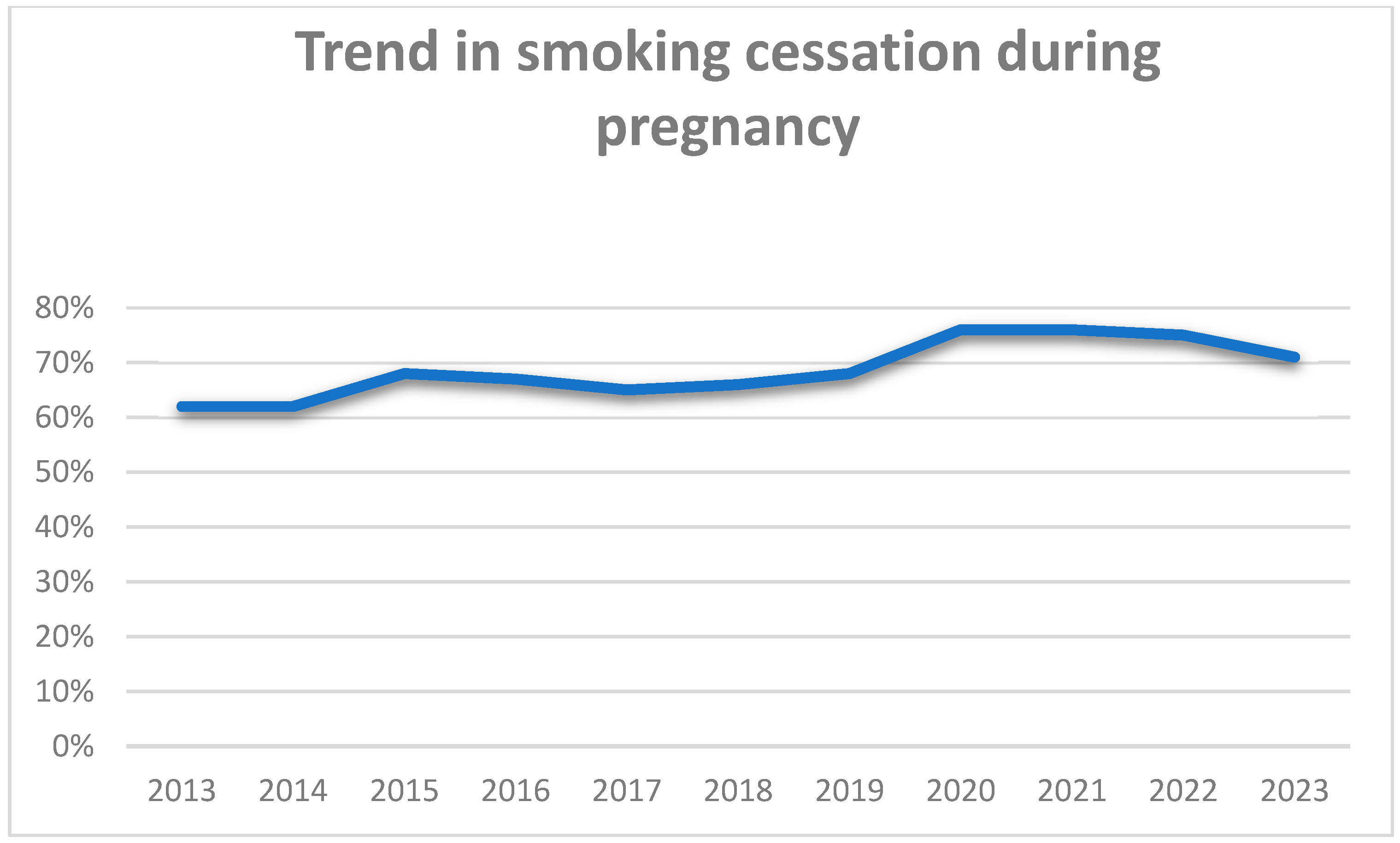
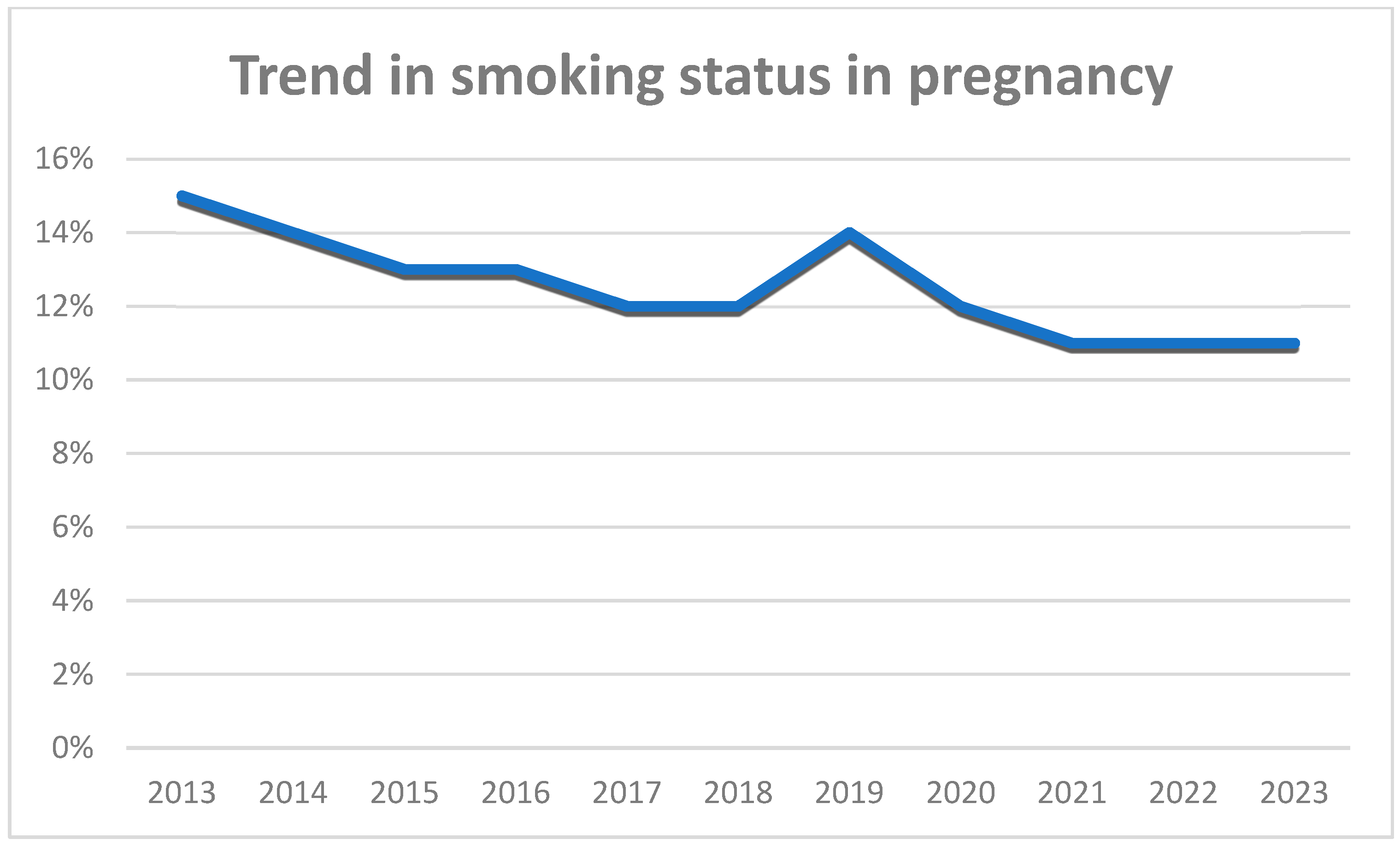
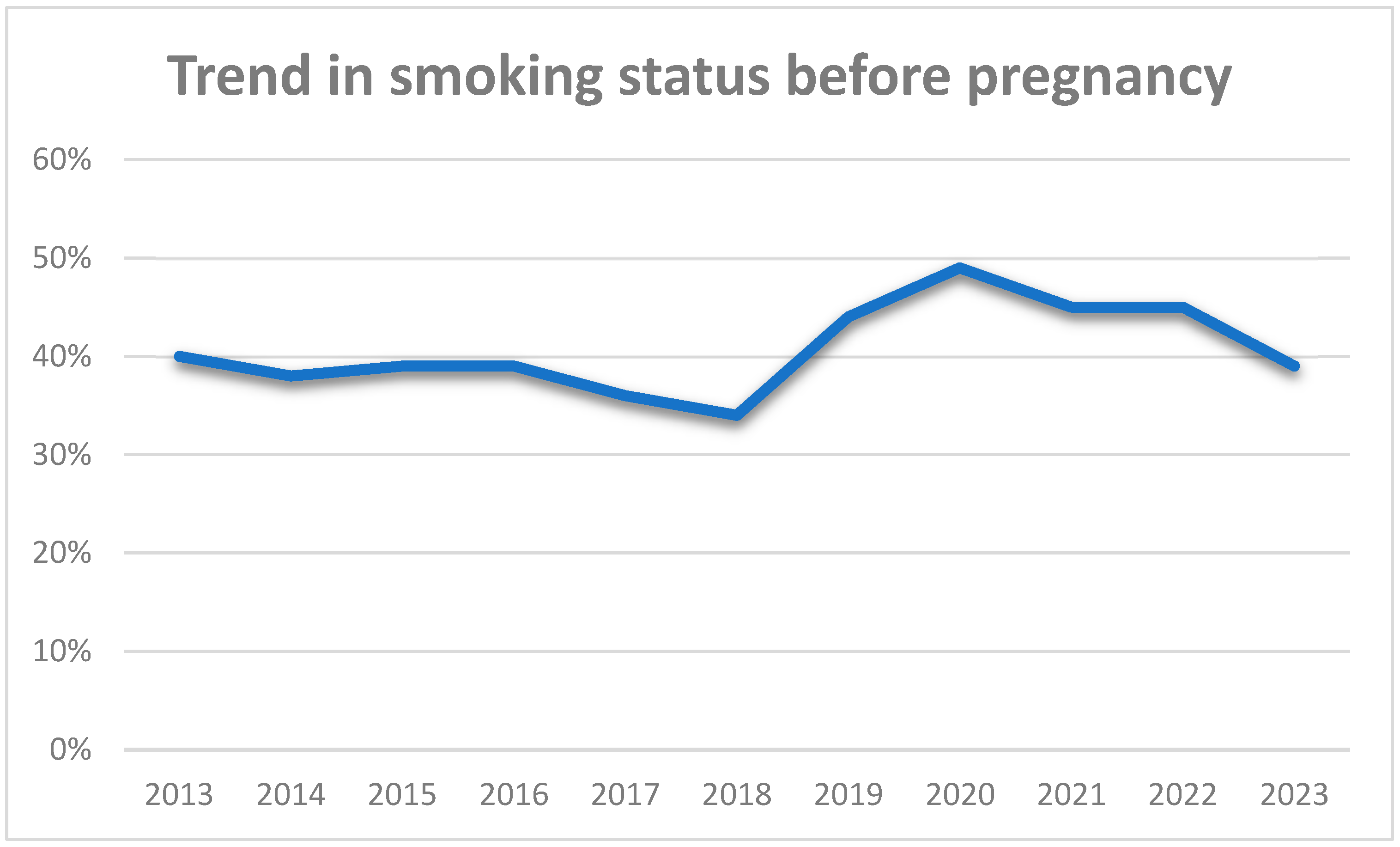
Regarding the time trend in smoking before pregnancy, the prevalence of smoking remained stable between 2013 and 2016, ranging from 38 to 40%, and then dropped in 2017–2018 and showed a sharp increase during the COVID-19 pandemic, with a tendency to return to pre-COVID levels, in 2023 (Figure 1). On the other hand, regarding the smoking cessation rates, the trend of smoking cessation remained stable until 2019, whereas during the pandemic, a marked increase in smoking cessation rates was observed (Figure 2). Regarding the time trend in smoking during pregnancy, the prevalence of smoking declined from 15% in 2013 to 11% in 2023 (Figure 3).
Figure 1.
Timeline of smoking before pregnancy.
Figure 2.
Timeline of smoking cessation rates due to pregnancy.
Figure 3.
Timeline of smoking during pregnancy.
4. Discussion
The main findings of this study were as follows: (i) the prevalence of smoking before pregnancy was 41.5% and was higher among nulliparous, older, and obese women; (ii) the smoking cessation rate due to pregnancy was 70.2% and was higher in nulliparous women, and those with a lower BMI and those who conceived via ARTs; (iii) the rate of smoking during pregnancy was 12.3%, and multiparous, obese, and women with spontaneous conception were more likely to continue smoking in pregnancy; (iv) the prevalence of smoking before pregnancy was higher during the COVID-19 pandemic, while the smoking cessation rate also increased during the pandemic; and (v) the prevalence of smoking in pregnancy declined during the study period.
The prevalence of smoking among pregnant women is considered a public health issue due to its significant impact on the health of both the mother and the fetus [11]. More specifically, smoking during pregnancy has been linked to adverse outcomes such as reduced fetal growth, stillbirth, increased perinatal mortality, infant death, miscarriage, placental abruption, premature birth, accelerated lung aging, and chronic obstructive pulmonary disease [12,13,14]. Addressing this issue is critical, as jeopardizing the health of the mother and fetus can negatively influence the quality of life for families and society as a whole. Moreover, these outcomes have profound psychological, socioeconomic, and social ramifications, with the potential to adversely affect future generations.
This study showed that smoking in pregnancy was reported to be 12.3%, in a large sample of unselected pregnant women in northern Greece. This rate is lower than what has previously been reported in the Greek population; in a previous study, the rate of smoking during pregnancy was 13.2%, which was quite similar, yet slightly higher [9]. Of note, this is the largest study conducted in pregnant women in Greece and the smoking rate was comparable to those reported by other European countries [15]. Similarly, high rates of smoking during pregnancy have been previously reported in Romania, where low socioeconomic status was identified as an independent contributor of smoking in pregnancy [16]. The prevalence of smoking during pregnancy has raised significant concerns among researchers, prompting investigations into potential social and demographic predictors on an international scale. Women who smoke during pregnancy are more likely to have a low income, a single-parent status without a partner or social support, and reliance on maternity benefits provided by the state; they also have poor educational levels, experience negative judgment from their social environment, and face a heightened risk of depression and other psychiatric disorders during pregnancy [17,18,19].
According to the literature, the type of living regions seems to have an impact on smoking trends; living in rural areas has been associated with lower smoking prevalence that does not change during pregnancy [1,20]. A recent study that included Greek pregnant women, living in a large city, revealed a significantly increased rate of smoking during pregnancy compared to pregnant women living in rural areas (19.7% vs. 17%) [1,21]. The present study indicates a decrease in smoking prevalence in the wider area of northern Greece; however, geographical trends of smoking prevalence may exist. Data from the United Kingdom indicate a declining trend in the prevalence of smoking during pregnancy over time, with the most significant reduction occurring between 2005 and 2015, reaching 11%; from 2015 onward, the rate of reduction slowed down [22]. Similarly, in our dataset, the greatest decline occurred up to 2015, after which the prevalence stabilized.
Spontaneous rather than conception via ARTs was associated with higher odds of smoking during pregnancy, a finding that agreed with other studies [9]. Multiparous women were also more likely to smoke during pregnancy compared to nulliparous, which was in accordance with the results of a study of Puerto Rican pregnant women; multiparous women were more than twice as likely to smoke in pregnancy (OR: 2.1; 95% CI: 1.4–3.2) and in accordance with the results of a study on Greek pregnant women [21,23]. According to previously published data from our unit, the prevalence of smoking during pregnancy was higher among obese women (BMI ≥ 30 kg/m2), which was in accordance with the findings of the current study [9]. Several studies have suggested that smoking behavior is significantly related with body weight and obesity [24,25,26,27]. Regarding parity, the literature suggests that multiparous women are less likely to smoke before pregnancy (OR: 0.77; 95% CI: 0.67–0.89), which is in accordance with our findings [9].
Regarding smoking cessation rates, there is a wide range reported in the literature, which varies from 42.5% to 63.4% [9,28,29,30]. The rate of smoking cessation was higher in our study (70.2%) than that reported in the literature, indicating that pregnancy is a significant motivator among Greek women. Smoking cessation rates are reported to be higher among women conceiving via ARTs [31], which is consistent with our findings. Numerous reports indicate that morbidly obese individuals often exhibit a compulsion for unhealthy food and smoking [32], which reasonably explains our findings that women with higher BMIs have fewer odds of smoking cessation. Nulliparous women were more likely to quit smoking during pregnancy compared to multiparous, according to our findings, which was in agreement with the literature [33].
The increased prevalence of smoking during the pandemic could be reasonably explained by the psychological distress at that period. The data regarding smoking trends during the pandemic are conflicting [34,35], with several studies supporting its increase during that period [36,37]. Data arising from United Kingdom support the notion that smoking cessation rates in pregnant women and the demand for antenatal smoking cessation services were unchanged during the COVID-19 pandemic [38]. Moreover, data arising from the Greek pregnant population during the pandemic reveal that nicotine consumption was reduced in pregnancy, which was in agreement with the findings of our study [39]. A combination of healthcare support differences, cultural attitudes, pandemic-related lifestyle changes, and economic or psychological stressors probably contributed to the varied responses among pregnant women in the UK and Greece.
The present study has certain limitations; the information regarding smoking was based on self-reported data from constructed questions on smoking habits without using advanced validated psychometric instruments. Furthermore, the retrospective study design is considered as a limitation. Our findings are based on a sample of pregnant women in northern Greece, so the results cannot be generalized to the whole Greek population; however, this is the largest Greek study on smoking in pregnancy. Finally, this study did not assess for potentially important confounders i.e., income, educational and employment status, and passive smoking.
5. Conclusions
Pregnancy is considered an optimal time for smoking cessation interventions; pregnant women are highly motivated to stop smoking and have frequent and regular antenatal visits, which provides multiple opportunities to assess and promote cessation strategies. Furthermore, concerns over the dangers of cigarette smoking for the fetus serve as an additional motivator to stop smoking. However, smoking during pregnancy still remains widespread in numerous countries. Our findings highlight the necessity for additional studies concerning the impact of smoking on perinatal outcomes, the initiation of measures to create cessation programs before conception, and an assessment of effective interventions to promote a smoke-free environment during pregnancy. Our results should guide efforts in smoking prevention initiatives and health promotion strategies, while also highlighting the importance of improved accessibility to smoking cessation programs for expectant mothers.
Author Contributions
Conceptualization, T.D. and I.T.; methodology, C.C. and K.M.; validation, P.P., I.K. and A.M.; investigation, S.D.; resources, P.P.; data curation, G.M.; writing—original draft preparation, K.M.; writing—review and editing, I.T. and T.D; visualization, P.P. and A.M.; supervision, I.K. and P.P.; project administration, T.D. and A.M. All authors have read and agreed to the published version of the manuscript.
Funding
This research received no external funding.
Institutional Review Board Statement
Following policy for observational studies that do not involve any intervention or modification regarding the routine care of the patients, no institutional board review was required for this study.
Informed Consent Statement
The women consented for the anonymity of their data and the possible use for research purposes.
Data Availability Statement
Data are available upon request.
Conflicts of Interest
The authors declare that they have no conflicts of interest.
References
- Vardavas, C.I.; Patelarou, E.; Chatzi, L.; Roumeliotaki, T.; Sarri, K.; Murphy, S.; Koutis, A.; Kafatos, A.G.; Kogevinas, M. Factors associated with active smoking, quitting, and secondhand smoke exposure among pregnant women in Greece. J. Epidemiol. 2010, 20, 355–362. [Google Scholar] [CrossRef] [PubMed]
- Vardavas, C.I.; Chatzi, L.; Patelarou, E.; Plana, E.; Sarri, K.; Kafatos, A.; Koutis, A.D.; Kogevinas, M. Smoking and smoking cessation during early pregnancy and its effect on adverse pregnancy outcomes and fetal growth. Eur. J. Pediatr. 2010, 169, 741–748. [Google Scholar] [CrossRef] [PubMed]
- Miyake, Y.; Tanaka, K.; Arakawa, M. Active and passive maternal smoking during pregnancy and birth outcomes: The Kyushu Okinawa maternal and child health study. BMC Pregnancy Childbirth 2013, 13, 157. [Google Scholar] [CrossRef]
- Kristjansson, A.L.; Thorisdottir, I.E.; Steingrimsdottir, T.; Allegrante, J.P.; Lilly, C.L.; Sigfusdottir, I.D. Maternal smoking during pregnancy and scholastic achievement in childhood: Evidence from the LIFECOURSE cohort study. Eur. J. Public Health 2017, 27, 850–855. [Google Scholar] [CrossRef] [PubMed]
- Kapaya, H.; Broughton-Pipkin, F.; Hayes-Gill, B.; Loughna, P.V. Smoking in pregnancy affects the fetal heart: Possible links to future cardiovascular disease. J. Matern. Fetal Neonatal Med. 2015, 28, 1664–1668. [Google Scholar] [CrossRef]
- World Health Organization. WHO Report on the Global Tobacco Epidemic, 2009: Implementing Smoke-Free Environments; World Health Organization: Geneva, Switzerland, 2009. [Google Scholar]
- Bonello, K.; Figoni, H.; Blanchard, E.; Vignier, N.; Avenin, G.; Melchior, M.; Cadwallader, J.S.; Chastang, J.; Ibanez, G. Prevalence of smoking during pregnancy and associated social inequalities in developed countries over the 1995–2020 period: A systematic review. Paediatr. Perinat. Epidemiol. 2023, 37, 555–565. [Google Scholar] [CrossRef] [PubMed]
- Lange, S.; Probst, C.; Rehm, J.; Popova, S. National, regional, and global prevalence of smoking during pregnancy in the general population: A systematic review and meta-analysis. Lancet Glob. Health 2018, 6, e769–e776. [Google Scholar] [CrossRef] [PubMed]
- Tsakiridis, I.; Mamopoulos, A.; Papazisis, G.; Petousis, S.; Liozidou, A.; Athanasiadis, A.; Dagklis, T. Prevalence of smoking during pregnancy and associated risk factors: A cross-sectional study in Northern Greece. Eur. J. Public Health 2018, 28, 321–325. [Google Scholar] [CrossRef] [PubMed]
- Wade, D.T. Ethics, audit, and research: All shades of grey. BMJ 2005, 330, 468–471. [Google Scholar] [CrossRef] [PubMed]
- Tsakiridis, I.; Oikonomidou, A.C.; Bakaloudi, D.R.; Dagklis, T.; Papazisis, G.; Chourdakis, M. Substance Use During Pregnancy: A Comparative Review of Major Guidelines. Obstet. Gynecol. Surv. 2021, 76, 634–643. [Google Scholar] [CrossRef] [PubMed]
- Abraham, M.; Alramadhan, S.; Iniguez, C.; Duijts, L.; Jaddoe, V.W.; Den Dekker, H.T.; Crozier, S.; Godfrey, K.M.; Hindmarsh, P.; Vik, T.; et al. A systematic review of maternal smoking during pregnancy and fetal measurements with meta-analysis. PLoS ONE 2017, 12, e0170946. [Google Scholar] [CrossRef]
- Marufu, T.C.; Ahankari, A.; Coleman, T.; Lewis, S. Maternal smoking and the risk of still birth: Systematic review and meta-analysis. BMC Public Health 2015, 15, 239. [Google Scholar] [CrossRef] [PubMed]
- McEvoy, C.T.; Spindel, E.R. Pulmonary Effects of Maternal Smoking on the Fetus and Child: Effects on Lung Development, Respiratory Morbidities, and Life Long Lung Health. Paediatr. Respir. Rev. 2017, 21, 27–33. [Google Scholar] [CrossRef]
- Smedberg, J.; Lupattelli, A.; Mardby, A.C.; Nordeng, H. Characteristics of women who continue smoking during pregnancy: A cross-sectional study of pregnant women and new mothers in 15 European countries. BMC Pregnancy Childbirth 2014, 14, 213. [Google Scholar] [CrossRef] [PubMed]
- Ruta, F.; Avram, C.; Voidazan, S.; Marginean, C.; Bacarea, V.; Abram, Z.; Foley, K.; Fogarasi-Grenczer, A.; Penzes, M.; Tarcea, M. Active Smoking and Associated Behavioural Risk Factors before and during Pregnancy—Prevalence and Attitudes among Newborns’ Mothers in Mures County, Romania. Central Eur. J. Public Health 2016, 24, 276–280. [Google Scholar] [CrossRef]
- Penn, G.; Owen, L. Factors associated with continued smoking during pregnancy: Analysis of socio-demographic, pregnancy and smoking-related factors. Drug Alcohol Rev. 2002, 21, 17–25. [Google Scholar] [CrossRef]
- Al-Sahab, B.; Saqib, M.; Hauser, G.; Tamim, H. Prevalence of smoking during pregnancy and associated risk factors among Canadian women: A national survey. BMC Pregnancy Childbirth 2010, 10, 24. [Google Scholar] [CrossRef] [PubMed]
- Houston-Ludlam, A.N.; Bucholz, K.K.; Grant, J.D.; Waldron, M.; Madden, P.A.F.; Heath, A.C. The interaction of sociodemographic risk factors and measures of nicotine dependence in predicting maternal smoking during pregnancy. Drug Alcohol. Depend. 2019, 198, 168–175. [Google Scholar] [CrossRef] [PubMed]
- Gikas, A.; Merkouris, P.; Skliros, E.; Sotiropoulos, A. Urban-rural differences in smoking prevalence in Greece. Eur. J. Public Health 2007, 17, 402. [Google Scholar] [CrossRef]
- Skalis, G.; Archontakis, S.; Thomopoulos, C.; Andrianopoulou, I.; Papazachou, O.; Vamvakou, G.; Aznaouridis, K.; Katsi, V.; Makris, T. A single-center, prospective, observational study on maternal smoking during pregnancy in Greece: The HELENA study. Tob. Prev. Cessat. 2021, 7, 16. [Google Scholar] [CrossRef] [PubMed]
- Trust, N. Smoking in Pregnancy. Available online: https://www.nuffieldtrust.org.uk/resource/smoking-in-pregnancy (accessed on 9 January 2024).
- Gollenberg, A.; Pekow, P.; Markenson, G.; Tucker, K.L.; Chasan-Taber, L. Dietary behaviors, physical activity, and cigarette smoking among pregnant Puerto Rican women. Am. J. Clin. Nutr. 2008, 87, 1844–1851. [Google Scholar] [CrossRef] [PubMed]
- Albanes, D.; Jones, D.Y.; Micozzi, M.S.; Mattson, M.E. Associations between smoking and body weight in the US population: Analysis of NHANES II. Am. J. Public Health 1987, 77, 439–444. [Google Scholar] [CrossRef] [PubMed]
- Filozof, C.; Fernandez Pinilla, M.C.; Fernandez-Cruz, A. Smoking cessation and weight gain. Obes. Rev. 2004, 5, 95–103. [Google Scholar] [CrossRef]
- Klesges, R.C.; Meyers, A.W.; Klesges, L.M.; La Vasque, M.E. Smoking, body weight, and their effects on smoking behavior: A comprehensive review of the literature. Psychol. Bull. 1989, 106, 204–230. [Google Scholar] [CrossRef] [PubMed]
- Watanabe, T.; Tsujino, I.; Konno, S.; Ito, Y.M.; Takashina, C.; Sato, T.; Isada, A.; Ohira, H.; Ohtsuka, Y.; Fukutomi, Y.; et al. Association between Smoking Status and Obesity in a Nationwide Survey of Japanese Adults. PLoS ONE 2016, 11, e0148926. [Google Scholar] [CrossRef] [PubMed]
- Kaneita, Y.; Tomofumi, S.; Takemura, S.; Suzuki, K.; Yokoyama, E.; Miyake, T.; Harano, S.; Ibuka, E.; Kaneko, A.; Tsutsui, T.; et al. Prevalence of smoking and associated factors among pregnant women in Japan. Prev. Med. 2007, 45, 15–20. [Google Scholar] [CrossRef] [PubMed]
- Kahn, R.S.; Certain, L.; Whitaker, R.C. A reexamination of smoking before, during, and after pregnancy. Am. J. Public Health 2002, 92, 1801–1808. [Google Scholar] [CrossRef]
- Colman, G.J.; Joyce, T. Trends in smoking before, during, and after pregnancy in ten states. Am. J. Prev. Med. 2003, 24, 29–35. [Google Scholar] [CrossRef] [PubMed]
- The Practice Committee of American Society for Reproductive Medicine. Smoking and infertility. Fertil. Steril. 2008, 90, S254–S259. [Google Scholar] [CrossRef]
- Chatkin, R.; Mottin, C.C.; Chatkin, J.M. Smoking among morbidly obese patients. BMC Pulm. Med. 2010, 10, 61. [Google Scholar] [CrossRef]
- Fahey, M.C.; Dahne, J.; Wahlquist, A.E.; Carpenter, M.J. The Impact of Older Age on Smoking Cessation Outcomes After Standard Advice to Quit. J. Appl. Gerontol. 2023, 42, 1477–1485. [Google Scholar] [CrossRef] [PubMed]
- Almeda, N.; Gomez-Gomez, I. The Impact of the COVID-19 Pandemic on Smoking Consumption: A Systematic Review of Longitudinal Studies. Front. Psychiatry 2022, 13, 941575. [Google Scholar] [CrossRef] [PubMed]
- Sarich, P.; Cabasag, C.J.; Liebermann, E.; Vaneckova, P.; Carle, C.; Hughes, S.; Egger, S.; O’Connell, D.L.; Weber, M.F.; da Costa, A.M.; et al. Tobacco smoking changes during the first pre-vaccination phases of the COVID-19 pandemic: A systematic review and meta-analysis. EClinicalMedicine 2022, 47, 101375. [Google Scholar] [CrossRef] [PubMed]
- Wiley, R.C.; Oliver, A.C.; Snow, M.B.; Bunn, J.Y.; Barrows, A.J.; Tidey, J.W.; Lee, D.C.; Sigmon, S.C.; Gaalema, D.E.; Heil, S.H.; et al. The Impact of the Covid-19 Pandemic on Smoking Among Vulnerable Populations. Nicotine Tob. Res. 2023, 25, 282–290. [Google Scholar] [CrossRef]
- Hong, S.; Woo, S.; Kim, S.; Park, J.; Lee, M.; Kim, S.; Koyanagi, A.; Smith, L.; Kim, M.S.; Lopez Sanchez, G.F.; et al. National prevalence of smoking among adolescents at tobacco tax increase and COVID-19 pandemic in South Korea, 2005–2022. Sci. Rep. 2024, 14, 7823. [Google Scholar] [CrossRef]
- Bednarczuk, N.; Williams, E.E.; Absalom, G.; Olaitan-Salami, J.; Greenough, A. The impact of COVID-19 on smoking cessation in pregnancy. J. Perinat. Med. 2022, 50, 1001–1004. [Google Scholar] [CrossRef] [PubMed]
- Tigka, M.; Metallinou, D.; Tzeli, M.; Lykeridou, K. Maternal tobacco, alcohol and caffeine consumption during the perinatal period: A prospective cohort study in Greece during the COVID-19 pandemic. Tob. Induc. Dis. 2023, 21, 80. [Google Scholar] [CrossRef] [PubMed]
Disclaimer/Publisher’s Note: The statements, opinions and data contained in all publications are solely those of the individual author(s) and contributor(s) and not of MDPI and/or the editor(s). MDPI and/or the editor(s) disclaim responsibility for any injury to people or property resulting from any ideas, methods, instructions or products referred to in the content. |
© 2025 by the authors. Licensee MDPI, Basel, Switzerland. This article is an open access article distributed under the terms and conditions of the Creative Commons Attribution (CC BY) license (https://creativecommons.org/licenses/by/4.0/).