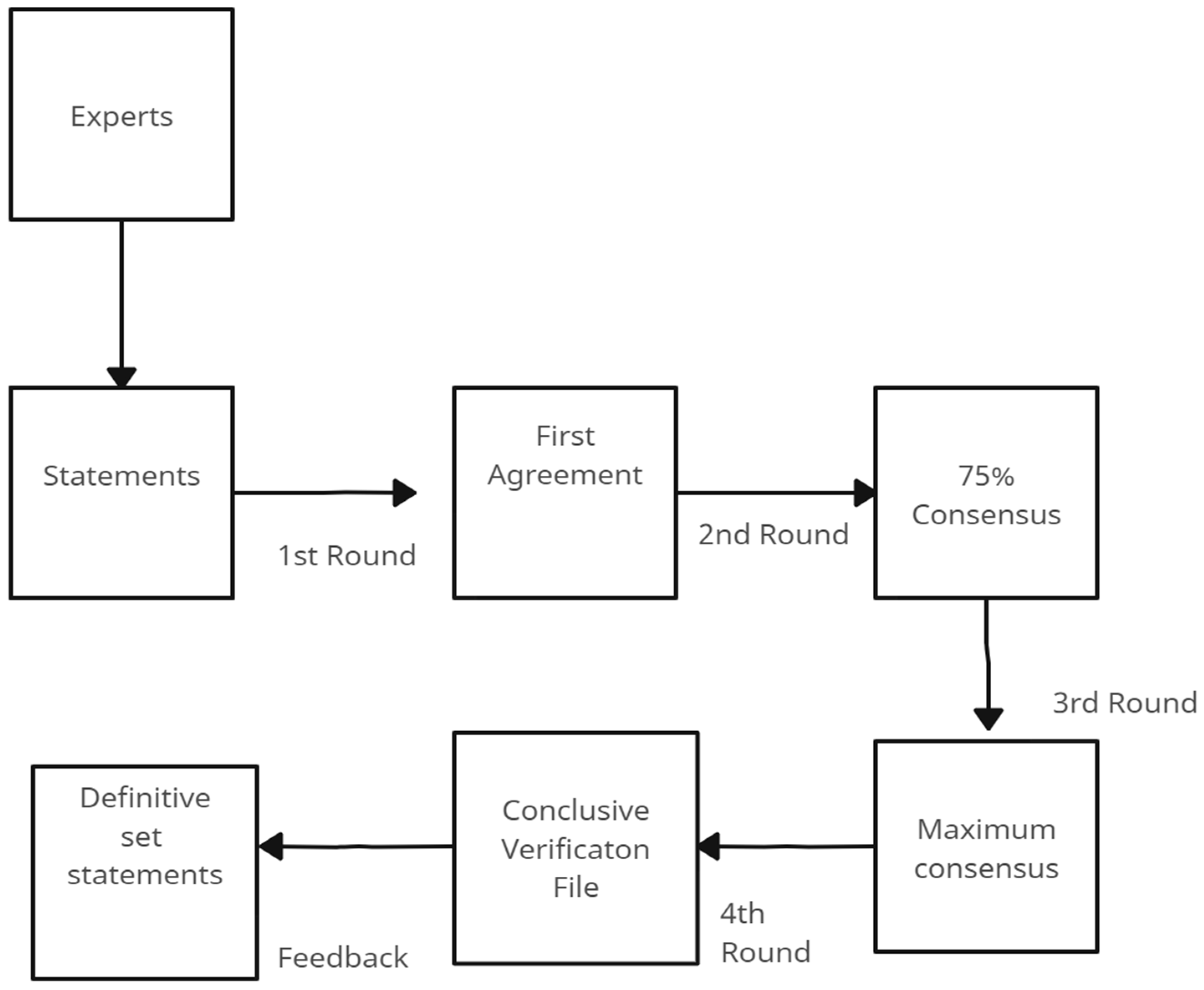
Consensus Statements among European Sleep Surgery Experts on Snoring and Obstructive Sleep Apnea: Part 1 Definitions and Diagnosis

 ,
,  ,
,  ,
,  , ,
, , 
Abstract
1. Introduction
2. Materials and Methods
3. Results
4. Discussion
5. Conclusions
Author Contributions
Funding
Institutional Review Board Statement
Informed Consent Statement
Data Availability Statement
Conflicts of Interest
References
- The 2023 Snoring and Sleep Report. Available online: https://mutesnoring.com/wp-content/uploads/2023/03/2023_SnoringReport_GLOBAL.pdf (accessed on 28 January 2022).
- Sogebi, O.A.; Oyewole, E.A.; Olusoga-Peters, O.O. Sleep-disordered breathing (SDB) experiences associated with snoring in adult Nigerians. Afr. Health Sci. 2011, 11, 309–314. [Google Scholar] [PubMed]
- Wali, S.O.; Alsharif, M.A.; Albanji, M.H.; Baabbad, M.S.; Almotary, H.M.; Alama, N.; Mimish, L.; Alsulami, A.; Abdelaziz, M.M. Prevalence of obstructive sleep apnea among patients with coronary artery disease in Saudi Arabia. J. Saudi Heart Assoc. 2015, 27, 227–233. [Google Scholar] [CrossRef]
- Sharma, S.K.; Reddy, E.V.; Sharma, A.; Kadhiravan, T.; Mishra, H.K.; Sreenivas, V.; Mishra, H.K.; Lakshmy, R. Prevalence and risk factors of syndrome Z in urban Indians. Sleep Med. 2010, 11, 562–568. [Google Scholar] [CrossRef] [PubMed]
- Tufik, S.; Santos-Silva, R.; Taddei, J.A.; Bittencourt, L.R.A. Obstructive sleep apnea syndrome in the Sao Paulo Epidemiologic Sleep Study. Sleep Med. 2010, 11, 441–446. [Google Scholar] [CrossRef]
- Benjafield, A.V.; Ayas, N.T.; Eastwood, P.R.; Heinzer, R.; Ip, M.S.M.; Morrell, M.J.; Nunez, C.M.; Patel, S.R.; Penzel, T.; Pépin, J.-L.; et al. Estimation of the global prevalence and burden of obstructive sleep apnoea: A literature-based analysis. Lancet Respir. Med. 2019, 7, 687–698. [Google Scholar] [CrossRef] [PubMed]
- WHO European Regional Obesity Report 2022. Available online: https://www.who.int/europe/publications/i/item/9789289057738 (accessed on 28 January 2022).
- Twells, L.K.; Gregory, D.M.; Reddigan, J.; Midodzi, W.K. Current and predicted prevalence of obesity in Canada: A trend analysis. CMAJ Open 2014, 2, E18–E26. [Google Scholar] [CrossRef] [PubMed]
- Remmers, J.E.; Sauerland, E.K.; Anch, A.M.; Li, W.-Y.; Gakwaya, S.; Saey, D.; Sériès, F.; Kidder, I.J.; Mudery, J.A.; Barreda, S.; et al. Pathogenesis of upper airway occlusion during sleep. J. Appl. Physiol. Respir. Environ. Exerc. Physiol. 1978, 44, 931–938. [Google Scholar] [CrossRef]
- Lombardi, C.; Pengo, M.F.; Parati, G.; Sarkar, P.; Mukherjee, S.; Chai-Coetzer, C.L.; McEvoy, R.D. Systemic hypertension in obstructive sleep apnea. J. Thorac. Dis. 2018, 10 (Suppl. 34), S4231–S4243. [Google Scholar] [CrossRef]
- Peppard, P.E.; Young, T.; Palta, M.; Skatrud, J. Prospective study of the association between sleep-disordered breathing and hypertension. N. Engl. J. Med. 2000, 342, 1378–1384. [Google Scholar] [CrossRef]
- Salari, N.; Khazaie, H.; Abolfathi, M.; Ghasemi, H.; Shabani, S.; Mohammadi, M.; Rasoulpoor, S.; Khaledi-Paveh, B. The effect of obstructive sleep apnea on the increased risk of cardiovascular disease: A systematic review and meta-analysis. Neurol. Sci. 2022, 43, 219–231. [Google Scholar] [CrossRef]
- Javaheri, S.; Barbe, F.; Campos-Rodriguez, F.; Dempsey, J.A.; Khayat, R.; Javaheri, S.; Malhotra, A.; Martinez-Garcia, M.A.; Mehra, R.; Pack, A.I.; et al. Sleep Apnea: Types, Mechanisms, and Clinical Cardiovascular Consequences. J. Am. Coll. Cardiol. 2017, 69, 841–858. [Google Scholar] [CrossRef] [PubMed]
- Akset, M.; Poppe, K.G.; Kleynen, P.; Bold, I.; Bruyneel, M. Endocrine disorders in obstructive sleep apnoea syndrome: A bidirectional relationship. Clin. Endocrinol. 2023, 98, 3–13. [Google Scholar] [CrossRef] [PubMed]
- Li, M.; Li, X.; Lu, Y. Obstructive Sleep Apnea Syndrome and Metabolic Diseases. Endocrinology 2018, 159, 2670–2675. [Google Scholar] [CrossRef]
- Salas, R.E.; Chakravarthy, R.; Sher, A.; Gamaldo, C.E. Management of sleep apnea in the neurology patient: Five new things. Neurol. Clin. Pract. 2014, 4, 44–52. [Google Scholar] [CrossRef]
- Bassetti, C.L.A.; Randerath, W.; Vignatelli, L.; Ferini-Strambi, L.; Brill, A.-K.; Bonsignore, M.R.; Grote, L.; Jennum, P.; Leys, D.; Minnerup, J.; et al. EAN/ERS/ESO/ESRS statement on the impact of sleep disorders on risk and outcome of stroke. Eur. Respir. J. 2020, 55, 1901104. [Google Scholar] [CrossRef] [PubMed]
- Marin, J.M.; Carrizo, S.J.; Vicente, E.; Agusti, A.G.N. Long-term cardiovascular outcomes in men with obstructive sleep apnoea-hypopnoea with or without treatment with continuous positive airway pressure: An observational study. Lancet 2005, 365, 1046–1053. [Google Scholar] [CrossRef]
- Malhotra, A.; Mesarwi, O.; Pepin, J.L.; Owens, R.L. Endotypes and phenotypes in obstructive sleep apnea. Curr. Opin. Pulm. Med. 2020, 26, 609–614. [Google Scholar] [CrossRef]
- Rizzatti, F.G.; Mazzotti, D.R.; Mindel, J.; Maislin, G.; Keenan, B.T.; Bittencourt, L.; Chen, N.H.; Cistulli, P.A.; McArdle, N.; Pack, F.M.; et al. Defining Extreme Phenotypes of OSA Across International Sleep Centers. Chest 2020, 158, 1187–1197. [Google Scholar] [CrossRef]
- Epstein, L.J.; Kristo, D.; Strollo, P.J., Jr.; Friedman, N.; Malhotra, A.; Patil, S.P.; Ramar, K.; Rogers, R.; Schwab, R.J.; Weaver, E.M.; et al. Clinical guideline for the evaluation, management and long-term care of obstructive sleep apnea in adults. J. Clin. Sleep Med. 2009, 5, 263–276. [Google Scholar]
- Practice Management Support Document. Irish Sleep Society. 2015. Available online: https://irishsleepsociety.ie/wp-content/uploads/2022/03/Practice-Management-Support-Document.pdf (accessed on 28 January 2022).
- Randerath, W.; Verbraecken, J.; de Raaff, C.A.; Hedner, J.; Herkenrath, S.; Hohenhorst, W.; Jakob, T.; Marrone, O.; Marklund, M.; McNicholas, W.T.; et al. European Respiratory Society guideline on non-CPAP therapies for obstructive sleep apnoea. Eur. Respir. Rev. 2021, 30, 210200. [Google Scholar] [CrossRef]
- Obstructive Sleep Apnoea/Hypopnoea Syndrome and Obesity Hypoventilation Syndrome in over 16s. 2021. Available online: https://www.nice.org.uk/guidance/ng202 (accessed on 28 January 2022).
- Chang, J.L.; Goldberg, A.N.; Alt, J.A.; Mohammed, A.; Ashbrook, L.; Auckley, D.; Ayappa, I.; Bakhtiar, H.; Barrera, J.E.; Bartley, B.L.; et al. International Consensus Statement on Obstructive Sleep Apnea. Int. Forum Allergy Rhinol. 2023, 13, 1061–1482. [Google Scholar] [CrossRef] [PubMed]
- de Villiers, M.R.; de Villiers, P.J.; Kent, A.P. The Delphi technique in health sciences education research. Med. Teach. 2005, 27, 639–643. [Google Scholar] [CrossRef] [PubMed]
- Hasson, F.; Keeney, S.; McKenna, H. Research guidelines for the Delphi survey technique. J. Adv. Nurs. 2000, 32, 1008–1015. [Google Scholar] [CrossRef] [PubMed]
- Cramer, C.K.; Klasser, G.D.; Epstein, J.B.; Sheps, S.B. The Delphi process in dental research. J. Evid. Based Dent. Pract. 2008, 8, 211–220. [Google Scholar] [CrossRef] [PubMed]
- Olszewska, E.; Rutkowska, J.; Ozgirgin, N. Consensus-Based Recommendations on the Definition and Classification of Cholesteatoma. J. Int. Adv. Otol. 2015, 11, 81–87. [Google Scholar] [CrossRef]
- Yaremchuk, K.; Garcia-Rodriguez, L. The History of Sleep Surgery. Adv. Otorhinolaryngol. 2017, 80, 17–21. [Google Scholar]
- Cahali, M.B. Lateral pharyngoplasty: A new treatment for obstructive sleep apnea hypopnea syndrome. Laryngoscope 2003, 113, 1961–1968. [Google Scholar] [CrossRef]
- Pang, K.P.; Pang, E.B.; Win, M.T.; Pang, K.A.; Woodson, B.T. Expansion sphincter pharyngoplasty for the treatment of OSA: A systemic review and meta-analysis. Eur. Arch. Oto-Rhino-Laryngol. 2016, 273, 2329–2333. [Google Scholar] [CrossRef]
- Osman, A.M.; Carter, S.G.; Carberry, J.C.; Eckert, D.J. Obstructive sleep apnea: Current perspectives. Nat. Sci. Sleep 2018, 10, 21–34. [Google Scholar] [CrossRef]
- Nasa, P.; Jain, R.; Juneja, D. Delphi methodology in healthcare research: How to decide its appropriateness. World J. Methodol. 2021, 11, 116–129. [Google Scholar] [CrossRef]
- Boulkedid, R.; Abdoul, H.; Loustau, M.; Sibony, O.; Alberti, C. Using and reporting the Delphi method for selecting healthcare quality indicators: A systematic review. PLoS ONE 2011, 6, e20476. [Google Scholar] [CrossRef] [PubMed]
- Berry, R.B.; Budhiraja, R.; Gottlieb, D.J.; Gozal, D.; Iber, C.; Kapur, V.K.; Marcus, C.L.; Mehra, R.; Parthasarathy, S.; Quan, S.F.; et al. Rules for scoring respiratory events in sleep: Update of the 2007 AASM Manual for the Scoring of Sleep and Associated Events. Deliberations of the Sleep Apnea Definitions Task Force of the American Academy of Sleep Medicine. J. Clin. Sleep Med. 2012, 8, 597–619. [Google Scholar] [CrossRef] [PubMed]
- O’Connor-Reina, C.; Garcia, J.M.I.; Baptista, P.; Garcia-Iriarte, M.T.; Alba, C.C.; Perona, M.; Borrmann, P.F.; Alcala, L.R.; Plaza, G. Non-acid reflux and sleep apnea: The importance of drug induced sleep endoscopy. J. Otolaryngol. Head Neck Surg. 2021, 50, 42. [Google Scholar] [CrossRef] [PubMed]
- Wu, Z.H.; Yang, X.-P.; Niu, X.; Xiao, X.-Y.; Chen, X. The relationship between obstructive sleep apnea hypopnea syndrome and gastroesophageal reflux disease: A meta-analysis. Sleep Breath. 2019, 23, 389–397. [Google Scholar] [CrossRef] [PubMed]
- Huang, Y.S.; Guilleminault, C. Pediatric Obstructive Sleep Apnea: Where Do We Stand? Adv. Otorhinolaryngol. 2017, 80, 136–144. [Google Scholar] [PubMed]
- Buysse, D.J. The Pittsburgh Sleep Quality Index: A new instrument for psychiatric practice and research. Psychiatry Res. 1989, 28, 193–213. [Google Scholar] [CrossRef] [PubMed]
- Chung, F.; Reynolds, C.F., III; Monk, T.H.; Berman, S.R.; Kupfer, D.J. High STOP-Bang score indicates a high probability of obstructive sleep apnoea. Br. J. Anaesth. 2012, 108, 768–775. [Google Scholar] [CrossRef]
- Johns, M.W. A new method for measuring daytime sleepiness: The Epworth sleepiness scale. Sleep 1991, 14, 540–545. [Google Scholar] [CrossRef]
- Borowiecki, B.D.; Sassin, J.F. Surgical treatment of sleep apnea. Arch. Otolaryngol. 1983, 109, 508–512. [Google Scholar] [CrossRef]
- Vroegop, A.V.; Vanderveken, O.M.; Verbraecken, J.A. Drug-Induced Sleep Endoscopy: Evaluation of a Selection Tool for Treatment Modalities for Obstructive Sleep Apnea. Respiration 2020, 99, 451–457. [Google Scholar] [CrossRef]
- Green, K.K.; Kent, D.T.; D’Agostino, M.A.; Hoff, P.T.; Lin, H.; Soose, R.J.; Gillespie, M.B.; Yaremchuk, K.L.; Carrasco-Llatas, M.; Woodson, B.T.; et al. Drug-Induced Sleep Endoscopy and Surgical Outcomes: A Multicenter Cohort Study. Laryngoscope 2019, 129, 761–770. [Google Scholar] [CrossRef] [PubMed]

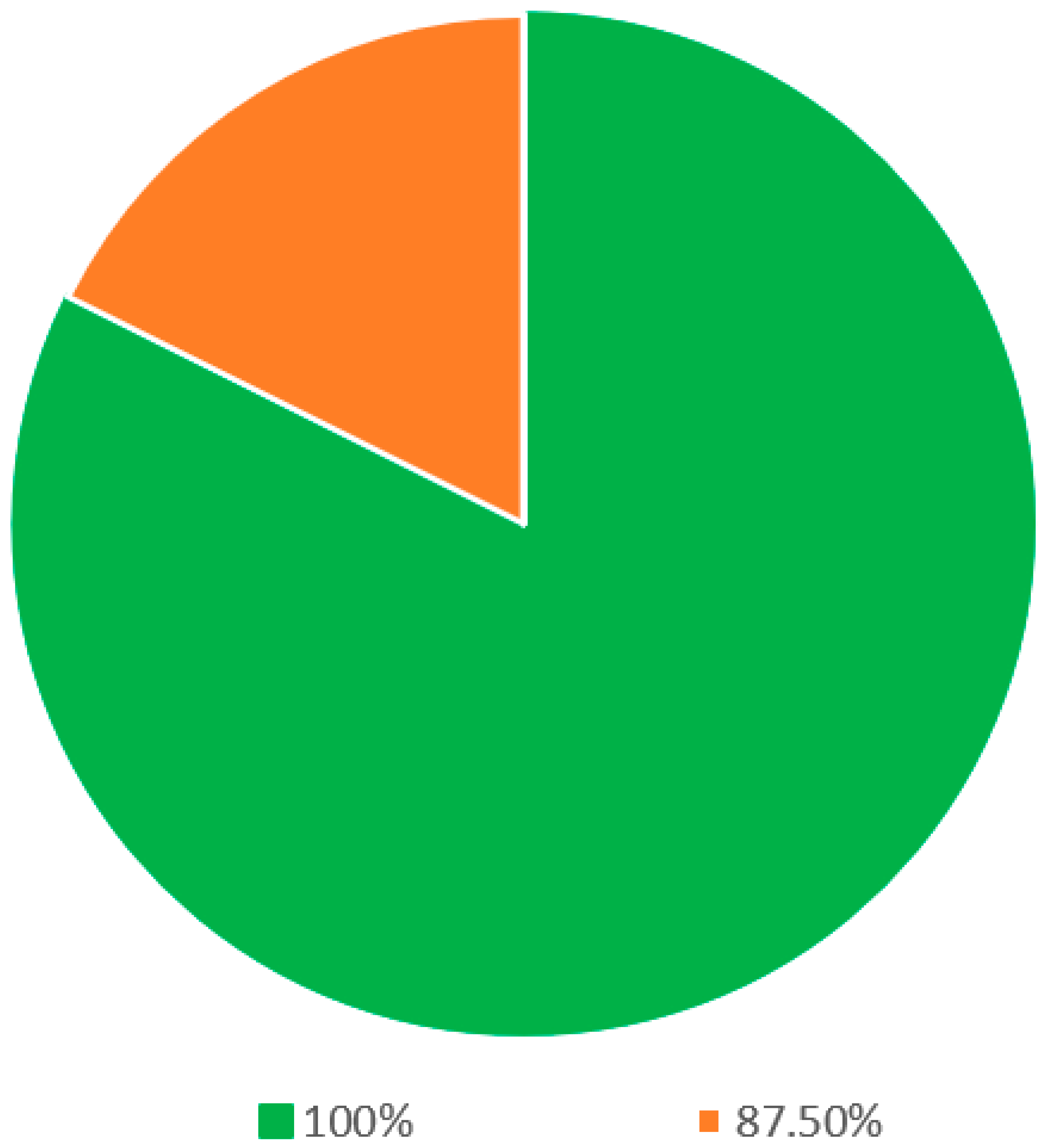
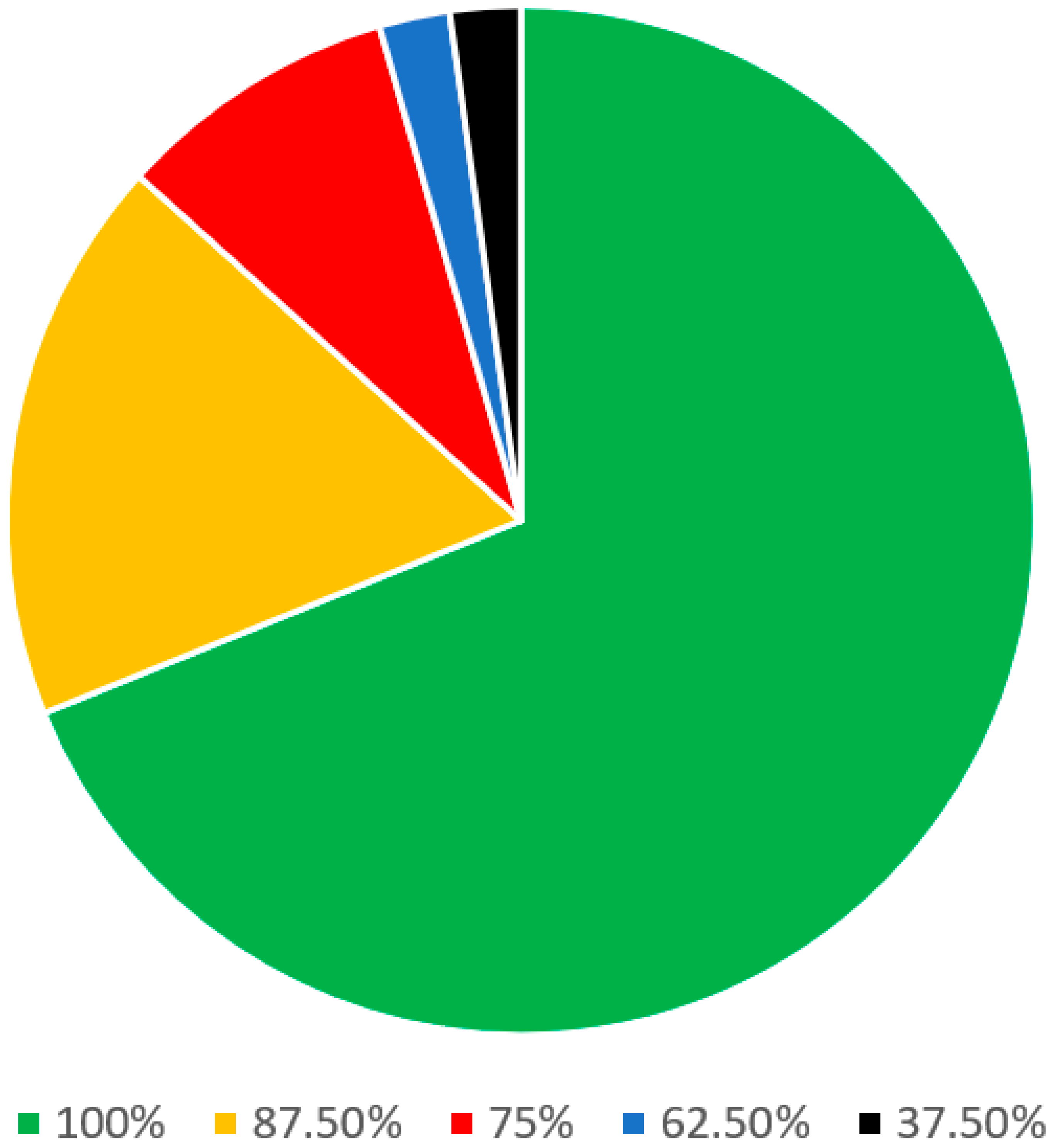
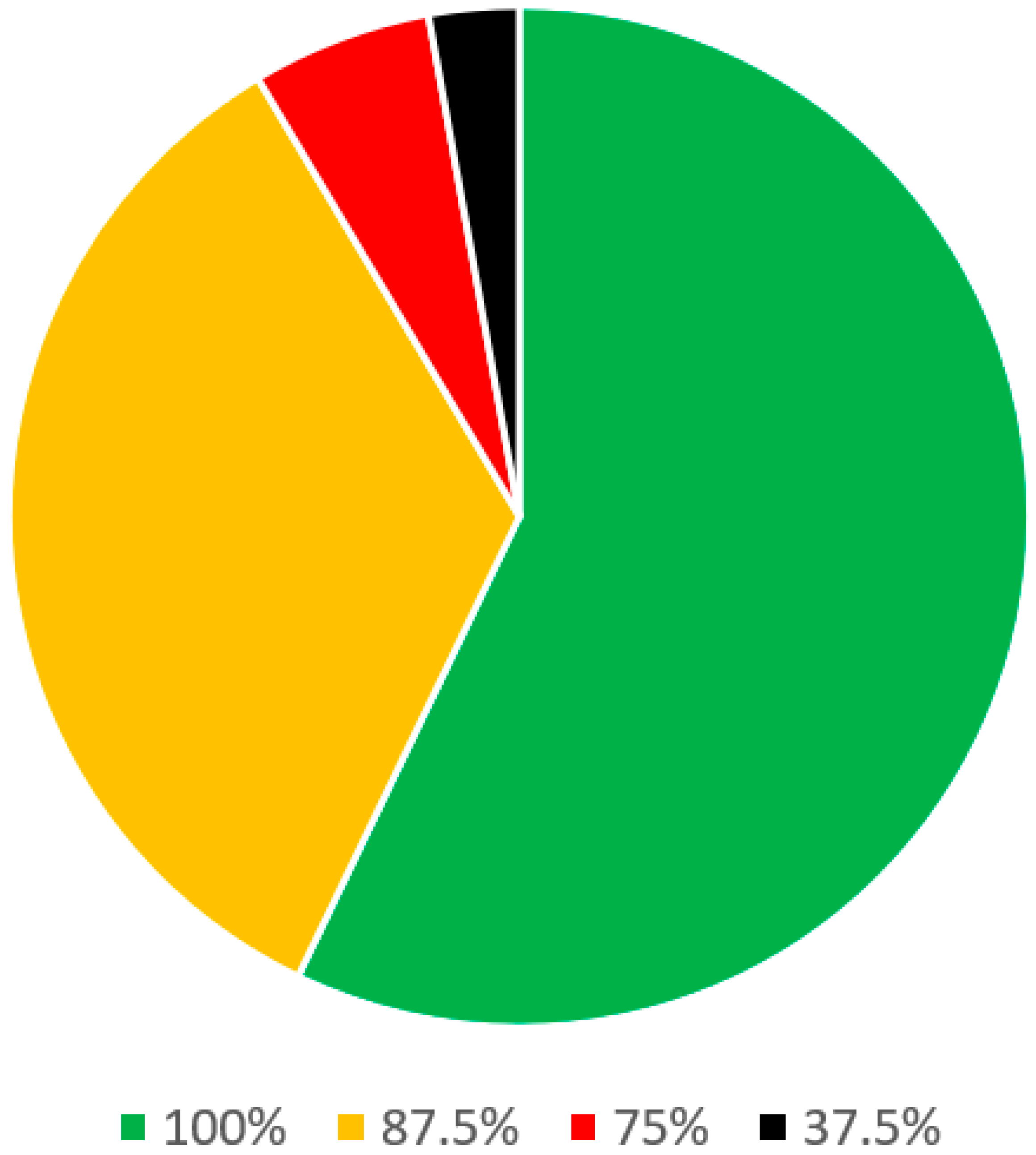

Statements  100% 100%  87.5% 87.5%  75% 75%  62.5% 62.5%  37.5% 37.5% | % Consensus |
|---|---|
| 1. Sleep is defined as a circadian state characterized by partial or total suspension of consciousness, voluntary muscle inhibition, and relative insensitivity to stimulation. | 100 |
| 2. Snoring is defined as a rough rattling noise made by turbulent airflow mainly on inspiration during sleep caused by the vibration of, e.g., the soft palate, uvula, tonsils, tonsil pillars, the enlarged base of the tongue, epiglottis aryepiglottic folds, and/or arytenoids. | 100 |
| 3. Sleep apnea is a potentially serious sleep disorder in which breathing repeatedly stops and starts. | 100 |
| 4. Sleep-disordered breathing (SDB) refers to a wide spectrum of sleep-related conditions including increased resistance to airflow through the upper airway, heavy snoring, marked reduction in airflow (hypopnea), and complete cessation of breathing (apnea). | 100 |
| 5. Obstructive sleep apnea syndrome (OSA) is a sleep disorder that involves cessation or a significant decrease in airflow in the presence of breathing effort. | 100 |
| 6. Obstructive sleep apnea syndrome is a decrease in the airflow at least 90%, occurs at least five times per hour, and lasts at least 10 s with the presence of respiratory efforts. | 87.5 |
| 7. Hypopnea is defined as a reduction in ventilation of at least 30% that lasts at least 10 s which results in a decrease in arterial saturation of at least 3% or arousal. | 100 |
| 8. Mixed apnea is characterized by the absent respiratory effort and airflow in the first section of the event and respiratory effort without airflow in the last section (coexisting ventilatory control instability and upper airway collapsibility). | 100 |
| 9. Apnea/hypopnea index (AHI) is the average frequency of apnea and hypopnea events per hour of sleep. | 100 |
| 10. Positional sleep apnea (POSA) is defined as a total AHI ≥ 5 with at least 50% of respiratory events occurring in the supine position during sleep (AHI of at least twice as high in the supine position as a non-supine one.) | 100 |
| 11. REM sleep is a phase of sleep with vivid dreams that happens about an hour to 1.5 h after falling asleep and is associated with greater sympathetic activity and cardiovascular instability than non-REM sleep. Patients who have REM-related OSA usually obtain worse results after sleep surgeries. | 100 |
| 12. Non-REM sleep happens first and has three stages, the last two stages of non-REM sleep entail a deep sleep when it is hard to wake a person up. | 87.5 |
| 13. Sleep quality is defined as an individual’s self-satisfaction with all four attributes of sleep: sleep efficiency, sleep latency, duration, and wake after sleep onset. | 100 |
| 14. A sleep study is a test during sleep that measures specific sleep characteristics and helps to diagnose sleep disorders. There are four types of sleep study. For the diagnostic process and monitoring the results of the treatment in OSA, types I, II, and III of the sleep study are used. | 100 |
| 15. Polysomnography is a comprehensive test during sleep that records brain waves, the oxygen level in blood, heart rate, breathing, and eye and leg movements and also measures the sleeping position (at least seven physiological parameters). Type I is performed in the sleep lab and type II—at home. | 100 |
| 16. Polygraphy is a type III sleep study that records sleep parameters (at least four physiological parameters). Only some devices, like Watchpat, can measure neurophysiological parameters. It is generally not recommended for patients with cardiovascular disorders, pulmonary and neuromuscular diseases, or congestive heart failure. | 87.5 |
| 17. A home sleep study is performed at home, usually as a type III sleep study; however, a type II sleep study might be used as well. | 100 |
| Statements | % Consensus |
|---|---|
| 1. Snoring is an important health problem that may require treatment based on the severity and/or its impact on partners or other house members. | 100 |
| 2. For diagnosis of snoring, history from members of the household/bed partner is | |
| a. Not sufficient | 87.5 |
| b. Not essential but can add important information | 100 |
| 3. For diagnosis of snoring, audio/video recordings | |
| a. Are sufficient | 75 |
| b. Are not essential but can add important information | 87.5 |
| 4. Objective methods (such as snoring apps) for the measurements of the loudness of primary snoring are useful but not necessary or essential. | 100 |
| 5. Subjective methods (such as the visual analog scale) for the loudness of primary snoring are useful but not necessary. | 100 |
| 6. Subjective methods (such as the visual analog scale) for the loudness of primary snoring are not essential. | 87.5 |
| 7. For the assessment of severity of snoring | |
| a. History from family members is not sufficient | 100 |
| b. A Type 3 sleep study is not necessary | 100 |
| c. Polysomnogram is not necessary” | 87.5 |
| d. Audio/Video recording with mobile device is helpful | 100 |
| 8. When there is snoring, sleep-disordered breathing should be suspected. | 100 |
| 9. In order to rule out SDB or OSA when there is snoring, there is a need for a sleep study. | 100 |
| 10. Sleep Questionnaires for the diagnosis of primary snoring are useful but not essential | 100 |
| 11. Sleep Questionnaires for the screening of OSA are useful but not necessary | 100 |
| 12. General (nonspecific to OSA) quality of life questionnaires are | |
| a. Useful | 100 |
| b. Disagree with “necessary or essential” | 100 |
| 13. General (nonspecific to OSA) quality of life questionnaires, which I do not routinely use in my practice. | 100 |
| 14. Specific to OSA quality of life questionnaires are | |
| a. useful | 100 |
| b. not essential | 87.5 |
| 15. Specific to OSA quality of life questionnaires I routinely use in my practice | |
| a. PSQI | 37.5 |
| b. ESS | 75 |
| 16. Stop-bang questionnaire for the diagnosis of primary snoring and OSA is | |
| a. Useful | 87.5 |
| b. Not necessary | 87.5 |
| c. Not essential | 75 |
| 17. Epworth sleepiness scale questionnaire for the diagnosis of primary snoring and OSA is | |
| a. Useful | 100 |
| b. Not necessary | 62.5 |
| 18. Pittsburgh sleep quality index questionnaire for the diagnosis of primary snoring and OSA is useful but not necessary or essential. | 100 |
| 19. Glasgow benefit inventory questionnaire for the diagnosis of primary snoring and OSA is | |
| a. Useful | 87.5 |
| b. Not necessary or essential | 100 |
| 20. HADS questionnaire for the diagnosis of primary snoring and OSA is not necessary or essential. | 100 |
| 21. Daytime history elements to suspect OSA include tiredness after awakening, daytime sleepiness, morning headaches, falling asleep against an individual’s will, daytime fatigue, impairments in productivity and social functioning, and libido impairment. | 100 |
| 22. Nighttime history elements to suspect OSA include snoring, disruption of bed partner’s sleep, apneas observed by a bed partner, nocturnal choking, nocturia, gasping, awakenings with dry mouth, and insomnia. | 100 |
| 23. Workplace history elements to suspect. | 100 |
| 24. Car or workplace accident history to suspect. | 100 |
| 25. The presence of high BMI should raise suspicion for OSA. | 100 |
| 26. Presence of hypertension, diabetes, cardiovascular complications, hypothyroidism, and cognitive dysfunction may be related to OSA. | 100 |
| 27. Use of alcohol should be seen as a risk factor for worse OSA. | 100 |
| 28. Age is a risk factor for snoring/OSA. | 100 |
| 29. Presence of nasal allergies is an important risk factor for snoring/OSA. | 100 |
| 30. Presence of GERD is an important risk factor in OSA. | 87.5 |
| 31. Presence of enlarged tonsils is an important risk factor in snoring/OSA. | 100 |
| 32. History of prior tonsillectomy does not reduce the risk for snoring/OSA. | 75 |
| 33. Presence of a long soft palate/large uvula are important risk factor in snoring/OSA. | 100 |
| 34. Presence of a large tongue is an important risk factor in snoring /OSA. | 100 |
| Statements | % Consensus |
|---|---|
| 1. A comprehensive history and physical examination are essential parts of the diagnosis of snoring/OSA. | 100 |
| 2. Flexible nasolaryngoscopy is a necessary part of the diagnostic evaluation of patients for snoring/OSA. | 100 |
| 3. Assessment of mandibular position/occlusion and mandible protrusion is a necessary part of the physical examination. | 100 |
| 4. Assessment of tongue protrusion is a necessary part of the physical examination. | 100 |
| 5. Grading the visualization of oropharyngeal visualization is a necessary part of the physical examination. | 100 |
| 6. Assessment of the length of the soft palate is a necessary part of the examination. | 87.5 |
| 7. Assessment of the length and size of the uvula is a necessary part of the examination. | 87.5 |
| 8. Assessment of neck size is a necessary part of the physical examination. | 87.5 |
| 9. One-night polysomnography (type I or type II) for the diagnosis of OSA is | |
| a. Useful but not necessary | 87.5 |
| b. Not essential | 100 |
| 10. One night Type 3 sleep study (polygraphy/home sleep study) for the diagnosis of OSA is sufficient (polysomnography is not needed). | 87.5 |
| 11. Two-night sleep study for the accurate diagnosis of OSA is useful but not necessary or essential. | 100 |
| 12. In the presence of cardiovascular co-morbidities for the diagnosis of SDB/OSA | |
| a. Type 3 sleep study (polygraphy/home sleep study) is sufficient | 87.5 |
| b. Type 3 sleep study (polygraphy/home sleep study) MAY BE sufficient | 87.5 |
| c. Polysomnography is NOT essential | 75 |
| 13. History and/or questionnaires are not sufficient for the diagnosis of OSA. | 100 |
| 14. Criteria for a normal sleep study is AHI < 5, mean oxygen saturation 94–98%. | 100 |
| 15. Criteria for mild OSA is 15 > AHI ≥ 5. | 100 |
| 16. Criteria for moderate OSA is 30 > AHI ≥ 15. | 100 |
| 17. Criteria for severe OSA is ≥30. | 100 |
| 18. If 2-night sleep study is performed | |
| a. Average of the two nights is taken | 87.5 |
| b. Second-night results are NOT more important | 100 |
| 19. Cephalometry is not necessary in all patients. | 100 |
| 20. CT scan is not necessary in all patients. | 100 |
| 21. MRI is not necessary in all patients. | 100 |
| 22. Mueller maneuver for the diagnosis of OSA is | |
| a. Useful | 37.5 |
| b. Not necessary | 87.5 |
| c. Not essential | 100 |
| 23 Drug-induced sleep endoscopy (DISE) for diagnosing the presence of OSA is | |
| a. Useful | 87.5 |
| b. Not necessary | 100 |
| c. Not essential | 75 |
| d. Not sufficient | 100 |
| 24. Drug-induced sleep endoscopy (DISE) for assessing the site (s) of obstruction in OSA is | |
| a. Useful | 87.5 |
| b. Not essential | 87.5 |
| 25. Detailed documentation of all the findings is an essential step in managing patients with snoring/OSA. | 100 |
| 26. Evaluation of muscle tone strength is NOT an essential step in managing patients with OSA but may be useful. | 100 |
Disclaimer/Publisher’s Note: The statements, opinions and data contained in all publications are solely those of the individual author(s) and contributor(s) and not of MDPI and/or the editor(s). MDPI and/or the editor(s) disclaim responsibility for any injury to people or property resulting from any ideas, methods, instructions or products referred to in the content. |
© 2024 by the authors. Licensee MDPI, Basel, Switzerland. This article is an open access article distributed under the terms and conditions of the Creative Commons Attribution (CC BY) license (https://creativecommons.org/licenses/by/4.0/).
Share and Cite
Olszewska, E.; De Vito, A.; Baptista, P.; Heiser, C.; O’Connor-Reina, C.; Kotecha, B.; Vanderveken, O.; Vicini, C. Consensus Statements among European Sleep Surgery Experts on Snoring and Obstructive Sleep Apnea: Part 1 Definitions and Diagnosis. J. Clin. Med. 2024, 13, 502. https://doi.org/10.3390/jcm13020502
Olszewska E, De Vito A, Baptista P, Heiser C, O’Connor-Reina C, Kotecha B, Vanderveken O, Vicini C. Consensus Statements among European Sleep Surgery Experts on Snoring and Obstructive Sleep Apnea: Part 1 Definitions and Diagnosis. Journal of Clinical Medicine. 2024; 13(2):502. https://doi.org/10.3390/jcm13020502
Chicago/Turabian StyleOlszewska, Ewa, Andrea De Vito, Peter Baptista, Clemens Heiser, Carlos O’Connor-Reina, Bhik Kotecha, Olivier Vanderveken, and Claudio Vicini. 2024. "Consensus Statements among European Sleep Surgery Experts on Snoring and Obstructive Sleep Apnea: Part 1 Definitions and Diagnosis" Journal of Clinical Medicine 13, no. 2: 502. https://doi.org/10.3390/jcm13020502
APA StyleOlszewska, E., De Vito, A., Baptista, P., Heiser, C., O’Connor-Reina, C., Kotecha, B., Vanderveken, O., & Vicini, C. (2024). Consensus Statements among European Sleep Surgery Experts on Snoring and Obstructive Sleep Apnea: Part 1 Definitions and Diagnosis. Journal of Clinical Medicine, 13(2), 502. https://doi.org/10.3390/jcm13020502