Nucleoprotein as a Promising Antigen for Broadly Protective Influenza Vaccines

Abstract
1. Introduction
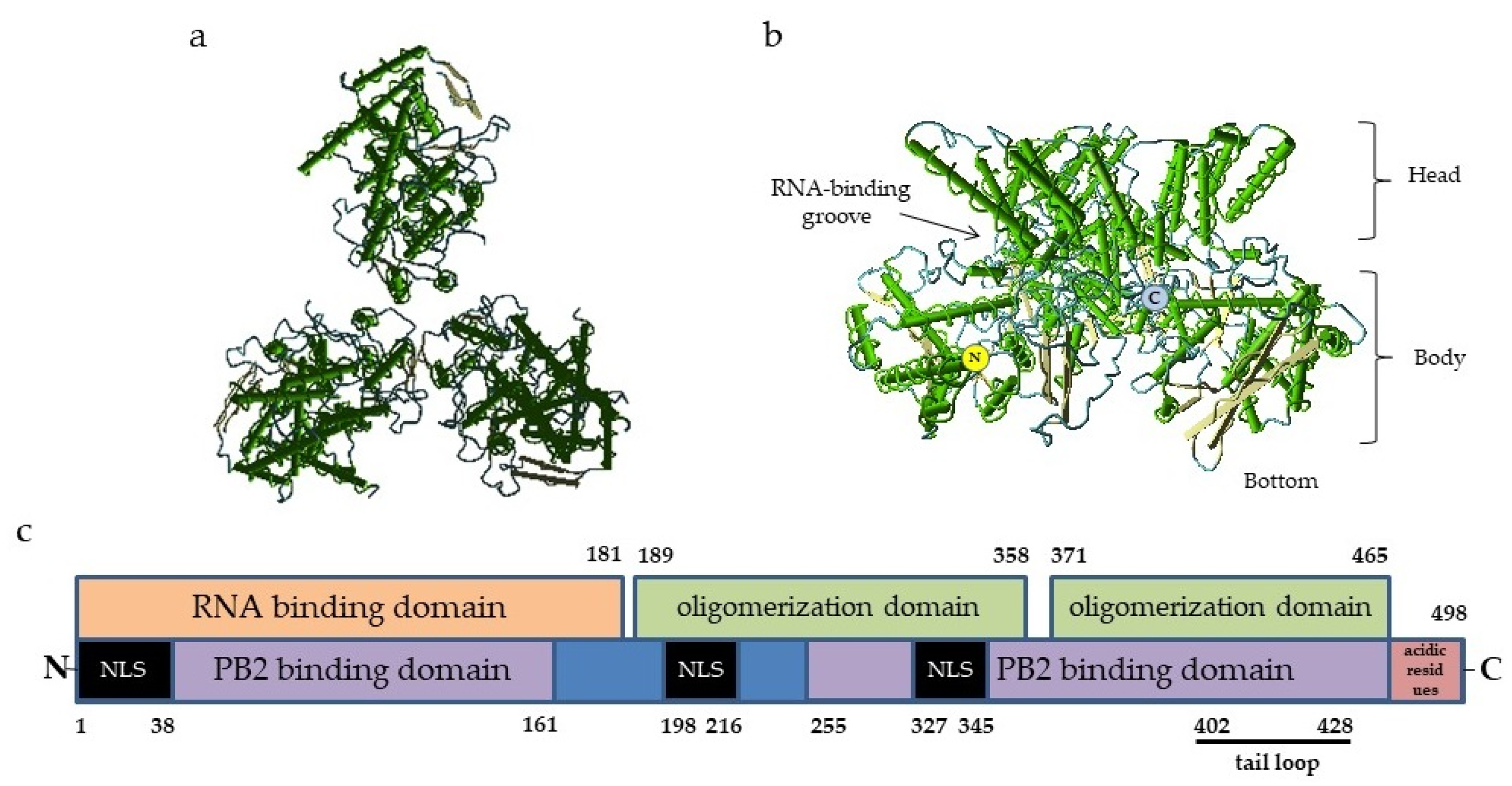
2. Nucleoprotein Structure and Functions
3. Development of NP-Based Broadly Protective Vaccine Prototypes
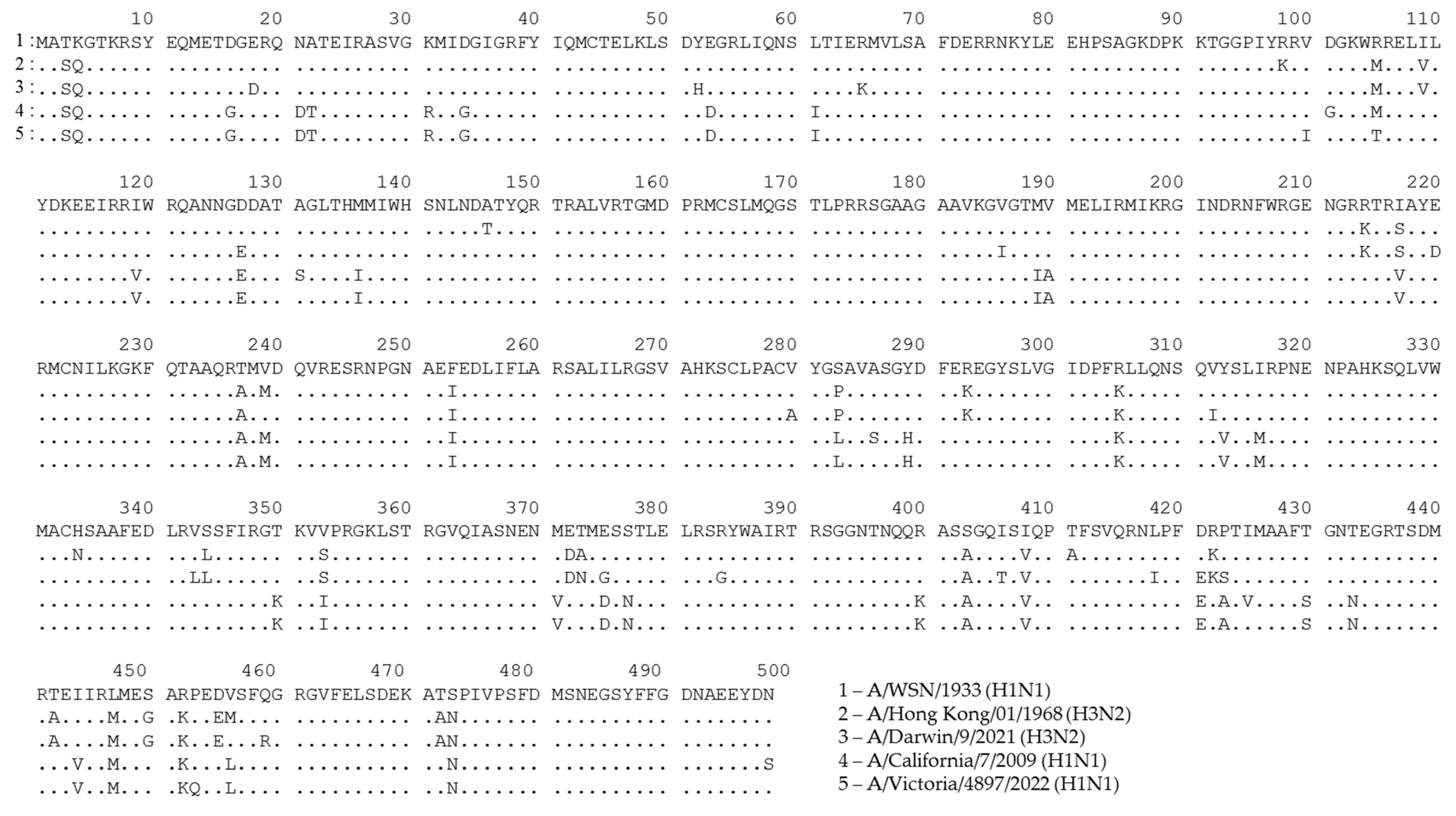
4. Variability of NP Sequences and Implications for the Performance of NP-Based Vaccines
5. Approaches to Improve the Performance of Influenza Virus Vaccines
6. Concluding Remarks
Supplementary Materials
Author Contributions
Funding
Data Availability Statement
Conflicts of Interest
References
- Moriyama, M.; Hugentobler, W.J.; Iwasaki, A. Seasonality of Respiratory Viral Infections. Annu. Rev. Virol. 2020, 7, 83–101. [Google Scholar] [CrossRef] [PubMed]
- Zhu, G.; Xu, D.; Zhang, Y.; Wang, T.; Zhang, L.; Gu, W.; Shen, M. Epidemiological characteristics of four common respiratory viral infections in children. Virol. J. 2021, 18, 10. [Google Scholar] [CrossRef] [PubMed]
- Iuliano, A.D.; Roguski, K.M.; Chang, H.H.; Muscatello, D.J.; Palekar, R.; Tempia, S.; Cohen, C.; Gran, J.M.; Schanzer, D.; Cowling, B.J.; et al. Estimates of global seasonal influenza-associated respiratory mortality: A modelling study. Lancet 2018, 391, 1285–1300. [Google Scholar] [CrossRef] [PubMed]
- Rémy, V.; Largeron, N.; Quilici, S.; Carroll, S. The Economic Value of Vaccination: Why Prevention is Wealth. J. Mark. Access Health Policy 2015, 3, 29284. [Google Scholar] [CrossRef] [PubMed]
- Becker, T.; Elbahesh, H.; Reperant, L.A.; Rimmelzwaan, G.F.; Osterhaus, A. Influenza Vaccines: Successes and Continuing Challenges. J. Infect. Dis. 2021, 224, S405–S419. [Google Scholar] [CrossRef] [PubMed]
- Wille, M.; Holmes, E.C. The Ecology and Evolution of Influenza Viruses. Cold Spring Harb. Perspect. Med. 2020, 10, a038489. [Google Scholar] [CrossRef] [PubMed]
- Awadalla, M.E.; Alkadi, H.; Alarjani, M.; Al-Anazi, A.E.; Ibrahim, M.A.; Alohali, T.A.; Enani, M.; Alturaiki, W.; Alosaimi, B. Moderately Low Effectiveness of the Influenza Quadrivalent Vaccine: Potential Mismatch between Circulating Strains and Vaccine Strains. Vaccines 2023, 11, 1050. [Google Scholar] [CrossRef] [PubMed]
- Xie, H.; Wan, X.F.; Ye, Z.; Plant, E.P.; Zhao, Y.; Xu, Y.; Li, X.; Finch, C.; Zhao, N.; Kawano, T.; et al. H3N2 Mismatch of 2014-15 Northern Hemisphere Influenza Vaccines and Head-to-head Comparison between Human and Ferret Antisera derived Antigenic Maps. Sci. Rep. 2015, 5, 15279. [Google Scholar] [CrossRef]
- Erbelding, E.J.; Post, D.J.; Stemmy, E.J.; Roberts, P.C.; Augustine, A.D.; Ferguson, S.; Paules, C.I.; Graham, B.S.; Fauci, A.S. A Universal Influenza Vaccine: The Strategic Plan for the National Institute of Allergy and Infectious Diseases. J. Infect. Dis. 2018, 218, 347–354. [Google Scholar] [CrossRef]
- Isakova-Sivak, I.; Stepanova, E.; Mezhenskaya, D.; Matyushenko, V.; Prokopenko, P.; Sychev, I.; Wong, P.F.; Rudenko, L. Influenza vaccine: Progress in a vaccine that elicits a broad immune response. Expert Rev. Vaccines 2021, 20, 1097–1112. [Google Scholar] [CrossRef]
- Wang, W.C.; Sayedahmed, E.E.; Sambhara, S.; Mittal, S.K. Progress towards the Development of a Universal Influenza Vaccine. Viruses 2022, 14, 1684. [Google Scholar] [CrossRef]
- Scholtissek, C.; Burger, H.; Kistner, O.; Shortridge, K.F. The nucleoprotein as a possible major factor in determining host specificity of influenza H3N2 viruses. Virology 1985, 147, 287–294. [Google Scholar] [CrossRef]
- Wei, Y.; Zeng, Y.; Zhang, X.; Xu, S.; Wang, Z.; Du, Y.; Zhang, B.; Lei, C.Q.; Zhu, Q. The Nucleoprotein of H7N9 Influenza Virus Positively Regulates TRAF3-Mediated Innate Signaling and Attenuates Viral Virulence in Mice. J. Virol. 2020, 94, 01640-20. [Google Scholar] [CrossRef] [PubMed]
- Hu, Y.; Sneyd, H.; Dekant, R.; Wang, J. Influenza A Virus Nucleoprotein: A Highly Conserved Multi-Functional Viral Protein as a Hot Antiviral Drug Target. Curr. Top. Med. Chem. 2017, 17, 2271–2285. [Google Scholar] [CrossRef] [PubMed]
- Donchet, A.; Oliva, J.; Labaronne, A.; Tengo, L.; Miloudi, M.; Gerard, F.C.A.; Mas, C.; Schoehn, G.; Ruigrok, R.W.H.; Ducatez, M.; et al. The structure of the nucleoprotein of Influenza D shows that all Orthomyxoviridae nucleoproteins have a similar NP(CORE), with or without a NP(TAIL) for nuclear transport. Sci. Rep. 2019, 9, 600. [Google Scholar] [CrossRef] [PubMed]
- Lee, S.Y.; Kang, J.O.; Chang, J. Nucleoprotein vaccine induces cross-protective cytotoxic T lymphocytes against both lineages of influenza B virus. Clin. Exp. Vaccine Res. 2019, 8, 54–63. [Google Scholar] [CrossRef] [PubMed]
- Grant, E.; Wu, C.; Chan, K.F.; Eckle, S.; Bharadwaj, M.; Zou, Q.M.; Kedzierska, K.; Chen, W. Nucleoprotein of influenza A virus is a major target of immunodominant CD8+ T-cell responses. Immunol. Cell Biol. 2013, 91, 184–194. [Google Scholar] [CrossRef] [PubMed]
- Flynn, J.A.; Weber, T.; Cejas, P.J.; Cox, K.S.; Touch, S.; Austin, L.A.; Ou, Y.; Citron, M.P.; Luo, B.; Gindy, M.E.; et al. Characterization of humoral and cell-mediated immunity induced by mRNA vaccines expressing influenza hemagglutinin stem and nucleoprotein in mice and nonhuman primates. Vaccine 2022, 40, 4412–4423. [Google Scholar] [CrossRef] [PubMed]
- Bodewes, R.; Geelhoed-Mieras, M.M.; Wrammert, J.; Ahmed, R.; Wilson, P.C.; Fouchier, R.A.; Osterhaus, A.D.; Rimmelzwaan, G.F. In vitro assessment of the immunological significance of a human monoclonal antibody directed to the influenza a virus nucleoprotein. Clin. Vaccine Immunol. CVI 2013, 20, 1333–1337. [Google Scholar] [CrossRef]
- Virelizier, J.L.; Allison, A.C.; Oxford, J.S.; Schild, G.C. Early presence of ribonucleoprotein antigen on surface of influenza virus-infected cells. Nature 1977, 266, 52–54. [Google Scholar] [CrossRef]
- Vanderven, H.A.; Ana-Sosa-Batiz, F.; Jegaskanda, S.; Rockman, S.; Laurie, K.; Barr, I.; Chen, W.; Wines, B.; Hogarth, P.M.; Lambe, T.; et al. What Lies Beneath: Antibody Dependent Natural Killer Cell Activation by Antibodies to Internal Influenza Virus Proteins. EBioMedicine 2016, 8, 277–290. [Google Scholar] [CrossRef]
- Jegaskanda, S.; Co, M.D.T.; Cruz, J.; Subbarao, K.; Ennis, F.A.; Terajima, M. Induction of H7N9-Cross-Reactive Antibody-Dependent Cellular Cytotoxicity Antibodies by Human Seasonal Influenza A Viruses that are Directed Toward the Nucleoprotein. J. Infect. Dis. 2017, 215, 818–823. [Google Scholar] [CrossRef]
- Machkovech, H.M.; Bedford, T.; Suchard, M.A.; Bloom, J.D. Positive Selection in CD8+ T-Cell Epitopes of Influenza Virus Nucleoprotein Revealed by a Comparative Analysis of Human and Swine Viral Lineages. J. Virol. 2015, 89, 11275–11283. [Google Scholar] [CrossRef]
- Reguera, J.; Cusack, S.; Kolakofsky, D. Segmented negative strand RNA virus nucleoprotein structure. Curr. Opin. Virol. 2014, 5, 7–15. [Google Scholar] [CrossRef]
- Tang, Y.S.; Xu, S.; Chen, Y.W.; Wang, J.H.; Shaw, P.C. Crystal structures of influenza nucleoprotein complexed with nucleic acid provide insights into the mechanism of RNA interaction. Nucleic Acids Res. 2021, 49, 4144–4154. [Google Scholar] [CrossRef] [PubMed]
- Ortega, J.; Martin-Benito, J.; Zurcher, T.; Valpuesta, J.M.; Carrascosa, J.L.; Ortin, J. Ultrastructural and functional analyses of recombinant influenza virus ribonucleoproteins suggest dimerization of nucleoprotein during virus amplification. J. Virol. 2000, 74, 156–163. [Google Scholar] [CrossRef] [PubMed]
- Turrell, L.; Lyall, J.W.; Tiley, L.S.; Fodor, E.; Vreede, F.T. The role and assembly mechanism of nucleoprotein in influenza A virus ribonucleoprotein complexes. Nat. Commun. 2013, 4, 1591. [Google Scholar] [CrossRef] [PubMed]
- Ye, Q.; Krug, R.M.; Tao, Y.J. The mechanism by which influenza A virus nucleoprotein forms oligomers and binds RNA. Nature 2006, 444, 1078–1082. [Google Scholar] [CrossRef] [PubMed]
- Diefenbacher, M.; Tan, T.J.C.; Bauer, D.L.V.; Stadtmueller, B.M.; Wu, N.C.; Brooke, C.B. Interactions between Influenza A Virus Nucleoprotein and Gene Segment Untranslated Regions Facilitate Selective Modulation of Viral Gene Expression. J. Virol. 2022, 96, e0020522. [Google Scholar] [CrossRef] [PubMed]
- Prokudina, E.N.; Semenova, N.; Chumakov, V.; Stitz, L. An antigenic epitope of influenza virus nucleoprotein (NP) associated with polymeric forms of NP. Virol. J. 2008, 5, 37. [Google Scholar] [CrossRef] [PubMed][Green Version]
- Portela, A.; Digard, P. The influenza virus nucleoprotein: A multifunctional RNA-binding protein pivotal to virus replication. J. Gen. Virol. 2002, 83, 723–734. [Google Scholar] [CrossRef] [PubMed]
- Santak, M.; Matic, Z. The Role of Nucleoprotein in Immunity to Human Negative-Stranded RNA Viruses-Not Just Another Brick in the Viral Nucleocapsid. Viruses 2022, 14, 521. [Google Scholar] [CrossRef] [PubMed]
- Neumann, G.; Castrucci, M.R.; Kawaoka, Y. Nuclear import and export of influenza virus nucleoprotein. J. Virol. 1997, 71, 9690–9700. [Google Scholar] [CrossRef] [PubMed]
- Wu, W.; Sankhala, R.S.; Florio, T.J.; Zhou, L.; Nguyen, N.L.T.; Lokareddy, R.K.; Cingolani, G.; Pante, N. Synergy of two low-affinity NLSs determines the high avidity of influenza A virus nucleoprotein NP for human importin alpha isoforms. Sci. Rep. 2017, 7, 11381. [Google Scholar] [CrossRef]
- Kobayashi, K.S.; van den Elsen, P.J. NLRC5: A key regulator of MHC class I-dependent immune responses. Nat. Rev. Immunol. 2012, 12, 813–820. [Google Scholar] [CrossRef] [PubMed]
- Juno, J.A.; van Bockel, D.; Kent, S.J.; Kelleher, A.D.; Zaunders, J.J.; Munier, C.M. Cytotoxic CD4 T Cells-Friend or Foe during Viral Infection? Front. Immunol. 2017, 8, 19. [Google Scholar] [CrossRef] [PubMed]
- Assarsson, E.; Bui, H.H.; Sidney, J.; Zhang, Q.; Glenn, J.; Oseroff, C.; Mbawuike, I.N.; Alexander, J.; Newman, M.J.; Grey, H.; et al. Immunomic analysis of the repertoire of T-cell specificities for influenza A virus in humans. J. Virol. 2008, 82, 12241–12251. [Google Scholar] [CrossRef]
- Wu, C.; Zanker, D.; Valkenburg, S.; Tan, B.; Kedzierska, K.; Zou, Q.M.; Doherty, P.C.; Chen, W. Systematic identification of immunodominant CD8+ T-cell responses to influenza A virus in HLA-A2 individuals. Proc. Natl. Acad. Sci. USA 2011, 108, 9178–9183. [Google Scholar] [CrossRef]
- Soghoian, D.Z.; Streeck, H. Cytolytic CD4(+) T cells in viral immunity. Expert Rev. Vaccines 2010, 9, 1453–1463. [Google Scholar] [CrossRef]
- Wilkinson, T.M.; Li, C.K.; Chui, C.S.; Huang, A.K.; Perkins, M.; Liebner, J.C.; Lambkin-Williams, R.; Gilbert, A.; Oxford, J.; Nicholas, B.; et al. Preexisting influenza-specific CD4+ T cells correlate with disease protection against influenza challenge in humans. Nat. Med. 2012, 18, 274–280. [Google Scholar] [CrossRef]
- Chen, L.; Zanker, D.; Xiao, K.; Wu, C.; Zou, Q.; Chen, W. Immunodominant CD4+ T-cell responses to influenza A virus in healthy individuals focus on matrix 1 and nucleoprotein. J. Virol. 2014, 88, 11760–11773. [Google Scholar] [CrossRef]
- de Boer, G.F.; Back, W.; Osterhaus, A.D. An ELISA for detection of antibodies against influenza A nucleoprotein in humans and various animal species. Arch. Virol. 1990, 115, 47–61. [Google Scholar] [CrossRef] [PubMed]
- Sedova, E.S.; Scherbinin, D.N.; Lysenko, A.A.; Alekseeva, S.V.; Artemova, E.A.; Shmarov, M.M. Non-neutralizing Antibodies Directed at Conservative Influenza Antigens. Acta Nat. 2019, 11, 22–32. [Google Scholar] [CrossRef] [PubMed]
- LaMere, M.W.; Lam, H.T.; Moquin, A.; Haynes, L.; Lund, F.E.; Randall, T.D.; Kaminski, D.A. Contributions of antinucleoprotein IgG to heterosubtypic immunity against influenza virus. J. Immunol. 2011, 186, 4331–4339. [Google Scholar] [CrossRef] [PubMed]
- Zheng, M.; Luo, J.; Chen, Z. Development of universal influenza vaccines based on influenza virus M and NP genes. Infection 2014, 42, 251–262. [Google Scholar] [CrossRef] [PubMed]
- Townsend, A.R.; McMichael, A.J.; Carter, N.P.; Huddleston, J.A.; Brownlee, G.G. Cytotoxic T cell recognition of the influenza nucleoprotein and hemagglutinin expressed in transfected mouse L cells. Cell 1984, 39, 13–25. [Google Scholar] [CrossRef] [PubMed]
- Wraith, D.C.; Askonas, B.A. Induction of influenza A virus cross-reactive cytotoxic T cells by a nucleoprotein/haemagglutinin preparation. J. Gen. Virol. 1985, 66 Pt 6, 1327–1331. [Google Scholar] [CrossRef] [PubMed]
- Wraith, D.C.; Vessey, A.E.; Askonas, B.A. Purified influenza virus nucleoprotein protects mice from lethal infection. J. Gen. Virol. 1987, 68 Pt 2, 433–440. [Google Scholar] [CrossRef]
- Tite, J.P.; Hughes-Jenkins, C.; O’Callaghan, D.; Dougan, G.; Russell, S.M.; Gao, X.M.; Liew, F.Y. Anti-viral immunity induced by recombinant nucleoprotein of influenza A virus. II. Protection from influenza infection and mechanism of protection. Immunology 1990, 71, 202–207. [Google Scholar]
- Le, T.; Sun, C.; Chang, J.; Zhang, G.; Yin, X. mRNA Vaccine Development for Emerging Animal and Zoonotic Diseases. Viruses 2022, 14, 401. [Google Scholar] [CrossRef]
- McMahon, M.; O’Dell, G.; Tan, J.; Sarkozy, A.; Vadovics, M.; Carreno, J.M.; Puente-Massaguer, E.; Muramatsu, H.; Bajusz, C.; Rijnink, W.; et al. Assessment of a quadrivalent nucleoside-modified mRNA vaccine that protects against group 2 influenza viruses. Proc. Natl. Acad. Sci. USA 2022, 119, e2206333119. [Google Scholar] [CrossRef] [PubMed]
- Freyn, A.W.; Ramos da Silva, J.; Rosado, V.C.; Bliss, C.M.; Pine, M.; Mui, B.L.; Tam, Y.K.; Madden, T.D.; de Souza Ferreira, L.C.; Weissman, D.; et al. A Multi-Targeting, Nucleoside-Modified mRNA Influenza Virus Vaccine Provides Broad Protection in Mice. Mol. Ther. 2020, 28, 1569–1584. [Google Scholar] [CrossRef] [PubMed]
- Ulmer, J.B.; Donnelly, J.J.; Parker, S.E.; Rhodes, G.H.; Felgner, P.L.; Dwarki, V.J.; Gromkowski, S.H.; Deck, R.R.; DeWitt, C.M.; Friedman, A.; et al. Heterologous protection against influenza by injection of DNA encoding a viral protein. Science 1993, 259, 1745–1749. [Google Scholar] [CrossRef] [PubMed]
- Ulmer, J.B.; Fu, T.M.; Deck, R.R.; Friedman, A.; Guan, L.; DeWitt, C.; Liu, X.; Wang, S.; Liu, M.A.; Donnelly, J.J.; et al. Protective CD4+ and CD8+ T cells against influenza virus induced by vaccination with nucleoprotein DNA. J. Virol. 1998, 72, 5648–5653. [Google Scholar] [CrossRef] [PubMed]
- Epstein, S.L.; Kong, W.P.; Misplon, J.A.; Lo, C.Y.; Tumpey, T.M.; Xu, L.; Nabel, G.J. Protection against multiple influenza A subtypes by vaccination with highly conserved nucleoprotein. Vaccine 2005, 23, 5404–5410. [Google Scholar] [CrossRef] [PubMed]
- Lo, C.Y.; Wu, Z.; Misplon, J.A.; Price, G.E.; Pappas, C.; Kong, W.P.; Tumpey, T.M.; Epstein, S.L. Comparison of vaccines for induction of heterosubtypic immunity to influenza A virus: Cold-adapted vaccine versus DNA prime-adenovirus boost strategies. Vaccine 2008, 26, 2062–2072. [Google Scholar] [CrossRef] [PubMed]
- Rao, S.S.; Kong, W.P.; Wei, C.J.; Van Hoeven, N.; Gorres, J.P.; Nason, M.; Andersen, H.; Tumpey, T.M.; Nabel, G.J. Comparative efficacy of hemagglutinin, nucleoprotein, and matrix 2 protein gene-based vaccination against H5N1 influenza in mouse and ferret. PLoS ONE 2010, 5, e9812. [Google Scholar] [CrossRef]
- Berthoud, T.K.; Hamill, M.; Lillie, P.J.; Hwenda, L.; Collins, K.A.; Ewer, K.J.; Milicic, A.; Poyntz, H.C.; Lambe, T.; Fletcher, H.A.; et al. Potent CD8+ T-cell immunogenicity in humans of a novel heterosubtypic influenza A vaccine, MVA-NP+M1. Clin. Infect. Dis. Off. Publ. Infect. Dis. Soc. Am. 2011, 52, 1–7. [Google Scholar] [CrossRef]
- Antrobus, R.D.; Lillie, P.J.; Berthoud, T.K.; Spencer, A.J.; McLaren, J.E.; Ladell, K.; Lambe, T.; Milicic, A.; Price, D.A.; Hill, A.V.; et al. A T cell-inducing influenza vaccine for the elderly: Safety and immunogenicity of MVA-NP+M1 in adults aged over 50 years. PLoS ONE 2012, 7, e48322. [Google Scholar] [CrossRef]
- Lillie, P.J.; Berthoud, T.K.; Powell, T.J.; Lambe, T.; Mullarkey, C.; Spencer, A.J.; Hamill, M.; Peng, Y.; Blais, M.E.; Duncan, C.J.; et al. Preliminary assessment of the efficacy of a T-cell-based influenza vaccine, MVA-NP+M1, in humans. Clin. Infect. Dis. Off. Publ. Infect. Dis. Soc. Am. 2012, 55, 19–25. [Google Scholar] [CrossRef]
- Swayze, H.; Allen, J.; Folegatti, P.; Yu, L.M.; Gilbert, S.; Hill, A.; Ellis, C.; Butler, C.C. A phase IIb study to determine the safety and efficacy of candidate INfluenza Vaccine MVA-NP+M1 in combination with licensed Ina CTivated infl Uenza vaccine in adult S aged 65 years and above (INVICTUS): A study protocol. F1000Research 2019, 8, 719. [Google Scholar] [CrossRef] [PubMed]
- Butler, C.; Ellis, C.; Folegatti, P.M.; Swayze, H.; Allen, J.; Bussey, L.; Bellamy, D.; Lawrie, A.; Eagling-Vose, E.; Yu, L.M.; et al. Efficacy and Safety of a Modified Vaccinia Ankara-NP+M1 Vaccine Combined with QIV in People Aged 65 and Older: A Randomised Controlled Clinical Trial (INVICTUS). Vaccines 2021, 9, 851. [Google Scholar] [CrossRef] [PubMed]
- Poon, L.L.; Leung, Y.H.; Nicholls, J.M.; Perera, P.Y.; Lichy, J.H.; Yamamoto, M.; Waldmann, T.A.; Peiris, J.S.; Perera, L.P. Vaccinia virus-based multivalent H5N1 avian influenza vaccines adjuvanted with IL-15 confer sterile cross-clade protection in mice. J. Immunol. 2009, 182, 3063–3071. [Google Scholar] [CrossRef] [PubMed]
- Dicks, M.D.; Spencer, A.J.; Edwards, N.J.; Wadell, G.; Bojang, K.; Gilbert, S.C.; Hill, A.V.; Cottingham, M.G. A novel chimpanzee adenovirus vector with low human seroprevalence: Improved systems for vector derivation and comparative immunogenicity. PLoS ONE 2012, 7, e40385. [Google Scholar] [CrossRef] [PubMed]
- Antrobus, R.D.; Coughlan, L.; Berthoud, T.K.; Dicks, M.D.; Hill, A.V.; Lambe, T.; Gilbert, S.C. Clinical assessment of a novel recombinant simian adenovirus ChAdOx1 as a vectored vaccine expressing conserved Influenza A antigens. Mol. Ther. 2014, 22, 668–674. [Google Scholar] [CrossRef] [PubMed]
- Asthagiri Arunkumar, G.; McMahon, M.; Pavot, V.; Aramouni, M.; Ioannou, A.; Lambe, T.; Gilbert, S.; Krammer, F. Vaccination with viral vectors expressing NP, M1 and chimeric hemagglutinin induces broad protection against influenza virus challenge in mice. Vaccine 2019, 37, 5567–5577. [Google Scholar] [CrossRef] [PubMed]
- McMahon, M.; Asthagiri Arunkumar, G.; Liu, W.C.; Stadlbauer, D.; Albrecht, R.A.; Pavot, V.; Aramouni, M.; Lambe, T.; Gilbert, S.C.; Krammer, F. Vaccination with Viral Vectors Expressing Chimeric Hemagglutinin, NP and M1 Antigens Protects Ferrets Against Influenza Virus Challenge. Front. Immunol. 2019, 10, 2005. [Google Scholar] [CrossRef]
- Vatzia, E.; Feest, K.; McNee, A.; Manjegowda, T.; Carr, B.V.; Paudyal, B.; Chrun, T.; Maze, E.A.; McCarron, A.; Morris, S.; et al. Immunization with matrix-, nucleoprotein and neuraminidase protects against H3N2 influenza challenge in pH1N1 pre-exposed pigs. NPJ Vaccines 2023, 8, 19. [Google Scholar] [CrossRef]
- Sipo, I.; Knauf, M.; Fechner, H.; Poller, W.; Planz, O.; Kurth, R.; Norley, S. Vaccine protection against lethal homologous and heterologous challenge using recombinant AAV vectors expressing codon-optimized genes from pandemic swine origin influenza virus (SOIV). Vaccine 2011, 29, 1690–1699. [Google Scholar] [CrossRef]
- Demminger, D.E.; Walz, L.; Dietert, K.; Hoffmann, H.; Planz, O.; Gruber, A.D.; von Messling, V.; Wolff, T. Adeno-associated virus-vectored influenza vaccine elicits neutralizing and Fcgamma receptor-activating antibodies. EMBO Mol. Med. 2020, 12, e10938. [Google Scholar] [CrossRef]
- Joshi, L.R.; Knudsen, D.; Pineyro, P.; Dhakal, S.; Renukaradhya, G.J.; Diel, D.G. Protective Efficacy of an Orf Virus-Vector Encoding the Hemagglutinin and the Nucleoprotein of Influenza A Virus in Swine. Front. Immunol. 2021, 12, 747574. [Google Scholar] [CrossRef] [PubMed]
- Zheng, M.; Liu, F.; Shen, Y.; Wang, S.; Xu, W.; Fang, F.; Sun, B.; Xie, Z.; Chen, Z. Cross-protection against influenza virus infection by intranasal administration of nucleoprotein-based vaccine with compound 48/80 adjuvant. Hum. Vaccines Immunother. 2015, 11, 397–406. [Google Scholar] [CrossRef]
- Guo, L.; Zheng, M.; Ding, Y.; Li, D.; Yang, Z.; Wang, H.; Chen, Q.; Sui, Z.; Fang, F.; Chen, Z. Protection against multiple influenza A virus subtypes by intranasal administration of recombinant nucleoprotein. Arch. Virol. 2010, 155, 1765–1775. [Google Scholar] [CrossRef] [PubMed]
- Sanchez, M.V.; Ebensen, T.; Schulze, K.; Cargnelutti, D.; Blazejewska, P.; Scodeller, E.A.; Guzman, C.A. Intranasal delivery of influenza rNP adjuvanted with c-di-AMP induces strong humoral and cellular immune responses and provides protection against virus challenge. PLoS ONE 2014, 9, e104824. [Google Scholar] [CrossRef] [PubMed]
- Cookenham, T.; Lanzer, K.G.; Gage, E.; Lorenzo, E.C.; Carter, D.; Coler, R.N.; Baldwin, S.L.; Haynes, L.; Reiley, W.W.; Blackman, M.A. Vaccination of aged mice with adjuvanted recombinant influenza nucleoprotein enhances protective immunity. Vaccine 2020, 38, 5256–5267. [Google Scholar] [CrossRef] [PubMed]
- Li, Y.; Li, Z.; Zhao, Y.; Chen, X. Potentiation of Recombinant NP and M1-Induced Cellular Immune Responses and Protection by Physical Radiofrequency Adjuvant. Vaccines 2021, 9, 1382. [Google Scholar] [CrossRef] [PubMed]
- Li, Y.; Chen, X. CpG 1018 Is an Effective Adjuvant for Influenza Nucleoprotein. Vaccines 2023, 11, 649. [Google Scholar] [CrossRef]
- Yin, Y.; Li, B.; Zhou, L.; Luo, J.; Liu, X.; Wang, S.; Lu, Q.; Tan, W.; Chen, Z. Protein transduction domain-mediated influenza NP subunit vaccine generates a potent immune response and protection against influenza virus in mice. Emerg. Microbes Infect. 2020, 9, 1933–1942. [Google Scholar] [CrossRef]
- Tan, M.P.; Mohamed Alitheen, N.B.; Tan, W.S.; Yap, W.B. Expression of Influenza M2e-NP Recombinant Fusion Protein in Escherichia coli BL21 (DE3) and Its Binding to Antibodies. Vaccines 2022, 10, 2066. [Google Scholar] [CrossRef]
- Shahsavandi, S.; Ebrahimi, M.M.; Fotouhi, F.; Tebianian, M. A Combination of Recombinant HA1-and Nucleoprotein-Based Chitosan Nanoparticles Induces Early and Potent Immune Responses Against the H9N2 Influenza Virus. Viral Immunol. 2022, 35, 365–374. [Google Scholar] [CrossRef]
- Ma, Y.; Wang, Y.; Dong, C.; Gonzalez, G.X.; Song, Y.; Zhu, W.; Kim, J.; Wei, L.; Wang, B.Z. Influenza NP core and HA or M2e shell double-layered protein nanoparticles induce broad protection against divergent influenza A viruses. Nanomed. Nanotechnol. Biol. Med. 2022, 40, 102479. [Google Scholar] [CrossRef]
- Wei, J.; Li, Z.; Yang, Y.; Ma, G.; Su, Z.; Zhang, S. An Apoferritin-Hemagglutinin Conjugate Vaccine with Encapsulated Nucleoprotein Antigen Peptide from Influenza Virus Confers Enhanced Cross Protection. Bioconjugate Chem. 2020, 31, 1948–1959. [Google Scholar] [CrossRef]
- Del Campo, J.; Pizzorno, A.; Djebali, S.; Bouley, J.; Haller, M.; Perez-Vargas, J.; Lina, B.; Boivin, G.; Hamelin, M.E.; Nicolas, F.; et al. OVX836 a recombinant nucleoprotein vaccine inducing cellular responses and protective efficacy against multiple influenza A subtypes. NPJ Vaccines 2019, 4, 4. [Google Scholar] [CrossRef] [PubMed]
- Del Campo, J.; Bouley, J.; Chevandier, M.; Rousset, C.; Haller, M.; Indalecio, A.; Guyon-Gellin, D.; Le Vert, A.; Hill, F.; Djebali, S.; et al. OVX836 Heptameric Nucleoprotein Vaccine Generates Lung Tissue-Resident Memory CD8+ T-Cells for Cross-Protection Against Influenza. Front. Immunol. 2021, 12, 678483. [Google Scholar] [CrossRef] [PubMed]
- Withanage, K.; De Coster, I.; Cools, N.; Viviani, S.; Tourneur, J.; Chevandier, M.; Lambiel, M.; Willems, P.; Le Vert, A.; Nicolas, F.; et al. Phase 1 Randomized, Placebo-Controlled, Dose-Escalating Study to Evaluate OVX836, a Nucleoprotein-Based Influenza Vaccine: Intramuscular Results. J. Infect. Dis. 2022, 226, 119–127. [Google Scholar] [CrossRef] [PubMed]
- Leroux-Roels, I.; Willems, P.; Waerlop, G.; Janssens, Y.; Tourneur, J.; De Boever, F.; Bruhwyler, J.; Alhatemi, A.; Jacobs, B.; Nicolas, F.; et al. Immunogenicity, safety, and preliminary efficacy evaluation of OVX836, a nucleoprotein-based universal influenza A vaccine candidate: A randomised, double-blind, placebo-controlled, phase 2a trial. Lancet Infect. Dis. 2023, 23, 1360–1369. [Google Scholar] [CrossRef] [PubMed]
- Epstein, S.L.; Stack, A.; Misplon, J.A.; Lo, C.Y.; Mostowski, H.; Bennink, J.; Subbarao, K. Vaccination with DNA encoding internal proteins of influenza virus does not require CD8+ cytotoxic T lymphocytes: Either CD4+ or CD8+ T cells can promote survival and recovery after challenge. Int. Immunol. 2000, 12, 91–101. [Google Scholar] [CrossRef] [PubMed]
- Tutykhina, I.; Esmagambetov, I.; Bagaev, A.; Pichugin, A.; Lysenko, A.; Shcherbinin, D.; Sedova, E.; Logunov, D.; Shmarov, M.; Ataullakhanov, R.; et al. Vaccination potential of B and T epitope-enriched NP and M2 against Influenza A viruses from different clades and hosts. PLoS ONE 2018, 13, e0191574. [Google Scholar] [CrossRef] [PubMed]
- Barefoot, B.E.; Sample, C.J.; Ramsburg, E.A. Recombinant vesicular stomatitis virus expressing influenza nucleoprotein induces CD8 T-cell responses that enhance antibody-mediated protection after lethal challenge with influenza virus. Clin. Vaccine Immunol. CVI 2009, 16, 488–498. [Google Scholar] [CrossRef]
- Heinen, P.P.; Rijsewijk, F.A.; de Boer-Luijtze, E.A.; Bianchi, A.T.J. Vaccination of pigs with a DNA construct expressing an influenza virus M2-nucleoprotein fusion protein exacerbates disease after challenge with influenza A virus. J. Gen. Virol. 2002, 83, 1851–1859. [Google Scholar] [CrossRef]
- Kim, M.H.; Kang, J.O.; Kim, J.Y.; Jung, H.E.; Lee, H.K.; Chang, J. Single mucosal vaccination targeting nucleoprotein provides broad protection against two lineages of influenza B virus. Antivir. Res. 2019, 163, 19–28. [Google Scholar] [CrossRef] [PubMed]
- Langenmayer, M.C.; Luelf-Averhoff, A.T.; Marr, L.; Jany, S.; Freudenstein, A.; Adam-Neumair, S.; Tscherne, A.; Fux, R.; Rojas, J.J.; Blutke, A.; et al. Newly Designed Poxviral Promoters to Improve Immunogenicity and Efficacy of MVA-NP Candidate Vaccines against Lethal Influenza Virus Infection in Mice. Pathogens 2023, 12, 867. [Google Scholar] [CrossRef] [PubMed]
- McGee, M.C.; Huang, W. Evolutionary conservation and positive selection of influenza A nucleoprotein CTL epitopes for universal vaccination. J. Med. Virol. 2022, 94, 2578–2587. [Google Scholar] [CrossRef] [PubMed]
- van de Ven, K.; Lanfermeijer, J.; van Dijken, H.; Muramatsu, H.; Vilas Boas de Melo, C.; Lenz, S.; Peters, F.; Beattie, M.B.; Lin, P.J.C.; Ferreira, J.A.; et al. A universal influenza mRNA vaccine candidate boosts T cell responses and reduces zoonotic influenza virus disease in ferrets. Sci. Adv. 2022, 8, eadc9937. [Google Scholar] [CrossRef] [PubMed]
- Bouback, T.A.F.; Redwan, N.A. Approaches toward the development of DNA vaccine for influenza virus. Afr. J. Biotechnol. 2011, 10, 5209–5218. [Google Scholar] [CrossRef]
- Joe, P.T.; Christopoulou, I.; van Hoecke, L.; Schepens, B.; Ysenbaert, T.; Heirman, C.; Thielemans, K.; Saelens, X.; Aerts, J.L. Intranodal administration of mRNA encoding nucleoprotein provides cross-strain immunity against influenza in mice. J. Transl. Med. 2019, 17, 242. [Google Scholar] [CrossRef] [PubMed]
- Atsmon, J.; Kate-Ilovitz, E.; Shaikevich, D.; Singer, Y.; Volokhov, I.; Haim, K.Y.; Ben-Yedidia, T. Safety and immunogenicity of multimeric-001—A novel universal influenza vaccine. J. Clin. Immunol. 2012, 32, 595–603. [Google Scholar] [CrossRef]
- Lowell, G.H.; Ziv, S.; Bruzil, S.; Babecoff, R.; Ben-Yedidia, T. Back to the future: Immunization with M-001 prior to trivalent influenza vaccine in 2011/12 enhanced protective immune responses against 2014/15 epidemic strain. Vaccine 2017, 35, 713–715. [Google Scholar] [CrossRef]
- Atsmon, J.; Caraco, Y.; Ziv-Sefer, S.; Shaikevich, D.; Abramov, E.; Volokhov, I.; Bruzil, S.; Haima, K.Y.; Gottlieb, T.; Ben-Yedidia, T. Priming by a novel universal influenza vaccine (Multimeric-001)-a gateway for improving immune response in the elderly population. Vaccine 2014, 32, 5816–5823. [Google Scholar] [CrossRef]
- Powell, T.J.; Peng, Y.; Berthoud, T.K.; Blais, M.E.; Lillie, P.J.; Hill, A.V.; Rowland-Jones, S.L.; McMichael, A.J.; Gilbert, S.C.; Dong, T. Examination of influenza specific T cell responses after influenza virus challenge in individuals vaccinated with MVA-NP+M1 vaccine. PLoS ONE 2013, 8, e62778. [Google Scholar] [CrossRef]
- Coughlan, L.; Sridhar, S.; Payne, R.; Edmans, M.; Milicic, A.; Venkatraman, N.; Lugonja, B.; Clifton, L.; Qi, C.; Folegatti, P.M.; et al. Heterologous Two-Dose Vaccination with Simian Adenovirus and Poxvirus Vectors Elicits Long-Lasting Cellular Immunity to Influenza Virus A in Healthy Adults. EBioMedicine 2018, 29, 146–154. [Google Scholar] [CrossRef] [PubMed]
- Folegatti, P.M.; Bellamy, D.; Flaxman, A.; Mair, C.; Ellis, C.; Ramon, R.L.; Ramos Lopez, F.; Mitton, C.; Baker, M.; Poulton, I.; et al. Safety and Immunogenicity of the Heterosubtypic Influenza A Vaccine MVA-NP+M1 Manufactured on the AGE1.CR.pIX Avian Cell Line. Vaccines 2019, 7, 33. [Google Scholar] [CrossRef] [PubMed]
- Evans, T.G.; Bussey, L.; Eagling-Vose, E.; Rutkowski, K.; Ellis, C.; Argent, C.; Griffin, P.; Kim, J.; Thackwray, S.; Shakib, S.; et al. Efficacy and safety of a universal influenza A vaccine (MVA-NP+M1) in adults when given after seasonal quadrivalent influenza vaccine immunisation (FLU009): A phase 2b, randomised, double-blind trial. Lancet Infect. Dis. 2022, 22, 857–866. [Google Scholar] [CrossRef] [PubMed]
- Leroux-Roels, I.; Waerlop, G.; Tourneur, J.; De Boever, F.; Maes, C.; Bruhwyler, J.; Guyon-Gellin, D.; Moris, P.; Del Campo, J.; Willems, P.; et al. Randomized, Double-Blind, Reference-Controlled, Phase 2a Study Evaluating the Immunogenicity and Safety of OVX836, A Nucleoprotein-Based Influenza Vaccine. Front. Immunol. 2022, 13, 852904. [Google Scholar] [CrossRef] [PubMed]
- Atmar, R.L.; Bernstein, D.I.; Winokur, P.; Frey, S.E.; Angelo, L.S.; Bryant, C.; Ben-Yedidia, T.; Roberts, P.C.; El Sahly, H.M.; Keitel, W.A. Safety and immunogenicity of Multimeric-001 (M-001) followed by seasonal quadrivalent inactivated influenza vaccine in young adults—A randomized clinical trial. Vaccine 2023, 41, 2716–2722. [Google Scholar] [CrossRef] [PubMed]
- Pleguezuelos, O.; Robinson, S.; Fernandez, A.; Stoloff, G.A.; Mann, A.; Gilbert, A.; Balaratnam, G.; Wilkinson, T.; Lambkin-Williams, R.; Oxford, J.; et al. A Synthetic Influenza Virus Vaccine Induces a Cellular Immune Response That Correlates with Reduction in Symptomatology and Virus Shedding in a Randomized Phase Ib Live-Virus Challenge in Humans. Clin. Vaccine Immunol. CVI 2015, 22, 828–835. [Google Scholar] [CrossRef] [PubMed]
- Pleguezuelos, O.; Robinson, S.; Stoloff, G.A.; Caparros-Wanderley, W. Synthetic Influenza vaccine (FLU-v) stimulates cell mediated immunity in a double-blind, randomised, placebo-controlled Phase I trial. Vaccine 2012, 30, 4655–4660. [Google Scholar] [CrossRef]
- Pleguezuelos, O.; Robinson, S.; Fernandez, A.; Stoloff, G.A.; Caparros-Wanderley, W. Meta-Analysis and Potential Role of Preexisting Heterosubtypic Cellular Immunity Based on Variations in Disease Severity Outcomes for Influenza Live Viral Challenges in Humans. Clin. Vaccine Immunol. CVI 2015, 22, 949–956. [Google Scholar] [CrossRef]
- Pleguezuelos, O.; James, E.; Fernandez, A.; Lopes, V.; Rosas, L.A.; Cervantes-Medina, A.; Cleath, J.; Edwards, K.; Neitzey, D.; Gu, W.; et al. Efficacy of FLU-v, a broad-spectrum influenza vaccine, in a randomized phase IIb human influenza challenge study. NPJ Vaccines 2020, 5, 22. [Google Scholar] [CrossRef]
- Pleguezuelos, O.; Dille, J.; de Groen, S.; Oftung, F.; Niesters, H.G.M.; Islam, M.A.; Naess, L.M.; Hungnes, O.; Aldarij, N.; Idema, D.L.; et al. Immunogenicity, Safety, and Efficacy of a Standalone Universal Influenza Vaccine, FLU-v, in Healthy Adults: A Randomized Clinical Trial. Ann. Intern. Med. 2020, 172, 453–462. [Google Scholar] [CrossRef]
- van Doorn, E.; Pleguezuelos, O.; Liu, H.; Fernandez, A.; Bannister, R.; Stoloff, G.; Oftung, F.; Norley, S.; Huckriede, A.; Frijlink, H.W.; et al. Evaluation of the immunogenicity and safety of different doses and formulations of a broad spectrum influenza vaccine (FLU-v) developed by SEEK: Study protocol for a single-center, randomized, double-blind and placebo-controlled clinical phase IIb trial. BMC Infect. Dis. 2017, 17, 241. [Google Scholar] [CrossRef] [PubMed]
- Francis, J.N.; Bunce, C.J.; Horlock, C.; Watson, J.M.; Warrington, S.J.; Georges, B.; Brown, C.B. A novel peptide-based pan-influenza A vaccine: A double blind, randomised clinical trial of immunogenicity and safety. Vaccine 2015, 33, 396–402. [Google Scholar] [CrossRef] [PubMed]
- van de Sandt, C.E.; Kreijtz, J.H.; Rimmelzwaan, G.F. Evasion of influenza A viruses from innate and adaptive immune responses. Viruses 2012, 4, 1438–1476. [Google Scholar] [CrossRef] [PubMed]
- Tan, P.T.; Heiny, A.T.; Miotto, O.; Salmon, J.; Marques, E.T.; Lemonnier, F.; August, J.T. Conservation and diversity of influenza A H1N1 HLA-restricted T cell epitope candidates for epitope-based vaccines. PLoS ONE 2010, 5, e8754. [Google Scholar] [CrossRef] [PubMed]
- Rimmelzwaan, G.F.; Kreijtz, J.H.; Bodewes, R.; Fouchier, R.A.; Osterhaus, A.D. Influenza virus CTL epitopes, remarkably conserved and remarkably variable. Vaccine 2009, 27, 6363–6365. [Google Scholar] [CrossRef] [PubMed]
- Voeten, J.T.; Bestebroer, T.M.; Nieuwkoop, N.J.; Fouchier, R.A.; Osterhaus, A.D.; Rimmelzwaan, G.F. Antigenic drift in the influenza A virus (H3N2) nucleoprotein and escape from recognition by cytotoxic T lymphocytes. J. Virol. 2000, 74, 6800–6807. [Google Scholar] [CrossRef] [PubMed]
- Boon, A.C.; de Mutsert, G.; Graus, Y.M.; Fouchier, R.A.; Sintnicolaas, K.; Osterhaus, A.D.; Rimmelzwaan, G.F. Sequence variation in a newly identified HLA-B35-restricted epitope in the influenza A virus nucleoprotein associated with escape from cytotoxic T lymphocytes. J. Virol. 2002, 76, 2567–2572. [Google Scholar] [CrossRef]
- Rimmelzwaan, G.F.; Boon, A.C.; Voeten, J.T.; Berkhoff, E.G.; Fouchier, R.A.; Osterhaus, A.D. Sequence variation in the influenza A virus nucleoprotein associated with escape from cytotoxic T lymphocytes. Virus Res. 2004, 103, 97–100. [Google Scholar] [CrossRef]
- Korenkov, D.; Isakova-Sivak, I.; Rudenko, L. Basics of CD8 T-cell immune responses after influenza infection and vaccination with inactivated or live attenuated influenza vaccine. Expert Rev. Vaccines 2018, 17, 977–987. [Google Scholar] [CrossRef]
- Mohn, K.G.; Smith, I.; Sjursen, H.; Cox, R.J. Immune responses after live attenuated influenza vaccination. Hum. Vaccines Immunother. 2018, 14, 571–578. [Google Scholar] [CrossRef]
- Boon, A.C.; de Mutsert, G.; Fouchier, R.A.; Osterhaus, A.D.; Rimmelzwaan, G.F. The hypervariable immunodominant NP418-426 epitope from the influenza A virus nucleoprotein is recognized by cytotoxic T lymphocytes with high functional avidity. J. Virol. 2006, 80, 6024–6032. [Google Scholar] [CrossRef] [PubMed]
- Okonechnikov, K.; Golosova, O.; Fursov, M.; UGENE Team. Unipro UGENE: A unified bioinformatics toolkit. Bioinformatics 2012, 28, 1166–1167. [Google Scholar] [CrossRef] [PubMed]
- Isakova-Sivak, I.; Korenkov, D.; Smolonogina, T.; Tretiak, T.; Donina, S.; Rekstin, A.; Naykhin, A.; Shcherbik, S.; Pearce, N.; Chen, L.M.; et al. Comparative studies of infectivity, immunogenicity and cross-protective efficacy of live attenuated influenza vaccines containing nucleoprotein from cold-adapted or wild-type influenza virus in a mouse model. Virology 2017, 500, 209–217. [Google Scholar] [CrossRef] [PubMed]
- Carragher, D.M.; Kaminski, D.A.; Moquin, A.; Hartson, L.; Randall, T.D. A novel role for non-neutralizing antibodies against nucleoprotein in facilitating resistance to influenza virus. J. Immunol. 2008, 181, 4168–4176. [Google Scholar] [CrossRef] [PubMed]
- Vanderven, H.A.; Esterbauer, R.; Jegaskanda, S.; Tan, H.X.; Wheatley, A.K.; Kent, S.J. Poor protective potential of influenza nucleoprotein antibodies despite wide prevalence. Immunol. Cell Biol. 2022, 100, 49–60. [Google Scholar] [CrossRef] [PubMed]
- Fujimoto, Y.; Tomioka, Y.; Takakuwa, H.; Uechi, G.I.; Yabuta, T.; Ozaki, K.; Suyama, H.; Yamamoto, S.; Morimatsu, M.; Mai, L.Q.; et al. Cross-protective potential of anti-nucleoprotein human monoclonal antibodies against lethal influenza A virus infection. J. Gen. Virol. 2016, 97, 2104–2116. [Google Scholar] [CrossRef] [PubMed]
- van Wyke, K.L.; Hinshaw, V.S.; Bean, W.J., Jr.; Webster, R.G. Antigenic variation of influenza A virus nucleoprotein detected with monoclonal antibodies. J. Virol. 1980, 35, 24–30. [Google Scholar] [CrossRef] [PubMed]
- Miyoshi-Akiyama, T.; Yamashiro, T.; Mai, L.Q.; Narahara, K.; Miyamoto, A.; Shinagawa, S.; Mori, S.; Kitajima, H.; Kirikae, T. Discrimination of influenza A subtype by antibodies recognizing host-specific amino acids in the viral nucleoprotein. Influenza Other Respir. Viruses 2012, 6, 434–441. [Google Scholar] [CrossRef]
- Sautto, G.A.; Kirchenbaum, G.A.; Ecker, J.W.; Bebin-Blackwell, A.G.; Pierce, S.R.; Ross, T.M. Elicitation of Broadly Protective Antibodies following Infection with Influenza Viruses Expressing H1N1 Computationally Optimized Broadly Reactive Hemagglutinin Antigens. ImmunoHorizons 2018, 2, 226–237. [Google Scholar] [CrossRef]
- Wong, T.M.; Allen, J.D.; Bebin-Blackwell, A.G.; Carter, D.M.; Alefantis, T.; DiNapoli, J.; Kleanthous, H.; Ross, T.M. Computationally Optimized Broadly Reactive Hemagglutinin Elicits Hemagglutination Inhibition Antibodies against a Panel of H3N2 Influenza Virus Cocirculating Variants. J. Virol. 2017, 91, 01581-17. [Google Scholar] [CrossRef]
- Giles, B.M.; Crevar, C.J.; Carter, D.M.; Bissel, S.J.; Schultz-Cherry, S.; Wiley, C.A.; Ross, T.M. A computationally optimized hemagglutinin virus-like particle vaccine elicits broadly reactive antibodies that protect nonhuman primates from H5N1 infection. J. Infect. Dis. 2012, 205, 1562–1570. [Google Scholar] [CrossRef]
- Kanekiyo, M.; Ellis, D.; King, N.P. New Vaccine Design and Delivery Technologies. J. Infect. Dis. 2019, 219, S88–S96. [Google Scholar] [CrossRef] [PubMed]
- Kim, D.; Wu, Y.; Kim, Y.B.; Oh, Y.K. Advances in vaccine delivery systems against viral infectious diseases. Drug Deliv. Transl. Res. 2021, 11, 1401–1419. [Google Scholar] [CrossRef] [PubMed]
- Kaurav, M.; Madan, J.; Sudheesh, M.S.; Pandey, R.S. Combined adjuvant-delivery system for new generation vaccine antigens: Alliance has its own advantage. Artif. Cells Nanomed. Biotechnol. 2018, 46, S818–S831. [Google Scholar] [CrossRef]
- Jin, H.; Subbarao, K. Live Attenuated Influenza Vaccine. In Influenza Pathogenesis and Control; Oldstone, M.B.A., Compans, R.W., Eds.; Springer International Publishing: Cham, Switzerland, 2015; Volume II, pp. 181–204. [Google Scholar]
- Rudenko, L.; Yeolekar, L.; Kiseleva, I.; Isakova-Sivak, I. Development and approval of live attenuated influenza vaccines based on Russian master donor viruses: Process challenges and success stories. Vaccine 2016, 34, 5436–5441. [Google Scholar] [CrossRef] [PubMed]
- Isakova-Sivak, I.; Chen, L.M.; Matsuoka, Y.; Voeten, J.T.; Kiseleva, I.; Heldens, J.G.; den Bosch, H.; Klimov, A.; Rudenko, L.; Cox, N.J.; et al. Genetic bases of the temperature-sensitive phenotype of a master donor virus used in live attenuated influenza vaccines: A/Leningrad/134/17/57 (H2N2). Virology 2011, 412, 297–305. [Google Scholar] [CrossRef] [PubMed]
- Cox, N.J.; Kitame, F.; Kendal, A.P.; Maassab, H.F.; Naeve, C. Identification of sequence changes in the cold-adapted, live attenuated influenza vaccine strain, A/Ann Arbor/6/60 (H2N2). Virology 1988, 167, 554–567. [Google Scholar] [CrossRef] [PubMed]
- Martinez-Sobrido, L.; Peersen, O.; Nogales, A. Temperature Sensitive Mutations in Influenza a Viral Ribonucleoprotein Complex Responsible for the Attenuation of the Live Attenuated Influenza Vaccine. Viruses 2018, 10, 560. [Google Scholar] [CrossRef]
- Zhou, B.; Li, Y.; Speer, S.D.; Subba, A.; Lin, X.; Wentworth, D.E. Engineering temperature sensitive live attenuated influenza vaccines from emerging viruses. Vaccine 2012, 30, 3691–3702. [Google Scholar] [CrossRef]
- Nogales, A.; Rodriguez, L.; Chauche, C.; Huang, K.; Reilly, E.C.; Topham, D.J.; Murcia, P.R.; Parrish, C.R.; Martinez-Sobrido, L. Temperature-Sensitive Live-Attenuated Canine Influenza Virus H3N8 Vaccine. J. Virol. 2017, 91, 02211-16. [Google Scholar] [CrossRef]
- Solorzano, A.; Ye, J.; Perez, D.R. Alternative live-attenuated influenza vaccines based on modifications in the polymerase genes protect against epidemic and pandemic flu. J. Virol. 2010, 84, 4587–4596. [Google Scholar] [CrossRef] [PubMed]
- Rodriguez, L.; Blanco-Lobo, P.; Reilly, E.C.; Maehigashi, T.; Nogales, A.; Smith, A.; Topham, D.J.; Dewhurst, S.; Kim, B.; Martinez-Sobrido, L. Comparative Study of the Temperature Sensitive, Cold Adapted and Attenuated Mutations Present in the Master Donor Viruses of the Two Commercial Human Live Attenuated Influenza Vaccines. Viruses 2019, 11, 928. [Google Scholar] [CrossRef] [PubMed]
- Broadbent, A.J.; Santos, C.P.; Godbout, R.A.; Subbarao, K. The temperature-sensitive and attenuation phenotypes conferred by mutations in the influenza virus PB2, PB1, and NP genes are influenced by the species of origin of the PB2 gene in reassortant viruses derived from influenza A/California/07/2009 and A/WSN/33 viruses. J. Virol. 2014, 88, 12339–12347. [Google Scholar] [CrossRef] [PubMed]
- Nogales, A.; Steel, J.; Liu, W.C.; Lowen, A.C.; Rodriguez, L.; Chiem, K.; Cox, A.; Garcia-Sastre, A.; Albrecht, R.A.; Dewhurst, S.; et al. Mutation L319Q in the PB1 Polymerase Subunit Improves Attenuation of a Candidate Live-Attenuated Influenza A Virus Vaccine. Microbiol. Spectr. 2022, 10, e0007822. [Google Scholar] [CrossRef] [PubMed]
- Smith, A.; Rodriguez, L.; El Ghouayel, M.; Nogales, A.; Chamberlain, J.M.; Sortino, K.; Reilly, E.; Feng, C.; Topham, D.J.; Martinez-Sobrido, L.; et al. A Live Attenuated Influenza Vaccine Elicits Enhanced Heterologous Protection When the Internal Genes of the Vaccine Are Matched to Those of the Challenge Virus. J. Virol. 2020, 94, 01065-19. [Google Scholar] [CrossRef] [PubMed]
- Isakova-Sivak, I.; Korenkov, D.; Rudenko, L. Reassortant viruses for influenza vaccines: Is it time to reconsider their genome structures? Expert Rev. Vaccines 2016, 15, 565–567. [Google Scholar] [CrossRef] [PubMed]
- Yewdell, J.W.; Bennink, J.R.; Smith, G.L.; Moss, B. Influenza A virus nucleoprotein is a major target antigen for cross-reactive anti-influenza A virus cytotoxic T lymphocytes. Proc. Natl. Acad. Sci. USA 1985, 82, 1785–1789. [Google Scholar] [CrossRef]
- Korenkov, D.A.; Laurie, K.L.; Reading, P.C.; Carolan, L.A.; Chan, K.F.; Isakova, S., II; Smolonogina, T.A.; Subbarao, K.; Barr, I.G.; Villanueva, J.; et al. Safety, immunogenicity and protection of A(H3N2) live attenuated influenza vaccines containing wild-type nucleoprotein in a ferret model. Infect. Genet. Evol. J. Mol. Epidemiol. Evol. Genet. Infect. Dis. 2018, 64, 95–104. [Google Scholar] [CrossRef]
- Prokopenko, P.; Matyushenko, V.; Rak, A.; Stepanova, E.; Chistyakova, A.; Goshina, A.; Kudryavtsev, I.; Rudenko, L.; Isakova-Sivak, I. Truncation of NS1 Protein Enhances T Cell-Mediated Cross-Protection of a Live Attenuated Influenza Vaccine Virus Expressing Wild-Type Nucleoprotein. Vaccines 2023, 11, 501. [Google Scholar] [CrossRef]
- Rekstin, A.; Isakova-Sivak, I.; Petukhova, G.; Korenkov, D.; Losev, I.; Smolonogina, T.; Tretiak, T.; Donina, S.; Shcherbik, S.; Bousse, T.; et al. Immunogenicity and Cross Protection in Mice Afforded by Pandemic H1N1 Live Attenuated Influenza Vaccine Containing Wild-Type Nucleoprotein. BioMed Res. Int. 2017, 2017, 9359276. [Google Scholar] [CrossRef]
- Isakova-Sivak, I.; Matyushenko, V.; Kotomina, T.; Kiseleva, I.; Krutikova, E.; Donina, S.; Rekstin, A.; Larionova, N.; Mezhenskaya, D.; Sivak, K.; et al. Sequential Immunization with Universal Live Attenuated Influenza Vaccine Candidates Protects Ferrets against a High-Dose Heterologous Virus Challenge. Vaccines 2019, 7, 61. [Google Scholar] [CrossRef]
- Korenkov, D.; Nguyen, T.H.O.; Isakova-Sivak, I.; Smolonogina, T.; Brown, L.E.; Kedzierska, K.; Rudenko, L. Live Attenuated Influenza Vaccines engineered to express the nucleoprotein of a recent isolate stimulate human influenza CD8(+) T cells more relevant to current infections. Hum. Vaccines Immunother. 2018, 14, 941–946. [Google Scholar] [CrossRef] [PubMed]
- Bruder, D.; Srikiatkhachorn, A.; Enelow, R.I. Cellular immunity and lung injury in respiratory virus infection. Viral Immunol. 2006, 19, 147–155. [Google Scholar] [CrossRef] [PubMed]
- Schmidt, M.E.; Varga, S.M. The CD8 T Cell Response to Respiratory Virus Infections. Front. Immunol. 2018, 9, 678. [Google Scholar] [CrossRef] [PubMed]
- Mezhenskaya, D.; Isakova-Sivak, I.; Rudenko, L. M2e-based universal influenza vaccines: A historical overview and new approaches to development. J. Biomed. Sci. 2019, 26, 76. [Google Scholar] [CrossRef] [PubMed]
- Berkhoff, E.G.M.; Geelhoed-Mieras, M.M.; Fouchier, R.A.M.; Osterhaus, A.; Rimmelzwaan, G.F. Assessment of the extent of variation in influenza A virus cytotoxic T-lymphocyte epitopes by using virus-specific CD8+ T-cell clones. J. Gen. Virol. 2007, 88, 530–535. [Google Scholar] [CrossRef] [PubMed]
- Jegaskanda, S.; Amarasena, T.H.; Laurie, K.L.; Tan, H.X.; Butler, J.; Parsons, M.S.; Alcantara, S.; Petravic, J.; Davenport, M.P.; Hurt, A.C.; et al. Standard trivalent influenza virus protein vaccination does not prime antibody-dependent cellular cytotoxicity in macaques. J. Virol. 2013, 87, 13706–13718. [Google Scholar] [CrossRef] [PubMed]
- Rak, A.; Donina, S.; Zabrodskaya, Y.; Rudenko, L.; Isakova-Sivak, I. Cross-Reactivity of SARS-CoV-2 Nucleocapsid-Binding Antibodies and Its Implication for COVID-19 Serology Tests. Viruses 2022, 14, 2041. [Google Scholar] [CrossRef]
- Rak, A.; Gorbunov, N.; Kostevich, V.; Sokolov, A.; Prokopenko, P.; Rudenko, L.; Isakova-Sivak, I. Assessment of Immunogenic and Antigenic Properties of Recombinant Nucleocapsid Proteins of Five SARS-CoV-2 Variants in a Mouse Model. Viruses 2023, 15, 230. [Google Scholar] [CrossRef]


| Carrier and Antigen | Animals | Immunization Route | Main Results | Ref. |
|---|---|---|---|---|
| Purified NP of X31 (H3N2) | Mice | i.p., i.m., or s.c. | Mice were immunized i.p. (50 µg) or i.m. (10 µg) or s.c. (10 µg) with NP, once or twice. Vaccination induced cytotoxic T-cell responses toward the H3N2 and H1N1 viruses. Immunized mice were protected against lethality after challenge with the PR8 virus, although significant body weight loss was observed. | [48] |
| Recombinant NP of A/NT/60/68 (H3N2) | Mice | i.p. or i.n. | Mice were immunized twice i.p. with 10 µg of rNP precipitated with alhydrogel. Four weeks after second dose, some mice were i.n. immunized with 5 µg of NP in PBS. The i.p./i.n. prime-boost resulted in better protection against the lethal PR8 virus than i.p. immunization only. This regimen also resulted in better clearance of influenza B virus from the lungs. rNP did not induce CTLs, and the protection was mediated by CD4+ T cells. | [49] |
| DNA encoding NP of PR8 virus | Mice | i.m. | A total of 100 µg of NP DNA was injected into each leg at 0, 3, and 6 weeks. NP-specific IgG antibodies were detected already after the first immunization. The vaccine induced NP epitope-specific CTLs, and mice were protected against body weight loss after a challenge with a mouse-adapted A/HK/68 (H3N2) virus. However, a passive serum transfer did not protect mice against heterologous virus replication in the lungs. | [53] |
| DNA encoding NP of PR8 virus | Mice | i.m. | A total of 50 µg of NP DNA was injected on weeks 0 and 3. Lymphoproliferative responses were detected in splenocytes as early as 2 weeks and as late as 1 year after immunization. Vaccine induced high levels of anti-NP antibodies dominated by IgG2a/b isotypes. Mice were protected against the H3N2 lethal virus, and NP-specific CD4+ and CD8+ T cells both independently acted as effectors. | [54] |
| DNA encoding NP and M of PR8 virus | Mice | i.m. | A total of 100 μg of two plasmids bearing M and NP genes was administered three times with 2-week intervals. This immunization provided protection against the A/Philippines/2/82/X-79 (H3N2) challenge for intact mice, but not for B6-β2m(−/−) animals defective in CD8+ CTLs. Survival was completely abrogated in the case of simultaneous CD4+ and CD8+ depletion during the challenge. | [87] |
| DNA and Ad5 vector expressing NP of PR8 virus | Mice | i.m. | Mice were primed with NP-encoding DNA at a dose of 50 μg three times with 2-week intervals, and 2–3 weeks later were boosted with NP-rAd5 at a dose of 1010 particles. The higher levels of anti-NP serum IgGs and effector T cells and better protection against the PR8 and A/H5N1 virus challenges were seen in mice immunized by the combined strategy compared to DNA injection alone. | [55] |
| Ad5 vector expressing consensus NP and M2 | Mice | i.n. | Two-dose immunization with 107 and 108 PFU induced high levels of cross-reactive anti-NP and anti-M2 IgGs, which were long-lasting. In addition, antigen-specific IFNγ-secreting CD4+/CD8+ effector T cells and CD8+CD44+ effector memory T cells were induced upon vaccination. Immunized mice were fully protected against a challenge with 10 LD50 of the H1N1, H2N3, H3N2, H5N2, or H9N2 human and avian influenza A viruses. | [88] |
| VSV vector expressing HA or NP of PR8 virus | Mice | i.m. or i.n. | For both administration routes, rVSV-NP was injected once at a dose of 2.5 × 10⁶ PFU, which induced robust NP-specific CD8 T cells with cytotoxic activity in vivo; however, this response was insufficient to protect against a challenge with 100 MLD50 of the PR8 virus. A cocktail of rVSV-NP and rVSV-HA (2.5 × 10⁶ PFU each) administered i.n. prevented viral replication in the lungs and weight loss of mice upon a challenge with the same dose of the PR8 virus. | [89] |
| DNA encoding fusion M2e-NP (NP of swine H3N2 virus) | Pigs | s.c. | Animals immunized with 200 μg of plasmid three times at 3-week intervals appeared to be not protected from a lethal dose (108 TCID50) of the A/Sw/Best/96 (H1N1) virus; moreover, vaccinated animals demonstrated more vigorous disease signs that those in the control group. | [90] |
| Parapox Orf vector expressing HA or HA+NP of swine H1N1 virus | Pigs | i.m. | Immunization of 3-week-old pigs with 107 TCID50/mL of OV-HA or OV-HA-NP two times at 3-week intervals revealed a higher magnitude of virus-specific IgG antibody T-cell responses in OV-HA-NP compared to OV-HA. A challenge with a panel of diverse swine influenza viruses revealed the better cross-protective potential of the combined vaccine OV-HA-NP than the OV-HA. | [71] |
| Ad5 vector expressing NP of B/Yamagata/16/88 | Mice | i.m. or i.n. | Vigorous NP-cross-specific humoral and CD8+ T-cell responses were induced after immunization with 1 × 10⁸ FFU using both administration routes, but only intranasal immunization completely protected mice against both lineages of an influenza B virus challenge. | [91] |
| Ad5 vectors expressing NP of B/Yamagata or B/Victoria virus lineages | Mice | i.n. | Both vaccine candidates were administered once, at a dose of 1 × 10⁸ FFU, which induced high levels of cross-reactive antibodies and CD8+ T cells that recognized the NP epitopes of both influenza B viruses. Vaccination with either candidate led to reduced weight loss and tissue viral loads post-challenge with 5 LD50 of both the B/Yamagata and B/Victoria virus lineages. | [16] |
| MVA vector expressing NP of PR8 virus | Mice | i.m. | Several new chimeric poxviral promoters were assessed in this study. Vaccines were injected once or twice over a 21-day interval at a dose of 108 FFU. All variants were efficient inducers of serum anti-NP antibodies and CD8+ T-cell responses. Two MVA-NP constructs with PVGF and PLMU4 promoters demonstrated improved protection against a lethal dose (103 TCID50) of a mouse-adapted PR8 virus, compared to other promoters. No cross-protection against other influenza A virus subtypes was assessed in this study. | [92] |
| Recombinant NP of PR8 virus | Mice | i.n. or i.p. | The various doses, administration routes, and effects of an adjuvant were tested. The best results—in terms of induction of anti-NP IgGs and IFNγ-producing CD4+ and CD8+ T cells, as well as protection against the PR8, 2009 H1N1, and H9N2 viruses—were demonstrated for 100 µg of full-length rNP combined with C48/80 adjuvant, administered i.n. twice with a 3-week interval. | [72] |
| Recombinant NP of PR8 virus | Mice | i.n. or i.p. | A total of 100 µg of rNP with cholera toxin B (CTB) adjuvant administered i.n. three times promoted the formation of anti-NP IgGs and IFNγ-producing CD4+ and CD8+ T cells. This scheme conferred complete protection against 10 LD50 of the PR8 virus and the heterologous avian H5N1 and H9N2 viruses. | [73] |
| Recombinant NP of PR8 virus | Mice | i.n. | The rNP was mixed with adjuvant c-di-AMP and i.n. administered at a dose of 10 µg two times with a 3-week interval. The vaccine induced serum and mucosal anti-NP antibodies, promoted the overexpression of INF-γ and IL-2, and reduced lung damage and weight loss after infection with a sublethal dose (0.5 LD50) of the PR8 virus challenge on day 60. | [74] |
| Recombinant NP of A/WSN/1933 (H1N1) | Mice | i.m. | The rNP was fused with the oligomerization domain OVX313, resulting in the formation of a heptamer. This structure was more immunogenic compared to rNP. In particular, 25 µg of the fusion protein injected induced high levels of NP-specific IgGs and CD4+/CD8+ IFNγ; Il-2-, IL-4-, and TNFα-secreting T cells; and lung CD8+ TRM cells. Mice were protected against the challenge with 1–3 LD50 of the 2009 H1N1, A/WSN/33, or H3N2 viruses. | [83,84] |
| Recombinant NP of PR8 virus | Mice | i.m. | A total of 10 µg of rNP adjuvanted with a squalene-based SLA-SE and administered three times with 3-week intervals induced vigorous anti-NP IgG2c antibody responses and NP-specific CD4+ and CD8+ T cells both in young and aged mice. The SLA-SE-adjuvanted rNP vaccination of aged mice resulted in significantly enhanced viral clearance upon a challenge with the PR8 virus. | [75] |
| Recombinant NP of PR8 virus | Mice | i.n. | rNP fused with the HIV-1 Tat protein or rNP alone was administered three times with 2-week intervals at doses of 10, 30, or 100 µg of TAT-NP. TAT-NP induced higher levels of anti-NP IgGs and IFNγ+ CD4+ and CD8+ T cells than rNP alone, resulting in enhanced protection of the TAT-NP group against 10 LD50 of the PR8, H9N2, and H3N2 viruses, compared to rNP. | [78] |
| Synthetically conserved NP147–155 epitope | Mice | i.p. | Mice were immunized with 10 µg of the NPCTL peptide mixed with CpG, MF59, and Alum or Freund’s incomplete adjuvant twice, with a 2-week interval. The NPCTL+CpG adjuvant resulted in a higher production of IFNγ-producing T cells, compared to other formulations, and afforded protection against a lethal challenge with the PR8 virus. | [93] |
| Recombinant NP and M1 of PR8 virus | Mice | i.d. or i.m. | The effects of coimmunization with the recombinant NP and M1 antigens (two times 21 days apart; 5 µg each) depended on the adjuvant type. The vigorous humoral anti-NP and CD8+ IFNγ+ T-cell responses were observed in the case of the AddaVax adjuvant, whereas only NP+M1 supplemented with RFA could protect mice against a lethal challenge with 4 LD50 of the PR8 virus. | [76] |
| Recombinant NP of A/California/07/2009 (H1N1) | Mice | i.d. or i.m. | The mice were immunized with 5 µg of rNP nonadjuvanted or mixed with CpG 1018 (i.d.) or AddaVax (i.m.) three times at 3-week intervals. The rNP+CpG 1018 regimen induced the highest anti-NP IgG levels and numbers of IFNγ-secreting CD4+ and CD8+ T cells. These mice were completely protected against a challenge with 8 LD50 of the mouse-adapted 2009 H1N1 virus. | [77] |
| Nanoparticles containing NP or HA1 of H9N2 | Chickens | i.m. | The chitosan-based nanoparticles contained an inner NP core and an outer HA1 layer. Vaccination with these nanoparticles induced higher titers of anti-HA and anti-NP antibodies and increased the number of activated CD4+/CD8+ T cells, compared with the inactivated vaccine, thus leading to reduced viral shedding upon a challenge. | [80] |
| Nanoparticles containing NP of A/Aichi/2/1968 (H3N2) | Mice | i.m. | The nanoparticles consisted of an external HA- or M2-enriched layer and an NP-containing core. Being injected two times with a 28-day interval at a dose of 1 µg, the vaccine induced high titers of cross-neutralizing and NP-specific antibodies, as well as NP-specific IFNγ-secreting T cells. The vaccine reduced weight loss, viral replication, and lung tissue damage caused by a lethal infection with 3 LD50 of the PR8, H3N2, 2009 H1N1, H5N1, and H7N9 viruses. | [81] |
| Nanoparticles containing NP and HA of PR8 virus | Mice | i.p. | The NP was encapsulated into a nanocage formed of HA-conjugated apoferritin. Two-dose immunization with 25 µg or nanoparticles elicited both HA- and NP-specific IgG antibodies and protected mice against 10 LD50 of the homologous PR8 and heterologous A/FM/1/47 (H1N1) viruses. | [82] |
| mRNA expressing NP of A/Aichi/2/1968 (H3N2) | Mice and NHP | i.m. | The mice were immunized with lipid nanoparticles containing mRNAs of HA stem and/or NP twice with a 3-week interval at a dose of 5–10 µg, and rhesus macaques were immunized with 300 µg once (if seropositive) or three times (if naïve) with 28-day intervals. The vaccine elicited non-neutralizing cross-reactive antiviral IgGs and NP-specific IFNγ/IL-2-secreting CD4+/CD8+ T cells. Immunization with both HA stem and NP mRNAs induced maximally intensive ADCC responses and better protected mice against lethal doses of distant H1N1 viruses: PR8 and A/California/07/2009. | [18] |
| mRNA encoding NP of A/Singapore/INFIMH-16-0019/2016 (H3N2) | Mice | i.d. | Mice were immunized with 1–5 µg of lipid-coated mRNAs encoding HA, NA, NP, or M2, twice at a 4-week interval, followed by a challenge with 5 LD50 of A/Switzerland/9715293/2013 (H3N2). The vaccines induced high levels of IgGs specific to viral antigens, including neutralizing and CD4/CD8 T-cell responses. The best protective effect was observed in mice immunized with 5 µg of the quadrivalent vaccine. | [52] |
| ChAdOx1 and MVA vector expressing NP of n A/Panama/2007/1999 (H3N2) | Mice | i.m. | Alternating immunization with 108 infectious units (IU) or PFU of two different vectors bearing both NP and M1 genes two times (3 weeks apart) induced a strong generation of IFNγ-secreting CD8+ T cells, preventing lethal weight loss after infection with 103 of A/Shanghai/1/2013 (H7N9) and provoking more vigorous antiviral IgG responses than vaccination with vectors expressing chimeric HA (cHA) and recombinant HA. Moreover, vaccines expressing HA, M1, and NP simultaneously appeared to better protect the mice from an i.n. challenge with 102 PFU of A/Philippines/2/82 (H3N2) or 104 PFU of A/Jiangxi-Donghu/346/13 (H10N8) than vectors expressing a single antigen. | [66] |
| ChAdOx1 and MVA vector expressing NP of A/Panama/2007/1999 (H3N2) | Ferrets | i.m. | The prime-boost vaccination (two times with 4-week interval) with 5 × 10⁸ IU (ChAdOx1 prime) and 1 × 10⁸ PFU (MVA boost) of vectors expressing cHA and NP + M1 elicited serum virus-neutralizing antibodies, IgG responses toward the recombinant viral proteins, and generation of IFNγ-producing CD8+ T cells in the mucosa, spleen, and lymph nodes. Vaccine administration also led to decreased viral loads in the upper airways and lungs caused by a challenge with 106 PFU of A/Wyoming/03/2003 (H3N2). | [67] |
| ChAdOx2 and MVA vector expressing NP of m A/swine/England/1353/2009 (H1N1pdm09) | Pigs | i.m., i.n., aerosol | Pigs pre-exposed i.n. with 3 × 10⁶ PFU of A/swine/England/1353/2009 (H1N1pdm09) were primed with 5 × 10⁸ IU of a ChAdOx2-based vector expressing M1, NA, and NP antigens and boosted 4 weeks after with 1.5 × 10⁸ PFU of MVA-based vector. While aerosol administration route induced high levels of lung cross-specific IgGs and CD4+/CD8+ T cells, i.m. immunization led to strong serum antiviral IgG responses. Both vaccination strategies reduced viral loads and lung lesions upon the challenge with 9 × 10⁷ PFU of A/swine/Ohio/A01354299/2017 (H3N2). | [68] |
| mRNA expressing NP of A/Michigan/45/2015 (H1N1pdm09) | Ferrets | i.m. | The animals were immunized twice 6 weeks apart with 50 μg of vaccine containing LNP-formulated mRNA of NP, M1, and PB1. The vaccination induced cross-specific IFNγ-secreting CD4+ and CD8+ in peripheral blood and T cells in the respiratory tract and bone marrow. An intratracheal challenge with 106 TCID50 A/Anhui/1/2013 (H7N9) revealed reduced body weight loss, pathology score, and viral loads in vaccinated ferrets. | [94] |
| AAV vector expressing NP of A/Mexico/4603/2009 (H1N1) | Mice | i.m. | AAV-based vaccines (5 × 10⁹ particles) expressing the HA, M1, and NP in combination or alone were administered once. The strong antigen-specific cellular and serum IgG responses were induced in all cases. The maximal protective efficacy, implicating the reduced mortality, morbidity, and viral loads upon the challenge with A/Hamburg//08/2009 (H1N1v), was revealed for the trivalent vaccine, when compared to expressing NP, M1, or HA alone. | [69] |
| AAV vector expressing NP of A/California/07/2009 (H1N1) | Mice | i.n. | Mice were vaccinated with 1 × 10¹¹ viral genomes (vg) of vectors expressing HA, cHA, or NP three times with 3-week intervals. The vaccines induced broadly reactive IgG and IgA antibodies and reduced morbidity and mortality in mice challenged i.n. with the A/California/07/2009 (H1N1) (500 MID50) or the PR8 virus (up to 200 MID50). | [70] |
| DNA and Ad5 vectors expressing NP of PR8 and B/Ann Arbor/1/86 | Mice | i.m. | The authors compared the efficacy of immunization with cold-adapted (ca) viruses and “DNA encoding NP, M2 or NP+M2 prime—corresponding adenovirus (Ad5) boost” vaccination. Mice were immunized with three doses of DNA (50 µg) 14 days apart and boosted with 1010 particles of the Ad5-based vaccines. Boosting doses enhanced the CD4+/CD8+ T-cell memory responses and reduced weight loss after i.n. challenge with 1.5 × 10⁴ LD50 of PR8. However, only vaccination with the combined DNA–Ad5 variant reduced morbidity and mortality after the challenge with 10 LD50 of the highly pathogenic A/Vietnam/1203/2004 (H5N1) virus. | [56] |
| DNA and Ad5 vector expressing NP of PR8 and A/Thailand/1(KAN-1)/2004 (H5N1) | Mice, ferrets | i.m. | DNA-based vaccines encoding HA, NP, or M2 proteins were used alone or in combination for priming of animals. Mice were immunized with 15 µg of DNAs three times at 3-week intervals; while ferrets received 250 µg of DNA three times and finally were boosted with 1010 particles of the corresponding Ad5-vectored vaccines. The animals were i.n. challenged with 100 LD50 (mice) or 107 EID50 (ferrets) of A/Vietnam/1203/2004 (H5N1). All DNA– or DNA–Ad5 vaccinations induced serum IgGs and T-cell responses in a similar way, but only the HA-containing vaccines conferred protection against a lethal H5N1 challenge. | [57] |
| DNA encoding NP of A/chicken/Qalubiya/1/2006 (H5N1) | Chickens | i.m. | Tandems of expression plasmids encoding NP and each of the seven other antigens of the H5N1 virus were used as DNA vaccines to immunize the chickens. The most immunogenic pairs appeared to be NP/HA and NP/NS. | [95] |
| DNA or mRNA expressing NP of A/NL/18/94 (H3N2) | Mice | i.m., intranodal | Mice were immunized three times at 2-week intervals, with 100 µg of DNA- or 50 µg of mRNA-expressing vaccine (i.m. or intranodal, respectively). In the latter case, stronger IFNγ+ CTL responses were observed and prolonged when reducing the mRNA dose. In the survival study, mice were prime-boost vaccinated with 17 µg of the mRNA-based vaccine and then infected with 1 LD50 of PR8. Immunization mitigated the harmful effects of an infection challenge, lowered T-cell infiltration in the lungs, and increased the levels of IFNγ, IL-2, IL-6, IL-9, IL-10, IL-13, and G-CSF cytokines in the lungs. | [96] |
| Wyeth strain of vaccinia virus vector expressing NP of A/Vietnam/1203/2004 (H5N1) | Mice | s.c. | A pentavalent vector-based vaccine expressing HA, NA, NP, M1, and M2 antigens and the IL-15 gene injected at a dose of 1 × 10⁷ PFU was able to induce the cross-neutralizing IgG antibodies and robust CD4+/CD8+ IFNγ-secreting T-cell responses in mice. Upon an i.n. challenge with 100 LD50 of A/Ck/Indonesia/BL/2003 (H5N1), vaccinated mice demonstrated reduced weight loss and lung damage. | [63] |
| Company | Phase | Year | ClinicalTrials.gov Identifier | Available Results |
|---|---|---|---|---|
| University of Oxford (Oxford, UK) | II | 2009–2010 | NCT00993083 | Yes [60,100] |
| University of Oxford (Oxford, UK) | I | 2008–2012 | NCT00942071 | Yes [58,59] |
| University of Oxford (Oxford, UK) | I | 2013 | NCT01623518 | Yes [65] |
| University of Oxford (Oxford, UK) | I | 2013–2015 | NCT01818362 | Yes [101] |
| University of Oxford (Oxford, UK) | I | 2014 | NCT02014168 | No |
| Vaccitech Ltd. (Didcot, UK) | I | 2017 | NCT03277456 | Yes [102] |
| Vaccitech Ltd. (Didcot, UK) | II | 2017–2018 | NCT03300362 | Yes [61,62] |
| Vaccitech Ltd. (Didcot, UK) | II | 2019 | NCT03880474 | No |
| Vaccitech Ltd. (Didcot, UK) | II | 2019–2020 | NCT03880474 | Yes [103] |
| Vaccitech Ltd. (Didcot, UK) | II | 2019–2020 | NCT03883113 | No |
| Osivax (Lyon, France) | I | 2018–2019 | NCT03594890 | Yes [85] |
| Osivax (Lyon, France) | II | 2020 | NCT04192500 | Yes [104] |
| Osivax (Lyon, France) | II | 2021–2022 | NCT05060887 | No |
| Osivax (Lyon, France) | II | 2022 | NCT05284799 | No |
| Osivax (Lyon, France) | II | 2022 | NCT05060887 | Yes [86]. |
| Osivax (Lyon, France) | II | 2023–2024 | NCT05569239 | No |
| Osivax (Lyon, France) | II | 2023–2024 | NCT05734040 | No |
| BiondVax Pharmaceuticals Ltd. (Jerusalem, Israel) | I/II | 2009 | NCT00877448 | Yes [97] |
| BiondVax Pharmaceuticals Ltd. (Ltd. (Jerusalem, Israel) | I/II | 2009–2010 | NCT01010737 | No |
| BiondVax Pharmaceuticals Ltd. (Ltd. (Jerusalem, Israel) | II | 2010–2011 | NCT01146119 | No |
| BiondVax Pharmaceuticals Ltd. (Ltd. (Jerusalem, Israel) | II | 2011–2012 | NCT01419925 | Yes [99] |
| BiondVax Pharmaceuticals Ltd. (Ltd. (Jerusalem, Israel) | II | 2014–2015 | NCT02293317 | No |
| BiondVax Pharmaceuticals Ltd. (Ltd. (Jerusalem, Israel) | III | 2018–2020 | NCT03450915 | No |
| NIAID (Bethesda, USA) | II | 2018–2019 | NCT03058692 | Yes [105] |
| PepTcell Ltd. (London, UK) | I | 2010 | NCT01181336 | Yes [106,107] |
| PepTcell Ltd. (London, UK) | I | 2010 | NCT01226758 | Yes [108] |
| PepTcell Ltd. (London, UK) | II | 2016–2017 | NCT03180801 | Yes [109] |
| PepTcell Ltd. (London, UK) | II | 2016–2017 | NCT02962908 | Yes [110,111] |
| Immune Targeting Systems Ltd. (London, UK) | I | 2010–2011 | NCT01265914 | Yes [112] |
| Immune Targeting Systems Ltd. (London, UK) | I | 2012 | NCT01677676 | No |
| Immune Targeting Systems Ltd. (London, UK) | I | 2012–2013 | NCT01701752 | No |
| Immune Targeting Systems Ltd. (London, UK) | I/II | 2014 | NCT02071329 | No |
Disclaimer/Publisher’s Note: The statements, opinions and data contained in all publications are solely those of the individual author(s) and contributor(s) and not of MDPI and/or the editor(s). MDPI and/or the editor(s) disclaim responsibility for any injury to people or property resulting from any ideas, methods, instructions or products referred to in the content. |
© 2023 by the authors. Licensee MDPI, Basel, Switzerland. This article is an open access article distributed under the terms and conditions of the Creative Commons Attribution (CC BY) license (https://creativecommons.org/licenses/by/4.0/).
Share and Cite
Rak, A.; Isakova-Sivak, I.; Rudenko, L. Nucleoprotein as a Promising Antigen for Broadly Protective Influenza Vaccines. Vaccines 2023, 11, 1747. https://doi.org/10.3390/vaccines11121747
Rak A, Isakova-Sivak I, Rudenko L. Nucleoprotein as a Promising Antigen for Broadly Protective Influenza Vaccines. Vaccines. 2023; 11(12):1747. https://doi.org/10.3390/vaccines11121747
Chicago/Turabian StyleRak, Alexandra, Irina Isakova-Sivak, and Larisa Rudenko. 2023. "Nucleoprotein as a Promising Antigen for Broadly Protective Influenza Vaccines" Vaccines 11, no. 12: 1747. https://doi.org/10.3390/vaccines11121747
APA StyleRak, A., Isakova-Sivak, I., & Rudenko, L. (2023). Nucleoprotein as a Promising Antigen for Broadly Protective Influenza Vaccines. Vaccines, 11(12), 1747. https://doi.org/10.3390/vaccines11121747