1. Introduction
Fluid is a fixed-volume state when determining a temperature and pressure, which flows and changes constantly when exposed to external shear forces or stresses without separating the mass. Theoretically, it can be ideally described through well-known differential equations, but, in fact, there is no ideal model except in the laboratory. Therefore, the best way to deal with many unpredictable situations is to study them statistically or numerically using the fractional meaning. However, mathematical modeling of fractional differential equations (FDEs) is a very useful and practical subject in applied physics, computer science, and engineering, which facilitates a better understanding of dynamic physical processes in terms of spatial and temporal parameters and illustrates their structures, which depends not only on the current time, but also in previous history, memory, mass movement, and material transfer mechanisms [
1,
2,
3,
4]. Unlike the classical calculus, which has unique definitions and clear geometrical and physical interpretations, there are numerous definitions of the fractional operations. Riemann–Liouville, Riesz, Grünwald–Letnikov, and Caputo are some examples of these definitions [
5,
6,
7,
8]. Recently, FDEs have attracted the attention of numerous researchers for its considerable importance in many scientific applications, including fluid dynamics, signal processing, viscoelasticity, bioengineering, finance, Hamiltonian chaos, and vibrations [
1,
2,
3,
4,
5,
6]. In this light, there exists no classic, precise method that yields an analytical solution in a closed-form for these models; therefore, approximate and numerical methods have been developed to handle such FDEs. Among these methods, the spectral collocation methods [
6], homotopy analyses transform method [
7], reproducing kernel method [
8], multistep method [
9], and operational matrix approaches [
10].
The current work chiefly aims for using the residual power series method to investigate and construct the approximate solution for a class of fractional Bagley–Torvik problem, in which the governing FBTP is given by the fractional differential operator
along with the initial condition
where
,
and
are parameters such that
,
is the plate of mass,
is the surface area in term of viscosity
and fluid density
with
, and
is the stiffness of the spring to which
is attached. The continuous function
can be used to represent a loading force term or sinks, and
represents the displacement of
and
to be determined. Furthermore,
is the Caputo fractional derivative of order
. Here, it is assumed that FBTPs (1) and (2) had a unique and sufficiently smooth solution in the domain of interest.
The FBTP (1) represents a suitable mathematical model for describing the motion of a rigid plate immersed in a Newtonian fluid that was proposed by Bagley and Torvik during the application of fractional operator on viscoelasticity theory [
11,
12,
13]. Anyhow, advanced numerical methods are found in the literature for approximating the FBTP solutions, including the collocation method [
14], spectral Tau method [
15], differential transform method [
16], pseudo-spectral method [
17], and fractional-order Legendre collocation method [
18]. On the other hand, there is a modern, distinctive, and nonclassical curriculum based on computational and logical thinking, innovation and motivating learners to better understand the real applications of various issues arising in the fields of sciences, which is science, technology, engineering and mathematics (STEM) education. What distinguishes it from traditional education is the mixed learning environment, which is based on applying the scientific method to the real issues of daily life. Interest in this type of education began in the United States in 2009 and many educational programs and methods have been developed and improved to deal with this curriculum. For more details about STEM education, see [
19,
20,
21,
22] and references therein.
In 2013, the RPS method was proposed by Abu Arqub [
23] as a powerful and effective approximate algorithm to solve a class of uncertain initial value problems. Later, RPSM has been used in generating a fractional power series (FPS) solutions for strongly nonlinear FDEs in the form of a rapidly convergent with a minimum size of calculations without any restrictive hypotheses. Thus, this adaptive can be used as an alternative technique in solving several nonlinear problems arising in engineering and physics [
24,
25,
26,
27,
28].
The purpose of this paper is to present an RPS method to construct the approximate solution for FBTP involving the Caputo fractional derivative using the concept of residual error function. The remaining part of this paper is structured as follows. In
Section 2, some popular definitions and results of fractional calculus are recalled briefly. In
Section 3, the RPS technique is described. In
Section 4, the suggested method is implemented for solving the FBTE. Lastly, concluding remarks are provided in
Section 5.
2. Mathematical Preliminaries
In this section, we recall some definitions and results concerning the fractional Caputo concept and RPS representations.
Definition 1. The Riemann–Liouville fractional integral operator of order, over the intervalfor a functionis defined by Definition 2. The Caputo fractional derivative of orderis given by The following are some interesting properties of the operator :
For any constant , then ,
,
.
In addition, it should be noted that, for an arbitrary function
the Caputo fractional derivative can be given as follows:
where
means the application of the fractional derivative
times.
Definition 3. A general fractional power series of the formwhereis called generalized fractional power series (FPS) about,
,
anddenote the coefficients of the series As the classical power series, it clear that all terms of the FPS (3) vanish as soon as except the first term, which means the FPS is convergent when Anyhow, for , this series is definitely convergent for (), where is the radius of convergence of the FPS. On the other hand, a function is analytical at if can be written as a form of FPS (3).
Theorem 1. Ifhas the FPS aboutas follows:
where,andis well defined onforand, where(-times). Then, the coefficients,, of the FPS representation are given by.
The FPS (4) about
can be rewritten as
where
represent the
th approximate series of
and
the tail of FPS, which can be given, respectively, by
and
Anyhow, the FPS is convergent to the exact solution whenever
Corollary 1. Letexist forandhas the FPS representation (4) such that,for someThen, for all, the reminderof the FPSsatisfies Proof. From the assumption
we have
Thus, by applying the operator on both sides of (7), one can get that .
Hence, . □
3. Mathematical Model Formulation
In this section, the fractional Bagley–Torvik equation (FBTE) is formulated subject to suitable initial conditions to construct the RPS solution utilizing the RPS algorithm based on the truncated residual error function.
Consider the FBTEs described in Equations (1) and (2) at
; thus, to achieve our goal in applying the FRPS method, let us first convert the FBTE,
, into an equivalent system of fractional-order
by setting
and
; thus, we have
subject to the nonhomogeneous initial conditions
According the FRPS method [
24,
25,
26,
27], let us assume that the solutions of IVPs (8) and (9) can be written by
where the truncated series solution of
is
Now, the residual functions can be defined by
and the
th-truncated residual functions by
whereas
,
, and
for each
. However,
.
The following algorithm shows us the FRPS strategy to determine the coefficients of Equation (11) in order to predict and obtain the RPS solution of FBTEs (1) and (2).
| Algorithm 1 To find out the coefficients, for 1, 2, 3, 4, in the series expansion (11), do the following steps: |
Step 1: Assume that the solutions of the fractional IVPs (8) and (9) have the following FPS about :
where , , is the radius of convergence of the FPS for Step 2: Define the -truncated series of such that
Step 3: Consider the initial conditions and , then the 0th-RPS approximate solutions are , , and . Step 4: Define the -residual functions such that
Step 5: Substitute the th-truncated series in Step 3 into in Step 4 such that
Step 6: Set in Step 5, then by using , the 1st unknown coefficients for will be obtained. Therefore, the 1st approximate PS solutions are also obtained. Step 7: For do the following subroutine:
- (A)
Apply the operator , ()-times, on both sides of the -residual functions in Step 4 such that . - (B)
Compute the resulting equation at with equality to 0 such that , with the help of for at . - (C)
Find the - unknown coefficients and do Step 7 for until the arbitrary .
Step 8: Substitute the values of back into th-truncated series in Step 2. Then, collect the obtained approximation solutions and try to find a general pattern with the term of infinite series so that the exact solution of FBTEs (1) and (2) is obtained, then STOP.
|
In particular, the 5th RPS approximate solution of FBTEs (1) and (2) by using the Algorithm 1 can be given by
On the other aspect, the analytic solution of FBTE (1) along with homogeneous initial conditions
has been given in [
29] by
where
is the Green function, which is defined by
and
denotes the
-th derivative of the Mittag–Leffler function in two parameters
, which is given by
4. Numerical Experiments
In this section, some illustrative examples are performed to demonstrate the efficiency and superiority of the RPS algorithm. All computations are done using Wolfram Mathematica 10.0 software package (Wolfram Research, Inc.: Champaign, IL, USA) [
30].
Example 1. We consider the following FBTE [31]:
with the initial conditionswhere the forcing term isand the exact solution is.
This model is a special case of FBTE that arises in the modelling of the motion of a rigid plate immersed in a Newtonian fluid [
32]. To apply the proposed algorithm, we have to solve the equivalent system by letting
and
subject to the initial conditions
where
, and the
-truncated series is
For numerical considerations, choose
such that the corresponding forcing term of Equation (13) is
. In this sense, the equivalent system can be given by
whereas the
-residual functions are
and
Thus, using the procedures of the RPS algorithm [
25,
26,
27,
28], the 4th RPS approximate solution of FBTEs (13) and (14) can be given by
Consequently, the RPS solution at
will be
, which is fully compatible with the exact solution investigated earlier in [
32].
To show the accuracy of the method, some numerical results of the RPS solutions are given for inputs between
and
with a step of
in
Table 1, which displays the comparison between the results obtained by RPS with those obtained by the application of reproducing kernel algorithm (RKA) [
33], variational iteration method (VIM) [
34], genetic algorithm method (GAM), pattern search technique (PST), and Podlubny matrix approach (PMA) that developed in [
35]. From this table, it can be observed that the results obtained by the RPS approach correspond well to those obtained in [
33,
34,
35].
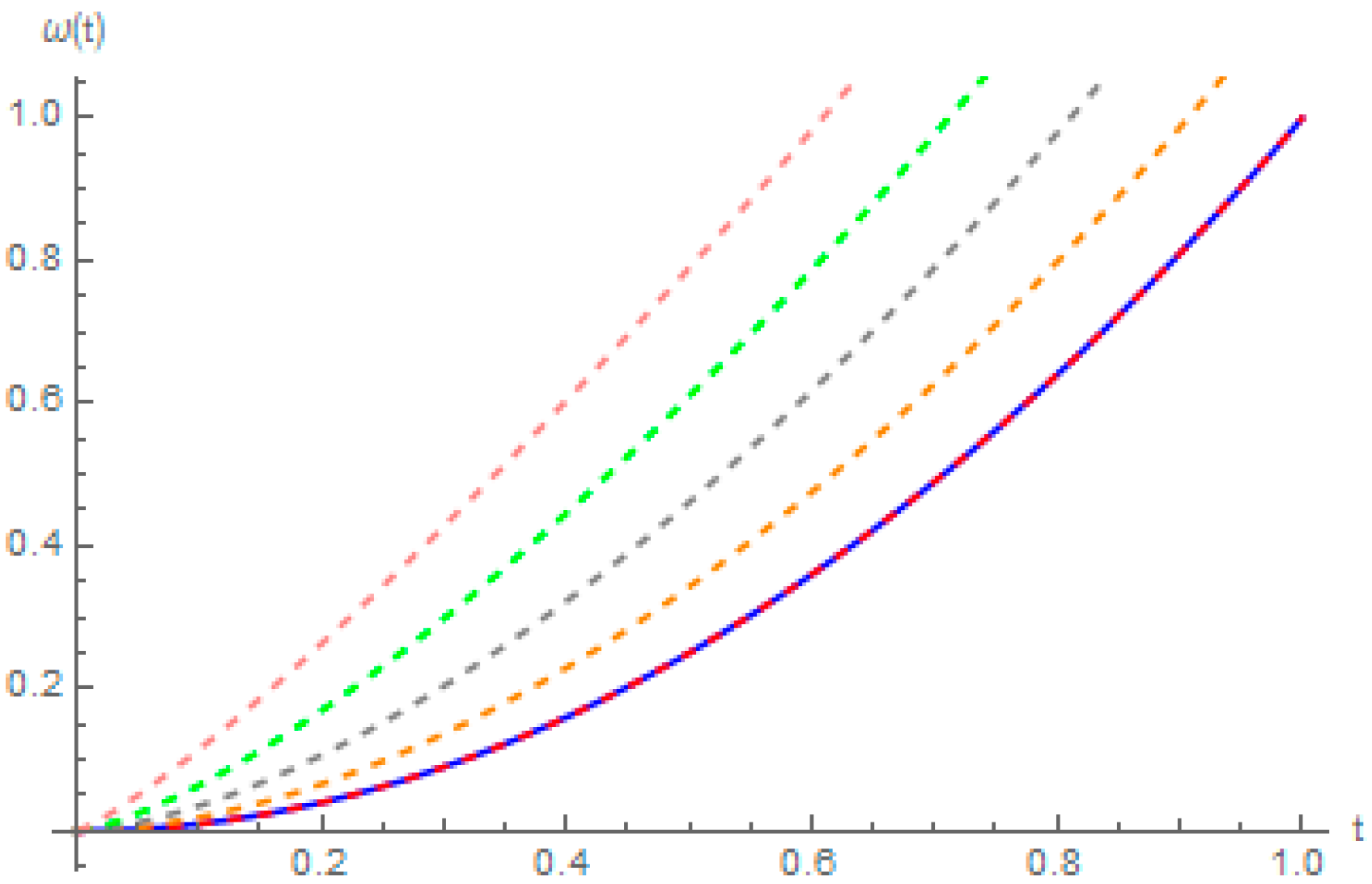
Figure 1 shows the behavior of the exact and RPS solutions for different values of
, where
and
. The RPS solutions are in good agreement with each other and with the exact solution.
Example 2. We consider the following special case of FBTE [29,31]:
with the initial conditions The values of the assuming parameter in this example are , where the exact solution is given as .
The RPS approximate solution of IVP (15) and (16) can be written as follows:
with the assumptions
and
subject to
and
, where
. According to the RPS method, the 5th approximate solution of FBTEs (14) and (15) is
. If we keep the repeating of the RPS process, the unknown coefficients
for
will be vanished. In particular, the RPS approximate solution at
is
, which is fully compatible with the exact solution investigated earlier in [
29].
To show the accuracy of the RPS algorithm, numerical results of the 5th approximate solutions are given in
Table 2 for inputs
between
and
with a step size of
.
Table 2 displays the comparison between the results obtained by the RPS algorithm with those obtained by the application of reproducing kernel algorithm (RKA) [
33], genetic algorithm method (GAM), Pattern search technique (PST), and GAM hybrid with PST (GA-PS) [
35]. The results of this table illustrate that the result obtained by our scheme is in good agreement with the state-of-the-art numerical solvers.
Example 3. We consider the following homogeneous FBTE [36]:with the initial conditionswhereis a parameter.
This fractional model was developed to design a highly accurate microelectromechanical instrument for measuring the viscosity of liquids encountered during oil drilling. The exact solution reduced to as soon as .
The RPS solution of IVP (17) and (18) can be written as follows:
with the assumptions
and
subject to
and
, where
. Thus, according to the RPS algorithm, the 5th RPS approximate solution of FBTEs (17) and (18) is
. In particular, for
and
, we have
Absolute errors of the 5th approximate solution for FPTE (17) and (18) are computed for
, with selected nods of
with step size
and summarized in
Table 3, while
Table 4 shows the numerical results of the RPS algorithm and exponential integrators method (EIM) [
36] for the parameter value
and different values of
in
.
Example 4. We consider the following FBTE [37,38]:
with the initial conditionswhere Here, the values of the assuming parameter are
, and the exact solution is given by
where
is the Mittag–Leffler function of the two parameters.
This fractional model is the most popular case of FBTE, which was developed to design a highly accurate microelectromechanical instrument for measuring the viscosity of fluids encountered during oil well exploration.
Anyhow, the RPS solution of IVP (19) and (20) can be written as follows:
with the assumptions
and
subject to
and
, where
. Thus, according to the RPS algorithm, the 5th approximate solution of FBTEs (19) and (20) is given as
.
The resulting values of the RPS algorithm and some numerical methods, including the Fermat Tau method (FTM) [
38], the generalized Taylor method (GTM) [
36], and the fractional Taylor method (FrTM) [
37], for inputs
between
and
with a step of
are given in
Table 5. From this table, it can be illustrated that the result obtained by our scheme is in good agreement with the state-of-the-art numerical solvers.