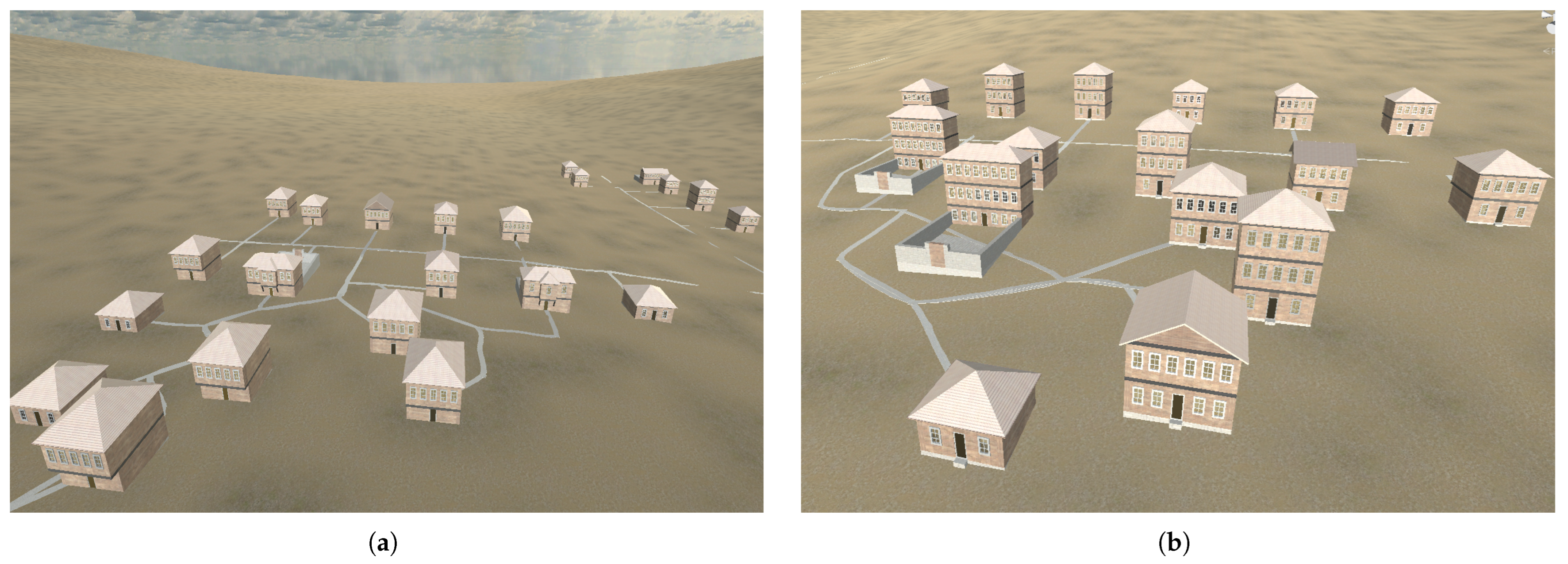
1. Introduction
Texture constitutes one of the most fundamental visual cues employed to perceive, describe, and analyze both natural and artificial materials. As a core attribute of visual information, it provides essential insight into the structural organization and surface properties of objects within an image. Although a universally accepted formal definition remains elusive, texture is generally characterized as the spatial distribution of intensity or color variations that exhibit repetitive or structured patterns [
1]. Texture analysis and synthesis have long been pivotal research topics in computer vision, underpinning applications ranging from image editing and computer graphics to material recognition and surface inspection.
Early methodologies predominantly relied on handcrafted descriptors such as Gabor filters, Local Binary Patterns (LBP) [
2,
3], and statistical models [
4], which effectively captured local regularities but lacked robustness to scale, illumination, and semantic variations. Traditional approaches to texture analysis were primarily statistical, spectral, or structural, employing descriptors such as the Gray-Level Co-occurrence Matrix, wavelet transforms, and fractal-based models to quantify pixel-level intensity relationships. Although these methods characterized simple textures well, they were unable to represent complex semantics or long-range dependencies.
With the emergence of deep learning, the field underwent a profound transformation. Convolutional Neural Networks (CNNs) enabled hierarchical feature extraction from large image datasets, while Vision Transformers (ViTs) further extended this capability by learning global dependencies through self-attention mechanisms [
5]. Comparative studies have shown that ViTs often outperform both handcrafted descriptors and CNNs in capturing multiscale texture representations, especially under transfer-learning settings. Nevertheless, most deep models emphasize feature representation rather than controllable texture synthesis, leaving a methodological gap between analytical understanding and generative modeling.
The introduction of Generative Adversarial Networks (GANs) marked a turning point in texture synthesis, shifting from sampling-based to data-driven generation. Frameworks such as pix2pix [
6] and CycleGAN [
7] demonstrated adversarial learning for image-to-image translation, enabling texture and style transfer between visual domains. Despite producing realistic outcomes, these models suffered from limited spatial control and unstable training dynamics. Subsequent developments, including TextureGAN [
8], improved realism through spatially aware generators and user-guided patch placement.
In parallel, diffusion models have emerged as a powerful alternative to adversarial frameworks, providing superior stability and controllability. Latent diffusion models refine generation in a latent space, balancing computational efficiency with high fidelity. Recent studies have shown that diffusion-based architectures can synthesize façade imagery aligned with perceptual and geographical descriptors, achieving both structural coherence and visual realism [
9,
10]. These advances highlight the potential of diffusion frameworks to unify realism, stability, and semantic consistency in texture-oriented generation tasks.
However, a central challenge persists in integrating semantic structure with texture generation. Segmentation-based frameworks generally employ texture features for classification or recognition yet rarely exploit them for generative purposes. Conversely, many generative systems overlook the structural and semantic boundaries established by segmentation masks. Recent efforts have sought to bridge this divide. For example, Guo et al. [
11] proposed a dual-stream network that jointly performs structure-constrained texture generation and texture-guided structure reconstruction via bidirectional feature fusion. In the 3D domain, semi-supervised frameworks have explored mask-guided texture mapping to generate high-resolution editable textures across complex geometries [
12], while data-driven approaches have demonstrated that texture clusters can be learned directly from natural scenes, allowing synthesis and editing without explicit supervision [
13].
Recent façade-centric pipelines reinforce these ideas by coupling semantic layout graphs with explicit texture-image mapping, resulting in more consistent reconstruction of repetitive façade elements such as windows and balconies [
14]. Complementary generative studies have demonstrated that perceptual alignment between prompts and synthesized façades can inform texture placement—facilitating coherent selection, positioning, and blending that respect both geographical and stylistic constraints [
9].
Although remarkable progress has been achieved in both texture representation and synthesis, two key limitations persist in the existing literature. First, structural masks are often treated as secondary conditioning signals rather than as integral components of the generation process. Second, texture analysis and texture synthesis remain largely decoupled, preventing a unified framework capable of reasoning jointly about structure and appearance.
To address these limitations, this study introduces a mask-conditioned texture creation and fusion framework in which segmentation masks act as structural guides and texture descriptors capture localized appearance statistics. Through a dual-encoder fusion architecture, structural and textural cues are integrated directly within the generative process to achieve semantic coherence and spatial precision. The proposed approach is evaluated using the perceptual and reconstruction metrics such as Structural Similarity Index (SSIM) [
15], Fréchet Inception Distance (FID) [
16], Kernel Inception Distance (KID) [
17], Deep Image Structure and Texture Similarity (DISTS) [
18], Learned Perceptual Image Patch Similarity (LPIPS) [
19], and Peak Signal to Noise Ratio (PSNR) [
20], confirming its ability to preserve structural integrity while maintaining high visual fidelity. By bridging segmentation-based analysis with synthesis-based generation, this research advances the development of programmable, texture-sensitive vision models applicable to both two-dimensional and three-dimensional domains.
The main contributions of this study can be summarized as follows:
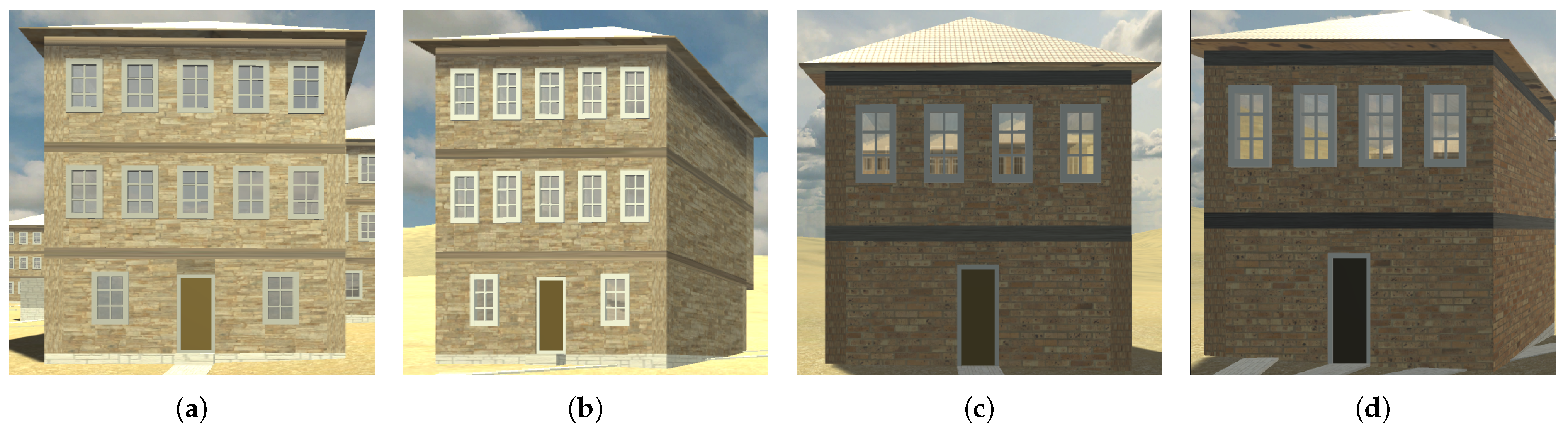
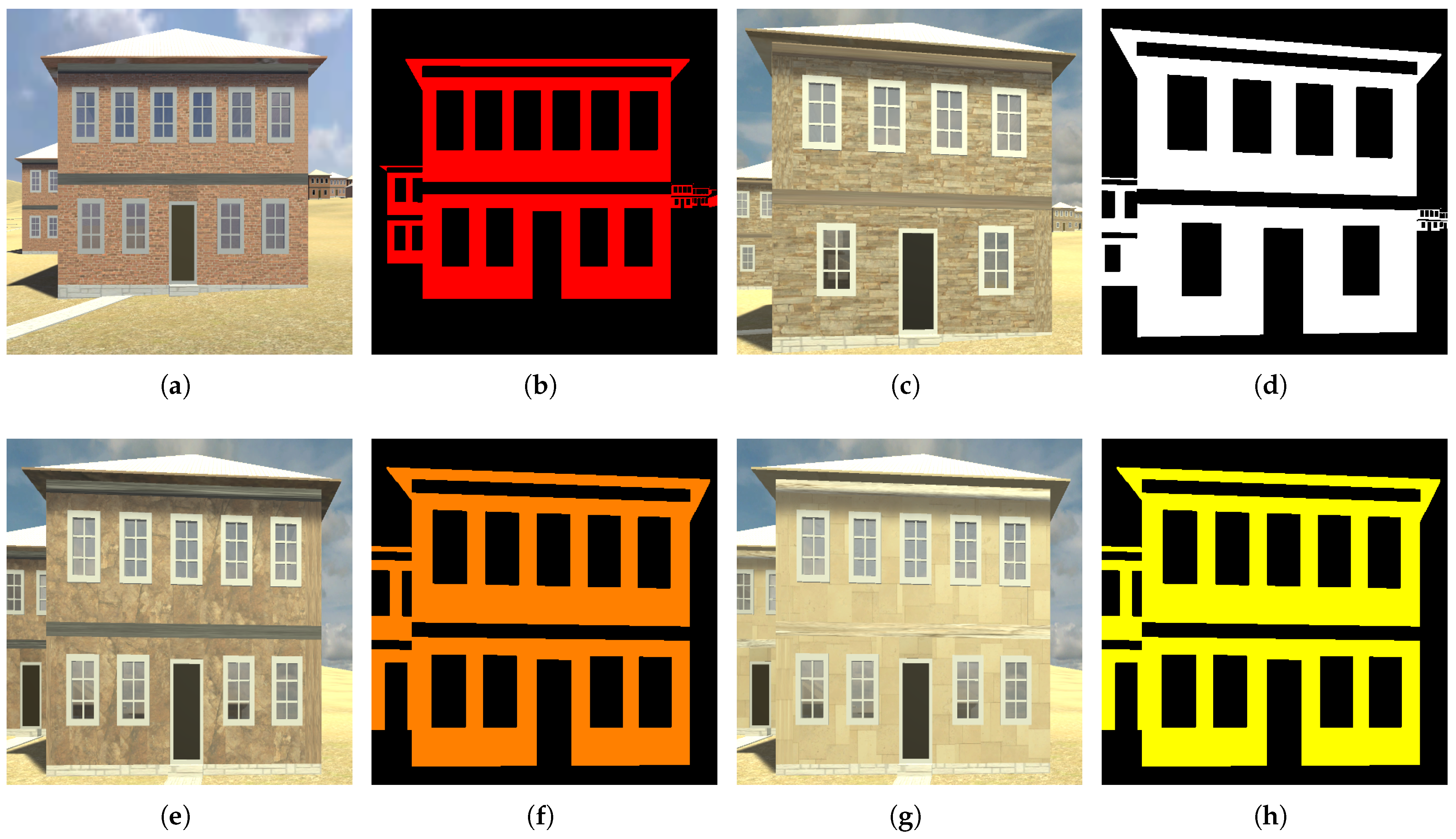
A new and well-structured dataset is introduced, comprising facade images, corresponding segmentation masks, and material texture exemplars. This dataset enables controlled and reproducible evaluation of texture generation under explicit structural constraints.
A texture-aware, mask-conditioned facade synthesis framework is proposed, in which segmentation masks provide spatial and semantic guidance while texture descriptors encode localized appearance statistics for material-consistent texture placement.
A dual-encoder fusion architecture is developed to jointly integrate structural and textural cues within the generative process. Channel-wise attention is systematically incorporated into multiple adversarial learning frameworks (GAN, WGAN, and WGAN-GP) to enhance feature discrimination and texture fidelity.
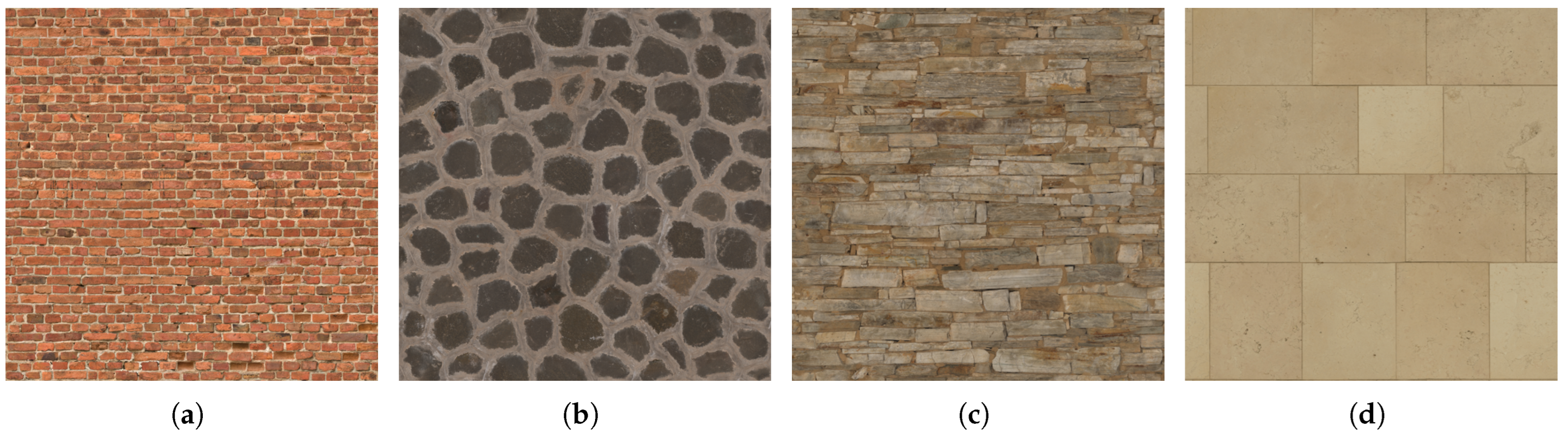
The proposed framework is evaluated across diverse facade configurations and material categories, including brick, stone, rock, and marble, demonstrating its robustness to architectural and material variability.
A comprehensive evaluation is conducted using multiple perceptual, reconstruction, and distribution-based metrics (e.g., PSNR, SSIM, FID, KID, LPIPS, and DISTS), supported by statistical significance analysis, to objectively validate the effectiveness of the proposed approach.
The overall pipeline of this study integrates dataset preparation, mask-conditioned dual-encoder fusion, and quantitative evaluation into a unified framework for texture-aware façade generation, bridging the gap between segmentation-based analysis and generative synthesis.
In the remainder of this paper,
Section 2 explains the materials and methods. Details of the proposed method are given in
Section 3. Experimental settings used for the study are explained in
Section 4. The experiments carried out and the results obtained are described and discussed in
Section 5 and
Section 6, respectively. Finally, the conclusions and potential future research directions are mentioned in
Section 7.
3. Proposed Methodology
The proposed texture synthesis methodology seeks to produce high-fidelity material textures based on semantic segmentation inputs. The approach integrates several input modalities, such as segmentation masks and texture exemplars, via a dual-encoder fusion architecture, facilitating the model’s acquisition of both structural and material-specific representations. The architecture consists of two main modules: a multi-encoder generator and a patch-based discriminator, which are collaboratively optimized using a mix of adversarial and reconstruction losses.
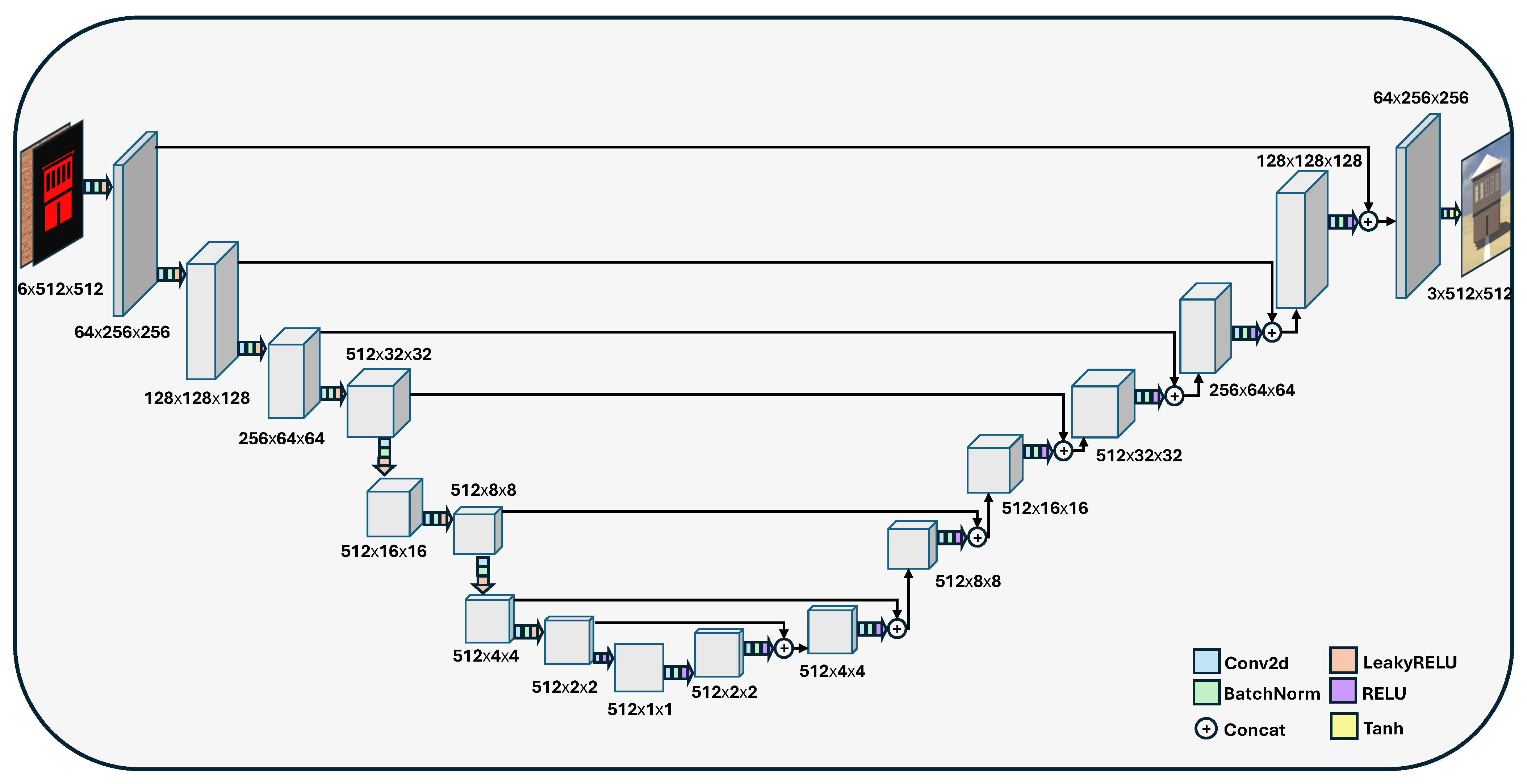
The generator shown in
Figure 6 employs an encoder-fusion-decoder design. The encoder processes two different inputs simultaneously: the segmentation mask and the raw texture image, which are concatenated and fed into the encoder. The feature maps obtained from the encoder are concatenated and integrated at the bottleneck layer using channel-wise attention. To enhance the representational power of the bottleneck features, we employ a Squeeze-and-Excitation (SE) block [
29] at the bottleneck. Unlike simple concatenation, this block models channel attachments to perform adaptive feature recalibration. Specifically, global spatial information is first aggregated into a descriptor
z via global average pooling. The network then learns channel-specific weights
s through a gating mechanism:
where
is the ReLU function,
is the sigmoid activation, and
are the learned parameters of the fully connected layers. Finally, the original feature map
is re-weighted by these scale factors via
. This fusion process enables the network to accurately connect structural boundaries from the segmentation mask with detailed texture signals from the example.
The decoder reconstructs the final texture-aware image at the original resolution, maintaining material consistency and structural bounds. Skip connections are included between encoder and decoder layers to preserve spatial features. Batch normalization and LeakyReLU activations are utilized consistently across the network to enhance training stability.
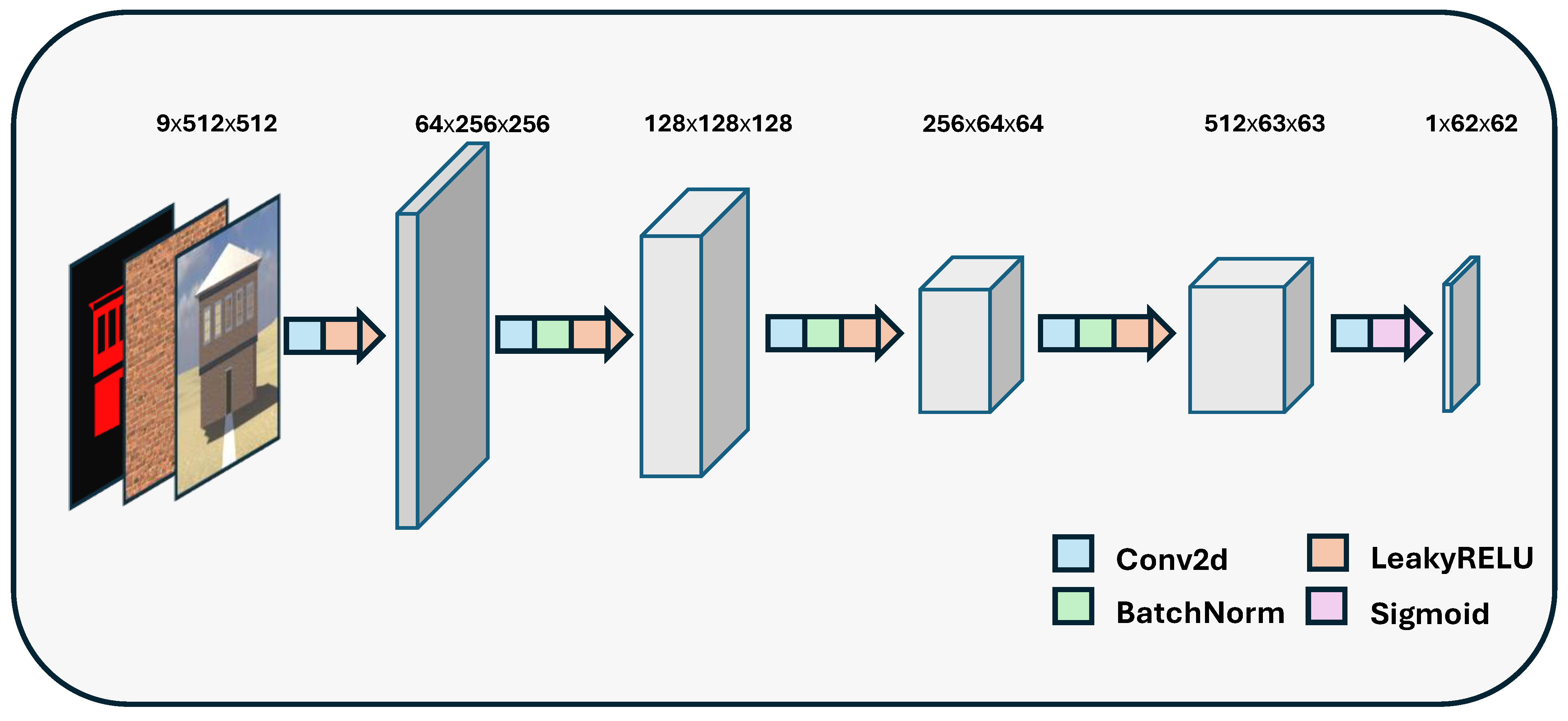
The discriminator employs a patch-based architecture akin to PatchGAN [
6], assessing local texture genuineness across
receptive fields. This architecture, illustrated in
Figure 7, prompts the generator to yield locally coherent and realistic texture details throughout the surface areas delineated by the segmentation mask. The discriminator is trained to differentiate between authentic material textures and those generated by the generator, thus ensuring high-frequency fidelity.
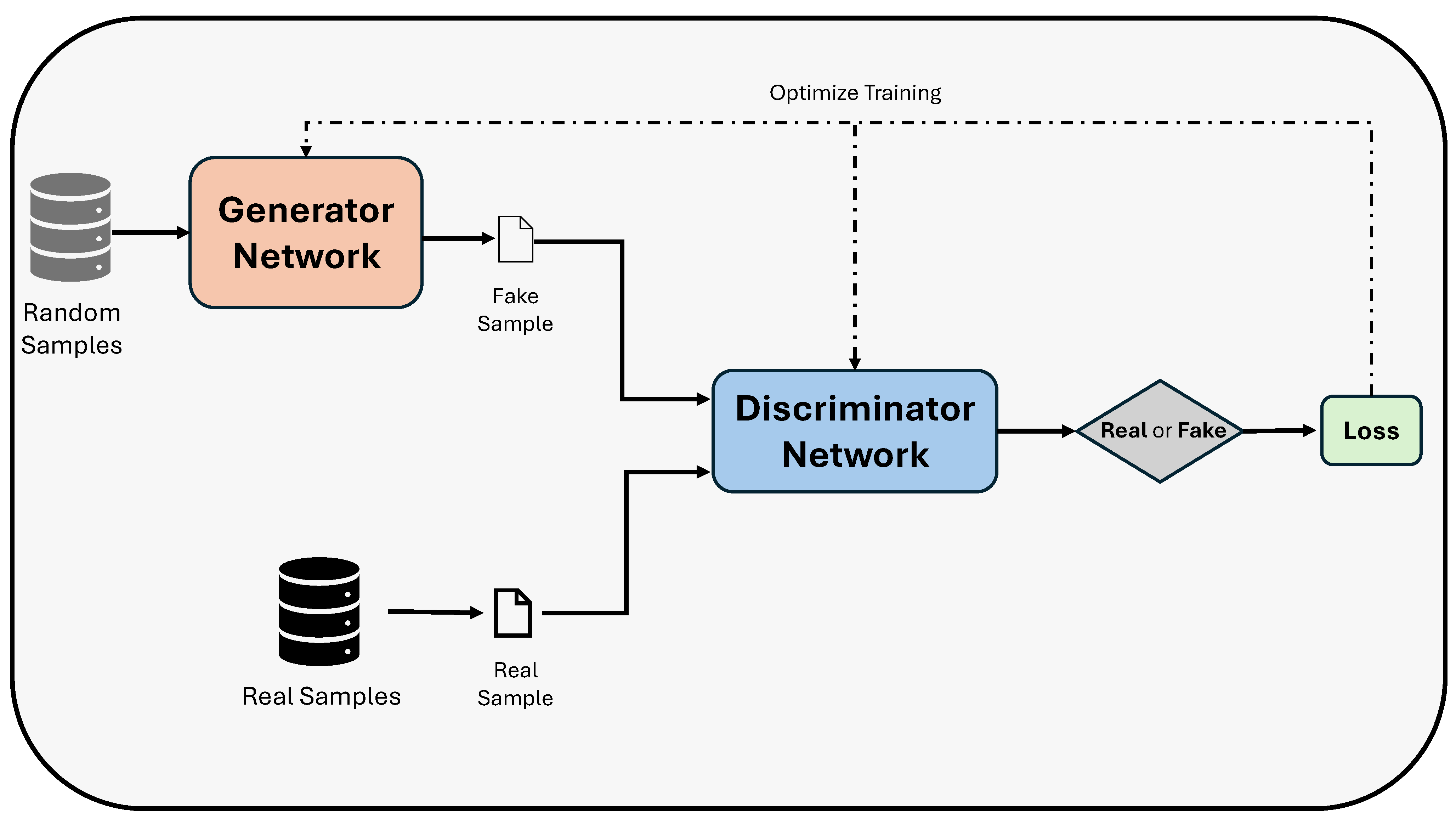
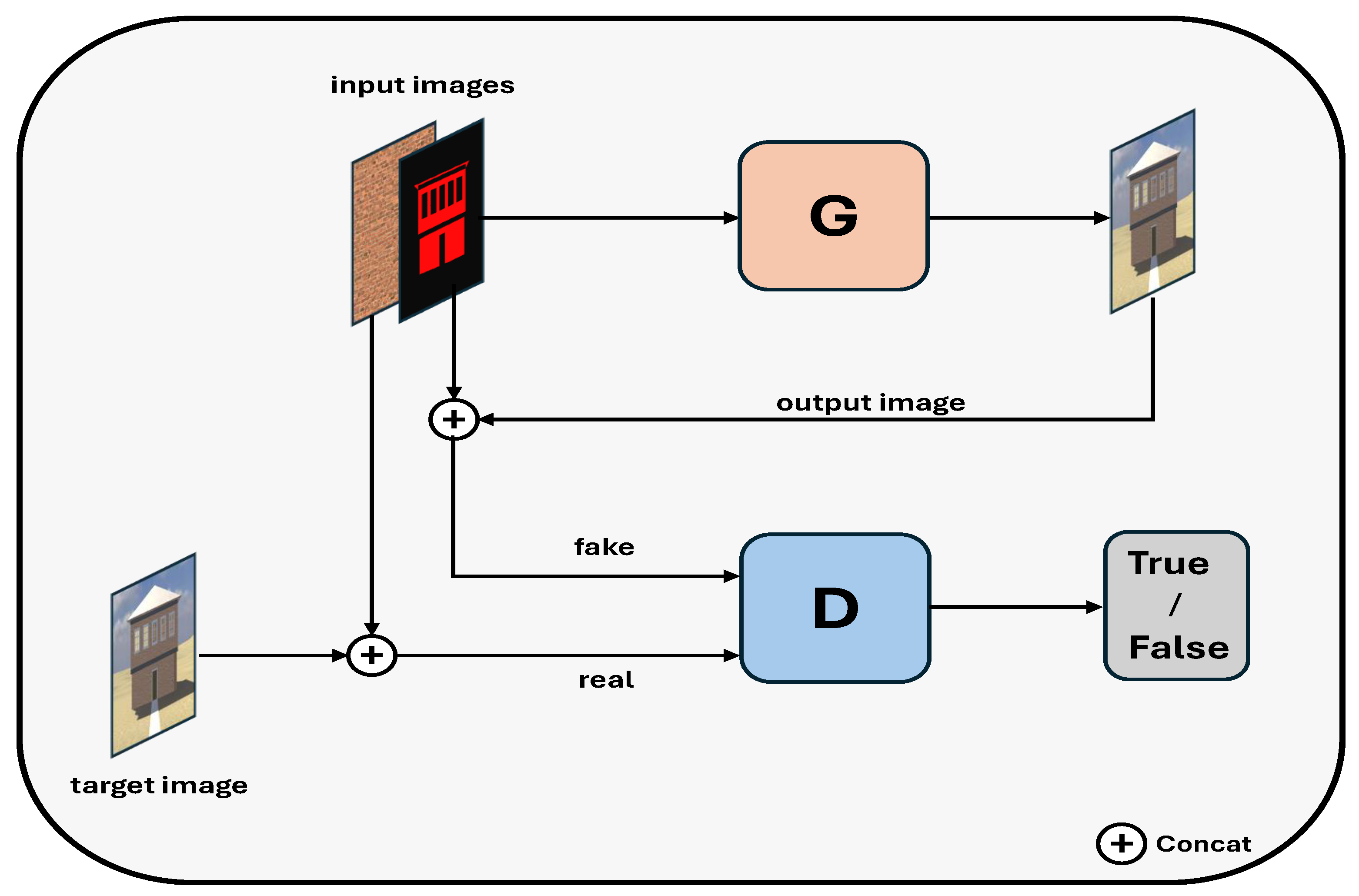
The overview of our framework is depicted in
Figure 8. Both the generator and discriminator networks are denoted by the letters G and D, respectively. The generator produces an output image utilizing a segmented image and a texture image as inputs, without a specified target image. The output image and two input images are concatenated to serve as input for the discriminator network’s false image assessment. The true input consists of the target image, its segmented image, and the texture image concatenated for the discriminator network. The discriminator determines the authenticity of the images, classifying them as either genuine or counterfeit.
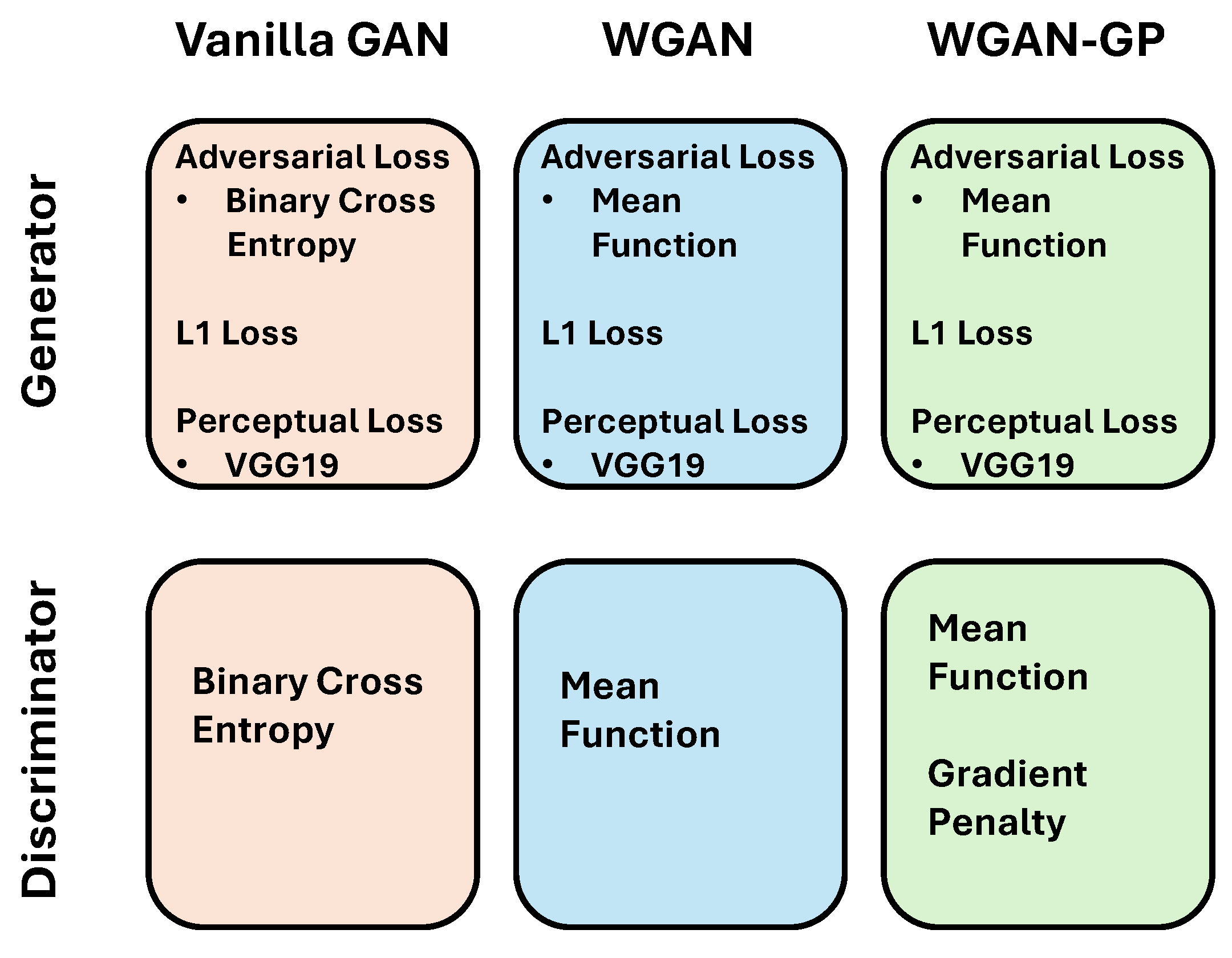
The optimization of the proposed framework relies on a set of adversarial and reconstruction-based losses, designed to ensure both visual realism and structural accuracy. Although all three models—vanilla GAN, Wasserstein GAN, and WGAN with Gradient Penalty—share the same fundamental adversarial learning principle, their objective functions differ in the way the discriminator (or critic) estimates the divergence between real and generated data distributions. A general equation is employed to compute the loss of the generator component for the three utilized GAN models:
Adversarial, perceptual, and L1 losses are utilized for the backpropagation of the generator part of our network. The adversarial loss of the used vanilla GAN is directed by the Binary Cross-Entropy (BCE) loss, which is frequently employed in binary classification and adversarial learning problems. It quantifies the divergence between the expected probability and the actual binary labels. Binary Cross-Entropy loss [
26] was adopted to measure the discriminator’s performance, as it effectively quantifies the divergence between predicted and real probability distributions [
30]. The adversarial loss, used in the vanilla GAN model, is expressed as
where
denotes synthesized samples. The BCE formulation encourages the generator to create textures that enhance the discriminator’s probability of misclassification, hence fostering perceptual realism.
Moreover, WGAN and WGAN with Gradient Penalty models are based on the mean function of the computation of their adversarial loss.
This approach enhances gradient smoothness and augments convergence stability in adversarial training.
The
term represents the pixel-wise reconstruction loss, which measures the absolute difference between the generated image and the corresponding ground truth target. This loss encourages the generator to produce outputs that are structurally consistent with the reference images by minimizing large deviations in pixel intensity values. The L1 loss [
6,
7] was incorporated to enforce pixel-wise consistency between generated and target images, minimizing structural deviations while complementing the adversarial objective. The
loss is defined as follows:
where
denotes the generated image,
is the ground truth target image, and
is a weighting coefficient that controls the contribution of this loss term during training. In all GAN models, the
loss helps the generator maintain spatial coherence and preserve fine structural details while reducing pixel-level noise.
The perceptual loss function [
31] is utilized to assess the high-level similarity between the generated image and its associated ground truth, focusing not only on the pixel-level comparison but also inside the feature space of a pretrained convolutional neural network. In contrast to pixel-based metrics like L1 loss, which mainly assess low-level intensity variations, perceptual loss measures structural and semantic fidelity by analyzing deep feature activations obtained from a reference network.
This study employed the framework established by Johnson et al. [
31] and utilized the VGG-19 network [
32] to calculate perceptual loss. The rationale for utilizing VGG-19 in this framework is its deeper architecture, which offers a more comprehensive feature space for capturing detailed mid- and high-level textural and structural information. The hierarchical representations enable the model to identify perceptually important differences in texture, edge alignment, and material continuity, which are crucial for texture-aware synthesis tasks. The perceptual loss for each of the three models utilized (vanilla GAN, WGAN, and WGAN-GP) is specified as follows:
where
,
denote the generated and ground truth images, respectively, and
is the scaling factor that equilibrates the perceptual component within the overall generator loss. The integration of perceptual loss compels the generator to maintain intricate texture details and material consistency, resulting in visually coherent outcomes that correspond with human perception. The integration of adversarial, pixel-based, and perceptual objectives enables the model to effectively balance realism and structural precision.
Besides the generator, the discriminator plays a crucial role in distinguishing real images from synthetically generated ones, guiding the generator toward producing more realistic textures and material structures. Depending on the chosen adversarial framework, the discriminator loss function varies across the three implemented models—vanilla GAN, WGAN, and WGAN-GP—each incorporating distinct formulations to improve stability and convergence.
In the vanilla GAN framework, the discriminator is optimized using the BCE loss function [
26]. This objective measures the divergence between predicted probabilities and true binary labels, encouraging the discriminator to correctly classify real and generated samples. The discriminator loss is expressed as follows:
where
denotes the discriminator output,
represents real samples, and
the samples of generated images. This formulation penalizes incorrect classifications symmetrically and is widely used in conventional adversarial training.
WGAN [
27] modifies the adversarial training objective by replacing the BCE loss with the estimation of the Earth Mover’s (Wasserstein-1) distance, which provides smoother gradients and better stability. The discriminator, referred to as the
critic in this context, minimizes the following objective:
subject to the 1-Lipschitz constraint, typically enforced through weight clipping. This formulation measures the mean difference between real and fake scores, alleviating mode collapse and improving convergence.
To address the limitations of weight clipping, the WGAN-GP [
28] introduces a gradient penalty term that enforces the Lipschitz constraint more effectively. The discriminator loss is expressed as
where
denotes samples interpolated between real and fake images, and
is the gradient penalty coefficient. Equation (
11) provides a smoother optimization landscape, ensuring more stable training and preventing gradient vanishing or explosion.
Figure 9 also provides a description of the methodologies employed to compute the losses of the generator and discriminator.
5. Results
The progression of the training process demonstrates significant variations in the manner each adversarial model acquires texture and material representation.
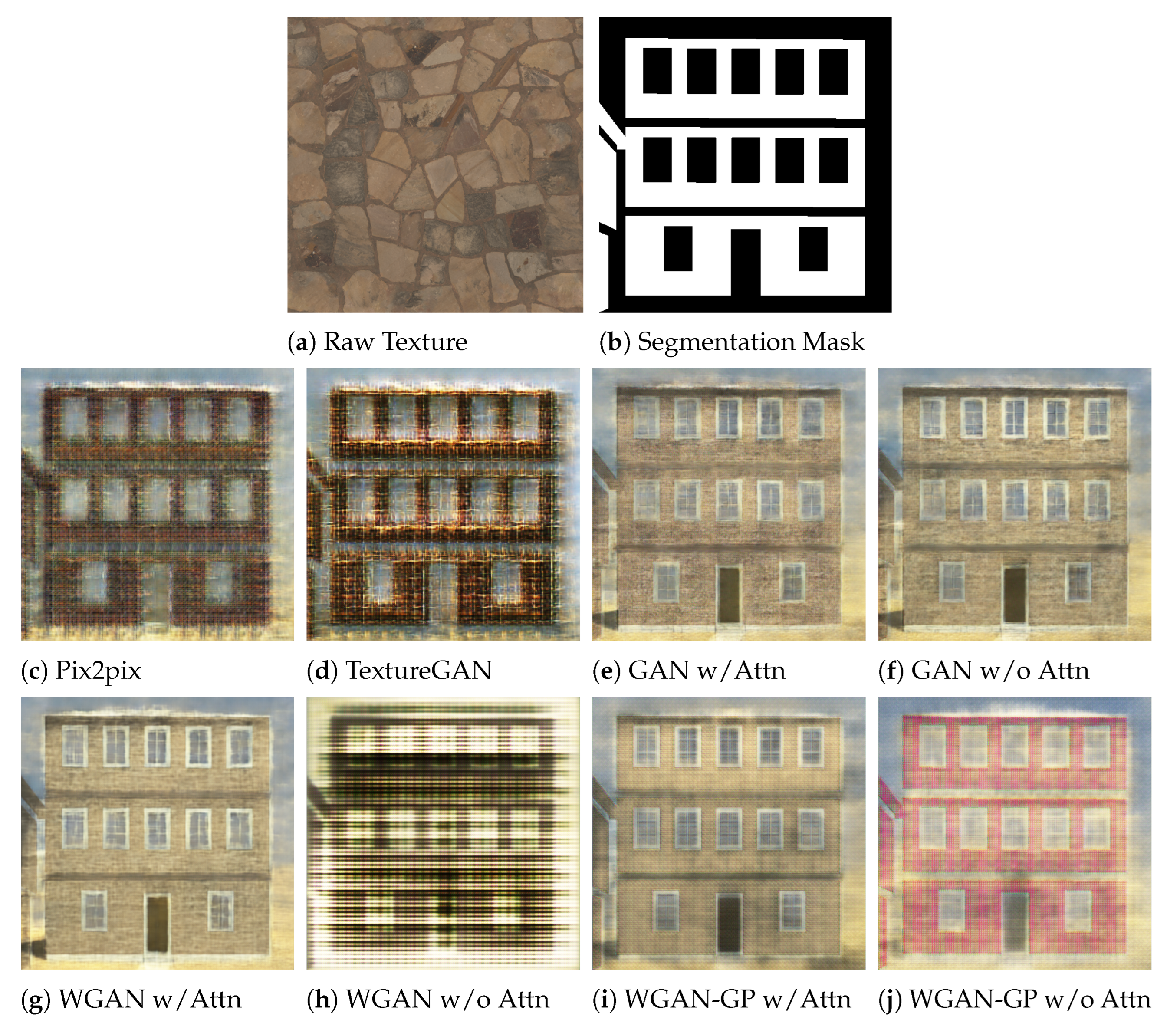
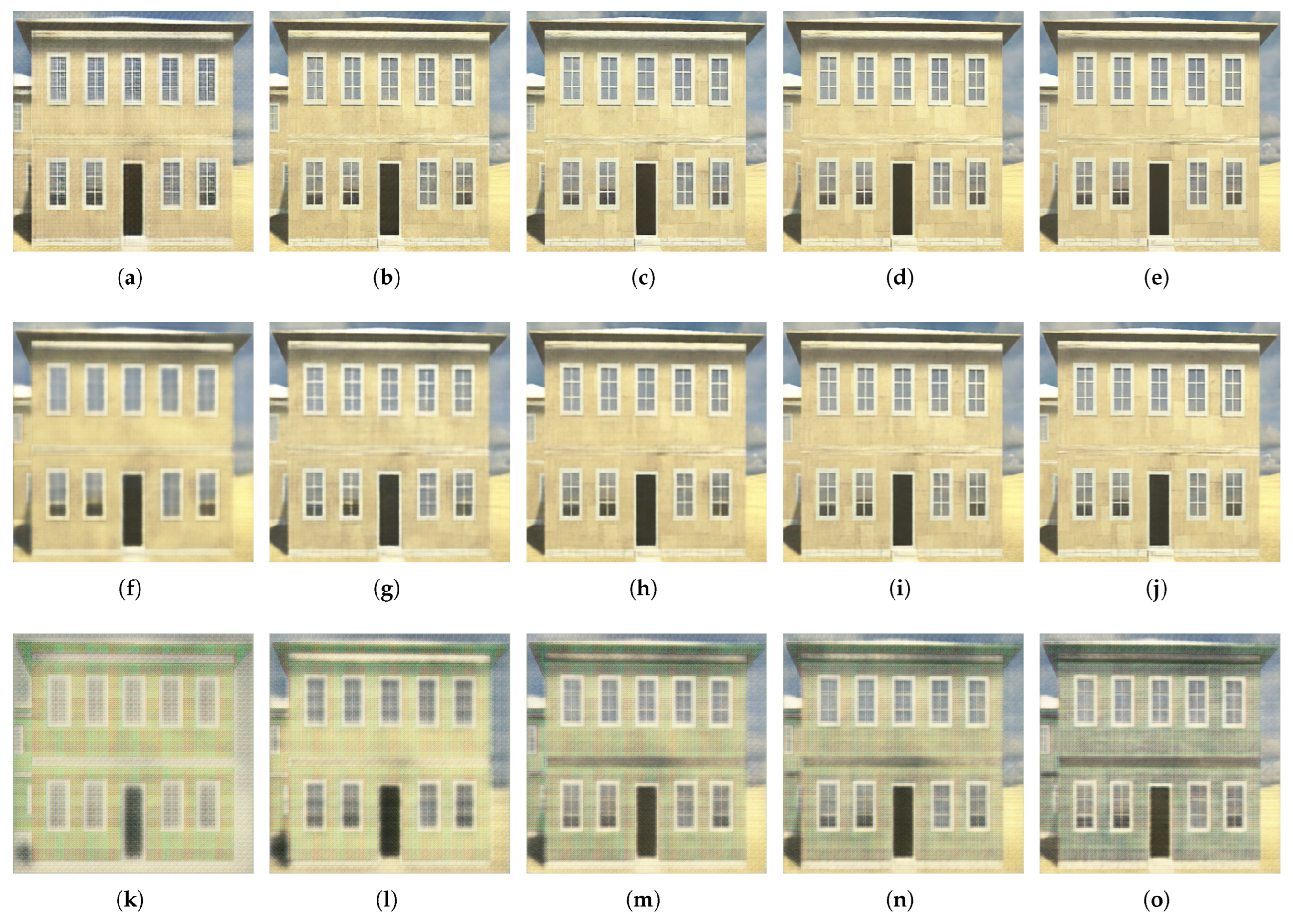
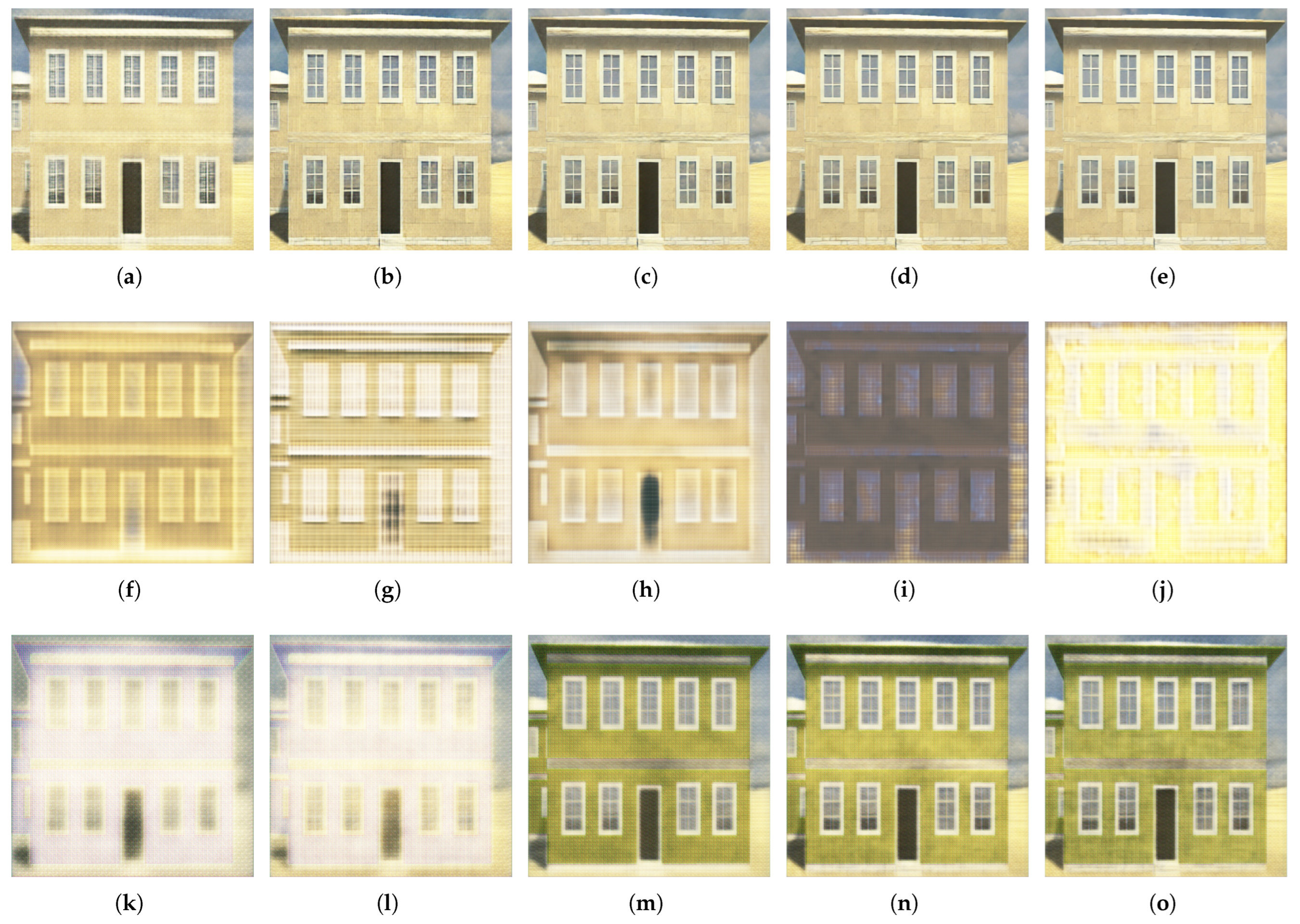
Figure 10 and
Figure 11 illustrate that the Vanilla GAN and WGAN models of with channel-wise attention and only the Vanilla GAN model without channel-wise attention exhibited consistent enhancement in visual quality during the training epochs, attaining more defined façade textures and improved structural alignment after roughly 500 epochs. Conversely, the WGAN-GP model produced smoother yet softer outcomes, signifying a delayed convergence in accurately capturing intricate texture patterns. Although gradient penalty regularization enhanced training stability, it also somewhat limited the model’s ability to replicate high-frequency details.
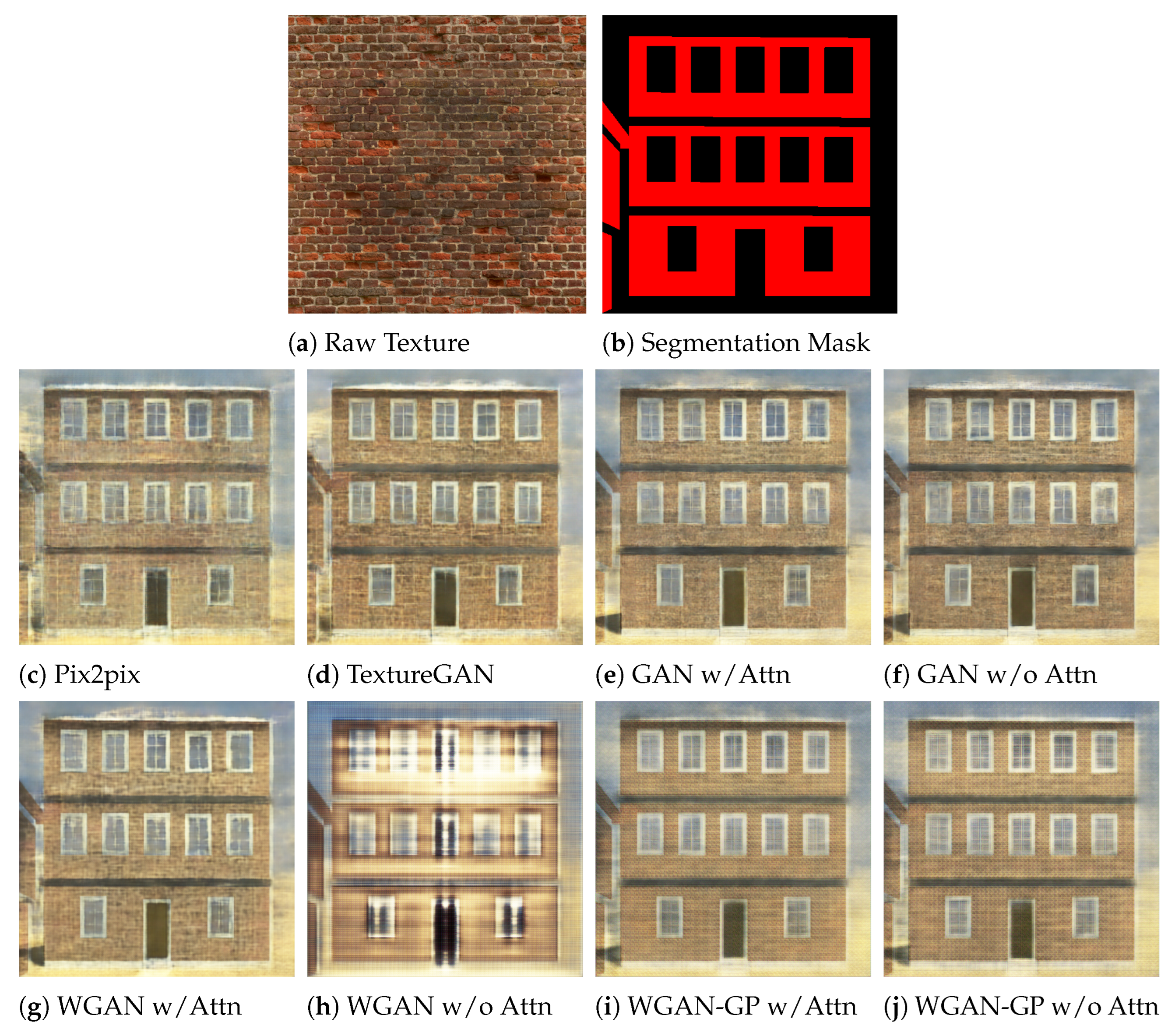
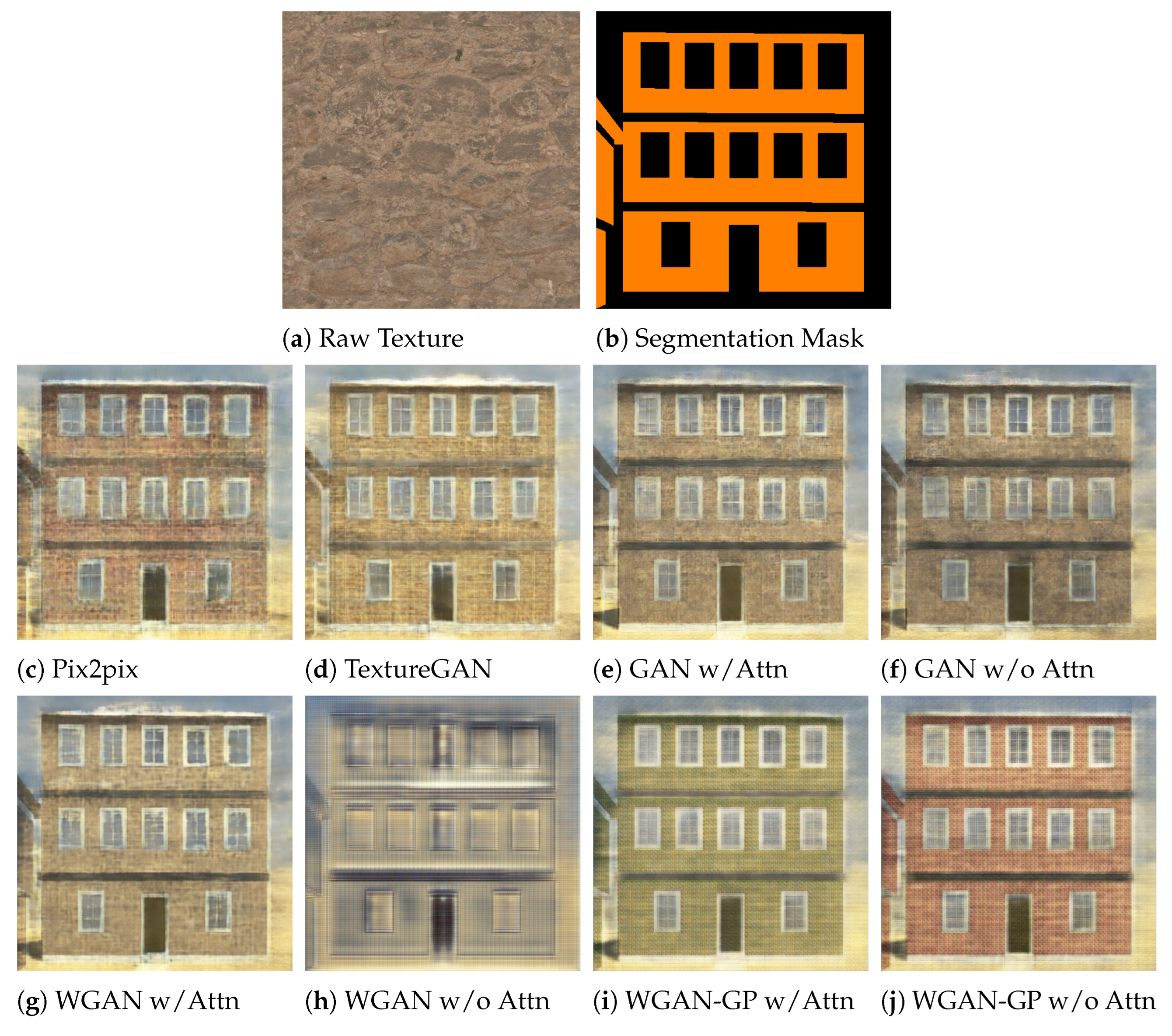
As shown in
Figure 12,
Figure 13 and
Figure 14, a consistent qualitative trend is observed across the brick, rock, and stone material samples. For all materials, the inclusion of channel-wise attention leads to visibly improved texture fidelity and sharper structural boundaries compared to their non-attention counterparts. In particular, the conventional GAN with channel-wise attention produces the most visually convincing results, preserving fine-grained texture details and clear material boundaries that closely resemble real-world surface appearances. While the WGAN-based models generate smoother and more uniform textures, they exhibit a noticeable loss of high-frequency details, especially in the absence of attention mechanisms. The WGAN-GP variants further accentuate this effect, often resulting in overly smoothed surfaces with reduced perceptual sharpness. These qualitative evaluations indicate that channel-wise attention consistently improves texture realism across all adversarial frameworks, with the typical GAN architecture deriving the greatest advantage from the suggested attention method.
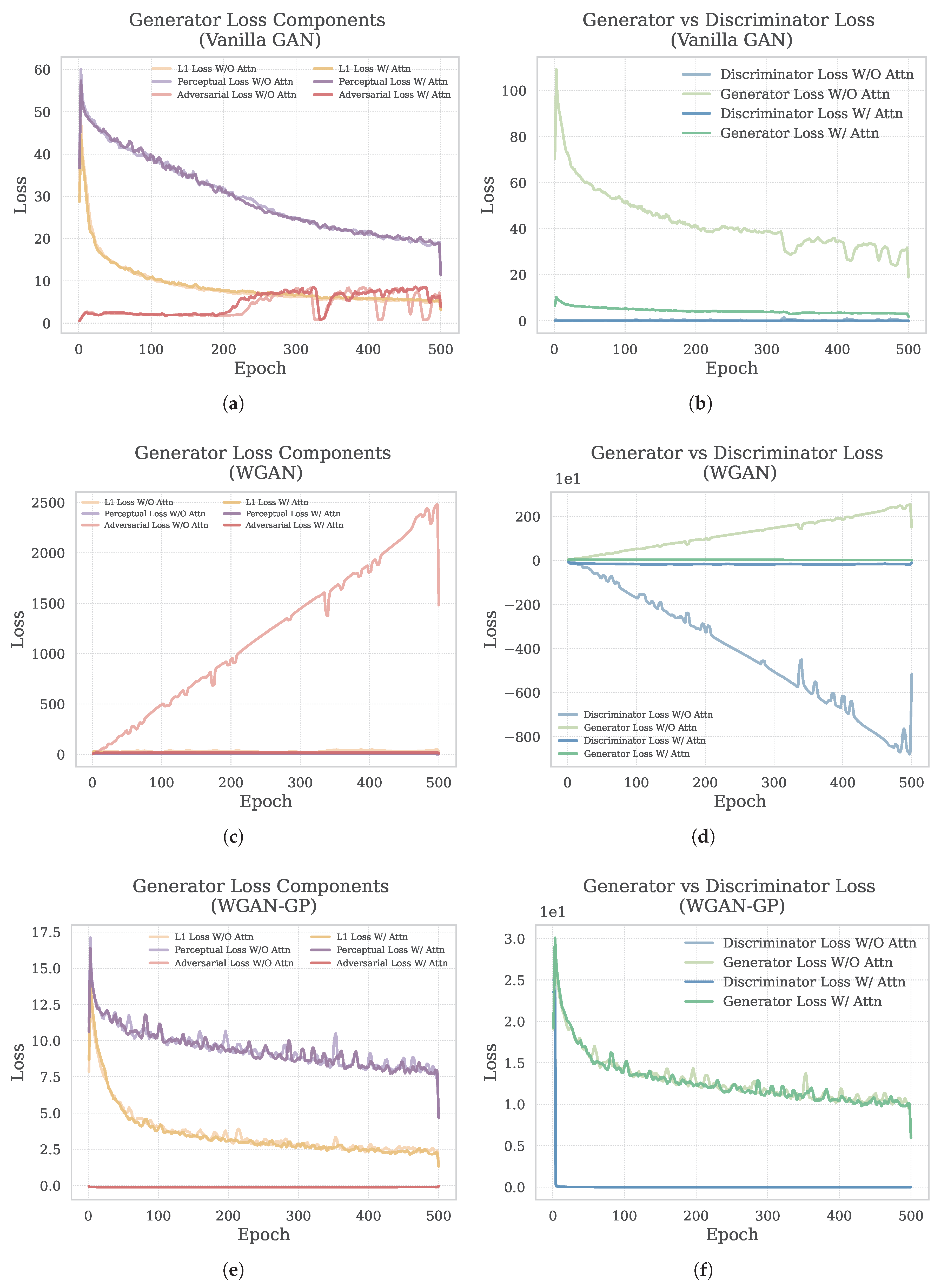
The loss curves depicted in
Figure 15 demonstrate the training dynamics of the GAN, WGAN, and WGAN-GP models, both with and without channel-wise attention. In the Vanilla GAN (
Figure 15a,b), the components of the generator loss diminish continuously, with channel-wise attention facilitating accelerated convergence and a more equitable generator–discriminator interaction. A comparable pattern is seen in the WGAN model (
Figure 15c,d), wherein attention diminishes loss variance and fosters more stable optimization throughout epochs. Conversely, the WGAN-GP model (
Figure 15e,f) demonstrates significant oscillations in both generator and discriminator losses, typical of gradient-penalty-based training, potentially constraining pixel-level reconstruction precision. These results demonstrate that whereas WGAN-GP imposes more robust regularization, the Vanilla GAN and WGAN architectures—especially when augmented with channel-wise attention—attain more efficient convergence and superior alignment between adversarial and reconstruction goals.
To provide a comprehensive assessment of the synthesized textures, we employed a multi-dimensional evaluation protocol covering pixel-level fidelity, distribution similarity, and perceptual quality,according to the results given in
Table 1.
Pixel-wise Metrics: We utilized Peak Signal-to-Noise Ratio (PSNR) [
20] to measure reconstruction error and Structural Similarity Index (SSIM) [
15] to evaluate structural degradation. While baselines like TextureGAN achieved higher PSNR values, this metric often penalizes the high-frequency stochastic variations inherent in rough textures. Conversely, our proposed method achieved higher SSIM scores, indicating better preservation of the structural layout defined by the segmentation masks.
Distribution Metrics: To assess realism, we calculated the Fréchet Inception Distance (FID) [
16] and its unbiased estimator, Kernel Inception Distance (KID) [
17]. These metrics measure the distance between the feature distributions of real and generated images. The significantly lower FID and KID scores achieved by our Vanilla GAN and WGAN variants (e.g., FID ≈ 104) confirm that our generated textures are statistically closer to the real data manifold compared to WGAN-GP and other baselines.
Perceptual Metrics: Addressing the limitations of pixel-based metrics, we adopted Learned Perceptual Image Patch Similarity (LPIPS) [
19] and Deep Image Structure and Texture Similarity (DISTS) [
18]. LPIPS evaluates distance in deep feature space, aligning closely with human perception, while DISTS explicitly focuses on texture and structure consistency. Our method demonstrated superior performance with the lowest LPIPS and DISTS scores, quantitatively validating its ability to synthesize realistic, high-frequency texture details that purely pixel-based models fail to capture.
A Kruskal–Wallis H test [
33] was used for all quantitative metrics in order to statistically assess the effect of channel-wise attention. The addition of channel-wise attention produced statistically significant differences for the majority of assessment criteria (
), as shown in
Table 2, suggesting that the observed performance improvements are not the consequence of random variation. However, in the absence of channel-wise attention, the SSIM measure did not exhibit a statistically significant difference (
), indicating that structural similarity by itself is less sensitive to the suggested attention mechanism. Overall, these findings support the idea that channel-wise attention can improve perceptual and distribution-based image quality metrics.
The findings demonstrate that especially the Vanilla GAN with channel-wised attention exhibited enhanced quantitative and qualitative performance for the specified dataset and texture synthesis challenge. Their outputs were more accurate to the ground truth and visually intricate, while WGAN-GP attained only modest enhancements in smoothness, compromising clarity. The results indicate that, in this case, the further regularization provided by the gradient penalty was superfluous and may have constrained the discriminator’s capacity to retain high-frequency input.
6. Discussion
The comprehensive evaluation of the proposed mask-guided texture synthesis framework reveals critical insights into the limitations of pixel-wise metrics and the trade-offs inherent in adversarial training objectives. By contrasting our proposed GAN variants with established baselines such as TextureGAN and Pix2Pix, as well as analyzing internal architectural choices (Vanilla GAN vs. WGAN vs. WGAN-GP), we identify distinct patterns in texture fidelity and structural coherence. A significant finding of this study is the marked discrepancy between traditional pixel-based metrics (PSNR) and modern perceptual metrics (LPIPS, DISTS, FID). As evidenced in the quantitative results, baseline methods like TextureGAN and Pix2Pix achieved the highest PSNR values. However, qualitative visual inspection and perceptual metrics provide a different perspective. These baselines exhibited significantly higher LPIPS and FID scores, indicating that while they minimize pixel-level error, they tend to produce overly smooth and blurry textures that lack high-frequency details. This confirms that PSNR inherently rewards averaging behaviors and penalizes the stochastic variance required for realistic texture synthesis. In contrast, our proposed Vanilla GAN and WGAN models achieved the lowest LPIPS and DISTS scores, quantitatively validating their superior ability to capture perceptual realism and intricate material details that pixel-wise metrics fail to represent.
The comparative analysis of the proposed variants yields further insights. The Vanilla GAN and WGAN architectures demonstrated high learning efficiency, generating clearly defined material patterns with crisp edges. Conversely, the WGAN-GP model, while theoretically designed to stabilize training via gradient penalty regularization, demonstrated a trade-off between stability and sharpness. The gradient penalty term, effectively restricted discriminator divergence but also hindered the model’s capacity to capture sharp, granular texture details, resulting in perceptually smoother but less detailed surfaces compared to the Vanilla GAN. This observation suggests that for specific domains requiring high-frequency texture reproduction, excessive regularization may inhibit the crucial adversarial gradients needed for fine detail generation.
A pivotal contribution of this work is the integration of the Squeeze-and-Excitation (SE) based channel-wise attention mechanism. The ablation study demonstrates that regardless of the underlying adversarial loss (Vanilla, WGAN, or WGAN-GP), the inclusion of the attention module consistently improved structural consistency (SSIM) and perceptual quality (FID/KID). By explicitly modeling channel interdependencies at the bottleneck, the attention mechanism enabled the generator to better fuse the structural layout from the segmentation masks with the detailed texture statistics from the exemplars. This is corroborated by the significantly reduced DISTS scores in the “Full” models compared to their “w/o Attention” counterparts, highlighting the necessity of intelligent feature fusion in multi-modal synthesis tasks.
7. Conclusions
This study presented a novel mask-guided GAN framework for texture-aware architectural façade generation, integrating a channel-wise attention mechanism to bridge the gap between structural guidance and textural fidelity. Through rigorous quantitative and qualitative comparisons with state-of-the-art methods like TextureGAN and Pix2Pix, we drew several key conclusions.
First, the evaluation highlighted the inadequacy of PSNR for texture synthesis tasks. While baseline methods achieved superior numerical accuracy (high PSNR), they failed to generate convincing high-frequency textures. Our proposed method, particularly the Vanilla GAN and WGAN variants utilizing the attention mechanism, surpassed these baselines in perceptual metrics, achieving the best LPIPS, FID, and DISTS scores. This confirms that our approach generates textures that are statistically and perceptually closer to real-world distributions.
Second, the ablation studies confirmed the critical role of the proposed channel-wise attention module. The integration of this module consistently enhanced structural alignment and texture sharpness across all tested architectures, proving its effectiveness in adaptively recalibrating features for complex material synthesis.
Finally, we observed a distinct trade-off in the WGAN-GP formulation. While it offers training stability, the gradient penalty constraints resulted in a loss of high-frequency detail compared to the standard Vanilla GAN and WGAN. Therefore, for applications prioritizing textural sharpness and visual realism over pure training stability, simpler adversarial formulations combined with robust perceptual losses proved to be the most efficacious configuration.
Future work will focus on bridging the simulation-to-real gap by incorporating real-world façade datasets and exploring diffusion and transformer-based architectures to further enhance global structural coherence. Additionally, we aim to investigate adaptive regularization techniques that can provide the stability of WGAN-GP without compromising the high-frequency detail retention observed in standard GANs. This study utilizes advanced perceptual metrics such as LPIPS and DISTS to assess visual quality; nevertheless, we intend to perform an extensive human perceptual investigation in future research to corroborate these results with subjective human evaluation.