Application of Various Geophysical Methods in the Characterization of the Xiannüshan Fault Zone

 ,
,  , ,
, ,
Abstract
1. Introduction
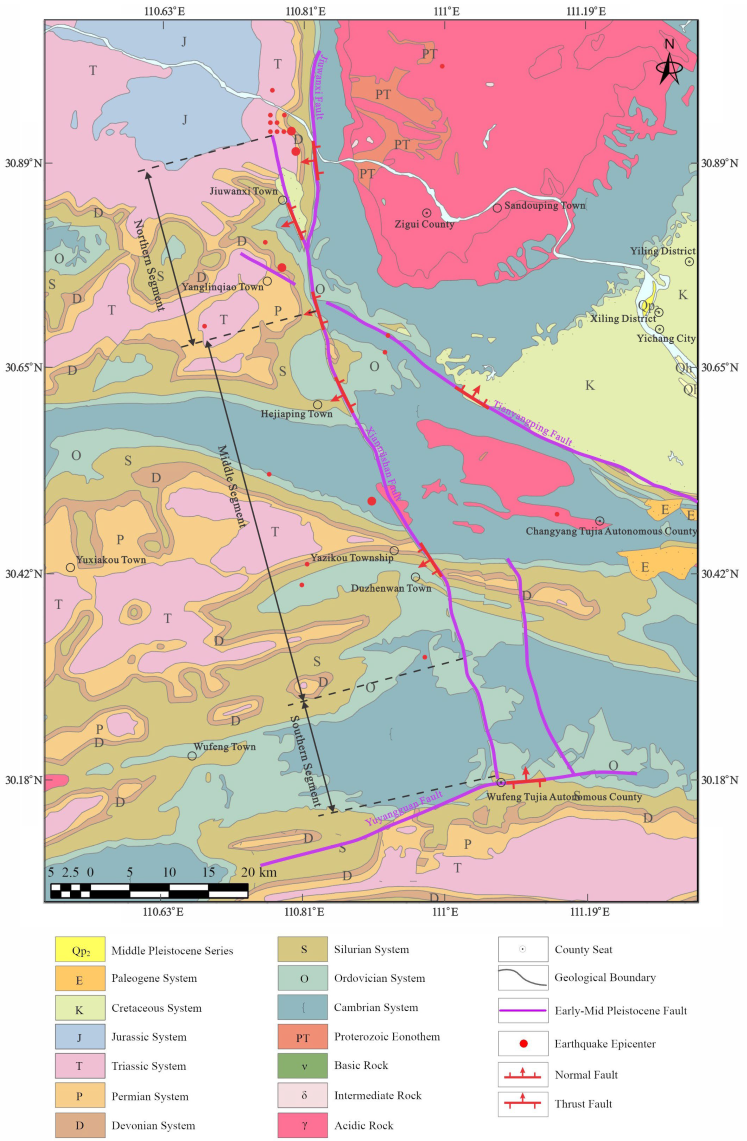
2. Regional Geological Tectonic Overview
- (1)
- Northern segment (Xiannüshan Fault in the narrow sense, also referred to as the Huangkou Fault) [2]: This approximately 20 km long segment extends from Fengchuiya north of Huangkou (Zigui County) southward through Zhouping and Laolinhe to Majiawan. It transects Upper–Middle Cambrian to Permian strata of the Paleozoic and Cretaceous strata of the Mesozoic. Near Huangkou, the fault strikes NW 330–350°, dipping SW at 35–60°. Along this segment, Paleozoic strata are thrust over the Cretaceous red beds. The fault zone, 2–5 m wide on average (locally exceeding 10 m), is composed of schistose tectonite, mylonitic breccia, and cataclasite. The wall rocks on both sides are steeply tilted, with dips around 80°.
- (2)
- Middle segment (Duzhenwan Fault) [1]: This approximately 50 km long segment extends from Jinzhutou (Zigui County) in the north through Huaqiao, Qinglinkou, and Duzhenwan, to Huixi (Changyang County) in the south. It strikes NW 335–340°. North of Wanggaoshan, the fault dips southwest, whereas to the south, the fault plane becomes vertical or dips northeast. The Duzhenwan Fault comprises a series of sub-parallel fault strands of varying lengths and scales, forming an incomplete imbricate structure. The fault breccia zone, several to tens of meters wide, mainly consists of cataclasite and porphyroclastic rock. Analyses of horizontal slickensides on the fault surface and a 3–4 km dextral offset of the Changyang Anticline indicate that the fault is characterized by primarily dextral (right-lateral) strike-slip motion with an extensional component.
- (3)
- Southern segment (Qiaogou Fault) [1]: This approximately 12 km long segment extends from Jiuliping (Changyang County) northward to Yuyangguan (Wufeng County) in the south. It strikes 340–350° and has a nearly vertical fault plane. South of Liujiaping, the strike gradually swings to NE 10–20°, dipping east at 50–80°. The fault breccia zone averages approximately 5 m in width and widens to approximately 20 m near Qiaogou. It consists mainly of mylonite, breccia, and cataclasite, with a thin schistose tectonite layer exposed locally. Foliation within the fault rocks trends approximately 10–15° oblique to the fault strike, and striations plunging 47° S indicate dextral (right-lateral) strike-slip motion, with the western block moving northward and the eastern block southward. Further south toward Daponao, the fault trace narrows and terminates.
3. Methodology
3.1. Shallow Seismic Reflection Exploration
3.2. Waterborne Seismic Exploration
3.3. Microtremor Survey
3.4. High-Density Resistivity Method
4. Characterization Results
5. Discussion
- (1)
- This study adopts a “segment-based optimal single-method” detection strategy, tailored to the geological and geomorphological differences in each segment of the Xiannüshan Fault Zone and the constraints of field implementation. On the premise of ensuring the detectability of key targets, this strategy reduces the low signal-to-noise ratio risk of unsuitable methods in complex sites. It also concentrates limited resources on the advantageous methods for each segment, thereby improving the field operability and cost-effectiveness. It should be emphasized that this strategy does not negate the positive role of multi-method co-line joint detection in improving detection accuracy and result reliability. Instead, it provides a more operationally feasible and cost-effective implementation path for concealed fault detection under complex geological conditions. Similar strategies have also been adopted in relevant studies worldwide: Mahmut G. Drahor [50] implemented differentiated geophysical detection schemes based on the specific detection tasks and site constraints of each survey line. Wang Zhihui [51] adopted a segmented research approach in their study area, considering differences in Quaternary overburden thickness, target detection depth, and resolution requirements. Luigi Piccardi [52] reasonably selected different geophysical detection methods according to on-site conditions. These studies indicate that “segment-based optimal selection” of geophysical detection methods, based on research objectives and site conditions, is an effective technical path with strong operability and high resource utilization efficiency.
- (2)
- Influenced by the “segment-based optimal single-method” strategy, this study did not implement joint detection with multiple methods on the same survey line. As a result, the research results lack direct cross-validation, which limits the constraint level of comprehensive interpretation to a certain extent. At the same time, factors such as local grounding conditions and human activity noise also affect data quality. For example, the electrical method has high contact resistance, and the microtremor dispersion energy is not concentrated enough. These issues may introduce uncertainties in the location and burial depth of fracture points. To quantitatively express the credibility of interpretations, this study classifies the reliability of fracture points into three levels: “Class A”, “ Class B”, and “ Class C”. This classification is carried out in accordance with the requirements of the Seismic Industry Standard of the People’s Republic of China DB/T 93.3—2024 [53]. It comprehensively considers the fault imaging characteristics on stacked profiles, the systematicness of event dislocation, and the sufficiency of independent evidence such as geology and drilling. In comprehensive interpretation, we distinguish the constraint levels of different fracture points based on this classification.
- (3)
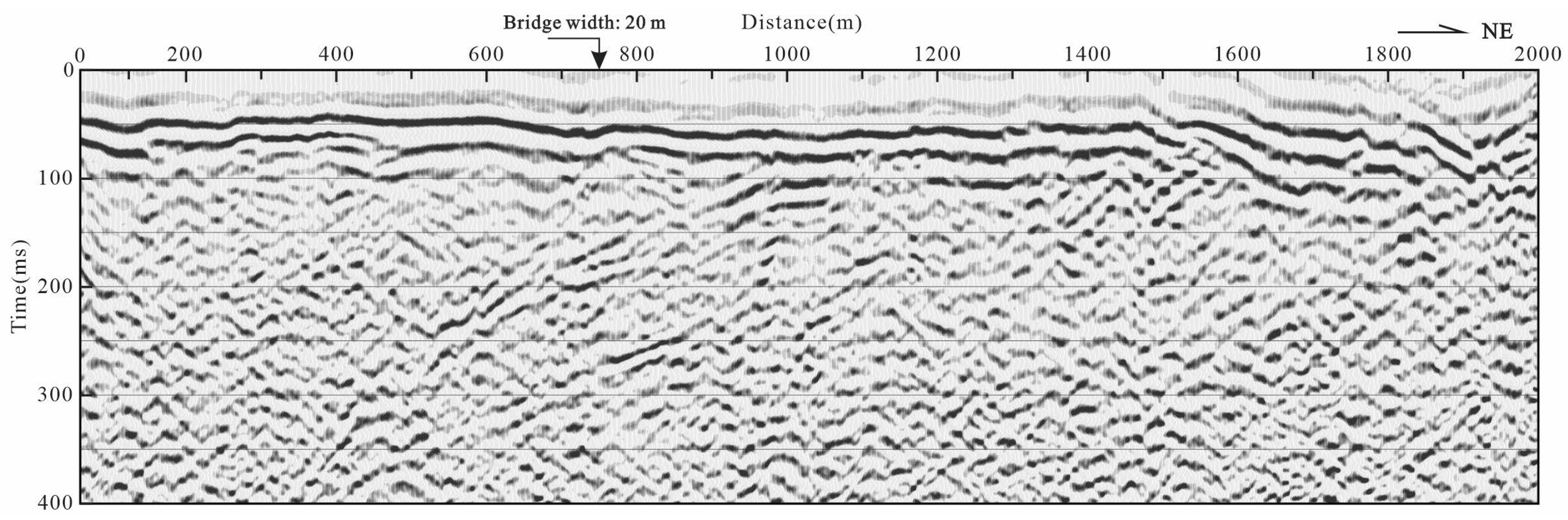
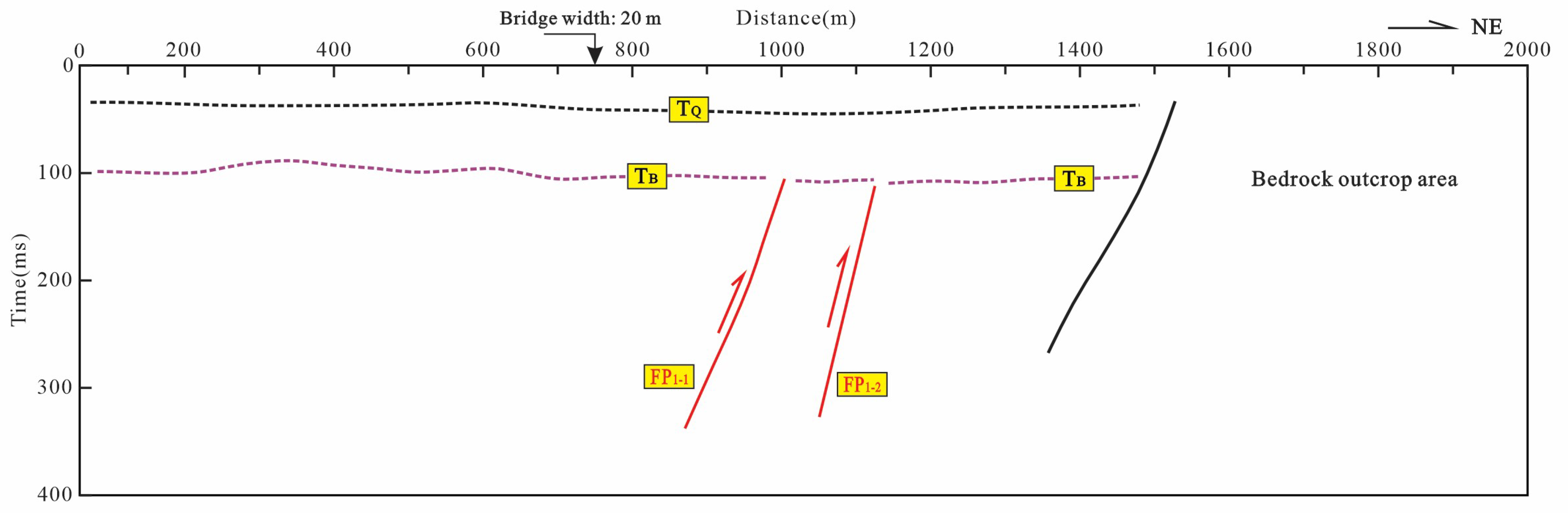
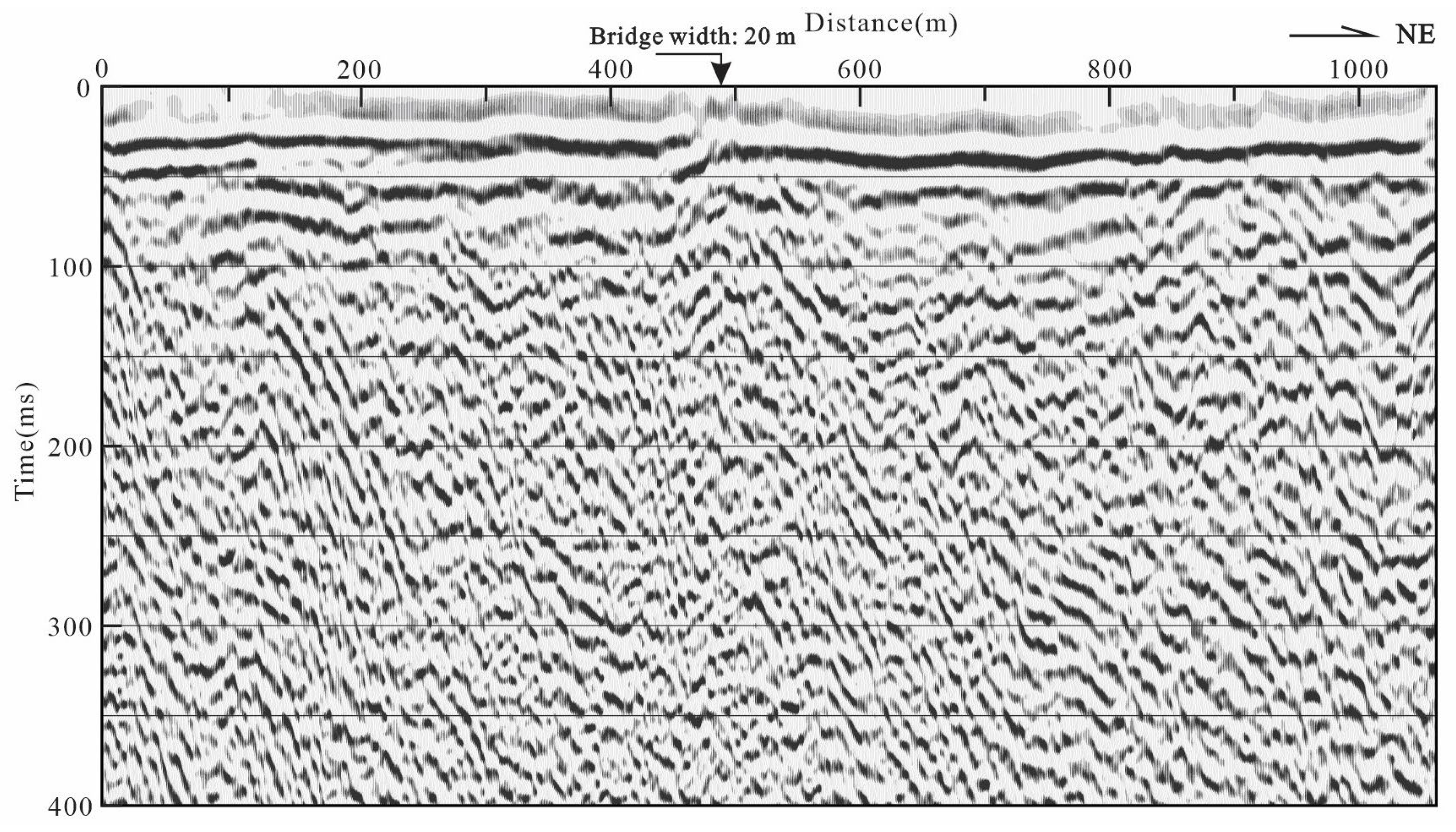
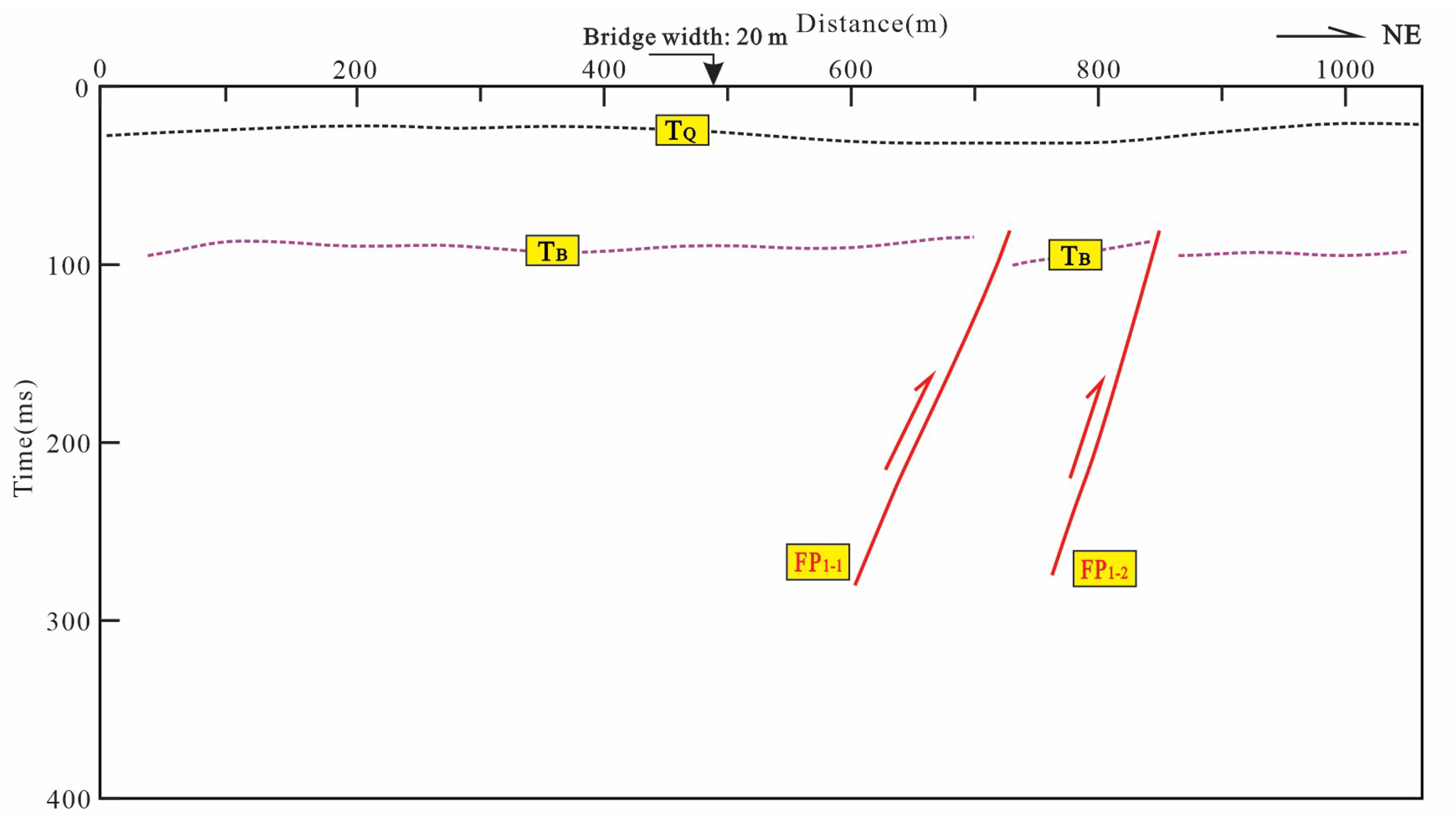
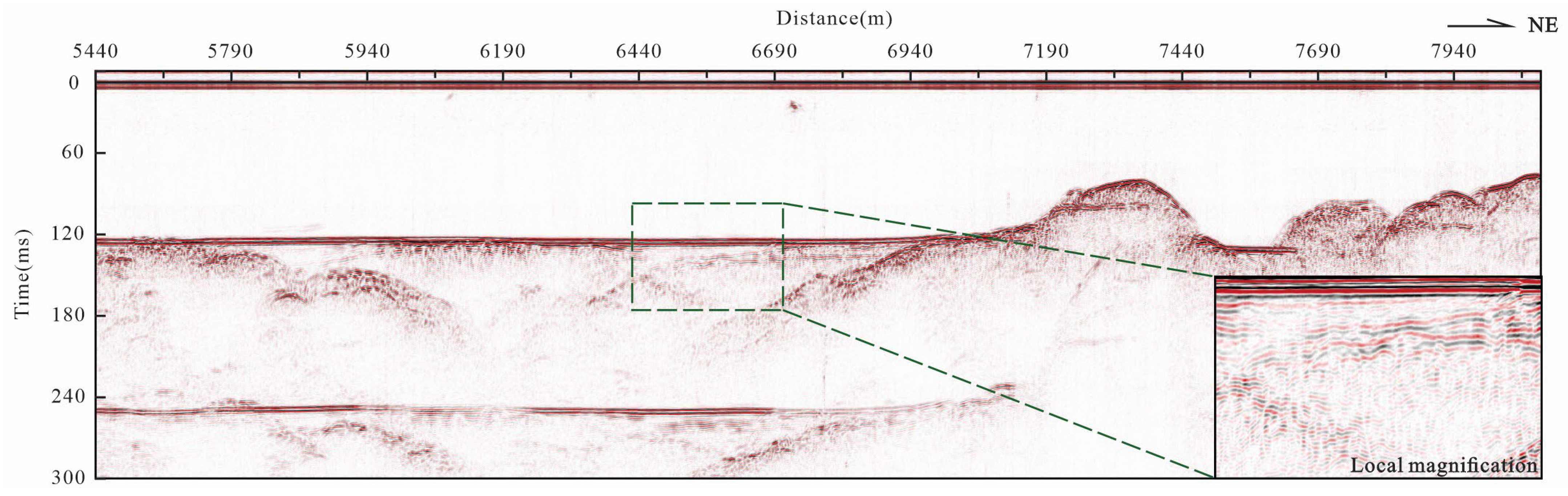
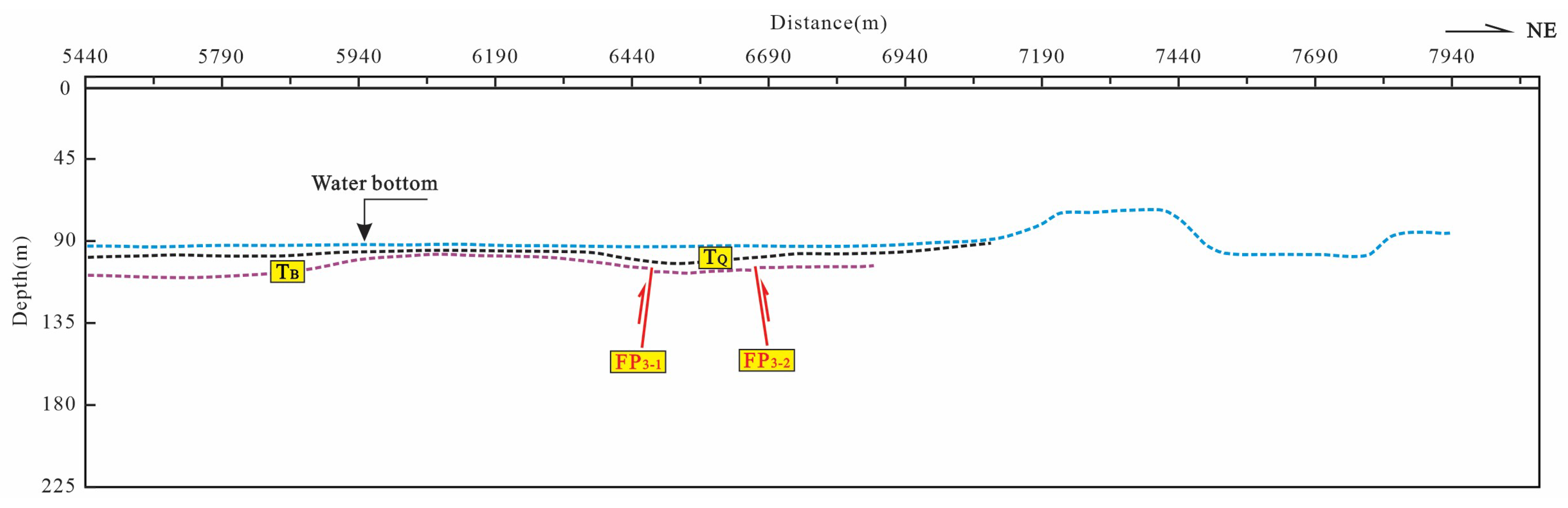
- Integrating the detection results of this study with previous research, the Xiannüshan Fault as a whole shows inherited characteristic of a pre-Quaternary fault. However, local weak reactivation may have occurred in the late stage. In the shallow seismic reflection data of the northern segment, there is no clear evidence that the fault cuts through the base of the Quaternary system. Subaqueous seismic reflection profiles reveal that the fault can offset interfaces such as TQ/TB. Even so, its upper endpoint lies approximately 11 m below the lake bottom and does not reach the Quaternary surface. This indicates that overall late-stage shallow activity of the fault is relatively weak. Previous studies [54,55] used fault gouge dating to determine the fault’s activity history. They proposed that the last relatively strong activity may have occurred during the Early–Middle Pleistocene, with the latest activity age around 150,000 years ago. Additionally, precise earthquake relocation in the reservoir area shows that earthquakes at 4–10 km depth are correlated with the fault structure. This suggests that intermittent responses may still occur in deep or local segments of the fault. Such responses could be triggered by regional stress evolution and reservoir water disturbance. Overall, the activity of the Xiannüshan Fault can be summarized by three key traits: it formed early, shows insignificant shallow activity, and may undergo deep-seated reactivation.
6. Conclusions
- (1)
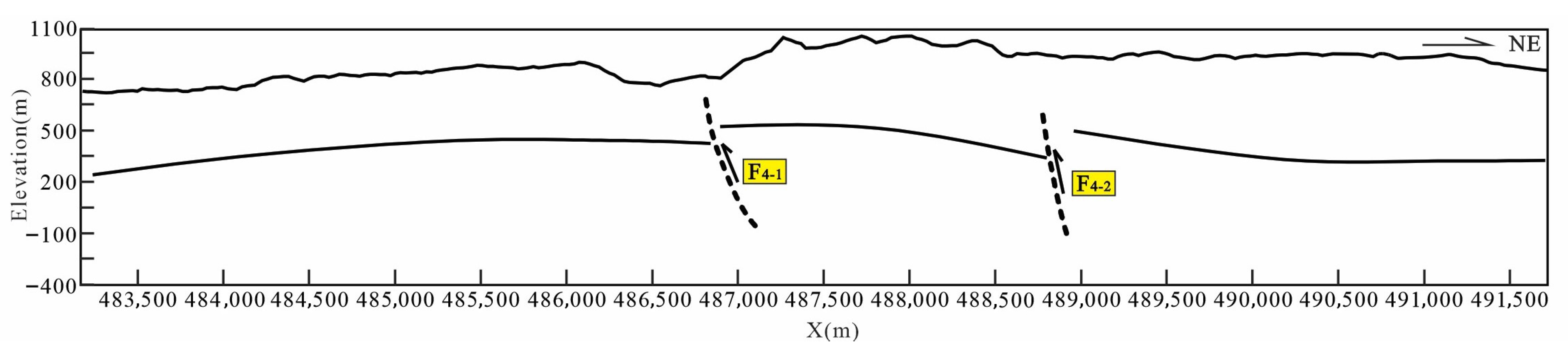
- By applying multiple geophysical methods segmentally, we obtained 9 detection profiles. We then selected 5 profiles with high imaging quality and reliable interpretation for in-depth analysis. Through this process, we identified multiple concealed fracture points, constrained their spatial locations, burial depth characteristics and geometric patterns, and summarized the relevant results in Table 6.
- (2)
- The fault in the northern segment exhibits typical compressional-thrust structural characteristics in shallow seismic reflection profiles. The fault plane terminates near the surface, with no obvious signs of cutting through loose overburden. This study is consistent with previous research and refines the understanding of the shallow structural characteristics of this fault segment.
- (3)
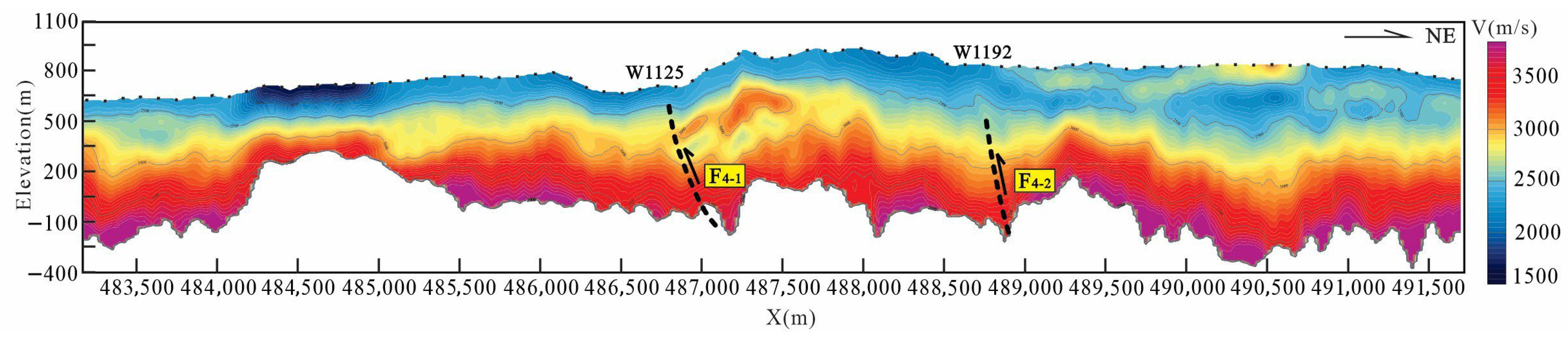
- The fault in the middle segment exhibits relatively complex structural styles in the results of marine seismic surveys and microtremor surveys. It may consist of multiple secondary faults, with local superposition of strike-slip or extensional components. Existing geophysical data provide constraints for understanding the multi-stage tectonic evolution of this fault segment.
- (4)
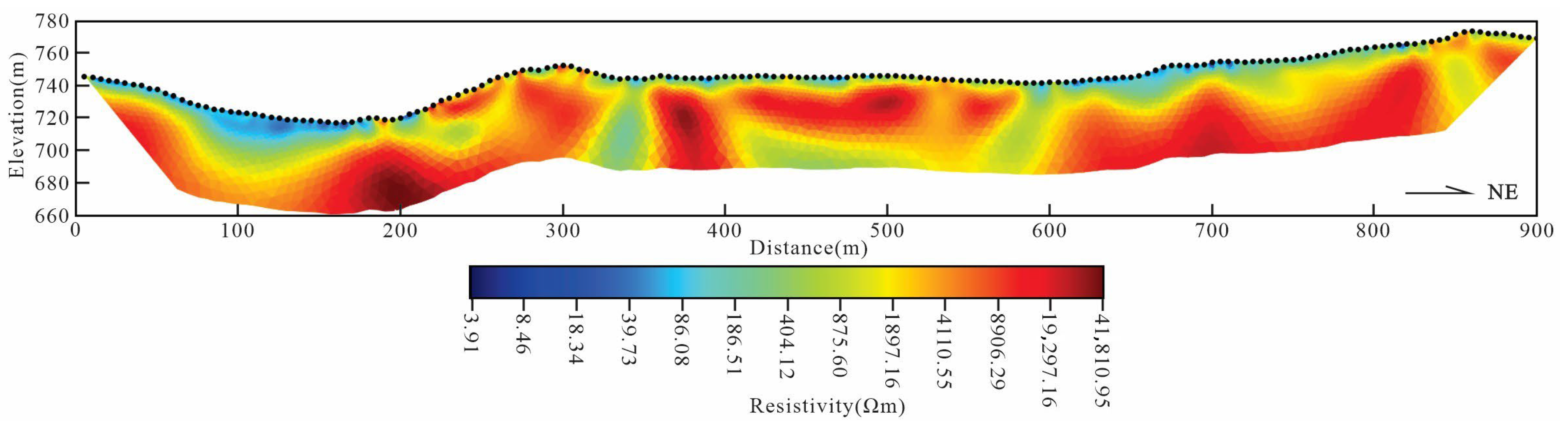
- In resistivity imaging, the fault in the southern segment generally exhibits a significant electrical contrast between the fault zone-related low-resistance anomalies and the high-resistance surrounding rocks. This indicates that the fault fracture zone still has identifiable structural responses in the near-surface area. Meanwhile, non-tectonic low-resistance anomalies such as karst are widely developed in the profiles. This reflects strong heterogeneity of shallow media in the southern segment, requiring fault identification to be distinguished from anomalies like karst bodies and interpreted comprehensively. From the perspective of electrical structure constraints, this study supplements the shallow structural information of the southern segment, providing further evidence for understanding the geometric characteristics and segmentation of the fault in this segment.
Author Contributions
Funding
Institutional Review Board Statement
Informed Consent Statement
Data Availability Statement
Conflicts of Interest
References
- Zhou, M.L.; Qin, X.L.; Feng, X.C. Several views on Xiannüshan fault zone. Crustal Deform. Earthq. 1984, 4, 82–89. [Google Scholar]
- Wu, S.Z. A preliminary study on the segmental characteristics of Xiannüshang fault. Crustal Deform. Earthq. 1991, 11, 84–91. [Google Scholar]
- Tan, C.X. Structural deformation analysis of Xiannüshan fault in the front region of Changjiang Three Gorges Engineering. Hydrogeol. Eng. Geol. 1991, 18, 13–17. [Google Scholar]
- Bi, M.F.; Chu, Q.Z.; Deng, Z.H.; Pan, B.; Zhang, C.H.; Zhou, Q. Tectonic landform and location of the northern end of Xiannüshan fault at the Three Gorges area. Seismol. Geol. 2012, 34, 294–302. [Google Scholar] [CrossRef]
- Xing, C.F.; Zhang, Y.; Shi, S.Y. Impoundment effect of Three Gorges Reservoir and influence on Xiannüshan fault zone. J. Geod. Geodyn. 2006, 26, 69–72. [Google Scholar] [CrossRef]
- Jin, L.F.; Wang, S.M.; Zhang, Y.M. Correlations between Xiannüshan active fault, reservoir-induced earthquakes and landslides located at head area of Three Gorges Reservoir. Yangtze River 2018, 49, 58–62. [Google Scholar] [CrossRef]
- Wang, K.W.; Lu, Y.Q.; Nie, J.; Teng, M.M.; Wang, X.L. Earthquake variation law of Xiannüshan and Jiuwanxi fault zones in Three Gorges Reservoir Area. J. Jilin Univ. (Earth Sci. Ed.) 2021, 51, 624–637. [Google Scholar] [CrossRef]
- Ma, W.T.; Xu, C.P.; Li, H.O.; Yuan, J.L.; Xu, X.W.; Zhang, X.D.; Zhang, L.F. Intensive observation of reservoir-induced earthquakes in the Three Gorges of the Yangtze River and preliminary analysis of earthquake genesis. Seismol. Geol. 2010, 32, 552–563. [Google Scholar] [CrossRef]
- Hu, D.G.; Wu, S.R.; Yin, X.L. Fractal dimensions of fault gouges from the Xiannüshan Fault and its activity. Acta Geosci. Sin. 1999, 20, 145–152. [Google Scholar] [CrossRef]
- Zhang, F.; Wang, S.J. Fission track age of fault gouge in the Yangtze Three-Gorge Dam site. Chin. J. Geol. 2001, 36, 101–106. [Google Scholar] [CrossRef]
- Li, G.C.; Li, P.; Jiang, C.X.; Zhang, P.; Wang, X. Advances of the application of urban geophysical exploration methods in China. Prog. Geophys. 2023, 38, 1799–1814. [Google Scholar] [CrossRef]
- Improta, L.; Ferranti, L.; De Martini, P.M.; Piscitelli, S.; Bruno, P.P.; Burrato, P.; Civico, R.; Giocoli, A.; Iorio, M.; D’Addezio, G.; et al. Detecting young, slow-slipping active faults by geologic and multidisciplinary high-resolution geophysical investigations: A case study from the Apennine seismic belt, Italy. J. Geophys. Res. Solid Earth 2010, 115, B11307. [Google Scholar] [CrossRef]
- Porras, D.; Carrasco, J.; Carrasco, P.; González, P.J. Imaging extensional fault systems using deep electrical resistivity tomography: A case study of the Baza fault, Betic Cordillera, Spain. J. Appl. Geophys. 2022, 202, 104673. [Google Scholar] [CrossRef]
- Meng, F.S.; Zhang, G.; Qi, Y.; Zhou, Y.; Zhao, X.; Ge, K. Application of combined electrical resistivity tomography and seismic reflection method to explore hidden active faults in Pingwu, Sichuan, China. Open Geosci. 2020, 12, 174–189. [Google Scholar] [CrossRef]
- Gabàs, A.; Macau, A.; Benjumea, B.; Bellmunt, F.; Figueras, S.; Vilà, M. Combination of geophysical methods to support urban geological mapping. Surv. Geophys. 2014, 35, 983–1002. [Google Scholar] [CrossRef]
- Lehmann, B.; Orlowsky, D.; Misiek, R. Exploration of Tunnel Alignment using Geophysical Methods to Increase Safety for Planning and Minimizing risk. Rock Mech. Rock Eng. 2010, 43, 105–116. [Google Scholar] [CrossRef]
- Gan, F. Multi-geophysical approaches to detect karst channels underground: A case study in Mengzi of Yunnan Province, China. J. Appl. Geophys. 2018, 151, 245–256. [Google Scholar] [CrossRef]
- Seo, H.; Choi, J.-R.; Kim, B.; Kim, S.-S.; Lee, S.; Ha, S.; Lee, J.; Son, M. Geophysical investigation of the Quaternary paleo-earthquake evidence using ERT and MASW surveys: A case study along the Yangsan Fault, SE Korea. Eng. Geol. 2025, 359, 108438. [Google Scholar] [CrossRef]
- Mair, J.; Henk, A.; Buness, H.; Lehné, R.; Tanner, D.C. Multi-scale geophysical imaging of neotectonic fault activity in the northern Upper Rhine Graben, Germany. Near Surf. Geophys. 2025, 23, 483–501. [Google Scholar] [CrossRef]
- Lin, S.; Wang, W.; Deng, X.H.; Zha, Y.; Zhou, H.; Cheng, M. Geophysical observation of typical landslides in Three Gorges Reservoir Area and its significance: A case study of Sifangbei landslide in Wanzhou District. Earth Sci. 2019, 44, 3135–3146. [Google Scholar] [CrossRef]
- Lin, S.; Li, Y.; Luo, D.G.; Fu, Y.L. Research on the fracture structure and activity of the Qinling Mountains thrust nappe system in western Hubei. Can. J. Earth Sci. 2020, 57, 1–15. [Google Scholar] [CrossRef]
- King, A.; Lepine, P.; Gorman, A.R.; Prior, D.J.; Lukács, A.; Bowman, M.H.; Fan, S.; Robertson, A.; Lutz, F.; Eccles, J.D.; et al. Shallow seismic reflection imaging of the Alpine Fault through late Quaternary sedimentary units at Whataroa, New Zealand. N. Z. J. Geol. Geophys. 2021, 64, 505–517. [Google Scholar] [CrossRef]
- Pugin, A.J.M.; Pullan, S.E.; Hunter, J.A.; Oldenborger, G.A. Hydrogeological prospecting using P- and S-wave landstreamer seismic reflection methods. Near Surf. Geophys. 2009, 7, 315–328. [Google Scholar] [CrossRef]
- Kang, S.Y. Mapping bedrock topography and detecting blind faults using the fundamental resonance of microtremor: A case study of the Pohang Basin, southeastern Korea. Geophys. J. Int. 2024, 238, 806–819. [Google Scholar] [CrossRef]
- Tian, B.; Xu, P.; Ling, S.; Du, J.; Xu, X.; Pang, Z. Application effectiveness of the microtremor survey method in the exploration of geothermal resources. J. Geophys. Eng. 2017, 14, 1283–1289. [Google Scholar] [CrossRef]
- Yu, C.; Wang, Z.; Tang, M. Application of microtremor survey technology in a coal mine goaf. Appl. Sci. 2022, 13, 466. [Google Scholar] [CrossRef]
- You, Z.; Xu, P.; Qian, J.; Cao, L.; Du, Y.; Fu, Q. Frequency-Bessel transform based microtremor survey method and its engineering application. Int. J. Environ. Res. Public Health 2022, 19, 13484. [Google Scholar] [CrossRef]
- Yin, Q.F.; Tao, P.F.; Xia, Y.M. Active faults and bedrock detection with super-high-density electrical resistivity imaging. Bull. Eng. Geol. Environ. 2020, 79, 5049–5060. [Google Scholar] [CrossRef]
- Jin, C.; Lin, S.; Wang, J.; Zhou, H.; Cheng, M. Estimation of shallow shear velocity structure in a site with weak interlayer based on microtremor array. Appl. Sci. 2022, 13, 185. [Google Scholar] [CrossRef]
- Zappalà, S.; Malehmir, A.; Hong, T.; Juhlin, C.; Lee, J.; Papadopoulou, M.; Brodic, B.; Park, S.; Chung, D.; Kim, B.; et al. Crustal-scale fault systems in the Korean Peninsula unraveled by reflection seismic data. Earth Space Sci. 2022, 9, e2022EA002464. [Google Scholar] [CrossRef]
- Li, Q.L.; Zhang, H.; Liu, X.D.; Chen, L. Imaging of upper breakpoints of buried active faults through microtremor survey technology. Earth Planets Space 2024, 76, 132. [Google Scholar] [CrossRef]
- Lu, Y.L.; Cao, C.H.; Liu, Y.Q.; Liu, Y. Study on application of comprehensive geophysical prospecting method in urban geological survey: Taking concealed bedrock detection as an example in Dingcheng District, Changde City, Hunan Province, China. Appl. Sci. 2022, 13, 417. [Google Scholar] [CrossRef]
- Su, L.J.; Xu, X.Q.; Geng, X.Y.; Liang, S.Q. An integrated geophysical approach for investigating hydro-geological characteristics of a debris landslide in the Wenchuan earthquake area. Eng. Geol. 2017, 219, 52–63. [Google Scholar] [CrossRef]
- Gan, J.S.; Yuan, J.R.; Gao, S.J. Seismicity anomaly in south Shandong Province and M L5.6 Cangshan earthquake. Crustal Deform. Earthq. 1997, 17, 84–88. [Google Scholar]
- Deng, M.Z.; He, D.F.; Zhang, Y.Y. Tectonic evolution of Xiannüshan fault and its influence on hydrocarbon traps in Changyang anticline, Western Hubei fold belt. Pet. Exp. Geol. 2018, 40, 177–184. [Google Scholar] [CrossRef]
- Xia, J.W.; Li, C.A.; Zhou, J.Y. Isotope age determination study on activity of Xiannushan Fault etc in the Primary Three Gorges Reservoir area. Hydrogeol. Eng. Geol. 2005, 32, 7–12. [Google Scholar] [CrossRef]
- Wu, S.R. Study on the microstructures and deformational environment of Xiannushan Fault belt, east of Yangtze River gorges. Chin. J. Geol. 1994, 29, 220–227. [Google Scholar]
- Wu, S.R.; Liu, Z.Z.; Qin, X.L.; Li, D.L. Study on the deformational structures and dynamic analysis of Xiannushan Fault zone in the Changjiang River Gorge area. Seismol. Geol. 1994, 16, 217–228. [Google Scholar]
- Li, Q.H.; Chen, F.; Wan, Z.F.; Liao, W.L.; Wang, D. Focal mechanisms and seismogenic stress field of the earthquakes that occurred in the vicinity of the northern part of the Xiannvshan Fault, Three Gorges Area. Earth Sci. 2022, 47, 2410–2420. [Google Scholar] [CrossRef]
- Chang, T.; Zhang, L.F.; Wang, Q.L.; He, C.F. Study on seismic activity and static Coulomb stress change in the area near Xiannvshan-Jiuwanxi Fault zone. J. Geod. Geodyn. 2020, 40, 1044–1048+1061. [Google Scholar] [CrossRef]
- Arjwech, R.; Hongsresawat, S.; Chaisuriya, S.; Rattanawannee, J.; Kanjanapayont, P.; Youngme, W. Identification and Verification of the Movement of the Hidden Active Fault Using Electrical Resistivity Tomography and Excavation. Geosciences 2024, 14, 196. [Google Scholar] [CrossRef]
- Wang, W.; Jin, C.; Luo, D.; Cai, Y.; Lin, S. Comprehensive geophysical measurement in seismic safety evaluation: A case study of East Lake High-Tech Development Zone, China. Sustainability 2022, 14, 6307. [Google Scholar] [CrossRef]
- Sana, H.; Taborik, P.; Valenta, J.; Bhat, F.A.; Flašar, J.; Štěpančíkova, P.; Khwaja, N.A. Detecting active faults in intramountain basins using electrical resistivity tomography: A focus on Kashmir Basin, NW Himalaya. J. Appl. Geophys. 2021, 192, 104395. [Google Scholar] [CrossRef]
- Yue, H.; Zhang, B.; Wang, K.; Wang, D.; Wang, G.; Wang, X.; Zhang, K.; Li, J. A towed-type shallow high-resolution seismic detection system for coastal tidal flats and its application in Eastern China. J. Geophys. Eng. 2020, 17, 967–979. [Google Scholar] [CrossRef]
- Li, K. Research on the application of high resolution 3D seismic reflection exploration in offshore engineering. Prog. Geophys. 2024, 39, 1670–1686. [Google Scholar]
- Gao, W.W.; Gao, W.; Hu, R.L.; Xu, P.F.; Xia, J.G. Microtremor survey and stability analysis of a soil-rock mixture landslide: A case study in Baidian town, China. Landslides 2018, 15, 1951–1961. [Google Scholar] [CrossRef]
- Asten, M.W.; Hayashi, K. Application of the spatial auto-correlation method for shear-wave velocity studies using ambient noise. Surv. Geophys. 2018, 39, 633–659. [Google Scholar] [CrossRef]
- Feng, D.S.; Dai, Q.W.; Xiao, B. Contrast between 2D inversion and 3D inversion based on 2D high-density resistivity data. Trans. Nonferrous Met. Soc. China 2014, 24, 224–232. [Google Scholar] [CrossRef]
- Dahlin, T. The development of DC resistivity imaging techniques. Comput. Geosci. 2001, 27, 1019–1029. [Google Scholar] [CrossRef]
- Drahor, M.G.; Berge, M.A. Integrated geophysical investigations in a fault zone located on southwestern part of İzmir city, Western Anatolia, Turkey. J. Appl. Geophys. 2017, 136, 114–133. [Google Scholar] [CrossRef]
- Wang, Z.; Cai, X.; Yan, J.; Wang, J.; Liu, Y.; Zhang, L. Using the integrated geophysical methods detecting active faults: A case study in Beijing, China. J. Appl. Geophys. 2018, 156, 82–91. [Google Scholar] [CrossRef]
- Piccardi, L.; D’Alessandro, A.; Vittori, E.; D’Intinosante, V.; Baglione, M. An integrated remote sensing and near-surface geophysical approach to detect and characterize active and capable faults in the urban area of Florence (Italy). Remote Sens. 2025, 17, 2644. [Google Scholar] [CrossRef]
- DB/T 93.3-2024; Active Fault Survey—Requirements of Achievement Reports—Part 3: Special Subject Work Reports. China Standards Press: Beijing, China, 2024.
- Yang, F. Influence of Three Gorges Reservoir on Seismic Activity near the Northern Part of the XianNv Mountain Fault. Ph.D. Thesis, Institute of Seismology, China Earthquake Administration, Beijing, China, 2019. [Google Scholar]
- He, C.F. Study on Fault Reactivation Feature of Xiannvshan-Jiuwanxi Fault Zone in the Head Area of the Three Gorges. Ph.D. Thesis, Institute of Seismology, China Earthquake Administration, Beijing, China, 2016. [Google Scholar]





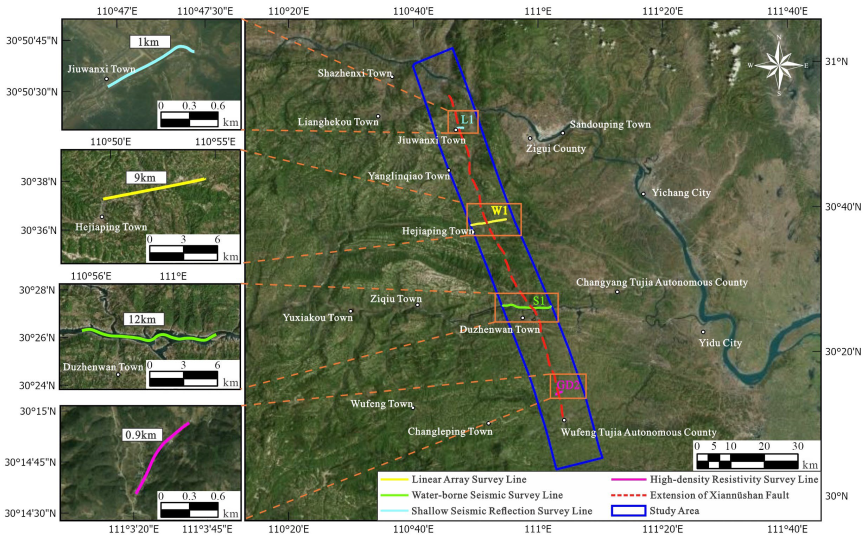
| Survey Line Name | Detection Method | Coordinates of Starting Point of Survey Lines | Coordinates of End point of Survey Lines | Survey Line Length (m) | ||
|---|---|---|---|---|---|---|
| Latitude (°) | Longitude (°) | Latitude (°) | Longitude (°) | |||
| L1 | Shallow Seismic Reflection | 30.84116 | 110.77998 | 30.84441 | 110.79929 | 2000 |
| L2 | 30.77941 | 110.81087 | 30.77915 | 110.81980 | 1000 | |
| XC3 | 30.84219 | 110.78240 | 30.84446 | 110.79315 | 1132 | |
| S1 | Waterborne Seismic Exploration | 30.43735 | 110.90607 | 30.43683 | 111.03741 | 12,970 |
| W1 | Microtremor Survey | 30.62201 | 110.82424 | 30.63570 | 110.91438 | 8790 |
| GD1 | High-Density Resistivity Method | 30.23001 | 111.06759 | 30.22702 | 111.05703 | 1195 |
| GD2 | 30.24648 | 111.05829 | 30.24015 | 111.05422 | 895 | |
| GD3 | 30.24072 | 111.05150 | 30.24154 | 111.05683 | 595 | |
| GD4 | 30.28733 | 111.03821 | 30.29025 | 111.04236 | 595 | |
| Survey Line Name | Rolling Receiving Channels | Geophone Interval (m) | Shot Interval (m) | Stacking Fold | Sampling Interval (ms) | Record Length (ms) |
|---|---|---|---|---|---|---|
| L1 | 261 | 2 | 8 | 32 | 0.5 | 800 |
| L2 | 261 | 2 | 8 | 32 | 0.5 | 800 |
| XC3 | 72 | 2 | 6 | 12 | 0.5 | 800 |
| Survey Line Name | Towing Rope Length (m) | Towing Vessel Speed (m/s) | Geophone Interval (m) | Shot Interval (s) | Sampling Interval (ms) | Record Length (ms) |
|---|---|---|---|---|---|---|
| S1 | 12 | 1.34 | 1.16–1.58 | 1 | 0.1 | 300 |
| Array Spacing (m) | Spread Length (m) | Array Type | Observation Mode | Sampling Interval (ms) | Observation Duration (Day) | Frequency (Hz) |
|---|---|---|---|---|---|---|
| 30 | 8550 | Linear | Rolling Observation | 4 | 17.9 | 5 |
| Survey Line Name | Array | Isolation Coefficient | Electrode Spacing (m) | Number of Electrodes | Power Supply Time (ms) | Discharge Time (ms) |
|---|---|---|---|---|---|---|
| GD1 | Wenner | 36 | 5 | 240 | 500 | 200 |
| GD2 | Wenner | 36 | 5 | 180 | 500 | 200 |
| GD3 | Wenner | 36 | 5 | 120 | 500 | 200 |
| GD4 | Wenner | 36 | 5 | 120 | 500 | 200 |
| Method | Survey Line | Line Length (km) | Fault Point | Fault Nature | Fault Point Location (m) | Burial Depth (m) | Apparent Dip Direction | Reliability Evaluation |
|---|---|---|---|---|---|---|---|---|
| Shallow seismic Reflection | L1 | 2.0 | FP1-1 | Thrust | 990 | 90.5 | W | Class A |
| XC3 | 1.132 | FP1-2 | Thrust | 1116 | 107.2 | W | Class A | |
| L2 | 1.0 | FP1-3 | Thrust | 742 | 110 | W | Class A | |
| Waterborne Seismic | S1 | 12.97 | FP3-1 | Thrust | 6476 | 11 | W | Class A |
| S1 | 12.97 | FP3-2 | Thrust | 6665 | 11 | E | Class A | |
| S1 | 12.97 | FP3-3 | Normal | 7950 | / | W | Class A | |
| Microtremor Survey | W1 | 8.79 | FP4-1 | Thrust | 3720 | ~130 | E | Class B |
| W1 | 8.79 | FP4-2 | Thrust | 5730 | ~180 | E | Class B | |
| High-Density Resistivity | GD1 | 1.195 | FP5-1 | / | 560 | 20 | W | Class B |
| GD2 | 0.895 | FP5-2 | / | 340 | 15 | W | Class A | |
| GD3 | 0.595 | FP5-3 | / | 692 | 13 | W | Class A | |
| GD4 | 0.595 | FP5-4 | / | 430 | 12 | E | Class A |
Disclaimer/Publisher’s Note: The statements, opinions and data contained in all publications are solely those of the individual author(s) and contributor(s) and not of MDPI and/or the editor(s). MDPI and/or the editor(s) disclaim responsibility for any injury to people or property resulting from any ideas, methods, instructions or products referred to in the content. |
© 2026 by the authors. Licensee MDPI, Basel, Switzerland. This article is an open access article distributed under the terms and conditions of the Creative Commons Attribution (CC BY) license.
Share and Cite
Luo, J.; Lin, S.; Ding, W.; Jin, C.; Cheng, M.; Deng, X.; Fu, Y.; Zhou, H. Application of Various Geophysical Methods in the Characterization of the Xiannüshan Fault Zone. Appl. Sci. 2026, 16, 594. https://doi.org/10.3390/app16020594
Luo J, Lin S, Ding W, Jin C, Cheng M, Deng X, Fu Y, Zhou H. Application of Various Geophysical Methods in the Characterization of the Xiannüshan Fault Zone. Applied Sciences. 2026; 16(2):594. https://doi.org/10.3390/app16020594
Chicago/Turabian StyleLuo, Jingan, Song Lin, Wenxiu Ding, Cong Jin, Miao Cheng, Xiaohu Deng, Yanlin Fu, and Hongwei Zhou. 2026. "Application of Various Geophysical Methods in the Characterization of the Xiannüshan Fault Zone" Applied Sciences 16, no. 2: 594. https://doi.org/10.3390/app16020594
APA StyleLuo, J., Lin, S., Ding, W., Jin, C., Cheng, M., Deng, X., Fu, Y., & Zhou, H. (2026). Application of Various Geophysical Methods in the Characterization of the Xiannüshan Fault Zone. Applied Sciences, 16(2), 594. https://doi.org/10.3390/app16020594