You are currently viewing a new version of our website. To view the old version click .
Applied Sciences
  • Article
  • Open Access

11 December 2025

Characteristics of Functional Cookies with Added Cranberries (Vaccinium oxycoccos) in the Form of a Polyphenol Preparation and a Microencapsulated Preparation


and
Department of Food Technology and Human Nutrition, Faculty of Technology and Life Sciences, University of Rzeszów, 4 Zelwerowicza St., 35-601 Rzeszów, Poland
*
Author to whom correspondence should be addressed.
This article belongs to the Special Issue Bioactive Natural Compounds: From Discovery to Applications

Abstract

This study assessed the effect of adding a cranberry polyphenol preparation in powder and microcapsule form to cookies on their physicochemical properties, polyphenol composition, health-promoting activity, and biocompatibility with normal human colonocytes. Cranberry powder was obtained by purifying the polyphenolic compounds, while microcapsules were obtained by encapsulating the powder in a mixture of sodium alginate and soy protein isolate. Cookies were prepared with 0.5, 1, 3 and 5% microcapsules, and 0.04, 0.08, 0.23 and 0.38% powder. The study showed that physicochemical parameters such as moisture, spreadability index, baking loss, hardness, and color significantly depended on the type and amount of the additive. Higher total polyphenol content was observed for cookies with powder (13.22 mg/100 g; P0.38), analyzed by using ultra-performance liquid chromatography (UPLC). The addition of microencapsulated powder increased the degree of anthocyanin preservation by 57.9% (primarily cyanidin 3-O-glucoside). The highest antioxidant activity, measured by cation radical scavenging activity (ABTS), copper ion reduction (CUPRAC), superoxide radical (O2) and hydroxyl radical (OH˙) scavenging capacity tests, was observed for cookies with a 0.38% addition of polyphenol powder. These cookies also demonstrated the highest antidiabetic activity (α-amylase and α-glucosidase inhibition of 40.23 and 15.79%, respectively). All tested cookies also demonstrated high biocompatibility with human colonocytes. These findings contribute to the development of innovative functional bakery products with stable anthocyanin forms.

1. Introduction

Growing consumer awareness of healthy eating principles creates a need to develop innovative food products that would serve as carriers of bioactive ingredients with potentially health-promoting effects. The trend of enriching food with bioactive ingredients should particularly target the most frequently consumed products, which can significantly impact consumers’ daily diets [1]. This food category includes bakery products, among which, alongside bread, cookies also occupy a significant place. The undoubted advantages of cookies include their wide availability, low price, ease of production, and long shelf life [2]. These qualities also make them a good matrix for enriching with phytochemicals. Therefore, numerous studies have been published in recent years on enriching cookies with ingredients such as blackcurrant and apple pomace, saffron, and sea buckthorn extracts [3,4,5]. A common feature of these additives is a high content of polyphenolic compounds, which translates into a proven increase in the health-promoting activity of cookies [6]. However, there are still no reports on the administration of polyphenolic compounds in concentrated preparations or in the form of these preparations subjected to the encapsulation process.
In previous studies, we have shown that berries, mainly cranberries, are very valuable sources of polyphenolic compounds [7]. In general, cranberry fruit extracts demonstrated antioxidant, antibacterial, anti-inflammatory, cardioprotective, chemopreventive, and gastrointestinal health-promoting effects, which were strongly correlated with the content of phytochemicals [8].
In one of our reports, we obtained a polyphenolic powder from cranberry fruit extract using solid-phase extraction. The preparation contained 46.16 mg/g of polyphenolic compounds, with anthocyanins being the dominant group (56.6% of all identified compounds). However, it is well known that polyphenols are among the least stable bioactive compounds [9]. Therefore, in the next work, we subjected the above preparation to the process of microencapsulation by ionotropic gelation [10]. In recent years, microencapsulation has become one of the most popular forms of protecting polyphenols against external factors [11]. A cranberry polyphenol preparation was encapsulated in a sodium alginate and soy protein isolate matrix with an efficiency of 71.8%. Microencapsulation also increased the bioavailability of polyphenols during simulated in vitro digestion, particularly total content of anthocyanins (3–4-fold increase), compared to the free preparation [10].
In view of the above results, it seems reasonable to test the effect of both the free polyphenol preparation from cranberry fruit and this preparation in microencapsulated form on the physicochemical and health-promoting properties of the food product. No such studies have been conducted to date.
Therefore, the aim of this study was to assess the potential use of a cranberry polyphenolic preparation in the form of free powder and microcapsules as an additive in shortbread cookies. Cookies with functional additives were tested for the stability of polyphenolic compounds using UPLC-PDA-MS/MS (ultra-performance liquid chromatography coupled to photodiode array detection and tandem mass spectrometry), the profile of changes in the cookies’ physicochemical properties (moisture, ash, spreading coefficient, baking loss, hardness, color), health-promoting properties (free radical inhibition, α-amylase and α-glucosidase inhibition), and for safety of consumption by measuring biocompatibility with normal human colon epithelial cells (cell line CCD841 CoN). We believe that the results of this study will contribute to expanding the range of healthy snacks with targeted preventive or health-promoting effects.

2. Materials and Methods

2.1. Material

Cranberries (Vaccinium oxycoccos) and raw materials for cookie production were purchased from a grocery store in Podkarpacie, Poland. At the time of purchase, the fruits were fully ripe, without mechanical damage or pathogens. Chromatography standards were purchased from Extrasynthese (Lyon, France) and Sigma-Aldrich (Steinheim, Germany). The CCD841 CoN cell line was purchased from Sigma-Aldrich (Steinheim, Germany). Chemical reagents used in this work were purchased from Sigma-Aldrich (Steinheim, Germany) and Chempur (Piekary Śląskie, Poland).

2.2. Obtaining the Polyphenol Preparation

We prepared the polyphenol preparation from cranberry fruit in accordance with our previous work [7]. Briefly, cranberry fruits were combined with ethanol 50% (v/v) in a ratio of 1:10, homogenized (T18 digital Ultra-Turrax, IKA, Warsow, Poland), sonicated (30 min, 30 °C, 40 kHz, Sonic 10, Polsonic, Poland), and then centrifuged. The centrifugation residue was subjected to the above procedure twice more using increasing ethanol concentrations (70%, 96%; v/v). The obtained supernatants were combined, evaporated to remove the alcohol content (R-215, Buchi, Switzerland), and subjected to the polyphenolic fraction isolation procedure using a C18 resin (LiChroprep RP-18, 40–63 µm). The concentrated extract was applied to the resin, compounds other than polyphenols were eluted with distilled water (with 1% citric acid), and polyphenolic compounds were eluted with ethanol 96% (with 1% citric acid; v/v). The obtained polyphenolic fraction from cranberry fruit was evaporated and lyophilized into powder (ALPHA 1–2 LD plus, Osterode, Germany).

2.3. Preparation of Microcapsules

Gel microcapsules were prepared according to our previous work [10]. Briefly, the powdered polyphenol preparation obtained according to Section 2.2 was dissolved in a hydrogel composed of sodium alginate (2%; w/v) and soy protein isolate (1%; w/v). Microcapsules were obtained using an encapsulator (B-390, BUCHI, Flawil, Switzerland) with the following settings: pressure 500 bar, nozzle diameter 450 µm, electrode voltage 650 V, and frequency 400 Hz at room temperature. The obtained microcapsules were cured for 20 min in a 3.5% CaCl2 solution and then lyophilized (ALPHA 1–2 LD plus, Osterode, Germany).

2.4. Preparing the Cookies

The cookies were prepared according to previous recipes [2,6]. Briefly, the cookie recipe included all-purpose wheat flour (400 g), butter 82% fat (200 g), eggs (2), and erythritol sugar (35 g). Microcapsules containing a polyphenol preparation (M) were added to the dough at 0.5%, 1.0%, 3.0%, and 5.0% of the dough weight (w/w). Powdered cranberry polyphenol preparation (P) was added in the amount theoretically contained in the microcapsules, according to our previous article [10]. These were 0.04, 0.08, 0.23, and 0.38% of the dough mass (w/w), respectively. The dough was kneaded for 20 min in a laboratory mixer (R4, Mesko-AGD, Skarżysko-Kamienna, Poland), then the dough was cooled (4 to 5 °C) for 30 min, rolled out to a thickness of 0.5 cm, and cut into 5 cm diameter round shapes using pastry molds. Baking was carried out at 180 °C for 15 min in an electric oven (Classic, Sveba Dahlen, Fristad, Sweden). After cooling, the cookies were packed into zip-lock bags and submitted for analysis.

2.5. Assessment of Physicochemical Properties

The moisture content of the cookies was determined using a laboratory oven (ED 115, Binder, Tuttlingen, Germany) [10]. After drying the cookie samples for 1 h at 120 °C, the moisture content was determined by measuring the weight of the samples before and after drying. The ash content was determined using a laboratory oven (P330, Nabertherm, Lilienthal, Germany). After incineration of the cookie samples (at 550 °C), the ash content was calculated based on the weight before and after incineration [12]. The spreadability factor was calculated as the ratio of the cookie diameter to the thickness. The baking loss was calculated as the ratio of the cookie weight before and after baking according to Yang et al. [12].

2.6. Texture Assessment

Twenty-four hours after baking, texture analysis was performed using a texturometer (EZ-LX, Shimadzu, Kyoto, Japan) equipped with Trapezium X Texture PL software (Shimadzu, Kyoto, Japan). Cookies were centrally assessed at a crosshead of head speed of 50 mm/s to 50% of the sample height. Analysis was performed using a 25 mm diameter disk-shaped probe to determine the hardness (N) of the samples.

2.7. Color Assessment

The top surface of the cookies’ color parameters was measured using the CIE L*a*b* model using a spectrophotometer (UltraScan Vis, HunterLab, Reston, VA, USA). The L*, a*, and b* parameters were measured, and the color change (∆E) and chroma (C) values were calculated.
E = ( L 2 ) + ( a 2 ) + ( b 2 )
C = ( a 2 + b 2 )

2.8. Assessment of Antioxidant Activity

Extracts for assessing antioxidant activity were prepared by suspending ground cookies (2 g) in 10% (v/v) ethanol. The extracts were ultrasonically treated (30 min, 30 °C, 40 kHz), centrifuged, and used for analysis. For the cookie samples, the cation radical scavenging activity of ABTS+ (ABTS method), copper ion reduction (CUPRAC), superoxide radical (O2) and hydroxyl radical (OH˙) scavenging capacity were assessed. A detailed description of these methodologies can be found in our previous publications [7,10,11]. Absorbance was measured using a UV-VIS spectrophotometer (UV2900, Hitachi, Tokyo, Japan). Results for the ABTS and CUPRAC methods were expressed as Trolox equivalents (mmol TE/100 g). Results for the O2 and OH˙ methods were expressed as % inhibition.

2.9. Assessment of Antidiabetic Activity

The extracts prepared in point 2.8 were used for the determination. Antidiabetic activity was assessed by measuring the ability of the cookie samples to inhibit α-amylase and α-glucosidase activity [13]. For the α-amylase inhibition assay, a mixture consisting of phosphate buffer (pH 6.6, 50 mmol/L), enzyme solution (porcine pancreas α-amylase, 50 U/mL), starch solution (2%), and the test extract was incubated at 37 °C for 20 min. After this time, the reaction was stopped by the addition of ethanol 96%. Absorbance was measured at a wavelength of 510 nm using a UV-VIS spectrophotometer.
For the evaluation of α-glucosidase inhibition activity, a mixture consisting of phosphate buffer (pH 6.8, 0.1 mol/L), α-glucosidase enzyme solution (α-glucosidase from Saccharomyces cerevisiae, 1 U/mL) and the tested extract was incubated at 37 °C for 5 min. After this time, sucrose solution (1%, w/v) was added to the mixture and incubated again under the above conditions for 30 min. The reaction was stopped by adding 3,5-dinitrosalicylic acid (DNS) solution and heating the mixture for 10 min. Absorbances were measured at 540 nm. The results for both enzymes were expressed as % enzyme inhibition. Acarbose was used as a positive control using a UV-VIS spectrophotometer.
The ability of the tested samples to inhibit α-amylase and α-glucosidase activity was calculated according to the following equation, where A0 is the absorbance of the control sample; A1 is the absorbance of the test sample.
Inhibition (%) = [[A0 − A1]/A0] × 100

2.10. Assessment of Biocompatibility with Cells

The biocompatibility of the cookies was assessed using a human colonocyte cell line (CCD841 CoN) as described in our previous report [10]. Cells were cultured in DMEM (Dulbecco’s Modified Eagle Medium) supplemented with 10% fetal bovine serum and 1% antibiotics (streptomycin and penicillin). Culture was performed in a laboratory incubator (CB170, Binder, Tuttlinen, Germany) at 37 °C and 5% CO2.
After the fifth passage, cells were seeded into a 6-well plate (1 × 10⁵ cells per well) and grown to full confluence. The cakes were irradiated in a laminar flow cabinet with a UV-C lamp (254 nm) at 0.05 mW/cm2 for 600 s to reduce the risk of cell culture contamination. The cakes were then added to the medium, vortexed for 3 min, and left in contact with the cell layer for 48 h at 37 °C in 5% CO2. After this time, the medium was removed, the cells were washed with phosphate-buffered saline (PBS) at pH 7.1–7.3 (1×), and cell viability was assessed according to the protocol included with the MTS assay by adding MTS solution to each well and storing in an incubator for 1 h. Absorbance was measured at 490 nm using a microplate reader (Sunrise Microplate Reader Remote-Elisa Assays, Tecan Trading AG, Männedorf, Switzerland). Results were expressed as cell viability (%).

2.11. Assessment of Polyphenols Profile by UPLC-TQD-MS

The polyphenolic profile of the cookies was analyzed using ultra-performance liquid chromatography (UPLC, Waters, Milford, MA, USA). The UPLC was equipped with a tandem quadrupole mass spectrometer (TQD) with an electrospray ionization (ESI) source and a photodiode array detector (PDA). Polyphenols were separated on a C18 column (1.7 µm, 100 mm × 2.1 mm) at 50 °C. The mobile phases for anthocyanin determination were 2% formic acid in water and 2% formic acid in 40% acetonitrile, while water and 40% acetonitrile were used to determine the remaining phenolic compounds. The sample injection volume was 5 μL, and the mobile phase flow was maintained at 0.35 mL/min. Total analysis time was 8 min. Mass spectrometer parameters were set as follows: capillary voltage 3500 V, cone voltage 30 V, desolvation gas flow 800 L/h, desolvation temperature 350 °C, source temperature 120 °C. Polyphenols identification were performed based on mass-to-charge ratio (m/z), characteristic fragment ions, retention time, and comparison with commercial reference standards and literature data [7,10,11]. Phenolic acids were monitored at 320 nm, flavones at 340 nm, flavonol glycosides at 360 nm, and anthocyanins at 520 nm. Data processing was performed using Waters MassLynx v.4.1 software (Waters, Milford, MA, USA). Results were expressed in mg/100 g.

2.12. Statistical Analysis

All analyses were performed in triplicate. Results were expressed as mean and standard deviation (SD). Statistical analysis was performed using Statistica 13.3 software (StatSoft, Krakow, Poland) using Duncan’s test, t-Student test and principal component analysis (PCA), with a significance level of p < 0.05. Before PCA, the data were centered and autoscaled. PC1 and PC2 were interpreted based on loading values, with variables with a loading ≥0.40 considered to significantly influence the component structure.

3. Results

3.1. Physicochemical Properties of Cookies

Analyzing the physicochemical properties of cookies is crucial for the food industry to optimize recipe composition, production process, and ensure a high-quality end product that is acceptable to consumers. Therefore, in this study, cookies with free polyphenol powder and microcapsules containing cranberry polyphenol powder were subjected to physicochemical analysis by measuring their moisture content, ash content, spreading coefficient, baking loss, hardness, and color change. The results are summarized in Table 1. The physicochemical properties of the powder and microcapsules were also thoroughly analyzed in our previous studies [7,10].
Table 1. Physicochemical properties of cookies with the addition of cranberry fruit polyphenol powder (P0.04–P0.38) and microencapsulated powder (M0.5–M5).
Determining the moisture content of baked goods is one of the basic physicochemical parameters, influencing their texture, shelf life, and sensory quality. Our study showed that the moisture content of cookies with polyphenol powder decreased with increasing percentage of the additive (3.18–2.91%; P0.04–P0.38), while that of microcapsules increased (3.40–3.68%; M0.5–M5). It can be concluded that adding ingredients rich in sodium alginate and protein, which have a high affinity for water retention during baking, resulted in higher moisture content of the cookies [14]. The same tendency was observed earlier for cookies enriched with apple pomace [4] and microencapsulated pomegranate peel extract [15]. Despite these discrepancies, the results obtained for both powder and microencapsulated cookies are within the ranges reported by other authors, 1.51–9.85% [16,17,18].
As can be seen in Table 1, a higher addition of powder or microcapsules resulted in an increase in ash content. A higher increase compared to the control (0.70%) was observed for cookies with microcapsules (2.47%; M5). These values are closely related to the concentration of minerals in the polyphenol powder and the matrix used in the encapsulation process, where the additional presence of sodium alginate and soy protein isolate contributed to a higher ash concentration for M0.5–M5 cookies. In previous publications on enriched shortbread cookies, these values ranged from 0.45 to 6.26% and also increased significantly with the percentage increase in the addition [3,16,17].
The next parameter analyzed was the cookie spreadability factor, which indicates the degree of plasticity and viscosity of the dough. The higher the value for this factor, the softer and more spreadable the dough [5]. In our study, cookies with polyphenol powder showed a higher spreading coefficient than those with microcapsules. For cookies with powder, the value of this parameter increased with increasing additive (11.00–12.89%; P0.04–P0.38), whereas for cookies with microcapsules, the opposite trend was observed—a decrease with increasing additive (10.93–10.18%; M0.5–M5). The higher values of this parameter for cookies with powder can be explained by the dilution of the flour by the added powder, which could have reduced the amount of gluten formed, followed by a decrease in dough viscosity and elasticity, ultimately leading to thinner cookies and a higher spreading coefficient. Polyphenolic compounds present in the powder may also have exhibited the ability to bind to proteins, including flour gluten, which could weaken its network. According to Korese et al. [19], a denser and stronger gluten protein network helps increase dough viscosity, reducing its spreading properties. In the case of microencapsulated cookies, the composition of the added microcapsules could have had a significant impact on this parameter. Both sodium alginate and protein strongly bind water, increasing dough viscosity and limiting dough plasticity, making it less soft and less spreadable during shaping and baking. Moreover, Yang et al. [12] demonstrated for cookies with the addition of black soybean flour that the spreadability factor value decreases with increasing moisture content of the cookies, which was also reflected in our study.
Baking loss was also significantly (p < 0.05) dependent on the type of cookie additive. For cookies with powder, it increased with the percentage of additive (12.83–13.40%; P0.04–P0.38), while for cookies with microcapsules, it decreased (12.47–10.48%; M0.5–M5). This phenomenon may be related to the degree of water retention. One report found that cookies with higher water retention capacity also had lower weight loss during baking [12]. The water retention of microencapsulated cookies is likely related to the presence of protein and sodium alginate as mentioned earlier.
The above parameters significantly influence the value of another indicator, such as cookie hardness. In this case, for both cookies with powder and microcapsules, the value for this parameter increased with increasing the degree of addition. However, for cookies with powder, the increase was higher (22.28 N; P0.38) than for cookies with microcapsules (19.22 N; M5). The same relationships were previously noted for bread enriched with black carrot microcapsules in a soy protein isolate coating [20] and bread enriched with microencapsulated thyme leaf extract in a maltodextrin and whey protein isolate coating [21]. In these studies, the obtained result was attributed to the competition between microcapsules, starch, and protein for water in the dough, which reduces starch gelatinization, inhibiting the formation of a softer dough. Furthermore, it is worth emphasizing that the less firm cookies with microcapsules, compared to cookies with polyphenol powder, could have resulted from the binding of polyphenolic compounds in the alginate and soy protein isolate matrix, preventing them from interacting with the flour gluten. However, a hardness of 20 N has previously been demonstrated for cookies made with wheat flour [22]. It can therefore be concluded that despite the significant increase in the hardness of the cookies compared to the control, the obtained cookies still have acceptable textural properties.
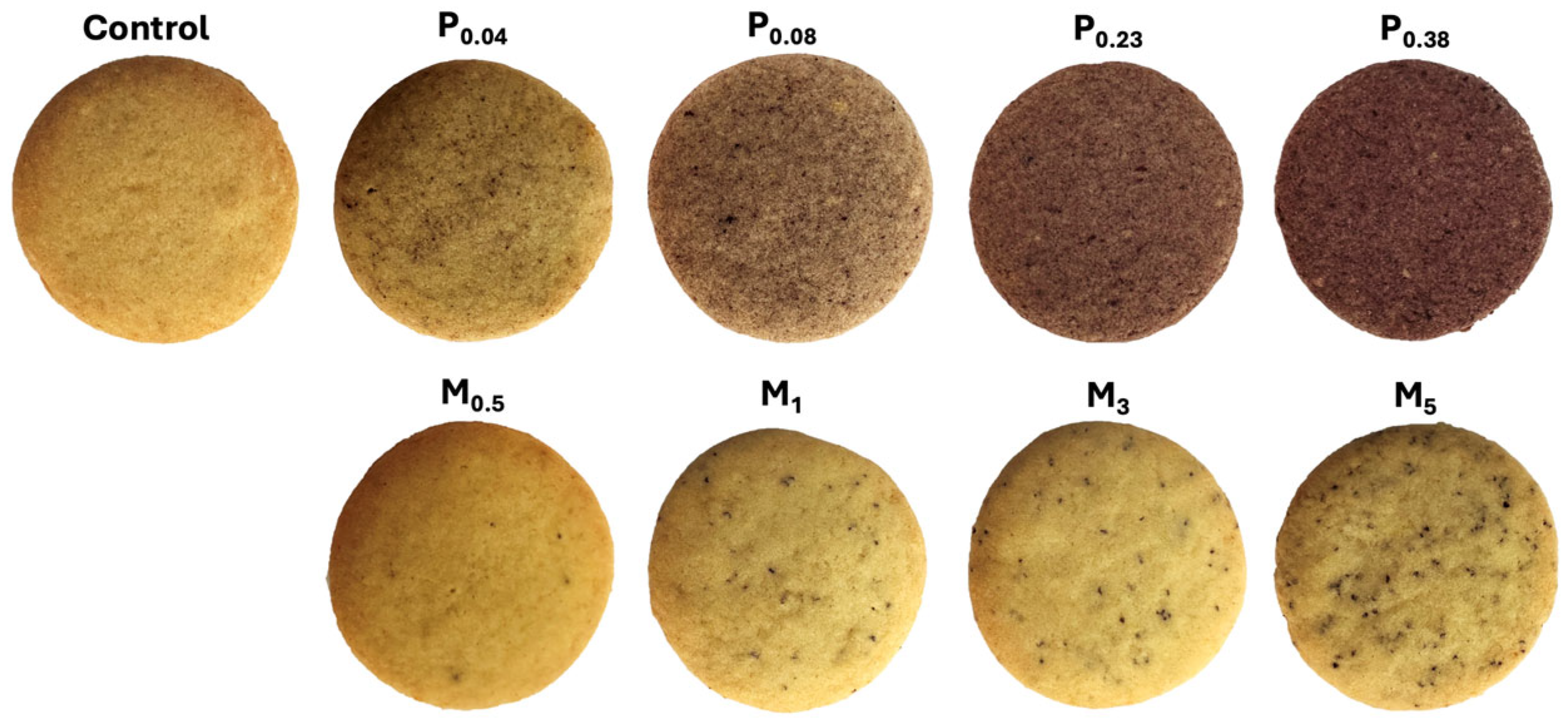
Color is an important quality characteristic of food products, often determining consumer dietary preferences. As can be seen in Table 1 and Figure 1, the addition of polyphenol powder had a greater effect on the color parameters of cookies than microcapsules. The addition of polyphenol powder to the cookies caused a decrease in the L* and b* parameters and an increase in the a* parameter, corresponding to a color transition from light to dark and from yellow to red-violet. In the case of microcapsule addition, color modifications were less noticeable but focused on the above ranges. The obtained results were reflected in the color change (ΔE) and chroma (C) parameters. Values for these two metrics varied with the percentage of powder and microcapsule addition. It is worth emphasizing that, in accordance with the ΔE parameter, reflecting the overall difference between the control and enriched cookies, a significant, easily noticeable color difference (ΔE > 5.0) was observed for all cookies with powder (P0.04–P0.38) and two samples of cookies with microcapsules (M3, M5) [23]. The above color changes are related to the presence of the main color compounds present in cranberries, such as the content of anthocyanins, and the change in their structure in interaction with the dough ingredients and as a result of the high baking temperature [7,10,24]. Also, a significantly higher ΔE parameter was previously recorded for cookies enriched with extracts of chokeberry and haskap berries (53.0 and 49.8, respectively), which is related to the higher content of anthocyanins in these fruits [6].
Figure 1. Photos of cookies. Explanation of symbols: P, cookies with the addition of cranberry polyphenol preparation, with 0.04, 0.08, 0.23, and 0.38% addition, respectively. M, cookies with the addition of microencapsulated cranberry polyphenol preparation, with 0.5, 1, 3, and 5% addition, respectively. Controls were cookies without the addition of powder in free and microencapsulated form.

3.2. Polyphenolic Profile

Polyphenolic compounds are among the main bioactive substances found in fruits. In our previous work, we analyzed the polyphenol profile of both cranberry fruit powder [7] and microcapsules with a polyphenol powder core [10]. Therefore, in this study, we also assessed the stability of the identified compounds after cookie production and baking (Table 2; Table S1).
Table 2. Content of polyphenolic compounds (mg/100 g) in control cookies and cookies with the addition of cranberry polyphenol powder (P0.04–P0.38) and microencapsulated powder (M0.5–M5).
In total, we identified 17 polyphenolic compounds in the cookies, including 6 anthocyanins, 6 flavonoids, and 5 phenolic acids. The qualitative polyphenolic profile is consistent with our previous work [7,10] as well as other reports on cranberries [25,26]. We previously identified 45.46 mg/g of polyphenols in the powder, while in the microcapsules it was 4.23 mg/g. In the quantitative profile, the content of polyphenolic compounds was clearly influenced by the level of cranberry addition. The estimated level of polyphenolic compounds ranged from 0.00 to 13.22 mg/100 g (P0.04–P0.38) for cookies with polyphenol powder, and from 1.34 to 5.51 mg/100 g (M0.5–M5) for cookies with microcapsules. Previously, cookies with 0.7% addition of chokeberry and haskap fruit extracts detected a total of 126.9 and 134.1 mg/100 g of polyphenolic compounds, respectively [6].
A characteristic feature of the polyphenol profile of cranberries is the dominance of anthocyanins [25,26]. In our previous work, we identified 25.00 mg/g of anthocyanins (56.6% of all polyphenolic compounds) in a polyphenolic preparation from cranberries, the dominant ones being peonidin 3-O-glucoside (31.3% of all anthocyanins), peonidin 3-O-arabinoside (19.6%) and cyanidin 3-O-glucoside (19.1%) [7,10]. However, of all classes of polyphenolic compounds, anthocyanins show the least stability under heat treatment conditions [9]. Among other things, anthocyanin losses of 70–88% were demonstrated during baking muffins with raspberry and cranberry pomace powder [27] and 45–77% during baking bread from blue and purple wheat, including 26–39% during dough production [28]. We also observed this phenomenon in our study. Compared to the initial anthocyanin content identified in the powder and microcapsules [7,10], we found a decrease ranging from 82.5 (M1) to 100% (P0.04; M0.5). The powder encapsulation process doubled the stability of anthocyanins. For the highest tested additive concentrations (i.e., 0.38% and 5%), the anthocyanin content in the powdered cookies was 0.24 mg/100 g, while in the microencapsulated cookies it was 0.57 mg/100 g. Microencapsulation significantly reduced the losses, which can be explained by the increased thermal stability of the alginate-protein matrix, which limits the direct contact of anthocyanins with degrading factors [29]. The twice-higher stability of anthocyanins in microencapsulated samples observed in this study indicates that the microcapsules effectively protected the bioactive compound from thermal damage during baking. This phenomenon may also result from the reduced porosity of the alginate matrix due to the protein additive, which results in the formation of a more complex polymer network, increasing the matrix’s ability to stabilize and protect polyphenolic compounds by limiting the availability of oxygen and heat [10]. This is due to electrostatic interactions between the carboxyl groups of AL and the amino groups of proteins, as well as the formation of hydrogen bonds [30]. Hence, microencapsulation of anthocyanins can be considered one of the most popular forms of protecting bioactive ingredients against external factors [31]. The use of microencapsulation in cookies may be particularly valuable for extracts rich in this group of polyphenolic compounds.
Analyzing the overall polyphenol profile of both types of cookies, it can be seen that the stability of polyphenolic compounds varied significantly depending on the concentration and type of additive. For cookies with the lowest percentage of additive (at 0.04–0.08% and 0.5–1%), a higher total polyphenol content was found in the cookies with microcapsules, while at the two higher concentrations tested (i.e., 0.23–0.38% and 3–5%), a higher polyphenol content was found in the cookies with powder. Generally speaking, polyphenols are sensitive to high temperatures, oxygen, and interactions with the food matrix, which leads to their degradation, transformation, and binding, ultimately affecting their solvent extractability. These factors could therefore have contributed to the differences shown above. At low addition levels (0.5–1%), the microcapsules could be evenly distributed throughout the dough, while at higher levels (3–5%), the dough matrix could be overloaded, increasing the risk of microcapsule cracking or damage during mixing or baking, or their aggregation [32,33]. These effects could also ultimately reduce the level of polyphenol extraction. In contrast, when using free polyphenol powder as an additive at a lower concentration (0.04–0.08%), the polyphenols could interact with the dough ingredients (proteins, starch, sugars), leading to their binding and precipitation, resulting in a reduction in extractability [34]. However, at higher additions, the free powder may ultimately contain more measurable and extractable polyphenols, outweighing degradation and binding due to easier release. The variability in the above results could also be related to changes in dough structural properties (moisture, thermal properties) depending on the type and level of addition [5,16].
The obtained results indicate that the degree of degradation of polyphenolic compounds in cookies depends on both the type and concentration of the additive used, with the occasional ambiguous differences emphasizing the need for further, in-depth research into the mechanisms of these phenomena.

3.3. Antioxidant and Antidiabetic Properties of Cookies

Evaluating antioxidant activity is an important element of product quality analysis for both physicochemical and health reasons. Compounds with antioxidant properties can, on the one hand, extend product shelf life by inhibiting oxidative processes. On the other hand, once in the human body, these compounds can reduce the risk of chronic diseases by reducing free radical levels. Therefore, four tests with different mechanisms of action were selected to evaluate this parameter.
Table 3 shows that the addition of cranberry polyphenol powder, both free and microencapsulated, to the cookies significantly (p < 0.05) affected antioxidant activity. In the overall reduction potential tests, i.e., ABTS and CUPRAC, activity increased with the percentage of the additive, reaching the highest values for cookies with 0.38% powder added. For this sample, the values for the ABTS and CUPRAC tests were 49.3- and 81-fold higher, respectively, compared to the control cookies, and 3.0- and 2.5-fold higher, respectively, compared to the microencapsulated counterpart. These results were also reflected in the O2 and OH˙ radical scavenging tests. These more specific tests illustrate the real ability of the active compounds to neutralize the most reactive radicals found in the human body, better reflecting the antioxidant mechanisms occurring in vivo [35]. The values for the most active cookies with 0.38% powder addition were 3.1 and 2.4 times higher (for the O2 and OH˙ tests, respectively) compared to the control cookies, and 2.0 and 1.7 times higher than for the cookies with 5% microcapsules. It can therefore be concluded that the antioxidant activity was influenced by the content of polyphenols estimated in point 3.2, for which the discussed effect has already been repeatedly demonstrated [36]. The same conclusions were reached by Raczkowska et al. [3] for cookies obtained with blackcurrant pomace. The authors showed that each group of polyphenolic compounds strongly influenced the antioxidant activity of the cookies estimated by the ABTS method (0.12 mmol TE/100 g; at 10% pomace addition).
Table 3. Antioxidant and antidiabetic activity of cookies with added cranberry fruit polyphenol powder (P0.04–P0.38) and microencapsulated powder (M0.5–M5).
The next step was to assess the antidiabetic potential in vitro by measuring the ability of cookie samples to inhibit α-amylase and α-glucosidase activity. This assessment was made because cranberries have been repeatedly proven to have antidiabetic properties, so it was decided to assess how their addition to the cookies would ultimately impact these properties of the resulting product [37]. As can be seen in Table 3, as with the antioxidant activity assessment, the highest α-amylase and α-glucosidase inhibition capacity was demonstrated for cookies with 0.38% polyphenol powder. The α-amylase and α-glucosidase inhibition values for this cookie sample were 40.23 and 15.79%, respectively, and were 1.2 and 1.1 times higher compared to the equivalent microencapsulated cookies. Regular cranberry consumption has previously been shown to inhibit hepatic gluconeogenesis and lower fasting insulin levels [38,39]. These results were linked to the content of polyphenolic compounds [37,38]. This is also reflected in our research, where we can observe an increase in antidiabetic activity with increasing polyphenolic compound content in cookies. Generally speaking, there is considerable interest among scientists in cookies as carriers of bioactive ingredients with antidiabetic properties. In recent years, cookies with free and microencapsulated saffron and sea buckthorn extract [5], with the addition of extracts of linden flowers, passion fruit, cherry leaves, haskap berries, chokeberry, quince and rosehip [6], as well as cookies with an admixture of blackcurrant, apple and chokeberry pomace [3,40] have been developed for the diabetic population. For the developed fortified cookies, the % inhibition of α-amylase ranged from 56.0 to 65.5%, and for α-glucosidase from 6.1 to 23.0%. In addition to the antidiabetic activity of the polyphenolic compounds present in the cookies, replacing sucrose with erythritol may have significantly influenced the study results. Erythritol has been shown to inhibit the activity of carbohydrate-degrading enzymes, further increasing tissue sensitivity to insulin [40,41].
The above results demonstrate that the cookies developed with cranberry polyphenol powder may be an interesting dietary supplement for individuals suffering from diseases resulting from oxidative imbalances, as well as for diabetics. However, further analysis is needed to confirm this thesis, including assessment of activity at the cellular level, particularly with regard to the bioavailability of biologically active ingredients.

3.4. Biocompatibility

Since the production of the cookies was based on a polyphenol preparation, for which in our previous studies we had demonstrated several times higher health-promoting activity compared to raw extracts, we decided to assess the safety of consumption in the further part of the study [7]. We performed the evaluation using human colonocytes (CCD841 CoN cell line), keeping powdered cookies with the addition of free and microencapsulated powder in contact with the formed cell membrane.
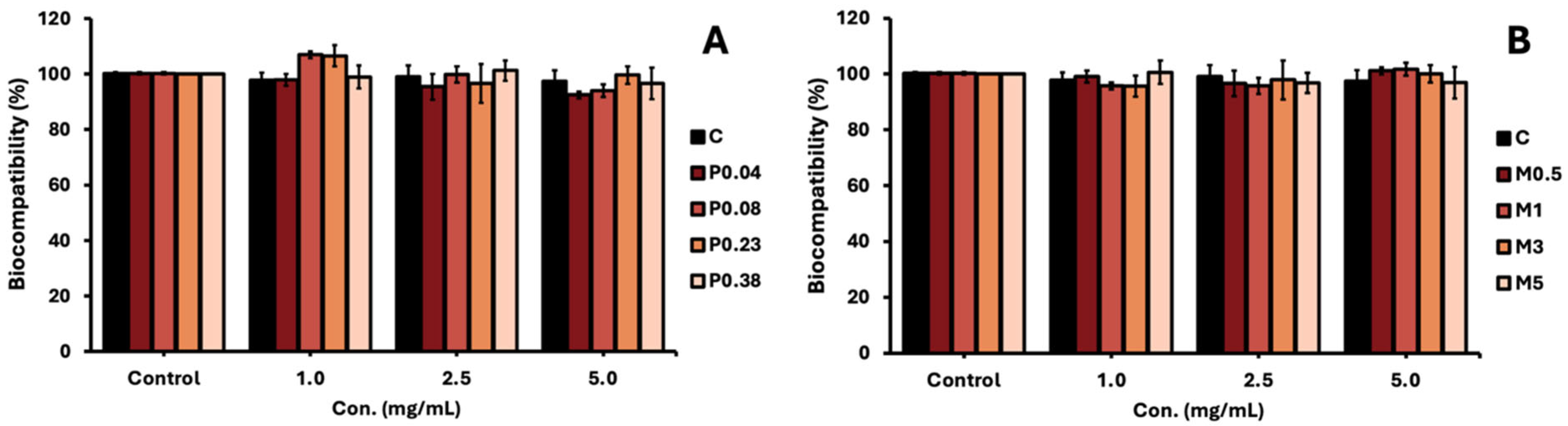
As can be seen in Figure 2, the tested cookies with both free and microencapsulated powder did not show any toxic effect on human colonocytes in the concentration range from 1.0 to 5.0 mg/mL. No toxic effect was observed for the control cookies either. In our previous studies, a dose of 435.1 µg/mL of polyphenol powder and a dose of 4000 µg/mL of microencapsulated powder inhibited the viability of CCD841 CoN cells by 50.0% and 27.5%, respectively [7,10]. In this report, the highest tested dose of 5 mg cookies contained 19.0 µg of powder and 25.0 µg of microcapsules, respectively, which could ultimately contribute to the lack of toxicity to healthy cells. Another study, which assessed the biocompatibility of rye bread enriched with plant sterols with normal colon fibroblasts (CCD-18Co cell line), also confirmed safety of consumption, maintaining cell viability in a range similar to that in this study, i.e., 88.56 to 105.16% [42]. In turn, in another work, in the production of sourdough bread, an addition (0.16%) of a polyphenol preparation from raspberry, chokeberry, bilberry, apricot, wild strawberry, peach, cranberry and parsley obtained using a C18 bed was used [43]. In the safety assessment of consumption (CCD841 CoTr line, colonocytes), a 125 µg/mL dose of bread after in vitro digestion inhibited cell viability by approximately 25%, while a 175 µg/mL dose inhibited cell viability by 100%. Interestingly, the cytotoxic effect on healthy cells was stronger for the bread-based formulation than for the formulation alone, which was explained by the synergistic effect of polyphenolic compounds present in the bread and the formulation. We did not observe such an effect in our studies. Therefore, the cookies developed with both free and microencapsulated powder can be considered safe for consumption. However, further research, including in vivo studies using laboratory animals, is necessary to confirm this hypothesis.
Figure 2. Biocompatibility of cranberry polyphenol powder (A) and polyphenol powder microcapsules (B) cookies with human colonocytes (CCD841 CoN cell line). Cookies were tested at three concentrations: 1.0, 2.5, and 5.0 mg/mL. Cells were kept in contact with the cookies for 48 h and then their viability was assessed using the MTS assay. Untreated cells were used as a control. Results are expressed as mean and SD. Statistical analysis was performed using Student’s t-test, but no significant differences were found compared to the control. Explanation of symbols: P, cookies with the addition of cranberry polyphenol preparation, with 0.04, 0.08, 0.23, and 0.38% addition, respectively. M, cookies with the addition of microencapsulated cranberry polyphenol preparation, with 0.5, 1, 3, and 5% addition, respectively. Controls (C) were cookies without the addition of powder in free and microencapsulated form.

3.5. PCA

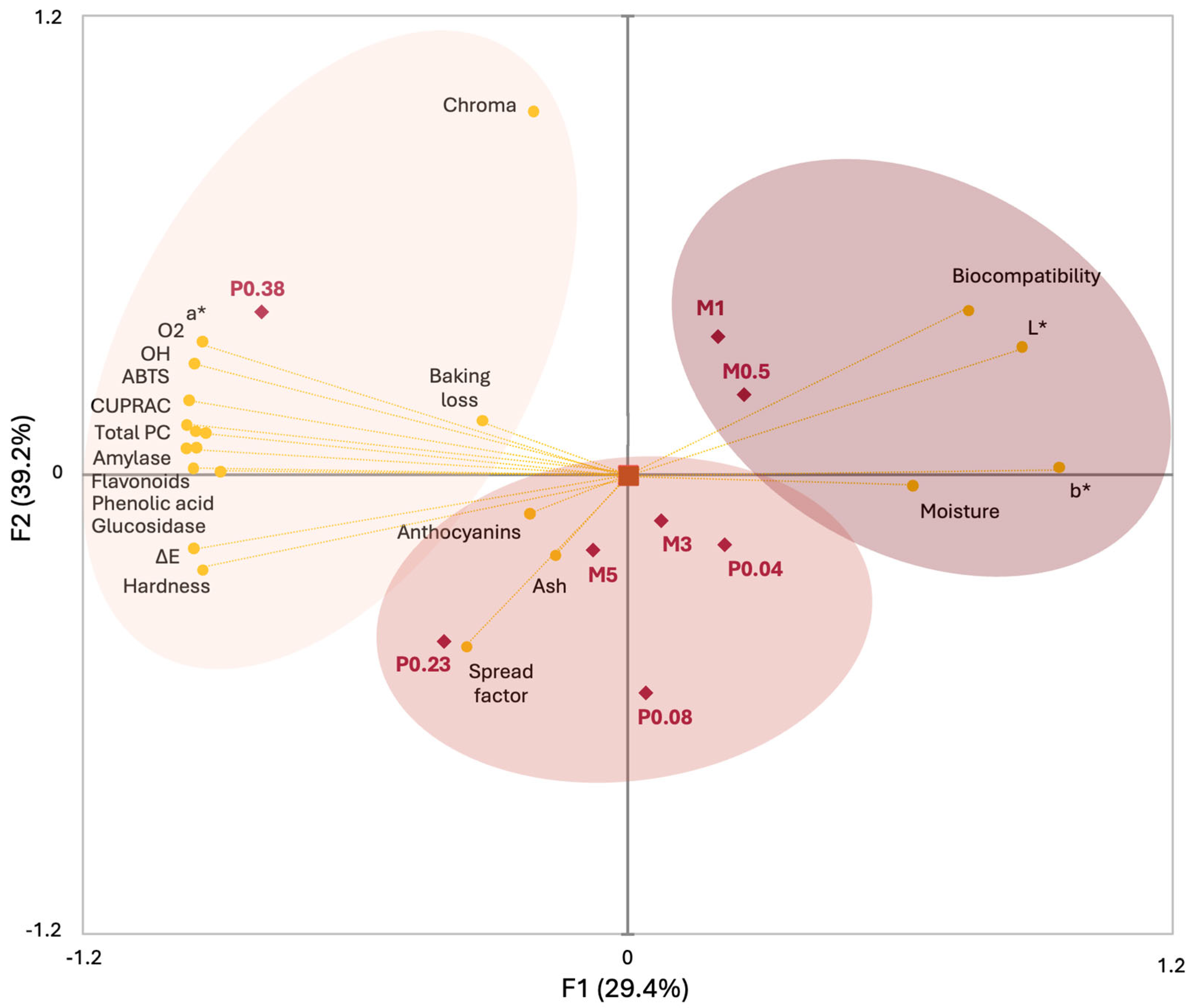
The impact of the types and concentrations of cranberry-based cookie additives on the analyzed parameters was assessed using principal component analysis (PCA). This is a useful method in new product design, allowing for the identification of variables that most significantly determine product variance. The two principal components, F1 and F2, explained 29.4% and 39.2% of the total variance, respectively, meaning that together they accounted for 68.7% of the data variability (Figure 3). In the PCA plot, the analyzed parameters were assigned to three groups according to the similarity of their physicochemical and phytochemical characteristics. Group 1 included cookies with low levels of microcapsule addition (M0.5, M1), which correlated with high biocompatibility, moisture content, and color characteristics such as L* and b*. The next group, formed by cookies with powder (P0.04, P0.08, P0.23) and microcapsules (M3, M5), describes the variability resulting from anthocyanin content, ash content, and spreadability factor. The last group encompassed the majority of the analyzed variables. It was represented by cookies with the highest powder addition (P0.38), which were characterized by correlations between parameters such as flavonoid and phenolic acid content, total polyphenol content (Total PC), antidiabetic activity (α-amylase and α-glucosidase inhibition), antioxidant activity (ABTS, CUPRAC, O2 and OH˙), and physicochemical parameters (color change, hardness, a*, color saturation). The PCA results confirmed that physicochemical parameters, health-promoting properties, and polyphenol content are significant factors differentiating the tested cookies. At the same time, the PCA identified cookies with a 0.38% cranberry polyphenol powder addition as the product with the highest health-promoting properties. The obtained results emphasize the importance of selecting the type and concentration of cranberry additive in shaping the functional properties of confectionery products.
Figure 3. PCA of cookies with cranberry fruit polyphenol powder in free form (P0.04–P0.38) and microencapsulated form (M0.5–M5) and analyzed physicochemical parameters (moisture, ash, spreading factor, loss during baking, hardness, color L*, a*, b*, ΔE, Chroma), content of anthocyanins, phenolic acids, flavonoids, total polyphenol content (total PC), antioxidant activity (ABTS, CUPRAC, O2 and OH˙) and antidiabetic activity (α-amylase, α-glucosidase inhibition).

4. Conclusions

The novelty of this study was the use of a cranberry polyphenol preparation in the form of free powder and gel microcapsules as an additive in cookie production. This enabled a comparative analysis of their suitability in terms of their impact on the physicochemical and health-promoting properties of the resulting confectionery products. The microcapsules were added to the cookies at concentrations of 0.5, 1, 3, and 5% of the dough weight. To reflect the actual impact of the microencapsulation process on the polyphenolic compounds, the polyphenol powder was added at concentrations similar to those found in the microcapsule doses mentioned above.
The study showed that the introduction of functional additives significantly affected the analyzed parameters. The changes were dependent on both the type and concentration of the additive. The encapsulation process protected the polyphenolic compounds applied at lower doses (0.5 and 1%) but did not contribute to maintaining the stability of the polyphenolic compounds at concentrations of 3 and 5%. At the highest doses, higher polyphenol content was observed in cookies with free-form powder (13.22 mg/100 g). These changes had a significant impact on the analyzed health-promoting characteristics. The highest antioxidant (for methods ABTS, CUPRAC, O2, OH˙, respectively, 1.97 mmol TE/100 g, 1.02 mmol TE/100 g; 32.63%, 40.86%) and antidiabetic (α-amylase and α-glucosidase inhibition, respectively, 40.23 and 15.79%) activity was observed in cookies with 0.38% powder. Physicochemical parameters varied significantly among the cookies tested but were nevertheless within acceptable levels. The main change noted as a result of the addition of polyphenolic compounds in free and microencapsulated form was the change in the color of the cookies, from light to dark and from yellow to red-violet. At the same time, all analyzed cookies were biocompatible with human colon epithelial cells.
Future studies should consider the introduction of polyphenol additives at higher concentrations to enhance the functional effect of the application and should also enrich the analytical profile with in vitro digestion tests to assess the bioavailability and bioactivity of polyphenolic compounds from the food matrix. Storage analyses of enriched cookies are also a valuable research direction, which would allow for a comprehensive presentation of their potential in food applications.

Supplementary Materials

The following supporting information can be downloaded at: https://www.mdpi.com/article/10.3390/app152413060/s1, Table S1. Polyphenol profile of cookies with cranberry fruit powder in free and microencapsulated form identified using UPLC-PDA-MS/MS. Table S2. Antidiabetic activity of acarbose against α-amylase and α-glucosidase.

Author Contributions

Conceptualization, N.Ż. and I.T.K.; methodology, N.Ż. and I.T.K.; formal analysis, N.Ż.; investigation, N.Ż.; data curation, N.Ż.; writing—original draft preparation, N.Ż.; writing—review and editing, N.Ż.; visualization, N.Ż.; supervision, I.T.K.; project administration, N.Ż. and I.T.K. All authors have read and agreed to the published version of the manuscript.

Funding

This research received no external funding.

Institutional Review Board Statement

Not applicable.

Data Availability Statement

The original contributions presented in this study are included in the article/Supplementary Material. Further inquiries can be directed to the corresponding author.

Conflicts of Interest

The authors declare no conflicts of interest.

References

  1. Nicolosi, A.; Laganà, V.R.; Di Gregorio, D. Habits, Health and Environment in the Purchase of Bakery Products: Consumption Preferences and Sustainable Inclinations before and during COVID-19. Foods 2023, 12, 1661. [Google Scholar] [CrossRef]
  2. Mesias, M.; Morales, F.J.; Caleja, C.; Pires, T.C.S.P.; Calhelha, R.C.; Barros, L.; Pereira, E. Nutritional Profiling, Fiber Content and in Vitro Bioactivities of Wheat-Based Biscuits Formulated with Novel Ingredients. Food Funct. 2024, 15, 4051–4064. [Google Scholar] [CrossRef] [PubMed]
  3. Raczkowska, E.; Wojdyło, A.; Nowicka, P. The Use of Blackcurrant Pomace and Erythritol to Optimise the Functional Properties of Shortbread Cookies. Sci. Rep. 2024, 14, 3788. [Google Scholar] [CrossRef]
  4. Naseem, Z.; Bhat, N.A.; Mir, S.A. Valorisation of Apple Pomace for the Development of High-Fibre and Polyphenol-Rich Wheat Flour Cookies. Sci. Rep. 2024, 14, 25912. [Google Scholar] [CrossRef]
  5. Gani, A.; Jan, R.; Ashwar, B.A.; Ashraf, Z.U.; Shah, A.; Gani, A. Encapsulation of Saffron and Sea Buckthorn Bioactives: Its Utilization for Development of Low Glycemic Baked Product for Growing Diabetic Population of the World. LWT 2021, 142, 111035. [Google Scholar] [CrossRef]
  6. Pędziwiatr, D.; Lamadrid, M.C.; Wojdyło, A. Cookies Fortified with Polyphenols Extracts: Impact on Phenolic Content, Antioxidant Activity, Inhibition of α-Amylase and α-Glucosidase Enzyme, Colour and Sensory Attractiveness. Antioxidants 2024, 13, 1108. [Google Scholar] [CrossRef] [PubMed]
  7. Żurek, N.; Pawłowska, A.; Kapusta, I. Obtaining Preparations with Increased Content of Bioactive Compounds from Eight Types of Berries. JBR 2023, 13, 307–323. [Google Scholar] [CrossRef]
  8. Zhao, S.; Liu, H.; Gu, L. American Cranberries and Health Benefits—an Evolving Story of 25 Years. J. Sci. Food Agric. 2020, 100, 5111–5116. [Google Scholar] [CrossRef]
  9. Zhao, Y.-W.; Wang, C.-K.; Huang, X.-Y.; Hu, D.-G. Anthocyanin Stability and Degradation in Plants. Plant Signal. Behav. 2021, 16, 1987767. [Google Scholar] [CrossRef]
  10. Żurek, N.; Kaliciak, J.; Świeca, M.; Kapusta, I. Microencapsulation of the Polyphenolic Fraction of Cranberry Fruit (Vaccinium oxycoccos) with Coatings Based on Protein Isolates: In Vitro Assessment of the Bioavailability of Polyphenolic Compounds. Food Bioprod. Process. 2025, 154, 1–12. [Google Scholar] [CrossRef]
  11. Żurek, N.; Świeca, M.; Pawłowska, A.; Kapusta, I.T. Microencapsulation of Blueberry (Vaccinium myrtillus L.) Extracts via Ionotropic Gelation: In Vitro Assessment of Bioavailability of Phenolic Compounds and Their Activity against Colon Cancer Cells. Appl. Sci. 2024, 14, 7842. [Google Scholar] [CrossRef]
  12. Yang, L.; Wang, S.; Zhang, W.; Zhang, H.; Guo, L.; Zheng, S.; Du, C. Effect of Black Soybean Flour Particle Size on the Nutritional, Texture and Physicochemical Characteristics of Cookies. LWT 2022, 164, 113649. [Google Scholar] [CrossRef]
  13. Żurek, N.; Pluta, S.; Świeca, M.; Potocki, L.; Seliga, Ł.; Kapusta, I. Bioactive Compounds and In Vitro Health-Promoting Activity of the Fruit Skin and Flesh of Different Haskap Berry (Lonicera caerulea var. kamtschatica Sevast.) Cultivars. Int. J. Mol. Sci. 2025, 26, 6618. [Google Scholar] [CrossRef]
  14. Ashwath Kumar, K.; Sudha, M.L. Effect of Fat and Sugar Replacement on Rheological, Textural and Nutritional Characteristics of Multigrain Cookies. J. Food Sci. Technol. 2021, 58, 2630–2640. [Google Scholar] [CrossRef]
  15. Shoukat, A.; Randhawa, M.A.; Rakha, A.; Lsrar, B. Development and Characterization of Functional Cookies Fortified with Microencapsulated Pomegranate Peel Extract Powder. Food Meas. 2025, 19, 1405–1419. [Google Scholar] [CrossRef]
  16. Tyagi, P.; Chauhan, A.K. Aparna Optimization and Characterization of Functional Cookies with Addition of Tinospora Cordifolia as a Source of Bioactive Phenolic Antioxidants. LWT 2020, 130, 109639. [Google Scholar] [CrossRef]
  17. Grzelczyk, J.; Drożdżyński, P.; Budryn, G.; Czarnecki, A.; Paprocka, Z.; Gałązka-Czarnecka, I. High-Fiber Cookies with Bamboo Flour and Edible Flowers: Evaluation of Structural Properties, Phenolic Content, Antioxidant Activity and Nutritional Value. LWT 2025, 216, 117321. [Google Scholar] [CrossRef]
  18. Salihu, S.; Gashi, N.; Hasani, E. Effect of Plant Extracts Addition on the Physico-Chemical and Sensory Properties of Biscuits. Appl. Sci. 2023, 13, 9674. [Google Scholar] [CrossRef]
  19. Korese, J.K.; Chikpah, S.K.; Hensel, O.; Pawelzik, E.; Sturm, B. Effect of Orange-Fleshed Sweet Potato Flour Particle Size and Degree of Wheat Flour Substitution on Physical, Nutritional, Textural and Sensory Properties of Cookies. Eur. Food Res. Technol. 2021, 247, 889–905. [Google Scholar] [CrossRef]
  20. Bińkowska, W.; Szpicer, A.; Stelmasiak, A.; Wojtasik-Kalinowska, I.; Półtorak, A. Utilization of Microencapsulated Polyphenols to Enhance the Bioactive Compound Content in Whole Grain Bread: Recipe Optimization. Appl. Sci. 2024, 14, 10156. [Google Scholar] [CrossRef]
  21. Akbarbaglu, Z.; Mazloomi, N.; Sarabandi, K.; Ramezani, A.; Khaleghi, F.; Hamzehkollaei, A.R.; Jafari, S.M.; Hesarinejad, M.A. Stabilization of Antioxidant Thyme-Leaves Extract (Thymus vulgaris) within Biopolymers and Its Application in Functional Bread Formulation. Future Foods 2024, 9, 100356. [Google Scholar] [CrossRef]
  22. Yang, B.; Guo, M.; Zhao, Z. Incorporation of Wheat Malt into a Cookie Recipe and Its Effect on the Physicochemical Properties of the Corresponding Dough and Cookies. LWT 2020, 117, 108651. [Google Scholar] [CrossRef]
  23. Martínez-Lara, N.-D.; Garzón-Castro, C.L.; Filomena-Ambrosio, A. Analysis of Physical Properties in White and Whole Wheat Sliced Bread Using Digital Image Processing. Discov. Food 2025, 5, 261. [Google Scholar] [CrossRef]
  24. Francavilla, A.; Joye, I.J. Anthocyanin Content of Crackers and Bread Made with Purple and Blue Wheat Varieties. Molecules 2022, 27, 7180. [Google Scholar] [CrossRef]
  25. Oszmiański, J.; Kolniak, J.-O.; Lachowicz, S.; Gorzelany, J.; Matłok, N. Phytochemical Compounds and Antioxidant Activity in Different Cultivars of Cranberry (Vaccinium macrocarpon L). J. Food Sci. 2017, 82, 2569–2575. [Google Scholar] [CrossRef] [PubMed]
  26. Ma, H.; Johnson, S.; Liu, W.; DaSilva, N.; Meschwitz, S.; Dain, J.; Seeram, N. Evaluation of Polyphenol Anthocyanin-Enriched Extracts of Blackberry, Black Raspberry, Blueberry, Cranberry, Red Raspberry, and Strawberry for Free Radical Scavenging, Reactive Carbonyl Species Trapping, Anti-Glycation, Anti-β-Amyloid Aggregation, and Microglial Neuroprotective Effects. Int. J. Mol. Sci. 2018, 19, 461. [Google Scholar] [CrossRef]
  27. Mildner-Szkudlarz, S.; Bajerska, J.; Górnaś, P.; Segliņa, D.; Pilarska, A.; Jesionowski, T. Physical and Bioactive Properties of Muffins Enriched with Raspberry and Cranberry Pomace Powder: A Promising Application of Fruit By-Products Rich in Biocompounds. Plant Foods Hum. Nutr. 2016, 71, 165–173. [Google Scholar] [CrossRef] [PubMed]
  28. Eliášová, M.; Kotíková, Z.; Lachman, J.; Orsák, M.; Martinek, P. Influence of Baking on Anthocyanin Content in Coloured-Grain Wheat Bread. Plant Soil Environ. 2020, 66, 381–386. [Google Scholar] [CrossRef]
  29. Baysal, E.; Kazan, A. Microencapsulation of Black Carrot Anthocyanins for Enhanced Thermal Stability. JISE 2024, 8, 92–102. [Google Scholar] [CrossRef]
  30. Sun, X.; Liu, C.; Omer, A.M.; Yang, L.-Y.; Ouyang, X. Dual-Layered pH-Sensitive Alginate/Chitosan/Kappa-Carrageenan Microbeads for Colon-Targeted Release of 5-Fluorouracil. Int. J. Biol. Macromol. 2019, 132, 487–494. [Google Scholar] [CrossRef]
  31. Bińkowska, W.; Szpicer, A.; Stelmasiak, A.; Wojtasik-Kalinowska, I.; Półtorak, A. Microencapsulation of Polyphenols and Their Application in Food Technology. Appl. Sci. 2024, 14, 11954. [Google Scholar] [CrossRef]
  32. Tolve, R.; Bianchi, F.; Lomuscio, E.; Sportiello, L.; Simonato, B. Current Advantages in the Application of Microencapsulation in Functional Bread Development. Foods 2022, 12, 96. [Google Scholar] [CrossRef]
  33. Zhivka, G. Microencapsulation as an Innovative Technique for the Preparation of High-Added Value Bakery Products—A Review. AUDJG Food Technol. 2024, 48, 192–214. [Google Scholar] [CrossRef]
  34. Schefer, S.; Oest, M.; Rohn, S. Interactions between Phenolic Acids, Proteins, and Carbohydrates—Influence on Dough and Bread Properties. Foods 2021, 10, 2798. [Google Scholar] [CrossRef] [PubMed]
  35. Munteanu, I.G.; Apetrei, C. Analytical Methods Used in Determining Antioxidant Activity: A Review. Int. J. Mol. Sci. 2021, 22, 3380. [Google Scholar] [CrossRef]
  36. Rudrapal, M.; Rakshit, G.; Singh, R.P.; Garse, S.; Khan, J.; Chakraborty, S. Dietary Polyphenols: Review on Chemistry/Sources, Bioavailability/Metabolism, Antioxidant Effects, and Their Role in Disease Management. Antioxidants 2024, 13, 429. [Google Scholar] [CrossRef]
  37. Anhê, F.F.; Nachbar, R.T.; Varin, T.V.; Vilela, V.; Dudonné, S.; Pilon, G.; Fournier, M.; Lecours, M.-A.; Desjardins, Y.; Roy, D.; et al. A Polyphenol-Rich Cranberry Extract Reverses Insulin Resistance and Hepatic Steatosis Independently of Body Weight Loss. Mol. Metab. 2017, 6, 1563–1573. [Google Scholar] [CrossRef]
  38. Feldman, F.; Koudoufio, M.; El-Jalbout, R.; Sauvé, M.F.; Ahmarani, L.; Sané, A.T.; Ould-Chikh, N.-E.-H.; N’Timbane, T.; Patey, N.; Desjardins, Y.; et al. Cranberry Proanthocyanidins as a Therapeutic Strategy to Curb Metabolic Syndrome and Fatty Liver-Associated Disorders. Antioxidants 2022, 12, 90. [Google Scholar] [CrossRef]
  39. Li, X.; Chen, W.; Xia, J.; Pan, D.; Sun, G. The Effects of Cranberry Consumption on Glycemic and Lipid Profiles in Humans: A Systematic Review and Meta-Analysis of Randomized Controlled Trials. Nutrients 2024, 16, 782. [Google Scholar] [CrossRef]
  40. Raczkowska, E.; Bienkiewicz, M.; Gajda, R. Modulation of the Glycaemic Index Value of Shortbread Cookies by the Use of Erythritol and Fruit Pomace. Sci. Rep. 2024, 14, 14215. [Google Scholar] [CrossRef] [PubMed]
  41. Wölnerhanssen, B.K.; Meyer-Gerspach, A.C.; Beglinger, C.; Islam, S. Metabolic Effects of the Natural Sweeteners Xylitol and Erythritol: A Comprehensive Review. Crit. Rev. Food Sci. Nutr. 2020, 60, 1986–1998. [Google Scholar] [CrossRef] [PubMed]
  42. Miedes, D.; Cilla, A.; Alegría, A. Chemopreventive Effect of an In Vitro Digested and Fermented Plant Sterol-Enriched Wholemeal Rye Bread in Colon Cancer Cells. Foods 2023, 13, 112. [Google Scholar] [CrossRef] [PubMed]
  43. Szwajgier, D.; Paduch, R.; Kukuła-Koch, W.; Polak-Berecka, M.; Waśko, A. Study on Biological Activity of Bread Enriched with Natural Polyphenols in Terms of Growth Inhibition of Tumor Intestine Cells. J. Med. Food 2020, 23, 181–190. [Google Scholar] [CrossRef] [PubMed]
Disclaimer/Publisher’s Note: The statements, opinions and data contained in all publications are solely those of the individual author(s) and contributor(s) and not of MDPI and/or the editor(s). MDPI and/or the editor(s) disclaim responsibility for any injury to people or property resulting from any ideas, methods, instructions or products referred to in the content.

Article Metrics

Citations

Article Access Statistics

Multiple requests from the same IP address are counted as one view.