
Hybrid GA-BP Neural Network for Accurate Prediction of TBM Advance Speed Under Complex Geological Conditions

 ,
,
Abstract
1. Introduction
2. Methods
2.1. K-Means Algorithm
- (1)
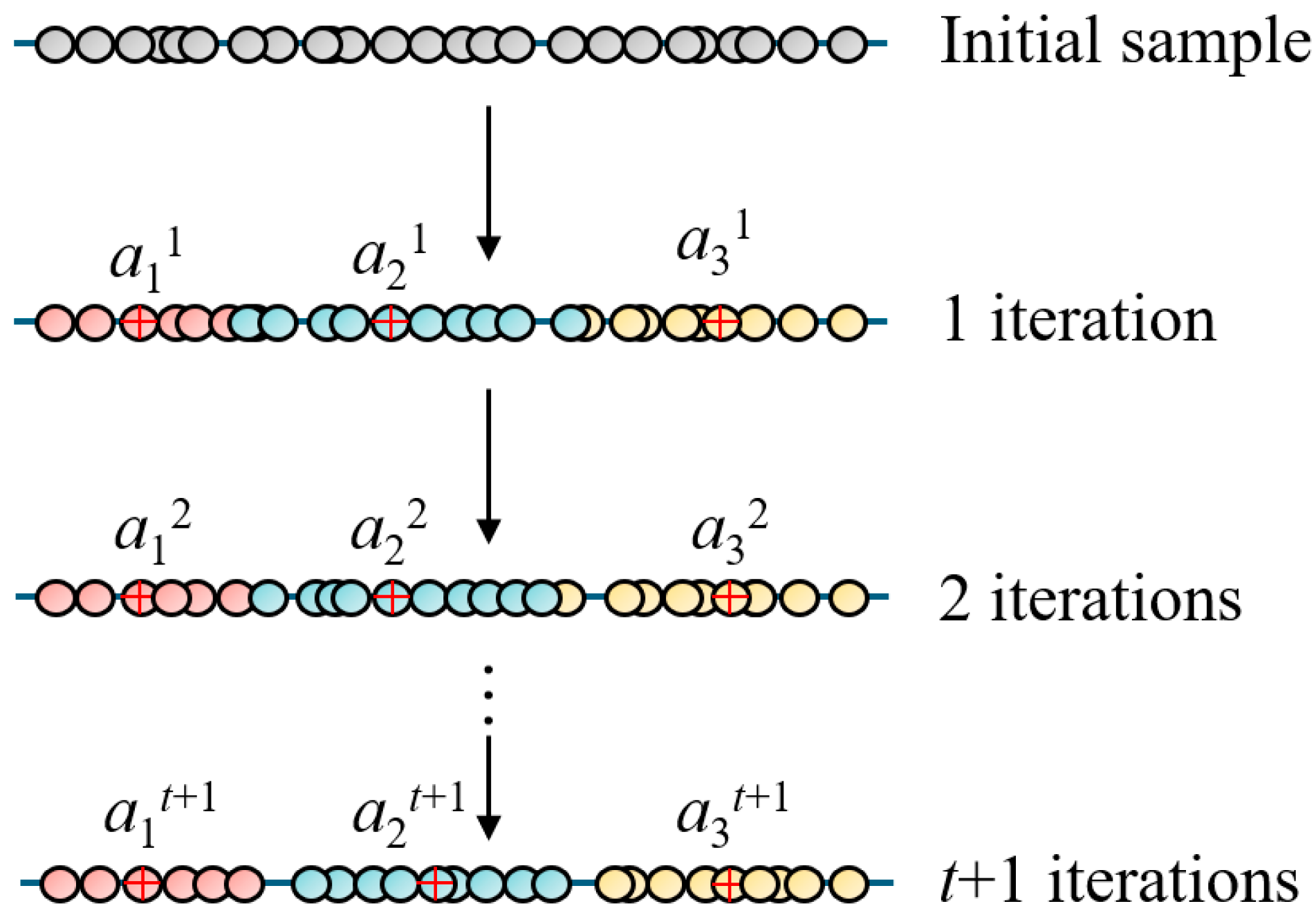
- Randomly select k initial samples , , , …, as the cluster centers, corresponding to the clusters , , , …, .
- (2)
- For each sample in the dataset, calculate its distance to the k cluster centers and assign it to the group corresponding to the nearest center.
- (3)
- For each group , calculate its cluster center, which is the centroid of all the samples in that group, using the following formula:where represents the number of samples in group .
- (4)
- Calculate the error between the cluster centers before and after the update using the following formula:where is the clustering criterion function, and and represent the cluster centers of group j in the (t + 1) and t iterations, respectively.
- (5)
- Repeat steps (2) to (4) until converges to , where is the allowed maximum error.
2.2. BP Neural Network
2.3. Genetic Algorithm
- (1)
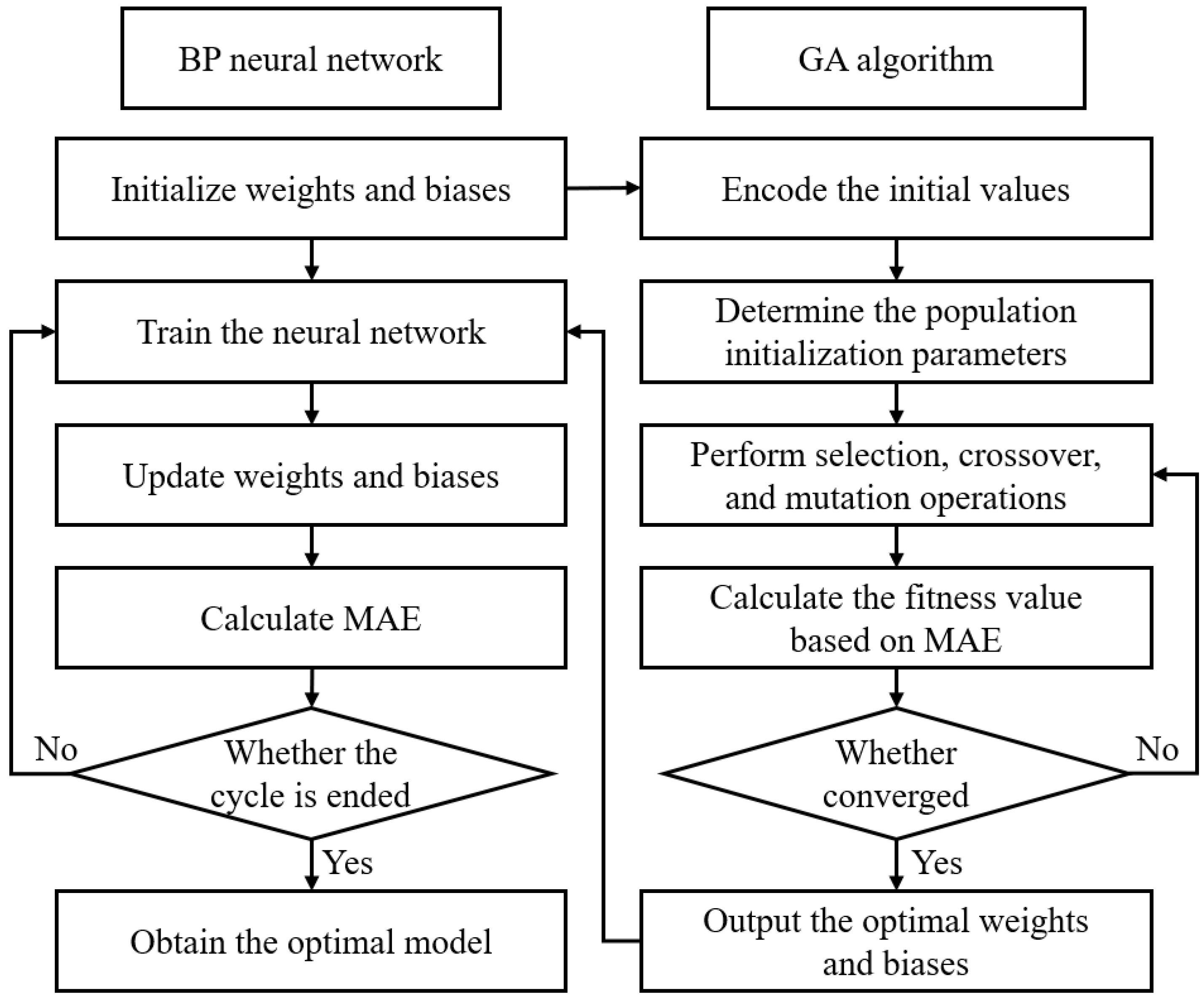
- Initialize the population: The genetic algorithm encodes the feasible solutions of the target parameters into chromosomes based on the established encoding mechanism, and then integrates individual chromosomes to form the initial population.
- (2)
- Evaluate the fitness of the parent population: The optimization objective of the parameters is used as the fitness function, and the fitness values of the individuals in the population are calculated to assess their quality.
- (3)
- Genetic operations: Genetic operations include selection, crossover, and mutation. Selection refers to the process of probabilistically choosing individuals with high fitness from the parent population to be part of the offspring population. Crossover refers to the process of probabilistically exchanging certain gene segments between two selected chromosomes to create new individuals that become part of the offspring population. Mutation refers to the process of probabilistically changing certain genes in a chromosome from 0 to 1 (or vice versa). The purpose of crossover and mutation is to increase population diversity.
- (4)
- Evaluate the fitness of the offspring population: Observe and calculate whether the fitness values of the offspring population meet the accuracy requirements. If the requirements are met, the algorithm terminates. Otherwise, genetic operations are repeated, and the iteration continues until the requirements are met or the maximum number of iterations is reached.
3. Data Processing and Analysis
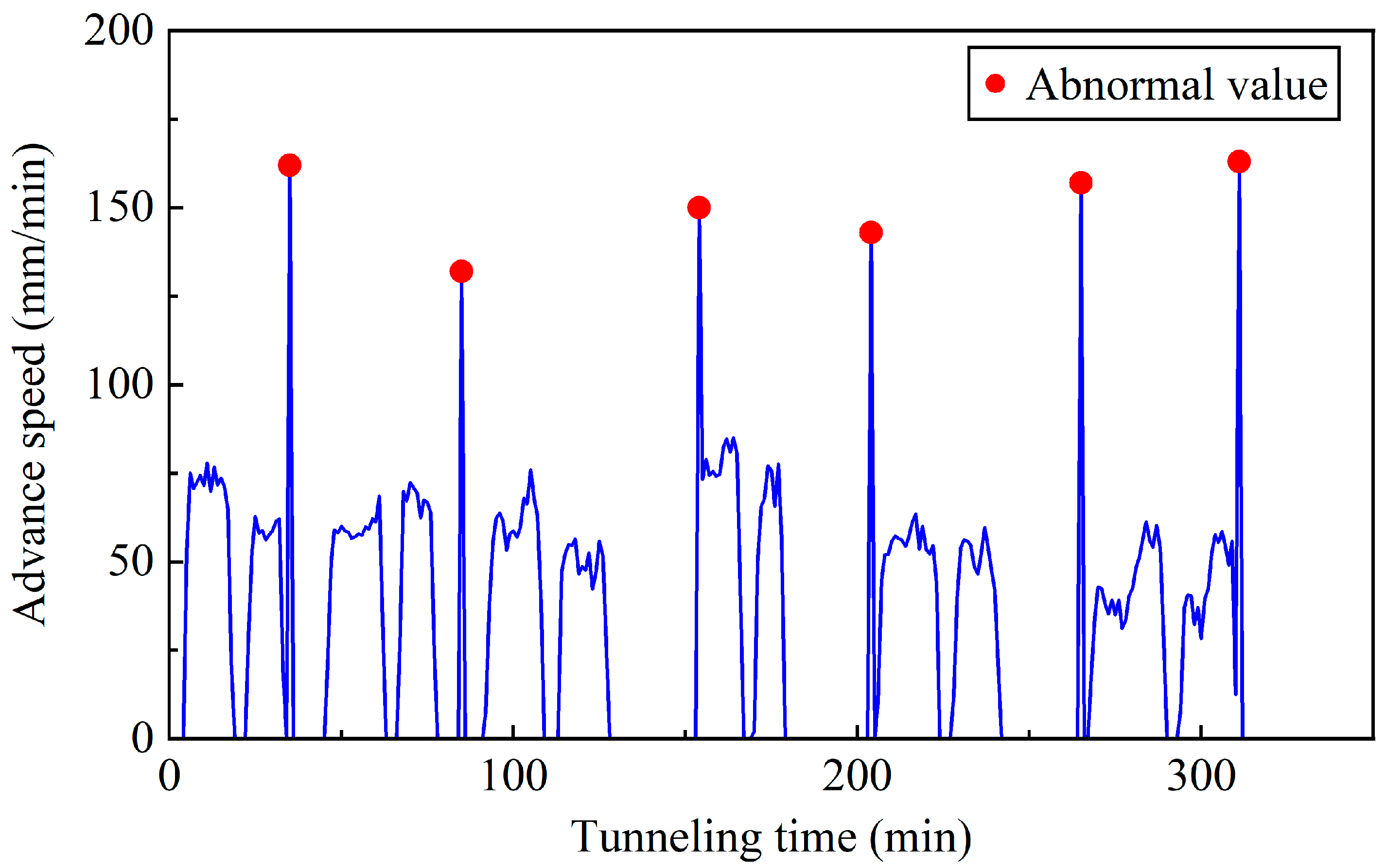
3.1. Abnormal Data Process
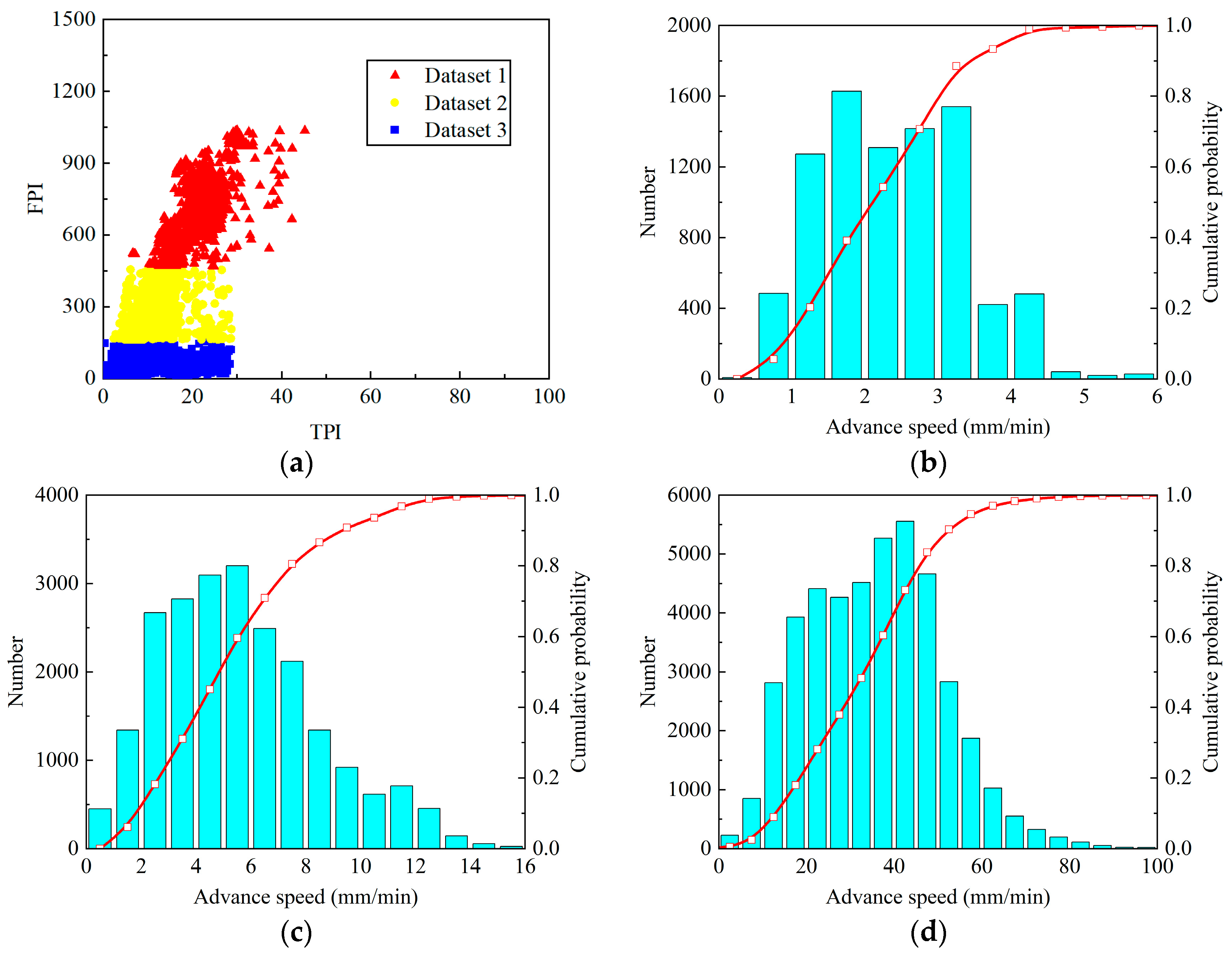
3.2. Distribution of TBM Parameters Based on FPI and TPI
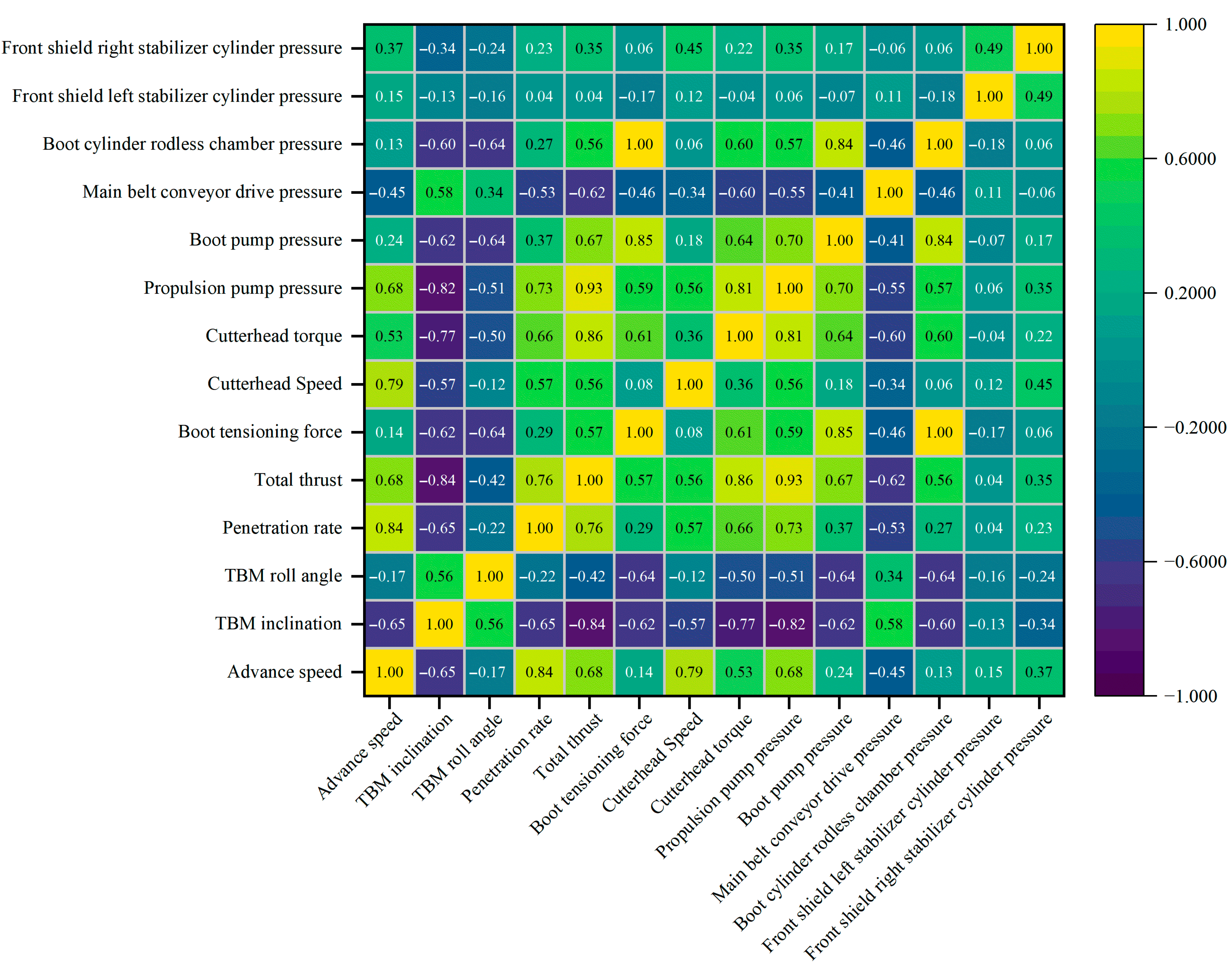
3.3. Analysis of the Impact of TBM Parameters on Advance Speed
4. Application of GA-BP Neural Network Model
4.1. Model Building and Optimization
4.2. Evaluation of the Model Performance
5. Conclusions
- (1)
- Through correlation analysis, seven TBM construction parameters that significantly impact advance speed were selected, including TBM inclination, penetration rate, total thrust, cutterhead speed, cutterhead torque, propulsion pump pressure, and main belt conveyor drive pressure.
- (2)
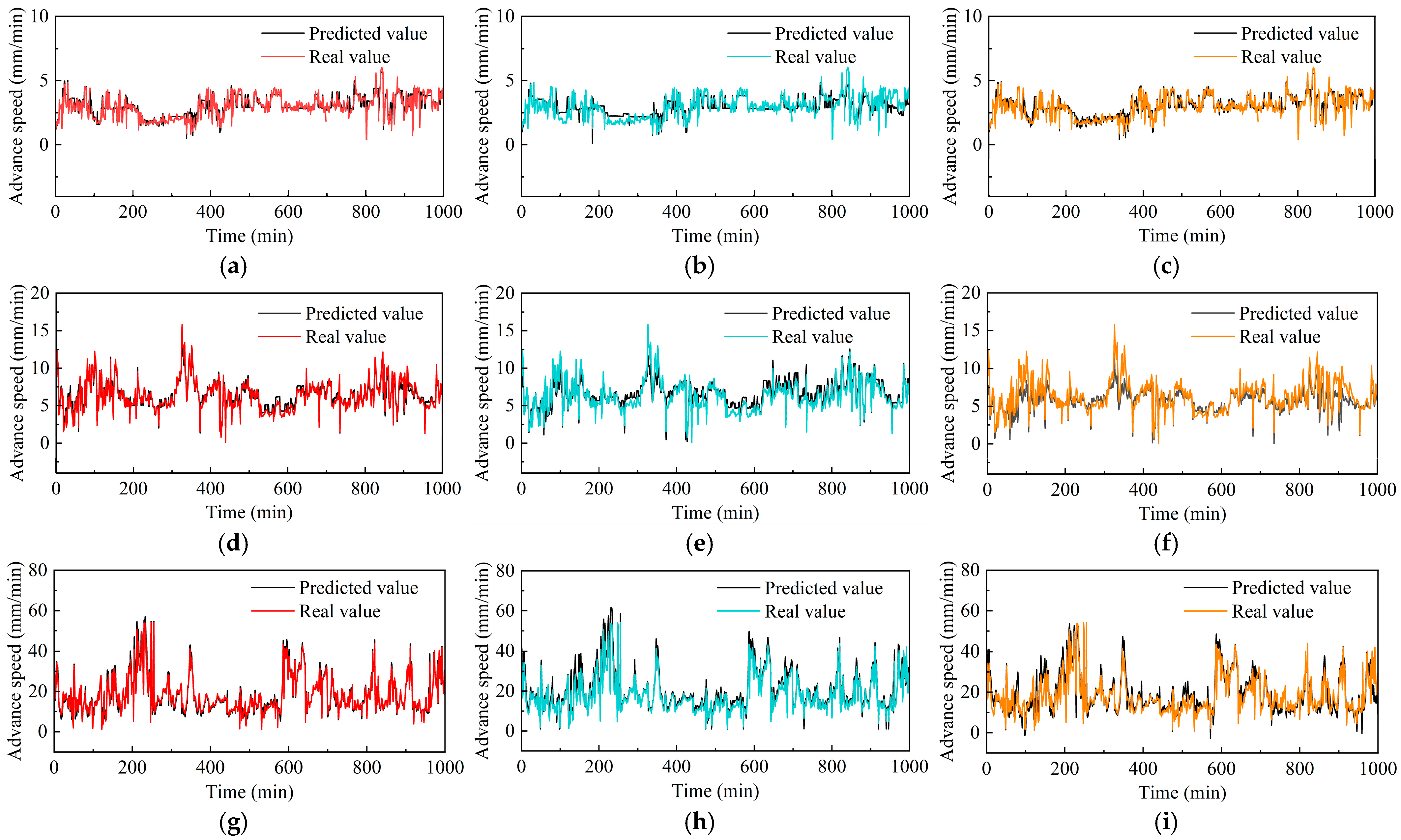
- For the three different surrounding rock conditions, the three BP neural network models optimized by experimental methods and genetic algorithms all demonstrated high prediction accuracy, effectively reflecting the relationship between key construction parameters and excavation speed.
- (3)
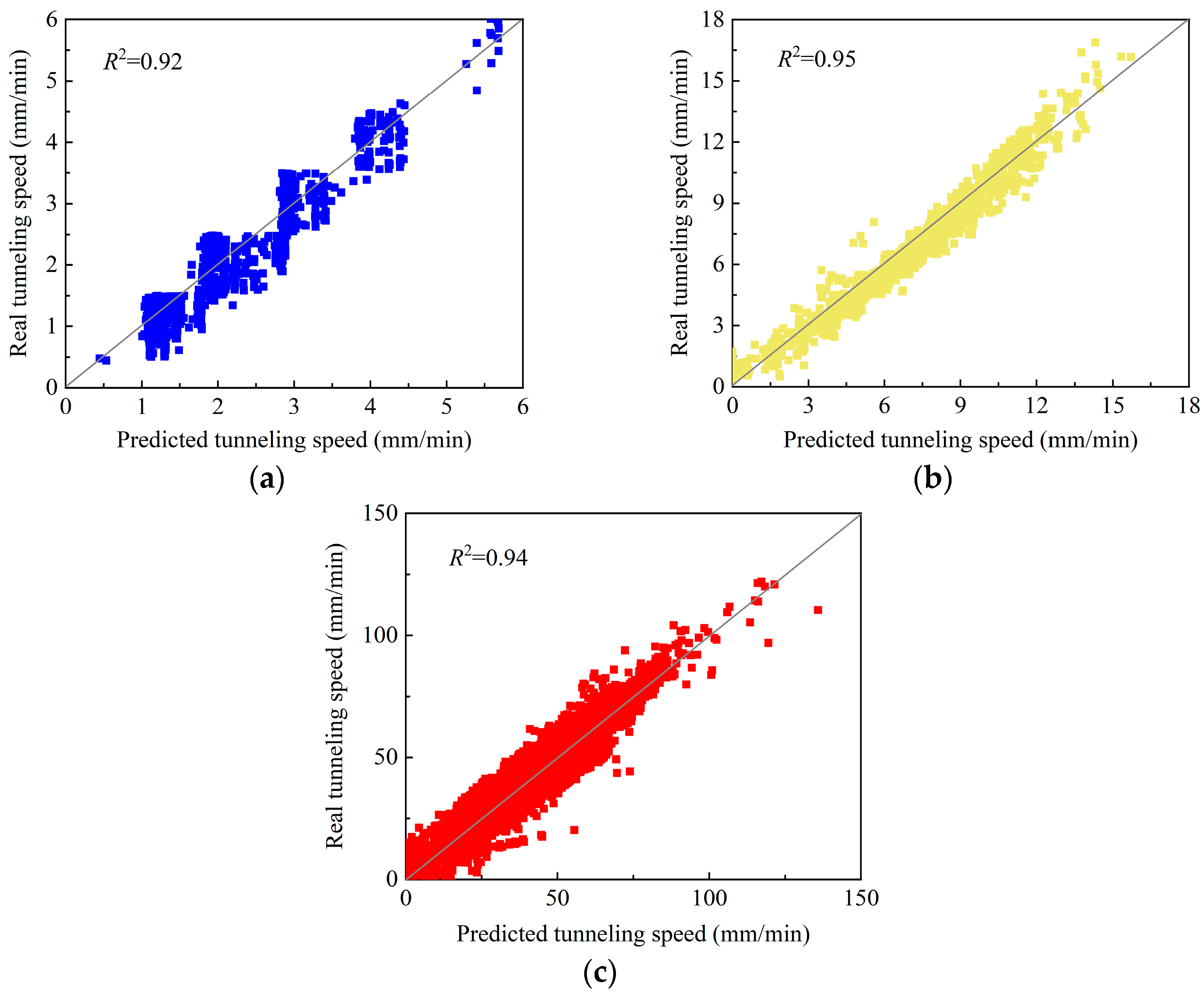
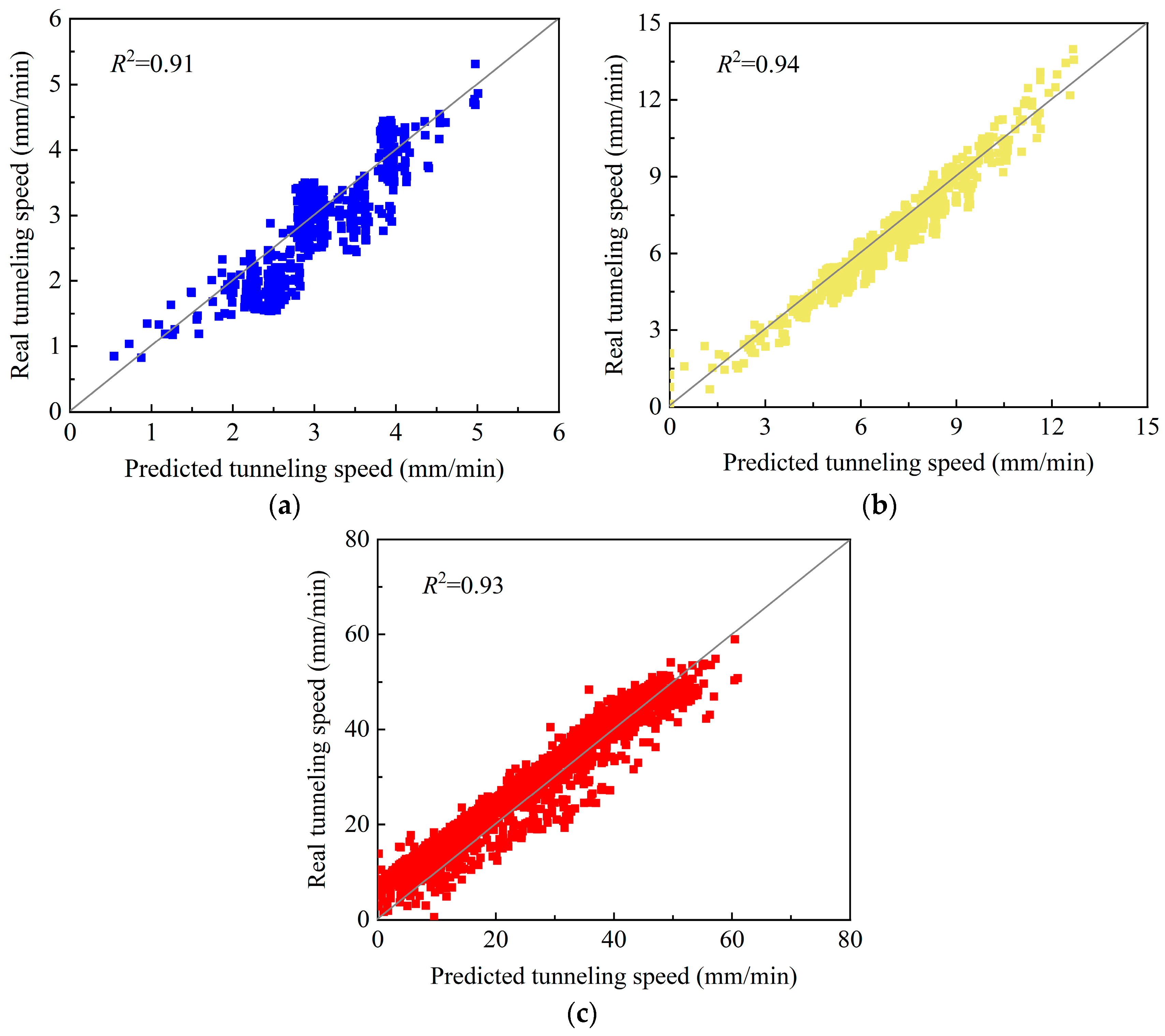
- By calculating model performance indicators, the GA-BP neural network demonstrates superior predictive accuracy and generalization capability compared to the original BP neural network. Under three surrounding rock conditions ranging from hard to soft, the GA-BP model achieves reductions in MAE by 21.95%, 13.46%, and 14.19%, and in RMSE by 16.27%, 10.53%, and 11.18%, respectively.
Author Contributions
Funding
Institutional Review Board Statement
Informed Consent Statement
Data Availability Statement
Conflicts of Interest
References
- Zare, S.; Bruland, A. Applications of MTNU/SINTEF drillability indices in hard rock tunneling. Rock Mech. Rock Eng. 2013, 46, 179–187. [Google Scholar] [CrossRef]
- Delisio, A.; Zhao, J. A new model for TBM performance prediction in blocky rock conditions. Tunn. Undergr. Space Technol. 2014, 43, 440–452. [Google Scholar] [CrossRef]
- Huo, J.; Sun, W.; Chen, J.; Zhang, X. Disc cutters plane layout design of the full-face rock tunnel boring machine (TBM) based on different layout patterns. Comput. Ind. Eng. 2011, 61, 1209–1225. [Google Scholar] [CrossRef]
- Hassanpour, J.; Rostami, J.; Zhao, J. A new hard rock TBM performance prediction model for project planning. Tunn. Undergr. Space Technol. 2011, 26, 595–603. [Google Scholar] [CrossRef]
- Rosutami, J. A new model for performance prediction of hard rock TBMs. In Proceedings of the 1993 Rapid Excavation and Tunneling Conference, Boston, MA, USA, 13–17 June 1993. [Google Scholar]
- Rosutami, J. Development of a Force Estimation Model for Rock Fragmentation with Disc Cutters Through Theoretical Modeling and Physical Measurement of Crushed Zone Pressure; Colorado School of Mines: Golden, CO, USA, 1997. [Google Scholar]
- Bruland, A. Hard Rock Tunnel Boring; Fakultet for Ingeniørvitenskap og Teknologi: Trondheim, Norway, 2000. [Google Scholar]
- Armaghani, D.; Faradonbeh, R.; Momeni, E.; Fahimifar, A.; Tahir, M.M. Performance prediction of tunnel boring machine through developing a gene expression programming equation. Eng. Comput. 2018, 34, 129–141. [Google Scholar] [CrossRef]
- Jing, L.; Li, J.; Zhang, N.; Chen, S.; Yang, C.; Cao, H. A TBM advance rate prediction method considering the effects of operating factors. Tunn. Undergr. Space Technol. 2021, 107, 103620. [Google Scholar] [CrossRef]
- Nelson, P.; Rourke, D.; Kulhawy, H. Factors affecting TBM penetration rates in sedimentary rocks. In Proceedings of the 24th US Symposium on Rock Mechanics, College Station, TX, USA, 20–23 June 1983; pp. 227–237. [Google Scholar]
- Bardhana, K.; Kardanin, G.; Guharay, A.; Burman, A.; Samui, P.; Zhang, Y. Hybrid ensemble soft computing approach for predicting penetration rate of tunnel boring machine in a rock environment. J. Rock Mech. Geotech. Eng. 2021, 13, 1398–1412. [Google Scholar] [CrossRef]
- Zhou, J.; Qiu, Y.G.; Zhu, S.L.; Armaghani, D.J.; Li, C.; Nguyen, H.; Yagiz, S. Optimization of support vector machine through the use of metaheuristic algorithms in forecasting TBM advance rate. Eng. Appl. Artif. Intell. 2021, 97, 104015. [Google Scholar] [CrossRef]
- Wang, X.; Zhu, H.; Zhu, M.; Zhang, L.; Ju, J.W. An integrated parameter prediction framework for intelligent TBM excavation in hard rock. Tunn. Undergr. Space Technol. 2021, 118, 104196. [Google Scholar] [CrossRef]
- Benardos, A.G.; Kaliampakos, D.C. Modelling TBM performance with artificial neural networks. Tunn. Undergr. Space Technol. 2004, 19, 597–605. [Google Scholar] [CrossRef]
- Yagiz, S.; Karahan, H. Prediction of hard rock TBM penetration rate using particle swarm optimization. Int. J. Rock Mech. Min. Sci. 2011, 48, 427–433. [Google Scholar] [CrossRef]
- Salimi, A.; Rostami, J.; Moormann, C.; Delisio, A. Application of non-linear regression analysis and artificial intelligence algorithms for performance prediction of hard rock TBMs. Tunn. Undergr. Space Technol. 2016, 58, 236–246. [Google Scholar] [CrossRef]
- Adoko, A.C.; Gokceoglu, C.; Yagiz, S. Bayesian prediction of TBM penetration rate in rock mass. Eng. Geol. 2017, 226, 245–256. [Google Scholar] [CrossRef]
- Armaghani, D.J.; Mohamad, E.T.; Narayanasamy, M.S.; Narita, N.; Yagiz, S. Development of hybrid intelligent models for predicting TBM penetration rate in hard rock conditions. Tunn. Undergr. Space Technol. 2017, 63, 29–43. [Google Scholar] [CrossRef]
- Wang, K.; Zhang, L.; Fu, X. Time series prediction of tunnel boring machine (TBM) performance during excavation using causal explainable artificial intelligence (CX-AI). Autom. Constr. 2023, 147, 104730. [Google Scholar] [CrossRef]
- Gao, X.; Shi, M.; Song, X.; Zhang, C.; Zhang, H. Recurrent neural networks for real-time prediction of TBM operating parameters. Autom. Constr. 2019, 98, 225–235. [Google Scholar] [CrossRef]
- Pradeep, T.; Samui, P. Prediction of rock strain using hybrid approach of ANN and optimization algorithms. Geotech. Geol. Eng. 2022, 40, 4617–4643. [Google Scholar] [CrossRef]
- Rahul, B.; Manish, K.; Divesh, R.K.; Samui, P.; Pradeep, T.; Rajak, M.K.; Armaghani, D.J.; Singh, S. Application of novel deep neural network on prediction of compressive strength of fly ash based concrete. Nondestruct. Test. Eval. 2024, 40, 4638–4668. [Google Scholar]
- Abdul, B.J.; Pradeep, T. ANN-PSO modelling for predicting buckling of self-compacting concrete column containing RHA properties. Matéria 2023, 28, e20230102. [Google Scholar]
- Fu, X.S.; Gong, Q.M.; Wu, Y.J.; Zhao, Y.; Li, H. Prediction of EPB shield tunneling advance rate in mixed ground condition using optimized BPNN model. Appl. Sci. 2022, 12, 5485. [Google Scholar] [CrossRef]
- Grima, M.A.; Bruines, P.A.; Verhoef, P.N.W. Modeling tunnel boring machine performance by neuro-fuzzy methods. Tunn. Undergr. Space Technol. 2000, 15, 259–269. [Google Scholar] [CrossRef]
- Dubey, A.; Choubey, A. A systematic review on k-means clustering techniques. Int. J. Sci. Res. Eng. Technol. 2017, 6, 1456–1475. [Google Scholar]
- Yarotsky, D. Error bounds for approximations with deep ReLU networks. Neural Netw. 2017, 94, 103–114. [Google Scholar] [CrossRef]
- Mirjalili, S. Genetic Algorithm. In Evolutionary Algorithms and Neural Networks; Springer: Cham, Switzerland, 2019; p. 780. [Google Scholar]
- Wang, H.; Wang, J.; Zhao, Y.; Xu, H. Tunneling parameters optimization based on multi-objective differential evolution algorithm. Soft Comput. 2021, 25, 3637–3656. [Google Scholar] [CrossRef]
- Hair, J.F.; Anderson, R.E.; Tatham, R.L.; Black, W.C. Multivariate Data Analysis; Prentice Hall Iberia: Madrid, Spain, 2007. [Google Scholar]
- Kingma, D.P.; Ba, J.L. Adam: A method for stochastic optimization. Comput. Res. Repos. 2014, 1412, 74–89. [Google Scholar]
- Zhong, Z.L.; Ni, B.; Shen, J.X.; Du, X.L. Neural network prediction model for site response analysis based on the KiK-net database. Comput. Geotech. 2024, 171, 106366. [Google Scholar] [CrossRef]



| Parameters | Model 1 | Model 2 | Model 3 |
|---|---|---|---|
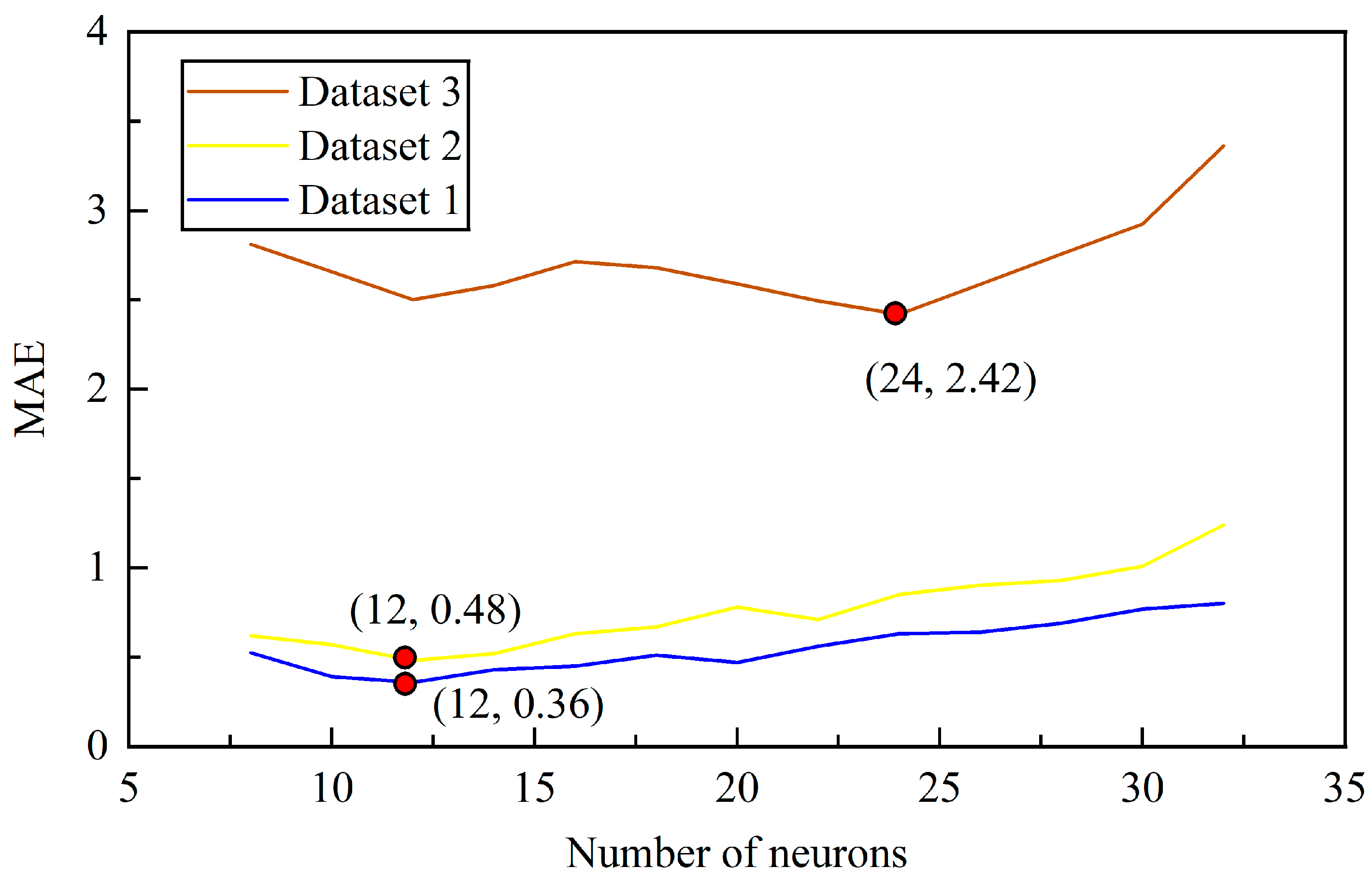
| Number of neurons in hidden layer | 12 | 12 | 24 |
| Learning rate | 0.001 | 0.005 | 0.01 |
| Batch size | 32 | 32 | 32 |
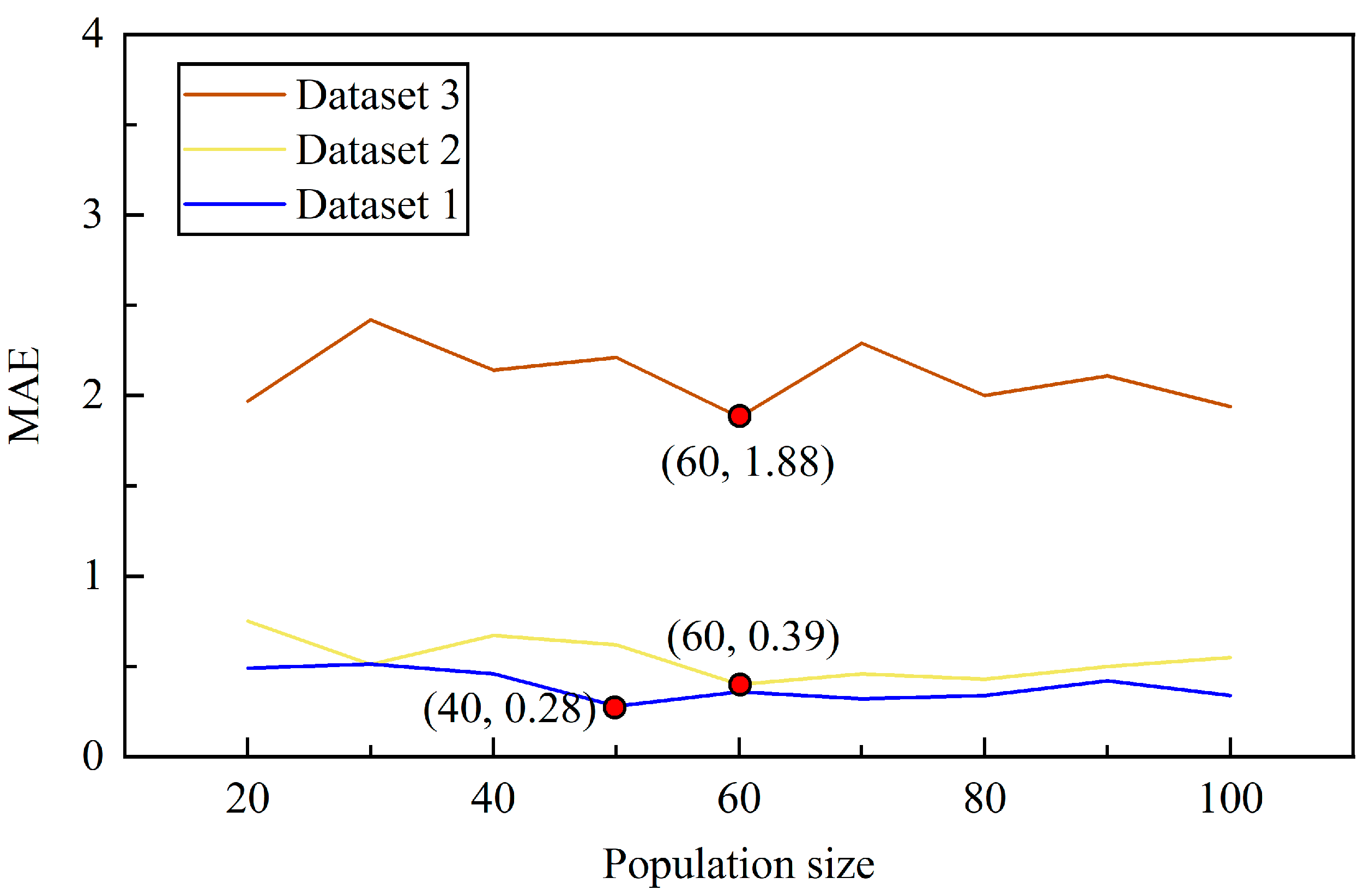
| Population size | 40 | 60 | 60 |
| Crossover probability | 0.7 | 0.7 | 0.7 |
| Mutation probability | 0.03 | 0.03 | 0.03 |
| Model | Dataset 1 | Dataset 2 | Dataset 3 | ||||||
|---|---|---|---|---|---|---|---|---|---|
| MAE | RMSE | R2 | MAE | RMSE | R2 | MAE | RMSE | R2 | |
| GA-BP | 0.32 | 0.36 | 0.91 | 0.45 | 0.51 | 0.94 | 2.54 | 4.45 | 0.93 |
| BP | 0.41 | 0.43 | 0.88 | 0.52 | 0.57 | 0.90 | 2.96 | 5.01 | 0.91 |
| CNN | 0.38 | 0.41 | 0.89 | 0.49 | 0.56 | 0.91 | 2.87 | 4.89 | 0.91 |
Disclaimer/Publisher’s Note: The statements, opinions and data contained in all publications are solely those of the individual author(s) and contributor(s) and not of MDPI and/or the editor(s). MDPI and/or the editor(s) disclaim responsibility for any injury to people or property resulting from any ideas, methods, instructions or products referred to in the content. |
© 2025 by the authors. Licensee MDPI, Basel, Switzerland. This article is an open access article distributed under the terms and conditions of the Creative Commons Attribution (CC BY) license (https://creativecommons.org/licenses/by/4.0/).
Share and Cite
Zhang, W.-F.; Chen, S.-Q.; Zhou, J.-W.; Wang, X.-F.; Ran, Y.-H.; Li, H.-B.; Wang, Z.-Q.; Ni, B. Hybrid GA-BP Neural Network for Accurate Prediction of TBM Advance Speed Under Complex Geological Conditions. Appl. Sci. 2025, 15, 12115. https://doi.org/10.3390/app152212115
Zhang W-F, Chen S-Q, Zhou J-W, Wang X-F, Ran Y-H, Li H-B, Wang Z-Q, Ni B. Hybrid GA-BP Neural Network for Accurate Prediction of TBM Advance Speed Under Complex Geological Conditions. Applied Sciences. 2025; 15(22):12115. https://doi.org/10.3390/app152212115
Chicago/Turabian StyleZhang, Wei-Feng, Shi-Quan Chen, Jia-Wen Zhou, Xiang-Feng Wang, Yu-Han Ran, Hai-Bo Li, Zhi-Qiang Wang, and Bo Ni. 2025. "Hybrid GA-BP Neural Network for Accurate Prediction of TBM Advance Speed Under Complex Geological Conditions" Applied Sciences 15, no. 22: 12115. https://doi.org/10.3390/app152212115
APA StyleZhang, W.-F., Chen, S.-Q., Zhou, J.-W., Wang, X.-F., Ran, Y.-H., Li, H.-B., Wang, Z.-Q., & Ni, B. (2025). Hybrid GA-BP Neural Network for Accurate Prediction of TBM Advance Speed Under Complex Geological Conditions. Applied Sciences, 15(22), 12115. https://doi.org/10.3390/app152212115