1. Introduction
The continuous increase in global energy demand, coupled with the urgent need to reduce greenhouse gas emissions, has intensified research on renewable energy technologies. Among these, wind energy represents one of the most promising alternatives due to its scalability and abundance. Unlike horizontal-axis wind turbines, VAWTs offer unique advantages for distributed generation, urban deployment, and turbulent wind environments due to their omni-directional operation and simpler structural design [
1,
2]. However, their widespread adoption remains limited by intrinsic aerodynamic challenges such as dynamic stall, low self-starting capability, and torque fluctuations [
3,
4]. These issues have been extensively discussed in critical reviews that emphasize the need for innovative aerodynamic control strategies and advanced numerical methodologies to unlock the full potential of VAWTs [
1,
2,
3].
Recent comprehensive reviews have also highlighted the broader challenges and opportunities facing the wind-energy sector as a whole. Ligeza [
5] outlined the current and forecasted technological trends in wind power generation, emphasizing the need for integrated design approaches, advanced control systems, and improved aerodynamic efficiency in both large-scale and small-scale turbines. Similarly, Roga et al. [
6] reviewed the latest developments in turbine technology and energy-harvesting methods, underlining the importance of novel passive and hybrid flow-control concepts for enhancing performance at low and moderate wind velocities. Together, these works reinforce the necessity for continued innovation in aerodynamic optimization and flow-management strategies, providing the foundation for the approach proposed in the present study.
Several approaches have been proposed to enhance the aerodynamic performance and dynamic behavior of VAWTs. Passive flow control has attracted significant attention due to its simplicity and low operational cost. Strategies such as guided vane integration [
7], leading-edge slot structures [
8], and modifications including groove-flap and concave cavity designs [
9] have demonstrated measurable improvements in lift, torque, and power coefficients. Other investigations have explored novel airfoil geometries, such as J-blades [
10], confirming that careful aerodynamic tailoring can mitigate stall and boost efficiency. Comprehensive reviews [
11,
12,
13,
14] further highlight the effectiveness of passive devices while also stressing the risk of added drag and mechanical complexity, indicating that performance gains are strongly dependent on design optimization and operating conditions.
Parallel to geometric innovations, computational fluid dynamics (CFD) has emerged as a cornerstone for VAWT design, enabling detailed insight into complex unsteady flows. Recent advances include transient Dynamic Mesh simulations to capture lateral vortices and Strouhal number effects [
15], systematic CFD optimization methods based on Taguchi design [
16], and hybrid analytical–CFD frameworks for torque and power prediction [
17]. Reviews of CFD methodologies stress the importance of turbulence modeling, with the k–ω SST model frequently employed for its balance between near-wall resolution and free-stream accuracy [
18]. These approaches have been used to study dynamic stall, blade–vortex interaction, and flow-control effectiveness, offering increasingly accurate predictions of start-up and steady-state turbine behavior [
18,
19].
Despite these advances, the issue of self-starting remains one of the most critical barriers for small and medium-sized VAWTs. Strategies ranging from aerodynamic tailoring to passive and active flow control have been systematically reviewed [
6], with many studies converging on the conclusion that improving self-starting requires balancing mass, inertia, and aerodynamic efficiency. Experimental studies [
9] and CFD investigations [
10,
15] both confirm that material properties and blade mass distribution play a decisive role in determining the transient response during start-up. Additionally, experimental and numerical studies indicate that heavier blades, such as those made from resin composites, may hinder acceleration at low wind speeds, whereas lighter alternatives, including advanced polymers or 3D-printed materials, can improve dynamic responsiveness [
15,
19]. Nonetheless, systematic investigations that combine passive flow control with material optimization remain limited in the current literature.
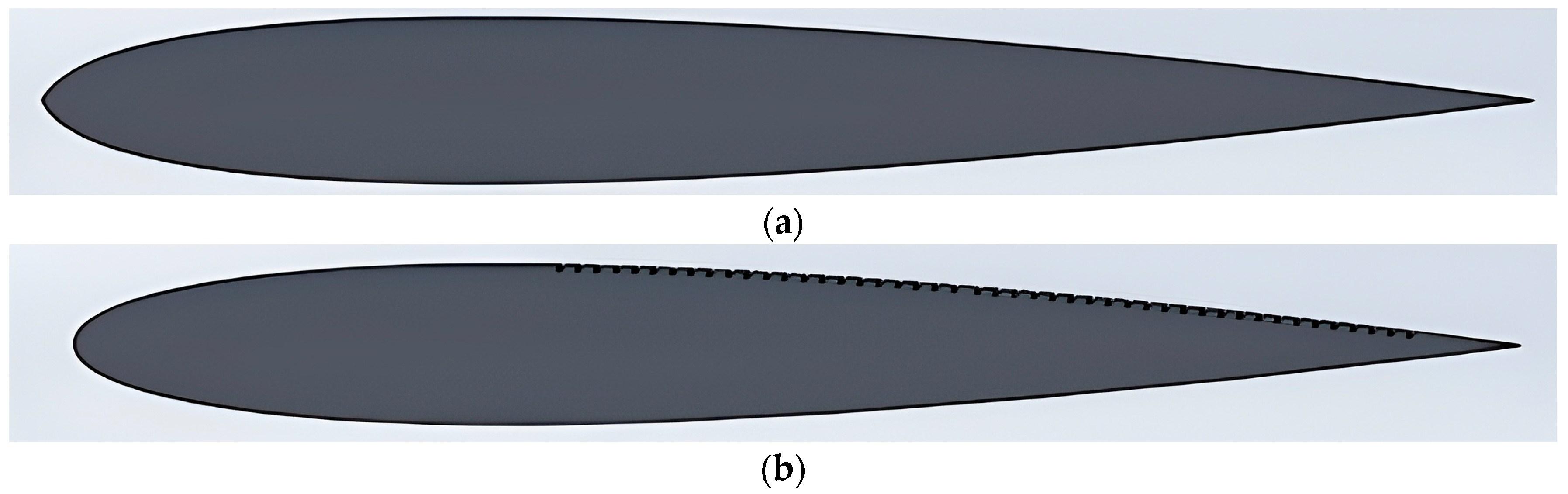
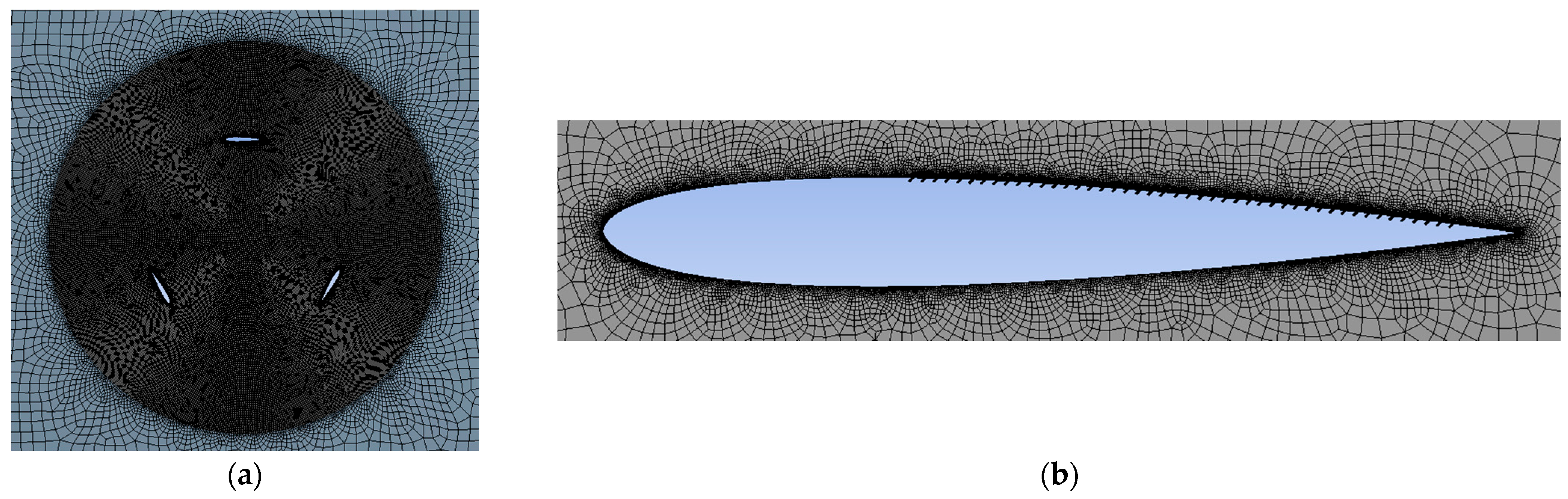
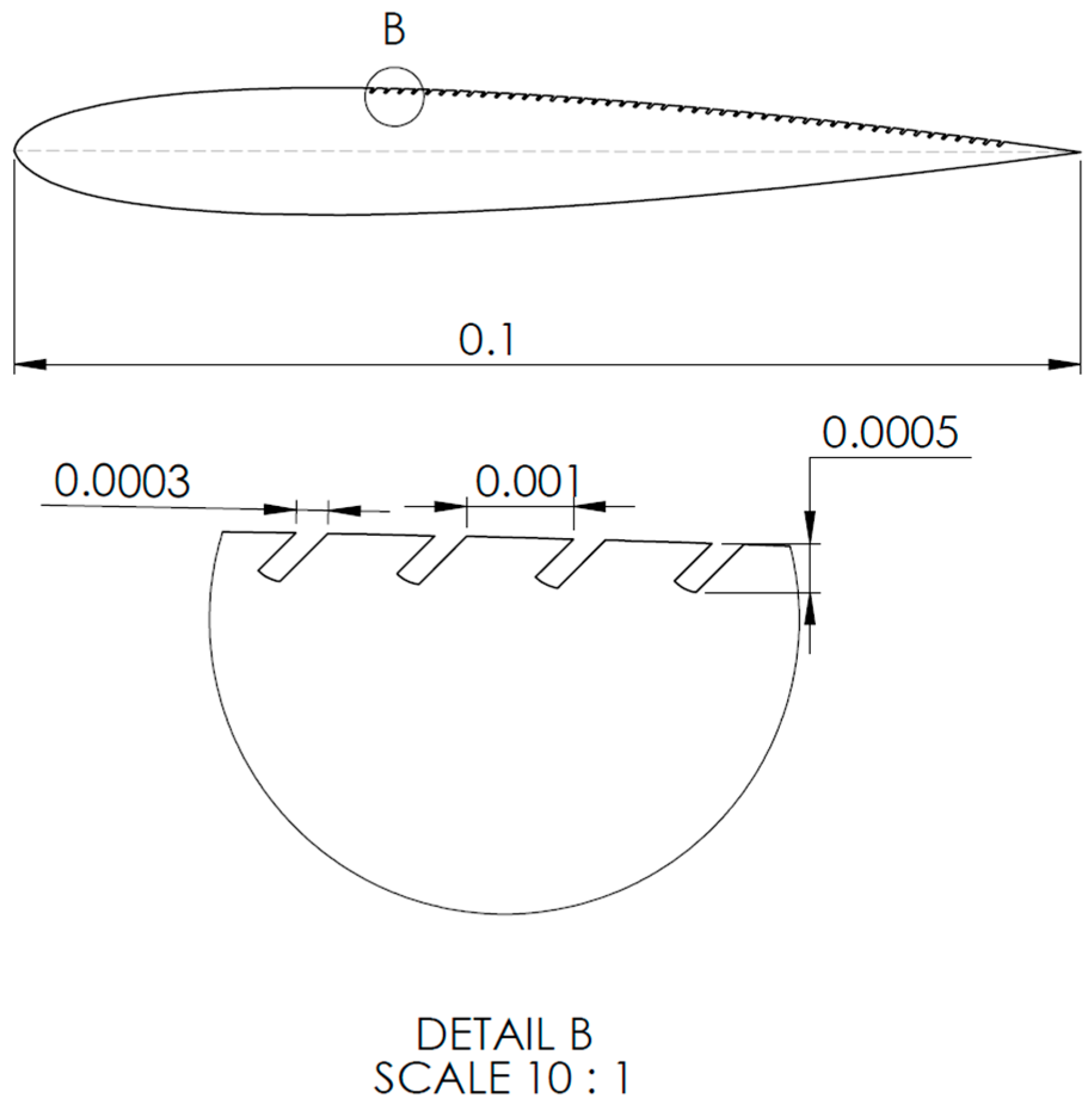
The present study addresses this gap by performing a comparative numerical analysis of straight-bladed VAWTs using the Dynamic Mesh method in ANSYS Fluent. Two geometrical configurations were considered: a baseline NACA0012 profile and a modified profile incorporating inclined cavities on the extrados. The current investigation compares results for the mass of 3D printed resin blades and blades manufactured from modified polycarbonate filament produced also by 3D printing, enabling a direct assessment of how blade material influences start-up behavior, tip speed ratio, and power coefficient. The results highlight the combined effect of passive flow control and material selection, showing that cavity-modified polycarbonate blades exhibit superior start-up dynamics and enhanced aerodynamic performance compared to both resin blades and unmodified profiles.
With this approach, two complementary aspects—blade geometry and material selection—are examined simultaneously to capture their combined influence on start-up dynamics and energy conversion efficiency. Unlike most existing studies, which treat these parameters separately or under simplified steady-state assumptions, the current work integrates passive flow control through inclined cavities with mass–inertia effects derived from measured material properties within a unified 6DOF framework. This dual-parameter approach enables a physically realistic prediction of turbine behavior, from acceleration to steady operation, under varying wind conditions.
By integrating geometric and material considerations, this work contributes to the broader understanding of VAWT optimization. The findings provide actionable insights for the design of lightweight, high-performance turbines suited for urban and distributed renewable energy applications, while also informing future experimental validation and prototype development.
In recent years, the frontier of numerical and experimental research has increasingly shifted toward the integration of high-fidelity modeling, data-driven optimization, and multi-field coupling techniques. Examples include the use of virtual-sample calibration combined with autoencoder architectures for enhanced sensor accuracy in complex thermal systems [
20], as well as multi-field particle–flow coupling and ultrasonic control methods applied in microreactor environments [
21]. Although these studies address different engineering domains, they share a common objective: to achieve more adaptive, accurate, and physics-informed modeling frameworks. In alignment with these advances, the present work extends high-fidelity transient modeling to the renewable energy sector by coupling aerodynamic flow phenomena with real-time inertial dynamics in a six-degree-of-freedom framework, thereby contributing to the broader movement toward intelligent, fully coupled simulation methodologies.
3. Results
By employing the Dynamic Mesh function, it was possible to record the blade position at each time step. Based on this data, the difference in position between consecutive steps was calculated, and once this difference became constant, the turbine was considered to have reached an equilibrium state, rotating with a constant angular velocity. The angular velocity (
) was computed as the ratio between the change in blade position (in radians) and the time step (in seconds).
Knowing the angular velocity, it was then possible to determine the velocity coefficient (λ) for each case using the following standard expression:
In parallel, the torque coefficient (
) was monitored throughout the simulation and numerically evaluated. Based on its values and the TSR, the power coefficient (
) was subsequently calculated, allowing a direct assessment of the aerodynamic efficiency of the turbine under different configurations and material properties.
Having these coefficients available, the moment (torque—
M) and the power of the turbine (
P) could be directly determined, thus providing a comprehensive evaluation of its performance. The involved parameters are
[kg/m
3]—air density;
A—rotor area [m
2];
V∞ [m/s]—wind speed;
R [m]—turbine radius.
The results for each model under study are summarized in the following tables, which include the calculated values of angular velocity, tip speed ratio, torque coefficient, and power coefficient, as well as the corresponding torque and power. These datasets enable a direct comparison between the different geometrical configurations and blade materials, highlighting the influence of the introduced modifications on the turbine’s overall performance.
To better visualize the results,
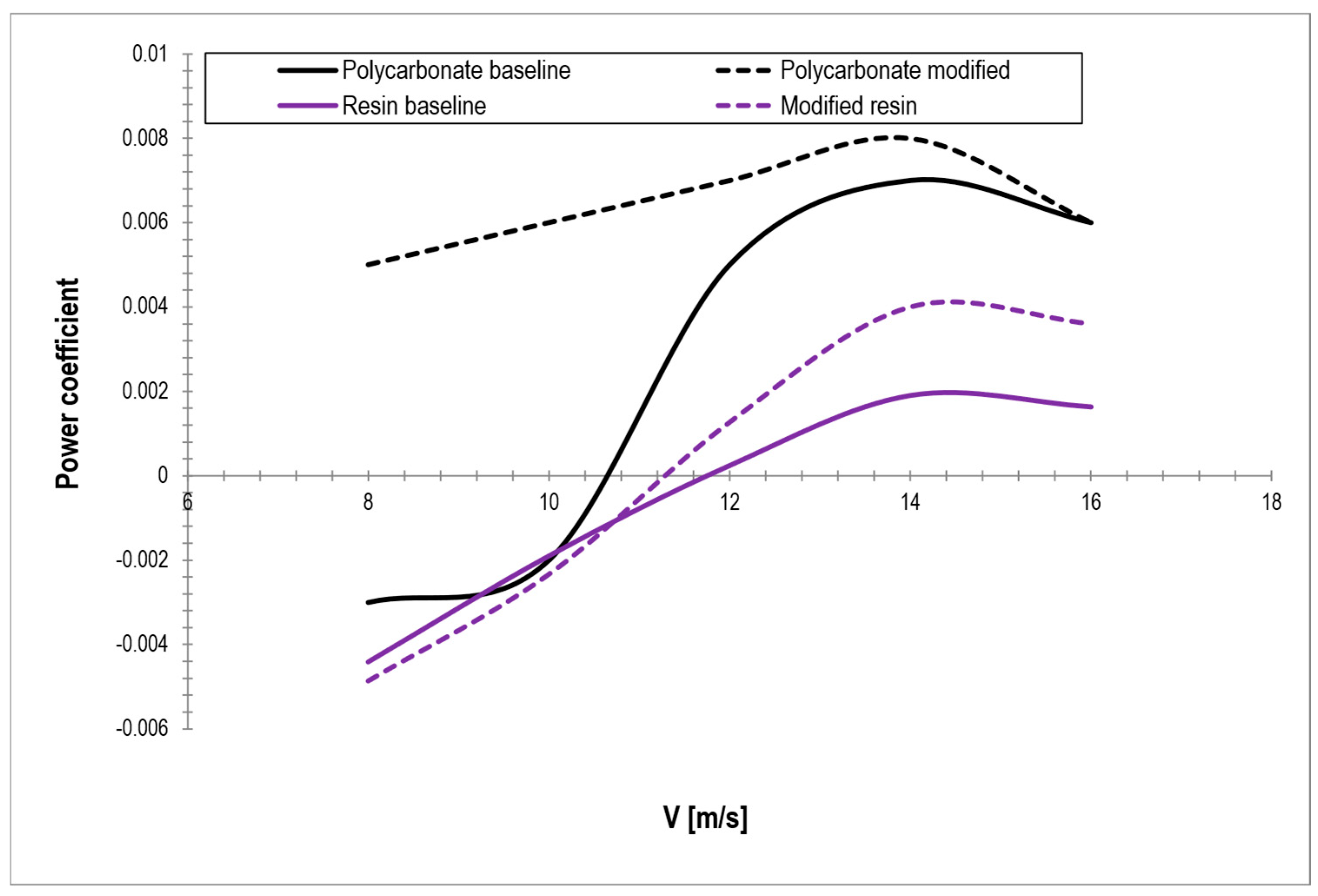
Figure 7 illustrates the variation in the power coefficient as a function of wind speed for blades manufactured from resin and modified polycarbonate, both in the baseline configuration and in the configuration with orifices.
Furthermore,
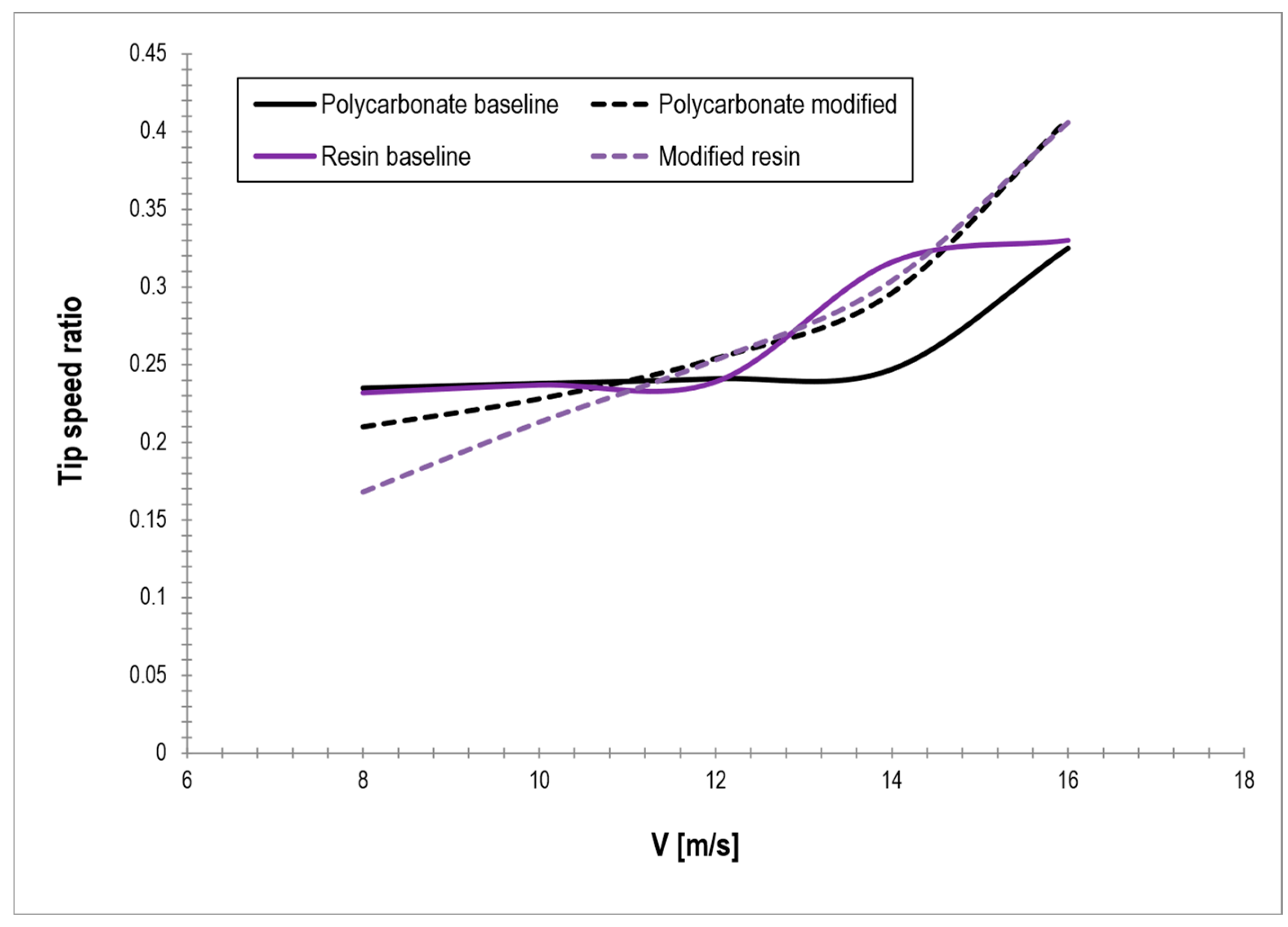
Figure 8 presents the evolution of the tip speed ratio with wind speed for the same cases, offering a complementary perspective on the dynamic behavior of the turbine.
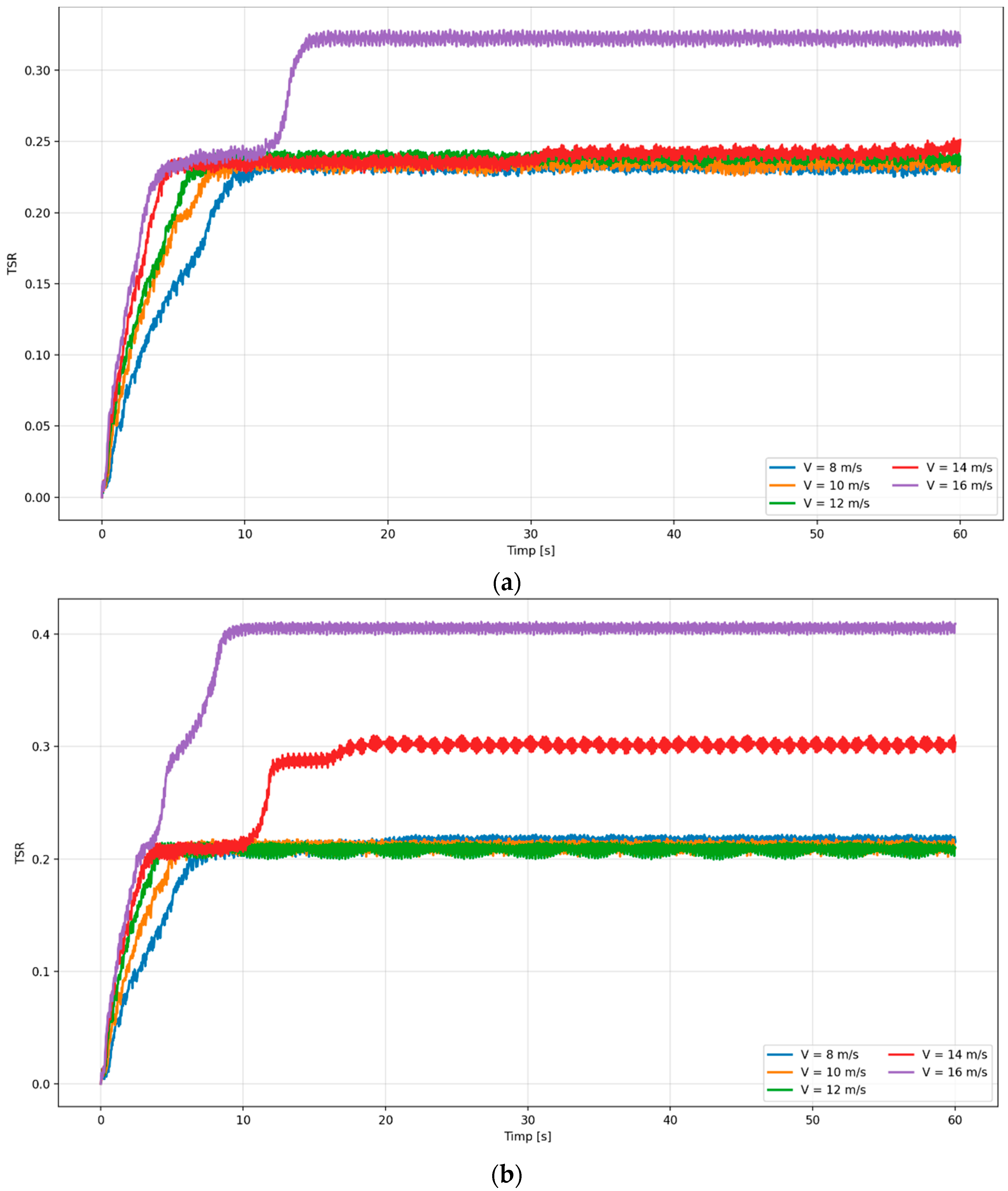
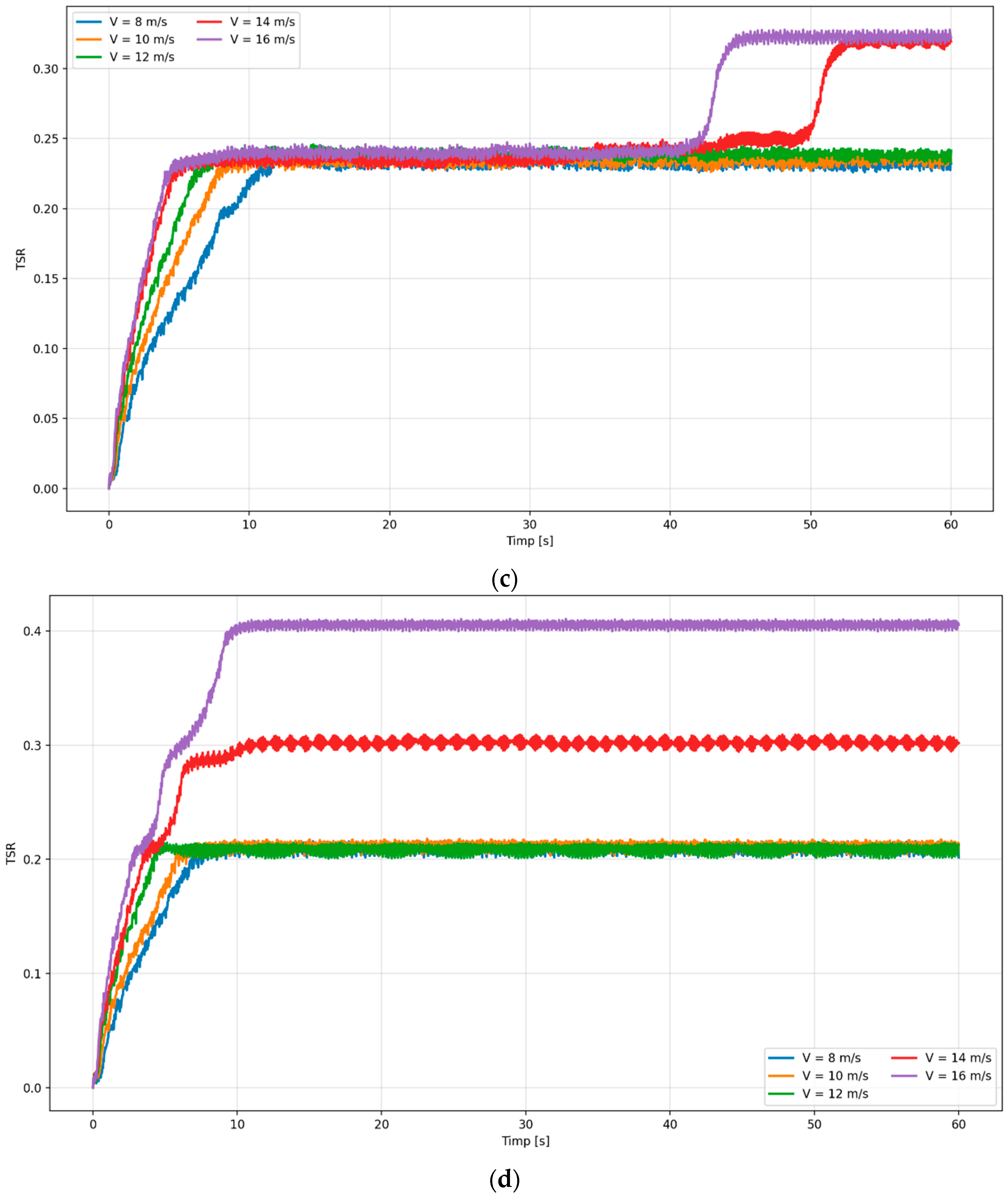
To evaluate the dynamic behavior of the turbine, the time evolution of the tip speed ratio (TSR) was monitored at different wind speeds for both blade materials (resin and modified polycarbonate). The results, illustrated in
Figure 9, allow for a direct comparison between the evolution and stabilization of TSR values for the two geometries, as influenced by the imposed flow conditions.
4. Discussion
The numerical results for the baseline and modified blades fabricated from polycarbonate and resin are summarized in
Table 4,
Table 5,
Table 6 and
Table 7. For polycarbonate blades, the baseline configuration shows relatively low power coefficients at low wind speeds (negative values at 8–10 m/s), but performance improves significantly at higher speeds, reaching a maximum power coefficient of 0.007 at 14 m/s. These results are in accordance with those from similar studied for small VAWTs [
7]. As mentioned, at lower wind velocities, the simulations produced negative torque and power coefficients. This behavior is characteristic of the self-starting phase of H-Darrieus VAWTs and indicates that the turbine operates temporarily in a drag-dominated regime. During this phase, the blades encounter highly unsteady flow conditions and dynamic stall. These transient effects lead to a negative torque until sufficient angular velocity is reached for the flow to stabilize around the airfoils, after which the turbine transitions into a lift-driven regime with positive torque and power generation. Such behavior has also been reported in previous experimental and numerical studies [
6,
10], confirming that negative torque and power coefficients at low wind speeds are a physically expected feature of small Darrieus-type turbines rather than a numerical error.
The modified polycarbonate blades with inclined orifices demonstrate higher performance across all velocities, with power coefficient peaking at 0.008. In comparison, the resin blades exhibit overall lower aerodynamic efficiency [
6,
10]. The baseline resin case shows negligible or even negative power at low wind speeds and modest improvement at higher velocities, with power coefficients not exceeding 0.0019. However, the modified resin blades show some performance recovery at higher velocities, reaching a power coefficient value of 0.004 at 14 m/s, but still remain below the levels of the polycarbonate models. These results confirm that both the material properties (lighter polycarbonate vs. heavier resin) and the passive flow control modification (orifices) strongly influence turbine self-starting capability and power generation.
To better visualize these results,
Figure 5 illustrates the variation in the power coefficient with wind speed for both polycarbonate and resin blades, in baseline and modified configurations. It can be observed that polycarbonate blades consistently outperform resin blades, with modified designs achieving the highest values. The presence of orifices contributes to better startup characteristics and improved efficiency at moderate wind speeds, confirming the effectiveness of passive flow control.
Figure 6 shows the evolution of the tip speed ratio with wind speed. The modified polycarbonate blades achieve the highest TSR values, reaching 0.40 at 16 m/s, compared to 0.33 for the resin baseline. In general, TSR increases with wind speed for all cases, but polycarbonate blades demonstrate both higher peak values and more stable growth compared to resin blades.
To assess the dynamic response of the turbine, the time evolution of TSR was analyzed at different wind speeds (8, 10, 12, 14, and 16 m/s) for all configurations (
Figure 7). For the polycarbonate baseline, TSR stabilizes quickly but at lower values, while the modified polycarbonate blades achieve faster acceleration and higher equilibrium TSR, especially at 14–16 m/s. Resin blades show slower stabilization and lower equilibrium values, with the modified design offering partial improvement but still underperforming compared to polycarbonate. The time-history evolution of the TSR reflects the interplay between aerodynamic torque generation and rotor inertia during the turbine’s self-starting and steady-state phases. In the early seconds of each simulation, the rotor is nearly stationary and the blades encounter very high instantaneous angles of attack, resulting in drag-dominated torque and dynamic-stall cycles. This stage produces the steep initial rise in TSR visible for all wind speeds. As the rotational velocity increases, the relative inflow angle decreases and the blades progressively transition from separated to attached flow, marking the shift from a drag- to a lift-driven regime. The subsequent flattening of the TSR curves corresponds to the moment when aerodynamic torque and resistive torque (mainly viscous and inertial) reach equilibrium. The higher final TSR values observed for the modified blades arise from the tilted cavities, which delay separation and promote reattachment, increasing the net positive torque once the lift mechanism dominates. Differences between resin and polycarbonate blades are linked to inertia: the lighter polycarbonate blades accelerate faster and achieve higher steady TSR because of their lower rotational moment of inertia.
The results highlight two decisive factors in the aerodynamic performance of the studied VAWTs. First, the material influence: lighter polycarbonate blades exhibit faster acceleration and reach higher TSR values compared to resin blades, owing to their reduced inertia, which enhances the dynamic response of the turbine. Second, the geometric modification: the addition of inclined orifices on the extrados proves effective as a passive flow control strategy, improving startup behavior and sustaining higher aerodynamic efficiency across operating conditions.
5. Conclusions
This study presented a comparative numerical investigation of VAWTs equipped with baseline and cavity-modified blades fabricated from resin and polycarbonate. Using the Dynamic Mesh approach with six degrees of freedom in ANSYS Fluent, the analysis demonstrated that both blade geometry and material selection have a decisive influence on turbine performance.
The results showed that lighter polycarbonate blades achieved faster acceleration and higher tip speed ratios than their resin counterparts, highlighting the importance of reduced inertia for improving dynamic response and start-up capability. Furthermore, the introduction of inclined cavities along the extrados proved to be an effective passive flow control strategy, enhancing aerodynamic efficiency and increasing the power coefficient across a wide range of wind speeds. When combined, these two design considerations—lightweight material and cavity modification—produced the most favorable performance, indicating a promising pathway for optimizing small- and medium-scale VAWTs intended for urban and distributed energy applications.
While the present investigation provides valuable insight into the aerodynamic and dynamic behavior of modified VAWTs, it is limited to two-dimensional CFD simulations that neglect three-dimensional flow effects. Moreover, experimental validation has not yet been performed at this stage. Future work will focus on the experimental validation of the numerical findings through dedicated wind tunnel tests of the fabricated blade models. These tests will provide further insight into the real-world aerodynamic behavior, confirm the reliability of the numerical predictions, and support the development of scalable prototypes suitable for practical deployment.