You are currently viewing a new version of our website. To view the old version click .
Applied Sciences
  • Article
  • Open Access

11 November 2024

Self-Sovereign Identity-Based E-Portfolio Ecosystem

,
,
and
Department of Computer Science, National Yang Ming Chiao Tung University, Hsinchu 30010, Taiwan
*
Author to whom correspondence should be addressed.

Abstract

In Taiwan, traditional student assessments, covering academic and extracurricular achievements, have shifted from paper to electronic portfolios (e-portfolios). However, limited trust among institutions restricts students from freely sharing and using their educational data. This paper introduces a self-sovereign identity-based infrastructure aimed at enhancing personal data security within the e-portfolio ecosystem. The proposed system includes two core components: (1) a decentralized identity chain, aligning user identities across platforms and granting users full self-sovereign control; and (2) an e-portfolio application chain to manage user interactions and access permissions within the ecosystem. A trusted educational authority also audits data sources, ensuring data integrity and reliability. This infrastructure empowers users to control who can access their data, safeguarding their security, with the identity chain preventing unauthorized access and the application chain recording authorization statuses to restrict data visibility to approved parties only.

1. Introduction

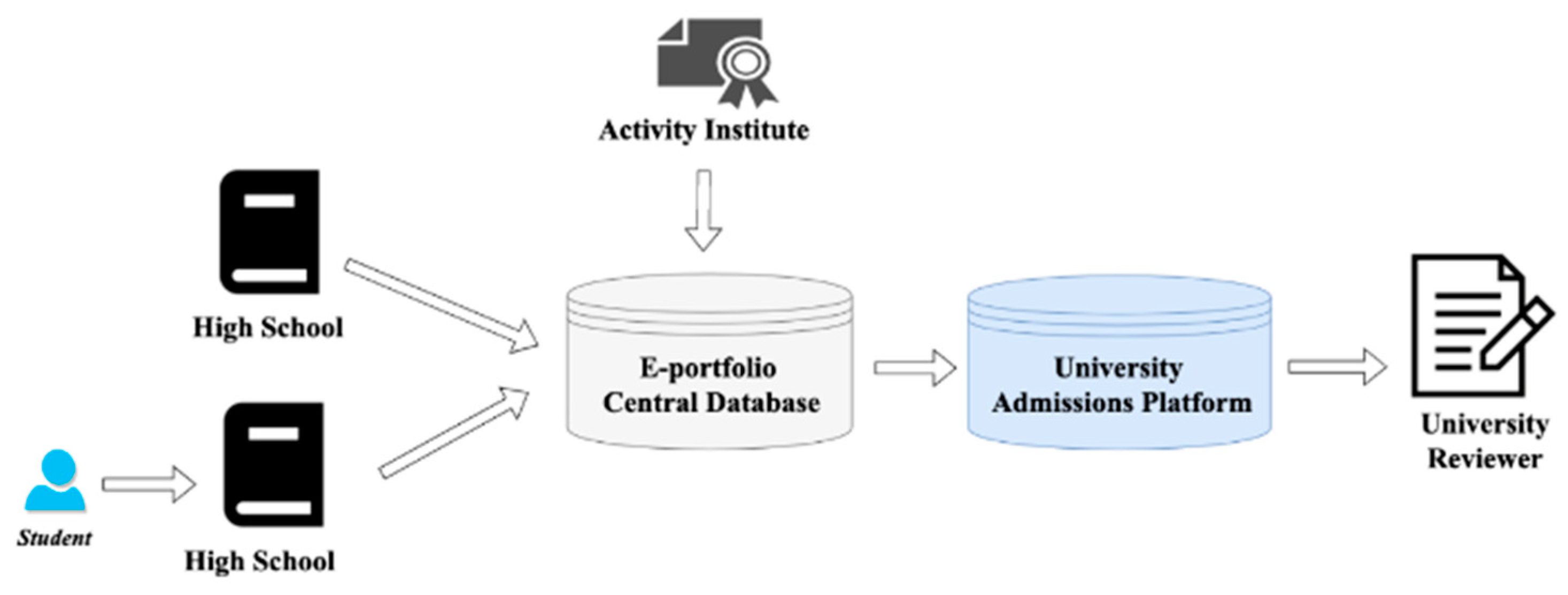
Since 2019, significant changes have unfolded in university admissions processes, pivoting from a predominant focus on entrance exam scores to a heightened consideration of a student’s enduring academic performance. This shift has highlighted the limitations of conventional paper documents in the eyes of university reviewers. In response, the proposal of an e-portfolio system [1] has emerged as a solution, offering reviewers a more comprehensive understanding of a student’s academic and extracurricular achievements.
By embracing the e-portfolio system, reviewers gain access to a detailed breakdown of a student’s final scores across various academic subjects, coupled with insights into their engagement in extracurricular activities. This comprehensive approach provides deeper insights into a student’s passions and achievements, aiding reviewers in making informed decisions. Significantly, the e-portfolio system has taken the place of conventional paper records, leading to a more streamlined admissions process, greatly enhancing overall efficiency.
The traditional e-portfolio system encounters several challenges. First, students find it cumbersome to manage multiple text-based password authentication systems, as high schools and activity organizations are often reluctant to adopt social logins like Google or Facebook. This reliance on text-based passwords hinders the creation of a unified digital identity. Additionally, the lack of a trusted connection between institutions and reviewers disrupts direct data sharing, leading to admissions delays that can negatively affect acceptance rates. The absence of a robust authentication method also raises concerns about the reliability of submitted data, making it difficult for reviewers to quickly verify the accuracy and authenticity of information due to limited review time. This can result in inaccuracies in admissions decisions, disadvantaging deserving students.
Moreover, students may require greater control over who can access their data. By implementing a decentralized identity management system, students can selectively share their learning history, allowing them to avoid disclosing unfavorable academic records or incomplete assessments. Consequently, there is a pressing need for a system that ensures the credibility and authenticity of student data. Such a system would streamline authentication, facilitate direct data sharing, and provide reviewers with accurate information, ultimately enhancing the admissions process for all stakeholders.
To address the issues discussed earlier, we propose a solution based on a self-sovereign identity-based personal information security control infrastructure for the e-portfolio ecosystem, using blockchain technology. This infrastructure consists of two parts:
Decentralized identity blockchain: The decentralized identity blockchain enables users to have a self-sovereign identity, allowing them to fully control their own identity without relying on centralized services.
Application blockchain: A blockchain specifically designed for the e-portfolio scenario enables students to share their documents, allows institutions to authorize awards, helps teachers upload student e-portfolio documents, and provides university reviewers with access to review students’ documents.
Using blockchain and smart contracts, users can log in with a digital signature, eliminating the need for passwords, which are often vulnerable to hacking or lost. The e-portfolio application blockchain allows individuals to grant their consent and provide their information to reviewers, while also enabling trusted educational bodies to audit the information provided by activity groups. Access to any student data is permitted only with the student’s explicit authorization, ensuring that the data’s credibility and authenticity are maintained. This provides reviewers with reliable information to make informed decisions. Overall, this self-sovereign identity-based data protection framework for the e-portfolio ecosystem offers a secure and efficient solution to challenges faced by both reviewers and students, safeguarding the integrity of the admissions process and enhancing opportunities for deserving candidates.
The upcoming sections are structured as follows: Section 2 offers an in-depth review of blockchain’s background, alongside an exploration of related work on e-portfolio ecosystem and self-sovereign identity. In Section 3, the operational model, smart contract design, and the key software components are introduced, offering insights into the foundational elements of our system. Section 4 outlines the proposed workflow within our system, elucidating the sequential steps and interactions that define its functionality. A demonstration of the proposed system is detailed in Section 5, showcasing its practical application and functionality. In Section 6, we delve into the evaluation of our system’s performance, providing an in-depth analysis of its effectiveness and efficiency. The final section wraps up the paper by summarizing the key findings and insights derived from the study. To facilitate readability, some abbreviations used in this study are defined in Appendix A.

3. System Design

3.1. Operation Model

The proposed self-sovereign identity system includes two main elements: the decentralized identity blockchain (DID-chain) and the e-portfolio application blockchain (EApp-chain). These two blockchains are maintained by different organizations to handle different types of transactions. The DID-chain integrates the identities of users across various ecosystems, while the EApp-chain is responsible for designing access control authorization based on specific ecosystem requirements.

3.1.1. Decentralized Identity Blockchain (DID-Chain)

In the DID-chain, we utilize the decentralized identity chain developed in [7] to manage user identities, ensuring compliance with the four key requirements of General Data Protection Regulation (GDPR) [47], with the government serving as the administrator. Users register their identities in the DID by providing personal information, which the government processes to generate a unique Decentralized Identifier (DID) for each individual. Once issued, the DID enables users to securely access all services within the App-chain.

3.1.2. E-Portfolio Application Blockchain (EApp-Chain)

In the EApp-chain, we utilize HLF to construct a multi-channel ecosystem. Our EApp-chain comprises two channels to tackle two key issues—data credibility and user authorization. By leveraging the multi-channel mechanism provided by HLF, we effectively segment the business logic and improve ledger privacy.
Before utilizing the App-chain, users must first create an identity on the DID-chain and upload the necessary registration material to their PIcon on the DID-chain based on the blockchain framework utilized in the ecosystem. Upon registration at any high school, users are bestowed with a self-sovereign e-portfolio identity (SSeI). This primary identity allows users to easily log in to any participating entity, in which they can use their SSeI to manage access within the e-portfolio ecosystem. The intricacies of the login and registration workflow will be expounded upon in Section 4, and an in-depth overview of the user journey and authentication processes within this system is provided.
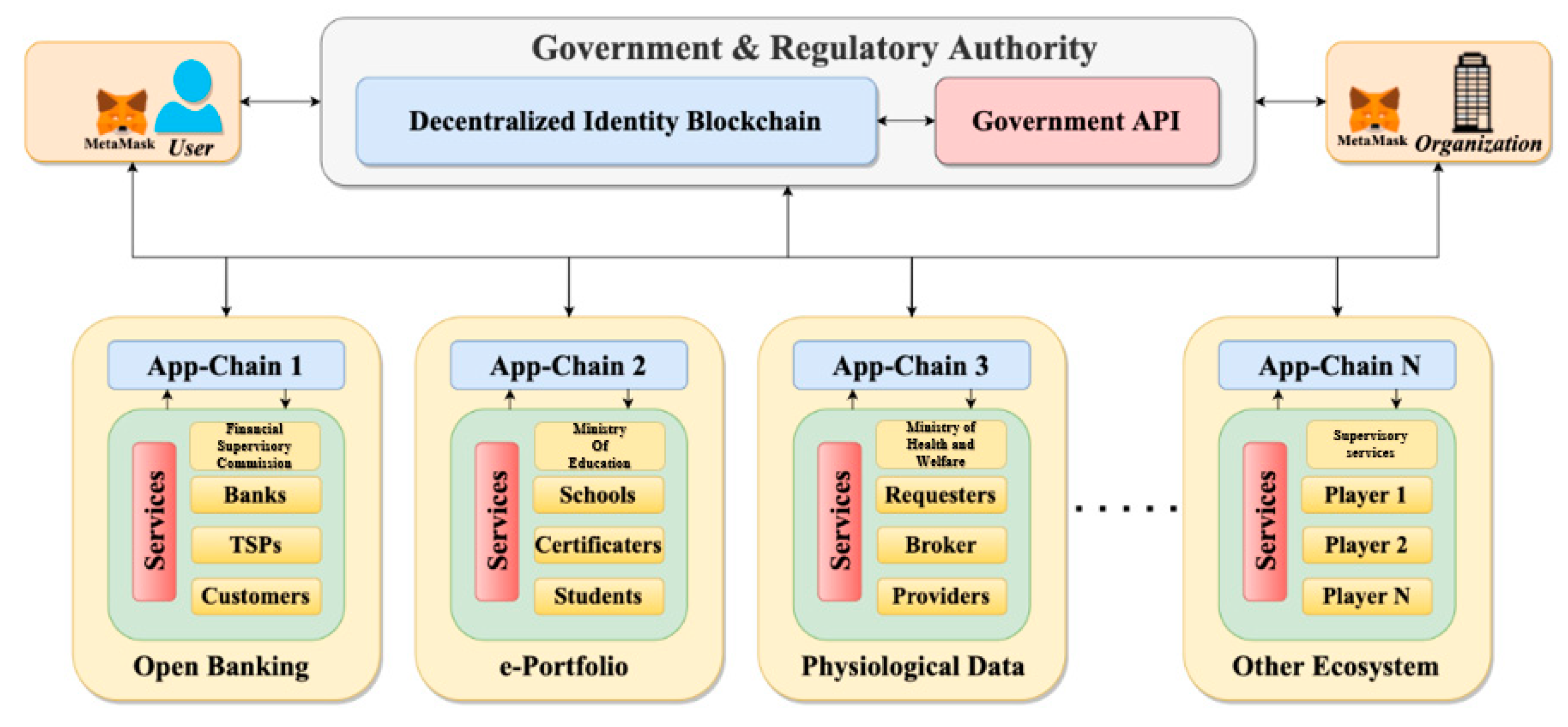
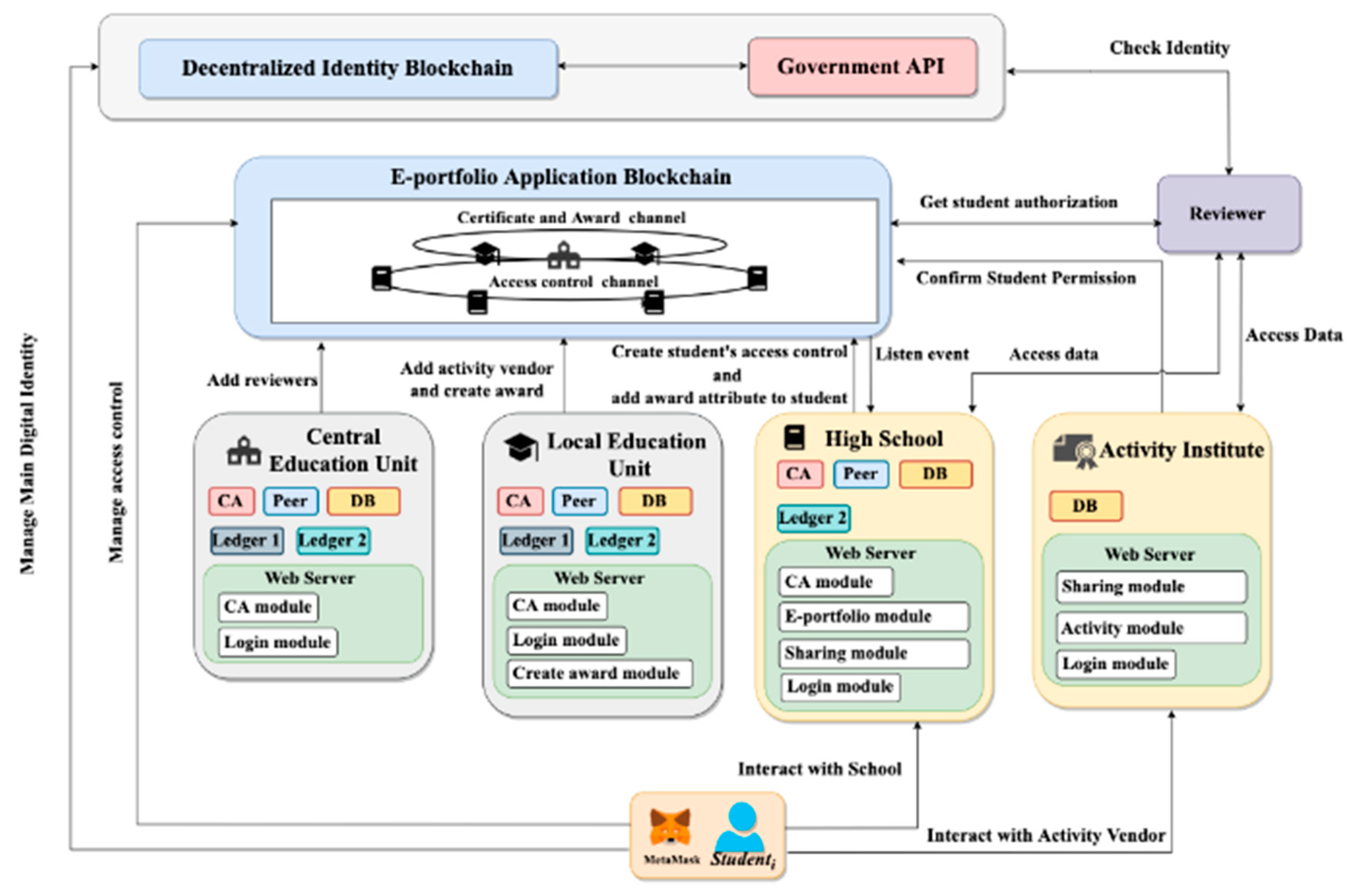
Figure 5 presents the structure of our proposed e-portfolio ecosystem. In this system, students are equipped with a self-sovereign identity, allowing them to govern data authorization without resorting to conventional text password logins. Reviewers gain direct access to reliable review data from high schools and activity organizations, eliminating the need for these institutions to upload student data to a centralized database. Data from various sources, including awards, exam scores, and extracurricular activities, are subject to verification by educational units. The system involves multiple entities, such as the certificate and award channel (CaAch), access control channel (ACch), central education unit (CEU), local education unit (LEU), high school (HS), activity organization (AO), student (STU), and reviewer (RE). Each entity plays a specific role, contributing to a decentralized and secure framework for the management and access of educational data. Further details on the roles and interactions of these entities are discussed in subsequent sections. The roles of these parties are explained in detail as follows:
Figure 5. E-portfolio ecosystem architecture.
  • Certificate and Award Channel (CaAch): In the CaAch, CEU and LEU serve as peer nodes to share the ledger1. Organizations that are not part of this channel, such as HSs, REs, and AOs, must obtain client credentials from peer node organizations. This channel stores information about AOs and REs that have passed the education unit’s audit, as well as each user’s award information. The CEU and LEUs form an audit alliance to jointly maintain the reliability and credibility of users’ awards.
  • Access Control Channel (ACch): The ACch plays an important role in the e-portfolio ecosystem by allowing the CEU, LEUs, and HSs to act as peer nodes and share the ledger2 as shown in Figure 5. This channel stores the authorization status of users, with each user having a unique access control instance (ACins) that can only be updated by themselves. The access control manager contract is tasked with managing access control in the ecosystem, ensuring that only permitted users can access their respective data. By segmenting this functionality into a separate channel, the e-portfolio ecosystem can effectively manage user authorization and access control, which helps keep user data secure and private.
  • Central Education Unit (CEU): The role of the CEU is crucial in the e-portfolio ecosystem, as it is responsible for organizing college entrance exams and supervising the overall system. As part of its responsibilities, the CEU maintains a root-ca server, which issues identity certificates to reviewers. A root-ca server is a trusted entity that issues digital credentials to authenticate the identity of users or devices in a network. The certificates issued by the root-ca server are considered trustworthy because they are signed by the root-ca’s Prk. In the context of the e-portfolio ecosystem, the root-ca server issued identity certificates to reviewers, which are used to verify their identities when accessing the system. This helps to ensure that only authorized reviewers can access user data and provide feedback.
  • Local Education Unit (LEU): In the proposed e-portfolio ecosystem, LEUs are responsible for auditing activity organizations. Once an AO passes the audit, they are granted the right to create awards for students and receive a client credential to confirm user consent on the ACch. Additionally, the LEU has a root-ca server responsible for issuing identity certificates to the local HS to create an intermediate CA.
  • High School (HS): HSs are responsible for managing and storing students’ school grades and e-portfolio files in the proposed system. They also monitor events on the CaAch to add award attributes for their students. To achieve this, HSs use an intermediate CA to create an identity certificate for each student, enabling them to participate in the e-portfolio ecosystem.
  • Activity Organization (AO): The AO is an organization that manages students’ extracurricular activity data, such as TOEFL, APCS, and online learning platforms. These institutes can apply for verification from local education units to improve the credibility of the data they manage.
  • Student (STU): In different ecosystems, a user may have multiple identities. In the e-portfolio ecosystem, a user may identify as a ‘student’. Each user also possesses a self-sovereign identity, which they can utilize to log in and sign up for AOs in the e-portfolio ecosystem. STUs retain full control over their data authorization and can determine which data are used for reviews.
  • Reviewer (RE): In this scenario, the RE represents the university. REs are responsible for reviewing HS student profiles and have direct access to trusted data that have been authorized by students from their HS and AO.

3.2. Smart Contract Design

Smart Contract in EApp-Chain

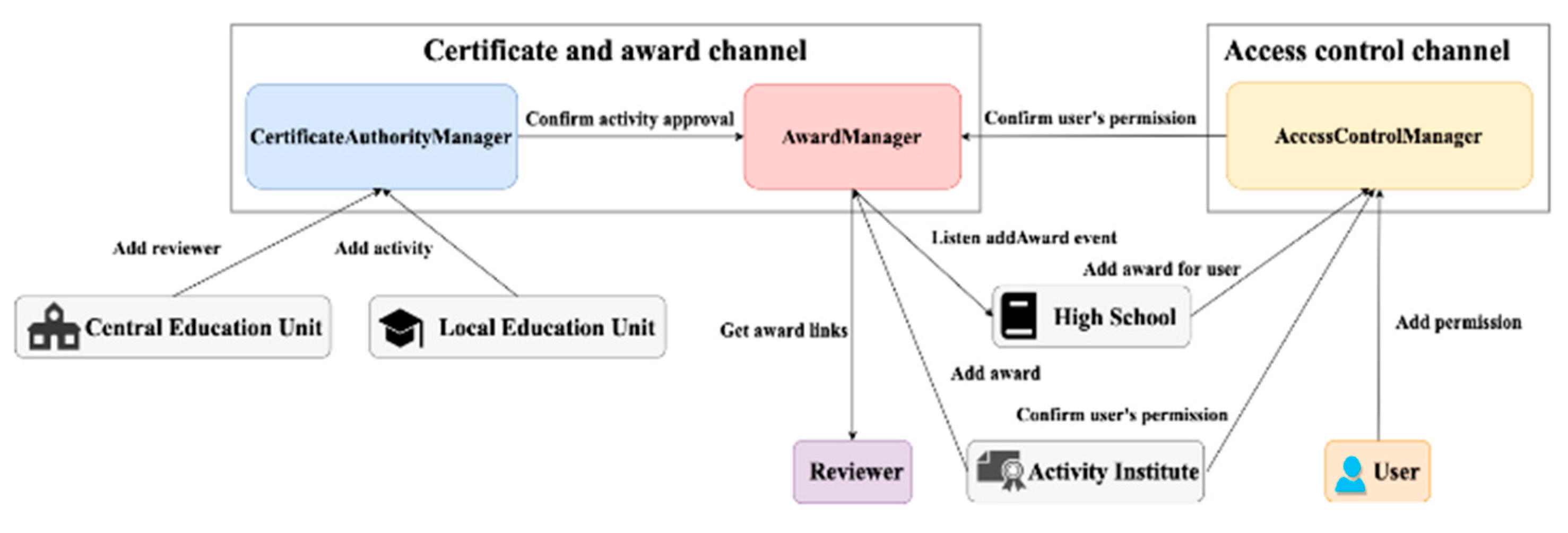
Figure 6 illustrates the relationship diagram featuring roles and smart contracts within the EApp-chain. The EApp-chain hosts three active smart contracts: the certificate authority manager contract (CAMcon), award manager contract (AMcon), and access control contract (ACcon). Specifically, the CAMcon and AMcon are deployed in the CaAch, while the ACcon takes residence in the ACch. This deployment configuration ensures a structured and efficient distribution of functionalities within the EApp-chain, delineating the roles and interactions of each smart contract in facilitating the operations of the e-portfolio ecosystem.
Figure 6. Smart contracts and role relationships in App-chain.
In the HLF framework, when an organization becomes a participant in two channels, it gains the capability to store the ledger data of both channels concurrently. This capability allows smart contracts within the organization to execute cross-channel read operations. For instance, when both the LEU and the CEU join two channels simultaneously, the AMch deployed in both entities can access and read the permissions of STUs stored in the ACcon. This cross-channel read functionality enhances the flexibility and interoperability of smart contracts, allowing them to seamlessly access data across multiple channels within the HLF network.
  • Certificate Authority Manager Contract (CAMcon)
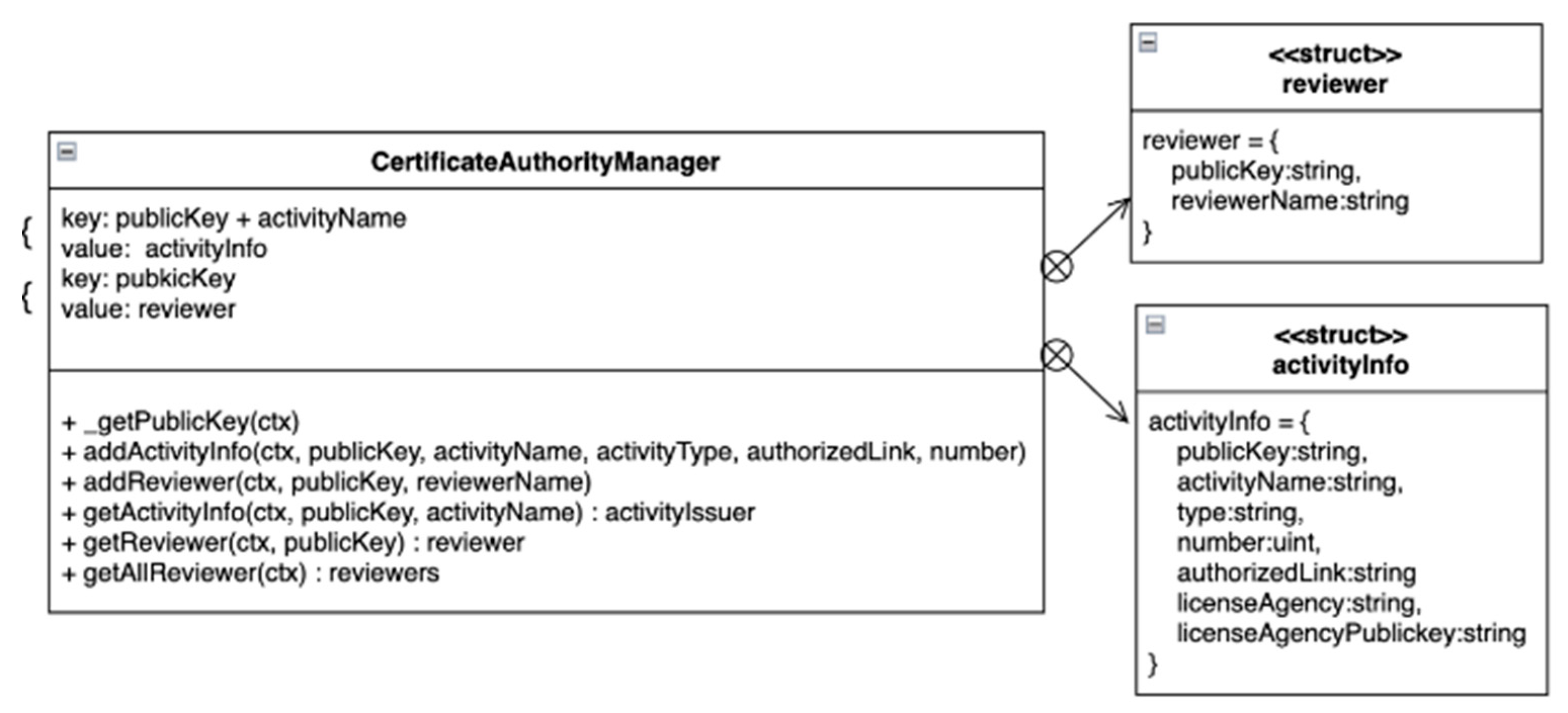
CAMcon is responsible for managing information related to REs and approved activities. The diagram of CAMcon is presented in Figure 7, and it stores the structure of reviewer and activityInfo in key-value pairs. When invoking smart contracts, X.509 certificates can be used to extract user identities and attributes, such as Puks and roles. These attributes can be utilized to restrict contract function execution to specific users.
Figure 7. CAMcon diagram.
The addActivityInfo function allows the administrator of the LEU and CEU to add approved AOs to CAMcon, which can then be used by AMcon to grant awards to users. On the other hand, the addReviewer function is used by the CEU to add an RE. HSs can access the Puks of all REs through the getAllReviewer function, which can help users generate authorization for REs.
  • Award Manager Contract (AMcon)
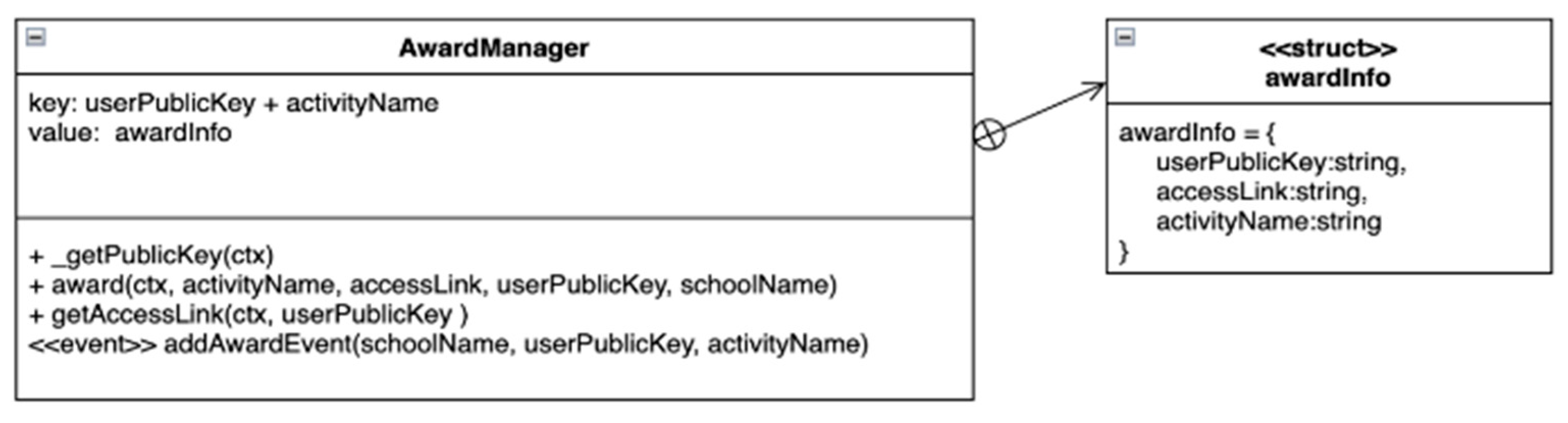
AMcon is used to manage award records for users. The diagram of ACcon is presented in Figure 8 and the structure of awardInfo is stored in AMcon, as shown in Table 1. The award function can be invoked by the AO, and then the award function will invoke the getActivityInfo function in CAMcon to check whether the AO has the right to give an award. After a successful invocation, the addAward event is generated to notify the HS where the user is registered. The getAccessLink function is used to enable the reviewer to obtain the data access link authorized by the user. First, AMcon reads the world state about the user’s awards and calls getPermission in ACcon to obtain the user’s permission. Finally, authorized access links are returned to the RE.
Figure 8. AMcon Diagram.
Table 1. Table of awardInfo structure.
  • Access Control Contract (ACcon)
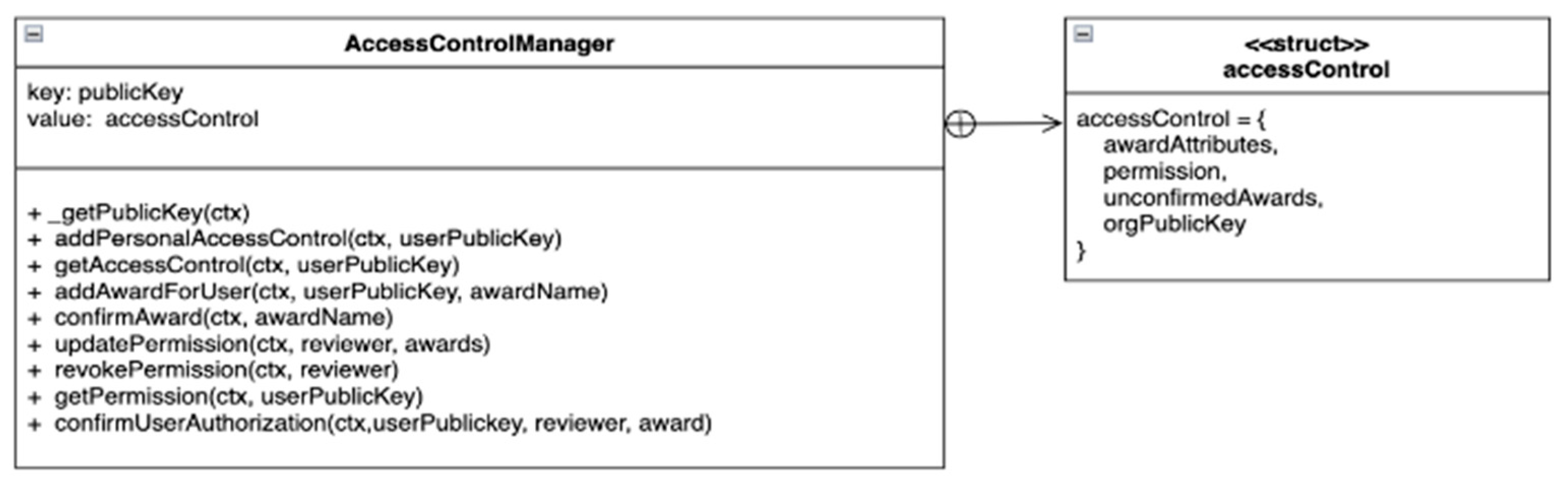
ACcon is primarily responsible for managing the access control of users’ data. The diagram of ACcon is presented in Figure 9. Each user is associated with an accessControl structure in ACcon, as shown in Table 2. This structure comprises two objects, namely awardAttributes and permission, which only the user can modify. The unconfirmAwards object stores the awards added by organizations but not yet confirmed by the user. When an organization receives the addAward event, it confirms that the user is a member of the organization and then invokes the addAwardForUser function in ACcon to add the award to the user’s unconfirmAwards object. The user can subsequently call the “confirmAward” function to transfer the award from the unconfirmAwards object to the awardAttributes object.
Figure 9. ACcon diagram.
Table 2. Table of accessControl structure.
Once the confirmAward function is executed successfully, the user can manage the authorization of their award using the updatePermission and revokePermission functions. The permission object, which has a dictionary-like structure, stores the authorization state. With blockchain technology and smart contracts, the authorization of a user’s award cannot be tampered with by anyone else, ensuring that each user’s award can be traced and trusted.

3.3. Software Component

3.3.1. Metamask

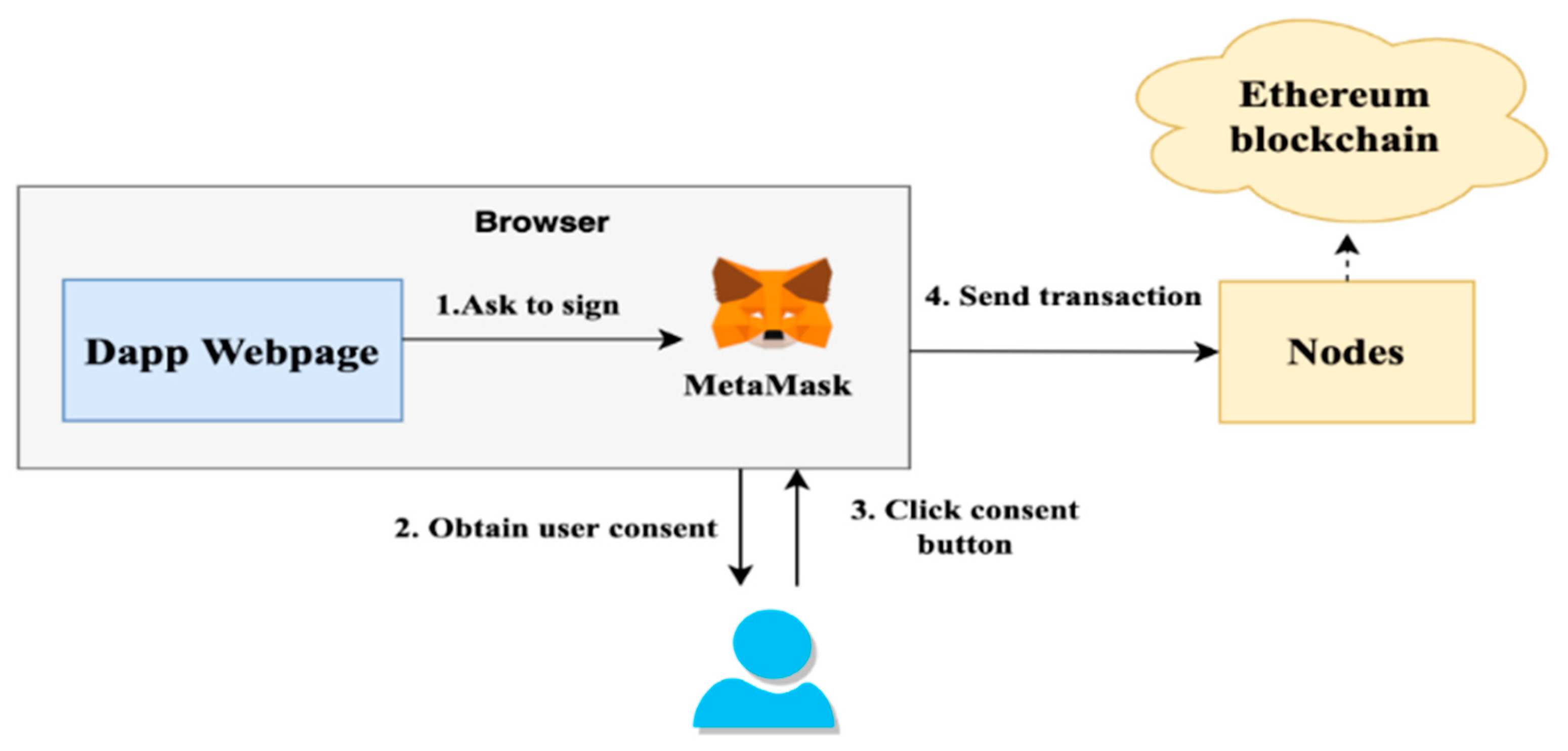
Metamask [48] enables effortless interaction with decentralized applications (Dapps) on the Ethereum network. It safely manages users’ Prks within the browser and provides an API that allows websites to access Ethereum account information and related blockchain data. Furthermore, Metamask allows websites to request user actions, such as signing messages and generating digital signatures, all while upholding strong security measures. This functionality enhances the user experience when engaging with various Dapps across the Ethereum network.
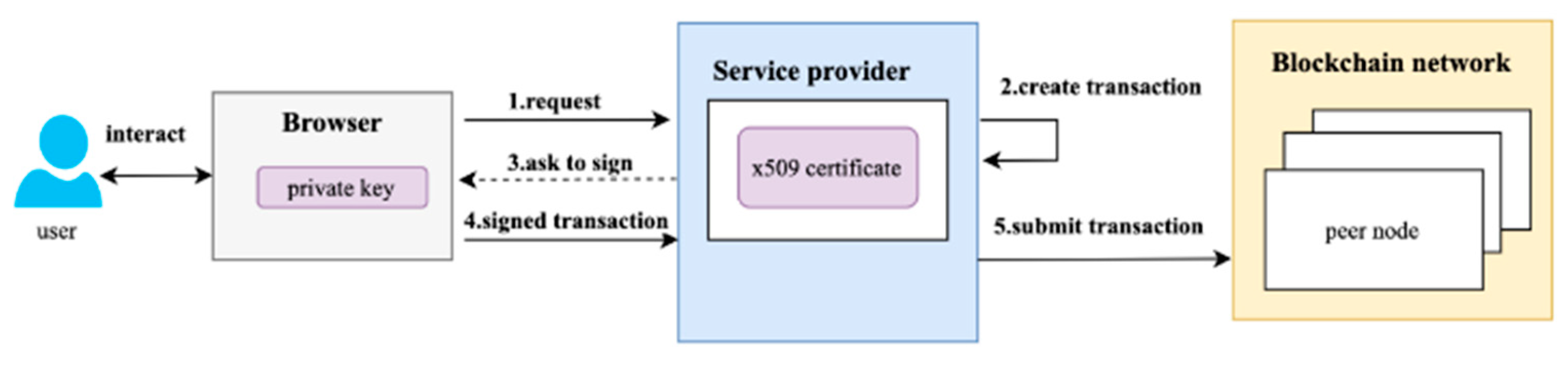
Figure 10 illustrates the process of signing transactions using Metamask. It is crucial for the user to trust the smart contract provided by the visited website and grant permission to use the Metamask API for actions involving their account and Prk. With this approach, Dapp developers can focus on smart contract and webpage development without worrying about connection issues between users and the Ethereum blockchain nodes.
Figure 10. Signing the Ethereum transaction with Metamask.
In our proposed self-sovereign identity infrastructure, users utilize Metamask to store Prks that manage their primary identity in the DID-chain. Since Metamask does not support signing transactions in HLF, we utilize offline signing to carry out transactions on the EApp-chain.

3.3.2. JSON Web Token (JWT)

The JWT is employed as a secure method for validating data exchange between parties via APIs in our proposed system. JWTs utilize a digital signature, signed with a password (HMAC) or a Prk/Prk (RSA/ECDSA), ensuring data authenticity. Unlike traditional stateless HTTP protocol requests, in which each operation is independent, JWT encapsulates the user’s status for self-preservation.
In our system, JWTs are fundamental to data sharing. REs, prior to accessing a user’s data, seek an access identity token from resource servers such as educational institutions and extracurricular groups. This access identity token, presented as a JWT, represents an authorized identity granted by the resource servers. By validating the token’s expiration and digital signature, the server can effortlessly access the user’s current status embedded in the token, streamlining the authentication and authorization process for data retrieval.

4. Implementation

4.1. DID-Chain

We followed the method of [7] to implement our DID-chain, which encompasses three main workflows: registering for a decentralized identity, uploading the EApp-chain Prk, and uploading registration materials.

4.2. EApp-Chain

4.2.1. Creating Access Control Instance

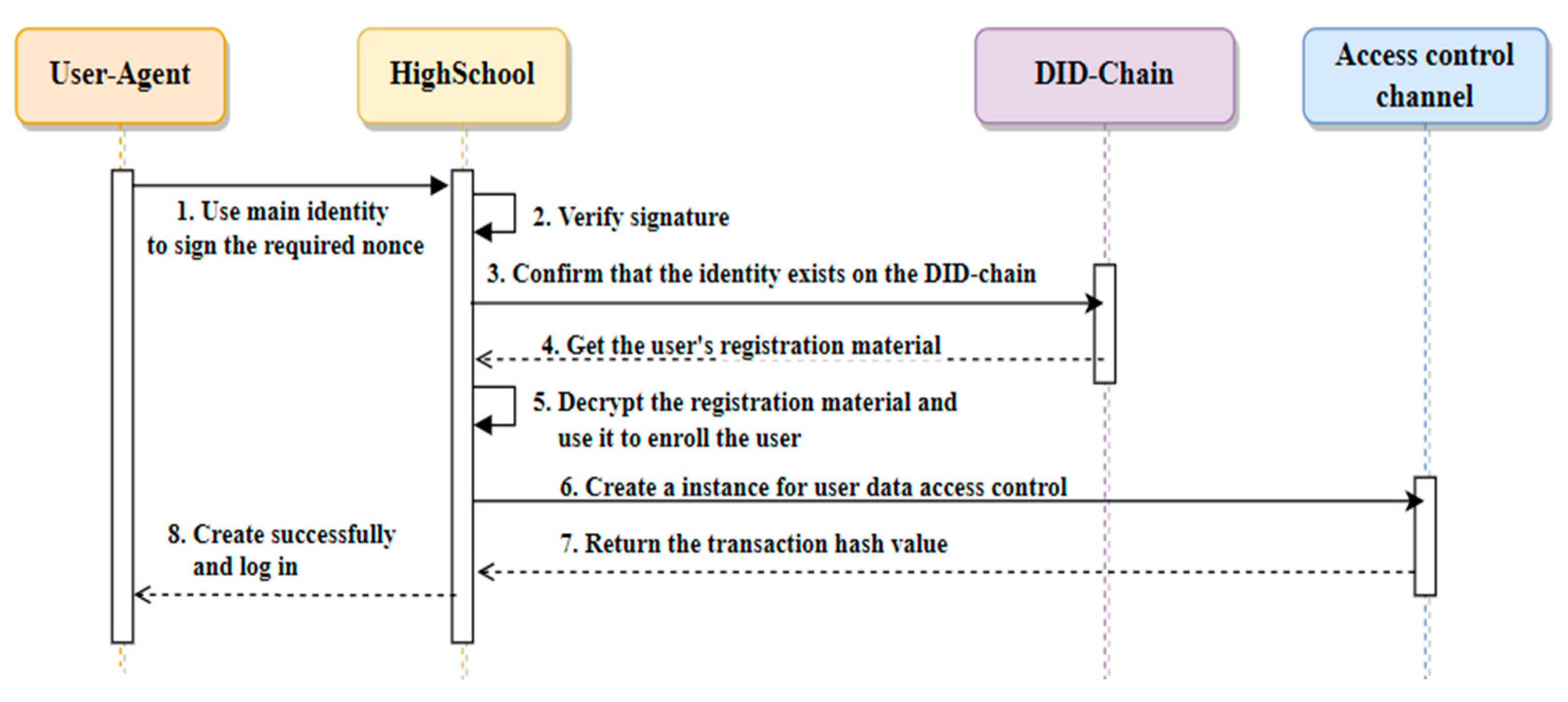
Figure 11 illustrates the workflow of establishing an ACin within the ACch, particularly when a user logs in at an HS within the e-portfolio ecosystem. In this context, the user is comparable to a student. The workflow unfolds as follows:
Figure 11. Creating access control instance flow.
  • The user creates a digital signature using their primary identity and sends it to the HS for identity verification;
  • Upon receiving the digital signature, the HS verifies it and retrieves the user’s PIcon address and registration details from the event logs in the DID-chain;
  • The HS decrypts the user’s registration materials to access their information, encompassing the EApp-chain Puk and their common name. It utilizes a Certificate Signing Request (CSR) to enroll the user with Fabric CA;
  • The HS maintains the user’s X.509 certificate, which serves as the basis for creating transaction proposals on behalf of the user;
  • The HS then establishes an ACin for the user in the ACch, empowering them to use their primary identity to log in to the HS and manage access to their EApp-chain identity. By adhering to this systematic workflow, the HS ensures a secure authentication process, granting the user access to the requisite resources within the e-portfolio ecosystem.

4.2.2. Login with Digital Signature

Once the ACin is successfully created, the user gains an identity that can be utilized within the e-portfolio ecosystem. The login process encompasses two distinct instances: the initial login and general login.
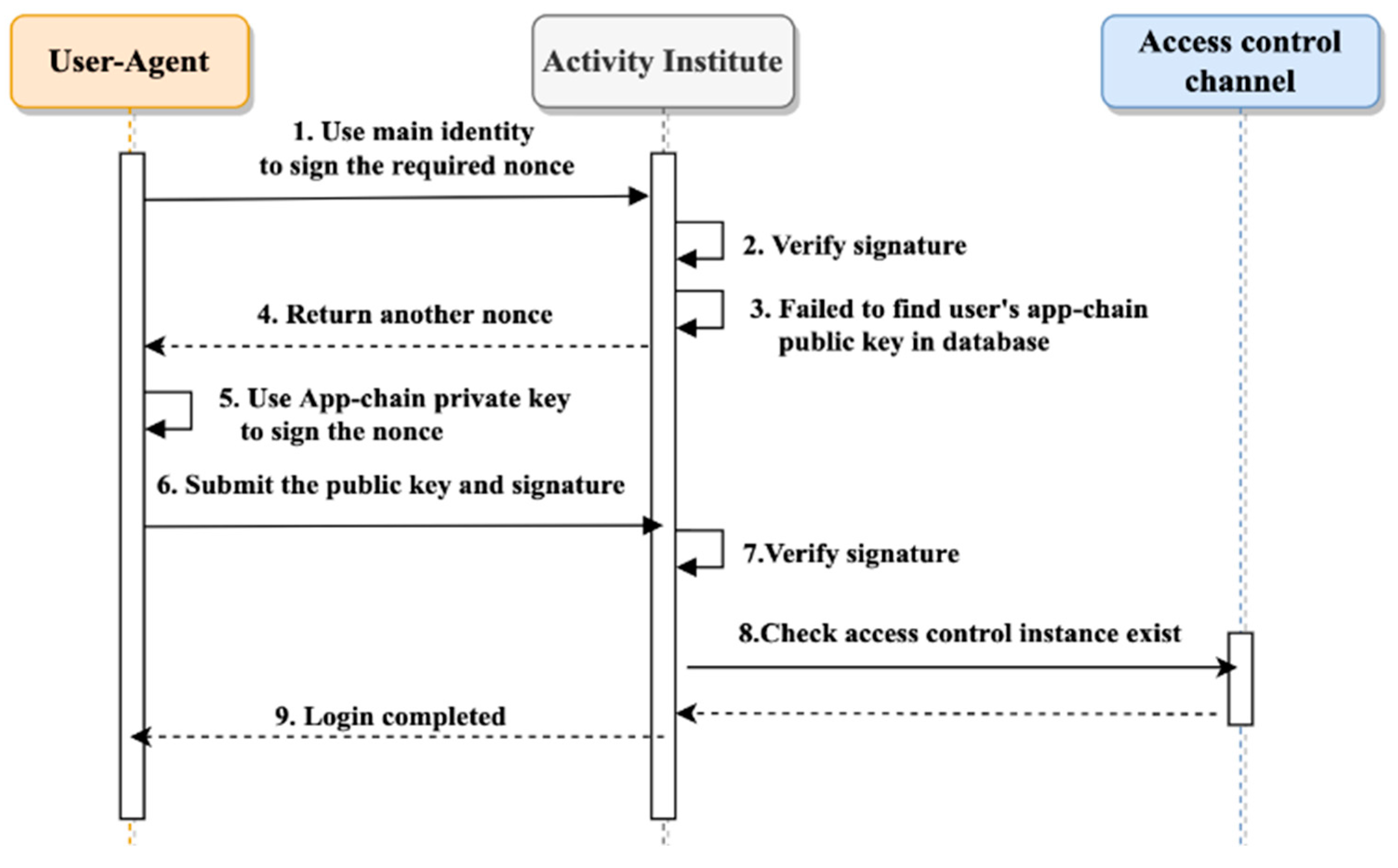
Figure 12 illustrates the login flow when the user first accesses another organization. In the e-portfolio ecosystem, this workflow takes place when a student participates in an activity.
Figure 12. Initial login flow.
The login process involves the following steps:
  • The user uses their primary identity to sign a required nonce and generate a digital signature, which is sent to the AO;
  • The AO verifies the signature and queries the database to determine whether the user is logging in for the first time;
  • If the user’s EApp-chain Puk does not exist in the database, the AO creates another nonce and asks the user to sign it with their EApp-chain Prk;
  • The AO uses the EApp-chain Puk to verify the signature and find the ACin in the app-chain;
  • The AO records the relationship between the primary identity and the EApp-chain Puk in the database to record that the user has finished the initial login.
It is crucial to understand that until the initial login is completed, the AO does not know the user’s identity within the EApp-chain.
This login flow ensures the security of the e-portfolio ecosystem by verifying the user’s identity and recording their access to the EApp-chain.
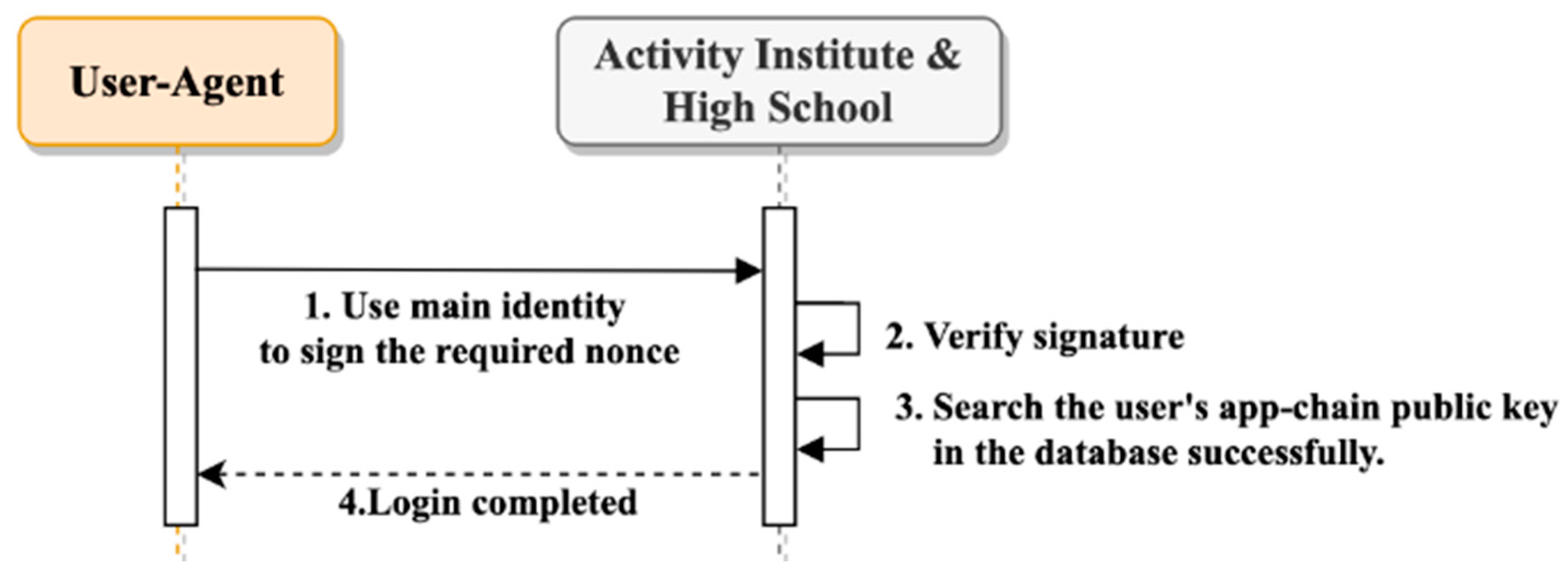
Figure 13 shows the general login flow for the e-portfolio ecosystem. Once the user has completed the initial login process and the organization has recorded their identity within the EApp-chain, they can use their primary identity to generate a digital signature for general login.
Figure 13. General login flow.
The general login flow involves the following steps:
  • The user creates a digital signature with their primary identity and forwards it to the AO;
  • The AO verifies the signature and uses the EApp-chain Puk to find the ACin in the EApp-chain;
  • The ACin determines if the user possesses the required access rights to access the requested resources.
If the user is authorized, the AO grants them access to the requested resources.
By using a digital signature for login, the e-portfolio ecosystem ensures the security of user data while providing a convenient and efficient login experience.

4.2.3. Activity Organization Creates an Award for User

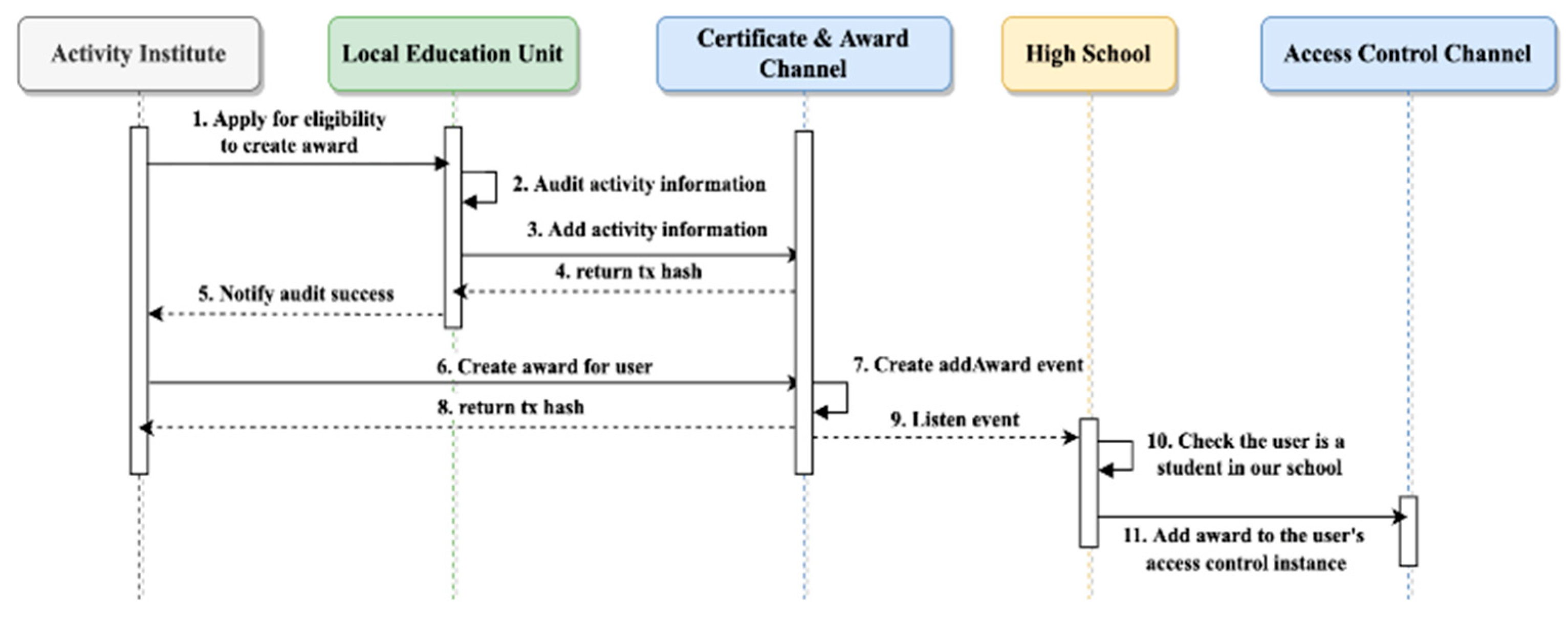
Figure 14 outlines the process for an AO to create awards for a user in the e-portfolio ecosystem. As AOs are not peer nodes in the EApp-chain, they must apply to LEUs to gain eligibility for award creation. The LEU conducts an audit of the application information submitted by the AO, including details such as activity name, type, number of awards to be created, and authorization API. Upon approval, the AO is included in the CaAch. Subsequently, it can invoke the createAward function in the AMcon, facilitating the generation of credible award records stored securely in the blockchain ledger.
Figure 14. Creating award flow.
The award creation process involves the following steps to ensure the credibility of awards within the e-portfolio ecosystem:
  • The AO applies to the LEU for eligibility to create awards;
  • The LEU reviews the submitted details and grants approval to the AO to create awards;
  • The AO triggers the createAward function in the AMcon, generating credible award records securely stored in the blockchain ledger;
  • An addAward event is triggered to notify the HS attended by the user about the recently created award;
  • The HS retrieves award information from the event, including the activity name and the user’s Puk;
  • The HS invokes the addAwardForUser function in the ACcon, adding the award to the user’s unconfirmedAward list;
  • The HS notifies the user through email, prompting them to confirm the newly added award.
This robust process ensures that only credible awards are added to a user’s e-portfolio, and users are promptly notified of any new awards. Establishing a secure and reliable system for award creation and verification enhances the overall credibility of awards within the e-portfolio ecosystem, fostering increased user participation in activities.

4.2.4. Access Control

Within each EApp-chain, an ACin functions as a repository for the user’s authorization actions. The user, utilizing their ecosystem identity, has control over the ACin stored within the EApp-chain. Leveraging the decentralization inherent in blockchain technology, the user’s authorization status remains secure from tampering or forgery, provided the user safely safeguards their Prk. This ensures the integrity of the authorization system, enhancing trust in the user’s control over their access permissions within the EApp-chain.
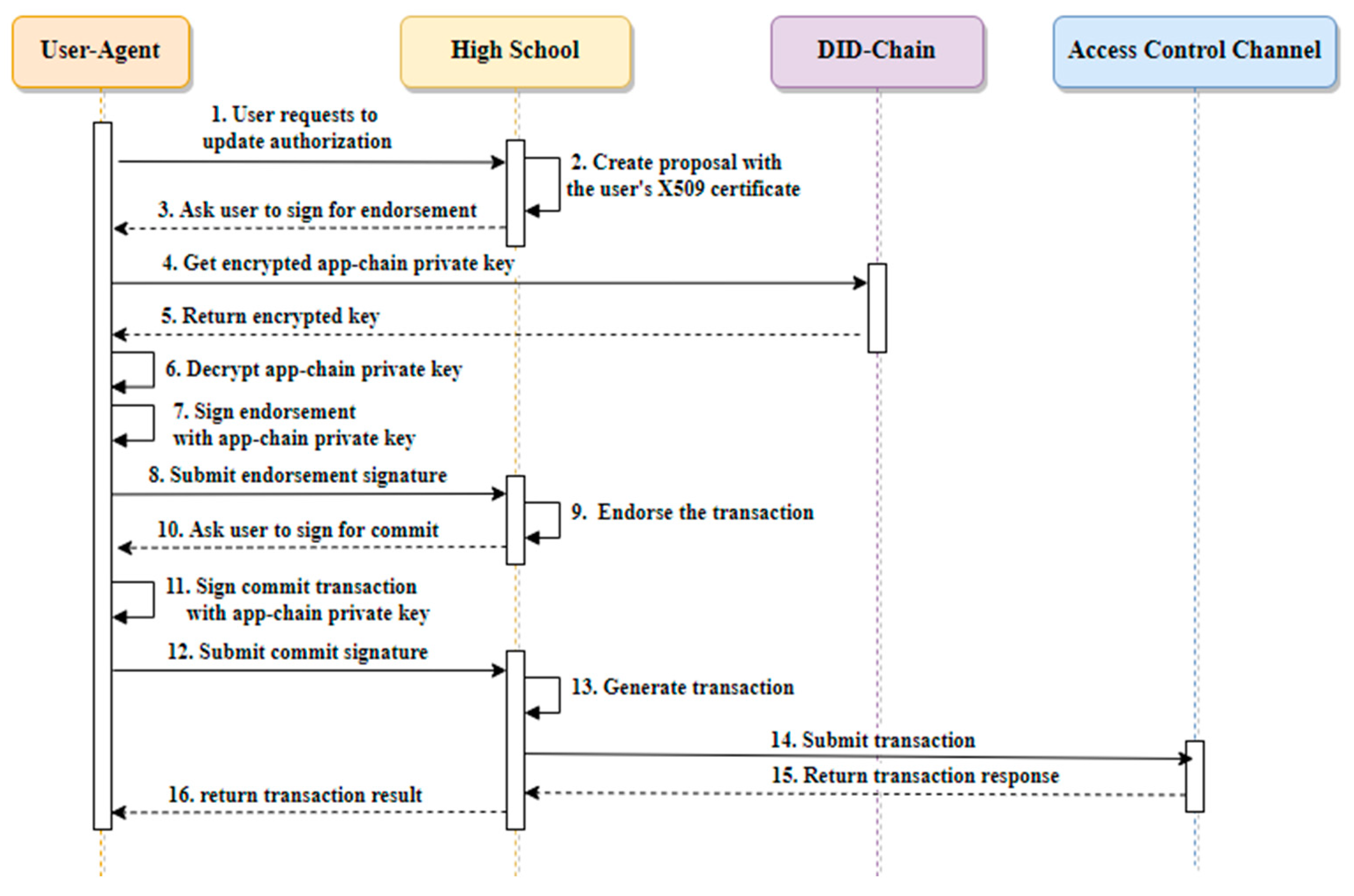
In Figure 15, the diagram illustrates how users manage access permissions within the EApp-chain. To fulfill the SSI requirement, offline signing is utilized instead of storing the Prk in the organization or mandating users to install the SDK. This process encompasses various user operations for managing their ACins, including functions like updatePermission, revokePermission, and confirmAward within the ACcon. For clarity, let us delve into the workings of the updatePermission function as an illustrative example.
Figure 15. Authorization flow.
The user initiates the authorization process by determining who is granted access and specifying the data consented for review. Upon receiving the user’s request, the HS generates a transaction proposal utilizing both the user’s X.509 certificate and the pertinent request parameters. Following this, the user is prompted to sign the proposal to facilitate the endorsement process.
Afterward, the user acquires the EApp-chain Prk, encrypted by the primary identity from the PIcon. Decrypting the key, the user signs the proposal. Upon receiving the signed proposal, the endorsement node at the HS evaluates and endorses it. During the simulation of the proposal’s execution, the endorsement node verifies the signature against the Puk in the X.509 certificate and confirms the user’s right to invoke the smart contract.
In the endorsement process, if the user executes the evaluate operation without necessitating changes to the world state in the ledger, the result is obtained after the endorsement. On the other hand, if the transaction involves changes to the world state, the user needs to sign the proposal again to commit the transaction.
Finally, the HS submits the transaction, incorporating the commit signature, to the orderer node. Upon receiving the orderer response, the transaction is recorded in the ledger, thereby concluding the authorization process. This meticulous approach ensures the integrity and security of the authorization actions within the EApp-chain.

4.2.5. Data Sharing

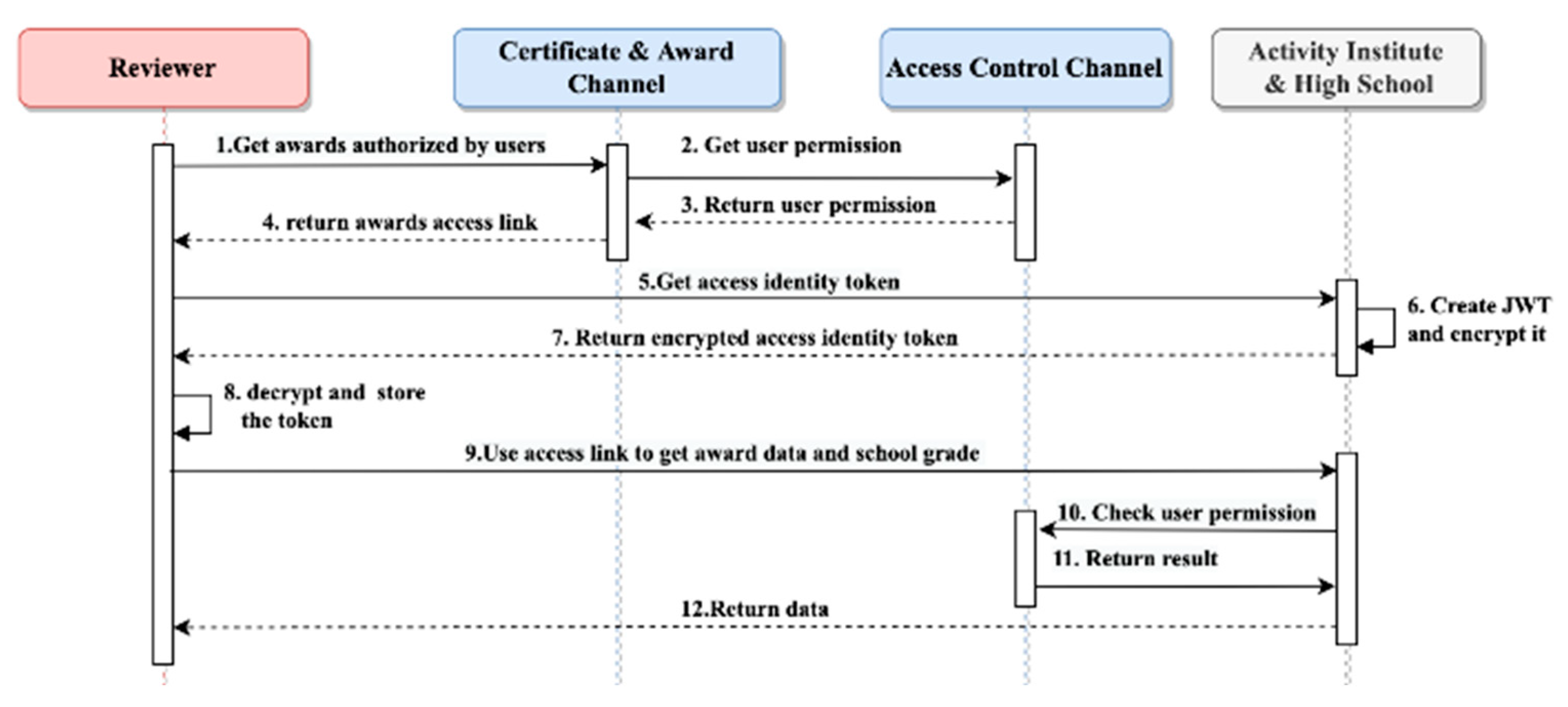
In Figure 16, the flow illustrates how an RE can access review data authorized by the user. Initially, the RE initiates the process by invoking the getAccessLink function in the AMcon to retrieve the access link for the awards. Within the execution of the getAccessLink function, the AMcon internally calls the getPermission function. This function facilitates obtaining the user’s authorization for the RE and subsequently returns the relevant access link for the awards, adhering to the permissions granted by the user.
Figure 16. Data sharing flow.
Following this, the RE provides their EApp-chain Puk to the resource server for authentication, aiming to acquire an access identity token. The resource server, in response, generates the access identity token and encrypts it using the applicant’s Puk. Only the applicant who holds the corresponding Prk can decrypt and access the token.
Table 3 outlines the structure of the access identity token, featuring a crucial parameter known as expiresIn. This parameter is vital for the system’s security, determining the duration during which the authorized identity remains valid. It is imperative for the applicant to securely safeguard the token to prevent identity theft. In scenarios demanding high data security, data providers can set a brief expiration time for frequent authentication, thereby minimizing the risk of token theft.
Table 3. The structure of access identity token.
With the access identity token and access link in hand, the reviewer can employ these credentials to access the data authorized by the user from the data providers. Prior to releasing the data, the data providers validate the user’s permission status in the ACch. This meticulous process ensures that the RE efficiently obtains the user’s review data in a secure and reliable manner.

5. DApp Demonstration

5.1. DID-Chain

Creating a Self-Sovereign Identity

In the DID-chain, two identity types—users and entities—register with real-name authentication, each submitting forms to apply for an SSI. Once registered, they bind their Ethereum accounts as primary identities to manage their PIcons. Entities also require additional encryption of user data using Puk via the Metamask API.
After binding, users and entities receive a PIcon for managing their identity across ecosystems. For example, in the e-portfolio ecosystem, users encrypt their CSR with the organization’s Puk and record it on the blockchain. Since HLF lacks browser wallet support, the EApp-chain Prk is encrypted with the primary identity’s Puk and stored in the PIcon. For a detailed demonstration, see [7].

5.2. EApp-Chain

5.2.1. Creating Access Control Instance

After submitting their CSR, users can log into the chosen organization using their primary identity. The organization verifies the user’s digital signature, enrolls them using the stored CSR, and creates ACins with profile attributes like rank, grade, and e-portfolio files. This allows users to manage their data authorization.

5.2.2. Users Login for the First Time to Another Organization

For their initial login to another organization, users provide the ecosystem’s Puk, decrypt the EApp-chain Prk with their primary identity, and sign a nonce for identity validation. After this, their subsequent logins only require the primary identity.

5.2.3. Activity Organizations Create Awards for Users

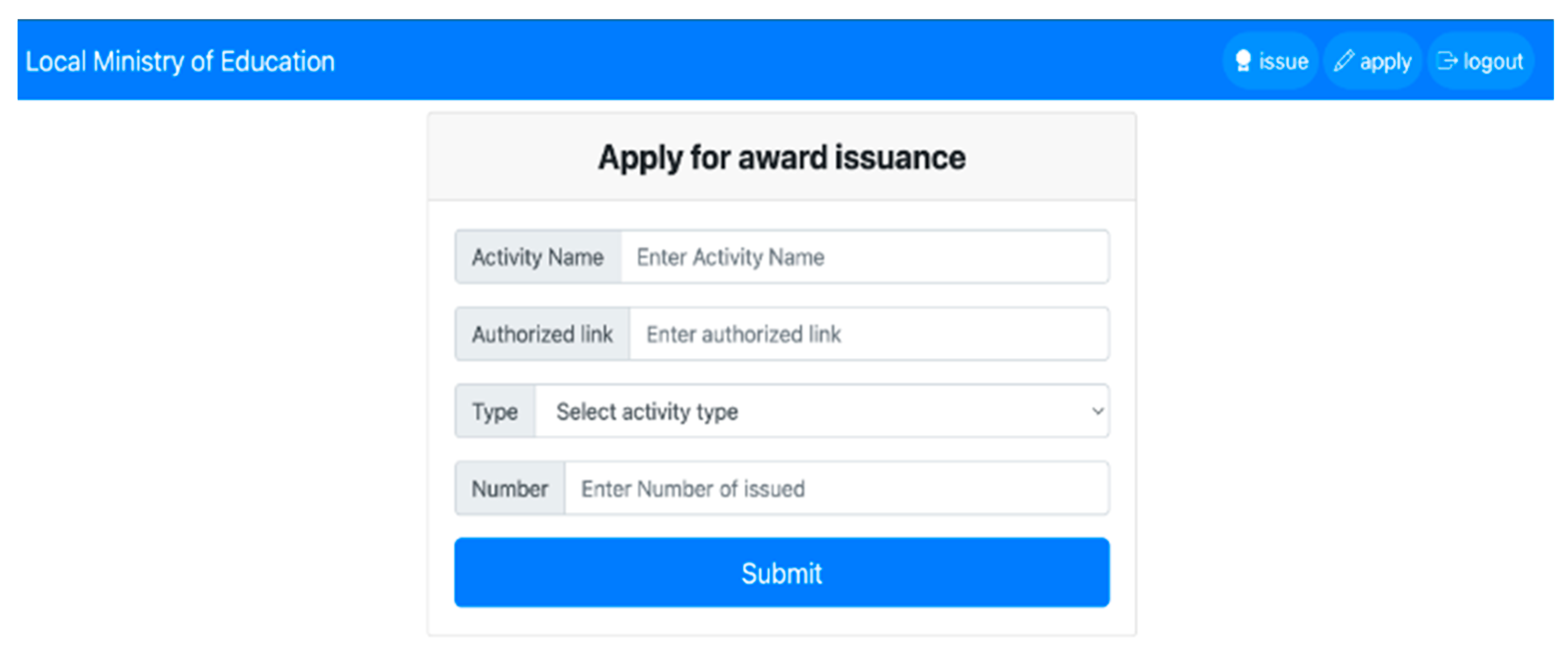
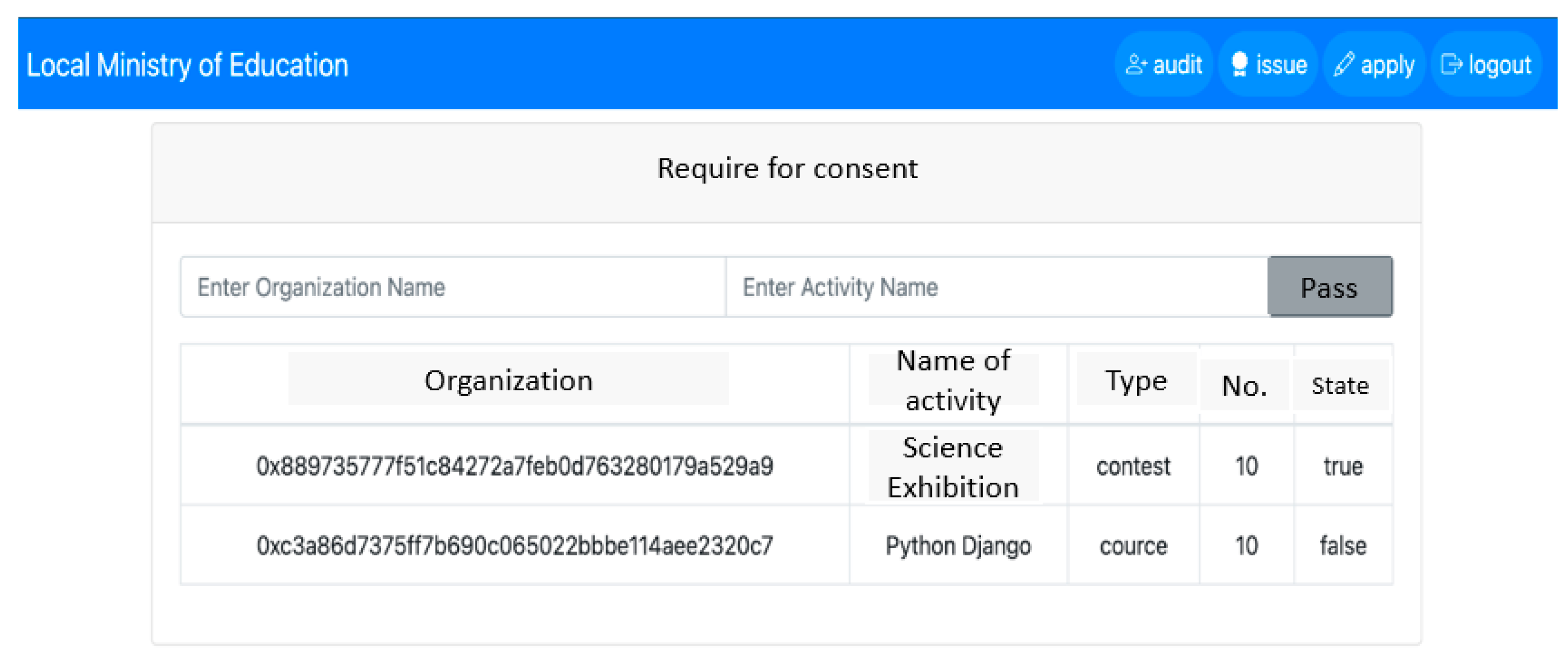
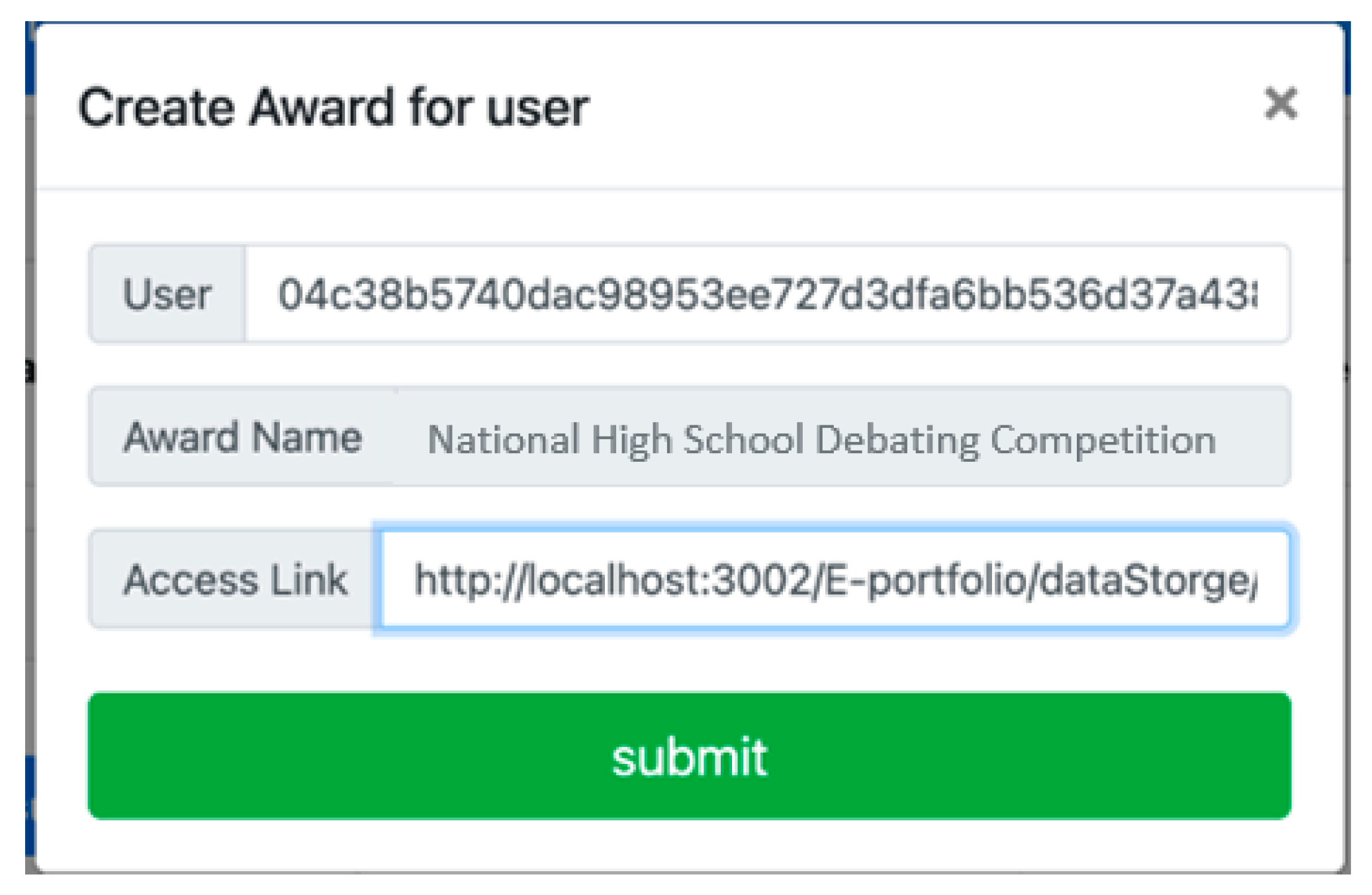
Activity organizations must submit applications to the local education unit to obtain qualifications for award creation, as shown in Figure 17. After the organization requests consent, the local educational unit evaluates and approves the application. This approval increases the award’s value and credibility, as illustrated in Figure 18. Once the local educational unit grants approval for the certificate, the organization can create and issue awards to users, as depicted in Figure 19.
Figure 17. Applying for certificate issuance.
Figure 18. Auditing activity/organization application.
Figure 19. Creating an award for user.

5.2.4. Confirming Award and Authorization

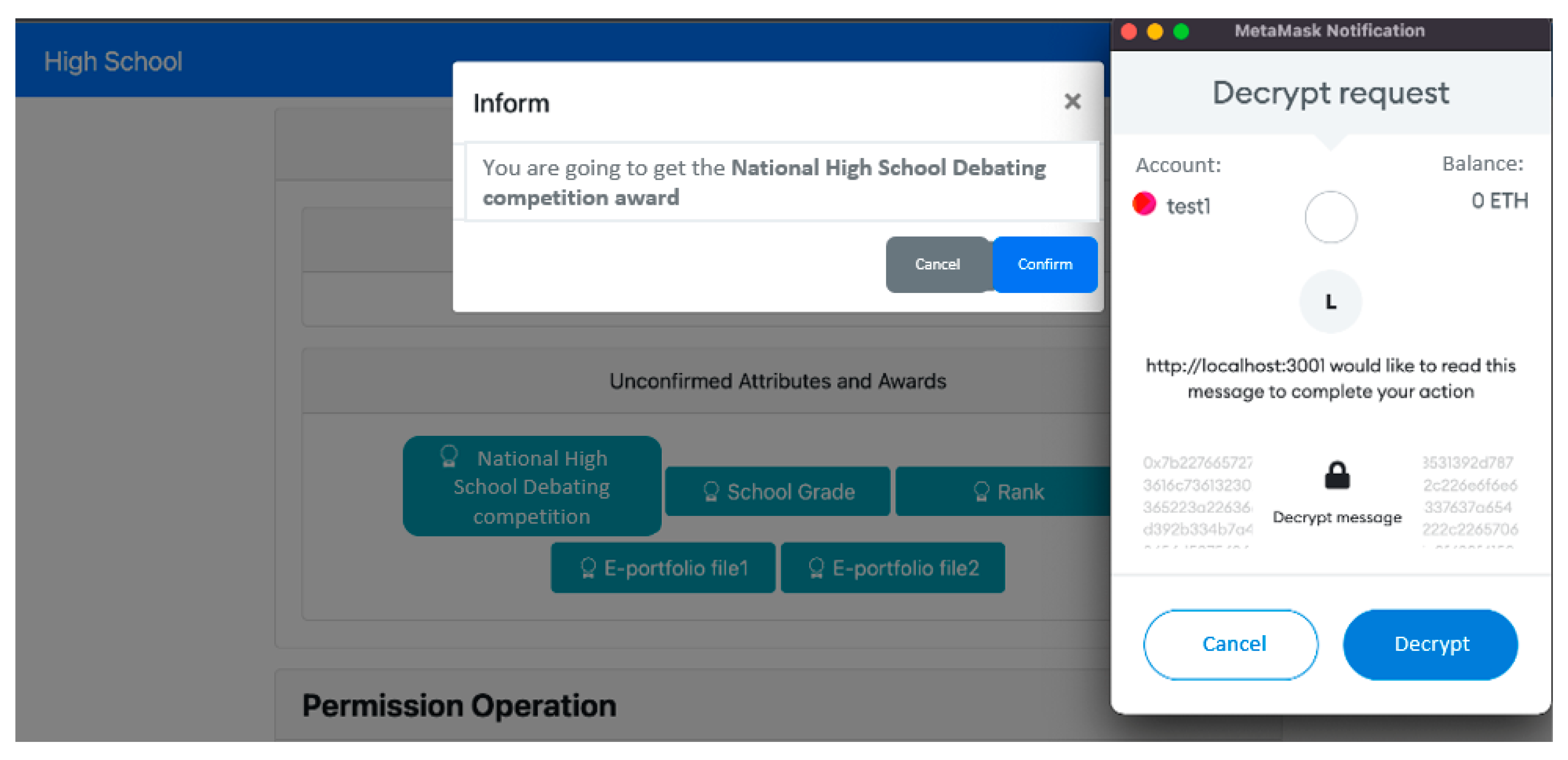
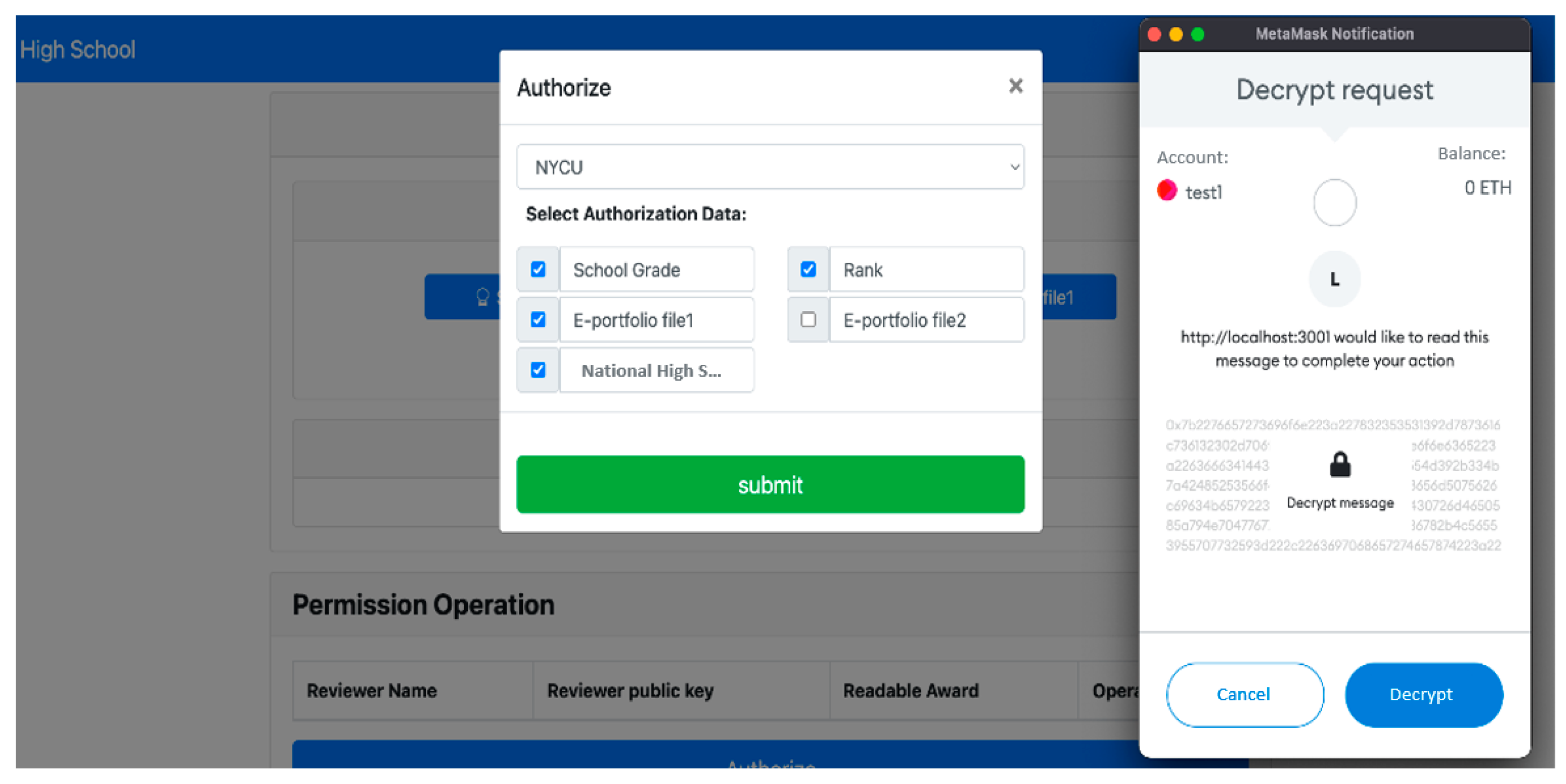
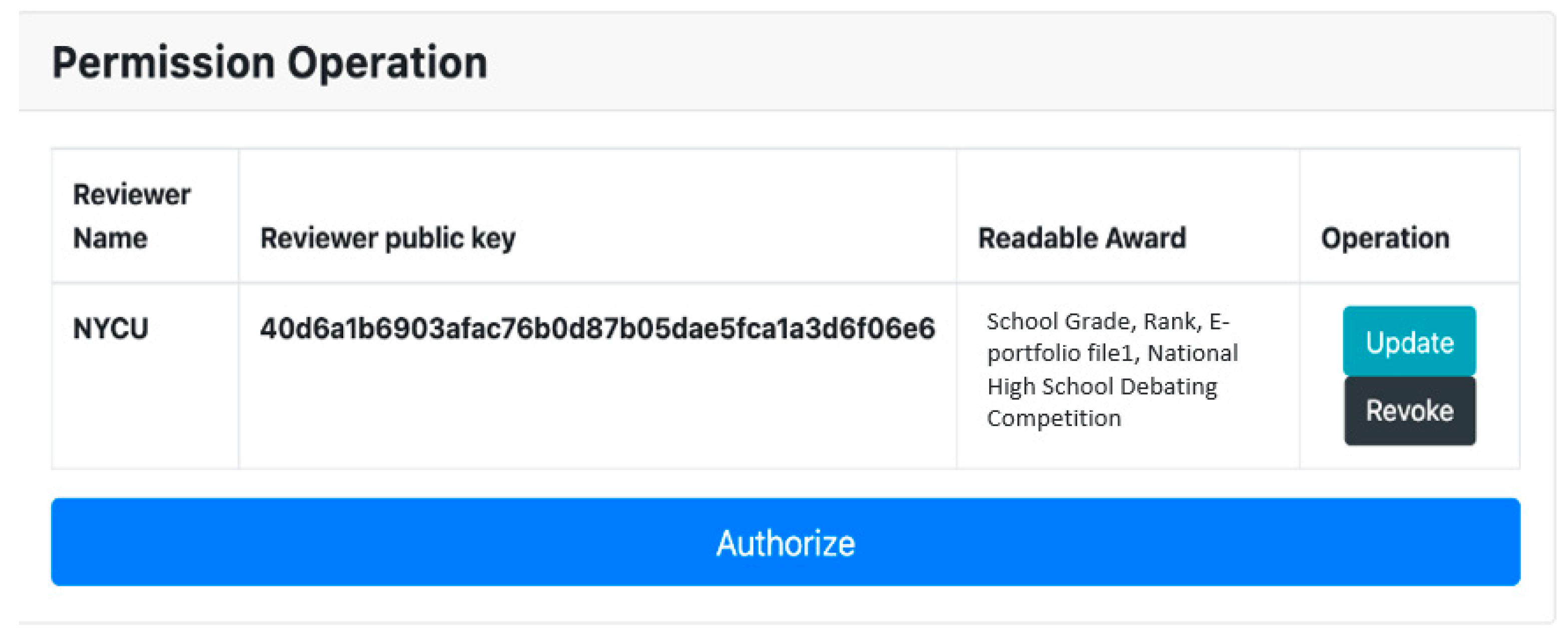
In Figure 20, we observe the Confirm Award Page. After an activity organization establishes an award for the user, the user has the option to confirm and receive the award. Only confirmed awards can be utilized for authorization reviews, as shown in Figure 21. To achieve this, the user decrypts the EApp-chain Prk using their primary identity and uses it to confirm the award, overseeing the authorization of their own data, as depicted in Figure 22.
Figure 20. Confirming award.
Figure 21. Authorization.
Figure 22. Authorization management.

5.2.5. Data Sharing

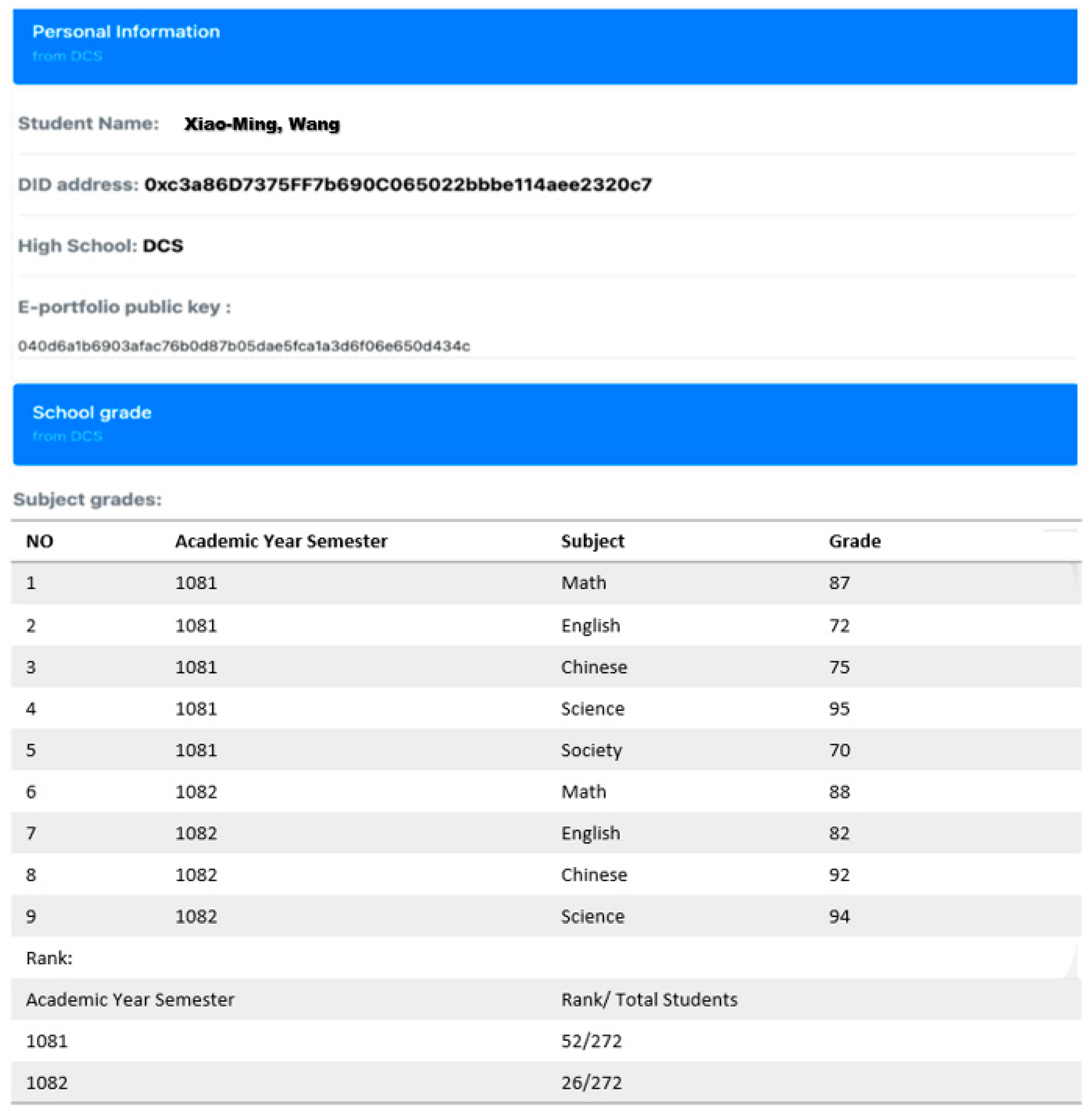
University reviewers receive a roster of students who have undergone evaluations by the Ministry of Education. They acquire a valid access link from the AMcon, ensuring that reviewers can exclusively access review data that have been consented to by the students, as illustrated in Figure 23.
Figure 23. Review page.

6. Experimental Evaluation

6.1. Test Environment

Our analysis was conducted utilizing the computer specifications outlined in Table 4. The deployment of the DID-chain and EApp-chain was achieved using Docker, with blockchain nodes managed through Docker Compose. Each Docker container was allocated four GB of RAM to use. These two chains operated in distinct subnets, virtualized by Docker Compose. For the performance assessment of the web applications, Apache JMeter [49], an open-source load testing software, was employed. The simulation involved a scenario in which numerous users sent requests and interacted with the blockchain network.
Table 4. Computer specification.
We select throughput and latency as our primary evaluation metric to assess the system’s ability to manage high volumes of requests effectively. Taiwan has a total of 580,000 high school students, who are likely to generate the most activity on the platform. Assuming that each student uploads files once daily, the system would need to handle around seven requests per second on average. At peak hours, we assume the request rates will be ten times [50] more than the average, with 70 requests per second. This throughput measurement helps determine whether the system can support consistent, reliable access and processing for a large user base without performance degradation.

6.2. DID-Chain

In this section, we describe the network setting parameters of the DID-chain and evaluate the gas consumption of contract functions and throughput.

6.2.1. Network Setup

To build our proposed DID-chain using the Ethereum blockchain, we utilized the Geth docker image. The Ethereum blockchain’s setting parameters are detailed in Table 5. Each government department responsible for identity-related matters acted as a node to form a public blockchain. Users and organizations could interact with Ethereum nodes using web3.js. For our DID-chain, we implemented the Proof of Authority (PoA) consensus algorithm. The PoA algorithm designates a set of accounts as authorities authorized to seal received transactions to generate a new block. Compared to the Proof of Work (PoW) algorithm, the PoA algorithm not only saves energy but also provides better TPS. Additionally, we used a lower mining difficulty and a shorter block time as all the blockchain nodes were trusted government departments.
Table 5. DID-chain setting parameters.

6.2.2. Gas Consumption

Gas refers to the resources required for computation on the Ethereum network. Gas consumption is related to modifying the state in the blockchain and the complexity of the contract function. Table 6 provides information on the usage frequency and gas consumption of deploying contracts and calling contract functions. It can be observed that operations with higher gas consumption, such as deploying contracts and the bindUser function, are used less frequently. In contrast, functions with a higher usage frequency, such as setEncryptMaterial and setEncryptAppPrivateKey, have lower levels of gas consumption.
Table 6. Usage frequency and gas consumption.

6.2.3. Function Throughput

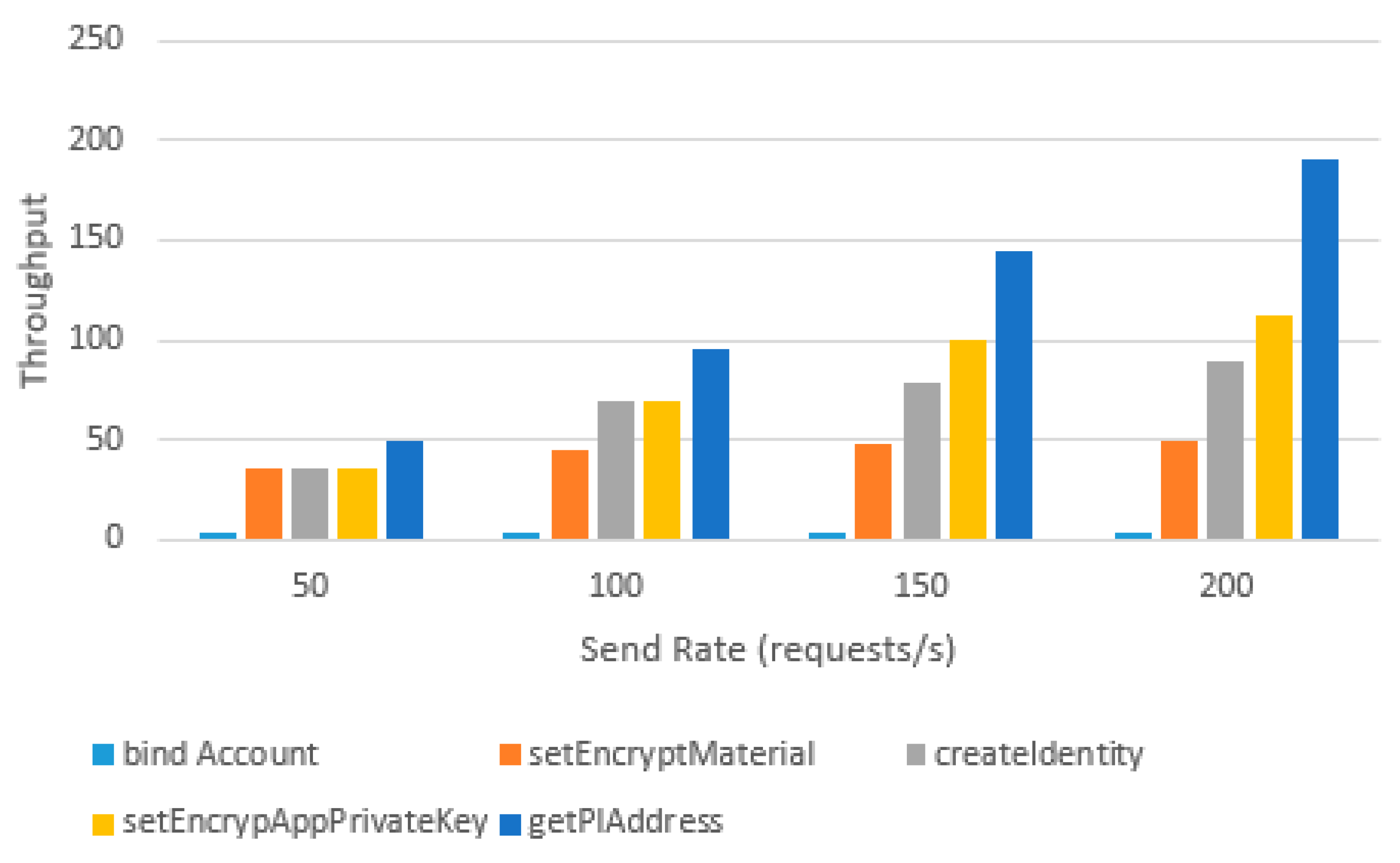
Figure 24 displays the throughput of smart functions at different send rates. We simulated sending 50, 100, 150, and 200 requests per second to the Ethereum blockchain node using JMeter. The throughput was found to be related to gas consumption, in which a higher level of gas consumption indicates more blockchain state changes and a lower throughput. The bindUser function had the lowest throughput among all the tested functions, as it could only be processed four times per second. The bindUser function involves creating and transferring the PIcon to the user, resulting in a large write operation to the blockchain. Despite its low throughput, the bindUser function is only executed once per user to obtain the PIcon.
Figure 24. Throughput vs send rate.

6.3. EApp-Chain

In this section, we describe the network setting parameters of the EApp-chain and analyze the throughput of contract functions.

6.3.1. Network Setup

We utilized Fablo [51], an HLF network creation and management tool, to build our HLF network. Using Fablo, we created a test network and deployed smart contracts according to our requirements. Table 7 presents the configuration parameters for the HLF blockchain. The configuration involves a total of three nodes, with two nodes joining the CaAch, while all nodes participate in the ACch. To avoid single orderer node failure, we utilized the Raft consensus algorithm, ensuring the network remains available as long as more than half of the orderer nodes are alive. We also set the BatchTimeout to 0.5 s to pack transactions into blocks quickly.
Table 7. E-portfolio App-chain parameters.

6.3.2. Function Throughput

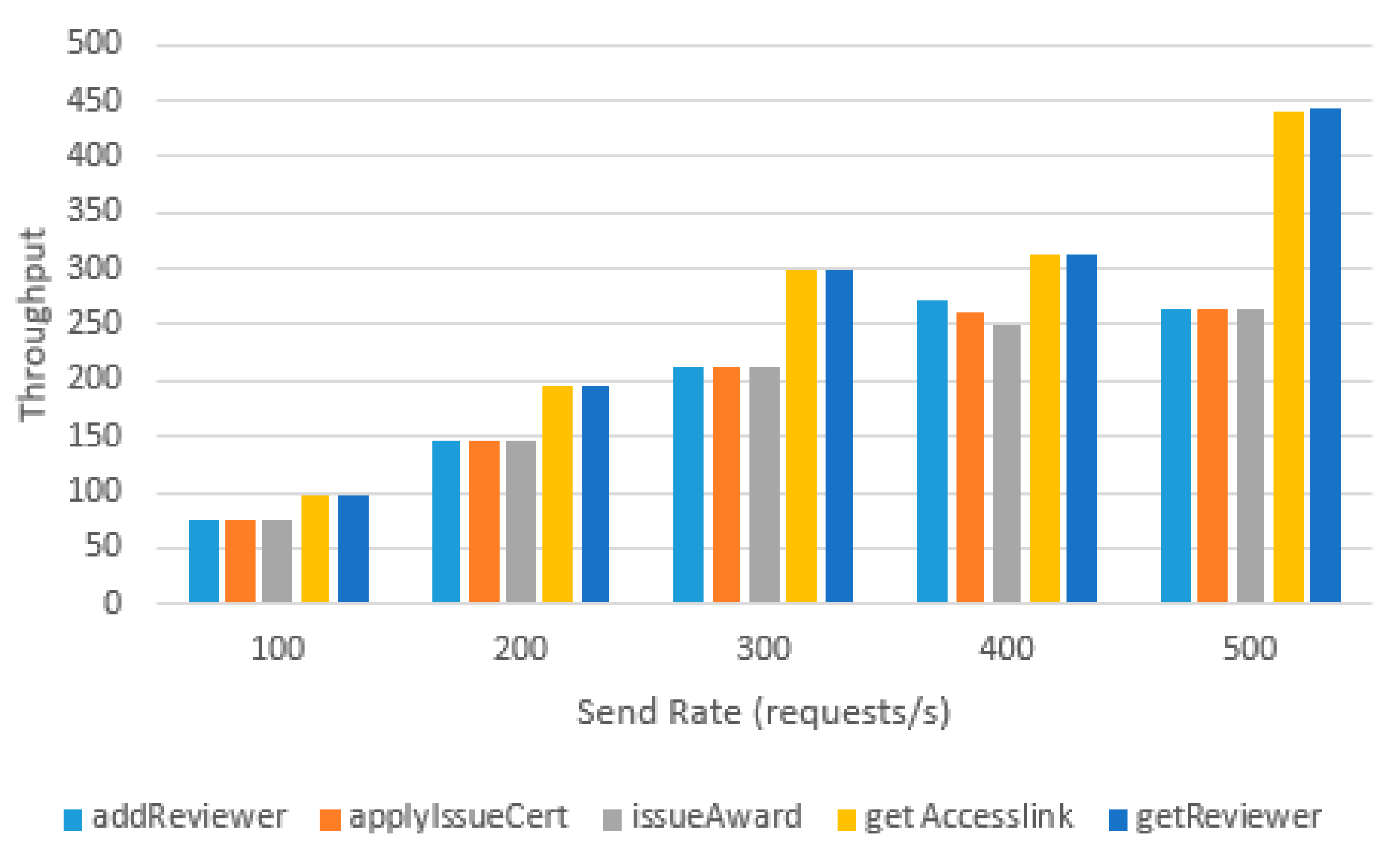
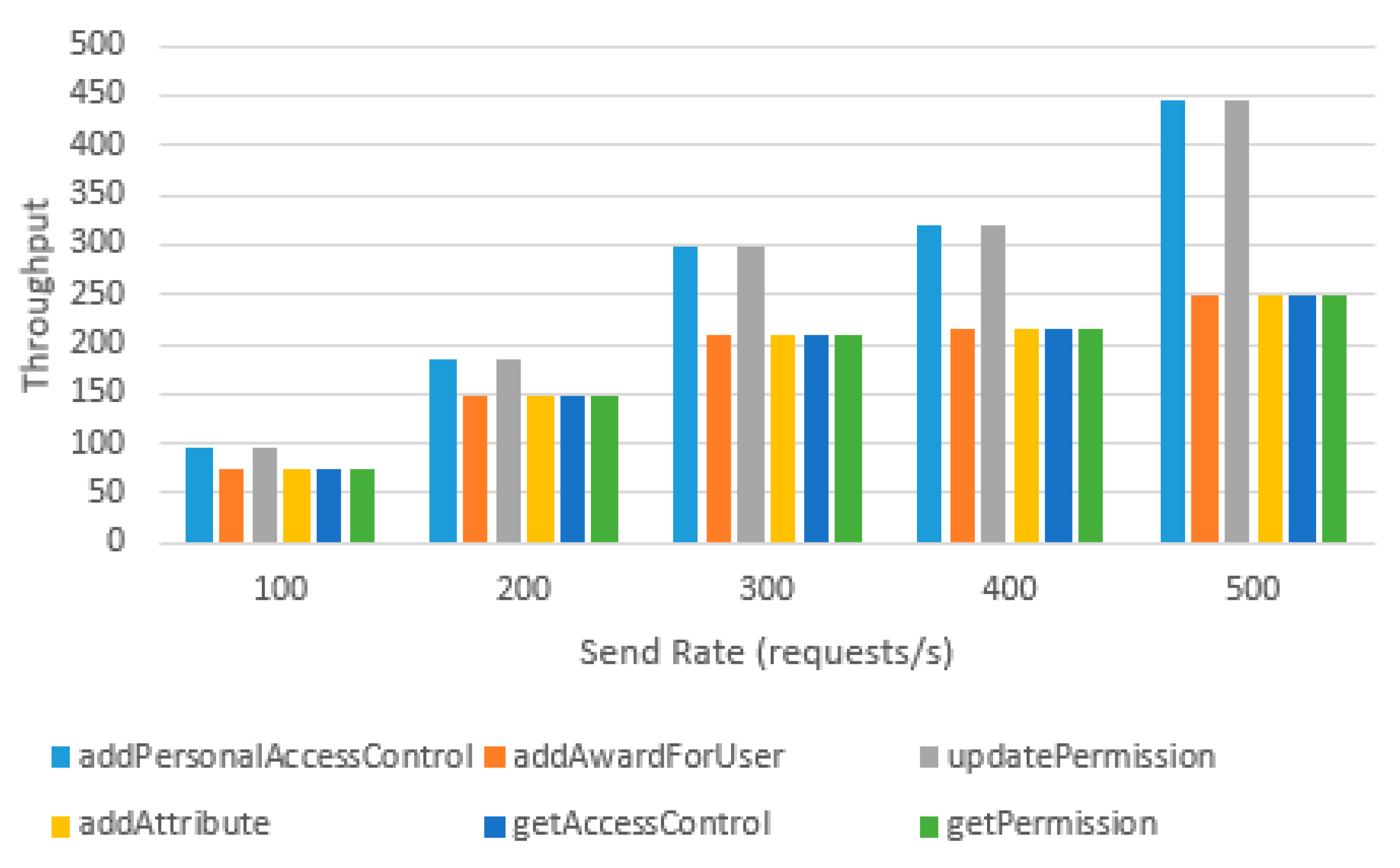
To provide clarification, Figure 25 and Figure 26 depict the performance of smart contract functions on both the CaAch and the ACch. The measurements were taken under distinct sent rates. The results reveal that the read and write throughputs on both channels are similar. Functions requiring cross-channel read operations, such as getAccessLink, exhibit no substantial variance in throughput between the two channels. Additionally, the throughput of read operations, including getAccessLink, getReviewer, and getAccessControl, is greater than that of write operations. As the sending rate increases, read operations demonstrate a linear increase in throughput, while the throughput of write operations remains constant at around 250 transactions per second.
Figure 25. Function throughput on CaAch.
Figure 26. Function throughput on ACch.

6.3.3. Throughput and Latency

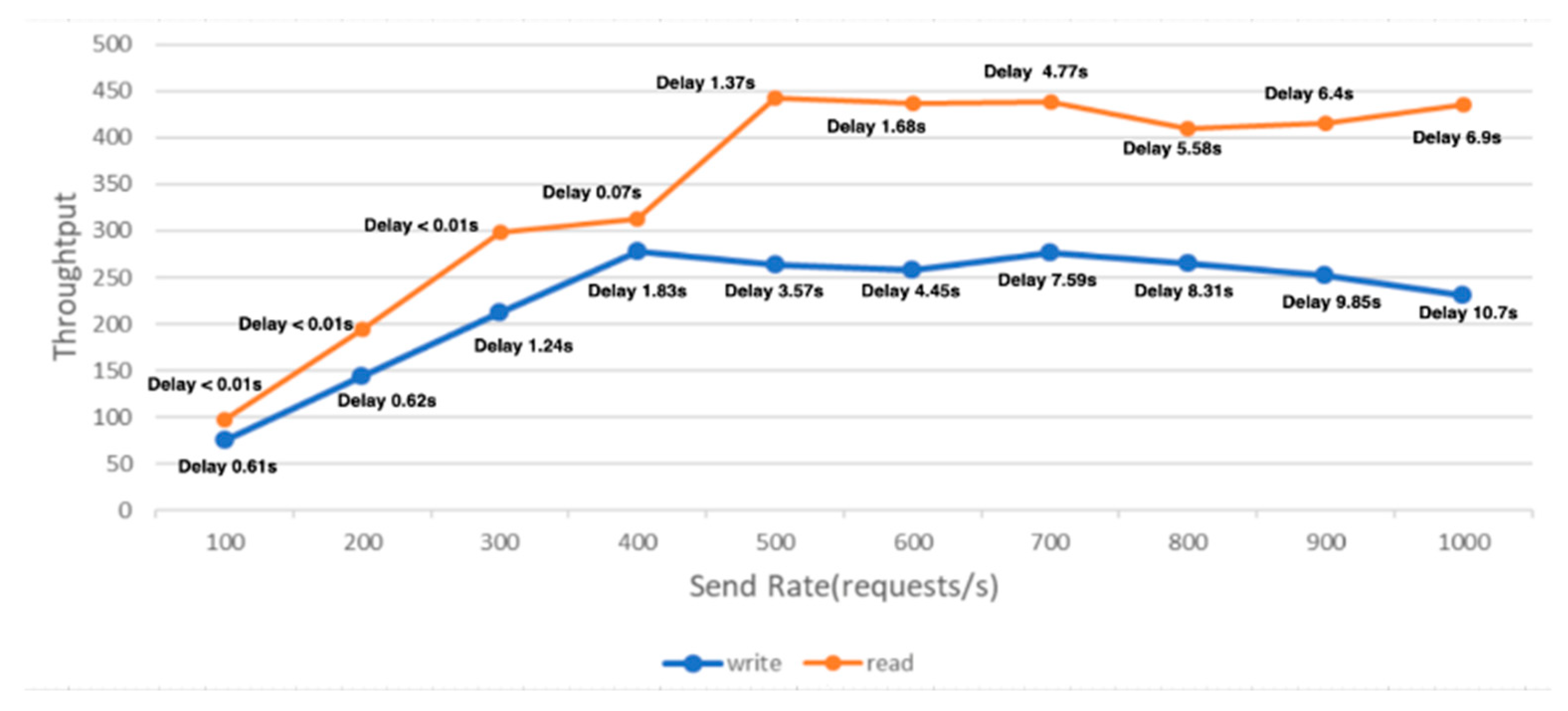
In the experiment, we gradually raised the sending rate from 100 to 1000 to assess user performance. As depicted in Figure 27, the data show that, for write operations at a sending rate of 400, the latency stays under two seconds, with a throughput close to 250 transactions. Likewise, for read operations at a sending rate of 600, the latency consistently remains under two seconds, achieving a throughput of around 450 transactions.
Figure 27. Throughput and latency.

6.3.4. Offline Sign Latency

We conducted a comparison of the latency between using offline signatures and escrow Prks, by simulating users updating their permissions 1000 times using both methods. The results are presented in Table 8, which indicates that the difference in latency between the two methods is approximately 18 ms. This means that adopting offline signatures does not affect the user experience significantly and is more secure than escrow Prk. It also helps achieve the goal of SSI.
Table 8. Latency of offline signing vs escrow private key.

6.4. System Comparison

In this section, we will conduct a comparative analysis with several research studies that share a common research interest. The outcomes of this comparison are presented in Table 9 for reference and evaluation. We employ six evaluation metrics to assess various schemes: access control model, data authorization, extracurricular activities, decentralized identity, parallel execution, and off-chain storage. The access control model elucidates data utilization methods. Data authorization reflects data trustworthiness. Extracurricular activities pertain to the system’s capacity to record additional activities. Decentralized identity evaluates system security. Parallel execution addresses the system’s ability to manage concurrent instructions, crucial for accommodating multiple users simultaneously. Lastly, off-chain storage enhances system efficiency by preventing prolonged execution times that may result from storing large data solely on-chain, necessitating a balance between on-chain and off-chain data storage.
Table 9. A comparison of the results between this paper and previous studies.
Stuchain [40] is an innovative system that integrates two access control models, ABAC and RBAC, under the implementation framework of HLF. Within the Stuchain platform, teachers possess the capability to meticulously record and manage students’ learning histories. Conversely, students have the authority to selectively grant access to their data to specific educational institutions that demonstrate an interest in their academic progress. It is important to highlight that students’ learning histories are securely stored within a traditional database infrastructure, as opposed to being stored on a blockchain. Furthermore, given that these data originate from teachers, they may not encompass a comprehensive overview of all facets of students’ interests. Consequently, educational institutions may not gain a complete understanding of each student’s individual interests solely through these data.
In a paper [41], authors proposed an e-portfolio system that was implemented using HLF. The e-portfolio system employs seven chaincodes: CPEM_C manages teacher evaluations and student targets for department administrators. VAAMC_C handles visitor access and file update authorizations. AUMSEAC_C oversees student e-portfolio updates, while CMSEAE_C is dedicated to course management system evaluations. IMTCTP_C manages course teaching process data, ERM_C handles student evaluation results, and IMSCPP_C deals with student course participation information. While this system effectively enables students to manage access control rights for their data and allows teachers to evaluate student learning history, it does have limitations. Notably, it does not provide a mechanism for recording extracurricular activities. This limitation could potentially hinder reviewers’ ability to gain a comprehensive understanding of a student’s overall development and capabilities.
Merlec et al. [42] proposed a system that operates on the Ethereum blockchain and is structured around four layers, with a central secure e-portfolio management layer designed to provide dependable and secure management functionalities. These functionalities encompass activities such as the following: managing membership enrollments, user profiles, role assignments, and decentralized enrollment procedures; efficiently managing the issuance and r evocation of membership credentials; overseeing personal information within user profiles; and effectively administering user role assignments. Furthermore, it facilitates seamless connections between learners and educators, as well as job seekers and employers, placing a strong emphasis on safeguarding user privacy and ensuring the secure and reliable exchange of educational data. However, it is important to note that implementing the entire system on the Ethereum blockchain may result in high operational costs due to smart contract execution fees.
The PETS architectural framework, introduced in [43], is tailored for blockchain-based solutions in higher education. It links on-chain and off-chain data through a cohesive data engine, ensuring security, governance, and visibility. The framework standardizes access via APIs, fostering developer collaboration. Its data logistics platform automates data transfers, simplifying management. This architecture aids software architects in evaluating blockchain technologies and supports research on decision-making frameworks for blockchain systems.
EduRSS [44], as detailed in a research paper, is a blockchain-based system for securely storing and sharing educational records. It integrates blockchain, storage servers, and cryptography to create a reliable platform. Blockchain ensures data security and reliability, with smart contracts managing storage and sharing. Educational records are stored off-chain in encrypted form, while their hashes are maintained on the blockchain, ensuring data integrity through periodic anchoring. EduRSS benefits educational institutions and individuals by offering a secure, cost-effective solution that enables efficient, privacy-preserving record management and sharing. Experimental results confirm its cost-effectiveness compared to similar solutions.
MOOCsChain [45], a blockchain-based scheme for secure storage and sharing within MOOCs, addresses the need for the reliable management of Electronic Learning Records (ELRs). It uses blockchain to protect learner data privacy without complex cryptography. MOOCsChain provides efficient conditional anonymity, robust security, and streamlined content sharing via smart contracts. ELR components are stored on the blockchain, with original data in the InterPlanetary File System (IPFS). Evaluation on the HLF 1.4 platform shows MOOCsChain’s superiority, offering online learners and educators secure ELR management with efficient anonymity and strong security assurances.

7. Conclusions and Future Avenues for Exploration

7.1. Conclusions

This research introduces a groundbreaking self-sovereign identity-based infrastructure tailored to enhance personal information security control within the dynamic e-portfolio ecosystem. Addressing three pivotal requirements, the system aims to revolutionize the landscape of user identity, data source credibility, and user-controlled data authorization. Firstly, users are endowed with self-sovereign identities, fostering seamless login experiences and identity management across diverse ecosystems. Anchored in a decentralized identity chain, these identities are resilient against tampering or denial. Secondly, a collective audit by educational institutions ensures the credibility of data sources, granting issuance rights to only those activity organizations that successfully pass the stringent evaluation. Thirdly, users wield absolute control over data authorization, with their dynamic access rights recorded securely in the blockchain ledger. This privacy-centric approach, utilizing multiple blockchains and channels, shields user-owned data attributes from prying eyes. The system’s ability to process transactions concurrently is heightened through the parallel execution of transactions on different blockchains, with the App-chain handling more frequent transactions efficiently.

7.2. Future Avenues for Exploration

Looking ahead, the research identifies a lacuna in the realm of identity management—specifically, the absence of a wallet accommodating multiple blockchain frameworks. Future endeavors will be directed towards crafting a cross-blockchain wallet, a versatile solution enabling users to manage Prks seamlessly across different blockchains, ensuring a convenient and comprehensive self-sovereign identity management experience.
Expanding the ecosystem’s versatility is another key focus area, with plans to integrate additional organizations such as universities and LinkedIn. This expansion will empower users to present credible data on their education and experience to prospective employers. Tailoring users’ profile presentation page for college reviewers or interviewers will offer customization options, facilitating a rapid assessment of applicants’ strengths. Through continuous refinement and expansion, the overarching goal is to establish a robust, trustworthy, and user-friendly platform for personal information management.


Author Contributions

For this research article, the authors contributed as follows: Conceptualization, Y.-H.H., J.-Y.Y., C.-H.L. and S.-M.Y.; Methodology, Y.-H.H., J.-Y.Y., C.-H.L. and S.-M.Y.; Software, Y.-H.H., J.-Y.Y., C.-H.L. and S.-M.Y.; Validation, Y.-H.H., J.-Y.Y., C.-H.L. and S.-M.Y.; Formal Analysis, Y.-H.H., J.-Y.Y., C.-H.L. and S.-M.Y.; Investigation, Y.-H.H., J.-Y.Y., C.-H.L. and S.-M.Y.; Data Curation, Y.-H.H., J.-Y.Y., C.-H.L. and S.-M.Y.; Writing—Original Draft Preparation, J.-Y.Y.; Writing—Review and Editing, Y.-H.H.; Visualization, Y.-H.H., J.-Y.Y., C.-H.L. and S.-M.Y.; Supervision, S.-M.Y.; Project Administration, S.-M.Y. All authors have read and agreed to the published version of the manuscript.

Funding

This research was funded by National Science and Technology council, grant number NSTC 113-2410-H-A49-053-.

Institutional Review Board Statement

Not applicable.

Data Availability Statement

No new data were created or analyzed in this study.

Conflicts of Interest

The authors declare no conflicts of interest.

Appendix A

This table shows the terms and their abbreviations used in this paper.
Table A1. Terms vs. abbreviations.
TermAbbreviation
Blockchain
Decentralized identity blockchainDID-chain
E-portfolio application blockchainEApp-chain
Channel
Certificate and award channelCaAch
Access control channelACch
Smart Contract
Personal identity contractPIcon
Certificate authority manager contractCAMcon
Award manager contractAMcon
Access control contractACcon
Stakeholder
Central education unitCEU
Local education unitLEU
High schoolHS
Activity organizationAO
StudentSTU
ReviewerRE
Other
Self-Sovereign e-portfolio identitySSeI
Certificate Signing RequestsCSRs
Access control instanceAcins
Hyperledger FabricHLF
Private keyPrk
Public keyPuk
JSON Web TokenJWT
Attribute-based access control modelABAC
Role-based access control modelRBAC

References

  1. Ministry of Education of Taiwan. Records of Learning Progress for Upper Secondary Education Stage Students 109 Academic Year Senior High School Information Guide. Available online: https://www.hcvs.hc.edu.tw/resource/openfid.php?id=17272 (accessed on 1 August 2020).
  2. Nakamoto, S. Bitcoin: A peer-to-peer electronic cash system. Decentralized Bus. Rev. 2008, 4, 21260. [Google Scholar]
  3. Buterin, V. A next-generation smart contract and decentralized application platform. White Pap. 2014, 3, 2-1. [Google Scholar]
  4. Daraghmi, E.Y.; Daraghmi, Y.A.; Yuan, S.M. MedChain: A Design of Blockchain-Based System for Medical Records Access and Permissions Management. IEEE Access 2019, 7, 164595–164613. [Google Scholar] [CrossRef]
  5. Popoola, O.; Rodrigues, M.; Marchang, J.; Shenfield, A.; Ikpehia, A.; Popoola, J. A critical literature review of security and privacy in smart home healthcare schemes adopting IoT & blockchain: Problems, challenges and solutions. Blockchain Res. Appl. 2023, 5, 100178. [Google Scholar]
  6. Antwi, M.; Adnane, A.; Ahmad, F.; Hussain, R.; Rehman, M.H.U.; Kerrache, C.A. The case of HyperLedger Fabric as a blockchain solution for healthcare applications. Blockchain Res. Appl. 2021, 2, 100012. [Google Scholar] [CrossRef]
  7. Hsieh, Y.-H.; Guan, X.-Q.; Liao, C.-H.; Yuan, S.-M. Physiological-chain: A privacy preserving physiological data sharing ecosystem. Inf. Process. Manag. 2024, 61, 103761. [Google Scholar] [CrossRef]
  8. Liu, X.; Muhammad, K.; Lloret, J.; Chen, Y.-W.; Yuan, S.-M. Elastic and cost-effective data carrier architecture for smart contract in blockchain. Future Gener. Comput. Syst. 2019, 100, 590–599. [Google Scholar] [CrossRef]
  9. Kharche, A.; Badholia, S.; Upadhyay, R.K. Implementation of blockchain technology in integrated IoT networks for constructing scalable ITS systems in India. Blockchain Res. Appl. 2024, 5, 100188. [Google Scholar] [CrossRef]
  10. Liao, C.H.; Lin, H.E.; Yuan, S.M. Blockchain-Enabled Integrated Market Platform for Contract Production. IEEE Access 2020, 8, 211007–211027. [Google Scholar] [CrossRef]
  11. Xu, X.; Lu, Q.; Liu, Y.; Zhu, L.; Yao, H.; Vasilakos, A.V. Designing blockchain-based applications a case study for imported product traceability. Future Gener. Comput. Syst. 2019, 92, 399–406. [Google Scholar] [CrossRef]
  12. Wamba, S.F.; Queiroz, M.M. Blockchain in the operations and supply chain management: Benefits, challenges and future research opportunities. Int. J. Inf. Manag. 2020, 52, 102064. [Google Scholar] [CrossRef]
  13. Cao, S.; Foth, M.; Powell, W.; Miller, T.; Li, M. A blockchain-based multisignature approach for supply chain governance: A use case from the Australian beef industry. Blockchain Res. Appl. 2022, 3, 100091. [Google Scholar] [CrossRef]
  14. Liao, C.-H.; Guan, X.-Q.; Cheng, J.-H.; Yuan, S.-M. Blockchain-based identity management and access control framework for open banking ecosystem. Future Gener. Comput. Syst. 2022, 135, 450–466. [Google Scholar] [CrossRef]
  15. Zhang, P.; Schmidt, D.C.; White, J.; Dubey, A. Consensus mechanisms and information security technologies. Adv. Comput. 2019, 115, 181–209. [Google Scholar]
  16. Androulaki, E.; Barger, A.; Bortnikov, V.; Cachin, C.; Christidis, K.; De Caro, A.; Enyeart, D.; Ferris, C.; Laventman, G.; Manevich, Y.; et al. Hyperledger fabric: A distributed operating system for permissioned blockchains. In Proceedings of the Thirteenth EuroSys Conference, Porto, Portugal, 23–26 April 2018; pp. 1–15. [Google Scholar]
  17. The Historical Files of Students Learning in Upper Secondary Education. The Guidlines of Senior High Schools in 109 Academic Years. Available online: https://www.hcvs.hc.edu.tw/resource/openfid.php?id=17272 (accessed on 30 October 2022).
  18. Alam, F.; Chowdhury, H.; Kootsookos, A.; Hadgraft, R. Scoping e-portfolios to engineering and ICT education. Procedia Eng. 2015, 105, 852–857. [Google Scholar] [CrossRef][Green Version]
  19. Fedorova, E.P.; Skobleva, E.I. Application of blockchain technology in higher education. Eur. J. Contemp. Educ. 2020, 9, 552–571. [Google Scholar]
  20. Li, C.; Guo, J.; Zhang, G.; Wang, Y.; Sun, Y.; Bie, R. A blockchain system for E-learning assessment and certification. In Proceedings of the 2019 IEEE International Conference on Smart Internet of Things (SmartIoT), Tianjin, China, 9–11 August 2019; pp. 212–219. [Google Scholar]
  21. Jeong, J.; Kim, D.; Ihm, S.-Y.; Lee, Y.; Son, Y. Multilateral personal portfolio authentication system based on hyperledger fabric. ACM Trans. Internet Technol. (TOIT) 2021, 21, 1–17. [Google Scholar] [CrossRef]
  22. Turing Certs. Available online: https://certs.turingchain.tech/ (accessed on 30 May 2022).
  23. Netizen Chain. Available online: https://www.netizenbc.com/ (accessed on 25 May 2022).
  24. Pearman, S.; Thomas, J.; Naeini, P.E.; Habib, H.; Bauer, L.; Christin, N.; Cranor, L.F.; Egelman, S.; Forget, A. Let’s go in for a closer look: Observing passwords in their natural habitat. In Proceedings of the 2017 ACM SIGSAC Conference on Computer and Communications Security, Dallas, TX, USA, 30 October–3 November 2017; pp. 295–310. [Google Scholar]
  25. Lim, S.Y.; Fotsing, P.T.; Almasri, A.; Musa, O. Blockchain technology the identity management and authentication service disruptor: A survey. Int. J. Adv. Sci. Eng. Inf. Technol. 2018, 8, 1735–1745. [Google Scholar] [CrossRef]
  26. Naik, N.; Jenkins, P. Securing digital identities in the cloud by selecting an apposite Federated Identity Management from SAML, OAuth and OpenID Connect. In Proceedings of the 2017 11th International Conference on Research Challenges in Information Science (RCIS), Brighton, UK, 10–12 May 2017; pp. 163–174. [Google Scholar]
  27. Kao, Y.W.; Huang, K.Y.; Gu, H.Z.; Yuan, S.M. Ucloud: A user-centric key management scheme for cloud data protection. IET Inf. Secur. 2013, 7, 144–154. [Google Scholar] [CrossRef]
  28. Preukschat, A.; Reed, D. Self-Sovereign Identity; Manning Publications: Shelter Island, NY, USA, 2021. [Google Scholar]
  29. Allen, C. The Path to Self-Sovereign Identity. Available online: https://www.lifewithalacrity.com/article/the-path-to-self-soverereign-identity/ (accessed on 1 December 2023).
  30. Soltani, R.; Nguyen, U.T.; An, A. A survey of self-sovereign identity ecosystem. Secur. Commun. Netw. 2021, 2021, 1–26. [Google Scholar] [CrossRef]
  31. Bandara, E.; Liang, X.; Foytik, P.; Shetty, S.; De Zoysa, K. A blockchain and self-sovereign identity empowered digital identity platform. In Proceedings of the 2021 International Conference on Computer Communications and Networks (ICCCN), Athens, Greece, 19–22 July 2021; pp. 1–7. [Google Scholar]
  32. Naik, N.; Jenkins, P. uPort open-source identity management system: An assessment of self-sovereign identity and user-centric data platform built on blockchain. In Proceedings of the 2020 IEEE International Symposium on Systems Engineering (ISSE), Vienna, Austria, 12 October–12 November 2020; pp. 1–7. [Google Scholar]
  33. Sandhu, R.S. Role-based access control. In Advances in Computers; Elsevier: Amsterdam, The Netherlands, 1998; Volume 46, pp. 237–286. [Google Scholar]
  34. Kiran, S.; Lareau, P.; Lloyd, S. PKI Basics—A Technical Perspective. PKI-Forum. 2002. Available online: https://people.cs.vt.edu/~kafura/cs6204/Readings/Context-Problems/PKI_Basics.pdf (accessed on 9 November 2024).
  35. Paillisse, J.; Subira, J.; Lopez, A.; Rodriguez-Natal, A.; Ermagan, V.; Maino, F. Distributed access control with blockchain. In Proceedings of the ICC 2019–2019 IEEE International Conference on Communications (ICC), Shanghai, China, 21–23 May 2019; pp. 1–6. [Google Scholar]
  36. Yang, C.; Tan, L.; Shi, N.; Xu, B.; Cao, Y.; Yu, K. AuthPrivacyChain: A blockchain-based access control framework with privacy protection in cloud. IEEE Access 2020, 8, 70604–70615. [Google Scholar] [CrossRef]
  37. Fu, W.-K.; Lin, Y.-S.; Campagna, G.; Liu, C.-T. Soteria: A provably compliant user right manager using a novel two-layer blockchain technology. In Proceedings of the 2020 IEEE Infrastructure Conference, Pacific Grove, CA, USA, 7–8 October 2020; pp. 1–10. [Google Scholar]
  38. Rouhani, S.; Belchior, R.; Cruz, R.S.; Deters, R. Distributed attribute-based access control system using permissioned blockchain. World Wide Web 2021, 24, 1617–1644. [Google Scholar] [CrossRef]
  39. Guo, H.; Meamari, E.; Shen, C.-C. Multi-authority attribute-based access control with smart contract. In Proceedings of the 2019 International Conference on Blockchain Technology, Xi’an China, 9–11 December 2019; pp. 6–11. [Google Scholar]
  40. Zhao, G.; He, H.; Di, B.; Chu, J. StuChain: An efficient blockchain-based student e-portfolio platform integrating hybrid access control approach. Multimed. Tools Appl. 2023, 83, 227–251. [Google Scholar] [CrossRef]
  41. Zheng, Y. Design of a blockchain-based e-portfolio evaluation system to assess the education and teaching process. Int. J. Emerg. Technol. Learn. (IJET) 2021, 16, 261–280. [Google Scholar] [CrossRef]
  42. Merlec, M.M.; Islam, M.M.; Lee, Y.K.; In, H.P. A consortium blockchain-based secure and trusted electronic portfolio management scheme. Sensors 2022, 22, 1271. [Google Scholar] [CrossRef]
  43. Palanivel, K. Blockchain architecture to higher education systems. Int. J. Latest Technol. Eng. Manag. Appl. Sci 2019, 8, 124–138. [Google Scholar]
  44. Li, H.; Han, D. EduRSS: A blockchain-based educational records secure storage and sharing scheme. IEEE Access 2019, 7, 179273–179289. [Google Scholar] [CrossRef]
  45. Li, D.; Han, D.; Zheng, Z.; Weng, T.H.; Li, H.; Liu, H.; Castiglione, A.; Li, K.C. MOOCsChain: A blockchain-based secure storage and sharing scheme for MOOCs learning. Comput. Stand. Interfaces 2022, 81, 103597. [Google Scholar] [CrossRef]
  46. Yan, J.-Y.; Hsieh, Y.-H.; Yuan, S.-M. Blockchain Based E-portfolio Ecosystem. In Proceedings of the 2023 IEEE 6th International Conference on Knowledge Innovation and Invention (ICKII), Hokkaido, Japan, 21–23 July 2023; pp. 264–269. [Google Scholar]
  47. Voigt, P.; Von dem Bussche, A. The eu general data protection regulation (gdpr). In A Practical Guide, 1st ed.; Springer International Publishing: Cham, Switzerland, 2017; Volume 10, pp. 10–5555. [Google Scholar]
  48. MetaMask docs. MetaMask. Available online: https://docs.metamask.io/ (accessed on 15 December 2021).
  49. Apache Jmeter. Available online: https://jmeter.apache.org/ (accessed on 1 May 2022).
  50. Adobe. Adobe Forecasts Record $240.8 Billion U.S. Holiday Season Online with Black Friday Growth to Outpace Cyber Monday. Available online: https://news.adobe.com/news/2024/09/092524-adi-holiday-forecast (accessed on 1 November 2024).
  51. Fablo. Available online: https://github.com/hyperledger-labs/fablo (accessed on 1 May 2022).
Disclaimer/Publisher’s Note: The statements, opinions and data contained in all publications are solely those of the individual author(s) and contributor(s) and not of MDPI and/or the editor(s). MDPI and/or the editor(s) disclaim responsibility for any injury to people or property resulting from any ideas, methods, instructions or products referred to in the content.
Article Metrics

Citations

Article Access Statistics

Multiple requests from the same IP address are counted as one view.