


Abstract
Despite various interventions in road safety work, fatal and severe road traffic accidents () remain a significant challenge, leading to human suffering and economic costs. Understanding the multicausal nature of , where multiple conditions and factors interact, is crucial for developing effective prevention measures in road safety work. This study investigates the multivariate statistical analysis of co-occurring conditions in , focusing on single-vehicle accidents with single occupancy and personal injury on Austrian roads outside built-up areas from 2012 to 2019. The aim is to detect recurring combinations of accident-related variables, referred to as blackpatterns (), using the Austrian database. This study proposes Fisher’s exact test to estimate the relationship between an accident-related variable and fatal and severe (severe casualties). In terms of pattern recognition, this study develops the maximum combination value () of accident-related variables, a procedure to search through all possible combinations of variables to find the one that has the highest frequency. The accident investigation proceeds with the application of pattern recognition methods, including binomial logistic regression and a newly developed method, the PATTERMAX method, created to accurately detect and analyse variable-specific in data. Findings indicate significant contributing to severe accidents. The combination of binomial logistic regression and the PATTERMAX method appears to be a promising approach to investigate severe accidents, providing both insights into detailed variable combinations and their impact on accident severity.
1. Introduction
1.1. Relevance and Problem Statement
Road traffic accidents () with personal injuries result in substantial material and immaterial costs. According to the Austrian Accident Cost Accounting from 2022, the economic costs of a single fatal are estimated at 4,801,407 Euros, with accidents resulting in severe injuries costing 593,479 Euros each [1]. Despite various interventions, fatal remain a significant challenge worldwide. Austria experienced a peak in fatal in 1972, with 2948 fatalities. Since then, numerous safety interventions, such as speed limits and mandatory seatbelt use, have significantly reduced the number of fatal accidents [2]. However, Austria still ranks 11th in the EU with 47 traffic fatalities per million inhabitants in 2019 [3]. The Austrian Ministry of the Interior [4] identifies several major accident causes, including speeding, distraction, and priority violations. These causes are determined subjectively by police officers at the scene, leading to potential biases. Besides the definition of accident causes, road safety work also focuses on the identification of accident blackspots. Blackspots are road sections where accidents frequently occur. Identifying these points is crucial for implementing targeted safety measures. However, going beyond the definition of a major accident cause and the identification of blackspots, this study aims to identify blackpatterns (), which we define as recurring combinations of accident-related variables [5]. We conduct a detailed examination of recorded accident conditions, regardless of the officially designated accident cause. Understanding the multicausal nature of , where multiple conditions and factors interact, is crucial for developing effective prevention measures. This study addresses the gap in multivariate statistical investigation and pattern analysis approaches of , proposing that accidents are influenced by a complex interplay of driver, vehicle, roadway, and situational variables. Single-vehicle accidents involving a single occupant and personal injury were chosen for this study to eliminate the complexity introduced by interactions between multiple vehicles and drivers. By focusing solely on these incidents, we aim to isolate and analyse the factors contributing to severe outcomes without the confounding variables associated with vehicle-to-vehicle crashes. This approach allows for a more controlled examination of the conditions leading to personal injury, ensuring that this study captures the direct relationships between driver, vehicle, roadway, and environmental factors without external influences from other traffic participants. It is also important to note that the PATTERMAX method proposed in this paper has already been rigorously compared with other pattern recognition techniques in previous research. In [5], PATTERMAX was systematically evaluated against Bayesian networks, decision trees, and logistic regression in terms of its ability to identify complex multivariate accident patterns. The results of that analysis demonstrated that PATTERMAX excels in detecting high-dimensional, non-linear interactions between accident-related variables, making it particularly suited for the analysis of road traffic accidents. Given that this validation has already been carried out, the current study focuses on applying PATTERMAX to the specific context of single-vehicle accidents rather than revalidating it. Future work may further expand the scope by applying the method to different accident types and datasets.
1.2. Literature Review
are a significant public health concern, influenced by a complex interplay of factors. Various studies emphasise the need for a multidimensional approach to understand and prevent . One such study reviewed various data sources and techniques for accident analysis, emphasising the benefits of combining multiple analytical methods [6]. Another study employed system dynamics to model the complexity of , highlighting the importance of considering non-linear interactions between variables [7]. A multidimensional and multi-period analysis of road safety, incorporating various criteria such as human factors, accident causes, and road characteristics, was proposed in previous research [8]. The multifactorial nature of accidents involving human, vehicular, and environmental elements has also been reviewed in several studies [9]. Furthermore, black spot identification methods that couple statistical analysis with accident severity indices have been discussed as a more reliable approach for road safety assessments [10]. Traditional methods, such as generalized logistic regression and classification trees, have been widely used to identify combinations of factors leading to fatal accidents [11]. Researchers have applied association rule mining to reveal complex interactions between human, vehicle, road, and environmental factors in multi-fatality crashes [12]. A novel matched crash vs. non-crash approach for analysing severe crash patterns on multilane highways has also been introduced [13]. Logistic regression models have been developed to estimate fatality and major injury probabilities in single-vehicle accidents, with the major injury model showing better explanatory power [14]. More recent advancements in machine learning have introduced techniques that enhance the precision and scope of analysis. Machine learning methods such as random forests, support vector machines (SVM), and deep learning models are now being applied to traffic accident data to capture non-linear and complex relationships between variables. For instance, random forests have proven effective for accident severity prediction by leveraging ensemble learning, which boosts accuracy by combining multiple decision trees [14]. Similarly, SVMs have been useful for classifying accident severity outcomes by optimizing the margin between different classes for improved classification accuracy [15]. Deep learning approaches, such as neural networks, have shown promise in real-time prediction of accident severity and in identifying complex patterns that are less apparent through traditional methods [16]. In addition, unsupervised learning methods, like clustering and dimensionality reduction techniques, including principal component analysis (PCA), are being increasingly used to explore latent structures within complex accident datasets [17]. These methods complement traditional approaches and provide a more detailed understanding of accident dynamics, enabling better accident prediction and risk factor identification. When analysing data, one of the key objectives is to quantify the influence of accident-related variables on the severity of injuries. Several studies have identified factors that influence both accident severity and frequency. Critical factors such as collision type, road configuration, vehicle type, driver characteristics, and environmental conditions have been highlighted in research [15,16]. Specifically, motorcycles, male drivers, elderly drivers, nighttime driving, high-speed roads, and unlit roads have been pointed out as significant risk factors associated with higher accident severity [16]. Furthermore, studies have examined the relationship between safety devices and injury outcomes. For instance, safety devices, narrow impact zones, ejection, airbag deployment, and higher speeds have been strongly correlated with more severe injuries [17]. Additional research has emphasised the critical role of airbag deployment, vehicle extrication, ejection, travel speed, and alcohol involvement in determining injury severity [18,19]. Multiple driver errors have also been shown to result in more severe crashes [20]. Moreover, factors such as environmental conditions, vehicle type, protective devices, and time of day significantly impact accident severity, as discussed in other studies [21,22]. Understanding these variables is crucial for conducting exploratory data analyses and developing effective road safety measures. These insights provide a solid foundation for identifying critical risk factors and implementing targeted interventions in traffic safety [23]. Further studies highlight the importance of comprehensive data analysis in developing effective road safety strategies [10,24,25,26]. A systems approach focusing on the entire road transport system rather than just individual behaviour has been advocated by researchers [27]. The effectiveness of various interventions, including educational, engineering, and multifaceted approaches, has been demonstrated in improving pedestrian safety [28]. It has been found that legislation combined with strong enforcement or as part of a multifaceted approach is most effective in low- and middle-income countries [29]. Moreover, the importance of awareness creation, strict implementation of traffic rules, and scientific engineering measures to prevent has been stressed [30]. The dynamic interactions between various factors in analyzing and developing more effective safety measures underscore the necessity of comprehensive, multidimensional approaches to prevention.
1.3. Research Question and Scope
remain a significant challenge, with single-vehicle accidents accounting for a substantial portion of fatalities in Europe [14]. Within the scope of a multidimensional approach to analysis, this study investigates how multivariate and recurrent in single-vehicle accidents can be identified, as well as their significance for severe and fatal accidents (referred to as severe casualties). This study aims to represent driver, vehicle, roadway, and situational variables and their correlations with accident severity using advanced statistical methods. Additionally, it identifies significant among these variables. These patterns provide a deeper understanding of accident circumstances and highlight potential areas for targeted safety interventions. By combining descriptive statistics, binomial logistic regression, and innovative methods like the PATTERMAX method, this study seeks to detect recurring patterns that contribute to severe accidents and evaluate their frequency and impact. This research is intended not only to improve road safety measures but also to facilitate the development of more precise prevention strategies that target the most hazardous accident . Therefore, this paper addresses the following research question: How can multivariate and recurrent variable-specific blackpatterns () in single-vehicle, single-occupant road traffic accidents with personal injury be accurately identified and analysed, and what is their significance in mitigating severe and fatal accidents?
2. Methods
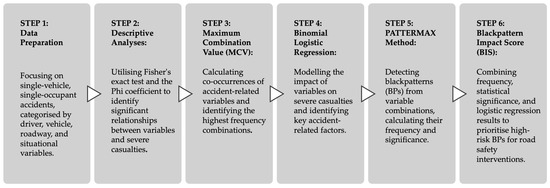
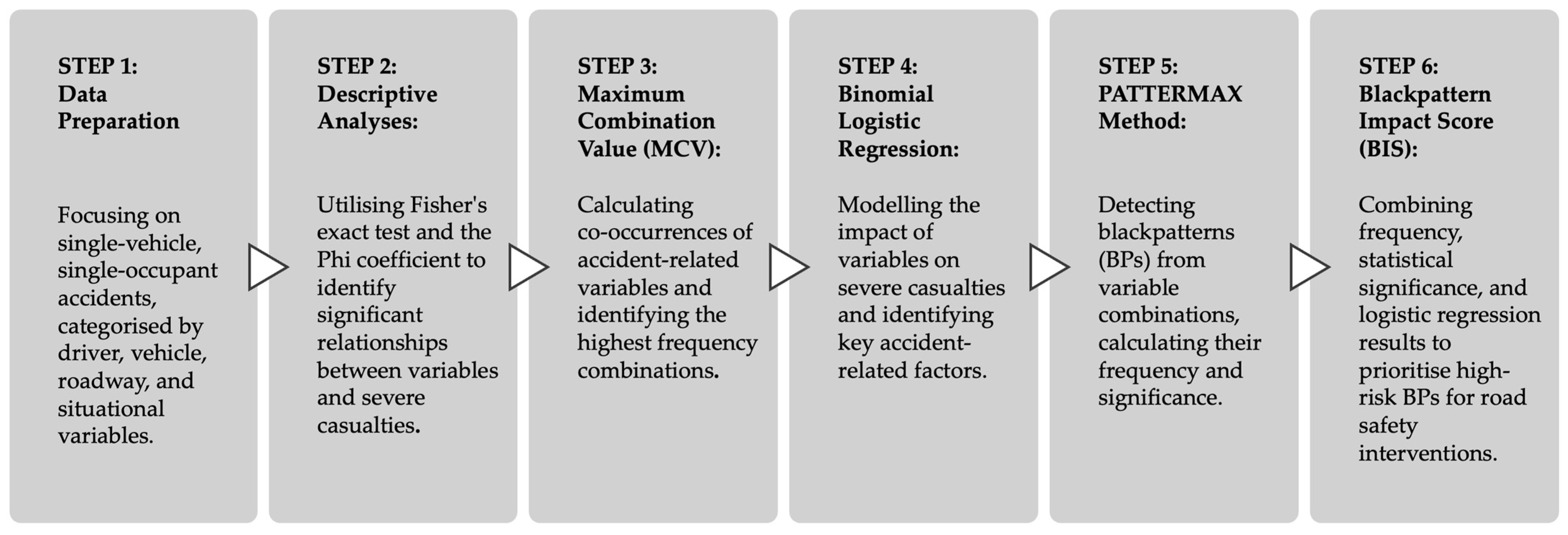
Figure 1 illustrates the key steps in the methodological approach used in this study. It begins with data preparation focused on single-vehicle, single-occupant accidents, followed by descriptive analyses using Fisher’s exact test and the phi coefficient to identify significant relationships between variables and accident severity. The maximum combination value (MCV) is then calculated to identify frequent co-occurrences of accident-related variables. Binomial logistic regression is applied to model the impact of these variables on severe casualties. Finally, the PATTERMAX method is employed to detect , which are ranked using the blackpattern impact score () to prioritise high-risk combinations for targeted road safety interventions. The following chapters present these methodological steps in detail, providing a comprehensive explanation of each stage.
Figure 1.
Methodological flowchart.
2.1. Data Preparation for Pattern Recognition
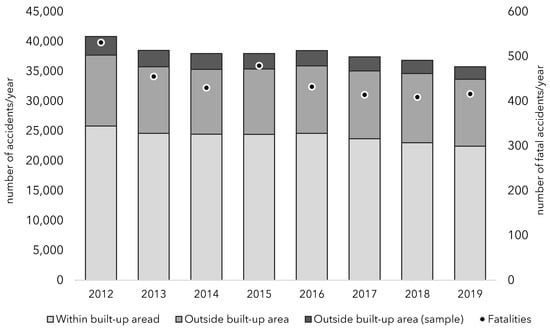
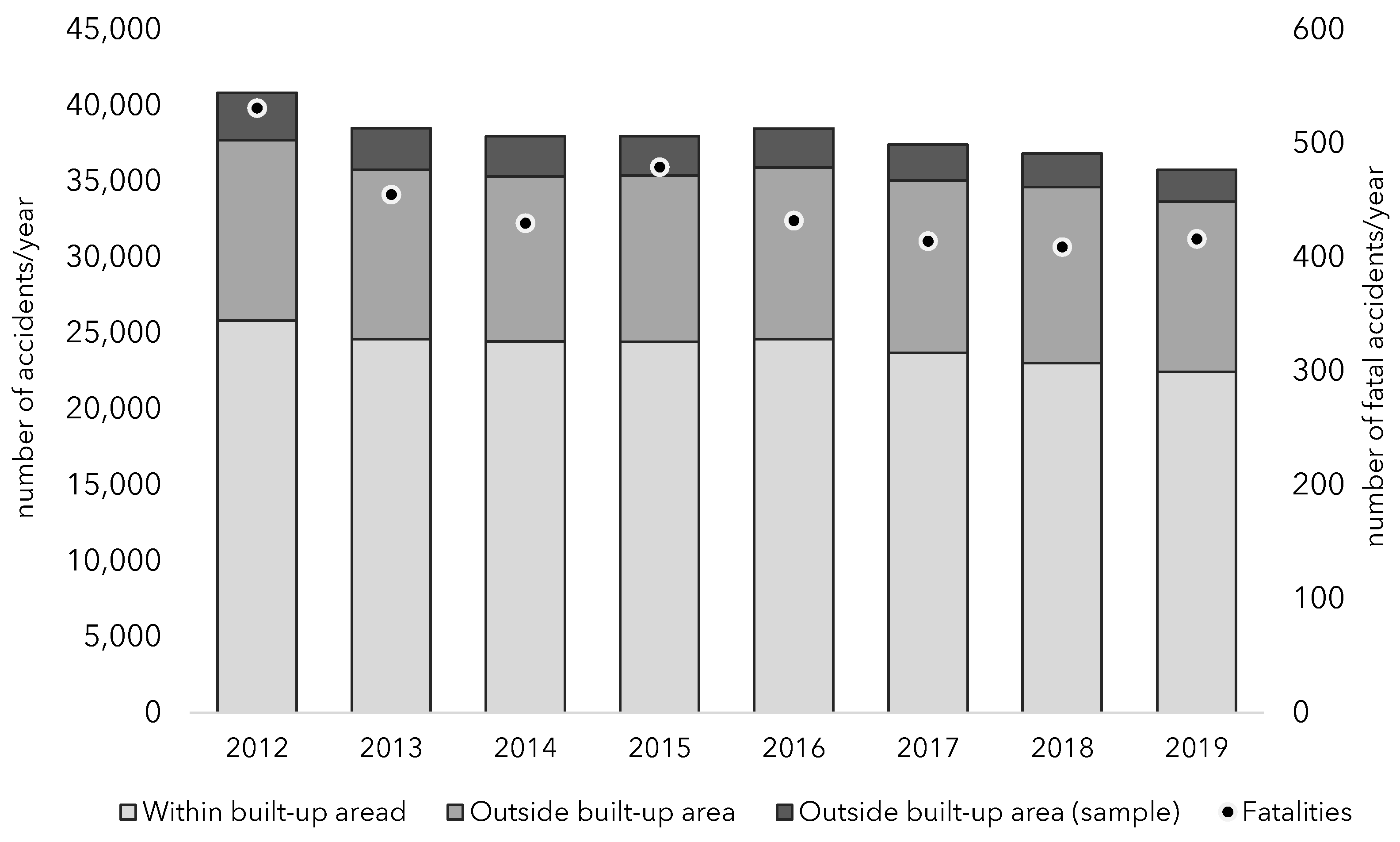
Between 2012 and 2019, 303,700 occurred on the Austrian road network. 110,666 road accidents occurred outside built-up areas, while 193,034 accidents occurred within built-up areas. This study focuses on single-vehicle accidents with single occupancy that occurred outside built-up areas between 2012 and 2019 ( 20,293). The chosen sample amounts to 7% of all with a personal injury in Austria between 2012–2019 ( 303,700). Within the period under review, 110,666 accidents with personal injury occurred outside the built-up area, of which the extracted sample comprises 18%. The selection of these specific accidents allows for an analysis that is not confounded by the presence of multiple vehicles or individuals, which could otherwise complicate the already complex nature of road traffic accidents. By isolating these accidents, this study can more effectively identify and examine the underlying BPs and factors contributing to severe outcomes, making this sample particularly valuable for targeted analysis. The data preparation involves creating a binary RTA database with over 150 accident-related variables. Figure 2 illustrates the extracted RTA data sample in relation to all recorded RTAs between 2012–2019 in Austria.
Figure 2.
Development of road traffic accidents (RTAs) in Austria from 2012–2019. Own compilation based on RTA data from Statistics Austria.
2.2. Accident-Related Variables
After recoding all accident-related characteristics and setting up a binary accident database, the next step in data preparation foresees the assignment of each binary variable to one of the following categories: driver-related variables (54 variables), vehicle-related variables (32 variables), roadway-related variables (50 variables), and situation-related variables (22 variables). Table 1 illustrates the categorisation scheme for the 158 analysed accident-related variables.
Table 1.
Categorisation scheme for accident-related variables.
We aim to quantify each accident-related variable’s impact on the degree of injury. Therefore, the dependent variable shall combine severe injury and fatalities within the category of severe casualties. Regarding the Austrian Road Safety Strategy 2021–2030 [31], it is equally important to reduce fatalities and the number of severe injuries. Also, both categories (severe and fatal accidents) entail high economic costs and human suffering. These premises lead to the following classification of the degree of injury:
- Casualties: minor injury, severe injury, death at accident site, death within 30 days,
- Severe casualties: severe injury, death at accident site, death within 30 days.
Thus, the degree of injury comprises two categories within this study. The resulting dependent variable is severe casualties. This classification corresponds to the definition within the Handbook of Transportation System Planning [32] (p. 73).
2.3. Descriptive Analyses
Initial analyses include calculating conditional and joint probabilities, applying Fisher’s exact test, and estimating the phi coefficient for each accident-related variable in relation to severe casualties, treating severe casualties as the dependent variable. A bootstrap resampling method is used for robust parameter estimation, and a maximum combination value () is calculated as a key indicator for detection. This value indicates how often a specific variable co-occurs with one or more accident-related variables. Each accident-related variable is broken down into a contingency table, where the rows represent the accident variable and the columns represent the outcomes: casualty and severe casualty. The frequency represents the number of occurrences where the accident variable takes the value and the outcome is either casualty or severe casualty, with severe casualty being treated as the dependent variable. The conditional probability of an event given another event is denoted as :
Here, is the joint probability of and , and P(B) is the probability of . In the context of this analysis, represents a specific accident variable, and represents the outcome severe casualties. Fisher’s exact test calculates the exact probability of observing the distribution in the contingency table. This is particularly useful for small sample sizes or when examining the relationship between an accident variable and severe casualties. The phi coefficient is a measure of association between each accident-related variable and the outcome severe casualties. The probability of observing this particular table is calculated using the hypergeometric distribution:
where
- is the binomial coefficient, calculated as ,
- is the binomial coefficient for the second row,
- is the binomial coefficient for the total table, where .
As a next step, we apply Bootstrap resampling to estimate robust confidence intervals for the parameters. The 95% confidence intervals indicate that certain variables consistently contribute to severe accidents, reinforcing the findings from the Fisher’s test. As a first step towards pattern recognition, we want to identify the , which tells us how often a specific variable co-occurs with one or more accident-related variables. Let be a dataset with entries. Each entry consists of a set of binary variables where each can be either 0 or 1. The goal is to find the combination of variables that maximizes the occurrence of a specific outcome, , which could be severe accidents, for instance. To define the combination of variables that includes , let be a combination of with other variables, where are selected from the full set . The frequency of each combination is defined as the number of entries , where all variables in take the value 1.
where the indicator is defined as follows:
The is the combination that includes and maximises the frequency in relation to a specific outcome
The approach involves searching through all possible combinations that include the specific variable , calculating the frequency with which these combinations occur when a specific outcome is observed, and identifying the combination with the highest frequency. The method analyses how frequently a particular variable occurs in combination with one or more other variables, identifying the most common combination in which the variable appears.
2.4. Binomial Logistic Regression
This study employs several pattern recognition methods. To investigate to what extent accident-related variable affects the probability of severe casualties, we apply binomial logistic regression, with severe casualties as the dependent variable. The logistic regression model is crucial for understanding how different accident-related variables, such as speeding, alcohol use, or road conditions, contribute to the probability of severe casualties. By examining these relationships, the model helps identify key factors that increase the risk of severe accidents.
where
- is the probability of the outcome being severe casualty,
- is the probability of the outcome being a non-severe casualty,
- is the log-odds of the outcome occurring (severe casualties),
- is the intercept term, representing the log-odds of severe casualties when all predictors are zero,
- are coefficients associated with each accident-related predictor variable, . These coefficients indicate the strength and direction of the relationship between each variable and the likelihood of severe casualties.
2.5. PATTERMAX Method
The developed PATTERMAX method analyses the frequencies of variable combinations ( and examines their association strength with severe casualties. The dataset consists of entries, where each entry is a sequence of binary variables (0 s and 1 s). We aim to calculate the frequency of each , i.e., each identical sequence of 0 s and 1 s of length in the dataset . We define the of length as a string of binary variables, where , with being either 0 or 1. To calculate the frequency of in the dataset , we use the PATTERMAX method, which proceeds as follows:
where
- is the number of entries in the dataset ,
- is the number of binary variables in each entry,
- represents the i-th entry in the dataset ,
- is the position in the entry where the is checked,
- is an indicator function that returns 1 if the substring exactly matches from position to , and 0 otherwise.
This formula describes the PATTERMAX method for calculating the frequency of the in the dataset . To verify if the matches at a specific position, we iterate over each entry in the dataset, over all positions in the entry, and use the indicator function. The sum over all entries and positions returns the total frequency of in . After identifying using the PATTERMAX method, each generated is further examined using Fisher’s exact test to determine the -value that quantifies the strength of the association between the and severe casualties. represents the -value obtained from Fisher’s exact test for . This step ensures that the identified are not only frequent but also statistically significant in their relationship to severe accidents.
2.6. Blackpattern Impact Analysis
To calculate a blackpattern impact score (), we combine four components: frequency of the , the statistical association between the and severe causalities (measured by , the strength of this association (measured by the phi coefficient ), and the logistic regression coefficients corresponding to the variables in . These components are integrated into a comprehensive to prioritize the identified . This approach enables a precise assessment of the concerning severe accidents by considering both their frequency and the strength of their association with severe casualties, thereby identifying that are both frequent and impactful.
where
- represents the logistic regression coefficient for each variable in the ,
- is the frequency of the ,
- is the phi coefficient, which measures the strength of the association between the and the outcome,
- is the -value from Fisher’s exact test, indicating the statistical significance of the association between the and the outcome.
To amplify the influence of highly significant (with very small -values), the negative logarithm of is used. The transformation converts very small -values into larger positive numbers. This ensures that with strong statistical significance have a greater impact on the . Both the logistic regression coefficients and the phi coefficient represent the strength of association. Small coefficients or -values might otherwise have a minimal effect on the . The exponential transformation and magnifies these values, particularly when they are small. This emphasizes the contribution of where the variables have a stronger association with the outcome.
The blackpattern impact analysis allows to identify that are not only common and impactful but also statistically significant in their relationship with severe casualties. This approach provides a comprehensive and nuanced prioritization of , ensuring that our analysis highlights the most relevant and meaningful for further investigation or intervention. Table 2 illustrates the features of the blackpattern impact analysis that must be considered when interpreting the retrieved .
Table 2.
Features of the blackpattern impact score (BIS).
3. Results
3.1. Descriptive Analyses Results
Descriptive statistics reveal the frequency and probability of each variable in severe and fatal accidents. Significant relationships between variables and accident severity are identified using Fisher’s exact test and the phi coefficient. Also, we generate the presented . We conduct descriptive analyses for each variable within our defined categories (driver, vehicle, roadway, and situation). Detailed analysis results can be found in Appendix A.
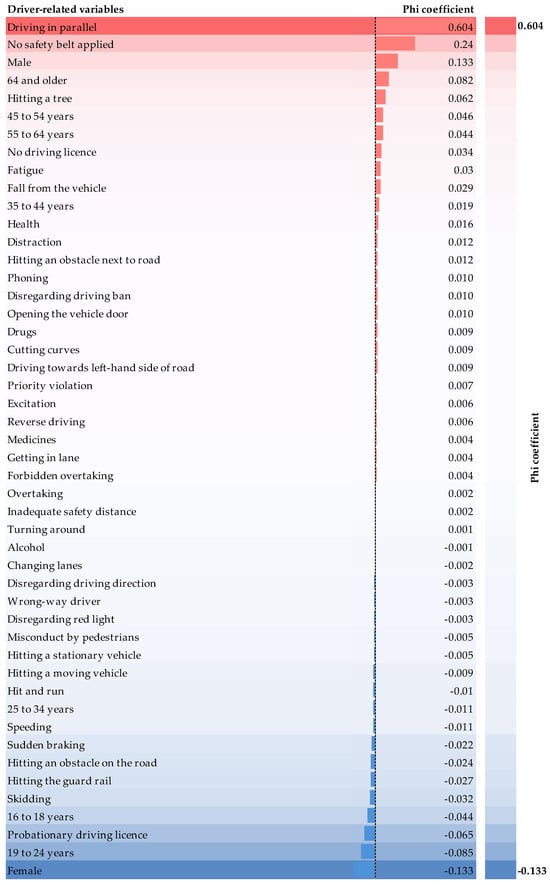
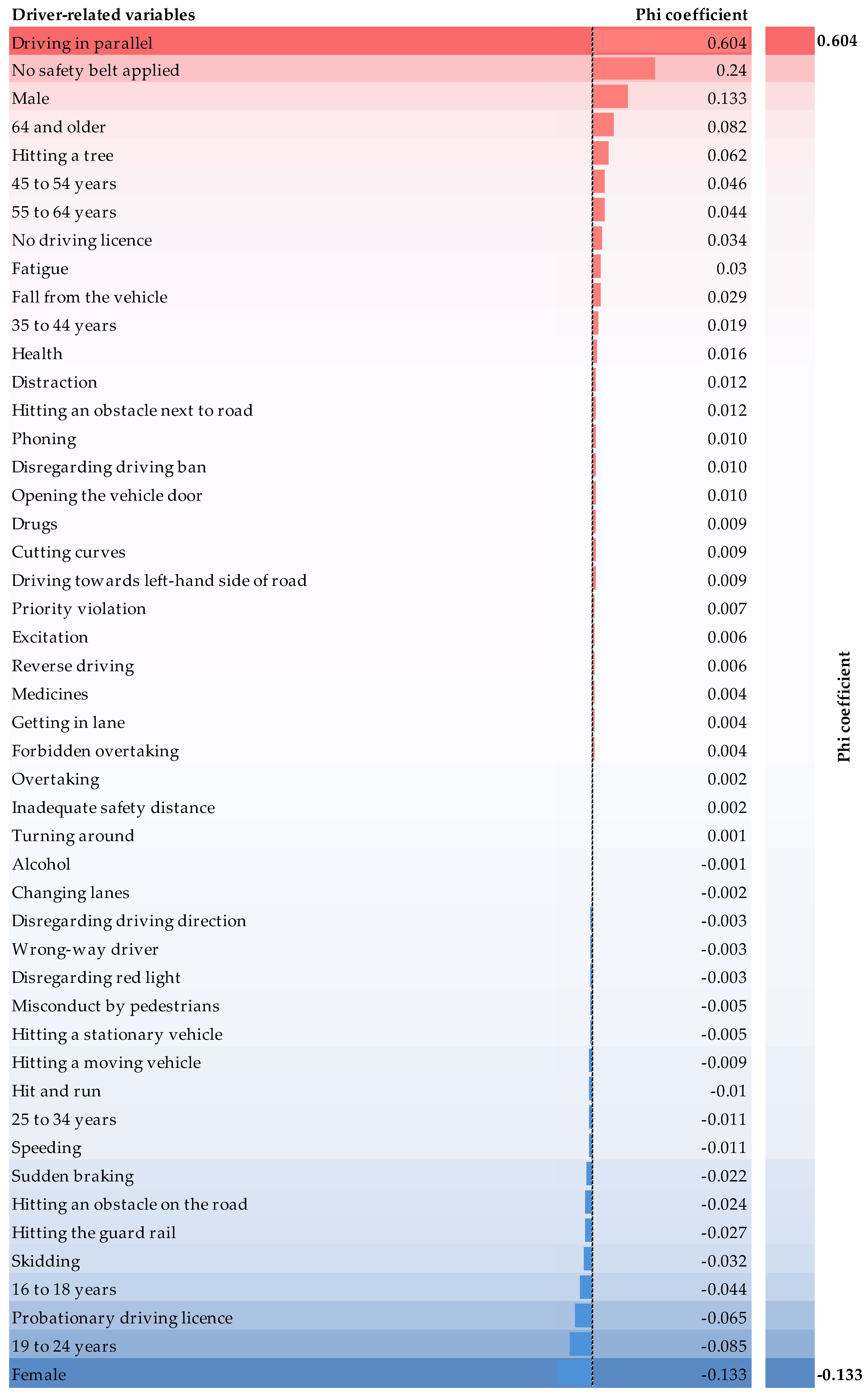
Figure 3 presents the retrieved phi coefficients between various driver-related variables and the dependent variable, severe casualties. The phi coefficient measures the strength and direction of association between binary variables. Positive values indicate a direct association, where the presence of the variable correlates with an increased likelihood of severe casualties, while negative values indicate an inverse relationship. The figure’s colour gradient indicates the strength and direction of the correlation for each variable with severe casualties, where red represents positive values and blue represents negative values. Driving in parallel shows the highest positive phi coefficient (0.604), indicating a strong positive correlation with severe casualties. This suggests that when drivers engage in this behaviour, the likelihood of severe accidents significantly increases. No safety belt applied (0.240) and male drivers (0.133) also exhibit notable positive associations with severe casualties, reinforcing well-established road safety insights that males and lack of seatbelt use are high-risk factors. Age-related factors, such as drivers aged 64 and older (0.082), 45 to 54 years (0.046), and 55 to 64 years (0.044), also show moderate positive correlations with severe casualties, suggesting older age groups are more vulnerable to severe outcomes in accidents. Other factors like hitting a tree (0.062) and fatigue (0.030) also display positive correlations, indicating that these environmental and driver-related conditions contribute to more severe accident outcomes. In contrast, female drivers (−0.133), drivers aged 19 to 24 years (−0.085), and those with a probationary driving license (−0.065) show negative correlations with severe casualties, indicating a lower likelihood of severe injuries for these groups compared to others. Risky behaviours such as speeding (−0.011) and hitting a stationary vehicle (−0.005) show slight negative correlations, which may suggest that while these actions are dangerous, they are not as strongly associated with severe casualties in this dataset.
Figure 3.
Phi coefficient of driver-related variables.
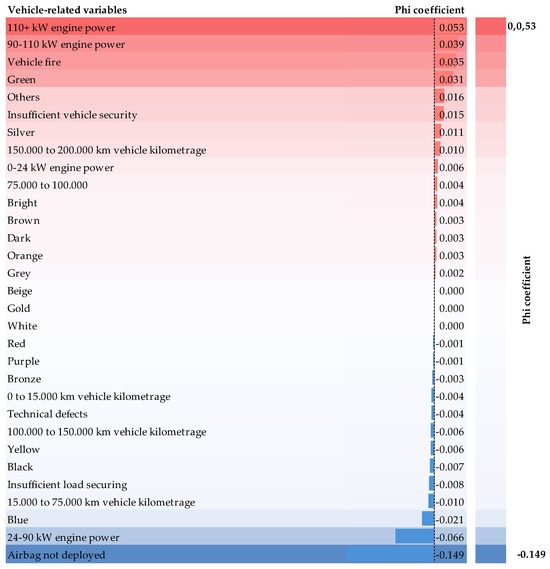
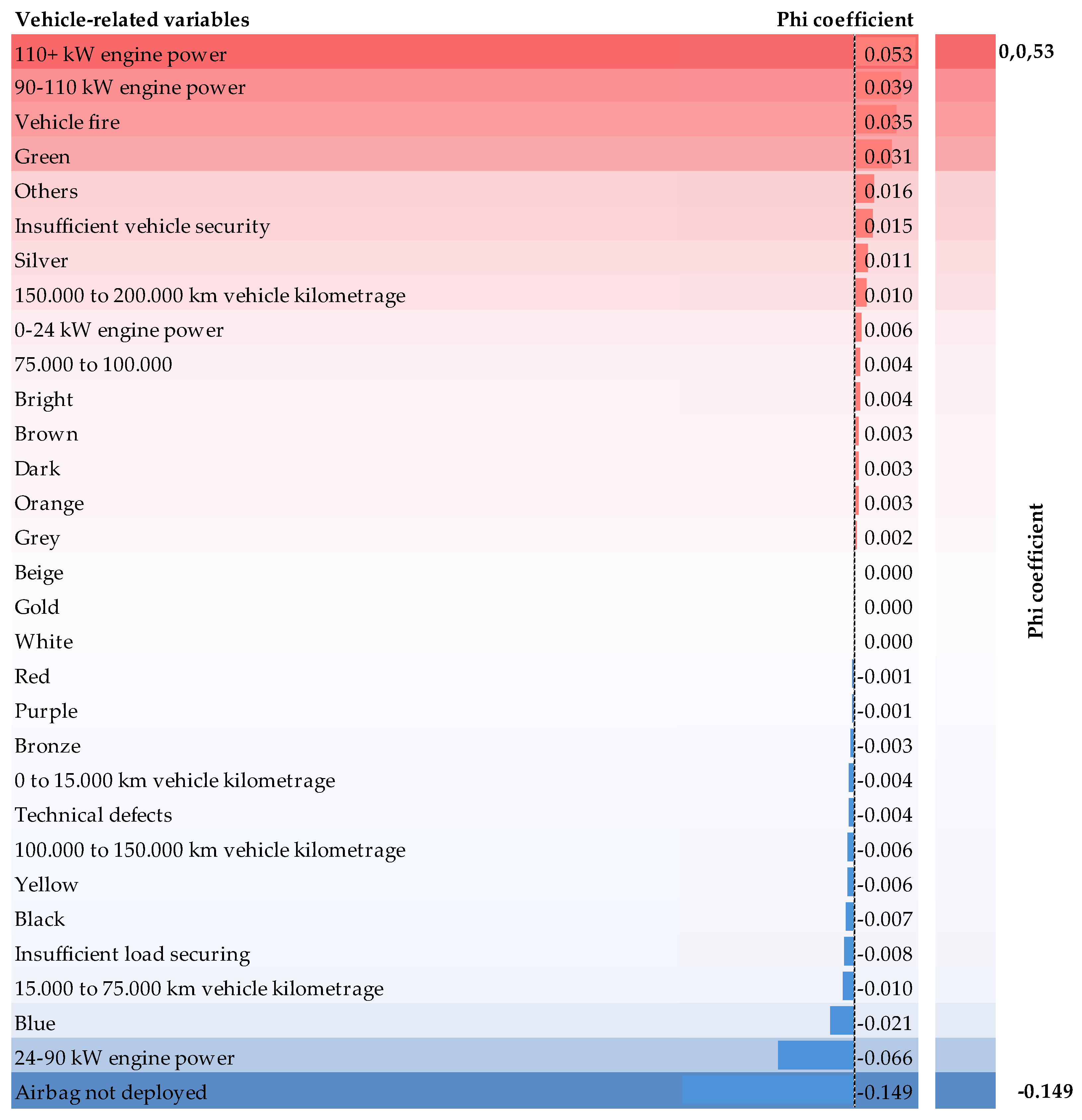
Figure 4 presents the phi coefficients between various vehicle-related variables and the dependent variable, severe casualties. Higher engine power correlates positively with severe casualties, as seen with vehicles having 110+ kW engine power (0.053) and 90–110 kW engine power (0.039). This suggests that vehicles with more powerful engines are more likely to be involved in accidents resulting in severe injuries. Similarly, vehicle fire (0.035) shows a positive association. Interestingly, vehicle kilometrage between 150,000 to 200,000 km (0.010) and 0–24 kW engine power (0.006) also present positive associations, suggesting that vehicles with higher mileage and very low engine power might also contribute to accident severity. The variable airbag not deployed shows the most substantial negative correlation (−0.149), suggesting that in cases where the airbag does not deploy, the likelihood of severe casualties is lower. This does not mean that the absence of airbag deployment directly reduces the risk of injury; rather, it reflects the fact that airbags are typically designed to deploy only in high-impact crashes. In lower-impact accidents, where the airbag does not activate, the injuries tend to be less severe. Therefore, the negative correlation likely indicates that accidents where airbags are not deployed are generally less severe and thus less likely to result in severe casualties. This interpretation aligns with the purpose of airbags, which are activated in the most dangerous collisions to prevent serious injury. Vehicles with 24–90 kW engine power (−0.066) and blue-coloured vehicles (−0.021) also exhibit negative associations with severe casualties. Additionally, variables like technical defects (−0.004), insufficient load securing (−0.008), and vehicle kilometrage between 15,000 and 75,000 km (−0,010) present slight negative correlations, suggesting a reduced risk of severe injuries in accidents involving vehicles with these characteristics.
Figure 4.
Phi coefficient of vehicle-related variables.
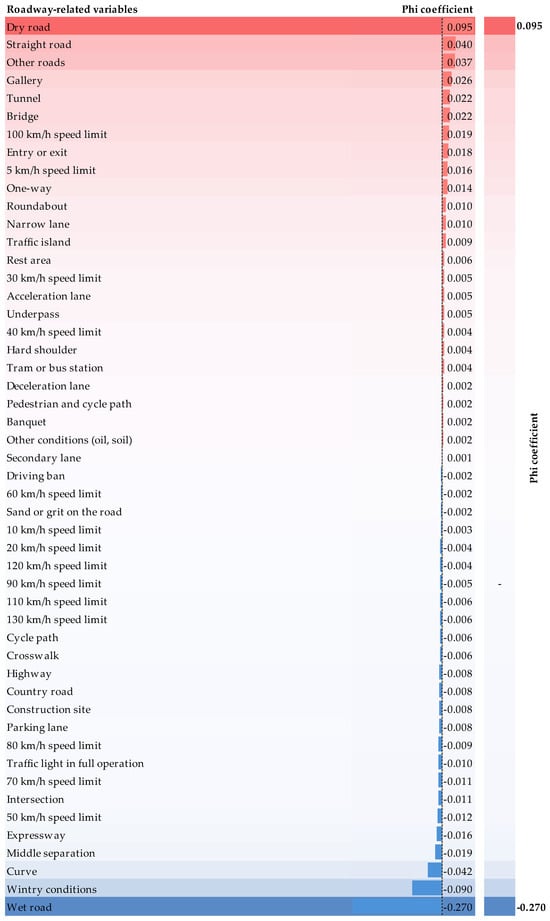
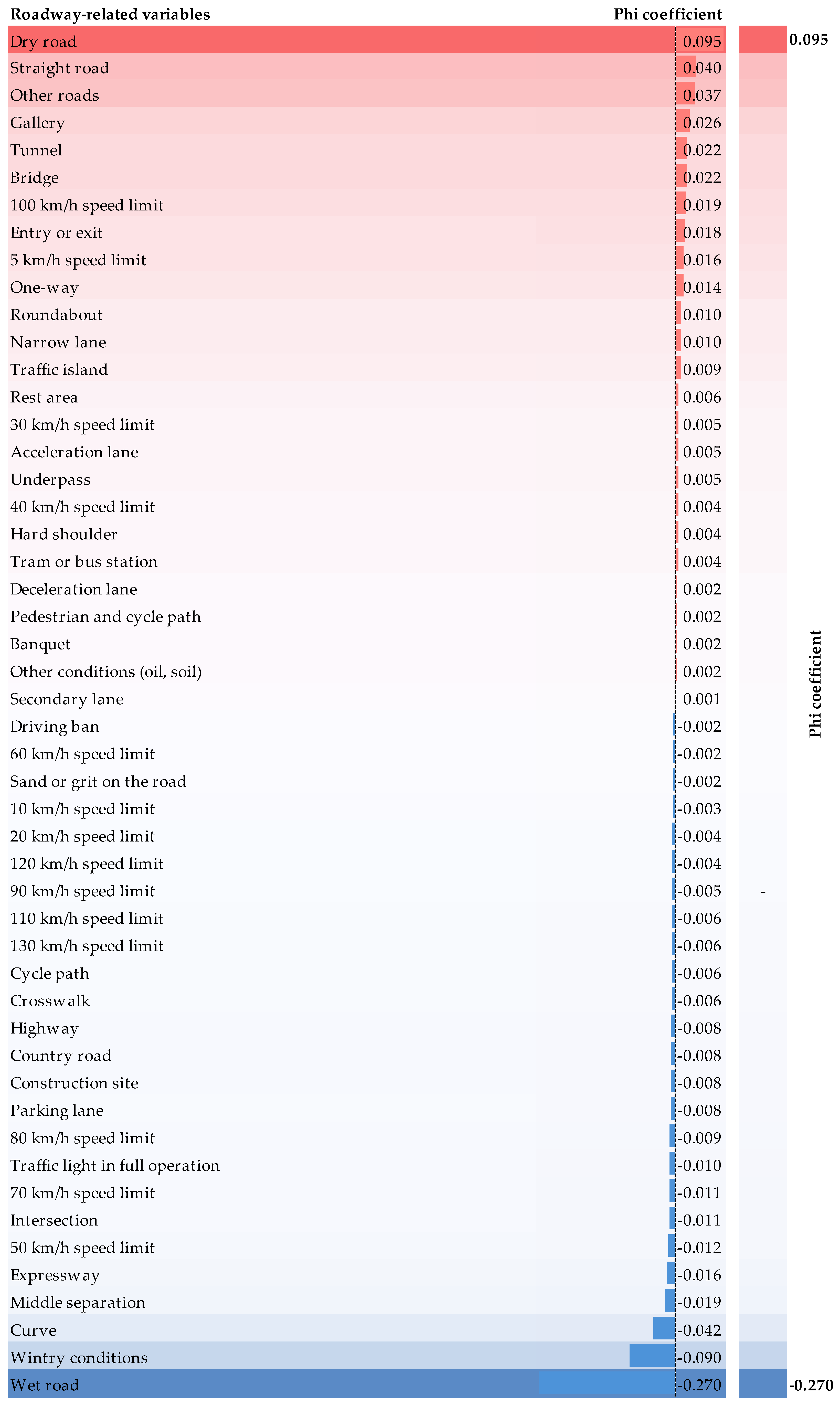
Figure 5 presents the phi coefficients between various roadway-related variables and the dependent variable, severe casualties. As before, the phi coefficient indicates the strength and direction of the association between the roadway conditions and the likelihood of severe accidents. Positive values (red) suggest that the presence of a certain condition increases the likelihood of severe casualties, while negative values (blue) indicate that the condition is inversely related to severe outcomes. Dry roads show the highest positive correlation with severe casualties (0.095), suggesting that accidents occurring on dry roads are more likely to result in severe injuries. This could be due to higher speeds and less cautious driving on dry roads. Similarly, straight roads (0.040) and other roads (0.037) exhibit positive correlations, potentially because drivers may underestimate the risks on straightforward routes or less-frequented roads. Infrastructure elements like galleries (0.026), tunnels (0.022), and bridges (0.022) also show positive associations, indicating that these roadway types might pose a higher risk of severe accidents. Speed limits appear in both positive and negative associations, with the 100 km/h speed limit (0.019) showing a slight positive correlation, suggesting that accidents at this speed are more likely to be severe. In contrast, lower and higher speed limits, such as 60 km/h (−0.002), 120 km/h (−0.004), and 130 km/h (−0.006), are negatively correlated, which could reflect more controlled or lower risk driving behaviours at these speeds. Wet roads (−0.270) and wintry conditions (−0.090) show the strongest negative correlations with severe casualties. This may be due to more cautious driving in adverse weather conditions, as drivers tend to reduce speed and drive more carefully in slippery conditions, leading to less severe accidents. Similarly, curves (−0.042) and middle separation (−0.019) display negative correlations, suggesting that these road features may promote more cautious driving behaviour, thereby reducing the likelihood of severe accidents. Road types such as tunnels, bridges, and straight roads, along with dry conditions, seem to contribute more to severe outcomes, while adverse weather and curved roads tend to reduce the risk, possibly due to more cautious driving behaviours. These insights are valuable for road safety planning and interventions, as they suggest where targeted efforts can be made to reduce accident severity based on the road environment.
Figure 5.
Phi coefficient of roadway-related variables.
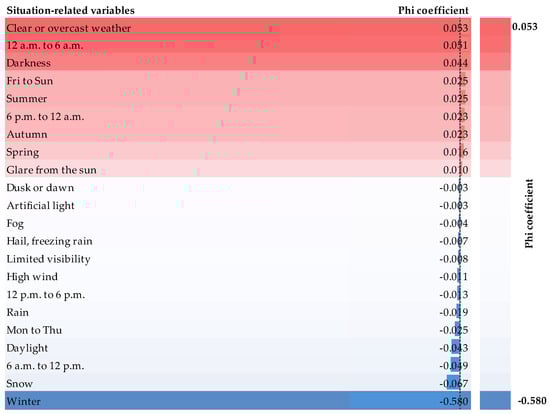
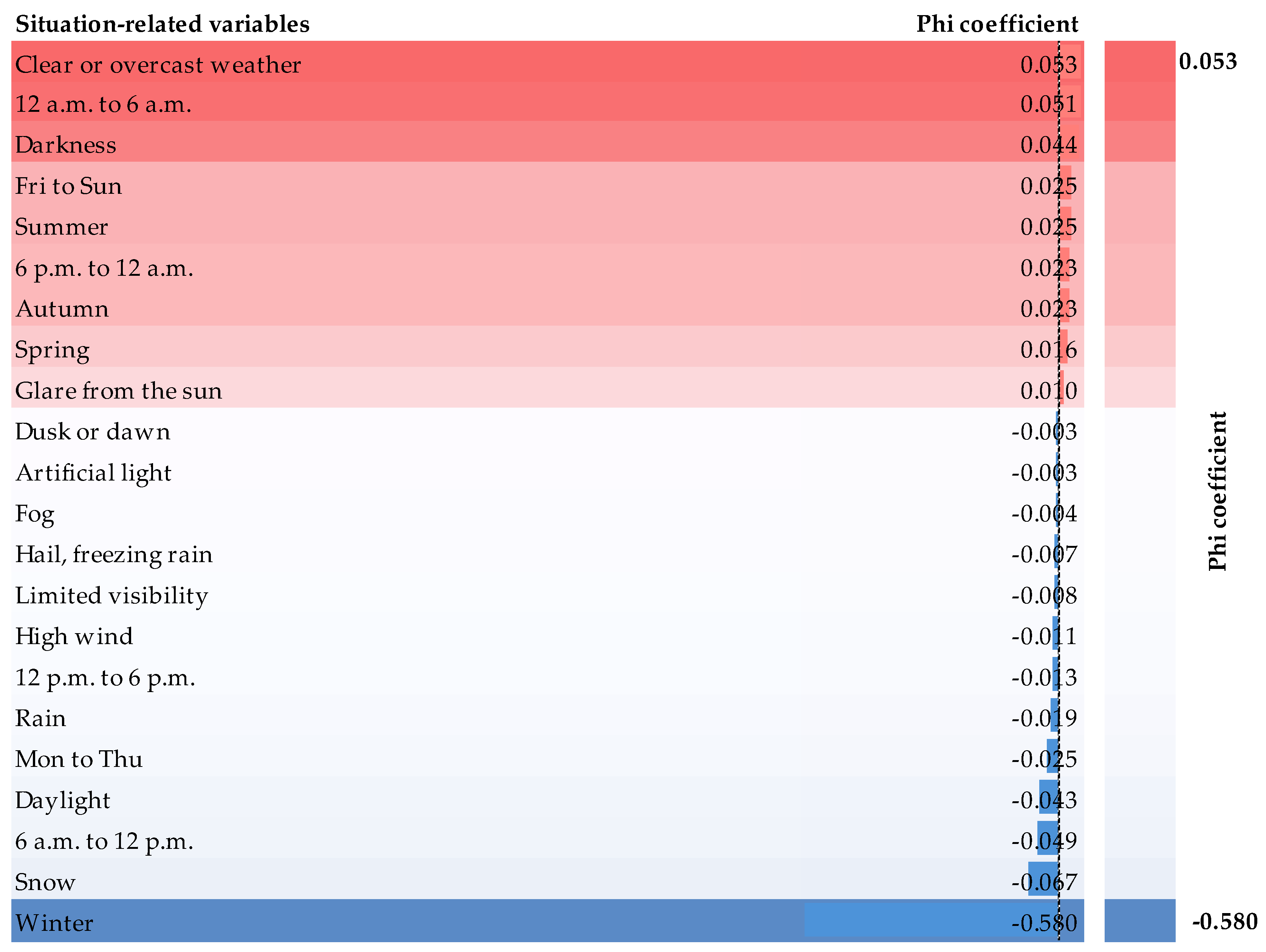
Figure 6 shows the phi coefficients between situation-related variables and severe casualties. Positive phi values (red) suggest that certain conditions are associated with a higher likelihood of severe accidents, while negative values (blue) indicate an inverse relationship. Clear or overcast weather (0.053) and the period 12 a.m. to 6 a.m. (0.051) exhibit the highest positive correlations, indicating that accidents occurring during these conditions are more likely to result in severe casualties. This might be due to higher speeds during clear weather, as drivers feel more confident under such conditions. Similarly, the period from 6 p.m. to 12 a.m. (0.023) shows a moderate positive correlation, possibly reflecting increased accident severity during evening hours when visibility may decrease, but drivers may still be inclined to drive at high speeds. Seasonal factors such as summer (0.025) and autumn (0.023) also show mild positive correlations, suggesting that accidents during these times of the year are more likely to result in severe outcomes. This could be related to higher traffic volumes during vacation seasons or more frequent long-distance travel. Glare from the sun (0.010) contributes to a smaller positive correlation, which might be due to reduced visibility affecting driver reactions. On the other hand, winter (−0.580) shows the most significant negative correlation with severe casualties. This strong inverse relationship suggests that accidents occurring in winter conditions are less likely to result in severe injuries, likely due to slower driving speeds and increased caution on icy or snow-covered roads. Similarly, snow (−0.067) and rain (−0.019) show negative correlations, which further supports the idea that adverse weather conditions encourage safer driving behaviour, leading to less severe accidents. Variables such as fog (−0.004), hail or freezing rain (−0.007), and limited visibility (−0.008) exhibit slight negative correlations, indicating that these conditions may reduce the risk of severe casualties. This might be because drivers are more cautious and reduce speed when faced with these challenging conditions. The analysis of situation-related variables suggests that clear weather and certain times of the day (e.g., nighttime) are more strongly associated with severe casualties, whereas winter conditions and precipitation tend to reduce the severity of accidents.
Figure 6.
Phi coefficient of situation-related variables.
3.2. Logistic Regression Analysis Results
Binomial logistic regression shows the strength of relationships between accident-related variables and severe accidents, identifying high-risk variables with significant odds ratios. The logistic regression analysis in Table 3 reveals several key variables that significantly increase the likelihood of severe . One of the most influential factors is the non-use of a safety belt, which has the highest odds ratio ( = 5.015) among the variables analysed, indicating that drivers not wearing a seatbelt are over five times more likely to be involved in a severe accident. Other critical factors include young drivers, particularly those aged 16 to 18, who have an odds ratio of 2.317, and those aged 19 to 24, with an odds ratio of 2.101, reflecting a significantly higher risk for these age groups. Environmental and situational factors also play a substantial role. Driving during early morning hours (12 a.m. to 6 a.m.) increases the likelihood of severe accidents by 35.9% ( = 1.359), likely due to factors such as fatigue and reduced visibility. Road conditions, such as driving on a wet road or under wintry conditions, also contribute to higher accident severity, with odds ratios of 1.261 and 1.462, respectively. The presence of specific road features like curves, intersections, and tunnels significantly increases the risk, with tunnels showing an odds ratio of 1.674 and curves 1.198, indicating these features are critical risk factors. Vehicle-related factors also influence the severity of accidents. Vehicles with engine power between 24 and 90 kW show a 19,2 % higher likelihood of severe accidents, while certain actions like sudden braking or hitting an obstacle on the road increase the risk significantly, with odds ratios of 2,0 and 3.394, respectively. Interestingly, hitting a guardrail is associated with a lower likelihood of severe accidents, with an odds ratio of 0.731, suggesting that this might serve as a mitigating factor under certain conditions. The analysis also highlights the significant impact of alcohol, which nearly doubles the likelihood of severe accidents ( = 1.916), underscoring the critical danger posed by impaired driving. Additionally, vehicle-related variables like the colour green and the absence of airbag deployment are associated with higher risks, with odds ratios of 1.317 and 2.233, respectively.
Table 3.
Logistic regression analysis results.
When performing multiple logistic regression, some variables may be excluded from the final model, resulting in no regression coefficient being assigned to them. This exclusion occurs because the statistical model deems these variables to have an insignificant or non-contributory effect on the outcome, often due to multicollinearity, lack of variability, or because their contribution is already captured by other variables in the model.
3.3. PATTERMAX Method Results
The PATTERMAX method reveals critical in the data, indicating combinations of factors that significantly contribute to severe accidents (Table 4). One of the most prominent identified is the combination of a 130 km/h speed limit, driving on a highway, drifting to the right, and being a male driver. This is statistically significant with a -value of 0.001 and a phi coefficient of 0.027, occurring 44 times in the dataset. This suggests that this specific combination of factors is strongly associated with severe accidents. Another significant involves a 100 km/h speed limit on a country road, with left drift and male drivers, showing an even stronger correlation with severe casualties ( = 0.000, = 0.032) and a frequency of 41 occurrences. This underscores the heightened risk associated with country roads, particularly when combined with drifting and male drivers. Additional include scenarios where male drivers on country roads, particularly under conditions of fatigue or without wearing a safety belt, show a strong association with severe accidents. For example, the combination of a 100 km/h speed limit, left drift, a male driver, and no safety belt applied is highly significant ( = 0.000, = 0.031), though it occurs less frequently, with 10 recorded instances. This indicates that, although less common, this particular combination of factors leads to particularly severe outcomes. Other highlight the risk posed by wet roads and darkness. A involving a 100 km/h speed limit on a country road, a wet road surface, a male driver aged 25–34, and a right drift shows a strong association with severe accidents ( = 0.001, = 0.027). Similarly, driving in darkness on country roads with right drift and male drivers also presents a significant risk ( = 0.003, = 0.026).
Table 4.
Blackpatterns showing a significant relationship with the target variable severe casualties, and a positive phi coefficient; n = 20,293 single-vehicle accidents with single occupation and personal injury occurring outside the built-up area on the Austrian road network (3431 are severe casualties).
3.4. Blackpattern Impact Analysis Results
The blackpattern impact analysis results in Table 5 highlight the varying influence of different combinations of variables on the likelihood of severe , with the providing a quantitative measure of their overall effect. In cases where a generated by the PATTERMAX method includes variables without a regression coefficient, we assign a value of zero to these variables. By setting the coefficient to zero, we ensure that the variable neither positively nor negatively influences the , reflecting the fact that the variable does not significantly impact the likelihood of severe outcomes according to our logistic regression model. The with the highest involves a 100 km/h speed limit on a country road, left drift, a male driver, and the absence of a safety belt, which has a significant of 982.9. This high reflects the strong influence of not wearing a seatbelt, which substantially increases the likelihood of severe accidents, as indicated by the high regression coefficient ( = 1.612). The combination of a 100 km/h speed limit, country road, and a male driver, whether drifting left or right, consistently yields high (e.g., 804.7 and 167.6), indicating that these factors together significantly elevate the risk of severe accidents. A speed limit of 130 km/h on a highway with right drift and a male driver result in a relatively high of 628.4 which still presents a notable risk. This highlights that while speed and road type are important, the absence of additional high-risk behaviours like seatbelt non-use somewhat mitigates the overall risk. involving female drivers or those with a speed limit of 80 km/h on a country road with right drift show even lower (e.g., 50.1 and 38.3), reflecting the reduced likelihood of severe outcomes compared to more dangerous combinations. This suggests that gender and lower speed limits contribute to safer outcomes, although they are not completely devoid of risk. The also underscores the combined risk posed by fatigue and specific road conditions (e.g., 167.6 and 37.1).
Table 5.
Blackpattern impact analysis results.
4. Discussion
The findings from this study underscore the complex and multivariate nature of RTAs, particularly single-vehicle, single-occupant accidents outside built-up areas in Austria. By applying statistical methods such as binomial logistic regression and the PATTERMAX method, we have identified significant that consistently correlate with severe casualties. These BPs provide critical insights into how specific combinations of driver-related, vehicle-related, roadway-related, and situational factors contribute to the severity of accidents. The multivariate approach used here echoes the work of [6], who found that considering multiple interacting factors is crucial for understanding risk. One of the key observations from the logistic regression analysis is the substantial impact of not wearing a seatbelt, which emerged as the most influential variable, increasing the likelihood of severe accidents by over five times. This finding aligns with existing literature, such as [33], which consistently highlights the protective benefits of seatbelt usage in preventing severe injuries and fatalities. Seatbelt non-use remains one of the most critical behavioural risk factors in , as demonstrated in several international studies [34,35], which also emphasise the need for stricter enforcement of seatbelt laws to mitigate injury severity. Similarly, the significant influence of young drivers, particularly those aged 16 to 24, on accident severity is consistent with previous research that points to younger drivers’ higher propensity for risky behaviours, such as speeding and distracted driving [36]. Studies by [37] also note the higher incidence of severe accidents among this demographic due to inexperience and impulsive driving behaviours.
The PATTERMAX method further refines our understanding by identifying specific combinations of variables that, when occurring together, significantly increase the likelihood of severe outcomes. For instance, involving high-speed limits, rural roadways, and male drivers frequently result in severe accidents, especially when compounded by factors such as driver fatigue or adverse weather conditions. This mirrors findings from studies like [38] that show how rural roads, higher speeds, and male drivers increase accident risk, particularly in environments with poor weather or lighting conditions. The importance of considering such multivariate patterns in road safety interventions is also emphasised in work by [39], who recommend tailored safety measures for rural roads with high-speed limits. Moreover, the impact analysis introduces a novel way of quantifying the combined effect of these variables, offering a clear prioritisation of the most dangerous combinations. This is particularly useful for designing targeted interventions that can address the most critical risks. For instance, the combination of a 100 km/h speed limit, a country road, left drift, and a male driver not wearing a seatbelt was identified as having the highest , making it a prime target for road safety campaigns and enforcement measures. This is consistent with recommendations from [40], who suggests that high-risk locations and behaviours must be prioritised for intervention based on empirical accident data. Similarly, [41] highlights the effectiveness of focusing on specific behavioural interventions, such as enforcing speed limits and seatbelt use, especially in rural areas, to reduce severe accidents.
In conclusion, this study highlights the importance of multivariate approaches in road safety research and supports the growing body of literature that calls for a comprehensive, data-driven approach to accident prevention. Future research could benefit from incorporating more advanced machine learning techniques, as these methods are particularly well-suited to detecting complex patterns in large datasets, as demonstrated by [42]. Emerging technologies like digital twin theory for autonomous vehicle testing [43] and advanced trajectory extraction methods under challenging environmental conditions [44] could provide new avenues for refining accident prediction models and improving safety in more complex scenarios. Integrating these techniques into the analysis framework could enhance the accuracy and applicability of the results for road safety policy.
5. Conclusions
This study successfully identifies and quantifies the most significant associated with severe single-vehicle, single-occupant on Austrian roads. By focusing on accidents occurring outside built-up areas, we were able to analyse specific high-risk combinations of variables, such as driver behaviour, vehicle characteristics, roadway conditions, and situational factors, that contribute to the severity of accidents. The use of binomial logistic regression and the PATTERMAX method provides a robust framework for understanding the complex, multicausal interactions that lead to severe accident outcomes. It is important to note that this paper is methodologically and hermeneutically driven. The primary focus is on the development, validation, and application of the detection method rather than on prescribing specific road safety interventions. As such, while the results offer valuable insights into high-risk combinations of factors, explicit recommendations for road safety measures are not the central aim of this study. Instead, the emphasis is on providing a versatile toolset that can be used by researchers and policymakers to further explore and address severe within their respective contexts. However, the findings should be considered within the context of several limitations. First, this study is based on a dataset of single-vehicle accidents, which excludes vehicle-to-vehicle crashes, potentially limiting the generalisability of the results to other types of RTAs. Second, the analysis relies on available data, which may not fully capture certain behavioural and environmental factors, such as driver distraction or precise weather conditions at the time of the accident. The lack of real-time behavioural data also means that some underlying causes of accidents, like driver fatigue or attention lapses, could not be directly analysed. Additionally, while the approach is effective for identifying multivariate risk patterns, it is important to acknowledge that more advanced machine learning techniques could further enhance predictive accuracy by capturing non-linear relationships between variables.
Despite these limitations, this study provides valuable insights for road safety interventions specific to the Austrian context. The identified highlight the importance of addressing high-risk combinations of variables, such as high-speed limits, lack of safety equipment (e.g., seatbelt use), and rural road conditions. Policymakers can use these findings to design targeted interventions, such as stricter seatbelt enforcement, road infrastructure improvements, and the adjustment of speed limits based on road type and risk profile. Furthermore, public awareness campaigns aimed at high-risk groups, such as younger drivers or those driving in adverse conditions, could be crucial in mitigating the risks highlighted by the analysis.
Future research should expand the scope of this analysis to include other accident types and integrate additional data sources, such as real-time behavioural and environmental data, to develop more comprehensive accident prediction models. The integration of more advanced machine learning techniques, such as neural networks or random forests, could also be explored to enhance the detection of complex patterns. By doing so, we can refine our understanding of the factors contributing to severe accidents and improve the effectiveness of prevention strategies. Ultimately, the insights gained from this study provide a solid foundation for improving road safety and reducing the human and economic costs associated with severe on Austrian roads.
Author Contributions
Conceptualization, T.F.; methodology, T.F.; validation, T.F. and G.H.; formal analysis, T.F.; investigation, T.F.; data curation, T.F.; writing—original draft preparation, T.F.; writing—review and editing, T.F. and G.H.; visualization, T.F.; supervision, G.H. All authors have read and agreed to the published version of the manuscript.
Funding
Open Access Funding by TU Wien.
Institutional Review Board Statement
Not applicable.
Informed Consent Statement
Not applicable.
Data Availability Statement
Data is contained within the article.
Conflicts of Interest
The authors declare no conflicts of interest.
Appendix A. Descriptive Analysis Results
The driver-related outcomes in Table A1 reveal that male drivers are significantly more likely to be involved in severe accidents compared to female drivers, with a probability of 12.11% versus 4.79%, respectively. Age also plays a crucial role, with younger drivers aged 19 to 24 and older drivers aged 64 and above showing a higher likelihood of being involved in severe accidents. The analysis indicates that the absence of a driving license and probationary driving licenses are associated with increased accident severity, although their impact is relatively lower compared to other factors. Impairment due to alcohol, distraction, and fatigue are highlighted as significant contributors to severe accidents, but among these, fatigue shows a particularly strong correlation. The table also underscores the critical impact of not wearing a seatbelt, which is strongly associated with severe casualties, as evidenced by the highest phi coefficient in the analysis. Various driving manoeuvres, such as skidding, hitting a tree, and sudden braking, also exhibit significant relationships with accident severity, with some manoeuvres like hitting a tree being particularly indicative of severe outcomes. The suggests that certain variables, like the absence of a seatbelt, tend to co-occur with other risk factors more frequently in severe accidents, further emphasising their role in contributing to accident severity.
Table A1.
Single-vehicle accidents with single occupation and personal injury that occurred outside built-up areas between 2012 and 2019 in Austria, broken down by driver-related variables. n = 20,293 (3431 are severe casualties).
Table A2 presents a comprehensive analysis of vehicle-related variables and their association with the severity of accidents. Engine power is a notable factor, with vehicles having higher engine power (over 110 kW) showing a higher probability of severe casualties, as indicated by the phi coefficient of 0.053 and a significant -value of 0.000. This suggests that vehicles with greater engine power are more likely to be involved in severe accidents. In contrast, vehicles with lower engine power (24–90 kW) demonstrate a negative correlation with accident severity, as reflected by a negative phi coefficient (−0.066). Vehicle colours appear to play a neglectable role as the correlations are weak and not statistically significant. The table also highlights the impact of vehicle safety features on accident outcomes. Cases where the airbag did not deploy are strongly associated with severe casualties, as evidenced by a phi coefficient of −0.149, making it one of the most critical factors in the analysis. Other variables, such as technical defects and insufficient vehicle security, are less prevalent but still present some level of risk, particularly vehicle fires, which have a phi coefficient of 0.035.
Table A2.
Single-vehicle accidents with single occupation and personal injury that occurred outside built-up areas between 2012 and 2019 in Austria, broken down by vehicle-related variables. n = 20,293 (3431 are severe casualties).
Table A3 provides a detailed analysis of roadway-related variables and their impact on the severity of single-vehicle accidents that took place outside built-up areas in Austria between 2012 and 2019.
Table A3.
Single-vehicle accidents with single occupation and personal injury that occurred outside built-up areas between 2012 and 2019 in Austria, broken down by roadway-related variables. n = 20.293 (3.431 are severe casualties).
One of the most significant findings is the relationship between speed limits and accident severity. Accidents occurring in areas with a 100 km/h speed limit show a higher probability of severe casualties, with a phi coefficient of 0.019 and a significant -value of 0.008, indicating a moderate positive correlation. Similarly, roads with a 130 km/h speed limit also show a notable frequency of severe accidents, although the correlation is slightly weaker. The type of road is another critical factor, with accidents on country roads being particularly severe, as these roads account for the highest number of severe casualties, although the phi coefficient suggests only a weak correlation. Additionally, certain road characteristics, such as curves and straight roads, are strongly associated with severe accidents. Curves, in particular, have a significant negative phi coefficient (−0.042), indicating a strong correlation with accident severity. In contrast, straight roads, despite their higher overall accident frequency, show a positive phi coefficient (0.040), suggesting that while they are common sites for accidents, the severity is more strongly associated with other variables like speed or road conditions. The analysis also reveals that road conditions significantly impact accident severity, with dry roads being the most common setting for severe accidents, supported by a high phi coefficient (0.095). However, wet and wintry conditions also play a significant role, as indicated by negative phi coefficients, showing that these conditions are associated with less severe outcomes compared to dry conditions.
Table A4 provides an analysis of situation-related variables and their impact on the severity of single-vehicle accidents. The analysis highlights several critical situation-related factors that influence the severity of single-vehicle accidents. Time of day emerges as a significant variable, with accidents occurring between 12 a.m. and 6 a.m. showing a higher probability of severe casualties, indicated by a phi coefficient of 0.051 and a significant -value of 0.000. This suggests that early morning hours are particularly dangerous, likely due to factors such as reduced visibility, fatigue, or lower traffic volumes leading to higher speeds. In contrast, the period from 12 p.m. to 6 p.m., although still significant, shows a negative correlation with accident severity, indicating fewer severe outcomes during daylight hours. The day of the week also plays a role, with accidents from Monday to Thursday slightly more likely to result in severe casualties compared to those occurring from Friday to Sunday. However, the correlation is weak, as reflected by the small phi coefficient (−0.025). Seasonal variation is evident, with summer showing a slightly higher likelihood of severe accidents, as suggested by a phi coefficient of 0.025. This could be attributed to increased travel and higher speeds during warmer weather. Winter, on the other hand, despite the challenging driving conditions, shows a negative correlation with severe outcomes, which may be due to more cautious driving during adverse weather conditions. Weather conditions have a notable impact, with clear or overcast weather being strongly associated with severe casualties, as indicated by a phi coefficient of 0.053. This finding may be counterintuitive, but it suggests that drivers might be less cautious during clear conditions, leading to higher speeds and more severe accidents. Snowy conditions, however, show a significant negative correlation with severe casualties, likely reflecting more careful driving in such conditions. Light conditions further influence accident severity, with darkness being associated with a higher likelihood of severe accidents, as shown by a phi coefficient of 0.044. This is consistent with the increased risks associated with driving at night, such as reduced visibility and driver fatigue.
Table A4.
Single-vehicle accidents with single occupation and personal injury that occurred outside built-up areas between 2012 and 2019 in Austria, broken down by situation-related variables. n = 20,293 (3431 are severe casualties).
References
- Herry Consult; KFV. Unfallkostenrechnung Straße 2022 (UKR 2022). Forschungsarbeiten des österreichischen Verkehrssicherheitsfonds; Bundesministerium für Klimaschutz, Umwelt, Energie, Mobilität, Innovation und Technologie (BMK): Vienna, Austria, 2022. [Google Scholar]
- European Commission: Directorate-General for Mobility and Transport; CE Delft. Handbook on the External Costs of Transport; Version 2019–1.1; Publications Office of the European Union: Luxembourg, 2020. [Google Scholar]
- European Commission. Archive: Road Safety Statistics—Characteristics at National and Regional Level. 18 December 2019. Available online: https://ec.europa.eu/eurostat/statistics-explained/index.php?title=Road_safety_statistics__characteristics_at_national_and_regional_level&oldid=463733 (accessed on 8 August 2021).
- Bundesministerium für Inneres (BMI). Straßenverkehrstote in Österreich. 2020. Available online: https://www.bmi.gv.at/202/Verkehrsangelegenheiten/unfallstatistik_vorjahr.aspx (accessed on 7 July 2021).
- Fian, T. From Blackspots to Blackpatterns: Pattern Recognition with Road Traffic Accident Data. Ph.D. Thesis, Vienna University of Technology, Vienna, Austria, 2021. [Google Scholar] [CrossRef]
- Gutierrez-Osorio, C.; Pedraza, C.A. Modern data sources and techniques for analysis and forecast of road accidents: A review. J. Traffic Transp. Eng. 2020, 7, 432–446. [Google Scholar] [CrossRef] [Scilit]
- Kizito, A.; Semwanga, A.R. Modeling the complexity of road accidents prevention: A system dynamics approach. Int. J. Syst. Dyn. Appl. 2020, 9, 24–41. [Google Scholar] [CrossRef] [Scilit]
- Martins, M.A.; Garcez, T.V. A multidimensional and multi-period analysis of safety on roads. Accid. Anal. Prev. 2021, 162, 106401. [Google Scholar] [CrossRef] [Scilit] [PubMed]
- Khalsa, A. Study on road traffic accidents and prevention in India: A review. Int. J. Res. Appl. Sci. Eng. Technol. 2019, 7, 1683–1685. [Google Scholar] [CrossRef] [Scilit]
- Karamanlis, I.; Nikiforiadis, A.; Botzoris, G.N.; Kokkalis, A.; Basbas, S. Towards sustainable transportation: The role of black spot analysis in improving road safety. Sustainability 2023, 15, 14478. [Google Scholar] [CrossRef] [Scilit]
- Reeves, K.; Chandan, J.S.; Bandyopadhyay, S. Using statistical modelling to analyze risk factors for severe and fatal road traffic accidents. Int. J. Inj. Control. Saf. Promot. 2019, 26, 364–371. [Google Scholar] [CrossRef] [Scilit]
- Gu, C.; Xu, J.; Gao, C.; Mu, M.; E, G.; Ma, Y. Multivariate analysis of roadway multi-fatality crashes using association rules mining and rules graph structures: A case study in China. PLoS ONE 2022, 17, e0276817. [Google Scholar] [CrossRef] [Scilit]
- Pande, A.; Abdel-Aty, M.A. A novel approach for analyzing severe crash patterns on multilane highways. Accid. Anal. Prev. 2009, 41, 985–994. [Google Scholar] [CrossRef] [Scilit]
- Alin, D.; Cofarue, C.; Popesku, M.V. Investigation of single vehicle accidents severity by using a probabilistic approach. Mobil. Veh. Mech. 2023, 49, 39–53. [Google Scholar] [CrossRef] [Scilit]
- Cioca, L.; Ivașcu, L. Risk indicators and road accident analysis for the period 2012–2016. Sustainability 2017, 9, 1530. [Google Scholar] [CrossRef] [Scilit]
- Shibani, A.; Pervin, M.S.A. Analysis of traffic accident severity on Great Britain roadways and junctions. Int. J. Built Environ. Asset Manag. 2016, 2, 37–66. [Google Scholar] [CrossRef] [Scilit]
- Ju, Y.H.; Sohn, S.Y. Quantification method analysis of the relationship between occupant injury and environmental factors in traffic accidents. Accid. Anal. Prev. 2011, 43, 342–351. [Google Scholar] [CrossRef] [Scilit]
- Yaman, T.T.; Bilgiç, E.; Esen, M.F. Analysis of traffic accidents to identify factors affecting injury severity with fuzzy and crisp techniques. In Proceedings of the International Conference on Intelligent and Fuzzy Systems, Istanbul, Türkiye, 21–23 July 2020. [Google Scholar] [CrossRef] [Scilit]
- Yaman, T.T.; Bilgiç, E.; Esen, M.F. Analysis of traffic accidents with fuzzy and crisp data mining techniques to identify factors affecting injury severity. J. Intell. Fuzzy Syst. 2021, 42, 575–592. [Google Scholar] [CrossRef] [Scilit]
- Shaon, M.R.; Qin, X. Crash data-based investigation into how injury severity is affected by driver errors. Transp. Res. Rec. 2020, 2674, 452–464. [Google Scholar] [CrossRef] [Scilit]
- Gilani, V.; Hosseinian, S.M.; Ghasedi, M.; Nikookar, M. Data-driven urban traffic accident analysis and prediction using logit and machine learning-based pattern recognition models. Math. Probl. Eng. 2021, 2021, 9974219. [Google Scholar] [CrossRef] [Scilit]
- Sohn, S.Y.; Shin, H. Pattern recognition for road traffic accident severity in Korea. Ergonomics 2001, 44, 107–117. [Google Scholar] [CrossRef]
- Khyara, H.; Amine, A.; Nassih, B. Dependent and independent variables for exploratory analysis of road traffic accidents. In Proceedings of the International Conference on Industrial Engineering and Operations Management, Manila, Philippines, 6–9 May 2023. [Google Scholar] [CrossRef] [Scilit]
- Athiappan, K.; Karthik, C.; Rajalaskshmi, M.; Subrata, C.; Rabiei-Dastjerdi, H.; Liu, Y.; Fernández-Campusano, C.; Gheisari, M. Identifying influencing factors of road accidents in emerging road accident blackspots. Adv. Civ. Eng. 2022, 2022, 9474323. [Google Scholar] [CrossRef] [Scilit]
- Theofilatos, A.; Yannis, G. A review of the effect of traffic and weather characteristics on road safety. Accid. Anal. Prev. 2014, 72, 244–256. [Google Scholar] [CrossRef] [Scilit]
- Aziz, S.; Ram, S. A meta-analysis of the methodologies practiced worldwide for the identification of Road accident black spots. Transp. Res. Procedia 2022, 62, 790–797. [Google Scholar] [CrossRef] [Scilit]
- Khorasani-Zavareh, D. System versus traditional approach in road traffic injury prevention: A call for action. J. Inj. Violence Res. 2011, 3, 61. [Google Scholar] [CrossRef] [Scilit]
- Rezapur-Shahkolai, F.; Afshari, M.; Doosti-Irani, A.; Bashirian, S.; Maleki, S. Interventions to prevent road traffic injuries among pedestrians: A systematic review. Int. J. Inj. Control. Saf. Promot. 2022, 29, 533–549. [Google Scholar] [CrossRef] [Scilit] [PubMed]
- Staton, C.A.; Vissoci, J.R.; Gong, E.; Toomey, N.; Wafula, R.B.; Abdelgadir, J.; Zhou, Y.; Liu, C.; Pei, F.; Zick, B.; et al. Road traffic injury prevention initiatives: A systematic review and metasummary of effectiveness in low and middle income countries. PLoS ONE 2016, 11, e0144971. [Google Scholar] [CrossRef] [Scilit]
- Gopalakrishnan, S. A public health perspective of road traffic accidents. J. Fam. Med. Prim. Care 2012, 1, 144–150. [Google Scholar] [CrossRef] [Scilit] [PubMed]
- KFV; FGM. Austrian Road Safety Strategy 2021–2030; Bundesministerium für Klimaschutz: Vienna, Austria, 2021. [Google Scholar]
- Cerwenka, P.; Hauger, G.; Hörl, B.; Klamer, M. Handbook of Transportation System Planning; Austrian Art and Culture Publishers: Vienna, Austria, 2007. [Google Scholar]
- European Transport Safety Council. RoadPol Operation Reveals Persistent Seatbelt Violations across Europe. 18 April 2024. Available online: https://etsc.eu/roadpol-operation-reveals-persistent-seatbelt-violations-across-europe/ (accessed on 29 September 2024).
- World Health Organization. Global Status Report on Road Safety 2018; World Health Organization: Geneva, Switzerland, 2018. [Google Scholar]
- Kargar, S.; Ansari-Moghaddam, A.; Ansarim, H. The prevalence of seat belt use among drivers and passengers: A systematic review and meta-analysis. J. Egypt Public Health Assoc. 2023, 98, 14. [Google Scholar] [CrossRef] [Scilit]
- Clarke, D.D.; Ward, P.; Bartle, C. Young driver accidents in the UK: The influence of age, experience, and time of day. Accid. Anal. Prev. 2006, 38, 871–878. [Google Scholar] [CrossRef] [Scilit]
- Williams, A.F. Teenage drivers: Patterns of risk. J. Saf. Res. 2003, 34, 5–15. [Google Scholar] [CrossRef] [Scilit]
- Dumbaugh, E.; Li, W. Designing for the safety of pedestrians, cyclists, and motorists in urban environments. J. Am. Plan. Assoc. 2010, 76, 283–298. [Google Scholar] [CrossRef] [Scilit]
- Abdel-Aty, M.; Radwan, A.E. Modeling traffic accident occurrence and involvement. Accid. Anal. Prev. 2000, 32, 633–642. [Google Scholar] [CrossRef] [Scilit]
- Hauer, E. Observational Before-After Studies in Road Safety: Estimating the Effect of Highway and Traffic Engineering Measures on Road Safety; Pergamon: Oxford, UK, 1997. [Google Scholar]
- Elvik, R. The Handbook of Road Safety Measures; Emerald Group Publishing Limited: Bentley, UK, 2009. [Google Scholar]
- Liu, X.; Abdel-Aty, M. Real-time crash risk prediction on arterials based on LSTM neural network model. Accid. Anal. Prev. 2019, 124, 27–37. [Google Scholar] [CrossRef] [Scilit]
- Meng, Z.; Zhao, S.; Chen, H.; Hu, M.; Tang, Y.; Song, Y. The vehicle testing based on digital twins theory for autonomous vehicles. IEEE J. Radio Freq. Identif. 2022, 6, 710–714. [Google Scholar] [CrossRef] [Scilit]
- Chen, X.; Wei, C.; Yang, Y.; Luo, L.; Biancardo, S.A.; Mei, X. Personnel trajectory extraction from port-like videos under varied rainy interferences. IEEE Trans. Intell. Transp. Syst. 2024, 25, 6567–6579. [Google Scholar] [CrossRef] [Scilit]

Disclaimer/Publisher’s Note: The statements, opinions and data contained in all publications are solely those of the individual author(s) and contributor(s) and not of MDPI and/or the editor(s). MDPI and/or the editor(s) disclaim responsibility for any injury to people or property resulting from any ideas, methods, instructions or products referred to in the content. |
© 2024 by the authors. Licensee MDPI, Basel, Switzerland. This article is an open access article distributed under the terms and conditions of the Creative Commons Attribution (CC BY) license (https://creativecommons.org/licenses/by/4.0/).