Abstract
There is growing interest in using augmented reality (AR)-based training for rehabilitation programs, while it remains unclear whether physical exercises using AR can be more effective than conventional therapy for patients with total knee replacement (TKR). This study, therefore, aimed to compare the effects of AR-based training to conventional therapist-based training on the physical performance of early-stage rehabilitation in patients after a TKR. It was a double-blind randomized controlled trial with repeated measures (pre-surgery, post-surgery, and post-intervention). Twenty-four participants with TKR were allocated to either AR-based training or therapist-based training. Both groups received a training program for 30 min per session, three sessions per week, for four weeks. The outcome measures included the range of motion (ROM), muscle strength, balance, and perceived pain. The results showed significant improvements in all measured outcomes in both groups (p < 0.05). However, despite our hypothesis that ART would be more effective than the TKR, no significant differences in all the outcomes were found between the two groups. While there was some evidence showing that performing physical exercises using AR could improve physical performance in patients with TKR after surgery, a comparison with conventional therapy did not show superior effectiveness. However, AR could be used to provide real-time feedback and motivation appropriate for home-training programs.
1. Introduction
In recent years, there has been a growing aging population, resulting, inevitably, in an increase in age-related chronic diseases. Most common geriatric diseases are not only limited to Parkinson’s disease, diabetes, dementia, osteoporosis, and osteoarthritis (OA). Obviously, the high rate of OA leads to a higher occurrence of total knee replacement (TKR), also known as total knee arthroplasty [1,2,3,4]. TKR is a term used to describe a surgical procedure involving the replacement of parts of the knee joint with artificial parts. It is usually performed to reduce pain and related dysfunction in the case of severe OA [5]. However, it is well known that surgeries, especially those on moving joints, have adverse effects, such as limited range of motion (ROM), post-surgery pain, and reduced muscle strength. For TKR, in particular, patients usually reported knee flexion contractures (limited ROM) [6]. Therefore, post-surgery rehabilitation is extremely important to facilitate the recovery of functions close to or better than the pre-surgery condition.
Generally, the post-TKR rehabilitation process widely depends on physiotherapy and exercises [7]. In many cases, patients are subject to therapeutic interventions, which include active and passive exercises, therapeutic modalities, and patient education [8]. Despite therapeutic interventions having beneficial effects in reducing pain and improving functional abilities, many factors, such as gender [9], self-motivation [10,11], and psychological factors [10,12], may impact early functional recovery. For instance, Gustavson, et al. [9] found that gender affected muscle and physical function during the first month after TKR. Their study showed that women had a smaller decrease in quadricep strength but had a higher decline in physical function compared to men after physiotherapy sessions. Regarding self-motivation, it is important to introduce exercises that may constantly draw one’s attention.
In order to increase motivation, many health professionals have recently implemented augmented reality (AR) technology in training sessions [13]. Hence, as the demand and interest for AR technology in rehabilitation have grown, the number of studies on AR has suddenly increased in the last ten years [14]. AR is a technology that combines digital information with information from physical environments and allows users to interact simultaneously with virtual objects in real time using enhanced 3D effects [15].
According to a previous systematic review, there are many studies that evaluated the effectiveness of virtual technology using telerehabilitation systems, but only a few studies used AR [16]. Previous studies using AR have focused heavily on its efficacy in surgery methods [17,18] or on the physical performance of older adults [19]. In other words, there is a need for evidence regarding the effectiveness of AR-based training on the physical performance of patients after orthopedic surgeries. A previous pilot study on healthy adults showed the potential effectiveness of physical exercise using AR on balance and ROM [20]. However, it remains unclear whether physical exercise using AR in patients post-TKA would be effective to reduce pain and improve functional ability (ROM, balance, muscle strength). Moreover, there is less evidence on whether physical exercise using AR would be more effective than conventional physical therapy.
Therefore, the purpose of this study was to investigate the effectiveness of physical exercise using AR on pain, ROM, muscle strength, and balance during the early stage of rehabilitation in patients post-TKR and compare it to conventional physical therapy. Our hypothesis is that training with AR would rapidly decrease pain through the sensation of distraction (cognitive distraction) and improve functional ability and its effects would be superior to conventional physical therapy in patients after TKR.
2. Materials and Methods
2.1. Research Design
This study was a double-blind randomized controlled trial with a repeated-measures design comparing the effect of augmented-reality-based training with conventional therapist-based training on patients with TKR. Participants were blinded and randomly assigned to either the augmented-reality-based training (ART) group or the therapist-based training (TBT) group. Outcome measurements were conducted by a blinded registered physiotherapist pre-surgery, post-surgery, and post-intervention. The study procedure was conducted in accordance with the principles of the Declaration of Helsinki and the protocol received ethical approval from the Research Ethical Committee of CM Hospital (ethical approval number: CMHCTC-19-002). All the participants provided written consent prior to being enrolled in the study.
2.2. Participants
Twenty-four adults who were 3 days or more post-knee-arthroplasty patients with an average of 68 years of age were recruited from CM Hospital and Ansan ECE Hospital, South Korea. Information on age, gender, and the affected side was obtained from medical charts and patient interviews. All participants met the following inclusion criteria: no musculoskeletal and nervous system disorders or other joint pains, no additional drugs or injection treatment from the date of study registration to the end of the study, no history of knee surgery in the last six months, scheduled physical therapy 2–3 times/week for four weeks. The following exclusion criteria were applied: currently suffering from surgery other than knee joints, rheumatoid arthritis, no knee joint movement due to hip or ankle pain, and pregnant.
2.3. Randomization
Participant randomization was performed by the hospital receptionists using the computer program Count (innovation, Todo, 2017). The program generated numbers that were used to allocate participants to either the augmented-reality-based training (ART) group or the therapist-based training (TBT) group. The allocation ratio was 1:1 with 12 patients assigned to each group. Participants did not receive any explanation of the type of intervention the other group will perform to be blind to the type of intervention. Additionally, the examiner was also blinded to the group allocation.
2.4. Experiment Procedures
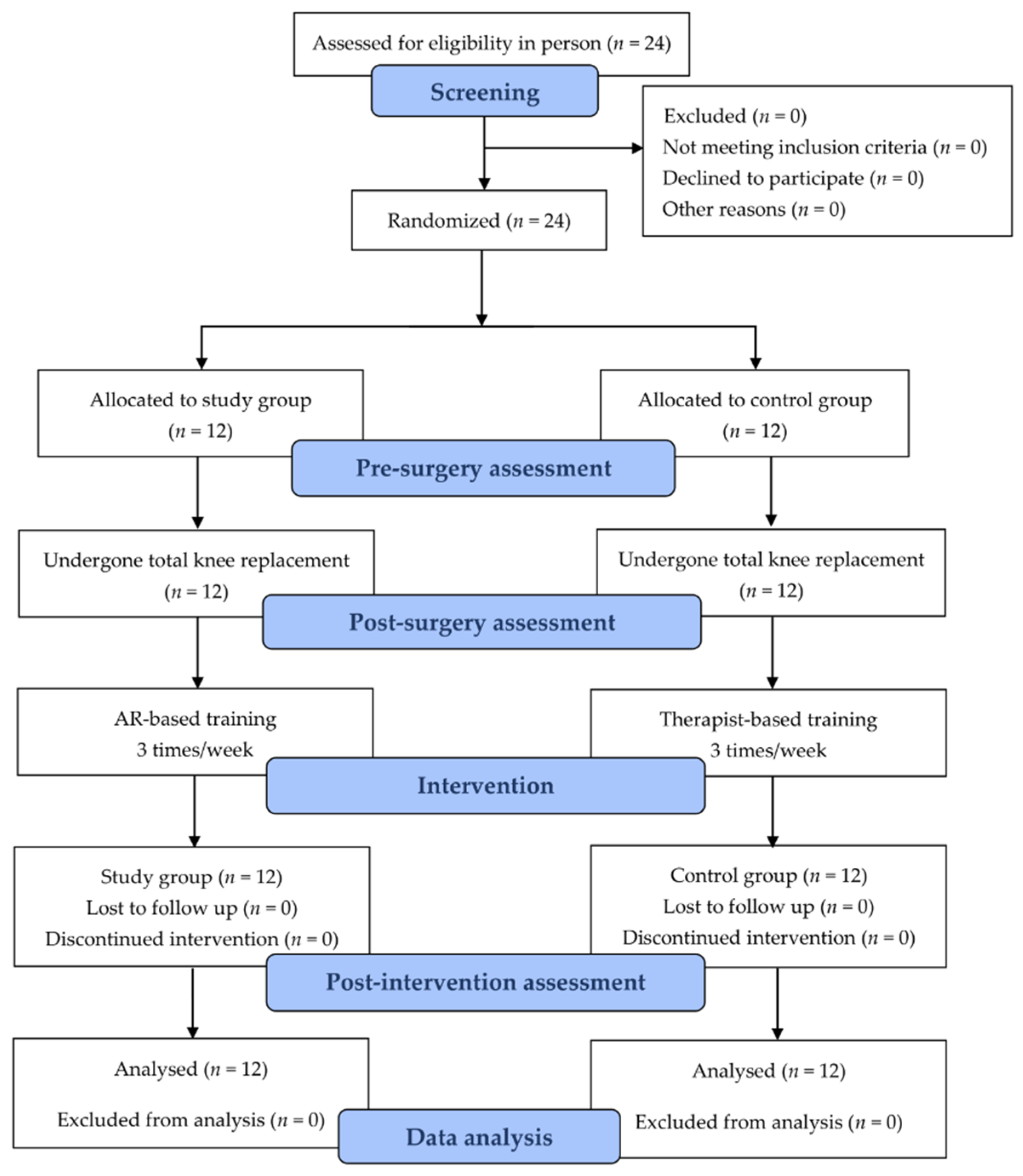
Both the augmented-reality-based training groups and the therapist-based training group participated in a program of 30 min per session, three sessions per week, for a period of four weeks. All the sessions were scheduled with the same interval of a one-day break. They were evaluated three times, before surgery, after surgery, and after treatment. Figure 1 shows the study flow diagram.
Figure 1.
Study flow diagram.
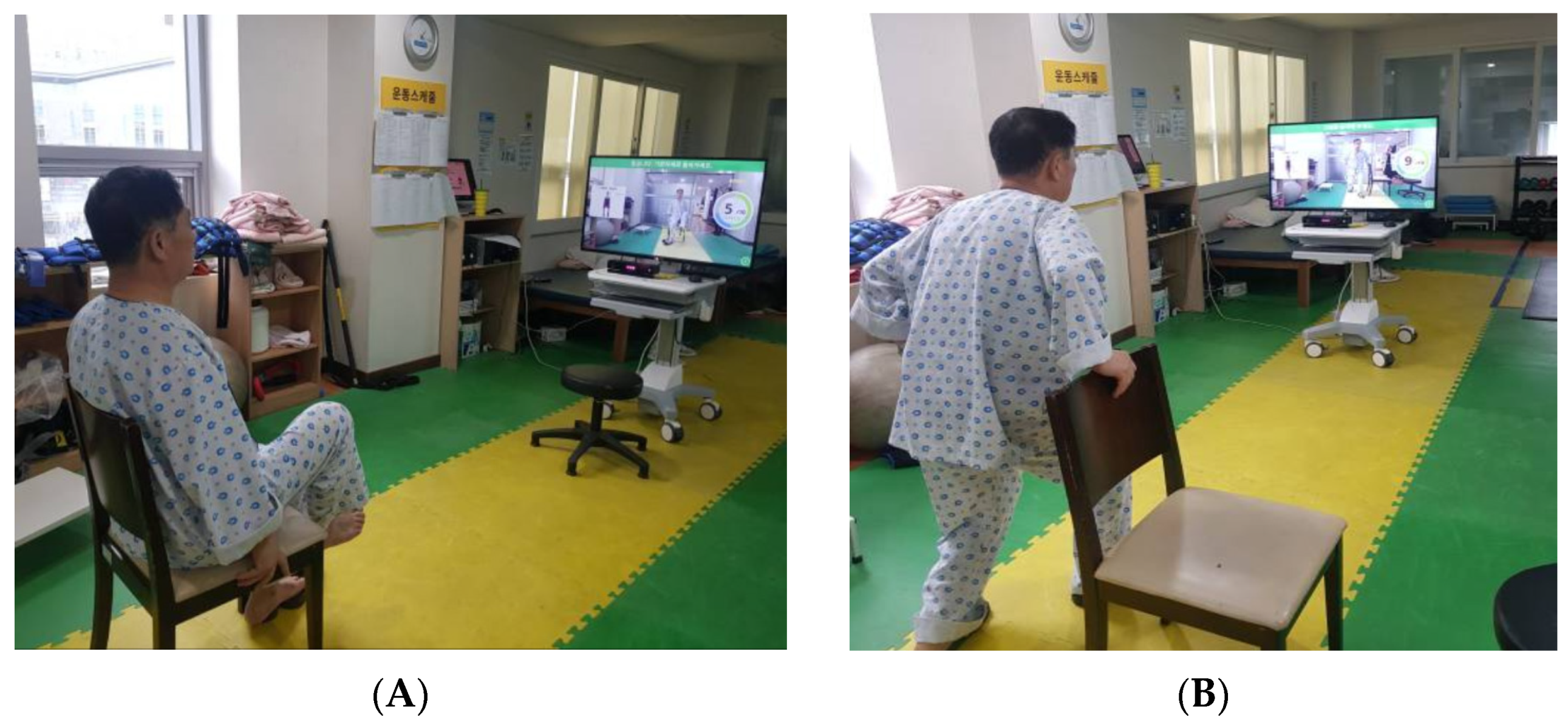
Participants in the ART group received a 30 min exercise program. The program, including the training and measurements, was under the supervision and guidance of the therapist in charge or trained research assistant. The supervisors ensured that participants performed the exercises correctly and that no inappropriate movement susceptible to causing injury occurred. Additionally, they provided technical assistance when necessary to allow the participants to follow the exercise protocol. All the exercises of the first week after surgery were performed in the supine position and a pillow/towel was used to assist the participants while performing the exercises. The program consisted of the following exercises: (1) knee extension in a supine position with a high pillow/towel under the knee (quad set); (2) lifting a sandbag in a supine position with a pillow/towel under the knee (short arc quad); (3) knee flexion with a band in supine position; (4) knee flexion while pulling the heel in supine position (heel slides). All the exercises were performed ten times, two sets each, and with one and three minutes for rest, respectively, between each repetition and set. For the second week, the exercises were performed in the sitting and/or prone position and the participants were asked to perform the following exercises: (1) knee flexion in the prone position; (2) knee extension in the prone position with a towel under the knee; (3) knee extension in sitting position with high pillow/towel under the knee; (4) knee extension in sitting position. All the exercises were performed ten times, two sets each with one and three minutes for rest, respectively, between each repetition and set. During the third and fourth weeks, the exercises were performed in the standing position. It consisted of: (1) knee flexion while standing and leaning on a chair; (2) standing up to sit down while holding a chair; (3) standing up and lifting one leg forward while leaning on a chair; (4) stand up and lift one leg on the side while leaning on a chair; (5) one side knee flexion while holding a chair. All the exercises were performed within the range of motion of the joint, with two sets of 10 repetitions for each exercise. One minute of rest between each repetition and three minutes of rest between sets were provided. Figure 2 shows a participant during the AR-based training.
Figure 2.
AR-based training session. (A) The second-week training session in sitting position. (B) The third- and fourth-week training session in the standing position.
Participants in the TBT group underwent a 30 min conventional training session. The conventional training program under the guidance of the therapist in charge was mainly set to increase the range of motion in the knee joint. The program consisted of a passive range of motion (PROM) performed by the therapist and 15 min of continuous passive motion (CPM) in each session.
2.5. Outcome Measures
The primary outcome was the changes in the range of motion (ROM). To measure the ROM of the knee and the hip joint of participants, a motion analyzer (Motion analysis, UINCARE-82B, Seoul, Korea) was used. The ROM was determined by measuring the distance between the X-axis, Y-axis, and Z-axis of the participant’s joint with the camera in the motion analyzer. The UINCARE motion analyzer allows for measuring the ROM with one camera without attaching a marker that is different from the conventional marker-attached motion analyzer [21]. The knee flexion and extension ROM were measured in the sagittal plane with the lateral epicondyle of the femur as the axis, the greater trochanter middle line as the stationary arm, and the line from the femur to the lateral malleolus as the moving arm. Participants were instructed to wear short pants on the testing days in order to reduce bias during the measurements. Additionally, all irrelevant objects were removed from the testing site to minimize the risk of injury.
The secondary outcome was muscle strength. A digital manual muscle tester (Lafayette Hand-Held Dynamometer Model-01165, Lafayette Instrument Company, Lafayette, IN, USA) was used to measure the strength of hip flexion, hip extension, knee flexion, and knee extension.
The third outcome was the pain score, which was measured by the visual analog scale (VAS), which is a frequently used and simple method for the assessment of the variation in the intensity of pain. This uses a horizontal line, 100 mm in length, marked on the left (score 0) as ‘no pain’ and on the right (score 10) as ‘unbearable pain’. Lastly, the balance ability (dynamic balance) was assessed using motion analysis with single-leg support while swaying in different directions: anterior–posterior (AP), superior–inferior (SI), and medial–lateral (ML). The measurement was conducted on a firm surface with the non-affected limb as support first in order to be familiar with the movements. All the outcomes were recorded before the surgery, 3–4 days after TKA, and then at the end of the 4-week training program.
2.6. Statistical Analysis
In the present study, all statistical analyses were performed using SPSS statistical software version 28.0 (IBM Corp., Armonk, NY, USA), and descriptive statistics were used to evaluate general characteristics. All variables for the subjects yield mean (M) and standard deviation (SD). All dependent variables examined were tested for normality by the Shapiro–Wilk test. Based on the results of the Shapiro–Wilk test, not all the dependent variables exhibited normal distribution; thus, we used a non-parametric test. Friedman test was used to assess the difference in mean scores before the surgery, after the surgery, and after the intervention of both groups. The Wilcoxon signed-rank test was performed as a post hoc test to determine at which time differences occurred. The Mann–Whitney U test was performed for between-group comparisons. All statistical significance levels were set at p < 0.05.
3. Results
Demographic Characteristics
The twenty-four participants in this study all completed the training program and attended all intervention sessions. By the end of the study, none of the participants had dropped out. The general characteristics of both groups of participants are shown in Table 1. The differences between the two groups for general characteristics were not significant.
Table 1.
Participant demographic characteristics.
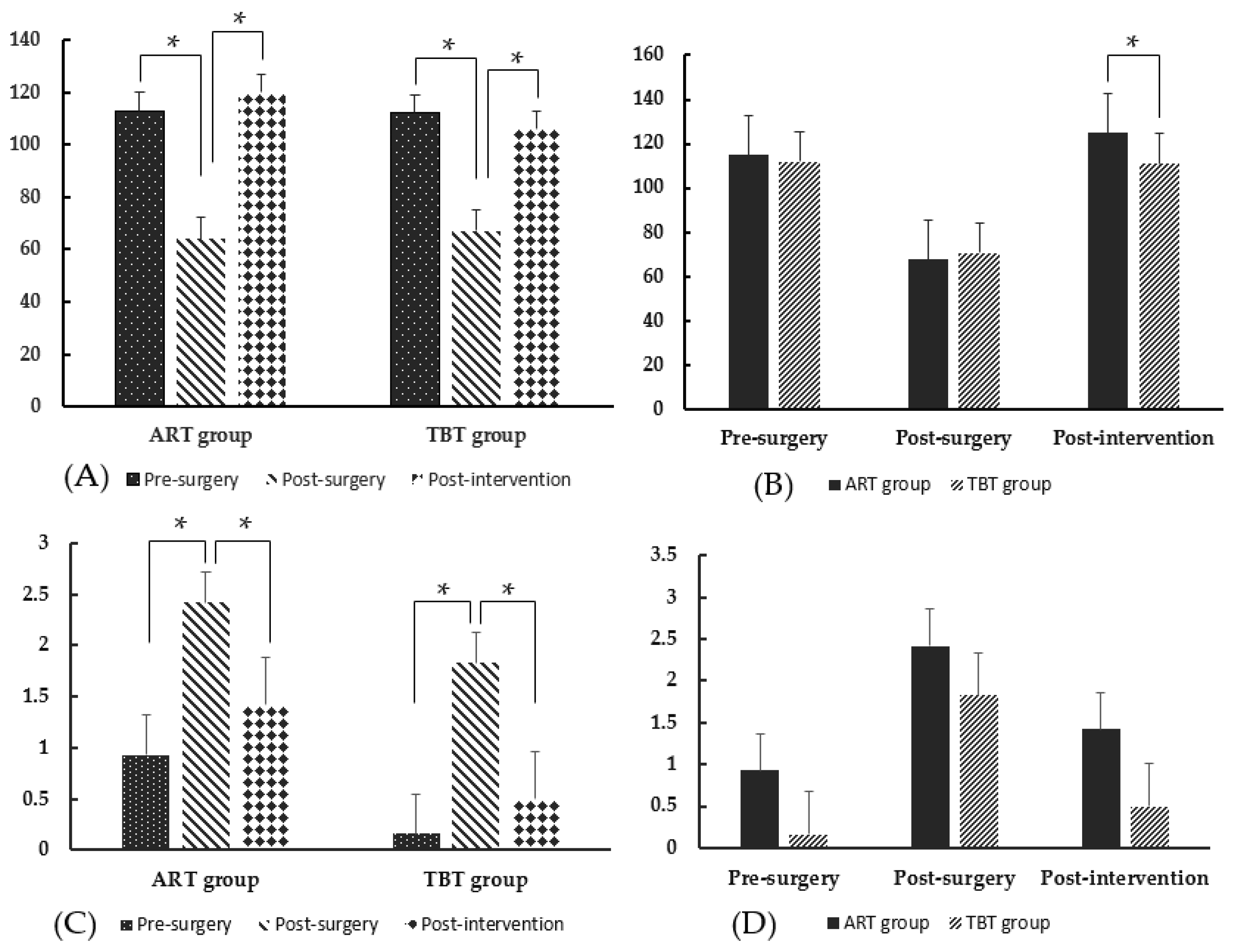
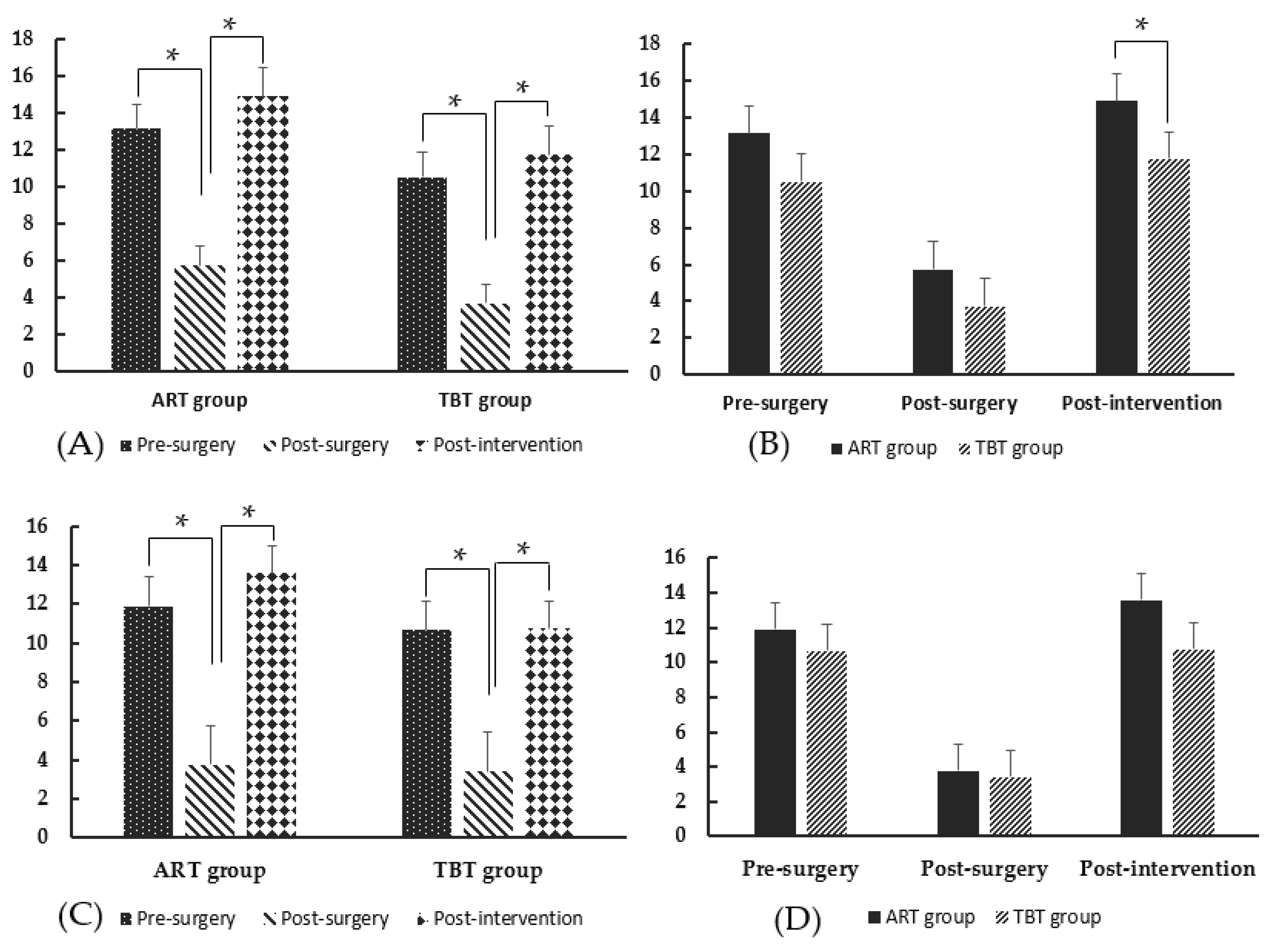
The ROM outcome showed significant differences between the time of measurement within both groups (Table 2, Figure 3). First, a statistically significant difference was observed in both groups between the pre-surgery test and the post-surgery test (p < 0.05) with a decrease in knee flexion ROM after the surgery. Improvement was noticed after the application of exercises in both groups and significant differences were observed between the post-surgery test and post-intervention test (p < 0.05). During the knee flexion between-groups comparison, there was no significant difference in pre-surgery and post-surgery tests (p > 0.05) in the Mann–Whitney U test analysis. However, a significant difference between the groups was observed in the post-intervention test (p < 0.001) with high ROM in the ART group.
Table 2.
Comparison of ROM within and between groups.
Figure 3.
Comparison of ROM within and between groups. (A) Knee flexion within groups, (B) knee flexion between groups, (C) knee extension within groups, (D) knee extension between groups. * p < 0.05.
Regarding the knee extension ROM, significant differences were observed in both groups between the pre-surgery test and post-surgery test, and between the post-surgery test and post-intervention test (p < 0.05). However, no significant difference was observed between the groups in all three times during the Mann–Whitney U test (p > 0.05).
Regarding muscle strength, both knee flexion and extension showed similar results during the within-group comparison in both ART and TBT groups (Table 3, Figure 4). A significant decrease was observed after the surgery and increased after the intervention. A statistically significant difference was observed between the pre-surgery and post-surgery test and between the post-surgery and post-intervention tests (p < 0.05). However, during the between-group comparison, a significant difference was only observed in knee flexion post-intervention between the ART group and TBT group (p < 0.05).
Table 3.
Comparison of strengthening within and between groups.
Figure 4.
Comparison of muscle strength within and between groups. (A) Knee flexion within groups, (B) knee flexion between groups, (C) knee extension within groups, (D) knee extension between groups. * p < 0.05.
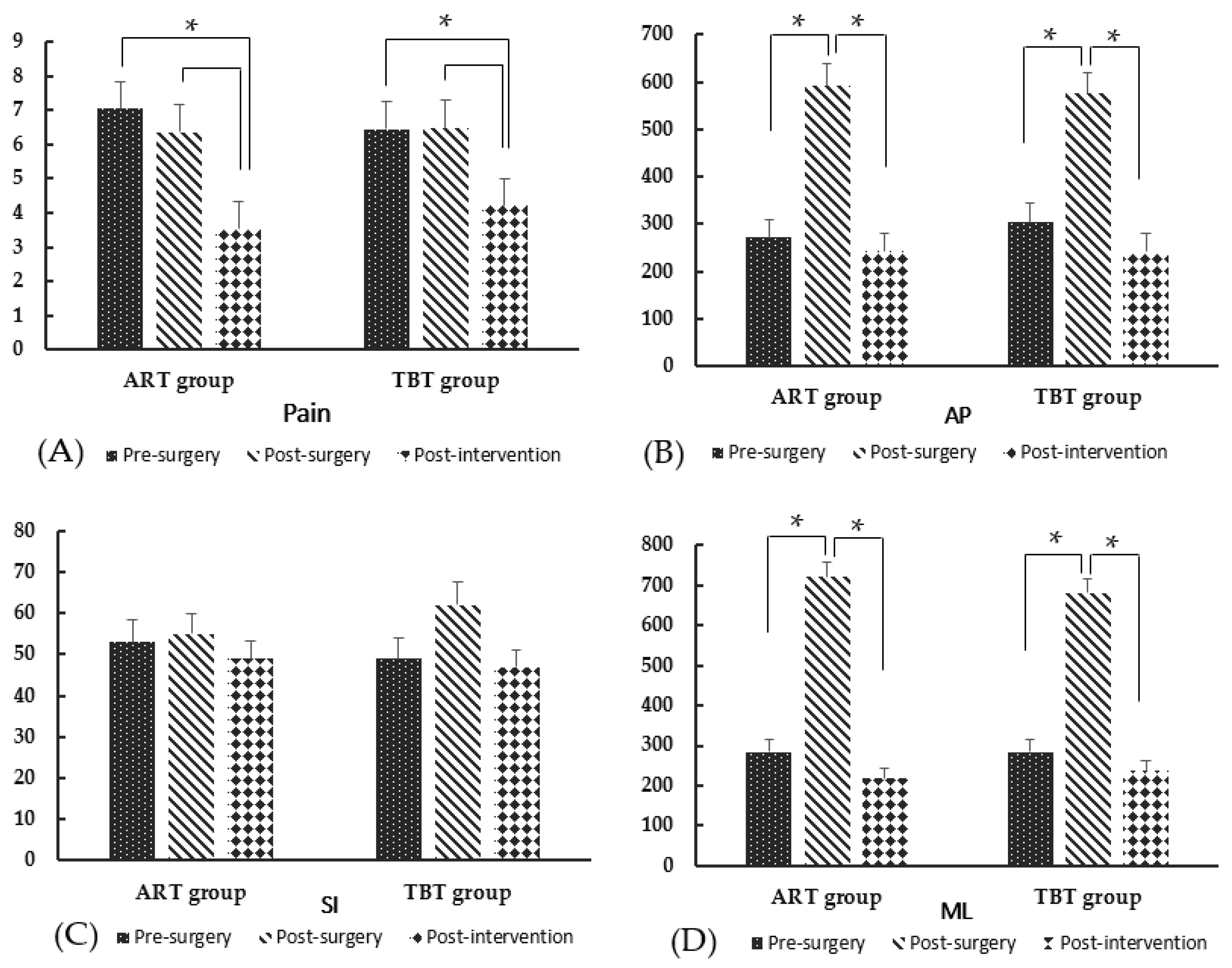
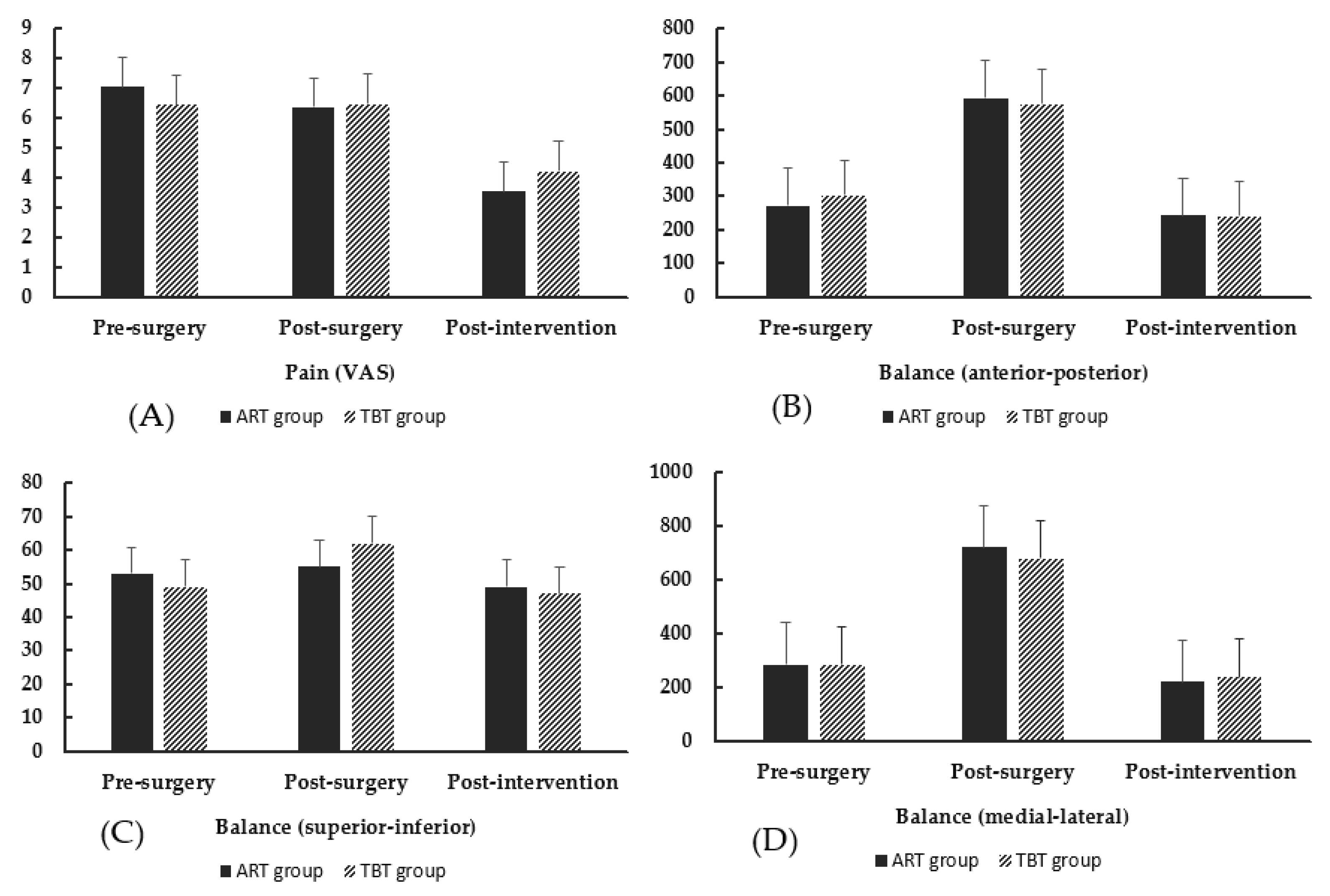
For pain score, both ART and TBT groups showed similar results during the within-group comparison. No significant decrease was observed after the surgery in both groups, with no significant difference between the pre-surgery and post-surgery tests (p > 0.05). However, a statistically significant difference was observed between the pre-surgery and post-intervention test and between the post-surgery and post-intervention tests (p < 0.05). However, during the between-group comparison, no significant difference was observed between the groups in all three measurement times during the Mann–Whitney U (p > 0.05).
Regarding the balance score, the within-group comparison showed similar results in both groups (Table 4, Figure 5 and Figure 6). Significant differences were observed between the pre-surgery and post-surgery and between the post-surgery and post-intervention in AP and ML movements (p < 0.05). The SI movement did not present any significant difference in all measurement times within both groups. The between-group comparison did not show any significant difference between the ART and TBT groups during the Mann–Whitney U test (p > 0.05).
Table 4.
Comparison of pain and balance within and between groups.
Figure 5.
Comparison of pain and balance within groups. (A) Pain, (B) balance (anterior–posterior), (C) balance (superior–inferior), (D) balance (medial–lateral). * p < 0.05.
Figure 6.
Comparison of pain and balance between groups. (A) Pain, (B) balance (anterior–posterior), (C) balance (superior–inferior), (D) balance (medial–lateral).
4. Discussion
This double-blind randomized control trial compared the effect of augmented-reality-based training and conventional therapy on the physical performance of early-stage rehabilitation in patients with TKR. The main finding was that both the ART group and conventional TBT group after 4 weeks of training showed similar results. These findings are consistent with previous studies emphasizing the non-superiority of conventional training programs to virtual training programs [22,23].
One of the purposes of rehabilitation after TKR is to decrease pain and recover knee function, such as ROM, strength, and ability to support weight and balance. In a previous study on the effect of virtual reality on pain and ROM conducted on patients with burn injuries, VR was effective to reduce and manage pain. Nevertheless, they found that VR did not have a significant effect on improving ROM [23]. The authors affirmed that ROM and pain control are different variables, and there is no correlation between the two factors.
Some studies reported that training in a virtual or augmented environment provides immersive and multi-sensory effects that allow users to have a sufficient sensation of distraction that allows for reducing pain sensation [24] and improving physical performance [13]. This is the main mechanism that explains the result found in the present study, that training with an AR device reduces pain. This mechanism is known as the “distraction theory” or the “cognitive distraction” of AR-based training on pain management and physical ability [25]. During AR-based training, patients are deeply engaged in an immersive experience and it becomes difficult to perceive stimulation outside of the field of attention, including pain. For the pain sensation, the thalamus in our brain is one of the most significant structures to receive projections from multiple ascending pain pathways. It also processes pain perception before transmitting various information to the corresponding part of the cerebral cortex. In the human brain, the thalamus handles a variety of pain-related factors, such as emotional motivation (internal pain pathway) and sensory discrimination (lateral pain pathway) components [26]. It is important for pain control in normal and nervous-system patients. According to another study, training in a virtual environment regulates the intensity of pain input from the outside at the level of the thalamus, and the thalamus before sensory input is detected in the cerebral cortex [27]. Aside from those explanations on the mechanism of pain reduction vis AR-based training, AR provides a significant reduction in bio-physiological parameters related to distress, specifically heart rate reduction [28]. It operates on psychological variables as an analgesic effect. This explains the positive effect of AR on pain reduction. In the present study, twenty-one of the twenty-four participants were women, and it seems that women perceive more nociceptive stimuli due to biological, psychological, and cultural factors [29]. Although this theory has not yet been fully explored in clinics, our study found that AR-based training is effective to considerably reduce pain sensation.
The change in position each week after many repetitions facilitated the adaptation of various motions in different positions. Interestingly, this helped to increase not only the motor learning function but also the proprioception of participants. Moreover, the joint position sense plays a very important role in inducing and stimulating voluntary and involuntary motions by transmitting basic information to the motor control area, such as balance or vestibular sense [30]. However, TKR patients had further decreased joint position sense after surgery than before the surgery. AR training produces a dynamic motion that can increase muscle strength due to trunk and lower-extremity motion control and weight shifting through upper-extremity motion. Contrary to therapist-based training, during AR-based training, patients have to follow a certain rhythm of motion at an altered speed. Likewise, the speed of weight shifting increased with self-activity which induces an increase in joint proprioception in addition to muscle strength and an increase in corresponding balance control capability in the patients. Furthermore, the results of these studies showed that joint range of motion, muscle strength, and balance increased through augmented-reality-based training and increased the ability to support the motion of weight falling on the affected leg during training.
Moreover, AR-based training is reported to be beneficial for increasing somatosensory input and proprioception [22]. Sometimes described as the “sixth sense”, proprioception is the sense of self-movement and body position, and it is a key to knee rehabilitation as it influences pain and especially balance ability. This evidence supports the findings of our study, showing the effectiveness of AR-based training in decreasing pain and increasing balance ability, leading to an increase in ROM and strength.
In our study, we can also notice that significant improvements in ROM and strength were only on the right side, regardless of the affected side. This is due to the fact that all the participants in this study were right-handed. A previous study on 16 aged women comparing the muscle strength of dominant and non-dominant sides and one-leg standing ability after 4 weeks of training showed a better improvement in the outcomes on the dominant side [13]. Sufficient weight bearing on the dominant side compared to the non-dominant side explains this result, which is similar to the result of the present study.
Although the present study presents some evidence for the non-superiority of AR-based training over conventional physical therapy in patients post-TKR, it has some limitations that need to be acknowledged. First, the number of participants was small (12 participants in each group), making it difficult to generalize the findings. Second, despite the fact that gender may affect the results, we could not conduct a gender comparison since the majority of the participants were female. However, it would be interesting to include a large sample with an equal number of participants from both genders in further research to minimize the potential gender bias during the interpretation of the results. Moreover, a long period of exercise would provide evidence for the long-term effects.
5. Conclusions
This study aimed to compare the effect of AR-based training with conventional therapist-based training on patients with TKR. The main findings were that a 4-week period of AR-based training and therapist-based training both resulted in a greater improvement in ROM, muscle strength, balance, and releasing pain. No significant difference was found between the two groups. The optimal distance non-contact goniometric measurement was found as 2 m for seating and 2.5 m for standing position. Moreover, as real-time feedback in a virtual environment is provided to the patients, it properly motivates them throughout the program. This study supports the therapeutic use of AR for TKR rehabilitation and suggests the application of a personalized training protocol for better outcomes.
Author Contributions
Conceptualization, J.-H.Y. and D.M.N.; methodology, J.-H.Y., D.M.N. and H.-Y.K.; formal analysis, H.-Y.K. and J.-W.L.; investigation, J.-W.L. and S.-Y.O.; data curation, S.-Y.O.; writing—original draft preparation, J.-H.Y. and D.M.N.; writing—review and editing, J.-H.Y. and D.M.N.; funding acquisition, J.-H.Y. All authors have read and agreed to the published version of the manuscript.
Funding
This research was supported by the Culture, Sports and Tourism R&D Program through the Korea Creative Content Agency grant funded by the Ministry of Culture, Sports and Tourism in 2022 (Project Number: SR202106002) and the National Research Foundation of Korea (NRF) grant funded by the Korean government (MEST) (No. NRF-2020R1A2C2014394).
Institutional Review Board Statement
The study was conducted in accordance with the Declaration of Helsinki and approved by the Institutional Review Board of the CM Hospital (CMHCTC-19-002).
Informed Consent Statement
Informed consent was obtained from all subjects involved in the study. Written informed consent was obtained from the parents/legal guardians to publish this paper.
Data Availability Statement
The data used to support the findings of this study are available from the corresponding author upon reasonable request.
Acknowledgments
We thank all the patients who participated in the experiments and made possible the completion of this study.
Conflicts of Interest
The authors declare no conflict of interest and the funders had no role in the design of the study; in the collection, analyses, or interpretation of data; in the writing of the manuscript; or in the decision to publish the results.
References
- Naghadehi, F.B.; Olivo, S.A.; Forhan, M.; Prado, C.; Gramlich, L.; Woodhouse, L. Prevalence of obesity and the associated risk among patients with total knee arthroplasty in Alberta. Osteoarthr. Cartil. 2019, 27, S279. [Google Scholar] [CrossRef]
- Singh, J.A.; Yu, S.; Chen, L.; Cleveland, J.D. Rates of total joint replacement in the United States: Future projections to 2020–2040 using the national inpatient sample. J. Rheumatol. 2019, 46, 1134–1140. [Google Scholar] [CrossRef] [PubMed]
- Vina, E.R.; Kwoh, C.K. Epidemiology of osteoarthritis: Literature update. Curr. Opin. Rheumatol. 2018, 30, 160–167. [Google Scholar] [CrossRef] [PubMed]
- Bliddal, H.; Leeds, A.R.; Christensen, R. Osteoarthritis, obesity and weight loss: Evidence, hypotheses and horizons–a scoping review. Obes. Rev. 2014, 15, 578–586. [Google Scholar] [CrossRef] [PubMed]
- Indicators, O.E. Health at a Glance; OECD Publishing: Paris, France, 2015. [Google Scholar]
- Pagoti, R.; O’Brien, S.; Blaney, J.; Doran, E.; Beverland, D. Knee manipulation for reduced flexion after Total Knee Arthroplasty. Is timing critical? J. Clin. Orthop. Trauma 2018, 9, 295–299. [Google Scholar] [CrossRef]
- Castrodad, I.M.; Recai, T.M.; Abraham, M.M.; Etcheson, J.I.; Mohamed, N.S.; Edalatpour, A.; Delanois, R.E. Rehabilitation protocols following total knee arthroplasty: A review of study designs and outcome measures. Ann. Transl. Med. 2019, 7 (Suppl. S7), S255. [Google Scholar] [CrossRef]
- Frost, H.; Lamb, S.E.; Robertson, S. A randomized controlled trial of exercise to improve mobility and function after elective knee arthroplasty. Feasibility, results and methodological difficulties. Clin. Rehabil. 2002, 16, 200–209. [Google Scholar] [CrossRef]
- Gustavson, A.M.; Wolfe, P.; Falvey, J.R.; Eckhoff, D.G.; Toth, M.J.; Stevens-Lapsley, J.E. Men and women demonstrate differences in early functional recovery after total knee arthroplasty. Arch. Phys. Med. Rehabil. 2016, 97, 1154–1162. [Google Scholar] [CrossRef]
- Brewer, B.W.; Van Raalte, J.L.; Cornelius, A.E.; Petitpas, A.J.; Sklar, J.H.; Pohlman, M.H.; Krushell, R.J.; Ditmar, T.D. Psychological factors, rehabilitation adherence, and rehabilitation outcome after anterior cruciate ligament reconstruction. Rehabil. Psychol. 2000, 45, 20–37. [Google Scholar] [CrossRef]
- Sonesson, S.; Kvist, J.; Ardern, C.; Österberg, A.; Silbernagel, K.G. Psychological factors are important to return to pre-injury sport activity after anterior cruciate ligament reconstruction: Expect and motivate to satisfy. Knee Surg. Sports Traumatol. Arthrosc. 2017, 25, 1375–1384. [Google Scholar] [CrossRef]
- Mendonza, M.; Patel, H.; Bassett, S.F. Influences of psychological factors and rehabilitation adherence on the outcome post anterior cruciate ligament injury/surgical reconstruction. N. Z. J. Physiother. 2007, 35, 62–71. [Google Scholar]
- Nekar, D.M.; Kang, H.Y.; Yu, J.H. Improvements of Physical Activity Performance and Motivation in Adult Men through Augmented Reality Approach: A Randomized Controlled Trial. J. Environ. Public Health 2022, 2022, 3050424. [Google Scholar] [CrossRef] [PubMed]
- Yao, L.; Xu, H.; Li, A. Kinect-based rehabilitation exercises system: Therapist involved approach. Bio-Med. Mater. Eng. 2014, 24, 2611–2618. [Google Scholar] [CrossRef] [PubMed]
- Suh, D.H. A Study on the Effectiveness of the Image Recognition Technique of Augmented Reality Contents. Cartoon. Animat. Stud. 2015, 41, 337–356. [Google Scholar] [CrossRef]
- Berton, A.; Longo, U.G.; Candela, V.; Fioravanti, S.; Giannone, L.; Arcangeli, V.; Alciati, V.; Berton, C.; Facchinetti, G.; Marchetti, A.; et al. Virtual reality, augmented reality, gamification, and telerehabilitation: Psychological impact on orthopedic patients’ rehabilitation. J. Clin. Med. 2020, 9, 2567. [Google Scholar] [CrossRef]
- Iacono, V.; Farinelli, L.; Natali, S.; Piovan, G.; Screpis, D.; Gigante, A.; Zorzi, C. The use of augmented reality for limb and component alignment in total knee arthroplasty: Systematic review of the literature and clinical pilot study. J. Exp. Orthop. 2021, 8, 52. [Google Scholar] [CrossRef]
- Su, S.; Lei, P.; Wang, C.; Gao, F.; Zhong, D.; Hu, Y. Mixed Reality Technology in Total Knee Arthroplasty: An Updated Review With a Preliminary Case Report. Front. Surg. 2022, 9, 804029. [Google Scholar] [CrossRef]
- Jeon, S.; Kim, J. Effects of augmented-reality-based exercise on muscle parameters, physical performance, and exercise self-efficacy for older adults. Int. J. Environ. Res. Public Health 2020, 17, 3260. [Google Scholar] [CrossRef]
- Im, J.; Yu, J. The Influence of Augmented Reality based Knee Exercise in Short Period on Range of Motion and Balance-Pilot study. Arch Orthop. Sports Phys. Ther. 2018, 14, 1–8. [Google Scholar] [CrossRef]
- Yu, J. Comparison of reliabilities and validity between AR based motion capture system and physical therapist: Preliminary study. Turk. J. Comput. Math. Educ. 2021, 12, 6779–6785. [Google Scholar]
- Gianola, S.; Stucovitz, E.; Castellini, G.; Mascali, M.; Vanni, F.; Tramacere, I.; Banfi, G.; Tornese, D. Effects of early virtual reality-based rehabilitation in patients with total knee arthroplasty: A randomized controlled trial. Medicine 2020, 99, e19136. [Google Scholar] [CrossRef] [PubMed]
- Carrougher, G.J.; Hoffman, H.G.; Nakamura, D.; Lezotte, D.; Soltani, M.; Leahy, L.; Engrav, L.H.; Patterson, D.R. The effect of virtual reality on pain and range of motion in adults with burn injuries. J. Burn. Care Res. 2009, 30, 785–791. [Google Scholar] [CrossRef]
- Spiegel, B.; Fuller, G.; Lopez, M.; Dupuy, T.; Noah, B.; Howard, A.; Albert, M.; Tashjian, V.; Lam, R.; Ahn, J.; et al. Virtual reality for management of pain in hospitalized patients: A randomized comparative effectiveness trial. PLoS ONE 2019, 14, e0219115. [Google Scholar] [CrossRef] [PubMed]
- Wang, Y.; Guo, L.; Xiong, X. Effects of virtual reality-based distraction of pain, fear, and anxiety during needle-related procedures in children and adolescents. Front. Psychol. 2022, 13, 1603. [Google Scholar] [CrossRef] [PubMed]
- Ab Aziz, C.B.; Ahmad, A.H. The role of the thalamus in modulating pain. Malays. J. Med. Sci. 2006, 13, 11. [Google Scholar] [PubMed]
- Lier, E.J.; Oosterman, J.M.; Assmann, R.; de Vries, M.; Van Goor, H. The effect of Virtual Reality on evoked potentials following painful electrical stimuli and subjective pain. Sci. Rep. 2020, 10, 9067. [Google Scholar] [CrossRef] [PubMed]
- Chirico, A.; Lucidi, F.; De Laurentiis, M.; Milanese, C.; Napoli, A.; Giordano, A. Virtual reality in health system: Beyond entertainment. a mini-review on the efficacy of VR during cancer treatment. J. Cell. Physiol. 2016, 231, 275–287. [Google Scholar] [CrossRef]
- Paller, C.J.; Campbell, C.M.; Edwards, R.R.; Dobs, A.S. Sex-based differences in pain perception and treatment. Pain Med. 2009, 10, 289–299. [Google Scholar] [CrossRef]
- Hong, S.; Lee, G. Effects of an immersive virtual reality environment on muscle strength, proprioception, balance, and gait of a middle-aged woman who had total knee replacement: A case report. Am. J. Med. Case Rep. 2019, 20, 1636. [Google Scholar] [CrossRef]
Disclaimer/Publisher’s Note: The statements, opinions and data contained in all publications are solely those of the individual author(s) and contributor(s) and not of MDPI and/or the editor(s). MDPI and/or the editor(s) disclaim responsibility for any injury to people or property resulting from any ideas, methods, instructions or products referred to in the content. |
© 2023 by the authors. Licensee MDPI, Basel, Switzerland. This article is an open access article distributed under the terms and conditions of the Creative Commons Attribution (CC BY) license (https://creativecommons.org/licenses/by/4.0/).