


Abstract
It is generally known that the two most crucial elements of concrete that depend on the slump value of the mixture are workability and compressive strength. In addition, slump retention is more delicate than the commonly used slump value since it reflects the concrete mixture’s durability for usage in civil engineering applications. In this study, the effect of three water-reducer additives was tested on concrete’s workability and compressive strength from 1 day to 28 days of curing. The slump of the concrete was measured at the time of adding water to the mix and after 30 min of adding water. This study employed 0–1.5% (%wt) water-reducer additives. The original ratio between water and cement (wc) was 0.65, 0.6, and 0.56 for mixtures incorporating 300, 350, and 400 kg of cement. It was lowered to 0.3 by adding water-reducer additives based on the additives type and cement content. Depending on the kind and amount of water-reducer additives, w/c, gravel content, sand content, crushed content, and curing age, adding water-reducer additives to the concrete increased its compressive strength by 8% to 186%. When polymers were added to the concrete, they formed a fiber net (netting) that reduced the space between the cement particles. As a result, joining the cement particles quickly enhanced the fresh concrete’s viscosity and the hardened concrete’s compressive strength. The study aims to establish mathematical models (nonlinear and M5P models) to predict the concrete compressive strength when containing water-reducer additives for construction projects without theoretical restrictions and investigate the impact of mix proportion on concrete compressive strength. A total of 483 concrete samples modified with 3 water-reducer additives were examined, evaluated, and modeled for this study.
1. Introduction
Cement, fine, and coarse aggregates are combined with water to make a composite material called concrete [1]. Concrete is a flexible material in a fresh condition that can be quickly blended to fit a range of particular demands and molded into almost any shape. Ordinary portland cement is the most often used cement for manufacturing concrete [2]. The study of concrete characteristics and their practical applications are covered by concrete technology [3]. Floors, columns, beams, slabs, and other load-bearing components are made of concrete in building construction [4,5,6].
Chemical admixtures known as water-reducer additives are added to concrete mixtures to lower the water content or slow the concrete setting rate while preserving the mixture flowability. Several liquid and powdered water reduction additives are available [7,8]. Chemically, water-reducer additives fall into three groups. First, Sulfonate Naphthalene Formaldehyde (SNF); then, Formaldehyde Sulfonate (SMF); and finally, sulfonate and carboxylic copolymers [9,10,11]. Polycarboxylate ether (PCE) (high-scale water reduction) is one of the most common water-reducer additive types [12]. Through the adsorption and dispersion of cement components, water-reducer additives are active in the cement waterways network [13,14,15]. Water-reducer additives improve concrete flowability by dispersing agglomerated cement particles [16].
Concrete compressive strength, a significant mechanical characteristic, is often measured using concrete specimens after a standard curing period of 28 days. Various factors affect the strength of concrete, including cement strength, water content, w/c, and aggregate quality. The conventional method for modeling the impact of these factors on the concrete compressive strength begins with an assumed form of an analytical equation and is followed by a regression analysis utilizing experimental data to identify the equation’s parameters [17]. Polymers are one of the chemical admixtures used to improve the properties of fresh and hardened concrete [15,16,17,18]. Polymers affect cement setting times, hydration, flowability, and strength. Many types of polymers are present in liquid and powder forms. Polycarboxylate (PCE) (high-scale water reduction) is one of the most common polymer types [19]. The currently available superplasticizers can be divided into three categories according to the chemical compound. The first is condensed with Sulfonate Naphthalene Formaldehyde (SNF), the second Formaldehyde Sulfonate (SMF), and the last is made up of sulfonate and carboxylic copolymers, for example, Polycarboxylate Superplasticizers (PC) in the Sulphonate group. Concrete quality and durability can be significantly enhanced with PC superplasticizers [20]. Superplasticizers are activated in the cement waterways network by adsorption and dispersion of cement parts. The main way in which polymers increase the flowability of concrete is to disperse agglomerated cement particles. The fluidity of superplasticizers depends mainly on their adsorption on concrete surfaces [21,22,23,24,25,26,27]. The effects of polymers (Polycarboxylate–Superplasticizer) in liquid form have been studied to enhance concrete’s mechanical properties, such as compressive strength [12]. There are several methods for modeling the properties of materials, including computational modeling, statistical techniques, and recently developed tools such as regression analyses and Artificial Neural Networks (ANN) [33]. Multilinear regression analysis, M5P-tree, and ANN are techniques widely used to solve problems in construction project applications [18,19,20,21,22].
Nonlinear regression, multilinear regression analysis, and M5P-tree are construction problem-solving methodologies [28,29,30]. M5P-tree was initially introduced by [31]. This tree technique adapts to each sub-location by classifying or dividing data into various spaces. Error is estimated using each node’s M5P-tree tree division criterion. Variance measures class mistakes. Any node function uses the attribute that minimizes errors. The M5P-tree tree division criterion is the error computations per node. Node-class standard deviation calculates M5P error. Node division reduces errors by evaluating each node’s characteristics. Parent nodes have more StDev than child nodes (more significant nodes). Choose the structure with the best error-reduction potential. This split is tree-like. Second, linear regression functions replace the clipped sub-trees. Thus, the effect of numerous parameters such as water-reducer content, w/c, and curing duration of 1 day to 28 days was quantified using nonlinear regressions, multi-regression, and M5P-tree-based approaches to forecast concrete compressive strength, utilizing 483 tested samples for each model.
Research Significance
The main objective of this study is to propose two systematic multiscale equations to estimate the maximum stress of concrete modified with polymers. Thus, experimental data of 483 tested samples using three different types of liquid polymer with polymer contents, mix proportion, curing period, and the water-to-cement ratio was considered with different analysis approaches. (i) The effect of polymers on the slump retention and compression strength of concrete is investigated and quantified in the early curing period (ii) to guarantee the construction industry to use the proposed models without any experimental work, and (iii) to quantify and propose a systematic multiscale model to predict the compression strength of concrete containing small amounts of polymers (up to 1.5%) with various water-to-cement ratios and curing time up to 28 days.
2. Materials and Methods
2.1. Ordinary Portland Cement
This investigation used ordinary portland cement (OPC) from the Gasin Cement Company in Sulaimani, Iraq. Table 1 summarizes the chemical and mineralogical constitution of the OPC.

Table 1.
Composition of the ordinary portland cement.
2.2. Aggregate
In this study, natural sand was used. Crushed stone was used as fine aggregate, and gravel passing a sieve of 20 mm was used as coarse aggregate.
2.3. Additives
In this study, three additives were used to enhance the compressive strength of concrete. SP62 is a liquid brown Polycarboxylic ether. It is a highly concentrated fluidizing admixture. An admixture can obtain a homogeneous mixture with minimized frictional forces between the mixed components. RC897 is a superplasticizer that produces high-quality ready-mix and precast concrete with reduced water needs and high workability retention. This water-reducer extends processing time and meets industry requirements. PC180 is a high-performance superplasticizer that was purposefully designed for concretes having high consistencies and low w/c ratios in precast applications. In this study, up to 1.5% of the additives were used. The properties of the three types of additives are summarized in Table 2.
Table 2.
Properties of the additives.
2.4. Slump
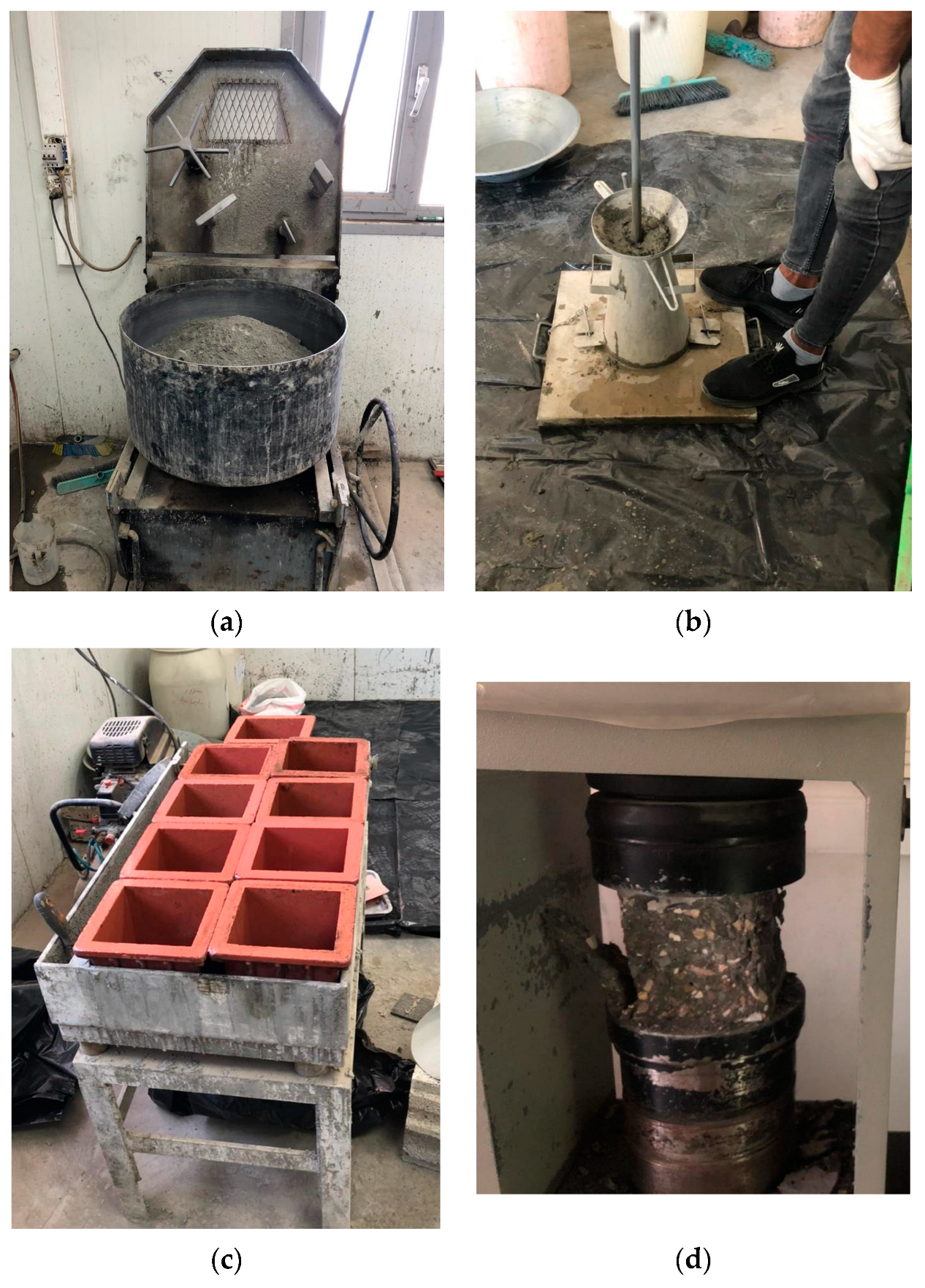
In this study, the additives’ consistency and effectiveness on the concrete mixes’ flowability according to ASTM C143 and EN-12350 were assessed using a concrete slump test (Figure 1a,b). The slump values of the modified concrete with additives and the control sample ranged from 200 to 220 mm. In order to assess the effectiveness of the additives on the workability of the concrete to the control sample, slump retention was also carried out.
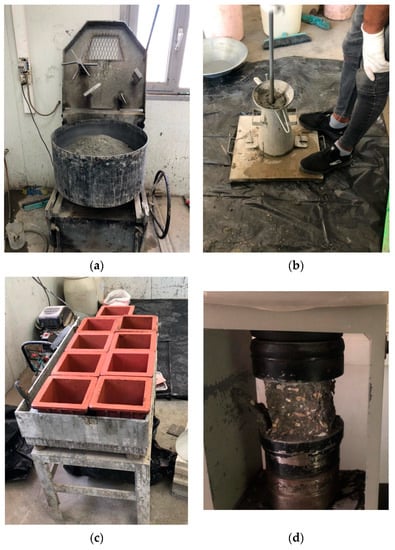
Figure 1.
Experimental work (a) concrete mixer, (b) slump test, (c) cubic molds, (d) compressive strength test.
2.5. Compressive Strength
2.6. Concrete Mix
The range of additive content was 0% to 1.5%. Due to the addition of the additives, less water was used to make the mixture, and the w/c ratio was gradually lowered so that the slump value remained between 200 and 220 mm. The specimens were kept in water with a humidity level of 95 percent and a temperature of 25 °C for the appropriate curing age. Table 3 provides a summary of the concrete mixtures. The slumps were controlled between 200 to 220 mm, and 0, 0.5, 0.75, 1, 1.25, and 1.5% of the three additives, such as SP62, PC180, and RC897, were used (Table 4).
Table 3.
Concrete mix design.
Table 4.
Impact of the additives on the workability of concrete.
2.7. Modelling
A total of 483 datasets (161 samples for each polymer) containing tested results for each modification were examined. The water–cement ratio (w/c), curing age (t, days), cement content (C, kg), gravel content (G, kg), sand content (S, kg), crushed stone content (CRS, kg), curing time (t, days), and the additives’ content (Add.,%) are all included in the set of input data, with the tested compressive strength (MPa) of the concrete provided as the target value.
2.7.1. Nonlinear Regression Model
To develop a nonlinear regression model, the following formula (Equation (1)) can be considered a general form [2,8,12]. Equation (1) represents the interrelation between the variables to estimate the compressive strength of the conventional and concrete components.
2.7.2. M5P Model
One of the most significant advantages of model trees is their ability to efficiently solve problems, dealing with many data sets with a substantial number of attributes and dimensions. They are also noted for being powerful while dealing with missing data [31]. The M5P-tree approach establishes a linear regression at the terminal node by classifying or partitioning diverse data areas into numerous separate spaces. It fits on each sub-location in a multivariate linear regression model. The error is estimated based on the default variance value inserted into the node. The general formula for the M5P-tree model is shown in Equation (2).
w/c: ratio of water-to-cement content
C: cement content
S: sand content
CRS: crushed stone content
G: gravel content
t: curing time
P.: additive (SP62 or PC180 or RC897) ranged from 0% to 1.5 and to are modeli paramters (Table 5 and Table 6).
Table 5.
NLR model paramters.
Table 6.
M5P-tree model paramters.
2.8. Performance Evaluation and Model Criteria
To assess the accuracy and efficacy of the model predictions, the coefficient of determination (R2), root mean squared error (RMSE), and mean absolute error (MAE) were used. The reliability of the suggested models and the effect of mix proportions on the concrete compressive strength were investigated using the nonlinear and M5P models, which were evaluated using several common assessment criteria. Their equations are as follows:
yi = laboratory-tested values; xi = estimated value; = average of yi; = average of xi, and n is the number of datasets.
3. Results and Analysis
3.1. Water-Reducing Additives
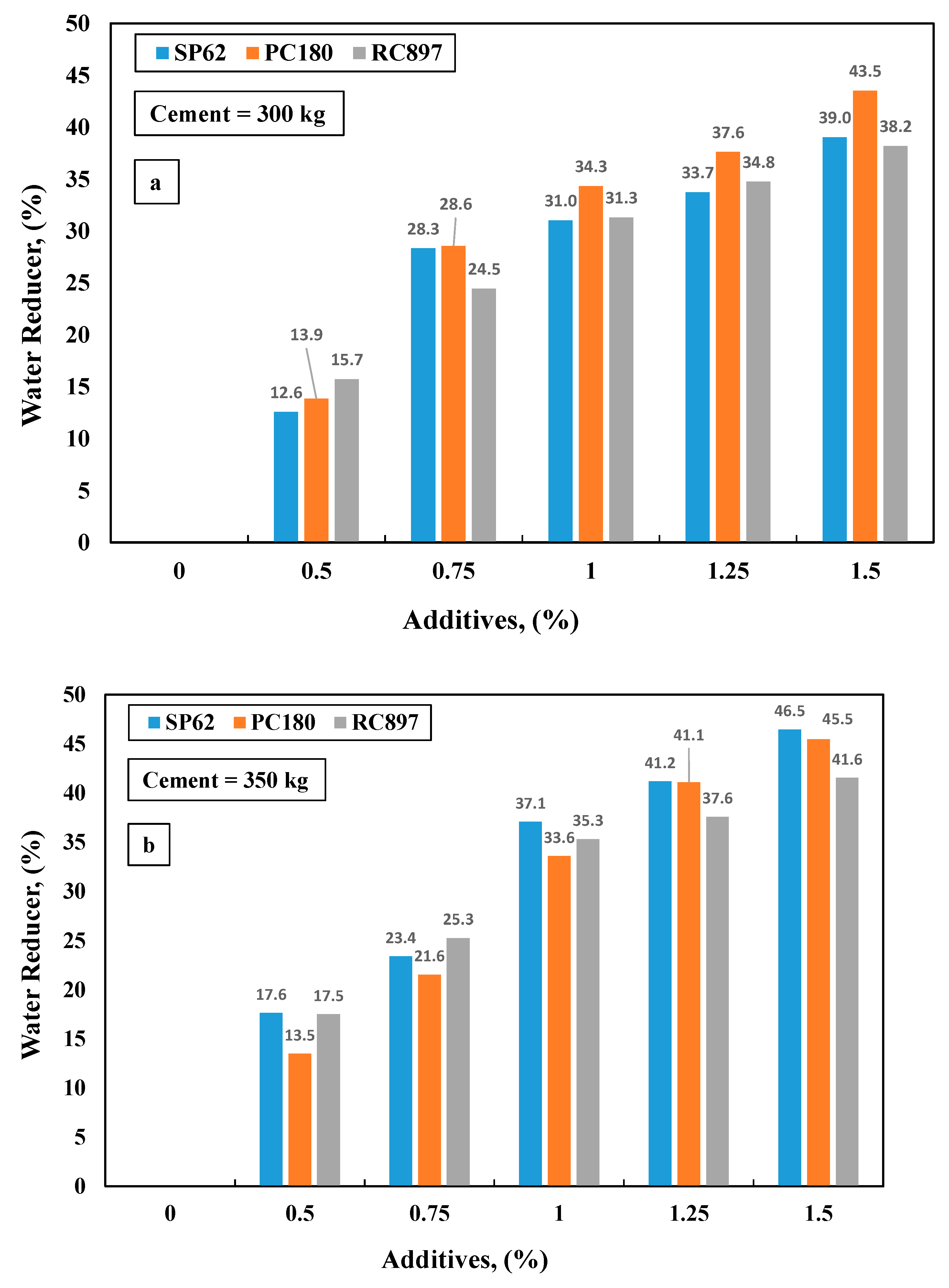
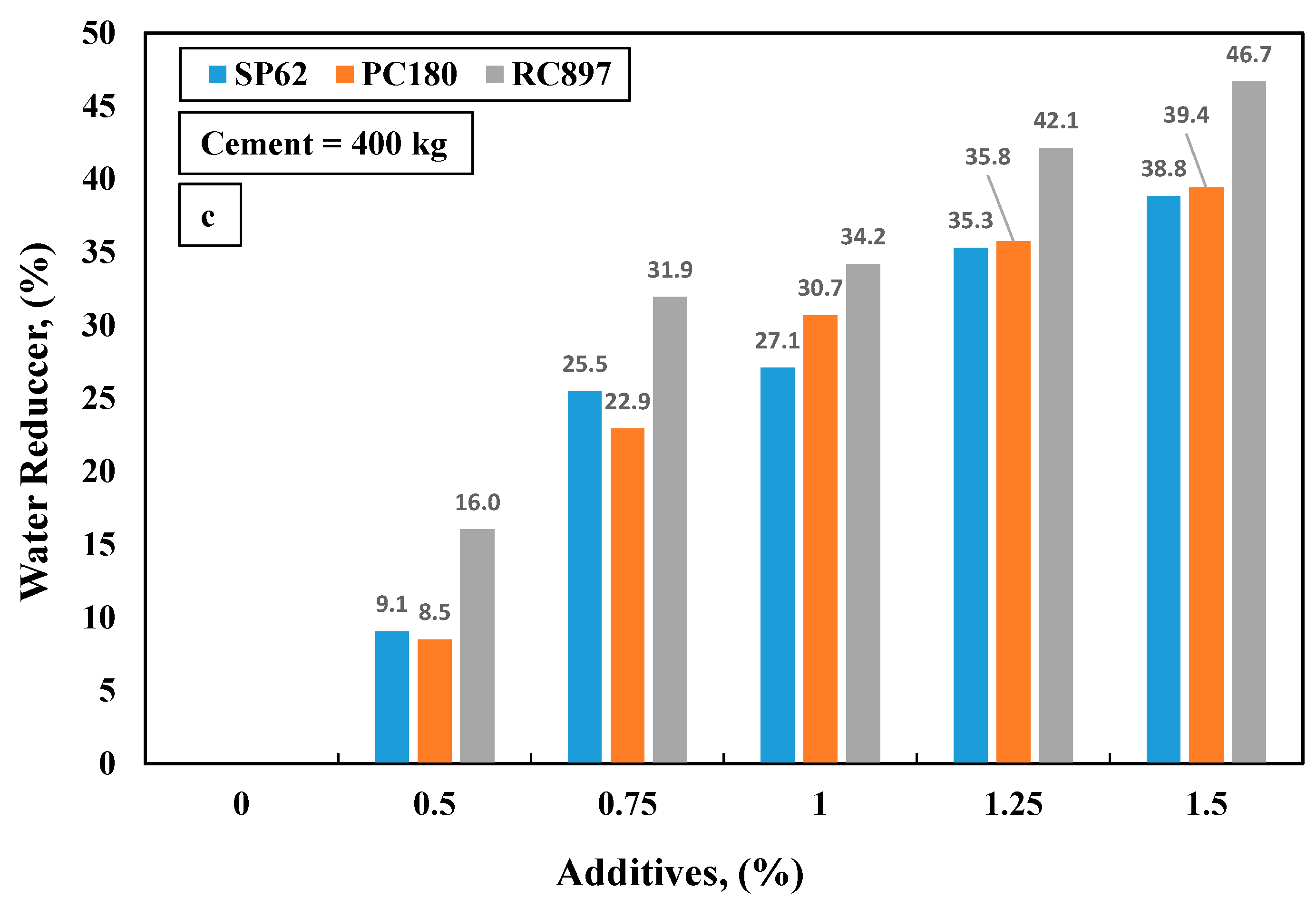
In this research paper, three types of additives (SP62, PC180, and RC897) were used to enhance the performance of the concrete. The additives content ranged from 0 to 1.5%. Adding the additives reduced the water in the mixture, and the w/c ratio gradually decreased, thus keeping the slump value in the range of 200–220 mm. Regarding the concrete mixture, which contains 300 kg of cement, an addition of 0.5% of SP62 reduced the mixture’s water content by 12.6%, while it was reduced by 17.6% and 9.1% when modified with 0.5% of PC180 and RC 897, respectively. Compared with 300 kg and 400 kg cement content in the mixture, the percentage of water-content reduction was higher for the mixture containing 350 kg of cement for the three types of additives, as shown in Figure 2. By increasing the content of the additive, the water-content reduction gradually increased (Figure 2). Modified the concrete with the SP62, PC180, and RC897 decreased the water content required to achieve the desired workability by 9.1% to 46.7%, based on the types and content of additives and based on the cement content, as shown in Figure 2.
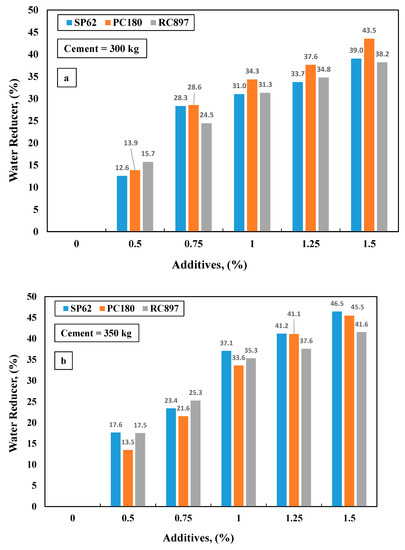
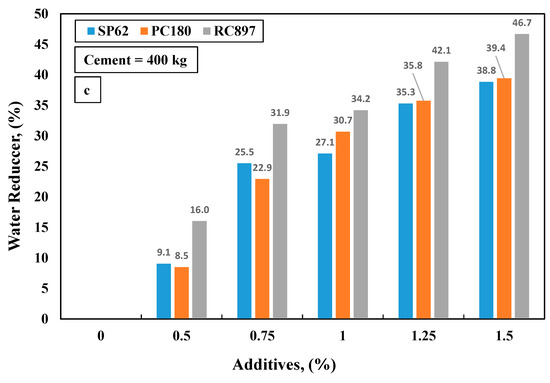
Figure 2.
Percentage of water reduction caused by the addition of 3 types of additives in concrete mixes with (a) 300 kg, (b) 350 kg, and (c) 400 kg of cement.
3.2. Slump Retention (ASTM C 143-90)
Fresh concrete loses its workability due to stiffening with time—a well-known phenomenon called “slump loss”. The consistency changes because chemical and physical factors brought about by early hydration gradually reduce the system’s free water and build up the inner skeleton structure. It is well known that the workability of concrete in the concrete industry faces slump loss, which is different for various grades of concrete. Slump loss also varies with time. A study must determine the factors affecting slump loss in the concrete mix. Factors such as cement content, water content, admixtures, weather, and concrete volume influence the workability loss rate. The main objectives of this project are to study the variation of a slump with the time of transportation, which is dependent on the slump value of the concrete mixture.
Moreover, slump retention is the most sensitive compared to a well-known slump value because it represents the durability of the concrete mixture for its applications in civil engineering. Slump loss is the rapid stiffening of fresh concrete. Slump loss becomes significant when polymers are used with cement. The stiffening of concrete becomes accelerated under hot climates. This is due to the evaporation of mixing water, hydration of cement, and even water absorption by the aggregates. Retarders lower the rate of hydration of cement. The concrete compressive strength linearly increases with a mixing time of up to 180 min. This increase was 10% after mixing for 180 min [3]. The dispersant remaining in the aqueous phase can influence slump retention. Rapidly adsorbed dispersant from the aqueous phase has a higher rate of slump loss than that was absorbed more slowly from the aqueous phase [7]. The slump loss in the field can be regained by redosing the polymer in the concrete. Besides enhancing the concrete compressive strength, monitoring the slump retention of the fresh concrete modified with water-reducer additives is necessary. In this study, slump retention of the fresh concrete modified with SP62, PC180, and RC897 was monitored when adding water to the mixture and after 30 min of adding water, as summarized in Table 4. The slump of the fresh concrete with and without water-reducer additives was controlled between 200 mm and 220 mm. After 30 min, the concrete modified with water-reducer additives lost its workability (Table 4). Workability loss is affected by cement, water, admixtures, weather, concrete volume, and other factors. The rapid stiffening of fresh concrete is known as slump loss. A hot environment accelerates concrete stiffening due to the evaporation of mixing water, cement hydration, and aggregate water absorption [32]. There were many ways to control the slump loss of fresh concrete. One of the methods was by adding retarder admixture to the mix. By slowing the cement’s rate of hydration, retarding admixtures delay the setting. As a result, the water combined with cement decreases due to the decreased hydration rate throughout a particular period. The slump loss in such a mix for a specific period will be significantly lower than that without a retarder [32,33].
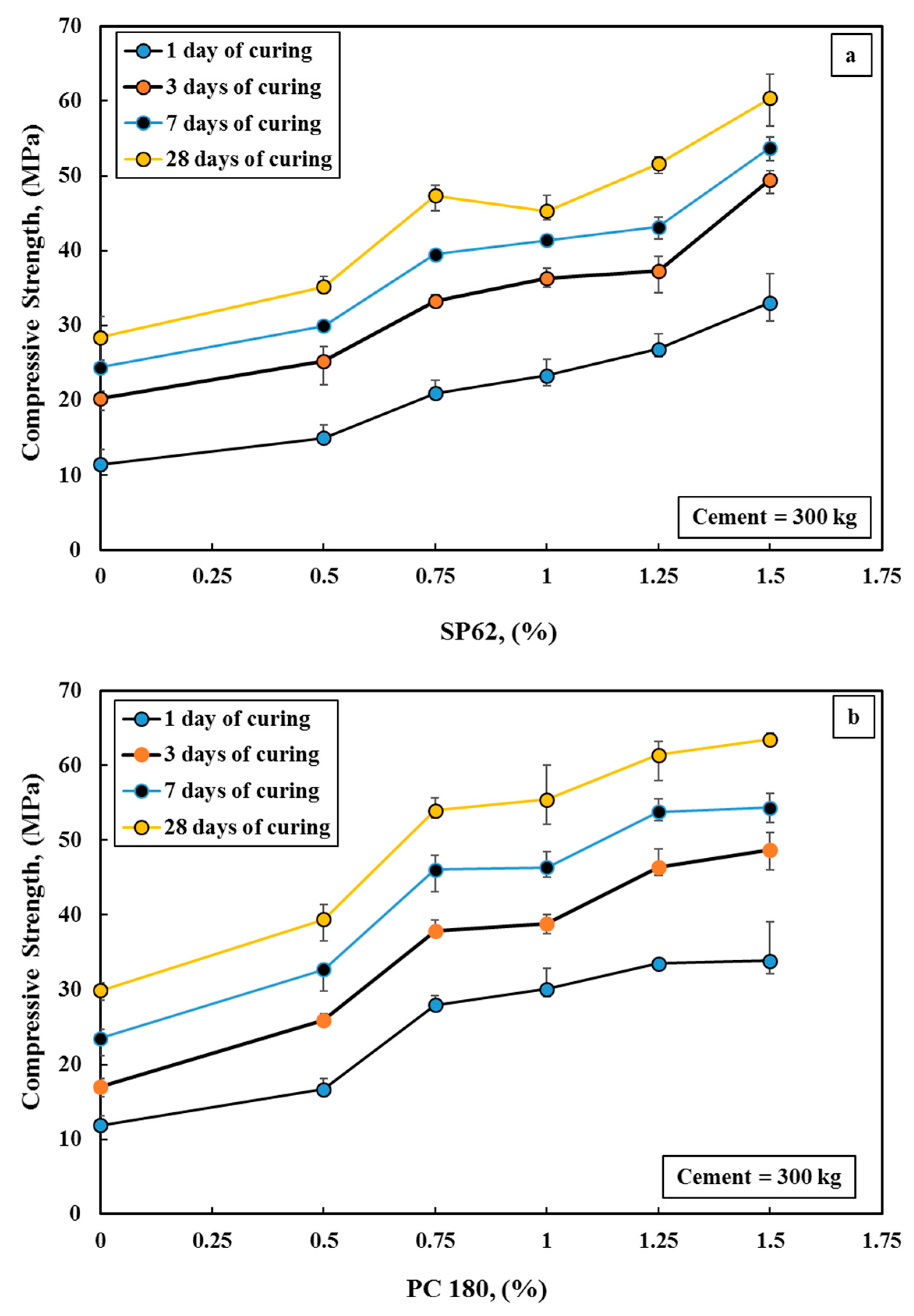
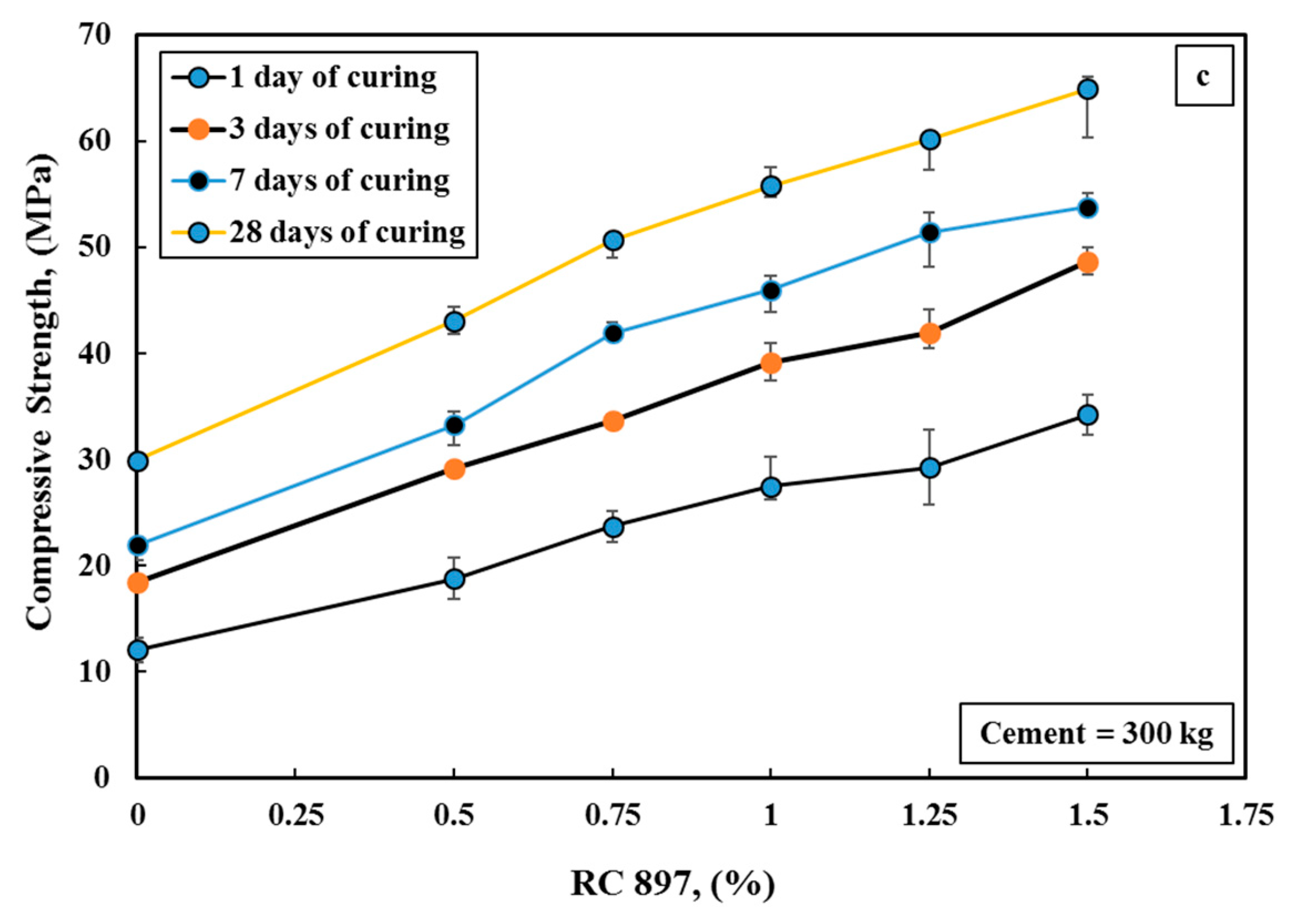
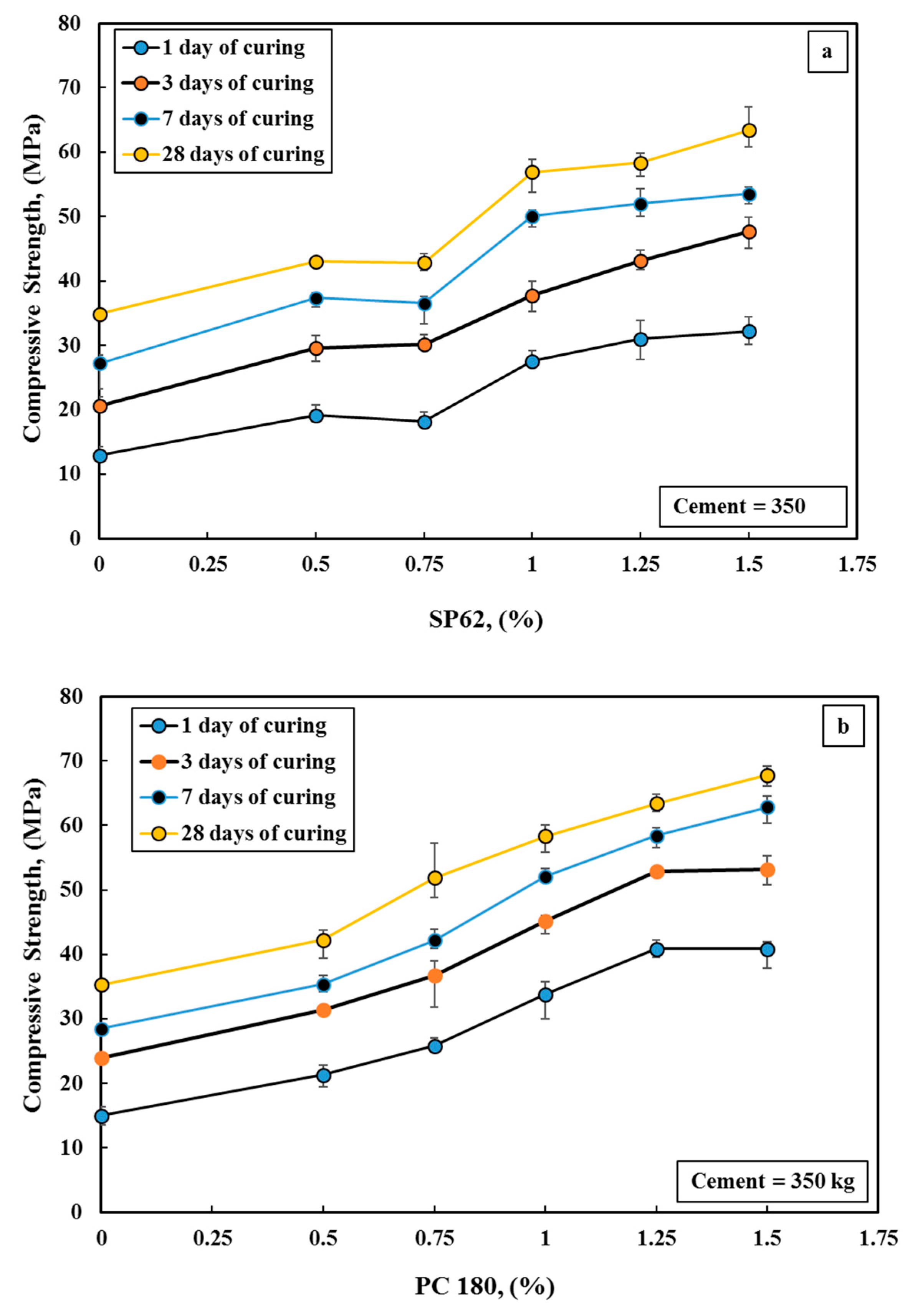
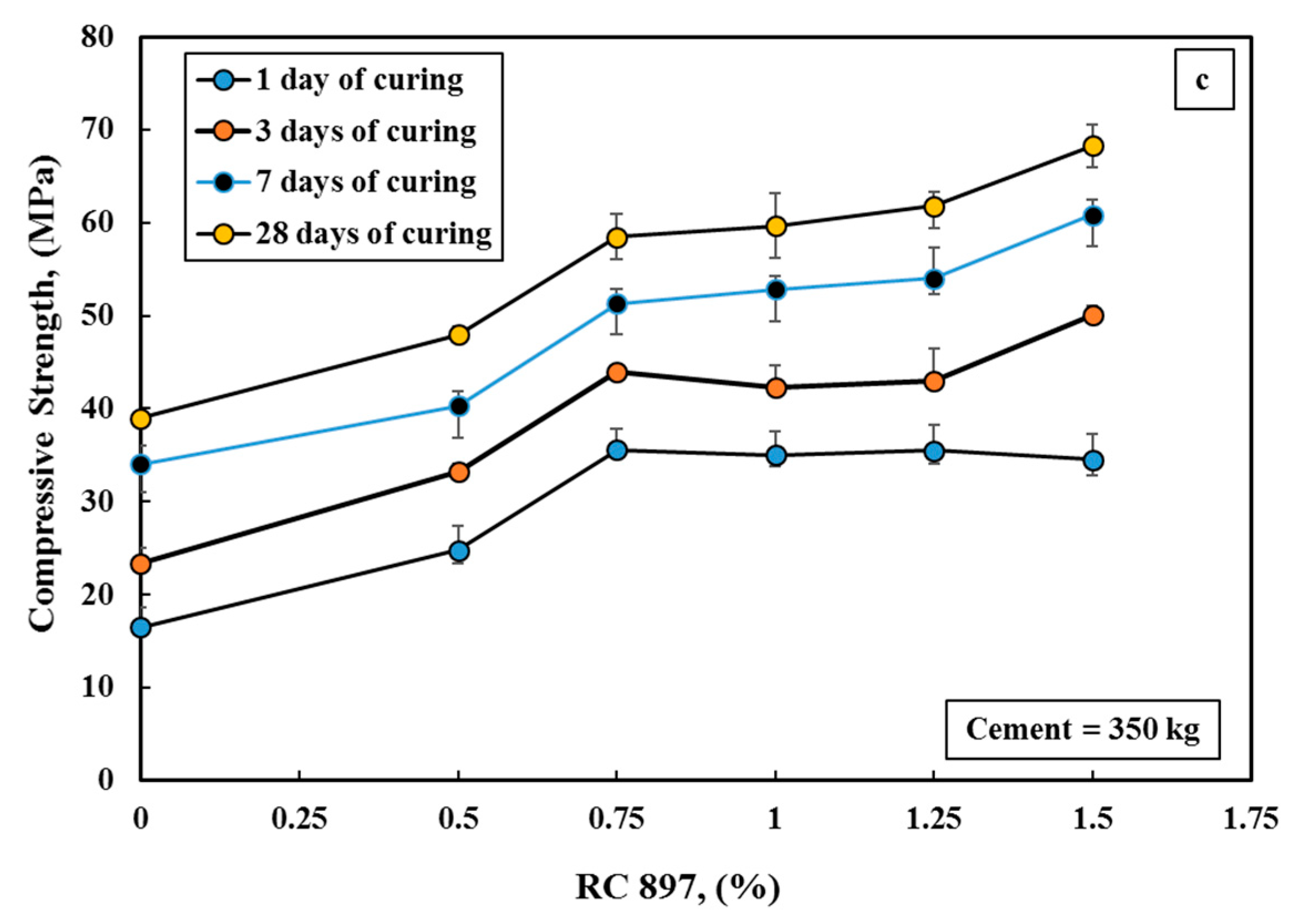
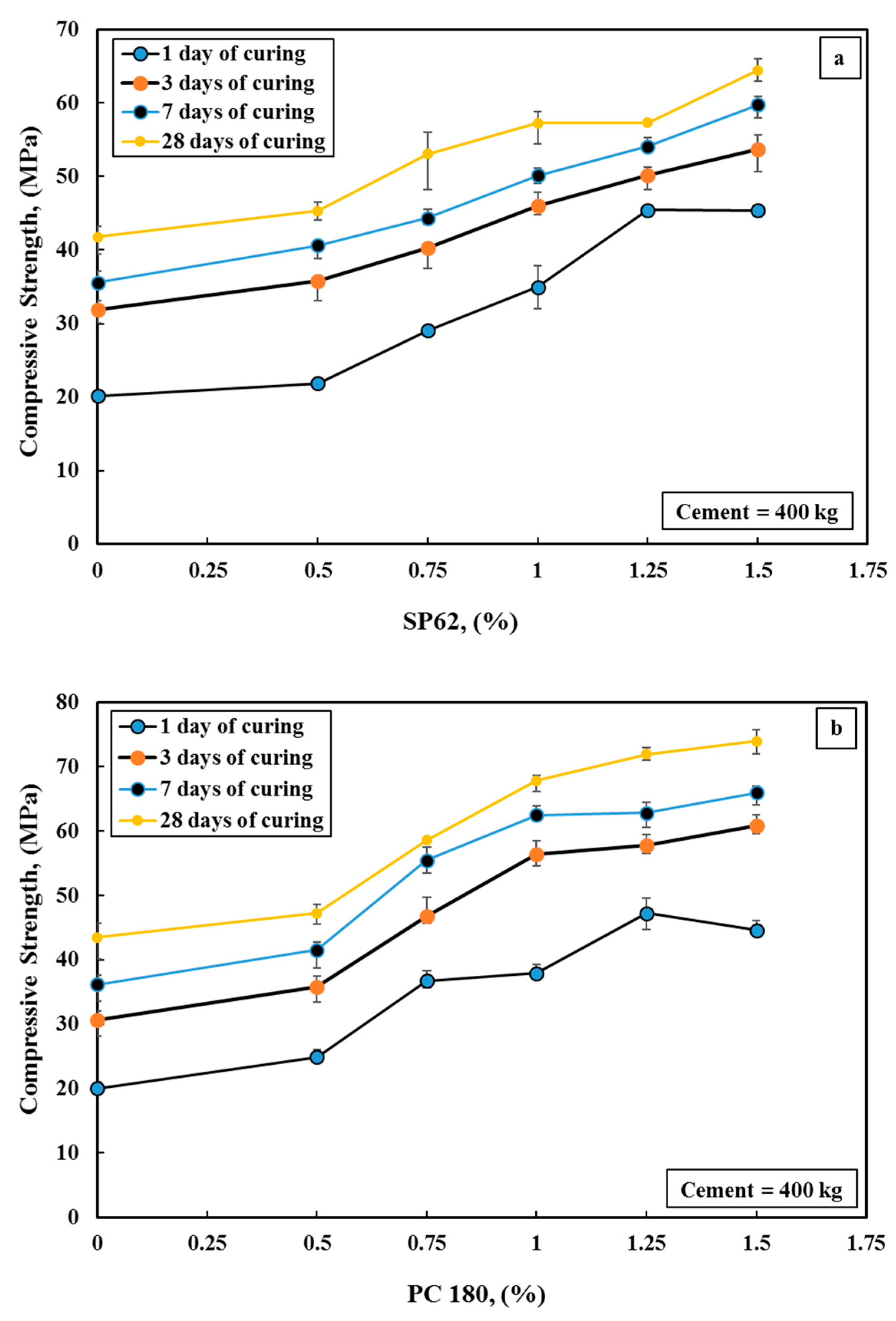
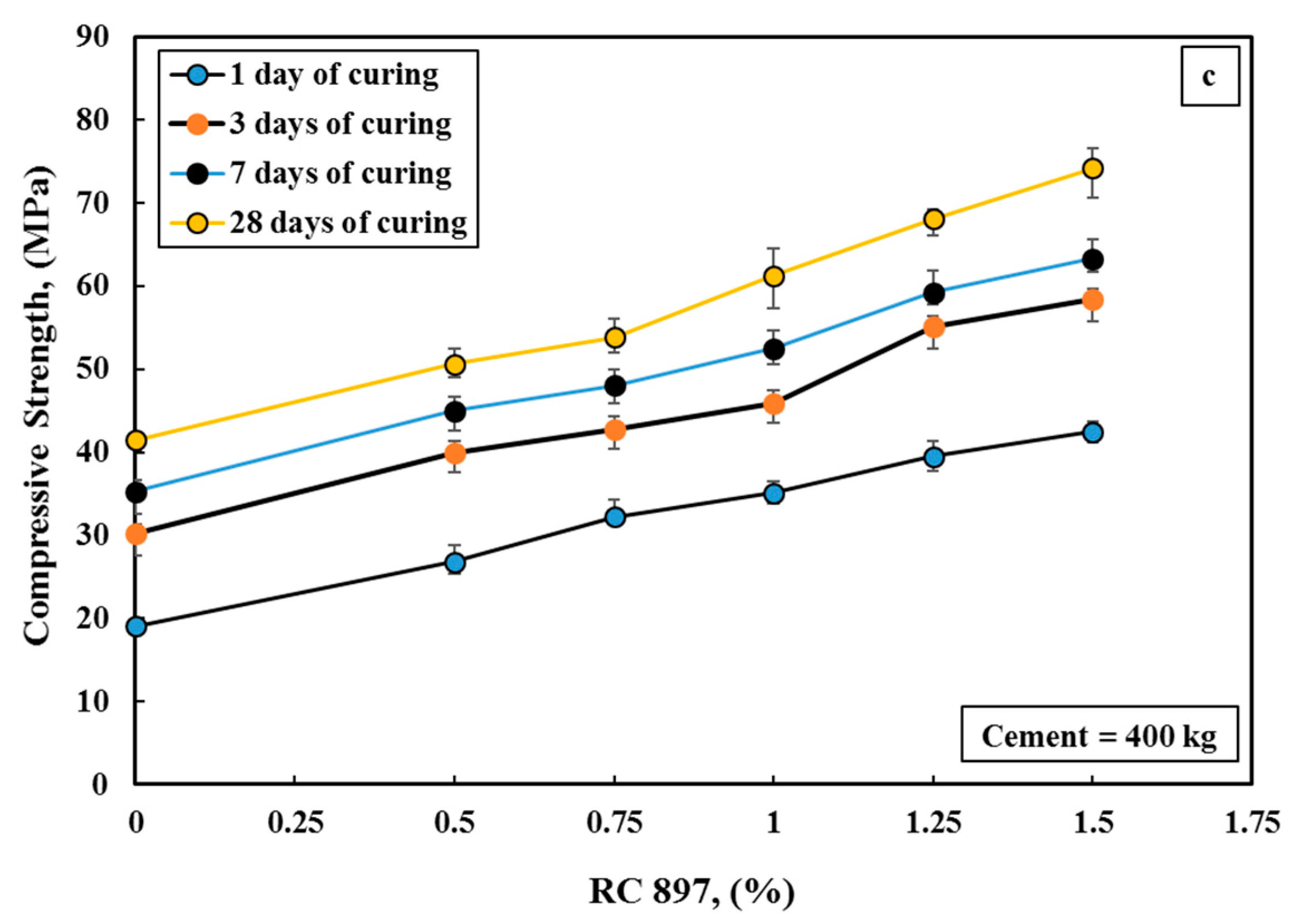
Modifying the concrete with water-reducer additives enhances the concrete compressive strength from 1 day up to 28 days of curing for 3 different contents of cement (300, 350, and 400 kg), as shown in Figure 3, Figure 4 and Figure 5. For the mixture containing 300 kg of cement at 1 day of curing, the compressive strength was 11.41 MPa, while it was 16.52 MPa and 20.17 MPa for 350 and 400 kg of cement, respectively. Regarding the mixture containing 300 kg of cement, adding 1% of SP62, PC180, and RC897 enhanced the concrete compressive strength by 104%, 150%, and 129%, respectively, as shown in Figure 2. While it was 97%, 141%, and 150%, the mixture contained 350 kg of cement (Figure 3). The growth percentage decreased when the mixture contained 400 kg of cement modified with 1% water-reducer additives (Figure 4).
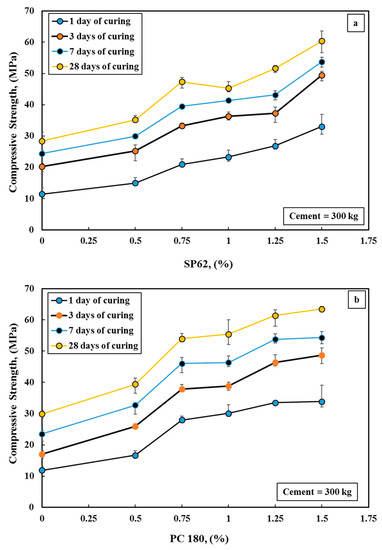
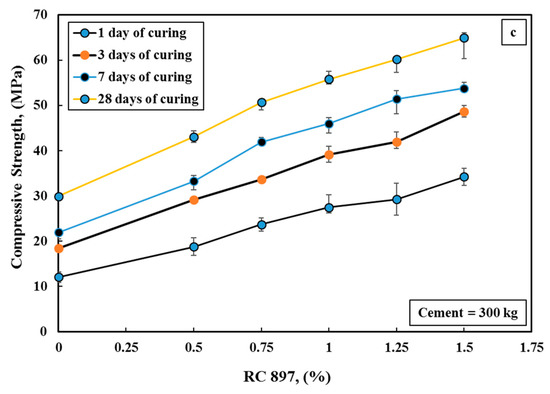
Figure 3.
Additives’ impact on the concrete compressive strength using 300 kg cement (a) SP62, (b) PC 180, and (c) RC 897.
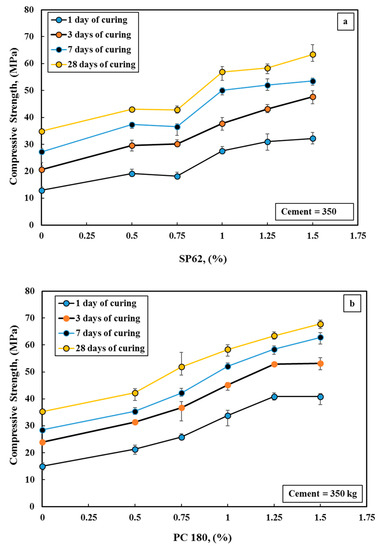
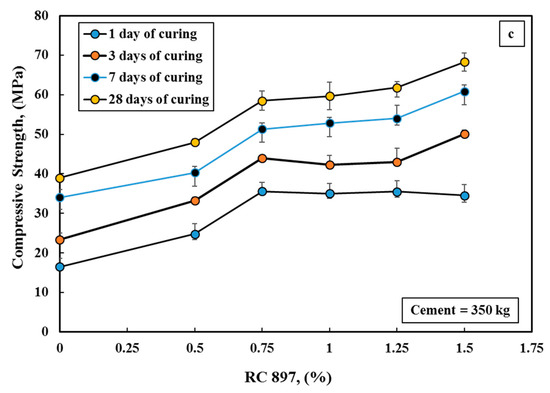
Figure 4.
Additives’ impact the concrete compressive strength using 350 kg of cement (a) SP62, (b) PC 180, and (c) RC 897.
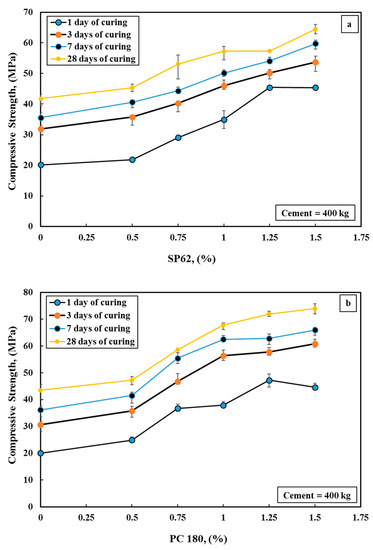
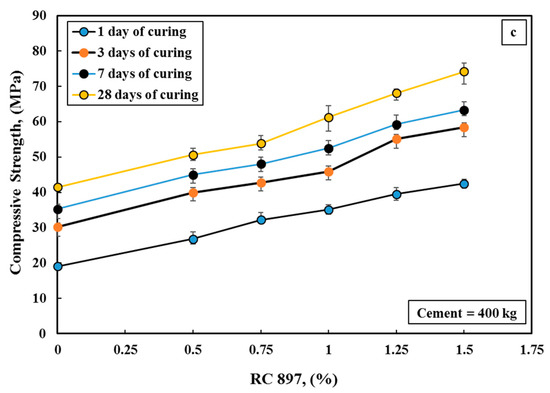
Figure 5.
Additives’ impact on the concrete compressive strength using 400 kg cement (a) SP62, (b) PC 180, and (c) RC 897.
3.3. Compressive Strength
After 28 days of curing, the concrete compressive strength was enhanced up to 74 MPa, depending on the content of cement and the types and content of water-reducer additives. In the case of polycarboxylate-based superplasticizers and naphthalene- or melamine-based superplasticizers, electrostatic and steric repulsion mechanisms work together to weaken the cohesiveness of the cement particles.
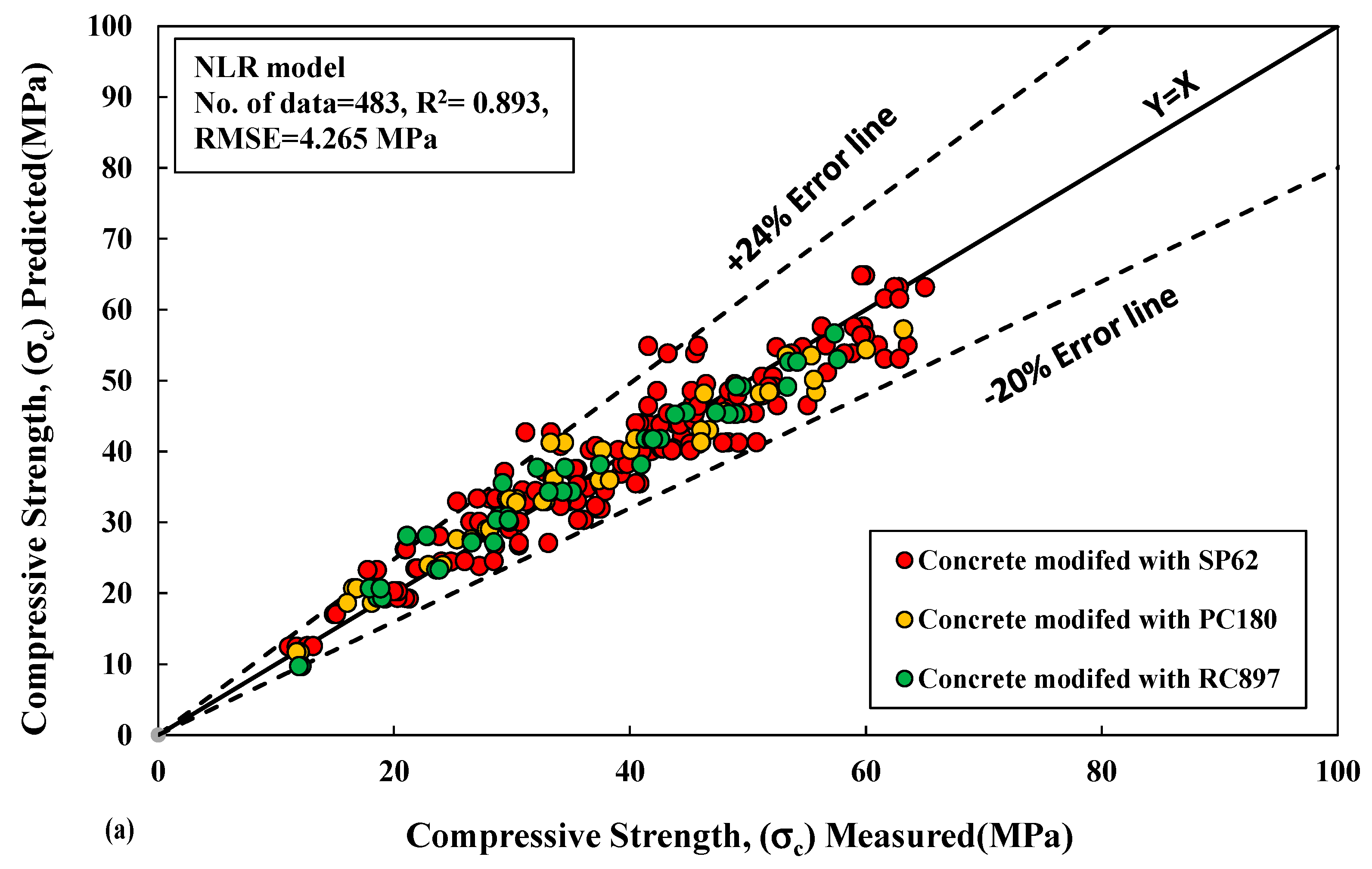
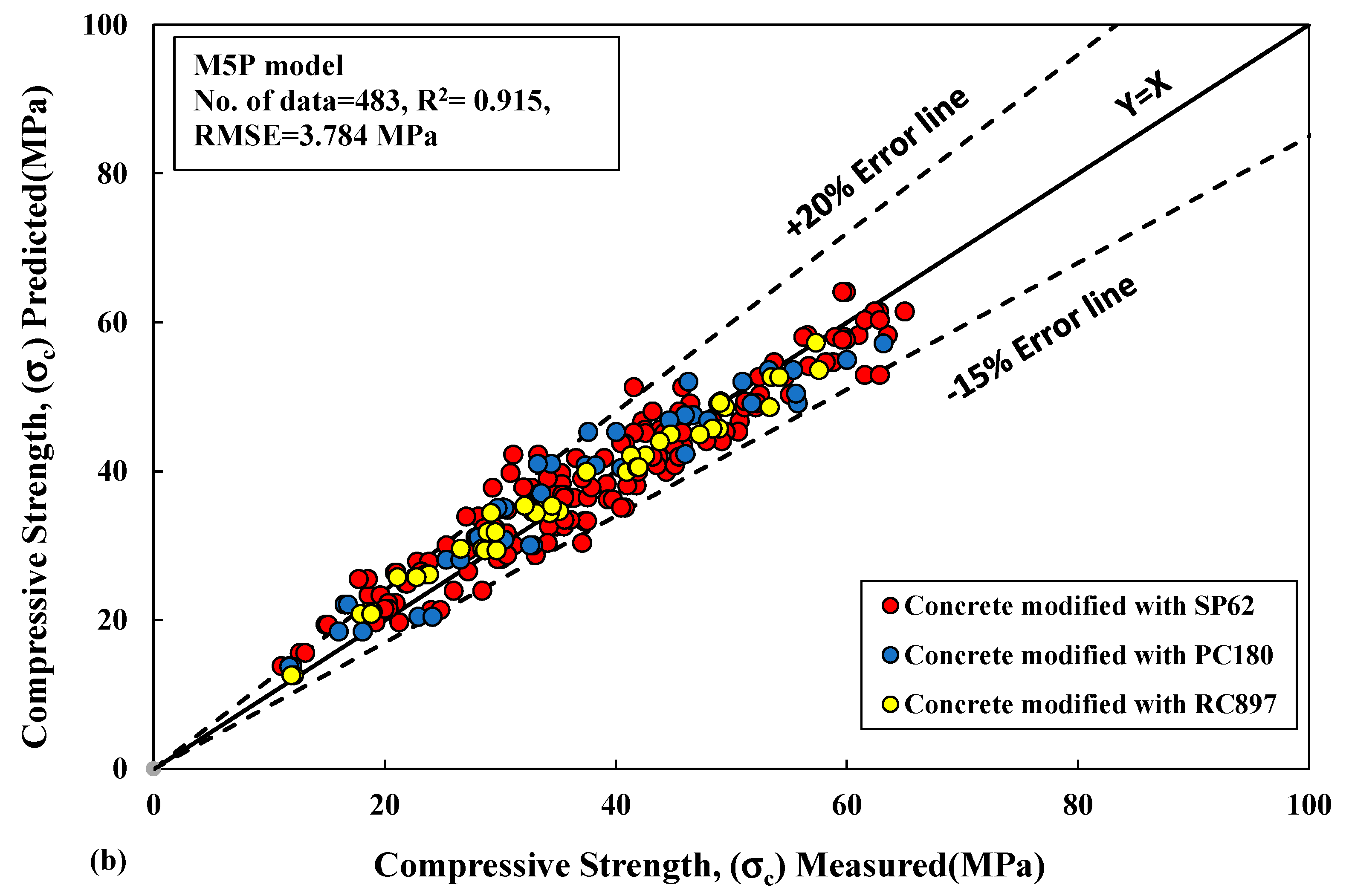
The compressive strength of concrete was predicted using nonlinear and M5P models based on data from 483 tests using three distinct mixtures and three different water-reducer additives, as shown in Figure 6. Additionally, it explores how mixed proportions affect concrete compressive strength.
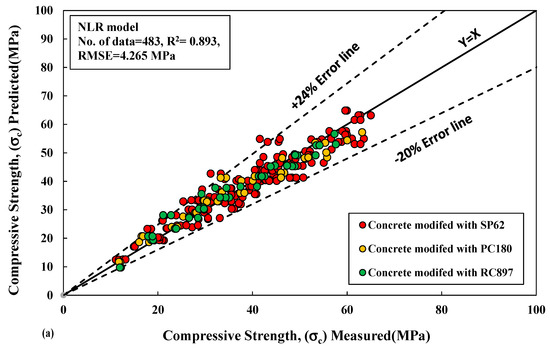
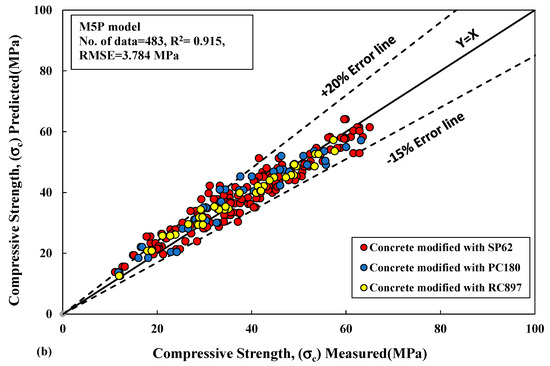
Figure 6.
The mix proportions’ impact on the concrete compressive strength using (a) nonlinear and (b) M5P models.
3.4. Predicted and Measured Compressive Strength Relationships
3.4.1. The Nonlinear Regression Model (NLR)
The connection between the anticipated and actual compressive strengths of normal concrete, including polymer content, is shown in Figure 6a. The most significant parameters affecting compressive strength were curing time and cement content. The following formula was derived for the NLR model with numerous changeable parameters (Table 5).
3.4.2. M5P-Tree Model
In this study, the M5P-tree model tree is utilized to forecast the compressive strength of conventional concrete using 483 mix-design data. The coefficient of determination (R2), root mean square error (RMSE), and goal were all employed to assess the suggested performance of the model in this research. The M5P-tree technique, as seen in Figure 6b, divides the input space (independent variables) into linear tree regression functions (marked LM1 through LM8). , where bo, b1, and b2 are linear regression constants representing the model parameters. The model parameters are listed in Table 6. The study dataset has a 25% and 35% error line, indicating that all measured values fall within the 20% and −15% error line. The coefficient of determination R2 for this model indicates that the model performance is better than the NLR.
Therefore, from the result of slump retention and compressive strength, SP62 (FM) can be used to produce a precast concrete member. The admixture should maintain a liquid consistency and good workability when used with concrete that has a low w/c and a high quantity of mineral additives. High early strength developments are made possible by the PCE-based superplasticizer even at low ambient temperatures and without additional external heat. This might make it possible to shorten the stripping periods, which could lead to a more effective production process. The compaction energy used to compact concrete may be lessened with concrete admixture. Therefore, concrete producers, builders, and installers may profit economically and technically. The three types of water-reducer additives can be used to produce the precast concrete member.
A similar study was also conducted on the effect of two water-reducer polymers with smooth and rough surfaces on the workability and the compression strength of concrete from an early age (1 day) up to 28 days of curing. The polymer contents used in this study varied from 0 to 0.25% (%wt.). The initial ratio between water and cement was 60%, and it slowly reduced to 0.46 by increasing the polymer contents. The compression strength of concrete was increased significantly by increasing the polymer contents by 24% to 95% depending on the polymer type, polymer content, , and curing age. Because of a fiber net (netting) in the concrete when the polymers were added, which led to a decreased void between the particles, binding the cement particles increased the viscosity of the fresh concrete and the compression strength of the hardened concrete rapidly. This study also aims to establish systematic multiscale models to predict the compression strength of concrete containing polymers and to be used by construction projects with no theoretical restrictions. For that purpose, 88 concrete samples modified with two types of polymer (44 samples for each modification) have been tested, analyzed, and modeled. Linear and nonlinear regression, M5P-tree, and Artificial Neural Network (ANN) approaches were used for the qualifications. In the modeling process, the most relevant parameters affecting the strength of concrete were polymer incorporation ratio (0–0.25% of cement’s mass), water-to-cement ratio (0.46–0.6), and curing ages (1 to 28 days). Among the used approaches and based on the training data set, the model made based on the nonlinear regression, ANN, and M5P-tree models seem to be the most reliable. The sensitivity investigation concludes that the curing time is the most dominating parameter for predicting concrete’s maximum stress (compression strength) with this dataset [12].
4. Conclusions
The following conclusions are drawn based on the tested data and the simulation of the compression strength of concrete at 483 different ratios between the water and the cement, polymer content, and curing ages.
- The compression strength of cement increased from 84% to 250%, depending on the mix proportion. Based on NLR parameters, polymer RC897 had the highest impact on increasing the compression strength of concrete as compared to polymer SP62 and PC180. This improvement in compression strength was due to the dispersion of cement particles and increasing the friction between the particles, reducing the void ratio and increasing the density of concrete.
- With a cement content of 300 kg, the polymer PC180 had the highest effect on reducing the water content of the other two types of the polymer by 43.5%, while, at a cement content of 400 kg, the polymer RC 897 had the highest effect on reduction in water content compared with the other two polymers, by 46.7%.
- The compressive strength of the concrete mixes was calculated using NLR and M5P-tree models. The correlation of the coefficient (R2) and the root mean square error (RMSE) are used as assessment criteria. The order of the models was M5P-tree and NLR; the M5P-tree was the best model offered in this study, based on data obtained from the experimental work, and provided a higher R2 and a lower MAE and RMSE.
Author Contributions
Investigation, Writing an original draft, A.S.M. and W.E., Methodology, Supervision, R.K. and K.G., Conceptualization, W.S.Q. and R.K.F., Conceptualization, Methodology, A.S.M. and R.K., Methodology and Supervision, W.E., Validation and Funding acquisition, K.G., Editing, Supervision, R.K.F. All authors have read and agreed to the published version of the manuscript.
Funding
This research received no external funding.
Conflicts of Interest
The authors declare no conflict of interest.
References
- Fu, T.C.; Yeih, W.; Chang, J.J.; Huang, R. The influence of aggregate size and binder material on the properties of pervious concrete. Adv. Mater. Sci. Eng. 2014, 2014, 963971. [Google Scholar] [CrossRef]
- Burhan, L.; Ghafor, K.; Mohammed, A. Modeling the effect of silica fume on the compressive, tensile strengths and durability of NSC and HSC in various strength ranges. J. Build. Rehabil. 2019, 4, 19. [Google Scholar] [CrossRef]
- Mohammed, A.; Burhan, L.; Ghafor, K.; Sarwar, W.; Mahmood, W. Artificial neural network (ANN), M5P-tree, and regression analyses to predict the early age compression strength of concrete modified with DBC-21 and VK-98 polymers. Neural Comput. Appl. 2021, 33, 7851–7873. [Google Scholar] [CrossRef]
- Sarir, P.; Jiang, H.; Asteris, P.G.; Formisano, A.; Armaghani, D.J. Iterative Finite Element Analysis of Concrete-Filled Steel Tube Columns Subjected to Axial Compression. Buildings 2022, 12, 2071. [Google Scholar] [CrossRef]
- Asteris, P.G.; Armaghani, D.J.; Hatzigeorgiou, G.D.; Karayannis, C.G.; Pilakoutas, K. Predicting the shear strength of reinforced concrete beams using Artificial Neural Networks. Comput. Concr. Int. J. 2019, 24, 469–488. [Google Scholar]
- Kamal, S.M.; Saeed, J.A.; Mohammed, A. The Characterization and Modeling the Mechanical Properties of High Strength Concrete (HSC) Modified with Fly Ash (FA). Eng. Technol. J. 2020, 38, 173–184. [Google Scholar] [CrossRef]
- Abdalla, L.B.; Ghafor, K.; Mohammed, A. Testing and modeling the young age compressive strength for high workability concrete modified with PCE polymers. Results Mater. 2019, 1, 100004. [Google Scholar] [CrossRef]
- Liu, X.; Wang, Z.; Zheng, Y.; Cui, S.; Lan, M.; Li, H.; Zhu, J.; Liang, X. Preparation, characterization and performances of powdered polycarboxylate superplasticizer with bulk polymerization. Materials 2014, 7, 6169–6183. [Google Scholar] [CrossRef]
- Lu, S.; Koopialipoor, M.; Asteris, P.G.; Bahri, M.; Armaghani, D.J. A novel feature selection approach based on tree models for evaluating the punching shear capacity of steel fiber-reinforced concrete flat slabs. Materials 2020, 13, 3902. [Google Scholar] [CrossRef]
- Ferrari, L.; Kaufmann, J.; Winnefeld, F.; Plank, J. Multi-method approach to study influence of superplasticizers on cement suspensions. Cem. Concr. Res. 2011, 41, 1058–1066. [Google Scholar] [CrossRef]
- Burhan, L.; Ghafor, K.; Mohammed, A. Enhancing the Fresh and Hardened Properties of the Early Age Concrete Modified with Powder Polymers and Characterized Using Different Models. Adv. Civ. Eng. Mater. 2020, 9, 227–249. [Google Scholar] [CrossRef]
- Kar, A. Characterizations of Concretes with Alkali-Activated Binder and Correlating Their Properties from Micro-to Specimen Level; West Virginia University: Morgantown, WV, USA, 2013. [Google Scholar]
- Sarwar, W.; Ghafor, K.; Mohammed, A. Regression analysis and Vipulanandan model to quantify the effect of polymers on the plastic and hardened properties with the tensile bonding strength of the cement mortar. Results Mater. 2019, 1, 100011. [Google Scholar] [CrossRef]
- Sarwar, W.; Ghafor, K.; Mohammed, A. Modeling the rheological properties with shear stress limit and compressive strength of ordinary Portland cement modified with polymers. J. Build. Pathol. Rehabil. 2019, 4, 25. [Google Scholar] [CrossRef]
- Mohammed, A.; Mahmood, W.; Ghafor, K. TGA, rheological properties with maximum shear stress and compression strength of cement-based grout modified with polycarboxylate polymers. Constr. Build. Mater. 2020, 235, 117534. [Google Scholar] [CrossRef]
- Noorzaei, J.; Hakim, S.J.S.; Jaafar, M.S.; Thanoon, W.A.M. Development of artificial neural networks for predicting concrete compressive strength. Int. J. Eng. Technol. 2007, 4, 141–153. [Google Scholar]
- Psyllaki, P.; Stamatiou, K.; Iliadis, I.; Mourlas, A.; Asteris, P.; Vaxevanidis, N. Surface treatment of tool steels against galling failure. MATEC Web Conf. 2018, 188, 04024. [Google Scholar] [CrossRef]
- Armaghani, D.J.; Asteris, P.G.; Fatemi, S.A.; Hasanipanah, M.; Tarinejad, R.; Rashid, A.S.A.; Huynh, V.V. On the Use of Neuro-Swarm System to Forecast the Pile Settlement. Appl. Sci. 2020, 10, 1904. [Google Scholar] [CrossRef]
- He, B.; Armaghani, D.J.; Lai, S.H. Assessment of tunnel blasting-induced overbreak: A novel metaheuristic-based random forest approach. Tunn. Undergr. Space Technol. 2023, 133, 104979. [Google Scholar] [CrossRef]
- Huang, J.; Asteris, P.G.; Manafi Khajeh Pasha, S.; Mohammed, A.S.; Hasanipanah, M. A new auto-tuning model for predicting the rock fragmentation: A cat swarm optimization algorithm. Eng. Comput. 2022, 38, 2209–2220. [Google Scholar] [CrossRef]
- Asteris, P.G.; Gavriilaki, E.; Touloumenidou, T.; Koravou, E.E.; Koutra, M.; Papayanni, P.G.; Pouleres, A.; Karali, V.; Lemonis, M.E.; Mamou, A.; et al. Genetic prediction of ICU hospitalization and mortality in COVID-19 patients using artificial neural networks. J. Cell. Mol. Med. 2022, 26, 1445–1455. [Google Scholar] [CrossRef]
- Mohammed, A.; Rafiq, S.; Mahmood, W.; Noaman, R.; Ghafor, K.; Qadir, W.; Kadhum, Q. Characterization and modeling the flow behavior and compression strength of the cement paste modified with silica nano-size at different temperature conditions. Constr. Build. Mater. 2020, 257, 119590. [Google Scholar] [CrossRef]
- Mohammed, A.; Mahmood, W. Estimating the efficiency of the sandy soils-cement based grout interactions from particle size distribution (PSD). Geomech. Geoeng. 2021, 16. [Google Scholar] [CrossRef]
- Asteris, P.G.; Douvika, M.G.; Karamani, C.A.; Skentou, A.D.; Chlichlia, K.; Cavaleri, L.; Daras, T.; Armaghani, D.J.; Zaoutis, T.E. A Novel Heuristic Algorithm for the Modeling and Risk Assessment of the COVID-19 Pandemic Phenomenon. Comput. Model. Eng. Sci. 2020, 125, 815–828. [Google Scholar] [CrossRef]
- Asteris, P.G.; Mamou, A.; Hajihassani, M.; Hasanipanah, M.; Koopialipoor, M.; Le, T.-T.; Kardani, N.; Armaghani, D.J. Soft computing based closed form equations correlating L and N-type Schmidt hammer reboundnumbers of rocks. Transp. Geotech. 2021, 29, 100588. [Google Scholar] [CrossRef]
- Saridemir, M. Prediction of Compression Strength of Concretes Containing Metakaolin and Silica Fume by Artificial Neural Networks. Adv. Eng. Softw. 2009, 40, 350–355. [Google Scholar] [CrossRef]
- Cavaleri, L.; Chatzarakis, G.E.; Di Trapani, F.; Douvika, M.G.; Roinos, K.; Vaxevanidis, N.M.; Asteris, P.G. Modeling of Surface Roughness in Electro-Discharge Machining Using Artificial Neural Networks. Adv. Mater. Res. 2017, 6, 169–184. [Google Scholar]
- Gavriilaki, E.; Asteris, P.G.; Touloumenidou, T.; Koravou, E.E.; Koutra, M.; Papayanni, P.G.; Karali, V.; Papalexandri, A.; Varelas, C.; Chatzopoulou, F.; et al. Genetic justification of severe COVID-19 using a rigorous algorithm. Clin. Immunol. 2021, 226, 108726. [Google Scholar] [CrossRef]
- Asteris, P.G.; Lemonis, M.E.; Le, T.-T.; Tsavdaridis, K.D. Evaluation of the ultimate eccentric load of rectangular CFSTs using advanced neural network modeling. Eng. Struct. 2021, 248, 113297. [Google Scholar] [CrossRef]
- Sihag, P.; Jain, P.; Kumar, M. Modelling of impact of water quality on recharging rate of storm water filter system using various kernel function-based regression. Model. Earth Syst. Environ. 2018, 4, 61–68. [Google Scholar] [CrossRef]
- Khayat, K.H.; Hester, W.T. Evaluation of concrete mixtures for underwater pile repairs. Cem. Concr. (New Delhi) Aggreg. 1991, 13, 32–41. [Google Scholar]
- Jayasree, C.; Gettu, R. Experimental study of the flow behaviour of superplasticized cement paste. Mater. Struct. 2008, 41, 1581–1593. [Google Scholar] [CrossRef]
- Ali, R.; Muayad, M.; Mohammed, A.S.; Asteris, P.G. Analysis and prediction of the effect of Nanosilica on the compressive strength of concrete with different mix proportions and specimen sizes using various numerical approaches. Struct. Concr. 2022. [Google Scholar] [CrossRef]
Disclaimer/Publisher’s Note: The statements, opinions and data contained in all publications are solely those of the individual author(s) and contributor(s) and not of MDPI and/or the editor(s). MDPI and/or the editor(s) disclaim responsibility for any injury to people or property resulting from any ideas, methods, instructions or products referred to in the content. |
© 2023 by the authors. Licensee MDPI, Basel, Switzerland. This article is an open access article distributed under the terms and conditions of the Creative Commons Attribution (CC BY) license (https://creativecommons.org/licenses/by/4.0/).