

Correction: Althalb et al. A Novel Approach to Enhance Crude Oil Recovery Ratio Using Selected Bacterial Species. Appl. Sci. 2021, 11, 10492



1. Error in Figure/Table
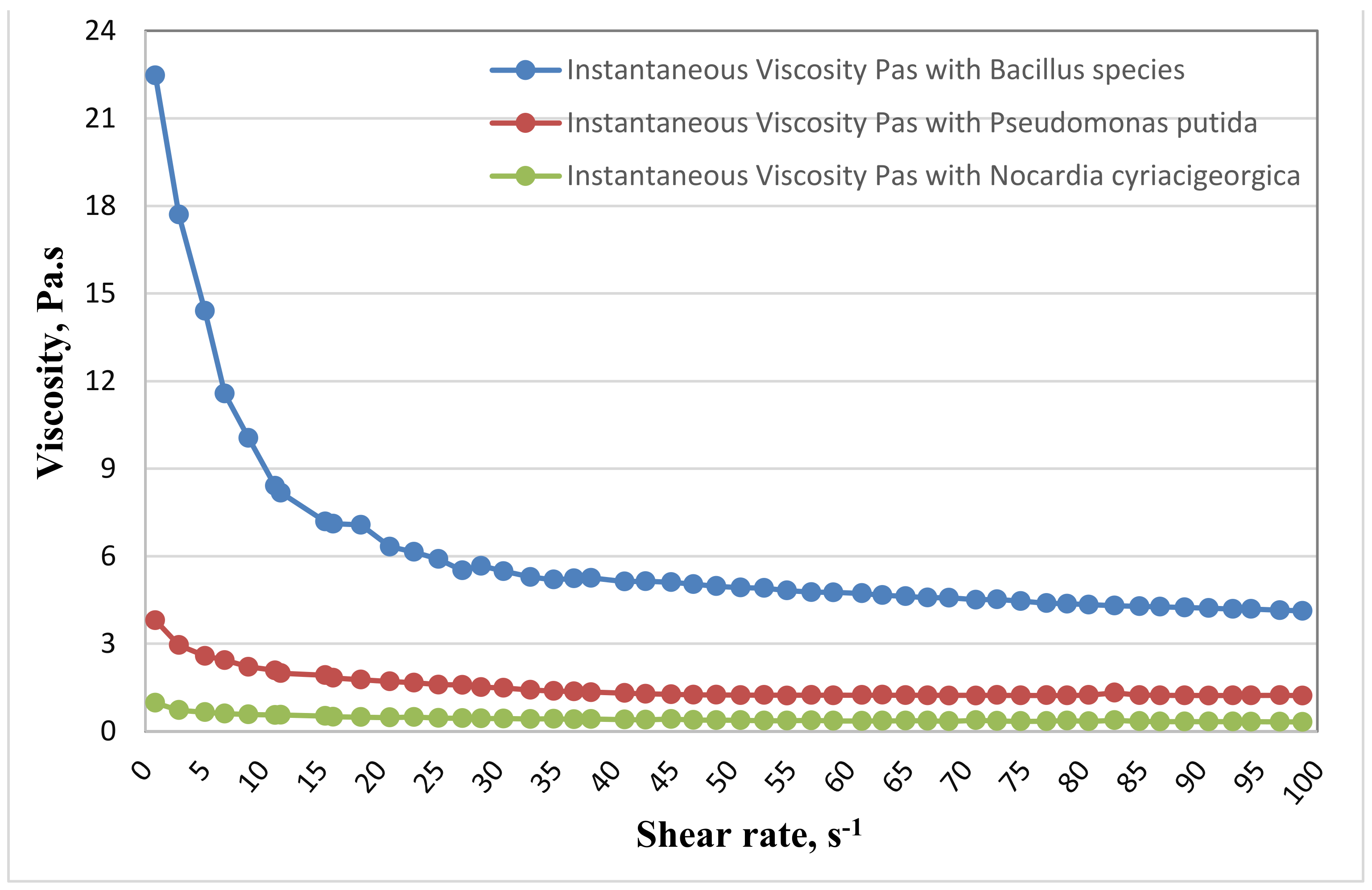
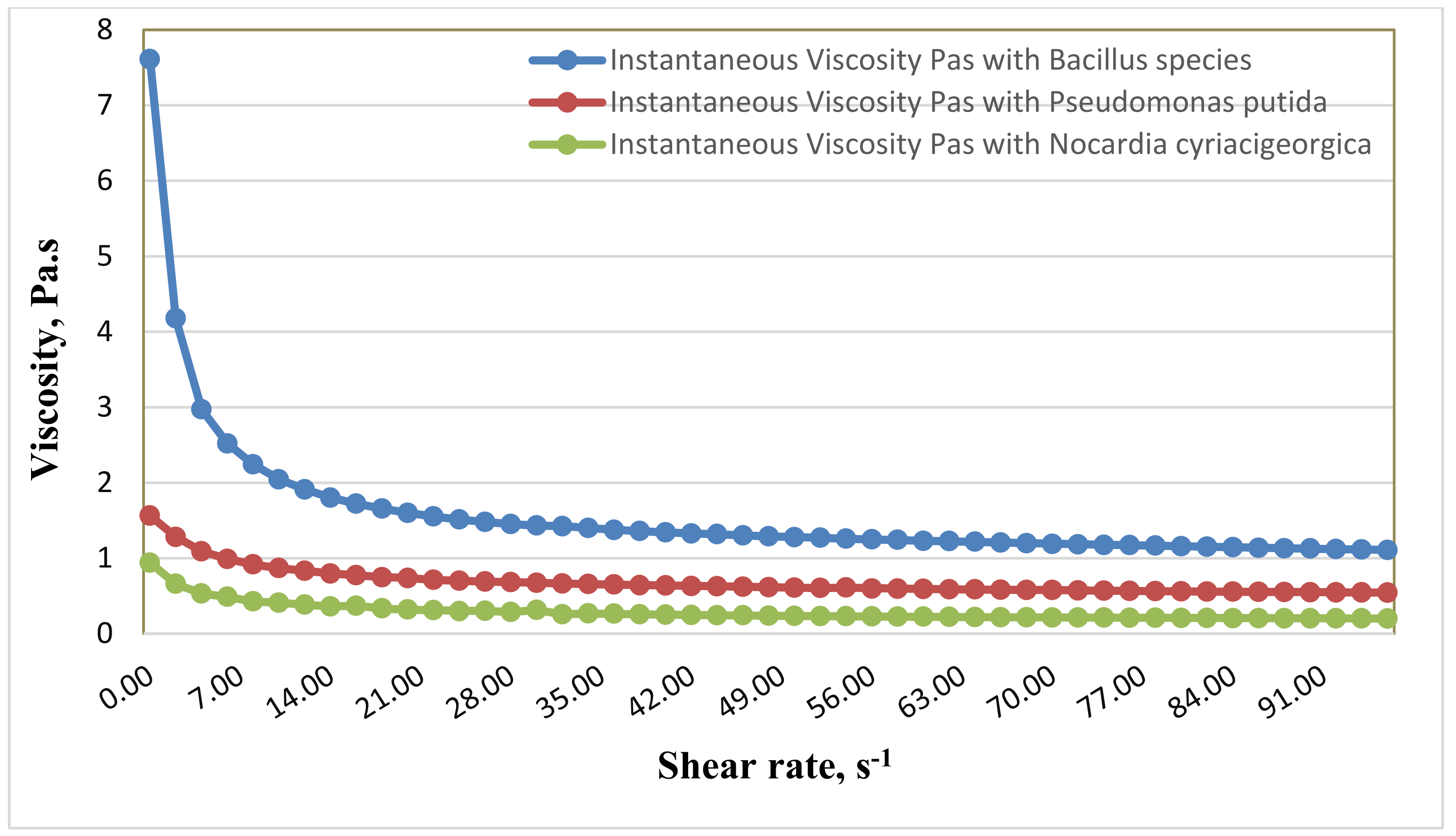
2. Effect of Bacterial Isolates on Viscosity of Bouri Crude Oil
Reference
- Althalb, H.A.; Elmusrati, I.M.; Banat, I.M. A Novel Approach to Enhance Crude Oil Recovery Ratio Using Selected Bacterial Species. Appl. Sci. 2021, 11, 10492. [Google Scholar] [CrossRef] [Scilit]
Publisher’s Note: MDPI stays neutral with regard to jurisdictional claims in published maps and institutional affiliations. |
© 2022 by the authors. Licensee MDPI, Basel, Switzerland. This article is an open access article distributed under the terms and conditions of the Creative Commons Attribution (CC BY) license (https://creativecommons.org/licenses/by/4.0/).
Share and Cite
Althalb, H.A.; Elmusrati, I.M.; Banat, I.M. Correction: Althalb et al. A Novel Approach to Enhance Crude Oil Recovery Ratio Using Selected Bacterial Species. Appl. Sci. 2021, 11, 10492. Appl. Sci. 2022, 12, 3099. https://doi.org/10.3390/app12063099
Althalb HA, Elmusrati IM, Banat IM. Correction: Althalb et al. A Novel Approach to Enhance Crude Oil Recovery Ratio Using Selected Bacterial Species. Appl. Sci. 2021, 11, 10492. Applied Sciences. 2022; 12(6):3099. https://doi.org/10.3390/app12063099
Chicago/Turabian StyleAlthalb, Hakima A., Izzeddin M. Elmusrati, and Ibrahim M. Banat. 2022. "Correction: Althalb et al. A Novel Approach to Enhance Crude Oil Recovery Ratio Using Selected Bacterial Species. Appl. Sci. 2021, 11, 10492" Applied Sciences 12, no. 6: 3099. https://doi.org/10.3390/app12063099
APA StyleAlthalb, H. A., Elmusrati, I. M., & Banat, I. M. (2022). Correction: Althalb et al. A Novel Approach to Enhance Crude Oil Recovery Ratio Using Selected Bacterial Species. Appl. Sci. 2021, 11, 10492. Applied Sciences, 12(6), 3099. https://doi.org/10.3390/app12063099


