


Abstract
Amid rapid digital transformation and shifting consumption models, the tailoring industry faces a dual challenge: preserving its artisanal essence while adapting to the expectations of an increasingly digital-oriented clientele. This study introduces a methodological framework for designing buyer personas suited to the contemporary artisanal tailoring ecosystem, offering a structured approach to understanding modern consumer behavior within hybrid physical–digital environments. Using a mixed-methods design and Sastrería Jorge Ospina (Caicedonia, Colombia) as a case study, 378 online surveys—117 from current clients and 261 from potential clients—were analyzed using descriptive and inferential statistical techniques (Pearson’s χ2, p < 0.05). Managerial priorities were concurrently assessed using a multi-criteria decision-making model (TOPSIS) with entropy-based weighting. The analysis identified two consumer archetypes: (1) the Classic Segment—mature clients motivated by tradition, loyalty, and reliability, who value tangible elegance and experiential craftsmanship; and (2) the Digital Segment—young consumers driven by aesthetic trends, convenience, and immediacy, who prioritize online interaction and personalized digital consumption. TOPSIS results highlighted older men (Cᵢ = 1.000) and young women (Cᵢ = 0.870) as the most strategically valuable customer groups. These findings redefine the post-digital tailoring consumer as a hybrid entity guided by artisanal value, hyper-personalization, and digital engagement.
1. Introduction
Digital transformation in the twenty-first century has evolved far beyond its initial technological and operational orientation to become a disruptive structural, cultural, and symbolic force that is progressively reconfiguring the foundations of production, consumption, and organizational identity within the global economy (X. Liu et al., 2025). Once primarily associated with automation, efficiency gains, and process optimization, digital transformation has developed into a multidimensional phenomenon that reshapes firm–consumer relationships, reorganizes mechanisms of knowledge, experience, and value co-creation, and transforms how meaning is produced, communicated, and sustained in contemporary markets (M. Chen et al., 2025; Dąbrowska et al., 2022). This evolution has given rise to novel modes of brand signification, consumer engagement, and competitive differentiation, progressively dissolving historically entrenched boundaries between tradition and technology, materiality and mediation, and heritage and innovation (Gavrila Gavrila et al., 2023; Szeszák et al., 2025).
In this context, digital technologies no longer merely restructure organizational processes; rather, they function as a pervasive cultural infrastructure capable of actively redefining the symbolic architecture of markets and the meaning systems through which value is constructed and legitimized (Christofi et al., 2025; Leso et al., 2023). By shaping collective imaginaries, social practices, consumer expectations, and processes of identity formation, digitalization has extended its influence even into sectors historically characterized by artisanal logics, embodied knowledge, and structural resistance to innovation (Vărzaru & Bocean, 2024).
Among such sectors, artisanal tailoring constitutes a paradigmatic case through which the tensions, negotiations, and hybrid articulations between tradition and digital transformation can be empirically observed. Deeply embedded in centuries-old practices of craftsmanship, interpersonal trust, and intergenerational knowledge transmission, bespoke tailoring currently confronts a dual imperative: preserving cultural authenticity while simultaneously integrating into a digital ecosystem that demands new forms of visibility, personalization, and strategic competitiveness to ensure long-term sustainability (Partarakis et al., 2025; Tang & Wang, 2024). Traditionally, artisanal tailoring has relied on highly specialized manual practices—including individualized pattern drafting, precision cutting, hand-crafted garment construction, and iterative in-person fittings—embedded within intimate, trust-based relationships between tailor and client. This model is sustained by tacit and experiential knowledge of fabrics, bodies, and social contexts unique to the master tailor; the continued use of traditional tools and techniques; and the employment of high-quality natural fibers such as wool, silk, and linen.
The resulting garments are valued not only for their technical precision, durability, and aesthetic refinement (D’Uonno, 2017), but also for their symbolic, emotional, and experiential significance as markers of identity, exclusivity, and social distinction. Historically—and to a significant extent still today—these meanings have been constructed, circulated, and legitimized primarily through reputation, relational proximity, and word-of-mouth networks, rather than through mass-mediated or algorithmically driven communication channels (De la Cruz Galicia et al., 2025).
These foundational characteristics increasingly collide with the dynamics of digitally accelerated consumption. The global digital fashion market—valued at USD 23.94 billion in 2024 and projected to grow at a compound annual rate of 6.3% through 2030 (Grand View Research, 2025)—signals not merely economic expansion, but a profound cultural transformation in how fashion is produced, consumed, and interpreted. Contemporary consumers increasingly prioritize immediacy, hyper-personalization, sustainability, inclusivity, emotional resonance, and digitally mediated experiences (Del Olmo Arriaga et al., 2025; Haris, 2024). In parallel, emerging technological infrastructures—including social media ecosystems, influencer marketing, e-commerce platforms, artificial intelligence (AI), augmented reality (AR), and virtual reality (VR)—are redefining how firms identify, engage, and retain consumers across omnichannel environments (Chu et al., 2025; Enyejo et al., 2024). Within this landscape, hyperconnectivity, immersive user experiences (UX), and algorithmically enabled personalization have become central sources of competitive advantage (Theocharis & Tsekouropoulos, 2025).
However, these dynamics do not necessarily displace artisanal traditions. Rather, they enable the emergence of hybrid value ecosystems in which digital mediation can be strategically interwoven with craftsmanship, potentially amplifying—rather than eroding—the expressive, symbolic, and experiential dimensions of artisanal labor (Felipe Sgorla et al., 2025). Despite these opportunities, the adoption of digital strategies and the alignment with emerging consumption dynamics remains strikingly limited among small fashion enterprises and heritage-based industries. Empirical evidence indicates that only between 10% and 25% of textile and apparel firms have implemented practices such as digital market intelligence, data analytics, omnichannel integration, algorithmic personalization, or strategic digital brand management (Akhtar et al., 2022; Nwobodo, 2024). This structural lag is mirrored in academic research, which continues to privilege technologically advanced, economically dominant fashion corporations while systematically marginalizing microenterprises, family workshops, and culturally embedded production systems (S. Liu & Liu, 2025). Such epistemological biases constrain scholarly understanding of how digitalization reshapes value creation, authenticity, and consumer meaning-making within heritage-based industries.
Addressing these limitations requires theoretical and methodological approaches capable of interpreting consumption in artisanal contexts through integrative, human-centered frameworks that combine cultural sensitivity with analytical rigor. In this regard, the buyer persona methodology offers a robust interpretive instrument for constructing empirically grounded consumer archetypes that synthesize behavioral patterns, emotional motivations, and contextually embedded symbolic meanings (Aimé et al., 2022). Beyond conventional market segmentation, buyer personas function as relational and semiotic devices that align organizational identity with consumer motivations, affective dispositions, and meaning structures. Nevertheless, their application remains underdeveloped within artisanal and heritage sectors, where consumption is inherently relational, experiential, and symbolic rather than purely transactional (C. Chen et al., 2016).
Moreover, although recent scholarship increasingly advocates hybrid consumer segmentation approaches that reconcile technological adoption with cultural heritage and human authenticity (Argento et al., 2025; Dąbrowska et al., 2022; Maity & Lee, 2025), substantial theoretical and empirical gaps persist regarding how digital mediation and heritage craftsmanship can coevolve without compromising cultural integrity. Advancing this research agenda therefore requires moving beyond instrumental conceptions of digitalization narrowly focused on customer acquisition and retention, toward interpretive paradigms that conceptualize digital technologies as mechanisms of cultural production, experiential enrichment, and symbolic co-creation (Shankaranarayana et al., 2025). Understanding the contemporary consumer of artisanal tailoring thus entails decoding subjectivities that are simultaneously anchored in material heritage and shaped by the algorithmic logics of the digital age.
In response to these challenges, this study proposes a culturally sensitive and data-driven methodological framework for designing buyer personas tailored to the hybrid ecosystem of contemporary artisanal tailoring. The framework is empirically applied to Sastrería Jorge Ospina, a family-owned tailoring workshop founded in 1960 in Caicedonia, Valle del Cauca (Colombia), locally renowned for bespoke design, personalized garment construction, and specialized alterations. Despite its artisanal excellence, the firm faces significant challenges related to limited digital visibility, reliance on traditional marketing strategies, and difficulties in attracting younger, digitally oriented consumers. These conditions reveal a growing misalignment between artisanal mastery and contemporary consumption dynamics, rendering the case particularly suitable for operationalizing the scope and purpose of the proposed framework:
- To develop representative buyer persona profiles for artisanal tailoring within digitally mediated consumption environments.
- To compare “traditional” and “digitally oriented” consumer segments across demographic, behavioral, symbolic, and perceptual dimensions.
- To identify market segments capable of generating sustainable economic value while preserving cultural authenticity and artisanal integrity.
2. Theoretical Framework
2.1. Digital Transformation as a Sociotechnical and Cultural Meta-Paradigm
Digital transformation has progressively transcended its early conceptualization as a technology-driven efficiency initiative to emerge as a sociotechnical, economic, and cultural meta-paradigm that fundamentally restructures organizational logics, market architectures, and systems of meaning production (Agarwal, 2020; Vărzaru & Bocean, 2024). Rather than denoting a discrete or linear process of digital tool adoption, digital transformation constitutes a pervasive cultural rationality grounded in ubiquitous connectivity, algorithmic mediation, datafication, and continuous semiotic production (Yao, 2025). Within this rationality, digital infrastructures operate not merely as operational backbones, but as contested cultural arenas in which identities, norms, power relations, and regimes of value are continuously negotiated and reconstituted.
Recent scholarship has increasingly challenged technologically deterministic narratives, particularly in relation to small and medium-sized enterprises (SMEs), traditional organizations, and heritage-based firms. Empirical evidence demonstrates that digital mediation may reproduce structural inequalities, introduce new asymmetries of visibility and participation, and embed algorithmic biases into everyday organizational practices (Heeks, 2022; Hossain et al., 2025). However, emerging sociotechnical perspectives conceptualize digital transformation as a recursive and co-constitutive process, wherein technological artefacts and social structures mutually shape, stabilize, and transform one another over time (Kessler et al., 2025). Within heritage-based microenterprises, this recursive dynamic generates a distinctive form of organizational hybridity, characterized by the coexistence and interpenetration of analog craft practices and digital affordances. Artisanal tailoring exemplifies this condition: tailors are compelled to integrate the precision, scalability, and informational richness of digital infrastructures while simultaneously preserving the sensory, affective, and narrative dimensions that constitute the epistemic core of the craft (Maheswari et al., 2025).
2.2. Consumer Culture Theory and the Hybrid Consumer
This study is theoretically anchored in Consumer Culture Theory (CCT), which conceptualizes consumption as a culturally embedded practice through which individuals construct, negotiate, and communicate identity within historically and institutionally situated market systems (Arnould & Thompson, 2005; Thompson et al., 2013). CCT foregrounds the dialectical interplay between consumer identity projects, marketplace structures, and sociotechnical environments (Vera et al., 2019), rendering it particularly well suited for examining digitally mediated consumption contexts characterized by rapid technological change and symbolic fluidity.
In digitally saturated environments, identity performances increasingly assume hybrid configurations that integrate material, symbolic, and algorithmic dimensions. Extending Belk’s (2013) notion of the extended self, contemporary consumers navigate overlapping physical, digital, and datafied realms in which identity is continuously assembled through interactions with platforms, interfaces, recommendation systems, and personalization algorithms (Discetti & Anderson, 2023). These hybrid consumers do not merely consume products; they engage in ongoing processes of self-curation, narrative construction, and symbolic alignment across mediated touchpoints. Within the context of artisanal tailoring, consumers articulate a paradoxical yet complementary demand for authenticity and hyper-personalization. They seek the cultural depth, uniqueness, and embodied knowledge associated with handcrafted garments, while simultaneously embracing algorithmic customization, immersive digital interfaces, and data-driven design processes (P. Zhang, 2021; Y. Zhang et al., 2023). Consumption thus evolves into a participatory act of cultural co-creation, wherein garments function not merely as utilitarian products but as symbolic interfaces that integrate tactile, emotional, and computational layers of meaning (Bonazzi et al., 2024).
2.3. Value Co-Creation and the Service-Dominant Logic
Service-Dominant Logic (S-D Logic) reframes value as relational, emergent, and contextually enacted, rather than as an intrinsic attribute embedded in goods (Lusch & Vargo, 2014; Vargo & Lusch, 2017). From this perspective, value materializes through dynamic processes of resource integration within interconnected service ecosystems, encompassing cognitive, material, emotional, cultural, and symbolic resources. In artisanal tailoring, digital interfaces—such as online client platforms, immersive or virtual fitting systems, and interactive design tools—operate as primary loci of value co-creation. These interfaces enable artisans and clients to collaboratively shape not only the physical garment, but also its associated identity narrative, aesthetic meaning, and experiential value (Basile et al., 2024). This epistemological shift redefines the traditional tailor–client relationship from a transactional exchange to a dialogical partnership grounded in iterative feedback, shared sensemaking, and experiential alignment.
Within this relational configuration, the concept of the buyer persona undergoes a substantive transformation. It evolves from a static segmentation artefact into a dynamic cognitive and interpretive mechanism that synthesizes data-driven insights with artisanal sensibilities, guiding iterative design decisions, personalization strategies, and narrative coherence across touchpoints (Díaz Soloaga et al., 2023; Maciejewski & Wróblewski, 2025). Digital transformation thus emerges as an ongoing process of organizational learning and cultural adaptation through which value is continuously co-produced.
2.4. Buyer Persona Theory and Human-Centered Design Thinking
Originally developed within marketing, user experience, and interaction design research, the buyer persona framework conceptualizes consumers as holistic archetypes derived from ethnographic inquiry, behavioral analytics, and qualitative interpretation (Jansen et al., 2021; Sheppard & Mahdad, 2021). By integrating emotional drivers, cognitive heuristics, social contexts, and demographic variables, buyer personas enable organizations to articulate user-centered value propositions that align organizational identity with consumers’ aspirations, motivations, and symbolic worlds (Salminen et al., 2022).
This framework aligns closely with Human-Centered Design (HCD) and Design Thinking, both of which emphasize empathy, iterative experimentation, and participatory co-creation as foundational principles of innovation (Nandan et al., 2020; Siricharoen, 2023). In the context of artisanal tailoring, these approaches facilitate a critical transition from intuition-based personalization toward evidence-informed cultural personalization, wherein consumers actively participate as co-designers of meaning rather than passive recipients of customized offerings (Berthinier-Poncet et al., 2025). In this study, the buyer persona transcends its instrumental marketing origins to function as a symbolic translation architecture. It captures the dialogical interplay between heritage-based authenticity and digital affordances, operating as a key analytical device for understanding how identity, value, and narrative coherence are co-produced within artisanal ecosystems.
2.5. Cultural Heritage, Authenticity, and Digital Continuity
Cultural heritage industries are grounded in embodied knowledge, intergenerational transmission, and ritualized practices that sustain authenticity and symbolic continuity over time (Tao et al., 2025). Increasingly, however, authenticity is conceptualized not as a fixed or essentialist attribute, but as a dynamic and negotiated construct situated at the intersection of memory, innovation, and market mediation (Kotler et al., 2021; Smith & Chaffey, 2005). Digital transformation inaugurates a new evolutionary phase characterized by digital continuity, through which heritage values are recontextualized within interconnected, datafied, and algorithmically mediated environments. Drawing on Anamofa et al. (2025) notion of field dynamics, artisans engage in processes of symbolic repositioning, translating traditional forms of cultural capital—such as craft expertise, narrative coherence, and relational trust—into digital forms of visibility, legitimacy, and value creation.
Rather than diluting authenticity, digital mediation can amplify its expressive capacity and enhance the sustainability of heritage practices by extending their cultural reach and experiential depth. Integrating insights from heritage studies, S-D Logic, and digital transformation research, this study advances the concept of adaptive authenticity: the capacity of heritage-based enterprises to preserve cultural integrity while actively engaging in technological evolution (Sandriester et al., 2025). Adaptive authenticity functions both as a theoretical construct and a strategic orientation, offering a robust framework for understanding how artisanal industries can thrive through balanced hybridity, participatory co-creation, and cultural resilience in the digital era.
3. Materials and Methods
Figure 1 illustrates the mixed-methods methodological architecture that underpins this study. The research adopts an integrated, iterative, and sequential four-phase design specifically developed to capture the multidimensional and evolving nature of hybrid consumption behaviors arising from the digital transformation of artisanal tailoring enterprises. This design responds to the increasing scholarly recognition that digitally mediated consumption in traditional craft sectors cannot be adequately explained through single-method or linear analytical approaches.
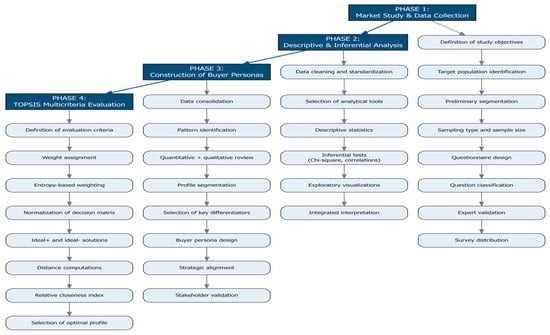
Figure 1.
Methodological process.
The methodological framework systematically integrates market research, descriptive and inferential statistical analysis, buyer persona modeling, and multicriteria decision-making (MCDM) techniques. This combination aligns with best practices in contemporary empirical research and mixed-methods inquiry, ensuring analytical triangulation, construct validity, and decision-oriented relevance (Creamer & Tendhar, 2015; Creswell & Inoue, 2025; Hernández-Morales et al., 2025). Beyond methodological robustness, the design is explicitly oriented toward generating actionable managerial insights, thereby bridging theory and practice in the context of craft-based enterprises navigating digital transition in emerging economies.
3.1. Market Research and Data Collection
The first phase comprised a systematic market research process aimed at characterizing sociodemographic profiles, customer–firm relationships, purchasing behaviors, consumption habits, and digital interaction patterns among both existing and prospective customers. Sastrería Jorge Ospina was selected as the focal case due to its symbolic representativeness of traditional artisanal tailoring businesses confronting digitalization pressures, while maintaining strong cultural and territorial embeddedness. The target population consisted of the 21,960 inhabitants of Caicedonia, located in the department of Valle del Cauca, Colombia (DANE, 2023), geographically positioned at 4°20′05″ N, 75°49′41″ W (Figure 2). This territorial context is analytically significant due to the coexistence of deeply rooted artisanal traditions and increasing exposure to digital consumption channels, making it a particularly suitable setting for examining hybrid consumption dynamics.
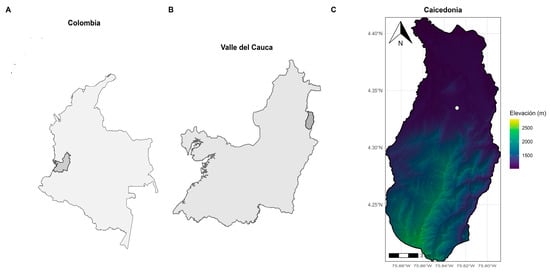
Figure 2.
Geographic location of the case study: (A) National context showing the Department of Valle del Cauca within Colombia; (B) regional context illustrating the municipality of Caicedonia within Valle del Cauca; (C) detailed local map including topographic variation expressed through elevation gradients (meters above sea level). Source: Authors’ own elaboration. © [owner: Authors].
A stratified probabilistic sampling strategy was employed to ensure statistical representativeness across key demographic strata. Using a 95% confidence level and a 5% margin of error—parameters widely adopted in comparable empirical research (Aguilar Uribe et al., 2025; Carvache Franco et al., 2024; Ziegenfuss et al., 2021)—a final sample of 378 respondents was obtained, including 117 current customers and 261 potential customers. Data were collected through a 33-item structured online questionnaire administered via Google Forms. The instrument combined five-point Likert-scale items and multiple-choice questions to capture four core analytical dimensions:
- Sociodemographic characteristics
- Purchasing motivations, expectations, and preferences
- Consumption behavior and decision-making processes
- Digital platform usage and interaction frequency
Questionnaire development followed established methodological standards in market research and consumer behavior analysis (Crick, 2024; Homburg & Wielgos, 2022). Prior to deployment, the instrument underwent a two-stage validation process: (i) Academic expert review, ensuring theoretical coherence and construct validity; and (ii) Managerial validation by the firm’s director, guaranteeing contextual relevance, semantic clarity, and operational applicability
3.2. Descriptive and Inferential Statistical Analysis
The second phase implemented a two-layered analytical strategy combining descriptive and inferential statistical techniques. Initially, descriptive statistics were applied to examine measures of central tendency, dispersion, and distributional properties across the dataset (Dong, 2023; Wolniak, 2023). Frequency distributions and contingency tables facilitated the identification of preliminary behavioral patterns and emergent segmentation tendencies.
Subsequently, inferential statistical analyses were conducted to assess statistically significant associations between sociodemographic variables and key behavioral dimensions, particularly purchasing processes and digital interaction patterns. Pearson’s Chi-square (χ2) test of independence was employed using JASP (version 0.18.3), with a predefined significance level of α = 0.05 (Allua & Thompson, 2009; Love et al., 2019). To move beyond aggregate significance testing and enhance interpretive depth, all statistically significant χ2 results were subjected to systematic residual diagnostics, including unstandardized, Pearson, and standardized residuals. This procedure enabled the identification of cell-level deviations driving observed dependencies, revealing nuanced behavioral relationships often obscured in global statistical tests.
Inferential findings were further explored through visual analytics using RStudio (version 2025.02.02+418), and the packages ggplot2, reshape2, and dplyr. Correlation heatmaps and exploratory visualizations supported pattern recognition, comparative analysis, and theory-informed interpretation.
3.3. Buyer Persona Development
Building on the descriptive and inferential results, the third phase focused on the construction of buyer personas as strategic abstractions representing dominant consumer archetypes associated with Sastrería Jorge Ospina. Persona development followed established methodological principles in strategic marketing, service design, and user-centered innovation research (Ballesteros et al., 2022; Cruz & Karatzas, 2020; Romero Montero et al., 2024). Four buyer personas were identified and validated—Young Woman, Young Man, Older Woman, and Older Man—reflecting salient demographic characteristics, behavioral patterns, and digital divide dynamics observed in the empirical data. Each persona was systematically synthesized across five analytical dimensions:
- General description.
- Purchasing motivations.
- Digital behavior.
- Pain points.
- Value-creation opportunities.
Contextual validation was conducted through managerial review by the firm’s director to ensure strategic relevance and operational realism. To enhance communicative clarity and facilitate strategic alignment among stakeholders, synthetic persona visualizations were generated using artificial intelligence tools (Google Gemini Pro version 3.0 and Nano Banana AI). These visual artifacts served exclusively as conceptual representations and did not influence analytical outcomes.
3.4. Multicriteria Evaluation (TOPSIS Method)
The final phase aimed to identify the buyer persona with the highest strategic relevance for guiding digital transformation initiatives. A Multicriteria Decision-Making (MCDM) framework was implemented using the Technique for Order Preference by Similarity to Ideal Solution (TOPSIS), selected for its robustness, interpretability, and extensive application in strategic decision-making contexts. To minimize subjectivity in criterion weighting, an entropy-based weighting method was employed, allowing weights to be derived endogenously from data variability (Chakraborty, 2022). The tailoring shop’s manager acted as the domain expert in defining and contextualizing the evaluation criteria:
- Interest in fashion and stylistic orientation.
- Preferred purchasing modality (online vs. in-person).
- Decision-making style.
- Pain points (e.g., customization requirements, price sensitivity, delivery time constraints).
- Age group.
The TOPSIS procedure consisted of four analytical stages:
- Normalization of the decision matrix using vector normalization to ensure comparability across criteria.
- Identification of ideal and anti-ideal solutions, representing the best and worst performance values for each criterion.
- Computation of Euclidean distances between each alternative and the ideal and anti-ideal solutions.
- Calculation of the closeness coefficient (Cᵢ), where values closer to 1 indicate greater alignment with organizational objectives.
All computations and visualizations were performed in Python (version 3.13) with the Pandas and NumPy libraries, ensuring computational efficiency, analytical transparency, and reproducibility. Collectively, this data-driven, triangulated methodological framework provides a rigorous basis for identifying the buyer persona with the greatest strategic leverage, thereby supporting informed decision-making that reconciles artisanal heritage with the competitive imperatives of an increasingly digitalized market environment.
4. Results
4.1. Descriptive Analysis
4.1.1. Profile of Current Customers
The descriptive examination of the firm’s incumbent clientele reveals a consumer segment deeply embedded in traditions of artisanal tailoring, characterized by maturity, aesthetic refinement, and enduring relational bonds between tailor and client. This segment is fundamentally anchored in the symbolic, experiential, and relational value of bespoke craftsmanship, sustained through long-term trust-based interactions. At the same time, it exhibits an incipient—yet strategically consequential—openness to digitally mediated engagement, suggesting the early formation of hybrid consumption practices.
From a sociodemographic standpoint, the customer base is predominantly mature and economically stable. Nearly half of respondents (49.6%) are aged 40 years or older, a demographic profile typically associated with consolidated professional trajectories and predictable income streams. Consistent with this, more than 40% report monthly earnings above the Colombian legal minimum wage (>COP 1,300,000), indicating discretionary purchasing capacity. This financial stability is reinforced by household and employment structures: 77.8% belong to consolidated family units, while 71.8% are economically active, encompassing salaried employees, entrepreneurs, self-employed professionals, and retirees. Collectively, these indicators depict a segment with sustained purchasing power, lifestyle continuity, and a pronounced orientation toward long-term consumption relationships rather than episodic or impulse-driven buying.
Customer tenure further illustrates the structural solidity and relational depth of this segment. Approximately one-third of respondents (33.3%) have maintained a relationship with the tailor for one to three years, while a comparable proportion (31.6%) report relationships exceeding three years. These figures underscore the centrality of interpersonal trust, service consistency, and accumulated experiential value in fostering loyalty within artisanal service ecosystems. Importantly, the presence of a substantial proportion of newly acquired clients (approximately 35%) suggests that the atelier’s market is not static or insular, but rather dynamic and renewable, capable of integrating new consumers without eroding its traditional foundations.
Brand awareness mechanisms remain overwhelmingly rooted in local, proximity-based channels. Word-of-mouth recommendations represent the dominant source of brand discovery (44.4%), followed by direct exposure to the physical store (34.2%). In stark contrast, digital channels contribute minimally to brand awareness, with social media accounting for only 0.9% of initial brand discovery. This pronounced asymmetry signals a critical underutilization of digital visibility and points to a significant strategic gap, particularly given broader market trends toward online search, social discovery, and digitally mediated reputation building.
Perceptions of innovation among current customers reinforce this diagnosis. More than one-third of respondents (35.9%) perceive that the tailor does not sufficiently innovate in its products or services in response to evolving market trends. Customers articulate specific and actionable expectations for improvement, including greater diversity in designs and garment styles (approximately 35%), the integration of modern technologies into the tailoring process (19.7%), and the adoption of online appointment-booking systems to reduce waiting times (53%). Notably, these demands do not challenge the artisanal essence of the brand; rather, they reflect a desire to enhance efficiency, accessibility, and variety while preserving craftsmanship and personalization.
Despite limited digital brand discovery, digital engagement is already deeply embedded in customers’ everyday practices. An overwhelming majority (92.3%) report active—albeit predominantly basic—use of digital platforms. Preferred communication channels emphasize conversational and community-oriented environments, with WhatsApp (38.2%) and Facebook (32.5%) emerging as the most salient touchpoints. Crucially, 89.7% express willingness to interact with the brand through digital channels, and 61.5% indicate readiness to complete purchases online. Customer retention and influence—both offline and online—are primarily driven by credibility, perceived value, and experiential trust, derived from direct personal experience and reinforced through recommendations from family and friends within the physical retail context.
Taken together, the current customer segment demonstrates strong attachment to personalized service, artisanal authenticity, and relational value creation. Simultaneously, their growing receptivity to digitally supported interactions suggests that a carefully calibrated omnichannel strategy—one that augments rather than substitutes the physical experience—could enhance satisfaction, reinforce loyalty, and amplify the brand’s artisanal identity rather than dilute it.
4.1.2. Profile of Potential Customers
In contrast to the established clientele, potential customers constitute a markedly younger, digitally native, and stylistically plural segment, oriented toward contemporary, hybrid, and reinterpretative forms of bespoke and semi-bespoke tailoring. Individuals aged 18–25 represent the largest subgroup (34.5%), followed closely by those aged 34–50 (34.1%), indicating a bimodal age distribution that spans both early adulthood and midlife reinvention. Women account for 63.2% of respondents, signaling a significant gendered expansion of interest in tailored apparel beyond historically male-dominated markets.
Economically, this segment is characterized by comparatively constrained purchasing power. A substantial majority (77.8%) report monthly incomes at or below the Colombian legal minimum wage (≤COP 1,300,000), a profile consistent with their life-stage characteristics: approximately 70% identify as single or in non-formal relationships. While these conditions impose financial limitations, they simultaneously frame a market with high symbolic, aspirational, and identity-driven consumption potential, particularly in domains related to fashion, self-expression, and personalization.
Fashion preferences among potential customers reveal a strong orientation toward comfort-centric and contemporary aesthetics. Casual styles predominate (68.6%), followed by sporty influences (14.9%), reflecting broader shifts toward versatility, functionality, and everyday wearability. Purchase decisions are primarily shaped by fashion trends (51.3%), perceived quality (41%), and comfort (30.7%), while price considerations (19.9%) occupy a secondary—though non-negligible—position. Additional evaluative criteria include garment design, material quality, brand reputation, and brand values, especially those associated with sustainability, ethical labor practices, social responsibility, inclusion, and diversity. Notably, 82.8% express willingness to pay premium prices for superior quality and made-to-measure garments, revealing latent demand for exclusivity, craftsmanship, and personalization even within income-constrained cohorts.
Digital adoption among potential customers is nearly universal (96.2%), and their engagement patterns differ markedly from those of current customers. While WhatsApp (31.4%) and Facebook (27.7%) remain relevant, interaction increasingly gravitates toward visually intensive and algorithmically curated platforms such as Instagram, TikTok, and Pinterest. Preferred content formats include Reels (37.9%), short-form videos (22.2%), and Stories (14.9%), underscoring a shift toward audiovisual storytelling, personalized feeds, and discovery-driven consumption rather than deliberate information search. This orientation is particularly consequential given that 62.4% frequently follow clothing brands on social media, 51% acknowledge the influence of social networks on their apparel purchasing decisions, and nearly 30% report being influenced by celebrities or digital influencers.
Receptivity to e-commerce within this segment is similarly pronounced. More than three-quarters (77.4%) express willingness to purchase clothing online, with purchase decisions primarily shaped by peer reviews (31.2%), competitive pricing and promotions (29.1%), and fast delivery times (27.6%). Website aesthetics and high-quality visual content play a complementary—though less decisive—role (8%). Moreover, 74.3% express interest in digital personalization tools, signaling openness to virtual consultations, co-creation platforms, and interactive tailoring interfaces that facilitate participatory, customized, and immersive consumption experiences.
In sum, potential customers prioritize convenience, accessibility, creative engagement, and digitally mediated authenticity. They are particularly drawn to brands capable of fusing artisanal heritage with immersive digital storytelling, socially and environmentally responsible values, and seamless hybrid customer journeys that bridge physical craftsmanship with advanced digital interaction and personalization.
4.2. Inferential Analysis
Inferential analyses reveal a set of statistically significant relationships (p < 0.05) between core sociodemographic variablesand a broad spectrum of behavioral, attitudinal, relational, and digitally mediated engagement indicators. These statistically associations provide compelling empirical evidence for the existence of structurally differentiated consumer profiles within the contemporary artisanal tailoring market. More importantly, they illuminate the mechanisms through which tradition and digitalization intersect, coexist, and mutually reinforce one another rather than operating as antagonistic forces.
4.2.1. Inferential Patterns Among Current Clients
Within the segment of incumbent customers, age and income emerge as the most influential explanatory variables, exhibiting statistically significant associations with customer tenure, loyalty-related behaviors, satisfaction levels, recommendation propensity, service utilization patterns, and degrees of digital engagement (see Figure 3). Specifically, older clients with stable income levels demonstrate:
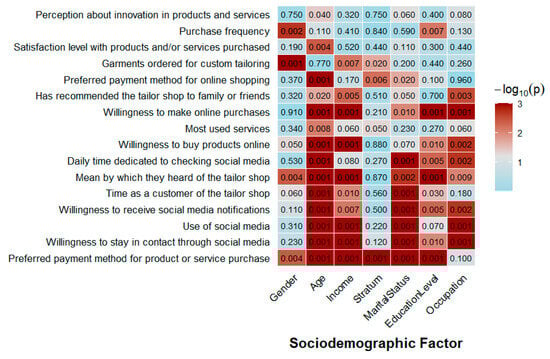
Figure 3.
Inferential results for current (Classic) customers. The color gradient, derived from the transformation, reflects the strength of statistical evidence: darker hues (red/brown) indicate robust and statistically significant associations (), identifying sociodemographic factors that act as key drivers of consumer preferences. Conversely, lighter tones (blue) represent non-significant relationships, suggesting that these demographic dimensions do not materially influence the assessed consumer responses.
- Significantly longer and more continuous relationships with the tailoring atelier;
- Higher reported satisfaction with both product outcomes and service processes;
- A stronger propensity to recommend the brand within family, professional, and social networks; and
- A pronounced valuation of personalized attention, interpersonal trust, and tangible indicators of craftsmanship and material quality.
These findings empirically substantiate the central role of relational capital and experiential value in sustaining long-term tailor–client relationships. Loyalty within this segment is not merely transactional but is socially embedded, symbolically constructed, and reinforced through cumulative experiences. Artisanal consumption thus operates as a trust-intensive exchange system in which repeated interpersonal interactions generate durable commitment and reputational spillovers.
Education level also exhibits statistically significant associations with purchase frequency, preferred service modalities, and payment mechanisms. This pattern suggests that cultural capital shapes consumption sophistication and decision-making complexity within artisanal contexts. More highly educated clients tend to demonstrate greater sensitivity to service differentiation, greater awareness of value-added tailoring options, and a stronger inclination to diversify their engagement across the firm’s service portfolio.
In contrast, younger and professionally active current clients display significantly higher levels of digital engagement. These include:
- More frequent and intensive use of social media platforms.
- Greater daily time allocation to digital environments.
- Higher willingness to interact with the brand through digital communication channels.
- A stronger disposition toward online purchasing and digital payment solutions.
Across the segment, income and education consistently predict openness to digital touchpoints, preferred payment systems, and online purchasing intentions, reinforcing the role of socioeconomic stability as a facilitator of hybrid consumption practices. Importantly, while older clients exhibit comparatively lower baseline levels of digital engagement, inferential results indicate that their willingness to adopt digital channels increases significantly once trust, credibility, and brand familiarity are firmly established. This finding suggests that digital resistance among mature consumers is neither absolute nor structural, but relationally mediated and contingent upon perceived continuity in service quality and interpersonal connection.
Overall, the inferential evidence confirms that digital adoption among current customers coexists with—rather than displaces—traditional artisanal value perceptions. Digital tools function as relational enhancers that support service continuity, accessibility, and convenience, while preserving the primacy of craftsmanship, personalization, and human interaction. This pattern points toward a gradual, trust-based transition to omnichannel tailoring experiences rather than a disruptive shift away from artisanal logic.
4.2.2. Inferential Patterns Among Potential Clients
Inferential analysis of potential customers reveals an even more pervasive influence of sociodemographic variables—particularly age, education level, income, and occupational status—on fashion consumption behaviors, digital engagement patterns, and attitudes toward tailoring services (see Figure 4). Age and education exhibit statistically significant associations with:
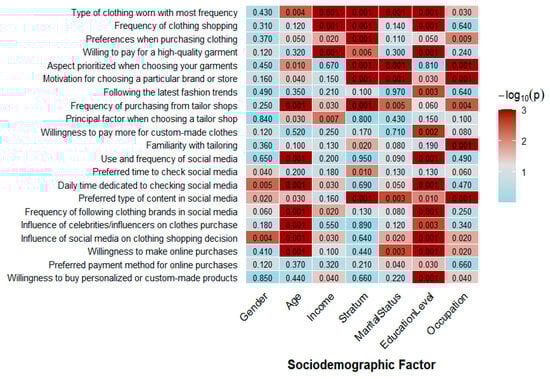
Figure 4.
Inferential results for potential (Digital) customers. The color gradient, derived from the transformation, reflects the strength of statistical evidence: darker hues (red/brown) indicate robust and statistically significant associations (), identifying sociodemographic factors that act as key drivers of consumer preferences. Conversely, lighter tones (blue) represent non-significant relationships, suggesting that these demographic dimensions do not materially influence the assessed consumer responses.
- Predominant clothing styles worn.
- Frequency and intensity of fashion-related purchases.
- Motivations and evaluative criteria guiding brand and store selection.
- Levels of familiarity with bespoke and semi-bespoke tailoring services.
Younger respondents demonstrate significantly higher engagement with casual, trend-driven, and comfort-oriented apparel, reflecting lifestyle fluidity, rapid aesthetic renewal cycles, and preference for versatility. In contrast, higher levels of education correlate strongly with greater appreciation for garment quality, craftsmanship, durability, and ethical brand attributes, including sustainability, transparency, and responsible production practices. This pattern underscores the role of cognitive and cultural resources in legitimizing artisanal value propositions within contemporary fashion markets.
Income and socioeconomic stratum are significantly associated with shopping frequency, willingness to pay premium prices, and openness to custom-made garments. These results confirm that economic constraints shape—but do not suppress—aspirational demand for bespoke products. Even within income-limited cohorts, personalization and exclusivity persist as powerful symbolic drivers of consumption, reflecting identity construction processes rather than purely utilitarian evaluations.
Digital behavior variables display particularly strong inferential relationships. Age, education, and occupational status significantly influence:
- Frequency and intensity of social media use.
- Preferred digital content formats and platforms.
- Likelihood of following fashion brands online.
- Degree of influence exerted by social networks and digital influencers on purchase decisions.
- Willingness to engage in e-commerce and digital personalization tools.
Notably, education level emerges as a consistent predictor of openness to co-creation mechanisms, interactive customization, and digitally enabled bespoke services. This finding suggests that cultural capital facilitates consumers’ ability to reconcile artisanal craftsmanship with technological interfaces, enabling digital environments to function as legitimate spaces for value co-creation rather than as perceived threats to authenticity.
4.2.3. Segment Synthesis and Strategic Interpretation
Taken together, the inferential findings delineate a clear generational and technocultural differentiation, while simultaneously revealing critical points of convergence that enable strategic integration. Two analytically distinct yet strategically complementary consumer archetypes emerge:
- Digital Consumers (approximately 18–33 years)
- Prioritize convenience, interactivity, visual coherence, and frictionless digital experiences.
- Exhibit strong openness to co-creation tools, algorithmic personalization, immersive content, and hybrid purchase journeys.
- Are highly influenced by social media dynamics, peer-generated reviews, and influencer-mediated credibility.
- 2.
- Classic Consumers (approximately 40+ years)
- Prioritize emotional connection, tactile interaction, brand heritage, and localized reputation.
- Display moderate but steadily increasing levels of digital adoption, particularly when digital channels reinforce trust, service continuity, and relational familiarity.
- These patterns empirically confirm the existence of a dual-segment consumer ecosystem within the contemporary artisanal tailoring market:
- The Classic Consumer— grounded in loyalty, tradition, and appreciation for handcrafted excellence.
- The Digital Consumer— oriented toward aesthetic optimization, continuous connectivity, and experiential personalization.
This hybrid ecosystem demonstrates that digital mediation does not erode artisanal value propositions. On the contrary, digitalization amplifies heritage-based differentiation by extending relational depth, enhancing accessibility, and enabling multidimensional value co-creation. Heritage and innovation thus function as complementary strategic levers, reinforcing long-term sustainability, strengthening competitive positioning, and expanding market reach through integrated, omnichannel, and experience-centered value creation.
4.3. Buyer Personas Profiles
Building on the empirical evidence generated through both descriptive and inferential analyses, four analytically distinct buyer personas were constructed to represent the dual consumer ecosystem of Sastrería Jorge Ospina. These personas operationalize the coexistence of tradition-oriented and digitally intensive consumption logics within the contemporary artisanal tailoring market. Specifically, the personas encompass two Classic Consumer archetypes (Older Men and Older Women) and two Digital Consumer archetypes (Young Men and Young Women), thereby capturing generational, gender-based, and technocultural heterogeneity.
Each persona was developed along six integrated analytical dimensions: sociodemographic profile, general consumption orientation, purchasing motivations, digital behavior, perceived pain points, and value-creation opportunities. This multidimensional structure enables a nuanced understanding of how different consumer segments interpret, engage with, and derive value from artisanal tailoring services. Table 1 provides a synthesized overview of the four personas, while Figure 5 presents an AI-generated visual representation designed to reinforce and humanize the conceptual profiles without altering their analytical substance.

Table 1.
Buyer personas profiles.
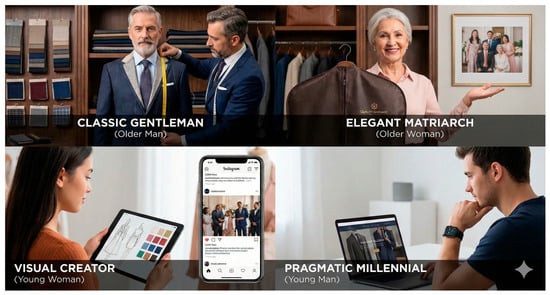
Figure 5.
Buyer personas profiles. Source: Authors’ own elaboration. © [Owner: Authors].
4.4. Multicriteria Evaluation (TOPSIS Analysis)
To identify which consumer archetypes align most closely with Sastrería Jorge Ospina’s long-term strategic objectives, a multicriteria decision-making analysis was conducted using the Technique for Order of Preference by Similarity to the Ideal Solution (TOPSIS), complemented by entropy-based weighting. This approach enables an objective prioritization of personas by integrating multiple, heterogeneous evaluation criteria while minimizing subjective bias. Five decision criteria were incorporated: Fashion Interests, Purchase Preferences, Comparison Behavior, Pain Points, and Age Group. Entropy-derived weights (wᵢ) ranged from 0.175 to 0.220, indicating relatively balanced informational contributions across criteria. The highest discriminative power was observed for Comparison Behavior (0.220), Pain Points (0.218), and Age Group (0.212), underscoring their central role in differentiating consumer decision-making patterns across personas.
The resulting closeness coefficients (Cᵢ) positioned Older Men (Cᵢ = 1.000) and Young Women (Cᵢ = 0.870) as the personas most closely aligned with the ideal consumer profile (Figure 6). This outcome simultaneously validates the historical centrality of older male consumers within the premium artisanal tailoring segment and highlights the emerging strategic importance of digitally intensive young women, whose preferences signal strong potential for innovation-led growth.
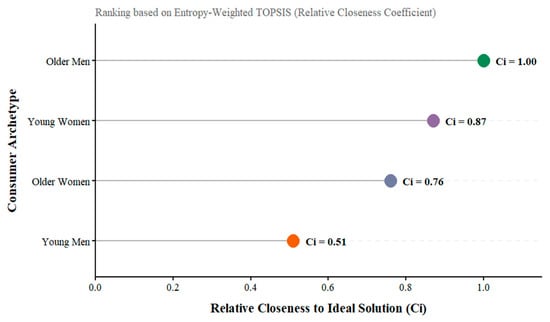
Figure 6.
Multicriteria Evaluation (TOPSIS Analysis).
Although Older Women (Cᵢ = 0.760) and Young Men (Cᵢ = 0.510) exhibited lower proximity to the ideal solution, both segments demonstrate high digital literacy and a clear willingness to engage with online personalization and omnichannel services. These characteristics indicate substantial opportunities for market diversification, particularly through targeted digital content strategies, service modularization, and enhanced omnichannel integration.
Strategic Insights
The TOPSIS results reveal differentiated strategic value across the four personas, emphasizing the need for a dual—and mutually reinforcing—strategic trajectory. On the one hand, the brand must reinforce its artisanal heritage, which remains the foundation of trust, continuity, and competitive differentiation. On the other hand, the integration of digital innovation is essential for attracting younger, experience-driven consumers who prioritize personalization, immediacy, and visually compelling interactions.
- Classic Consumers (Older Men and Older Women): These segments constitute the financial and symbolic core of the business. Their consistent loyalty and appreciation for craftsmanship sustain the brand’s authenticity and premium value proposition.
- Digital Consumers (Young Women and Young Men): These segments enable scalable market expansion through multi-platform engagement, elevated aesthetic expectations, and strong responsiveness to hybrid (physical–digital) customer journeys.
Collectively, the findings reinforce the value of a hybrid strategic model that balances artisanal excellence with technological advancement. In the emerging post-digital tailoring economy, tradition and technology function not as opposing paradigms but as complementary levers of sustainable competitiveness, enabling the brand to strengthen its resilience, differentiate itself in a saturated market, and cultivate long-term growth.
5. Discussion
The findings demonstrate that the digital transformation of artisanal tailoring transcends the logic of technological upgrading and instead constitutes a deep socio-cultural reconfiguration of value creation. In the case of Sastrería Jorge Ospina, digitalization operates not as a substitutive force that displaces tradition, but as a catalytic mechanism that rearticulates the symbolic, relational, and experiential foundations of craftsmanship. The coexistence of traditional and digitally oriented consumer segments illustrates that artisanal expertise functions as a resilient form of cultural capital whose legitimacy is not diminished—but rather intensified—through digital mediation (Anamofa et al., 2025). Digital platforms extend the visibility, narrative coherence, and interactivity of the craft, thereby amplifying both its economic relevance and its cultural longevity.
This hybrid configuration resonates strongly with emerging theoretical frameworks on phygital consumption (Anwar et al., 2025; Maciejewski & Wróblewski, 2025) and experiential branding (Obiegbu & Larsen, 2025), which challenge the presumed opposition between authenticity and innovation. Instead, the results reinforce the argument that tradition and technology operate as mutually reinforcing drivers of competitive advantage when strategically integrated. Digital interfaces, far from eroding authenticity, become conduits through which artisanal meaning, trust, and identity are translated into contemporary consumption contexts (Dey et al., 2020; Grandinetti et al., 2022).
5.1. Behavioral Implications: Personalization as a Convergent Value Logic
At the behavioral level, the results reveal pronounced generational asymmetries in digital literacy, platform engagement, and affective attachment to tradition. Classic consumers derive value primarily from continuity, embodied interaction, and the ritualized dimensions of bespoke tailoring, whereas digitally oriented consumers prioritize immediacy, interactivity, and aesthetic optimization. Crucially, however, these differences converge around a shared and dominant value logic: personalization. This convergence manifests through distinct but complementary modalities. Classic Consumers seek personalization through face-to-face consultations, trust-based dialogue, and the interpretive authority of the master tailor. Digital Consumers, by contrast, pursue personalization through data-driven configurators, algorithmic recommendations, and visually immersive digital environments. The implication is not a fragmentation of value creation, but its reconfiguration across heterogeneous experiential channels (Choi et al., 2016).
These findings support the proposition that the future of artisanal markets lies not in replacing human expertise with technology, but in designing continuity systems in which embodied craftsmanship and algorithmic intelligence operate in symbiosis (De la Cruz Galicia et al., 2025; Partarakis et al., 2025). This aligns with the emerging concept of augmented craftsmanship, wherein digital tools enhance empathy, precision, and relational intimacy rather than threatening artisanal identity (Zabulis et al., 2025). Consequently, the results challenge deterministic narratives of technological “disruption” and instead position digital transformation as an enabler of cultural resonance and experiential depth.
5.2. Strategic Insights: Dual Value Trajectories in Post-Digital Tailoring
From a strategic perspective, the TOPSIS analysis highlights the necessity of pursuing a dual value trajectory that simultaneously consolidates the firm’s artisanal core and expands its digital frontier. The highest-ranking persona—Older Men—represents a segment characterized by financial stability, low churn propensity, and deep trust-based relational embeddedness. This segment anchors the economic resilience of the firm and safeguards its symbolic legitimacy (Lojacono & Ru Yun Pan, 2021).
Conversely, the strong alignment of Young Women with innovation-oriented criteria reveals substantial potential for digitally scalable growth. This segment is particularly responsive to content-driven engagement, participatory co-creation, and social-commerce ecosystems, suggesting a pathway for extending the brand’s reach without compromising its artisanal ethos (Christensen et al., 2025; Loisel et al., 2025). Long-term sustainability, therefore, depends on the firm’s ability to orchestrate a strategic balance between heritage preservation and technological scalability. Digital innovations—such as experiential storytelling, advanced data analytics, and interactive customization platforms—can be transformed into relational capital when implemented with acute sensitivity to artisanal identity (Vărzaru & Bocean, 2024). However, such transformation is contingent upon organizational learning, workforce upskilling, and narrative coherence. The central strategic challenge is not technological adoption per se, but ensuring that digital transformation reinforces, rather than dilutes, the symbolic foundations of artisanal excellence.
5.3. Implications for Micro-Heritage Economies
At a broader level, this case contributes to the literature on digital transformation within micro-heritage economies, where value creation is driven less by technological intensity than by contextual intelligence. In such environments, innovation is defined not solely by the adoption of advanced tools, but by the capacity to embed technology within existing cultural narratives, trust networks, and localized consumption rituals (Anwar et al., 2025; Berthinier-Poncet et al., 2025). Sastrería Jorge Ospina exemplifies how small artisanal firms can transition from traditional business models to hybrid digital ecosystems that simultaneously honor local craftsmanship and engage with global digital practices. These transformations reposition artisanal industries as strategic actors in post-digital sustainability—sectors capable of preserving cultural identity while continuously renewing their value propositions in increasingly digitized markets.
5.4. Toward a Theory of Post-Digital Artisanal Sustainability
This research advances theoretical debates on post-digital artisanal sustainability by demonstrating that artisanal firms can evolve into resilient cultural–economic agents through the strategic integration of technological adaptation and heritage stewardship. The findings indicate that the relationship between tradition and digital innovation is not a zero-sum trade-off, but a synergistic partnership capable of generating identity-driven competitiveness (De Bernardi et al., 2019). By reframing digital transformation as a process of cultural amplification rather than erosion, this study contributes to a more nuanced understanding of sustainability in artisanal contexts (Bonazzi et al., 2024; Tang & Wang, 2024). It suggests that in the twenty-first century, enduring competitiveness emerges from the capacity to align technological innovation with deeply rooted cultural meanings—positioning artisanal enterprises not as relics of the past, but as adaptive, future-oriented actors within the post-digital economy (Yordanova & Todorova, 2025).
6. Conclusions
The digital reinvention of artisanal industries should not be interpreted as a rupture with tradition, but rather as a deliberate and strategic expansion of their cultural, symbolic, and economic horizons. Far from displacing craftsmanship, digital technologies reconfigure its modes of expression, circulation, and valorization, allowing bespoke tailoring to operate within an emergent post-digital space where heritage and innovation are mutually reinforcing rather than antagonistic. Through the case of Sastrería Jorge Ospina, this study elucidates the dynamics of a hybrid artisanal ecosystem in which ritualized craft practices coexist with intensive digital interaction, giving rise to novel forms of value creation, communication, and experiential delivery. The findings demonstrate that artisanal identity can be competitively repositioned in contemporary markets without eroding its patrimonial integrity, insofar as digital augmentation functions not as a transformative force upon the craft itself, but as a mediating layer that deepens meaning, extends reach, and diversifies modes of engagement.
6.1. Dual Consumer Paradigms as Strategic Complements
The research identifies the consolidation of two interdependent consumer paradigms that jointly shape the future trajectory of artisanal tailoring. The Classical Consumer sustains the atelier’s legitimacy through long-term loyalty, reverence for in-person customization, and recognition of embodied artisanal expertise. Conversely, the Digital Consumer introduces logics of immediacy, co-creation, aesthetic experimentation, and omnichannel interaction. Rather than constituting a binary or generational divide, these paradigms form a synergistic configuration: both seek personalization and authenticity, yet operationalize these values through distinct temporalities, sensibilities, and interactional interfaces. The TOPSIS analysis substantiates this complementarity by positioning older male clients as the structural core of the premium bespoke segment, while younger female consumers emerge as key drivers of digital expansion, symbolic renewal, and brand rejuvenation. Together, these segments delineate a strategic opportunity portfolio that demands differentiated—yet conceptually coherent—value propositions, capable of responding to heterogeneous expectations without fragmenting brand identity. This dual-consumer architecture underscores the necessity for artisanal firms to move beyond monolithic market assumptions and toward adaptive, culturally informed segmentation strategies.
6.2. Toward Humanized Digitalization and Augmented Craftsmanship
At a broader level, the findings suggest that the sustainability of bespoke tailoring—and artisanal industries more generally—depends less on the intensity of technological adoption than on the capacity to humanize data, contextualize algorithmic tools, and preserve the narrative continuity of the craft. The construction of culturally grounded buyer personas signals a shift from transactional marketing models toward relational intelligence frameworks, wherein digital infrastructures operate as conduits of authenticity rather than as threats to it. Within this perspective, digital transformation may be reconceptualized as an expanded form of craftsmanship—one in which algorithmic precision and human skill collaboratively generate symbolic, aesthetic, and experiential value. This study contributes to ongoing scholarly debates on phygital consumption and augmented authenticity by demonstrating that, in micro-heritage industries, meaningful digitalization advances through processes of cultural translation and interpretive mediation rather than through technological saturation or automation-driven efficiency alone.
6.3. Managerial Implications and Future Research Directions
The analysis highlights that effective digital integration within artisanal sectors requires infrastructural designs that amplify—rather than eclipse—the symbolic capital embedded in craft traditions. This entails the development of narrative-intensive digital interfaces, the implementation of adaptive omnichannel service architectures, and the strategic use of data analytics to enhance personalization while safeguarding the interpersonal resonance that defines artisanal identity. Future research should extend the methodological framework employed in this study to other small-scale craft, luxury, and fashion contexts, thereby enabling comparative insights across diverse cultural settings. Further investigation into the role of generative artificial intelligence in co-design processes, consumer identification, and experiential prototyping is also warranted. Finally, examining how emerging digital technologies can strengthen the socio-economic resilience of heritage crafts represents a critical avenue for inquiry. Such research is essential for understanding how artisanal industries can sustain cultural vitality, competitive relevance, and identity-driven innovation in the decades to come.
Author Contributions
Conceptualization, J.C.O.-A. and C.H.S.-R.; methodology, C.H.S.-R. and E.L.-A.; software, C.H.S.-R. and J.C.O.-A.; validation, A.M.G.-G.; formal analysis, C.H.S.-R. and J.C.O.-A.; investigation, J.C.O.-A.; resources, A.M.G.-G.; data curation, C.H.S.-R. and J.C.O.-A.; writing—original draft preparation, J.C.O.-A.; writing—review and editing, L.S.-N.; visualization, C.H.S.-R. and J.C.O.-A.; supervision, E.L.-A., A.M.G.-G. and C.H.S.-R.; project administration, E.L.-A., A.M.G.-G. and C.H.S.-R. All authors have read and agreed to the published version of the manuscript.
Funding
This research received no external funding.
Institutional Review Board Statement
Ethical review and approval were waived for this study due to the research instruments were reviewed and approved by the coordinator of the bachelor’s program, MSc. Jennifer Andrea Ruiz-Aguirre, prior to data collection, in accordance with Universidad del Valle’s protocol. Additionally, the study followed the ethical principles outlined in the Declaration of Helsinki (1975, revised in 2013), particularly Article 23, which emphasizes the protection of participants’ rights, informed consent, and data confidentiality. All research procedures adhered to both national and international ethical standards for research involving human participants.
Informed Consent Statement
Informed consent was obtained from all subjects involved in the study.
Data Availability Statement
The original contributions presented in the study are included in the article; further inquiries can be directed at the corresponding authors.
Acknowledgments
During the preparation of this manuscript, the authors used Google Gemini Pro version 3.0 and Nano Banana AI for the purposes of designing Figure 5. The authors have reviewed and edited the output and take full responsibility for the content of this publication.
Conflicts of Interest
The authors declare no conflicts of interest.
References
- Agarwal, R. (2020). Transformación digital: Un camino al valor económico y social. Revista CEA, 6(12), 9–12. [Google Scholar] [CrossRef]
- Aguilar Uribe, J., Castañeda Sarabia, R., Gamboa Castro, E. A., & Ulate Soto, I. (2025). Perfil de los consumidores mexicanos de servicios de telefonía móvil en medio del COVID-19 durante el segundo semestre de 2023. Cuadernos de Administración, 41(81), e20114281. [Google Scholar] [CrossRef]
- Aimé, I., Berger-Remy, F., & Laporte, M.-E. (2022). The brand, the persona and the algorithm: How datafication is reconfiguring marketing work☆. Journal of Business Research, 145, 814–827. [Google Scholar] [CrossRef]
- Akhtar, W. H., Watanabe, C., Tou, Y., & Neittaanmäki, P. (2022). A New perspective on the textile and apparel industry in the digital transformation era. Textiles, 2(4), 633–656. [Google Scholar] [CrossRef]
- Allua, S., & Thompson, C. B. (2009). Inferential statistics. Air Medical Journal, 28(4), 168–171. [Google Scholar] [CrossRef]
- Anamofa, J. N., Sartini, S. S., & Ariani, I. (2025). Interpreting digital capitalism as a modern myth through ernst Cassirer’s philosophy of symbolic forms. Journal of Cultural Analysis and Social Change, 10(1), 18–32. [Google Scholar] [CrossRef]
- Anwar, R. S., Ahmed, R. R., Streimikiene, D., Strielkowski, W., & Streimikis, J. (2025). Customer engagement, innovation, and sustainable consumption: Analyzing personalized, innovative, sustainable phygital products. Journal of Innovation & Knowledge, 10(1), 100642. [Google Scholar] [CrossRef]
- Argento, D., Dobija, D., Grossi, G., Marrone, M., & Mora, L. (2025). The unaccounted effects of digital transformation: Implications for accounting, auditing and accountability research. Accounting, Auditing & Accountability Journal, 38(3), 765–796. [Google Scholar] [CrossRef]
- Arnould, E. J., & Thompson, C. J. (2005). Consumer Culture Theory (CCT): Twenty years of research. Journal of Consumer Research, 31(4), 868–882. [Google Scholar] [CrossRef]
- Ballesteros, L., Peñaherrera, S., Ballesteros, L., & Monge, J. (2022). The buyer person as a digital marketing strategy: Case study Tungurahua tourism sector. 1er Congreso Universal de Las Ciencias y La Investigación, eUTA105. [Google Scholar] [CrossRef]
- Basile, V., Brandão, A., & Ferreira, M. (2024). Does user-generated content influence value co-creation in the context of luxury fashion brand communities? Matching inclusivity and exclusivity. Italian Journal of Marketing, 2024(4), 419–444. [Google Scholar] [CrossRef]
- Belk, R. W. (2013). Extended self in a digital world. Journal of Consumer Research, 40(3), 477–500. [Google Scholar] [CrossRef]
- Berthinier-Poncet, A., Podmetina, D., & Robbins, P. (2025). The art of innovation: How arts-based initiatives can nurture innovation dynamic capabilities. Technovation, 148, 103337. [Google Scholar] [CrossRef]
- Bonazzi, M., Cancellieri, G., & Casarin, F. (2024). Omnivorous cultural consumption and the co-creation of cultural products: Interactive versus participatory art. Journal of Consumer Culture, 24(1), 24–44. [Google Scholar] [CrossRef]
- Carvache Franco, M., Carrascosa López, C., & Carvache Franco, W. (2024). Market segmentation and consumer motivations in protected natural parks: A study from Spain. PLoS ONE, 19(1), e0296199. [Google Scholar] [CrossRef] [PubMed]
- Chakraborty, S. (2022). TOPSIS and modified TOPSIS: A comparative analysis. Decision Analytics Journal, 2, 100021. [Google Scholar] [CrossRef]
- Chen, C., Leask, A., & Phou, S. (2016). Symbolic, experiential and functional consumptions of heritage tourism destinations: The case of Angkor world heritage site, cambodia. International Journal of Tourism Research, 18(6), 602–611. [Google Scholar] [CrossRef]
- Chen, M., Martins, T. S., Zhang, L., & Dong, H. (2025). Digital transformation in project management: A systematic review and research agenda. Systems, 13(8), 625. [Google Scholar] [CrossRef]
- Choi, E., Ko, E., & Kim, A. J. (2016). Explaining and predicting purchase intentions following luxury-fashion brand value co-creation encounters. Journal of Business Research, 69(12), 5827–5832. [Google Scholar] [CrossRef]
- Christensen, R. N., Morris, B. S., Arenas, A., & Hubert, M. (2025). Young Consumers’ ict use and digital maturity: A computational literature review, integrative framework, and future research agenda. International Journal of Consumer Studies, 49(5), e70115. [Google Scholar] [CrossRef]
- Christofi, M., Lamprinakos, G., Nguyen, D. K., & Tran, P. T. (2025). Digital strategy design and digital transformation: A review and future research directions. International Marketing Review, 42(6), 1065–1086. [Google Scholar] [CrossRef]
- Chu, S.-C., Yim, M. Y.-C., & Mundel, J. (2025). Artificial intelligence, virtual and augmented reality, social media, online reviews, and influencers: A review of how service businesses use promotional devices and future research directions. International Journal of Advertising, 44(5), 798–828. [Google Scholar] [CrossRef]
- Creamer, E. G., & Tendhar, C. (2015). Using inferences to evaluate the value added of mixed methods research: A content analysis. International Journal of Multiple Research Approaches, 9(1), 57–72. [Google Scholar] [CrossRef]
- Creswell, J. W., & Inoue, M. (2025). A process for conducting mixed methods data analysis. Journal of General and Family Medicine, 26(1), 4–11. [Google Scholar] [CrossRef]
- Crick, J. M. (2024). Analyzing survey data in marketing research: A guide for academics and postgraduate students. Journal of Strategic Marketing, 32(2), 203–215. [Google Scholar] [CrossRef]
- Cruz, A., & Karatzas, S. (2020). Understanding your buyer persona. In Digital and social media marketing (pp. 69–97). Routledge. [Google Scholar] [CrossRef]
- DANE. (2023). Proyecciones y retroproyecciones de población municipal para el periodo 1985-2019 y 2020–2035 con base en el CNPV 2018. Available online: https://www.dane.gov.co/index.php/estadisticas-por-tema/demografia-y-poblacion/proyecciones-de-poblacion (accessed on 3 January 2025).
- Dąbrowska, J., Almpanopoulou, A., Brem, A., Chesbrough, H., Cucino, V., Di Minin, A., Giones, F., Hakala, H., Marullo, C., Mention, A., Mortara, L., Nørskov, S., Nylund, P. A., Oddo, C. M., Radziwon, A., & Ritala, P. (2022). Digital transformation, for better or worse: A critical multi-level research agenda. R&D Management, 52(5), 930–954. [Google Scholar] [CrossRef]
- De Bernardi, P., Bertello, A., & Shams, S. M. R. (2019). Logics hindering digital transformation in cultural heritage strategic management: An exploratory case study. Tourism Analysis, 24(3), 315–327. [Google Scholar] [CrossRef]
- De la Cruz Galicia, M. C., Vidal Reyes, L., Rincon Molina, C. I., Martinez Soberanez, C. I., & Rodríguez Reyes, T. (2025). Dissemination and marketing of artisanal products from indigenous peoples and communities on digital platforms: Review of strategies and challenges. Ciencia Latina Revista Científica Multidisciplinar, 9(5), 14539–14549. [Google Scholar] [CrossRef]
- Del Olmo Arriaga, J. L., Pretel Jiménez, M., & Ruíz Viñals, C. (2025). From fast fashion to shared sustainability: The role of digital communication and policy in generation Z’s consumption Habits. Sustainability, 17(18), 8382. [Google Scholar] [CrossRef]
- Dey, B. L., Yen, D., & Samuel, L. (2020). Digital consumer culture and digital acculturation. International Journal of Information Management, 51, 102057. [Google Scholar] [CrossRef]
- Discetti, R., & Anderson, M. (2023). Hybrid consumer activism in fairtrade towns: Exploring digital consumer activism through spatiality. Consumption Markets & Culture, 26(4), 280–297. [Google Scholar] [CrossRef]
- Díaz Soloaga, P., Carcelén García, S. L., & Díaz-Bustamante Ventisca, M. (2023). Perceived brand value and brand co-creation attitudes through eWOM: A typology of co-creator digital users. Revista de Comunicación, 22(1), 89–107. [Google Scholar] [CrossRef]
- Dong, Y. (2023). Descriptive statistics and its applications. Highlights in Science, Engineering and Technology, 47, 16–23. [Google Scholar] [CrossRef]
- D’Uonno, M. (2017). A handbook for tailoring craftsmanship industries. Communicate the intangible values of traditional methods through images. Proceedings, 1(9), 912. [Google Scholar] [CrossRef]
- Enyejo, J. O., Obani, O. Q., Afolabi, O., Igba, E., & Ibokette, A. I. (2024). Effect of Augmented Reality (AR) and Virtual Reality (VR) experiences on customer engagement and purchase behavior in retail stores. Magna Scientia Advanced Research and Reviews, 11(2), 132–150. [Google Scholar] [CrossRef]
- Felipe Sgorla, A., Melacarne, C., & Banchetti, C. (2025). Tradition and innovation: Ecologies of sustainable learning in contemporary craft work. In The future of work-the development of sustainable workplaces (1st ed., Vol. 2). IntechOpen. [Google Scholar] [CrossRef]
- Gavrila Gavrila, S., González Tejero, C. B., Gómez Gandía, J. A., & de Lucas Ancillo, A. (2023). The impact of automation and optimization on customer experience: A consumer perspective. Humanities and Social Sciences Communications, 10(1), 877. [Google Scholar] [CrossRef]
- Grandinetti, R., Bettiol, M., & Di Maria, E. (2022). Contexts of consumption and their evolution in the digital age: Beyond the service-dominant logic. Administrative Sciences, 12(4), 121. [Google Scholar] [CrossRef]
- Grand View Research. (2025, September 2). Fashion technology market (2025–2030). Available online: https://www.grandviewresearch.com/industry-analysis/fashion-technology-market-report (accessed on 22 September 2025).
- Haris, A. (2024). Consumer behavior shifts in digital age: Impact on brand loyalty. Advances: Jurnal Ekonomi & Bisnis, 3(1), 38–51. [Google Scholar] [CrossRef]
- Heeks, R. (2022). Digital inequality beyond the digital divide: Conceptualizing adverse digital incorporation in the global South. Information Technology for Development, 28(4), 688–704. [Google Scholar] [CrossRef]
- Hernández-Morales, Á., Guerra-Rodríguez, P., & Hernández-Morales, C. E. (2025). Buyer persona del turista Generación Z, un reto para los Guías Turísticos. Vinculatégica EFAN, 11(5), 37–53. [Google Scholar] [CrossRef]
- Homburg, C., & Wielgos, D. M. (2022). The value relevance of digital marketing capabilities to firm performance. Journal of the Academy of Marketing Science, 50(4), 666–688. [Google Scholar] [CrossRef]
- Hossain, M. B., Rahman, M. U., Čater, T., & Vasa, L. (2025). Determinants of SMEs’ strategic entrepreneurial innovative digitalization: Examining the mediation role of human capital. European Journal of Innovation Management, 28(7), 2733–2760. [Google Scholar] [CrossRef]
- Jansen, B. J., Salminen, J., Jung, S., & Guan, K. (2021). Data-driven personas. Synthesis Lectures on Human-Centered Informatics, 14(1), i–317. [Google Scholar] [CrossRef]
- Kessler, A., Frank, H., & Fuetsch, E. (2025). Conceptualizing digitalization orientation as a strategic posture–How to boost the impact of digital technologies in businesses: A qualitative good practices approach. Technological Forecasting and Social Change, 213, 123997. [Google Scholar] [CrossRef]
- Kotler, P., Kartajaya, H., & Setiawan, I. (2021). Marketing 5.0: Tecnología para la humanidad (1st ed.). LID Editorial. [Google Scholar]
- Leso, B. H., Cortimiglia, M. N., & Ghezzi, A. (2023). The contribution of organizational culture, structure, and leadership factors in the digital transformation of SMEs: A mixed-methods approach. Cognition, Technology & Work, 25(1), 151–179. [Google Scholar] [CrossRef]
- Liu, S., & Liu, C. (2025). Mapping the digital transformation in the fashion industry: The past, present and future. Journal of Fashion Marketing and Management: An International Journal, 29(7), 1292–1319. [Google Scholar] [CrossRef]
- Liu, X., Hong, S., Su, Z., & Zhou, Y. (2025). The impact of digital transformation on high-quality development of manufacturing enterprises: An integrated perspective on efficiency and social responsibility. Mathematics, 13(5), 815. [Google Scholar] [CrossRef]
- Loisel, Q. E. A., An, Q., Anand-Kumar, V., Balaskas, G., Papadopoulos, H., Pappa, D., Giné-Garriga, M., Longworth, G. R., & Chastin, S. F. M. (2025). Scoping review of needs for digital technology in co-creation: A health CASCADE study. Research Involvement and Engagement, 11(1), 121. [Google Scholar] [CrossRef]
- Lojacono, G., & Ru Yun Pan, L. (2021). Resilience of luxury companies in times of change. De Gruyter. [Google Scholar] [CrossRef]
- Love, J., Selker, R., Marsman, M., Jamil, T., Dropmann, D., Verhagen, J., Ly, A., Gronau, Q. F., Smíra, M., Epskamp, S., Matzke, D., Wild, A., Knight, P., Rouder, J. N., Morey, R. D., & Wagenmakers, E.-J. (2019). JASP: Graphical statistical software for common statistical designs. Journal of Statistical Software, 88(2), 1–17. [Google Scholar] [CrossRef]
- Lusch, R. F., & Vargo, S. L. (2014). Service-dominant logic. Cambridge University Press. [Google Scholar] [CrossRef]
- Maciejewski, G., & Wróblewski, Ł. (2025). A typology of consumers based on their phygital behaviors. Sustainability, 17(14), 6363. [Google Scholar] [CrossRef]
- Maheswari, D., Prabhu, U., Sneha, R., Sathyanarayana, N., & Guruprasad, B. G. (2025). Smart luxury. In Technology-driven market transformations for digital fashion and smart luxury (pp. 31–56). IGI Global Scientific Publishing. [Google Scholar] [CrossRef]
- Maity, R., & Lee, K. L. (2025). The impact of remote and hybrid work models on small and Medium-sized enterprises productivity: A systematic literature review. SN Business & Economics, 5(10), 158. [Google Scholar] [CrossRef]
- Nandan, M., Jaskyte, K., & Mandayam, G. (2020). Human centered design as a new approach to creative problem solving: Its usefulness and applicability for social work practice. Human Service Organizations: Management, Leadership & Governance, 44(4), 310–316. [Google Scholar] [CrossRef]
- Nwobodo, L. K. (2024). The importance of data analytics in modern fashion industry. Global Journal of Economic and Finance Research, 1(5), 80–85. [Google Scholar] [CrossRef]
- Obiegbu, C. J., & Larsen, G. (2025). Algorithmic personalization and brand loyalty: An experiential perspective. Marketing Theory, 25(2), 199–219. [Google Scholar] [CrossRef]
- Partarakis, N., Zabulis, X., Meghini, C., Dubois, A., Moreno, I., Ringas, C., Ziova, A., Kaplanidi, D., Arnaud, D., Crescenzo, N., Hee, P., Ortega, J. J., Garrido, J., Benvenuti, M.-A., & Krivokapic, J. (2025). A review, analysis, and roadmap to support the short-term and long-term sustainability of the european crafts sector. Heritage, 8(2), 70. [Google Scholar] [CrossRef]
- Romero Montero, A., Sellers Rubio, R., & Cely Alvarez, A. M. (2024). ¿Conoces a tu buyer persona? Identifica a tu cliente para mejorar tu estrategia de inbound marketing. Investigaciones Turísticas, 27, 53–76. [Google Scholar] [CrossRef]
- Salminen, J., Wenyun Guan, K., Jung, S.-G., & Jansen, B. (2022). Use cases for design personas: A systematic review and new frontiers. CHI Conference on Human Factors in Computing Systems, 543, 1–21. [Google Scholar] [CrossRef]
- Sandriester, J., Harfst, J., Kern, C., & Zuanni, C. (2025). Digital transformation in the cultural heritage sector and its impacts on sustainable regional development in peripheral regions. Sustainability, 17(15), 6661. [Google Scholar] [CrossRef]
- Shankaranarayana, R., Narayanamurthy, G., Ramaswamy, S., & Moser, R. (2025). Integration of traditional, transitioning & transformative digital technologies for value co-creation in B2B: A process model. Industrial Marketing Management, 124, 304–324. [Google Scholar] [CrossRef]
- Sheppard, J., & Mahdad, M. (2021). Unpacking hybrid organizing in a born green entrepreneurial company. Sustainability, 13(20), 11353. [Google Scholar] [CrossRef]
- Siricharoen, W. V. (2023). Human center-ed design and design thinking for entrepreneurship. EAI Endorsed Transactions on Context-Aware Systems and Applications, 9(1), 1–6. [Google Scholar] [CrossRef]
- Smith, P. R., & Chaffey, D. (2005). E-marketing excellence: At the heart of e-business (1st ed.). Butterworth Heinemann. [Google Scholar]
- Szeszák, B. M., Kerékjártó, I. G., Soltész, L., & Galambos, P. (2025). Industrial revolutions and automation: Tracing economic and social transformations of manufacturing. Societies, 15(4), 88. [Google Scholar] [CrossRef]
- Tang, Y., & Wang, Z. (2024). Preserving the past: Digital strategies for cultural heritage in modern China. Profesional de La Información, 33(3). [Google Scholar] [CrossRef]
- Tao, H., Wen, Y., Liu, M., & Wu, Y. (2025). Industrial heritage protection from the perspective of spatial narrative. Land, 14(5), 1105. [Google Scholar] [CrossRef]
- Theocharis, D., & Tsekouropoulos, G. (2025). Sustainable consumption and branding for gen Z: How brand dimensions influence consumer behavior and adoption of newly launched technological products. Sustainability, 17(9), 4124. [Google Scholar] [CrossRef]
- Thompson, C. J., Arnould, E., & Giesler, M. (2013). Discursivity, difference, and disruption. Marketing Theory, 13(2), 149–174. [Google Scholar] [CrossRef]
- Vargo, S. L., & Lusch, R. F. (2017). Service-dominant logic 2025. International Journal of Research in Marketing, 34(1), 46–67. [Google Scholar] [CrossRef]
- Vărzaru, A. A., & Bocean, C. G. (2024). Digital transformation and innovation: The influence of digital technologies on turnover from innovation activities and types of innovation. Systems, 12(9), 359. [Google Scholar] [CrossRef]
- Vera, L. A. R., Gosling, M. de S., & Shigaki, H. B. (2019). Teoria da cultura do consumo: Possibilidades, limitações e caminhos em estudos de marketing no Brasil. Revista de Gestão Dos Países de Língua Portuguesa, 18(1), 15–32. [Google Scholar] [CrossRef]
- Wolniak. (2023). The concept of descriptive analytics. Scientific Papers of Silesian University of Technology Organization and Management Series, 2023(172). [Google Scholar] [CrossRef]
- Yao, M. (2025). The study of the effects of digital media applications in cross-cultural communication in the construction of cultural identity. Acta Psychologica, 258, 105247. [Google Scholar] [CrossRef]
- Yordanova, Z., & Todorova, Z. (2025). Technological innovation in cultural organizations: A review and conceptual mapping framework. Digital, 5(4), 54. [Google Scholar] [CrossRef]
- Zabulis, X., Nikolaos, P., Manikaki, V., Demeridou, I., Dubois, A., Moreno, I., Bartalesi, V., Pratelli, N., Meghini, C., Manitsaris, S., & Senteri, G. (2025). A digitally enhanced ethnography for craft action and process understanding. Applied Sciences, 15(10), 5408. [Google Scholar] [CrossRef]
- Zhang, P. (2021). Understanding digital learning behaviors: Moderating roles of goal setting behavior and social pressure in large-scale open online courses. Frontiers in Psychology, 12, 783610. [Google Scholar] [CrossRef] [PubMed]
- Zhang, Y., Liu, C., & Lyu, Y. (2023). Examining Consumers’ perceptions of and attitudes toward digital fashion in general and purchase intention of luxury Brands’ digital fashion specifically. Journal of Theoretical and Applied Electronic Commerce Research, 18(4), 1971–1989. [Google Scholar] [CrossRef]
- Ziegenfuss, J. Y., Easterday, C. A., Dinh, J. M., JaKa, M. M., Kottke, T. E., & Canterbury, M. (2021). Impact of demographic survey questions on response rate and measurement: A randomized experiment. Survey Practice, 14(1), 1–11. [Google Scholar] [CrossRef]
Disclaimer/Publisher’s Note: The statements, opinions and data contained in all publications are solely those of the individual author(s) and contributor(s) and not of MDPI and/or the editor(s). MDPI and/or the editor(s) disclaim responsibility for any injury to people or property resulting from any ideas, methods, instructions or products referred to in the content. |
© 2025 by the authors. Licensee MDPI, Basel, Switzerland. This article is an open access article distributed under the terms and conditions of the Creative Commons Attribution (CC BY) license.