


Abstract
The implementation of ambidextrous innovation in project organizations within the cultures of the Global South, such as Saudi Arabia, is a significant problem. Organizational culture is positioned as a key factor that can help project organizations in cultures such as Saudi Arabia to implement ambidexterity as a key innovation framework. However, knowledge of ambidextrous innovations in such an important cultural and organizational context is highly limited. Thus, the aim of the present research is to explore key cultural aspects and themes based on action and a grounded theory research approach that can help organizations employ projects as a key work structure to implement ambidextrous innovations in project management offices (PMOs) in Saudi Arabia. To achieve this aim, the current study employed in-depth semi-structured interviews with 36 participants. The results, employing open coding procedures as a tool of data analysis using the NVivo 14.0 software package, revealed 62 key cultural aspects that can be critical in implementing the innovation of ambidexterity. To further validate and triangulate the findings, inter-rater reliability was undertaken with the help of two experts, and two sessions of focus group discussions were also conducted. The first session of the focus group helped us critically evaluate and filter the cultural aspects, resulting in the final 56 key cultural aspects. The second focus group session was undertaken with participants with the aim of grouping aspects into theoretical themes, which resulted in 10 themes. The research is novel in that it addresses both project organizations and the culture of the Global South, including Saudi Arabia. Empirical research needs to be conducted to predict and achieve other key outcomes.
1. Introduction
Ambidextrous innovation is a strategic framework that enables firms to develop and sustain a competitive advantage over the long term (Grover et al., 2007). In particular, firms that utilize a project-driven structure to create value are better positioned to leverage the benefits of ambidextrous innovation (Binci et al., 2023). Firms and organizations employing a project-based structure are particularly suitable for nurturing and developing ambidextrous innovation (Eriksson, 2013). Project-based firms are suitable for this due to their inherent flexibility and dynamic structures. These project-based firms operate through temporary and goal-oriented projects that allow them to balance exploratory (radical) and exploitative (incremental) innovation more effectively (Binci et al., 2023). Thus, ambidextrous innovation can support both short-term operational efficiency and long-term strategic growth by promoting the integration of both (X. Zhang et al., 2021).
Moreover, ambidextrous innovation is often defined as an innovation paradox in which firms have to undertake opposing but complementary types of innovation (AlSaied & McLaughlin, 2024a), i.e., exploratory (or radical) innovation and exploitative (or incremental) innovation (Jansen et al., 2005). An increasing amount of academic literature has suggested that firms and projects adopting ambidexterity as an innovation strategy are able to perform better both operationally and financially (N. Turner et al., 2016; C. Lin & Chang, 2015; Tsai & Wang, 2017). Exploitative or incremental innovation helps firms and projects maintain and strengthen the current trajectory of their market position through continuous improvement of their current products and services (Eriksson, 2013; Heidhues et al., 2016). Such continuous improvement of the current products and services makes them refreshingly novel. Explorative or radical innovation enables firms and projects to develop products and services that create new market opportunities, positioning them as leaders. These innovations can sustain long-term business performance by opening new avenues for growth (Larsson & Larsson, 2018; Sheehan et al., 2023).
Despite the significant and positive impact of ambidextrous innovation, firms often struggle with its adaptation (Birkinshaw et al., 2016). Similarly, projects within these firms face challenges in effectively implementing ambidextrous innovation due to the need to balance exploration and exploitation activities (X. Zhang et al., 2021). Although precise reasons for such struggles with ambidextrous innovation adaptations are yet to be found, some insights suggest that the key reasons include lack of knowledge, expertise (Rialti et al., 2020), financial and other resources (Rossi et al., 2020), and a range of dynamic capabilities needed to innovate (Popadiuk et al., 2018). The knowledge and expertise of technology, products, and other systems are prerequisites for developing something novel (Rialti et al., 2020). Furthermore, testing and experimenting with knowledge often require time and financial resources (Battaglia et al., 2018). Finally, various dynamic capabilities can play an important part in utilizing knowledge to develop, experiment, and commercialize an idea with minimum resources (Popadiuk et al., 2018). However, further evidence suggests that these dominant reasons, among others, are linked to organizational culture, which serves as the enabling force for ambidextrous innovation (AlSaied & McLaughlin, 2024a).
An organization’s culture, which includes its norms, beliefs, conventions, and behavioral patterns, establishes its fundamental character. It influences how members communicate, decide, and handle problems that arise from within and beyond (Ouchi & Wilkins, 1985). However, long-term success depends on a strong and flexible culture that not only directs day-to-day activities but also stimulates creativity and innovation (Akpa et al., 2021). Thus, based on these well-established insights from the literature with regard to the relationship between culture and firm performance, such as business (Pathiranage et al., 2020) and innovation performance (Büschgens et al., 2013), it can also be argued that culture can play an effective role in removing hurdles to the adaptation of ambidextrous innovation (AlSaied & McLaughlin, 2024b). Culture can remove hurdles through different means, such as developing a collaborative environment where the acquisition and sharing of knowledge are appreciated (Donate & Guadamillas, 2010), developing dynamic capabilities supporting innovation (Gupta & Gupta, 2019), and providing resources (Do et al., 2016). Although there are some insights into how culture influences innovation and ambidextrous innovation, these insights remain highly limited.
The present research’s aim is to explore the notions and aspects of the organizational culture in project driven organizations as a key ambidextrous innovation strategy in organizations (AlSaied & McLaughlin, 2024b). Projects, due to their unique short-term, goal-oriented structures as compared to other organizations, necessitate constant adaptation and flexibility to satisfy the stakeholders’ demands. Thus, ambidexterity can be well-suited as an innovation framework that can help projects combine short-term goals with long-term strategic objectives. Thus, it can be argued that projects can naturally be ambidextrous as a result of their attempt to navigate complex and dynamic settings (Binci et al., 2023; Eriksson, 2013). Furthermore, by encouraging cross-functional cooperation and quick information transfer, the adaptable cultural norms common in project-based businesses encourage both exploration and exploitation. Thus, the motivation to understand culture as a key force toward ambidextrous innovation in projects is the basis of the argument that culture can help build knowledge, expertise, and dynamic capabilities and channel the resources necessary to experiment with ideas for innovation (Donate & Guadamillas, 2010; Gupta & Gupta, 2019; Do et al., 2016). Further, it is quite interesting to explore the ways that culture can help navigate the paradox of ambidextrous innovation. The project culture, by developing an environment, tends to promote and balance both exploitative and explorative innovation, which secures long-term sustainability and a competitive edge in quickly evolving markets. Thus, understanding and exploring such key cultural components and aspects (i.e., adaptability and collaboration) can provide important insights with regard to the adaptation of ambidextrous innovation (Büschgens et al., 2013). The aim of this research is to explore key cultural aspects that influence the adoption of ambidextrous innovation in organizations, identifying internal environmental hurdles and developing theoretical themes that impact its adaptation.
2. Literature Review
2.1. Ambidextrous Innovation
Ambidextrous innovation can be defined as an innovation paradox in which firms need to develop a dynamic capability to balance two opposing but complementary forms of innovation, i.e., exploratory and exploitative innovation (AlSaied & McLaughlin, 2024b). Exploratory innovation is referred to as radical innovation, in which firms need to discover, acquire, and utilize new knowledge and ideas to develop novel products and services that can significantly enhance the competitiveness of the firm over a longer period of time (Z. Zhang & Luo, 2020). However, exploitative innovation is known as incremental innovation, in which firms tend to utilize existing knowledge to further improve their existing products and services with the aim of strengthening the current market position of the firm (Xie & Wang, 2021). Moreover, firms tend to strategize innovation activities in order to balance both exploratory and exploitative innovation for long-term competitive advantage (Yang et al., 2021). Ambidextrous innovation helps firms secure their long-term advantage by constantly staying relevant to existing market trends by using the strategy of exploitative innovation and developing a completely new market by addressing new needs or current needs in significantly different and novel ways (Ali, 2021). Thus, it can be argued that both activities, which are completely different, can complement each other in a way that, for example, knowledge of the existing market can guide the exploratory team about radical products and services to be developed, and at the same time, new knowledge developed by the exploratory team can be used by the exploitative team to improve existing products and services in a significantly positive way (Jansen et al., 2005; Braunerhjelm & Thulin, 2023).
2.2. Organization Culture
Organizational culture can be defined as a set of common and shared values, attitudes, norms, customs, and behaviors that impact the way employees within the organization interact and collaborate to accomplish common goals and objectives (Ouchi & Wilkins, 1985). Culture can also be referred to as a set of common presumptions that have grown through active interactions over time and influence the perception of members of the organization (Schein, 2010). The culture of the organization significantly shapes the motivation, morale, and productivity of the employees (Deal & Kennedy, 1983). Innovation in the organization is said to be one of the consequences of a strong organizational culture. A culture that promotes curiosity allows employees to experiment with new ideas and take risks and can promote innovation (W. Zhang et al., 2023). Such organizational culture often welcomes change and cultivates an atmosphere that supports and nurtures new ideas (Hogan & Coote, 2014). Therefore, organizations with supportive and collaborative cultures find it easier to react to shifts in the market, technology, and competitive environments through innovation (Barjak & Heimsch, 2023). In the context of balancing exploratory and exploitative innovation, culture is a significant force (C. L. Wang & Rafiq, 2014). Ambidextrous firms cultivate a culture that promotes flexibility and cooperation, resulting in both the optimizations of current products and services and the innovation of newer and novel ones (Khan & Mir, 2019). Such a culture effectively ensures that teams charged with exploration and exploitation communicate successfully without losing focus. Thus, ambidextrous innovation needs a culture that values diversity in ideas and behaviors in order to help firms stay competitive in quickly evolving contexts (Muhammad et al., 2020).
2.3. Project Innovation and Culture—Saudi Arabian Context
The Saudi Arabian and larger cultural context of the Global South makes ambidextrous innovation both interesting and important, as well as challenging. Economies such as Saudi Arabia are experiencing rapid economic growth and development due to various macroeconomic factors (Pereira et al., 2022). However, increasing literature suggests an increasing focus on innovation as the key to sustaining such economic growth (Simeoni et al., 2020). However, business culture, practices, and the adoption of innovative methods are significantly shaped by both organizational and cultural traits. Cultural characteristics, such as collectivism, deference to authority, and conservative decision-making, may lead to sluggish innovation output (Y. Wang et al., 2021). However, as the literature suggests, the continuous positive impact of innovation in general can lead to a shift and change in the cultural traits that may inhibit any such innovation (Le, 2023). Thus, ambidextrous innovation that balances the paradox of the radical and incremental can foster an atmosphere in which project-driven firms become more motivated to bring innovation, as they can experience continuous and short-term benefits as a result of incremental innovation and achieve long-term and sustained competitive advantage as a result of radical innovation (C. L. Wang & Rafiq, 2014). Furthermore, with Saudi Arabia’s ambitious launch of several giga-projects, innovation has become a critical determinant of their success. The complexity and scale of these initiatives require organizations to leverage both exploratory and exploitative innovation strategies to navigate the challenges and opportunities they present (Mohiya & Sulphey, 2021). Ambidextrous innovation, which balances radical and incremental innovations, is particularly well-suited for such large-scale projects, as it allows firms to adapt to dynamic environments while maintaining efficiency in ongoing operations. This dual approach can significantly enhance the sustainability and competitiveness of these projects, positioning them for long-term success in a rapidly evolving market (Batra & Dhir, 2022). Thus, the present research can help us understand such cultural traits of project organizations in Saudi Arabia for striking a balance between exploratory and exploitative innovation in promoting sustainable growth and competitiveness.
3. Research Methods
The aim of the present research is to explore the aspects of organizational culture that can help foster innovation ambidexterity in the organization. Thus, we have employed the qualitative inductive research approach, which includes grounded theory and action research (J. M. Corbin & Strauss, 1990). This study adopts an action research approach to collaboratively engage with participants in exploring and developing cultural aspects that promote ambidexterity. Secondly, the present study employed grounded theory with the aim of developing theoretical themes that define and combine cultural aspects grounded in the data collected from the participants (Strauss, 1987; Glaser & Strauss, 2017). Grounded theory is a widely used research methodology in social science, as it clearly helps the researchers develop and construct new theories that are focused (or grounded) on research participants’ views, thoughts, and perceptions within the complex settings of organizations (Locke, 2001). Thus, it is highly useful for researchers to undertake new discoveries by developing novel theories with empirical consideration and support (Goulding, 1998). Finally, in a situation where the existing literature lacks an explanation of phenomena, such as aspects of culture fostering ambidexterity, grounded theory has been suggested to fill the gaps (Silverman, 2006). Hence, as the inquiry is clearly explorative in nature, an inductive research approach is well-suited because such an approach enables full engagement within organizational settings and helps extract insights with regard to organizational culture fostering ambidexterity (Walker & Myrick, 2006).
3.1. Interview
The present study employed data collection tools provided by the qualitative research design (Hennink et al., 2020). More specifically, this research employed semi-structured interviews to collect data and explore and develop the organizational culture aspects of ambidextrous innovation (Hennink et al., 2020). Semi-structured interviews are highly effective in that they help researchers explore a topic in depth while following the grounded theory framework (Glaser & Strauss, 2017). Interviews in the present research were undertaken in two stages, i.e., pre-interviews and main interviews. The pre-interviews can also be understood as pilot interviews, undertaken with the aim of understanding the context of the research and its setting. Further, pre-interviews also provide some important information that can guide the extraction of key insights while undertaking the main interviews (Majid et al., 2017). Following the pilot interviews, we executed the main interviews with the aim of collecting in-depth data on participant’s observations, thoughts, and perceptions of the key cultural aspects of ambidextrous innovations.
The purpose of the main interviews is to conduct open and free discussions, which allow participants to express themselves and their views on culture, organization, innovation, and ambidexterity within the organizations (Hennink et al., 2020). Such discussions will ultimately lead to the development of patterns in the data that can be coded as aspects and theoretical themes (Sackmann, 1991), leading us to a comprehensive understanding of organizational culture as a way to foster ambidextrous innovation in organizations (Adeoye-Olatunde & Olenik, 2021). Using semi-structured interviews to better understand the nature of cultural aspects, we have attempted to (1) uncover cultural components from an insider’s perspective (Sackmann, 1991), (2) consider structural aspects like subcultures (Babbie, 2015), and (3) enable comparisons among individuals and research settings (Birkinshaw et al., 2011). The main interviews were continued until the point of saturation, which refers to the stage where the researcher stops receiving any new and novel information using interviews from participants (Hennink et al., 2020). The following key questions were used in order to start and stimulate the open discussion as a tool for data collection using semi-structured interviews.
- Q1: Tell me about a project you worked on where innovation implementation worked well?
- Q2: Tell me about a project you worked on where innovation implementation did not work well?
- Q3: Tell me about working on your daily project operation and having a new innovative project work well?
- Q4: Tell me about working on your daily project operation and having a new innovative project that did not work well?
3.2. Data Analysis of Interviews
The present research, in order to analyze, attempted to prepare the data by recording and transcribing the interviews. We also incorporated verbatim to capture both verbal responses and relevant non-verbal cues (Bailey, 2008). Following the transcription, we applied the coding procedure to allocate and locate similar and recurring concepts, which we identified as cultural aspects (J. Corbin & Strauss, 2015). Such a process involves allocating a code to the meaningful words and phrases in the data (Miles, 1994). As we progressed with identifying and locating aspects using coding, the process became structured, allowing us to validate the relationships within the data (Weston et al., 2001). The current research employed the NVivo 14.0 version to allocate the codes in the data (Azeem et al., 2012). NVivo 14.0 is a widely used and preferred software package among social science researchers for analyzing qualitative data collected using interviews.
3.3. Descriptive Analysis of Samples: Interviews
The current research collected data from executives, project managers, and employees working in the project management offices of various public sector and semi-government organizations in Saudi Arabia. Table 1 shows the designations of such employees working in project management offices and their respective numbers in interview participation.

Table 1.
Sample Characteristics.
Table 2 shows the descriptive statistics of the interview participant’s organizations. Moreover, Table 2 illustrates that interview participants belong to a range of sectors and industries that are important and critical to modern economic development. Further, these organizations use projects as the dominant system of work organizations.
Table 2.
Organizational Characteristics.
3.4. Focus Groups
The present research has undertaken two sessions of focus group discussions in order to further validate the findings developed from the semi-structured interviews and the development of theoretical themes.
This study also employed focus group discussion as a research and data collection tool. The in-depth interviews and subsequent analysis helped us to generate a list of important organizational culture aspects that can be critical to a firm’s ability to implement ambidexterity (Ennis & Chen, 2012). However, from a triangulation perspective, we have undertaken two focus group discussion sessions with participants. The aim of the first focus group discussion was to refine and filter similar and critical cultural aspects that can help firms achieve the desired and required level of ambidexterity (Stokes & Bergin, 2006).
As the first session of the focus group discussion allowed us to filter and develop a concrete list of organizational culture aspects, the present research also undertook a second session of focus group discussion (Stokes & Bergin, 2006). The aim of the second session of the focus group is to group these aspects into more advanced and meta-theoretical themes. The development of theoretical themes is a necessary task in arriving at a theory that clearly explains the relationship between organizational culture and ambidextrous innovation. Secondly, such theoretical themes, which are composed of grouped aspects, are necessary to be developed with the aim of developing a conceptual model that theoretically explains the interplay of cultural variables with exploratory and explanatory innovation (Morgan, 1996).
3.5. Focus Group Participants
This research further conducted a session of focus group discussions with experts and managers with the aim of refining the aspects developed in the current study as a result of data collected using the interview. The aim of the focus group discussion was to present the findings of the interviews using open coding with experts and managers. Secondly, the aim was to undertake an in-depth discussion and analysis of each of the aspects with the objective of completely refining them. The refined aspects were also compared with the existing literature with the aim of grouping such aspects into theoretical themes that can explain organizational culture and ambidextrous innovations (Powell & Single, 1996).
Table 3 shows the participants in the focus group discussions who were invited and participated with the objective of discussing and refining the cultural aspects. The table shows that the profile of participants in relation to their education, expertise, and experience are highly suitable for the task of both discussing and refining the organizational cultural aspects.
Table 3.
Participant Profile of First Focus Group Discussion.
4. Collection and Analysis of Data
The present research began by collecting data. In stage 1, pilot interviews were undertaken. The purpose of pilot interviews was to understand the research context. Following the pilot interviews and subsequent understanding of the research context, main interviews were conducted.
4.1. Undertaking the Research Context
The present study, in order to understand the research context, conducted 3 pilot semi-structured interviews. The pilot interviews helped the researcher understand the complexity, which is associated with the data collection instrument of semi-structured interviews, participant’s profiles, and the research area being investigated, i.e., organizational culture and ambidextrous innovation. These pilot interviews helped us understand the nuances associated with the interview setting, environment, participants’ points of comfort and discomfort, and other key issues associated with the data collection process. The pilot interviews were clearly helpful in improving the interview questions and their structure for effective data collection. The pilot interviews ceased when the researcher gained confidence in completely understanding the research context.
4.2. Main Interviews
Apart from 3 pilot interviews, this research also conducted 36 semi-structured interviews based on the profiles, as shown in Table 1, and organizations, shown in Table 2. The profiles, as shown in Table 1, illustrate that data have been collected from a range of samples representing the various levels of experience and management in their organizations. The researcher made use of brief icebreakers in order to make participants feel at ease. Each interview’s duration lasted between 40 and 70 min. To enable participants to openly express their experiences, ideas, thoughts, and perceptions, which is the main aim of data collection, open-ended, issue-focused questions were utilized (Sackmann, 1991). In order to guarantee accuracy throughout data analysis, interviewees were made aware that the sessions would be recorded.
4.2.1. Interviews Data Analysis: Organizational Cultural Aspects
The data collected and recorded on the audiotape were transcribed using the method of verbatim. The verbatim method refers to transcribing the interview data into written form, word by word. It attempts to capture the exact spoken words and phrases. In order to analyze the transcribed data, the current study employed qualitative data analysis using the software package NVivo 14.0. NVivo 14.0 is a widely used software package for analyzing qualitative data, such as semi-structured interviews. Additionally, the NVivo 14.0 software package is highly helpful in coding data, such as words, based on their inter-relationships and intricate patterns. Our research employed the open coding procedure aimed at identifying and segmenting the information into smaller parts and identifying sets of events or occurrences. This method is consistent with the grounded theory approach (Strauss & Corbin, 1998). The present study conducted both data collection and analysis simultaneously, with the findings being continuously compared to new codes until a saturation level was achieved (Strauss & Corbin, 1998).
4.2.2. Validation
The present research evaluated the codes’ parallel and divergent relationships with the current literature. The coding technique was validated using inter-rater reliability, which involves two independent judges evaluating the stability of their agreement (Rashid, 2010). With a 96% agreement rate, the inter-rater reliability result was 0.73 (Cohen’s Kappa). The result of the inter-rater reliability is presented in Table 3.
4.2.3. Results of Data Analysis
Having employed the data analysis procedure of open coding using Nvivo 14.0, we attempted to obtain codes to be labeled as aspects in the interview data. The results, as shown in Table 4, suggest that the current research extracted 62 aspects of culture based on the analysis of data. The results were also compared with the existing literature to validate the construct validity of aspects.
Table 4.
Results of Inter-rater Reliability.
4.2.4. Discussion of Aspects
The results, as shown in Table 4, suggest an extensive list of the organizational cultural aspects discussed with participants with regard to ambidextrous innovation. This extensive list of aspects, as the result of semi-structured interview data, suggests three important insights. First, the list of cultural aspects highlights the complexity that is involved with both organizational culture and ambidextrous innovation (AlSaied & McLaughlin, 2024a). The results suggest that a range of aspects, which are both overlapping and significantly different, are important in implementing ambidextrous innovation and resolving key issues, such as defining the boundaries of explorative and exploitative innovations (AlSaied & McLaughlin, 2024b). Secondly, from the participants’ point of view, it can be concluded that not only do the basic behavioral patterns play a key and active role in the development of ambidextrous innovation, but also more significant and developed patterns, which should either be institutionalized or become part of general behavioral routines. For example, various aspects, such as innovation interest (O’connor, 1998), cross-functional collaboration (Bishop, 1999), cultural diversity (Zein, 2016), adaptability to change (Conforto et al., 2016), knowledge sharing (Terzieva, 2014), and leadership engagement (Nauman et al., 2010) are key meta-level cultural traits of organizations that are being positioned and considered to play an active and important role in the development of ambidextrous innovations. Finally, the important insights that have been yielded are related to the theory of both organizational culture and ambidextrous innovation (AlSaied & McLaughlin, 2024b). The results of the developed aspects of organizational culture have clearly demonstrated the theoretical relevance of these aspects to both culture and ambidextrous innovation. Table 4 shows that these key aspects have been found to be extensively discussed in various contexts of project management, innovation, and ambidexterity.
4.3. Focus Group One: Refining the Aspects
The first focus group discussion session began with an introduction and ice-breaking session with participants and researchers. The focus group discussion lasted a full day, with breaks between sessions to refresh the mind. Following the introduction and ice-breaking session, participants were presented with the 62 extracted aspects that were developed by analyzing the data collected using the semi-structured interviews. The participants were given appropriate time to review the aspects thoroughly. Following the presentation of aspects to participants, a comprehensive discussion on each of the aspects started among the participants with researchers. The aim of this discussion was to introduce the code (aspect) and definition from the participants’ points of view. The first step in the discussion was to narrow the list of cultural aspects by looking for those that were repetitive or overlapping. Following these identifications, participants had a thorough conversation, and similar or overlapping aspects were consolidated, resulting in the coherent collection of the cultural aspects for further analysis. The result of this discussion yielded 56 final themes, which were further explored in the second focus group discussions. Table 5 shows the final extracted themes and their definitions, as agreed upon in discussion with experts.
Table 5.
Refined Aspects.
4.4. Focus Group Two: Developing the Themes
The present research has further undertaken a second session of focus group discussion with participants, as mentioned in Table 6. The aim of the second session of the focus group was to group aspects into similar meta-theoretical themes (Braun & Clarke, 2012). The meta-theoretical themes are defined as the abstract and fuzzy constructs that a researcher tends to identify and develop during and after the data collection process (Bazeley, 2009). The current research, corresponding to the guidelines of King and Brooks (2018), has utilized a two-stage process in order to develop meta-theoretical themes. The first stage involved identifying the similar and relevant themes corresponding to the literature that explain the established phenomena. The second stage involved grouping these aspects and labeling such groups of themes that explain the established phenomena as theoretical themes (Braun & Clarke, 2023). Since the second session of the focus group was undertaken with the same participants, as mentioned in Table 6, introductory and icebreaking sessions were not needed. The participants began the in-depth and comprehensive discussion with regard to developing various meta-theoretical themes by grouping various aspects, as presented in Table 5. The results of the theoretical themes that were developed are presented in Table 7. Table 7 shows the 10 meta-theoretical themes developed by grouping the similar and consistent aspects.
Table 6.
Aspect of Organizational Culture.
Table 7.
Theoretical Themes.
4.5. Frequency Analysis of Aspects into Themes
The present study, while employing the open coding procedure, has also conducted a frequency analysis of the aspects. The frequency analysis here suggests the number of times each aspect of the study was mentioned by each participant (36) in the semi-structured interviews. Figure 1 shows the descriptive frequency analysis of the aspects within each theme. In other words, the frequency of aspects is summarized. The figure clearly shows that the aspects within each theme, such as leadership management, skills and capabilities, team management and resistance to the status quo, and resource management, together with boundaries between exploration and exploitation, are widely discussed among the participants. These results suggest that, from a meta-theoretical perspective, the aspects within these themes are considered to be significantly important for ambidextrous innovation.
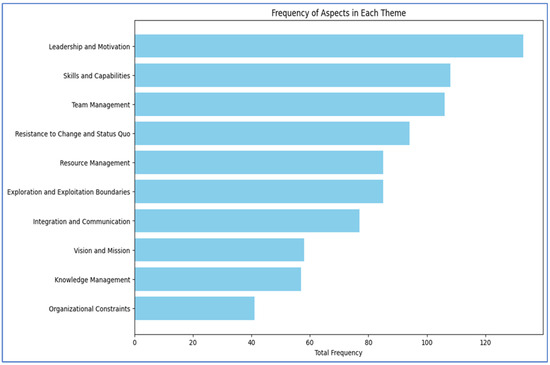
Figure 1.
Descriptive Analysis of Aspects and Themes.
To elaborate on frequency analysis, the high frequency of certain aspects has revealed complex priorities that participants highlighted related to ambidextrous innovation. The importance of leadership management, for example, highlights the vital role that leaders play in promoting innovation. Similarly, setting strategic direction, empowering teams, and facilitating resource allocation that supports both exploratory and exploitative activities all seem to be facilitated by effective leadership. This is consistent with ambidexterity theories that emphasize how important it is for leaders to strike a balance between innovation and operational stability. In a similar vein, the frequent reference to talents and skills suggests that teams must be flexible and always learning. In order to successfully traverse complex and changing contexts, the participants stressed the value of acquiring abilities that support both radical innovation and small-scale changes. Furthermore, topics like resource management and opposition to the status quo point toward conflicts inside the company while introducing novel procedures. Although time and money restrictions sometimes make testing difficult, efficient resource management is essential for fostering new ideas. On the other side, organizational inertia that may impede innovation attempts is reflected in resistance to change. Frequent boundary discussions highlight this conflict between exploration and exploitation, which shows the fine balance businesses must strike to maintain their competitiveness and promote an innovative environment. Overall, the results of this frequency analysis offer a thorough understanding of the elements that support or impede ambidextrous innovation in the context of our study, providing guidance for theoretical advancement as well as real-world implementation in the management of innovative organizational processes.
Finally, frequency analysis of ambidextrous innovation culture-related aspects shows that organizational cultural aspects, such as psychological safety, collaboration, leadership empowerment, and creative motivation, are essential for creating an innovative atmosphere. Employees view leadership support and a secure environment for exchanging ideas as essential to both exploration and exploitation operations, according to high-frequency elements like those mentioned in this study. While low-frequency aspects, such as bureaucratic barriers, and failure-apprehension, highlight structural and psychological obstacles that can impede ambidexterity. Mid-frequency factors, like strategic alignment and reward systems, reflect the operational components that support an innovative culture. In order to create a healthy culture where innovation can flourish, this research emphasizes the necessity for firms to address possible barriers and increase supportive components. Finally, since most of the participants were project managers, results also suggest that the number of aspects and frequency of each aspect are mostly contributed by the project managers, followed by the project team members and CEOs.
5. Positioning of Organizational Culture Themes into Ambidexterity
The developed themes suggest an important conclusion with regard to key organizational cultural factors and aspects that can potentially play an important role in promoting ambidextrous innovation. This study, based on data, literature, and input from both focus group discussions and interviews, has attempted to position such cultural themes within ambidexterity’s key paradox of explorative and exploitative innovation. In addition, the research has attempted to illustrate the way each theme addresses each paradox of ambidextrous innovation. Table 8 has attempted to illustrate such position of cultural themes into ambidextrous innovation.
Table 8.
Positioning of Theme.
6. Validations
The present research, in order to validate the results, has employed the rigorous method of qualitative research design. The study employed widely used qualitative data collection tools, including semi-structured interviews (Adeoye-Olatunde & Olenik, 2021). The collected data were analyzed by employing the open coding procedure of qualitative data analysis (Schmidt, 2004). As a result, aspects (code) of organizational culture were developed, which can be significant factors in helping organizations to implement ambidextrous innovation. This research yielded a total of 62 themes, as shown in Table 4. To further validate the findings, we conducted two sessions of focus group discussions. The focus group discussions were crucial in enhancing the reliability of our research results (O’Donnell et al., 2007). The first focus group discussion helped us to evaluate each of the aspects critically and develop a refined list of these aspects. The second session of the focus group discussion helped us develop themes of organizational culture by grouping the previously found aspects. Thus, through both interviews and focus group discussions, the reliability of research results was enhanced.
6.1. Reliability
Although various statistical measures are used in the quantitative research design to assess the reliability of data and data collection instruments, such as Cronbach’s Alpha (Tavakol & Dennick, 2011), reliability in the context of qualitative research refers to the fit between the outcome of data analysis and participants’ points of view on a particular case, event, and phenomena (Tobin & Begley, 2004). Corresponding to the guidelines provided by Carpenter and Suto (2008), the present research attempted to select participants first taking into account their knowledge, experience, and skills associated with the phenomena being explained (i.e., organizational culture and ambidextrous innovation) and by using theory-driven sampling, specifically grounded theory. The guidelines provided by Carpenter and Suto (2008) are related to addressing the potential issues from the participants’ point of view, where there may be a mismatch between the research phenomena and the participants’ profiles. Secondly, since we ensured the participants’ profile consistency by following Carpenter and Suto’s (2008) guidelines, we attempted to enhance the reliability of data interpretation by including the participants of the focus group who also participated in the interviews (Johnson & Waterfield, 2004).
6.2. Confirmability
Confirmability refers to the ability of research results to be verified by other researchers. The current research, in two focus group discussion sessions, had an academic expert as an active participant. The confirmation of academic and managerial experts with regard to aspects and themes suggests that confirmability criteria are met (Padgett, 2013).
6.3. Dependability
Dependability refers to the idea of replication, in which following the steps of the research will lead to the same conclusion (Padgett, 2013). The current study is comprehensive in providing details regarding the various research processes that were followed and undertaken in the study. Thus, it can be said that our research has effectively outlined the steps followed in the research process, which can be easily replicated.
6.4. Transferability
Transferability refers to the idea that the conclusion of the research can be applied effectively to settings other than the research’s own. The present research attempts to ensure the transferability of the current and existing study by collecting data from other research contexts. In particular, as highlighted, a research gap exists with regard to the Global South’s culture. The present study attempted to ensure the transferability of the existing study by collecting data from other cultures. Therefore, the research collected data from 4 participants working in the PMOs of different organizations from similar cultures, including the United Arab Emirates (UAE) and Kuwait (Padgett, 2013). Thus, our study fills the gaps in the body of knowledge on cultures in the Global South by integrating data from culturally different contexts, resulting in improved transferability.
6.5. Triangulations
Triangulation can be defined as the use of multiple methods and data sources to increase both the credibility and validity of research findings. The present study, in order to increase and enhance the credibility and validity of the research findings, employed multiple and different methods and data sources. The current research’s obvious data collection sources, including the interviews and two sessions of focus group discussion, have effectively enhanced the credibility and validity of the research findings (Bans-Akutey & Tiimub, 2021). However, apart from the interviews and focus group discussions, we have also employed both literature reviews and observations. The literature helped us to establish the triangulation by grounding the research findings in existing theories, which made the findings more valid and credible. In the same way, systematic observation confirms aspects and themes in real-world settings.
6.6. Inter-Rater Reliability
This research has already ensured the inter-rater reliability of the results of semi-structured interviews, as shown in Table 3. In this regard, our study employed two experts as raters to assess the existence of aspects in academic or theoretical literature (Gisev et al., 2013).
7. Discussion
Ambidextrous innovation is considered a key innovation framework, especially for project-driven organizations. However, an increasing amount of literature suggests that culture is a key driver for project-driven organizations to adopt, develop, and implement ambidextrous innovation (Grover et al., 2007). Ambidextrous innovation is particularly considered important as it tends to address the key concerns of projects, such as cost pressure, time, and competitive environment, by focusing on both short-term performance through exploitative innovation and sustaining long-term performance through explorative innovation (Binci et al., 2023). Although both structural and strategic aspects of ambidextrous innovations have been briefly and deeply examined in various settings, such as the technology industry and others, a growing body of research points to a gap in examining and assessing culture in project settings. As argued in the existing literature, culture provides comprehensive support that is necessary for ambidextrous innovation to take place and be implemented strategically (X. Zhang et al., 2021). Therefore, in order to fill this gap in the literature, the present research has attempted to explore the organizational culture in the project-driven organizational context. More specifically, the present study has attempted to explore key cultural aspects that can help project organizations in the successful adoption and implementation of ambidextrous innovation (Binci et al., 2023). This research, using a rigorous method involving both in-depth interviews and focus groups, has identified and developed the fundamental cultural issues that need to be addressed for effective project organizations’ ability to achieve short-term efficiency (exploitation) and long-term flexibility (exploration) (Grover et al., 2007; Binci et al., 2023). The results suggest that these cultural aspects and elements emanate from key cultural aspects, including team development, behaviors, leadership styles, willingness to adopt change, and openness to new ideas. Finally, the current research has attempted to group such aspects into dominant cultural themes that convey cohesive ideas with regard to culture and ambidextrous innovation (X. Zhang et al., 2021).
The findings of the current research on cultural aspects attempt to provide a comprehensive understanding of organizational culture, affecting innovation in general and ambidextrous innovation specifically. The developed cultural aspects address key cultural factors such as behavioral, psychological, motivational resource distribution, change management, and leadership. The breadth and depth of the cultural aspects provide a significant understanding of how an organization can approach innovation, especially ambidextrous innovation. The key cultural models, such as Schein’s organizational cultural model, can be used to further make sense of these cultural aspects. Finally, ambidextrous innovation is considered to be an innovation paradox. Thus, a culture that does not address the innovation paradox may find it very difficult to adopt and implement cultural aspects. Our research has specifically addressed the innovation paradox by focusing on issues that may hinder the ability of the organization to balance this paradox. Finally, the present study has attempted to position these aspects with regard to their application toward innovation and ambidextrous innovation in general and their application to explorative, exploitative, and balancing the innovation paradox.
This study, in order to develop a comprehensive understanding of the organizational culture for ambidextrous innovation, has attempted to group aspects into themes. The themes are cultural factors and variables, which are based on the key aspects identified in the current explorative study. Thus, it can be argued that the identified organizational culture themes may provide the structural understanding through which organizational culture can effectively shape both ambidextrous innovation and balance the paradox in project-driven organizations. These themes include Resource Management (Wassmer et al., 2017), Skills and Capabilities (O’reilly & Tushman, 2008), Leadership and Motivation (Nemanich & Vera, 2009), Resistance to Change and Status Quo (Kozcu & Özmen, 2021), Vision and Mission (Jansen et al., 2008), Organizational Constraints (Khan & Mir, 2019; Peng, 2019), Exploration and Exploitation Boundaries (Russo & Vurro, 2010), Team Management (Dean, 2022), Integration and Communication (Duwe, 2022), and Knowledge Management (Santoro et al., 2019; Özlen & Handzic, 2020).
The findings of the current research suggest that certain cultural themes are explorative innovation-leaning, which can empower organizations and teams to foster experimentation and risk-taking. These themes can include Knowledge Management (Santoro et al., 2019; Özlen & Handzic, 2020), Exploration and Exploitation Boundaries (Russo & Vurro, 2010), and Leadership and Motivation (Nemanich & Vera, 2009). These themes or cultural elements specifically encourage organizations to seek out new opportunities within the market and competitive landscape, test new and radical innovative ideas, and undertake incremental and iterative long-term transformation (Grover et al., 2007; Binci et al., 2023). However, certain other themes, such as Resource Management (Wassmer et al., 2017), Organizational Constraints (Khan & Mir, 2019; Peng, 2019), and Team Management (Dean, 2022) specifically emphasize efficiency in existing operations, and this addresses the element of the exploitative innovation. These themes address the organizations’ focus on optimizing existing operational processes and improving efficiency (Peng, 2019; Wassmer et al., 2017).
Finally, certain organizational cultural themes suggest both challenges and opportunities as far as positioning toward the innovation paradox is concerned. These themes include resource allocation, organizational constraints, exploration and exploitation boundaries, and integration and communication (Rialti et al., 2020; Rossi et al., 2020; Popadiuk et al., 2018). These themes, on the one hand, push the organization toward implementing the innovation paradox and, on the other hand, successfully balance such a paradox (Rossi et al., 2020). Thus, by analyzing these themes, organizations can develop more balanced strategies that foster both efficiency and adaptability, ensuring long-term sustainability while remaining competitive in fast-evolving markets.
8. Conclusions
Ambidextrous innovation has posed strategic opportunities for project-level organizations in developing and Global South countries, such as Saudi Arabia. Innovation is becoming a key criterion for projects in a variety of industries to become successful. Moreover, innovation not only helps projects to streamline their operations, cut operation costs, and enhance efficiency but it also helps in securing long-run business performance. Further, key stakeholder demands, with respect to the effectiveness and durability of the project, can also be ensured through innovation. However, having an effective framework for undertaking such innovation in these project organizations is a key challenge that needs attention. In this regard, ambidextrous innovation is a key framework, which is based on handling and undertaking both incremental (exploitative) and radical (exploratory) innovation at the same time. Such a balance between exploratory and explanatory (exploitative) innovation is positioned to be strategic in nature so that it can not only secure long-term advantages but also help strengthen the existing position in the market.
Although these benefits and advantages at the strategic level are associated with ambidextrous innovation, implementing it, especially at the project-level organization in cultures such as Saudi Arabia, is a challenging task that needs to be addressed. Project organizations are always constrained by various issues, including budgets, time, and strict stakeholder demands. Secondly, developing markets (i.e., Saudi Arabia) are facing major economic and social challenges and need innovations in various project-driven economic sectors, such as construction, energy, and others, to achieve the desired level of sustenance in their economic growth, which is no longer driven by traditional sectors, i.e., oil and gas. Further, the literature is highly limited with regard to both project-level organizations and cultures, such as Saudi Arabia, presenting a significant gap that needs to be addressed. Since the nature of the problem is comprehensive, an exploratory nature of research needs to be undertaken.
Although the existing literature has pointed out various key factors that need to be considered when implementing ambidextrous innovation in project-level organizations, organizational culture emerges as a key factor that must be manipulated for the successful and effective implementation of ambidextrous innovation. The present research’s aim was to undertake exploratory and qualitative research design to explore the key organizational culture elements and aspects that are highly necessary for implementing ambidextrous innovation. Since the literature with respect to ambidexterity in project-level organizations within Saudi Arabian culture is limited, it is pertinent to explore and understand the organizational culture aspects that could be critical to the implementation of ambidextrous innovation before making any empirical prediction.
The current research, using the action and grounded theory approach, has employed semi-structured interviews to collect comprehensive data from participants on key issues of the culture with respect to ambidextrous innovation. The data analysis of semi-structured interviews helped us to collect comprehensive data on the cultural aspects. The subsequent analysis, using open coding, also helped us to identify 62 key cultural aspects that could be necessary for the implementation of ambidextrous innovation. To enhance the reliability, validity, and triangulation of the research, two sessions of focus group discussions were conducted. The first session of the focus group aimed at critically evaluating and filtering the aspects of organizational culture, which resulted in 56 aspects. The second session of the focus group resulted in the grouping of aspects into theoretical themes, which together explained key cultural factors that need to be manipulated for the implementation of ambidextrous innovation. These themes are relevant for both project-level organizations and the culture of Global South countries such as Saudi Arabia.
8.1. Limitations of Research
The current research has undertaken a comprehensive research effort to understand cultural aspects and grouped them into themes, which can help us develop a culture that can adopt ambidextrous innovation. However, the present study also reports various limitations. A key limitation of this study is the lack of empirical evidence establishing the association between cultural aspects, key themes, and ambidextrous innovation, which needs to be developed urgently. Secondly, the present research relies on data collected from project-driven organizations in Saudi Arabia, which may limit the generalizability of the findings to other cultural or organizational contexts. Finally, although focus groups, interviews, and grounded theory for data collecting and analysis have provided us with rich insights, other methods, such as case studies, can also enhance the findings and overall conclusions, along with longitudinal data sources.
8.2. Future Research Recommendations
The current study offers three significant research recommendations. First, it allows future researchers to empirically test and validate the findings using quantitative research methods, including both survey and experimenting interventions. This type of research design will provide evidence for theoretical validation. Secondly, although aspects and themes have been developed, insight is still missing from the implementation part. Thus, future researchers are recommended to review the literature and develop interventions that can help implement each of the cultural themes. Finally, it would be interesting to triangulate the findings using other methods of qualitative research, including case studies.
Author Contributions
Conceptualization, M.A. and P.M.; methodology M.A., P.M. and A.A.; software, M.A.; val-idation, M.A. and P.M.; formal analysis, M.A.; investigation, M.A.; resources, M.A. and P.M.; data curation, M.A. and P.M.; writing—original draft preparation, M.A. and P.M.; writing—review and editing, M.A. and A.A.; visualization M.A. supervision, M.A., P.M., M.A.-S., J.P. and A.A.; project administration, M.A. and P.M.; funding acquisition, M.A. All authors have read and agreed to the published version of the manuscript.
Funding
This research received no external funding.
Institutional Review Board Statement
Not applicable.
Informed Consent Statement
Not applicable.
Data Availability Statement
The data presented in this study are available on request from the corresponding author due to privacy reasons.
Conflicts of Interest
The authors declare no conflict of interest.
References
- Adeoye-Olatunde, O. A., & Olenik, N. L. (2021). Research and scholarly methods: Semi-structured interviews. Journal of the American College of Clinical Pharmacy, 4(10), 1358–1367. [Google Scholar]
- Ahsan, K., Ho, M., & Khan, S. (2013). Recruiting project managers: A comparative analysis of competencies and recruitment signals from job advertisements. Project Management Journal, 44(5), 36–54. [Google Scholar] [CrossRef]
- Akpa, V. O., Asikhia, O. U., & Nneji, N. E. (2021). Organizational culture and organizational performance: A review of literature. International Journal of Advances in Engineering and Management, 3(1), 361–372. [Google Scholar]
- Alaloul, W. S., Alzubi, K. M., Malkawi, A. B., Al Salaheen, M., & Musarat, M. A. (2022). Productivity monitoring in building construction projects: A systematic review. Engineering, Construction and Architectural Management, 29(7), 2760–2785. [Google Scholar] [CrossRef]
- Ali, M. (2021). Imitation or innovation: To what extent do exploitative learning and exploratory learning foster imitation strategy and innovation strategy for sustained competitive advantage?✰. Technological Forecasting and Social Change, 165, 120527. [Google Scholar]
- AlSaied, M., & McLaughlin, P. (2024a). Ambidextrous innovation in project management: A systematic literature review. Administrative Sciences, 14(7), 151. [Google Scholar]
- AlSaied, M., & McLaughlin, P. (2024b). Organizational Culture enabler and inhibitor factors for ambidextrous innovation. Administrative Sciences, 14(9), 207. [Google Scholar] [CrossRef]
- Anderson, E. G., Jr., Chandrasekaran, A., Davis-Blake, A., & Parker, G. G. (2018). Managing distributed product development projects: Integration strategies for time-zone and language barriers. Information Systems Research, 29(1), 42–69. [Google Scholar]
- Atkinson, R. (1999). Project management: Cost, time and quality, two best guesses and a phenomenon, its time to accept other success criteria. International Journal of Project Management, 17(6), 337–342. [Google Scholar]
- Azeem, M., Salfi, N. A., & Dogar, A. H. (2012). Usage of NVivo software for qualitative data analysis. Academic Research International, 2(1), 262–266. [Google Scholar]
- Babbie, E. R. (2015). The practice of social research. Wadsworth Cengage Learning. [Google Scholar]
- Babu, A. J. G., & Suresh, N. (1996). Project management with time, cost, and quality considerations. European journal of operational research, 88(2), 320–327. [Google Scholar]
- Bagherzadeh, M., Markovic, S., & Bogers, M. (2019). Managing open innovation: A project-level perspective. IEEE Transactions on Engineering Management, 68(1), 301–316. [Google Scholar]
- Bailey, J. (2008). First steps in qualitative data analysis: Transcribing. Family practice, 25(2), 127–131. [Google Scholar] [PubMed]
- Bans-Akutey, A., & Tiimub, B. M. (2021). Triangulation in research. Academia Letters, 2, 1–6. [Google Scholar]
- Barjak, F., & Heimsch, F. (2023). Understanding the relationship between organizational culture and inbound open innovation. European Journal of Innovation Management, 26(3), 773–797. [Google Scholar]
- Batra, I. P. P., & Dhir, S. (2022). Organizational ambidexterity from the emerging market perspective: A review and research agenda. Thunderbird International Business Review, 64(5), 559–573. [Google Scholar] [CrossRef]
- Battaglia, D., Neirotti, P., & Paolucci, E. (2018). The role of R&D investments and export on SMEs’ growth: A domain ambidexterity perspective. Management Decision, 56(9), 1883–1903. [Google Scholar]
- Bazeley, P. (2009). Analysing qualitative data: More than ‘identifying themes’. Malaysian Journal of Qualitative Research, 2(2), 6–22. [Google Scholar]
- Binci, D., Cerruti, C., Masili, G., & Paternoster, C. (2023). Ambidexterity and Agile project management: An empirical framework. The TQM Journal, 35(5), 1275–1309. [Google Scholar] [CrossRef]
- Birkinshaw, J., Brannen, M. Y., & Tung, R. L. (2011). From a distance and generalizable to up close and grounded: Reclaiming a place for qualitative methods in international business research. Journal of International Business Studies, 42, 573–581. [Google Scholar]
- Birkinshaw, J., Zimmermann, A., & Raisch, S. (2016). How do firms adapt to discontinuous change? Bridging the dynamic capabilities and ambidexterity perspectives. California Management Review, 58(4), 36–58. [Google Scholar] [CrossRef]
- Bishop, S. K. (1999). Cross-functional project teams in functionally aligned organizations. Project Management Journal, 30(3), 6–12. [Google Scholar] [CrossRef]
- Bond-Barnard, T. J., Fletcher, L., & Steyn, H. (2018). Linking trust and collaboration in project teams to project management success. International Journal of Managing Projects in Business, 11(2), 432–457. [Google Scholar] [CrossRef]
- Braun, V., & Clarke, V. (2012). Thematic analysis. American Psychological Association. [Google Scholar]
- Braun, V., & Clarke, V. (2023). Toward good practice in thematic analysis: Avoiding common problems and be (com) ing a knowing researcher. International Journal of Transgender Health, 24(1), 1–6. [Google Scholar] [CrossRef]
- Braunerhjelm, P., & Thulin, P. (2023). Does innovation lead to firm growth? Explorative versus exploitative innovations. Applied Economics Letters, 30(9), 1179–1182. [Google Scholar] [CrossRef]
- Burford, L. D. (2012). Project management for flat organizations: Cost effective steps to achieving successful results. J. Ross Publishing. [Google Scholar]
- Büschgens, T., Bausch, A., & Balkin, D. B. (2013). Organizational culture and innovation: A meta-analytic review. Journal of Product Innovation Management, 30(4), 763–781. [Google Scholar] [CrossRef]
- Carpenter, C. M., & Suto, M. (2008). Qualitative research for occupational and physical therapists: A practical guide. Wiley. [Google Scholar]
- Chen, J., Taylor, J. E., & Comu, S. (2017). Assessing task mental workload in construction projects: A novel electroencephalography approach. Journal of Construction Engineering and Management, 143(8), 04017053. [Google Scholar] [CrossRef]
- Claes, M. T. (1999). Women, men and management styles. International Labour Review, 138, 431. [Google Scholar] [CrossRef]
- Clark, A., & Postel-Vinay, F. (2009). Job security and job protection. Oxford Economic Papers, 61(2), 207–239. [Google Scholar] [CrossRef]
- Clark, I. (1998). Competitive pressures and engineering process plant contracting. Human Resource Management Journal, 8(2), 14–28. [Google Scholar] [CrossRef]
- Conforto, E. C., Amaral, D. C., Da Silva, S. L., Di Felippo, A., & Kamikawachi, D. S. L. (2016). The agility construct on project management theory. International Journal of Project Management, 34(4), 660–674. [Google Scholar]
- Corbin, J. M., & Strauss, A. (1990). Grounded theory research: Procedures, canons, and evaluative criteria. Qualitative Sociology, 13(1), 3–21. [Google Scholar]
- Corbin, J., & Strauss, A. (2015). Basics of qualitative research (Vol. 14). Sage. [Google Scholar]
- Crawford, J. K., Cabanis-Brewin, J., Bigelow, D., James, C., & Pennypacker, S. (2004). Project management roles and responsibilities. Center for Business Practices. [Google Scholar]
- Crawford, P., & Bryce, P. (2003). Project monitoring and evaluation: A method for enhancing the efficiency and effectiveness of aid project implementation. International Journal of Project Management, 21(5), 363–373. [Google Scholar] [CrossRef]
- Deal, T. E., & Kennedy, A. A. (1983). Culture: A new look through old lenses. The Journal of Applied Behavioral Science, 19(4), 498–505. [Google Scholar]
- Dean, B. P. (2022). Developing and leading ambidextrous teams: A team-centric framework of ambidexterity in volatile environments. Journal of Change Management, 22(2), 120–146. [Google Scholar]
- Decuypere, A., & Schaufeli, W. (2021). Exploring the leadership–engagement nexus: A moderated meta-analysis and review of explaining mechanisms. International Journal of Environmental Research and Public Health, 18(16), 8592. [Google Scholar]
- Do, B. R., Yeh, P. W., & Madsen, J. (2016). Exploring the relationship among human resource flexibility, organizational innovation and adaptability culture. Chinese Management Studies, 10(4), 657–674. [Google Scholar] [CrossRef]
- Donate, M. J., & Guadamillas, F. (2010). The effect of organizational culture on knowledge management practices and innovation. Knowledge and Process Management, 17(2), 82–94. [Google Scholar]
- Dulewicz, V., & Higgs, M. (2000). Emotional intelligence—A review and evaluation study. Journal of Managerial Psychology, 15(4), 341–372. [Google Scholar]
- Dunbar, R., & Guillet de Monthoux, P. (1979). Fear of failure in project management. In Surviving failures: Patterns and cases of project mismanagement (pp. 199–217). Proceedings from the Stockholm Symposium on ‘Surviving Faures’. Almqvist & Wiksell International. [Google Scholar]
- Duwe, J. (2022). Success through ambidextrous communication. In Ambidextrous leadership: How leaders unlock innovation through ambidexterity (pp. 19–59). Springer. [Google Scholar]
- Eloranta, E., Hameri, A. P., & Lahti, M. (2001). Improved project management through improved document management. Computers in Industry, 45, 231–243. [Google Scholar]
- Ennis, C. D., & Chen, S. (2012). Interviews and focus groups. In Research methods in physical education and youth sport (pp. 217–236). Routledge. [Google Scholar]
- Eriksson, P. E. (2013). Exploration and exploitation in project-based organizations: Development and diffusion of knowledge at different organizational levels in construction companies. International Journal of Project Management, 31(3), 333–341. [Google Scholar]
- Ershadi, M. J., Edrisabadi, R., & Shakouri, A. (2020). Strategic alignment of project management with health, safety and environmental management. Built Environment Project and Asset Management, 10(1), 78–93. [Google Scholar]
- Foreman, K. (1998). Vision and mission. In Strategic management in schools and colleges (pp. 18–31). Paul Chapman Publishing. [Google Scholar]
- Francis, F., Zirra, C. T. O., & Mambula, C. J. (2020). Reward system as a strategy to enhance employees performance in an organization. Archives of Business Review, 8(6), 156–164. [Google Scholar] [CrossRef]
- Gertler, P. J., Martinez, S., Premand, P., Rawlings, L. B., & Vermeersch, C. M. (2016). Impact evaluation in practice. World Bank Publications. [Google Scholar]
- Ghiselli, E. E., & Siegel, J. P. (1972). Leadership and managerial success in tall and flat organization structures. Personnel Psychology, 25(4), 617–624. [Google Scholar]
- Gibson, C., & Mumford, M. D. (2013). Evaluation, criticism, and creativity: Criticism content and effects on creative problem solving. Psychology of Aesthetics, Creativity, and the Arts, 7(4), 314. [Google Scholar]
- Gillard, S. (2009). Soft skills and technical expertise of effective project managers. Issues in Informing Science & Information Technology, 6. [Google Scholar]
- Gisev, N., Bell, J. S., & Chen, T. F. (2013). Interrater agreement and interrater reliability: Key concepts, approaches, and applications. Research in Social and Administrative Pharmacy, 9(3), 330–338. [Google Scholar]
- Glaser, B., & Strauss, A. (2017). Discovery of grounded theory: Strategies for qualitative research. Routledge. [Google Scholar]
- Golini, R., & Landoni, P. (2014). International development projects by non-governmental organizations: An evaluation of the need for specific project management and appraisal tools. Impact Assessment and Project Appraisal, 32(2), 121–135. [Google Scholar]
- Goulding, C. (1998). Grounded theory: The missing methodology on the interpretivist agenda. Qualitative Market Research: An International Journal, 1(1), 50–57. [Google Scholar]
- Grover, V., Purvis, R. L., & Segars, A. H. (2007). Exploring ambidextrous innovation tendencies in the adoption of telecommunications technologies. IEEE Transactions on Engineering Management, 54(2), 268–285. [Google Scholar]
- Gupta, A. K., & Gupta, N. (2019). Innovation and culture as a dynamic capability for firm performance: A study from emerging markets. Global Journal of Flexible Systems Management, 20(4), 323–336. [Google Scholar]
- Hall, D. T., Otazo, K. L., & Hollenbeck, G. P. (1999). Behind closed doors: What really happens in executive coaching. Organizational Dynamics, 27(3), 39–53. [Google Scholar]
- Haverila, M. J., & Haverila, K. C. (2019). Customer centric success measures in project management. International Journal of Business Excellence, 19(2), 203–222. [Google Scholar]
- Heckman, J. J., & Corbin, C. O. (2016). Capabilities and skills. Journal of Human Development and Capabilities, 17(3), 342–359. [Google Scholar] [PubMed]
- Heidhues, P., Kőszegi, B., & Murooka, T. (2016). Exploitative innovation. American Economic Journal: Microeconomics, 8(1), 1–23. [Google Scholar]
- Hejna, W. J., & Hosking, J. E. (2004). Five critical strategies for achieving operational efficiency. Journal of Healthcare Management, 49(5), 289–292. [Google Scholar]
- Henderson, J. C., & Venkatraman, H. (1999). Strategic alignment: Leveraging information technology for transforming organizations. IBM Systems Journal, 38(2.3), 472–484. [Google Scholar]
- Hennink, M., Hutter, I., & Bailey, A. (2020). Qualitative research methods. Sage. [Google Scholar]
- Hisrich, R. D. (1990). Entrepreneurship/intrapreneurship. American Psychologist, 45(2), 209. [Google Scholar]
- Hogan, S. J., & Coote, L. V. (2014). Organizational culture, innovation, and performance: A test of Schein’s model. Journal of Business Research, 67(8), 1609–1621. [Google Scholar]
- Huizingh, E. K. (2011). Open innovation: State of the art and future perspectives. Technovation, 31(1), 2–9. [Google Scholar]
- Ibraimova, S. S., Seisenbaeva, Z. M., Karyakin, A. M., Genkin, E. V., & Velikorossov, V. V. (2019, February 13–15). Teamwork within agile project management technology. International Conference Industrial Technology and Engineering (pp. 235–237), Melbourne, Australia. [Google Scholar]
- Jakobsen, B. (2024). Working towards unclear goals: Exploring the concept of social sustainability in a city development project in Oslo, Norway [Master’s Thesis, University of Oslo]. [Google Scholar]
- Jansen, J. J., George, G., Van den Bosch, F. A., & Volberda, H. W. (2008). Senior team attributes and organizational ambidexterity: The moderating role of transformational leadership. Journal of Management Studies, 45(5), 982–1007. [Google Scholar]
- Jansen, J. J., Van den Bosch, F. A., & Volberda, H. W. (2005). Exploratory innovation, exploitative innovation, and ambidexterity: The impact of environmental and organizational antecedents. Schmalenbach Business Review, 57, 351–363. [Google Scholar]
- Johnson, R., & Waterfield, J. (2004). Making words count: The value of qualitative research. Physiotherapy Research International, 9(3), 121–131. [Google Scholar]
- Jost, A., Lorenz, T., & Mischke, G. (2005, July 17–21). Modeling the innovation-pipeline. System Dynamics Society Conference, Massachusetts Institute of Technology, Sloan School of Management, Cambridge, MA, USA. [Google Scholar]
- Khan, S. J., & Mir, A. A. (2019). Ambidextrous culture, contextual ambidexterity and new product innovations: The role of organizational slack and environmental factors. Business Strategy and the Environment, 28(4), 652–663. [Google Scholar]
- King, N., & Brooks, J. (2018). Thematic analysis in organisational research. In The SAGE handbook of qualitative business and management research methods: Methods and challenges (pp. 219–236). Sage. [Google Scholar]
- Kozarkiewicz, A. (2020). General and specific: The impact of digital transformation on project processes and management methods. Foundations of Management, 12(1), 237–248. [Google Scholar]
- Kozcu, G. Y., & Özmen, Ö. (2021). Effects of transformational leadership on organizational change management and organizational ambidexterity. Global Journal of Economics and Business Studies, 10(20), 15–25. [Google Scholar]
- Kraus, S., Jones, P., Kailer, N., Weinmann, A., Chaparro-Banegas, N., & Roig-Tierno, N. (2021). Digital transformation: An overview of the current state of the art of research. Sage Open, 11(3), 21582440211047576. [Google Scholar]
- Laframboise, D., Nelson, R. L., & Schmaltz, J. (2002). Managing resistance to change in workplace accommodation projects. Journal of Facilities Management, 1(4), 306–321. [Google Scholar]
- Larsson, L., & Larsson, J. (2018). Sustainable development in project-based industries–supporting the realization of explorative innovation. Sustainability, 10(3), 683. [Google Scholar] [CrossRef]
- Le, P. B. (2023). Determinants of frugal innovation for firms in emerging markets: The roles of leadership, knowledge sharing and collaborative culture. International Journal of Emerging Markets, 18(9), 3334–3353. [Google Scholar]
- Lee, C. Y., & Johnson, A. L. (2013). Operational efficiency. In Handbook of industrial and systems engineering, second edition industrial innovation (pp. 17–44). John Wiley & Sons. [Google Scholar]
- Legge, K., & Legge, K. (1995). What is human resource management? (pp. 62–95) Macmillan Education UK. [Google Scholar]
- Lewicki, R. J. (2000). Trust, trust development, and trust repair. In M. Deutsch, & P. T. Coleman (Eds.), The handbook of conflict resolution: Theory and practice (pp. 86–107). Jossey-Bass. [Google Scholar]
- Lin, C., & Chang, C. C. (2015). A patent-based study of the relationships among technological portfolio, ambidextrous innovation, and firm performance. Technology Analysis & Strategic Management, 27(10), 1193–1211. [Google Scholar]
- Locke, K. (2001). Grounded theory in management research. Sage. [Google Scholar]
- Ma, J., Zhou, X., Chen, R., & Dong, X. (2019). Does ambidextrous leadership motivate work crafting? International Journal of Hospitality Management, 77, 159–168. [Google Scholar]
- Majid, M. A. A., Othman, M., Mohamad, S. F., Lim, S. A. H., & Yusof, A. (2017). Piloting for interviews in qualitative research: Operationalization and lessons learnt. International Journal of Academic Research in Business and Social Sciences, 7(4), 1073–1080. [Google Scholar] [CrossRef] [PubMed]
- Mårtensson, M. (2000). A critical review of knowledge management as a management tool. Journal of Knowledge Management, 4(3), 204–216. [Google Scholar]
- Miles, M. B. (1994). Qualitative data analysis: An expanded sourcebook (Version 2). SAGE Publications. [Google Scholar]
- Mohiya, M., & Sulphey, M. M. (2021). Do Saudi Arabian leaders exhibit ambidextrous leadership: A qualitative examination. Sage Open, 11(4), 21582440211054496. [Google Scholar]
- Montes-Guerra, M. I., Gimena, F. N., Pérez-Ezcurdia, M. A., & Díez-Silva, H. M. (2014). The influence of monitoring and control on project management success. International Journal of Construction Project Management, 6(2), 163–184. [Google Scholar]
- Morgan, D. L. (1996). Focus groups. Annual Review of Sociology, 22(1), 129–152. [Google Scholar]
- Mrugalska, B., & Ahmed, J. (2021). Organizational agility in industry 4.0: A systematic literature review. Sustainability, 13(15), 8272. [Google Scholar] [CrossRef]
- Muhammad, F., Ikram, A., Jafri, S. K., & Naveed, K. (2020). Product innovations through ambidextrous organizational culture with mediating effect of contextual ambidexterity: An empirical study of it and telecom firms. Journal of Open Innovation: Technology, Market, and Complexity, 7(1), 9. [Google Scholar]
- Murray, C. E. (2009). Diffusion of innovation theory: Abridge for the research-practice gap in counseling. Journal of Counseling & Development, 87(1), 108–116. [Google Scholar] [CrossRef]
- Müller, R., & Turner, J. R. (2007). Matching the project manager’s leadership style to project type. International Journal of Project Management, 25, 21–32. [Google Scholar] [CrossRef]
- Nauman, S., Khan, A. M., & Ehsan, N. (2010). Patterns of empowerment and leadership style in project environment. International Journal of Project Management, 28(7), 638–649. [Google Scholar]
- Nedbal, D., Auinger, A., & Hochmeier, A. (2013). Addressing transparency, communication and participation in Enterprise 2.0 projects. Procedia Technology, 9, 676–686. [Google Scholar]
- Nemanich, L. A., & Vera, D. (2009). Transformational leadership and ambidexterity in the context of an acquisition. The Leadership Quarterly, 20(1), 19–33. [Google Scholar]
- Newman, A., Donohue, R., & Eva, N. (2017). Psychological safety: A systematic review of the literature. Human Resource Management Review, 27(3), 521–535. [Google Scholar]
- Obradovic, V., Jovanovic, P., Petrovic, D., Mihic, M., & Mitrovic, Z. (2013). Project managers’ emotional intelligence–a ticket to success. Procedia-Social and Behavioral Sciences, 74, 274–284. [Google Scholar] [CrossRef]
- O’connor, G. C. (1998). Market learning and radical innovation: A cross case comparison of eight radical innovation projects. Journal of Product Innovation Management: An International Publication of the Product Development & Management Association, 15(2), 151–166. [Google Scholar]
- O’Donnell, A. B., Lutfey, K. E., Marceau, L. D., & McKinlay, J. B. (2007). Using focus groups to improve the validity of cross-national survey research: A study of physician decision making. Qualitative Health Research, 17(7), 971–981. [Google Scholar] [CrossRef]
- Ogbu, J. U. (1992). Understanding cultural diversity and learning. Educational Researcher, 21(8), 5–14. [Google Scholar] [CrossRef]
- O’reilly, C. A., III, & Tushman, M. L. (2008). Ambidexterity as a dynamic capability: Resolving the innovator’s dilemma. Research in Organizational Behavior, 28, 185–206. [Google Scholar]
- Ouchi, W. G., & Wilkins, A. L. (1985). Organizational culture. Annual review of Sociology, 11(1), 457–483. [Google Scholar]
- Özlen, M. K., & Handzic, M. (2020). Ambidextrous organisations from the perspective of employed knowledge management strategies: Evidence from Turkey. Journal of Information & Knowledge Management, 19(2), 2050003. [Google Scholar]
- Padgett, D. K. (2013). Qualitative research. In Encyclopedia of social work. Oxford University Press. [Google Scholar]
- Park, J., & Park, D. H. (2019). A sustainable project management strategy against multitasking situations from the viewpoints of cognitive mechanism and motivational belief. Sustainability, 11(24), 6912. [Google Scholar] [CrossRef]
- Parker, S. K., & Skitmore, M. (2005). Project management turnover: Causes and effects on project performance. International Journal of Project Management, 23(3), 205–214. [Google Scholar]
- Pathiranage, Y. L., Jayatilake, L. V., & Abeysekera, R. (2020). A literature review on organizational culture towards corporate performance. International Journal of Management, Accounting & Economics, 7(9), 522–544. [Google Scholar]
- Peng, H. (2019). Organizational ambidexterity in public non-profit organizations: Interest and limits. Management Decision, 57(1), 248–261. [Google Scholar]
- Pereira, V., Temouri, Y., Arslan, A., Degbey, W. Y., & Tarba, S. (2022). Ambidextrous organizations in and from emerging markets—Editors’ special issue introduction. Thunderbird International Business Review, 64(5), 101762. [Google Scholar] [CrossRef]
- Pindek, S., & Spector, P. E. (2016). Organizational constraints: A meta-analysis of a major stressor. Work & Stress, 30(1), 7–25. [Google Scholar]
- Pisello, A. L., Pigliautile, I., Andargie, M., Berger, C., Bluyssen, P. M., Carlucci, S., Chinazzo, G., Belafi, Z. D., Dong, B., Favero, M., & Ghahramani, A. (2021). Test rooms to study human comfort in buildings: A review of controlled experiments and facilities. Renewable and Sustainable Energy Reviews, 149, 111359. [Google Scholar]
- Pollack-Johnson, B., & Liberatore, M. J. (2006). Incorporating quality considerations into project time/cost tradeoff analysis and decision making. IEEE Transactions on Engineering Management, 53(4), 534–542. [Google Scholar] [CrossRef]
- Popadiuk, S., Luz, A. R. S., & Kretschmer, C. (2018). Dynamic capabilities and ambidexterity: How are these concepts related? Revista de Administração Contemporânea, 22(5), 639–660. [Google Scholar]
- Powell, R. A., & Single, H. M. (1996). Focus groups. International Journal for Quality in Health Care, 8(5), 499–504. [Google Scholar] [CrossRef] [PubMed]
- Raith, F., Richter, I., & Lindermeier, R. (2017, July 12–14). How project-management-tools are used in agile practice: Benefits, drawbacks and potentials. Proceedings of the 21st International Database Engineering & Applications Symposium (pp. 30–39), Bristol, UK. [Google Scholar]
- Rappaport, A. (2005). The economics of short-term performance obsession. Financial Analysts Journal, 61(3), 65–79. [Google Scholar]
- Rashid, H. (2010). Human factors effects in helicopter maintenance: Proactive monitoring and controlling techniques. Cranfield University. [Google Scholar]
- Rialti, R., Marzi, G., Caputo, A., & Mayah, K. A. (2020). Achieving strategic flexibility in the era of big data: The importance of knowledge management and ambidexterity. Management Decision, 58(8), 1585–1600. [Google Scholar]
- Rossi, M., Festa, G., Fiano, F., & Giacobbe, R. (2020). To invest or to harvest? Corporate venture capital ambidexterity for exploiting/exploring innovation in technological business. Business Process Management Journal, 26(5), 1157–1181. [Google Scholar] [CrossRef]
- Roßnagel, C. S. (2017). Leadership and motivation. In Leadership today: Practices for personal and professional performance (pp. 217–228). Springer. [Google Scholar]
- Russo, A., & Vurro, C. (2010). Cross-boundary ambidexterity: Balancing exploration and exploitation in the fuel cell industry. European Management Review, 7(1), 30–45. [Google Scholar] [CrossRef]
- Sackmann, S. A. (1991). Uncovering culture in organizations. The Journal of Applied Behavioral Science, 27(3), 295–317. [Google Scholar]
- Salmasnia, A., Mokhtari, H., & Nakhai Kamal Abadi, I. (2012). A robust scheduling of projects with time, cost, and quality considerations. The International Journal of Advanced Manufacturing Technology, 60, 631–642. [Google Scholar]
- Santoro, G., Thrassou, A., Bresciani, S., & Del Giudice, M. (2019). Do knowledge management and dynamic capabilities affect ambidextrous entrepreneurial intensity and firms’ performance? IEEE Transactions on Engineering Management, 68(2), 378–386. [Google Scholar]
- Schein, E. H. (2010). Organizational culture and leadership (Vol. 2). John Wiley & Sons. [Google Scholar]
- Schmidt, C. (2004). The analysis of semi-structured interviews. In A companion to qualitative research (p. 253). Sage. [Google Scholar]
- Scott-Young, C., & Samson, D. (2008). Project success and project team management: Evidence from capital projects in the process industries. Journal of Operations Management, 26(6), 749–766. [Google Scholar]
- Selden, L., & MacMillan, I. C. (2006). Manage customer-centric innovation-systematically. Harvard Business Review, 84(4), 108. [Google Scholar] [PubMed]
- Shaout, A., & Yousif, M. K. (2014). Performance evaluation–Methods and techniques survey. International Journal of Computer and Information Technology, 3(5), 966–979. [Google Scholar]
- Sheehan, M., Garavan, T. N., & Morley, M. J. (2023). The microfoundations of dynamic capabilities for incremental and radical innovation in knowledge-intensive businesses. British Journal of Management, 34(1), 220–240. [Google Scholar]
- Shen, Y., Tuuli, M. M., Xia, B., Koh, T. Y., & Rowlinson, S. (2015). Toward a model for forming psychological safety climate in construction project management. International Journal of Project Management, 33(1), 223–235. [Google Scholar]
- Shenhar, A. J. (1998). From theory to practice: Toward a typology of project-management styles. IEEE Transactions on Engineering Management, 45(1), 33–48. [Google Scholar]
- Shenhar, A. J. (2004). Strategic Project Leadership® Toward a strategic approach to project management. R&D Management, 34(5), 569–578. [Google Scholar]
- Sijbom, R. B., Janssen, O., & Van Yperen, N. W. (2016). Leaders’ achievement goals and their integrative management of creative ideas voiced by subordinates or superiors. European Journal of Social Psychology, 46(6), 732–745. [Google Scholar]
- Silver, W. S., & Mitchell, T. R. (1990). The status quo tendency in decision making. Organizational Dynamics, 18(4), 34–46. [Google Scholar]
- Silverman, D. (2006). Interpreting qualitative data: Methods for analyzing talk, text and interaction. Sage. [Google Scholar]
- Simeoni, F., Brunetti, F., Mion, G., & Baratta, R. (2020). Ambidextrous organizations for sustainable development: The case of fair-trade systems. Journal of Business Research, 112, 549–560. [Google Scholar]
- Smith, B. G. (2012). Communication integration: An analysis of context and conditions. Public Relations Review, 38(4), 600–608. [Google Scholar]
- Stokes, D., & Bergin, R. (2006). Methodology or “methodolatry”? An evaluation of focus groups and depth interviews. Qualitative market research: An international Journal, 9(1), 26–37. [Google Scholar]
- Strauss, A. (1987). Qualitative analysis for social scientists. Cambridge University Press. [Google Scholar]
- Strauss, A., & Corbin, J. (1998). Basics of qualitative research: Procedures and technique for developing grounded theory. Sage. [Google Scholar]
- Tampoe, M., & Thurloway, L. (1993). Project management: The use and abuse of techniques and teams (reflections from a motivation and environment study). International Journal of Project Management, 11(4), 245–250. [Google Scholar]
- Tavakol, M., & Dennick, R. (2011). Making sense of Cronbach’s alpha. International Journal of Medical Education, 2, 53. [Google Scholar]
- Terzieva, M. (2014). Project knowledge management: How organizations learn from experience. Procedia Technology, 16, 1086–1095. [Google Scholar]
- Tobin, G. A., & Begley, C. M. (2004). Methodological rigour within a qualitative framework. Journal of Advanced Nursing, 48(4), 388–396. [Google Scholar] [PubMed]
- Tsai, M. C., & Wang, C. (2017). Linking service innovation to firm performance: The roles of ambidextrous innovation and market orientation capability. Chinese Management Studies, 11(4), 730–750. [Google Scholar]
- Turner, M., & Lingard, H. (2016). Improving workers’ health in project-based work: Job security considerations. International Journal of Managing Projects in Business, 9(3), 606–623. [Google Scholar]
- Turner, N., Maylor, H., & Swart, J. (2015). Ambidexterity in projects: An intellectual capital perspective. International Journal of Project Management, 33(1), 177–188. [Google Scholar]
- Turner, N., Swart, J., Maylor, H., & Antonacopoulou, E. (2016). Making it happen: How managerial actions enable project-based ambidexterity. Management Learning, 47(2), 199–222. [Google Scholar]
- Vygotsky, L. (2011). Interaction between learning and development (pp. 79–91). Linköpings Universitet. [Google Scholar]
- Walker, D., & Myrick, F. (2006). Grounded theory: An exploration of process and procedure. Qualitative Health Research, 16(4), 547–559. [Google Scholar]
- Wang, C. L., & Rafiq, M. (2014). Ambidextrous organizational culture, Contextual ambidexterity and new product innovation: A comparative study of UK and Chinese high-tech Firms. British Journal of Management, 25(1), 58–76. [Google Scholar]
- Wang, S., & Noe, R. A. (2010). Knowledge sharing: A review and directions for future research. Human Resource Management Review, 20(2), 115–131. [Google Scholar]
- Wang, Y., Farag, H., & Ahmad, W. (2021). Corporate culture and innovation: A tale from an emerging market. British Journal of Management, 32(4), 1121–1140. [Google Scholar]
- Wassmer, U., Li, S., & Madhok, A. (2017). Resource ambidexterity through alliance portfolios and firm performance. Strategic Management Journal, 38(2), 384–394. [Google Scholar]
- Watson, G. (1971). Resistance to change. American Behavioral Scientist, 14(5), 745–766. [Google Scholar]
- Weber, M. (2023). Bureaucracy. In Social theory re-wired (pp. 271–276). Routledge. [Google Scholar]
- Weston, C., Gandell, T., Beauchamp, J., McAlpine, L., Wiseman, C., & Beauchamp, C. (2001). Analyzing interview data: The development and evolution of a coding system. Qualitative Sociology, 24, 381–400. [Google Scholar]
- Xie, X., & Wang, H. (2021). How to bridge the gap between innovation niches and exploratory and exploitative innovations in open innovation ecosystems? Journal of Business Research, 124, 299–311. [Google Scholar]
- Yang, M., Wang, J., & Zhang, X. (2021). Boundary-spanning search and sustainable competitive advantage: The mediating roles of exploratory and exploitative innovations. Journal of Business Research, 127, 290–299. [Google Scholar]
- Zein, O. (2016). Culture and project management: Managing diversity in multicultural projects. Routledge. [Google Scholar]
- Zhang, W., Zeng, X., Liang, H., Xue, Y., & Cao, X. (2023). Understanding how organizational culture affects innovation performance: A management context perspective. Sustainability, 15(8), 6644. [Google Scholar] [CrossRef]
- Zhang, X., Le, Y., Liu, Y., & Chen, X. (2021). Fostering ambidextrous innovation strategies in large infrastructure projects: A team heterogeneity perspective. IEEE Transactions on Engineering Management, 70, 2257–2267. [Google Scholar]
- Zhang, Z., & Luo, T. (2020). Network capital, exploitative and exploratory innovations—From the perspective of network dynamics. Technological Forecasting and Social Change, 152, 119910. [Google Scholar] [CrossRef]
- Zhao, K., Hua, J., Yan, L., Zhang, Q., Xu, H., & Yang, C. (2019, August 4–8). A unified framework for marketing budget allocation. Proceedings of the 25th ACM SIGKDD International Conference on Knowledge Discovery & Data Mining (pp. 1820–1830), Anchorage, AK, USA. [Google Scholar]
- Zhou, Z., Zang, Y., Luo, X., Lan, Y., & Xue, X. (2013). Technology innovation development strategy on agricultural aviation industry for plant protection in China. Transactions of the Chinese Society of Agricultural Engineering, 29(24), 1–10. [Google Scholar]
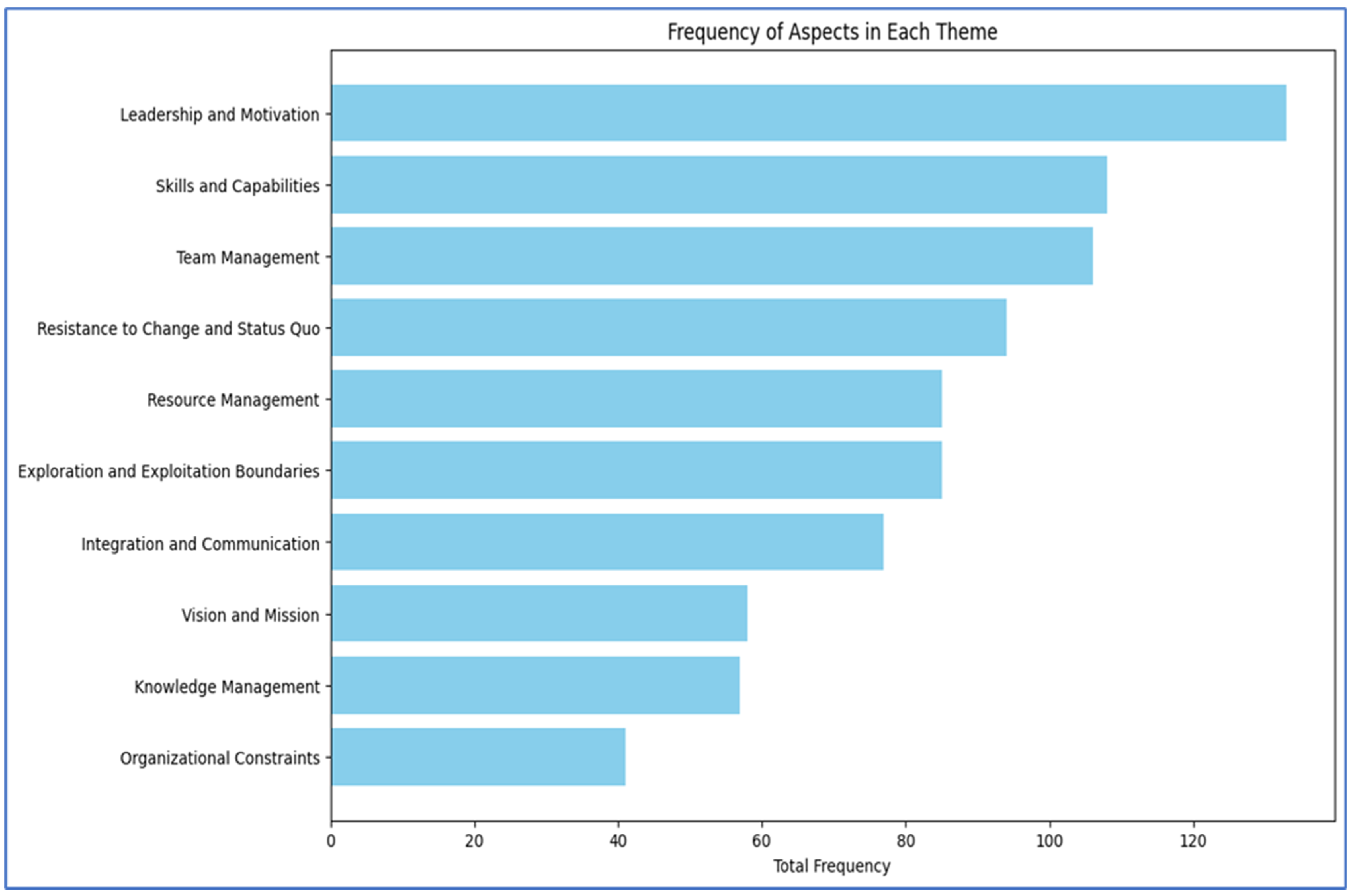
Disclaimer/Publisher’s Note: The statements, opinions and data contained in all publications are solely those of the individual author(s) and contributor(s) and not of MDPI and/or the editor(s). MDPI and/or the editor(s) disclaim responsibility for any injury to people or property resulting from any ideas, methods, instructions or products referred to in the content. |
© 2025 by the authors. Licensee MDPI, Basel, Switzerland. This article is an open access article distributed under the terms and conditions of the Creative Commons Attribution (CC BY) license (https://creativecommons.org/licenses/by/4.0/).