



Environments, Volume 9, Issue 5 (May 2022) – 11 articles
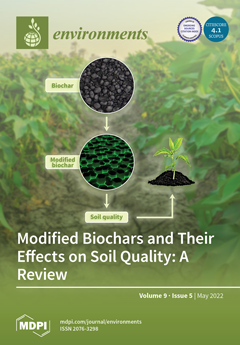
Cover Story (view full-size image):
BC (biochar) can be modified by metal ions, alkali, oxidizing agents, acid, steam, gas purging, and carbonaceous materials. The selection of modification methods depends on the application fields. BC engineering allows achieving the required BC properties that are optimized for specific purposes. BC modification leads to harnessing the favorable features of BC to enhance its efficiency. The chemical and physical properties of modified BCs greatly depend on the type of modification reagents. Modified BC is also used to improve soil quality and performance for better plant growth and productivity. Soil amendment with modified BC enhances the nutrient uptake, soil organic matter, hydraulic conductivity, and microbial activities, all of which reduces dependency on chemical fertilizers. View this paper
- Issues are regarded as officially published after their release is announced to the table of contents alert mailing list.
- You may sign up for e-mail alerts to receive table of contents of newly released issues.
- PDF is the official format for papers published in both, html and pdf forms. To view the papers in pdf format, click on the "PDF Full-text" link, and use the free Adobe Reader to open them.
Previous Issue
Next Issue
