Community-Level Phenotypic Adaptations of Small Mammals Under Rain-Shadow Dynamics in Baima Snow Mountain, Yunnan


Simple Summary
Abstract
1. Introduction
2. Materials and Methods
2.1. Study Area
2.2. Small Mammal Sampling
2.3. Community-Level Trait Variables
2.4. Environmental Variables and Model Fitting
2.5. Impacts of Changes in Species Composition on Communities’ Trait Patterns
3. Results
3.1. Overview of Species Composition
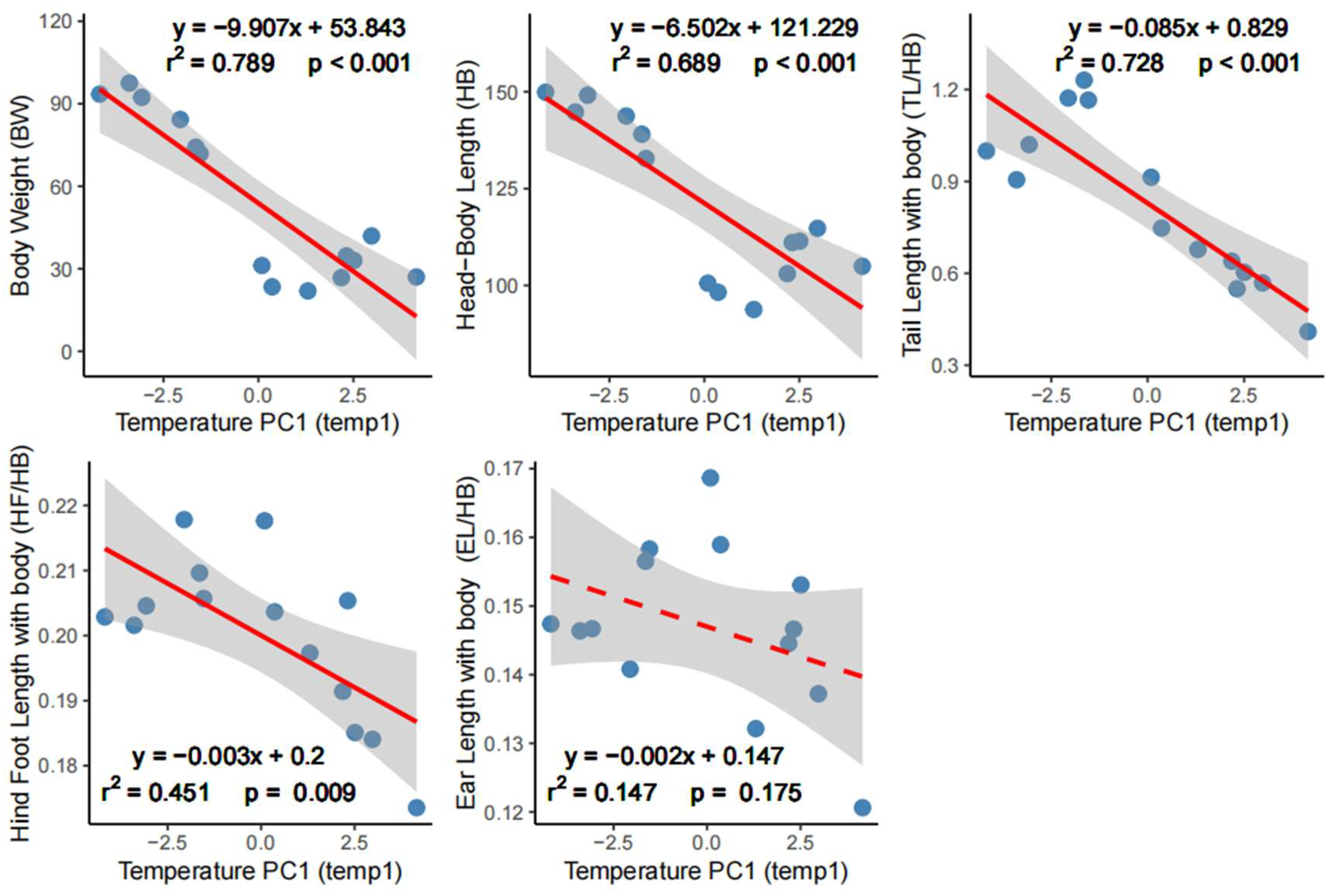
3.2. Relations Between Temperature and Body Size and Appendages
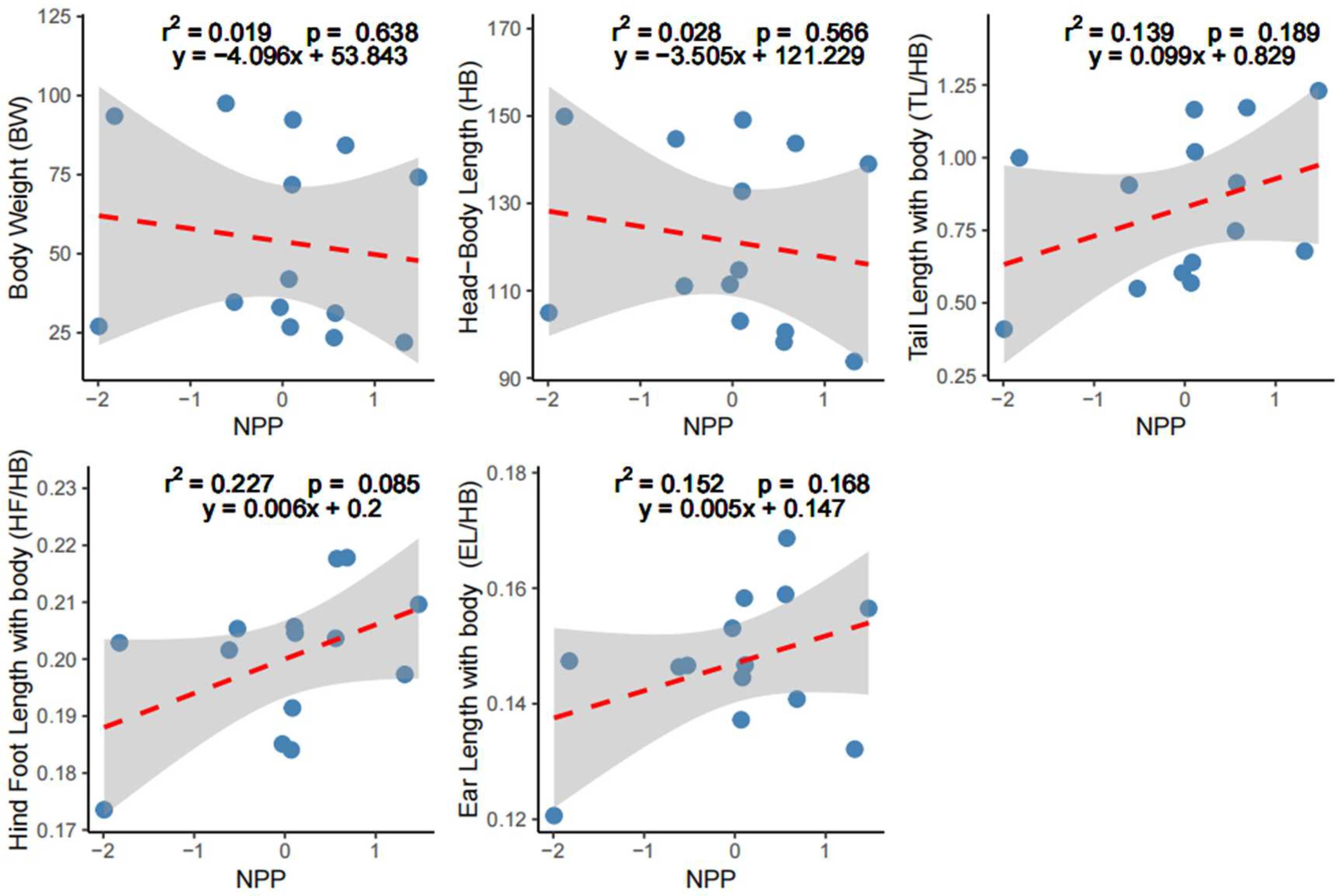
3.3. Relations Between Productivity and Body Size and Appendages
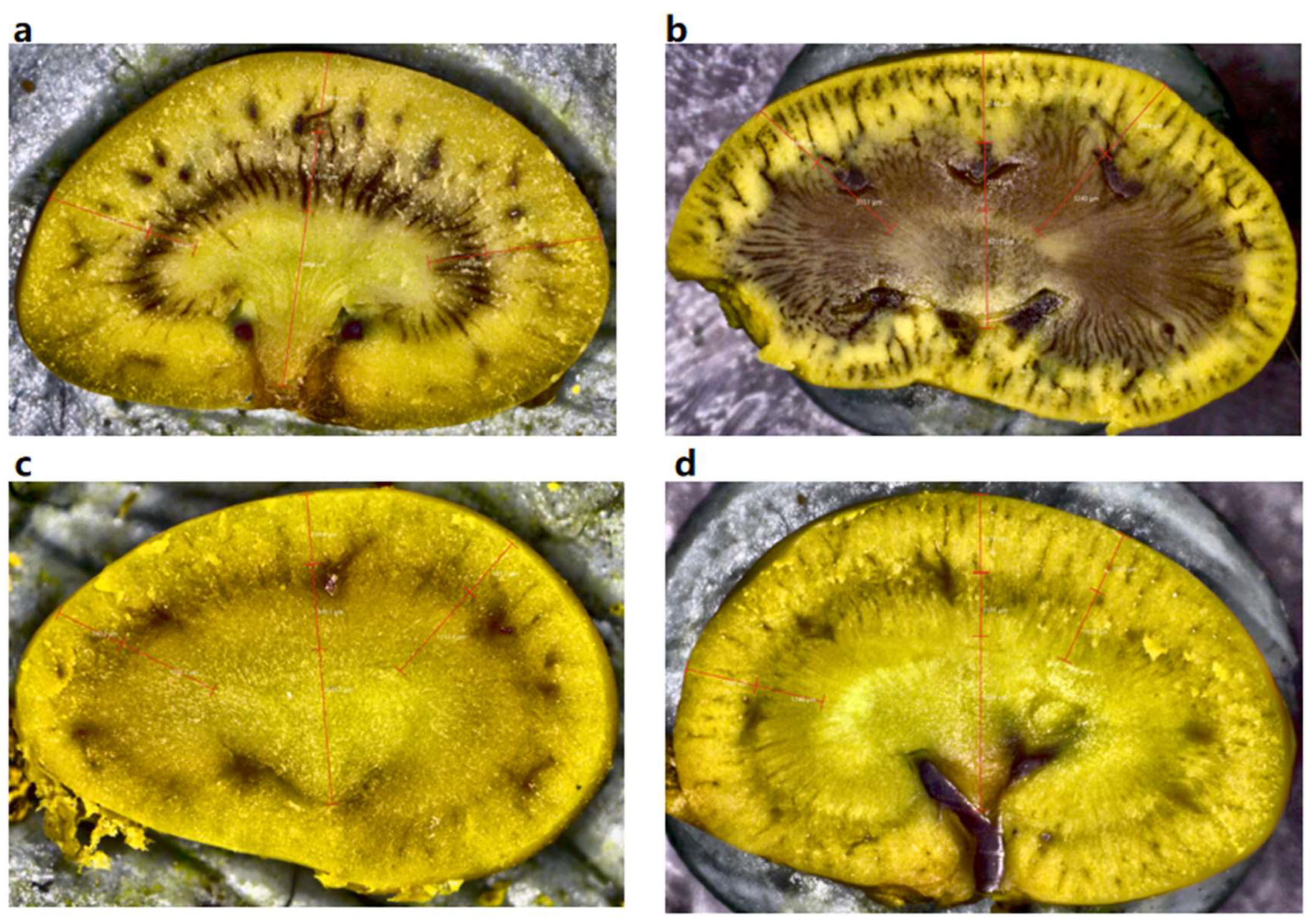
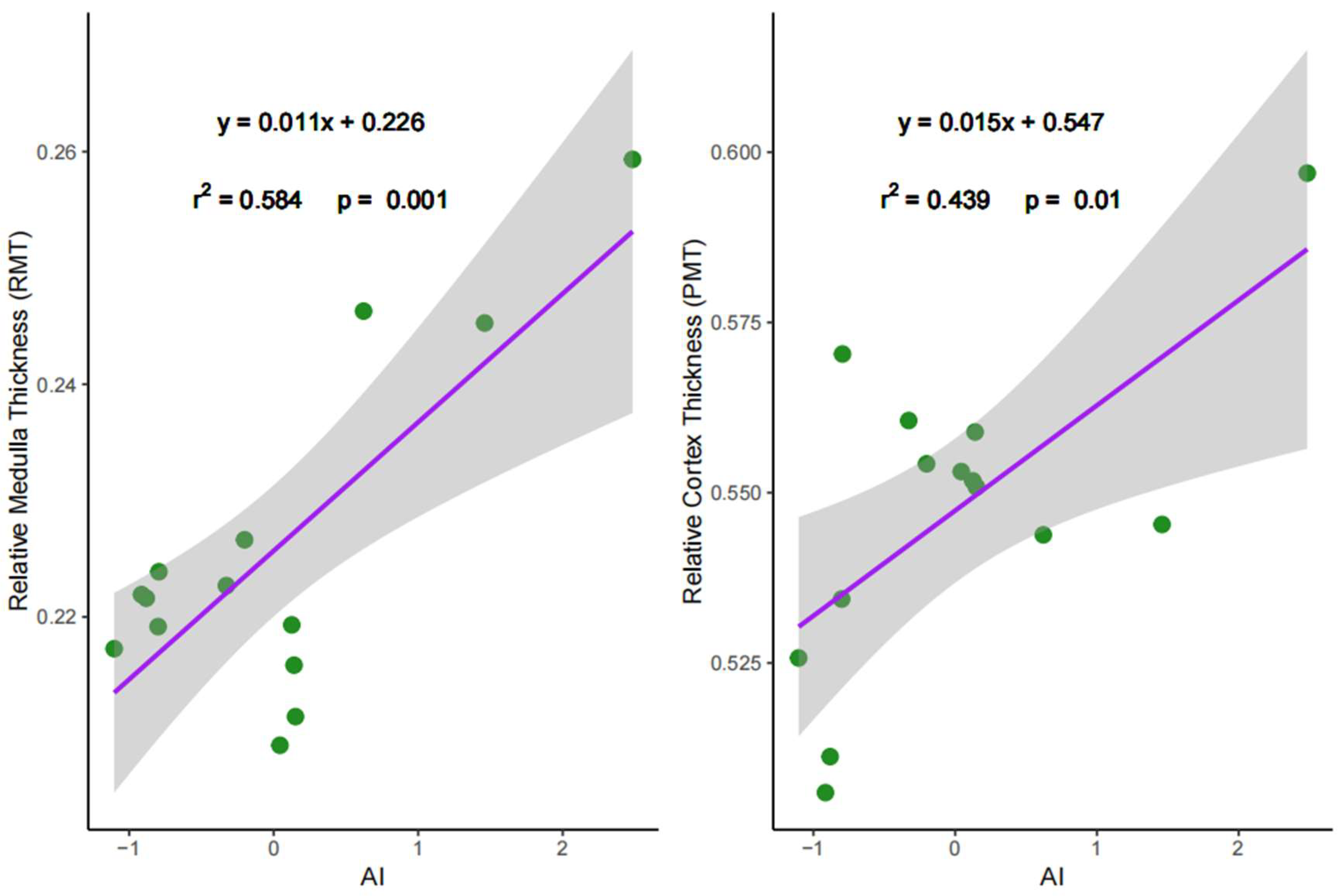
3.4. Relations Between Water Availability and Renal Characteristics
3.5. Associations Between Changes in Species Compositions and CWM Variations
4. Discussion
4.1. Variations in Body Size and Appendages
4.2. Variations in Renal Phenotype
5. Conclusions
Author Contributions
Funding
Institutional Review Board Statement
Informed Consent Statement
Data Availability Statement
Acknowledgments
Conflicts of Interest
References
- Freudiger, A.; Josi, D.; Thünken, T.; Herder, F.; Flury, J.M.; Marques, D.A.; Taborsky, M.; Frommen, J.G. Ecological variation drives morphological differentiation in a highly social vertebrate. Funct. Ecol. 2021, 35, 2266–2281. [Google Scholar] [CrossRef]
- Alston, J.M.; Keinath, D.A.; Willis, C.K.R.; Lausen, C.L.; O’Keefe, J.M.; Tyburec, J.D.; Broders, H.G.; Moosman, P.R.; Carter, T.C.; Chambers, C.L.; et al. Environmental drivers of body size in North American bats. Funct. Ecol. 2023, 37, 1020–1032. [Google Scholar] [CrossRef]
- Bergmann, C. Über die Verhältnisse der Wärmeökonomie der Thiere zu ihrer Grösse; Göttinger Studien; Vandenhoeck und Ruprecht: Göttingen, Germany, 1848. [Google Scholar]
- Allen, J.A. The influence of physical conditions in the genesis of species. Radic. Rev. 1877, 1, 108–140. [Google Scholar]
- Watt, C.; Mitchell, S.; Salewski, V. Bergmann’s rule; a concept cluster? Oikos 2010, 119, 89–100. [Google Scholar] [CrossRef]
- Ashton, K.G.; Tracy, M.C.; Queiroz, A. Is Bergmann’s rule valid for mammals? Am. Nat. 2000, 156, 390–415. [Google Scholar] [CrossRef]
- Rodríguez, M.Á.; Olalla-Tárraga, M.Á.; Hawkins, B.A. Bergmann’s rule and the geography of mammal body size in the western Hemisphere. Glob. Ecol. Biogeogr. 2008, 17, 274–283. [Google Scholar] [CrossRef]
- James, F.C. Geographic size variation in birds and its relationship to climate. Ecology 1970, 51, 365–390. [Google Scholar] [CrossRef]
- Salewski, V.; Watt, C. Bergmann’s rule: A biophysiological rule examined in birds. Oikos 2017, 126, 161–172. [Google Scholar] [CrossRef]
- Barshep, Y.; Awoyemi, A.G.; Abalaka, J.; Ottosson, U. Bergmann’s rule holds in birds inhabiting southern Guinea forests but not in the northern savanna of Nigeria. Front. Ecol. Evol. 2022, 10, 741755. [Google Scholar] [CrossRef]
- Gohli, J.; Voje, K.L. An interspecific assessment of Bergmann’s rule in 22 mammalian families. BMC Evol. Biol. 2016, 16, 222. [Google Scholar] [CrossRef] [PubMed]
- Meiri, S.; Dayan, T. On the validity of Bergmann’s rule. J. Biogeogr. 2003, 30, 331–351. [Google Scholar] [CrossRef]
- Blackburn, T.M.; Hawkins, B.A. Bergmann’s rule and the mammal fauna of northern North America. Ecography 2004, 27, 715–724. [Google Scholar] [CrossRef]
- Blackburn, T.M.; Gaston, K.J. Spatial patterns in the body sizes of bird species in the New World. Oikos 1996, 77, 436–446. [Google Scholar] [CrossRef]
- Kamilar, J.M.; Muldoon, K.M.; Lehman, S.M.; Herrera, J.P. Testing Bergmann’s rule and the resource seasonality hypothesis in Malagasy primates using GIS-based climate data. Am. J. Phys. Anthropol. 2012, 147, 401–408. [Google Scholar] [CrossRef]
- Medina, A.I.; Martí, D.A.; Bidau, C.J. Subterranean rodents of the genus Ctenomys (Caviomorpha, Ctenomyidae) follow the converse to Bergmann’s rule. J. Biogeogr. 2007, 34, 1439–1454. [Google Scholar] [CrossRef]
- Nudds, R.L.; Oswald, S.A. An interspecific test of Allen’s rule: Evolutionary implications for endothermic species. Evolution 2007, 61, 2839–2848. [Google Scholar] [CrossRef]
- Alroy, J. Small mammals have big tails in the tropics. Glob. Ecol. Biogeogr. 2019, 28, 1042–1050. [Google Scholar] [CrossRef]
- Alhajeri, B.H.; Fourcade, Y.; Upham, N.S.; Alhaddad, H. A global test of Allen’s rule in rodents. Glob. Ecol. Biogeogr. 2020, 29, 2248–2260. [Google Scholar] [CrossRef]
- Bidau, C.J.; Martí, D.A.; Medina, A.I. A test of Allen’s rule in subterranean mammals: The genus Ctenomys (Caviomorpha, Ctenomyidae). Mammalia 2011, 75, 311–320. [Google Scholar] [CrossRef]
- Docampo, M.; Moreno, S.; Santoro, S. Marked reduction in body size of a wood mouse population in less than 30 years. Mamm. Biol. 2019, 95, 127–134. [Google Scholar] [CrossRef]
- Santoro, S.; Calzada, J. Allometry to evaluate Allen’s rule in climate warming. Trends Ecol. Evol. 2022, 37, 475–477. [Google Scholar] [CrossRef]
- Baldwin, J.W.; Garcia-Porta, J.; Botero, C.A. Complementarity in Allen’s and Bergmann’s rules among birds. Nat. Commun. 2023, 14, 4240. [Google Scholar] [CrossRef]
- Boyce, M.S. Climatic variability and body size variation in the muskrats (Ondatra zibethicus) of North America. Oecologia 1978, 36, 1–19. [Google Scholar] [CrossRef]
- Geist, V. Bergmann’s rule is invalid. Can. J. Zool. 1987, 65, 1035–1038. [Google Scholar] [CrossRef]
- McNab, B.K. Geographic and temporal correlations of mammalian size reconsidered: A resource rule. Oecologia 2010, 164, 13–23. [Google Scholar] [CrossRef] [PubMed]
- Yom-Tov, Y.; Geffen, E. Geographic variation in body size: The effects of ambient temperature and precipitation. Oecologia 2006, 148, 213–218. [Google Scholar] [CrossRef] [PubMed]
- Alhajeri, B.H.; Steppan, S.J. Association between climate and body size in rodents: A phylogenetic test of Bergmann’s rule. Mamm. Biol. 2016, 81, 219–225. [Google Scholar] [CrossRef]
- Walsberg, G.E. Small mammals in hot deserts: Some generalizations revisited. Bioscience 2000, 50, 109–120. [Google Scholar] [CrossRef]
- Kramp, R.E.; Liancourt, P.; Herberich, M.M.; Saul, L.; Weides, S.; Tielbörger, K.; Májeková, M. Functional traits and their plasticity shift from tolerant to avoidant under extreme drought. Ecology 2022, 103, e3826. [Google Scholar] [CrossRef]
- Rymer, T.L.; Pillar, N.; Schradin, C. Resilience to droughts in mammals: A conceptual framework for estimating vulnerability of a single species. Q. Rev. Biol. 2016, 91, 133–176. [Google Scholar] [CrossRef]
- Brownfield, M.S.; Wunder, B.A. Relative medullary area: A new structural index for estimating urinary concentrating capacity of mammals. Comp. Biochem. Physiol. Part A Physiol. 1976, 55, 69–75. [Google Scholar] [CrossRef] [PubMed]
- Frean, J.L.; Downs, C.T.; Lovegrove, B.G. Osmoregulatory capacity of an arboreal rodent Thallomys nigricauda. J. Arid Environ. 1998, 40, 97–107. [Google Scholar] [CrossRef]
- Diaz, G.B.; Ojeda, R.A. Kidney structure and allometry of Argentine desert rodents. J. Arid Environ. 1999, 41, 453–461. [Google Scholar] [CrossRef]
- Geluso, K.N. Urine concentrating ability and renal structure of insectivorous bats. J. Mammal. 1978, 59, 312–323. [Google Scholar] [CrossRef]
- Kohli, B.A.; Stevens, R.D.; Rickart, E.A.; Rowe, R.J. Mammals on mountainsides revisited: Trait-based tests of assembly reveal the importance of abiotic filters. J. Biogeogr. 2021, 48, 1606–1621. [Google Scholar] [CrossRef]
- Kohli, B.A.; Miyajima, R.J.; Jarzyna, M.A. Elevational diversity patterns of rodents differ between wet and arid mountains. Glob. Ecol. Biogeogr. 2022, 31, 1726–1740. [Google Scholar] [CrossRef]
- Blackburn, T.M.; Gaston, K.J.; Loder, N. Geographic gradients in body size: A clarification of Bergmann’s rule. Divers. Distrib. 1999, 5, 165–174. [Google Scholar] [CrossRef]
- GeMa, J.C. Impact of Tibetan traditional culture on the biodiversity of Baimaxueshan Nature Reserve. For. Inventory Plan. 2004, 257, 23–26. (In Chinese) [Google Scholar]
- Zha, S.Q. Good convention of wildlife exploitation of Zang residents in Baimashan Nature Reserve. Chin. J. Wildl. 2006, 10–12. (In Chinese) [Google Scholar] [CrossRef]
- Li, H.; Liu, D.B.; Wang, S.Q. Yunnan Baima Snow Mountain Nature Reserve ecological planning based on the regional ecological risk assessment. Adv. Mater. Res. 2012, 450, 1148–1151. [Google Scholar] [CrossRef]
- Li, M.H.; Wang, R.H.; Wang, K.; Su, J.F. Evaluation for the diversity of biology in Baima Snow Mountain National Nature Reserve. For. Sci. Technol. Inf. 2015, 47, 20–21+23. (In Chinese) [Google Scholar]
- Stockham, A.J.; Schultz, D.M.; Fairman, J.G., Jr.; Draude, A.P. Quantifying the rain-shadow effect: Results from the Peak District, British Isles. Bull. Am. Meteorol. Soc. 2018, 99, 777–790. [Google Scholar] [CrossRef]
- Tang, C.Q. Semi-Savannas in Hot-Dry Valleys; Springer: Dordrecht, The Netherlands, 2015; pp. 165–184. [Google Scholar]
- Song, W.Y.; Li, X.Y.; Chen, Z.Z.; Li, Q.; Onditi, K.O.; He, H.W.; Jiang, X.L. Isolated alpine habitats reveal disparate ecological drivers of taxonomic and functional beta-diversity of small mammal assemblages. Zool. Res. 2020, 41, 670. [Google Scholar] [CrossRef] [PubMed]
- Neal, W.; Ananth, M.; Link, E.O.; Eric, J.S. The limitations of external measurements for aging small mammals: The cautionary example of the Lesser Treeshrew (Scandentia: Tupaiidae: Tupaia minor Günther, 1876). J. Mammal. 2021, 102, 1079–1086. [Google Scholar] [CrossRef]
- Kohli, B.A.; Rowe, R.J. Beyond guilds: The promise of continuous traits for mammalian functional diversity. J. Mammal. 2019, 100, 285–298. [Google Scholar] [CrossRef]
- Heisinger, J.F.; Breitenbach, R.P. Renal structural characteristics as indexes of renal adaptation for water conservation in the genus. Sylvilagus Physiol. Zool. 1969, 42, 160–172. [Google Scholar] [CrossRef]
- Garnier, E.; Lavorel, S.; Ansquer, P.; Castro, H.; Cruz, P.; Dolezal, J.; Eriksson, O.; Fortunel, C.; Freitas, H.; Golodets, C.; et al. Assessing the Effects of Land-use Change on Plant Traits, Communities and Ecosystem Functioning in Grasslands: A Standardized Methodology and Lessons from an Application to 11 European Sites. Ann. Bot. 2007, 99, 967–985. [Google Scholar] [CrossRef] [PubMed]
- Laliberté, E.; Legendre, P.; Shipley, B. Package ‘FD’. Measuring Functional Diversity from Multiple Traits, and Other Tools for Functional Ecology, R package Version 1.0-12.3. 2014. Available online: https://cran.r-project.org/web/packages/FD/FD.pdf (accessed on 4 November 2025).
- Berov, B.; Gadzhev, G.; Ivanov, P.; Dobrev, N.; Ivanov, V.; Nikolova, N.; Toteva, A.; Krastanov, M.; Nankin, R.; Frantzova, A. Assessment of landslide susceptibility in Bulgaria, in the context of climate change, using the Mora and Vahrson method. Geol. Balc. 2025, 54, 3–16. [Google Scholar] [CrossRef]
- Zomer, R.J.; Xu, J.; Trabucco, A. Version 3 of the Global Aridity Index and Potential Evapotranspiration Database. Sci. Data 2022, 9, 409. [Google Scholar] [CrossRef]
- Oksanen, J.; Kindt, R.; Legendre, P. The vegan package. Community Ecol. Package 2007, 10, 719. [Google Scholar]
- Peng, R.D. R Programming for Data Science; Leanpub: Victoria, BC, Canada, 2016. [Google Scholar]
- Mungee, M.; Pandit, R.; Athreya, R. Taxonomic scale dependency of Bergmann’s patterns: A cross-scale comparison of hawkmoths and birds along a tropical elevational gradient. J. Trop. Ecol. 2021, 37, 302–312. [Google Scholar] [CrossRef]
- Osorio-Canadas, S.; Flores-Hernández, N.; Sánchez-Ortiz, T.; Valiente-Banuet, A. Changes in bee functional traits at community and intraspecific levels along an elevational gradient in a Mexical-type scrubland. Oecologia 2022, 200, 145–158. [Google Scholar] [CrossRef]
- Schellenberger Costa, D.; Classen, A.; Ferger, S.; Helbig-Bonitz, M.; Peters, M.; Böhning-Gaese, K.; Steffan-Dewenter, I.; Kleyer, M. Relationships between abiotic environment, plant functional traits, and animal body size at Mount Kilimanjaro, Tanzania. PLoS ONE 2017, 12, e0174157. [Google Scholar]
- Tiede, Y.; Hemp, C.; Schmidt, A.; Nauss, T.; Farwig, N.; Brandl, R. Beyond body size: Consistent decrease of traits within orthopteran assemblages with elevation. Ecology 2018, 99, 2090–2102. [Google Scholar] [CrossRef]
- Andreychev, A. Population structure and dynamics of small rodents and insectivorous mammals in a region of the Middle Volga, Russia. Biharean Biol. 2021, 15, 33–38. [Google Scholar]
- Hua, R.; Su, Q.; Fan, J.; Wang, L.Q.; Xu, L.B.; Hui, Y.C.; Huang, M.M.; Du, B.B.; Tian, Y.J.; Zhao, Y.H.; et al. Temporal and Spatial Dynamics of Rodent Species Habitats in the Ordos Desert Steppe, China. Animals 2025, 15, 721. [Google Scholar] [CrossRef] [PubMed]
- Fröhlich, A.; Kotowska, D.; Martyka, R.; Symonds, M.R.E. Allometry reveals trade-offs between Bergmann’s and Allen’s rules, and different avian adaptive strategies for thermoregulation. Nat. Commun. 2023, 14, 1101. [Google Scholar] [CrossRef] [PubMed]
- Forsman, A.; Merilä, J.; Ebenhard, T. Phenotypic evolution of dispersal-enhancing traits in insular voles. Proc. R. Soc. B Biol. Sci. 2011, 278, 225–232. [Google Scholar] [CrossRef]
- Whitmee, S.; Orme, C.D.L. Predicting dispersal distance in mammals: A trait-based approach. J. Anim. Ecol. 2013, 82, 211–221. [Google Scholar] [CrossRef]
- Barnett, R.J. Bergmann’s rule and variation in structures related to feeding in the gray squirrel. Evolution 1977, 31, 538–545. [Google Scholar] [CrossRef]
- Du, Y.; Wen, Z.; Zhang, J.; Lv, X.; Cheng, J.; Ge, D.; Xia, L.; Yang, Q. The roles of environment, space, and phylogeny in determining functional dispersion of rodents (Rodentia) in the Hengduan Mountains, China. Ecol. Evol. 2017, 7, 10941–10951. [Google Scholar] [CrossRef]
- Brehm, G.; Fiedler, K. Bergmann’s rule does not apply to geometrid moths along an elevational gradient in an Andean montane rain forest. Glob. Ecol. Biogeogr. 2004, 13, 7–14. [Google Scholar] [CrossRef]
- Hoffmann, R.S. The southern boundary of the Palaearctic realm in China and adjacent countries. Curr. Zool. 2001, 47, 121–131. [Google Scholar]
- Rueda, M.; Rodríguez, M.Á.; Hawkins, B.A. Identifying global zoogeographical regions: Lessons from Wallace. J. Biogeogr. 2013, 40, 2215–2225. [Google Scholar] [CrossRef]
- Shi, Y.; Song, L.; Xia, Z.; Lin, Y.; Myneni, R.B.; Choi, S.; Wang, L.; Ni, X.; Lao, C.; Yang, F. Mapping annual precipitation across mainland China in the period 2001–2010 from TRMM3B43 product using spatial downscaling approach. Remote Sens. 2015, 7, 5849–5878. [Google Scholar] [CrossRef]
- Li, Q.; Li, X.; Hu, W.; Song, W.; He, S.; Wang, H.; Hu, Z.; Li, M.; Onditi, K.O.; Chen, Z.; et al. The mammals of Gaoligong Mountain in China: Diversity, distribution, and conservation. Zool. Res. Divers. Conserv. 2024, 1, 3–19. [Google Scholar] [CrossRef]
- Liu, Z.X.; Gao, Z.H.; Shao, Z.T.; Duan, X.D.; Li, Y.Q.; Pu, E.N.; Chen, X. Composition and distribution of small-sized mammals in Baima Snow Mountain National Nature Reserve. J. Med. Pest Control 2021, 37, 1025–1029. (In Chinese) [Google Scholar]
- Al-Kahtani, M.A.; Zuleta, C.; Caviedes-Vidal, E.; Garland, T.J. Kidney mass and relative medullary thickness of rodents in relation to habitat, body size, and phylogeny. Physiol. Biochem. Zool. 2004, 77, 346–365. [Google Scholar] [CrossRef] [PubMed]
- D’Andrea, R.; Ostling, A. Challenges in linking trait patterns to niche differentiation. Oikos 2016, 125, 1369–1385. [Google Scholar] [CrossRef]




| Phenotypic Variables | Intercept | Estimate | SE | T | adjR2 |
|---|---|---|---|---|---|
| BW | 53.843 *** | −9.907 *** | 1.480 | −6.694 | 0.789 |
| HB | 121.229 *** | −6.502 *** | 1.260 | −5.162 | 0.689 |
| TL/HB | 0.829 *** | −0.085 *** | 0.015 | −5.667 | 0.728 |
| HF/HB | 0.200 *** | −0.003 ** | 0.001 | −3.142 | 0.451 |
| EL/HB | 0.147 *** | −0.002 | 0.001 | −1.441 | 0.147 |
| Phenotypic Variables | Intercept | Estimate | SE | T | adjR2 |
|---|---|---|---|---|---|
| BW | 53.843 *** | −4.096 | 8.494 | −0.482 | 0.019 |
| HB | 121.229 *** | −3.505 | 5.934 | −0.591 | 0.028 |
| TL/HB | 0.829 *** | 0.099 | 0.071 | 1.393 | 0.139 |
| HF/HB | 0.200 *** | 0.006 | 0.003 | 1.875 | 0.227 |
| EL/HB | 0.147 *** | 0.005 | 0.003 | 1.468 | 0.152 |
| Phenotypic Variables | Intercept | Estimate | SE | T | adjR2 |
|---|---|---|---|---|---|
| RMT | 0.226 *** | 0.011 ** | 0.003 | 4.108 | 0.584 |
| PMT | 0.547 *** | 0.015 ** | 0.005 | 3.062 | 0.439 |
Disclaimer/Publisher’s Note: The statements, opinions and data contained in all publications are solely those of the individual author(s) and contributor(s) and not of MDPI and/or the editor(s). MDPI and/or the editor(s) disclaim responsibility for any injury to people or property resulting from any ideas, methods, instructions or products referred to in the content. |
© 2025 by the authors. Licensee MDPI, Basel, Switzerland. This article is an open access article distributed under the terms and conditions of the Creative Commons Attribution (CC BY) license.
Share and Cite
Li, Y.; Chen, G.; Xie, M.; Fang, Y.; Qin, F.; Song, W. Community-Level Phenotypic Adaptations of Small Mammals Under Rain-Shadow Dynamics in Baima Snow Mountain, Yunnan. Animals 2026, 16, 91. https://doi.org/10.3390/ani16010091
Li Y, Chen G, Xie M, Fang Y, Qin F, Song W. Community-Level Phenotypic Adaptations of Small Mammals Under Rain-Shadow Dynamics in Baima Snow Mountain, Yunnan. Animals. 2026; 16(1):91. https://doi.org/10.3390/ani16010091
Chicago/Turabian StyleLi, Yongyuan, Guangzhi Chen, Mengru Xie, Yihao Fang, Feng Qin, and Wenyu Song. 2026. "Community-Level Phenotypic Adaptations of Small Mammals Under Rain-Shadow Dynamics in Baima Snow Mountain, Yunnan" Animals 16, no. 1: 91. https://doi.org/10.3390/ani16010091
APA StyleLi, Y., Chen, G., Xie, M., Fang, Y., Qin, F., & Song, W. (2026). Community-Level Phenotypic Adaptations of Small Mammals Under Rain-Shadow Dynamics in Baima Snow Mountain, Yunnan. Animals, 16(1), 91. https://doi.org/10.3390/ani16010091