Analysis of Inbreeding Coefficient and Genetic Diversity in Xinjiang Brown Cattle Based on Pedigree and ROH Evaluation
 ,
,
Simple Summary
Abstract
1. Introduction
2. Materials and Methods
2.1. Experimental Animals and DNA Extraction
2.2. Genotype Data Quality Control
2.3. Statistical Analysis
2.3.1. Population Genetic Diversity Analysis
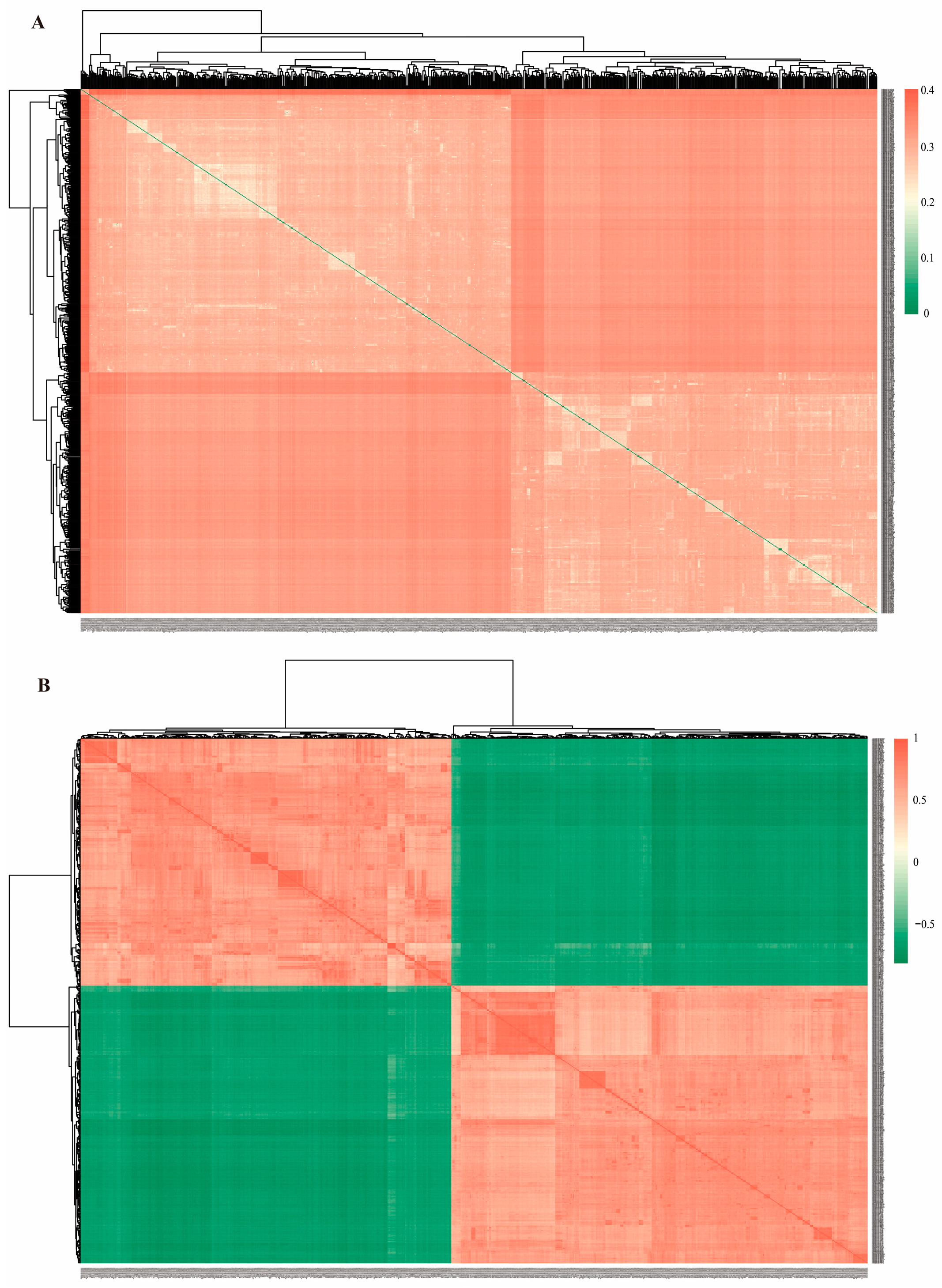
2.3.2. Genetic Distance Matrix and Phylogenetic Analysis
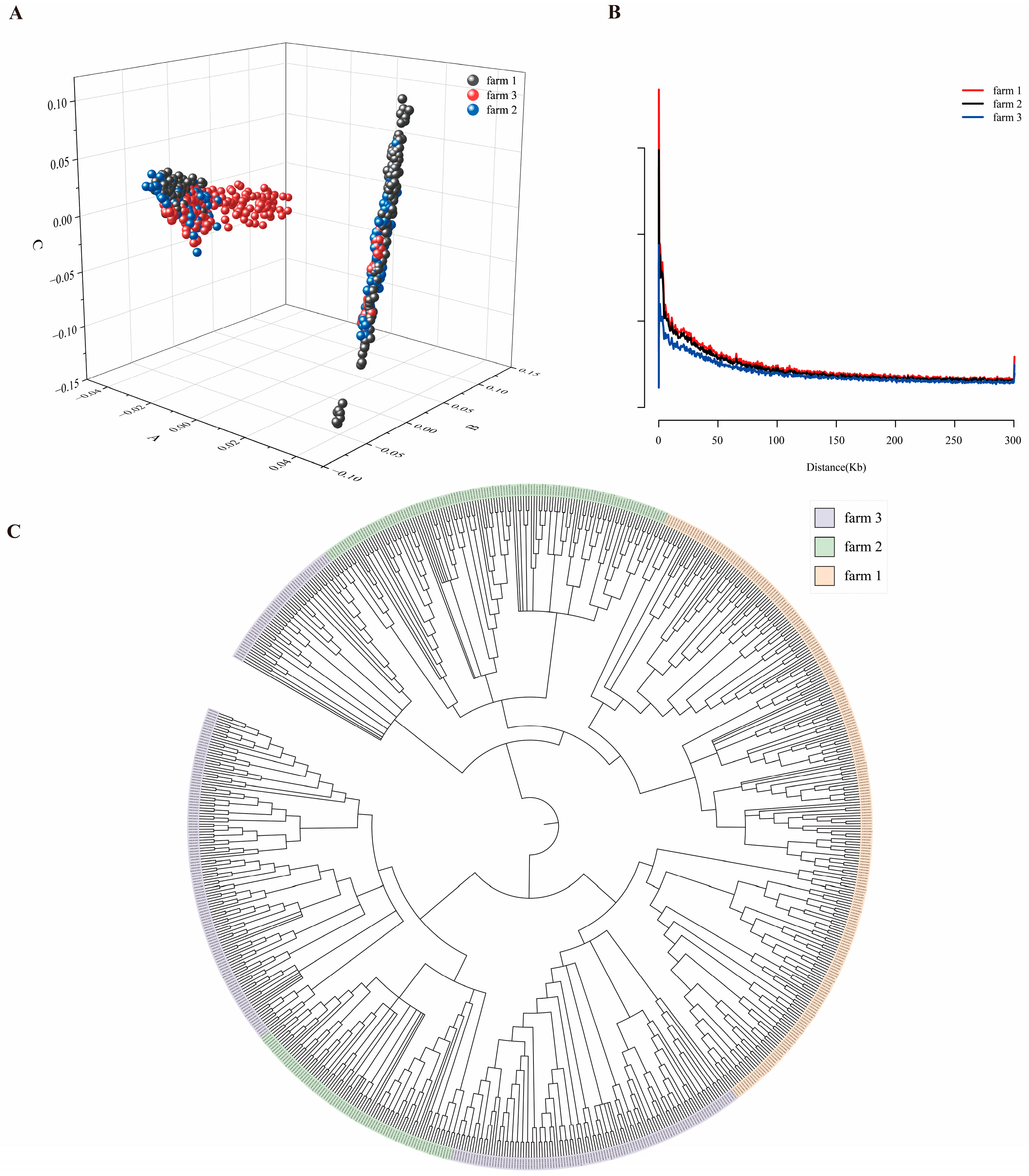
2.3.3. Principal Components and Linkage Disequilibrium
2.3.4. Inbreeding Coefficient Based on Pedigree Information
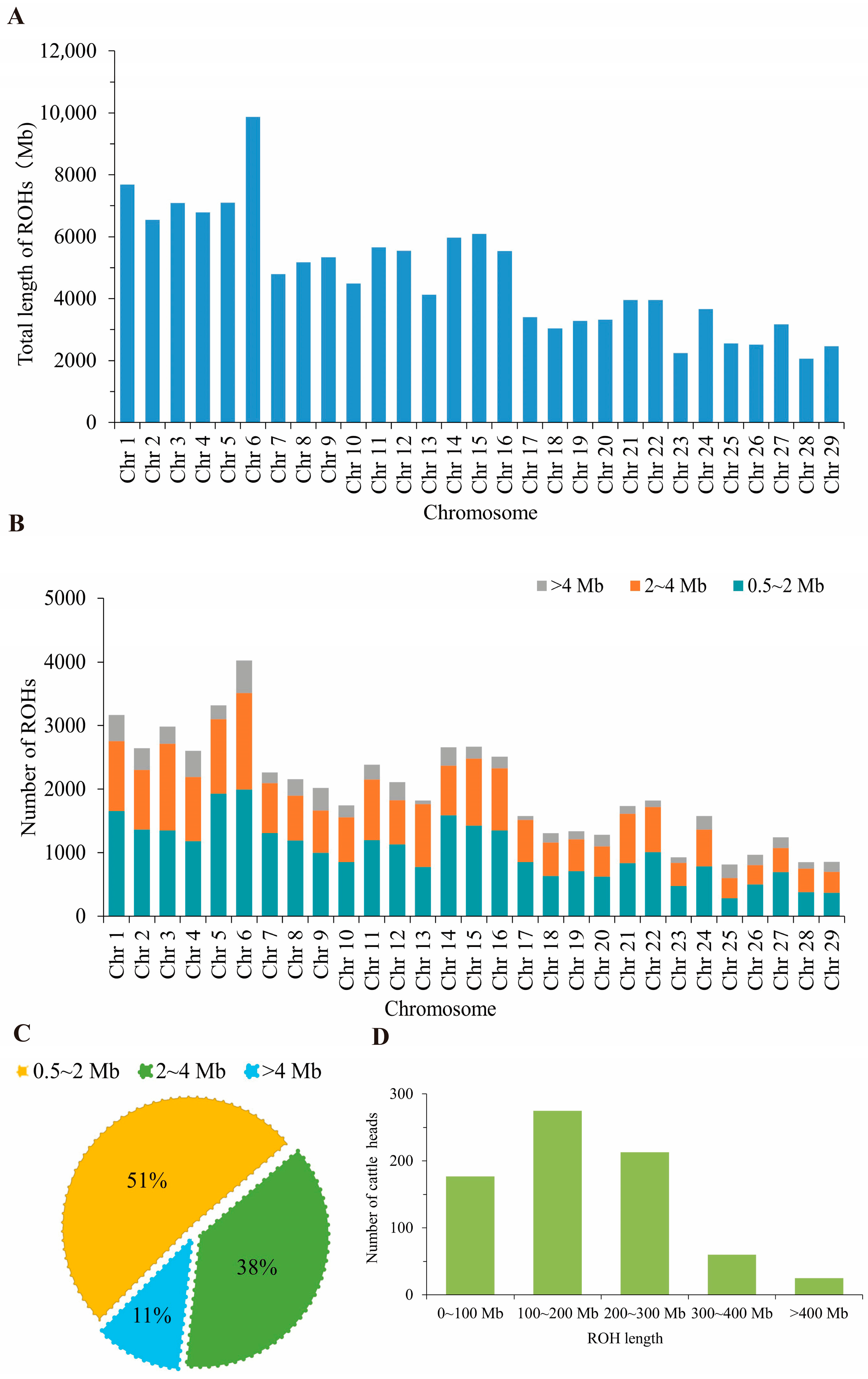
2.3.5. Inbreeding Coefficient Based on Genomic Information
2.3.6. High-Frequency ROH Candidate Regions and Enrichment Analysis
3. Results
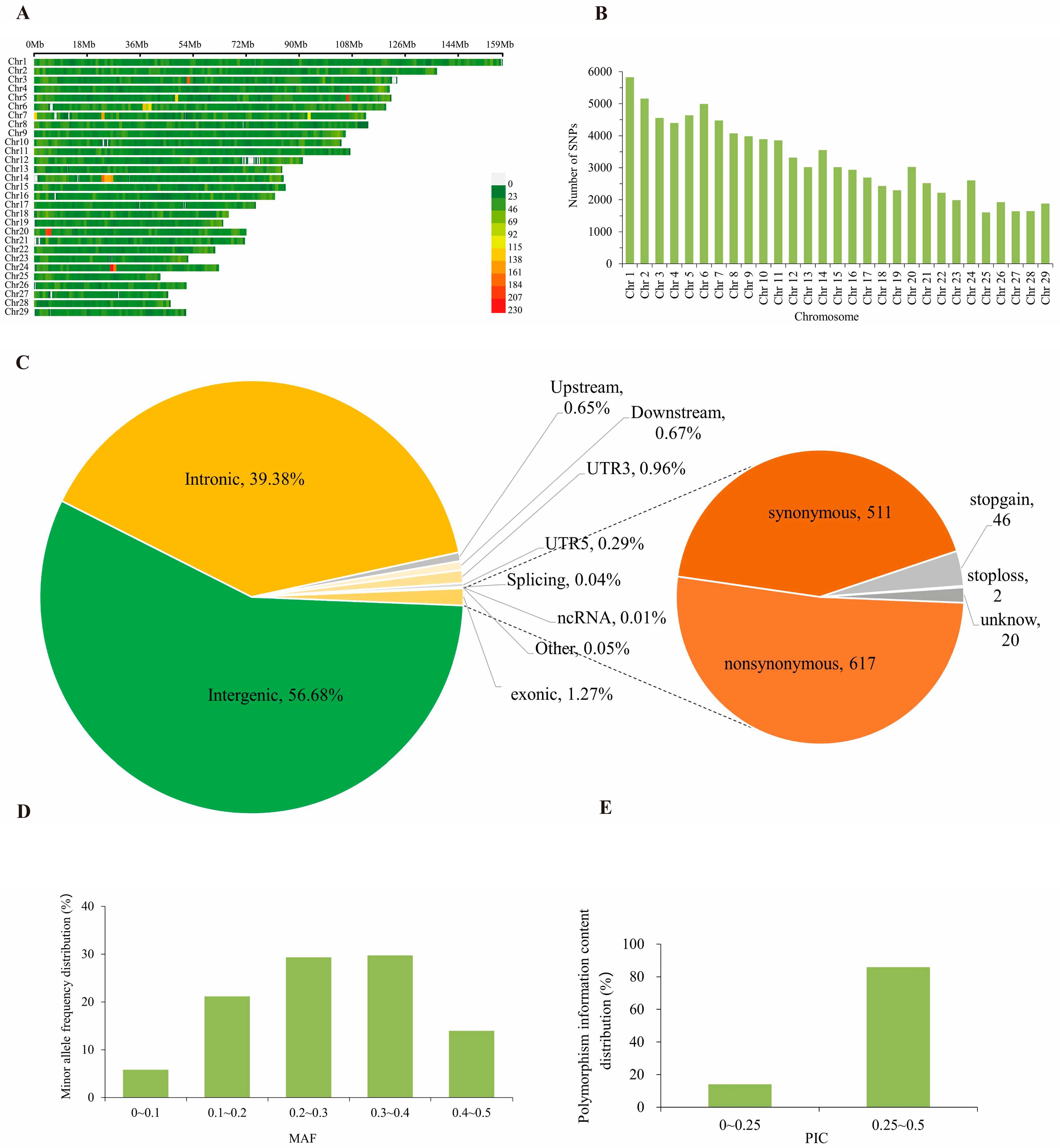
3.1. Analysis of Genetic Diversity in the Xinjiang Brown Cattle Genome
3.2. Analysis of Genetic Distance Matrix and Kinship Matrix
3.3. Principal Component Analysis and Linkage Disequilibrium Analysis
3.4. Inbreeding Coefficients Based on Pedigree
3.5. Basic Statistics of Genome-Wide ROH
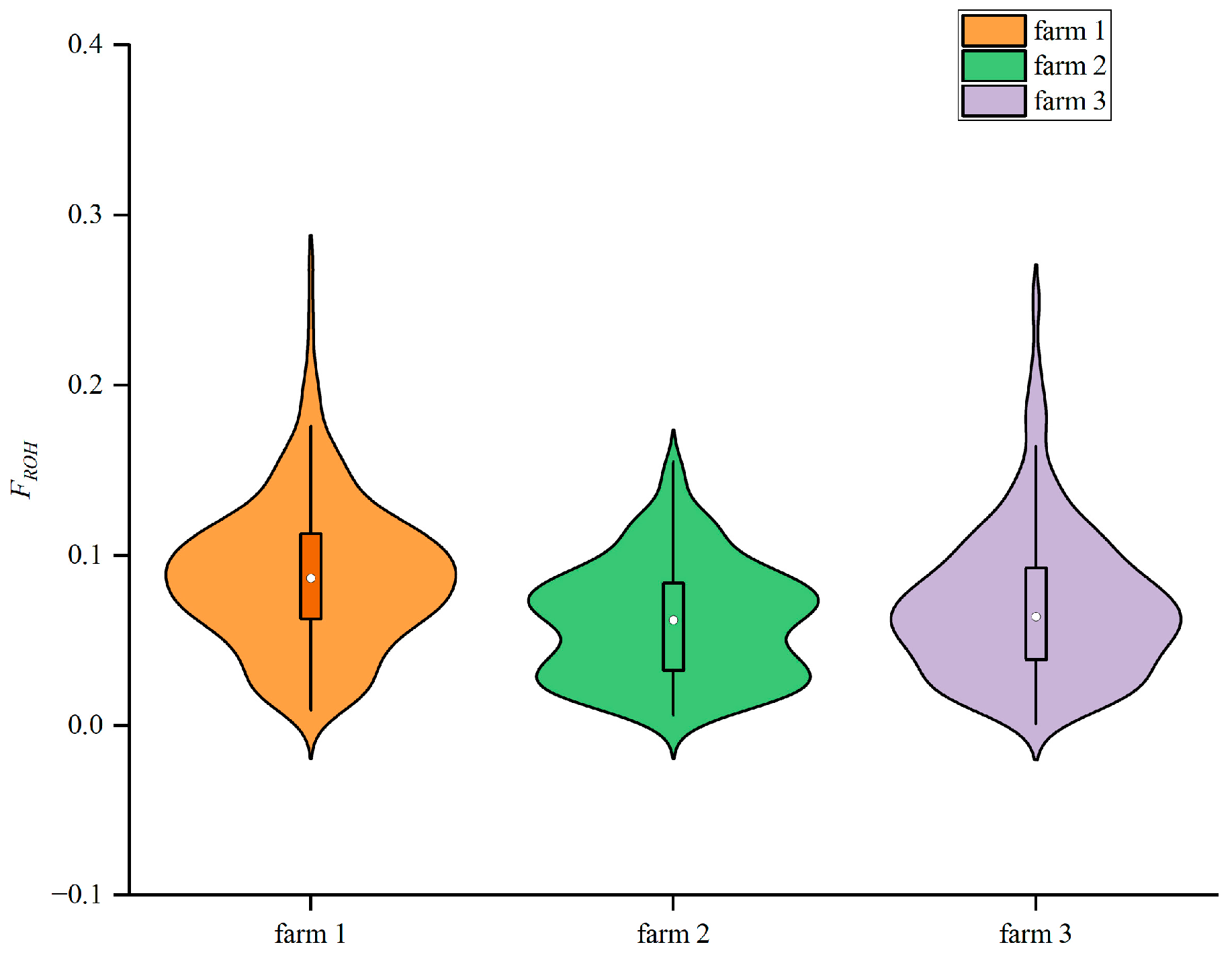
3.6. Genomic Inbreeding Coefficients
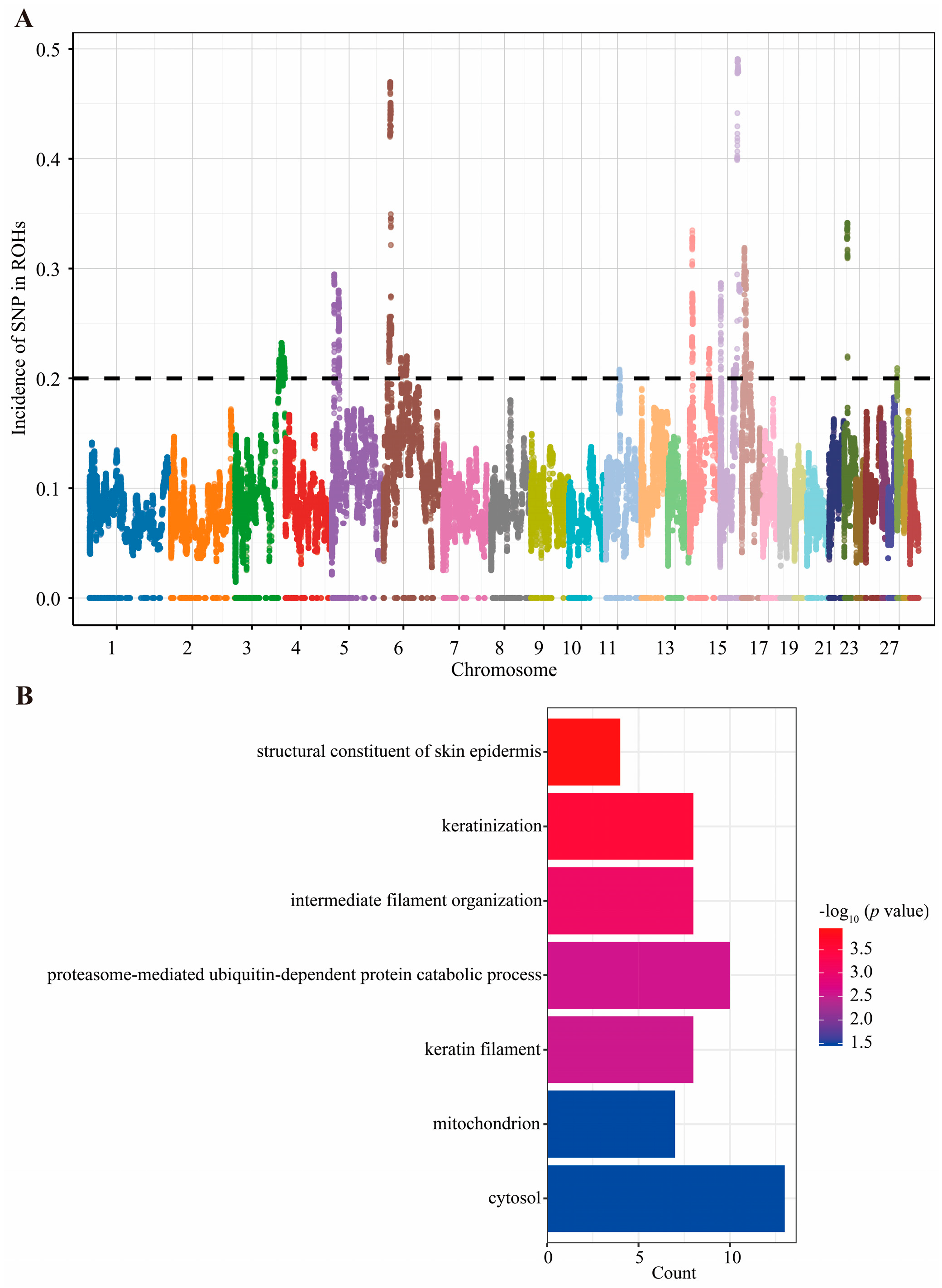
3.7. Identification and Enrichment Analysis of Candidate Genes in High-Frequency ROH Regions
4. Discussion
5. Conclusions
Supplementary Materials
Author Contributions
Funding
Institutional Review Board Statement
Informed Consent Statement
Data Availability Statement
Acknowledgments
Conflicts of Interest
References
- Fan, S.; Wang, C.; Badengjiafu; Najincheng; Dawuran; Hakenmu; Tayierjiang; Cerendaoerji; Zhong, L.; Xu, L.; et al. The influence of different factors on the milk yield of Xinjiang Brown cattle under stable feeding and grazing condition. Chin. Dairy Cattle 2021, 9, 5–9. [Google Scholar]
- Geng, J. Present situation and prospect of population improvement of Xinjiang Brown cattle. Xinjiang Anim. Husb. 2020, 35, 14–17+20. [Google Scholar]
- Xu, L.; Zhang, M.; Zhang, T.; Geng, J.; Fan, S.; Yang, G.; Guo, Y.; Deng, Q.; Li, J.; Liu, J.; et al. Genetic parameter estimates for body conformation in Xinjiang brown cattle based on principal component analysis and factor analysis. Acta Vet. Zootech. Sin. 2023, 54, 3677–3688. [Google Scholar]
- Wang, X.; Ma, Z.; Gao, L.; Xie, P.; Su, N.; Chen, W.; Zhang, Y.; Yan, X.; Chen, X. Progress in molecular biology and omics studies of Xinjiang Brown cattle. Chin. Cattle Sci. 2024, 50, 94–101. [Google Scholar]
- Xu, L. Estimates of Genetic Parameters and Total Performance Index Construction of Xinjiang Brown Cattle; Xinjiang Agricultural University: Urumqi, China, 2020. [Google Scholar]
- Ma, Z.; Ye, Z.; Cui, F.; Yan, X.; Wang, X.; Chen, W.; Su, N.; Li, H. Progress on generation breeding of Xinjiang Brown cattle (meat type). Chin. J. Anim. Sci. 2025, 61, 248–255. [Google Scholar]
- Zhang, X.; Zhang, T.; Wang, H.; Yang, Q.; Gao, S.; Wang, Y.; Wang, J. Analysis of genetic diversity and population structure changes of Dapulian pigs (sus scrofa) based on genomic information. J. Agric. Biotechnol. 2024, 32, 1093–1101. [Google Scholar]
- Shi, Y.; Li, M.; He, P.; Li, F. Single nucleotide polymorphism and its utilization in plant research. Hans. J. Agric. Sci. 2014, 4, 60–65. [Google Scholar]
- Ma, K.; Li, X.; Ma, S.; Zhang, M.; Wang, D.; Xu, L.; Chen, H.; Wang, X.; Qi, A.; Ren, Y.; et al. Analysis of population structure and selective signatures for milk production traits in Xinjiang brown cattle and Chinese Simmental cattle. Int. J. Mol. Sci. 2025, 26, 2003. [Google Scholar] [CrossRef]
- Mao, C.; Zhang, T.; Ren, A.; Jia, X.; Lai, S.; Chen, S. Genome-wide SNP discovery and genetic diversity evaluation of Liangshan cattle in China. Anim. Biotechnol. 2021, 32, 671–675. [Google Scholar] [CrossRef] [PubMed]
- Chen, J.; Zhang, L.; Gao, L.; Wei, Z.; Dang, D.; Yang, L. Population structure and genetic diversity of Yunling cattle determined by whole-genome resequencing. Genes 2023, 14, 2141. [Google Scholar] [CrossRef] [PubMed]
- Chen, Q.; Zhan, J.; Shen, J.; Qu, K.; Hanif, Q.; Liu, J.; Zhang, J.; Chen, N.; Chen, H.; Huang, B.; et al. Whole-genome resequencing reveals diversity, global and local ancestry proportions in Yunling cattle. J. Anim. Breed. Genet. 2020, 137, 641–650. [Google Scholar] [CrossRef]
- Zhang, Q.; Goudet, J.; Weir, B.S. Rank-invariant estimation of inbreeding coefficients. Heredity 2022, 128, 1–10. [Google Scholar] [CrossRef] [PubMed]
- Stachowicz, K.; Brito, F.L.; Oliveira, R.H.; Miller, P.S.; Schenkel, S.F. Assessing genetic diversity of various Canadian sheep breeds through pedigree analyses. Can. J. Anim. Sci. 2018, 98, 741–749. [Google Scholar] [CrossRef]
- Bjelland, D.W.; Weigel, K.A.; Coburn, A.D.; Wilson, R.D. Using a family-based structure to detect the effects of genomic inbreeding on embryo viability in Holstein cattle. J. Dairy Sci. 2015, 98, 4934–4944. [Google Scholar] [CrossRef]
- Martikainen, K.; Sironen, A.; Uimari, P. Estimation of intrachromosomal inbreeding depression on female fertility using runs of homozygosity in Finnish Ayrshire cattle. J. Dairy Sci. 2018, 101, 11097–11107. [Google Scholar] [CrossRef] [PubMed]
- Forutan, M.; Ansari, M.S.; Baes, C.; Melzer, N.; Schenkel, F.S.; Sargolzaei, M. Inbreeding and runs of homozygosity before and after genomic selection in North American Holstein cattle. BMC Genom. 2018, 19, 98–109. [Google Scholar] [CrossRef] [PubMed]
- Mastrangelo, S.; Sardina, M.T.; Tolone, M.; Di, G.R.; Sutera, A.M.; Fontanesi, L.; Portolano, B. Genome-wide identification of runs of homozygosity islands and associated genes in local dairy cattle breeds. Animal 2018, 12, 2480–2488. [Google Scholar] [CrossRef]
- Qanbari, S.; Gianola, D.; Hayes, B.; Schenkel, F.; Miller, S.; Moore, S.; Thaller, G.; Simianer, H. Application of site and haplotype-frequency based approaches for detecting selection signatures in cattle. BMC Genom. 2011, 12, 318–329. [Google Scholar] [CrossRef]
- Nani, J.P.; Peñagaricano, F. Whole-genome homozygosity mapping reveals candidate regions affecting bull fertility in US Holstein cattle. BMC Genom. 2020, 21, 338–346. [Google Scholar] [CrossRef]
- Purcell, S.; Neale, B.; Todd-Brown, K.; Thomas, L.; Ferreira, M.A.; Bender, D.; Maller, J.; Sklar, P.; de Bakker, P.I.; Daly, M.J.; et al. PLINK: A tool set for whole-genome association and population-based linkage analyses. Am. J. Hum. Genet. 2007, 81, 559–575. [Google Scholar] [CrossRef]
- Wang, K.; Li, M.; Hakonarson, H. ANNOVAR: Functional annotation of genetic variants from high-throughput sequencing data. Nucleic Acids Res. 2010, 38, e164. [Google Scholar] [CrossRef]
- Yang, J.; Lee, S.H.; Goddard, M.E.; Visscher, P.M. GCTA: A tool for genome-wide complex trait analysis. Am. J. Hum. Genet. 2011, 88, 76–82. [Google Scholar] [CrossRef]
- Zhang, C.; Dong, S.; Xu, J.; He, W.; Yang, T. PopLDdecay: A fast and effective tool for linkage disequilibrium decay analysis based on variant call format files. Bioinformatics 2019, 35, 1786–1788. [Google Scholar] [CrossRef]
- Kumar, S.; Stecher, G.; Li, M.; Knyaz, C.; Tamura, K. MEGA X: Molecular evolutionary genetics analysis across computing platforms. Mol. Biol. Evol. 2018, 35, 1547–1549. [Google Scholar] [CrossRef] [PubMed]
- Sargolzaei, M.; Iwaisaki, H.; Colleau, J.J. CFC: A tool for monitoring genetic diversity. In Proceedings of the 8th World Congress on Genetics Applied to Livestock Production, Belo Horizonte, Brazil, 13–18 August 2006. [Google Scholar]
- Liu, B. Animal Breeding Science; China Agriculture Press: Beijing, China, 2007. [Google Scholar]
- Yu, H.; Zhang, K.; Cheng, G.; Mei, C.; Wang, H.; Zan, L. Genome-wide analysis reveals genomic diversity and signatures of selection in Qinchuan beef cattle. BMC Genom. 2024, 25, 558–598. [Google Scholar] [CrossRef]
- McQuillan, R.; Leutenegger, A.L.; Abdel-Rahman, R.; Franklin, C.S.; Pericic, M.; Barac-Lauc, L.; Smolej-Narancic, N.; Janicijevic, B.; Polasek, O.; Tenesa, A.; et al. Runs of homozygosity in European populations. Am. J. Hum. Genet. 2008, 83, 359–372. [Google Scholar] [CrossRef] [PubMed]
- Cortes-Hernández, J.G.; Ruiz-López, F.J.; Vásquez-Peláez, C.G.; García-Ruiz, A. Runs of homocigosity and its association with productive traits in Mexican Holstein cattle. PLoS ONE 2022, 17, e0274743. [Google Scholar] [CrossRef] [PubMed]
- Sumreddee, P.; Toghiani, S.; Hay, E.H.; Roberts, A.; Aggrey, S.E.; Rekaya, R. Runs of homozygosity and analysis of inbreeding depression. J. Anim. Sci. 2020, 98, skaa361. [Google Scholar] [CrossRef]
- Quinlan, A.R.; Hall, I.M. BEDTools: A flexible suite of utilities for comparing genomic features. Bioinformatics 2010, 26, 841–842. [Google Scholar] [CrossRef]
- Markert, J.A.; Champlin, D.M.; Gutjahr-Gobell, R.; Grear, J.S.; Kuhn, A.; McGreevy, T.J., Jr.; Roth, A.; Bagley, M.J.; Nacci, D.E. Population genetic diversity and fitness in multiple environments. BMC Evol. Biol. 2010, 10, 205–217. [Google Scholar] [CrossRef]
- Liu, F.; Qu, Y.; Geng, C.; Wang, A.; Zhang, J.; Li, J.; Chen, K.; Liu, B.; Tian, H.; Yang, W.; et al. Analysis of the population structure and genetic diversity of the red swamp crayfish (Procambarus clarkii) in China using SSR markers. Electron. J. Biotechnol. 2020, 47, 59–71. [Google Scholar] [CrossRef]
- Yuan, J.; Xu, G.; Zhou, X.; Xu, S.; Li, S.; Li, W.; Liu, B. SNP Chip-Based Monitoring of Population Conservation Effect of Tongcheng Pigs. Acta Vet. Zootech. Sin. 2022, 53, 2514–2523. [Google Scholar]
- Zhu, M.; Zhu, B.; Wang, Y.; Wu, Y.; Xu, L.; Guo, L.; Yuan, Z.; Zhang, L.; Gao, X.; Gao, H.; et al. Linkage Disequilibrium Estimation of Chinese Beef Simmental Cattle Using High-density SNP Panels. Asian-Australas. J. Anim. Sci. 2013, 26, 772–779. [Google Scholar] [CrossRef] [PubMed]
- Botstein, D.; White, R.L.; Skolnick, M.; Davis, R.W. Construction of a genetic linkage map in man using restriction fragment length polymorphisms. Am. J. Hum. Genet. 1980, 32, 314–331. [Google Scholar]
- Xiao, Q.; Zhang, Z.; Sun, H.; Zhang, X.; Shen, D.; Chu, Y.; Wang, Q.; Pan, Y. Genetic Diversity and Degradation Analysis of Reproductive Performance of Pudong White Pig. China Anim. Husb. Vet. Med. 2017, 44, 1095–1101. [Google Scholar]
- Dementieva, N.V.; Shcherbakov, Y.S.; Mitrofanova, O.V.; Vakhrameev, A.B.; Khlestkin, V.K. Analysis of the accumulation of homozygosity regions in chickens of the Pushkin breed using data from whole genome genotyping. Ecol. Genet. 2022, 20, 31–39. [Google Scholar] [CrossRef]
- Schmidt, T.L.; Jasper, M.; Weeks, A.R.; Hoffmann, A.A. Unbiased population heterozygosity estimates from genome-wide sequence data. Methods Ecol. Evol. 2021, 12, 1888–1898. [Google Scholar] [CrossRef]
- Gao, C.; Du, W.; Tian, K.; Wang, K.; Wang, C.; Sun, G.; Kang, X.; Li, W. Analysis of conservation priorities and runs of homozygosity patterns for Chinese indigenous chicken breeds. Animals 2023, 13, 599. [Google Scholar] [CrossRef]
- Wang, C. Formulation and Application of Seed Selection and Mating Program for Dairy Line of Xinjiang Brown Cattle; Xinjiang Agricultural University: Urumqi, China, 2022. [Google Scholar]
- Makanjuola, B.O.; Miglior, F.; Abdalla, E.A.; Maltecca, C.; Schenkel, F.S.; Baes, C.F. Effect of genomic selection on rate of inbreeding and coancestry and effective population size of Holstein and Jersey cattle populations. J. Dairy Sci. 2020, 103, 5183–5199. [Google Scholar] [CrossRef]
- Chen, T.; Li, S.; Bai, S.; Guo, G.; Wang, Y. Analysis of inbreeding coefficients and candidate gene identification in Holstein cattle based on pedigree and chip data. Chin. J. Anim. Sci. 2024, 60, 113–119. [Google Scholar]
- Tohidi, R.; Cue, R.I.; Nazari, B.M.; Pahlavan, R. The effect of new and ancestral inbreeding on milk production traits in Iranian Holstein cattle. J. Anim. Breed. Genet. 2023, 140, 276–286. [Google Scholar] [CrossRef]
- Doekes, H.P.; Veerkamp, R.F.; Bijma, P.; Hiemstra, S.J.; Windig, J.J. Trends in genome-wide and region-specific genetic diversity in the Dutch-Flemish Holstein-Friesian breeding program from 1986 to 2015. Genet. Sel. Evol. 2018, 50, 15–30. [Google Scholar] [CrossRef]
- Leroy, G. Inbreeding depression in livestock species: Review and meta-analysis. Anim. Genet. 2014, 45, 618–628. [Google Scholar] [CrossRef]
- Ceballos, F.C.; Hazelhurst, S.; Ramsay, M. Assessing runs of Homozygosity: A comparison of SNP Array and whole genome sequence low coverage data. BMC Genom. 2018, 19, 106–117. [Google Scholar] [CrossRef]
- Liu, J.; Wei, X.; Deng, T.; Xie, R.; Han, J.; Du, L.; Zhao, F.; Wang, L. Genome-wide scan for run of homozygosity and identification of corresponding candidate genes in sheep populations. Acta Vet. Zootech. Sin. 2019, 50, 1554–1566. [Google Scholar]
- Keller, M.C.; Visscher, P.M.; Goddard, M.E. Quantification of inbreeding due to distant ancestors and its detection using dense single nucleotide polymorphism data. Genetics 2011, 189, 237–249. [Google Scholar] [CrossRef] [PubMed]
- Hu, X.; You, W.; Jiang, F.; Cheng, H.; Sun, Z.; Song, E. Analysis of Genetic Diversity and Population Structure of Simmental Cattle Based on Whole Genome Resequencing. Acta Vet. Zootech. Sin. 2025, 56, 1189–1202. [Google Scholar]
- Maxman, G.; van Marle-Köster, E.; Lashmar, S.F.; Visser, C. Selection signatures associated with adaptation in South African Drakensberger, Nguni, and Tuli beef breeds. Trop. Anim. Health Prod. 2024, 57, 13–22. [Google Scholar] [CrossRef] [PubMed]
- Sumreddee, P.; Toghiani, S.; Hay, E.H.; Roberts, A.; Agrrey, S.E.; Rekaya, R. Inbreeding depression in line 1 Hereford cattle population using pedigree and genomic information. J. Anim. Sci. 2019, 97, 1–18. [Google Scholar] [CrossRef]
- Indira, B.; Kairat, D.; Alzhan, S.; Alena, B.; Anuarbek, B.; Kadyrzhan, K.; Alexandr, K.; Askar, N. Distribution of homozygosity regions in the genome of Kazakh cattle breeds. Diversity 2022, 14, 279. [Google Scholar] [CrossRef]
- Ristanic, M.; Zorc, M.; Glavinic, U.; Stevanovic, J.; Blagojevic, J.; Maletic, M.; Stanimirovic, Z. Genome-wide analysis of milk production traits and selection signatures in Serbian Holstein-Friesian cattle. Animals 2024, 14, 669. [Google Scholar] [CrossRef]
- Purfield, D.C.; Berry, D.P.; McParland, S.; Bradley, D.G. Runs of homozygosity and population history in cattle. BMC Genet. 2012, 13, 70. [Google Scholar] [CrossRef]
- Browning, S.R.; Browning, B.L. Identity by descent between distant relatives: Detection and applications. Annu. Rev. Genet. 2012, 46, 617–633. [Google Scholar] [CrossRef]
- Gmel, A.I.; Mikko, S.; Ricard, A.; Velie, B.D.; Gerber, V.; Hamilton, N.A.; Neuditschko, M. Using high-density SNP data to unravel the origin of the Franches-Montagnes horse breed. Genet. Sel. Evol. 2024, 56, 53–69. [Google Scholar] [CrossRef]
- Kunieda, T.; Park, J.M.; Takeuchi, H.; Kubo, T. Identification and characterization of Mlr1,2: Two mouse homologues of Mblk-1, a transcription factor from the honeybee brain(1). FEBS Lett. 2003, 535, 61–65. [Google Scholar] [CrossRef]
- Setoguchi, K.; Watanabe, T.; Weikard, R.; Albrecht, E.; Kühn, C.; Kinoshita, A.; Sugimoto, Y.; Takasuga, A. The SNP c.1326T>G in the non-SMC condensin I complex, subunit G (NCAPG) gene encoding a p.Ile442Met variant is associated with an increase in body frame size at puberty in cattle. Anim Genet. 2011, 42, 650–655. [Google Scholar] [CrossRef]
- Taye, M.; Yoon, J.; Dessie, T.; Cho, S.; Oh, S.J.; Lee, H.K.; Kim, H. Deciphering signature of selection affecting beef quality traits in Angus cattle. Genes Genom. 2018, 40, 63–75. [Google Scholar] [CrossRef] [PubMed]
- Pausch, H.; Flisikowski, K.; Jung, S.; Emmerling, R.; Edel, C.; Götz, K.U.; Fries, R. Genome-wide association study identifies two major loci affecting calving ease and growth-related traits in cattle. Genetics 2011, 187, 289–297. [Google Scholar] [CrossRef] [PubMed]
- Sonstegard, T.S.; Cole, J.B.; VanRaden, P.M.; Van Tassell, C.P.; Null, D.J.; Schroeder, S.G.; Bickhart, D.; McClure, M.C. Identification of a nonsense mutation in CWC15 associated with decreased reproductive efficiency in Jersey cattle. PLoS ONE 2013, 8, e54872. [Google Scholar] [CrossRef]
- Haque, M.A.; Lee, Y.M.; Ha, J.J.; Jin, S.; Park, B.; Kim, N.Y.; Won, J.I.; Kim, J.J. Genome-wide association study identifies genomic regions associated with key reproductive traits in Korean Hanwoo cows. BMC Genom. 2024, 25, 496–515. [Google Scholar] [CrossRef] [PubMed]
- Naserkheil, M.; Manzari, Z.; Dang, C.G.; Lee, S.S.; Park, M.N. Exploring and identifying candidate genes and genomic regions related to economically important traits in Hanwoo cattle. Curr. Issues Mol. Biol. 2022, 44, 6075–6092. [Google Scholar] [CrossRef]
- Liu, J.; Jiang, P.; Iqbal, A.; Ali, S.; Gao, Z.; Pan, Z.; Xia, L.; Yin, F.; Zhao, Z. MiR-485 targets the DTX4 gene to regulate milk fat synthesis in bovine mammary epithelial cells. Sci. Rep. 2021, 11, 7623–7633. [Google Scholar] [CrossRef] [PubMed]
- Li, Y.; Han, B.; Liu, L.; Zhao, F.; Liang, W.; Jiang, J.; Yang, Y.; Ma, Z.; Sun, D. Genetic association of DDIT3, RPL23A, SESN2 and NR4A1 genes with milk yield and composition in dairy cattle. Anim. Genet. 2019, 50, 123–135. [Google Scholar] [CrossRef] [PubMed]
- Chen, Y.; Jing, Y.; Hu, L.; Xi, Z.; Lu, Z.; Loor, J.J.; Wang, M. Overexpression of PER2 promotes de novo fatty acid synthesis, fatty acid desaturation, and triglyceride accumulation in bovine mammary epithelial cells. Int. J. Mol. Sci. 2024, 25, 9785. [Google Scholar] [CrossRef]
- Finot, L.; Chanat, E.; Dessauge, F. Molecular signature of the putative stem/progenitor cells committed to the development of the bovine mammary gland at puberty. Sci. Rep. 2018, 8, 16194–16204. [Google Scholar] [CrossRef]
- Li, Y. Studies on Genetic Effects of DDIT3, RPL234, SESN2 and NR44I Genes on Milk Production Traits in Chinese Holstein; China Agricultural University: Beijing, China, 2019. [Google Scholar]
- Reynolds, M.S.; Hancock, C.R.; Ray, J.D.; Kener, K.B.; Draney, C.; Garland, K.; Hardman, J.; Bikman, B.T.; Tessem, J.S. β-Cell deletion of Nr4a1 and Nr4a3 nuclear receptors impedes mitochondrial respiration and insulin secretion. Am. J. Physiol. Endocrinol. Metab. 2016, 311, E186–E201. [Google Scholar] [CrossRef]
- Guo, T.; Wang, X.; Zhang, Q.; Jia, Y.; Liu, H.; Hu, L.; Zhao, N.; Xu, S.; Duan, Y.; Jia, K. Transcriptomics and metabolomics insights into the seasonal dynamics of meat quality in yak on the Qinghai-Tibetan Plateau. BMC Genom. 2024, 25, 1194. [Google Scholar] [CrossRef]
- Saatchi, M.; Schnabel, R.D.; Taylor, J.F.; Garrick, D.J. Large-effect pleiotropic or closely linked QTL segregate within and across ten US cattle breeds. BMC Genom. 2014, 15, 442. [Google Scholar] [CrossRef] [PubMed]
- Lin, S.; Wan, Z.; Zhang, J.; Xu, L.; Han, B.; Sun, D. Genome-wide association studies for the concentration of albumin in colostrum and serum in Chinese Holstein. Animals 2020, 10, 2211. [Google Scholar] [CrossRef]
- Luo, H.; Hu, L.; Brito, L.F.; Dou, J.; Sammad, A.; Chang, Y.; Ma, L.; Guo, G.; Liu, L.; Zhai, L.; et al. Weighted single-step GWAS and RNA sequencing reveals key candidate genes associated with physiological indicators of heat stress in Holstein cattle. J. Anim. Sci. Biotechnol. 2022, 13, 108–120. [Google Scholar] [CrossRef]



| Breed | Number of SNPs | MAF | PIC | He | Ho |
|---|---|---|---|---|---|
| XJBC | 94,173 | 0.276 | 0.376 | 0.376 | 0.345 |
| Classify | Farm 1 | Farm 2 | Farm 3 |
|---|---|---|---|
| Average inbreeding coefficients | 0.0017 | 0.0189 | 0.0043 |
| Maximum of inbreeding coefficients | 0.25 | 0.25 | 0.125 |
| Minimum of inbreeding coefficients | 0.125 | 0.0625 | 0.0625 |
| Classify | Farm 1 | Farm 2 | Farm 3 |
|---|---|---|---|
| Average inbreeding coefficients | 0.0878 | 0.0609 | 0.0704 |
| Maximum of inbreeding coefficients | 0.2713 | 0.1552 | 0.2512 |
| Minimum of inbreeding coefficients | 0.0090 | 0.0059 | 0.0013 |
Disclaimer/Publisher’s Note: The statements, opinions and data contained in all publications are solely those of the individual author(s) and contributor(s) and not of MDPI and/or the editor(s). MDPI and/or the editor(s) disclaim responsibility for any injury to people or property resulting from any ideas, methods, instructions or products referred to in the content. |
© 2025 by the authors. Licensee MDPI, Basel, Switzerland. This article is an open access article distributed under the terms and conditions of the Creative Commons Attribution (CC BY) license.
Share and Cite
Ma, K.; Li, X.; Shang, Y.; Wei, J.; Zhang, M.; Wang, D.; Huang, X.; Chen, Q.; Xu, L. Analysis of Inbreeding Coefficient and Genetic Diversity in Xinjiang Brown Cattle Based on Pedigree and ROH Evaluation. Animals 2026, 16, 42. https://doi.org/10.3390/ani16010042
Ma K, Li X, Shang Y, Wei J, Zhang M, Wang D, Huang X, Chen Q, Xu L. Analysis of Inbreeding Coefficient and Genetic Diversity in Xinjiang Brown Cattle Based on Pedigree and ROH Evaluation. Animals. 2026; 16(1):42. https://doi.org/10.3390/ani16010042
Chicago/Turabian StyleMa, Kailun, Xue Li, Yanyan Shang, Jiangjiang Wei, Menghua Zhang, Dan Wang, Xixia Huang, Qiuming Chen, and Lei Xu. 2026. "Analysis of Inbreeding Coefficient and Genetic Diversity in Xinjiang Brown Cattle Based on Pedigree and ROH Evaluation" Animals 16, no. 1: 42. https://doi.org/10.3390/ani16010042
APA StyleMa, K., Li, X., Shang, Y., Wei, J., Zhang, M., Wang, D., Huang, X., Chen, Q., & Xu, L. (2026). Analysis of Inbreeding Coefficient and Genetic Diversity in Xinjiang Brown Cattle Based on Pedigree and ROH Evaluation. Animals, 16(1), 42. https://doi.org/10.3390/ani16010042