Dietary Effects, Age, and Urban–Rural Dynamics in Shaping Gut Microbiota of Elderly Vietnamese: A Cross-Sectional Study
 , , ,
, , , 
 ,
,
Abstract
1. Introduction
2. Materials and Methods
2.1. Study Design and Sample Collection
2.2. Survey of Food Intake of Participants
2.3. DNA Extraction and 16S rRNA Gene Amplification
2.4. Sequencing and Bioinformatics Analysis
2.5. Statistical and Diversity Analyses
3. Results
3.1. Gut Microbiome Profiling: Sequencing Depth and Data Quality
3.2. Diet Diversity and Regional Eating Patterns Among Elderly Vietnamese

| Food Group | Frequency | Urban Hanoi (%) | Rural Hanoi (%) |
|---|---|---|---|
| Vegetables | ≥3/day | 40.4 | 18.8 |
| 2/day | 57.4 | 42.0 | |
| 1/day | 2.1 | 24.6 | |
| Rarely | 0.0 | 14.5 | |
| Fruits | ≥3/day | 27.7 | 11.6 |
| 2/day | 44.7 | 27.5 | |
| 1/day | 23.4 | 30.4 | |
| Rarely | 4.3 | 30.4 | |
| Meat | ≥3/day | 10.6 | 13.0 |
| 2/day | 51.1 | 43.5 | |
| 1/day | 31.9 | 26.1 | |
| Rarely | 6.4 | 17.4 | |
| Fish | ≥3/day | 4.3 | 7.2 |
| 2/day | 46.8 | 17.4 | |
| 1/day | 42.6 | 33.3 | |
| Rarely | 6.4 | 42.0 | |
| Fried foods | ≥3/day | 2.1 | 4.3 |
| 2/day | 8.5 | 7.2 | |
| 1/day | 31.9 | 27.5 | |
| Rarely | 57.4 | 60.9 | |
| Fast food | ≥3 times/week | 4.3 | 8.7 |
| 2–3 times/week | 2.1 | 8.7 | |
| 1 time/week | 6.4 | 17.4 | |
| 2–3 times/month | 6.4 | 17.4 | |
| 1 time/month | 2.1 | 14.5 | |
| Rarely | 78.7 | 33.3 |
| Food Group | Frequency | Urban Thanh Hoa (%) | Rural Thanh Hoa (%) |
|---|---|---|---|
| Vegetables | ≥3/day | 5.4 | 1.8 |
| 2/day | 89.3 | 96.4 | |
| 1/day | 5.4 | 1.8 | |
| Rarely | 0.0 | 0.0 | |
| Fruits | ≥3/day | 7.1 | 0.0 |
| 2/day | 37.5 | 30.9 | |
| 1/day | 55.4 | 38.2 | |
| Rarely | 0.0 | 30.9 | |
| Meat | ≥3/day | 5.4 | 0.0 |
| 2/day | 33.9 | 45.5 | |
| 1/day | 53.6 | 29.1 | |
| Rarely | 7.1 | 25.5 | |
| Fish | ≥3/day | 0.0 | 1.8 |
| 2/day | 19.6 | 60.0 | |
| 1/day | 48.2 | 18.2 | |
| Rarely | 32.1 | 20.0 | |
| Fried foods | ≥3/day | 1.8 | 0.0 |
| 2/day | 0.0 | 0.0 | |
| 1/day | 5.4 | 9.1 | |
| Rarely | 92.9 | 90.1 | |
| Fast food | ≥3 times/week | 0.0 | 0.0 |
| 2–3 times/week | 0.0 | 0.0 | |
| 1 time/week | 3.6 | 0.0 | |
| 2–3 times/month | 1.8 | 3.6 | |
| 1 time/month | 10.7 | 1.8 | |
| Rarely | 83.9 | 94.5 |
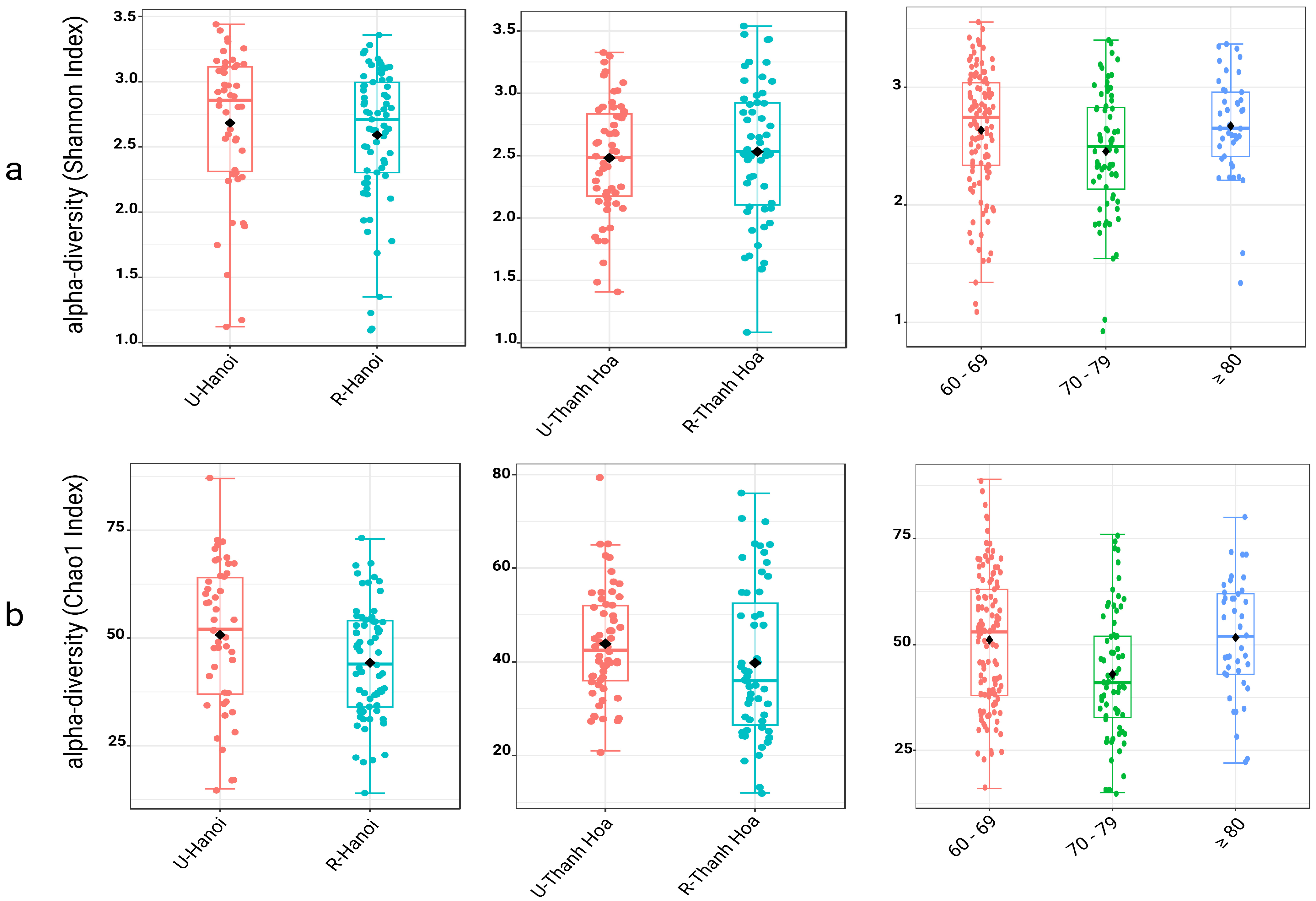
3.3. Alpha Diversity Patterns Differ by Region and Age in Vietnamese Elderly
3.4. Beta Diversity Across Regions and Age Groups
3.5. Location- and Age-Associated Shifts in the Relative Abundance of Dominant Gut Microbial Genera
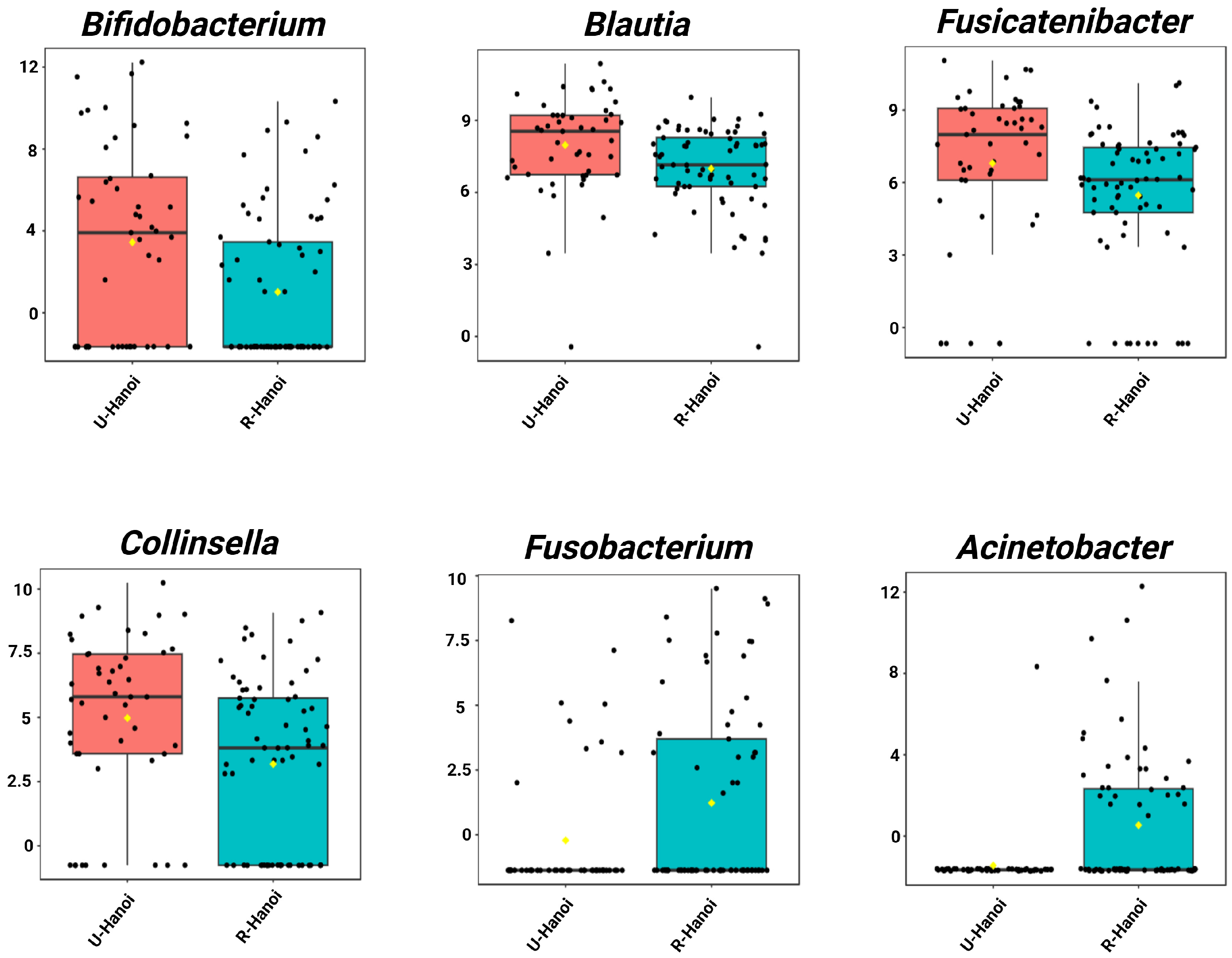
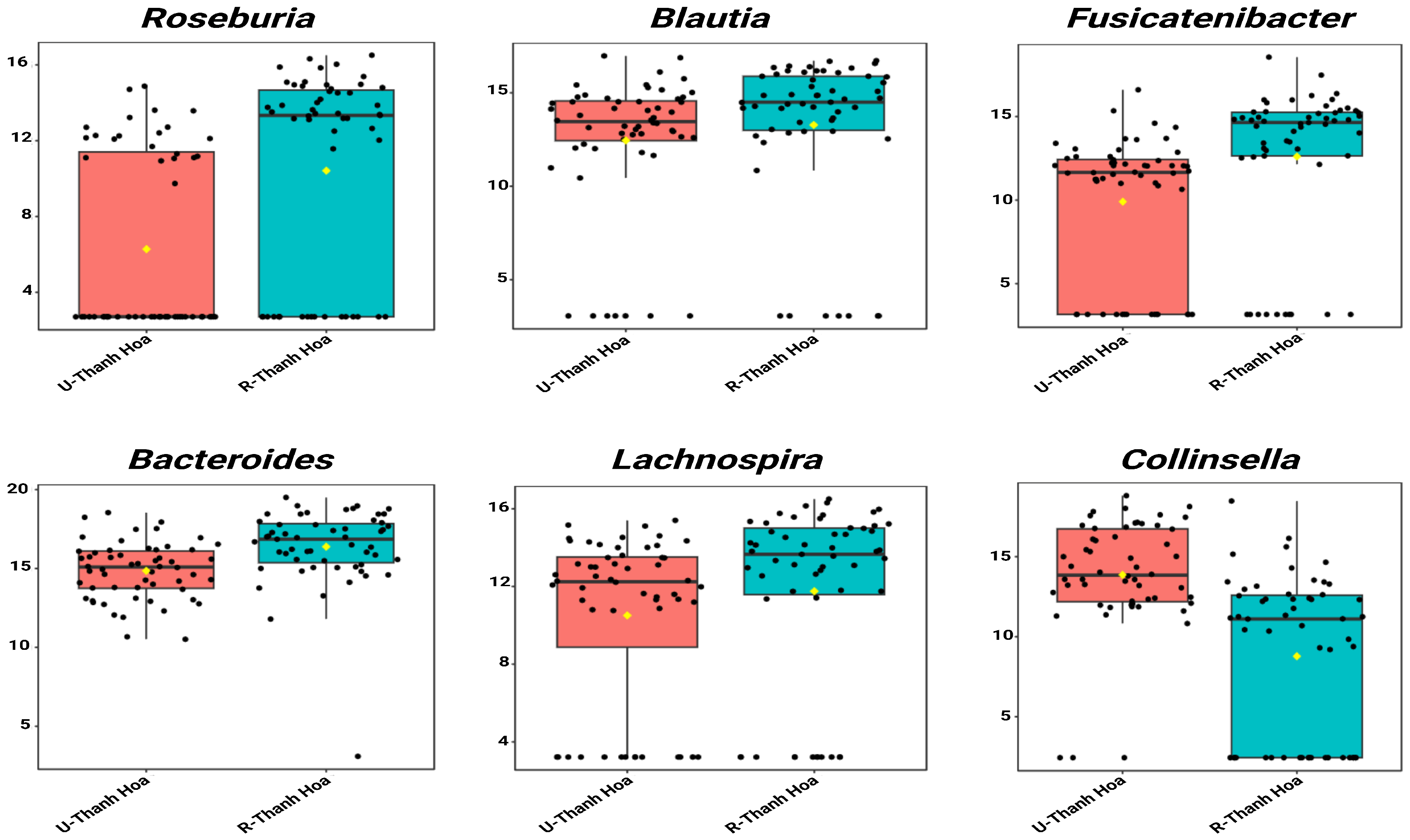
3.6. Univariate Analysis of Differentially Abundant Genera Between Urban and Rural Groups
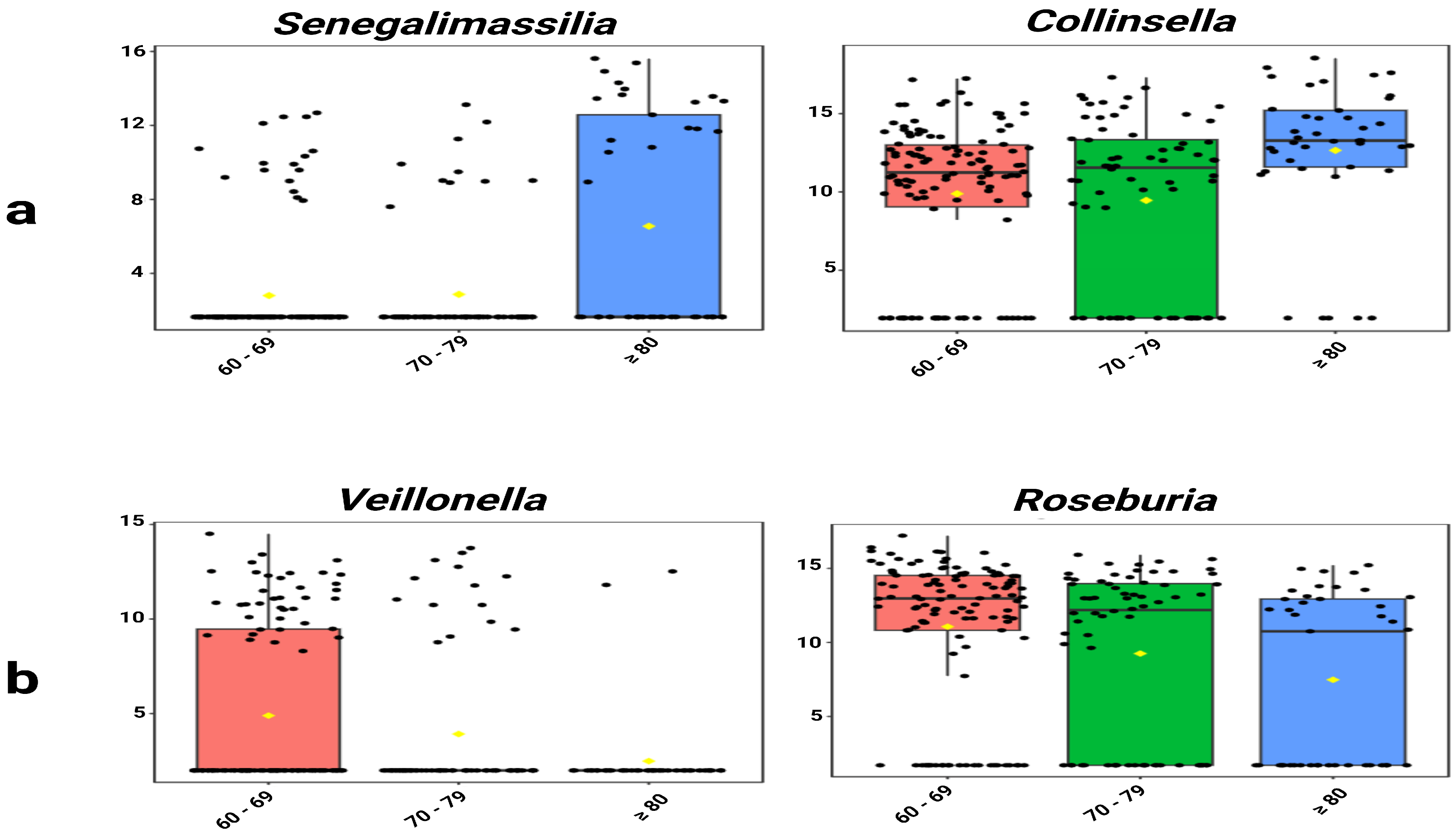
3.7. Univariate Analysis of Age-Associated Differences in Gut Microbial Genera
4. Discussion
Supplementary Materials
Author Contributions
Funding
Institutional Review Board Statement
Informed Consent Statement
Data Availability Statement
Conflicts of Interest
Abbreviations
| SCFA | Short-Chain Fatty acid |
| 16S rRNA ASV | 16S Ribosomal RNA Amplicon Sequence Variant |
| OTUs | Operational Taxonomic Units |
| PCoA | Principal Coordinates Analysis |
| PERMANOVA | Permutational Multivariate Analysis of Variance |
| LEfSe | Linear Discriminant Analysis Effect Size |
| LDA | Linear Discriminant Analysis |
| IBD | Inflammatory Bowel Disease |
| PHC | Primary Health Care |
| V3–V4 | Variable Regions 3 and 4 of the 16S rRNA Gene |
| DNA | Deoxyribonucleic Acid |
| MiSeq | Illumina MiSeq Sequencing Platform |
| DADA2 | Divisive Amplicon Denoising Algorithm 2 |
| QIIME2 | Quantitative Insights Into Microbial Ecology 2 |
| SILVA | SILVA rRNA Database |
| FDR | False Discovery Rate |
| IL-10 | Interleukin-10 |
| IFN-γ | Interferon-gamma |
| TNF-α | Tumor Necrosis Factor-alpha |
| IL-1β | Interleukin-1 beta |
| IL-6 | Interleukin-6 |
| IL-8 | Interleukin-8 |
| TGF-β | Transforming Growth Factor-beta |
| DAAs | Direct-acting antivirals |
| PVPP | polyvinylpolypyrrolidone |
References
- Ley, R.E.; Lozupone, C.A.; Hamady, M.; Knight, R.; Gordon, J.I. Worlds within Worlds: Evolution of the Vertebrate Gut Microbiota. Nat. Rev. Microbiol. 2008, 6, 776–788. [Google Scholar] [CrossRef] [Scilit]
- Qin, J.; Li, R.; Raes, J.; Arumugam, M.; Burgdorf, K.S.; Manichanh, C.; Nielsen, T.; Pons, N.; Levenez, F.; Yamada, T.; et al. A Human Gut Microbial Gene Catalogue Established by Metagenomic Sequencing. Nature 2010, 464, 59–65. [Google Scholar] [CrossRef] [Scilit] [PubMed]
- Stephens, R.W.; Arhire, L.; Covasa, M. Gut Microbiota: From Microorganisms to Metabolic Organ Influencing Obesity. Obesity 2018, 26, 801–809. [Google Scholar] [CrossRef] [Scilit] [PubMed]
- Sekirov, I.; Russell, S.L.; Antunes, L.C.; Finlay, B.B. Gut Microbiota in Health and Disease. Physiol. Rev. 2010, 90, 859–904. [Google Scholar] [CrossRef] [Scilit] [PubMed]
- Nicholson, J.K.; Holmes, E.; Kinross, J.; Burcelin, R.; Gibson, G.; Jia, W.; Pettersson, S. Host-Gut Microbiota Metabolic Interactions. Science 2012, 336, 1262–1267. [Google Scholar] [CrossRef] [Scilit]
- Das, B.; Nair, G.B. Homeostasis and Dysbiosis of the Gut Microbiome in Health and Disease. J. Biosci. 2019, 44, 117. [Google Scholar] [CrossRef] [Scilit]
- Candela, M.; Biagi, E.; Turroni, S.; Maccaferri, S.; Figini, P.; Brigidi, P. Dynamic Efficiency of the Human Intestinal Microbiota. Crit. Rev. Microbiol. 2015, 41, 165–171. [Google Scholar] [CrossRef] [Scilit]
- Joossens, M.; Huys, G.; Cnockaert, M.; De Preter, V.; Verbeke, K.; Rutgeerts, P.; Vandamme, P.; Vermeire, S. Dysbiosis of the Faecal Microbiota in Patients with Crohn’s Disease and Their Unaffected Relatives. Gut 2011, 60, 631–637. [Google Scholar] [CrossRef] [Scilit]
- Morgan, X.C.; Tickle, T.L.; Sokol, H.; Gevers, D.; Devaney, K.L.; Ward, D.V.; Reyes, J.A.; Shah, S.A.; LeLeiko, N.; Snapper, S.B.; et al. Dysfunction of the Intestinal Microbiome in Inflammatory Bowel Disease and Treatment. Genome Biol. 2012, 13, R79. [Google Scholar] [CrossRef] [Scilit]
- Kootte, R.S.; Levin, E.; Salojärvi, J.; Smits, L.P.; Hartstra, A.V.; Udayappan, S.D.; Hermes, G.; Bouter, K.E.; Koopen, A.M.; Holst, J.J.; et al. Improvement of Insulin Sensitivity after Lean Donor Feces in Metabolic Syndrome Is Driven by Baseline Intestinal Microbiota Composition. Cell Metab. 2017, 26, 611–619.e6. [Google Scholar] [CrossRef] [Scilit]
- Yang, T.; Santisteban, M.M.; Rodriguez, V.; Li, E.; Ahmari, N.; Carvajal, J.M.; Zadeh, M.; Gong, M.; Qi, Y.; Zubcevic, J.; et al. Gut Dysbiosis Is Linked to Hypertension. Hypertension 2015, 65, 1331–1340. [Google Scholar] [CrossRef] [Scilit]
- Candela, M.; Biagi, E.; Maccaferri, S.; Turroni, S.; Brigidi, P. Intestinal Microbiota Is a Plastic Factor Responding to Environmental Changes. Trends Microbiol. 2012, 20, 385–391. [Google Scholar] [CrossRef] [Scilit] [PubMed]
- Varghese, S.; Rao, S.; Khattak, A.; Zamir, F.; Chaari, A. Physical Exercise and the Gut Microbiome: A Bidirectional Relationship Influencing Health and Performance. Nutrients 2024, 16, 3663. [Google Scholar] [CrossRef] [Scilit] [PubMed]
- Nobre, J.G.; Alpuim Costa, D. Sociobiome: How Do Socioeconomic Factors Influence Gut Microbiota and Enhance Pathology Susceptibility?—A Mini-Review. Front. Gastroenterol. 2022, 1, 1020190. [Google Scholar] [CrossRef] [Scilit]
- Sirisinha, S. The Potential Impact of Gut Microbiota on Your Health: Current Status and Future Challenges. Asian Pac. J. Allergy Immunol. 2016, 34, 249–264. [Google Scholar] [CrossRef] [Scilit] [PubMed]
- Leeming, E.R.; Johnson, A.J.; Spector, T.D.; Le Roy, C.I. Effect of Diet on the Gut Microbiota: Rethinking Intervention Duration. Nutrients 2019, 11, 2862. [Google Scholar] [CrossRef] [Scilit]
- Ramirez, J.; Guarner, F.; Bustos Fernandez, L.; Maruy, A.; Sdepanian, V.L.; Cohen, H. Antibiotics as Major Disruptors of Gut Microbiota. Front. Cell Infect. Microbiol. 2020, 10, 572912. [Google Scholar] [CrossRef] [Scilit]
- Zhang, J.; Zhang, C.; Zhang, Q.; Yu, L.; Chen, W.; Xue, Y.; Zhai, Q. Meta-Analysis of the Effects of Proton Pump Inhibitors on the Human Gut Microbiota. BMC Microbiol. 2023, 23, 171. [Google Scholar] [CrossRef] [Scilit]
- Shin, J.-H.; Sim, M.; Lee, J.-Y.; Shin, D.-M. Lifestyle and Geographic Insights into the Distinct Gut Microbiota in Elderly Women from Two Different Geographic Locations. J. Physiol. Anthropol. 2016, 35, 31. [Google Scholar] [CrossRef] [Scilit]
- Cheng, J.; Palva, A.M.; de Vos, W.M.; Satokari, R. Contribution of the Intestinal Microbiota to Human Health: From Birth to 100 Years of Age. Curr. Top Microbiol. Immunol. 2013, 358, 323–346. [Google Scholar]
- Guigoz, Y.; Doré, J.; Schiffrin, E.J. The Inflammatory Status of Old Age Can Be Nurtured from the Intestinal Environment. Curr. Opin. Clin. Nutr. Metab. Care 2008, 11, 13–20. [Google Scholar] [CrossRef] [Scilit]
- Zwielehner, J.; Liszt, K.; Handschur, M.; Lassl, C.; Lapin, A.; Haslberger, A.G. Combined Pcr-Dgge Fingerprinting and Quantitative-Pcr Indicates Shifts in Fecal Population Sizes and Diversity of Bacteroides, Bifidobacteria and Clostridium Cluster IV in Institutionalized Elderly. Exp. Gerontol. 2009, 44, 440–446. [Google Scholar] [CrossRef] [Scilit]
- Leung, K.; Thuret, S. Gut Microbiota: A Modulator of Brain Plasticity and Cognitive Function in Ageing. Healthcare 2015, 3, 898–916. [Google Scholar] [CrossRef] [Scilit] [PubMed]
- Ferrucci, L.; Fabbri, E. Inflammageing: Chronic Inflammation in Ageing, Cardiovascular Disease, And frailty. Nat. Rev. Cardiol. 2018, 15, 505–522. [Google Scholar] [CrossRef] [Scilit] [PubMed]
- Claesson, M.J.; Jeffery, I.B.; Conde, S.; Power, S.E.; O’Connor, E.M.; Cusack, S.; Harris, H.M.; Coakley, M.; Lakshminarayanan, B.; O’Sullivan, O.; et al. Gut Microbiota Composition Correlates with Diet and Health in the Elderly. Nature 2012, 488, 178–184. [Google Scholar] [CrossRef] [Scilit] [PubMed]
- Bian, G.; Gloor, G.B.; Gong, A.; Jia, C.; Zhang, W.; Hu, J.; Zhang, H.; Zhang, Y.; Zhou, Z.; Zhang, J.; et al. The Gut Microbiota of Healthy Aged Chinese Is Similar to That of the Healthy Young. mSphere 2017, 2, e00327-17. [Google Scholar] [CrossRef] [Scilit]
- Elsherbiny, N.M.; Kamal El-Din, O.M.; Hassan, E.A.; Hetta, H.F.; Alatawy, R.; Sayed Ali, M.A.; Alanazi, F.E.; Abdel-Maksoud, M.S.; Aljohani, H.M.; Badary, M.S.; et al. Direct-Acting Antiviral Treatment Significantly Shaped the Gut Microbiota in Chronic Hepatitis C Patients: A Pilot Study. Front. Microbiol. 2025, 16, 1664447. [Google Scholar] [CrossRef] [Scilit]
- Engberg, H.; Oksuzyan, A.; Jeune, B.; Vaupel, J.W.; Christensen, K. Centenarians—A Useful Model for Healthy Aging? A 29-Year Follow-up of Hospitalizations among 40,000 Danes Born in 1905. Aging Cell 2009, 8, 270–276. [Google Scholar] [CrossRef] [Scilit]
- Bucci, L.; Ostan, R.; Cevenini, E.; Pini, E.; Scurti, M.; Vitale, G.; Mari, D.; Caruso, C.; Sansoni, P.; Fanelli, F.; et al. Centenarians’ Offspring as a Model of Healthy Aging: A Reappraisal of the Data on Italian Subjects and a Comprehensive Overview. Aging 2016, 8, 510–519. [Google Scholar] [CrossRef] [Scilit]
- Odamaki, T.; Kato, K.; Sugahara, H.; Hashikura, N.; Takahashi, S.; Xiao, J.-Z.; Abe, F.; Osawa, R. Age-Related Changes in Gut Microbiota Composition from Newborn to Centenarian: A Cross-Sectional Study. BMC Microbiol. 2016, 16, 90. [Google Scholar] [CrossRef] [Scilit]
- Savarino, L.; Granchi, D.; Ciapetti, G.; Cenni, E.; Ravaglia, G.; Forti, P.; Maioli, F.; Mattioli, R. Serum Concentrations of Zinc and Selenium in Elderly People: Results in Healthy Nonagenarians/Centenarians. Exp. Gerontol. 2001, 36, 327–339. [Google Scholar] [CrossRef] [Scilit] [PubMed]
- Quoc, L.P.T.; Ngoc, N.T.B. Comparison of the Vietnamese Diet with Diets from Other Countries for Sarcopenia. Malays. J. Med. Sci. 2023, 30, 213–214. [Google Scholar] [CrossRef] [Scilit] [PubMed]
- Thi, T.N.; Bui, N.-L.; Vu Thi, H.; Vu Ngoc, S.M.; Ngo, A.D.; Truong, T.N.; Nguyen, K.-H.; Nguyen, V.H.; Nguyen, N.M.; Trinh, K.; et al. Nutritional Status and Related Factors in Vietnamese Students in 2022. Clin. Nutr. Open Sci. 2024, 54, 140–150. [Google Scholar] [CrossRef] [Scilit]
- La Anh, N. Health-Promoting Microbes in Traditional Vietnamese Fermented Foods: A Review. Food Sci. Hum. Wellness 2015, 4, 147–161. [Google Scholar] [CrossRef] [Scilit]
- Nguyen, S.D.; Biesbroek, S.; Le, T.D.; Feskens, E.J.M.; Brouwer, I.D.; Talsma, E.F. Environmental Impact and Nutrient Adequacy of Derived Dietary Patterns in Vietnam. Front. Nutr. 2023, 10, 986241. [Google Scholar] [CrossRef] [Scilit]
- Hou, Y.; Wang, S.F.; Zhou, K.; Dai, S.X. Comparison and Recommendation of Dietary Patterns Based on Nutrients for Eastern and Western Patients with Inflammatory Bowel Disease. Front. Nutr. 2022, 9, 1066252. [Google Scholar] [CrossRef] [Scilit]
- Harris, J.; Nguyen, P.H.; Tran, L.M.; Huynh, P.N. Nutrition Transition in Vietnam: Changing Food Supply, Food Prices, Household Expenditure, Diet and Nutrition Outcomes. Food Secur. 2020, 12, 1141–1155. [Google Scholar] [CrossRef] [Scilit]
- Choudhury, S.; Bi, A.Z.; Medina-Lara, A.; Morrish, N.; Veettil, P.C. The Rural Food Environment and Its Association with Diet, Nutrition Status, and Health Outcomes in Low-Income and Middle-Income Countries (Lmics): A Systematic Review. BMC Public Health 2025, 25, 994. [Google Scholar] [CrossRef] [Scilit]
- Raneri, J.; Kennedy, G.; Nguyen, T.; Wertheim-Heck, S.; Do, H.; Haan, S.; Phuong, N.; Huong, L.; Mai, T.; Duong, T.; et al. Determining Key Research Areas for Healthier Diets and Sustainable Food Systems in Viet Nam; International Food Policy Research Institute (IFPRI): Washington, DC, USA, 2019. [Google Scholar]
- Tripathy, J.P.; Thakur, J.S.; Jeet, G.; Chawla, S.; Jain, S.; Prasad, R. Urban Rural Differences in Diet, Physical Activity and Obesity in India: Are We Witnessing the Great Indian Equalisation? Results from a Cross-Sectional Steps Survey. BMC Public Health 2016, 16, 816. [Google Scholar] [CrossRef] [Scilit]
- McCormack, L.; Wey, H.; Meendering, J.; Specker, B. Differences in Physical Activity and Diet Patterns between Non-Rural and Rural Adults. Nutrients 2018, 10, 1601. [Google Scholar] [CrossRef] [Scilit]
- Lloyd-Price, J.; Abu-Ali, G.; Huttenhower, C. The Healthy Human Microbiome. Genome Med. 2016, 8, 51. [Google Scholar] [CrossRef] [Scilit]
- Kong, F.; Deng, F.; Li, Y.; Zhao, J. Identification of Gut Microbiome Signatures Associated with Longevity Provides a Promising Modulation Target for Healthy Aging. Gut Microbes 2019, 10, 210–215. [Google Scholar] [CrossRef] [Scilit] [PubMed]
- Abdill, R.J.; Graham, S.P.; Rubinetti, V.; Ahmadian, M.; Hicks, P.; Chetty, A.; McDonald, D.; Ferretti, P.; Gibbons, E.; Rossi, M.; et al. Integration of 168,000 Samples Reveals Global Patterns of the Human Gut Microbiome. Cell 2025, 188, 1100–1118.e17. [Google Scholar] [CrossRef] [Scilit] [PubMed]
- Chen, L.A.; Boyle, K. The Role of the Gut Microbiome in Health and Disease in the Elderly. Curr. Gastroenterol. Rep. 2024, 26, 217–230. [Google Scholar] [CrossRef] [Scilit]
- Mallet, L.; Spinewine, A.; Huang, A. The Challenge of Managing Drug Interactions in Elderly People. Lancet 2007, 370, 185–191. [Google Scholar] [CrossRef] [Scilit] [PubMed]
- Tap, J.; Lejzerowicz, F.; Cotillard, A.; Pichaud, M.; McDonald, D.; Song, S.J.; Knight, R.; Veiga, P.; Derrien, M. Global Branches and Local States of the Human Gut Microbiome Define Associations with Environmental and Intrinsic Factors. Nat. Commun. 2023, 14, 3310. [Google Scholar] [CrossRef] [Scilit]
- Johnson, K.V. Gut Microbiome Composition and Diversity Are Related to Human Personality Traits. Hum. Microb. J. 2020, 15, 100069. [Google Scholar] [CrossRef] [Scilit]
- Huttenhower, C.; Gevers, D.; Knight, R.; Abubucker, S.; Badger, J.H.; Chinwalla, A.T.; Creasy, H.H.; Earl, A.M.; FitzGerald, M.G.; Fulton, R.S.; et al. Structure, Function and Diversity of the Healthy Human Microbiome. Nature 2012, 486, 207–214. [Google Scholar] [CrossRef] [Scilit]
- Karlsson, F.H.; Fåk, F.; Nookaew, I.; Tremaroli, V.; Fagerberg, B.; Petranovic, D.; Bäckhed, F.; Nielsen, J. Symptomatic Atherosclerosis Is Associated with an Altered Gut Metagenome. Nat. Commun. 2012, 3, 1245. [Google Scholar] [CrossRef] [Scilit]
- Le Chatelier, E.; Nielsen, T.; Qin, J.; Prifti, E.; Hildebrand, F.; Falony, G.; Almeida, M.; Arumugam, M.; Batto, J.M.; Kennedy, S.; et al. Richness of Human Gut Microbiome Correlates with Metabolic Markers. Nature 2013, 500, 541–546. [Google Scholar] [CrossRef] [Scilit]
- Griffin, N.W.; Ahern, P.P.; Cheng, J.; Heath, A.C.; Ilkayeva, O.; Newgard, C.B.; Fontana, L.; Gordon, J.I. Prior Dietary Practices and Connections to a Human Gut Microbial Metacommunity Alter Responses to Diet Interventions. Cell Host Microbe 2017, 21, 84–96. [Google Scholar] [CrossRef] [Scilit] [PubMed]
- Lewis, J.D.; Chen, E.Z.; Baldassano, R.N.; Otley, A.R.; Griffiths, A.M.; Lee, D.; Bittinger, K.; Bailey, A.; Friedman, E.S.; Hoffmann, C.; et al. Inflammation, Antibiotics, and Diet as Environmental Stressors of the Gut Microbiome in Pediatric Crohn’s Disease. Cell Host Microbe 2015, 18, 489–500. [Google Scholar] [CrossRef] [Scilit] [PubMed]
- Biagi, E.; Franceschi, C.; Rampelli, S.; Severgnini, M.; Ostan, R.; Turroni, S.; Consolandi, C.; Quercia, S.; Scurti, M.; Monti, D.; et al. Gut Microbiota and Extreme Longevity. Curr. Biol. 2016, 26, 1480–1485. [Google Scholar] [CrossRef] [Scilit] [PubMed]
- Tokudome, S.; Ichikawa, Y.; Okuyama, H.; Tokudome, Y.; Goto, C.; Imaeda, N.; Kuriki, K.; Suzuki, S.; Shibata, K.; Jiang, J.; et al. The Mediterranean vs. the Japanese Diet. Eur. J. Clin. Nutr. 2004, 58, 1323. [Google Scholar] [CrossRef] [Scilit]
- Hetta, H.F.; Ramadan, Y.N.; Alharbi, A.A.; Alsharef, S.; Alkindy, T.T.; Alkhamali, A.; Albalawi, A.S.; El Amin, H. Gut Microbiome as a Target of Intervention in Inflammatory Bowel Disease Pathogenesis and Therapy. Immuno 2024, 4, 400–425. [Google Scholar] [CrossRef] [Scilit]
- Perrone, P.; D’Angelo, S. Gut Microbiota Modulation through Mediterranean Diet Foods: Implications for Human Health. Nutrients 2025, 17, 948. [Google Scholar] [CrossRef] [Scilit]
- Bag, S.; Saha, B.; Mehta, O.; Anbumani, D.; Kumar, N.; Dayal, M.; Pant, A.; Kumar, P.; Saxena, S.; Allin, K.H.; et al. An Improved Method for High Quality Metagenomics DNA Extraction from Human and Environmental Samples. Sci. Rep. 2016, 6, 26775. [Google Scholar] [CrossRef] [Scilit]
- Fadrosh, D.W.; Ma, B.; Gajer, P.; Sengamalay, N.; Ott, S.; Brotman, R.M.; Ravel, J. An Improved Dual-Indexing Approach for Multiplexed 16s Rrna Gene Sequencing on the Illumina Miseq Platform. Microbiome 2014, 2, 6. [Google Scholar] [CrossRef] [Scilit]
- Dhariwal, A.; Chong, J.; Habib, S.; King, I.L.; Agellon, L.B.; Xia, J. Microbiomeanalyst: A Web-Based Tool for Comprehensive Statistical, Visual and Meta-Analysis of Microbiome Data. Nucleic Acids Res. 2017, 45, W180–W188. [Google Scholar] [CrossRef] [Scilit]
- Yu, S.J.; Morris, A.; Kayal, A.; Milošević, I.; Van, T.T.H.; Bajagai, Y.S.; Stanley, D. Pioneering Gut Health Improvements in Piglets with Phytogenic Feed Additives. Appl. Microbiol. Biotechnol. 2024, 108, 142. [Google Scholar] [CrossRef] [Scilit]
- Quast, C.; Pruesse, E.; Yilmaz, P.; Gerken, J.; Schweer, T.; Yarza, P.; Peplies, J.; Glöckner, F.O. The Silva Ribosomal Rna Gene Database Project: Improved Data Processing and Web-Based Tools. Nucleic Acids Res. 2013, 41, D590–D596. [Google Scholar] [CrossRef] [Scilit] [PubMed]
- Kabwe, M.H.; Vikram, S.; Mulaudzi, K.; Jansson, J.K.; Makhalanyane, T.P. The Gut Mycobiota of Rural and Urban Individuals Is Shaped by Geography. BMC Microbiol. 2020, 20, 257. [Google Scholar] [CrossRef] [Scilit] [PubMed]
- Ayeni, F.A.; Biagi, E.; Rampelli, S.; Fiori, J.; Soverini, M.; Audu, H.J.; Cristino, S.; Caporali, L.; Schnorr, S.L.; Carelli, V.; et al. Infant and Adult Gut Microbiome and Metabolome in Rural Bassa and Urban Settlers from Nigeria. Cell Rep. 2018, 23, 3056–3067. [Google Scholar] [CrossRef] [Scilit] [PubMed]
- Halpern, M.; Fridman, S.; Atamna-Ismaeel, N.; Izhaki, I. Rosenbergiella nectarea gen. nov., sp. nov., in the Family Enterobacteriaceae, Isolated from Floral Nectar. Int. J. Syst. Evol. Microbiol. 2013, 63 Pt 11, 4259–4265. [Google Scholar] [CrossRef] [Scilit]
- Teixeira, C.G.; Fusieger, A.; Milião, G.L.; Martins, E.; Drider, D.; Nero, L.A.; de Carvalho, A.F. Weissella: An Emerging Bacterium with Promising Health Benefits. Probiotics Antimicrob Proteins 2021, 13, 915–925. [Google Scholar] [CrossRef] [Scilit]
- Ortiz-Alvarez, L.; Xu, H.; Martinez-Tellez, B. Influence of Exercise on the Human Gut Microbiota of Healthy Adults: A Systematic Review. Clin. Transl. Gastroenterol. 2020, 11, e00126. [Google Scholar] [CrossRef] [Scilit]
- Badal, V.D.; Vaccariello, E.D.; Murray, E.R.; Yu, K.E.; Knight, R.; Jeste, D.V.; Nguyen, T.T. The Gut Microbiome, Aging, and Longevity: A Systematic Review. Nutrients 2020, 12, 3759. [Google Scholar] [CrossRef] [Scilit]
- Tzemah-Shahar, R.; Turjeman, S.; Sharon, E.; Gamliel, G.; Hochner, H.; Koren, O.; Agmon, M. Signs of Aging in Midlife: Physical Function and Sex Differences in Microbiota. Geroscience 2024, 46, 1477–1488. [Google Scholar] [CrossRef] [Scilit]
- Collado, M.C.; Donat, E.; Ribes-Koninckx, C.; Calabuig, M.; Sanz, Y. Imbalances in Faecal and Duodenal Bifidobacterium Species Composition in Active and Non-Active Coeliac Disease. BMC Microbiol. 2008, 8, 232. [Google Scholar] [CrossRef] [Scilit]
- Whorwell, P.J.; Altringer, L.; Morel, J.; Bond, Y.; Charbonneau, D.; O’Mahony, L.; Kiely, B.; Shanahan, F.; Quigley, E.M. Efficacy of an Encapsulated Probiotic Bifidobacterium Infantis 35624 in Women with Irritable Bowel Syndrome. Am. J. Gastroenterol. 2006, 101, 1581–1590. [Google Scholar] [CrossRef] [Scilit]
- Groeger, D.; O’Mahony, L.; Murphy, E.F.; Bourke, J.F.; Dinan, T.G.; Kiely, B.; Shanahan, F.; Quigley, E.M. Bifidobacterium infantis 35624 Modulates Host Inflammatory Processes Beyond the Gut. Gut Microbes 2013, 4, 325–339. [Google Scholar] [CrossRef] [Scilit] [PubMed]
- Waters, J.L.; Ley, R.E. The Human Gut Bacteria Christensenellaceae Are Widespread, Heritable, and Associated with Health. BMC Biol. 2019, 17, 83. [Google Scholar] [CrossRef] [Scilit]
- Pihelgas, S.; Ehala-Aleksejev, K.; Adamberg, S.; Kazantseva, J.; Adamberg, K. The Gut Microbiota of Healthy Individuals Remains Resilient in Response to the Consumption of Various Dietary Fibers. Sci. Rep. 2024, 14, 22208. [Google Scholar] [CrossRef] [Scilit] [PubMed]
- Liu, X.; Mao, B.; Gu, J.; Wu, J.; Cui, S.; Wang, G.; Zhao, J.; Zhang, H.; Chen, W. Blautia—A New Functional Genus with Potential Probiotic Properties? Gut Microbes 2021, 13, 1875796. [Google Scholar] [CrossRef] [Scilit] [PubMed]
- Hamdi, A.; Lloyd, C.; Eri, R.; Van, T.T. Postbiotics: A Promising Approach to Combat Age-Related Diseases. Life 2025, 15, 1190. [Google Scholar] [CrossRef] [Scilit]
- Park, S.-H.; Kim, K.-A.; Ahn, Y.-T.; Jeong, J.-J.; Huh, C.-S.; Kim, D.-H. Comparative Analysis of Gut Microbiota in Elderly People of Urbanized Towns and Longevity Villages. BMC Microbiol. 2015, 15, 49. [Google Scholar] [CrossRef] [Scilit]
- Kim, B.S.; Choi, C.W.; Shin, H.; Jin, S.P.; Bae, J.S.; Han, M.; Seo, E.Y.; Chun, J.; Chung, J.H. Comparison of the Gut Microbiota of Centenarians in Longevity Villages of South Korea with Those of Other Age Groups. J. Microbiol. Biotechnol. 2019, 29, 429–440. [Google Scholar] [CrossRef] [Scilit]
- Naito, Y.; Takagi, T.; Inoue, R.; Kashiwagi, S.; Mizushima, K.; Tsuchiya, S.; Itoh, Y.; Okuda, K.; Tsujimoto, Y.; Adachi, A.; et al. Gut Microbiota Differences in Elderly Subjects between Rural City Kyotango and Urban City Kyoto: An Age-Gender-Matched Study. J. Clin. Biochem. Nutr. 2019, 65, 125–131. [Google Scholar] [CrossRef] [Scilit]
- Han, Y.W. Fusobacterium Nucleatum: A Commensal-Turned Pathogen. Curr. Opin. Microbiol. 2015, 23, 141–147. [Google Scholar] [CrossRef] [Scilit]
- Bolstad, A.I.; Jensen, H.B.; Bakken, V. Taxonomy, Biology, and Periodontal Aspects of Fusobacterium nucleatum. Clin. Microbiol. Rev. 1996, 9, 55–71. [Google Scholar] [CrossRef]
- Zhou, Z.; Chen, J.; Yao, H.; Hu, H. Fusobacterium and Colorectal Cancer. Front. Oncol. 2018, 8, 371. [Google Scholar] [CrossRef] [Scilit]
- Visca, P.; Seifert, H.; Towner, K.J. Acinetobacter Infection—An Emerging Threat to Human Health. IUBMB Life 2011, 63, 1048–1054. [Google Scholar] [CrossRef] [Scilit] [PubMed]
- Murray, C.K.; Hospenthal, D.R. Acinetobacter Infection in the Icu. Crit. Care Clin. 2008, 24, 237–248, vii. [Google Scholar] [CrossRef] [Scilit] [PubMed]
- Rondinella, D.; Raoul, P.C.; Valeriani, E.; Venturini, I.; Cintoni, M.; Severino, A.; Galli, F.S.; Mora, V.; Mele, M.C.; Cammarota, G.; et al. The Detrimental Impact of Ultra-Processed Foods on the Human Gut Microbiome and Gut Barrier. Nutrients 2025, 17, 859. [Google Scholar] [CrossRef] [Scilit] [PubMed]
- Santoro, A.; Ostan, R.; Candela, M.; Biagi, E.; Brigidi, P.; Capri, M.; Franceschi, C. Gut Microbiota Changes in the Extreme Decades of Human Life: A Focus on Centenarians. Cell. Mol. Life 2017, 75, 129–148. [Google Scholar] [CrossRef] [Scilit]
- Finlay, B.B.; Pettersson, S.; Melby, M.K.; Bosch, T.C.G. The Microbiome Mediates Environmental Effects on Aging. Bioessays 2019, 41, 1800257. [Google Scholar] [CrossRef] [Scilit]
- Zou, B.; Zhao, D.; Zhou, S.; Kang, J.X.; Wang, B. Insight into the Effects of Omega-3 Fatty Acids on Gut Microbiota: Impact of a Balanced Tissue Omega-6/Omega-3 Ratio. Front. Nutr. 2025, 12, 1575323. [Google Scholar] [CrossRef] [Scilit]
- Nie, K.; Ma, K.; Luo, W.; Shen, Z.; Yang, Z.; Xiao, M.; Tong, T.; Yang, Y.; Wang, X. Roseburia Intestinalis: A Beneficial Gut Organism from the Discoveries in Genus and Species. Front. Cell Infect. Microbiol. 2021, 11, 757718. [Google Scholar] [CrossRef] [Scilit]
- Tamanai-Shacoori, Z.; Smida, I.; Bousarghin, L.; Loreal, O.; Meuric, V.; Fong, S.B.; Bonnaure-Mallet, M.; Jolivet-Gougeon, A. Roseburia spp.: A Marker of Health? Future Microbiol. 2017, 12, 157–170. [Google Scholar] [CrossRef] [Scilit]
- Rode, L.M.; Genthner, B.R.; Bryant, M.P. Syntrophic Association by Cocultures of the Methanol- and CO2-H2-Utilizing Species Eubacterium Limosum and Pectin-Fermenting Lachnospira Multiparus during Growth in a Pectin Medium. Appl. Environ. Microbiol. 1981, 42, 20–22. [Google Scholar] [CrossRef] [Scilit]
- Marounek, M.; Dušková, D. Metabolism of Pectin in Rumen Bacteria Butyrivibrio fibrisolvens and Prevotella ruminicola. Lett. Appl. Microbiol. 1999, 29, 429–433. [Google Scholar] [CrossRef] [Scilit]
- Amaruddin, A.I.; Hamid, F.; Koopman, J.P.R.; Muhammad, M.; Brienen, E.A.T.; van Lieshout, L.; Geelen, A.R.; Wahyuni, S.; Kuijper, E.J.; Sartono, E.; et al. The Bacterial Gut Microbiota of Schoolchildren from High and Low Socioeconomic Status: A Study in an Urban Area of Makassar, Indonesia. Microorganisms 2020, 8, 961. [Google Scholar] [CrossRef] [Scilit]
- Yoon, H.; Park, S.; Jun, Y.K.; Choi, Y.; Shin, C.M.; Park, Y.S.; Kim, N.; Lee, D.H. Evaluation of Bacterial and Fungal Biomarkers for Differentiation and Prognosis of Patients with Inflammatory Bowel Disease. Microorganisms 2023, 11, 2882. [Google Scholar] [CrossRef] [Scilit] [PubMed]
- Gomez-Arango, L.F.; Barrett, H.L.; Wilkinson, S.A.; Callaway, L.K.; McIntyre, H.D.; Morrison, M.; Dekker Nitert, M. Low Dietary Fiber Intake Increases Collinsella Abundance in the Gut Microbiota of Overweight and Obese Pregnant Women. Gut Microbes 2018, 9, 189–201. [Google Scholar] [CrossRef] [Scilit] [PubMed]
- Sharma Ashok, K.; Petrzelkova, K.; Pafco, B.; Jost Robinson Carolyn, A.; Fuh, T.; Wilson Brenda, A.; Stumpf Rebecca, M.; Torralba Manolito, G.; Blekhman, R.; White, B.; et al. Traditional Human Populations and Nonhuman Primates Show Parallel Gut Microbiome Adaptations to Analogous Ecological Conditions. mSystems 2020, 5, e00815-20. [Google Scholar] [CrossRef] [Scilit] [PubMed]
- Ross, M.C.; Muzny, D.M.; McCormick, J.B.; Gibbs, R.A.; Fisher-Hoch, S.P.; Petrosino, J.F. 16s Gut Community of the Cameron County Hispanic Cohort. Microbiome 2015, 3, 7. [Google Scholar] [CrossRef] [Scilit]
- Das, B.; Ghosh, T.S.; Kedia, S.; Rampal, R.; Saxena, S.; Bag, S.; Mitra, R.; Dayal, M.; Mehta, O.; Surendranath, A.; et al. Analysis of the Gut Microbiome of Rural and Urban Healthy Indians Living in Sea Level and High Altitude Areas. Sci. Rep. 2018, 8, 10104. [Google Scholar] [CrossRef] [Scilit]
- Andreu-Sánchez, S.; Blanco-Míguez, A.; Wang, D.; Golzato, D.; Manghi, P.; Heidrich, V.; Fackelmann, G.; Zhernakova, D.V.; Kurilshikov, A.; Valles-Colomer, M.; et al. Global Genetic Diversity of Human Gut Microbiome Species Is Related to Geographic Location and Host Health. Cell 2025, 188, P3942–P3959.e9. [Google Scholar] [CrossRef] [Scilit]
- Angelakis, E.; Yasir, M.; Bachar, D.; Azhar, E.I.; Lagier, J.C.; Bibi, F.; Jiman-Fatani, A.A.; Alawi, M.; Bakarman, M.A.; Robert, C.; et al. Gut Microbiome and Dietary Patterns in Different Saudi Populations and Monkeys. Sci. Rep. 2016, 6, 32191. [Google Scholar] [CrossRef] [Scilit]
- Lynch, S.V.; Pedersen, O. The Human Intestinal Microbiome in Health and Disease. N. Engl. J. Med. 2016, 375, 2369–2379. [Google Scholar] [CrossRef] [Scilit]
- Kumar, M.; Babaei, P.; Ji, B.; Nielsen, J. Human Gut Microbiota and Healthy Aging: Recent Developments and Future Prospective. Nutr. Healthy Aging 2016, 4, 3–16. [Google Scholar] [CrossRef] [Scilit] [PubMed]
- Wang, N.; Li, R.; Lin, H.; Fu, C.; Wang, X.; Zhang, Y.; Su, M.; Huang, P.; Qian, J.; Jiang, F.; et al. Enriched Taxa Were Found among the Gut Microbiota of Centenarians in East China. PLoS ONE 2019, 14, e0222763. [Google Scholar] [CrossRef] [Scilit] [PubMed]
- Wang, L.; Wu, J.; Li, K.; Sadd, B.M.; Guo, Y.; Zhuang, D.; Zhang, Z.; Chen, Y.; Evans, J.D.; Guo, J.; et al. Dynamic Changes of Gut Microbial Communities of Bumble Bee Queens through Important Life Stages. mSystems 2019, 4, e00631-19. [Google Scholar] [CrossRef] [Scilit] [PubMed]
- La-Ongkham, O.; Nakphaichit, M.; Nakayama, J.; Keawsompong, S.; Nitisinprasert, S. Age-Related Changes in the Gut Microbiota and the Core Gut Microbiome of Healthy Thai Humans. 3 Biotech 2020, 10, 276. [Google Scholar] [CrossRef] [Scilit]
- Kashtanova, D.A.; Klimenko, N.S.; Strazhesko, I.D.; Starikova, E.V.; Glushchenko, O.E.; Gudkov, D.A.; Tkacheva, O.N. A Cross-Sectional Study of the Gut Microbiota Composition in Moscow Long-Livers. Microorganisms 2020, 8, 1162. [Google Scholar] [CrossRef] [Scilit]
- Cortés-Martín, A.; García-Villalba, R.; González-Sarrías, A.; Romo-Vaquero, M.; Loria-Kohen, V.; Ramírez-de-Molina, A.; Tomás-Barberán, F.A.; Selma, M.V.; Espín, J.C. The Gut Microbiota Urolithin Metabotypes Revisited: The Human Metabolism of Ellagic Acid Is Mainly Determined by Aging. Food Funct. 2018, 9, 4100–4106. [Google Scholar] [CrossRef] [Scilit]
- Zhang, X.; Zhong, H.; Li, Y.; Shi, Z.; Ren, H.; Zhang, Z.; Zhou, X.; Tang, S.; Han, X.; Lin, Y.; et al. Sex- and Age-Related Trajectories of the Adult Human Gut Microbiota Shared across Populations of Different Ethnicities. Nat. Aging 2021, 1, 87–100. [Google Scholar] [CrossRef] [Scilit]
- Park, J.; Kato, K.; Murakami, H.; Hosomi, K.; Tanisawa, K.; Nakagata, T.; Ohno, H.; Konishi, K.; Kawashima, H.; Chen, Y.A.; et al. Comprehensive Analysis of Gut Microbiota of a Healthy Population and Covariates Affecting Microbial Variation in Two Large Japanese Cohorts. BMC Microbiol. 2021, 21, 151. [Google Scholar] [CrossRef] [Scilit]
- Liu, H.; Wang, J.; He, T.; Becker, S.; Zhang, G.; Li, D.; Ma, X. Butyrate: A Double-Edged Sword for Health? Adv. Nutr. 2018, 9, 21–29. [Google Scholar] [CrossRef] [Scilit]
- Xu, Y.; Wang, Y.; Li, H.; Dai, Y.; Chen, D.; Wang, M.; Jiang, X.; Huang, Z.; Yu, H.; Huang, J.; et al. Altered Fecal Microbiota Composition in Older Adults with Frailty. Front. Cell Infect. Microbiol. 2021, 11, 696186. [Google Scholar] [CrossRef] [Scilit]
- Lim, M.Y.; Hong, S.; Kim, J.H.; Nam, Y.D. Association between Gut Microbiome and Frailty in the Older Adult Population in Korea. J. Gerontol. A Biol. Sci. Med. Sci. 2021, 76, 1362–1368. [Google Scholar] [CrossRef] [Scilit] [PubMed]
- Almeida, H.M.; Sardeli, A.V.; Conway, J.; Duggal, N.A.; Cavaglieri, C.R. Comparison between Frail and Non-Frail Older Adults’ Gut Microbiota: A Systematic Review and Meta-Analysis. Ageing Res. Rev. 2022, 82, 101773. [Google Scholar] [CrossRef] [Scilit] [PubMed]
- Hirasawa, Y.; Isobe, J.; Hosonuma, M.; Tsurui, T.; Baba, Y.; Funayama, E.; Tajima, K.; Murayama, M.; Narikawa, Y.; Toyoda, H.; et al. Veillonella and Streptococcus Are Associated with Aging of the Gut Microbiota and Affect the Efficacy of Immune Checkpoint Inhibitors. Front. Immunol. 2025, 16, 1528521. [Google Scholar] [CrossRef] [Scilit]
- Lim, M.Y.; Hong, S.; Bang, S.J.; Chung, W.H.; Shin, J.H.; Kim, J.H.; Nam, Y.D. Gut Microbiome Structure and Association with Host Factors in a Korean Population. mSystems 2021, 6, e0017921. [Google Scholar] [CrossRef] [Scilit] [PubMed]
- Yan, H.; Qin, Q.; Yan, S.; Chen, J.; Yang, Y.; Li, T.; Gao, X.; Ding, S. Comparison of the Gut Microbiota in Different Age Groups in China. Front. Cell. Infect. Microbiol. 2022, 12, 877914. [Google Scholar] [CrossRef] [Scilit]
- Scheiman, J.; Luber, J.M.; Chavkin, T.A.; MacDonald, T.; Tung, A.; Pham, L.D.; Wibowo, M.C.; Wurth, R.C.; Punthambaker, S.; Tierney, B.T.; et al. Meta-Omics Analysis of Elite Athletes Identifies a Performance-Enhancing Microbe That Functions via Lactate Metabolism. Nat. Med. 2019, 25, 1104–1109. [Google Scholar] [CrossRef] [Scilit]
- López-García, E.; Benítez-Cabello, A.; Arenas-de Larriva, A.P.; Gutierrez-Mariscal, F.M.; Pérez-Martínez, P.; Yubero-Serrano, E.M.; Arroyo-López, F.N.; Garrido-Fernández, A. Application of Compositional Data Analysis to Study the Relationship between Bacterial Diversity in Human Faeces and Sex, Age, and Weight. Biomedicines 2023, 11, 2134. [Google Scholar] [CrossRef] [Scilit]



| Age 60–69 (n) | Age 70–79 (n) | Age ≥ 80 (n) | Male (n) | Female (n) | |
|---|---|---|---|---|---|
| Urban Hanoi (47) | 19 | 22 | 6 | 10 | 37 |
| Rural Hanoi (69) | 66 | 3 | 0 | 15 | 54 |
| Urban Thanh Hoa (56) | 15 | 14 | 27 | 22 | 34 |
| Rural Thanh Hoa (55) | 18 | 29 | 8 | 18 | 37 |
| Total (Male:Female) | 118 (34:84) | 68 (18:50) | 41 (13:28) |
Disclaimer/Publisher’s Note: The statements, opinions and data contained in all publications are solely those of the individual author(s) and contributor(s) and not of MDPI and/or the editor(s). MDPI and/or the editor(s) disclaim responsibility for any injury to people or property resulting from any ideas, methods, instructions or products referred to in the content. |
© 2025 by the authors. Licensee MDPI, Basel, Switzerland. This article is an open access article distributed under the terms and conditions of the Creative Commons Attribution (CC BY) license (https://creativecommons.org/licenses/by/4.0/).
Share and Cite
Hamdi, A.; Truong, L.V.; Hien, V.T.; Nguyen, P.A.; Hoang, T.B.D.; Lloyd, C.; Eri, R.; Stanley, D.; Quyen, D.V.; Van, T.T.H. Dietary Effects, Age, and Urban–Rural Dynamics in Shaping Gut Microbiota of Elderly Vietnamese: A Cross-Sectional Study. Microorganisms 2025, 13, 2803. https://doi.org/10.3390/microorganisms13122803
Hamdi A, Truong LV, Hien VT, Nguyen PA, Hoang TBD, Lloyd C, Eri R, Stanley D, Quyen DV, Van TTH. Dietary Effects, Age, and Urban–Rural Dynamics in Shaping Gut Microbiota of Elderly Vietnamese: A Cross-Sectional Study. Microorganisms. 2025; 13(12):2803. https://doi.org/10.3390/microorganisms13122803
Chicago/Turabian StyleHamdi, Adel, Le Van Truong, Vu Thi Hien, Phuong Anh Nguyen, Thi Bach Duong Hoang, Charmaine Lloyd, Rajaraman Eri, Dragana Stanley, Dong Van Quyen, and Thi Thu Hao Van. 2025. "Dietary Effects, Age, and Urban–Rural Dynamics in Shaping Gut Microbiota of Elderly Vietnamese: A Cross-Sectional Study" Microorganisms 13, no. 12: 2803. https://doi.org/10.3390/microorganisms13122803
APA StyleHamdi, A., Truong, L. V., Hien, V. T., Nguyen, P. A., Hoang, T. B. D., Lloyd, C., Eri, R., Stanley, D., Quyen, D. V., & Van, T. T. H. (2025). Dietary Effects, Age, and Urban–Rural Dynamics in Shaping Gut Microbiota of Elderly Vietnamese: A Cross-Sectional Study. Microorganisms, 13(12), 2803. https://doi.org/10.3390/microorganisms13122803