
You are currently viewing a new version of our website. To view the old version click .
Social Sciences
  • Article
  • Open Access

12 December 2025

COVID-19 Oral Historias Project: Amplifying the Lived Experiences of San Antonio’s Hispanic Community

College of Liberal and Fine Arts, The University of Texas at San Antonio, San Antonio, TX 78249, USA
This article belongs to the Special Issue Narrative Practices, Stories, Storytelling, Clinical and Community Work: An Intersectional Analysis

Abstract

Through a series of over 100 bilingual interviews with Hispanic San Antonians, the COVID-19 Oral Historias Project documents the Latino/a/e community’s experiences through the pandemic by sharing individual stories, amplifying local voices, and creating compassion in a fragmented time. The present article documents the project itself, contextualizing its creation, detailing its methodology, highlighting the most common themes across interviews, and pointing out its novel contributions. While the interviewees’ experiences are inarguably diverse, narrative threads were found throughout the corpus, united by the duality of the narrators’ experiences; throughout this period, they simultaneously negotiated community norms and official health directives, local and international anxieties, and hopelessness and hope. The project is unique in (1) its language use, privileging minoritized ways of speaking (Spanish and Spanglish); (2) its size, with over 100 interviews; and (3) its clearly delimited scope, with all respondents living in San Antonio. This massive, unified resource creates a public collection of bilingual stories, highlighting non-hegemonic voices that are of value to the community itself, as well as to the recorded history of the pandemic, filling in historical gaps and providing real, lived accounts of this period that might otherwise be lost over time.

1. Introduction

As a sociolinguist, my primary research interest lies at the intersection of language and society, with a specific focus on Spanish-speaking communities. I generally study language variation and change: how linguistic innovations emerge within Spanish-speaking communities, how they are spread, and how different linguistic forms are perceived in social terms. However, in the Spring of 2020, along with everyone else on the planet, my life was upended by the COVID-19 pandemic. As I took stock of the community around me in San Antonio, Texas, observing how my neighbors, friends, and complete strangers were navigating such a challenging period, filled with loss, illness, financial hardships, and isolation, I realized that my research, rather than maintain its focus on theory, needed to respond to the cultural moment. This realization inspired me to embed my work within the community, focusing on local stories related to the pandemic.
My guiding question in 2020, at the onset of this project, was the following: How does the Hispanic community in San Antonio use language to navigate and make sense of the pandemic? It is this question that led to the COVID Oral Historias Project (Chappell 2021) outlined in the present article. Through this project, my hope was to both capture local lived experiences and amplify the powerful stories of non-hegemonic voices that might otherwise be lost, serving my community and making sure the tragedy unfolding all around us would not be forgotten to history, or simply remembered as a series of numbers. With this motivation in mind, the present article seeks to document the project itself, contextualizing its creation, detailing its methodology, highlighting common themes across interviews, and pointing out its unique contributions as a corpus for both the local and academic community.
I have noticed in the years since the worst of the pandemic unfolded that most people now have no desire to relive this dark time. Comments about the pandemic often lead to awkward pauses or subject changes, as if we were not all connected by our shared circumstances. For this reason, I would like to review the timeline of the first year of the pandemic with a focus on the local context in San Antonio (see Dean 2021), as even those within our community itself have pushed these memories aside.
  • 7 February 2020: Travelers evacuated from China arrive in San Antonio for a two-week quarantine at Lackland
  • 13 February 2020: First case among evacuees
  • 16 February 2020: Cruise ship Diamond Princess brought to Lackland Air Force Base.
  • 28 February 2020: 11 positive cases at Lackland, with another patient flown in from California for treatment
  • 29 February 2020: Released Lackland patient visited North Star Mall, later tested positive
  • 2 March 2020: Nirenberg declares a public health emergency
  • 11 March 2020: The WHO names the coronavirus crisis a pandemic
  • 12 March 2020: Spurs games suspended
  • 13 March 2020: First positive case in San Antonio unrelated to Lackland
  • 13 March 2020: Fiesta postponed
  • 16 March 2020: Schools close
  • 18 March 2020: Restaurants, bars, gyms close
  • 19 March 2020: Community spread announced
  • 22 March 2020: First COVID-19 related death in Bexar County
  • 23 March 2020: Nirenberg issues stay-at-home order
  • 26 March 2020: Gov. Abbott issues mandatory self-quarantine for travelers to hot spots
  • 28 March 2020: Economic relief bill ($2.2 trillion in aid)
  • 31 March 2020: Gov. Abbott issues statewide stay-at-home order
  • 12 April 2020: Churches livestream Easter ceremonies and parks closed for camping
  • 22 April 2020: Big Give Emergency Relief Fund raised $500,000 for nonprofit groups experiencing strains on their services under COVID
  • 1 May 2020: Abbott issues executive order to begin reopening economy
  • 26 June 2020: Abbott orders bars to close, restaurants to limit capacity as numbers in San Antonio continue to spike
  • 3 July 2020: Abbott issued a mask order for counties with 20+ cases
  • 4 July 2020: Fireworks canceled or made drive-through events
  • 28 July 2020: Summer peak of COVID-19 cases, approximately three weeks after 4th of July
  • 31 July 2020: Spurs resume games in “bubble,” with quarantine for players/staff and regular testing
  • 17 August 2020: Rocky start for school districts, with virtual learning giving way to mask mandates, social distancing measures, and intensive sanitizing
  • September–October 2020: More holidays under the pandemic, with parks closed for Labor Day and Halloween safety measures in place
  • 14 December 2020: Arrival of 6000 Pfizer vaccine doses for first responders
  • 23 December 2020: Spurs start 2020–2021 season with no fans
  • 29 December 2020: Announcement that vaccines would be opened to Texans over 65 and with certain health conditions
  • 9 January 2021: Mass vaccination site at the Alamodome
  • 16 January 2021: Winter peak of COVID-19 cases, approximately three weeks after Christmas
  • 14–20 February 2021: Historic winter storm that canceled vaccine appointments, testing
  • 15 February 2021: Four Spurs players positive for COVID
  • 10 March 2021: Abbott rescinded mask requirement and limited capacity in restaurants against advice of experts
  • 12 March 2021: Spurs fans return to in-person games
  • March 2021 and on: Variable masking, decreased testing, and gradual return to “normalcy”
  • However, wastewater analysis demonstrates that we, as a community, are far from “normalcy,” with regular spikes in COVID wastewater viral activity
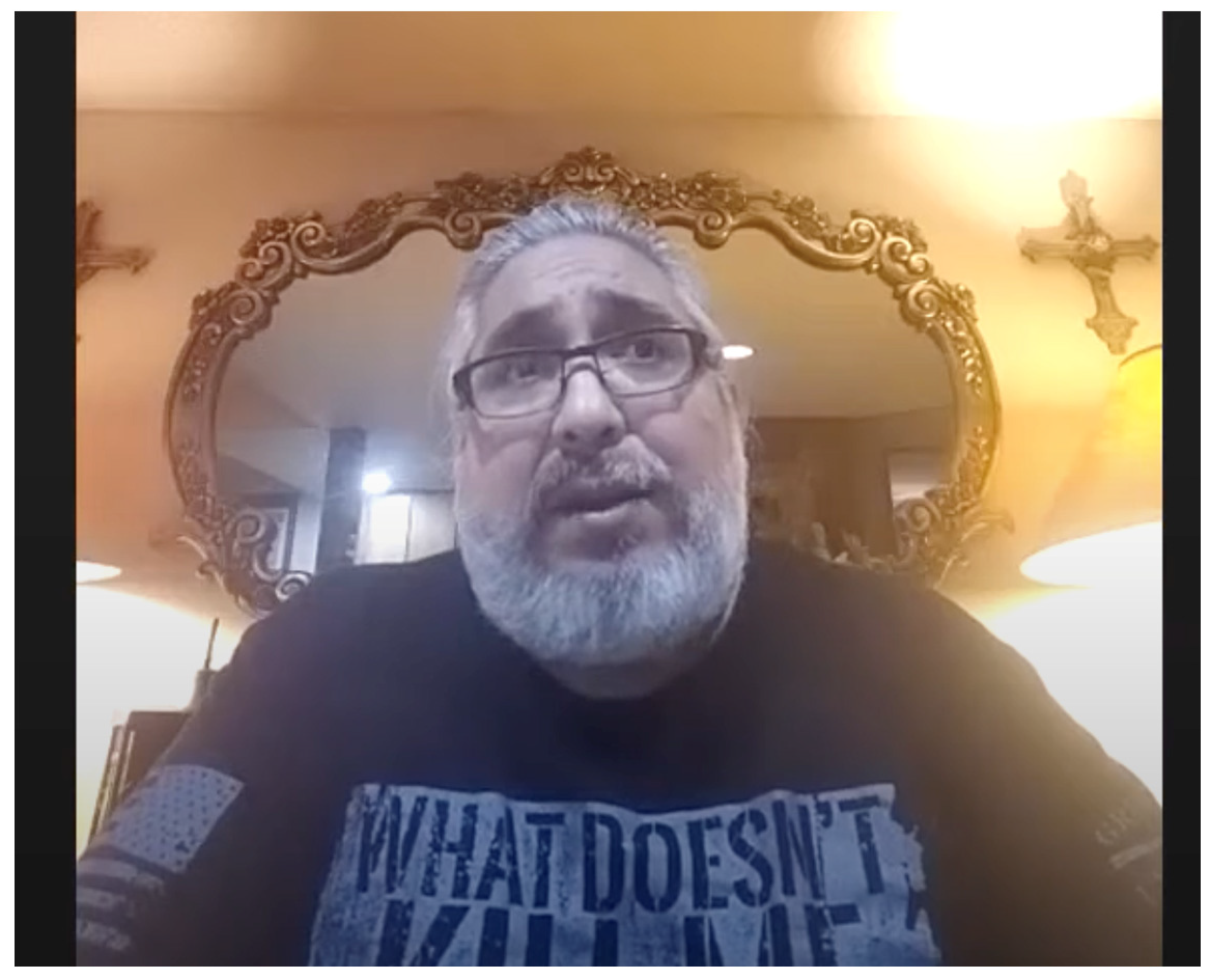
This contextualization is helpful, but I sought to answer other, more personal questions in this Oral Historias Project: What happened to you, your family, and your community? What was it like? How did it feel? One narrator, Leonard Peña (see Figure 1), paints a vivid picture of the shock he experienced when he first learned of the pandemic.
Figure 1. Screenshot from Leonard Peña’s oral history (interviewed by Ana Juárez), available here: https://www.youtube.com/watch?v=XBpIUIliL7A (accessed on 29 July 2025).
To hear his response for yourself, please click on this link (https://www.youtube.com/watch?v=XBpIUIliL7A, accessed on 29 July 2025) and navigate to timestamp 15:32–19:10. The transcript of his narrative is provided below, in response to the question, “How did you feel in the middle of March when life first started to change because of COVID-19 in the USA?”
“I can remember the day, and I think it’s something that I’m not going to ever forget. We were, like I said, we were in Houston to see the show, and we had went out to eat. That’s actually the last time I stepped foot in a restaurant. I haven’t eaten in a restaurant in the 14 months, I haven’t—or 13 months. I haven’t been to a restaurant. But we were sitting in the restaurant in Houston, and they had a TV, and they said, ‘Breaking news,’ and the president was going to come out and talk. And we were already getting ready to leave, so my sisters and my brother-in-law walked out, and I stayed behind so I could see what the president was going to say. And I can remember he was saying, you know, ‘pandemic’ and ‘shutdown’ and stuff like that. It was amazing. I remember being, like, in awe, or in shock or terrified. And I walked out, and I went to the truck, and they were like, ‘You know, so what’s going on?’ because I stayed behind for maybe, you know, five minutes. They had to wait for me for, you know, maybe more than five minutes, I was watching what he was going to say.
And I got in the car, and they said it looked like I had seen a ghost, and then I told them, ‘I don’t know.’ I told them what I had heard… and all three of them were kind of like, ‘Yeah, like, whatever,’… kind of like it was going over their head. You know, they weren’t really comprehending … what was going to happen. And then all the way home I kind of, you know, broke it down for them a little bit from what I heard and what I understood, and I told them it’s basically, like, the president was saying, like, ‘The aliens have landed.’ You know what I mean? You see it in movies. You see it … on TV or you read about it, and you think… you know, the president comes out … like in, I don’t know… with those movies, like, with Tom Cruise and stuff like that, the president—or the 4th of July, that movie, too. So you never think it’s actually going to be real, but I told them that’s the way it is. That’s what I feel like. This is amazing. I go, ‘They’re shutting down football. They’re shutting down basketball.’ I think that same night or something like that, they said, ‘Tom Hanks and his wife have it,’ you know. It was like I can remember everything from that, like, one or two days, you know.
And then, again, not being able to—Robert, you know, coming in from our family, from London … and then not even being able to see him … and that was, you know, pretty weird, being in the same town too and not even being able to see each other because everybody was locked up. And then thinking, ‘Okay, well, you know, hopefully a week, maybe another week, maybe another week,’ and a week turned into a month, and a month turned into two months and then two months into six and then a year. And, I mean, it was amazing. But, yeah, March, I can definitely—I don’t think I’ll ever forget that weekend, you know, or that time. It was amazing.”
Leonard’s story lays bare the sheer disbelief many experienced in the early days of the pandemic, a feeling akin to hearing that aliens had landed. It also highlights just how different initial reactions were to the news, with many rejecting the seriousness of the pandemic or not fully comprehending its extent. Finally, his response underscores the importance of timely information in a public health crisis. While Leonard was able to watch the news unfold in real time, this information is often delayed or even absent for speakers of languages other than English in the United States.
Previous research has investigated the challenges of equitable language access during a public health emergency like the pandemic. How does one share the same information with the entire world? Some scholars and administrators have proposed the use of English as the lingua franca in international communication, which does have some precedent. Piller (2017) notes that English is used broadly in intercultural communication, such as Chinese language-learning classrooms (Duan 2020). However, this monolingual paradigm, which places the burden of communication on everyone other than English speakers, simply excludes too many, especially problematic when the information conveyed is so crucial. The goal—equitable access to information—is simply impossible when the language one speaks can determine what/how much information is received. Additionally, receiving information in one’s preferred language in medical settings leads to greater patient satisfaction (González et al. 2010) and even better healthcare outcomes (Traylor et al. 2010). Using English as the lingua franca highlights the systemic privileging of certain populations over others, perpetuating negative perceptions of the healthcare system as well as health disparities. Finally, this practice further cements English-speaking populations as the hegemonic audience. Whose voices are heard, when this is the system used to spread information on a global scale? Of course, hegemonic voices are foregrounded, while all others, like Spanish-speaking voices, are silenced.
There is no doubt that language is used to convey critical health and safety information during a pandemic, but language is not limited to this role. It does much more than convey information. Language has a key social and emotional role in our lives, and we use it to convey our deepest thoughts, emotions, and desires. Changes in language often reflect changes in our world and in our experiences. For instance, as technology continues to advance, it leaves its impression on our lexicon, e.g., meme, ghosting, defriend, unalive, sexting, etc. The same is true of the pandemic. In Spanish, the pandemic led to verbal innovations, with words indicative of war (e.g., la guerra contra ‘war against’), novel anglicisms and acronyms (e.g., COVID), scientific terms (e.g., coronavirus, test), judicial terms (e.g., confinamiento ‘confinement’), new derivations (e.g., covídico ‘covidic’, coronavírico ‘coronaviric’), and compounding (e.g., coronacrisis), and compounding and derivation (e.g., un sologripista ‘an onlyfluer’) making their mark on the lexicon (Zholobova 2021). In other words, our environment and lived experiences, like the pandemic, can deeply impact the way we speak.
The linguistic legacy of the pandemic, however, is far greater than the addition of lexical items to our vocabularies. On a more basic level, the pandemic fundamentally impacted our ability to speak to and connect with others. In the words of Piller et al. (2020, p. 510), “Humans are social animals and contagious diseases throw the very foundations of our social lives into question. Not to be able to gather, to hug those dear to us, or to rub shoulders with passers-by in our cities is deeply disturbing to our social fabric. Not to be able to hold the hands of a dying relative compounds the grief of death.” Similarly, not to be able to talk, face-to-face, with others, for extended periods of time challenges the social bonds that make us human.
What is the social context like in San Antonio, the community that serves as the focus of this project? The city is a deeply bicultural, bilingual environment. According to the Census (2023), 41.4% of the population speaks a language other than English at home, and 65.8% of the population is Hispanic. The pandemic made structural, systemic disparities impossible to overlook, with the Hispanic population in the US 1.5 times more likely to contract COVID than white peers, 2.1 times more likely to be hospitalized because of COVID than white peers, and 1.8 times more likely to die from COVID than white peers (CDC 2022) due to structural factors and social determinants (Rodriguez-Diaz et al. 2020; Wilder 2021). However, linguistic disparities continue to be overlooked, with only English-speaking American voices documenting their experiences throughout the pandemic. Unlike other parts of the United States, the San Antonio context allows for an exploration of language as a reflection of lived pandemic experiences without silencing non-hegemonic voices; as explained in Section 2 below, we sought to conduct interviews in Spanish, Spanglish, or English, respecting the language(s) of our narrators. Unlike other pandemic projects (see Section 4), speaking a language other than English does not exclude our participants’ voices and valuable experiences from this project. Rather, this project seeks to include, celebrate, and magnify them on a large scale.

2. Materials and Methods

The COVID-19 Oral Historias Project (Chappell 2021) was a one-year project funded by the Lutcher Brown Endowment at the University of Texas at San Antonio. The research team consisted of myself and seven bilingual student interviewers: Ada Zamarripa, Lydia González, Ana Juárez, Aidee Larios Palomera, Yedid Mejía-Vázquez, Leticia Medina, and Samantha Villarreal. All of these interviewers received training, and they conducted their interviews in San Antonio in 2020 and early 2021. To be eligible to participate, narrators had to live in San Antonio during the pandemic and self-identify as Latino/a/e. Approximately half of the narrators were transnational—born and raised in Latin America with a move to San Antonio later in life—while the other half were born and raised in San Antonio. The narrators lived in diverse neighborhoods across San Antonio and had a wide range of professions.
Oral histories with a semi-structured interview were conducted to decrease the powerful, privileged position of the researcher in the interview and instead elevate more marginalized voices (Mayotte and Kiefer 2018). They seek to gather, preserve, and interpret voices and memories, serving as one of our oldest forms of historical inquiry (Oral History Association 2024). Their importance is not limited to the past; because they gather data that is often not available in other written sources or records, they fill in gaps of historical accounts. They also integrate personal, human experiences into larger historical, sociological, and medical accounts. In other words, they put a human face on historical events. Finally, they can help create a stronger bond and understanding in a community or between generations, leading to greater compassion and togetherness.
In terms of how the oral histories were conducted, the team was taught to prepare their narrators, prepare their equipment, and prepare themselves, and they received training on best practices in trauma-informed research as well (as summarized in Alessi and Kahn 2023). Given the sensitive nature of their task, a special focus was given to ethical considerations, such as establishing trust and safety in the interview, showing narrators kindness and empathy if sharing emotional content, and identifying when to redirect or change course in the interview to avoid retraumatizing narrators, among other considerations. If detailing medical events, interviewers also prepared their narrators to protect the identity of others to avoid HIPAA violations. The interview team was viewed as joint representatives of the university where they studied and the community in which they lived, being trained experts, Spanish speakers, and Hispanic San Antonians themselves. The team was given independence in their work; all narrators were organically recruited in conversation from the interviewers’ networks of contacts to ensure the participants were comfortable and willing to engage in this oral history project. Additionally, these existing relationships were intended to enhance participants’ sense of safety and trust in each interview, in line with trauma-informed practices.
All conversations were recorded via Zoom for the health and safety of the narrators and interview team, and the interview respected the preferred language of the interviewee. Most transnational narrators preferred Spanish, while narrators born in the United States variably used Spanish, Spanglish, and English. The semi-structured interview included a range of questions related to their health, family, work, community, changes to their daily life, and other reflections about the pandemic. In the pre-interview, a meeting that took place before each interview to explain what to expect from the interview and address any concerns, each narrator signed a Donor Agreement, in which they agreed to donate their recorded interview to the COVID-19 Oral Historias Project, granting the team exclusive rights of reproduction, distribution, preparation of derivative works, public performance, and display in print, visual, electronic, or other available media, including the internet. However, the narrators were able to opt out or retract their consent at any point, and some narrators did. The interviewers were compensated for the hours they worked, and the narrators received a personalized thank-you message and a gift card following their interview to show appreciation for their time and collaboration, including those who had opted out of participation in the project.
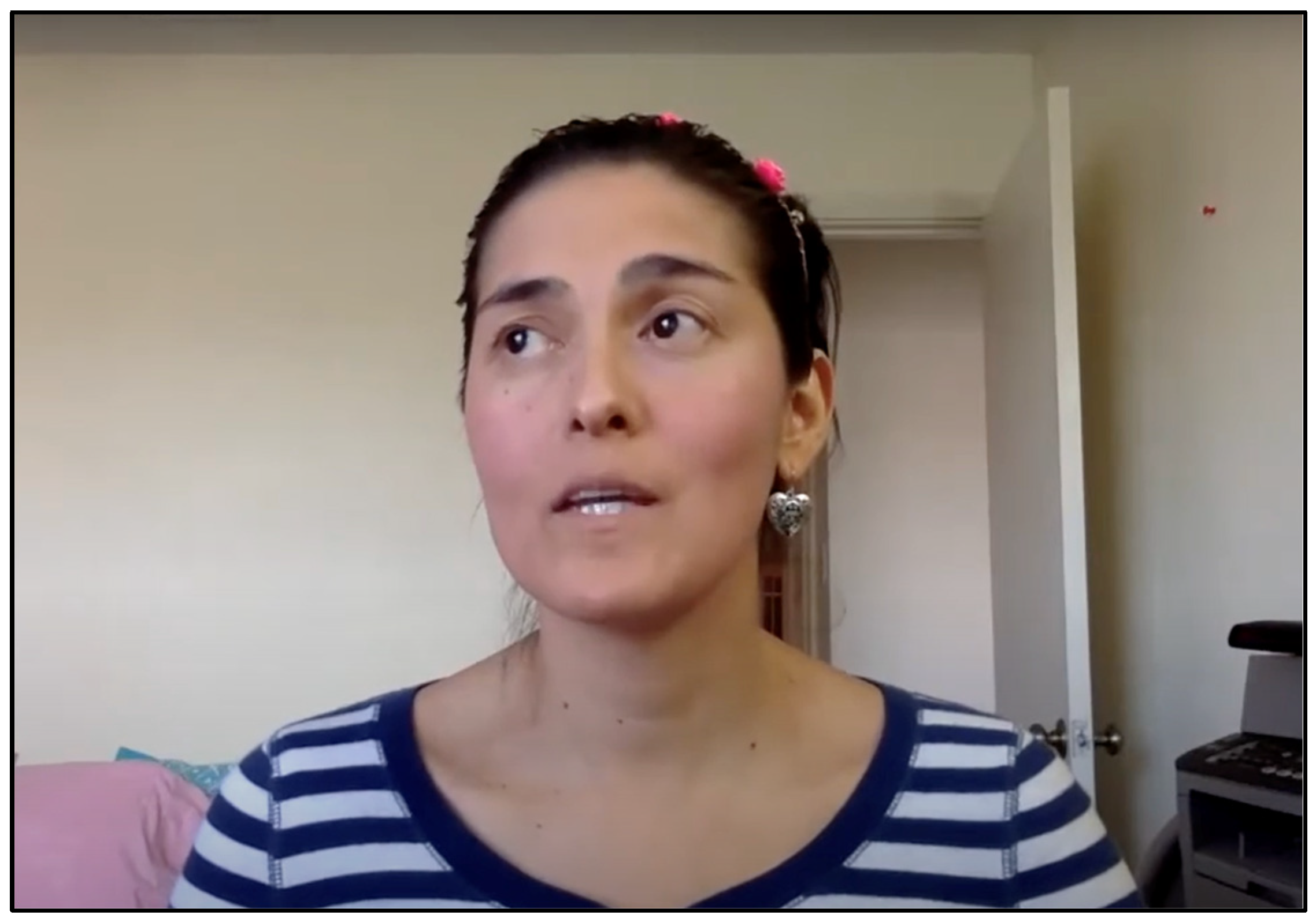
The project’s funding supported the collection of over 100 interviews (see Figure 2 for an example screenshot). Some were in English (12), some in Spanish (87), and some were in Spanglish (2). The interviews ranged from approximately 30 minutes to two hours, and the transcription service VITAC (now Verbit) was hired to create captions in English, Spanish, or Spanglish, depending on the language of the interview. Before publication, both the video and transcript were shared with the narrator, and changes and corrections were solicited at this point. Once the narrators’ permission had been secured, the video and transcript were posted to the project’s YouTube page (https://www.youtube.com/@utsascovid-19oralhistories80, accessed on 29 July 2025). In collaboration with the interview team, I conducted a qualitative analysis by analyzing the final interviews and approved transcripts. More specifically, I employed qualitative methods informed by Grounded Theory (Corbin and Strauss 1990). This involved an iterative coding approach (i.e., open coding, axial coding, and selective coding) to break the data into discreet parts and label them with codes, establish connections among those initial codes and group them into narrative themes (categories), and unite those themes in a single core category. The narrative themes and overarching, core category identified through this approach are discussed in Section 3 below.
Figure 2. Screenshot from an oral history with Carolina Rivas (interviewed by Ana Juárez), available here: https://www.youtube.com/watch?si=rRKyigJ3hFnwbGbX&v=AVzyZ9A_ZmM&feature=youtu.be (accessed on 29 July 2025).

3. Narrative Themes

The interviews captured an incredible range of lived experiences. Although it is impossible to include all the unique and impactful stories we collected in this humble article, I hope to share, in the following paragraphs, some of the broad themes that united many of the oral histories, which offer a glimpse into the corpus itself.1 All of these themes—navigating conflicting community norms and official health directives, negotiating anxieties across transnational contexts, and balancing hope and hopelessness—revolve around the duality of the narrators’ experiences as members of the local Latino/a/e community. Before continuing, however, I would like to provide a content warning, as many of the conversations about this time are emotionally charged, involving discussions of illness, loss, grief, and other hardships.

3.1. Navigating Conflicting Community Norms and Official Health Directives

Like Leonard Peña, many of the participants spoke of the rawness, confusion, and chaos of the early months of the pandemic as they sought to make sense of their community’s cultural practices in light of strict health and safety measures. In response to the question, “in March [2020], how did you find out about the pandemic, and what was your reaction? How did you feel?”, Miriam García, whose entire interview is available here: https://www.youtube.com/watch?si=VjOkjhDhjdp6LC9O&v=dUE3Hb4UmEs&feature=youtu.be (accessed on 29 July 2025), responded in the following way (13:28–16:13):
Y pues, marzo, ya entrando el mes, pues ya fue ahora sí que…ya entré, no en pánico, pero ya empecé como que a preocuparme y a pensar… Y obvio, marzo, pues, es el mes del cumple de mi niña la grande, y es como que, no va a tener fiesta. Pero ya entonces empezó, como que: ‘Pero no podemos. O sea, se dice que no se pueden hacer fiestas, nada de reuniones’. Tuve que hacerle algo pequeñito, pero resulta de que no podías… después te decían, ¿no? Como que: ‘Trata de mantener una distancia y de no hablar tan cerca de alguien y de no soplar el pastel’. Entonces fueron esos cambios al momento como que… ya no sabías cómo actuar frente a nadie, ni con las personas de más confianza, porque yo tenía aquí dos, tres amigas, entonces era como que… O sea, sí, hablar del tema, porque fue de lo único de lo que se habló. ¿Qué está pasando? O sea, es una cosa seria, pero ya es como que… Pero…no te puedo abrazar, ¿no? Ahora se dice que no te puedo dar un beso de saludo, no nos podemos despedir como antes. Pues esto va serio y ya no sabíamos. Yo desde ahí, desde ese festejo, ya no supe cómo actuar con nadie. O sea, es: ‘Te abrazo, no te abrazo’. ‘Me despido, no me despido’. Entonces, por el hecho de disfrutar un poquito el rato y no hacerle pasar a la niña el trago amargo ahora sí de que: ‘¿Sabes qué? Yo ni estoy disfrutando esto’, ¿no? Ya, o sea, terminó todo. Y le dije a mi esposo: ‘No sé. No sé qué explicarles a ellas, no sé qué… No sé cómo me siento, pero sé que no estamos siendo nosotros’”.
‘And well, March, at the beginning of the month, well it was then that I started to, well, not panic, but I began to get worried and to think… And obviously, March, well, it’s my oldest daughter’s birthday month, and it’s like, she’s not going to have a party. But then it started, like, “But we can’t. I mean, they say we can’t have parties, no get-togethers.” I had to throw her something small, but it turned out you couldn’t… after they said, right, like, “Try to keep a distance and not talk too close to someone and to not blow on the cake.’ So those were the changes in that moment and… you didn’t know how to act with anybody, not even with the closest people in your life, because I had two, three friends, then it was like… I mean, yes, let’s talk about it, because it was the only thing anybody talked about. What’s going on? I mean, it’s a serious thing, but it was like… but… I can’t hug you, right? Now they say I can’t give you a kiss hello, we can’t say goodbye like before. But this is getting serious, and we didn’t know. From that moment, from that party, I didn’t know how to act with anybody. I mean, it’s, “do I hug you or not?” “Do I say goodbye or not?” So, I just tried to enjoy the moment a little and not make the girl [my daughter] swallow the bitter pill of: ‘You know what? I’m not even enjoying this,’ right? Yeah, I mean, it’s all over. And I said to my husband, “I don’t know… I don’t know how to explain this to them, I don’t know what… I don’t know how I feel, but I know that we’re not being ourselves.”’
As Miriam explains, the imposition of strict safety mandates made it hard to enjoy life’s special moments, like her daughter’s birthday party, especially when they conflicted with her community’s cultural practices. Seemingly overnight, the social graces Miriam valued were banned, and negotiating the desire to greet, hug, and show affection with the need to keep others safe disquieted her. In fact, she began to question who she was and who she was supposed to be in a pandemic as these cultural practices, so engrained in daily life and in the maintenance of relationships, were denied.

3.2. Negotiating Anxieties Across Transnational Contexts

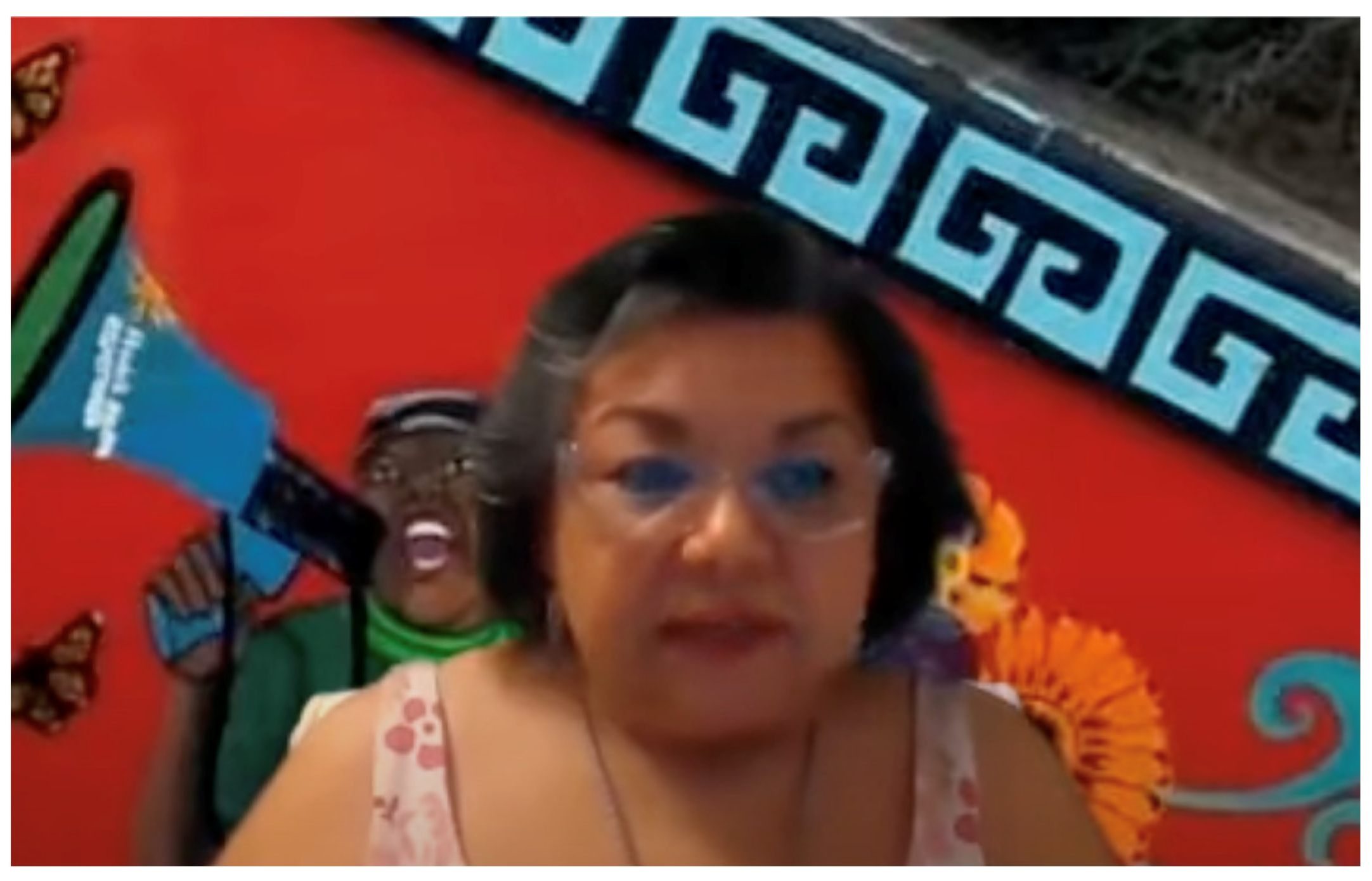
Beyond immediate family and friends, narrators expressed dual concerns about the local community in San Antonio, on the one hand, and their family’s heritage country, on the other. For example, one narrator, Patricia S. Castillo (see Figure 3; full interview available here: https://youtu.be/GmYuSMxpGTA?si=lHORfH09UdmhODcX, accessed on 29 July 2025), worked to help survivors of family violence in San Antonio throughout the pandemic. She spoke about how her ability to effectively serve others changed dramatically when the pandemic first struck the city (25:13–29:50):
Figure 3. Screenshot from an oral history with Patricia S. Castillo (interviewed by Leticia Medina), available here: https://www.youtube.com/watch?si=y5jiy2jWGaoZU3oo&v=GmYuSMxpGTA&feature=youtu.be (accessed on 29 July 2025).
“Well, it made—You know, the work has been diminished in terms of numbers, but in terms of the levels of violence that I see and hear about by way of phone calls, crisis calls, what we refer to as crisis calls is much greater. And I think that the … the way they call it el encierro, you know, the quarantine has facilitated a lot more levels of violence to … be exposed and to come forth … than before. And so, … you just hear a lot more cruelty. There’s just—It’s more terrorizing and uglier than what I had been hearing about before. It’s terrible. It’s terrible, and it really has diminished … people’s capacity to help themselves. You know, people feel like real… They don’t want to go to the shelter. They’re afraid of going to the shelter. They feel like … they might get sick if they go to the shelter…to go live with people that they don’t know … and so they remain more vulnerable … if they go to family members’ homes or sister’s homes or neighbor’s homes … and that’s if they’ll take you in.
You know, that’s the other thing is that … your family is like—They don’t want to take you in because they’re scared too, … and either they’re scared of the virus, or they’re scared of the perpetrator coming and doing damage at their house. And so, it’s very hard right now for people that are living with this type of violence in their life, and they feel like they have a lot less options, and in terms of the resources in the community, I mean, some of them have gotten a little bit better because of all the funding that has come down to help communities with the virus and the impact of the virus, but, you know, so you get an extra 10 days from a hotel, you know, what’s that? When the 10 days are up, ¿luego qué? ‘then what’? So that’s hard too. Anyways, so it’s been very difficult…
At first I was feeling very, like, we can do this virtually, and, you know, because that’s kind of like my nature, right. Like, ¡sí se puede! ‘yes we can!’, right? And to have that kind of attitude, but it’s, you know, I do feel like, … like I’ve been cut off at the knees, you know, because you just can’t work at the same level, and you don’t have the same level of impact virtually as you did when you have people there in front of you, and you can hug them, and you can hold their hand, and you can bring them a box of tissues and a glass of water. You know what I’m saying? You’re just not as effective … as you are face-to-face, and I really feel that because I am very much hands-on in terms of my work as a social worker.”
Patricia’s interview underscores the toll the pandemic took on the broader community as safety nets became less effective in a more virtual, isolated world. In spite of her positive attitude and best efforts, she found that the pandemic made social work harder; more deterrents to reaching out to and connecting with people in need simply made it more challenging to help them.
Beyond the local community, most narrators also had family and friends abroad, meaning they were essentially living the pandemic twice, in very different contexts. One of the interviewers, Ana Juárez, asked Victoria Andi, a participant originally from Perú, “¿Cómo te sentías a mediados de marzo, cuando tu vida comenzó a cambiar a causa del COVID-19?” ‘How did you feel in the middle of March, when your life began to change because of COVID-19?’ Her full interview can be watched here: https://www.youtube.com/watch?si=hLXuYGgGkH1DBS8R&v=eBapA-3Kzxc&feature=youtu.be (accessed on 29 July 2025), and her answer, provided at timestamp 6:45–7:48, is transcribed and translated below.
Pues, al principio, ah… escuchaba rumores, verdad, acerca de este virus, pero no me imaginaba qué tan drástico iba a cambiar. No en lo personal, sino en… en… en la… en lo… en lo… en lo social, ¿no? Que estamos acostumbrados a salir fines de semana y cositas así, entonces, no me imaginaba qué tan grande iba a ser esto, ¿no? Pero, y entonces al principio como que le estaba tomando como que leve, quizás no tanto creía de lo que iba a pasar en el futuro y al principio yo… mi vida o mi rutina era normal, normal… hacer mis actividades, quizás, normal también… Pasando como dos meses sí me comenzó a preocupar porque pues yo vengo de Perú, ¿verdad? Entonces, allá esta situación se había hecho un caos, ya que muchas personas familiares se habían enfermado, entonces estábamos muy mal que… o sea, esto me afectó, dije: “Guau, esto sí es real. Eh… Y, entonces, no yo… Me puse nerviosa por lo que mi familia estaba pasando, entonces yo, a partir de ese momento, de lo que mi familia y la gente allegada estaba pasando por esta situación… entonces yo comencé a tomar más conciencia en mí misma y alrededor de mi familia de la gente.”
‘Well, at first, um, I heard rumors, right? About this virus, but I didn’t realize how drastically everything was going to change. Not personally, but… socially, right? We’re used to going out on weekends and things like that, so, I didn’t imagine how big this was going to be, right? And then at first, I was taking it kind of lightly, maybe I didn’t really believe what was going to happen down the road, and in the beginning, I… my life or my routine was normal, normal… my activities, maybe, were normal too… After about two months, I did begin to worry because, well, I come from Peru, right? Well, the situation had become a mess there, since many family members had gotten sick, and we were in such a bad state that… I mean, that impacted me, and I said, “Wow, this is real.” Um, and so, I don’t… I got nervous because of what my family was going through, so I, from that moment on, from what my family and close friends were going through in that situation… then I started to be more aware of myself and people around my family.’
For Victoria and many other narrators, the pandemic essentially unfolded twice. Once, in the United States, which did not initially worry Victoria very much, and again in Peru, where she observed, from her family’s perspective, how chaotic and frightening the situation quickly became. The duality of worlds, languages, and experiences of transnational narrators also entails a duality of pandemic experiences, with worries for those both in the United States and in the home or heritage country.

3.3. Hopelessness and Hope

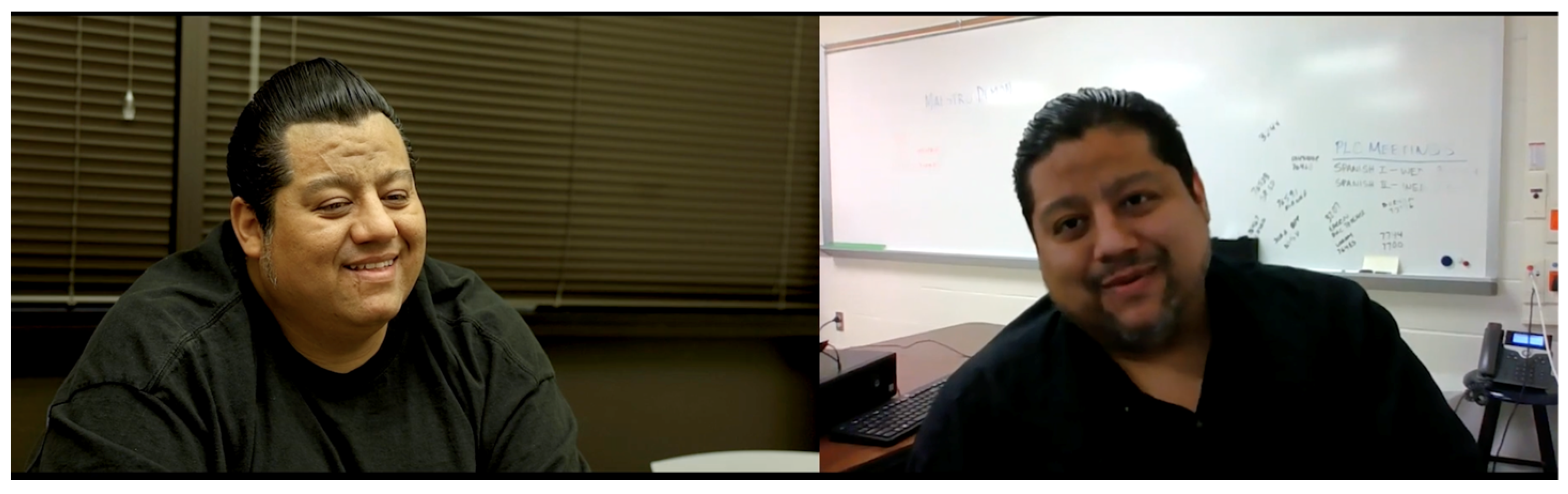
The San Antonio Report, in remembrance of the third anniversary of COVID’s arrival in the United States, featured a story on the project (https://sanantonioreport.org/utsa-hispanic-covid-19-oral-history-project/, accessed on 29 July 2025). In addition to a succinct overview, it features a novel video, available here: https://vimeo.com/819945878 (accessed on 29 July 2025), with several interviewers and narrators who watched their own interviews and reflected on what they had shared years earlier (see Figure 4). The video highlights a common thread across the interviews in this project: the narrators’ stories are dark but also hopeful. Yedid Mejía-Vázquez observed, “En cada entrevista, lo que escuché siempre fue el miedo, ‘quiero echarle ganas cuando todo esto termine’, y una vez que termine, quiero hacer todo lo que la pandemia me limitaba.” ‘In each interview, what I always heard was fear, “I want to give it my all once this is over, and once this is over, I want to do all the things that the pandemic prevented me from doing.”’ Yes, the narrators were asked to reflect on their present, the dark period they were living through, but they did more than that: they also dreamed about the future, when things would be different, and better.
Figure 4. Pavel Demon watching his original interview three years later (Torres 2023).
Practicing gratitude was also a powerful means of fending off hopelessness during the darkest moments. As Lydia González explained,
“Platico con amistades que viven fuera de Estados Unidos y fuera de México, y están en casa, ya tienen un mes, y le digo, ¿y cómo te sientes? Dice, ‘pues, de repente sí nos entra la desesperación, pero estamos vivos’. Dice, ‘mis vecinos de enfrente ya no viven. Se murieron todos’. Dijo, ‘¿y el vecino que vive a las dos cuadras? También ya se murieron todos’. Dijo, ‘entonces, la desesperación se me quita al pensar que estoy vivo’. Y, pues, sí. O sea, esto sí es cierto.”
‘I talk with friends that live outside of the United States and outside of Mexico, and they have been home for a month. I ask them, “how do you feel?” And they say, “sometimes we feel hopeless, but we are alive.” They say, “my neighbors across the street, they aren’t alive anymore—they’re all dead.” And they said, “and my neighbors two blocks away, they’re all dead, too.” They said, “so the hopelessness goes away when I remember that I’m alive.” And well, yes, I mean, yes, that’s true.’
Appreciating life, a gift taken from many family members, friends, and neighbors during the pandemic, helped many of the narrators stoke the embers of hope, when hope was hard to find. Simply dreaming about a better future can be considered an act of resistance, redefining both implicitly and explicitly (Bamberg and Andrews 2004) the disruption and loss of the pandemic.

4. Contributions of the Corpus

Through a series of over 100 interviews with Hispanic community members in San Antonio, this project sought to document an unprecedented time through individual stories, amplifying local voices and creating togetherness in a fragmented time. While the interviewees’ recollections are inarguably diverse, narrative threads revolving around the duality of the narrators’ experiences were identified throughout the corpus; the narrators discussed the challenges they faced as they navigated conflicting cultural practices and health guidelines, negotiated anxieties across transnational contexts, and balanced feelings of hope and hopelessness. Throughout this unprecedented period, community members worked to bridge disjointed physical, cultural, and emotional terrain.
In documenting these experiences, this body of interviews creates a valuable, public collection of local stories. First, the narratives are of obvious value to the community itself, in that they can serve as a social glue in the present and a form of connecting to loved ones and earlier generations from a diachronic perspective. From a historical perspective, they also offer more than a series of numbers and hard data about the COVID-19 pandemic; they provide real, personal accounts, making this historical event more personal, more human. Additionally, they preserve lived experiences and reflections that otherwise might be lost over time, which can serve future studies in the fields of history, sociology, psychology, and linguistics, among many other areas.
Crucially, what has been preserved in this corpus are the voices of those who, due to their background and language dominance, would generally be excluded from national oral history projects. Just as using English as a lingua franca to disseminate information during a public health crisis upholds discriminatory language hierarchies—inherently subordinating speakers of languages other than English (Santos et al. 2022)—so, too, does the privileging of English-speaking voices in storytelling practices. Speakers dominant in languages other than English are either excluded entirely, or they must share their stories in a non-native language, which may inadvertently stymie trauma-informed practices by decreasing the narrator’s sense of trust, comfort, and safety. While other types of discrimination (e.g., discrimination based on race, gender, age, etc.) are widely recognized as problematic in policymaking, discrimination based on language often goes unacknowledged (Lippi-Green 2012).
In addition to centering local voices in their preferred language, this project also centers student researchers and their community knowledge. Often, college students do not have meaningful opportunities to engage in research alongside their professors (Hu et al. 2007), which undervalues the knowledge and skills they bring to the table. In the same vein, professors often view minoritized college students from a deficit perspective, focusing on what is “missing” from their knowledge base, along with what needs to be supposedly fixed, corrected, addressed, or instilled (Davis and Museus 2019). While, of course, students learn additional skills and subjects in college, this project understands all students as members of the community that can also meaningfully serve it. The interviewers’ linguistic and social skills were crucial to the success of this project.
The prevalent deficit perspectives toward university students in academia can exclude them from important, community-facing research where their voices and their knowledge are sorely needed (Rubin and Jones 2007). Many professors, even if engaged with the community, are often perceived as outsiders, which can hinder the effectiveness of their work. Additionally, the common belief that professors can engage in extractivist or exploitative research within the community, without a sincere desire to give back (Godrie 2025), may preclude the success of a project such as this one. However, centering student knowledge that comes from within the community can alleviate this concern among narrators. I relied heavily on my students’ local knowledge, social skills, and place-conscious bilingualism to carry out this project. Put simply, without my team of student researchers, there would not be a COVID-19 Oral Historias Project.
Perhaps professors are viewed as disengaged or extractivist because of the value often placed on traditional scholarship at the expense of community-engaged work. These are not mutually exclusive and actually complement each other nicely. As this oral historias project provides a rich database for research, two of the student researchers (Ana María Juárez and Yedid Mejía-Vázquez) used the corpus to research a topic and later published their scholarship. The piece, called “La educación en la comunidad Hispana durante el COVID-19”, analyzed the educational challenges during COVID in the Hispanic community of San Antonio from teachers’ and students’ perspectives. They were published in Beyond Boundaries (https://beyondboundariesjournal.org/, accessed on 29 July 2025), a graduate-student journal published by the University of Texas at San Antonio’s College of Liberal and Fine Arts. Their full piece is available online, https://rrpress.utsa.edu/items/1dc5a863-6664-483e-9967-2c12bb310cb1 (accessed on 29 July 2025), and demonstrates that community-facing research can support and lead to traditional scholarship.
Of course, before concluding, I should note that this project does not stand alone, but rather complements other projects, such as Arizona State University’s A Journal of the Plague Year, which includes crowdsourced oral histories, whereby researchers and the public were invited to share stories to be archived through the university. Focusing on responses to the pandemic across the American art scene, the Smithsonian’s Pandemic Oral History Project highlights the voices of artists, curators, teachers, and administrators. Next, The National Humanities Center’s COVID-19 Oral History Project shone a light on the experiences of people working in hospitals and clinics during the pandemic, and The University of St. Thomas also conducted an urban art mapping project to document street art response to COVID-19. There are also some projects based on race and ethnicity, such as The Museum of Chinese in America’s OneWorld COVID-19 Oral Histories project, which shared the stories of Chinese Americans, the Wegoja foundation’s Black Carolinians Speak: Portraits of a Pandemic Exhibit, which documented the experiences of those of African American heritage in South Carolina, and the University of Texas at Austin’s Voces of a Pandemic, which collected 18 stories of diverse Latino/a/es (e.g., born in the United States, Brazil, Mexico, etc.) living across the United States. Locally, in San Antonio, The Witte Museum asked San Antonians to submit oral histories, photographs, and objects, and their Rapid Response Collection will be displayed in the museum in 2026. However, the COVID-19 Oral Historias project outlined here is unique in several ways. First, it privileges minoritized ways of speaking (Spanish and Spanglish), whereas other projects are conducted entirely or predominantly in English. Second, its large size, with over 100 interviews, and third, its clearly delimited scope, with all respondents living in San Antonio, makes it a massive resource with a unified methodology for and by the local community.
This project, while an important step forward in documenting the lived experiences of non-hegemonic voices in a global health crisis, is far from perfect. First, the pandemic itself limited the quality of many of our recordings. Rather than professionally recorded, in-person interviews with the narrators, which would have been the goal under different circumstances, all interviews had to be conducted via Zoom for the health and safety of the participants. As a result, the interviewers had to coach narrators to enhance their lighting, position their phones or computers at certain angles, and to decrease background noise. As most people were quarantined to their homes during the early months of the pandemic, it was often impossible to control the environment. For instance, when interviewing a mother, her family members may sometimes pop in and out of frame, or people conversing in another room could occasionally be overheard in the recording. Although these could be considered imperfections that limit the quality of the recordings, they could also be viewed as another historical artefact, more accurately demonstrating the period through which the narrators were living.

5. Conclusions

This paper has explored the creation and outcome of a large-scale oral history project conducted in San Antonio, Texas, which sought to document the impact of the pandemic on San Antonio’s Hispanic population. As I noted in a UTSA Today story, “We have the statistics about how many people got sick, how many people died from the pandemic… [But soon enough] we’ll forget how we felt, how our emotional reaction to this international emergency impacted us in the beginning” (Gaitan 2023, citing Chappell). Additionally, if we do not focus on the human at the heart of healthcare, “all [we’ll] have is a bunch of hard data, a bunch of numbers, but [we] don’t have stories. Stories make lived experiences come alive and connect people in ways that numbers just don’t” (Gaitan 2023, citing Chappell).
In terms of next steps, I aim to provide translations of the English and Spanish interviews, which, at present, only have captions available in the language of the interview. The generous funding received was not able to cover this important step, which will make the interviews fully accessible to monolingual speakers of English or Spanish that do not necessarily form part of the bilingual community featured in the corpus. Additionally, I hope to create a more interactive website for a modern audience, which would feature short fragments of each participant’s story organized by theme (e.g., health, work, family, school, etc.). Greater interaction would likely result from short-form content that could be easily shared via social media, improving both engagement and reach of the narratives to potentially interested parties on an international scale. These lofty, long-term goals, however, are meant to supplement the current corpus and do not detract from its value as a powerful historical record. The narrators’ long-form oral historias, as currently presented on our website, showcase their entire story, y en sus propias palabras.

Funding

This research was funded by the University of Texas at San Antonio’s Lutcher Brown Fellowship.

Institutional Review Board Statement

As an oral history project, this study was exempt from ethical approval. See Section 46.102.L1 in the Code of Federal Regulations, available online: https://www.ecfr.gov/current/title-45/subtitle-A/subchapter-A/part-46#sp45.1.46.a (accessed on 29 July 2025) for the exact exemption language.

Data Availability Statement

The entire archive of interviews is available at https://www.youtube.com/@utsascovid-19oralhistories80 (accessed on 29 July 2025).

Acknowledgments

Thanks to Lutcher and Emily Wells Brown for their generous support of the University of Texas at San Antonio and the community-facing research it conducts, Nathan Richardson for encouraging me to apply for the fellowship, my amazing team of student researchers, and all our narrators for generously and bravely sharing their stories.

Conflicts of Interest

The author declares no conflicts of interest.

Note

1
The specific narratives presented below were selected if they concisely encapsulated the narrative theme identified and the narrators consented to appear in this article.

References

  1. Alessi, Edward J., and Sarilee Kahn. 2023. Toward a trauma-informed qualitative research approach: Guidelines for ensuring the safety and promoting the resilience of research participants. Qualitative Research in Psychology 20: 121–54. [Google Scholar] [CrossRef]
  2. Bamberg, Michael, and Molly Andrews, eds. 2004. Considering Counter-Narratives: Narrating, Resisting, Making Sense. Amsterdam: John Benjamins Publishing. [Google Scholar]
  3. Census. 2023. San Antonio City, Texas. Available online: https://data.census.gov/profile/San_Antonio_city,_Texas?g=160XX00US4865000 (accessed on 17 March 2024).
  4. Centers for Disease Control and Prevention (CDC). 2022. Demographic Trends of COVID-19 Cases and Deaths in the US Reported to CDC. September 2. Available online: https://www.cdc.gov/covid/php/surveillance/index.html (accessed on 5 October 2024).
  5. Chappell, Whitney. 2021. COVID-19 Oral Historias Project. Available online: https://colfa.utsa.edu/modern-languages/research/covid-19-oral-historias-project.html (accessed on 17 July 2025).
  6. Corbin, Juliet M., and Anselm Strauss. 1990. Grounded theory research: Procedures, canons, and evaluative criteria. Qualitative Sociology 13: 3–21. [Google Scholar] [CrossRef]
  7. Davis, Lori Patton, and Samuel D. Museus. 2019. What is deficit thinking? An analysis of conceptualizations of deficit thinking and implications for scholarly research. Currents: Connecting Diversity Scholarship to Practice and Society 1: 117–30. [Google Scholar]
  8. Dean, Kristin. 2021. How Did We Get Here? A Look Back at a Year of COVID-19 in San Antonio. KENS5. March 9. Available online: https://www.kens5.com/article/news/health/coronavirus/covid-19-in-san-antonio-a-timeline-of-events-how-did-we-get-here/273-f910e3e3-5a3b-4ee3-a089-fc52a43a3f4c (accessed on 5 October 2024).
  9. Duan, Wei. 2020. Can Chinese Language Learning Reinforce English Supremacy? Available online: https://www.languageonthemove.com/can-chinese-language-learning-reinforce-english-supremacy/ (accessed on 5 October 2024).
  10. Gaitan, Michelle. 2023. COVID-19 Oral History Project at UTSA Documents Impact on Hispanic Community. UTSA Today. February 21. Available online: https://www.utsa.edu/today/2023/02/story/covid-oral-history-project-documents-impact-on-hispanic-community.html (accessed on 2 July 2025).
  11. Godrie, Baptiste. 2025. Resisting scientific extractivism: A post-extractivist policy of knowledge production with marginalised communities. Gateways: International Journal of Community Research and Engagement 18: 1–14. [Google Scholar] [CrossRef]
  12. González, Hector M., William A. Vega, and Wassim Tarraf. 2010. Health care quality perceptions among foreign-born Latinos and the importance of speaking the same language. Journal of the American Board of Family Medicine 23: 745–52. [Google Scholar] [CrossRef] [PubMed]
  13. Hu, Shouping, George D. Kuh, and Joy Gaston Gayles. 2007. Engaging undergraduate research students in research activities: Are research universities doing a better job? Innovative Higher Education 32: 167–77. [Google Scholar] [CrossRef]
  14. Lippi-Green, Rosina. 2012. English with an Accent: Language, Ideology, and Discrimination in the United States. London: Routledge. [Google Scholar]
  15. Mayotte, Cliff, and Claire Kiefer, eds. 2018. Say It Forward: A Guide to Social Justice Storytelling. Chicago: Haymarket Books. [Google Scholar]
  16. Oral History Association. 2024. Oral History: Defined. Available online: https://oralhistory.org/about/do-oral-history/ (accessed on 20 March 2024).
  17. Piller, Ingrid. 2017. Intercultural Communication: A Critical Introduction, 2nd ed. Edinburgh: Edinburgh University Press. [Google Scholar]
  18. Piller, Ingrid, Jie Zhang, and Jia Li. 2020. Linguistic diversity in a time of crisis: Language challenges of the COVID-19 pandemic. Multilingua 39: 503–15. [Google Scholar] [CrossRef]
  19. Rodriguez-Diaz, Carlos E., Vincent Guilamo-Ramos, Leandro Mena, Eric Hall, Brian Honermann, Jeffrey S. Crowley, Stefan Baral, Guillermo J. Prado, Melissa Marzan-Rodriguez, Chris Beyrer, and et al. 2020. Risk for COVID-19 infection and death among Latinos in the United States: Examining heterogeneity in transmission dynamics. Annals of Epidemiology 52: 46–53. [Google Scholar] [CrossRef] [PubMed]
  20. Rubin, Beth C., and Makeba Jones. 2007. Student action research: Reaping the benefits for students and school leaders. NASSP Bulletin 91: 363–78. [Google Scholar] [CrossRef]
  21. Santos, Maricel G., Rachel Showstack, Glenn Martínez, Drew Colcher, and Dalia Magaña. 2022. Health Disparities and the Applied Linguist. London: Routledge. [Google Scholar]
  22. Torres, Raquel. 2023. UTSA Oral History Project Preserves the Uncertainty, Fear and Hope of Early Pandemic. San Antonio Report. Available online: https://sanantonioreport.org/utsa-hispanic-covid-19-oral-history-project/ (accessed on 14 July 2025).
  23. Traylor, Ana H., Julie A. Schmittdiel, Connie S. Uratsu, Carol M. Mangione, and Usha Subramanian. 2010. Adherence to cardiovascular disease medications: Does patient-provider race/ethnicity and language concordance matter? Journal of General Internal Medicine 25: 1172–77. [Google Scholar] [CrossRef] [PubMed]
  24. Wilder, Julius M. 2021. The disproportionate impact of COVID-19 on racial and ethnic minorities in the United States. Clinical Infectious Diseases 72: 707–9. [Google Scholar] [CrossRef] [PubMed]
  25. Zholobova, Anna. 2021. Linguistic innovation during the COVID-19 pandemic: The Spanish language case. XLinguae 14: 331–49. [Google Scholar] [CrossRef]
Disclaimer/Publisher’s Note: The statements, opinions and data contained in all publications are solely those of the individual author(s) and contributor(s) and not of MDPI and/or the editor(s). MDPI and/or the editor(s) disclaim responsibility for any injury to people or property resulting from any ideas, methods, instructions or products referred to in the content.

Article Metrics

Citations

Article Access Statistics

Multiple requests from the same IP address are counted as one view.