1. Introduction
On 20 January 2025, Donald Trump was inaugurated as the 47th president of the United States. That day marked a crucial turning point, shifting the country away from democracy toward authoritarianism. His actions and rhetoric disregarded the Constitution he had sworn to uphold that morning (
Jeyaretnam and de Guzman 2025). Trump’s 2024 campaign and Project 2025 consistently foreshadowed his authoritarian intentions to drastically and ultra-conservatively reshape the government (
Heritage Foundation 2023). At a campaign rally, he said, “And if you put me back in the White House, their reign is over. Their reign will be over. And they know it. And America will be a free nation once again” (
Trump 2023). At another religious campaign stop, he declared, “Christians, get out and vote, just this time”. “You won’t have to do it anymore. Four more years, you know what, it will be fixed, it will be fine, you won’t have to vote anymore, my beautiful Christians” (
Trump 2024). He later said in a cabinet meeting, “The line is that I’m a dictator. But I stop crime. So a lot of people say: ‘You know, if that’s the case, I’d rather have a dictator” (
Gabbatt 2025).
His advisors and supporters were better prepared to dismantle democracy in 2025 than they had been in their initial attempt during his first term (
Larres 2021). Trump immediately issued approximately 26 executive orders, 12 memos, and four proclamations that reversed President Joe Biden’s executive orders and laid the groundwork for the erosion of democratic institutions (
Stockemer 2025). When asked if he was going to be a dictator in an interview during his 2023 campaign, Donald Trump’s response was, “No. No. No. Other than day one” (
Fox News 2023). This administration focuses on an authoritarian takeover that encompasses anti-immigration policies toward the construction of an elitist white nationalist state. This paper analyzes the effect of these policies on refugees.
An October 15 news headline from The New York Times states, “Trump Considers Overhaul of Refugee System That Would Favor White People.” It goes on to say, “The proposals would transform a program aimed at helping the most vulnerable people in the world into one that gives preference to mostly white people who say they are being persecuted” (
Kanno-Youngs and Aleaziz 2025). More recently, at his United Nations speech, he said, “Proud nations must be allowed to protect their communities and prevent their societies from being overwhelmed by people they have never seen before with different customs, religions, with different everything” (
C-SPAN Video 2025). To be sure, from the first US immigration policy of 1790, a white nationalist state has always been the goal of US immigration policy (
Lee 2020;
Srikantiah and Sinnar 2018). Although it was repealed by the Naturalization Act of 1795 regarding residency, the narrow eligibility for free white males based on racial, gender, and citizenship status was not eliminated until the 1952 Immigration and Nationality Act, 162 years later.
The Naturalization Act of 1790 clearly declared that anyone seeking citizenship in the newly formed United States of America as a sovereign country would be a free white male. Just two years after the Constitution was ratified, it was clear that the founders envisioned a set description and existence for who was an American citizen. That description was of a white, protestant, wealthy (landowning) male. The 1790 Naturalization Act states, “…any Alien being a free white person, who shall have resided within the limits and under the jurisdiction of the United States for the term of two years…, and was of good character, was eligible for naturalized citizenship (
Govinfo.gov 2025, H.R. 40-1st Congress (1789–1791): Naturalization Act of 1790.” chap. 3, § 1, 1 Stat. 103, 103). This exclusive language and intent set the precedent for future immigration restrictions that limit citizenship and its privileges and benefits to Europeans. Many laws from the eighteenth, nineteenth, and early twentieth centuries relied on quotas to exclude non-European immigrants. Despite more inclusive immigration policies, the historical message of a white nationalist State is embraced by this authoritarian regime. For example, this administration launched “Mission South Africa” as a separate refugee admissions program for South Africans. The selective initiative was based on Executive Order 14204, “Addressing Egregious Actions of the Republic of South Africa” (
Trump 2025d). The “Mission South Africa” strategy was launched in May 2025 to extend open invitations to Dutch Afrikaner farmers to enter the United States.
This administration constructed the narrative of the white South Africans as refugees fleeing persecution from black South Africans. Trump repeated widely concluded false statements in a meeting in May 2025 with South Africa’s President Cyril Ramaphosa, when he said, “It’s a genocide that’s taking place that you people don’t want to write about, but it’s a terrible thing that’s taking place. And farmers are being killed. They happen to be white, but whether they’re white or Black makes no difference to me, but white farmers are being brutally killed, and their land is being confiscated in South Africa,” (
Democracy Now! 2025).
South Africa’s President Cyril Ramaphosa refuted this baseless accusation. In recalling a conversation with Trump, Ramaphosa responded to the unfounded genocide by stating,
“President, what you’ve been told by those people who are opposed to transformation back home in South Africa is not true.” “We’re the only country on the continent where the colonizers came to stay, and we have never driven them out of our country. So, they are staying, and they’re making great progress. It’s a fringe grouping, that does not have a lot of support, that is anti-transformation and anti-change, that would actually prefer to see South Africa going back to apartheid type of policies,” (
Democracy Now! 2025).
The discrimination this administration claimed the Afrikaner farmers faced did not fit the internationally recognized criteria to identify someone as a refugee. They were not vetted through the internationally accepted refugee identification process, which begins with the UNHCR. The Afrikaner farmers’ experiences were misrepresented and portrayed to benefit this authoritarian administration’s goal of making America a white nationalist state. This regime touted highly disputed claims of genocide against Afrikaners to justify the racially biased policy. The “Mission South Africa” program is a gross misrepresentation of what international refugee rights and international law were established to do, which is to protect vetted innocent people who have been persecuted and forced to flee for their lives due to war or violent conflicts. Simultaneously, Project 2025 aims to reverse the pro-immigration policies established over the last 60 years. Indeed, the rise of authoritarianism in the United States is connected to and supported by authoritarian regimes in countries such as Hungary, where leaders openly supported the 2024 Trump presidential campaign (
Nord et al. 2025;
Repucci and Slipowitz 2023;
Kurucz 2020, p. 103).
Trump’s 2024 campaign was replete with dystopian rhetoric and imagery. His team strategically identified undocumented and documented immigrants as the cause of society’s downfall. Blaming residents without citizenship status for society’s ills is an old tactic of governments, especially authoritarian regimes. Immigrants and refugees are historically and contemporarily cast as scapegoats regardless of how they arrived in the US.
In a 2023 presidential campaign rally speech, Trump said, “On day one, I will launch the largest deportation program in American history. We’re going to get the criminals out” (
Cullerton 2025). At an Iowa rally in 2023, he said that undocumented immigrants were “destroying the blood of our country, they’re destroying the fabric of our country” (
Fingerhut and Swenson 2023). This exclusionary language aligns with the founding language of the 1790 Naturalization Act, which provides “good character” as a criterion for white males seeking citizenship. Criminalizing foreign nationals dehumanizes them and therefore justifies the inhumane treatment, policies, and social behaviors against immigrants, refugees, asylum seekers, and others without citizenship.
Legal pathways to enter the US differ for refugees, immigrants, asylum seekers, or displaced persons under temporary protective status. Specifically, refugees are identified through the United Nations High Commissioner for Refugees (UNHCR, the UN Refugee Agency) and US vetting processes. Refugee status is rooted in fleeing due to persecution based on race, nationality, religion, and social or political affiliations and actions. Unfortunately, refugees are engulfed in anti-immigration rhetoric and policies. As a result, resettled refugees are susceptible to the same deportation targeting without due process as immigrants and other forms of intimidation under Trump’s authoritarian rule. Likewise, resettled refugees are affected by this administration’s anti-immigrant rhetoric. That is why this paper analyzes the effects of Donald Trump’s 2025 authoritarian policies on resettled refugees.
This is a document-based conceptual analysis. It was conducted from 1 February 2025, to 12 July 2025. Presidential executive orders and proclamations, US Federal Register notices, court filings, federal agency memos, major news outlet reports, resettlement agency and non-profit reports, and refugee resettlement organizational and government reports were the sources for this study.
Refugees are the focus of this analysis, with the acknowledgment that immigrants are also affected by Trump’s 2025 authoritarian tactics as guided by Project 2025 (
Heritage Foundation 2023, p. 142). The American Immigration Council stated, “Pretty much every way someone could come to the U.S., or receive legal status after they’ve arrived, is under attack in the document” (
Lind 2024). One social justice advocacy organization, alarmed at the potential for Project 2025 to undermine the rule of law and due process, posted an article titled “Project 2025 is a Pathway to Mass Deportations and Family Separation” (
Vera 2024). The article then begins by stating, “If this notorious policy initiative is implemented, millions would be denied access to an attorney in immigration court” (
Vera 2024). In his 2025 UN speech, Trump chastised countries for not doing more to protect (close) their borders and citizens as the United States is doing. He told world leaders that their sovereign countries are places “Where migrants have violated laws, large false asylum claims or claimed refugee status for illegitimate reasons, they should, in many cases, be immediately sent home” (
C-SPAN Video 2025). Returning refugees to their home countries or host countries is a direct violation of the internationally understood policy of non-refoulement. Non-refoulement is the internationally recognized legal cornerstone of refugee and human rights law, as well as the protection of refugees’ rights. In the spirit of good faith diplomacy and respect for human rights, countries that receive refugees are prohibited from returning them to the countries from which they fled torture, persecution, and possibly death (
Ahmad et al. 2025). That is why Trump’s words on the global stage are piercing, and his regime requires monitoring regarding refugees. Truly, this administration’s direct attack on refugees is monumental.
This analysis elucidates the impact of Trump’s authoritarianism on refugees already in the US due to their needs as forcibly displaced people, resettlement as a UNHCR third durable solution to forced displacement, and the different legal meanings and implications related to protections and rights (
UNHCR|USA 2025a).
1 The focus on refugees is situated in the context of them fleeing persecution, conflict, and violence from oppressive and even authoritarian regimes, only to face the same dangers in the US, the State that resettled them with the promise of a new life. The hope of accessing basic resources such as food, clothing, housing, employment, healthcare, and other vital necessities to start a new life of dignity has been revoked by this authoritarian administration.
2. Theoretical, Historical, and Legal Foundations
“I was saved by God to make America great again” (
PBS Video 2025). Trump made this statement during his State of the Union Address, which was after he survived an assassination attempt. Anti-democratic leaders like Trump often present authoritarianism as the best solution to society’s economic, political, and social problems. Authoritarianism can be defined from a political perspective as a highly centralized and concentrated form of government that suppresses its opposition (
Halmai 2019;
Glasius 2018). The political scientist
Juan Linz (
1964) developed the widely accepted elements of authoritarianism, which are: (1) restricts political pluralism by constraining the national legislature, political parties, and interest groups; (2) political legitimacy is based upon appeals to emotions and feelings rather than rational thought and ideas; (3) nominal political mobilization and barring anti-regime activities; (4) ill-defined, often ambiguous and fluctuating executive powers, that serves to extend the power of the executive (297). A strong man figure is also deemed the best type of leader to steer a government and control the people. Fear and intimidation are tools used to garner and maintain control.
Additionally, history shows that authoritarianism supports dehumanizing others, especially those without citizenship status (
Kteily et al. 2015). During his 2025 UN speech, Trump said, “In the United States, we reject the idea that mass numbers of people from foreign lands can be permitted to travel halfway around the world, trample our borders, violate our sovereignty, cause unmitigated crime and deplete our social safety net” (
C-SPAN Video 2025).
Although he was referring to undocumented immigrants, the sentiments encompass refugees and other forcibly displaced persons. For instance, displaced people from Africa often travel perilous routes from the continent to South America, through Central America, to reach North America. Either Canada or the U.S. may be their destination (
Freier et al. 2023, pp. 343–68;
Drotbohm and Winters 2021). Trump’s words fuel wide-ranging fearmongering. Similarly, directed disdain towards “others” garners public support to eliminate the “problem” while propping up the government” (
Epps and Furman 2016;
Warner 1992). For example, during the 2024 presidential debate on ABC, he said, “In Springfield, they’re eating the dogs! The people that came in. They’re eating the cats. They’re eating the pets of the people that live there. And this is what’s happening in our country, and it’s a shame” (
ABC News Video 2024;
Thomas and Wendling 2024). Trump was referring to the Haitian community in Springfield, Ohio, when he repeated a lie. The Springfield city manager clarified that there were no credible reports of pets being eaten or harmed by Haitians (
ABC News Video 2024).
Indeed, the dichotomy of “us and them” was deeply ingrained in the populist nationalist idea that the United States of America was a country by and for those of a certain European descent (
Arcimaviciene and Baglama 2018;
Pei 2017). These elements were already present in the US when Trump took office in January 2025. Project 2025 doubled down on them, especially migrants and immigrants. Rounding them up without due process is also an authoritarian act. For example, the quick construction of a detention center in the Florida Everglades, called Alligator Alcatraz, served as a visual and procedural element of Project 2025’s mass deportation plans against alleged illegal immigrants. The cruel conditions are described as
“At first, thousands were held inside—mothers, fathers, sons, daughters. Most had come from Latin America, many fleeing difficult lives only to find themselves surrounded by heat, humidity, and fences. Inside, stories filtered out: food shortages, drinking water complaints, and medical care delays. Some told of cages packed wall to wall, with dozens of people called by number and not by name. The fear was constant—of storms, of illness, of never seeing family again”.
As the US slides deeper into authoritarianism, this administration will seek to make the US a hostile country toward non-European refugees permanently. Authoritarian governments are less likely than democracies to resettle refugees because of (1) a focus on controlling the border; (2) viewing refugees as a threat to national security; and (3) regulating the population. Also, restricted political freedom in authoritarian governments lessens the possibility of refugee resettlement policies, practices, and funding (
Higashijima and Woo 2024). When morphing a democracy into an authoritarian government, there is an attempt to threaten pro-democracy voices. Resettled refugees suffer when advocates for human rights and civil liberties are silenced (
Maccanico et al. 2018). Groups or individuals that could speak on their behalf may diminish or disappear. Suppressing opposition voices directly violates the constitutionally protected freedoms of speech, civil rights, and liberties of citizens and those without citizenship.
Trump’s indefinite halting of the US Refugee Admissions Program (USRAP) is evidence of his authoritarian takeover. Understandably, resettled refugees are anxious as this regime cultivates an environment of fear. For resettled refugees, the disappearance of the liberal democratic values of freedom, justice, equality, and humanitarianism places them in grave danger. The US promise of opportunity has been replaced by legal insecurity and anxiety. Consolidating power in the executive is the tool by which this administration is implementing Project 2025’s anti-refugee plans toward a white nationalist state. Executive overreach has placed refugee policy and practice under the executive office’s control by circumventing the legislature and the law governing US refugee admissions and resettlement. A brief overview of the development of the legislation that codified USRAP, including resettlement, and the complex web of agency involvement and procedures, is discussed next to provide context for what is suspended.
The 1980 Refugee Act Established the US Refugee Admissions Program (USRAP)
The 1980 Refugee Act is an amendment to the Immigration and Nationality Act (INA) (
Bruno 2023;
Congress.gov 1979). It defines, describes, and explains the legal structure, actors, and processes for admitting and resettling refugees in the United States. It is rooted in the US’s historical pride of offering refuge to those forced to flee their home countries due to persecution or the threat of harm to them, their families, or associates (
Kennedy 1981). Before 2025, the USRAP operated very similarly to the US federal system of government, except for the international starting point. Under the 1980 Refugee Act, US refugee admissions and resettlement begin with the US President consulting with Congress, cabinet members, and members of the Judiciary Committees in the Senate and House of Representatives to determine the maximum number of refugees allowed entry for a fiscal year (October 1 to September 30) from different global regions. The congressional consultations include the president presenting Congress with the President’s Proposed Refugee Admissions Report, which outlines the proposed refugee admissions and the associated financial allocations. The report is submitted in compliance with § 207(d)(1) and (e) of the Immigration and Nationality Act (INA) (
US Code 2025). After conferring with Congress and cabinet members, the president decides on the refugee ceiling. Those details are placed in the Presidential Determination on Refugee Admissions. It is issued before the start of the fiscal year. Once the legalities of the process are complete, the logistics commence.
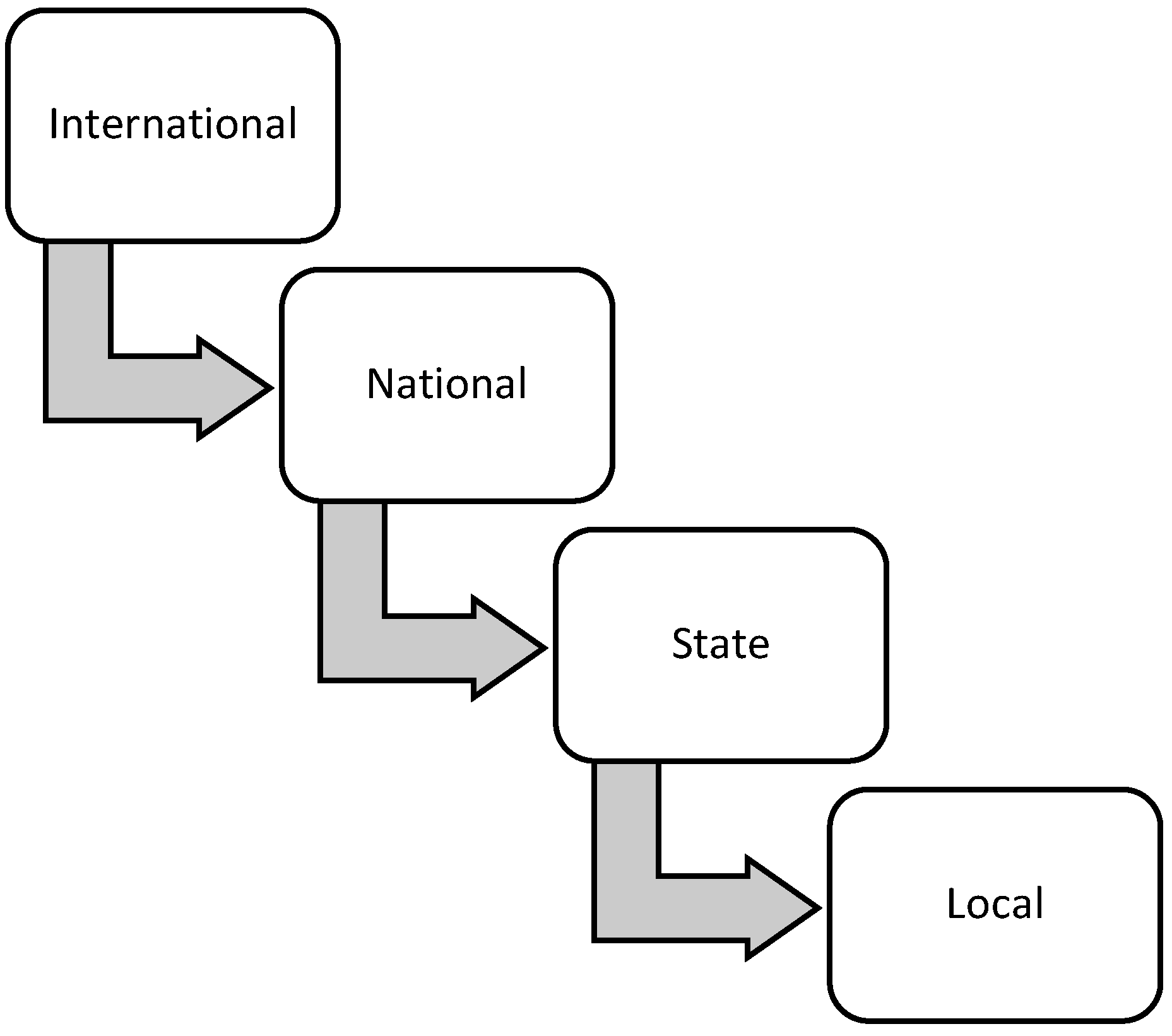
USRAP begins with extensive vetting by UNHCR. After the claim of persecution has been verified, and it is determined that fleeing is the only way to save their lives, the claimants are referred to a US Resettlement Support Center (RSC) to begin the US’s multifaceted, comprehensive screening for possible entry. Several federal agencies are involved in the procedures, starting with the U.S. Citizenship and Immigration Services (USCIS), which is part of the Department of Homeland Security, and receives the RSC referral. Claimants’ backgrounds are investigated, and they are questioned to determine if they are a security risk. If cleared, they are placed with the Department of State, which collaborates with the Centers for Disease Control and Prevention (CDC) to conduct health screenings. The State Department then connects them with one of ten federally funded sponsoring agencies for refugee resettlement. These agencies are responsible for assisting refugees in obtaining their US flights. Those flights are funded by individual loans to refugees from the International Organization for Migration (IOM). Refugees must repay the travel loan six months after arriving in the US. Refugees receive a US cultural orientation before departure. The sponsoring agencies help refugees for up to 90 days once they are in a state. The Department of Health and Human Services manages the Office of Refugee Resettlement (ORR). ORR is responsible for aiding states with funding and programs to provide resettled refugees with basic resources. See
Figure 1.
This complex process was not perfect. There were backlogs and other hindrances that made resettling refugees a cumbersome process. Nevertheless, it functioned for decades.
Forty-five years ago, the United States codified and standardized its refugee admissions program in the 1980 Refugee Act. It is alarming that, in the year this monumental legislation celebrates its anniversary, the program it established and has welcomed more than 3 million refugees to the U.S. is indefinitely suspended (
Schofield and Yap 2024, p. 3). This authoritarian act has disrupted the work of federal agencies, including the Department of State, the Department of Homeland Security, and the Department of Health and Human Services. Additionally, it is essential to understand how the 1980 Refugee Act evolved from various changes to US immigration policy to comprehend the current aspects of the USRAP and the underlying politics.
The USRAP was established under the post-World War II liberal world order led by the United States. The ideals of democracy and capitalism permeated global and US politics. This global ordering benefited the West and its allies, while marginalizing countries outside Western foreign policy interests (
Mearsheimer 2019). It is within this liberal context that the US entered the politics of humanitarianism.
The US refugee resettlement process after World War II occurred within the context of the Cold War and the management of Jews fleeing Hitler’s Germany. Although reluctant to assist Jews, the US began to resettle large numbers of refugees from certain Eastern European countries in its anti-Communist efforts. Throughout the 1940s through 1970s, various elements of the currently suspended USRAP emerged. For instance, the 1948 Displaced Persons Act required refugees to receive medical clearance and a sponsor before entering the US. The United Nations High Commissioner for Refugees (UNHCR) was formed in 1950. In 1951, UNHCR held the 1951 Convention Relating to the Status of Refugees to grapple with managing Jews crossing multiple European borders, fleeing for their lives. One of the critical outcomes of this Western state gathering is the now internationally accepted criteria for determining whether a displaced person is a refugee. The 1952 Immigration and Nationality Act combined immigration and nationality laws for the first time, thus establishing the current immigration statutes. As a result, categories of priority determined who the United States would accept. The 1958 Azorean Refugee Act marked the first time U.S. legislation acknowledged and resettled refugees of natural disasters (
Helzer and Machado 2011). The 1962 Migration and Refugee Assistance Act increased the number of accepted refugees and provided them with financial assistance. Discretionary parole authority (the Attorney General’s discretionary power to temporarily allow certain ineligible people entry based on urgent humanitarian circumstances or significant public benefit) to permit refugee admittance also increased under this Act (
Congress.gov 1962, Public Law 87–510, 1962 STATUTE 76).
2Racial barriers to the U.S. refugee admission and resettlement process were removed under the 1965 Amendments to the Immigration and Nationality Act. In 1966, the Cuban Adjustment Act permitted paroled Cubans who had been in the U.S. for two years to apply for permanent legal status. The Indochinese Immigration and Refugee Act of 1975 required the U.S. President to provide a report on refugee resettlement to Congress. The Act was also established during a time when the United States was embroiled in the Vietnam War. At the end of the conflict, the United States needed to extract the Vietnamese who had assisted the United States. Since the US already had governmental agencies and processes dedicated to resettling forcibly displaced persons, and grassroots resettlement organizations were already providing a hodgepodge of varied resettlement processes, public and private resources were utilized to resettle the Southeast Asians. The Indochinese Immigration and Refugee Act of 1975 introduced the policies and procedures that would eventually be codified into standardized national policy for admitting and resettling refugees.
Senator Edward (Ted) Kennedy introduced a bill in 1979 that would standardize the process of admitting and resettling refugees in the United States (
Congress.gov 1979). It was the 1980 Refugee Act. The bill was an amendment to the Immigration and Nationality Act, made through revisions to procedures outlined in the Migration and Refugee Assistance Act of 1962 (
Congress.gov 1962). The 1980 Refugee Act provided a definition, description, and explanation of the uniform, public–private refugee admissions and resettlement procedures. The landmark bill was signed into law in 1980 by President Jimmy Carter. As a result, the 1980 Refugee Act became the official legislation establishing the current, yet suspended, U.S. Refugee Admissions Program. This milestone legislation incorporates all medical screening, financial assistance, U.S. Presidential and congressional consultations, and the UNHCR’s globally accepted definition of a refugee into a single national statute. That said, by suspending USRAP, this administration is ignoring the 1980 Refugee Act. Dismissing it is a clear violation of the separation of powers enshrined in the Constitution. The blatant disregard for limited government in favor of power concentrated in the executive, justified by emotions, not sound reasoning, and threatening retaliation against protestors, are very authoritarian acts.
3. Authoritarian Policy Shifts (2025–2028)
The 2025 Trump Administration has waged attacks on every aspect of democracy in the United States by ignoring constitutionally declared processes and institutions. His regime circumvents the US Constitutional separation of powers and the checks and balances on those powers. The founders adamantly insisted upon a separation of powers in three branches, authorizing each unit to check the authority of the other two to prevent the concentration of control in one branch. Likewise, the democratic principles of liberty, equality, justice, and a dignified life are vanishing. Violations of civil and human rights are rampant. Regarding immigration policy and refugees, this regime is using emotions, not reason, as Linz explains, to create anti-immigration policies that impact refugees. Criminalizing and racializing immigrants or other targeted groups is an authoritarian, exclusionary method of cleansing a society of those groups while selectively welcoming others. This administration has turned US humanitarianism into State control based on racial discrimination. Perilously, a slew of executive orders ignore Congress and, consequently, the Constitution.The first refugee-related Executive Order was Executive Order 14163: “Realigning the United States Refugee Admissions Program” (
Trump 2025a). It was signed on 20 January 2025. Justification for the suspension states,
“The United States lacks the ability to absorb large numbers of migrants, and in particular, refugees, into its communities in a manner that does not compromise the availability of resources for Americans, that protects their safety and security, and that ensures the appropriate assimilation of refugees. This order suspends the USRAP until such time as the further entry into the United States of refugees aligns with the interests of the United States”.
The phrase “that does not compromise the availability of resources for Americans” implies that refugees are taking resources away from citizens. This anti-refugee language is a signature concept of the Make America Great Again (MAGA) movement. The notion of competition for limited resources is again an old tactic of scapegoating non-nationals, dehumanizing them, and justifying their detention, deportation, or extermination. Anti-immigrant rhetoric was also used in 2024. At a rally in Reading, Pennsylvania, Trump said, “You have an invasion of people into our country. They’re going to be attacking—and they already are—Black population jobs, the Hispanic population jobs, and they’re attacking union jobs too”. “So when you see the border, it’s not just the crime. Your jobs are being taken away too” (
Hussein 2024). Economists and government statistics have disputed such claims. Nevertheless, economic rhetoric launched at undocumented immigrants includes refugees and encourages fear of them. That fearmongering is reflected in the executive order language by stating that it is in the best interest of Americans because it “protects their safety and security” (
Trump 2025a, §1, para. 2). He goes on to say,
“It is the policy of the United States to ensure that public safety and national security are paramount considerations in the administration of the USRAP, and to admit only those refugees who can fully and appropriately assimilate into the United States and to ensure that the United States preserves taxpayer resources for its citizens”.
This language targets refugees as a national and local security threat. National security is a consistent justification for targeting the removal and halting of refugee and immigrant entry into the US. Spreading propaganda that non-nationals are criminals, dangerous, and a threat to the security of citizens is another authoritarian tactic of this regime. The language also alludes to the fact that refugees are unpatriotic when the word “assimilation” is used. Executive Order l4163 exclusionary language emphasizes that it is US policy to ensure “the appropriate assimilation of refugees” (
Trump 2025a, §2). The word “assimilation” implies relinquishing one’s culture and replacing it with American culture, which includes the English language, to advance in society and access resources. For example, using Executive Order 14224 “Designating English as the Official Language of the United States,” Trump revoked Bill Clinton’s Executive Order 13166 “Improving Access to Services for Persons with Limited English Proficiency” (
Trump 2025b, §3 (b)).
3 However, most refugees are enrolled in or encouraged to join an English as a Second Language class by their sponsoring resettlement agency or a non-profit organization assisting them.
Section 2 also states, “It is also the policy of the United States that, to the extent permitted by law and as practicable, State and local jurisdictions be granted a role in the process of determining the placement or settlement in their jurisdictions of aliens eligible to be admitted to the United States as refugees” (
Trump 2025b). This language encompasses consultations with state and local governments to determine their capacity to receive refugees, as required in the 1980 Refugee Act. It can also be interpreted as meaning that state and local governments have the authority to reject refugee resettlement, which is within the federal domain.
In
Section 3. (a). (Realignment of the U.S. Refugee Admissions Program) of Executive Order 14163, Trump says, that “entry into the United States of refugees under the USRAP would be detrimental to the interests of the United States” (
Trump 2025a). Those “interests” refer to a white nationalist state, reflective of the 1790 Naturalization Act that stipulated only free white male non-citizen eligibility for citizenship. That theme is also present in the immigration directives of Project 2025. Trump further states, “I therefore direct that entry into the United States of refugees under the USRAP be suspended—subject to the exceptions set forth in subsection (c) of this section—until a finding is made in accordance with
Section 4 of this order. This suspension shall take effect at 12:01 am Eastern Standard Time on 27 January 2025” (
Trump 2025a, §3. (a)).
Executive Order 14163 indefinitely suspended all refugee admissions for 90 days. Controlling the ending and resumption of USRAP is an authoritarian tactic. Trump’s executive overreach has constrained the legislature. Suspending USRAP disregards statutory refugee resettlement procedures outlined in the Immigration and Nationality Act (INA) and its 1980 Refugee Act amendments. Executive Order 14163 further concentrates power with the president by controlling when the USRAP will resume.
Section 3. (b) states, “The Secretary of Homeland Security shall suspend decisions on applications for refugee status until a finding is made in accordance with
Section 4 of this order” (
Trump 2025a).
Section 4 refers to the 90-day resumption prerogative of the Secretary of Homeland Security, in consultation with the Secretary of State. According to the Executive Order, the Secretaries of State and Homeland Security jointly have the authority to determine the entry of refugees on a case-by-case basis (
Trump 2025a, §3 (c)). That decision is based on the Secretaries deeming the refugees an asset to US interests and not a threat to national security. Section (d) gives power to the Secretary of Homeland Security, in consultation with the Attorney General, to maintain state and local government input in the placement decisions of refugees in their respective jurisdictions (
Trump 2025a, §3 (d)).
The state and local government involvement in refugee resettlement placement increases the divided responses from authoritarian state and local governments that tend to reject refugees and democracy leaning ones that tend to welcome them. Divergent views on refugee resettlement related to available resources are not new. The addition of refugees to the populations of small towns and cities is a reasonable concern, as it increases the need for resources. The problem emerges when race, religion, ethnicity, or a combination of these identities is an overt or covert reason for rejecting refugee resettlement. As a result, refugees risk unchecked, acceptable negative social behaviors and policies in local and state governments that respond to this authoritarian regime and the Project 2025 plan. Likewise, refugees already resettled may engage in intrastate migration to more receptive localities, especially if resistant governments erect and enforce restrictive policies on their movements, access to education, employment, or other obstacles to self-reliance. Alternatively, they are already affected by the restrictions placed on or the shuttering of resettlement agencies and organizations. Refugee survival is also complicated by local and state governments that may be split. For example, if a state is welcoming refugees, but a local government is not, refugees may have access to state support but not local resources, and vice versa. Ultimately, state and local involvement in refugee resettlement under this regime can be highly problematic and varied, which can further traumatize refugees seeking a new life envisioned under democracy.
Section 3 (c) and (d) further expand the executive’s power to determine the entry of refugees. These sections circumvent the Congressional consultation and reports that the president is required to provide to Congress regarding the number of entries from around the globe. Bypassing Congress to determine refugee entry is in direct violation of the federally structured process stipulated by the 1980 Refugee Act. The national law requires the president to consult with Congress regarding the number and regions of refugee entries, not solely the executive branch. These sections would remove any Congressional oversight and opportunity to diversify the racial and ethnic composition of those refugees based on the anti-diversity purview of this regime.
Section 4. Resumption of the U.S. Refugee Admissions Program: After the initial 90 days of suspension of refugee admissions, the Secretary of the Department of Homeland Security and the Secretary of State will consult, then submit a report to the president determining if resuming USRAP is in the US national interest (
Trump 2025a, §4). This 90-day review cycle is detrimental to refugee admission and resettlement because the resumption of the USRAP will never be in the national interest of a xenophobic, white nationalist, authoritarian regime. Exceptions to bolster such an outcome are nevertheless made. For instance, the welcoming of 59 Afrikaner farmers and their families is an example of biased immigration policies conjured based on emotions and feelings, not facts and reason (
Lee et al. 2025). Likewise, the 90-day review and report are problematic if the Secretaries of these agencies are loyal to Trump and not to the US Constitution or the democratic principles on which it was founded. In fact, at the time of this writing, 90 days have passed with no intentions to resume the USRAP.
Trump goes on to say, “The Secretary of Homeland Security, in consultation with the Secretary of State, shall submit further reports every 90 days thereafter until I determine that resumption of the USRAP is in the interests of the United States” (
Trump 2025a, §4). Again, this executive order removes Congress from the US refugee admissions and resettlement process by disregarding the national law that outlines the procedures. Although the 1980 Refugee Act authorizes the president to make the final determination on the number of refugee entries for a fiscal year, that decision is made in consultation with Congress and cabinet-level officials.
Section 4 of Executive Order 14163 excludes Congress and concentrates resumption of the USRAP within the executive branch. The people occupying these positions are Trump supporters. When inserting loyalist politics into the USRAP resumption process, it means the people occupying those positions are obeying and influencing a power-driven executive who is implementing an authoritarian plan for the reconfiguration of the United States. The language used by Trump to describe refugees also has authoritarian tones. Mentioning migrants, with special emphasis on refugees, selects them as a specifically problematic group of migrants. Similarly, the word “alien” is also borrowed from US immigration policy. The term evokes a sense of being a stranger. The narrative surrounding that stranger can be positive or negative. US immigration policy, and this executive order, uses the term to project a negative narrative of fear and criminality onto anyone without citizenship status. This administration also uses racial profiling as an additional tool of fear to weaponize the USRAP. The executive order justifies criminalizing, detaining, and deporting the “alien” because the “alien” has been cast as an unwanted entity, not a human in need.
“
Section 5. Revocation. Executive Order 14013 of February 4, 2021 (Rebuilding and Enhancing Programs To Resettle Refugees and Planning for the Impact of Climate Change on Migration), is hereby revoked” (
Trump 2025a, §5;
Biden 2021). This is yet another attempt by this regime to reverse the progressive policies of the Biden–Harris administration. People forced to flee their homes because of climate change is a noted and acknowledged cause of global displacement. Over the next few years, as climate change continues to alter the Earth’s environment, affecting weather patterns that ultimately impact habitats, food supplies, and ecosystems worldwide, the number of climate change refugees is expected to increase. Recently, Trump said this about climate change. “It’s the greatest con job ever perpetrated on the world in my opinion” (
C-SPAN Video 2025). This administration’s dismissal of the climate crisis jeopardizes the lives of refugees that the US could save. Executive Order 14163 represents a significant concentration of unchecked power, allowing the executive to influence US refugee admissions and resettlement in a manner that favors a less diverse US population. That unchecked power is accompanied by the consolidation of authority to maintain, redirect, or eliminate foreign aid.
On 20 January 2025, Trump signed Executive Order 14169 “Reevaluating and Realigning United States Foreign Aid” to suspend funding for new US foreign aid disbursement for 90 days (
Trump 2025c, §3.(a)). Justification was based on the alignment of foreign aid with American interests in §1. and §2.
Section 1 states, “The United States foreign aid industry and bureaucracy are not aligned with American interests and, in many cases, are antithetical to American values. They serve to destabilize world peace by promoting ideas in foreign countries that are directly inverse to harmonious and stable relations internal to and among countries” (
Trump 2025c).
This type of language suggests that US foreign policy will continue to support its military and capitalist interests, yet be undergirded by ultra-conservative, white nationalists, and evangelical influences at the expense of the people affected by those policies. The eliminated funding directly impacts displaced people around the globe. In the aftermath of natural disasters or waiting for HIV-AIDS medicine or COVID vaccines, the removal of the US from providing vital medical resources is literally a death sentence for hundreds of IDPs and refugees. Retrieval from established global engagement and provision of basic resources are part of the isolationist element of Project 2025. Likewise, withdrawing from international organizations such as the World Health Organization (WHO) is rooted in Project 2025’s aim of re-evaluating human rights initiatives to ensure they are “authentic.” The underlying attack on foreign aid is on abortion resources as well as reproductive and LGBTQ+ protections included in any facet or implementation of US foreign aid. The recommendations in the U.S. Commission on Unalienable Human Rights inform Project 2025.
In 2019, then US Secretary of State Mike Pompeo established the Commission to review and report on human rights in the US to provide context to the role of human rights in US foreign policy “that serves American interests, reflects American ideals, and meets the international obligations that the United States has assumed” (
Office of Policy Planning 2020, p. 6). Its recommendations called for the abandonment of previous administrations’ expansion of human rights. Unalienable rights in the Commission report were narrowly configured, prioritizing religious and property rights over reproductive and LGBTQ+ rights. The idea of “America First” (concentrating on domestic issues such as the economy, restricting immigration, upholding evangelical Christian values, rebuilding an assertive military, and restructuring the US government) and an overhaul on the approach to human rights carried over into Project 2025 and are reflected in its mandate to ensure that “All U.S. multilateral engagements must be reevaluated in light of the work of the commission, and initiatives that promote controversial policies must be halted and rolled back” (
Heritage Foundation 2023, p. 192).
The 2024 Department of State’s annual report on international human rights is another authoritarian attack on refugees. Created by legislation in the 1970s, officially known as Country Reports on Human Rights Practices, and grounded in the 1948 Universal Declaration of Human Rights and other international agreements, the report is typically used to inform congressional decisions on security assistance and the allocation of foreign aid (
Congress.gov 2025a). It has become a globally trusted source for States to assess human rights abuses. The reports have been used in immigration cases and asylum decisions. This regime modified the report prepared under the Biden administration to ensure it was “aligned to the administration’s executive orders” (
Bureau of Democracy, Human Rights, and Labor 2025). Critics highlight the downplayed reports on El Salvador, Israel, and other allied countries to this administration. These are high-level alarms that the US is reshaping the domestic and foreign policy definitions and approaches to human rights. This authoritarian regime is removing any avenue of accountability for massive human rights violations to anyone in the US, including citizens, as well as humanity in general. Some of the usual sections omitted from the modified 2024 report include the removal of DEI content, protections for marginalized and vulnerable groups, the right to a fair trial, and the freedom to assemble peacefully (
LaRoque 2025;
Smith 2025). Most concerning for the refugee network is the deemphasis on non-refoulement. Refugees will no longer be protected from being returned to their countries of origin, where they may face torture, persecution, or death. As a result, the US will be violating international refugee law and refugee rights, which are rooted in international human rights law (
Hathaway 2005;
UNHCR|The UN Refugee Agency 1967, p. 3). Consequently, the US will no longer be a country of refuge. It will itself become a country to flee.
Accordingly, Executive Order 14169 §3. (b) is titled “Reviews of United States foreign assistance programs.” It states, “Reviews of each foreign assistance program shall be ordered by the responsible department and agency heads under guidelines provided by the Secretary of State, in consultation with the Director of OMB” (
Trump 2025c, §3. (b)). Sections (c) and (d) refer to 90-day review periods. Heads of agencies, in consultation with the Director of the Office of Management and Budget (OMB) and in agreement with the Secretary of State, determined which agencies would remain or be modified or terminated. New foreign development program disbursements and initiatives can resume before the 90-day review period if a review is conducted and the Secretary of State or his designee, along with the Director of the OMB, approves the modified program. Any new programs must be reviewed by the Secretary of State or his designee in consultation with the Director of the OMB. The 90-day period has ended with the termination of vital foreign aid agencies and the termination of critical funding for global aid. These evaluations and consultations with the Director consolidate more power than ever in the OMB, giving the executive branch greater control over agency budgets. This executive overreach consequently circumvents Congress’s already authorized funding for agencies and prevents the allocation of future funds to agencies. The accumulation of power in the OMB essentially violates the Origination Clause in the Constitution, which grants Congress, specifically the House of Representatives, sole authority to introduce appropriations bills. However, the Senate can propose or agree with amendments to appropriations bills passed by the House (
U.S. Constitution art. I, §7 cl1 n.d.).
Part of the reason why the narrow views of Project 2025 are in Executive Order 14169 is that the primary contributors to the ultra-conservative manifesto serve in this administration. For example, the Director of the OMB is one of the major architects of Project 2025. As a result, the gatekeepers to US foreign aid are also the constructors of the redirection and restructuring of the US. Based on the isolationist direction of this authoritarian, white nationalist, elitist regime, any modifications of existing programs or the creation of new ones will reflect this ultra-conservative, narrow world and domestic view.
Section 3. (e) gives the Secretary of the State the authority to waive the pause outlined in §3. (a) for specific programs (
Trump 2025c). Implementation of Executive Order 14169 occurred four days after it was issued. The U.S. Agency for International Development (USAID) and the services it provided is one example. The domestic implications include massive unemployment, confusion in the workplace regarding tasks and roles, and the tremendous loss of expertise and policy implementation. Some of the countries that received aid from the US are countries from which refugees fled. They are also countries with IDPs who depend on international aid to survive. Sadly, resettled refugees in the US will also feel the impact of the removal of resources under this authoritarian regime.
On 24 January 2025, this administration issued “stop work orders” to all humanitarian programs. The Department of State, through the Bureau of Population, Refugees, and Migration (PRM), implemented the directive by ceasing all funding to resettlement agencies for services to newly arrived refugees and refugees already in the country (
Immigration Policy Tracking Project 2025). Global Refuge, US Conference of Catholic Bishops, Episcopal Migration Ministries, Ethiopian Community Development Council, Church World Service, International Rescue Committee, Bethany Christian Services, Hebrew Immigrant Aid Society, US Committee for Refugees and Immigrants, and World Relief receive federal funds to sponsor vetted and approved refugees for 30 to 90 days. They work directly with the Department of State, under the PRM, through the Reception and Placement grant (
U.S. Department of State 2025b). They are essential to refugees’ initial steps of resettlement. These resettlement agencies assist refugees with accessing food (especially culturally familiar foods), housing and furnishings, employment, English language classes, understanding what utility bills are and how to pay them, completing and maintaining forms for permanent residency, applying for citizenship, registering to vote after naturalization, mental and physical healthcare, identifying local religious centers, reading mail, navigating and accessing public transportation systems, and a myriad of other resources. This administration’s work stoppage and termination of federal funds to these ten sponsoring resettlement agencies is devastating to them and the millions of refugees that depend on their services. As of 27 January 2025, any refugees not already in the process of being resettled to the United States were ineligible to apply for resettlement. Despite the assault on the USRAP, the US refugee resettlement network is fighting back.
On 10 February 2025, resettlement agencies and eight plaintiffs sued the administration in
Pacito v. Trump (
2025) to declare Executive Order 14163 illegal. This class action lawsuit was filed by the International Refugee Assistance Project (IRAP) on behalf of impacted refugees and several resettlement agencies, such as Church World Service (CWS), Hebrew Immigrant Aid Society (HIAS), and Lutheran Community Services Northwest (LCSNW) (
International Refugee Assistance Project 2025a;
Pacito v. Trump 2025, 2:25-cv-00255, (W.D. Wash. 2025)). The lawsuit argues that the Executive Order and suspensions are illegal. It aims to end the suspension of refugee admissions, restore the USRAP, and reinstate all funding to support it. The lead plaintiff (Pacito) is a refugee from the Democratic Republic of the Congo. He and the other plaintiffs had purchased plane tickets and sold their possessions in anticipation of resettling in the US, only to have their flight abruptly cancelled. After months in limbo, he and his family resettled in North Carolina. They, along with other refugees, were exempted from the ban by a court order. On 25 February 2025, a judge moved to block the suspension of USRAP. Then, the administration terminated all contracts to refugee resettlement agencies on 26 February, cutting off much-needed resources for all refugees and actors in the U.S. refugee resettlement network. However, a judge ruled that the termination of the contracts was illegal. These contested policies have decimated U.S. refugee families and the communities and organizations that support them.
Another example of executive overreach is the authoritarian direction in which this administration has taken the Office of Refugee Resettlement (ORR). The 1980 Refugee Act stipulates that the ORR is the agency that coordinates the resettlement of refugees in the USRAP. The agency within the Department of Health and Human Services ensured the creation, funding, and support of programs that assist states in resettling refugees. Specific initiatives are used to assist elderly and child refugees, including unaccompanied children. These children are orphaned in their home country or, for various reasons, are resettled by themselves. Nevertheless, if possible, the ORR supports them under the Unaccompanied Refugee Minors Program and places them with sponsors, such as family members (
Kriel 2025). Project 2025 emphasized weaponizing and politicizing the ORR to target undocumented immigrants, even if they are children. Under this administration, ORR is now an ICE enforcement arm that shares data on refugee sponsors and minors that may lead to the arrest of the sponsors (
Hirono 2025). To be sure, ORR was not constructed to deport or survey immigrants. It was designed to support refugees as they acclimate to life in the US. The disturbing reorganization is captured in one news report that stated,
“ICE has consolidated an array of databases and surveillance technologies to identify, detain, and deport undocumented immigrants. The agency’s use of the Investigative Case Management (ICM) system, alongside data from the Office of Refugee Resettlement (ORR), the Internal Revenue Service (IRS), Flock Safety’s license plate reader network, and other tools, reflects a sweeping approach to immigration enforcement that has sparked widespread concern over privacy and due process”.
Additionally, this administration proposed a restructuring that would place the ORR under the Department of Homeland Security (
Heritage Foundation 2023, p. 478). Neither Immigration and Customs Enforcement Agency (ICE), the Drug Enforcement Administration (DEA), the Bureau of Alcohol, Tobacco, Firearms, and Explosives (ATF), nor the Department of Homeland Security Investigations (HSI) is equipped with child welfare units or resources (
Young Center for Immigrant Children’s Rights 2025). For example, one news headline read, “The Message Is ‘We Can Take Your Children’: More Systematically Than In His First Term, Trump is Rolling Back Protections for Undocumented Minors” (
McCrummen 2025). Truly, this administration is re-traumatizing children alone in the US.
As previously stated, refugees arrive in the United States through legal parameters, policies, and practices established by the 1980 Refugee Act. However, refugees who have not maintained their legal status through the USCIS are susceptible to the same mass deportation criteria activated against immigrants under this administration. However, under the 1967 Protocol Relating to the Status of Refugees, which the US has signed, it is prohibited from committing non-refoulement. Nevertheless, updated or incomplete permanent residency or naturalization documents are also grounds for denaturalization. Whether intentional or not, such inconsistencies can be categorized as fraud, with the intent to mislead the government. Also, denaturalization is a legal process that requires a court appearance and resources. Most refugees lack the funding, attorneys and time to endure the legal proceedings. Nonetheless, that right and status as a naturalized citizen is under threat by this authoritarian regime. For example, “Five members of Central Pennsylvania’s Nepali-speaking Bhutanese community, who have full legal refugee status, became the first green card holders in the commonwealth to be detained by Immigration and Customs Enforcement (ICE) officers…” (
Kitchen 2025). Typically, resettled refugees could enlist help from their sponsoring resettlement agency. Now that this authoritarian regime has suspended USRAP and ended funding for resettlement agencies and non-profits with resettlement programs, communities, NGOs, and resettlement organizations are scrambling to attain resources, which contributes to their limited ability to aid resettled refugees. A non-profit employee explained that, “New federal legislation has changed who qualifies for food stamps and health care benefits like Medicaid. Refugees and asylees aren’t on the list” (
King 2025).
On 21 March 2025, the Director of the ORR informed resettlement organizations that, effective 5 May 2025, access to assistance such as Refugee Cash Assistance (RCA) and Refugee Medical Assistance (RMA) for eligible resettled refugees has been drastically reduced from 12 to 4 months (
Salazar 2025). The assistance of resettlement agencies, non-profit organizations, faith-based organizations, and individuals is even more necessary following the passage of Trump’s heavily contested and coerced H.R. 1, also known as the One Big Beautiful Bill Act (OBBBA), on 4 July 2025 (
Congress.gov 2025b).
The OBBBA is another cruel act against resettled refugees. “The bill is, without a doubt, unprecedented in the harm it will cause refugee and other immigrant communities” (
Global Refuge Staff 2025). H.R. 1§ 10108. ALIEN SNAP ELIGIBILITY removes refugees from accessing Supplemental Nutrition Assistance Program (SNAP) by amending § 6(f) of the Food and Nutrition Act of 2008 (7 U.S.C. 2015(f)) (
Govinfo.gov 2008, pp. 44–45). The OBBBA changes negate refugees’ exemption from the five-year waiting period established under the 1996 welfare law, the Personal Responsibility and Work Opportunity Reconciliation Act (PRWORA) (
Congress.gov 1996). As a result, basic resources and services are increasingly geared toward U.S. citizens and legal permanent residents (LPRs) or those with green cards. Consequently, the OBBBA means that refugees no longer have access to SNAP, Medicaid, Medicare, the Children’s Health Insurance Program (CHIP), and Affordable Care Act coverage (
International Refugee Assistance Project 2025b). One refugee stated, “There are people who are in need. I think ignoring that—it’s not human” (
Chatlani 2025).
Under USRAP, access to federally assisted food and healthcare was for a limited time based on eligibility criteria. These are resources to which refugees have legal access under the USRAP, as stipulated by the 1980 Refugee Act and the public–private partnership known as the Reception and Placement Program. The ORR was responsible for ensuring refugees received services to support them on their road to self-reliance. Now that receiving resettlement agency assistance is disrupted, local support is even more crucial as refugees face hunger and no access to healthcare. The executive director of one of the few remaining resettlement agencies in Kansas City said, “We were astounded at the level of support that came through from the local community. [But] at some point, sooner or later, we’re going to experience the limits of that. Local communities cannot replace the federal government as a social safety net” (
King 2025). This statement is testament to the necessity of a welfare system that supports those in need. However, this regime is attacking the US “safety net” with the devastating and cruel elements of its authoritarianism.
4. Impacts on Refugees and Resettlement Infrastructure
Invoking Linz’s authoritarian component of replacing a strong ideology, with reliance on mentalities or emotions (xenophobia and racism), consolidating power into the executive, ruling through executive orders, disregarding the rule of law, forcing the creation of legislation that guts US humanitarian policies towards refugees, immigrants and citizens, the impact of this administration on refugees and the organizations that support them is far-reaching. As a result of USRAP’s suspension, resettled refugees are waiting to reunite with their families. Approximately 10,000 vetted and approved refugees, including Afghans, with plane tickets were abruptly denied admission (
Ludden 2025). Others remain in limbo abroad or are housed in liminal spaces, such as churches or hotels, without access to education, case workers, or other resources and assistance from resettlement agencies (
Jenkins 2025). In refugee camps, people who are ready to reunite with their families may have relocated to other areas to prepare for departure. Many mothers, fathers, sisters, brothers, and grandparents may never see their relatives again. For example, Zawadi is a mother of eight from the Democratic Republic of the Congo. She and her children were separated from her husband, who was working in Cape Town, South Africa, during their U.S. resettlement interviews. The family was resettled in August 2019 in Oshkosh, Wisconsin, without him (
Marville 2025). Other families were on the verge of being reunited when Executive Order 14163 was signed.
The Sung family are refugees from Myanmar who were separated as they fled. “Part of the family has been resettled in Texas, and they have been waiting for years as the rest of the family goes through the resettlement process. The flight was scheduled for early February, and the family here bought a four-bedroom home just to accommodate them. Their flight was cancelled at the last minute” (
Church World Service 2025). Others were eventually allowed to enter after the courts stepped in. The Plaintiff Pacito in the Pacito v. Trump lawsuit said,
“I feel like I’m blessed. I was actually hopeless… [but] the minute the court said they’re going to process my case again, I was reborn. My energy was up again, I felt like now there is hope for the future. Now that I’m here, I don’t even have the words to express it. Someone who has never been a refugee cannot understand that refugees do suffer… they don’t even have basic things. But we pray and hope that this case will open the way for them and they get a chance to change their life”.
Resettlement agencies are severely impacted by the suspension of USRAP and the stoppage of federal funding to support their work. Most are barely remaining operable. For instance, Lutheran Social Service of Minnesota is eliminating 27 out of 25,000 staff positions, citing the Trump administration’s suspension of refugee admissions and stoppage of federal funds for resettlement agencies to aid new arrivals as the reasons (
Rao 2025). They receive most of their funding from private donations and community support. For non-profits assisting refugees without federal funds, their reliance on private donations and volunteers has increased exponentially (
King 2025). Likewise, many organizations have had to reduce their personnel. For instance, Ascentria, a New Hampshire-based refugee resettlement agency, laid off 19 employees (
Harris 2025). Catholic Charities in Houston, Texas, stated, “The loss of federal funding is forcing a reduction of 120 staff, primarily in our program that serves refugees” (
Ortiz 2025). Limited personnel means fewer case workers available to help refugees with everyday tasks such as reading mail. Fewer staff also means certain services are reduced, lack quality, are offered less frequently, or are ended. As a result, many nonprofits and resettlement agencies operate on drastically reduced budgets, becoming shadows of their former selves. Consequently, some nonprofits and resettlement agencies have no choice but to shutter (
Colasanti 2025;
Moule 2025).
Understaffed nonprofits and resettlement agencies struggle to help refugees access and understand basic resources, such as enrolling their children in school, which, like most things in society, have become increasingly digitized. Therefore, learning English is critical to initially surviving, then thriving as they acclimate to their new lives. However, suppose an elementary school or college has had its funding for ESL classes cut due to the administration’s anti-DEI (Diversity, Equity, and Inclusion) policies (
Fensterwald et al. 2025). In that case, the smooth transition into that new life is hindered. Research opens the lens to various aspects of refugee resettlement, including employment and education. Unfortunately, research on resettled refugees and their experiences with the challenges and triumphs of resettlement in the United States is disrupted.
The attacks on academia jeopardize or compromise research agendas. Without the digital infrastructure for refugees resettled in the US, policies and programs that support them will be underinformed. Likewise, without reliable statistics, so much about US refugees and resettlement for the four years of this regime is lost. Funding for research grants has been eliminated, drastically reduced, or significantly modified to ensure that the grant language, goals, and outcomes align with this regime’s anti-DEI policies (
Aguinis et al. 2025;
Flannery 2025;
Knott 2025). Indeed, under this administration, it is challenging for researchers to access refugees for interviews or focus groups. Refugees often hesitate to speak to anyone, even when the researcher’s intentions are benevolent (
Rosales et al. 2025). The apprehension is understandable. For sure, research on refugee resettlement under this authoritarian regime is necessary, but it will be challenging. DEI restrictions, lack of funding, and the apprehension of refugees to participate in a research project may lead to more reliance on studies with executives of resettlement organizations or trusted refugee community leaders. Nevertheless, funding and staff reductions, as well as limited time, may prevent resettlement organizations’ ability to participate in research.
Similarly, refugees who have already been resettled must also consider their access to resources as they strive for self-sufficiency. For example, if a refugee is working for a resettlement agency or nonprofit whose funding is cut, and they consequently must reduce their personnel, that refugee becomes unemployed. The loss of employment impacts the refugee’s family and their community. The absence of that income forces the family to rethink everyday decisions, such as how many groceries they purchase. The loss of employment for a refugee may resonate with citizens. That is why they should not be perceived as “the others”. Their existence is inextricably connected to their local communities and refugees abroad. However, the US is abandoning its global role as the top country for resettlement, eroding its “soft power” by freezing the USRAP (
Henne 2022).
Suspending the USRAP is damaging not only to refugees in the US already, but to refugees around the world who are depending upon the US to remain the top country of resettlement. In terms of global power, other countries such as Canada can now step into that role as authoritarianism grips the US. In fact, Canada replaced the US in 2018 as Trump drastically reduced the number of refugees for resettlement to 45,000 (
Kaida et al. 2022;
Monin et al. 2021;
Radford and Connor 2019). As a result, the US diminished its role in the global refugee resettlement network. Even more so, freezing the USRAP significantly weakens the country’s foreign policy leverage.
Resettling refugees contributes to the US’s global influence. Demonstrating a commitment to humanitarianism enhances the US’s image as a welcoming state and a responsible global leader. Such perceived power strengthens diplomatic ties and fosters economic, political, and military cooperation with other states (
La Corte and Voisine 2020). However, as this administration continues to alienate the US from the global community and stoke mistrust among its allies, the US risks losing its worldwide respect and being isolated in a volatile global system. Indeed, regaining global leadership in resettling refugees will be a challenging task.
Under this administration, resettlement organizations will continue to focus on refugees already in the US, with no newly arrived refugees to assist. Although funding may come from an increased reliance on donations, state funding will likely be politicized. Possibly, blue (oppositional/liberal) states will search for financial and organizational support for refugees. Red (authoritarian/ultra-conservative) states are less likely to do so (
Heritage Foundation 2023, pp. 149–50). This administration may even escalate efforts to denaturalize resettled refugees. Of course, this will further traumatize people who were forced to flee their home countries abruptly. Truly, a robust and sustainable grassroots and institutional resistance must grow and endure to combat executive overreach. Similarly, holding fast to the principles of democracy is crucial to supporting refugees.
Rebuilding the US Refugee Admissions Program will require a new administration that builds upon the remaining components of US resettlement. Only an administration that returns the US to a democratic republic, that respects the Constitution and thoughtfully addresses racism to dismantle systemic white supremacy, can the US begin to restore the USRAP. Indeed, the United States must defend a political culture that values and supports the democratic principles of liberty, justice, equality, and humanitarianism. This change in political culture and administration must occur soon. It must begin with the midterm elections. The momentum must be carried strongly through to the 2028 US Presidential election to thwart a complete mutation into an authoritarian state. The longer the USRAP is suspended, the weaker the US becomes culturally, economically, socially, and politically. The US’s global credibility will continue to wane. That global respect further declined following Trump’s United Nations speech, where he declared the international asylum system was “broken’ and called for more countries to replicate the US’s closed-door policies to refugees. He chastised countries for not stifling migration by saying, “You have the right to control your borders as we do now, and to limit the sheer numbers of migrants entering their countries and paid for by the people of that nation that were there and that built that particular nation at the time” (
C-SPAN Video 2025). The US encouraging other countries to adopt anti-refugee national policies is a dangerous path forward in international relations. The country’s real and perceived power will continue to decline, and the strength of its diversity will also decrease. The resettlement network will likely face financial, personnel, and humanitarian setbacks that will take years, if not decades, to recover from.