Article

Breaking Silos in Caregiving Research: Toward Unified Measures Across the Lifespan

1
Scripps Gerontology Center, Miami University, Oxford, OH 45056, USA
2
Independent Researcher, Madison, WI 53706, USA
3
Occupational Therapy, College of Health Sciences, Rush University, Chicago, IL 60612, USA
4
Health Sciences, The University of New Mexico, Albuquerque, NM 87131, USA
5
Kinesiology, Univeristy of Wisconsin-Madison, Madison, WI 53706, USA
*
Author to whom correspondence should be addressed.
Soc. Sci. 2025, 14(11), 646; https://doi.org/10.3390/socsci14110646
Submission received: 3 September 2025 / Revised: 28 October 2025 / Accepted: 31 October 2025 / Published: 4 November 2025
(This article belongs to the Section Family Studies)

Abstract

The number of caregivers is increasing globally making it imperative that we better understand the impact of caregiving and identify methods to address caregiver needs and health. These goals are best achieved with unified research approaches and measures that facilitate comparison across studies. Despite the need and policy support for unified research on caregiving, research often happens in silos that are diagnostic or age specific. To address this need we interviewed 33 researchers who (1) identified process, and outcome measures they commonly used in their research and (2) explained their selection. We found that researchers across the lifespan are using similar measures in their studies and are consistent in what they look for in a measure. Researchers also described barriers they face when selecting measures, including: inadequacy of current measures, familiarity, need for rigor, and measurement characteristics. These findings highlight the need for the creation and dissemination of a prioritized list of process and outcome measures being used by caregiving researchers.

1. Introduction

Currently, over 63 million caregivers in the United States (U.S.) support a family member or friend (AARP and National Alliance for Caregiving 2025). This number is expected to rise as the population ages, chronic conditions become more prevalent, and more children are diagnosed with neurodevelopmental conditions requiring consistent caregiving beyond adolescence. Caregivers play an instrumental role in supporting the health and well-being of their family members and friends (Fields et al. 2024; Kasper et al. 2018). They help with managing health conditions, households, finances, and provide socialization (Cené et al. 2015; Mollica et al. 2020). These extensive and demanding responsibilities can adversely affect caregivers’ health and quality of life of (Bom et al. 2019; Ho et al. 2009). To better support caregivers and improve their health and quality of life, researchers have developed various interventions. These interventions typically target specific caregiving populations (e.g., caregivers of people living with dementia) or caregiving contexts (e.g., caregiving at home) (Ahn et al. 2020; Bakas et al. 2022; Walter and Pinquart 2020). While tailoring interventions is important, researchers must also use a consistent set of processes (i.e., actions taken to maintain or improve an outcome AHRQ 2015) and outcome (i.e., indicators of impact AHRQ 2015) measures to enhance the relevance, efficiency, and consistency of caregiving research (Tunis et al. 2016; Van Houtven et al. 2011).
Research on caregiving spans multiple domains and has grown considerably over the last several decades with 2401 articles in 2025 with 2401 articles (https://pubmed.ncbi.nlm.nih.gov/ (accessed on 23 October 2025)). Within the increasing scholarship in this field, significant variation in terminology and data collection efforts persists. The heterogeneity in assessments within caregiving research introduces variability in estimates of caregiver prevalence and creates barriers to synthesizing findings across studies. These challenges stem from the diversity of caregiver populations and caregiving situations, as caregivers vary widely in the demographics of those they support in terms of age group, condition, relationship, and other factors. As caregiving research continues to grow and its findings inform program and policy decisions, it is increasingly crucial for researchers to establish universal definitions and assessments for caregiving (Goodwin et al. 2024).
New efforts in the U.S. aim to harmonize the caregiving field, creating a robust evidence base to inform resource and service delivery for caregivers. In 2022, the Department of Health and Human Services, the RAISE Family Caregiving Advisory Council, and the Advisory Council to Support Grandparents Raising Grandchildren collaborated on the National Strategy to Support Family Caregivers. This strategy seeks to increase awareness and outreach, strengthen caregiver programs and services, advance financial security, enhance research and data collection, and strengthen partnerships and engagement. These aims are designed to improve support and outcomes for caregivers across the nation. By focusing on enhancing research and data collection, proponents aim to increase data consistency and aggregation, enabling researchers to study population groups over time and facilitate data sharing among previously siloed researchers (Family Caregiving Advisory Council and The Advisory Council to Support Grandparents Raising Grandchildren 2022). Unified measures will allow researchers, practitioners, and policymakers to more efficiently synthesize study findings, informing larger-scale program implementation and policy development, ultimately leading to more effective support for caregivers (Committee on Family Caregiving for Older Adults et al. 2016; Family Caregiving Advisory Council and The Advisory Council to Support Grandparents Raising Grandchildren 2022). This work is also crucial for international audiences, as it sets a precedent for global caregiving standards and fosters cross-border collaboration and knowledge sharing.
Some researchers have explored existing data collection methods in the caregiving field to inform data harmonization efforts. Goodwin et al. (2024) conducted an environmental scan of U.S. population-based datasets that include data from an older adult and their caregiver. They found that while caregiver burden was a commonly assessed construct, there was variability in the specific measure used, with some datasets including validated measures and others using non-validated measures. There was also less consistency in the measurement of other constructs across datasets, particularly the positive aspects of caregiving. The authors emphasized the need for more consistent data collection by researchers to improve the utility of these datasets (Goodwin et al. 2024). Giovannetti and Wolff (2010) examined national estimates of caregivers for older adults with disabilities and found substantial variation in these estimates due to inconsistencies in how caregivers were identified, with estimates ranging from 2.7 million to 36.1 million) (Giovannetti and Wolff 2010). More recently, reports from RAND and AARP estimate that there are approximately 14.3 million military and veteran caregivers in the U.S. (Fuglesten and Salazar 2024) and 63 million caregivers supporting the general U.S. population (AARP and National Alliance for Caregiving 2025). However, authors of these reports indicate these are likely underestimates due to reporting and measurement challenges. Researchers focusing on caregivers of people living with dementia have previously attempted to develop a harmonized list of caregiver outcomes to be assessed and measured in intervention studies (Brodaty et al. 2002). Although this group developed a list of recommended measures, they encountered several issues that hindered adherence to these recommendations, primarily because interventions are often tailored to specific situations (Brodaty et al. 2002). While these existing studies provide an overview of measures used in national studies and intervention studies, they lack a representation of measures that are used by caregiving researchers with different focuses beyond older adulthood and/or dementia caregiving. Therefore, additional research is needed to explore how existing measures are used and selected by a more diverse group of caregiving researchers to facilitate data harmonization in this field. The current study addressed the following research questions:
  • Research Question 1: What are the commonly used process and outcome measures in caregiving research?
  • Research Question 2: How do caregiving researchers select process and outcomes measures for their studies?

2. Materials and Methods

2.1. Study Design

This study was a qualitative, descriptive study exploring the state of measurement in caregiving research (Sandelowski 2000). We identified caregiving-related measures that are currently available and explored the challenges of measurement selection. Interview data from caregiving researchers were collected through online, semi-structured interviews lasting approximately 45 min. Interviews focused on understanding what measures are currently used in caregiving research and why those measures are selected. Semi-structured interviews were chosen due to their success in achieving an in-depth understanding of a construct, their ability to elicit each participant’s thoughts, and allowance of flexibility in how topics are probed (Adams 2015). This manuscript adheres to the guidelines outlined in the COREQ checklist (Tong et al. 2007) (see Appendix A and Appendix B).

2.2. Study Participants and Sampling

Purposive sampling was used to recruit participants most likely to have in-depth knowledge of the study topic (Campbell et al. 2020). Potential participants were contacted by a research team member (AA) in one of three ways: (1) directly through email after identification by the research team as a leading caregiving researcher, (2) indirectly through email recruitment to relevant caregiving special interest groups and (3) through the distribution of recruitment flyers on social media platforms (i.e., X). Participants were selected according to the following inclusion criteria: self-identification as a caregiving researcher in either the academic or industry setting and English speaking. Participants were excluded if they did not meet the above criteria or were unable to complete an online interview during the study time frame from January 2023 and October 2023 (e.g., on sabbatical leave). Maximum variation sampling was used to intentionally recruit researchers with different fields within caregiving research (e.g., caregiving with older adults, caregiving for children) and researchers with different levels of experience. Recruitment was complete once data saturation within the interviews was reached, which was determined by the repetition of themes in response to interview questions (Saunders et al. 2018). Participants gave verbal informed consent at the beginning of the interview and were provided $75 compensation upon completion of their interview. The study was approved by the [University of Wisconsin-Madison] Institutional Review Board.

2.3. Data Collection

Interviews were completed with a member of the research team (AA, KP, and BF). Interviews were conducted between January 2023 and October 2023. The full interview guide can be found in Appendix C. Interviews were recorded with participant consent. Upon completion of the interview, the audio file was de-identified, uploaded to a secure location, and transcribed verbatim using secure software (e.g., Zoom, Grain). A member of the research team cleaned each transcript to ensure accuracy (AA, SL, LK, ZS). Audio recordings were deleted from the transcription software server once the transcripts were complete. Participants also completed a 10-question demographic questionnaire (Appendix D), including gender, race, ethnicity, location of research, and duration of caregiving research experience.

2.4. Data Analysis

Data were analyzed using a directed content analysis (Hsieh and Shannon 2005) to identify initial themes related to the researcher’s measurement selection process. After coding the first two interviews, team members (AA and SL) discussed and refined the code book to best align with the data. The final codebook is included in Appendix E. The next eight interviews were coded independently by two research team members, and percent agreement was calculated for these interviews (25% of the total data set). The percent agreement data are presented in Appendix F. The results of the percent agreement data were reviewed by team members (AA and SL) to resolve discrepancies in coding going forward. The remaining interviews were then divided and coded by a research team member (AA and SL).
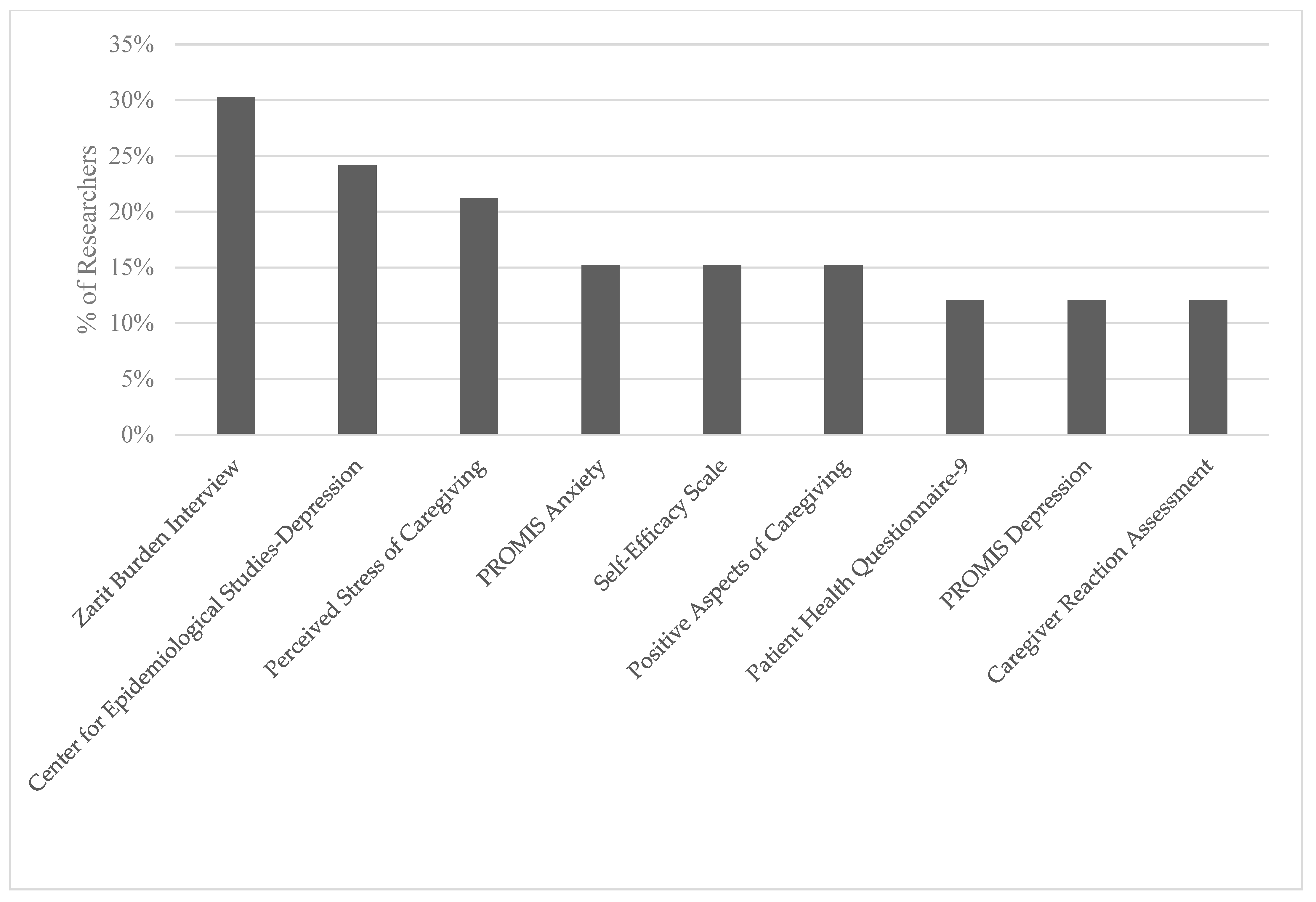
Frequencies were generated for specific names of measures used to gain an understanding of both the breadth and commonality of measures employed throughout the lifespan (Figure 1). However, some codes required additional analysis to meet the research aims (e.g., barriers and methodology criteria). For these codes, a framework analysis was utilized to further organize participants’ responses. Mosquera et al.’s (2016) framework for classifying caregiving tools and an adapted version of Stewart’s (2019) template for reviewing measures were applied to enhance comprehension of the researchers’ measure selection process.

2.5. Trustworthiness

The trustworthiness of the data analysis was ensured through structured fidelity checks related to the application of the codebook. This process was conducted by the two primary data coders (AA and SL) at two different time points: coding two transcripts and then six additional transcripts. For these first eight transcripts, a consensus was reached, generating a single coded version of them. Data triangulation was achieved by having multiple researchers review the categories used in the framework analysis (AA, SL, and BF) and by involving multiple researchers in the data analysis as outlined above. Peer debriefing was also conducted throughout various stages of the research process (e.g., during data collection, codebook generation, and data analysis). Reflective memos were maintained to provide further contextual information to guide the analysis and to document decision points along the research timeline. A running log of study progress, including participants, data collection, and analysis, was kept in a secure location to allow for the potential of external auditing by other researchers. Reporting adheres to the Consolidated Criteria for Reporting Qualitative Research Checklist. The completed checklist can be found in the Appendix A.

3. Results

3.1. Participant Characteristics

A total of 33 caregiving researchers participated in this study. Most participants identified as female and White. They were recruited from a wide range of geographical locations, both internationally and within the United States, representing various regions (i.e., Midwest, Northeast, South, and West). All participants held at least a Master’s degree, with the majority having earned a Ph.D. Their caregiving research experience varied from less than a year to over 10 years. Participants focused on a broad range of age groups, with many studying more than one age group. The diversity of participant research interests was also evident in the wide array of diagnoses and context areas they focused on, including dementia (18%), cancer (7%), long-term care (5%), stroke (5%), women and children exposed to domestic violence (2%), community living with Mild Cognitive Impairment (MCI) (2%), and Traumatic Brain Injury (TBI) (2%). Table 1 presents more detailed participant characteristics.
The qualitative analysis identified six major codes: (1) barriers to selecting caregiving measures, (2) methodology for selecting measures, (3) measures utilized, (4) process measures, (5) outcome measures, and (6) opinions on the list of standardized caregiving measures. Refer to Table 2 for an overview of the codes. The codes are described based on the research question they address, and motivating quotes are also included to illustrate each code, with quotations labeled according to contextual participant characteristics.

3.2. RQ 1: What Are the Process and Outcome Measures Commonly Used in Caregiving Research?

Researchers were asked to identify at least three process and three outcome measures that they used in their research, however, many chose to share more than the requested amount leading to over 300 measures reported. Among these, 96 were process measures, and 133 were outcome measures. Additionally, 135 measures were noted without a specified process or outcome designation. Of the 33 researchers surveyed, 30.3% employed the Zarit Burden Interview, 24.2% used the Center for Epidemiological Studies-Depression (CES-D), and 21.2% utilized the Perceived Stress of Caregiving scale. Other frequently mentioned measures include the Caregiver Reaction Scale, Patient Health Questionnaire-9 (PHQ-9), Positive Aspects of Caregiving, PROMIS Anxiety, PROMIS Depression, and the Self-Efficacy Scale (see Figure 1). For a complete list of measures cited by participants and their relevant citations, refer to Appendix G. The most prevalent constructs examined by researchers were stress (63.6%), depression (51.5%), social support (51.5%), anxiety (48.5%), burden (48.5%), and the emotional impact of caregiving (48.5%). Fifty-four percent of the listed measures had associated psychometrics.
Participants also reported on the commonality of measures. Several researchers noted that burden-specific measures are commonly used in caregiving research. As Participant 2 described, “Burden is measured a decent amount from what I’ve seen.” Another participant remarked that measure consistency varied across caregiving contexts, “I think there’s more consistency in dementia caregiving in research than there is in cancer” (Participant 27). All participants identified multiple measures, highlighting the variety of measurements in the field.

3.3. RQ 2: How Do Caregiving Researchers Select Process and Outcome Measures for Their Studies?

Three different codes described participants’ selection of caregiving research measures: barriers to selection, methodology for measure selection, and opinion on a list of standardized caregiving measures. These codes convey the factors that currently inform measure selection and the potential for a future tool to facilitate it. The following sections will describe each code, along with motivating participant quotes, in greater detail.

3.3.1. Methodology

When asked to describe their process for selecting measures, participants cited familiarity with the measure as the most common reason for selection. Participants gained familiarity by evaluating available measures through literature searches or environmental scans. As Participant 19 shared, “I would do a literature search to see what are the common measures or ways of operationalizing some construct.” Similarly, participant 22 described, “Start with the conceptual framework to help us determine what are the constructs that we are most interested in measuring and how those various constructs interact with one another […] do kind of a good environmental scan of measures.” Participant 29 remarked on the importance of using well-known and frequently used measures, “so it’s easy to compare results to other studies.”
Participants also reached out to their collaborators and solicited advice on appropriate measures. Participant 1 commented:
The selection process is really like a collaboration between myself and what measure I’m familiar with, and I think that I want to include, and also what measures my mentors are familiar with and think would be good to include.
Participant 2 described a process of collaborating with AARP, “there are a lot of people who are super knowledgeable about it [caregiving space]. So, it’s helpful to listen to what they’re looking at, and how they’re thinking about things, and what kind of metrics they used.” Participants also accessed resources and reference tools developed by caregiving organizations when selecting a measure. Participant 1 mentioned a resource provided by the Family Caregiver Alliance and Benjamin Rose Institute:
They actually have like a caregiving measures Booklet. It’s now about 10 years old, so it’s a little out of date, but they did a lot of work 10 or so years ago to develop this. It’s a pretty comprehensive booklet of measures and different domains of caregiving. So, I reference that still all the time.
Similarly, Participant 22 reported that PROMIS measures were a valuable resource for their work: “If we can, we obtain a PROMIS measure or a PhenX measure that taps into the construct; that’s really good because then we can compare it across studies and pull the data together.”
In addition to familiarity with measures, participants also evaluated methodological rigor, conceptual adequacy, and practicality of the measure in their selection process. Psychometric properties were particularly important when obtaining funding, as Participant 10 indicated:
The type of measures I choose tend to be those that have traditionally been used because when you’re proposing a grant, oftentimes reviewers, even though they won’t admit it, they’re a lot more comfortable with the status quo and in the case of measurement and dementia care, it really is measures that have shown traditional reliability, validity.
Beyond reliability and validity, participants also considered how measures have previously been used to demonstrate change. For example, Participant 16 remarked, “They have a generally accepted threshold for not just like statistically significant differences, but minimally important differences when it comes to, you know, clinical meaningfulness.”
While traditional quantitative psychometric considerations regarding measure quality significantly influenced participants, other factors related to measure usage also affected their selection. Participants highlighted the length of a measure and the potential burden on participants as crucial aspects of their decision-making process. For instance, Participant 6 remarked, “I really struggle with the length. There are many excellent validated measures, but they’re quite lengthy, and they often don’t align with real-world applications. I prefer to conduct pragmatic research.” Participant 13 discussed their approach to considering measure length, stating, “I’ll just choose shorter versions like […] the PHQ-2 and the GAD-2 […] since those aren’t typically my main outcomes, I opt for a brief screening.” Participant 5 emphasized that this challenge is particularly relevant to caregiving research, sharing, “I dislike the amount of burden I feel I impose by asking caregivers to complete so many questions.” Furthermore, participants noted the significance of having measures that were designed with the end-user in mind. As Participant 13 noted, “In selecting measures, we want to be aware of what’s important for future end users.” Similarly, Participant 12 expressed, “Is it theoretically grounded in the participants’ experience? Or is it imposed by someone else who has no understanding of their experience?” All participants acknowledged various factors that influenced their measure selection process.

3.3.2. Barriers

Participants identified several barriers they faced during measurement selection, which they categorized into three main areas: inadequacy of current measures, specific characteristics of the measures, and methodological rigor.
Inadequacy of Current Measures. Comments related to the inadequacy of current measures highlighted the lack of nuance in existing tools and the absence of measures for significant caregiving topics. For instance, Participant 9 noted that current measures did not align with their research interests, stating, “there’s no specific tool designed for caregivers in the area that I’m interested in.” Another participant pointed out issues with outdated measures: “a lot of them are pretty dated, and we don’t necessarily know if we could be measuring things in a more refined way that reflects the modern landscape of caregiving [Participant 8].” Participants also acknowledged that the focus of certain measures can limit their generalizability, especially those designed for specific caregiving populations (e.g., dementia). Participant 17 mentioned that caregiver measures often concentrate too much on caregiving itself, explaining, “I think that the other barrier for me that I see, and maybe why I don’t use specific caregiver measures, is that it doesn’t capture the broader context of the caregiver’s life.” Other participants commented on the measurement requirements in caregiving research that can complicate measure selection, such as the need for a dyadic measure to represent both caregiver and care recipient perspectives. Participant 16 highlighted the diverse nature of the caregiving research field, which can present additional barriers to measurement: “populations are so heterogeneous, and it just differs based on the dataset and the person interpreting the data.”
Specific Characteristics of the Measures. Participants also noted issues with the characteristics of measures such as: “length”, “format”, “language”, “cost” and “too much training is required.” Participant 33 described, “trying to find that balance between parsimony again and subject burden and the need for the desire to really understand the experiences of caregivers in a rigorous manner.” In terms of financial burdens, participants identified costs related to training staff on measures, as Participant 25 shared:
A lot of those gold standard measures are observational and they’re very expensive, and very time consuming to collect and then you have all the coding and everything that you have to get trained on and likely have to pay to get trained and all of those things are so expensive.”
They also noted costs related to accessing certain measures and the need to budget for these costs during the grant proposal process.
Methodological Rigor. Participants also noted the challenge with finding measures that were methodologically rigorous. For example, participant 9 also commented on the challenge with finding evidence of measure rigor, “the problem is that I have found only a few research articles that use this tool. It’s really hard for me to judge the reliability and validity and utility of this tool.” Participants mentioned poor psychometric properties of measures as a barrier, specifying that “poor or no psychometric data,” “poor generalizability,” and “a lack of theoretically informed measurement” limited their measurement choice. Participant 10 commented that the recognition of a measure by other researchers/reviewers influenced their use of a measure:
If you start proposing measures that reviewers aren’t familiar with and don’t know about, they’ll start raising questions about has this measure been tested, has it been validated, et cetera. So, it can be challenging sometimes to break outside of that box.
Participant 29 also identified barriers that can arise based on how measures are developed, “I don’t know that they’re always really developed with a lot of good stakeholder engagement about what are the really important factors that we want you to know about us.” Similarly, Participant 4 stated, “walking the psychometric line as far as whether you’re doing things that are psychometrically sound, because you’re using them in a different population than they were developed for.” These participants recognized the importance of understanding how and for whom measures were created.

3.3.3. Standardized List

Lastly, researchers were asked whether they believed a standardized list of measures used in caregiving research is necessary. Over 90% of researchers responded positively, with only three participants expressing uncertainty about the usefulness of this list. Participants identified several potential benefits of such a list, including its usefulness for new researchers, its ability to highlight gaps in the current knowledge base, and its potential to improve organization within the caregiving field. A common comment from participants was that a standardized list would allow researchers to harmonize data more easily, with Participant 28 noting that this would enable researchers to “compare scores across individuals, populations, and even studies.” Participant 32 also acknowledged that this list would tackle a common challenge faced by researchers, stating, “We benefit when we use similar measures because if you look at many systematic reviews and other analyses, they often conclude that the measures assess different outcomes, making it impossible to draw definitive conclusions.” Thus, the participants in the current study largely supported future efforts to develop a standardized list of caregiving measures.

4. Discussion

This qualitative study revealed that researchers who study caregiving across the lifespan are using similar measures in their studies and are consistent in what they look for in a measure. However, researchers also described several barriers when choosing measures, such as inadequacy of current measures, insufficient evidence of their rigor, and measurement characteristics that hinder data collection efforts (e.g., length, focus, context). These findings underscore the need to create and disseminate a prioritized list of process and outcome measures used by caregiving researchers to facilitate measure selection and data harmonization in the field.
A key point raised during several interviews with caregiving researchers was the heterogeneous nature of the caregiving research landscape that poses both challenges and opportunities. Within our sample, participants had a wide range of research expertise defined primarily by their populations of interest. This research range reflects the diversity of the caregiving population. For example, Caregiving in the United States, a report developed by the National Alliance for Caregiving and the AARP, identified caregivers who support individuals across the lifespan, 8.8 million caregivers of adults age 18–49 years, and 54.2 million caregivers of older adults age 50+ years (AARP and National Alliance for Caregiving 2025). In addition to variability in age, caregivers also support individuals with different “main problems or illnesses,” including old age, mobility issues, dementia, surgery, cancer, mental/emotional illness, back problems, stroke, diabetes, among others. Caregiving populations can also be described by the caregiver characteristics, including episodic, chronic, long-distance, spousal. The diversity in how a caregiver population is defined can complicate measurement. Our participants commented on the existence of several disease specific measures that can limit their generalizability. However, there were multiple measures identified by our participants that were used across focus areas, such as the Zarit Burden Interview (Zarit et al. 1980), Center for Epidemiological Studies-Depression (CES-D) (Andresen et al. 1994), Perceived Stress of Caregiving (Cohen et al. 1983), Caregiver Reaction Assessment (O’Malley and Qualls 2017), Patient Health Questionnaire-9 (PHQ-9) (Kroenke et al. 2001), Positive Aspects of Caregiving (Tarlow et al. 2004), PROMIS Anxiety, PROMIS Depression, and the Self-Efficacy Scale (Sherer and Adams 1983). Notably, these caregiving specific measures are disease agnostic increasing their utility across caregiving populations. In addition, many of these measures were developed for the general population (i.e., CES-D, PHQ-9), but can be applied to the caregiver population as well. While these measures demonstrate the potential to utilize the same measures within the same field, researchers also raise the importance of considering more nuanced and specific measures depending on a research question. For example, when evaluating interventions or programs for dementia caregivers it may be more important to capture dementia-specific caregiving concepts to appropriately assess change that resulted from an intervention (Brodaty et al. 2002). In contrast, employing more general measures is essential when exploring larger, heterogeneous caregiver populations, examining broader contexts within caregiving (e.g., stress, well-being), or comparing caregiving across different populations (Goodwin et al. 2024). Thus, it is vital for researchers to take the research context into account when selecting appropriate measures. While diverse research in this area is expected, it is feasible to use similar measures to enhance comparison within this expansive field. It often requires a balance between broader caregiving contexts and increased sensitivity to specific caregiving situations.
The challenge of data harmonization in caregiving research stems from its heterogeneity. Participants in the current study identified the goal of comparing their studies to existing research as a crucial factor in the selection of measures. They also noted difficulties in finding the best measure through their own literature reviews prior to selection, as well as in relation to systematic and scoping reviews that have highlighted the need for more consistent data use. This barrier in caregiving has been acknowledged, with the 2022 National Strategy to Support Family Caregivers proposing several actions aimed at utilizing “standardized wording of the definition of family caregiving and standardized wording of questions that address the core characteristics of the family caregiving experience.” While standardized wording is an appropriate and influential next step to promote data harmonization, additional efforts are needed.
In alignment with Goal 5 of the National Strategy—to expand data, research, and evidence-based practices to support family caregivers—participants in the current study identified several additional approaches to promote data harmonization. One suggestion was to create a list of existing measures to assist researchers in their selection. Participants generally felt that such a list would be beneficial for the field and suggested various ways to effectively develop it. Some participants indicated that sorting measures by the constructs they assess would be helpful, while others believed it was important to label gold standard measures and highlight measurement gaps to indicate where future measures should be developed. Additionally, researchers thought it would be advantageous for the list to include the psychometric properties of measures and the populations in which they have been tested. A few researchers also remarked on the necessity of updating previous initiatives by the Benjamin Rose Institute and the National Alliance for Caregivers, AARP, and the Patient-Reported Outcomes Measurement Information System (PROMIS). PROMIS, developed with HealthMeasures and the PROMIS Health Organization, includes over 300 measures in its database organized by population age and profile domain. This system has supported more than 1000 publications, is used internationally, and provides t-scores for most measures to facilitate comparability across research studies. In the caregiving field, future initiatives that strengthen the development and maintenance of a PROMIS-like system could significantly enhance the impact of caregiving research by promoting data consistency harmonization.
Lastly, another key finding that arose from interviews was the need to update existing caregiving measures to align with the “modern landscape of caregiving.” Several participants commented on the outdated nature of current measures that are frequently used, as evidenced by the more commonly used caregiving specific measures by participants, Zarit Burden Interview (most recent adaptation in 2001) (Bédard et al. 2001) and Perceived Stress Scale (Luft et al. 2007). Older measures frequently use outdated language that does not reflect the current, accepted terminology used in the field. Most current data efforts focus on a single, “primary” caregiver, despite evidence and expert support of more inclusive definitions that focus on the common reality of networks that share caregiving responsibilities (Kristensen et al. 2021; Lowers et al. 2023). Participants also remarked on the importance of incorporating end-user feedback early in the measure development process. Research methods that meaningfully engage end-users in the design process or co-design approaches are important for promoting equity and inclusion in research (Hilliard-Boone et al. 2022; Peters et al. 2024). Co-design approaches have increasingly been used in studies (Fields et al. 2025; Slattery et al. 2020), however, they frequently require additional time and funding. While many funders are encouraging co-design approaches, such as the Patient Centered Outcomes Research Institute (www.pcori.org (accessed on 23 October 2025)), more support is needed to ensure that researchers can incorporate co-design approaches into their work with caregivers in order to increase the impact of this research.
The current project offers an overview of common measures utilized by a diverse group of caregiving researchers. This project has several strengths. First, we employed maximum variation sampling, which allowed us to interview caregiving researchers focusing on diverse age and disease populations, enhancing the transferability of our findings to the broader caregiving research community. Second, we adopted a qualitative approach that enabled us to gather more detailed reports from participants regarding their experiences with measure selection, which will inform future research directions (Sandelowski 2000). Finally, we applied rigorous qualitative methods and adhered to the COREQ checklist while reporting our study. While our study boasts several strengths, it also has limitations that are important to consider. Although we successfully recruited a sample with diverse research interests, our sample was predominantly female, Caucasian, and based in the United States. Future research efforts should aim to enhance the diversity of the sample by recruiting researchers that represent different genders, races, and geographic backgrounds. Additionally, while our sample size was appropriate for our research design and we reached data saturation, future studies could adopt a quantitative approach, such as a survey, to gather opinions from a larger group of researchers. Lastly, our current study allowed us to compile a list of commonly employed measures by researchers. However, we could not determine the prioritization of these measures. In a future study, researchers should use a modified Delphi process to prioritize the most relevant process and outcome measures in caregiving research. Another critical next step is to establish a working group or consortium to develop a repository of caregiving measures regularly monitored, reviewed, and shared with researchers in the field and. This approach has been taken in other fields. This approach has successful in the field of behavior change research, with the establishment of the Science of Behavior Change repository (https://repository.scienceofbehaviorchange.org/ (accessed on 23 October 2025)). This repository includes resources that facilitate researchers’ application of the experimental medicine approach to studying behavior change. The repository is updated regularly through engagement with behavior change researchers who can submit validated measures for consideration. A similar repository could be developed for the field of caregiving to promote data harmonization and rigorous study design in the caregiving field. To promote the use of these measures by groups that engage with caregivers, researchers and practitioners could also develop and disseminate toolkits and webinars to facilitate the use of standardized measures.

5. Conclusions

In conclusion, this study reveals the common measures that caregiver researchers use, the factors influencing measure selection, and the barriers researchers face during this process. Participants depend on literature reviews and feedback from collaborators to select measures for their projects. They also take into account psychometric properties and potential participant burden. Participants identified three main barriers they encounter when selecting a measure: the inadequacy of current measures, issues with certain measure characteristics, and methodological rigor. Lastly, participants generally support future efforts to develop a standardized list of caregiving measures, however, they also identified several additional measures that are needed before such a list can be constructed. Future research is necessary to create a prioritized list of caregiving measures and to disseminate this list in the most user-friendly and impactful manner.

Author Contributions

Conceptualization, B.F. and A.A.; methodology, B.F., A.A., K.P.; validation, B.F., L.M.L. and T.D.; formal analysis, B.F., A.A., K.P.; investigation, All authors; resources, B.F.; data curation, B.F., A.A., K.P.; writing—original draft preparation, B.F., A.A., K.P.; writing—review and editing, All authors; visualization, A.A., K.P.; supervision. B.F.; project administration, B.F.; funding acquisition, B.F. All authors have read and agreed to the published version of the manuscript.

Funding

This work was supported by the 2022 Occupational Therapy Summit of Scholars.

Institutional Review Board Statement

Participants gave verbal informed consent at the beginning of the interview and were provided $75 compensation upon completion of their interview. The study was approved by the University of Wisconsin-Madison Institutional Review Board (approval: 2022-1686, date: 1 April 2023).

Informed Consent Statement

Verbal consent was obtained from all subjects involved in the study.

Data Availability Statement

De-identified quotations are available via data use agreement with the University of Wisconsin-Madison.

Acknowledgments

We sincerely thank Zach Skrove for his valuable assistance throughout this project. We are also grateful to the participants for their time and contributions, which were essential to this research. Additionally, we extend our appreciation to Lauren Kinney for her support in creating figures and identifying psychometric data.

Conflicts of Interest

Authors declare no conflicts of interest.

Abbreviations

The following abbreviations are used in this manuscript:
RAISERecognize, Assist, Include, Support, & Engage
USUnited States
COREQConsolidated criteria for reporting qualitative research

Appendix A

Socsci 14 00646 i001Socsci 14 00646 i002
Developed from: (Tong et al. 2007).

Appendix B

Research team and reflexivity
Personal Characteristics
1. Interviewer/facilitatorWhich author/s conducted the interview or focus group?Kate Perepezko, Anna Avery, Beth Fields
2. CredentialsWhat were the researcher’s credentials? E.g. PhD, MDKate Perepezko: PhD, MSPH
Anna Avery: OTD
Beth Fields: PhD, OTR/L, BCG
3. OccupationWhat was their occupation at the time of the study?Kate Perepezko: Postdoctoral Fellow; University of Pittsburgh (Research)
Anna Avery: Doctoral Student, University of Wisconsin-Madison
Beth Fields: Associate Professor; University of Wisconsin-Madison
4. Gender Was the researcher male or female? All authors who condcuted interviews identify as female.
5. Experience and training What experience or training did the researcher have? Kate Perepezko: caregiving, qualitative research methods, measurement
Anna Avery: qualitative research methods
Beth Fields: caregiving, qualitative research methods, measurement
6. Relationship established Was a relationship established prior to study commencement? Caregiving researchers were recruited through several different pathway: directly through email after identification by the research team as a leading caregiving researcher, (2) indirectly through email recruitment to relevant caregiving special interest groups and (3) through the distribution of recruitment flyers on social media platforms (i.e., X).
7. Participant knowledge of the interviewer What did the participants know about the researcher? e.g., personal goals, reasons for doing the research During the informed consent process, participants were told that the study was being conducted to “help us understand what process and outcome measures researchers use and why they use them.”

Appendix C

Socsci 14 00646 i003

Appendix D

Socsci 14 00646 i004

Appendix E

Socsci 14 00646 i005

Appendix F

Code Name% Agreement
Barriers to measurement selection51.3%
Commonality of measures72.3%
Ideas for future measures47.6%
Measures used13.0%
Outcome measures69.0%
Process measures55.2%
Opinion on standardization75.0%
Reasons for standardization58.3%
Population studied42.9%
Methodology selection57.5%

Appendix G

NameReference
Caregiver Contribution to Self-Care IndexVellone et al. (2013)
Caregiver Reaction ScaleO’Malley and Qualls (2017)
Caregiver Strain IndexRobinson (1983)
Care Transitions Intervention Measurehttps://caretransitions.health/ (accessed on 23 October 2025)
Center for Epidemiological Studies Depression Scale-10Andresen et al. (1994)
Cognitive and Affective Mindfulness Scale–Revised (CAMS-R)Feldman et al. (2007)
Couples Illness Communication SkillsArden-Close et al. (2010)
Dyadic Adjustment ScaleSpanier (1976)
Enfranchisement scaleHeinemann et al. (2011)
Generalized Anxiety Disorder—7 ScaleSpitzer et al. (2006)
Multidimensional Assessment of Caring ActivitiesJoseph et al. (2009)
Patient Health Questionnaire 9Kroenke et al. (2001)
Perceived Change IndexGitlin et al. (2006)
Perceived Stress ScaleCohen et al. (1983)
Positive Aspects of CaregivingTarlow et al. (2004)
Positive and Negative Outcomes of CaringJoseph et al. (2009)
PROMIS Measureshttps://www.healthmeasures.net/search-view-measures (accessed on 23 October 2025)
PTSD Checklist for DSM-5Weathers et al. (2013)
Resilience ScaleWagnild and Young (1993)
Self-Efficacy ScaleSherer and Adams (1983)
Test of PlayfulnessBundy et al. (2001)
Work Productivity and Activity Impairment QuestionnaireReilly et al. (1993)
Zarit Caregiver Burden InterviewZarit et al. (1980)

References

  1. AARP, and National Alliance for Caregiving. 2025. Caregiving in the US 2025. Washington, DC: AARP. Available online: https://www.aarp.org/pri/topics/ltss/family-caregiving/caregiving-in-the-us-2025/ (accessed on 2 September 2025).
  2. Adams, William C. 2015. Conducting Semi-Structured Interviews. In Handbook of Practical Program Evaluation. Edited by Kathryn E. Newcomer, Harry P. Hatry and Joseph S. Wholey. Hoboken: Wiley. [Google Scholar] [CrossRef]
  3. Agency for Healthcare Research and Quality. 2015. Types of Health Care Quality Measures. Available online: https://www.ahrq.gov/talkingquality/measures/types.html (accessed on 2 September 2025).
  4. Ahn, Soojung, Rafael D. Romo, and Cathy L. Campbell. 2020. A systematic review of interventions for family caregivers who care for patients with advanced cancer at home. Patient Education and Counseling 103: 1518–30. [Google Scholar] [CrossRef]
  5. Andresen, Elena M., Judith A. Malmgren, William B. Carter, and Donald L. Patrick. 1994. Screening for depression in well older adults: Evaluation of a short form of the CES-D (Center for Epidemiologic Studies Depression Scale). American Journal of Preventive Medicine 10: 77–84. [Google Scholar] [CrossRef]
  6. Arden-Close, Emily, Rona Moss-Morris, Laura Dennison, Louise Bayne, and Yori Gidron. 2010. The Couples’ Illness Communication Scale (CICS): Development and evaluation of a brief measure assessing illness-related couple communication. British Journal of Health Psychology 15: 543–59. [Google Scholar] [CrossRef]
  7. Bakas, Tamilyn, Michael J. McCarthy, and Elaine L. Miller. 2022. Systematic review of the evidence for stroke family caregiver and dyad interventions. Stroke 53: 2093–102. [Google Scholar] [CrossRef]
  8. Bédard, Michel, D. William Molloy, Larry Squire, Sacha Dubois, Judith A. Lever, and Martin O’Donnell. 2001. The Zarit Burden Interview. The Gerontologist 41: 652–57. [Google Scholar] [CrossRef]
  9. Bom, Judith, Pieter Bakx, Frederik Schut, and Eddy van Doorslaer. 2019. The Impact of Informal Caregiving for Older Adults on the Health of Various Types of Caregivers: A Systematic Review. Gerontologist 59: e629–42. [Google Scholar] [CrossRef] [PubMed]
  10. Brodaty, Henry, Alisa Green, Sube Banerjee, Mary Mittelman, Richard Schulz, Peter Whitehouse, Richard Harvey, Mervyn Powell, Martin Prince, and Della Rios. 2002. Towards harmonisation of caregiver outcome measures. Brain 2: 3–12. [Google Scholar]
  11. Bundy, Anita C., Lori Nelson, Margaret Metzger, and Kathleen Bingaman. 2001. Validity and reliability of a test of playfulness. The Occupational Therapy Journal of Research 21: 276–92. [Google Scholar] [CrossRef]
  12. Campbell, Steve, Melanie Greenwood, Sarah Prior, Toniele Shearer, Kerrie Walkem, Sarah Young, Danielle Bywaters, and Kim Walker. 2020. Purposive sampling: Complex or simple? Research case examples. Journal of Research in Nursing 25: 652–61. [Google Scholar] [CrossRef]
  13. Cené, Crystal W., Laura B. Haymore, Feng-Chang Lin, Jeffrey Laux, Christine D. Jones, Jia-Rong Wu, Darren DeWalt, Mike Pignone, and Giselle Corbie-Smith. 2015. Family member accompaniment to routine medical visits is associated with better self-care in heart failure patients. Chronic Illness 11: 21–32. [Google Scholar] [CrossRef] [PubMed]
  14. Cohen, Sheldon, Tom Kamarck, and Robin Mermelstein. 1983. A global measure of perceived stress. Journal of Health and Social Behavior 24: 385–96. [Google Scholar] [CrossRef]
  15. Committee on Family Caregiving for Older Adults, Board on Health Care Services, and National Academies of Sciences Health, and Medicine Division, Engineering, and Medicine. 2016. Families Caring for an Aging America. Washington, DC: National Academies Press. [Google Scholar] [CrossRef]
  16. Family Caregiving Advisory Council, and The Advisory Council to Support Grandparents Raising Grandchildren. 2022. The Recognize A, Include, Support, and Engage (RAISE) Act 2022 National Strategy to Support Family Caregivers. Washington, DC: Administration for Community Living. [Google Scholar]
  17. Feldman, Greg, Adele Hayes, Sameet Kumar, Jeffrey Greeson, and Jean-Philippe Laurenceau. 2007. Mindfulness and emotion regulation: The development and initial validation of the Cognitive and Affective Mindfulness Scale-Revised (CAMS-R). Journal of Psychopathology and Behavioral Assessment 29: 177–90. [Google Scholar] [CrossRef]
  18. Fields, Beth, Benazir Meera, Kathryn Istvanek, Te-Lien Ku, Hanna J. Barton, Chloe Muntefering, and Nicole E. Werner. 2025. Using co-design to adapt the care partner hospital assessment tool for dementia. Alzheimer’s & Dementia: Diagnosis, Assessment & Disease Monitoring 17: e70115. [Google Scholar]
  19. Fields, Beth, Blair P. Golden, Kate Perepezko, Mary Wyman, and Joan M. Griffin. 2024. Optimizing better health and care for older adults and their family caregivers: A review of geriatric approaches. Journal of the American Geriatrics Society 72: 3936. [Google Scholar] [CrossRef] [PubMed]
  20. Fuglesten, Jayme, and Heather Salazar. 2024. The RAND Military and Veteran Caregivers Study. Santa Monica: RAND. [Google Scholar]
  21. Giovannetti, Erin R., and Jennifer L. Wolff. 2010. Cross-Survey Differences in National Estimates of Numbers of Caregivers of Disabled Older Adults: Number of Caregivers of Disabled Older Adults. Milbank Quarterly 88: 310–49. [Google Scholar] [CrossRef]
  22. Gitlin, Laura N., Laraine Winter, Marie P. Dennis, and Walter Hauck. 2006. Assessing perceived change in well-being of family caregivers: Psychometric properties of the perceived change index (PCI) and responses patterns. American Journal of Alzheimer’s Disease and Other Dementias 21: 304–11. [Google Scholar] [CrossRef]
  23. Goodwin, Rebecca M., Rebecca L. Utz, Catherine E. Elmore, Katherine A. Ornstein, Djin L. Tay, Lee Ellington, Ken R. Smith, and Caroline E. Stephens. 2024. Leveraging Existing Datasets to Advance Family Caregiving Research: Opportunities to Measure What Matters. Journal of Aging & Social Policy 36: 562–80. [Google Scholar] [CrossRef] [PubMed]
  24. Heinemann, Allen W., Jin-Shei Lai, Susan Magasi, Joy Hammel, John D. Corrigan, Jennifer A. Bogner, and Gale G. Whiteneck. 2011. Measuring participation enfranchisement. Archives of Physical Medicine and Rehabilitation 92: 564–71. [Google Scholar] [CrossRef]
  25. Hilliard-Boone, Tandrea, Kristen Firminger, Tania Dutta, Tamika Cowans, Holly DePatie, Maureen Maurer, Ellen Schultz, Paige Castro-Reyes, Al Richmond, Michael Muhammad, and et al. 2022. Stakeholder-driven principles for advancing equity through shared measurement. Health Services Research 57: 291–303. [Google Scholar] [CrossRef]
  26. Ho, Suzanne C., Alfred Chan, Jean Woo, Portia Chong, and Aprille Sham. 2009. Impact of Caregiving on Health and Quality of Life: A Comparative Population-Based Study of Caregivers for Elderly Persons and Noncaregivers. The Journals of Gerontology Series A: Biological Sciences and Medical Sciences 64A: 873–79. [Google Scholar] [CrossRef]
  27. Hsieh, Hsiu-Fang, and Sarah E. Shannon. 2005. Three Approaches to Qualitative Content Analysis. Qualitative Health Research 15: 1277–88. [Google Scholar] [CrossRef]
  28. Joseph, Stephen, Saul Becker, F. Becker, and S. Regel. 2009. Assessment of caring and its effects in young people: Development of the multidimensional assessment of caring activities checklist (MACA-YC18) and the positive and negative outcomes of caring questionnaire (PANOC-YC20) for young carers. Child: Care, Health and Development 35: 510–20. [Google Scholar] [CrossRef]
  29. Kasper, Judith D., Jennifer L. Wolff, and Maureen Skehan. 2018. Care Arrangements of Older Adults: What They Prefer, What They Have, and Implications for Quality of Life. The Gerontologist 59: 845–55. [Google Scholar] [CrossRef]
  30. Kristensen, Marie S., Lau C. Thygesen, Djin L. Tay, Raj Kumar, Mogens Grønvold, Melissa Aldridge, and Katherine A. Ornstein. 2021. Size and composition of family networks of decedents: A nationwide register-based study. Palliative Medicine 35: 1652–62. [Google Scholar] [CrossRef] [PubMed]
  31. Kroenke, Kurt, Robert L. Spitzer, and Janet B. W. Williams. 2001. The PHQ-9: Validity of a brief depression severity measure. Journal of General Internal Medicine 16: 606–13. [Google Scholar] [CrossRef]
  32. Lowers, Jane, Duzhi Zhao, Evan Bollens-Lund, Dio Kavalieratos, and Katherine A. Ornstein. 2023. Solo but Not Alone: An Examination of Social and Help Networks among Community-Dwelling Older Adults without Close Family. Journal of Applied Gerontology 42: 419–26. [Google Scholar] [CrossRef] [PubMed]
  33. Luft, Caroline D.B., Sabrina D. O. Sanches, Giovana Z. Mazo, and Alexandro Andrade. 2007. Versão brasileira da Escala de Estresse Percebido: Tradução e validação para idosos. Revista de Saúde Pública 41: 606–15. [Google Scholar] [CrossRef]
  34. Mollica, Michelle A., Ashley W. Smith, and Erin E. Kent. 2020. Caregiving tasks and unmet supportive care needs of family caregivers: A U.S. population-based study. Patient Education and Counseling 103: 626–34. [Google Scholar] [CrossRef]
  35. Mosquera, Isabel, Itziar Vergara, Isabel Larrañaga, Monica Machón, Maria Del Río, and Carlos Calderón. 2016. Measuring the impact of informal elderly caregiving: A systematic review of tools. Quality of Life Research 25: 1059–92. [Google Scholar] [CrossRef] [PubMed]
  36. O’Malley, Kelly A., and Sara H. Qualls. 2017. Preliminary Evidence for the Validity and Reliability of the Caregiver Reaction Scale. Clinical Gerontologist 40: 281–94. [Google Scholar] [CrossRef]
  37. Peters, Sanne, Lisa Guccione, Jill Francis, Stephanie Best, Emma Tavender, Janet Curran, Katie Davies, Stephanie Rowe, Victoria J. Palmer, and Marlena Klaic. 2024. Evaluation of research co-design in health: A systematic overview of reviews and development of a framework. Implementation Science 19: 63. [Google Scholar] [CrossRef]
  38. Reilly, Margaret C., Arthur S. Zbrozek, and Ellen M. Dukes. 1993. The validity and reproducibility of a work productivity and activity impairment instrument. Pharamcoeconomics 4: 353–65. [Google Scholar] [CrossRef]
  39. Robinson, Betsy. 1983. Validation of a Caregiver Strain Index. Journal of Gerontology 38: 344–48. [Google Scholar] [CrossRef] [PubMed]
  40. Sandelowski, Margarete. 2000. Whatever happened to qualitative description? Research in Nursing & Health 23: 334–40. [Google Scholar] [CrossRef]
  41. Saunders, Benjamin, Julius Sim, Tom Kingstone, Shula Baker, Jackie Waterfield, Bernadette Bartlam, Heather Burroughs, and Clare Jinks. 2018. Saturation in qualitative research: Exploring its conceptualization and operationalization. Quality & Quantity 52: 1893–907. [Google Scholar] [CrossRef]
  42. Sherer, Mark, and Carol H. Adams. 1983. Construct Validation of the Self-Efficacy Scale. Psychological Reports 53: 899–902. [Google Scholar] [CrossRef]
  43. Slattery, Peter, Alexander K. Saeri, and Peter Bragge. 2020. Research co-design in health: A rapid overview of reviews. Health Research Policy and Systems 18: 17. [Google Scholar] [CrossRef]
  44. Spanier, Graham B. 1976. Measuring dyadic adjustment: New scales for assessing the quality of marriage and similar dyads. Journal of Marriage and the Family, 15–28. [Google Scholar] [CrossRef]
  45. Spitzer, Robert L., Kurt Kroenke, Janet B. Williams, and Bernd Löwe. 2006. A brief measure for assessing generalized anxiety disorder: The GAD-7. Archives of Internal Medicine 166: 1092–97. [Google Scholar] [CrossRef] [PubMed]
  46. Stewart, Anita L. 2019. Selecting Appropriate Measures for a Particular Study. Available online: https://cadc.ucsf.edu/selecting-measures?utm_source=chatgpt.com (accessed on 3 September 2025).
  47. Tarlow, Barbara J., Stephen R. Wisniewski, Steven H. Belle, Mark Rubert, Marcia G. Ory, and Dolores Gallagher-Thompson. 2004. Positive Aspects of Caregiving: Contributions of the REACH Project to the Development of New Measures for Alzheimer’s Caregiving. Research on Aging 26: 429–53. [Google Scholar] [CrossRef]
  48. Tong, Allison, Peter Sainsbury, and Jonathan Craig. 2007. Consolidated criteria for reporting qualitative research (COREQ): A 32-item checklist for interviews and focus groups. International Journal for Quality in Health Care 19: 349–57. [Google Scholar] [CrossRef] [PubMed]
  49. Tunis, Sean R., Mike Clarke, Sarah L. Gorst, Elizabeth Gargon, Jane M. Blazeby, Douglas G. Altman, and Paula R. Williamson. 2016. Improving the relevance and consistency of outcomes in comparative effectiveness research. Journal of Comparative Effectiveness Research 5: 193–205. [Google Scholar] [CrossRef] [PubMed]
  50. Van Houtven, Courtney H., Corrine I. Voils, and Morris Weinberger. 2011. An organizing framework for informal caregiver interventions: Detailing caregiving activities and caregiver and care recipient outcomes to optimize evaluation efforts. BMC Geriatrics 11: 77. [Google Scholar] [CrossRef]
  51. Vellone, Ercole, Barbara Riegel, Antonelo Cocchieri, Claudio Barbaranelli, Fabio D’Agostino, Dale Glaser, Gennaro Rocco, and Rosaria Alvaro. 2013. Validity and reliability of the caregiver contribution to self-care of heart failure index. Journal of Cardiovascular Nursing 28: 245–55. [Google Scholar] [CrossRef] [PubMed]
  52. Wagnild, Gail, and Heather M. Young. 1993. Development and psychometric evaluation of the Resilience Scale. Journal of Nursing Measurement 1: 165–77. [Google Scholar]
  53. Walter, Erik, and Martin Pinquart. 2020. How effective are dementia caregiver interventions? An updated comprehensive meta-analysis. The Gerontologist 60: e609–19. [Google Scholar] [CrossRef]
  54. Weathers, Frank W., Brett T. Litz, T. M. Keane, P. A. Palmieri, B. P. Marx, and P. P. Schnurr. 2013. The PTSD Checklist for DSM-5 (PCL-5). Scale Available from the National Center for PTSD. Available online: www.ptsd.va.gov (accessed on 23 October 2025).
  55. Zarit, Steven H., Karen E. Reever, and Julie Bach-Peterson. 1980. Relatives of the Impaired Elderly: Correlates of Feelings of Burden. The Gerontologist 20: 649–55. [Google Scholar] [CrossRef]
Figure 1. Commonly used caregiving measures.
Socsci 14 00646 g001
Table 1. Participant characteristics (n = 33).
CharacteristicsN (%) or Mean (SD)
Gender (% Female)26 (79%)
Race 1
American Indian or Alaska Native0
Asian6 (18%)
Black of African American1 (3%)
Native Hawaiian or Other Pacific Islander0
White26 (79%)
Ethnicity
Hispanic, Latino1 (3%)
Not Hispanic, Not Latino32 (97%)
Education
Master’s Degree6 (18%)
Doctoral Degree27 (82%)
Geographic Location
International5 (15%)
United States
Midwest10 (30%)
Northeast9 (28%)
South5 (15%)
West4 (12%)
Years of Experience 2
Less than 1 year5 (15.2%)
1 to 5 years7 (21.2%)
5 to 10 years11 (33.3%)
>10 years8 (24.2%)
Focus Population 3 (Age)
Pediatrics (0–18)4 (12%)
Young Adults (18–25)6 (17%)
Adults (26–64)14 (43%)
Older Adults (65+)9 (28%)
1 Three percent of participants did not respond to this question. 2 Six percent of participants did not respond to this question. 3 Some participants studied multiple age groups.
Table 2. Code Overview.
CodesTotal: Number of Researchers Endorsing [Nr]; Number of Total Quotes [Nt]
Barriers to Selection of Caregiving MeasuresNr = 31 Nt = 121
Methodology for Measure SelectionNr = 31 Nt = 147
Measures UsedNr = 33 Nt = 402
Process MeasuresNr = 22 Nt = 99
Outcome MeasuresNr = 26 Nt = 159
Disclaimer/Publisher’s Note: The statements, opinions and data contained in all publications are solely those of the individual author(s) and contributor(s) and not of MDPI and/or the editor(s). MDPI and/or the editor(s) disclaim responsibility for any injury to people or property resulting from any ideas, methods, instructions or products referred to in the content.