


Abstract
The third place refers to the social environment that is separate from the two usual social environments of the home “first place” and the workplace “second place”. Places that fulfil other functions in addition to food and drink, such as book cafés, where today’s people spend time alone in addition to socializing and which they sometimes use as offices to do their daily work on the computer, have been defined as hybrid third places. This study examines the spatial characteristics of hybrid third places that affect the social interactions between people using these spaces. In this context, comprehensive research was carried out on the literature on the relationship between social interaction and space, third places and the design of consumption spaces such as cafes, coffee houses and book cafes. In the second phase of the study, the impact of spatial characteristics obtained through literature research on social interactions in hybrid third places was revealed through a case study. Participant observation, behaviour maps, surveys and interviews were conducted in three different hybrid third-place book cafes. As a result of the study, it was found that the spatial characteristics of hybrid third places that affect social interaction consist of four main variables, namely physical, atmospheric, social and functional, as well as related sub-variables. For each variable identified in the study, suggestions were developed for the design of third places that would promote social interaction.
1. Introduction
In order to foster a healthy society and a sustainable urban life, cities require meeting places that enable social contact and everyday interaction. Third places are defined as informal social environments distinct from home and work that facilitate socialization and community life [1]. The concept was introduced by Ray Oldenburg in The Great Good Place [1] in which third places are described as settings that compensate for the decline of community ties and the increasing social fragmentation of urban life. In this framework, third places refer to social environments separate from the home (“first place”) and the workplace (“second place”), including cafés, bars, bookstores, libraries, parks, gyms, and similar settings that encourage informal encounters and interaction [2,3].
Since its introduction, the concept of the third place has gained increasing attention across disciplines such as marketing, hospitality, health, leisure studies, architecture, and urban planning [4]. While Oldenburg’s [1] core principles remain influential, recent studies have critically re-examined the applicability of the concept to contemporary urban contexts, exploring emerging third-place typologies and changing patterns of use. Despite this growing interest, the spatial characteristics of newly emerging, multi-functional spaces, such as hybrid third places, where diverse human behaviours and social interaction types coexist, have not been considered holistically in terms of their role in fostering social interaction.
Building on Oldenburg’s framework, several authors have proposed new typologies, including traditional, commercial, spectacular, virtual, and cultural third places [5,6,7]. More recently, the concept of hybridity has been introduced to describe third places that combine multiple functions and social practices. Crick [5] conceptualized hybrid third places as the overlap between physical and virtual environments, while Rosenbaum et al. [8] defined hybrid cafés as venues integrating diverse activities beyond the café function. In this study, hybrid third places are defined as functionally, socially, and spatially hybrid environments that accommodate diverse practices such as working, socializing, observing, producing, and temporary withdrawal.
This hybrid third-place approach reinterprets Oldenburg’s concept in light of contemporary urban life, arguing that third places have evolved from single-function and homogeneous settings into multi-layered environments supporting eating, reading, working, social interaction, and cultural events within the same space. Book cafés and multifunctional cafés exemplify this transformation by bringing together different user profiles and usage scenarios. Through functional diversity, spatial and social flexibility, and the potential for serendipitous encounters, hybrid third places emerge as key spatial actors that support both collective interaction and controlled individual experiences in contemporary urban life [9]. Accordingly, this study examines hybrid third places specifically in relation to social interaction.
2. Materials and Methods
This study investigates the spatial characteristics that influence social interaction in book cafés defined as hybrid third places, incorporating functions such as exhibitions, libraries, workshops, and food and beverage activities. The research first examines existing studies on third places and social interaction, followed by literature on the relationship between space and social behaviour, with a particular focus on consumption spaces such as cafés, coffee houses, restaurants, and cafeterias. Based on this review, spatial characteristics relevant to hybrid third places were identified and examined through a multiple-case study.
Empirical data were collected through participant observation, behaviour mapping, surveys, and semi-structured interviews conducted in three book cafés. A total of 60 users participated in the survey, and 16 interviews were carried out. Participant observations were conducted at different times of day while experiencing various areas of the cafés, enabling the analysis of user behaviour and its relationship with spatial configurations. Surveys and interviews were used to evaluate users’ perceptions of spatial characteristics and their effects on social interaction. The findings reveal the influence of multiple spatial factors on social interaction and provide design-oriented recommendations to support socially interactive environments (Figure 1).
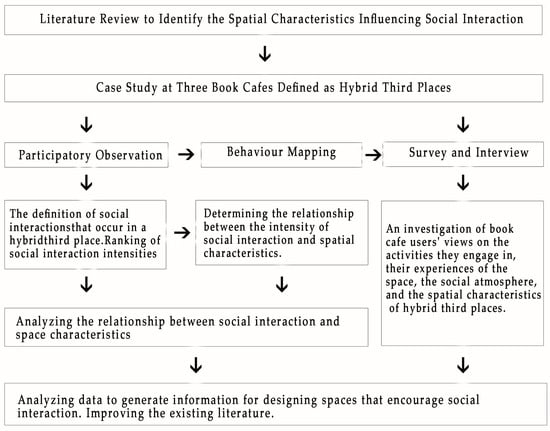
Figure 1.
Methodology of the study.
The literature review was conducted systematically along three main axes. The first axis addressed the relationship between social interaction and space, drawing on studies in environmental psychology, spatial behaviour, perception, and user experience, with particular attention to spatial arrangement, visual perception, accessibility, seating configurations, and spatial density. The second axis focused on the concept of the third place and its transformation in contemporary urban life, examining how Oldenburg’s [1] framework has been reinterpreted through digitalization, flexible work patterns, and changing daily practices, and how third places contribute to belonging, everyday encounters, and community formation. The third axis examined social interaction in service and consumption spaces, drawing on the servicescape approach to analyze the effects of physical, atmospheric, and functional characteristics—such as lighting, furniture arrangement, flexibility, and management—on user behaviour and interaction.
By integrating these three axes, the study develops a holistic analytical framework that synthesizes spatial and social interaction parameters scattered across the literature and conceptually classifies the spatial characteristics shaping social interaction in hybrid third places.
3. Factors Affecting Social Interaction in Third Places
Research on factors affecting social interaction in third places builds on the characteristics identified by Oldenburg [1] but varies in scope (Table 1). These factors are associated with research domains such as Oldenburg’s [1] third place theory, public space studies, environmental psychology, and the psychological effects of space. Beyond the physical characteristics of third places, variables including affordability, inclusiveness, sense of security, management, facilities, and the presence of activities play a significant role in fostering social interaction. Despite the breadth of factors identified in previous studies, the literature remains limited in its ability to explain social interaction in hybrid third places. Existing research tends to generalize findings from traditional third-place typologies without sufficiently addressing the functional and spatial hybridity that characterizes contemporary environments. Consequently, how multiple and sometimes contradictory uses—such as working, individual withdrawal, and social engagement—coexist within the same space and shape interaction patterns remains largely unexplored.

Table 1.
Studies on factors affect social interaction in third places.
These studies, focusing on Oldenburg’s [1] third-place studies, address social interactions in third places in different ways. All of the examples given by Oldenburg [1] are single-function spaces (cafe, bar, bookstore, pub) and he describes social interaction as seating + conversation + atmosphere. Campbell [10] reflects a common assumption in the literature that social interaction increases as environmental comfort and aesthetic quality improve. Bernhardt and Stoll [11] highlight location, physical design, management, facilities, and particularly the presence of activities as key factors that encourage social interaction. However, while activities are acknowledged as important, the study does not elaborate on how diverse programs within the same space shape interaction patterns. Roberto [3] introduces the concept of “third-placeness,” shifting the focus from the physical characteristics of third places to the experiential qualities that make a space feel like a third place. Dana [12] explores the third-place experience through the lens of interior design, emphasizing how built environment elements such as entrance, seating, lighting, food services, and technology shape user perception. The study reflects a dominant view in the literature that third place qualities emerge from spatial comfort and interior design attributes. Mehta and Bosson [13] emphasize permeability, seating, shading, and the spatial relationship between the street and the place as key factors supporting social interaction. While this perspective highlights the importance of spatial provisions for staying, it does not address how diverse activities within the same environment may generate social interaction through movement and programmatic overlap. Rosenbaum et al. [8] among the few that highlight the importance of activity engagement in shaping social interaction in third places. However, the focus remains on a single user group and structured programs.
Other related studies include environmental psychology, space and social behaviour, and human-space interaction: Behaviours in Public Places [14] The sociology of sociability [15], social life of urban spaces [16], Personal space [17], Humanistic psychology and environmental design [18], social life and the city [19]. Environmental behaviour [20] Extensive and academically accepted studies on the relationship between social interaction and space have been used to support the arguments presented. These foundational studies provide a behavioural and sociological basis for understanding social interaction in hybrid third places. Building on this behavioural perspective, this study examines how social interaction in hybrid third places emerges not only from ambience but from movement, spatial encounters, and activity overlap within the environment. In the literature, the concept of the third place is mostly defined through practices of sitting, spending time, and conversing. This approach focuses on explaining social interaction through the interior atmosphere of the space and the static presence of the users. In contrast, this study argues that in hybrid third places, social interaction stems primarily from program diversity and overlapping user activities within the space, rather than from the interior qualities of the space itself. User movements, encounters, and interactions are shaped not by the atmosphere of the space, but by the coexistence of different functions and the spatial circulation patterns produced by these functions. In this context, the determinant of the hybrid third place experience is not the ambiance, but the programmatic diversity and the potential for encounters created by overlapping user activities within the space.
4. Social Interaction in Cafés and Café-like Service Environments
This section reviews studies examining cafés and café-like service environments—such as coffee shops, pubs, restaurants, and tea houses—in relation to social interaction. The existing literature encompasses a wide range of settings, including cafés [21], hybrid places combining multiple activities [8], chain cafés [22], traditional cafés [23], urban cafés [24], café service areas [25], coffee shops [26,27], fast food restaurants [28], and pubs [29].
Previous research has identified numerous spatial, atmospheric, and managerial factors influencing social interaction. Germain [22] demonstrated that management strategies, seating arrangements, music, and decoration can limit interaction between strangers in chain cafés, while Lim et al. [23] highlighted the role of ambience—such as furniture, lighting, cleanliness, and noise—in shaping sociality in traditional coffee shops. Similarly, Bookman [24] emphasized the combined influence of interior design and local community involvement in urban cafés. Studies on coffee shops further underlined the importance of environmental qualities including cleanliness, aroma, lighting, views, furniture [26], as well as media resources, technological amenities, novelty, and seating arrangements [27].
Other studies have addressed specific typologies and contextual factors. Tang and Zhang [30] showed that the presence of cats enhances sociability in cat cafés, while Cheang [28] identified accessibility, familiarity, affordability, and meeting opportunities as key determinants of sociability in fast food restaurants. Watts [29] classified the spatial and environmental features that promote interaction in pubs, including spatial dimensions, layout, bar design, lighting, music, acoustics, décor, and patron characteristics. Steigemann [31] further demonstrated that decoration, lighting, background noise, furniture, layout, service organization, and the presence of others collectively shape interaction patterns in cafés.
Focusing on service environments, Xuan [25] showed that customers’ evaluations of the service area positively affect interaction quality and conceptualized the service environment through five dimensions: environmental conditions, spatial layout and functionality, facility aesthetics, signs and symbols, and cleanliness. Finally, Holm [32] found that informal, inexpensive, low-threshold cafés representing urbanity were more strongly preferred by users. Together, these studies illustrate the multifaceted nature of social interaction in café environments (Table 2).
Table 2.
Studies on the factors affecting social interaction in cafés and café-like service environments.
Although the existing literature provides a rich inventory of factors influencing social interaction in cafés and café-like environments, it remains largely descriptive and fragmented. Most studies focus on identifying isolated physical, atmospheric, or managerial variables without offering an integrated conceptual framework to explain how these factors jointly shape social interaction patterns. Moreover, the majority of research concentrates on traditional café typologies, with limited attention to hybrid third places that combine multiple and sometimes contradictory functions. In addition, social interaction is generally treated as a uniform outcome, while differences in interaction types and intensities—ranging from passive co-presence to active conversation—are rarely theorized or systematically examined. Although several studies acknowledge the importance of ambience, layout, and service environments [23,25,31], the causal mechanisms linking specific spatial configurations to distinct forms of social behaviour remain insufficiently clarified. Furthermore, users’ intentions, social roles, and strategies of producing private space within public settings are largely overlooked, despite their growing relevance in contemporary café environments.
Consequently, the literature offers limited insight into how spatial, functional, and social hybridity structures social interaction in contemporary third places, indicating the need for an integrated, multidimensional, and behaviourally grounded approach.
5. The Relationship Between Spatial Characteristics and Social Interaction in Hybrid Third Places
All social interactions are shaped by the physical environments in which they occur, as spatial organization structures both patterns of use and interpersonal behaviour in hybrid third places [34]. Kotler [35] conceptualized the physical environment through the notion of “atmospherics,” integrating sensory dimensions such as visual qualities, sound, tactile conditions, and scent. Building on this perspective, Bitner [36] introduced the concept of “service scape” to describe the physical environment of service settings and identified three core components: environmental conditions, spatial layout and functionality, and signs, symbols, and artifacts. According to the servicescape model, these environmental qualities shape users’ perceptions and trigger emotional, cognitive, and physiological responses, which in turn influence social interactions and behavioural outcomes such as approach or avoidance [37]. Based on this theoretical foundation, the present study conceptualizes the spatial characteristics of hybrid third places through four interrelated dimensions: physical, social, atmospheric, and functional characteristics (Figure 2). Physical characteristics include location, urban relationships, and spatial form; social characteristics refer to privacy, sense of security, belonging, and user-generated social atmosphere; atmospheric characteristics encompass environmental conditions such as temperature, ventilation, and acoustic comfort; and functional characteristics describe activities, actions, and behavioural patterns supported by the space. This framework synthesizes previous studies to explain how spatial characteristics structure social interaction.
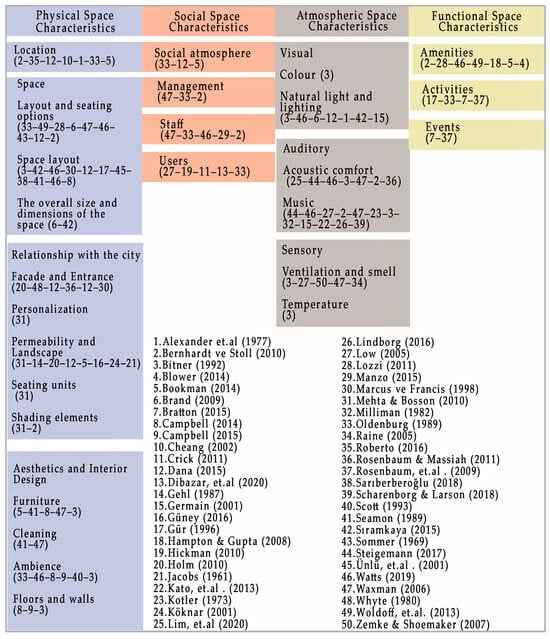
Figure 2.
Spatial characteristics of hybrid third places and previous studies. (1. Alexander et al [20], 2. Bernhardt & Stoll [11], 3. Bitner [36], 4. Blower [38], 5. Bookman [24], 6. Brand [39], 7. Bratton [40], 8. Campbell [10], 9. Campbell [41], 10. Cheang [28], 11. Crick [5], 12. Dana [12], 13. Dibazar, et al. [33], 14. Gehl [42], 15. Germain [22], 16. Güney [43], 17. Gür [44], 18. Hampton & Gupta [45], 19. Hickman [46], 20. Holm [32], 21. Jacobs [19], 22. Kato, et al. [47], 23. Kotler [35], 24. Köknar [48], 25. Lim, et al. [23], 26. Lindborg [49], 27. Low [50], 28. Lozzi [27], 29. Manzo [51], 30. Marcus & Francis [52], 31. Mehta & Bosson [13], 32. Milliman [53], 33. Oldenburg [1], 34. Raine [34], 35. Roberto [3], 36. Rosenbaum & Massiah [54], 37. Rosenbaum, et al. [8], 38. Sarıberberoğlu [55], 39. Scharenborg & Larson [56], 40. Scott [57], 41. Seamon [18], 42. Sıramkaya [58], 43. Sommer [17], 44. Steigemann [31], 45. Ünlü, et al. [59], 46. Watts [29], 47. Waxman [26], 48. Whyte [16], 49. Woldoff, et al. [60], 50. Zemke & Shoemaker [61]).
Although numerous studies have examined factors affecting social interaction in third places and cafés, several important gaps remain. First, social interaction is generally treated as a homogeneous concept, without a hierarchical classification of interaction intensity ranging from passive co-presence to active conversation [1,22,23,26,27,33]. Second, spatial characteristics are addressed in a fragmented manner, with studies focusing separately on physical [12,23,26,29], atmospheric [10,31], or managerial factors [3,11,22], while integrated frameworks encompassing physical, social, atmospheric, and functional dimensions remain limited. Third, the causal relationships between specific spatial attributes and distinct forms of social interaction have not been sufficiently clarified [22,23,27,31]. Moreover, existing research predominantly examines traditional café and restaurant typologies, whereas hybrid third places—where working, individual withdrawal, and social engagement coexist—have received limited attention [8]. Finally, the role of the production of private space within public settings has been largely overlooked, despite its growing relevance in contemporary third-place practices [25,27,33].
Although the literature identifies various environmental, spatial, and atmospheric factors affecting social interaction in third places, these studies predominantly conceptualize third places as mono-functional, static environments where conversation is the primary activity. While some studies mention the presence of activities, they do not explore how programmatic diversity and overlapping user activities shape social interaction. There is a lack of research investigating hybrid third places where reading, exhibition, working, and leisure coexist and where social interaction emerges through movement, activity overlap, and spatial scenarios rather than seating and ambience. This study moves beyond ambience-driven explanations of social interaction in third places and proposes that in hybrid environments, social interaction is primarily shaped by programmatic diversity, activity overlap, and spatial movement rather than seating arrangements or atmospheric comfort.
5.1. Location
Centrally located and easily accessible places where users can meet on a daily basis tend to function as more social environments [1,3,11,12,20,28]. Location is closely related to accessibility, as accessible places are typically situated near workplaces or homes and are readily available to meet people’s needs for socialization and relaxation [1]. Places located along individuals’ daily routes are more likely to be frequented [12]. The easier a place is to access without additional effort, the more likely it is that people will use it regularly and incorporate it into their everyday lives [20].
5.2. Space
Successful third places consist of spaces that promote social interaction. The physical characteristics of the space have a direct impact on user experience and behaviour. The size and dimensions of the space, together with its spatial layout and seating configurations, are intrinsically linked to the characteristics of the environment and play a decisive role in shaping patterns, intensity, and forms of social interaction.
5.2.1. General Dimensions and Measures of Space
Users’ behaviour in a space is influenced by its dimensions and proportions, such as height, width, and depth, even if this influence is not consciously perceived. Brand [39] found that higher or sloping ceilings encourage social interaction, indicating that ceiling height affects the perception of room size and social behaviour in space. Room size also plays a significant role: larger and more spacious places tend to better support social interaction [58].
5.2.2. Spatial Layout
Spatial structure plays a key role in encouraging social interaction in service environments such as cafés and restaurants. Spaces that are visually connected, provide wide and uninterrupted views, and have circular or integrated layouts tend to support more intense interaction [58]. Perceived smaller space sizes and subdivided areas increase social interaction by enhancing comfort and a sense of enclosure [29]. When users feel partially protected and their privacy needs are met, they are more willing to engage in social and intimate conversations. While large, undivided spaces may intimidate users and reduce use [52], subdivided and human-scale areas encourage occupancy and interaction [12].
Flexible spatial layouts further enhance social vibrancy by accommodating different activities and group sizes [44]. High levels of visual connectivity support socialization, whereas excessive visual and acoustic separation reduces interaction [18,55,59]. Creating smaller, semi-enclosed seating areas through partitions or half walls improves comfort, supports proximity, and responds to users’ preference for privacy without fully isolating them [29,41].
5.2.3. Layout and Seating Options
Oldenburg [1] identifies seating as the second (after conversation) most important factor in successful third places, emphasizing that arrangements allowing strangers to sit next to each other can promote social interaction. Hybrid third place cafés should offer seating options for individuals, couples, and groups. Large tables support interaction among strangers, whereas smaller tables facilitate quieter and more intimate conversations [60]. Spatial design and furniture mutually shape social interaction [39]. Seating that limits individual work and reduces opportunities for isolation encourages conversation, while layouts that support computer use and access to power outlets tend to promote productivity rather than sociability [27].
Comfortable, movable, and diverse seating increases users’ tendency to linger and supports different patterns of interaction [11,12,26]. Visual contact and physical proximity encourage face-to-face communication [29]. Flexible seating allows users to rearrange the space, form groups, and personalize their environment, strengthening sociability and feeling of being at home [29].
5.3. Ambient Conditions
Ambient conditions in service environments, as defined by Bitner [36], include temperature, lighting, colour, sound, smell, and air quality. Inappropriate ambient settings negatively affect users’ overall perception and comfort, for example, when temperature or background music levels are unsuitable. As these conditions influence psychological states and behaviour, they also shape users’ relationships with the space and with others. Functionally compatible spaces with a comfortable indoor climate are therefore more likely to support social interaction.
5.3.1. Smell, Ventilation and Temperature
Smell, which is closely linked to memory and place experience, is identified by Bitner [36] as an important environmental condition and plays a key role in how individuals attribute meaning to and interpret a space [50]. Although the appropriate scent for cafés is not clearly defined, the prevailing smell of coffee is generally perceived positively and contributes to customer loyalty [26]. Zemke and Shoemaker [61] showed that appropriate scents can enhance interaction behaviour, whereas poor air quality, insufficient ventilation, and unpleasant smells reduce dwell time and social interaction. For this reason, cafés should ensure effective natural and mechanical ventilation and avoid disturbing smells; for example, smoking is prohibited and the use of strong perfumes is restricted in Starbucks to preserve the coffee scent [34]. Thermal comfort is also essential for both indoor and outdoor seating areas, requiring shading and cooling in summer and heating in colder conditions to sustain user comfort and social interaction.
5.3.2. Natural Light and Lighting
Natural light and lighting levels strongly influence social interaction in cafés. Appropriate brightness supports visual contact and the perception of gestures and facial expressions, which are essential for face-to-face communication [29]. While excessive lighting may cause discomfort [39], sufficient and well-balanced natural and artificial lighting attracts users and encourages longer stays [12]. Spaces illuminated by natural light are perceived as more attractive and supportive of social interaction [20,58]. Brand [35,39] found that rooms with windows, especially with greater window height, enhance social attractiveness due to the mood-enhancing effects of daylight. Similarly, Germain [22] reported that cafés with large windows encourage customers to remain longer and engage more in social interaction.
5.3.3. Noise and Acoustic Comfort
Noise control and acoustic comfort significantly influence social interaction in indoor environments [23,26,29,31,36]. Poor acoustic conditions and excessive noise negatively affect psychological comfort, hinder conversation, and reduce willingness to interact [11,29]. Reverberation and inadequate material properties make it difficult to hear others, whereas acoustic comfort increases dwell time and supports communication [26]. Appropriate material choices and design elements are therefore essential for achieving acoustic comfort.
Low and balanced sound levels allow users to hear each other clearly and may even stimulate interaction by encouraging conversation [29]. Bernhardt and Stoll [11] found that moderate background ‘buzz’ in third places enhances sociability by attracting people and providing acoustic masking for privacy. Similarly, the presence of ambient human noise allows users to retreat, observe, and join others when desired, increasing spatial attractiveness [54]. While silence or the absence of music can encourage interaction in some contexts [29], controlled background music is often used to maintain privacy and mask unwanted sounds. As Bitner [36] notes, excessive or disturbing noise causes physical discomfort and avoidance behaviour, underscoring the importance of acoustic control for sustaining social interaction.
5.3.4. Music
Bitner [36] identifies music as a key environmental dimension in service settings, strongly influencing customer behaviour and interaction [2,11,26,29,31,35,36]. In cafés, background music can reduce social barriers and facilitate face-to-face interaction [62], while also shaping users’ perception and meaning of the social environment. Music tempo and type affect customers’ length of stay [53]; high tempo and loud music hinder communication and reduce dwell time [22]. Although background music may impede conversation, it can also support privacy through acoustic masking [47]. The type and volume of music contribute to the overall atmosphere and communicate cues about the environment [49]. However, the specific effects of musical characteristics remain limited, as complex music and lyrics have been shown to significantly reduce speech recognition and conversational clarity [56].
5.4. Aesthetics and Interior Design
According to Oldenburg [1], third places should have simple and unpretentious décor to appeal to a broad public. Watts [29] found that interiors reflecting the local community and creating comfort encourage social interaction, while casual and cozy furnishings increase dwell time [10]. In contrast, dirty, worn, or uncomfortable furniture reduces preference and the social value of the environment. Furniture arrangement and spacing influence proximity and interaction, and seating capacity shapes both user density and patterns of use [18].
Decoration is a key determinant of atmosphere and identity, encompassing colour, materials, textures, signage, furnishing style, and wall treatments. Campbell [41] identifies homely and casual décor as a defining feature of third places and reports higher use and preference for new and well-maintained interiors. Colour acts as an immediate emotional stimulus, while material quality, artwork, and personal objects convey symbolic meaning and create an overall aesthetic impression that supports comfort, sense of place, and social interaction [36].
5.5. Amenities and Activities
Amenities are tangible or intangible services and facilities that add value to service environments and play an important role in shaping social interaction in third places and cafés [11,27,29,60]. Common amenities include newspapers, Wi-Fi, power outlets, television, books, and bulletin boards [27]. While internet access may attract more customers [29], it may also weaken the sense of community characteristic of third places [63]. Amenities that increase dwell time, such as outdoor seating, meeting areas, and free Wi-Fi, tend to enhance active social interaction [11]. Bulletin boards further support community engagement by enabling information sharing and communication among individuals and local groups [24].
Oldenburg [1] notes that games and shared activities create a cheerful atmosphere and encourage sociability. Contemporary cafés increasingly host workshops, conversations, and reading events that help break social barriers. Research shows that shared emotional states increase communication and the likelihood of dialogue [40]. Rosenbaum et al. [8] found that cafés offering social activities alongside food and drinks promote well-being, facilitate friendship formation, and support more intensive forms of social interaction.
5.6. Social Components
In the formation of a third place, social components are as influential as physical ones in promoting social interaction. Users construct meaning through shared presence and are shaped not only by direct interactions but also by the surrounding social atmosphere. The social and physical environments form an integrated whole that mutually influences behaviour. In cafés, key social components include the presence of regular customers and the attitudes of management and staff. Their impact is closely related to the inclusivity of the space and its capacity to bring diverse users together.
5.6.1. Presence of Regulars
Regular patrons are a defining feature of third places that promote social interaction [4,5,33,46]. Oldenburg [1] identifies the presence of regulars as the most important factor linking third places to sociability. Through repeated visits, users encounter others with similar routines, develop familiarity, and form attachment to the place [64]. Such revisited and emotionally bonded spaces are therefore more socially successful. Over time, users become ‘familiar strangers,’ feeling comfortable in each other’s presence even without direct interaction.
5.6.2. Management and Staff
Management-related factors such as opening hours, service quality, staff behaviour, and house rules shape the social environment of cafés. Customers’ length of stay is influenced by management attitudes, staff friendliness, and the social character of the space [26]. Watts [29] describes the bartender as a key social facilitator who encourages interaction and helps build a regular clientele, while Manzo [51] and Bernhardt and Stoll [11] emphasize the role of friendly staff in supporting face-to-face interaction.
Inclusivity is central to sociability in third places. Cafés that are open, affordable, and welcoming to diverse user groups enable people to feel safe, included, and part of a community [11]. In contrast, restricted access, high prices, formal requirements, and dress codes characterize less inclusive environments and limit social interaction [12].
5.7. The Relationship with the City
Cafés function not only as places of consumption but also as urban third places that foster social life and vitality [16]. By attracting people and creating lively social environments, successful third places contribute to economic balance, sense of place, and sense of community in the city [11]. In this context, observation and being observed play a central role in urban socialization, as individuals tend to follow the behaviours of others and seek inclusion through daily public practices [48].
Jacobs’s concept of ‘eyes on the street’ [19] highlights the relationship between observation, safety, and urban sociality. Cafés that visually and physically connect to the street through large windows or outdoor seating support this dynamic by enabling users to see and be seen. Facade design, entrances, permeability, personalization, seating, and shaded outdoor areas therefore influence social interactions both within the café and in the surrounding urban space.
5.7.1. Facade and Entrance
The entrance and façade of a café shape its relationship with public space and the city and directly influence the social environment within. Entrance design and street connection affect social interaction by enabling visual access and informal evaluation before entry [12,16,32,54]. When passers-by can see into the space, visual contact encourages spontaneous entry without deliberate decision-making [12]. For this reason, entrances should be clearly perceptible, physically accessible, and perceived as distinct places within the urban fabric [52]. Visible, inviting, and intriguing entrances that allow visual interaction attract users and support socialization.
5.7.2. Personalization
Personalization refers to the modification of the physical environment of space by management to a specific design style. Personalizing the street façade of a social space attracts passers-by, encourages entry, and creates moments to pause and observe, thereby generating opportunities for conversation and social interaction [13]. Notice boards created by users in the social space, local decorations referencing various historical events and place identity are examples of personalization options.
5.7.3. Permeability and Landscape
Permeable and transparent façades allow passers-by to perceive activities inside cafés and foster a sense of invitation and participation [13,32]. Visual access lowers the barrier to entry by enabling potential users to evaluate the interior in advance [32], while blurred boundaries between street and interior successfully attract people and support socialization [12]. The mutual desire to see and to be seen links street life and café life: passers-by are drawn to visible activities, and café users engage with the urban scene. Accordingly, seating is often oriented toward active public areas [42]. Café terraces, large windows, and visually open transitions connect interior and exterior spaces, creating a continuous social environment between the café and the street [24].
5.7.4. Presence of Seating
Sidewalk cafés function as ‘eyes on the street,’ creating lively social environments while contributing to urban safety [13]. They support contemporary forms of socialization such as observing urban life, seeing and being seen, feeling part of the community, and engaging in solitary presence within a public setting.
5.7.5. Presence of Shading Elements
Outdoor areas should include hard surfaces, shading elements, and weather protection to ensure comfort [11]. In third places such as cafés, outdoor seating combined with food and social activities encourages longer stays and promotes sociability [13].
6. Case Study on Three Book Cafes Defined as Hybrid Third Places
The spatial characteristics and social interaction relationships obtained through literature research were reinforced by case study conducted in three book cafes, which are defined as hybrid third places. The case study was conducted in three book cafes with the same concept, located in the Üsküdar district of Istanbul and operated by the Üsküdar Municipality: Nevmekan Bağlarbaşı, Nevmekan Selimiye, and Nevmekan Sahil (Figure 3). The Nevmekan cafes, chosen as the case study area, possess hybrid third-place characteristics because they are structures that combine diverse functions such as a cafe, exhibition hall, and library. Although these spaces are called book cafes, they differ from traditional book cafes. In NevMekan book cafes, where the cafe acts as a catalyst, people can spend time and participate in various activities without paying any fees. In NevMekan book cafes, the boundaries between different functions within the space are often unclear. This allows people with varying levels of social interaction and behaviours to coexist.
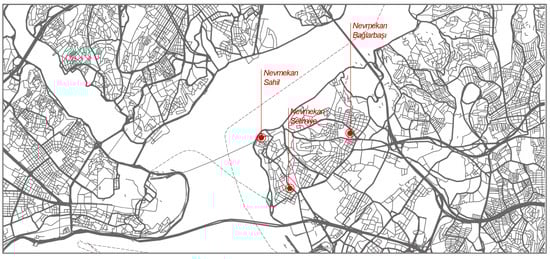
Figure 3.
Nevmekan book cafes’ locations in Üsküdar, İstanbul. (Snazzy maps).
The selected cafes were evaluated through participant observation, surveys, and interviews based on the following criteria: location, overall size and dimensions of the space, layout and seating options, natural light and lighting, spatial design, aesthetics and interior design, noise and acoustic comfort, music, management and staff, inclusiveness, presence of regulars, facilities, activities, ambient conditions, scent, relationship with the city (facade and entrance, personalization, permeability, seating units), and related aspects such as interior architecture, ceiling height, colors, cladding materials, furniture, location of electrical outlets, view, availability of outdoor seating, flexible furniture, and other important features.
Case Study Methodology, Implementation, and Data Analysis
In the book cafes where the case study was conducted, participant observation, behaviour maps, interviews, and surveys were used.
Participatory Observations: The aim of the observations was to identify the spatial characteristics that encourage social interaction and the activities performed by users within the space. Spatial characteristics included distinct features such as location, layout, furniture, decoration, and relationship with the city, while social interactions such as chatting, watching the street, or preferring to be alone and observe other people were observed along with the users’ social roles. Various notes were taken during the observations. The observations were conducted as participant observations, with participants spending varying periods of time between 1 and 5 h as customers in cafes at different times of the day.
Behaviour Maps: Social interactions observed during the study were categorized into four different levels based on their intensity, and the locations where these interactions occurred were marked on the floor plans. This marking was done during three different time intervals throughout the day (10:00–12:00/14:00–17:00/19:00–21:00). These behavioural maps were combined to reveal the overall usage of the space. This allowed for an analysis of the relationship between the seating arrangement and overall design of the space and the social interactions that took place. The behavioural maps also aimed to identify the most popular seating units in the space, the seating unit preferences of users with different social roles, and user circulation within the space.
Survey and Interview Applications: A survey consisting of open-ended and multiple-choice questions was conducted with a total of 60 randomly selected individuals in book cafes. Interviews were conducted with 16 individuals selected from those who participated in the face-to-face survey. Participants were asked to answer questions of their choice from the open-ended survey or to provide other comments about the establishment. The survey was conducted both online and in person, and participants were randomly selected from cafe users over the age of 18 on different days. The survey investigated the satisfaction levels of users with the spatial characteristics of the cafe and the factors influencing their choice of the cafe, based on their various social interactions.
NevMekan Book Cafes as a Hybrid Third Place
Nevmekan book cafes fit the definition of a hybrid third place with their multi-layered structures that bring together different activities such as eating and drinking, reading, working, socializing, and organizing cultural events and exhibitions. These buildings, originally intended for different functions but transformed into book cafes by the Üsküdar municipality, allow people to spend time there without paying any fees or ordering food and drinks. While varying in location and with diverse spatial characteristics, they all share similar functions, including exhibition spaces, food and beverage areas, and reading areas.
Nevmekan Bağlarbaşı: Originally an electricity factory, the building was converted into a book cafe in 2015. The ground floor and mezzanine of this industrial heritage building are used as a book café (Figure 4). Offering flexible seating and a wide selection of books, the cafe also serves food and drinks. The basement houses an exhibition hall, showcasing a historic tram car and an electric motor. Operated by the Üsküdar Municipality, the building is free to visit. There are seating areas in both the front and back gardens.
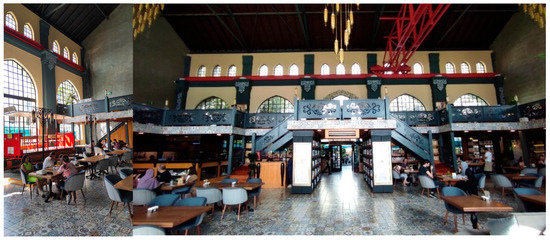
Figure 4.
Interior view of Nevmekan Bağlarbaşı.
Nevmekan Selimiye: Nevmekan Selimiye was created by the restoration and adaptive reuse of the historic Selimiye Hamam (Turkish bath) by the Üsküdar Municipality. The building is located in a densely populated residential area where neighbourhood life is still preserved. While the building itself serves as an exhibition space, it also functions as a café and library, hosting various exhibitions and cultural and artistic events. A portion of the two-story building is used as a bath museum. The private rooms on the second floor are generally preferred by students and people working on their computers (Figure 5).
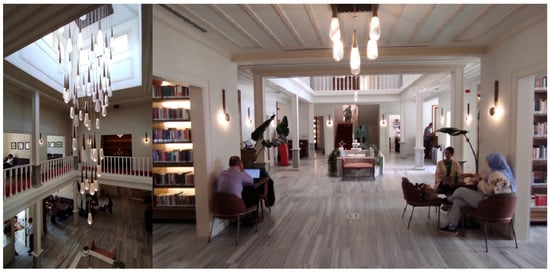
Figure 5.
Interior view of Nevmekan Selimiye.
Nevmekan Sahil: Located on the Üsküdar coastline and originally a wedding hall, the building covers an area of eight thousand square meters, with three thousand square meters indoors and five thousand square meters outdoors. It houses a library, a book café, an exhibition hall, and venues for events such as talks and concerts. Nevmekan Sahil is situated in a location that can be considered the centre of the city. The book café, located under a central dome, offers tables with sea views and quiet study areas, as well as a parking lot, a children’s play area, and outdoor seating areas (Figure 6).
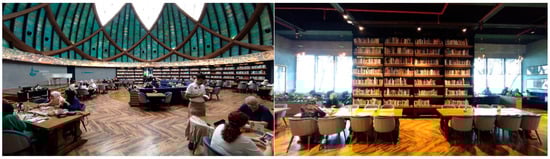
Figure 6.
Interior view of Nevmekan Sahil.
7. Data Analysis: Social Interaction in Hybrid Third Place Book Cafes
Participatory Observation: In this study, hybrid third-place cafes were observed at different times of the day, and various inferences were made about the behaviour of cafe users and the characteristics of the cafe space. Participant observations conducted in book cafes, a hybrid third-place setting, identified the social roles and interactions of users in five main groups.
Regulars: According to Oldenburg [1] regulars are users who facilitate the adaptation of newcomers to the space and play a decisive role in the formation of the social atmosphere of the third place.
Users Who Utilize the Space as a Productive Environment: These users are now using third places not only for socializing but also for work and production, thanks to technological advancements. In this context, hybrid third places can be defined as “homes away from home” as well as “offices away from offices”; they are particularly preferred by student groups and freelancers.
Loners: loners constitute an important part of today’s urban cafe culture. In Nevmekan book cafes, a large part of this group consists of “productive loners”; as defined by Hampton and Gupta [45] they participate indirectly in the social environment of the space by hiding behind books or computer screens. The relative separation of the space from the street, together with the opportunity to wander among the shelves, supports this form of use.
Social guests: Social guests are the largest user group, consisting of two or more people who use the space to spend time chatting. This group interacts only with other users outside their own group, in a manner consistent with Goffman’s [14] concept of “civil inattention.” It has been observed that social guests prefer private, corner, and semi-enclosed areas within the space.
Explorers: Those who explore hybrid third spaces are the group that distinguishes them from traditional third places and most strongly influences the social atmosphere of the place. These places, which meet the quest for innovation and discovery through events such as exhibitions, talks, and workshops in historical buildings, become points of attraction for city dwellers and tourists. This group is one of the fundamental reasons for the emergence of the contemporary understanding of third places and hybrid third places (Table 3).
Table 3.
The social roles and social interactions of hybrid third-place users.
Socializing extracts the serious essence of life, leaving only the pure pleasure of togetherness and the companionship of others [15]. Building on Simmel’s [15] definition of socializing in third places, Oldenburg [1] states that conversation is the primary activity in these settings. The most intense social interaction that occurs in a cafe setting is people have a conversation with each other. Therefore, in this study, conversation has been termed ‘First-Order Intensity Social Interaction’. The ability for people to see and hear each other without feeling disturbed, and to position themselves appropriately, are fundamental conditions necessary for this interaction to take place. Conversation in a cafe setting usually takes place among ‘social guests. People might gather in a cafe to work together, to produce something individually or collectively. Unlike the sterile environment of a library, a cafe allows people to have brief interactions and short conversations during short breaks while working. The interaction between these users, who work and produce together, is coded as ‘Second-Order Intensity Social Interaction’. This type of interaction requires people to be able to sit together at a table. Amenities such as tables for 4–5 people, internet access, and power outlets enable people to work together and develop social interaction. Second-degree intensity social interaction generally occurs among those who ‘use the space as a productive area.’ A cafe environment is not merely a place where active social interactions take place. Rather, it is a public space-like environment where people who do not know each other engage in passive social interaction. Instantaneous interactions between people sharing the same space, such as making eye contact, encountering each other, observing the surroundings and other people, and being observed, are coded as ‘Third-Degree Intensity Social Interaction’. Interactions such as customers visiting a cafe alone, sitting at a table by the sidewalk and watching people pass by, or micro-interactions occurring among people moving around the cafe, lingering to order, or looking at a painting on the wall, can be considered in this category. Third-level intensity social interactions, which occur among everyone using the cafe, take place to the extent that the space offers people opportunities for lingering and encountering other people. In hybrid third-place cafes, decorative elements such as displayed items, bookshelves, or various paintings increase the likelihood of interactions at this level (Table 4).
Table 4.
Social interaction intensity levels and actions performed by cafe users.
Nowadays, cafes are not always frequented by people eager for social interaction. Some people avoid social interaction and create their own private space within the cafe. They generally use computers or reading materials as “portable involvement shields” as described by Goffman [14], and therefore engage in almost no social interaction with other customers. Their basic behaviour is consistent with Goffman’s [14] “civil inattention.” These low-level interactions, typically undertaken by those using the space for productivity, are coded as “Fourth-Order Intensity Social Interaction” (Table 4).
Behaviour Maps
Although the management of NevMekan Bağlarbaşı has not set any rules, those who use the space as a productive area generally prefer the first floor. The ground floor is used by groups for conversation. The library, tram, and electric motor on display on the ground floor, as well as the piano on the first floor, create a setting for social interaction between people who do not know each other (Figure 7).
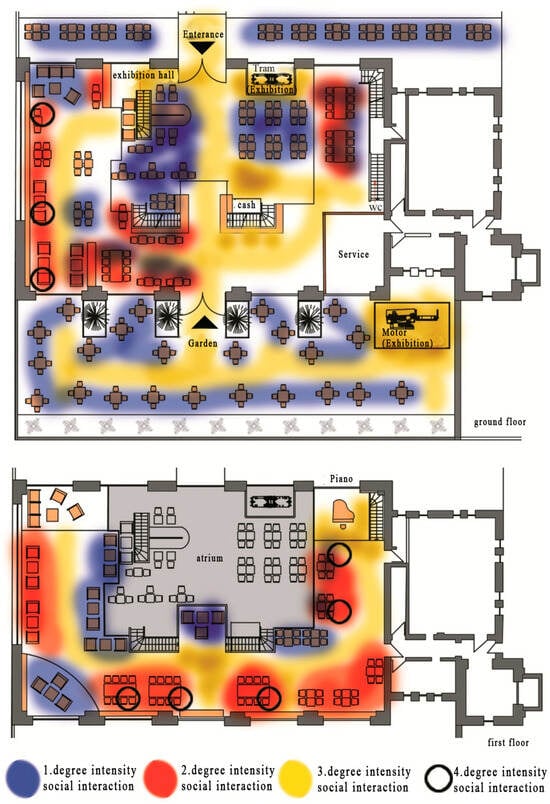
Figure 7.
Social interaction intensity maps of Nevmekan Bağlarbaşı.
At NevMekan Selimiye, face-to-face conversations, usually between two or more people who know each other, are defined as First Degree Intensity Social Interaction. These typically take place on the ground floor and in the garden. Collaborative work, defined as Second Degree Intensity Social Interaction, occurs mostly in small rooms on the first floor. In these units, where each user has their own table and can sit at a certain distance from other users, people who know each other work together, engage in short conversations, and meet new people. Passive social interactions, defined as momentary interactions such as eye contact, encounters, observing the surroundings and people, and being observed, usually occurring between people who do not know each other, are defined as Third Degree Intensity Social Interactions. These interactions take place at the cafe entrance, in front of the payment counter, in circulation areas, and in the exhibition area. Low-intensity interactions, which are carried out by solitary individuals who create their own private spaces with protective shields such as books and screens, are defined as Fourth Degree Intensity Social Interactions. Due to the small compartments in the interior, the number of people engaging in this type of interaction inside is quite low. However, it was observed that certain tables on the ground floor were being used for this purpose. In the garden, this type of interaction was seen among users sitting near the building entrance who were using their mobile phones as protective shields (Figure 8).
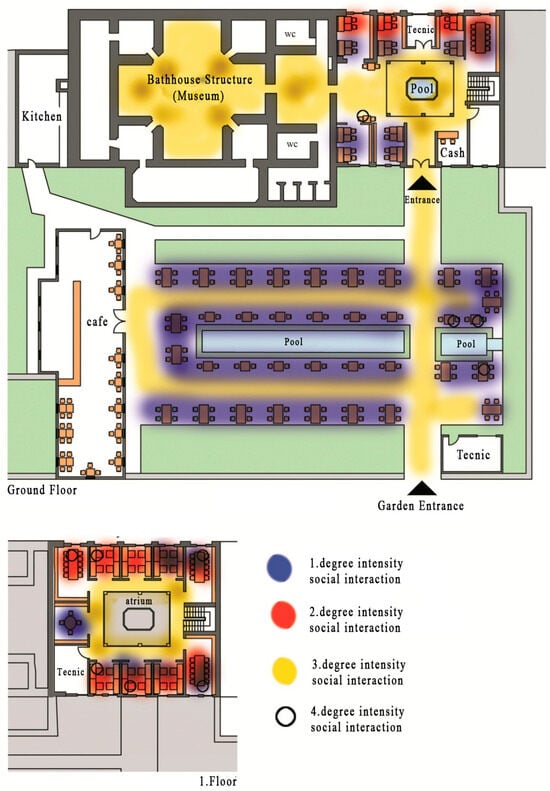
Figure 8.
Social interaction intensity maps of Nevmekan Selimiye.
The arrangement of the exhibition hall, café, and reading room at NevMekan Sahil as separate spaces, unlike the other two cafés, has resulted in significantly different social interactions among users. In this building with very high user circulation, the library, the artworks in the exhibition hall and the building’s interesting details create a setting for Level 3 social interaction. The café, where people who know each other chat, supports Level 1 social interaction, while the piano located there creates an environment for interaction among those who do not know each other. The library, located in the basement of the building, is a productivity area where Level 4 social interaction takes place (Figure 9).
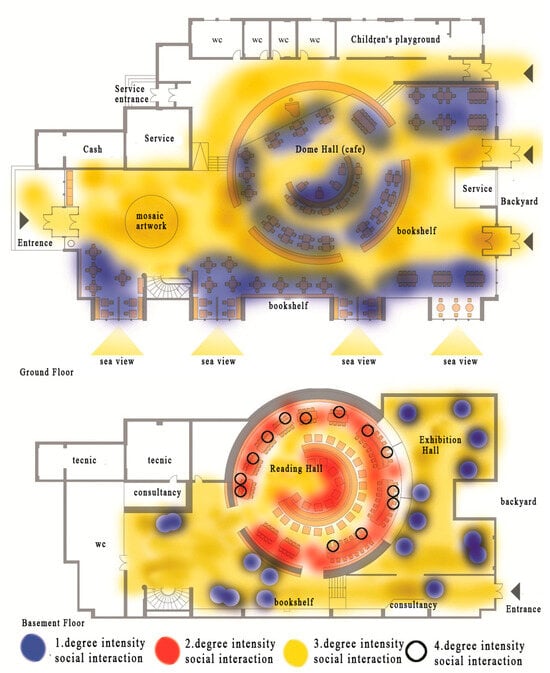
Figure 9.
Social interaction intensity maps of Nevmekan Sahil.
A behavioural mapping study conducted at Nevmekan book cafes identified four different levels of social interactions by users, determined the intensity of these interactions, and analyzed the relationship between these interactions and the characteristics of the space. The results obtained are as follows.
- At Nevmekan Bağlarbaşı, the open spaces and a large part of the ground floor are used for socializing, while the mezzanine floor, a quieter and more peaceful area with large tables, serves as a productivity space.
- Nevmekan Selimiye is primarily used for productivity. This is due to its design, which consists of private rooms for 4–5 people, and its location within a residential area.
- Nevmekan Sahil, due to its location, is frequently used by many anonymous visitors. The library, which serves as a productivity area, is physically separated. Tables facing the sea view are the most popular spots and are generally preferred by groups coming to socialize.
- In a physical space, objects that capture the user’s attention, such as reading materials, pianos, historically significant or noteworthy items, and paintings on the walls, provide momentary distraction and encourage social interaction. Similarly, payment points are locations where nonverbal social interaction is at its highest among strangers.
- Partially enclosed seating units, offering a high degree of privacy but visually dominating the overall space, are used by groups who utilize the space for productivity rather than active social interaction.
- Seating units separated from the ground by a certain height difference, located in the centre of the space (away from windows without a view), and in a position overlooking the street when weather conditions permit, are preferred by groups using the space for socialization (first-degree social interaction).
- The main factors determining the distribution of groups or individuals using the space for productive purposes with their computers are the location of power sources and the management decisions made by the cafe.
- Seating units that offer a commanding view, a distinctive design, greater comfort compared to other seating units, and a sense of exclusivity to the customer are more preferred by social groups, and they tend to stay in these units for longer periods.
- The relatively large size of the space, the excessive space between seating units, and the high user turnover with low stay durations negatively affect social interaction among foreigners, reducing the length of stay for users outside of the groups present for socialization and negatively impacting spontaneous interactions.
- Families with children tend to prefer sitting near areas designated for children’s play, such as a children’s book section, which allows families with children and the children themselves to come together and interact.
Survey and Interviews
As part of the study, 25 questions were asked to 28, 13, and 18 people, respectively, at Nevmekan Bağlarbaşı, Nevmekan Selimiye, and Nevmekan Sahil cafes; 12 of these questions were multiple-choice and 13 were open-ended. A total of 16 people randomly selected from among those who completed the survey, were also interviewed. During the interviews, users were asked detailed questions about the characteristics of the space and their reasons for using it. The results obtained from surveys and interviews can be summarized as follows.
User Profile: According to the survey results, Nevmekan Selimiye has the highest percentage of regulars (13.3%), while this rate is 5.3% at Nevmekan Bağlarbaşı. No participant indicated that they were a regular at Nevmekan Sahil. This discrepancy is thought to be influenced by the cafes’ locations. Nevmekan Sahil, being in a central location, has a more heterogeneous user profile. 20% of Nevmekan Sahil users stated they live in another city, compared to 15% for Nevmekan Bağlarbaşı.
Reasons for Visiting: NevMekân cafes are visited for various reasons, including studying, socializing with existing friends, using the library, visiting exhibitions, or attending events. In all three cafes, the primary reason for visits was to meet with existing friends (Nevmekan Bağlarbaşı 78.9%—Nevmekan Sahil 80%—Nevmekan Selimiye 66.7%). The percentage of visitors coming to study was 36.8% for Nevmekan Bağlarbaşı, 60% for Nevmekan Selimiye, and 13.3% for Nevmekan Sahil. The spatial arrangement and layout contributed to this. Nevmekan Selimiye’s layout, consisting of small rooms, and its perception as a quiet and peaceful place, increased its use for productivity
The survey results indicate that NevMekan book cafés function as hybrid third places that exhibit significant differences in intended use, user profiles, and spatial perceptions, while also displaying shared patterns (Table 5). The values that indicate statistical significance among the survey results shown in Table 5 are highlighted with a colored background. The findings reveal that the primary purpose of use in all three venues is socializing with friends, with this being particularly high at NevMekan Sahil, while study and computer use are more prominent at NevMekan Selimiye. It appears that the vast majority of users come to these venues with people they know, that the motivation to meet new people is quite low, and that third places primarily serve the function of maintaining existing social relationships. NevMekan Sahil appears to have a more open appeal to the wider city. While the attractiveness of the interior, affordability, and library/study facilities were decisive factors in the venue selection, NevMekan Selimiye stands out particularly in terms of economic accessibility and library infrastructure. Behavioural patterns show that while conversation and eating/drinking are the dominant activities in all venues, viewing the scenery, spending time with family, and participating in activities are more strongly evident at NevMekan Sahil. In terms of spatial perception, NevMekan Selimiye is considered a calmer, more peaceful, and private environment, while NevMekan Sahil has a higher noise level but strong potential for visual experience and interaction with the city. In terms of emotional experiences, the study reveals that productivity and a sense of privacy are more prominent in NevMekan Selimiye, the perception of belonging and sociability is relatively balanced in NevMekan Bağlarbaşı, and positive emotions are more prominent in NevMekan Sahil. An examination of interaction patterns reveals that chance encounters are limited, small talk is relatively more frequent, especially at NevMekan Selimiye, and deep interaction with strangers generally remains at a low level. Overall, the findings suggest that hybrid third places function more to maintain existing relationships, promote individual productivity, and support emotional well-being through spatial experience rather than establishing new social relationships, and that each space attracts different social roles depending on its location, program, and physical characteristics.
Table 5.
Results of the survey and inferences based on the obtained data.
In the interviews, users’ perceptions of spatial characteristics and social interactions were examined, and recurrent or semantically similar terms were coded (Table 6). The findings show that variations in location and accessibility—from central to neighbourhood and coastal contexts—play a decisive role in shaping usage profiles and social atmosphere. In terms of spatial size and organization, large, multi-functional areas with views allow for more public and intensive use, while smaller, multi-room or inward-facing arrangements enhance the perception of privacy and tranquillity. Interior qualities such as seating arrangement, cleanliness, furniture, and ambiance directly affect user comfort and the duration of their stay, while facade, entrance, and permeability characteristics determine the perceived appeal and inviting nature of the space. Usage patterns and activities differ along the axes of productivity, socialization, and recreation; facilities such as libraries, museums, and children’s playgrounds diversify the social function of the space. Environmental comfort parameters such as natural light, acoustics, music, ventilation, and temperature shape user satisfaction and social interaction potential through positive or negative sensory experiences. Overall, the picture reveals that the social atmosphere in hybrid third places is produced not only depending on the program and user profile, but also on the holistic interaction of spatial arrangement, environmental comfort, and contextual characteristics.
Table 6.
Spatial characteristics and codes generated based on user responses.
The data obtained from the case study confirms Alexander et al. [20], who defines the street cafe as a place where people can sit lazily, legitimately, be visible and watch the world go by. Hybrid third places strengthen the identity of the neighbourhood in which it is located and makes a unique contribution to the lives of its users, exactly as Alexander et al. [20] describes. In addition, the Street Cafe pattern (Opening to the street, Place to wait, Different chairs, Stair seats, sitting wall, Canvas roof, building complex) defined by Alexander et al. [20] remains valid today. However, with the developing technology and changing socialization practices, the provision of seating units with varying levels of privacy can be added to these features. These findings suggest that the social experience in hybrid third places is strongly related to the underlying design patterns of the space [20] where spatial configuration, surfaces, and functions guide movement, affordances, and user flows, ultimately shaping the perceived atmosphere. The field study also showed that Mehta and Bosson’s [13] findings regarding café and street life remain valid. Outdoor seating units and shading elements that protect against sun, rain, etc. directly affect the sociality of hybrid third places.
The survey, interview, and behavioural mapping studies conducted within the scope of this research revealed the effect of spatial characteristics on social interactions in hybrid third places (Table 7).
Table 7.
Characteristics that increase social interaction in hybrid third places.
8. Conclusions
As a result of the study, the following conclusions were drawn, and recommendations were developed regarding spatial design that encourages social interaction. The existing literature emphasizes that social interaction occurring in third-place settings is defined as Atmosphere–Seating–Conversation–Social Interaction. The social interaction in these hybrid third-place settings, analyzed in this study and considered to meet the socialization needs of modern humans, occurs as follows: program diversity–activity overlap–movement in space–unplanned encounters–social Interaction. Existing studies explain social interaction in third places mainly through ambience, physical environment, and seating conditions of mono-functional spaces such as cafes and pubs. However, this study shows that how hybrid third places, where reading, exhibition, working, and leisure coexist, generate social interaction through spatial program diversity and user activity scenarios rather than environmental comfort. The study concludes that the relationship between spatial characteristics and social interaction largely aligns with the literature. However, the study also yielded various findings regarding the concepts of Hybridity, Historical sites and shared values, Management/Affordability, and Location.
Hybridity: Spaces that are socially, functionally, and spatially diverse are successful in bringing different people together and creating a social atmosphere. Hybrid third places are micro-public spaces where urban dwellers can meet other urban dwellers who are like them.
Historical sites and shared values: Structures that hold historical and societal value are more successful in fostering a sense of place and social interaction. People want to spend time in places that connect them to their community.
Management/Affordability: Third places are locations that individuals frequently visit in their daily lives. Therefore, providing free and affordable amenities in these places, and having them managed by non-profit organizations, will make them more inclusive and accessible spaces.
Location: The existing literature emphasizes that the third place should be located close to home and the workplace. However, according to the results of this study, third places located in more central locations of the city increase user density and heterogeneity in user profiles, transforming the space into more of a public area than a third place, and thus reducing satisfaction with the experienced social interaction. Third places located within the residential fabric at the neighbourhood scale are more successful spaces due to their regular patronage, the calm and peaceful atmosphere they provide, and the opportunities to encounter familiar strangers and establish weak social ties.
Space: People find spaces with high ceilings more spacious and spend more time there. People want to protect their privacy while socializing, so spaces divided into sub-sections with partition walls and various elements are more preferred. Divided spaces are better for social interaction than one large room. The variety and flexibility of seating arrangements allow for more efficient use of the space. Users feel more comfortable in spaces that can be personalized with interventions according to their needs.
Ambient Conditions: Ambient conditions such as smell, temperature, ventilation, natural light, lighting, acoustic comfort, and music affect people’s psychological state and behaviour, and therefore influence social interactions. The data obtained in the field study are consistent with the literature. However, it was observed that tolerance to noise varied among different social roles. For example, groups and couples who used the cafe space for socializing were less disturbed by noise than alone people and those who used the space for productivity.
Aesthetics and Interior Design: Clean, new, stylish spaces with comfortable furniture and attractive decor are preferred by people. Considering that today’s cafes are designed with a specific concept, the field study found that seating arrangements with small variations (such as different upholstery colour variants of the same armchair, areas created with different tables and lighting units, areas that differ in height from the floor) were found to be more appealing to users and made them feel like they were in a personalized space.
Opportunities and Activities: It is unthinkable for modern third places to be independent of technology. Therefore, unlike in previous years, the availability of wireless internet service contributes to the social aspect of the space by bringing together diverse social roles. Furthermore, the third-place’s virtual presence on various social media platforms and the periodic exhibitions, workshops, and talks attract new visitors from different parts of the city. The existing literature suggests that the presence of reading materials provides opportunities for leisure time and increases social interaction. However, the field study showed that books were used as a decorative element, and people, except for children, showed little interest in them, yet were very pleased with their presence.
Social Components: Existing literature argues that regular patrons of third places contribute to the social atmosphere and help newcomers adapt to the environment. However, field research in hybrid third places reveals that, due to high user heterogeneity, patrons rarely interact with one another. Instead, frequent visitors feel more comfortable engaging with staff, as they are familiar with the social setting. Although management policies aim to increase accessibility—such as allowing users to stay without placing an order and minimizing unsolicited staff interaction—these practices are largely unknown to users and may be misinterpreted as low service quality. Additionally, while literature suggests that elements such as cats can enhance social interaction by becoming part of the place identity, observations indicate that some users are disturbed by their presence.
The relationship with the city: Regardless of their social role, visitors to the third-place desire to interact with the city and its inhabitants in some way. Therefore, the presence of tables and shading elements related to the street is important. Especially in places like Istanbul, where the climate is suitable for spending a large part of the year in open and semi-open spaces, open spaces and the threshold established with the city gain importance. During the case study, it was observed that seating units with views and allowing for visual interaction with the street were the most popular locations.
In conclusion, hybrid third places are spaces where different levels of social interaction take place, responding to the socialization needs of today’s people. Hybrid third places are where people create their own private spaces, seeing and being seen, socializing with friends, or ignoring everyone around them to work on their computers, read books, or watch the scenery, thus becoming part of their community and developing a sense of belonging. In today’s world, where life outside the home and the workplace is becoming increasingly important and complex, these places should be considered more than just places to spend time; they should be treated as social spaces and designed in the context of new needs. In this study, the spatial characteristics of hybrid third places that are integrative and promote social interaction are identified through a literature review and case study. Spatial features structure the interaction between the people who use the space. In order for people using a space to interact socially with each other, they must first feel comfortable and peaceful. In this context, comfort-related parameters such as light, temperature, ventilation and colour scheme are just as important as the spatial structure. Hybrid third places are intensely interactive areas that are used by people for different purposes. In this context, the spatial characteristics that a café that is a hybrid third place must have in order to be a successful, social interaction-promoting and inclusive socialization space were merged with information from the literature to form the “Parameters of social interaction in hybrid third place cafés”. The parameters for social interaction consist of seven main factors and related sub-factors, namely ‘location’, ‘space’, ‘environmental conditions’, ‘aesthetics and decoration’, ‘facilities and activities’, ‘social components’ and ‘relationship with the city’. For hybrid third spaces to be more successful in fostering social interaction, future studies need to focus on different user profiles, different types of social interaction, and the spatial requirements of these interactions within these spaces.
Author Contributions
Conceptualization, H.T.; Methodology, H.T.; Writing—review and editing, H.T.; Supervision, Ç.P.S.; Validation, Ç.P.S.; Review and editing, Ç.P.S.; Process administration, Ç.P.S. All authors have read and agreed to the published version of the manuscript.
Funding
This research received no external funding.
Data Availability Statement
The original contributions presented in this study are included in the article. Further inquiries can be directed to the corresponding author.
Conflicts of Interest
No potential conflict of interest was reported by the authors.
References
- Oldenburg, R. The Great Good Place: Cafes, Coffee Shops, Community Centers, Beauty Parlors, General Stores, Bars, Hangouts, and How They Get You Through the Day; Paragon House: New York, NY, USA, 1989. [Google Scholar]
- Low, S. The Conversation. How Cafes, Bars, Gyms, Barbershops and Other ‘Third Places’ Create Our Social Fabric. 2021. Available online: https://theconversation.com/how-cafes-bars-gyms-barbershops-and-other-third-places-create-our-social-fabric-135530 (accessed on 15 November 2024).
- Roberto, C. Third-Placeness: Supporting the Experience of third Place with Interactive Public Displays. Ph.D. Thesis, University of British Columbia, Vancouver, BC, Canada, 2016. Available online: https://open.library.ubc.ca/collections/ubctheses/24/items/1.0307293 (accessed on 3 May 2024).
- Camp, B.H. A Study of Third Place: Benefits of Shared Leisure Practices in Public Gathering Places. Ph.D. Thesis, Middle Tennessee State University, Murfreesboro, TN, USA, 2015. [Google Scholar]
- Crick, A.P. New Third Places: Opportunities and Challenges. In Tourism Sensemaking: Strategies to Give Meaning to Experience (Advances in Culture, Tourism and Hospitality Research, Vol. 5); Woodside, A.G., Ed.; Emerald Group Publishing Limited: Bingley, UK, 2011; pp. 63–77. [Google Scholar] [CrossRef]
- Mikunda, C. Brand Lands, Hot Spots & Cool Spaces: Welcome to the Third Place and the Total Marketing Experience; Kogan Page: London, UK, 2007. [Google Scholar]
- Besson, R. The Hypothesis of Cultural Third Places. 2022. Available online: https://theconversation.com/the-hypothesis-of-cultural-third-places-93509 (accessed on 3 May 2024).
- Rosenbaum, M.; Sweeney, J.; Windhorst, C. The restorative qualities of an activity-based, third place café for seniors: Restoration, social support, and place attachment at Mather’s-More-Than-a-Café. Sr. Hous. Care J. 2009, 17, 39–54. [Google Scholar]
- Taştan, H.; Polatoğlu, Ç. Rethinking the third place: Could the book cafe be the social interaction catalyst for today’s people? Megaron 2023, 18, 275–286. [Google Scholar] [CrossRef]
- Campbell, N. Designing Retirement Community Third Places: Attributes Impacting How Well Social Spaces Are Liked and Used. J. Inter. Des. 2014, 39, 1–14. [Google Scholar] [CrossRef]
- Bernhardt, A.; Stoll, L. Creating Third Places Places where communities gather. Downt. Econ. 2010, 172, 1–2. [Google Scholar]
- Dana, V. Interior People Places: The Impact of the Built Environment on the Third Place Experience; John Wiley & Sons, Ltd.: Hoboken, NJ, USA, 2015. [Google Scholar] [CrossRef]
- Mehta, V.; Bosson, J.K. Third Places and the Social Life of Streets. Environ. Behav. 2010, 42, 779–805. [Google Scholar] [CrossRef]
- Goffman, E. Behaviuor in Public Places, Notes on the Social Organisation of Gatherings; The Free Press: New York, NY, USA, 1963. [Google Scholar]
- Simmel, G. The sociology of sociability. Am. J. Sociol. 1949, 55, 254–261. [Google Scholar] [CrossRef]
- Whyte, W.H. The Social Life of Small Urban Spaces; Conservation Foundation: Washington, DC, USA, 1980. [Google Scholar]
- Sommer, R. Personal Space: The Behavioral Basis of Design; Englewood Cliffs, Prentice-Hall: Englewood Cliffs, NJ, USA, 1969. [Google Scholar]
- Seamon, D. Humanistic and Phenomenological Advances in Environmental Design. Humanist. Psychol. 1989, 17, 280–293. [Google Scholar] [CrossRef]
- Jacobs, J. The Death and Life of Great American Cities; Random House: New York, NY, USA, 1961. [Google Scholar]
- Alexander, C.; Ishikawa, S.; Silverstein, M.; Jacobson, M.; Fiksdahl-King, I.; Angel, S. A Pattern Language; Oxford University Press: New York, NY, USA, 1977. [Google Scholar]
- Rosenbaum, M. Exploring the Social Supportive Role of Third Places in Consumers’ Lives. J. Serv. Res. 2006, 9, 59–72. [Google Scholar] [CrossRef]
- Germain, M.T. Sociability and The Coffee Shack: Testing Oldenburg’s Concept of the Third Place. Master’s Thesis, Carleton University (Canada), Ottawa, ON, Canada, 2001. [Google Scholar]
- Lim, W.M.; Jee, T.W.; Loh, K.S.; Chai, E.G.C.F. Ambience and social interaction effects on customer patronage of traditional coffeehouses: Insights from kopitiams. J. Hosp. Mark. Manag. 2020, 29, 182–201. [Google Scholar] [CrossRef]
- Bookman, S. Brands and urban life: Specialty coffee, consumers, and the co-creation of urban café sociality. Space Cult. 2014, 17, 85–99. [Google Scholar] [CrossRef]
- Xuan, O.T. The Role of Servicescape and Social Interaction Towards the Experience of Customers and Employees in the Café Setting. A study in Vietnam. Ph.D. Thesis, Université Côte d’Azur, French Riviera, France, 2020. (In English) [Google Scholar]
- Waxman, L. The Coffee Shop: Social and Physical factors Influencing Place Attachment. J. Inter. Des. 2006, 31, 35–53. [Google Scholar] [CrossRef]
- Lozzi, D.M. The Social Transformation of Coffee Houses: The Emergence of Chain Establishments and the Private Nature of Usage. Master’s Thesis, West Virginia University, Morgantown, WV, USA, 2011. Available online: https://researchrepository.wvu.edu/etd/779 (accessed on 10 February 2026).
- Cheang, M. Older Adults’ Frequent Visits to a Fast-food restaurant: Nonobligatory Social Interaction and the Significance of Play in “Third place”. J. Aging Stud. 2002, 1, 303–321. [Google Scholar] [CrossRef]
- Watts, J. Raising the Social Bar: Effects of the Physical and Ambient Environment on Social Interaction in Bar Environments. Ph.D. Thesis, Ball State University, Muncie, IN, USA, 2019. Available online: https://cardinalscholar.bsu.edu/handle/123456789/201833 (accessed on 5 May 2024).
- Tang, Y.; Zhang, Y. “Cat like” trend and management of public official revolution. Hu Xiang Forum 2014, 27, 102–105. [Google Scholar]
- Steigemann, A. Social practices in a café: Community through consumption? Geogr. Helvetica 2017, 72, 45–54. [Google Scholar] [CrossRef]
- Holm, E.D. Coffee and the City: Towards a Soft Urbanity. Ph.D. Thesis, Arkitektur- og designhøgskolen i Oslo, Oslo, Norway, 2010. Available online: https://hdl.handle.net/11250/2453724 (accessed on 5 May 2024).
- Dibazar, F.; Toofan, S.; Jamali, J.; Valizadeh, N. The effect of general characteristics of third places on social interactions (Case Study: Cafes of Tabriz). Motaleate Shahri 2020, 10, 29–40. [Google Scholar] [CrossRef]
- Raine, E.E.R. Baristi and the One Best Way: Organizational Structures of Employment in Specialty Coffee Chains. Master’s Thesis, McGill University, Montreal, QC, Canada, 2005. [Google Scholar]
- Kotler, P. Atmospherics as amarketing tool. J. Retail. 1973, 49, 48–64. [Google Scholar]
- Bitner, M.J. Servicescapes: The Impact of Physical Surroundings on Customers and Employees. J. Mark. 1992, 56, 57–70. [Google Scholar] [CrossRef]
- Tran, Q.X.; Dang, M.V.; Tournois, N. The role of servicescape and social interaction toward customer service experience in coffee stores. The case of Vietnam. Int. J. Cult. Tour. Hosp. Res. 2020, 14, 619–637. [Google Scholar] [CrossRef]
- Blower, G. A Critical Analysis of the Third Place Concept for Acquiring and Retaining Millennial Custom Whilst Developing Brand Loyalty in a Successful Coffeehouse Chain. Bachelor’s Thesis, Wınchester Busıness School, Winchester, UK, 2014. [Google Scholar]
- Brand, J.L. Physical Space and Social Interaction. Haworth 2009, 5, 2. [Google Scholar]
- Bratton, B.H. Bad mood on design and ‘empathy’. Archit. Des. 2015, 86, 96–101. [Google Scholar] [CrossRef]
- Campbell, N. Third Place Characteristics in Planned Retirement Community Social Spaces. J. Archit. Plan. Res. 2015, 32, 55–67. [Google Scholar]
- Gehl, J. Life Between Buildings: Using Public Space; Van Nostrand Reinhold Com.: New York, NY, USA, 1987. [Google Scholar]
- Güney, Ö.S. Gri Madde: Konut Alanlarında Yarı-Kamusal/Yarı-Özel Yarı-Açık/Açık Mekânların Genç Yetişkinler Tarafından Algılanma Biçimleri. Ph.D. Thesis, İstanbul Teknik Üniversitesi, İstanbul, Turkey, 2016. [Google Scholar]
- Gür, Ş.Ö. Mekân Örgütlenmesi; Gür Yayıncılık: Ankara, Turkey, 1996. [Google Scholar]
- Hampton, K.N.; Gupta, N. Community and social interaction in the wireless city: Wi-Fi use in public and semi-public spaces. New Media Soc. 2008, 10, 831–850. [Google Scholar] [CrossRef]
- Hickman, P. Neighbourhood Infrastructure, ‘Third Places’ and Patterns of Social Interaction Research Paper No. 4, Living Through Change in Challenging Neighbourhoods: A Research Project Funded by the Joseph Rowntree Foundation. Centre for Regional Economic and Social Research Sheffield Hallam University 2010. Available online: https://research.shu.ac.uk/cresr/living-through-change/documents/RP4_ThirdPlaces.pdf (accessed on 5 May 2024).
- Kato, T.; Oka, M.; Mori, H. Music recommendation system to be effectively difficult to hear the speech noise. In Proceedings of the SICE Annual Conference, Nagoya, Japan, 14–17 September 2013; Nagoya University: Nagoya, Japan, 2013; pp. 2353–2359. [Google Scholar]
- Köknar, A. Mekansal Arayüzlerin Kente ve Yaşama Katılımları Üzerine Bir İnceleme. Master’s Thesis, İstanbul Teknik Üniversitesi, Istanbul, Turkey, 2001. [Google Scholar]
- Lindborg, P.M. A taxonomy of sound sources in restaurants. Appl. Acoust. 2016, 110, 297–310. [Google Scholar] [CrossRef]
- Low, K.E. Ruminations on Smell as a Socialcultural Phenomena. Curr. Sociol. 2005, 53, 397–417. [Google Scholar] [CrossRef]
- Manzo, J. “Third-Wave” Coffeehouses as Venues for Sociality: On Encounters between Employees and Customers. Qual. Rep. 2015, 20, 746–761. [Google Scholar] [CrossRef]
- Marcus, C.C.; Francis, C. People Places: Design Guidelines for Urban Open Spaces; John Wiley & Sons: New York, NY, USA, 1998. [Google Scholar]
- Milliman, R.E. Using Background Music to Affect the Behavior of Supermarket Shoppers. J. Mark. 1982, 46, 86. [Google Scholar] [CrossRef]
- Rosenbaum, M.S.; Massiah, C. An expanded servicescape perspective. J. Serv. Manag. 2011, 22, 471–490. [Google Scholar] [CrossRef]
- Sarıberberoğlu, T.M. Eğitim Binalarında Mekansal Davranışın Dizimsel (Sentaktik) İrdelenmesi. Ph.D. Thesis, İstanbul Teknik Üniversitesi, İstanbul, Turkey, 2018. [Google Scholar]
- Scharenborg, O.; Larson, M. The Conversation Continues: The Effect of Lyrics and Music Complexity of Background Music on Spoken-Word Recognition. In Proceedings of the Interspeech, Hyderabad, India, 2–6 September 2018. [Google Scholar]
- Scott, S. Visual attributes related to preference in interior environments. J. Inter. Des. 1993, 18, 7–16. [Google Scholar] [CrossRef]
- Sıramkaya, B.S. Mekan Konfigürasyonunun Sosyal Etkileşime Olan Etkisinin Fakülte Binalarında Sentaktik Analizi. Ph.D. Thesis, Selçuk Üniversitesi, Konya, Turkey, 2015. [Google Scholar]
- Ünlü, A.; Ozener, O.; Ozden, T.; Edgü, E. An Evaluaiton of Social Interctive Spaces in a University Building. In Proceedings of the 3rd International Space Syntax Symposium, Atlanta, GA, USA, 7–11 May 2001. [Google Scholar]
- Woldoff, R.A.; Lozzi, D.M.; Dilks, L.M. The social transformation of coffee houses: The emergence of chain establishments and the private nature of usage. Int. J. Soc. Sci. Stud. 2013, 1, 205. [Google Scholar] [CrossRef]
- Zemke, D.M.V.; Shoemaker, S. Scent across a crowded room: Exploring the effect of ambient scent on social interactions. Int. J. Hosp. Manag. 2007, 26, 927–940. [Google Scholar] [CrossRef]
- Karnik, M. Social aspects of music and interactive technologies in facilitating face-to-face interactions in third places. In Proceedings of the DESIRE’11 Conference on Creativity and Innovation in Design, Eindhoven, The Netherlands, 19–21 October 2011. [Google Scholar] [CrossRef]
- Fadem, C. Evolution of the Third Place. 2017. Available online: https://www.boardandvellum.com/blog/evolution-of-the-third-place/ (accessed on 30 May 2021).
- Broadway, M.J.; Legg, R.; Bertossi, T. North American independent coffeehouse culture: A comparison of Seattle with Vancouver. GeoJournal 2020, 85, 1645–1662. [Google Scholar] [CrossRef]
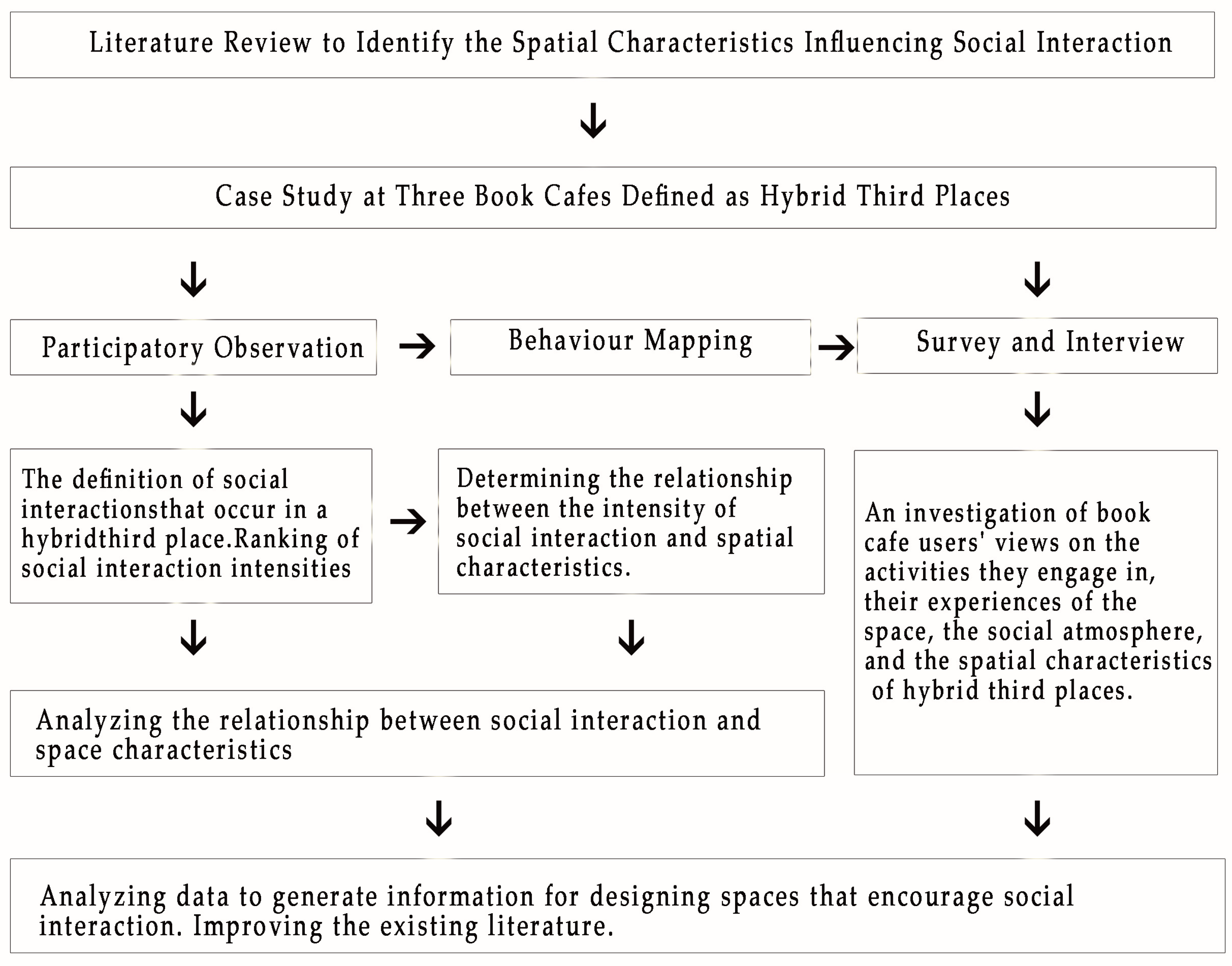
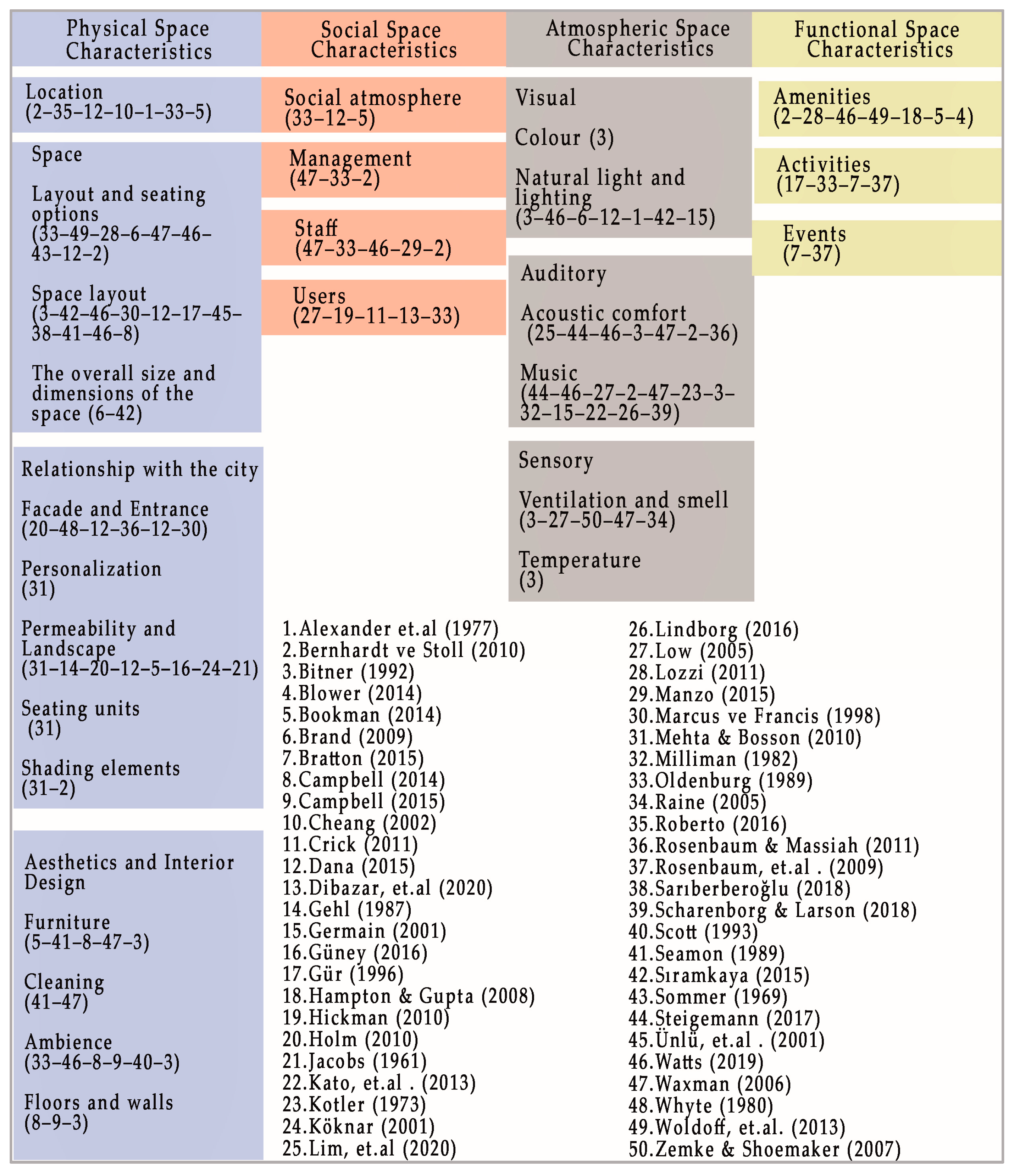
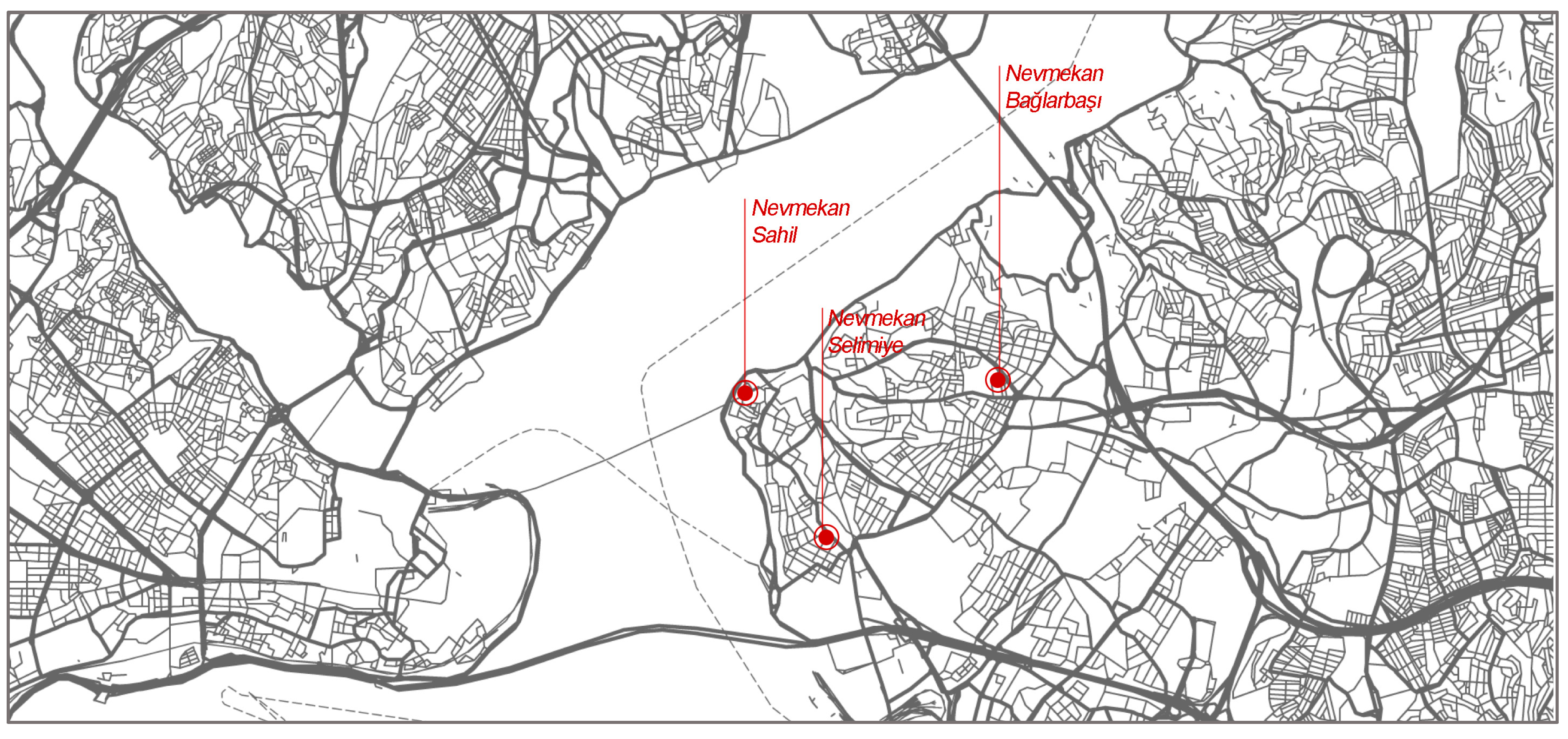
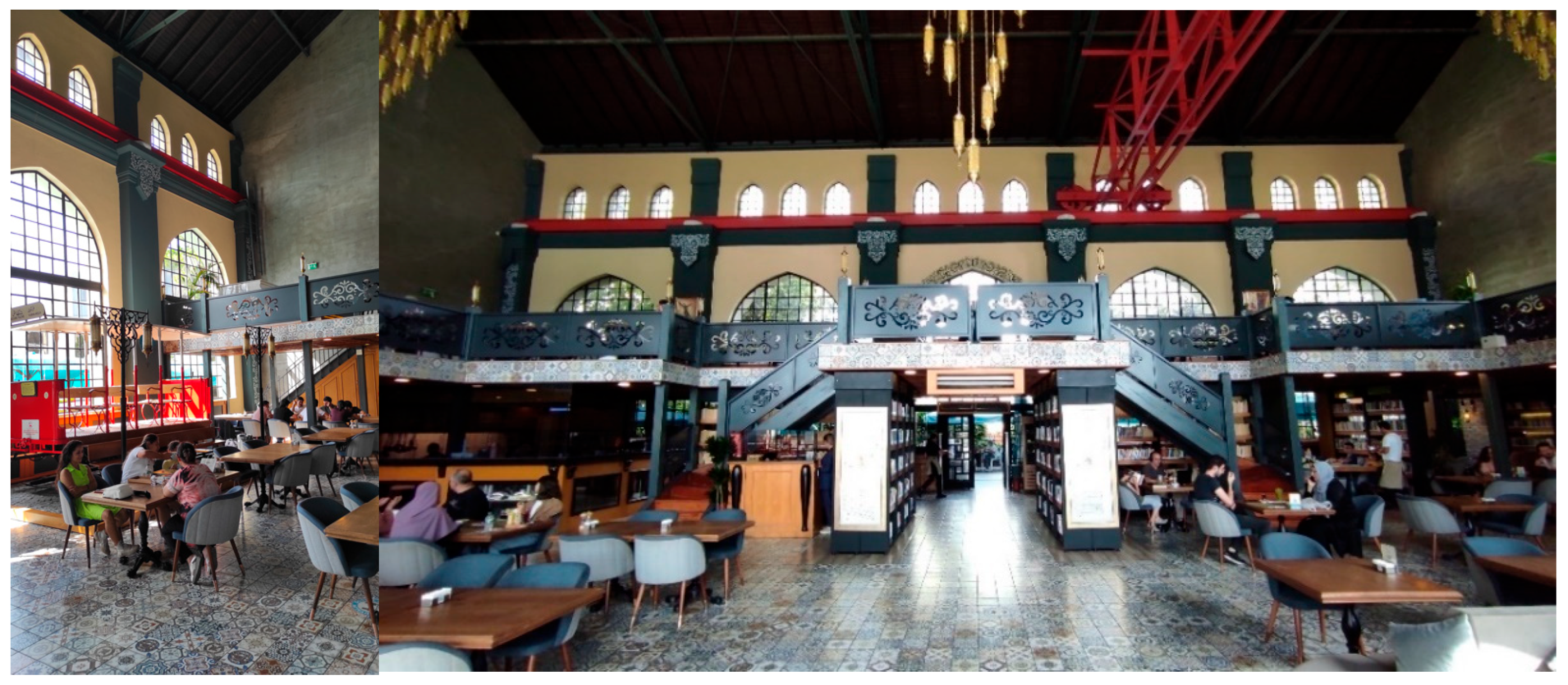
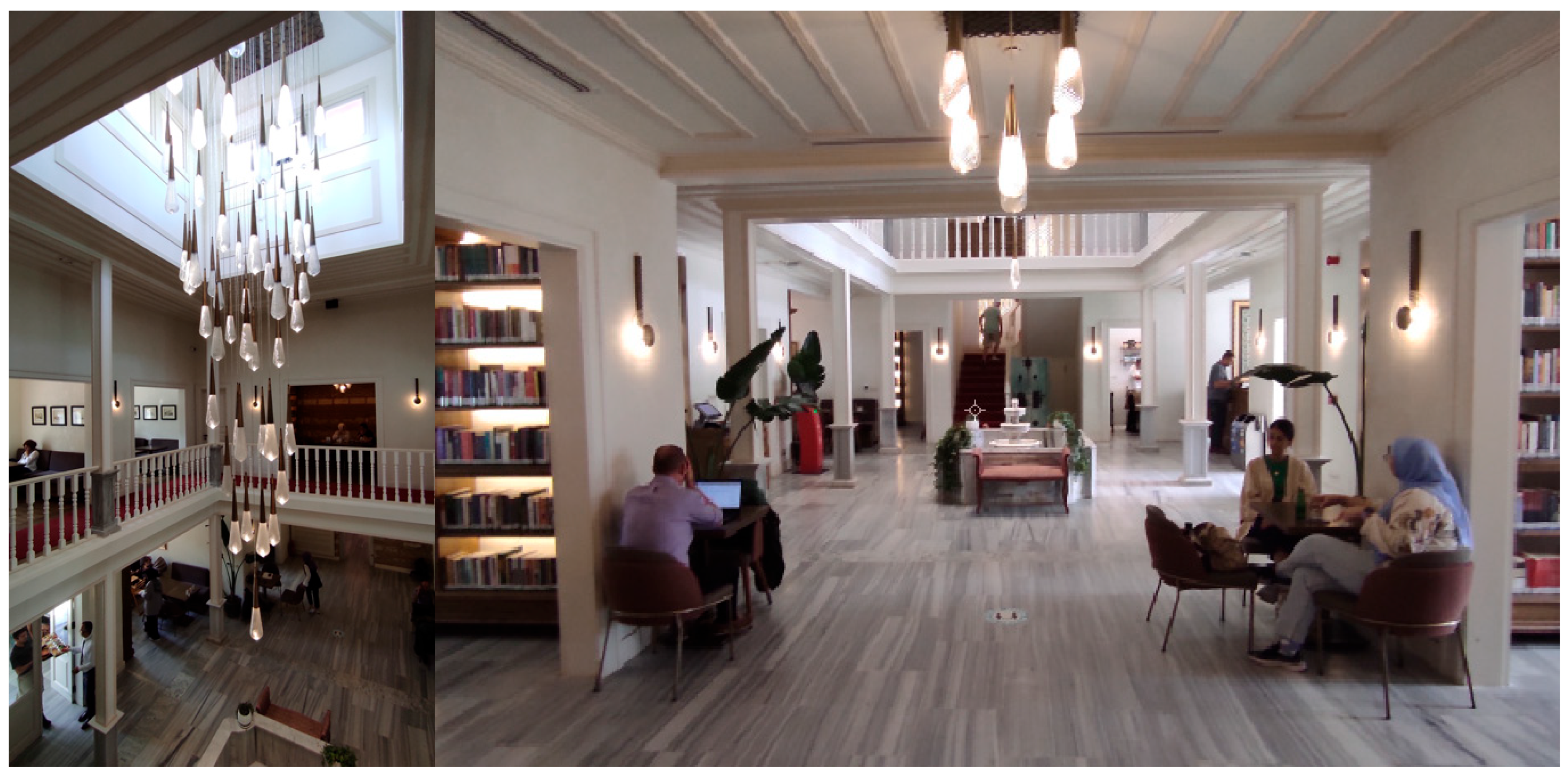
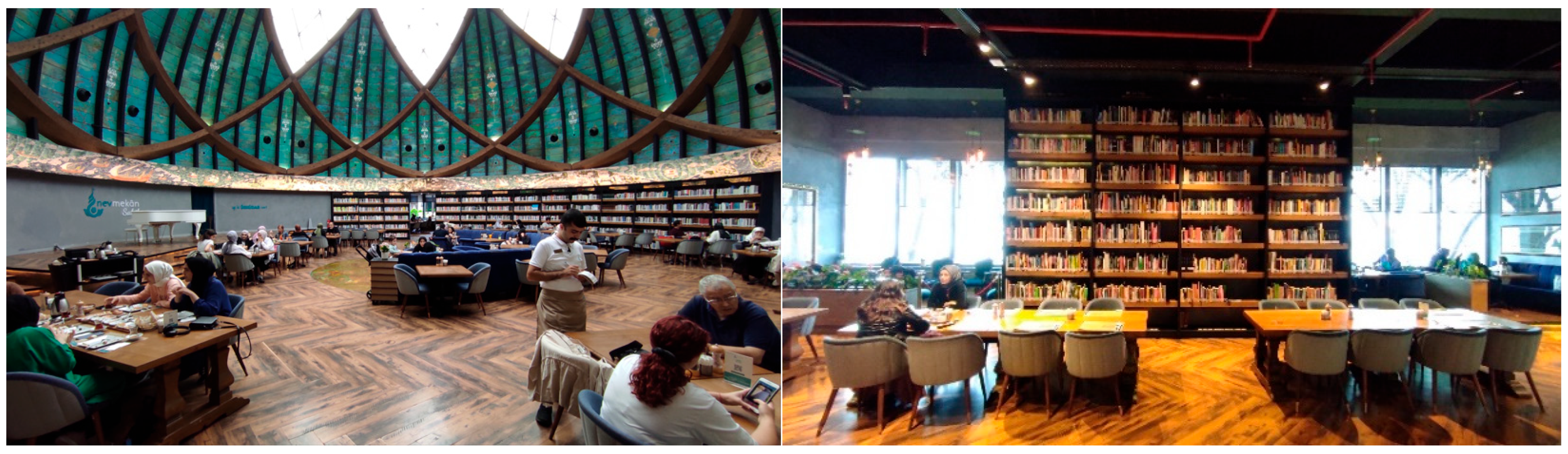
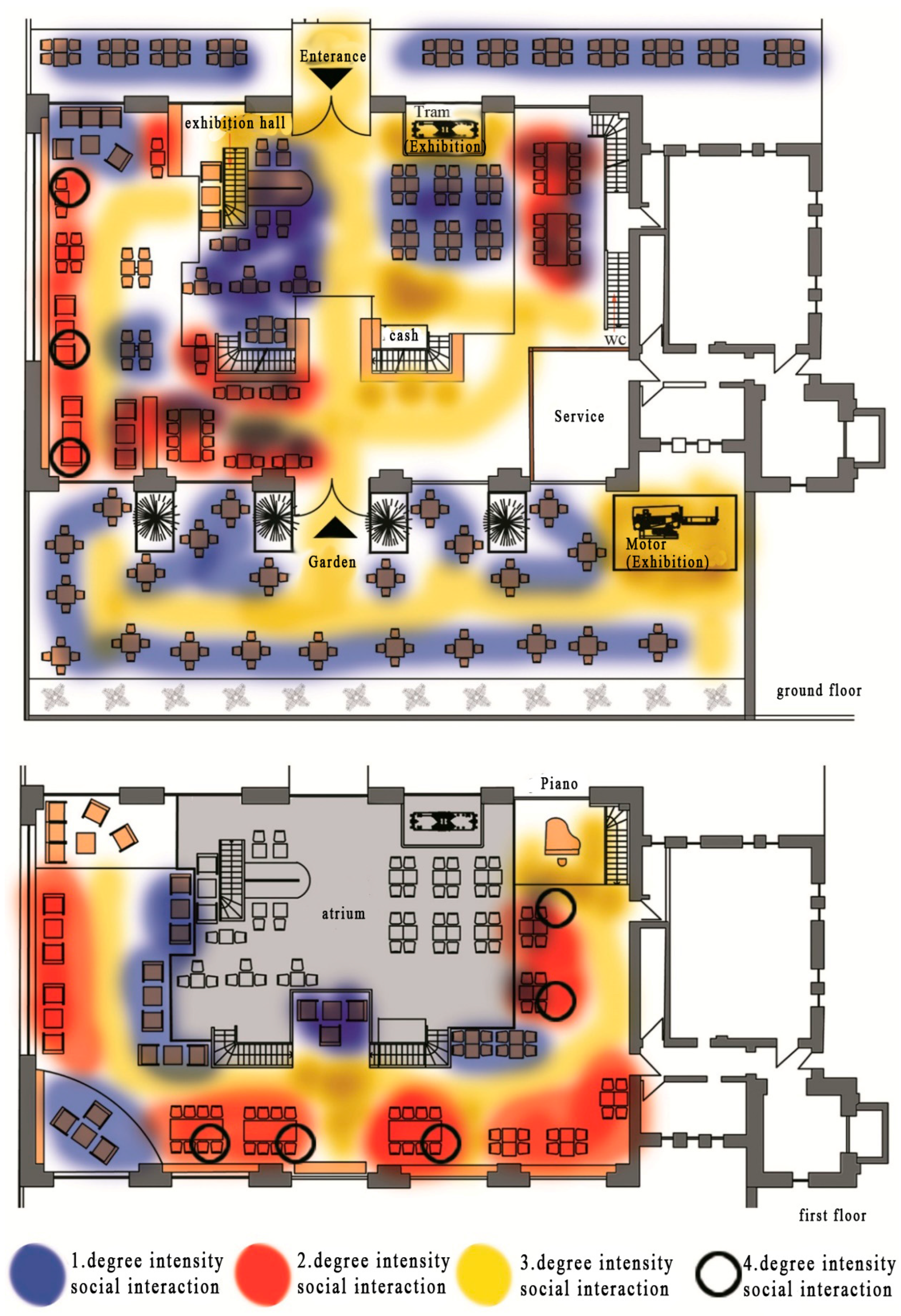
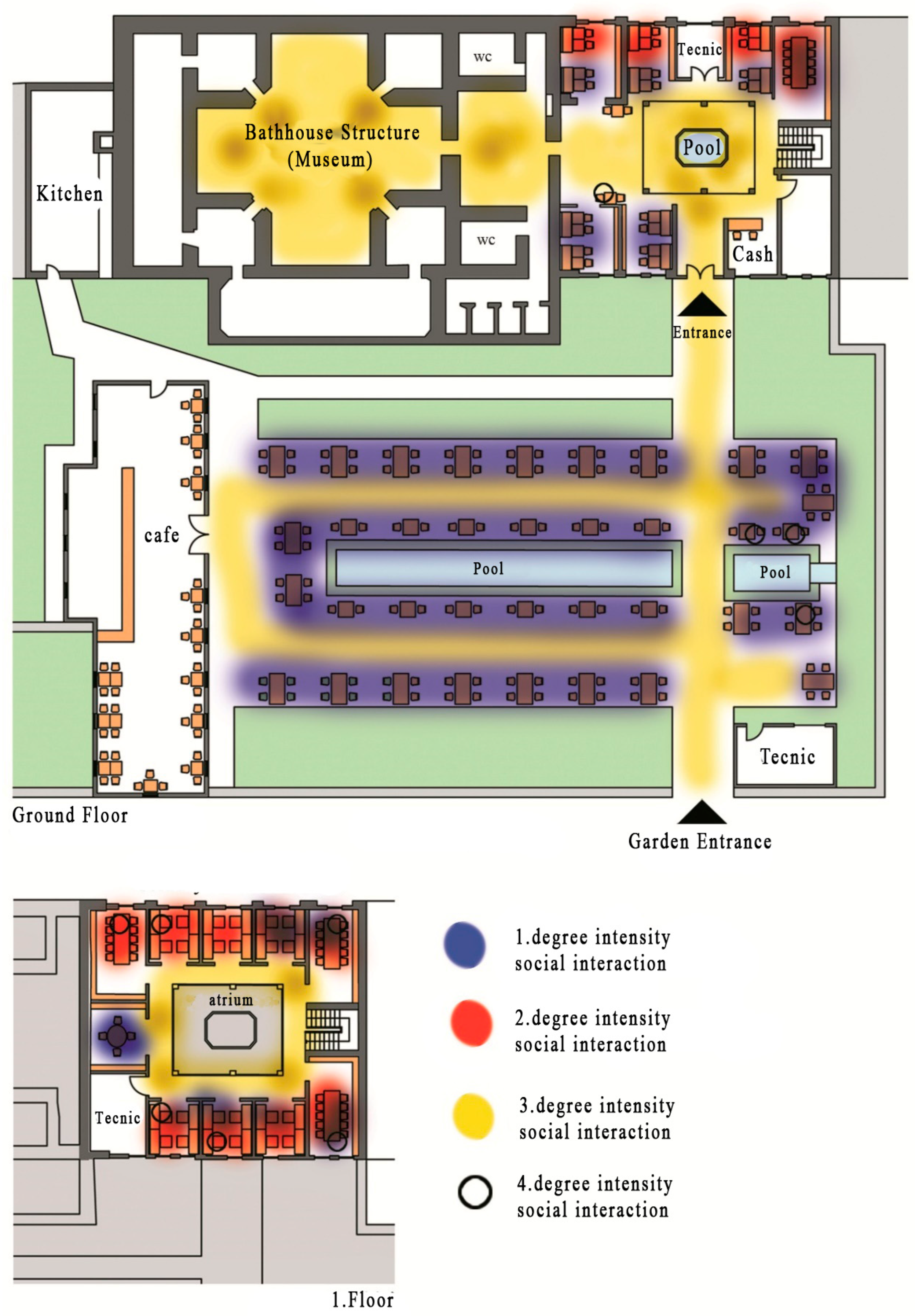
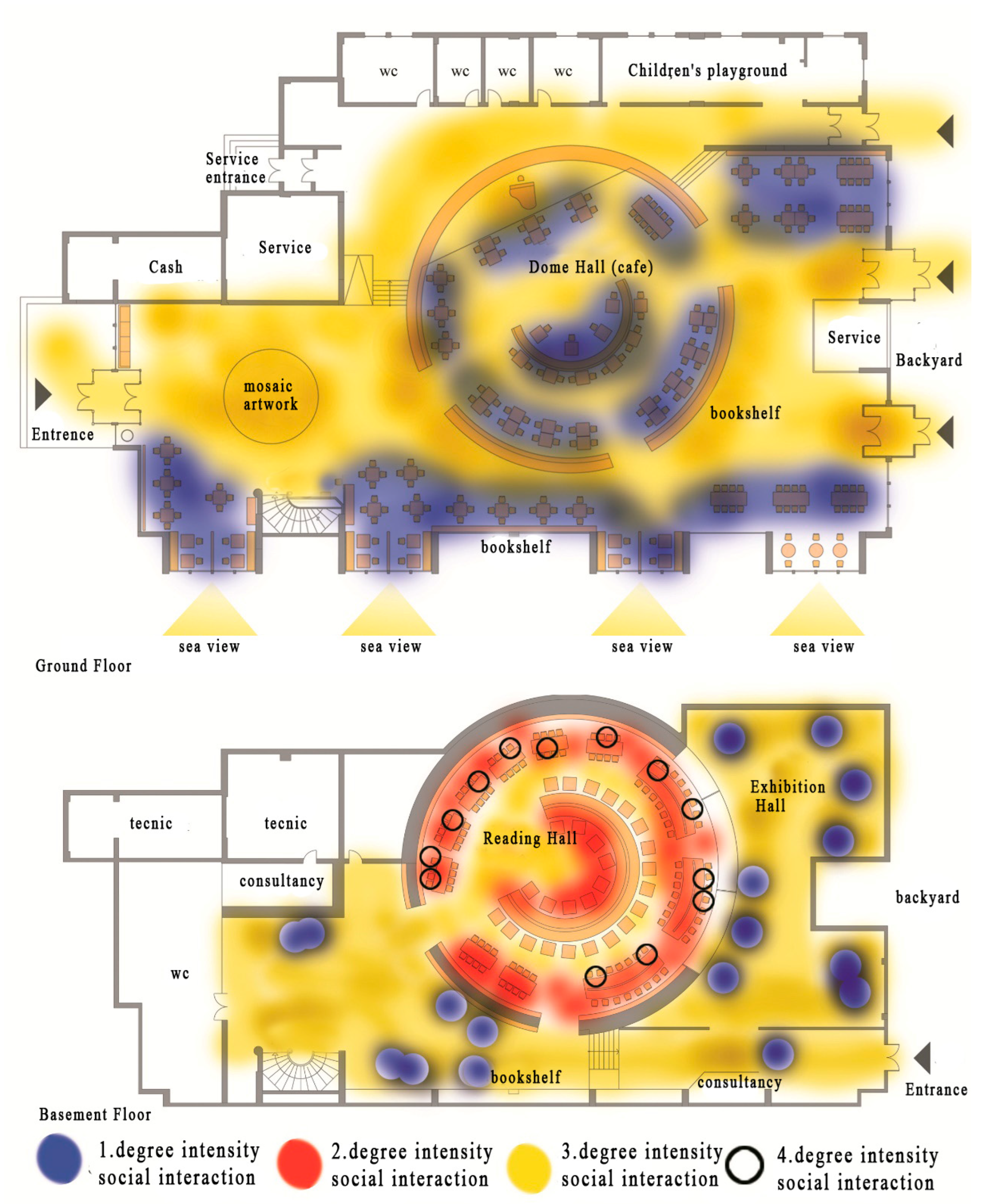
Disclaimer/Publisher’s Note: The statements, opinions and data contained in all publications are solely those of the individual author(s) and contributor(s) and not of MDPI and/or the editor(s). MDPI and/or the editor(s) disclaim responsibility for any injury to people or property resulting from any ideas, methods, instructions or products referred to in the content. |
© 2026 by the authors. Licensee MDPI, Basel, Switzerland. This article is an open access article distributed under the terms and conditions of the Creative Commons Attribution (CC BY) license.