Article

Research on the Mechanical Properties and Failure Criteria of Large-Sized Concrete Slabs Under Multi-Axis Stress

1
Xinjiang Water Resources and Hydropower Survey, Design and Research Institute Co., Ltd., Urumqi 830000, China
2
Nanjing Hydraulic Research Institute, Nanjing 210029, China
3
College of Civil Engineering and Architecture, Xinjiang University, Urumqi 830017, China
*
Author to whom correspondence should be addressed.
Buildings 2026, 16(3), 576; https://doi.org/10.3390/buildings16030576
Submission received: 20 December 2025 / Revised: 18 January 2026 / Accepted: 24 January 2026 / Published: 29 January 2026

Abstract

As a key structural component of rockfill dams, the load-bearing capacity of large-sized concrete slabs under complex multi-axial stresses is directly related to the long-term safe operation of the dams. This study conducted uniaxial and biaxial lateral compression strength tests on C25 concrete slabs with dimensions of 1500 × 1500 × 150 mm using a large-scale bi-directional loading reaction frame test system, systematically revealing the mechanical properties and failure criteria of large-sized concrete slabs. The results indicate that the biaxial compressive strength of the concrete slabs is significantly greater than the uniaxial compressive strength. The stress–strain curves of the concrete slabs and standard specimens exhibit good consistency before failure. Based on uniaxial compressive strength data, the concrete size effect strength reduction formula proposed by Neville was modified, and a compressive strength prediction formula applicable to large-sized concrete members was established. Further integration with code-specified failure criteria led to the development of a biaxial failure envelope for large-sized concrete slabs, which was validated to agree well with measured data. The research findings can provide reliable experimental evidence and theoretical support for the strength reduction, load-bearing capacity assessment, and revisions of relevant design codes for large hydraulic components such as concrete face slabs in rockfill dams.

1. Introduction

Concrete face rockfill dams (CFRDs) are widely used in water conservancy and hydropower engineering due to their excellent terrain adaptability, cost-effectiveness, and ease of construction [1,2]. As the primary structural component of the dam, the concrete face is subjected to long-term complex stress conditions, including water pressure and foundation deformation, which may lead to cracking, spalling, seepage, and local damage in the dam body [3,4]. Therefore, investigating the mechanical properties and failure criteria of large-scale concrete slabs under multi-axial stress states is of great significance for ensuring the safety and durability of CFRD structures.
In this context, an accurate evaluation of the strength and failure behavior of concrete face slabs is a key issue for CFRD design and long-term operation. Hydraulic concrete panels exhibit significant size effects, similar to other brittle materials, which are specifically manifested as a regular decrease in nominal strength with increasing geometric dimensions [5]. The size effect not only influences the evaluation of material strength in laboratory tests but is also closely related to the accuracy of assessing the load-bearing capacity of large engineering structures. To clarify the mechanism and manifestation of the size effect, extensive studies have been conducted on concrete specimens of different sizes and loading conditions. In terms of macroscopic mechanics, Wu et al. [6] conducted uniaxial compression tests on 450 mm standard concrete cube specimens and found that the stone content ratio has a significant effect on the size effect, whereas the influence of rock shape is relatively minor. Jiang et al. [7] investigated the size effect of foam concrete and found that the pore structure significantly affects the size effect; they also established a fitting model between size effect and strength. Zheng et al. [8] examined the influence of contact friction on uniaxial strength and concluded that an increased friction coefficient significantly amplifies the impact of the size effect on strength. They further proposed a size-effect law that considers specimen diameter, height-to-diameter ratio, and friction coefficient. Akram et al. [9] investigated the effect of specimen length on size effect through Brazilian splitting tests on cylindrical specimens. The results showed that, regardless of the mix proportion, the splitting tensile strength of the 150 × 150 mm specimens was consistently higher than that of the 150 × 300 mm specimens. In addition to static uniaxial conditions, the influence of loading methods and material characteristics on the size effect has been further investigated. Guan et al. [10] carried out dynamic compression tests on concrete specimens of different sizes using a split Hopkinson pressure bar system, and the results showed that concrete exhibits a pronounced size effect under dynamic loading. Vishwannatha et al. [11] proposed an optimized finite element modeling approach and used numerical analysis to investigate the size effect in the fracture behavior of notched concrete. Fare et al. [12] performed static loading tests on concrete specimens of three strength grades with different aggregate particle sizes and found that as specimen size increases, compressive strength and elastic modulus decrease significantly, while Poisson’s ratio shows a slight increase. Furthermore, to more realistically simulate the stress conditions experienced by concrete slabs in engineering applications, some scholars have investigated the size effect under biaxial loading. Jin et al. [13] explored the influence of strain rate and lateral pressure ratio on the size effect in dynamic biaxial tests through numerical simulations, revealing that an increase in strain rate reduces the size effect, whereas the influence of lateral pressure ratio first weakens and then strengthens. Gong et al. [14] studied the strength degradation characteristics of concrete under biaxial stress and found that damage evolution is strongly size-dependent, with larger specimens being more prone to brittle splitting. AK Samani et al. [15] investigated the influence of size effect on the softening behavior of concrete specimens with different aspect ratios, heights, and confinement levels under uniaxial and triaxial loading conditions, and proposed a model for predicting the strength behavior of concrete. Although extensive research has been conducted on the size effect of concrete, studies on large-sized concrete slabs remain limited due to the challenges associated with experimental implementation. Therefore, this study conducts uniaxial and biaxial compression tests on large-sized concrete slabs to systematically reveal the influence of the size effect on compressive strength.
Although the above studies have significantly advanced the understanding of concrete size effects, most of them are based on standard specimens or small- to medium-sized samples. Due to differences in specimen size, confinement conditions, and loading methods, the strength of standard specimens cannot accurately reflect the strength characteristics of large-scale concrete slabs in real engineering applications [16]. Therefore, several scholars have proposed strength reduction approaches for concrete slab components. Liu et al. [17] introduced a size-effect coefficient and developed a shear strength reduction formula for shear walls, improving the safety of load-bearing capacity predictions for large-scale specimens. Zhao et al. [18] proposed a general concrete fracture model that relates dimensionless nominal stress to equivalent crack size, enabling the characterization of fracture performance using load and geometric information. Abra et al. [19] proposed an evaluation framework for large concrete structures based on strength reduction and finite element analysis, investigating the incorporation of strength-reduction factors in numerical simulations to match measured strength values. Osama Ali et al. [20] studied the strength reduction factor for hybrid steel/FRP reinforced concrete beams using probabilistic analysis and FORM, validated with 95 experimental samples. The results show a correlation with reinforcement configuration and load ratio, recommending a factor of 0.65 for conservative design. In parallel, considerable efforts have been devoted to establishing multi-axial failure criteria for concrete materials. Chen et al. [21] reviewed studies on multi-axial strength criteria for concrete and found that the six-parameter and three-parameter criteria exhibit good agreement with experimental data. Zhang et al. [22] performed triaxial compression tests on concrete and, based on the test results, fitted an improved Mohr–Coulomb failure criterion, the William–Warnke five-parameter criterion, and the octahedral shear stress failure criterion. Park et al. [23] proposed a novel model based on multiple failure criteria. By incorporating three independent failure conditions, the model can accurately predict the results of most uniaxial compression tests on concrete. Koechlin et al. [24] derived an aging failure criterion for reinforced concrete slabs within the framework of limit analysis using a kinematic approach, and further employed finite element methods to predict the failure of reinforced concrete slabs under static or quasi-static dynamic loading conditions. Despite these advances in strength reduction methods and failure envelope criteria, systematic experimental studies on large-sized concrete slabs—particularly under realistic biaxial confinement and complex stress states—remain relatively limited.
In summary, this study focuses on the engineering challenges associated with large-sized concrete slabs in rockfill dams subjected to complex stress conditions. Using a large-scale bi-axial reaction frame loading system, a series of uniaxial and biaxial lateral compression tests were conducted on C25 concrete slabs with dimensions of 1500 × 1500 × 150 mm. The objectives of this work are as follows: (1) to reveal the influence of size effects on the compressive strength of large-sized concrete slabs; (2) to modify and propose an empirical formula suitable for predicting the strength reduction of large-sized concrete; (3) to establish a strength failure criterion and a biaxial strength calculation formula for large-sized concrete slabs under biaxial stress states. The findings of this study provide reliable experimental evidence and theoretical support for strength reduction, load-bearing capacity assessment, and the revision of design codes for large hydraulic structures such as concrete face slabs in rockfill dams.

2. Lateral Compressive Strength Test of Large-Size Concrete Slabs

2.1. Preparation of Large-Size Concrete Slab Specimens

The test specimens used in the experiment were slab-shaped concrete members with planar dimensions of 1.5 m × 1.5 m and a thickness of 0.15 m. The formwork used for casting the specimens was custom-made from 1.4 cm thick wooden planks to meet the required forming accuracy. As for the concrete material used, considering the engineering application of concrete face slabs in rockfill dams (CFRDs), where medium-strength concrete is widely adopted to balance mechanical performance, durability, and cost-effectiveness, C25 concrete was selected in this study. The concrete mix featured a continuously graded aggregate distribution ranging from 5 mm to 31.5 mm. To prevent adhesion between the concrete and the wooden formwork, a layer of release oil was applied to the inner surface of the mold prior to casting, ensuring easy demolding after the specimens reached the 28-day curing age.
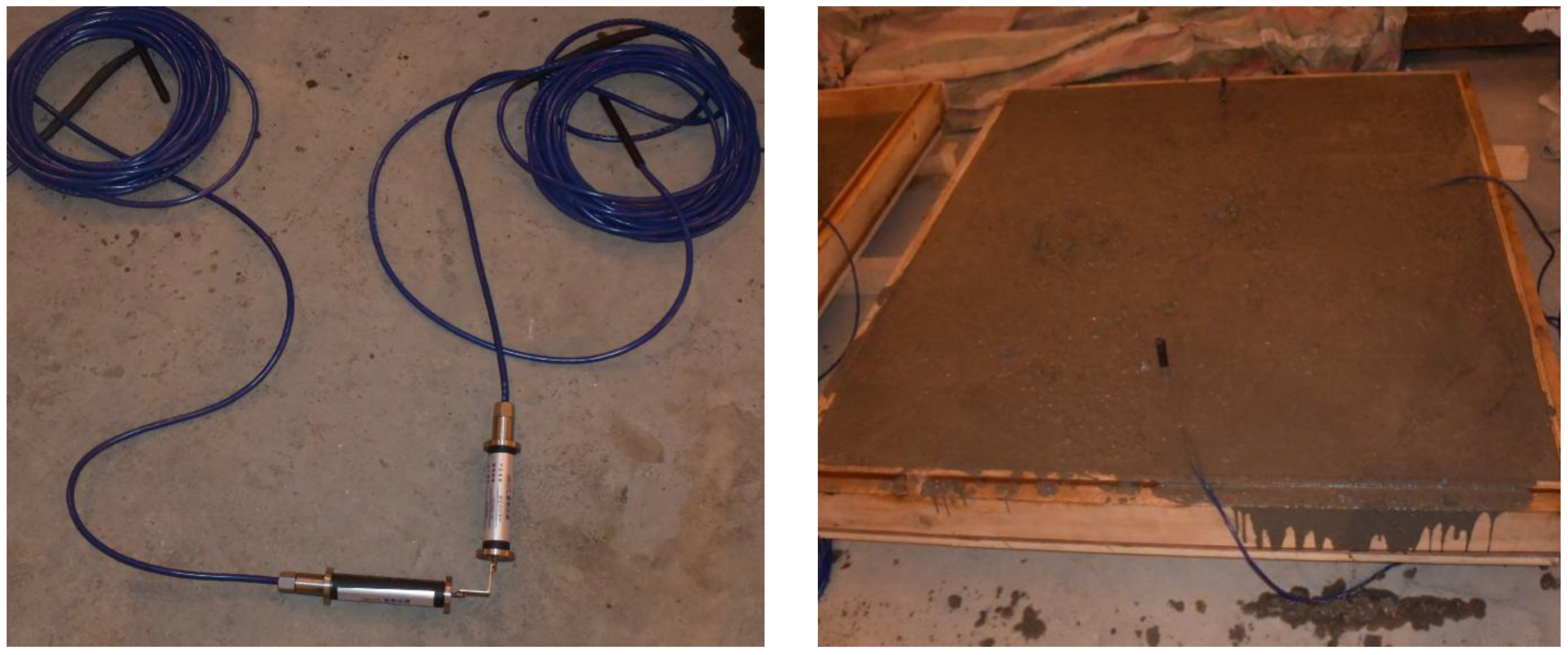
Two types of strain gauges were used in the test: embedded strain gauges and surface-mounted strain gauges. The embedded strain gauges were placed inside the concrete during casting. The gauges used were VS100 series vibrating-wire strain gauges manufactured by Nanjing Jitai Civil Engineering Instruments Co., Ltd. (Nanjing, China), with a gauge length of 10 cm and a measurement range of −2000 to 2000 microstrain, satisfying the testing requirements. Considering structural symmetry and the potential influence of the gauges on the overall load-bearing capacity of the slab, one embedded or surface-mounted strain gauge was arranged along each of the two principal directions at the center of the slab. To ensure that the embedded strain gauges remained mutually perpendicular, a right-angle support was fabricated to connect the bases of the two gauges. The strain gauges were embedded at the mid-thickness of the specimen when the concrete had been poured to half of its total thickness, ensuring that the measured strain corresponds to the strain within the central interior of the slab, as shown in Figure 1.

2.2. Design of a Loading System for Strength Testing of Large-Size Concrete Slab

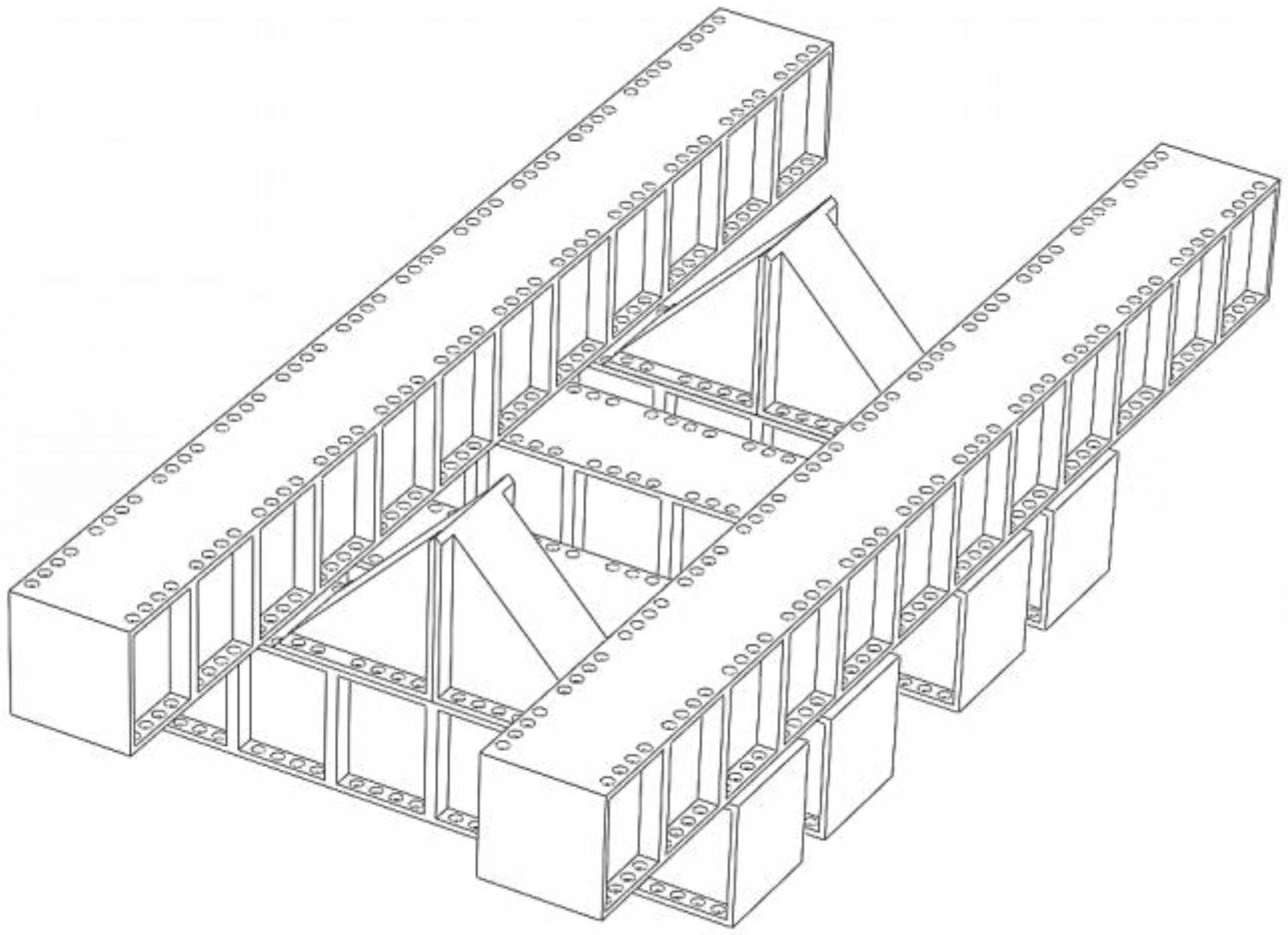
The loading tests were carried out using a reaction frame. The reaction frame consists of beams, columns, a base, a hydraulic system, and leveling pads, and is capable of meeting the compressive loading requirements for large concrete members. The reaction frame used in this study is a bidirectional, symmetrically assembled structure composed of multiple steel beam segments bolted together, capable of providing reaction forces in two orthogonal directions. The clear spacing in both directions exceeds 2 m, providing sufficient space for the placement of the specimen and hydraulic jacks. The design drawing and the physical setup of the reaction frame are shown in Figure 2. To ensure overall horizontal alignment, a layer of fine sand was placed beneath the base for leveling. High-strength bolts were used to connect the components, ensuring that the reaction frame possessed adequate stiffness and strength to apply the required compressive loads to the concrete specimen.
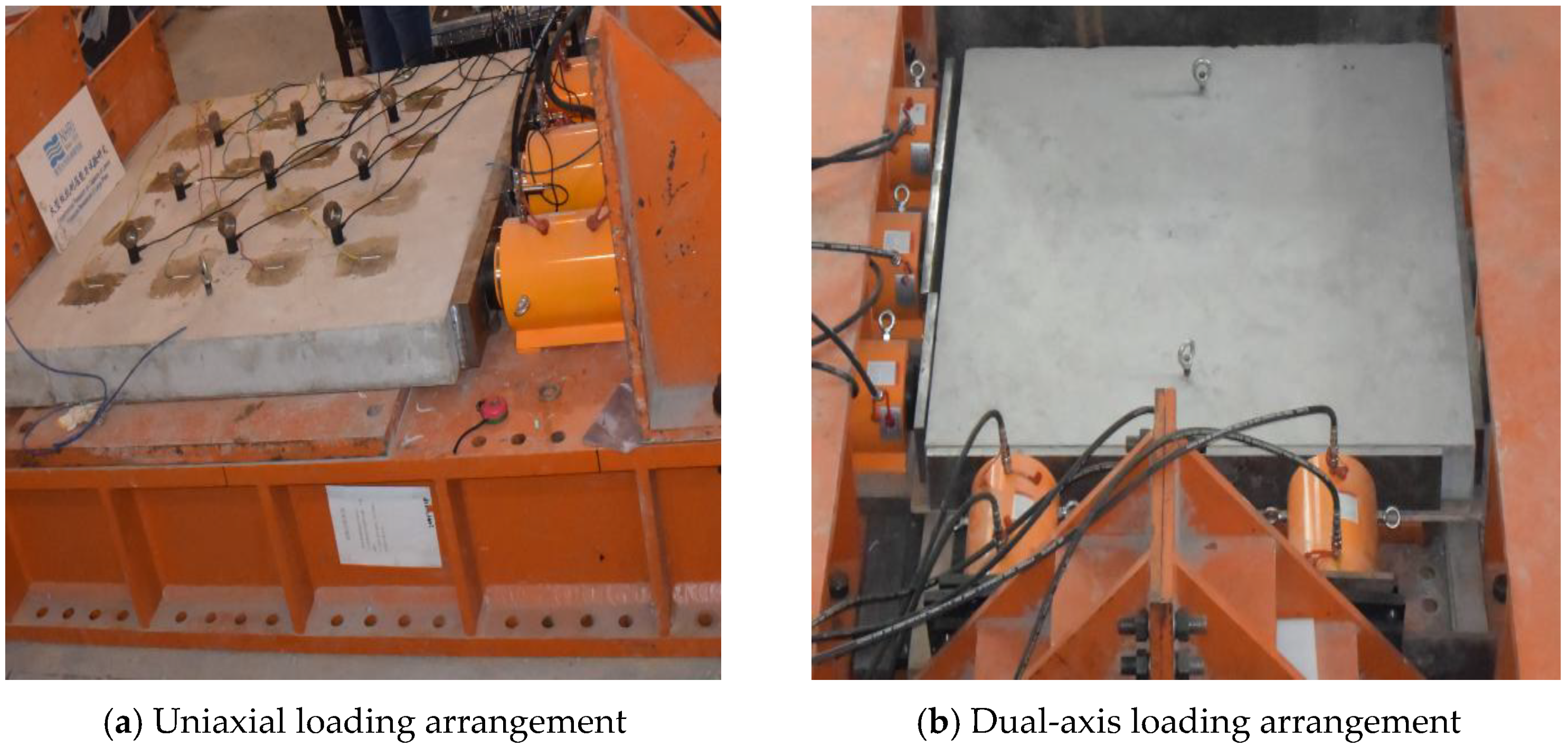
The loading system of the reaction frame enables bidirectional loading, with three hydraulic jacks arranged in each loading direction. A single oil-source, multi-jack parallel configuration was adopted to ensure that the jacks in the same direction delivered consistent loading forces. The uniaxial and biaxial loading configurations used in the tests are shown in Figure 3. Each hydraulic jack used in the experiment has a maximum loading capacity of 2000 kN. The loading system consisted of six jacks in total, supported by two hydraulic pumps. Both pumps were equipped with digital pressure gauges for monitoring and controlling the applied load during testing. To reduce stress concentration caused by the hydraulic jacks, a 4 cm thick load-transfer plate was inserted between the jacks and the concrete specimen, ensuring a more uniform stress distribution on the concrete slab. Additionally, a thin layer of lubricating oil was applied between the load-transfer plates and the specimen surfaces to minimize friction and the associated confinement effect.

2.3. Concrete Slab Testing Programme for Strength of Large-Size Concrete Slabs

To investigate the load-bearing capacity and failure mechanisms of concrete slabs under uniaxial and biaxial lateral compression, this study conducted large-scale lateral compression tests on 28-day concrete slabs using a large reaction frame. Due to the capacity limitations of the loading device, the tests were able to obtain ultimate compressive strengths only within a stress ratio range of 0.1–0.4. The experimental program, as summarized in Table 1, includes two groups of uniaxial lateral compression tests and eight groups of biaxial lateral compression tests. It is worth noting that large-scale lateral compression tests on concrete are operationally challenging and costly. Therefore, during the casting of concrete panels, appropriate measures were taken to minimize the variability in concrete strength, such as using the same batch of commercial concrete and strictly controlling curing conditions. Biaxial compression tests under four different stress ratios were carried out to determine the biaxial compressive strength of the concrete slabs and to subsequently construct the failure envelope for establishing the corresponding failure criterion. Among specimens 3 to 10, every two specimens correspond to one stress ratio condition, specifically 0.1, 0.2, 0.3, and 0.4. For each condition, strain measurements were obtained using both embedded and surface-mounted strain gauges.

3. Test Results for Lateral Compressive Strength of Large-Size Concrete Slabs

3.1. Test Results for Uniaxial Lateral Compressive Strength of Large-Size Concrete Slabs

The SC-1 uniaxial test was a preliminary trial intended to determine the compressive strength of the concrete under uniaxial loading. A two-stage incremental loading procedure was adopted: in the initial stage, each load increment was approximately 236 kN, and after the load reached 1100 kN, the increment was reduced to about 188 kN. When the external load reached 3014.4 kN, fine cracks began to appear on the specimen surface. As the load continued to increase, these cracks gradually propagated and widened. When the load was increased to 3579.6 kN, continuous crushing sounds were heard from within the specimen. Upon further loading, the surface cracks penetrated through the specimen, the oil pump pressure dropped rapidly, and the specimen failed. The maximum compressive strength recorded at failure for this specimen was 15.909 MPa.
To more precisely capture the crack development process of the concrete slab, the loading procedure for the SC-2 test was refined. Each load increment was initially approximately 188 kN, increased stepwise to 2000 kN, and subsequently reduced to 95 kN per increment. When the external load reached 3014.4 kN, microcracks appeared on the surface of the concrete slab. At 3391.2 kN, continuous brittle crushing sounds were observed inside the slab, indicating the onset of instability and failure, accompanied by the formation of two macroscopic cracks aligned with the loading direction.
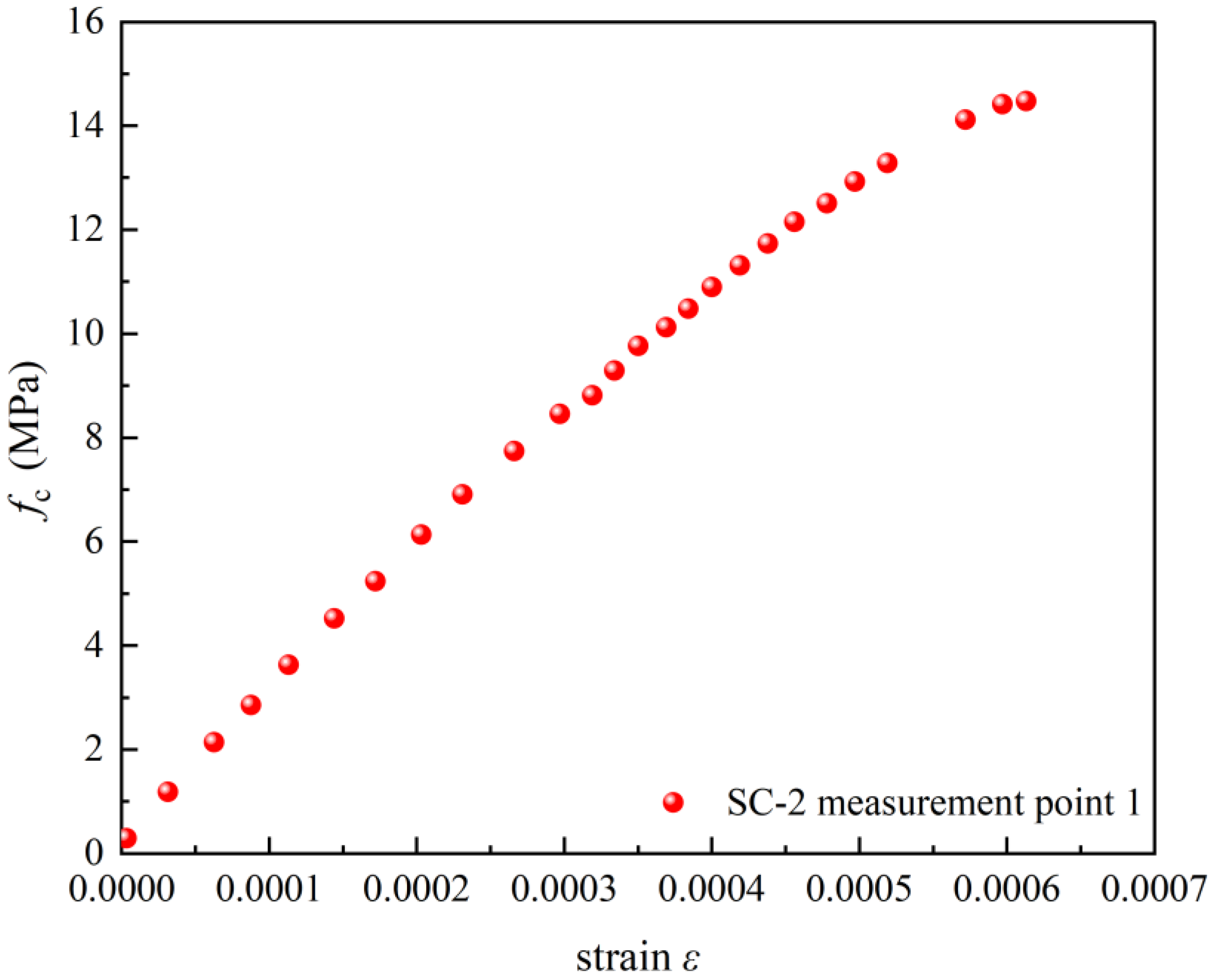
The stress–strain curve of SC-2 under uniaxial loading is shown in Figure 4. It can be observed that the uniaxial lateral compressive response of the large concrete slab is consistent with the typical compressive behavior of concrete. In the early loading stage, the relationship between load and strain is nearly linear. When the stress reached 13.4 MPa, a noticeable deviation from linearity occurred, and the stress–strain curve began to exhibit nonlinear characteristics. When the stress increased to 15.072 MPa, the slab failed, corresponding to a uniaxial compressive strength (fc) of 15.072 MPa, with a maximum compressive strain of 609 microstrains.

3.2. Test Results for Biaxial Lateral Compressive Strength of Large-Size Concrete Slabs

This study conducted four groups of biaxial lateral compression tests on concrete slabs under biaxial pressure ratios of 0.1, 0.2, 0.3, and 0.4, with each group containing two specimens. A stepwise loading protocol was adopted, and each load level was maintained for 3 min. When the principal-direction load was below 3000 kN, the load increment in the principal direction was approximately 188 kN per step, while the increments in the secondary direction were determined based on the selected biaxial pressure ratio, specifically 18.8 kN, 38 kN, 52 kN, and 78 kN. After the principal-direction load exceeded 3000 kN, the increment was reduced to approximately 95 kN per step, and the corresponding increments in the secondary direction were 9.5 kN, 19 kN, 28.5 kN, and 38 kN.

3.2.1. Crack Patterns in Large-Sized Concrete Slabs Under Different Lateral Pressure Ratios

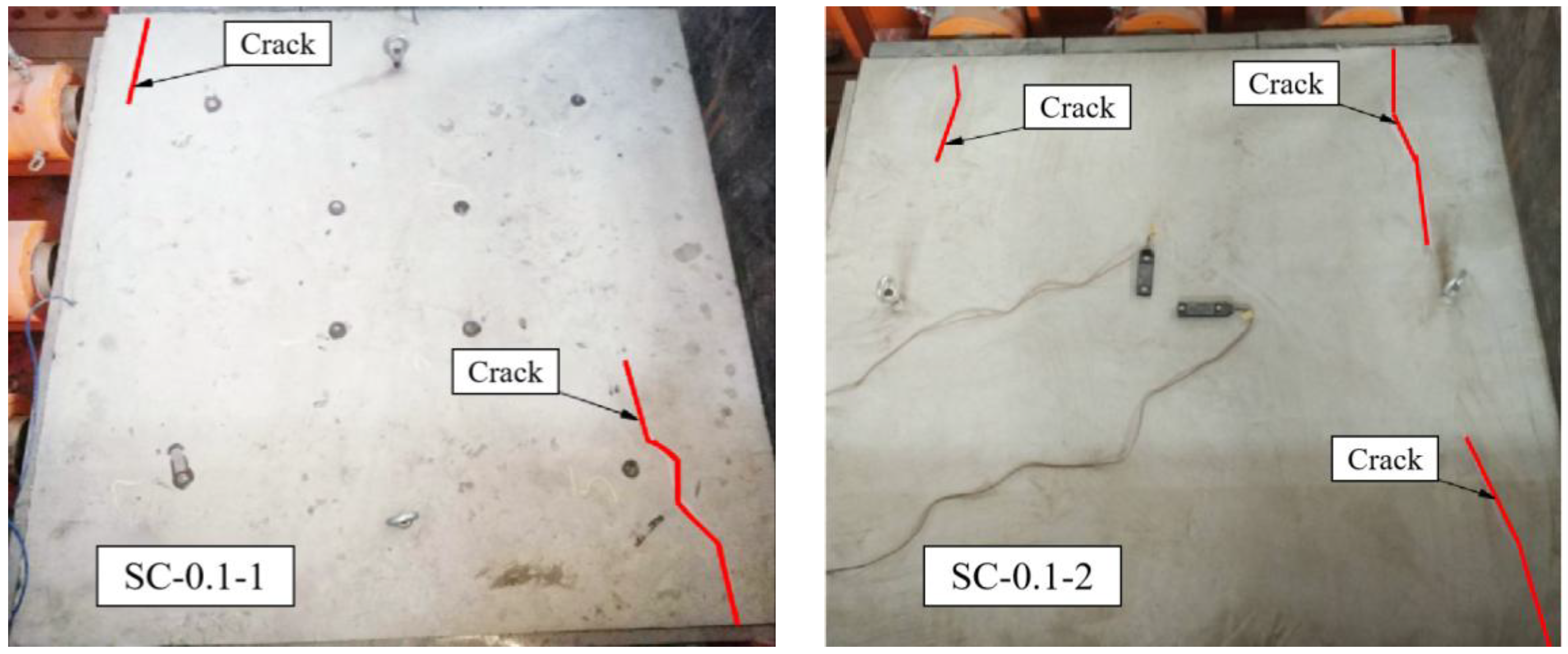
When the principal-direction load reached 3026.6 kN in specimen SC-0.1-1 and 3010.6 kN in specimen SC-0.1-2, microcracks appeared on the surfaces of both slabs. As loading continued, continuous sounds characteristic of brittle material crushing were heard at 3700.3 kN for SC-0.1-1 and 3501.3 kN for SC-0.1-2, accompanied by visible surface cracks, indicating the onset of instability and failure. The final crack patterns are shown in Figure 5.
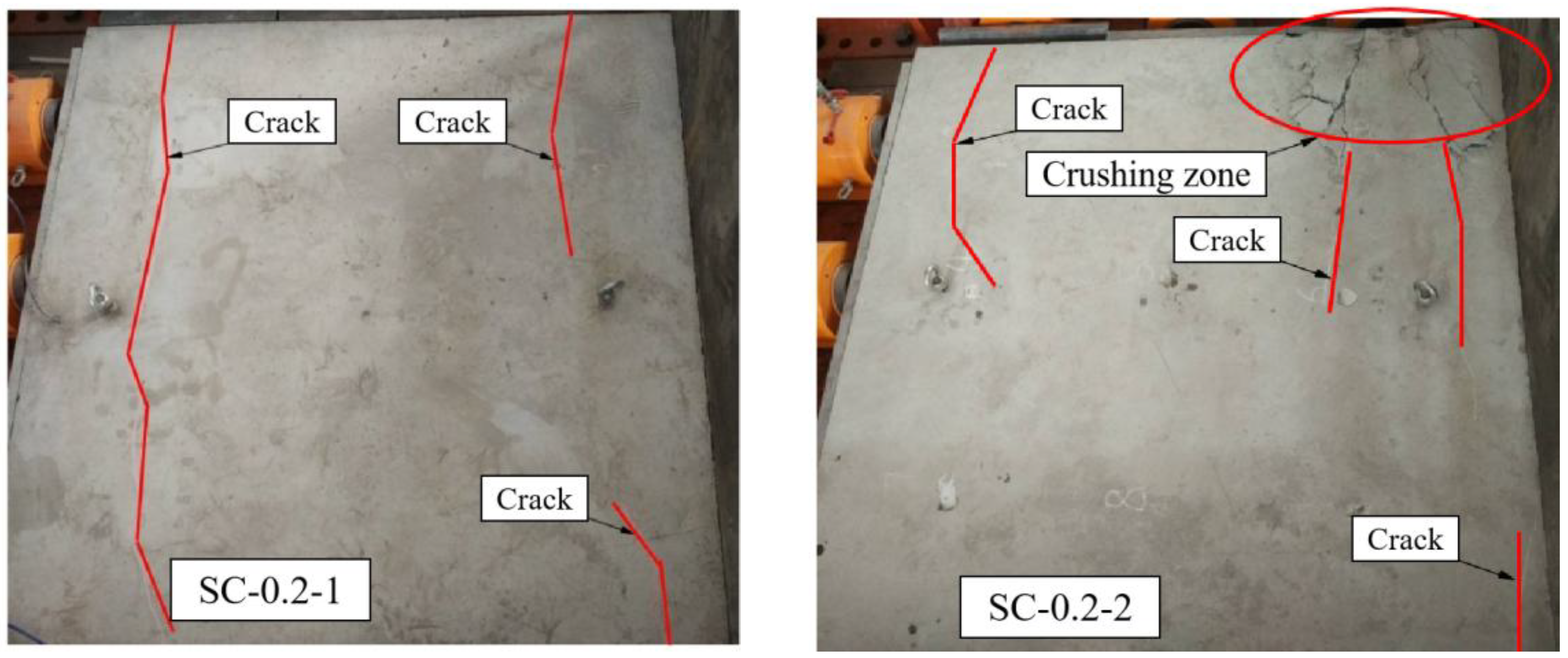
For the 0.2 stress-ratio group, microcracks appeared when the principal-direction load reached 2917.3 kN in specimen SC-0.2-1 and 3020.05 kN in specimen SC-0.2-2. As loading progressed, specimen SC-0.2-1 reached a maximum principal-direction load of 3958.2 kN, accompanied by loud and continuous brittle crushing sounds and nearly fully developed cracks on the left side. Specimen SC-0.2-2 reached a maximum load of 3935.7 kN, during which the right side of the slab was severely crushed, cracks widened significantly, and a sharp load drop occurred, indicating failure. The marked regions in Figure 6 illustrate the crack patterns of specimens SC-0.2-1 and SC-0.2-2.
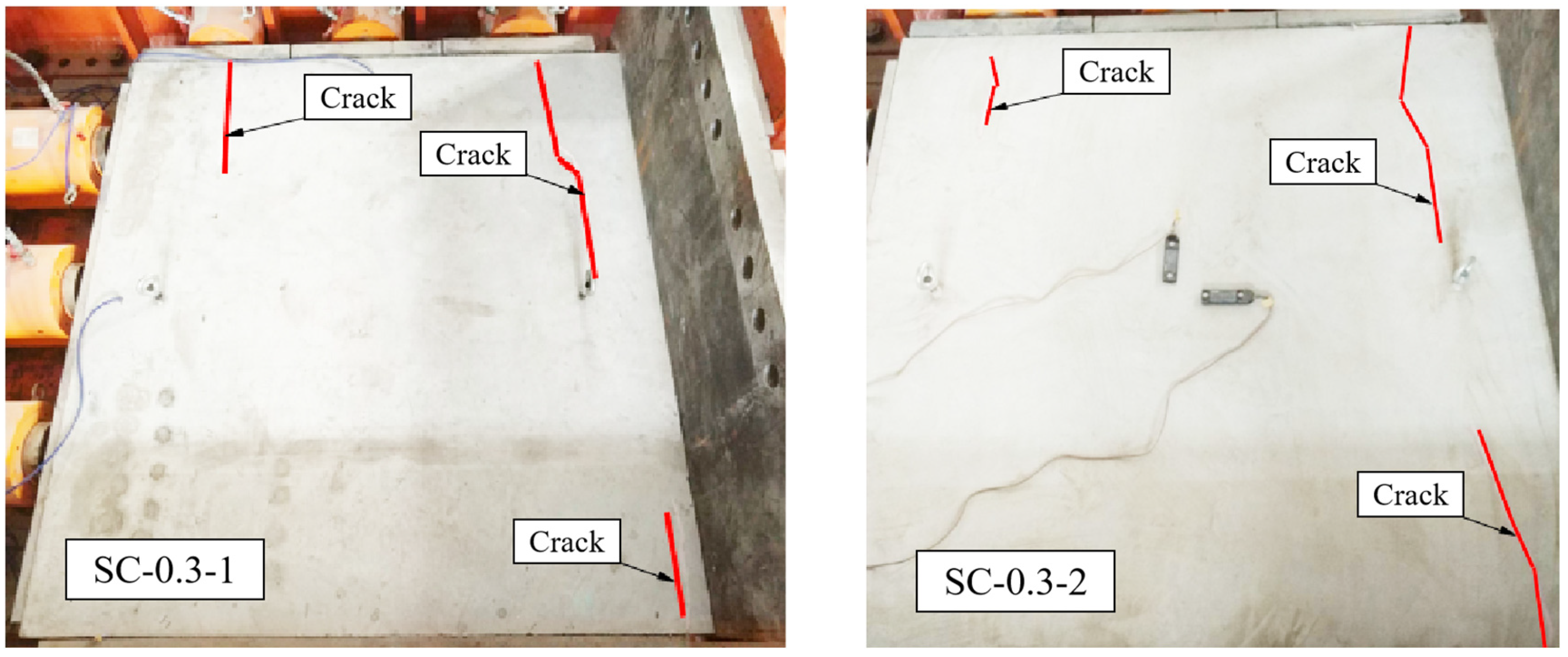
For the 0.3 stress-ratio group, microcracks were first observed when the principal-direction load reached 3119.9 kN in specimen SC-0.3-1 and 3014.4 kN in specimen SC-0.3-2. As the loading continued, continuous brittle crushing sounds were recorded at 4055.3 kN and 4037.55 kN, respectively. Distinct surface cracks then formed, signaling the onset of instability and failure. The final crack patterns are shown in Figure 7.
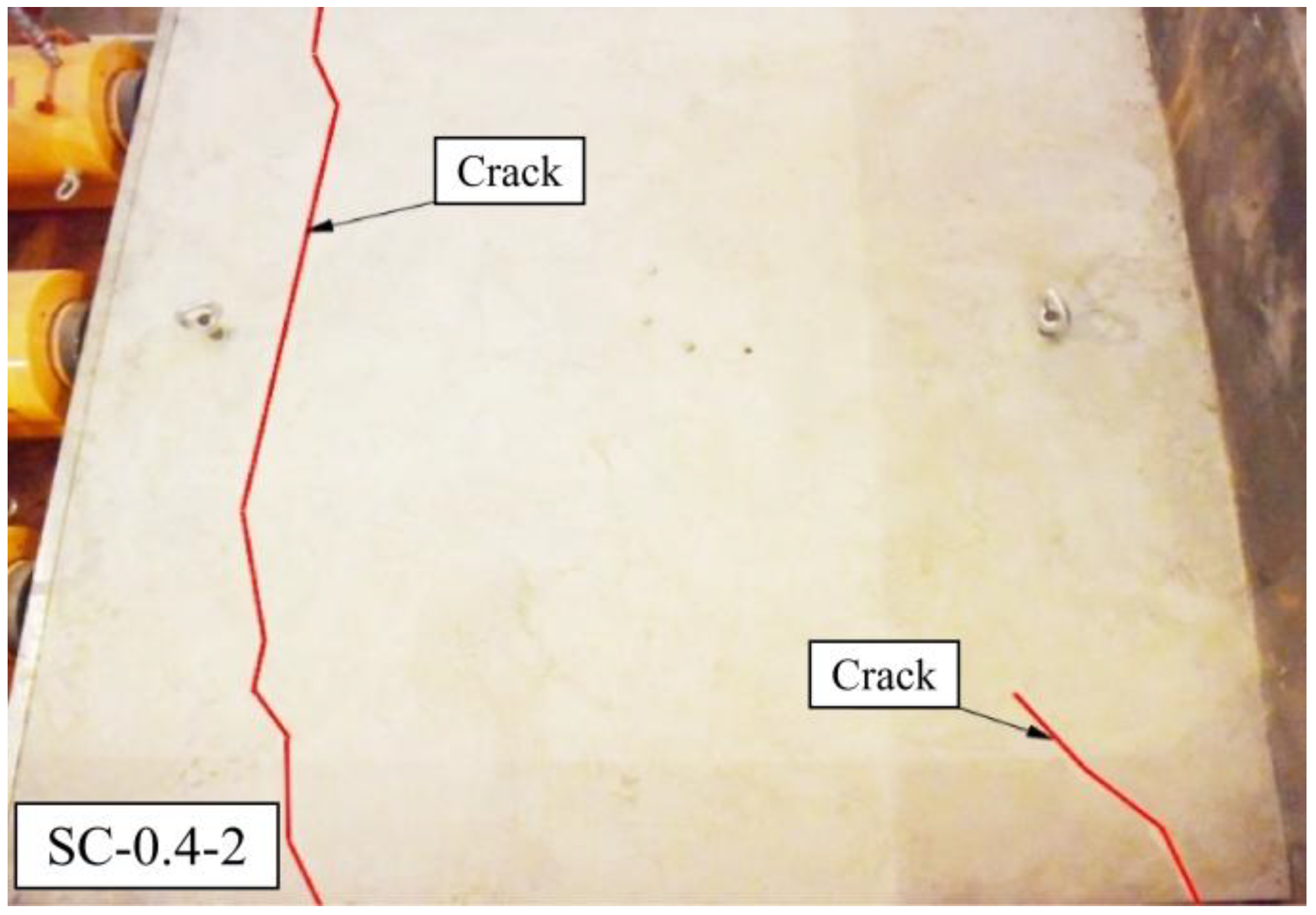
For the 0.4 stress-ratio group, microcracks appeared on the surface of specimen SC-0.4-2 when the principal-direction load reached 3577.7 kN. As loading progressed, continuous crushing sounds were emitted from the specimen when the load reached 4630.8 kN, and clear surface cracks developed, indicating failure. The final crack pattern is shown in Figure 8. Specimen SC-0.4-1 experienced loading-system failure and no valid data were recorded.

3.2.2. Analysis of Lateral Compressive Strength of Large-Dimension Concrete Slabs Under Different Lateral Compressive Ratios

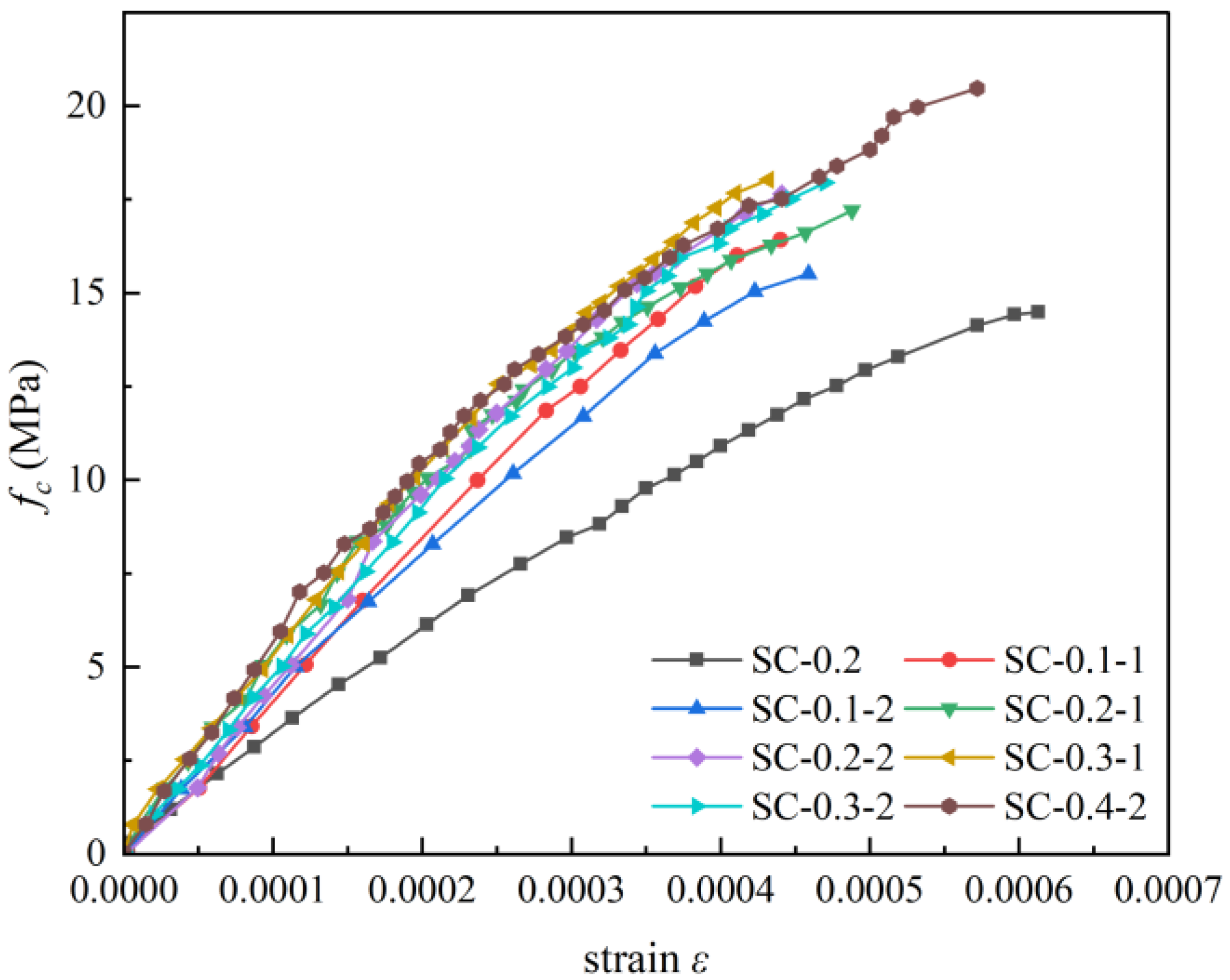
The actual stress experienced by the specimens was calculated based on the structural dimensions of the large-scale concrete slabs and the magnitude of the applied load. Figure 9 presents the stress–strain curves measured at Measurement Point 1 for four groups of concrete slab specimens under different lateral pressure ratios. As shown in the figure, all stress–strain curves exhibit a clear two-stage response. In the initial loading stage, the stress–strain relationship is approximately linear, indicating that no significant internal damage has occurred within the slabs. As the load continues to increase, each curve reaches a turning point and then enters the nonlinear stage, during which microcracks begin to form within the concrete, leading to gradual damage accumulation. Specifically, the turning-point stresses for specimens SC-2, SC-0.1, SC-0.2, SC-0.3, and SC-0.4 are 13.40 MPa, 13.33 MPa, 9.78 MPa, 13.33 MPa, and 14.22 MPa, respectively. It is worth noting that due to the large dimensions of the slab specimens, cracking and final fracture occur before the stress–strain curves exhibit an obvious plastic stage, reflecting the brittle behavior typically observed in large structural members.
Table 2 summarizes the uniaxial and biaxial lateral compressive strengths of the large concrete slabs. The results indicate that, under identical test conditions, the compressive strengths measured by surface-mounted strain gauges are consistently lower than those measured by embedded strain gauges. This discrepancy arises mainly because the concrete surface is more susceptible to free-surface effects, initial microcracks, and localized crushing zones, which were observed on some slabs before core failure (e.g., Figure 6). These surface phenomena caused the surface region to enter the damage stage earlier than the core, leading to faster strain development and lower recorded strength values by the surface-mounted strain gauges. Importantly, no significant spalling or delamination occurred, and the overall integrity of the slabs remained intact. Consequently, the surface region enters the damage stage earlier than the core region, resulting in faster strain development and thus lower strength values recorded by the surface-mounted strain gauges. Based on the average measured strengths, the uniaxial compressive strength of the concrete slab is 15.491 MPa, which is significantly lower than the biaxial lateral compressive strengths. This demonstrates that biaxial compression can effectively enhance the ultimate load-carrying capacity of the concrete slab. Under the four tested pressure ratios (0.1, 0.2, 0.3, and 0.4), the biaxial lateral compressive strengths are 16.004 MPa, 17.542 MPa, 17.980 MPa, and 20.581 MPa, respectively. These results clearly show that increasing the lateral pressure ratio enhances the confinement effect on the slab, thereby increasing its biaxial compressive strength. To evaluate the variability of the measurements, the coefficient of variation (CV) was calculated for each pressure ratio based on the two repeated tests. The CV values for the uniaxial test and the biaxial tests at pressure ratios of 0.1, 0.2, and 0.3 are 2.69%, 2.76%, 0.28%, and 0.24%, respectively, indicating low dispersion and high experimental consistency.
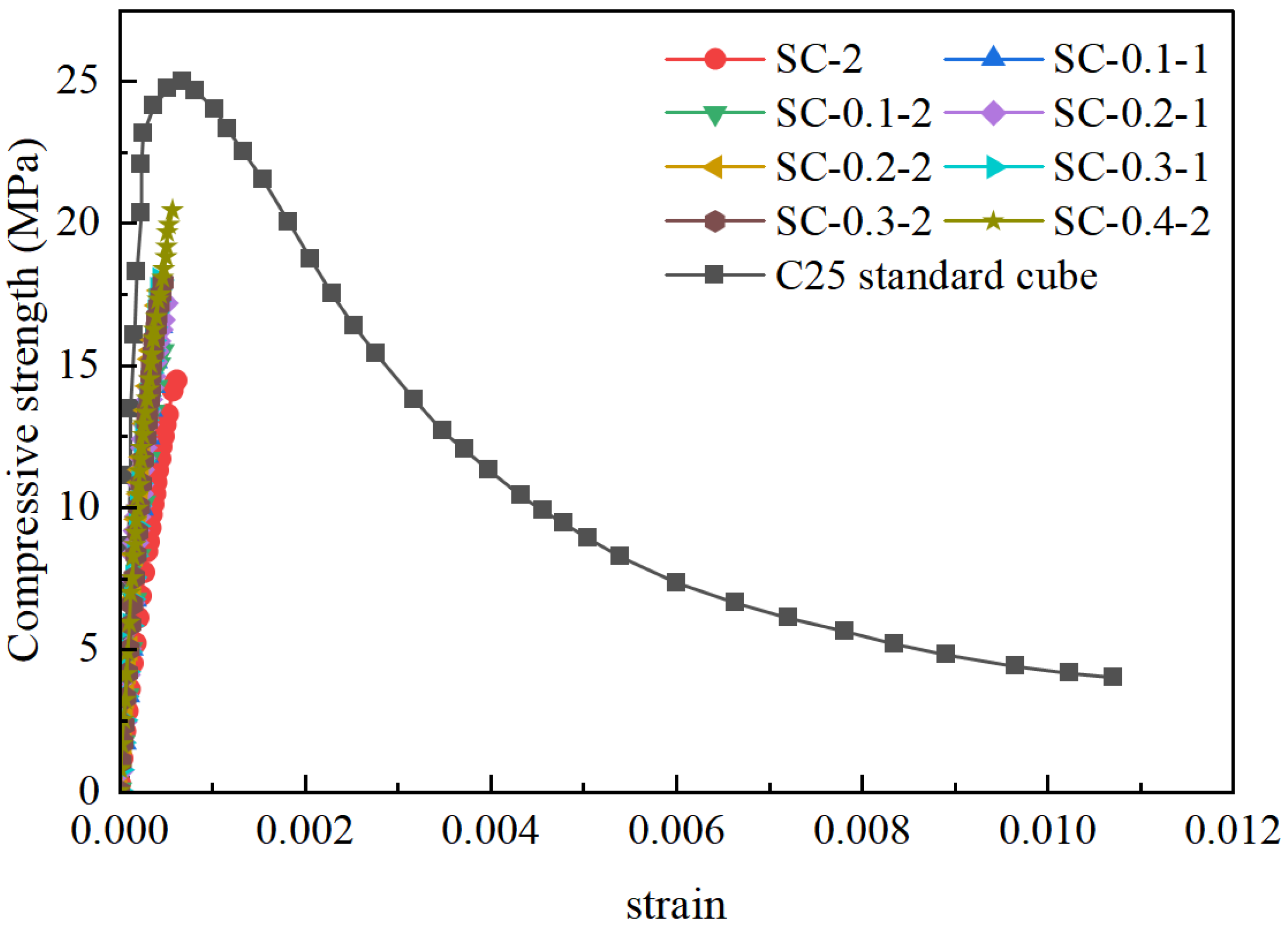
To establish the relationship between the concrete slabs and the corresponding standard cubic specimens, the compressive strengths obtained from the slab tests were compared with those from the standard cubic specimens. The comparison is illustrated in Figure 10. Owing to the large size of the slab specimens, they exhibit pronounced brittle behavior. Throughout the test, the specimens primarily undergo linear deformation, and cracking and eventual fracture occur before any noticeable plastic deformation develops. By comparing the stress–strain curves of the concrete slabs with those of the standard cubic specimens, it can be observed that although the deformation patterns are generally similar, the compressive strength of the slabs is significantly lower than that of the standard cubic specimens. This observation aligns with the conclusions of previous studies conducted on smaller-sized concrete members [25,26]. Therefore, for the concrete face slabs in CFRDs, using standard specimen strength as a criterion for failure assessment is inappropriate.

4. Concrete Slab Strength Reduction Formula and Failure Criteria

4.1. Concrete Specimen Strength Reduction Formula

Due to the complex experimental conditions and the high difficulty of loading, the compressive and tensile strengths of large-scale concrete panels are difficult to obtain directly through full-scale tests. To address this issue, Neville [27] proposed that the compressive strength of concrete (fc) is functionally related to the specimen’s volume (V), height (h), and width (d). They conducted regression analyses on a large dataset of concrete specimens with varying sizes and strengths and found a strong correlation between compressive strength and specimen size. Based on this, they proposed an empirical formula to account for the size effect on concrete compressive strength, with the specific expression given in Equation (1). The formula proposed by Neville et al. is conceptually innovative, as it establishes a unified empirical strength expression by fitting the strength ratio to a size coefficient. However, due to the limitations of the experimental conditions at the time, the specimens used in the dataset were relatively small, and the sample size was insufficient, resulting in certain deviations in the formula. For instance, for a 150 mm cubic specimen, the theoretical ratio of the strength of a non-standard specimen to that of a 150 mm standard cube (fc/fck,150) should be 1; however, substituting this into the formula yields only 0.911, reflecting the influence of limited sample data on the fitting process. Moreover, Equation (1) exhibits an obvious dimensional inconsistency, which must be corrected to ensure its validity.
f c f c k , 150 = 0.56 + 0.697 d V / ( 6 h ) + h
where fc is the compressive strength of non-standard specimens (N/mm2); fck,150 is the compressive strength of standard cubic specimens with a side length of 150 mm (N/mm2); V is the volume of the specimen; d is the side length of the specimen; h is the height of the specimen. fc/fck,150 represents the ratio of non-specimen strength to cubic specimen strength; d/(V/(6h) + h) is the size factor, which is the ratio of the non-specimen side length to the volume function.
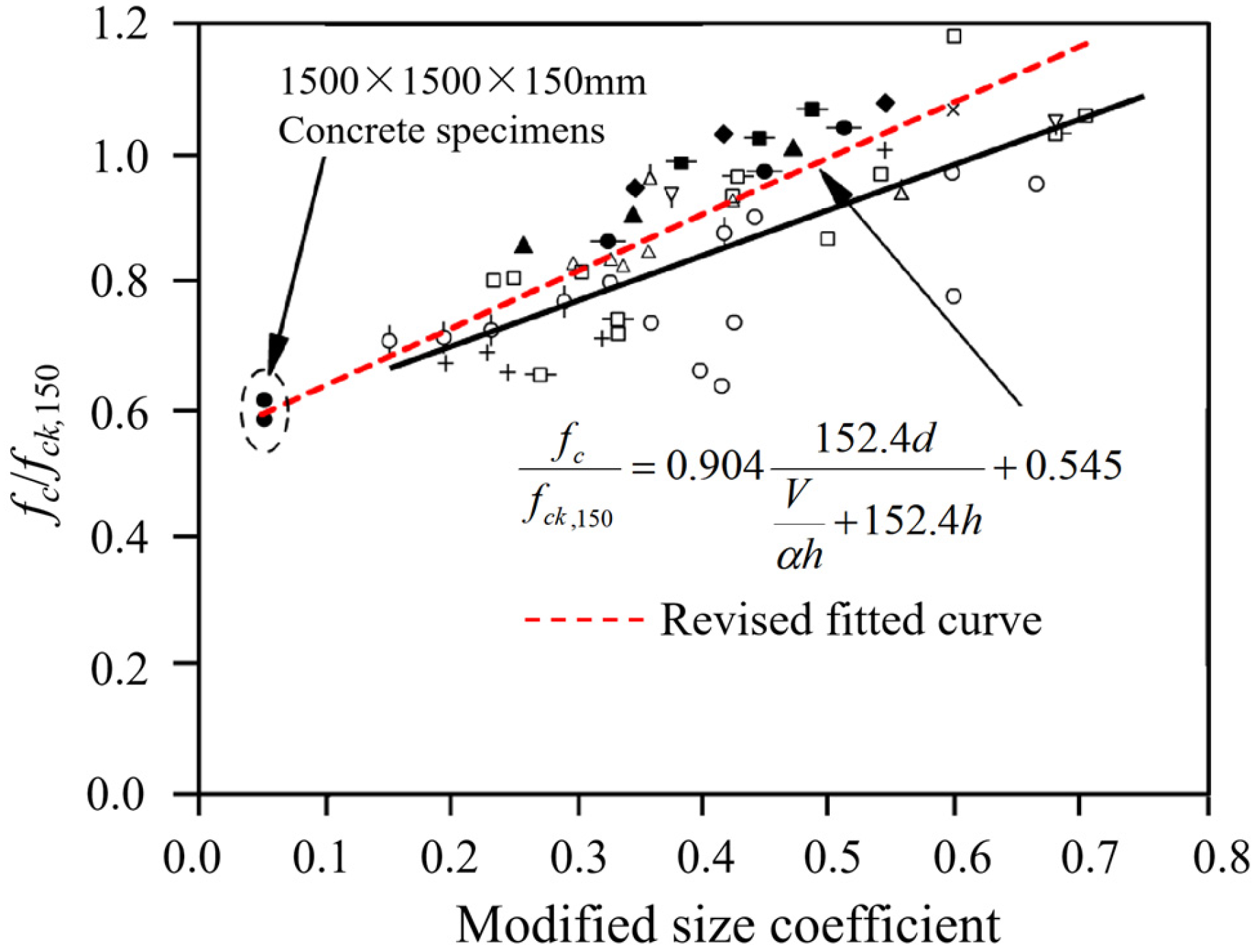
With the continuous advancement of testing equipment and techniques, scholars both domestically and internationally have conducted multiple sets of uniaxial compression tests on large and medium-sized concrete specimens, enriching the database of compressive strength for large-scale concrete [28,29,30,31]. However, the concrete size factor only drops below 0.15 when the specimen size exceeds 900 mm. Due to the difficulty of conducting such large-scale tests, strength data for specimens of this size remain relatively scarce. In this study, uniaxial compression tests were conducted on a large-scale concrete plate with dimensions of 1500 mm × 1500 mm × 150 mm, filling the data gap for size factors below 0.15. The test results were then plotted together with data from medium- and large-sized specimens reported by domestic and international scholars in Figure 11 [28,29,30,31], further increasing the sample size. As shown in the figure, the data points exhibit good consistency. Moreover, as the size of the concrete specimens increases, the size factor decreases, and the corresponding strength ratio also reduces. Based on these results, a modified calculation formula (Formula (2)) for predicting the compressive strength of large-scale concrete was proposed by fitting and correcting Formula (1). The fitting curve is also shown in Figure 11. According to Formula (2), the size factor of the 1500 mm × 1500 mm × 150 mm concrete plate is 0.05, with a strength ratio of 0.619, whereas the 150 mm standard cubic specimen has a size factor of 0.504 and a strength ratio of 1.0, in line with theoretical expectations. This indicates that the modified formula not only aligns well with existing large-scale test results but also provides reasonable correction for the reference size condition. Furthermore, to resolve the dimensional inconsistency present in Formula (1), a dimensional coefficient (α) was introduced in Formula (2), ensuring dimensional consistency in the expression. Therefore, the modified strength reduction formula (Formula (2)) can more accurately describe the relationship between concrete compressive strength and structural size.
f c f c k , 150 = 0.904 152.4 d V / ( α h ) + 152.4 h + 0.545
where α is the dimensional coefficient, which may be taken as 1 mm; 152.4d/(V/(αh) + 152.4h) represents the modified dimensional coefficient expression.
To further verify the applicability and accuracy of Formula (2), this paper will compare the calculation results of the modified Neville strength reduction formula with the research findings of scholars such as Li Jiajin [32], as shown in Table 3. Compared to the original Neville formula, the calculated strength ratio of the modified strength reduction formula for 150mm standard cubic specimens is 1, which better meets the theoretical requirements of benchmark specimens. Meanwhile, as the size of concrete specimens increases, the prediction results of the modified Neville concrete strength reduction formula become closer to the experimental data of other scholars, with significantly improved prediction accuracy.
According to the revised strength reduction formula, the compressive strength reduction coefficient for the large-scale C25 concrete slab in this test is 0.619. Based on the provisions of the “Code for Design of Concrete Structures” GB50010-2010 regarding the adoption of standard values in structural analysis and limit state calculations [33], the reduced uniaxial compressive strength may be directly adopted as the standard compressive strength. Therefore, the standard compressive strength of the large-scale concrete slab with dimensions of 1500 mm × 1500 mm × 150 mm is 15.49 MPa. Furthermore, according to the empirical conversion formula for tensile strength (ft) of large-sized hydraulic concrete in Appendix C of the “Code for Design of Hydraulic Reinforced Concrete Structures” SL191-2008 [34], the corresponding tensile strength is 1.37 MPa. Meanwhile, the design compressive strength of this C25 large-scale concrete slab is 11.1 MPa, and the design tensile strength is 0.98 MPa.

4.2. Strength Failure Criteria for Large-Size Concrete Slabs

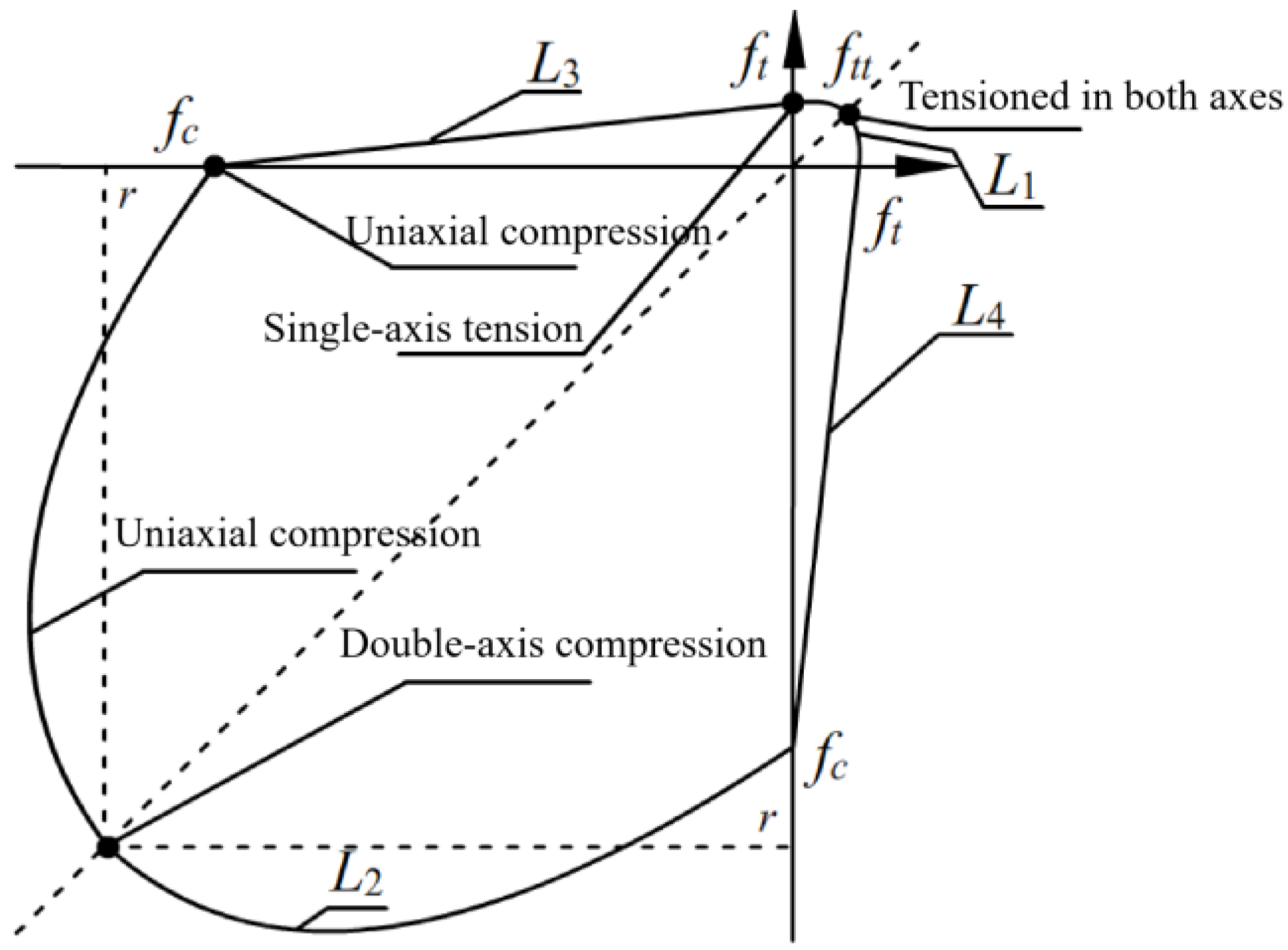
The strength failure standard for concrete specimens is centered on determining whether the structure reaches the ultimate load-bearing capacity state under actual complex stress conditions. This standard is not defined by a single stress threshold but is characterized by the geometric surface of the failure envelope. According to the “Code for Design of Concrete Structures” GB50010-2010 [33], for members like concrete slabs under biaxial stress conditions, the failure envelope line is typically determined by a closed curve formed by four equations in Equation (3).
L 1 : f 1 2 + f 2 2 2 v f 1 f 2 f t 2 L 2 : f 1 2 + f 2 2 f 1 f 2 + α s f 1 + f 2 1 α s f c L 3 : f 2 f 1 f t / f c f t L 4 : f 1 f 2 f t / f c f t
where f1 and f2 are the biaxial strengths of concrete, positive for tension and negative for compression, with f1 > f2; v is the Poisson’s ratio of concrete, generally taken as 0.2. αs is the shear yield parameter, and the specific determination method adopts formula (4).
α s = r 1 2 r 1
where r denotes the biaxial compressive strength enhancement factor, with a value range of 1.15 to 1.30. This may be determined based on test data; where test data is unavailable, a value of 1.2 may be adopted.
The intersections of the experimentally obtained failure envelope surface with the coordinate planes, i.e., the biaxial failure envelope of concrete, is shown in Figure 12. This figure describes the ultimate load-bearing state of concrete under biaxial loading in four quadrants, with the connection of the ultimate strength points in each region forming the complete biaxial failure envelope. In Figure 12, the first quadrant represents the ultimate failure range of concrete under biaxial tensile stress: along the positive direction of the horizontal or vertical axes corresponds to uniaxial tension, while near the angle bisector corresponds to biaxial tension. The second and fourth quadrants correspond to the ultimate failure range under combined tension-compression stress, where along the positive axis is uniaxial tension and along the negative axis is uniaxial compression. The third quadrant represents the ultimate failure range of concrete under complete biaxial compressive stress: along the negative direction of the horizontal or vertical axes is uniaxial compression, while near the angle bisector is biaxial compression.
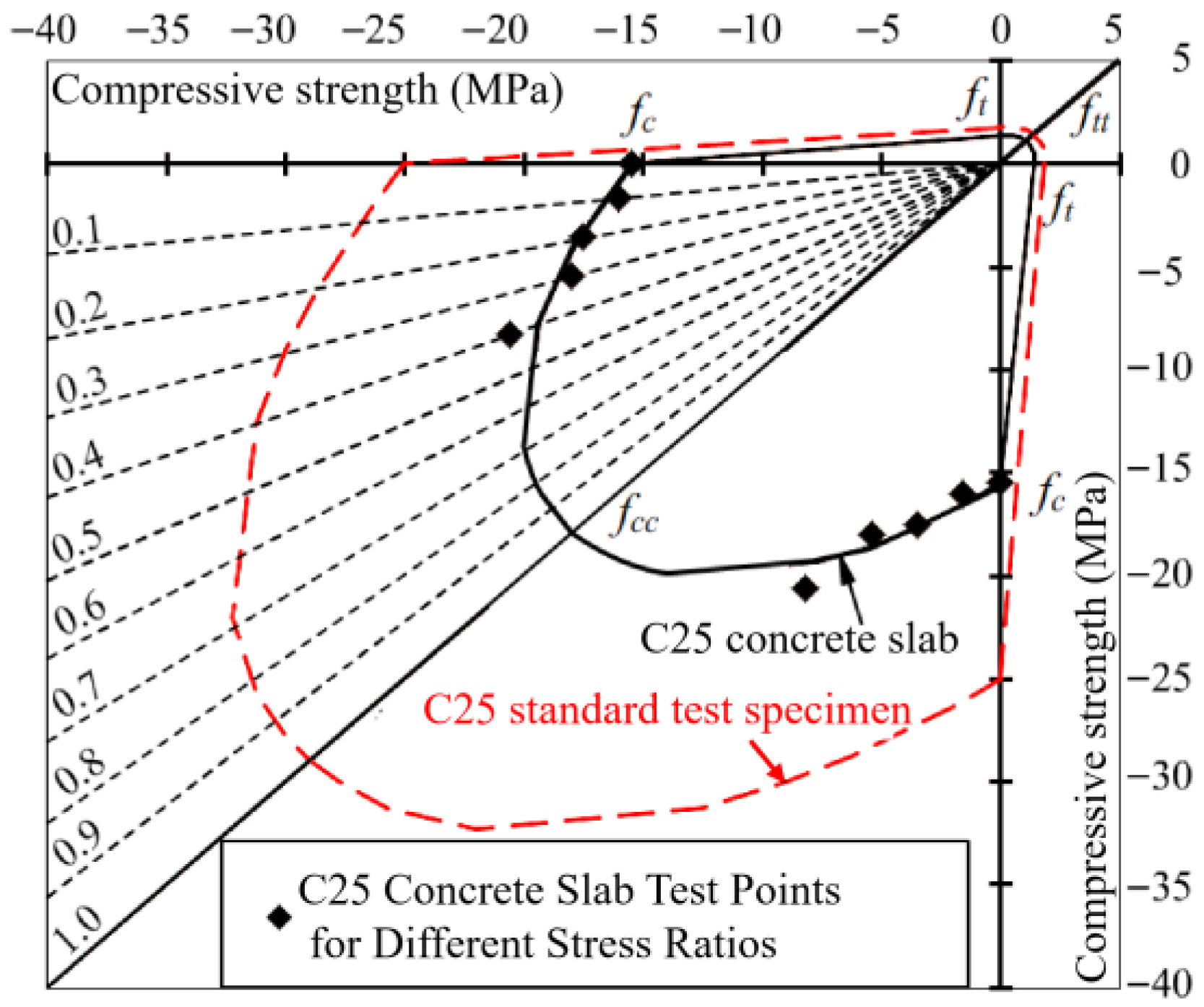
Given that the stress–strain curve trends of large-scale concrete slab specimens and standard cubic specimens are generally consistent before failure, the same equation can be used to determine the envelope line of large-sized concrete slabs. Using the uniaxial compressive strength fc and tensile strength ft of the concrete slab measured in this test, the envelope line model of the C25 standard cubic specimen was adjusted, and accordingly, the theoretical failure envelope curves of C25 concrete slabs under different stress ratios were obtained, as shown in Figure 13. For comparison, the average strength data obtained from the tests of the 1500 mm × 1500 mm × 150 mm concrete slab under 0.1–0.4 stress ratios were also plotted in Figure 13. From the figure, it can be observed that the experimental data agrees well with the theoretical envelope line of the C25 concrete slab, verifying the accuracy and effectiveness of the envelope line. Meanwhile, compared to the failure envelope line of the standard cubic specimens, the actual failure envelope line of large-sized concrete slabs shows a clear inward contraction overall, which is particularly prominent in the biaxial compression region. This characteristic indicates that size effects significantly weaken the actual load-bearing capacity of the members.

4.3. Formula for the Biaxial Strength of Large-Sized Concrete Slabs

As analyzed in Section 4.2, the failure envelope line for large-sized concrete slabs can be obtained by adjusting the envelope line of standard cubic specimens, and it shows good consistency with experimental results. Therefore, based on the determination method for the biaxial strength envelope line and its biaxial ratio in the “Code for Design of Concrete Structures” GB50010-2010 [33], a biaxial strength calculation formula applicable to large-sized concrete slabs can be further established. On this basis, combined with the uniaxial compressive strength correction formula proposed in Section 4.1, the biaxial compressive strength and size effect can be uniformly incorporated into the same calculation framework, achieving a reasonable prediction of the biaxial compressive strength of large-sized concrete slabs.
For biaxial compressive strength, it can be determined based on the modified uniaxial compressive strength formula and the biaxial strength ratio in the code, with the specific expression as shown in Equation (5).
f 1 = C 0.904 152.4 d V / α h + 152.4 h + 0.545 f c k , 150 f 2 = D 0.904 152.4 d V / α h + 152.4 h + 0.545 f c k , 150
where C and D denote the biaxial compressive strength coefficients, whose values are taken from Table 4.
According to Section 4.1.3 of the “Code for Design of Concrete Structures” GB/T 50010-2010, the standard value of the axial tensile strength of concrete can be calculated using Formula (6) [33]. Similarly, by combining the modified concrete strength reduction formula and the biaxial tensile strength ratio, the biaxial tensile strength of concrete specimens considering the size effect can be calculated, with the specific expression being Formula (7).
f t k = 0.88 × 0.395 × f c u , k 0.55 × ( 1 1.645 δ f c ) 0.45
where ftk denotes the standard value of the concrete’s axial tensile strength; fcu,k denotes the standard value of the concrete’s axial compressive strength; δfc denotes the coefficient of variation for concrete compressive strength, determined according to Table 5.
f 1 = 0.3476 α c 2 A 0.904 152.4 d V / α h + 152.4 h + 0.545 f c k , 150 0.55 1 1.645 δ f c 0.45 f 2 = 0.3476 α c 2 B 0.904 152.4 d V / α h + 152.4 h + 0.545 f c k , 150 0.55 1 1.645 δ f c 0.45
where A and B denote the tensile strength coefficients for biaxial loading, taken from Table 4; αc2 represents the reduction factor for high-strength concrete, set to 1 for grades below C40, 0.87 for C80, with interpolation for intermediate values.

5. Conclusions

This paper conducted uniaxial and biaxial lateral compression tests on a large-sized C25 concrete plate with dimensions of 1500 × 1500 × 150 mm using a large reaction frame, systematically analyzed the influence of dimensional effects on the strength and failure criteria of the concrete plate, and established strength reduction formulas and biaxial failure criteria applicable to large-sized concrete plates. The main conclusions are as follows.
(1) Due to their large dimensions, the concrete plate specimens exhibited typical brittle behavior of large-scale members. During loading, the deformation developed predominantly in a linear manner, and cracking and failure occurred before the specimens entered an evident plastic stage. Under uniaxial compression, the average compressive strength of the concrete plates was 15.49 MPa, while under biaxial compression it increased from 16.00 MPa to 20.58 MPa as the lateral pressure ratio increased from 0.1 to 0.4. Compared with the compressive strength of the standard cubic specimens (25 MPa), the strength of the large-scale concrete plates was reduced by approximately 18–38%, clearly demonstrating a pronounced size effect. Despite this reduction in strength level, the stress–strain curves of the concrete plates under both uniaxial and biaxial compression exhibited trends generally consistent with those of cubic specimens.
(2) By expanding the sample space of the ratio of different concrete specimen size parameters to compressive strength, the functional model of the relationship between strength ratio and size in existing research was modified, thereby more accurately predicting the ultimate compressive strength of large-sized concrete members.
(3) Based on the uniaxial compressive and tensile strengths of concrete, the theoretical failure envelope of C25 concrete slabs under different stress ratios was calculated. Compared with the theoretical envelope of standard C25 cubic specimens, the uniaxial and biaxial compressive strengths of 1500 × 1500 × 150 mm concrete elements were significantly reduced, approximately 40% lower than those of the 150 mm standard cubes.
(4) Based on the concrete strength correction formula, a multi-axis strength calculation formula that can comprehensively consider concrete strength grade, member size, and stress ratio was proposed, providing an applicable method for evaluating concrete strength under different conditions.

Author Contributions

Methodology, J.W.; validation, J.W., G.L. and Z.M. (Zhankuan Mi); formal analysis, G.L.; investigation, Z.M. (Zhankuan Mi); resources, J.F.; data curation, Z.M. (Zuguo Mo); writing—original draft preparation, G.L.; writing—review and editing, J.W.; funding acquisition, J.W. All authors have read and agreed to the published version of the manuscript.

Funding

Funding was provided by “Tianshan Elite Talents” Training Program Outstanding Engineer Project (Grant No. EB0282); the research on key technologies for leakage treatment of high face rockfill dams in alpine regions (Grant No. SLSJY-Research 2420).

Institutional Review Board Statement

Not applicable.

Informed Consent Statement

Not applicable.

Data Availability Statement

Original data generated/analyzed in this study are partially included in the article and its figures/tables; complete datasets are available from the corresponding author on reasonable request.

Conflicts of Interest

Authors Junjie Wu and Jinyong Fan are employed by the Design and Research Institute Co., Ltd. The remaining authors declare that the research was conducted in the absence of any commercial or financial relationships that could be construed as a potential conflict of interest.

References

  1. Wang, M.; Xu, Y.; Tian, J. Study on the leakage characteristic of concrete face rockfill dam. China Water Resour. 2019, 8, 46–48+51. [Google Scholar]
  2. Özkuzukiran, S.; Özkan, M.Y.; Özyazicioğlu, M. Settlement behaviour of a concrete faced rock-fill dam. Geotech. Geol. Eng. 2006, 24, 1665–1678. [Google Scholar] [CrossRef]
  3. Li, D.; Jin, L.; Du, X.; Fu, J.; Lu, A. Size effect tests of normal-strength and high-strength RC columns subjected to axial compressive loading. Eng. Struct. 2016, 109, 43–60. [Google Scholar] [CrossRef]
  4. Zheng, L.; Jing, M.; Zhang, G.; Zhang, L.; Long, A.; Liu, Y.; Yao, L.; Xin, J.; Guo, J.; Deng, W.; et al. Research on anti-cracking measures for concrete face slabs of rockfill dams under coupled thermal stress and settlement deformation. Results Eng. 2025, 28, 108273. [Google Scholar] [CrossRef]
  5. Pathirage, M.; Tong, D.; Thierry, F.; Cusatis, G.; Grégoire, D.; Pijaudier-Cabot, G. Discrete modeling of concrete failure and size-effect. Theor. Appl. Fract. Mech. 2023, 124, 103738. [Google Scholar] [CrossRef]
  6. Wu, L.-X.; Zou, S.; Li, Y.-B.; Liang, Y.-H. Research on the size effect of rock-filled concrete compressive strength: Considering the influence of rockfill ratios and rock shapes. Case Stud. Constr. Mater. 2025, 23, e05048. [Google Scholar] [CrossRef]
  7. Jiang, N.; Ge, Z.; Wang, Z.; Gao, T.; Zhang, H.; Ling, Y.; Šavija, B. Size effect on compressive strength of foamed concrete: Experimental and numerical studies. Mater. Des. 2024, 240, 112841. [Google Scholar] [CrossRef]
  8. Zheng, Z.; Zeng, C.; Tian, C.; Wei, X. Mesoscale numerical investigation on the size effect of concrete uniaxial compressive strength under different contact friction. Constr. Build. Mater. 2022, 346, 128416. [Google Scholar] [CrossRef]
  9. Akram, A. Size effect at testing strength properties of concrete. Bud. Archit. 2021, 20, 37–46. [Google Scholar] [CrossRef]
  10. Guan, Z.; Li, Y.; Lai, Z.; Zhou, H.; Qin, J.; Wen, Y.; Chen, Y.; Huang, R. Size effect of concrete based on split Hopkinson pressure bar (SHPB) test. Constr. Build. Mater. 2024, 441, 137499. [Google Scholar] [CrossRef]
  11. Vishwanatha, H.S.; Muralidhara, S.; Raghu Prasad, B.K. Size Effect in Concrete Beams: A Numerical Investigation Based on the Size Effect Law. Fract. Struct. Integr. 2025, 19, 23–40. [Google Scholar] [CrossRef]
  12. Fare, T.O.; Matallah, M.; Kanali, C. Experimental and Numerical Assessment of Structure and Coarse Aggregate Size Effects on the Mechanical Properties of Concrete. Eng. Rep. 2025, 7, e70423. [Google Scholar] [CrossRef]
  13. Jin, L.; Li, J.; Yu, W.; Du, X. Size effect modelling for dynamic biaxial compressive strength of concrete: Influence of lateral stress ratio and strain rate. Int. J. Impact Eng. 2021, 156, 103942. [Google Scholar] [CrossRef]
  14. Gong, H.; Luo, Y.; Meng, F.; Du, H. Failure behavior and strength deterioration model of high-performance concrete under coupled elevated temperature, biaxial constraint and impact loading. J. Build. Eng. 2023, 75, 107002. [Google Scholar] [CrossRef]
  15. Samani, A.K.; Attard, M.M. A stress–strain model for uniaxial and confined concrete under compression. Eng. Struct. 2012, 41, 335–349. [Google Scholar] [CrossRef]
  16. Li, Y.; Sun, X.; Li, G.; Zhang, J.; Fang, D.; Wang, X. Impact of concrete face cracks on the saturated and unsaturated seepage behavior of rockfill dams. Structures 2024, 61, 105990. [Google Scholar] [CrossRef]
  17. Jin, L.; Miao, L.-Y.; Chen, F.-J.; Du, X.L. Evaluation of shear capacity of reinforced concrete shear walls considering size effect. Eng. Mech. 2025, 42, 10–19. [Google Scholar] [CrossRef]
  18. Zhao, Y.; Yin, N.; Xu, B.; Tao, Y. Nondimensional size dependent fracture model of concrete based on boundary effect theory. Theor. Appl. Fract. Mech. 2022, 118, 103288. [Google Scholar] [CrossRef]
  19. Abra, O.; Ben Ftima, M. Strength Reduction Method for the Assessment of Existing Large Reinforced Concrete Structures. Appl. Sci. 2024, 14, 1614. [Google Scholar] [CrossRef]
  20. Ali, O.; Mariet, A.M.; Madkour, H.; Hassanean, Y. Strength reduction factor based on probabilistic analysis for hybrid reinforced concrete beams. Eng. Struct. 2024, 308, 117992. [Google Scholar] [CrossRef]
  21. Chen, X.; Zheng, D.; Wu, X.; Li, C. A Review of Three Common Concrete Multiaxial Strength Criteria from 2010 to 2020. Arch. Comput. Methods Eng. 2022, 30, 811–829. [Google Scholar] [CrossRef]
  22. Zhang, X.; Gong, J.; Lv, Y.; Zheng, Q.; Li, C. Experimental study on confinement-dependent mechanical behavior and failure criteria of high-strength geopolymer concrete. Constr. Build. Mater. 2025, 495, 143684. [Google Scholar] [CrossRef]
  23. Park, H.; Kim, J.Y. Plasticity model using multiple failure criteria for concrete in compression-ScienceDirect. Int. J. Solids Struct. 2005, 42, 2303–2322. [Google Scholar] [CrossRef]
  24. Koechlin, P.; Andrieux, S.; Millard, A.; Potapov, S. Failure criterion for reinforced concrete beams and plates subjected to membrane force, bending and shear. Eur. J. Mech. A/Solids. 2008, 27, 1161–1183. [Google Scholar] [CrossRef]
  25. Iasnii, V.; Mykytyshyn, T. Specimen size and shape effect on the compressive strength of concrete. Sci. J. Ternopil Natl. Tech. Univ. 2023, 111, 97–105. [Google Scholar] [CrossRef]
  26. Li, B.; Jiang, G.; Hu, J.; Li, Y.; Wu, F.; Qin, Z.; Wang, S. Specimen size effect on compressive and splitting tensile strengths of sustainable geopolymeric recycled aggregate concrete: Experimental and theoretical analysis. J. Clean. Prod. 2024, 434, 140154. [Google Scholar] [CrossRef]
  27. Neville, A.M. A General Relation for Strengths of Concrete Specimens of DifferentShapes and Sizes. J. Am. Concr. Inst. 1966, 63, 1095–1110. [Google Scholar]
  28. Bian, S.H.; Li, G.Y.; Wei, K.M.; Zhou, J. Modified generalized plasticity model for rockfill materials. Chin. J. Geotech. Eng. 2017, 39, 1936–1942. [Google Scholar] [CrossRef]
  29. Yin, Z.-Z. Stress and deformation of high earth and rock-fill dams. Chin. J. Geotech. Eng. 2009, 31, 1–14. [Google Scholar]
  30. Lade, P.V. Elasto-Plastic Stress-Strain Theory for Cohesionless Soil with Curved Yield Surfaces. Int. J. Solids Struct. 1977, 13, 1019–1035. [Google Scholar] [CrossRef]
  31. Naylor, D.J. Developments in Soil Mechanics; Scott, C.R., Ed.; Applied Science Publishers, Ltd.: London, UK, 1978. [Google Scholar]
  32. Li, J. Effect of Specimen Size and Aggregate Diameter on Concrete Strength. Des. Hydroelectr. Power Stn. 1991, 3, 20–27. [Google Scholar]
  33. GB50010-2010; Code for Design of Architecture & Concrete Structures. China Architecture & Building Press: Beijing, China, 2010.
  34. SL191-2008; Design Code for Hydraulic Concrete Structures. China Water & Power Press: Beijing, China, 2008.
Figure 1. Schematic diagram of vertical strain gauge arrangement and embedding.
Buildings 16 00576 g001
Figure 2. Schematic diagram of reaction frame.
Buildings 16 00576 g002
Figure 3. Concrete panel loading arrangement.
Buildings 16 00576 g003
Figure 4. Stress–strain curve of concrete slabs under uniaxial loading conditions.
Buildings 16 00576 g004
Figure 5. Crack morphology of specimens SC-0.1-1 and SC-0.1-2.
Buildings 16 00576 g005
Figure 6. Crack morphology of specimens SC-0.2-1 and SC-0.2-2.
Buildings 16 00576 g006
Figure 7. Crack morphology of specimens SC-0.3-1 and SC-0.3-2.
Buildings 16 00576 g007
Figure 8. Crack morphology of specimen SC-0.4-2.
Buildings 16 00576 g008
Figure 9. Results of uniaxial and biaxial compressive strength tests on C25 concrete slabs.
Buildings 16 00576 g009
Figure 10. Uniaxial and biaxial compressive strength test results for C25 test specimens and C25 concrete slabs.
Buildings 16 00576 g010
Figure 11. Linear regression curve between fc/fck,150 and 152.4d/(V/(αh) + 152.4h).
Buildings 16 00576 g011
Figure 12. Strength failure envelope diagram for C25 concrete under biaxial stress.
Buildings 16 00576 g012
Figure 13. Envelope diagram of strength failure for C25 concrete slabs and standard test specimens under biaxial stress.
Buildings 16 00576 g013
Table 1. Classification of lateral pressure resistance tests for concrete slabs.
Specime NumberSpecimen Dimensions/mLoading MethodDual-Axis Pressure RatioStrain Gauge Arrangement
SC-11.5 × 1.5 × 0.15Single-axisEmbedded
SC-2Single-axisSurface
SC-0.1-1dual-axis0.1Embedded
SC-0.1-2dual-axis0.1Surface
SC-0.2-1dual-axis0.2Embedded
SC-0.2-2dual-axis0.2Surface
SC-0.3-1dual-axis0.3Embedded
SC-0.3-2dual-axis0.3Surface
SC-0.4-1dual-axis0.4Embedded
SC-0.4-2dual-axis0.4Surface
Table 2. Summary of compressive strength test results for large-size concrete slabs.
Specimen NumberDual-Axis Pressure RatioStrain Gauge ArrangementCompressive Strength/MPaAverage Strength/MPa
SC-10Embedded15.90915.491
SC-20Surface15.072
SC-0.1-10.1Embedded16.44616.004
SC-0.1-20.1Surface15.561
SC-0.2-10.2Embedded17.59217.542
SC-0.2-20.2Surface17.492
SC-0.3-10.3Embedded18.02417.980
SC-0.3-20.3Surface17.936
SC-0.4-10.4N 1N 120.581
SC-0.4-20.4Surface20.581
1 “N” in the table indicates that no data was collected.
Table 3. Comparison table of compressive strength reduction factors for concrete specimens.
Source of InformationDimensions of the Cubic Specimen (mm)
10015002003004500
Based on the strength of 150 mm cubic specimensNanjing Institute of Water Resources and Hydropower Research1.081.000.970.920.78
Northeast Institute of Water Resources and Hydropower Research1.041.000.950.93--
ISO1.001.000.950.90--
Soviet ΓOCT1.121.000.930.90--
Neville0.980.910.860.790.74
Amend Neville1.091.000.940.850.77
Table 4. Strength coefficients of concrete under biaxial tension and biaxial compression.
Stress Ratio0.10.20.30.40.50.60.70.80.91.0
A0.1020.2040.3060.4000.4880.5680.6370.6940.7470.790
B1.0201.0221.0201.0000.9760.9470.9100.8670.8300.790
C−1.070−1.138−1.200−1.250−1.275−1.290−1.288−1.258−1.212−1.16
D−0.107−0.228−0.360−0.500−0.638−0.774−0.902−1.006−1.091−1.16
Table 5. Coefficient of variation for concrete compressive strength.
Concrete Strength GradeC15C20C25C30C35C40C45C50C55C60
δfc0.20.180.160.140.130.120.120.110.110.1
Disclaimer/Publisher’s Note: The statements, opinions and data contained in all publications are solely those of the individual author(s) and contributor(s) and not of MDPI and/or the editor(s). MDPI and/or the editor(s) disclaim responsibility for any injury to people or property resulting from any ideas, methods, instructions or products referred to in the content.