


Abstract
In recent years, with the rapid advancement of science and technology, generative artificial intelligence has increasingly entered the public eye. Primarily through intelligent algorithms that simulate human logic and integrate vast amounts of network data, it provides designers with solutions that transcend traditional thinking, enhancing both design efficiency and quality. Compared to traditional design methods reliant on human experience, generative design possesses robust data processing capabilities and the ability to refine design proposals, significantly reducing preliminary design time. This study employs the CiteSpace visualization tool to systematically organize and conduct knowledge map analysis of research literature related to generative AI in architectural design within the Web of Science database from 2005 to 2025. Findings reveal the following: (1) International research exhibits a trend toward interdisciplinary convergence. In recent years, research in this field has grown rapidly across nations, with continuously increasing academic influence; (2) Research primarily focuses on technological applications within architectural design, aiming to drive innovation and development by providing superior, more efficient technical support; (3) Generative AI in architectural design has emerged as a prominent international research focus, reflecting a shift from isolated design to industry-wide integration; (4) Generative AI has become a core global architectural design topic, with future research advancing toward full-process intelligent collaboration. High-quality knowledge graphs tailored for the architecture industry should be constructed to overcome data silos. Concurrently, a multidimensional evaluation system for generative quality must be established to deepen the symbiotic design paradigm of human–machine collaboration. This significantly enhances efficiency while reducing the iterative nature of traditional methods. This study aims to provide empirical support for theoretical and practical advancements, offering crucial references for practitioners to identify business opportunities and policymakers to optimize relevant strategies.
1. Introduction
The application of generative AI in architectural design represents a multidisciplinary concept dedicated to integrating generative AI with architectural practice. The application of artificial intelligence in architectural design has brought unprecedented opportunities for creativity and efficiency, allowing architects to explore new forms and functions with the help of generative models [1,2]. Conceptually, it emphasizes the convergence of Building Information Modeling (BIM), the Internet of Things (IoT), and generative AI large models. Generative AI is positioned as a creative partner, collaborating to stimulate innovative thinking and fostering disruptive concepts through cross-disciplinary integration [3]. Architects can use these AI applications to explore various design possibilities, enhance creativity, and receive instant feedback for iterative improvement [4,5]. Specifically, generative AI in architectural design operates across five key dimensions: First, the theoretical framework dimension explores how generative AI reshapes fundamental architectural cognition-shifting from the “form-function” dualism to a “multi-subjectivity” paradigm and investigating novel spatial paradigms. Second, the educational innovation dimension focuses on transforming designer competencies and educational reform in the generative AI era, shifting emphasis from skill transmission to cultivating innovation literacy. At the same time, artificial intelligence has traditionally been used as a digital design tool, but its role as a teaching aid to enhance creative thinking has not been fully explored [6]. Third, the technical methodology dimension centers on core technologies, encompassing AI model evolution and integration with design workflows, with the core being the technological shift from machine learning to generative AI. Fourth, the performance optimization dimension leverages generative AI to enhance building performance for sustainability, with its core function being the simulation of green buildings to achieve integrated “generation-simulation-optimization”. Fifth, the practice integration dimension centers on reshaping the architecture industry’s technical ecosystem through generative AI integration. Its core lies in breaking information silos by combining with digital technologies, while its frontier drives the industry’s evolution from “technology empowerment” to “user experience” to ensure efficient implementation of complex designs.
While academia has extensively researched generative AI’s applications in architectural design, several shortcomings persist: First, in technical maturity, the reliability and precision of generated outputs remain insufficient, potentially yielding non-compliant, unsafe, or impractical design solutions. Additionally, integration with traditional workflows remains cumbersome, often creating information silos [7]. Second, data governance faces challenges due to inconsistent standards and diverse formats across design, construction, and supplier data, resulting in scarce and uneven-quality industry datasets [8]. Third, there is a shortage of interdisciplinary professionals proficient in both civil engineering/architecture and AI, compounded by lagging interdisciplinary programs and curriculum development in higher education. Fourth, application limitations: Generative AI is predominantly used in early-stage processes like visualization and concept generation within the construction industry, while deeper applications in project management and cost control remain scarce [9]. Despite high industry interest, few construction firms have scaled the integration of generative AI into their operations [10]. Unlike previous studies that focused on theoretical discussions, case summaries, or technical reviews, this research employs systematic bibliometric analysis. Utilizing the CiteSpace visualization tool and drawing data from the Web of Science database, it retrieves and filters relevant academic literature in the field of architectural design from 2005 to 2025, constructing a network diagram through visualization tools. Through node size, color, and connecting lines, the evolution logic of the field is clearly reconstructed. While existing studies often focus on specific technical branches or short-term trends, this research systematically organizes and reveals the overall evolutionary path, knowledge structure clusters, and international collaboration networks of generative AI research in architectural design through long-term, holistic visualization. This addresses the shortcomings of existing reviews in analyzing dynamic evolution and structural relationships. By systematically mapping the research progress and emerging trends in generative AI for architectural design, this study aims to fill potential gaps in integrating technology with architectural design scenarios. It provides new insights with a more structured and evolutionary perspective for both theoretical research and practical exploration in this field.
2. Research Methods and Data Collection
2.1. Research Methods
CiteSpace is a pioneering bibliometric and scientific knowledge mapping software developed by Professor Chen Chaomei, an internationally renowned expert in scientometrics and information visualization. It is not merely a simple “visualization tool,” but rather an integrated research system combining complex network analysis, clustering algorithms, and temporal analysis. Its purpose is to assist scholars in extracting clear, profound patterns of knowledge development from vast, chaotic literature data. Its core philosophy treats a knowledge domain as an evolving complex system. Within this system, “nodes” can represent academic papers, authors, institutions, or keywords, while the “connections” between them symbolize relationships such as co-occurrence, co-citation, or collaboration. CiteSpace employs advanced algorithms to compute and render these relationships, ultimately generating dynamic, multi-layered visual maps.
This study employs bibliometric methods and utilizes the knowledge map analysis software CiteSpace (version 6.4.R1) to conduct a visual analysis of literature data. The research focuses on the knowledge structure, evolutionary trajectory, and collaborative networks of generative artificial intelligence within the field of architectural design. The specific analysis spans the time period from 2005 to 2025, sliced by year. Network nodes represent countries, institutions, and keywords to reveal the field’s macro-level landscape. Colors in the diagram denote years, with shades transitioning from blue to red as years increase. To ensure clarity and highlight core structures, redundant connections were pruned using the Pathfinder algorithm. For co-citation analysis, the g-index (k = 25) serves as the threshold for screening highly cited literature. This parameter balances representativeness and influence, representing a robust and widely adopted setting in related studies. It ensures the core literature included in the analysis possesses sustained and significant academic impact while reflecting the field’s fundamental knowledge base.
It should be noted that while the above parameter selection follows common practices in bibliometric analysis, it may still exert specific influences on results. For instance, annual slicing may fail to reveal micro-fluctuations within shorter cycles; the Top 50 node threshold may inadequately reflect certain low-frequency yet promising emerging concepts. To mitigate such potential biases, this study will complement overall trend analysis with techniques like keyword outbreak detection to keenly capture emerging frontiers. All other analysis options retain the software’s default configurations to ensure the standardization of the analytical process and the reproducibility of results. Overall, the parameter settings in this study aim to strike an optimal balance between scientific rigor and operational feasibility, systematically and objectively revealing the panoramic landscape of knowledge evolution in this field.
2.2. Data Collection
This study employs the Web of Science (WOS) Core Collection database as its retrieval source, primarily based on the following considerations: First, the WOS Core Collection has become the gold standard data source for bibliometric research, ensuring the reliability and academic validity of analytical results while effectively guaranteeing the scholarly authority and international representativeness of the analyzed sample [11]. Second, its comprehensive citation indexing facilitates in-depth co-citation and collaboration network analysis, aligning with this study’s objective of knowledge map construction. Scopus and Google Scholar were excluded because the former has a relatively diverse coverage scope, while the latter contains a high proportion of non-core literature, both of which are detrimental to systematic metric analysis.
Web of Science (WOS) is one of the world’s largest citation databases and the primary database supporting current knowledge graph analysis. This study utilized the Web of Science Core Collection as the foreign literature data source, focusing on document types such as “Article”, “ Early Access”, “Proceeding Paper” AND “Review Article” with the themes “Topic = Generative AI” AND “architectural design”. A total of 183 documents were collected. Manually excluded documents irrelevant to the theme, such as “Artificial Intelligence, Lymphoid Neoplasms, and Prediction of MYC, BCL2, and BCL6 Gene Expression Using a Pan-Cancer Panel in Diffuse Large B-Cell Lymphoma”, yielding 151 valid documents. Subsequently, a search using the keywords “Topic = AI” AND “architectural design” yielded 833 documents. Irrelevant documents, such as “Kamino: A Scalable Architecture to Support Medical AI Research Using Large Real World Data”, were manually excluded, resulting in 657 valid documents. After deduplicating the 151 valid documents from the first search with the 657 valid documents from the second search, 598 valid documents were obtained. These 598 valid documents were authored by 261 authors from 217 distinct institutions. The collection process is shown in Figure 1.
Figure 1.
Data Collection Flowchart.
3. Literature Feature Analysis
3.1. Quantitative Characteristics
The temporal variation in publication volume reflects research progress and evolutionary trends [12]. To clearly understand international research outputs on generative AI in architectural design, this study utilized CiteSpace’s visualization capabilities to statistically organize the publication dates of retrieved sample literature. Analysis yielded a quantitative trend chart. Figure 2 displays the annual publication volume from the WOS English database between 2005 and 2025. The line graph indicates that publication volumes remained at relatively low levels in the early years, with very gradual growth and minimal fluctuations before 2017, typically maintained between 0 and 5 articles. From 2017 onward, the growth trajectory accelerated sharply, with the curve exhibiting rapid expansion—particularly near 2025—indicating that research in this field has entered a period of intense exploration. This suggests the presence of high-caliber scholars and institutions abroad maintaining sustained focus on this domain [13]. Why did 2017 mark a turning point in this field’s research? According to the literature, this shift is closely tied to relevant policies issued by China. In 2017, authors led by Ashish Vaswani published the paper “Attention Is All You Need” [14]. This paper introduced a revolutionary neural network architecture that fundamentally transformed sequence data processing. Compared to traditional RNN/LSTM models, the Transformer could handle longer sequences, resolving the “long-text forgetting” issue. Its powerful parallel computing capabilities significantly boosted model training efficiency, becoming the technical cornerstone for all subsequent large generative models (GPT, DALL-E, etc.). Concurrently, Foster + Partners established its Applied Research and Development (ARD) group in 2017, applying AI/machine learning to design assistance, knowledge dissemination, and business insights. They developed models that generate images from natural language. Subsequently, “Deep Learning Architect: Classification for Architectural Design Through the Eye of Artificial Intelligence” proposed a deep learning-based architectural style classification method, achieving a breakthrough in core technology and laying the foundation for intelligent classification and generation in architectural design [15]. Subsequently, in 2018, Achlioptas, P. published “Learning Representations and Generative Models for 3D Point Clouds”. This paper explores geometric data represented as point clouds, introducing deep autoencoder (AE) networks with advanced reconstruction quality and generalization capabilities [16]. It conducts an in-depth study of various generative models, including GANs operating on raw point clouds, significantly improved GANs trained in the fixed latent space of AEs, and Gaussian mixture models (GMMs). This enables intelligent generation from point cloud data to architectural forms, offering new technological pathways for architectural design. In 2023, “Integrating BIM and AI for Smart Construction Management: Current Status and Future Directions” proposed that the integration of BIM and AI will demonstrate new added value in handling construction projects characterized by complexity and uncertainty [17]. It provided an in-depth analysis of the current status and future trends of AI utilization throughout the entire BIM project lifecycle. In Web of Science (WOS), research development in this field transitioned from a gradual start to rapid growth. Publication volume (orange line) shows an overall upward trend. Early publications fluctuated at low levels, indicating an initial exploratory phase with minimal academic output. From 2017, publication volume began a modest increase, and surged dramatically to approximately 200 papers by 2025, reflecting an extremely rapid growth phase. The maturation of technologies (such as multimodal models and open-source tools) after 2020 significantly enhanced the practical applicability of architectural design research, ultimately driving the substantial increase in WOS publications by 2025. Overall, while international research started slowly, it accelerated rapidly in later years. In recent times, generative AI in architectural design has rapidly advanced to become a mainstream frontier in academic focus. Simultaneously, it has gradually entered the public eye, attracting widespread attention [2]. As research depth expands and application scenarios continue to materialize, this field has begun to show clear signs of specialization and diversification.
Figure 2.
Annual Publication Volume Trend (2005–2025).
3.2. Distribution of Key Authors and Research Institutions
3.2.1. Author Collaboration Network Analysis
Co-occurrence analysis identifies core authors within a field and measures collaboration intensity among them [18]. Publication volume is represented by node size. The larger the node, the greater the volume of posts. Network density refers to an indicator measuring the closeness of connections between nodes in a network, defined as the ratio of actual connections to the number of possible connections. Collaboration relationships are depicted as connections, where denser lines signify stronger ties [19]. As shown in Figure 3.
Figure 3.
Author Collaboration Network.
Figure 3 shows a visualization of the Web of Science sample literature, revealing 261 network nodes and 290 connections, with a network density of 0.0085. Prominent large nodes indicate key authors in foreign generative AI literature for architecture: Lu Shuai (4 publications), Lu Weisheng (4 papers), Yin Jun (4 papers), Yoon Sungmin (4 papers), Alanne Kari (3 papers), Darko Amos (3 papers), Li Jiteng (3 papers), and Zeng Pengyu (3 papers). In terms of connectivity, collaboration among international authors is relatively close. The dense connections in the network diagram indicate that a relatively mature academic collaboration community has formed in this field abroad, with frequent interactions among different scholars. Particularly prominent is the research team centered around Hong Tianzhen and Liang Jiadong, which represents a cohesive cluster within the current collaboration network. The formation of such clusters also facilitates the integration of different research perspectives, driving cross-disciplinary innovation in technologies and methodologies within the field.
The team centered around Lu Shuai’s AI research primarily focuses on automating the generation and modification of residential layouts, aiming to enhance efficiency in architectural design processes [20]. Targeting the complex and highly customized process of residential layout design, they employ generative AI to automate layout generation and dynamic modification. They have also established collaborative interaction channels between users and designers, proposing the Text2 FloorEdit framework that decomposes design tasks into three components: Window, Door, and Wall Generation (WD-Net) for detailed floor plan creation at lower training costs, enabling precise translation of ordinary users’ spatial needs into design parameters [21,22]. This enhances collaboration between users and designers, advances architectural automation, and ultimately boosts design efficiency and automation adoption. Concurrently, Lu Shuai’s team introduced an AI-based framework integrating generative models, energy prediction, and evolutionary optimization. This approach reduced energy consumption by 17.5% compared to the best baseline model, demonstrating its effectiveness in lowering residential energy usage [23].
The team led by Lu Weisheng focuses on researching AI-agent-based conceptual models for Indoor Environmental Informatics (IEI), intelligent exploration in building operations and maintenance, and continuous indoor environmental management via AI agents [24]. Their AI agent conceptual model enables real-time collection, analysis, and regulation of indoor environmental parameters, proposing a segmentation-free, Derivative-Free Optimization (DFO) method. This approach transforms finished BIM generated from 2D images into an optimization problem for fitting BIM components under architectural and topological constraints. By connecting fitted components to existing semantic sources, it enriches BIM semantics, partially alleviating the dilemma of information scarcity versus overload in BIM development [25]. Lu Weisheng’s team discovered that user attitudes toward intelligent building systems are neither constant nor necessarily tied to perceptions of utility and usability. Managers can tactically apply pressure to enhance organizational technology acceptance. These findings, combined with an expanded TAM theory, lay the groundwork for developing a universal theoretical framework for technology adoption in the construction industry [26]. The team further explored computational BIM algorithms that control information to facilitate CWM decision-making. By linking computational BIM operations to multiple mainstream procurement models, they identified the platforms where computational BIM can advance more efficiently and effectively [27]. Grounded in ubiquitous computing and universal intelligent object theory, they defined the panoramic and interconnected characteristics that distinguish SCOs from traditional building objects, thereby explicitly specifying SCOs’ core attributes, computational applications, and representations. The team’s research is closely integrated with Building Information Modeling (BIM) and the Internet of Things (IoT) [28].
3.2.2. Institutional Collaboration Network Analysis
The presentation format for institutional collaboration networks mirrors that of author networks. As shown in Figure 4 for the Web of Science sample literature network, foreign literature comprises 217 nodes and 222 links, with a network density of 0.0095. Core institutions in related fields include Hong Kong Polytechnic University, Tsinghua University, Texas A&M University System, Universidad Politécnica de Madrid, University College London, University of London, Egyptian Knowledge Bank (EKB), Islamic Azad University, Southeast University–China, Sungkyunkwan University (SKKU), Tongji University, and University of Hong Kong, occupying pivotal positions within the institutional collaboration network.
Figure 4.
Institutional Collaboration Network.
From the overall research institution map, most institutions have established only one-way or limited collaborations with a few core institutions, failing to form a comprehensive, dense collaborative network. However, the connection strength and interaction frequency within the core institution clusters are relatively high. Institutions like Islamic Azad University and Egyptian Knowledge Bank (EKB) have formed a cross-institutional collaborative team with strong cooperative capabilities. Nevertheless, some nodes still exhibit independent and fragmented states, indicating significant room for improvement in future collaborative exchanges among research institutions in this field. Overall, research on generative AI in architectural design follows a pattern dominated by universities, supplemented by research institutes and associations.
3.3. Analysis of Major Country Distribution and Disciplinary Distribution
As shown in Figure 5, the Web of Science country co-occurrence map reveals 185 connections among 69 countries, with a network density of 0.0789. Most countries maintain unidirectional collaborations with only 1–2 core nations, failing to form a comprehensive and tightly knit cooperative network. Collaboration is predominantly concentrated among a few leading countries, while peripheral nations exhibit weak connectivity.
Figure 5.
National Institutional Collaboration Map.
According to Table 1’s institutional collaboration data, the top ten countries by publication volume are: China, the United States, the United Kingdom, South Korea, Australia, Germany, Italy, Spain, Turkey, and Iran. China leads in total publications, followed closely by the United States and the United Kingdom. The top three countries by centrality are the United Kingdom, China, and the United States. Germany (6th in publication volume) and Italy (7th) both exhibit centrality values of merely 0.01. Here, intermediary centrality is defined for each node in the network. It measures the likelihood that any shortest path in the network traverses the node. The year indicates when a country’s counted papers (or contribution volume) first exceeded zero. Nodes with high intermediary centrality may lie between two large clusters or subnetworks, hence the term “intermediary.” German research primarily focuses on developing artificial intelligence technologies, with collaborations predominantly involving North American institutions. Italian research emphasizes the preservation and restoration of traditional architecture, though its collaborative scope remains relatively limited [29,30]. Consequently, despite producing some outcomes, these nations have not deeply integrated into the global collaborative network. This results in weak international connectivity and influence within the field. Thus, despite high publication volumes, both countries exhibit limited influence in generative AI research for architectural design and urgently require enhancement.
Table 1.
National Institution Collaboration Matrix.
3.4. Co-Citation Analysis of Literature, Authors, and Journals
Co-citation analysis serves as a method to evaluate the influence of academic literature. Quantifying citation frequencies of documents, authors, and journals, it identifies research hotspots. Literature clustering analysis can be employed to discern similarities and differences in research themes. This study utilizes co-citation analysis to identify significant research outcomes in generative AI within architectural design, providing references for academic evaluation and research direction selection.
3.4.1. Document Co-Citation Analysis
Document co-citation analysis reflects a study’s academic influence, research quality, and recognition within the scholarly community, serving as a key indicator for evaluating scholarly contributions. This study conducted co-citation analysis on documents published between 2005 and 2025, using one-year intervals as the temporal unit. The co-citation network comprises 598 nodes and 1558 links (see Figure 6a). The purple circle represents centrality; the thicker the circle, the greater the centrality. In the co-citation analysis graph of Web of Science publications, the top publications with 15 or more co-citations are ranked as follows: Baduge SK (2022, AUTOMAT CONSTR, V141, P0, DOI 10.1016/j.autcon.2022.104440) [31]. Abioye SO (2021, J BUILD ENG, V44, P0, DOI 10.1016/j.jobe.2021.103299) [32]. Pan Y (2021, AUTOMAT CONSTR, V122, P0, DOI 10.1016/j.autcon.2020.103517) [33]. Rombach R, (2022, PROC CVPR IEEE, V0, P10674, DOI 10.1109/CVPR52688.2022.01042) [34]. Goodfellow I (2020, COMMUN ACM, V63, P139, DOI 10.1145/3422622) [35]. Nauata N (2020, IMG PROC COMP VIS RE, V12346, P162, DOI 10.1145/3422622) [36]. Darko A (2020, AUTOMATIC CONSTRUCTION, V112, P0, DOI 10.1016/j.autcon.2020.103081) [37]. Chaillou Stanislas (2020, ARCHITECTURAL INTELLIGENCE, V0, P117, DOI 10.1007/978-981-15-6568-7_8) [38]. Hu RZ (2020, ACM Transactions on Graphics, V39, P0, DOI 10.1145/3386569.3392391 [39]. Liao WJ, (2024, AUTOMATIC CONSTRUCTION, V157, P0, DOI 10.1016/j.autcon.2023.105187) [2].
Figure 6.
(a) Cited Literature. (b) Cited Authors. (c) Cited Journals.
Among these, Goodfellow I (2020) [35] serves as the theoretical cornerstone of the field, representing pioneering research on generative adversarial networks. This work established the core generative paradigm for the entire field, enabling the creation of realistic and diverse architectural images, floor plans, and more from random noise, laying the technical foundation for all subsequent applications. Subsequently, Rombach R (2022) [34] served as the technical engine and application inflection point for the field, representing a breakthrough in latent diffusion models. This technology drastically reduces computational costs for high-quality image generation by performing denoising in a low-dimensional latent space. Combined with natural language understanding capabilities, it enables an “AIGC” workflow that directly generates and manipulates architectural designs via text prompts, thereby igniting large-scale application and innovation of generative AI in architectural design.
3.4.2. Co-Citation Analysis of Authors
Co-citation analysis illuminates relationships and influence among authors in academic research, aiding the identification of core scholars, potential collaboration directions, and interdisciplinary trends within a field. This paper employs the CITESpace tool to construct an author co-citation network. Figure 6b shows authors with co-citation frequencies exceeding 25, listed in descending order: PAN Y, WANG Z, ZHANG Y, ZHANG L, GOODFELLOW IJ, BADUGE SK, FAN C, ABIOYE SO, and LEE J. This indicates that these publications and authors have exerted significant influence on the development of generative AI in architectural design, with their research findings receiving high recognition.
3.4.3. Journal Co-Citation Analysis
Core journals play a vital role in the development of academic fields. The nodes in Figure 6c, representing the number of published papers, display a dual-layer overlay of citing and cited journals for 598 relevant publications. This illustrates citation relationships within the research field, as well as interdisciplinary integration and mutual influence across different disciplines. Journals with co-citation frequencies exceeding 150 are listed in descending order: AUTOMAT CONSTR (284 times), J BUILD ENG (249 times), ENERG BUILDINGS (246), BUILD ENVIRON (223), BUILDINGS-BASEL (222), ARXIV (200), SUSTAINABILITY-BASEL (167), RENEW SUST ENERG REV (164), APPL ENERG (163 times), and APPL SCI-BASEL (150 times). Specifically, as the top journal in this field, the high citation count of AUTOMAT CONSTR signifies that generative AI research is at the forefront of the digital and intelligent transformation in architecture. This journal focuses on BIM, digital construction, robotics, and related directions. As a key technology driving the next wave of automation, generative AI research is deeply embedded within the end-to-end digital workflow spanning design, construction, and operations. It represents the highest level of pursuit for process innovation and technological integration within the field. The high citation count of J BUILD ENG indicates that generative AI research also places significant emphasis on practical engineering applications and performance implementation. This journal emphasizes specific engineering challenges in building materials, structures, energy efficiency, and environmental protection. Its extensive citations demonstrate that generative AI has transcended conceptual generation, deeply integrating into performance-driven design domains like structural optimization, energy efficiency calculations, and sustainability analysis. It is dedicated to solving practical engineering challenges in building safety, comfort, and environmental sustainability. In summary, these journals exhibit high attention and in-depth research on generative AI in architectural design, making them essential long-term tracking targets for scholars in this field.
4. Research Hotspot Analysis
Keywords provide a rapid overview of an article’s core research content—its essence, condensed substance, and research direction. Analyzing keywords reveals research hotspots and frontiers, with Citespace’s keyword co-occurrence and clustering effectively mapping these areas.
Research hotspots represent the focal points of current studies, a group of intrinsically connected, relatively numerous papers addressing popular issues or themes within a specific period. The frequency distribution and centrality of literature keywords can be used to study the development trends and research hotspots in a field. Meanwhile, keyword emergence maps utilize the rate of change in co-occurrence frequency to reflect the fundamental characteristics of evolving research frontiers.
4.1. Keyword Analysis
This study employs the co-occurrence analysis method with keywords as node types using CiteSpace software to identify research hotspots. The time scale was set from 1 January 2005, to 1 November 2025, with a time interval of 1. The data extraction target was set to TOP50, and the clipping method was Pathfinder. The resulting keyword knowledge map is shown in Figure 7. Among the keywords, “performance”, “design” and “artificial intelligence (AI)” had the highest frequency and largest nodes, followed by “BIM”, “artificial intelligence” and “architectural design”, “artificial intelligence (AI)” exhibit the highest frequency and largest node size, followed by “bim”, “artificial intelligence” and “architectural design”.
Figure 7.
Literature Keyword Map.
Centrality refers to the ability to act as a mediator within a relational network. Generally, nodes with a centrality value greater than 0.1 are considered to occupy relatively important positions within the network structure. According to software statistics (Table 2), eight keywords in WOS literature exhibit centrality exceeding 0.1: “performance” (0.19), “design” (0.18), “artificial intelligence (AI)” (0.15), “bim” (0.14), “artificial intelligence” (0.13), “architectural design” (0.12), “big data” (0.12), “behavior” (0.12), and “neural networks” (0.10). Among these keywords, “artificial intelligence (AI)” represents the methodological cornerstone of the research, specifically referring to generative models exemplified by deep learning, generative adversarial networks (GANs), and diffusion models. These serve as novel “creativity engines,” fundamentally transforming the technical paradigm of architectural design. “design” specifically denotes the entire intelligent design process from concept generation to scheme refinement. It is no longer solely the domain of human designers but has evolved into an iterative process of “human–machine dialog and collaborative exploration.” Here, artificial intelligence handles massive data processing and generates vast alternative solutions, while designers steer the direction, inject creativity, and make final decisions; “Performance” defines the value orientation and optimization goals of this research domain. It emphasizes that the generative process and final solutions must transcend formal aesthetics, deeply integrating and optimizing the building’s comprehensive performance across energy efficiency, structural integrity, lighting, comfort, materials, and other aspects. This indicates that these keywords possess the highest mediating centrality in generative AI research within architectural design, signifying their significant role as connectors and intermediaries within the entire relational network. They represent the focal points of research in this field.
Table 2.
Keywords with Centrality Greater than 0.1.
4.2. Burst Analysis
Keyword burst maps reveal sudden drops or surges in citation frequency, reflecting major shifts in research focus. To track inflection points in generative AI research trends within architectural design, CiteSpace’s Burstness feature was employed to detect keyword bursts. By analyzing key terms associated with generative AI’s emergence in architectural design, Figure 8a illustrates the citation burst intensity of 24 keywords in academic literature from 2013 to 2025. The red line indicates the burst period of a keyword, during which its citation frequency significantly increases, signifying widespread academic attention to the topic. The blue curve represents the time span from a keyword’s emergence to its disappearance, with light blue indicating it has not yet begun and dark blue signifying the keyword is still active. Figure 8b shows that, based on the distribution characteristics of the red and blue curves, keyword outbreaks can be divided into three stages.
Figure 8.
(a) Keyword Emergence Map of Literature. (b) Literature keywords highlight the timeline.
In chronological order: fuzzy logic, knowledge representation, building envelope, case-based reasoning, artificial neural network, residential buildings, comfort, building energy consumption, artificial neural networks (ANNs), support vector machine, classification, behavior, neural networks, artificial neural networks, models, optimization, neural network, damage detection, internet of things, generative adversarial networks, computer vision, explainable AI, architectural design, natural language processing. Among these, the keyword “fuzzy logic” maintained the longest research intensity period, spanning from 2013 to 2021. This was followed by “artificial neural network” and “comfort,” both active from 2015 to 2021. Additionally, the keyword “residential buildings” showed sustained research activity from 2015 to 2022. Keywords such as “damage detection”, “internet of things”, “generative adversarial networks”, “computer vision”, “explainable AI”, “architectural design”, and “natural language processing” have maintained research momentum from 2023 to the present, exhibiting strong growth trends.
Phase One (approx. 2013–2018): Research during this period exhibited distinct problem-driven and foundational methodological characteristics. Keywords that emerged early on, such as “fuzzy logic,” “knowledge representation,” and “case-based reasoning,” indicate that researchers were focused on introducing traditional AI methods into the architectural domain to address uncertainties in design and the reuse of experience. Subsequently, the research focus rapidly shifted toward specific building performance and energy consumption issues. Keywords like “building envelope”, “comfort”, and “building energy consumption” became prominent. Concurrently, the emergence of “artificial neural networks” and their variants signaled researchers’ adoption of more advanced machine learning models to address these performance optimization challenges, laying the technical foundation for subsequent research.
Phase Two (approx. 2019–2022): This period represented a critical phase of deepening core technologies and broadening application scenarios. On one hand, the persistent prominence of keywords like “optimization” and various “neural networks” indicated that deep learning methods had become mainstream, shifting the research focus from solving single-performance problems to more complex multi-objective optimization and precise prediction. On the other hand, the emergence of “generative adversarial networks” and “computer vision” around 2022 marked a turning point. This signaled a shift in research focus from “analysis and optimization” to “creation and generation,” propelling generative AI from laboratories to the forefront of architectural design. The emphasis now centers on automating the generation of design drawings and forms.
Phase Three (approx. 2023–2025): Current research frontiers exhibit distinct trends toward multimodal fusion, explainability, and cross-technology integration. The recent emergence of “explainable AI” directly addresses the “black box” challenges of generative models, emphasizing the reliability and transparency of generated outcomes—an essential requirement for technological maturity and responsible application. The re-emergence of “architectural design” as a core domain term, now appearing alongside “natural language processing”, strongly signals a shift toward a new paradigm of human–machine interaction through natural language and cross-modal generation. Architects can now directly guide AI in design through language. Combined with earlier technologies like sketch generation and image control, a highly intelligent, naturally interactive design partner role is taking shape.
5. Analysis of Research Frontiers
Research frontiers play a crucial role in defining research directions, referring to potential research questions and a set of emerging dynamic concepts within a field. In CiteSpace, clusters can be formed by a group of closely related documents based on their interconnections, accurately depicting frontier focal points [40].
Cluster Analysis
This study employs the LLR (Log-Likelihood Rate) algorithm for cluster analysis, categorizing keywords to clearly reveal research trends and hotspots. This approach identifies thematic categories of generative AI research within architectural design. labels automatically assigned based on dominant keywords [41]. Figure 9 presents the clustering results for 598 documents. By consolidating similar clusters across different time periods (one year per segment), this study identified nine primary clusters: #0 Building Information Modeling, #1 Generative AI, #2 Computer Vision, #3 Multi-Objective Optimization, #4 Digital Twins, #5 Machine Learning, #6 Energy Savings, #7 Network Analysis, #8 building envelope, #9 artificial intelligence. The Web of Science literature clustering achieved Modularity = 0.5252 and Mean Silhouette = 0.9201, both exceeding 0.5, indicating good clustering reliability. Among these, Cluster 7 (network analysis) involves evaluation methods for other clusters, while Clusters 6 (energy savings) and 8 (building envelope) address specific architectural design issues. Therefore, these three clusters are excluded from this study. The remaining six clusters are examined in detail. Additionally, Clusters 1 (generative AI) and 9 (artificial intelligence) belong to the same domain and will be discussed together.
Figure 9.
Keyword Cluster Map.
The primary keywords extracted using the LLR algorithm are summarized in Table 3. Content analysis of valid literature based on LLR keywords reveals that Building Information Modeling (BIM) has the highest citation count among these clusters, indicating it is a research hotspot in this field. Since its emergence, artificial intelligence has been increasingly applied in architectural design. Sustained research in recent years indicates continuous refinement of AI applications within this domain. The following sections provide detailed discussions of each cluster.
Table 3.
Keywords Extracted from Literature.
- (1)
- Building Information Modeling (BIM)
Building Information Modeling, abbreviated as BIM, integrates information across a building’s entire lifecycle through the creation of virtual 3D models. This approach aims to enhance construction efficiency, reduce costs, and conserve energy.
Ploszaj-Mazurek, M and Rynska, E emphasize that current BIM technology is crucial for promoting whole-life-cycle building assessment and enhancing environmental performance. The authors integrated BIM, IFC, AI, and carbon footprint calculation into a single tool. This tool generates material quantities from IFC models, calculates a building’s carbon footprint, and solicits improvement suggestions from AI [42]. Park, C and Lee, YG highlight users as a critical factor in architectural design tasks. They developed a real-time BIM-based human behavior simulation system, enabling architects to simulate user behavior at any design stage and provide essential behavioral insights for design proposals [43]. Jungsik Choi and Sejin Lee emphasize the importance of enhancing BIM quality to elevate architectural design standards. Through case studies of BIM data quality control, the research reconfigures derived quality control objectives to establish a quality inspection standard [44]. Mikyoung Kim, Seungyeul Ji, and Hanjong Jun facilitate BIM project management by synchronizing BIM data across different computers and providing BIM model viewers and data via the web, thereby supporting collaboration in BIM projects [45]. Omar Bagasi, Nawari O. Nawari, and Adel Alsaffar pointed out that the integration of Building Information Modeling (BIM) and Artificial Intelligence (AI) is reshaping the Architecture, Engineering, and Construction (AEC) industry, exploring the technical and ethical challenges faced by AI-BIM integration, and further proposing strategies to support its practical application [46]. Bagasi, O.; Dagmar Kutá, and Michal Faltejsek explored the role of Artificial Intelligence (AI) in the transformation of BIM environments, analyzing the integration of AI and BIM from both theoretical and practical perspectives, and evaluating its potential value to the construction industry [47]. Jinyi Li, Zhen Liu, Guizhong Han, Peter Demian, and Mohamed Osmani proposed that BIM and AI-driven deep digitalization of the AEC industry has promoted the rise of “smart cities” [48].
Although generative AI interventions offer numerous conveniences for architectural design, AI remains in its developmental stage. BIM still faces significant issues and challenges during promotion and application. For instance, usage costs are relatively high. Professional BIM software like Autodesk Revit (https://www.autodesk.com.cn/products/revit/overview, accessed on 18 December 2025) or ArchiCAD (https://www.archweb.com/zh-CN/Archicad-23/, accessed on 18 December 2025) requires expensive subscriptions. Additionally, high-performance computers and servers capable of smoothly running these programs necessitate substantial hardware investments. Beyond this, challenges include steep learning curves, talent shortages, and software interoperability issues. To effectively address these, we must recognize that BIM is not merely software but a process. In application, we can adopt subscription models based on demand, enhance pre-design planning, and optimize usage efficiency. In education, we need to intensify talent cultivation, establish “industry-academia collaboration” platforms, and translate knowledge into practice to drive the continuous advancement of Building Information Modeling.
- (2)
- Artificial Intelligence (AI)
Artificial Intelligence (AI) is a technology that simulates human intelligence. It processes problems by mimicking human thinking and decision-making capabilities through computers, emphasizing judgment and prediction. If AI is considered a “whole,” generative AI represents a crucial branch within it. Compared to general AI, generative AI places greater emphasis on design and creation, with common technologies including Generative Adversarial Networks (GANs).
Özorhon, G, Gelirli, DN, Lekesiz, G and Müezzinoglu, C, they investigated and discussed the artificial intelligence involved in architectural design. Their research indicates AI significantly aids students in project development and provides foundational spatial solutions [49]. Yangluxi Li, Huishu Chen, Peijun Yu, and Li Yang propose that AI enhances efficiency, innovation, and sustainability in architectural design. Their analysis of the FU Generator platform and interactive architecture further substantiates this argument, offering direction for future AI development in architectural design [50]. Feiran Chen, Mengran Mai, Xinyi Huang, and Yinghan Li applied AI to traditional Chinese architecture. They identified limitations in current AI applications for traditional structures and enhanced AI matching accuracy and sustainability by extracting samples from traditional architectural styles, thereby strengthening AI’s applicability in indigenous architectural contexts [51]. Federica Joe Gardella, Luciana Mastrolia, Francesca Moro, and Marta Rossi examined AI tool implementation in practice using large corporations as case studies [52]. Carlo Deregibus linked emerging trends like AI and social media to future architectural design significance by referencing two conceptual frameworks: systems theory and a priori phenomenology [53]. Nashaat, B, and Elzeni, MM explored the application of AI in computational architectural design processes, proposing AI-enabled computational design workflows [54]. Montenegro, N examined the potential of text-to-image AI systems in architectural design education and further discussed how AI could shape future architectural practices [55]. Adam Fitriawijaya and Taysheng Jeng illustrated the practical integration of generative AI and blockchain technology in architectural design, which can bring more transparent, secure, and efficient outcomes in the early stages of design [3].
Currently, the application prospects of AI in architectural design are vast, yet numerous challenges persist at both technical and cultural levels. For instance, data quality varies significantly. Generative AI requires vast amounts of high-quality, standardized data for training, but architectural data is fragmented within the field. Different stakeholders possess disparate datasets in inconsistent formats, potentially yielding unreliable or erroneous results. Additionally, issues such as poor model interpretability, copyright division, and human–machine collaboration remain.
- (3)
- Computer Vision
Computer vision, a branch of artificial intelligence, employs computers and related devices to simulate biological vision. By processing captured images or videos, it extracts relevant information. Applications such as facial recognition, medical image analysis, and image retrieval all utilize computer vision technology, profoundly transforming how we interact with the world.
Vijayakumar, A and Vairavasundaram, S propose that accuracy in object detection remains the most fundamental and challenging problem in computer vision. Their comprehensive analysis of various YOLO versions demonstrates the model’s exceptional precision and speed. In architectural design, it provides data-driven insights by analyzing massive datasets—including lighting, weather, and foot traffic—to inform design solutions. In practical applications, it enables real-time monitoring of foot traffic and biometric identification to enhance building security [56]. Isik, M. similarly notes that feature detection and matching form the foundational components of computer vision. The research improves algorithm performance by comparing descriptions from different images to identify corresponding key points for analysis [57]. Fabian Jarrin, Yasuko Koga, and Diego Thomas pointed out that architectural practice is continuously evolving through digital fabrication technologies, exploring the challenges of quantifying the complexity of architectural facade design, and investigating whether methods combining virtual reality (VR) and computer vision (CV) can effectively measure facade complexity and align with user perception [58]. Nan-Ching Tai focused on visual perception issues under binocular vision, using three-dimensional stereoscopic display technology to construct computer-generated environments with perceptual realism, verifying whether reliable computer-generated environments can be used for potential applications of anticipated luminance contrast in architectural design [59]. Rongbing Mu, Yue Cheng, and Haoxuan Feng applied computer vision and machine learning technologies to develop an automatic optimization method for low-carbon architectural landscape spaces, improving the efficiency and accuracy of landscape space optimization [60].
Currently, computer vision still faces significant challenges on its path toward understanding the visual world. For instance, poor generalization ability. Computer vision also relies heavily on massive datasets. Models that perform well on specific training data often degrade in real-world applications due to variations in photo angles, lighting, backgrounds, and other factors. Additionally, high computational costs and privacy concerns pose significant issues.
- (4)
- Multi-Objective Optimization
Multi-objective optimization seeks balanced solutions when multiple conflicting goals exist within an optimization problem. In architectural design, multi-objective optimization seeks optimal solutions across building cost, energy consumption, comfort levels, structural integrity, and other factors.
Ding Yang, Danilo Di Stefano, Michela Turrin, Sevil Sariyildiz, and Yimin Sun note that current multi-objective optimization methods are increasingly applied to conceptual architectural design. To treat poorly defined conceptual designs as an iterative exploration process, restructuring the optimization problem is essential. This research introduces an innovative SBMOO method that enables simultaneous dynamic Re-OPF and interactive Re-OPF, making it suitable for conceptual architectural design exploration [61]. Fei Guo, Shiyu Miao, Sheng Xu, Mingxuan Luo, Jing Dong, and Hongchi Zhang focus on applying multi-objective optimization to building sustainability. The study highlights how rapid urbanization profoundly alters urban climates, intensifies extreme weather events, exacerbates urban heat island effects, and drives global carbon emissions upward. Multi-objective optimization has emerged as an effective tool to balance diverse building performance metrics and adapt flexibly to external meteorological conditions [62]. Ramadan, LA, El Mokadem, A, and Badawy, N proposed a multi-objective optimization framework for parametric architectural form generation, covering energy performance, digital construction, and aesthetic considerations [63]. Ginnia Moroni, Eric Forcael, and Cristian Berrios conducted a comprehensive review of research on multi-objective optimization in architectural design, identifying its key features and assessing the relationships between variables and objectives [64]. Zhao Wang proposed a multi-objective architectural space generation method based on lightweight AIGC, providing an efficient and sustainable intelligent tool for early-stage architectural design, thereby promoting the digital and green transformation of the architecture industry [65].
Its application in architectural design revolutionizes traditional decision making, once reliant on experience and personal preferences, by enabling systematic, quantifiable design choices. Of course, numerous challenges persist, such as the difficulty in quantifying certain objectives. While multi-objective optimization can quantify aspects like building energy consumption, cost, and materials, it struggles to quantify humanistic values like aesthetic appeal and cultural expression. This often leads to prioritizing technical aspects during optimization, resulting in designs that are technically efficient but lack humanistic and artistic value. Additionally, issues like high investment costs and design homogenization remain.
- (5)
- Digital Twins
The application of digital twins paints a promising future for the construction industry, yet practical implementation still faces numerous challenges. For example: data silos. The architectural design process involves multiple industry sectors, each utilizing distinct software that generates different formats and data types.
Joel Lehmann, Andreas Lober, Tim Häußermann, Alessa Rache, Lisa Ollinger, Hartwig Baumgärtel, and Julian Reichwald note that escalating environmental and geopolitical challenges are complicating supply chains, presenting significant new issues for industry and society. Simultaneously, as society evolves, human-centered and sustainable approaches have become critical focal points that cannot be ignored. This research supports meeting humanity’s growing future demands by establishing digital twins [66]. Marcus Wiens, Gernot Steindl, Carlotta Tubeuf, Felix Birkelbach, Juliane Burfeind, and Tobias Meyer introduced DigiWind, a scalable digital twin platform specifically designed for the wind energy sector. This research aims to define the fundamental requirements and architectural design for such platforms, offering a solution for the construction industry to develop, manage, and integrate digital twins in wind energy. This enhances the performance and operational efficiency of wind farms [67]. Ipek Ozkaya proposed that digital twin technology in the construction field provides an effective solution for the entire lifecycle management of intelligent manufacturing and its operation and maintenance [68]. Franca Rocco di Torrepadula, Alessandra Somma, Alessandra De Benedictis, and Nicola Mazzocca focused on the architectural integration of digital twins in smart ecosystems and proposed an ecosystem architecture that supports digital twins [69]. Gernot Steindl, Martin Stagl, Lukas Kasper, Wolfgang Kastner, and Rene Hofmann pointed out that digital twins have become a research hotspot for realizing the Industry 4.0 vision and proposed a technology-independent General Digital Twin Architecture (GDTA) [70].
The application of digital twins paints a promising future for the construction industry, yet numerous challenges persist in practical implementation. For instance: data silos. The construction design process involves multiple industry sectors, each utilizing different software that generates disparate formats and data. This creates data silos, resulting in incomplete and inaccurate twin models. Additionally, issues such as overly stringent technical requirements and inconsistent standards remain.
- (6)
- Machine Learning
Machine learning is a multidisciplinary field encompassing deep learning, algorithms, generative design, and more. It learns patterns and rules from vast datasets to make new predictions and judgments. This represents a crucial and effective approach to achieving artificial intelligence.
Weisheng Zhang, Yue Wang, Zongliang Du, Chang Liu, Sung-Kie Youn, and Xu Guo proposed a machine learning-assisted topology optimization method for artistically styled architectural design. By utilizing different convolutional layers within a CNN (Convolutional Neural Network) based on the VGG-19 (Visual Geometry Group) model, they constructed artistic content and styles spanning low to high levels of abstraction [71]. Ali Shehadeh and Odey Alshboul harness the synergistic potential of virtual reality (VR) and machine learning (ML) to enhance graphical modeling in engineering and architectural design, significantly boosting efficiency while reducing the iterative nature of traditional approaches [72]. Yansong Wang and Xian Hu focus on rural construction, delving into image recognition technologies like machine learning for architecture and proposing application and development strategies for rural architectural design. The research employs the HOG algorithm to extract image contour features, using a trained SVM classifier to categorize these features, ultimately enabling architectural recognition [73]. Tamke, M., Nicholas, P., and Zwierzycki, M. describe how machine learning can be applied throughout the design and manufacturing process, developing relationships between design, performance, and learning, referencing recent architectural research [74]. Fatemeh Mostafavi, Casper van Engelenburg, Seyran Khademi, and Georg Vrachliotis highlighted recent advancements in machine learning (ML) in the field of architectural design, which have driven the development of automatic floor plan generation technology. However, for larger and more complex floor plans, critical evaluation of ML-based floor plan generation has not kept pace [75]. Tiemen Strobbe, Francis Wyffels, Ruben Verstraeten, Ronald De Meyer, and Jan Van Campenhout focused on addressing the issue of automatically identifying architectural schemes in specific architectural styles or design corpora, proposing the use of one-class Support Vector Machines (SVM) combined with graph kernel techniques [76]. Lindenthal, Thies, and Johnson, Erik B. combined traditional feature-based pricing models with the classification results of architectural styles from both human experts and machine learning (ML) classifiers, indicating that properties with unclear style characteristics weaken the impact of architectural style on price and found no evidence of differentiated price effects for revival or contemporary styles in new buildings [77].
Although machine learning-based generative AI has made significant strides in architecture, product design, and computing, it still faces challenges such as “the reliability of generated outputs”, “the accuracy of training data,” and “the maturity of human–machine collaboration mechanisms”. In the architectural domain, machine learning-based approaches remain immature, currently confined to highly regularized structures like apartment buildings. These structures exhibit strong summarizability in construction methods, architectural forms, and structural systems, yielding generative outputs with high reliability and implementability. However, applying such methods to larger-scale and more complex architectural dimensions proves challenging. Therefore, future pathways for machine learning-empowered design innovation should focus on enhancing the reliability of generated results, diversifying database construction, and refining human–machine co-creation interaction mechanisms to broaden its application scope. Concurrently, we must integrate humanistic considerations into machine learning to align with esthetic and functional human needs, thereby driving the data- and algorithm-driven transformation of the design industry.
6. Trend Analysis and Future Outlook
To visually illustrate the evolution and development trends of keywords across different time periods, a Time-zone visualization of keywords was performed using CiteSpace. Combined with the clustering timeline diagram in Figure 10, this approach analyzes the research characteristics of generative AI in architectural design from 2005 to 2025 (as of November 2025), identifies dominant research trends across phases, and examines the temporal span of literature related to specific research themes, thereby exploring the dynamic evolution of this field. Figure 11 displays the overall Time-zone map of generative AI research in architectural design from Web of Science. The horizontal axis represents years, illustrating keyword evolution over time. This clearly reveals research trends in generative AI within architectural design. A higher concentration of literature within a specific time period indicates that researchers were focusing on that area at that time. The connecting lines between time periods indicate continuity, with the number of lines representing the strength of the connection between two periods.
Figure 10.
Keyword Cluster Timeline Map.
Figure 11.
Literature Time Zone Map.
6.1. Research on Current Development Status
The Web of Science keyword time zone map in Figure 11 reveals that international research on generative artificial intelligence in architectural design began relatively late. The period from 2005 to 2010 represents an initial gap, with no significant relevant literature in this field. From 2011 to 2014, related literature emerged, but with few nodes and connections, also termed the slow development phase. Notably, no significant relevant literature appeared in 2012. From 2015 to 2020, the number of nodes increased, with keywords such as artificial intelligence, neural networks, performance, and BIM gaining prominence. This period thus represents the exploratory phase of international research in this field, indicating growing attention to the integration of generative AI with architectural design. From 2021 to 2022, the number of keyword nodes surged sharply, including terms like machine learning, optimization, models, systems, framework, deep learning, construction, digital twin, thermal comfort, technology, and the construction industry. This phase represents a period of stable growth, with expanding technological integration and application scenarios. Although publication volume slightly declined in 2023 with smaller nodes, the number of nodes did not decrease significantly. Subsequently, 2024 showed a sharp growth trend, with research hotspots concentrated on buildings, impact, methodology, climate change, efficiency, large language models, challenges, building information modeling, and building performance. Overall, the period from 2020 to 2025 represents a rapid development phase. characterized by numerous nodes, dense connections, expanded research domains, and enriched content.
6.2. Development Research Trends
By integrating Web of Science keyword clustering results with the phased evolution characteristics of the time zone map, three core research trends can be identified. These trends follow a progressive logic, evolving from deepening technical connections to expanding application scenarios, ultimately culminating in a clear value orientation:
At the technological level, the cross-integration of generative AI with core architectural technologies has become a mainstream research direction, breaking the isolation of traditional technology applications. Early “BIM + AI” represented a tool-based integration where “BIM stored data while AI performed analysis separately”; Today’s “Generative AI + BIM + Digital Twin” forms a closed-loop chain of data, generation, validation, and optimization. For instance, generative AI generates solutions based on BIM component libraries, while digital twins simultaneously construct virtual models for real-time daylighting/energy simulations. Computer vision automatically identifies compliance gaps in solutions, and multi-objective optimization algorithms iterate designs—creating a system-level collaborative workflow. At the application level, traditional design relies on designers’ subjective interpretation of user needs during the early stages, employing a serial trial-and-error approach of “one version, one review, one revision.” Generative AI, however, integrates urban population data, regional functional planning, and operational data from similar projects. It automatically converts ambiguous requirements into quantifiable spatial parameters, significantly shortening the cycle from needs assessment to initial design drafts. Simultaneously, it generates multiple differentiated solutions while concurrently performing “compliance verification + performance simulation + cost estimation” in parallel. It can even dynamically adjust generation logic based on client feedback, reducing the time cost of the proposal phase by over 60%. At the value level, designers’ roles shift from “scheme drafters” to “AI logic definers,” requiring mastery of “how to input precise design constraints to AI” and “how to evaluate the humanistic value of AI proposals.” The industry’s demands for designers’ “technical literacy + interdisciplinary cognition” have significantly increased.
6.3. Future Directions
Against the backdrop of driving digital transformation and achieving intelligent upgrades in the construction industry, generative AI has emerged as a significant research direction in architectural design. Drawing upon existing domestic technical practices and insights from cutting-edge international applications, China’s research in generative AI for architectural design requires continued advancement in the following areas:
- (1)
- Strengthen training of large generative AI models. Currently, large models for architectural design remain confined to mimicking visual forms and surface features, necessitating a deeper understanding of spatial relationships, functional requirements, and regulatory compliance. To overcome this limitation, we can construct specialized databases and establish multidimensional evaluation systems. For instance, systematically integrating relevant architectural literature, design codes, construction drawings, and other materials—while incorporating classic cases spanning diverse regions, schools, and styles—can provide models with extensive foundational expertise. Establish a triple evaluation mechanism of “form-function-performance,” incorporating architectural esthetic standards alongside spatial algorithms and performance metrics. This ensures generated models achieve formal beauty and practical functionality while minimizing energy consumption and maximizing performance.
- (2)
- A robust ethical and accountability framework must be established. Current generative AI faces risks regarding solution safety, copyright ownership, and data privacy, necessitating regulatory guidance through established rules and systems. For instance, a multidimensional copyright attribution system should be developed. When generative AI serves as an auxiliary tool, designers retain primary copyright; when AI independently generates solutions, copyright is distributed among multiple parties. Simultaneously, generated designs must undergo copyright registration, and critical information—such as source data and instructions—should be systematically archived to provide evidence for subsequent liability determinations. On another front, mechanisms for data privacy and algorithmic transparency must be established. Data involving user privacy, corporate core solutions, and sensitive site-specific information should be protected. Algorithmic transparency mechanisms help address the “black box” dilemma in decision-making by requiring developers to periodically disclose portions of foundational model training data. This ensures processes are traceable, auditable, and subject to scrutiny, enabling better human–machine collaboration.
- (3)
- Interdisciplinary exchange should be strengthened to cultivate versatile talents capable of meeting contemporary demands. China currently faces significant shortcomings in its interdisciplinary talent development models. Among domestic architecture schools, less than 10% of faculty possess both architectural expertise and proficiency in generative AI applications. Most institutions’ “AI + Architecture” courses exhibit polarized teaching approaches: either delivered solely by computer science instructors focusing exclusively on technical principles, or taught by architecture faculty who learn on the job, focusing solely on tool operation demonstrations. Neither approach facilitates deep integration between technical logic and architectural design requirements. Concurrently, inherent flaws in the traditional education system—such as rigid disciplinary barriers and disconnect between technical instruction and design practice—hamper its ability to effectively respond to the impact and transformation brought by emerging technologies like generative AI to the architecture industry. Therefore, accelerating the transformation and upgrading of architectural education is imperative, requiring coordinated advancement across three dimensions: restructuring knowledge frameworks, innovating teaching models, and deepening practical mechanisms. At the knowledge structure level, an interdisciplinary framework integrating “architecture + computer science + humanities and arts” should be established, enabling students to master design principles while applying AI algorithms and humanistic esthetics. Regarding teaching models, industry-academia-research collaboration should be deepened through joint curriculum development and laboratory construction. Students must hone human–machine collaboration skills and accumulate practical experience within real project contexts. For practical mechanisms, beyond foundational training in campus labs and joint courses, opportunities for corporate internships and participation in actual engineering projects should be expanded. Students should be encouraged to explore cutting-edge AI-driven architectural topics in their graduation projects. This approach will cultivate a new generation of architects who master technology and lead design innovation.
- (4)
- Strengthen international collaboration to facilitate knowledge exchange. In the globalized context, enhancing international cooperation and experience sharing is crucial for advancing generative AI research in architectural design. For instance, establishing international partnerships, actively participating in relevant organizations, launching global research initiatives, hosting high-level academic conferences, and building international databases can foster cross-border dialogue on critical issues like data security, copyright ownership, and algorithmic transparency. This collaborative approach will help build consensus and collectively address the challenges facing architectural design in the AI era.
In summary, research on generative AI in architectural design represents a dynamic and promising field. Future studies should continuously advance in theoretical refinement, technological breakthroughs, and practical exploration, providing enhanced theoretical support and practical guidance for the integration of generative AI into the architectural design industry. Simultaneously, researchers must maintain an open and critical stance. We should not only actively validate the benefits of the technology but also objectively evaluate the effectiveness and limitations of generative AI in architectural design. This approach prevents the degradation of design thinking and the decline of architectural culture stemming from overreliance on tools and technology. Only through continuous critical examination and self-reflection can we ensure technological progress remains aligned with the fundamental aspirations of architectural design, thereby driving the ongoing advancement of generative AI.
7. Conclusions
This paper employs CiteSpace to conduct a visual analysis of Web of Science literature on generative AI in architectural design from 2005 to 2025. It first examines publication trends alongside author collaboration networks, institutional collaboration networks, and national distribution. Second, based on keyword network knowledge graphs, it discusses the characteristics, research stages, clusters, emergent themes, and trends in foreign scholars’ studies. It analyzes research hotspots and trends in generative AI within architectural design abroad, summarizes core content and future research directions, and draws the following conclusions:
- (1)
- Research on generative AI in architectural design has become a hot topic in international academia. However, scholars from different regions exhibit distinct characteristics in research directions and focal points due to variations in their research backgrounds and societal demands. Overseas scholars predominantly explore how to refine the technical application of generative AI in architectural design from perspectives such as digital modeling, information technology, building systems, design methodologies, and machine learning, thereby driving innovation in architectural design. Research hotspots primarily focus on the technological innovations, economic impacts, and developmental challenges in architectural design brought about by generative AI. Scholars are particularly interested in how generative AI can more effectively and efficiently assist architectural design at the technical level.
- (2)
- From 2005 to 2025, research on generative AI in architectural design progressed through three distinct phases, each exhibiting unique characteristics. The first phase (2013–2018) was the embryonic stage, characterized by limited research scope, scale, and perspectives. The second phase (2019–2022) marked stable growth, featuring abundant empirical findings and deepening research frameworks. The third phase is the rapid growth stage (2023–2025), where research focuses intensify on “safety” and “automation,” interdisciplinary collaboration strengthens, research methodologies diversify, and innovative, forward-looking outcomes emerge continuously.
- (3)
- Annual publication statistics from Web of Science (WOS) show a consistent upward trend. The R2 value indicates that publication growth does not follow a strictly linear pattern; simple annual progression does not fully determine output volume. Actual academic productivity is likely influenced by complex factors, including policy implementation, technological breakthroughs, societal hot topics, and global issues. Regarding publications in international journals, China, the United States, South Korea, the United Kingdom, and Australia are the primary research nations in this field. In the collaboration network among authors, interactions between foreign authors are relatively scarce, with most operating in a dispersed manner, demonstrating a preference for independent research. From the institutional collaboration network perspective, foreign institutions predominantly follow a “university-centric” research model, with research institutions like The Hong Kong Polytechnic University providing robust support to the field.
- (4)
- Future research will transcend the current rudimentary stage of efficiency tools, advancing toward a new paradigm of deep symbiosis with human designers. The core focus lies in developing “design thinking partners” capable of comprehending complex contextual environments, ethical constraints, and multidimensional performance metrics. These partners will move beyond mere command execution to proactively propose disruptive solutions, continuously performing multi-objective optimization during design refinement. This achieves a true closed-loop process from form generation to performance integration. Simultaneously, technology will deeply integrate and reshape the entire industry chain. Research will focus on constructing generative models that span the full building lifecycle, enabling them to integrate real-time environmental data, occupant behavior, and material supply chain information. This will achieve adaptability and evolvability throughout a building’s generation, construction, operation, and renovation phases.
The aforementioned keywords, research content, and trends not only reflect the diversity and complexity of generative AI research in architectural design but also indicate that various countries and regions are actively addressing challenges arising from its application. Through ongoing research, they are refining corresponding theories and practices, providing crucial references for future development.
This study deepens our understanding of generative AI, advances its application in architectural design, and offers empirical support for related theoretical development. The findings contribute to analyzing key issues and developmental trends in generative AI within architectural design, offering scientific grounds for policy formulation and design development. Simultaneously, they provide practical references for the ongoing refinement of generative AI. However, this study retains several limitations: (1) Database coverage is restricted to the Web of Science Core Collection, excluding non-indexed literature (e.g., regional databases, gray literature); (2) Keyword-based retrieval strategies may omit synonym variants, and the exclusive screening of English-language literature may introduce language bias; (3) Manual screening involves subjectivity, potentially leading to bibliometric bias. Therefore, the current conclusions primarily reflect mainstream trends. To conduct a more comprehensive study in this field, it is necessary to integrate multiple databases, expand the semantic retrieval scope, incorporate broader information sources, and ensure data comprehensiveness and accuracy.
Author Contributions
Y.Y.: conceptualization, methodology, formal analysis, investigation, writing—original draft preparation, visualization; Y.L.: conceptualization, supervision, writing—review and editing; X.B.: investigation, data curation, writing—review and editing; W.Z.: formal analysis, data curation, investigation, writing—review and editing; S.C.: investigation, writing—review and editing. All authors have read and agreed to the published version of the manuscript.
Funding
This research received no external funding.
Data Availability Statement
The original contributions presented in this study are included in the article. Further inquiries can be directed to the corresponding author.
Conflicts of Interest
The authors declare that they have no known competing financial interests or personal relationships that could have appeared to influence the work reported in this paper.
References
- Zheng, H.; Yuan, P.F. A generative architectural and urban design method through artificial neural networks. Build. Environ. 2021, 205, 108178. [Google Scholar] [CrossRef] [Scilit]
- Liao, W.; Lu, X.; Fei, Y.; Gu, Y.; Huang, Y. Generative AI design for building structures. Autom. Constr. 2024, 157, 105187. [Google Scholar] [CrossRef] [Scilit]
- Fitriawijaya, A.; Jeng, T. Integrating multimodal generative AI and blockchain for enhancing generative design in the early phase of architectural design process. Buildings 2024, 14, 2533. [Google Scholar] [CrossRef] [Scilit]
- Milošević, J.; Đukanović, L.; Zivkovic, M.; Žujović, M.; Gavrilović, M. Automated Compositions: Artificial Intelligence Aided Conceptual Design Explorations in Architecture. In Proceedings of the 9th International Scientific Conference on Geometry and Graphics MONGEOMETRIJA 2023, Novi Sad, Serbia, 7–10 June 2023; pp. 103–115. [Google Scholar]
- Almaz, A.; El-Agouz, E.; Abdelfatah, M.; Raafat, I. The Future Role of Artificial Intelligence (AI) Design’s Integration into Architectural and Interior Design Education is to Improve Efficiency, Sustainability, and Creativity. Civ. Eng. Archit. 2024, 12, 1749–1772. [Google Scholar] [CrossRef] [Scilit]
- Lee, S.; Kang, S. The influence of generative AI with prompt engineering on creative design in architectural education. J. Asian Archit. Build. Eng. 2025, 1–16. [Google Scholar] [CrossRef] [Scilit]
- Brewer, J.; Patel, D.; Kim, D.; Murray, A. Navigating the challenges of generative technologies: Proposing the integration of artificial intelligence and blockchain. Bus. Horiz. 2024, 67, 525–535. [Google Scholar] [CrossRef] [Scilit]
- Abanda, F.H.; Jian, N.; Adukpo, S.; Tuhaise, V.V.; Manjia, M.B. Digital twin for product versus project lifecycles’ development in manufacturing and construction industries. J. Intell. Manuf. 2025, 36, 801–831. [Google Scholar] [CrossRef] [Scilit]
- Davidson, E.; Wessel, L.; Winter, J.S.; Winter, S. Future directions for scholarship on data governance, digital innovation, and grand challenges. Inf. Organ. 2023, 33, 100443. [Google Scholar] [CrossRef] [Scilit]
- Ye, Y.; Hao, J.; Hou, Y.; Wang, Z.; Xiao, S.; Luo, Y.; Zeng, W. Generative AI for visualization: State of the art and future directions. Vis. Inform. 2024, 8, 43–66. [Google Scholar] [CrossRef] [Scilit]
- Huang, Z.; Zhan, X.; Jin, J.; Wang, X.; Jin, Q. Fatty Acids as Nutritional Therapy for NAFLD: A Bibliometric Analysis of Research Trends and Future Directions. Foods 2025, 14, 4277. [Google Scholar] [CrossRef] [Scilit]
- Zhang, T.H. Will the increase in publication volumes “dilute” prestigious journals’ impact factors? A trend analysis of the FT50 journals. Scientometrics 2021, 126, 863–869. [Google Scholar] [CrossRef] [Scilit] [PubMed]
- Cocho-Bermejo, A. Artificial intelligence and architectural design before generative AI: Artificial intelligence algorithmics approaches 2000–2022 in review. Eng. Rep. 2024, 7, e70114. [Google Scholar] [CrossRef] [Scilit]
- Vaswani, A.; Shazeer, N.; Parmar, N.; Uszkoreit, J.; Jones, L.; Gomez, A.N.; Kaiser, Ł.; Polosukhin, I. Attention Is All You Need. Adv. Neural Inf. Process. Syst. 2017, 30. [Google Scholar]
- Kang, J.; Lee, H. Deep Learning Architect: Classification for Architectural Design through the Eye of Artificial Intelligence. In International Conference on Computers in Urban Planning and Urban Management; Springer International Publishing: Cham, Switzerland, 2017. [Google Scholar]
- Achlioptas, P.; Diamanti, O.; Mitliagkas, I.; Guibas, L. Learning Representations and Generative Models for 3D Point Clouds. In Proceedings of the 35th International Conference on Machine Learning, Stockholm, Sweden, 10–15 July 2018. [Google Scholar]
- Pan, Y.; Zhang, L.M. Integrating BIM and AI for Smart Construction Management: Current Status and Future Directions. Arch. Comput. Methods Eng. 2023, 30, 1081–1110. [Google Scholar] [CrossRef] [Scilit]
- Muppidi, S.; Reddy, K.T. Co-occurrence analysis of scientific documents in citation networks. Int. J. Knowl.-Based Intell. Eng. Syst. 2020, 24, 19–25. [Google Scholar] [CrossRef] [Scilit]
- Lou, W.; Qiu, J.P. Semantic information retrieval research based on co-occurrence analysis. Online Inf. Rev. 2014, 38, 4–23. [Google Scholar] [CrossRef] [Scilit]
- Li, J.M.; Luo, Y.L.; Lu, S.; Zhang, J.Y.; Wang, J.; Guo, R.Z.; Wang, S.M. ChatDesign: Bootstrapping generative floor plan design with pre-trained large language models. In Proceedings of the 29th International Conference of the Association for Computer-Aided Architectural Design Research in Asia, CAADRIA 2024, Singapore, 20–26 April 2024; Gardner, N., Herr, C.M., Wang, L.T.H., Khan, S.A., Eds.; Association for Computer-Aided Architectural Design Research in Asia (CAADRIA): Hongkong, China, 2024; Volume 1, pp. 99–108. [Google Scholar]
- Zeng, P.Y.; Yin, J.; Zhang, M.; Lu, J.; Zhang, Y.C.; Lu, S. Unified residential floor plan generation with multimodal inputs. Autom. Constr. 2025, 178, 178. [Google Scholar] [CrossRef] [Scilit]
- Zeng, P.Y.; Gao, W.; Li, J.Z.; Yin, J.; Chen, J.L.; Lu, S. Automated residential layout generation and editing using natural language and images. Autom. Constr. 2025, 174, 106133. [Google Scholar] [CrossRef] [Scilit]
- Zeng, P.Y.; Yin, J.; Huang, Y.J.; Zhong, J.; Lu, S. AI-based generation and optimization of energy-efficient residential layouts controlled by contour and room number. Build. Simul. 2025, 18, 2777–2805. [Google Scholar] [CrossRef] [Scilit]
- Wang, J.; Lu, W.S.; Liu, D.D.; Xue, F. The heterogeneity of BIM objects in different construction contexts. In Proceedings of the Construction Research Congress 2018: Construction Information Technology, New Orleans, LA, USA, 2–4 April 2018; pp. 210–220. [Google Scholar]
- Xue, F.; Lu, W.S.; Chen, K. Automatic generation of semantically rich as-built building information models using 2D images: A derivative-free optimization approach. Comput.-Aided Civ. Infrastruct. Eng. 2018, 33, 926–942. [Google Scholar] [CrossRef] [Scilit]
- Liu, D.D.; Lu, W.S.; Niu, Y.H. Extended technology-acceptance model to make smart construction systems successful. J. Constr. Eng. Manag. 2018, 144, 04018037. [Google Scholar] [CrossRef] [Scilit]
- Lu, W.; Webster, C.; Chen, K.; Zhang, X.; Chen, X. Computational Building Information Modelling for construction waste management: Moving from rhetoric to reality. Renew. Sustain. Energy Rev. 2017, 68, 587–595. [Google Scholar] [CrossRef] [Scilit]
- LNiu, Y.H.; Lu, W.S.; Chen, K.; Huang, G.G.; Anumba, C. Smart construction objects. J. Comput. Civ. Eng. 2016, 30, 04016007. [Google Scholar] [CrossRef] [Scilit]
- Rhee, J.; Veloso, P. Type investigation in the form of high-rise building using deep neural network. In Computer-Aided Architectural Design: Design Imperatives: The Future Is Now; Gerber, D., Pantazis, E., Bogosian, B., Nahmad, A., Miltiadis, C., Eds.; Springer: Singapore, 2021; Volume 1465, pp. 175–189. [Google Scholar]
- Memon, S.A.; Shehata, W.; Rowlinson, S.; Sunindijo, R.Y. Generative Artificial Intelligence in Architecture, Engineering, Construction, and Operations: A Systematic Review. Buildings 2025, 15, 2270. [Google Scholar] [CrossRef] [Scilit]
- Baduge, S.K.; Thilakarathna, S.; Perera, J.S.; Arashpour, M.; Sharafi, P.; Teodosio, B.; Shringi, A.; Mendis, P. Artificial intelligence and smart vision for building and construction 4.0: Machine and deep learning methods and applications. Autom. Constr. 2022, 141, 104440. [Google Scholar] [CrossRef] [Scilit]
- Abioye, S.O.; Oyedele, L.O.; Akanbi, L.; Ajayi, A.; Delgado, J.M.D.; Bilal, M.; Akinade, O.O.; Ahmed, A. Artificial intelligence in the construction industry: A review of present status, opportunities and future challenges. Build. Eng. 2021, 44, 103299. [Google Scholar] [CrossRef] [Scilit]
- Pan, Y.; Zhang, L. Roles of artificial intelligence in construction engineering and management: A critical review and future trends. Autom. Constr. 2021, 122, 103517. [Google Scholar] [CrossRef] [Scilit]
- Rombach, R.; Blattmann, A.; Lorenz, D.; Esser, P.; Ommer, B. High-Resolution Image Synthesis with Latent Diffusion Models. In Proceedings of the 2022 IEEE/CVF Conference on Computer Vision and Pattern Recognition (CVPR), New Orleans, LA, USA, 18–24 June 2022; pp. 10674–10685. [Google Scholar] [CrossRef] [Scilit]
- Goodfellow, I.; Pouget-Abadie, J.; Mirza, M.; Xu, B. Generative adversarial networks. Commun. ACM 2020, 63, 139–144. [Google Scholar] [CrossRef] [Scilit]
- Nauata, N.; Chang, K.-H.; Cheng, C.-Y.; Mori, G.; Furukawa, Y. House-gan: Relational generative adversarial networks for graph-constrained house layout generation. In European Conference on Computer Vision; Springer International Publishing: Cham, Switzerland, 2020. [Google Scholar]
- Darko, A.; Chan, A.P.; Adabre, M.A.; Edwards, D.J.; Hosseini, M.R.; Ameyaw, E.E. Artificial intelligence in the AEC industry: Scientometric analysis and visualization of research activities. Autom. Constr. 2020, 112, 103081. [Google Scholar] [CrossRef] [Scilit]
- Chaillou, S. Archigan: Artificial intelligence × architecture. In Architectural Intelligence: Selected Papers from the 1st International Conference on Computational Design and Robotic Fabrication (CDRF 2019); Springer Nature: Singapore, 2020. [Google Scholar]
- Hu, R.; Huang, Z.; Tang, Y.; Van Kaick, O.; Zhang, H.; Huang, H. Graph2plan: Learning floorplan generation from layout graphs. ACM Trans. Graph. (TOG) 2020, 39, 118:1. [Google Scholar] [CrossRef] [Scilit]
- Li, H.; Li, B. The state of metaverse research: A bibliometric visual analysis based on CiteSpace. J. Big Data 2024, 11, 14. [Google Scholar] [CrossRef] [Scilit]
- Sanchez-Cortez, L.; Salvador-Gutierrez, B.; Pantoja-Carhuavilca, H.; Tinoco-Gomez, O.; Montaño-Pisfil, J.; Chávez-Sánchez, W.; Gutiérrez-Tirado, R.; Poma-García, J.; Santos-Mejia, C.; Vara-Sanchez, J. Pico-Hydropower and Cross-Flow Technology: Bibliometric Mapping of Scientific Research and Review. Water 2025, 17, 3524. [Google Scholar] [CrossRef] [Scilit]
- Płoszaj-Mazurek, M.; Ryńska, E. Artificial Intelligence and Digital Tools for Assisting Low-Carbon Architectural Design: Merging the Use of Machine Learning, Large Language Models, and Building Information Modeling for Life Cycle Assessment Tool Development. Energies 2024, 17, 2997. [Google Scholar] [CrossRef] [Scilit]
- Lee, Y.G. Developing a Design Supporting System in the Real-Time Manner for Low-Energy Building Design Based on BIM. In HCI International 2016—Posters’ Extended Abstracts. HCI 2016. Communications in Computer and InformationScience; Stephanidis, C., Ed.; Springer: Cham, Switzerland, 2016; Volume 618. [Google Scholar]
- Choi, J.; Lee, S.; Kim, I. Development of Quality Control Requirements for Improving the Quality of Architectural Design Based on BIM. Appl. Sci. 2020, 10, 7074. [Google Scholar] [CrossRef] [Scilit]
- Kim, M.; Ji, S.; Jun, H. BIM-based File Synchronization and Permission Management System for Architectural Design Collaboration. J. Asian Arch. Build. Eng. 2017, 16, 511–518. [Google Scholar] [CrossRef] [Scilit]
- Nawari, N.O.; Alsaffar, A. BIM and AI in Early Design Stage: Advancing Architect–Client Communication. Buildings 2025, 15, 1977. [Google Scholar] [CrossRef] [Scilit]
- Kutá, D.; Faltejsek, M. The Role of Artificial Intelligence in the Transformation of the BIM Environment: Current State and Future Trends. Appl. Sci. 2025, 15, 9956. [Google Scholar] [CrossRef] [Scilit]
- Li, J.; Liu, Z.; Han, G.; Demian, P.; Osmani, M. The Relationship Between Artificial Intelligence (AI) and Building Information Modeling (BIM) Technologies for Sustainable Building in the Context of Smart Cities. Sustainability 2024, 16, 10848. [Google Scholar] [CrossRef] [Scilit]
- Özorhon, G.; Gelirli, D.N.; Lekesiz, G.; Müezzinoğlu, C. AI-assisted architectural design studio (AI-a-ADS): How artificial intelligence join the architectural design studio? Int. J. Technol. Des. Educ. 2025, 35, 1999–2023. [Google Scholar] [CrossRef] [Scilit]
- Li, Y.; Chen, H.; Yu, P.; Yang, L. A Review of Artificial Intelligence in Enhancing Architectural Design Efficiency. Appl. Sci. 2025, 15, 1476. [Google Scholar] [CrossRef] [Scilit]
- Chen, F.; Mai, M.; Huang, X.; Li, Y. Enhancing the Sustainability of AI Technology in Architectural Design: Improving the Matching Accuracy of Chinese-Style Buildings. Sustainability 2024, 16, 8414. [Google Scholar] [CrossRef] [Scilit]
- Gardella, F.J.; Mastrolia, L.; Moro, F.; Rossi, M. The Impact of AI on Small Architecture Firms. Technol.|Archit. + Des. 2025, 9, 72–83. [Google Scholar] [CrossRef] [Scilit]
- Deregibus, C. The Key Role of Keywords in Architectural Design: A Systemic Framework. Architecture 2025, 5, 32. [Google Scholar] [CrossRef] [Scilit]
- Nashaat, B.; Elzeni, M.M. Reviewing AI in architectural computational design: Applications, opportunities, and the AI-ACD workflow for improved design integration. Int. J. Archit. Comput. 2025, 14780771251405443. [Google Scholar] [CrossRef] [Scilit]
- Montenegro, N. Integrative analysis of Text-to-Image AI systems in architectural design education: Pedagogical innovations and creative design implications. J. Arch. Urban. 2024, 48, 109–124. [Google Scholar] [CrossRef] [Scilit]
- Vijayakumar, A.; Vairavasundaram, S. YOLO-based Object Detection Models: A Review and its Applications. Multimedia Tools Appl. 2024, 83, 83535–83574. [Google Scholar] [CrossRef] [Scilit]
- Isik, M. Comprehensive empirical evaluation of feature extractors in computer vision. PeerJ Comput. Sci. 2024, 10, e2415. [Google Scholar] [CrossRef] [Scilit]
- Jarrin, F.; Koga, Y.; Thomas, D. VR and computer vision based facade complexity analysis for building design. J. Asian Arch. Build. Eng. 2025, 25, 363–387. [Google Scholar] [CrossRef] [Scilit]
- Tai, N.C. Computational Investigation of the Illusory Depth Effect of Luminance Contrast on a Three-Dimensional Architectural Scene with Binocular Vision. J. Asian Arch. Build. Eng. 2015, 14, 331–338. [Google Scholar] [CrossRef] [Scilit]
- Mu, R.; Cheng, Y.; Feng, H. Research on automated optimization of low-carbon architectural landscape spaces based on computer vision and machine learning. Int. J. Low-Carbon Technol. 2025, 20, 146–153. [Google Scholar] [CrossRef] [Scilit]
- Yang, D.; Di Stefano, D.; Turrin, M.; Sariyildiz, S.; Sun, Y. Dynamic and interactive re-formulation of multi-objective optimization problems for conceptual architectural design exploration. Autom. Constr. 2020, 118, 103251. [Google Scholar] [CrossRef] [Scilit]
- Guo, F.; Miao, S.; Xu, S.; Luo, M.; Dong, J.; Zhang, H. Multi-Objective Optimization Design for Cold-Region Office Buildings Balancing Outdoor Thermal Comfort and Building Energy Consumption. Energies 2025, 18, 62. [Google Scholar] [CrossRef] [Scilit]
- Ramadan, L.A.; El Mokadem, A.; Badawy, N. Multi-objective optimization framework based on review of form-finding of architectural parametric forms. Int. J. Archit. Comput. 2024, 14780771241299595. [Google Scholar] [CrossRef] [Scilit]
- Moroni, G.; Forcael, E.; Berrios, C. Variables and objectives in multi-objective optimization for the integration of architecture, structure, and environmental impact: A literature review. Arch. Sci. Rev. 2024, 68, 534–550. [Google Scholar] [CrossRef] [Scilit]
- Wang, Z. A Lightweight AIGC-Based Multi-Objective Architectural Space Generation Method: Collaborative Optimization of Thermal Comfort and Ventilation Performance. Int. J. Heat Technol. 2025, 43, 1151–1163. [Google Scholar] [CrossRef] [Scilit]
- Lehmann, J.; Lober, A.; Häußermann, T.; Rache, A.; Ollinger, L.; Baumgärtel, H.; Reichwald, J. The Anatomy of the Internet of Digital Twins: A Symbiosis of Agent and Digital Twin Paradigms Enhancing Resilience (Not Only) in Manufacturing Environments. Machines 2023, 11, 504. [Google Scholar] [CrossRef] [Scilit]
- Wiens, M.; Steindl, G.; Tubeuf, C.; Birkelbach, F.; Burfeind, J.; Meyer, T. DigiWind-An Open-Source Digital Twin Framework for Wind Energy Systems. IEEE Access 2024, 12, 84046–84063. [Google Scholar] [CrossRef] [Scilit]
- Ozkaya, I. Architectural Concerns of Digital Twins. IEEE Softw. 2022, 39, 3–6. [Google Scholar] [CrossRef] [Scilit]
- di Torrepadula, F.R.; Somma, A.; De Benedictis, A. Mazzocca Smart Ecosystems and Digital Twins: An Architectural Perspective and a FIWARE-Based Solution. IEEE Softw. 2025, 42, 38–46. [Google Scholar] [CrossRef] [Scilit]
- Steindl, G.; Stagl, M.; Kasper, L.; Kastner, W.; Hofmann, R. Generic Digital Twin Architecture for Industrial Energy Systems. Appl. Sci. 2020, 10, 8903. [Google Scholar] [CrossRef] [Scilit]
- Zhang, W.; Wang, Y.; Du, Z.; Liu, C.; Youn, S.-K.; Guo, X. Machine-learning assisted topology optimization for architectural design with artistic flavor. Comput. Methods Appl. Mech. Eng. 2023, 143, 116041. [Google Scholar] [CrossRef] [Scilit]
- Shehadeh, A.; Alshboul, O. Enhancing Engineering and Architectural Design Through Virtual Reality and Machine Learning Integration. Buildings 2025, 15, 328. [Google Scholar] [CrossRef] [Scilit]
- Wang, Y.; Hu, X. Machine learning-based image recognition for rural architectural planning and design. Neural Comput. Appl. 2025, 37, 8073–8082. [Google Scholar] [CrossRef] [Scilit]
- Tamke, M.; Nicholas, P.; Zwierzycki, M. Machine Learning for Architectural Design: Practices and Infrastructure. International J. Archit. Comput. 2018, 16, 123–143. [Google Scholar] [CrossRef] [Scilit]
- Mostafavi, F.; van Engelenburg, C.; Khademi, S.; Vrachliotis, G. Floor plan generation: The interplay among data, machine, and designer. Int. J. Archit. Comput. 2025, 23, 370–386. [Google Scholar] [CrossRef] [Scilit]
- Strobbe, T.; Wyffels, F.; Verstraeten, R.; De Meyer, R.; Van Campenhout, J. Automatic architectural style detection using one-class support vector machines and graph kernels. Autom. Constr. 2016, 69, 1–10. [Google Scholar] [CrossRef] [Scilit]
- Lindenthal, T.; Johnson, E.B. Machine Learning, Architectural Styles and Property Values. J. Real Estate Financ. Econ. 2025, 71, 353–384. [Google Scholar] [CrossRef] [Scilit]
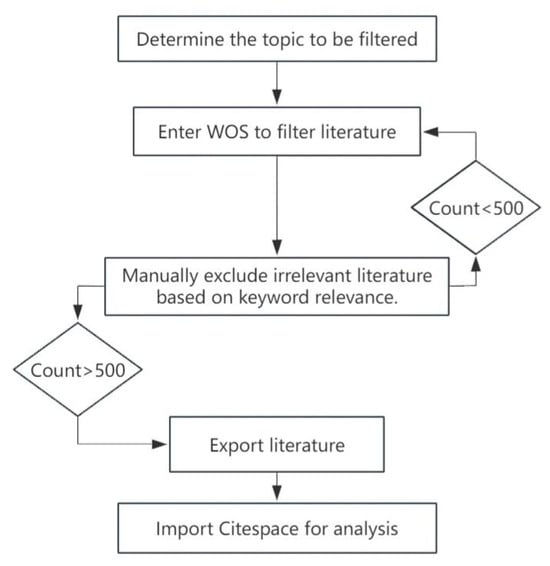
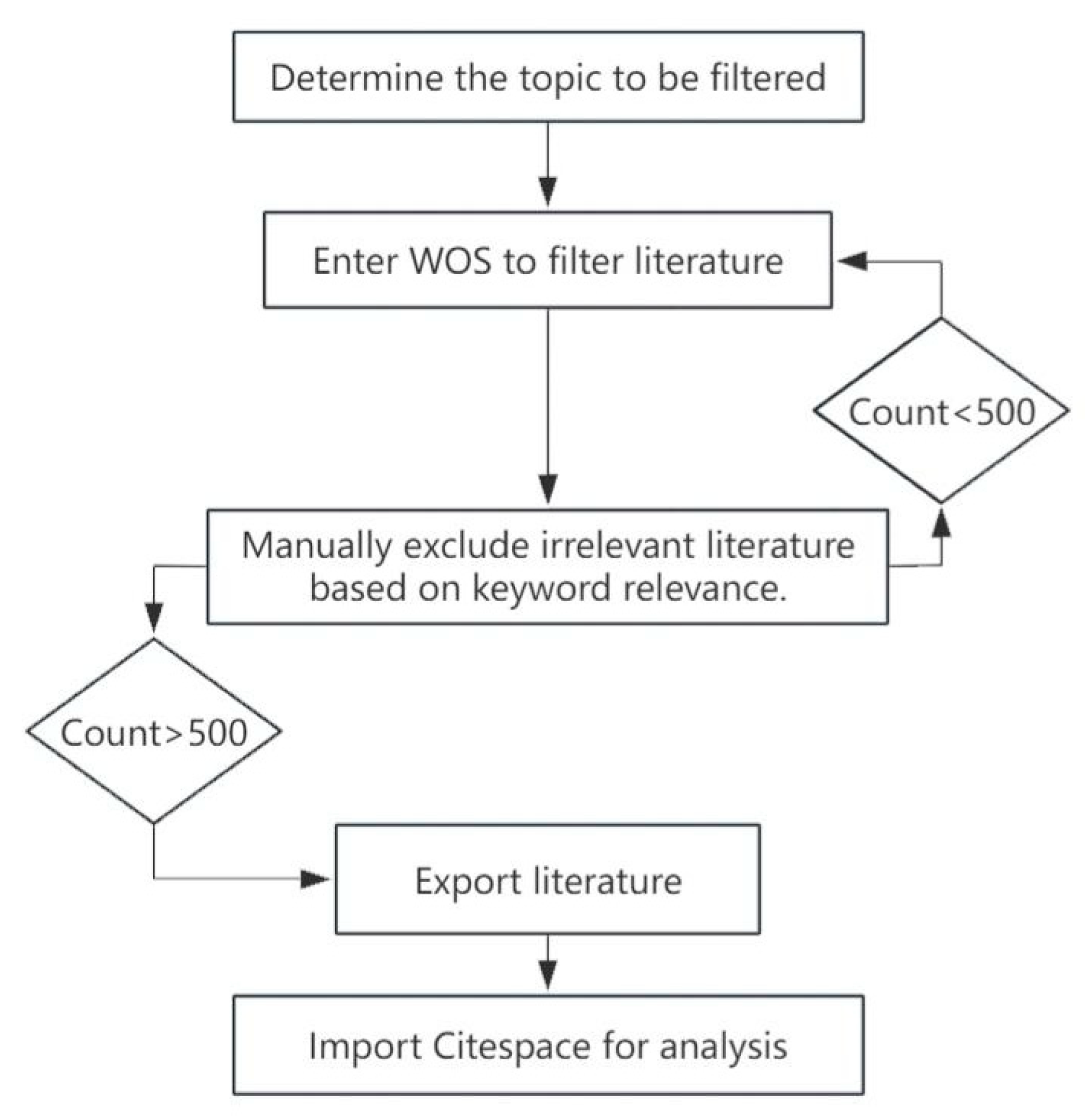
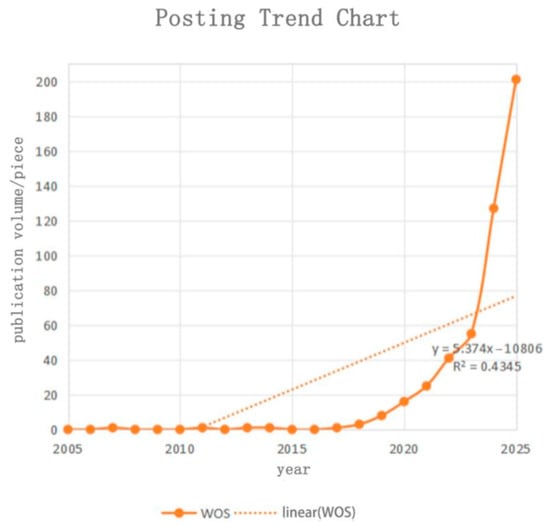
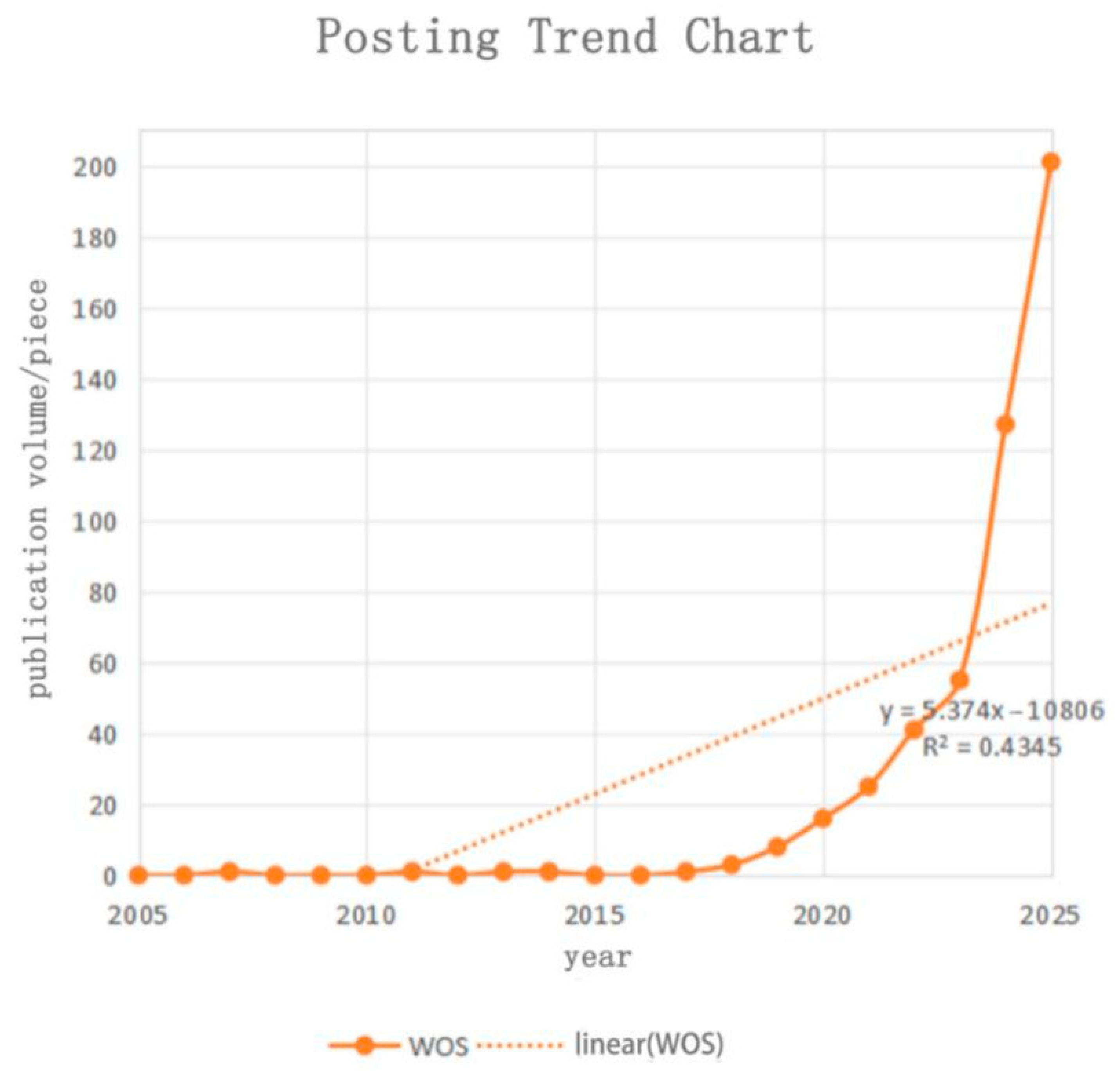
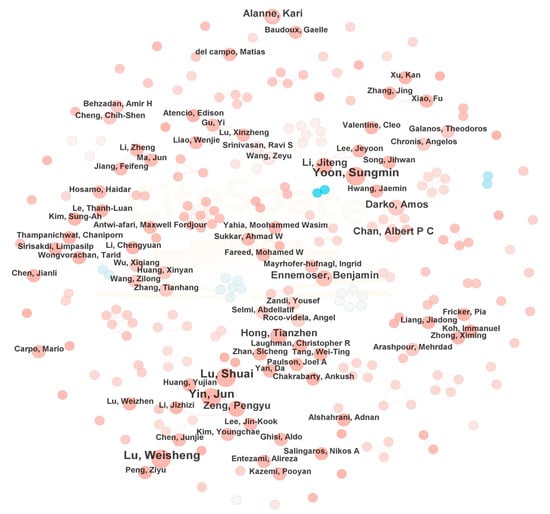
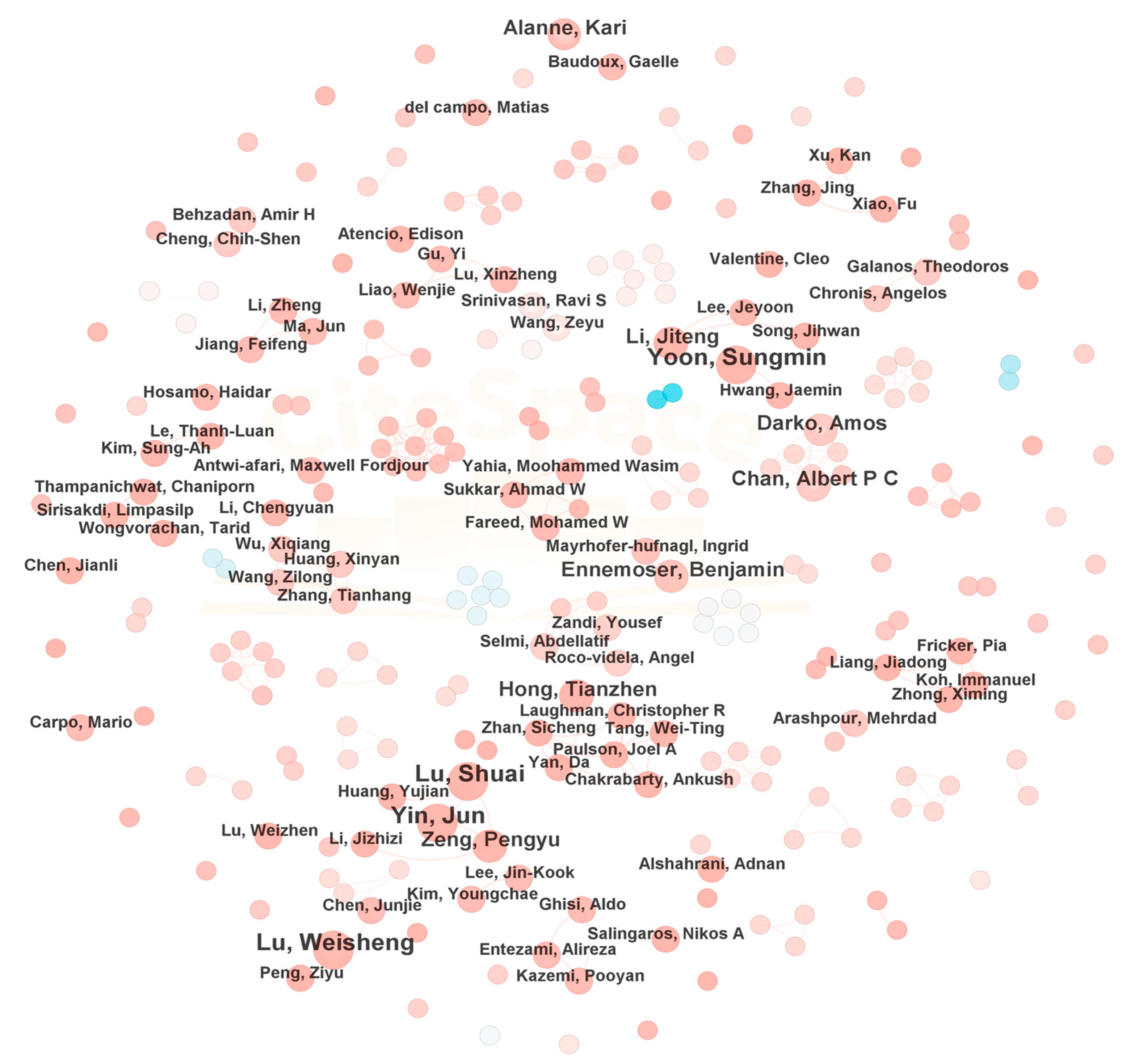
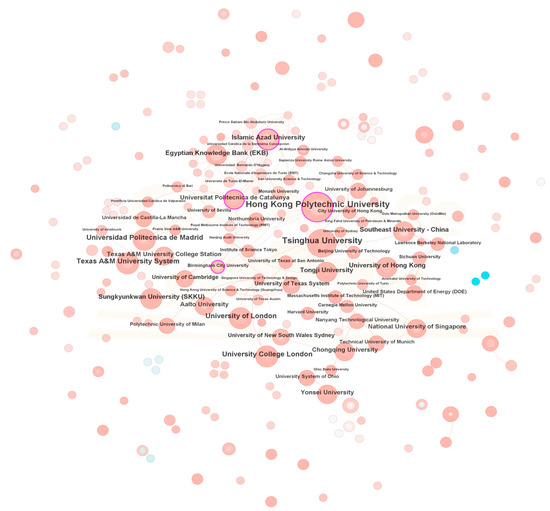
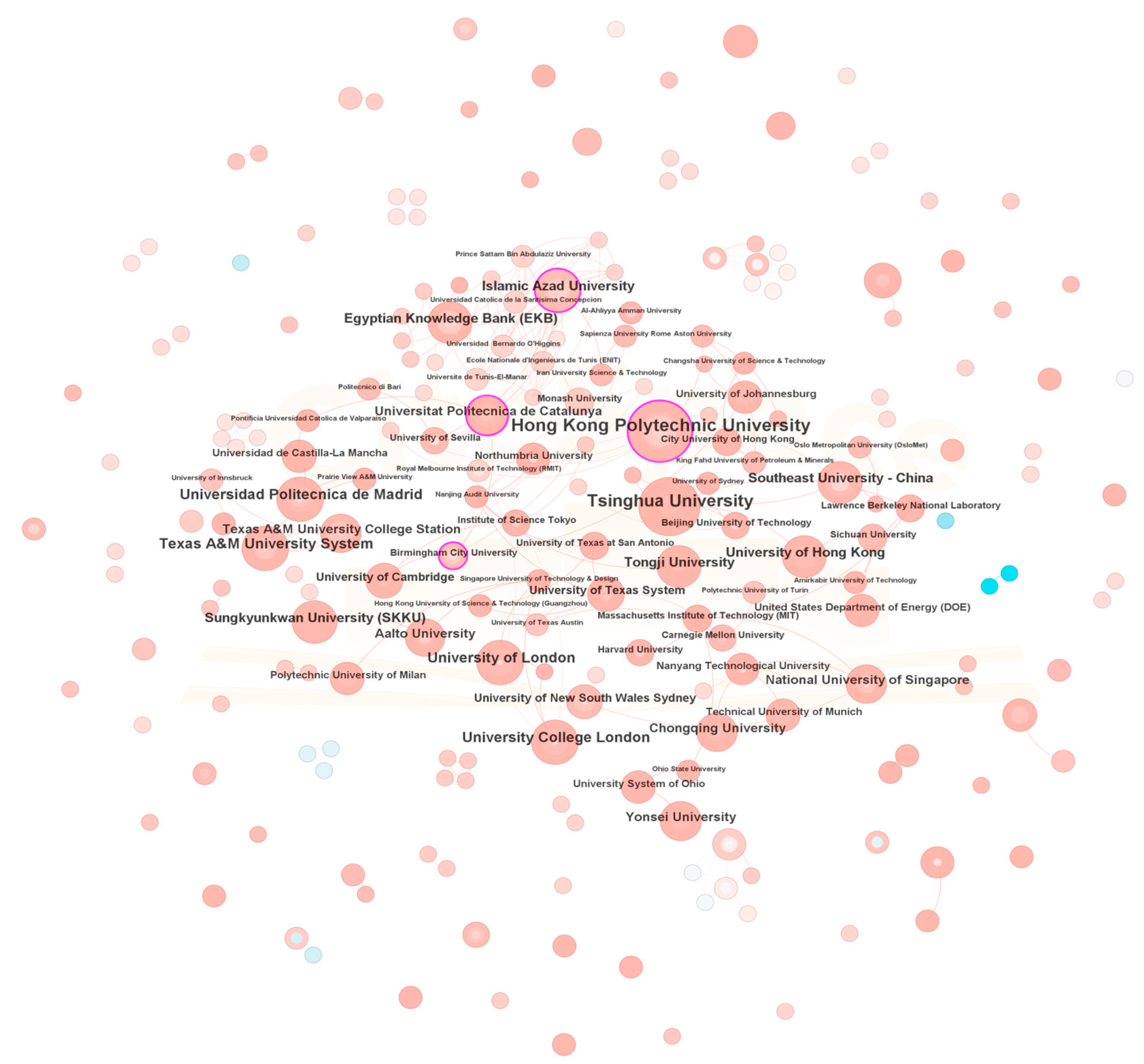
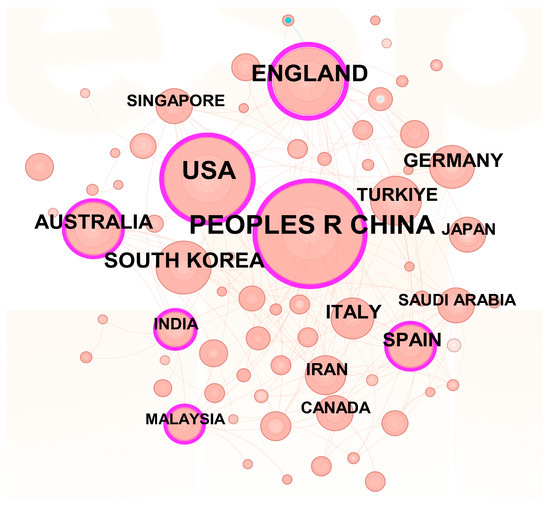
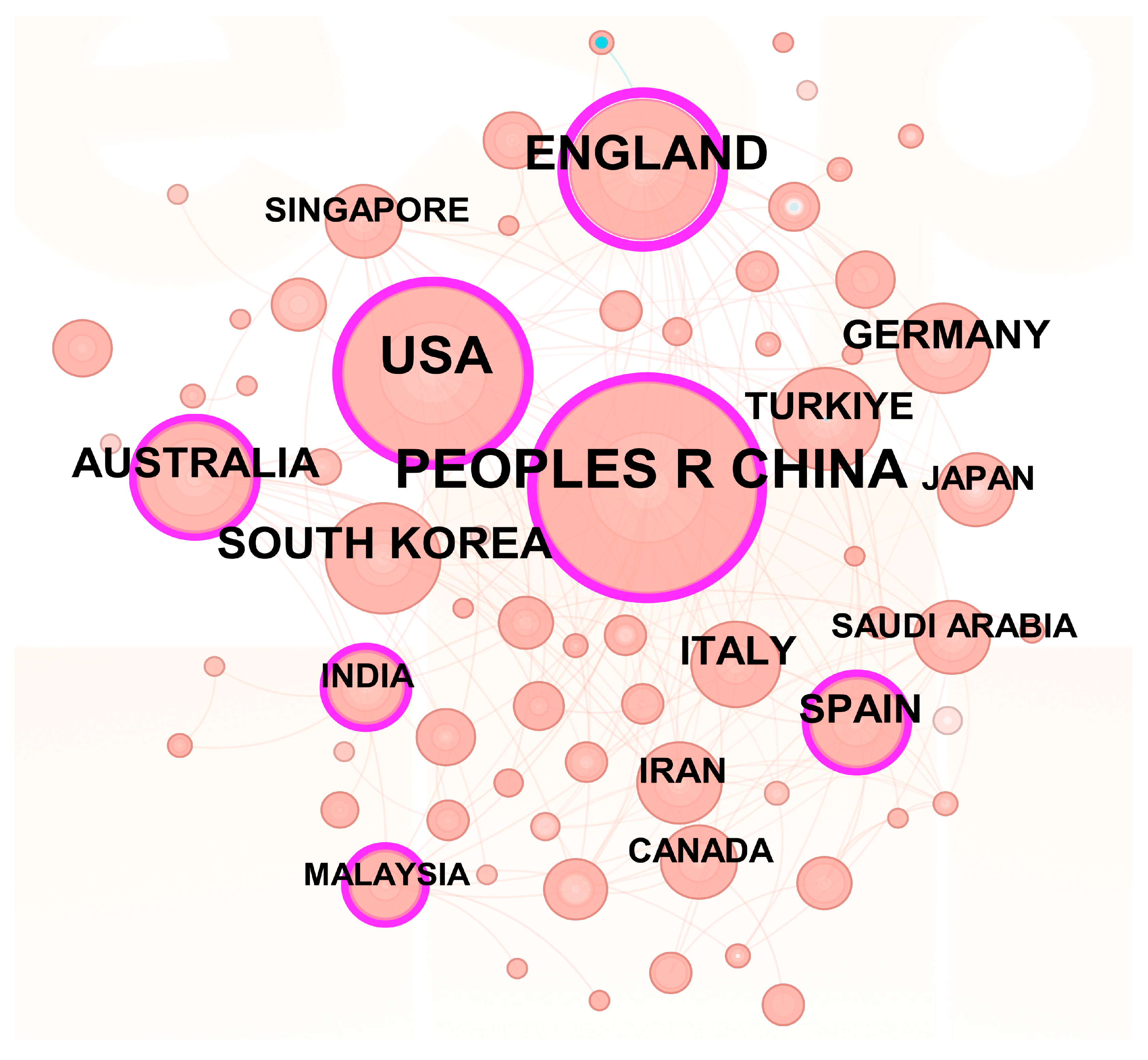
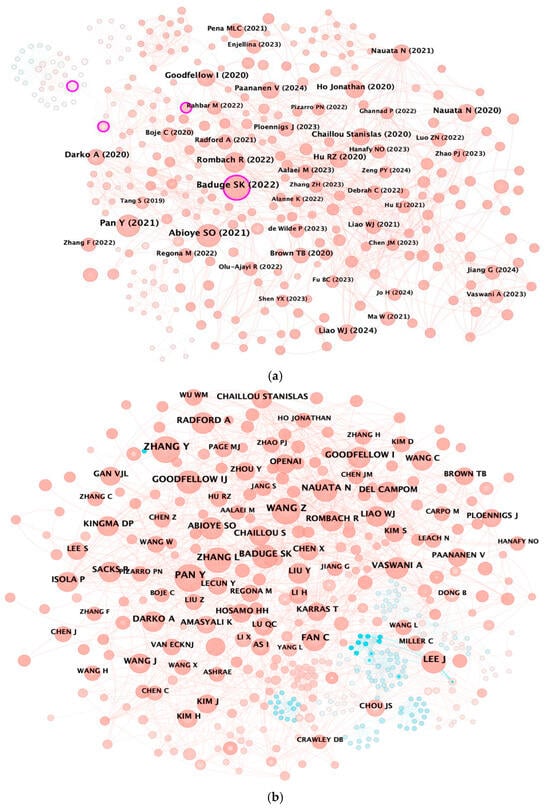
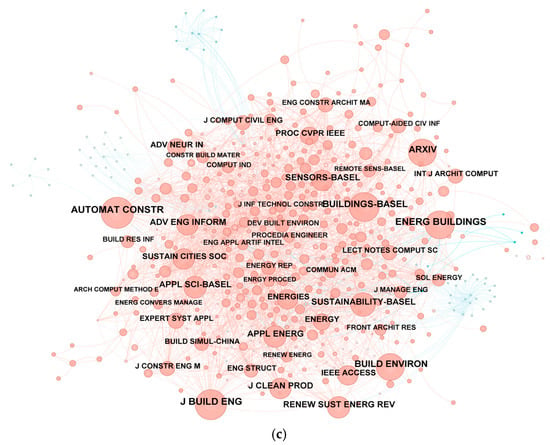
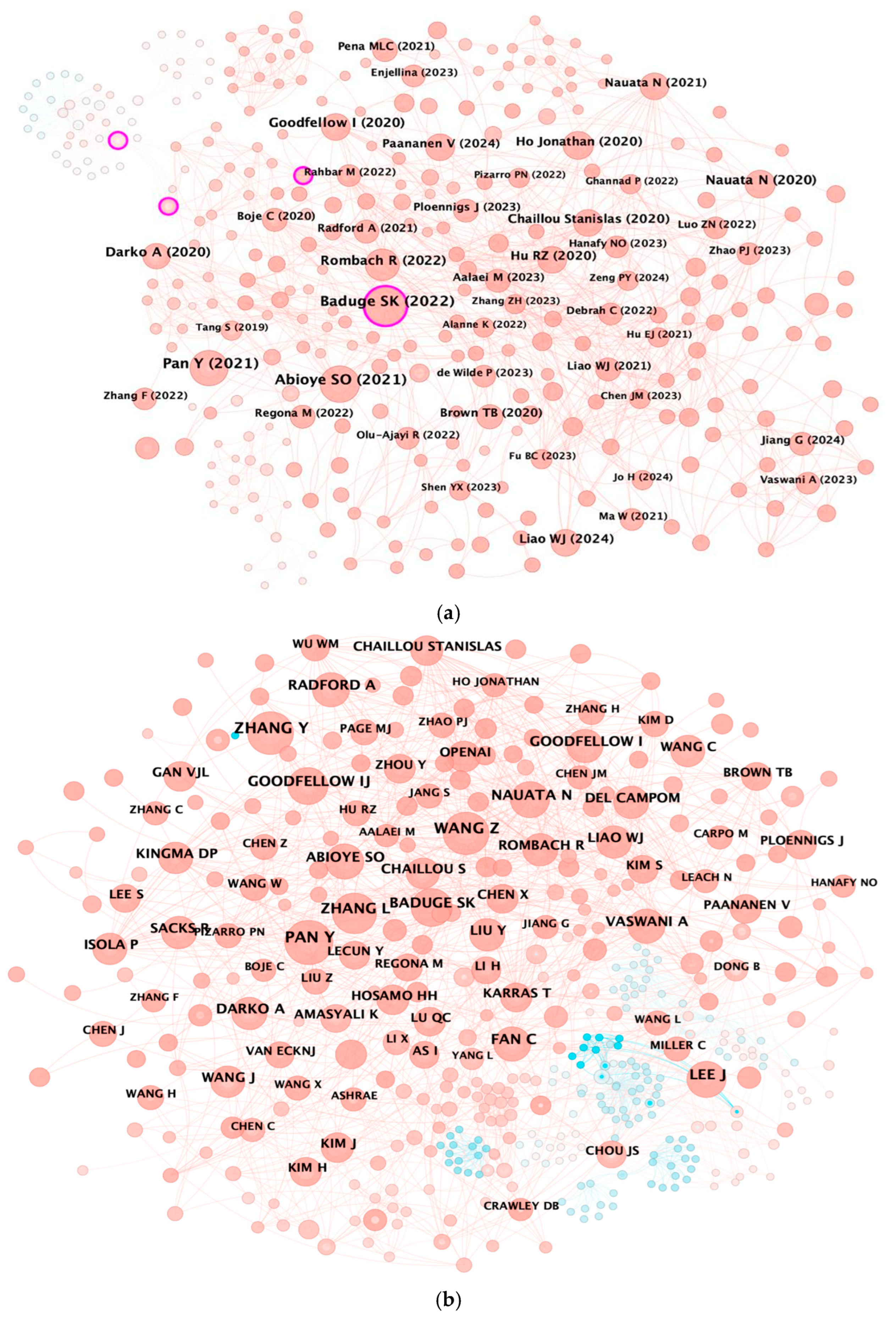
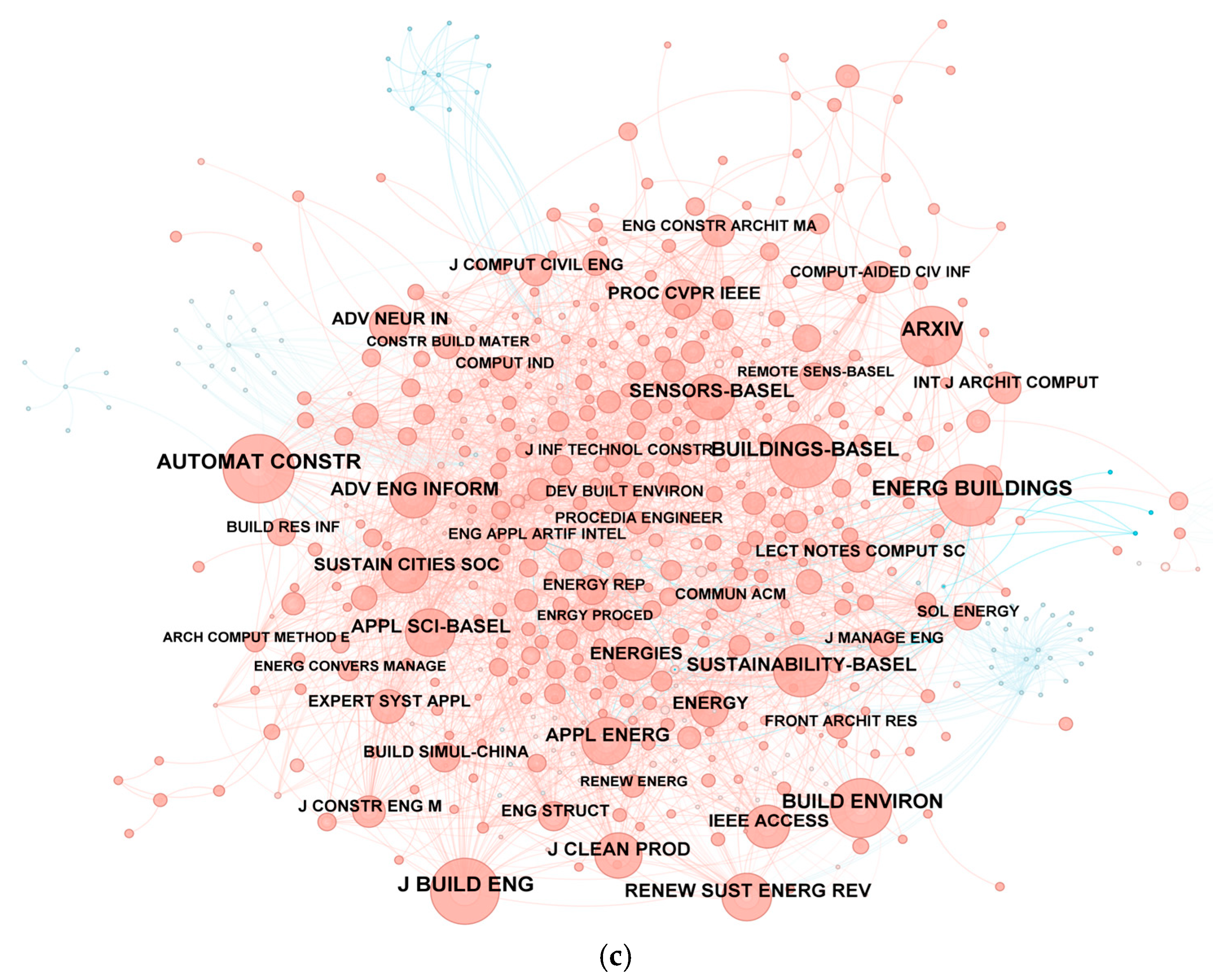
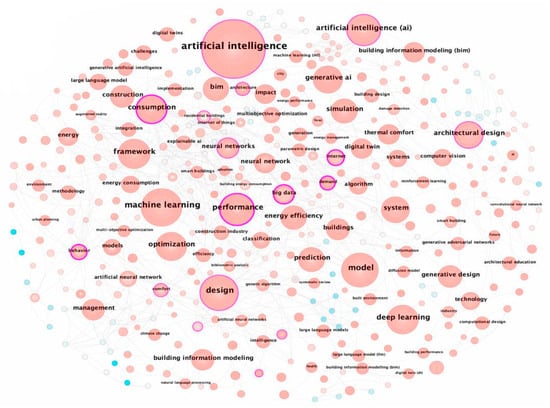
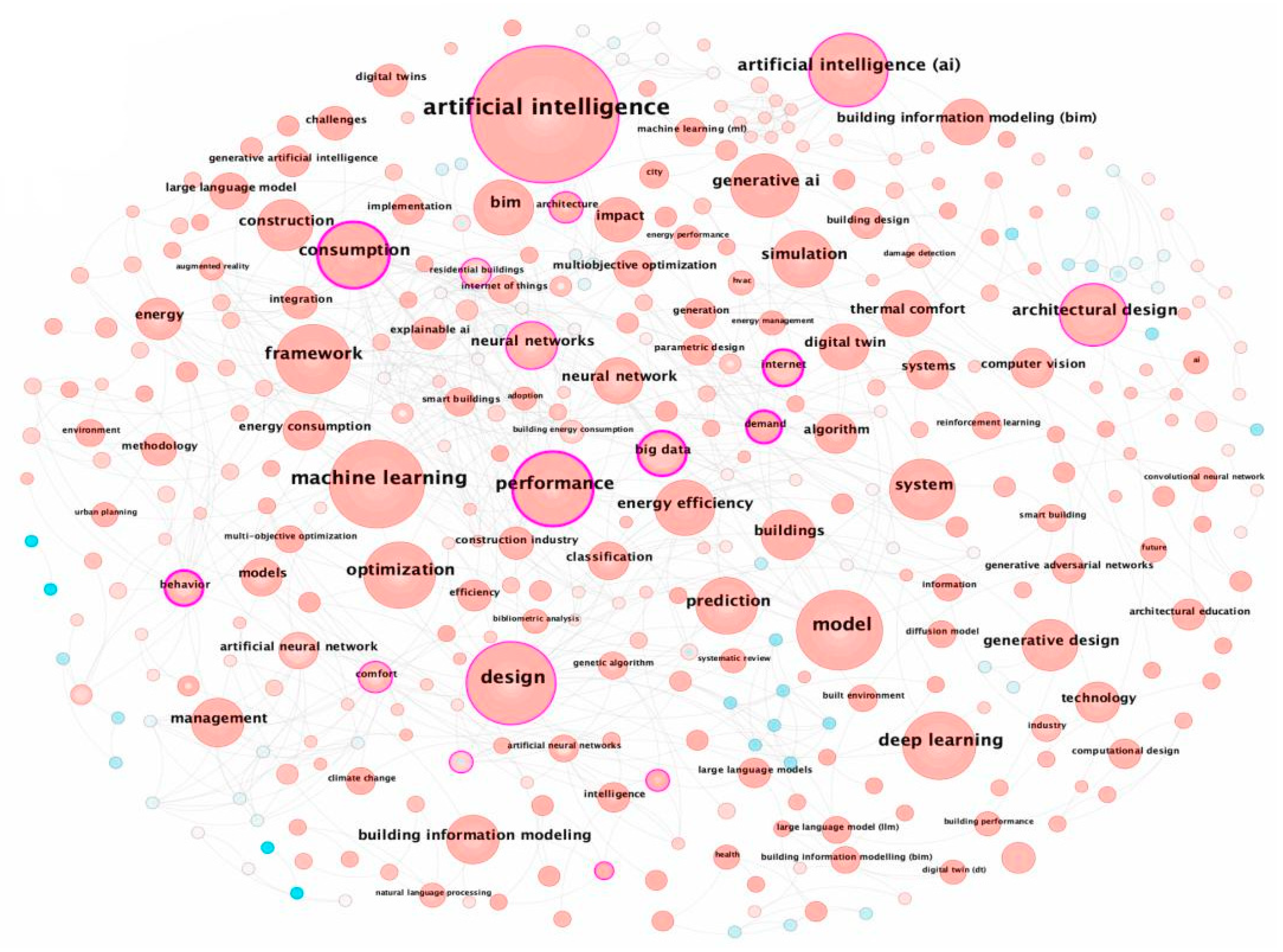
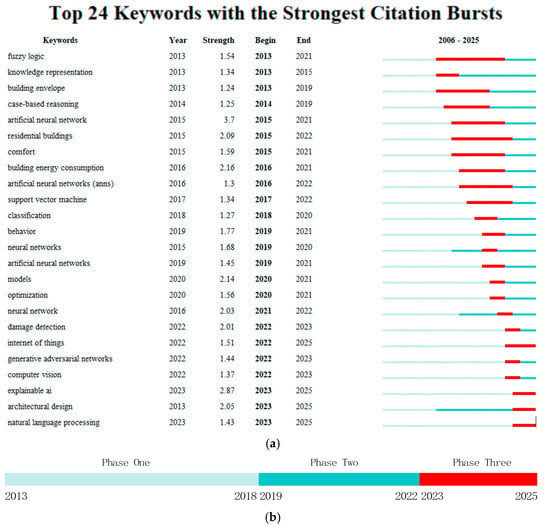
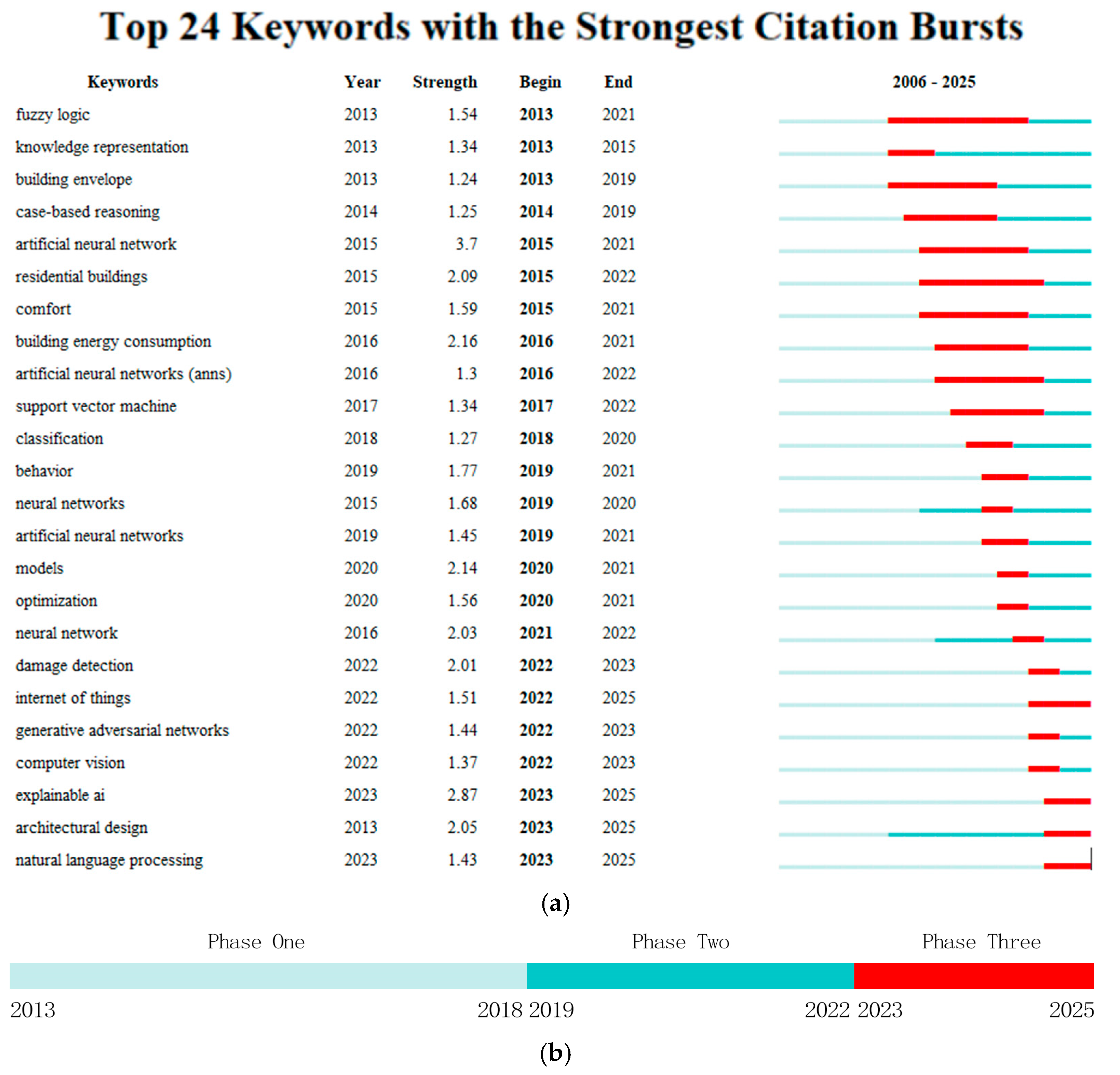
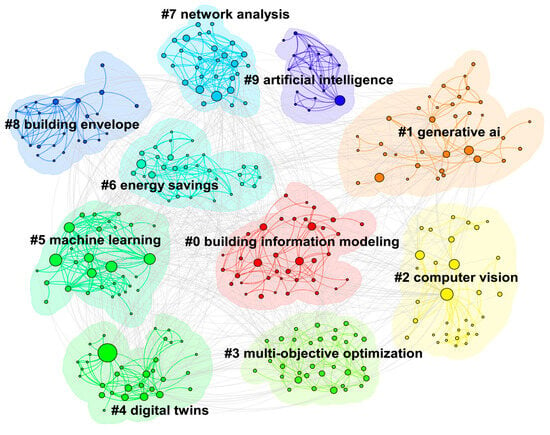
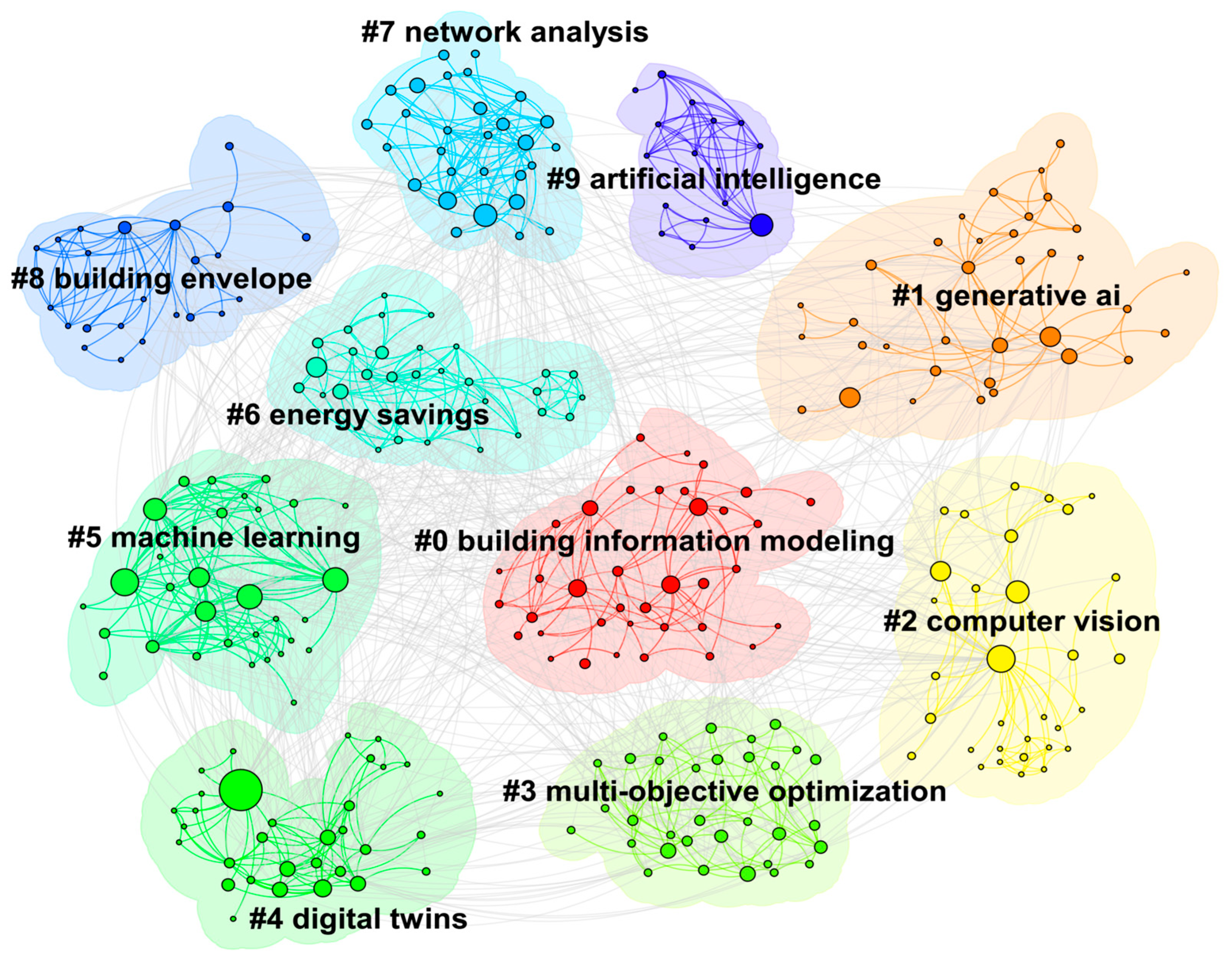
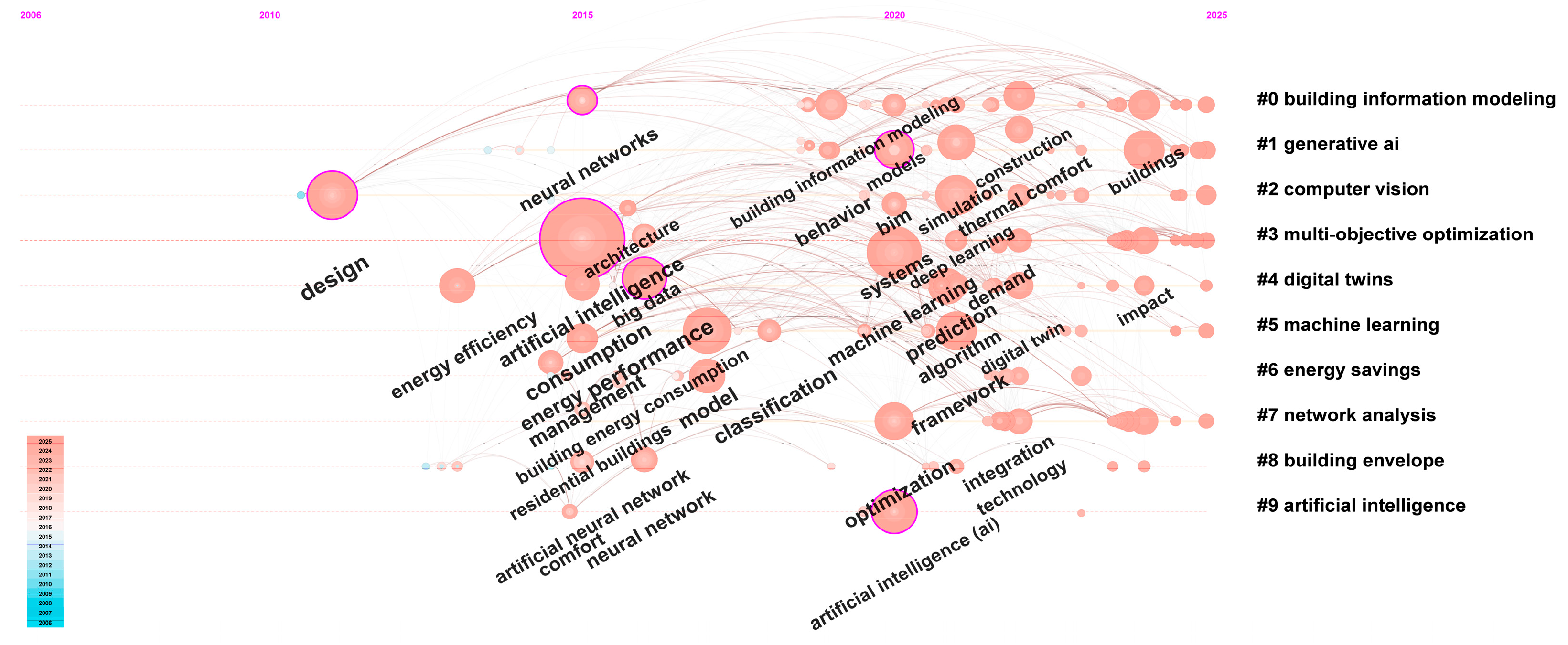
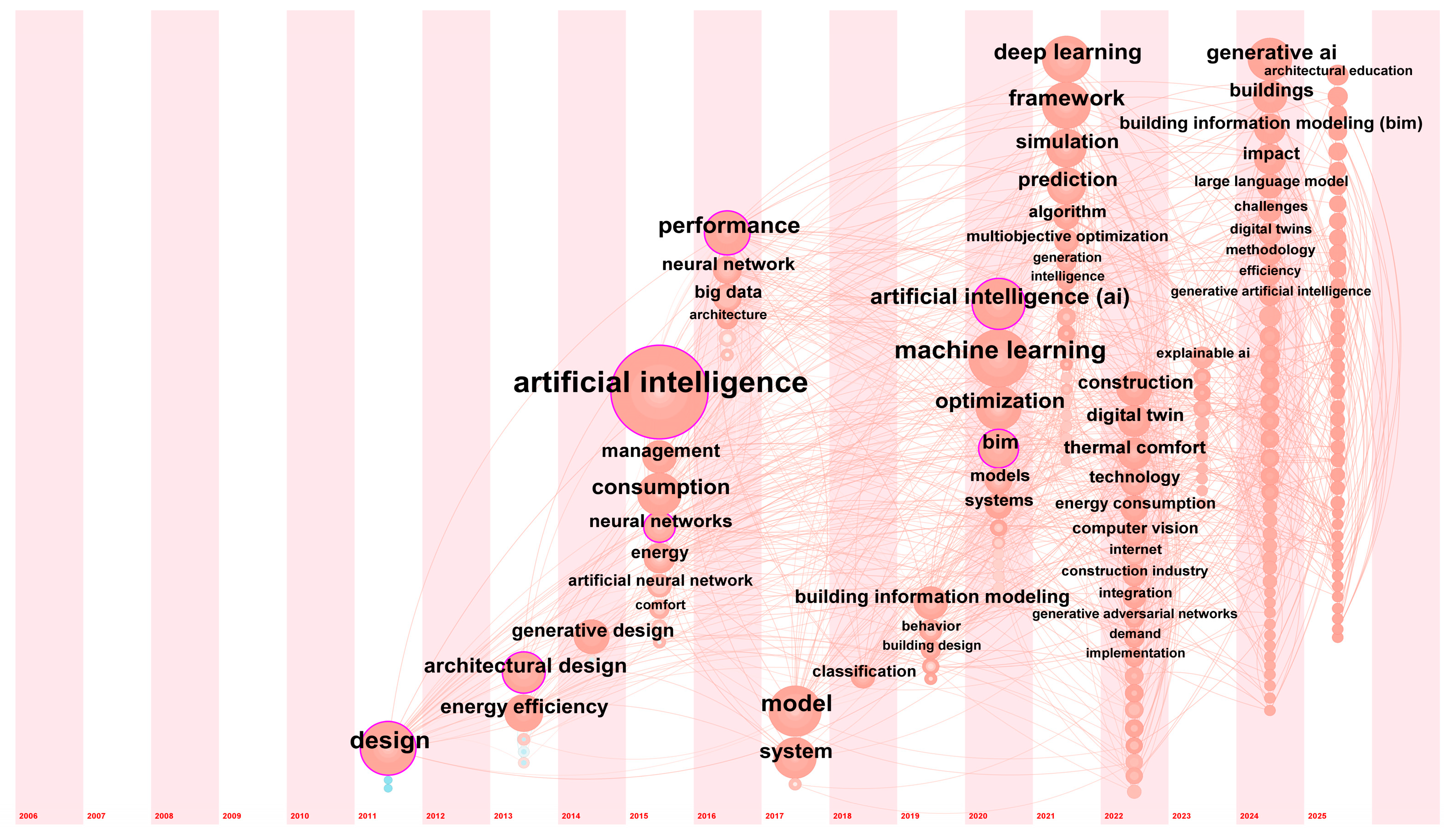

Disclaimer/Publisher’s Note: The statements, opinions and data contained in all publications are solely those of the individual author(s) and contributor(s) and not of MDPI and/or the editor(s). MDPI and/or the editor(s) disclaim responsibility for any injury to people or property resulting from any ideas, methods, instructions or products referred to in the content. |
© 2026 by the authors. Licensee MDPI, Basel, Switzerland. This article is an open access article distributed under the terms and conditions of the Creative Commons Attribution (CC BY) license.