Fatigue Performance Enhancement of Open-Hole Steel Plates Under Alternating Tension–Compression Loading via Hotspot-Targeted CFRP Reinforcement

Abstract
1. Introduction
2. Theoretical Research
2.1. Tension–Compression Wave Control Equation and Fundamental Principles
2.2. Total Wavefield for Tension-Compression Scattering
2.3. Boundary Conditions and Mode Coefficients
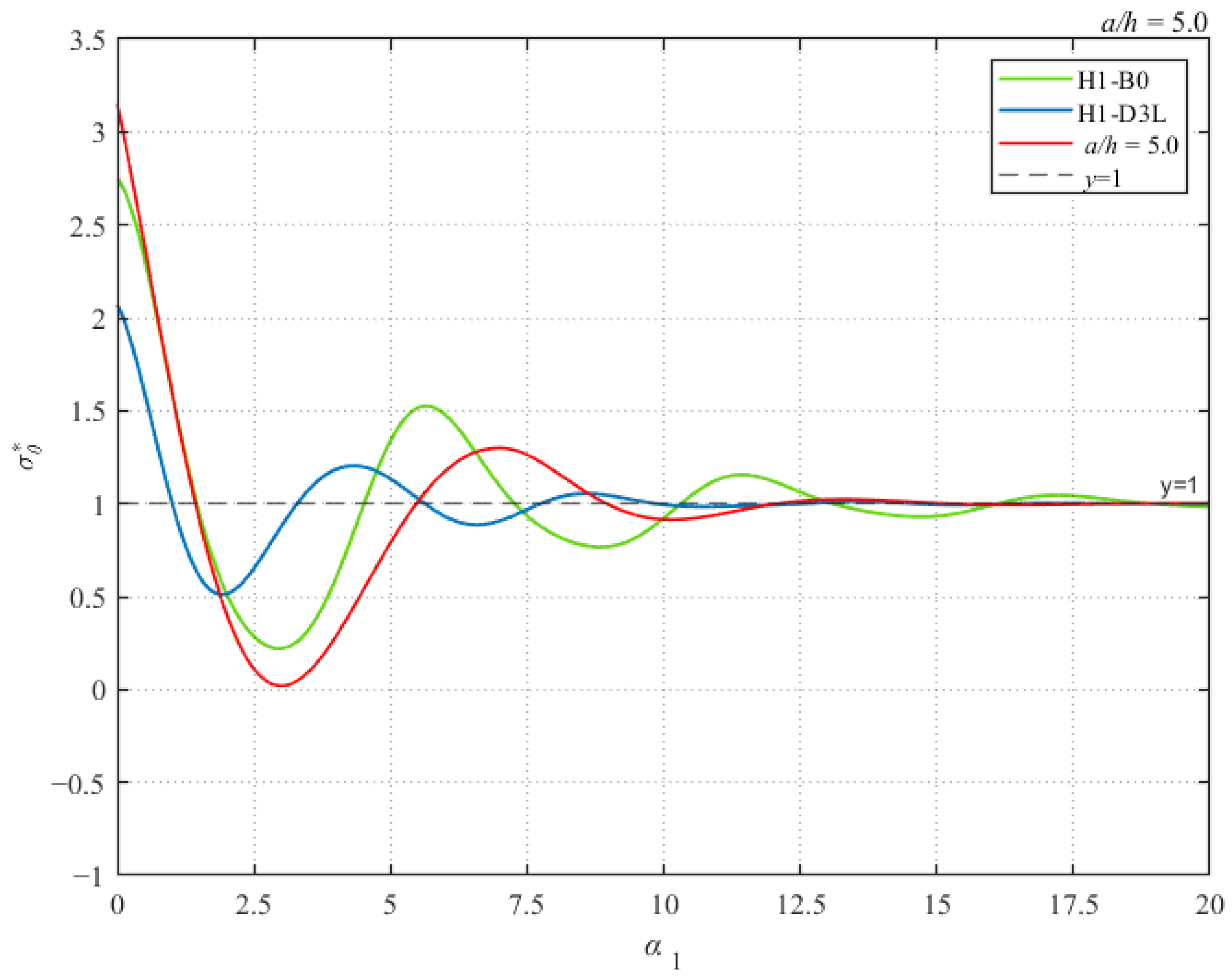
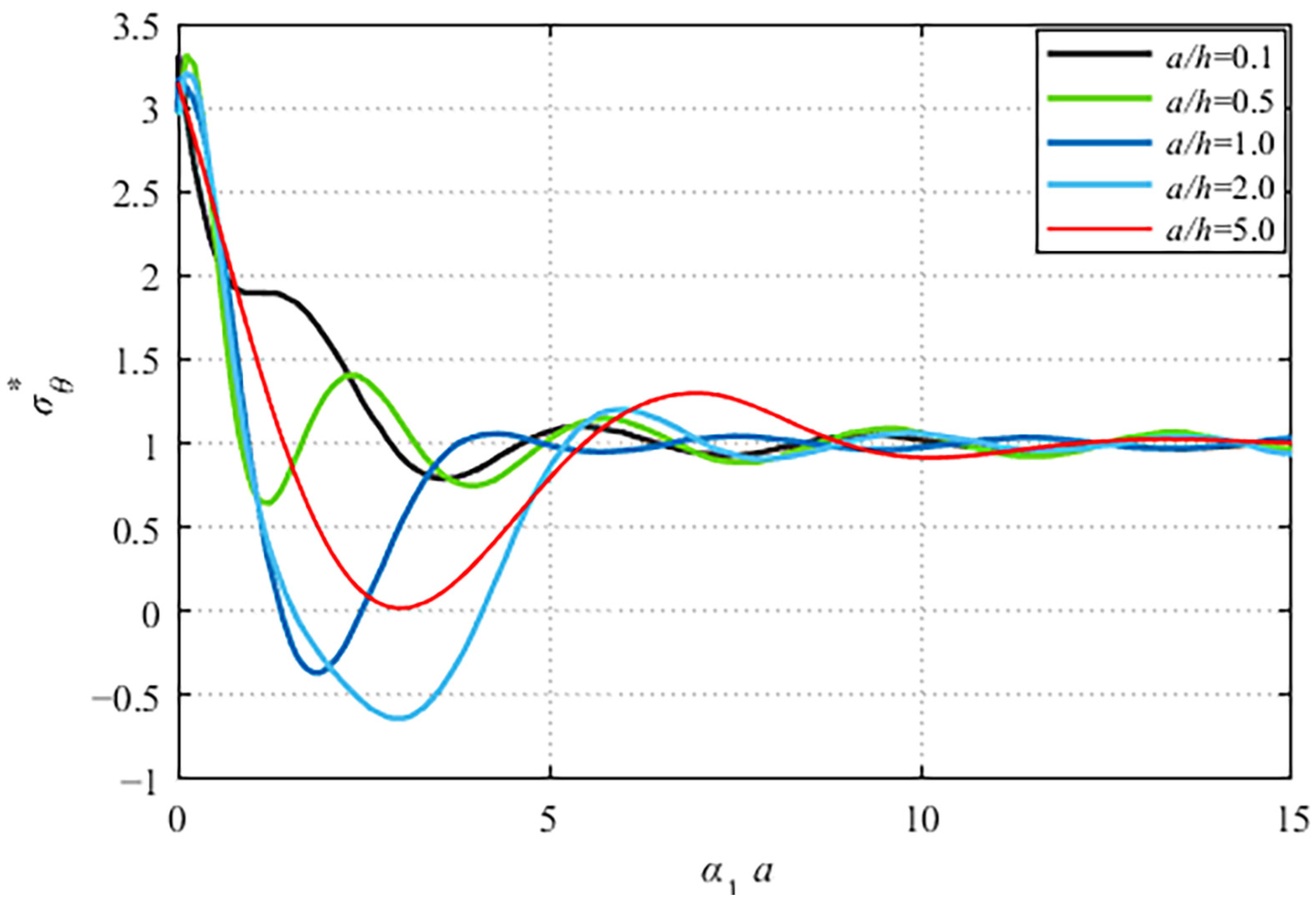
2.4. Numerical Example
2.5. Constitutive Modeling of Anisotropic CFRP Reinforcement Layer
- (1)
- Stress concentration in the isotropic steel plate (solved via Section 2.1, Section 2.2, Section 2.3 and Section 2.4), providing the driving stress field () at the potential hotspot (θ ≈ 90°).
- (2)
- Load sharing and constraint provided by the bonded anisotropic CFRP layer. The CFRP, due to its high stiffness in the fiber (hoop) direction, directly reduces the hoop strain in the steel at the hotspot. This effect can be represented in a simplified analytical form by considering force equilibrium and strain compatibility at the steel–adhesive interface:
3. Experimental Setup
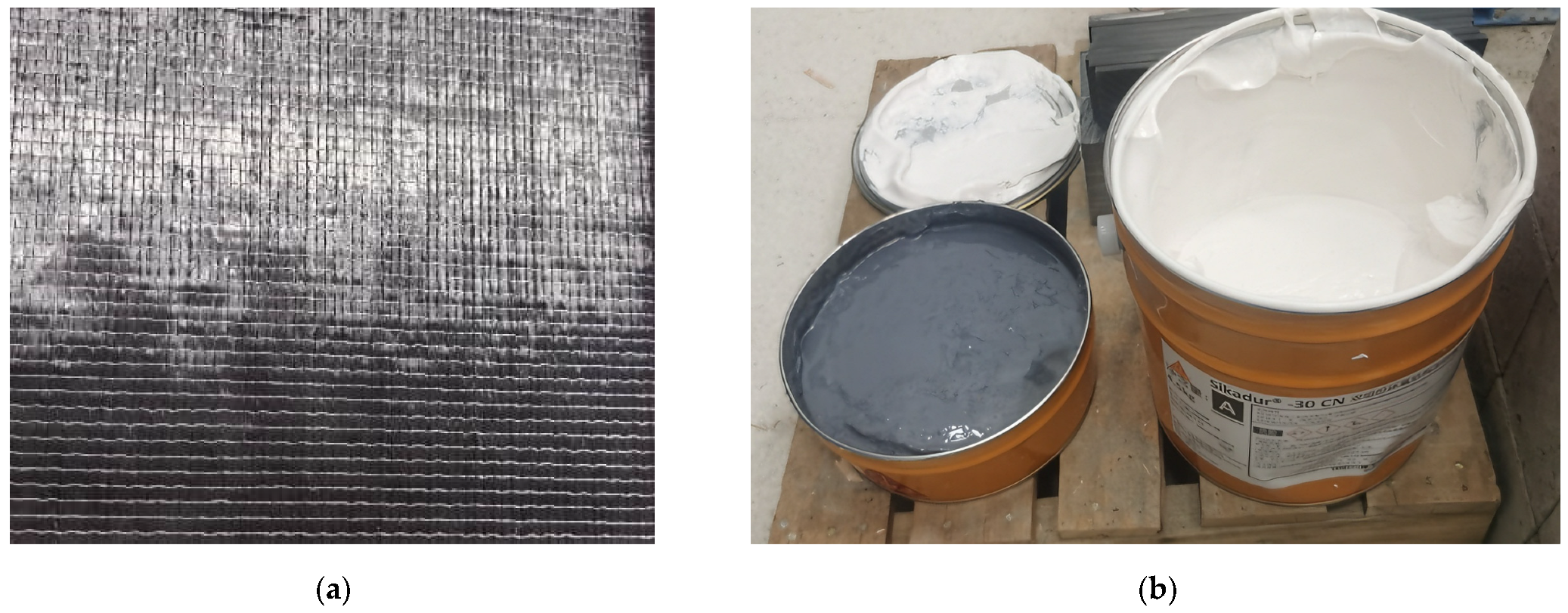
3.1. Material Properties
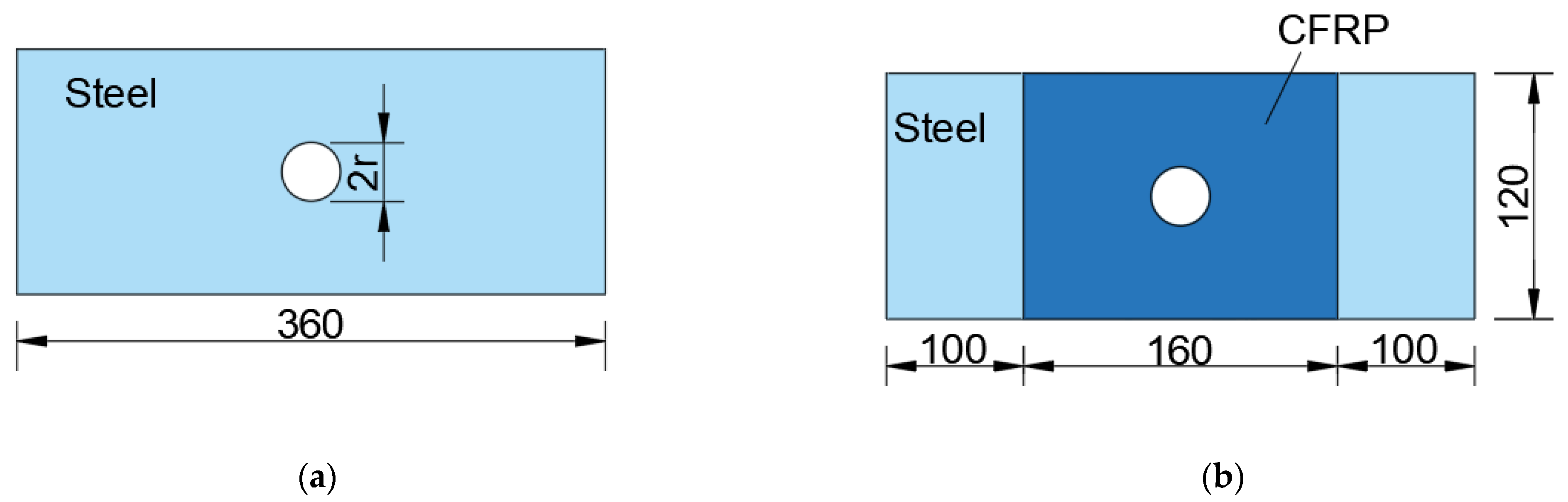
3.2. Sample Preparation
3.3. Loading Procedure
- ①
- Visible main crack length at the hole edge ≥ 1 mm;
- ②
- Stiffness reduction ≥ 5% (change in displacement amplitude/force amplitude ratio);
- ③
- Amplitude tracking error exceeding ±2 MPa for 10 consecutive seconds.
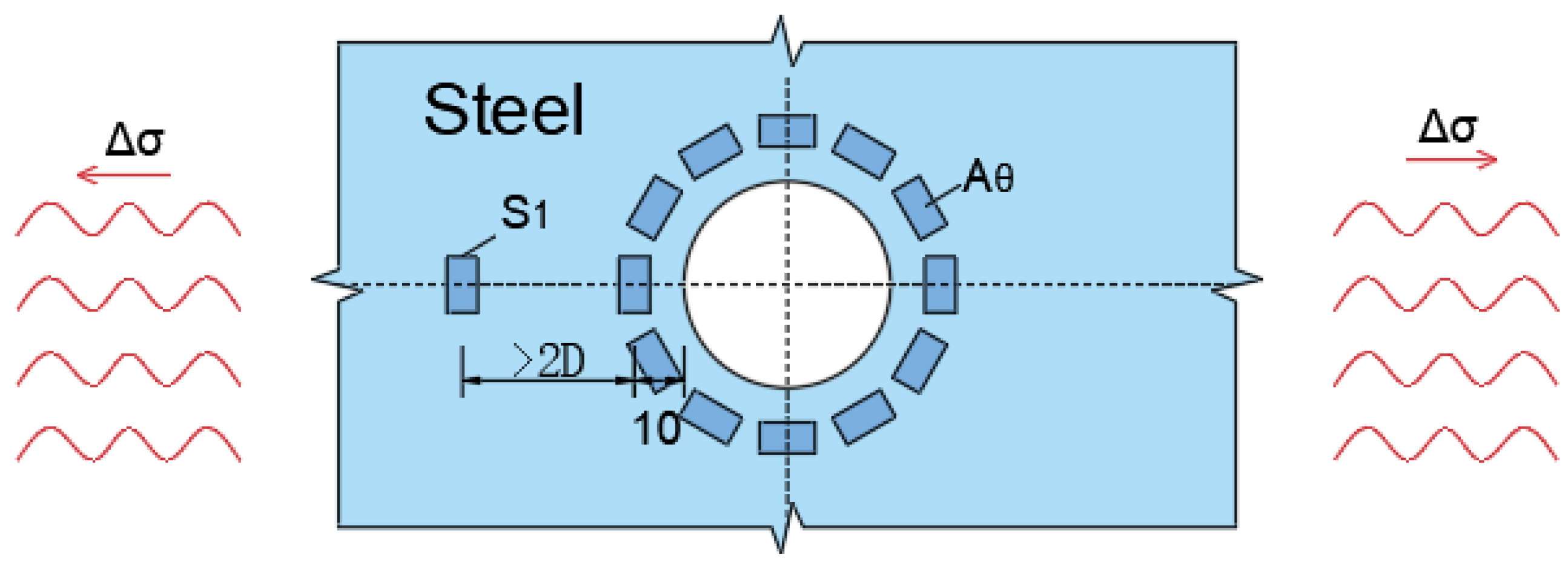
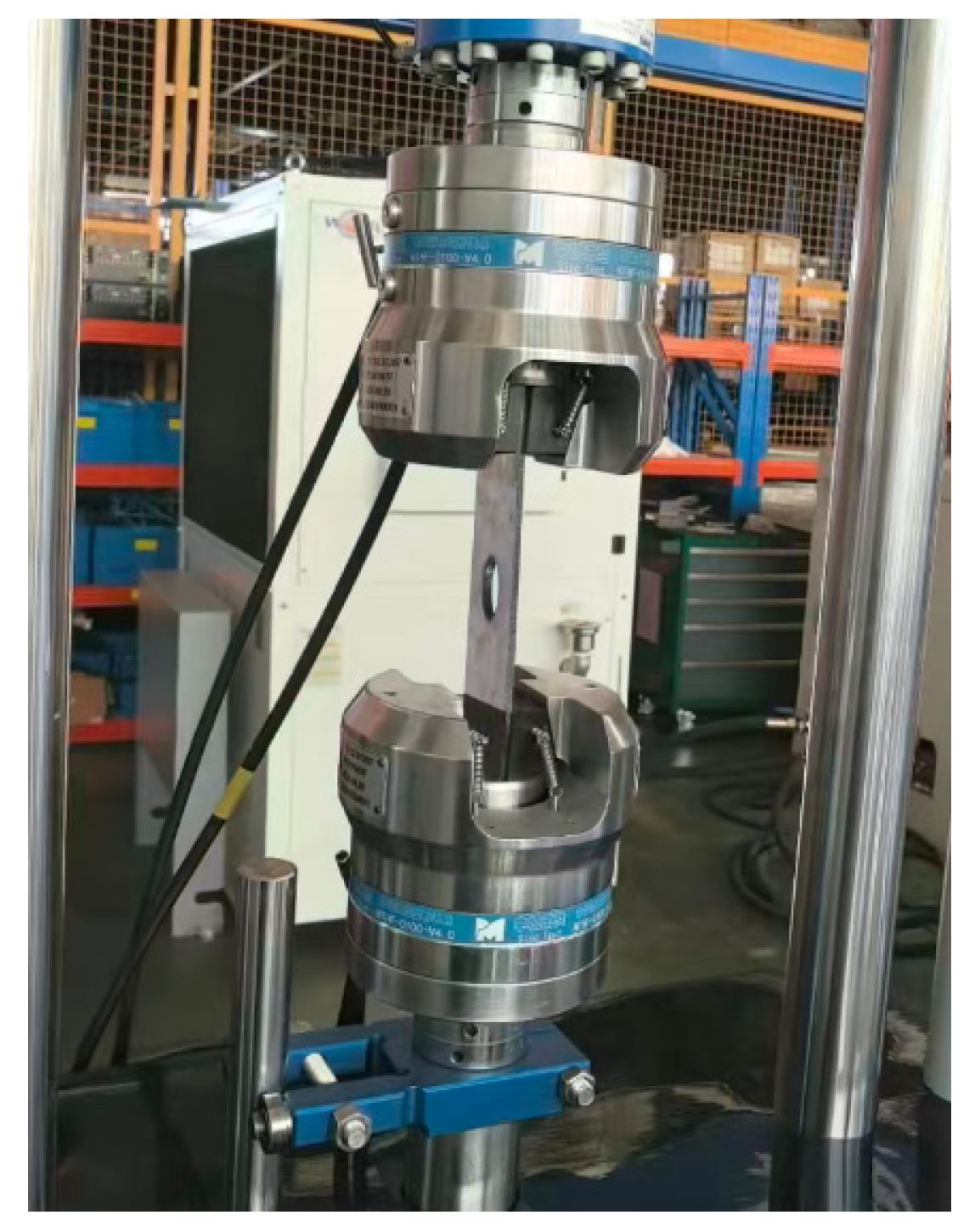
3.4. Test Setup and Monitoring
4. Test Results
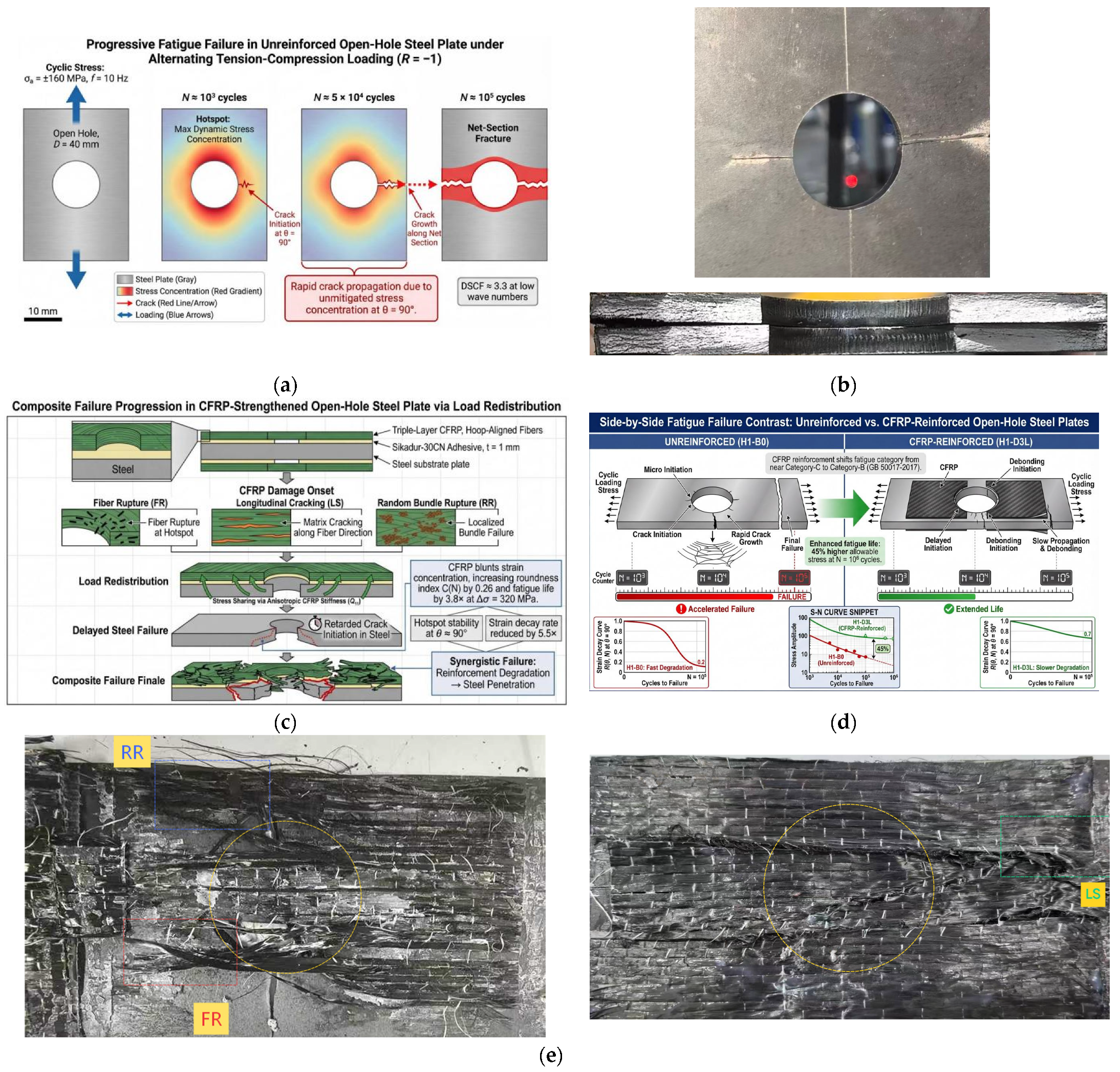
4.1. Failure Mode
4.2. Strain Response Around the Hole
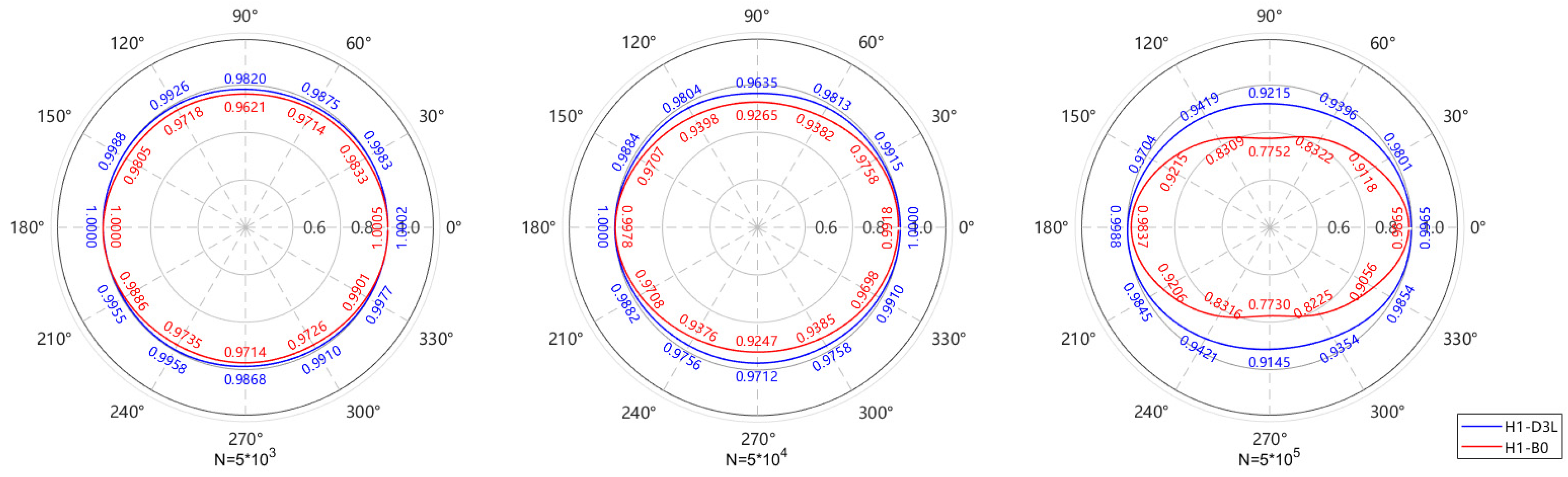
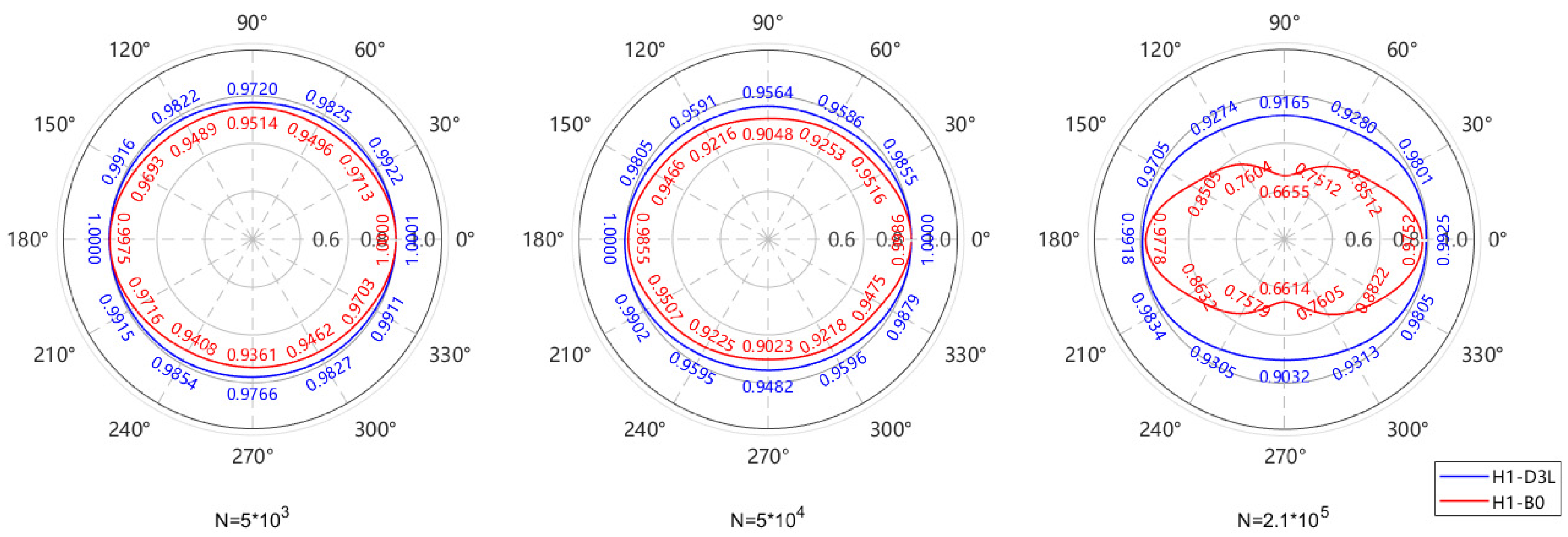
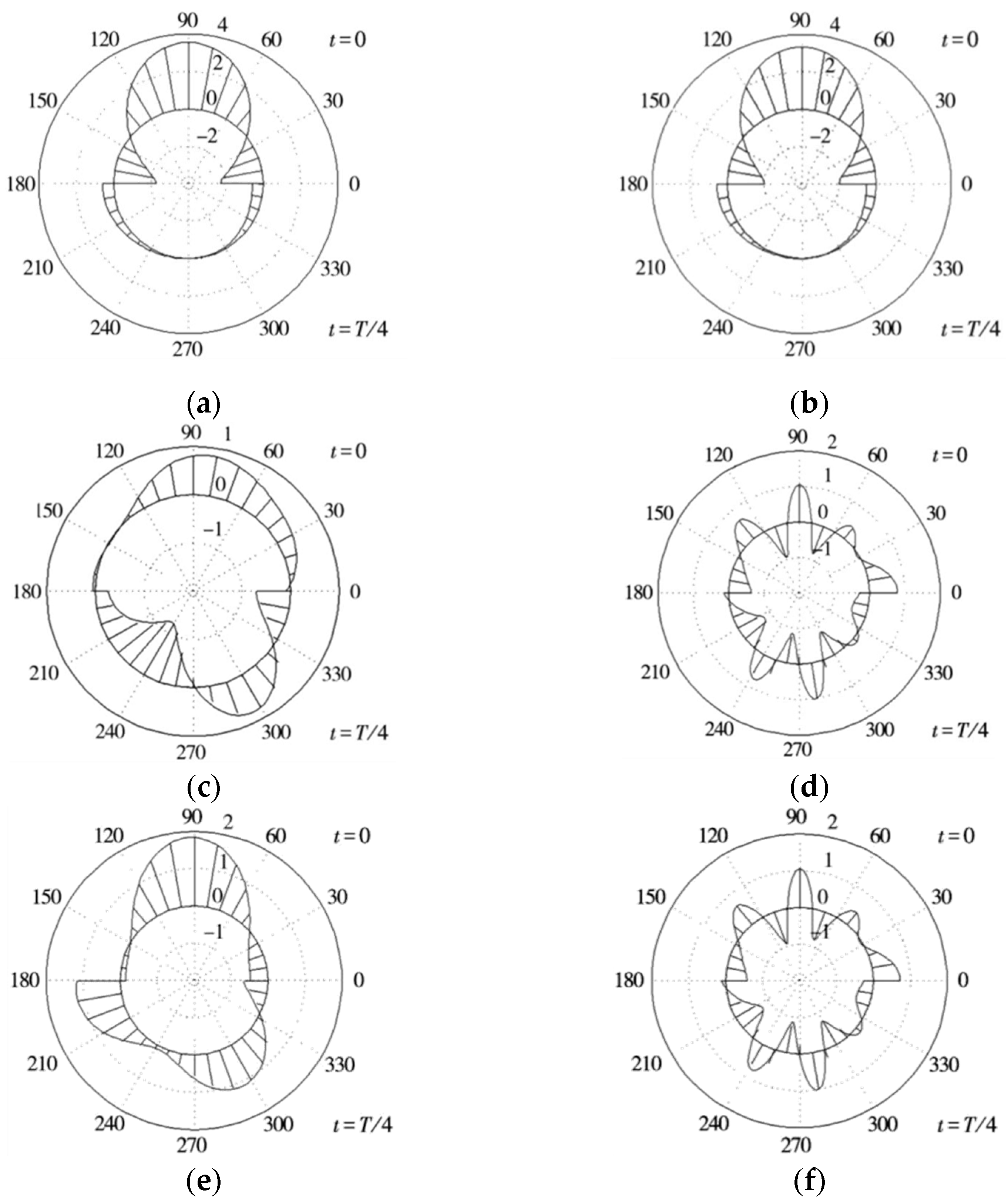
4.3. Dynamic Stress Concentration Angle
4.4. Frequency-Domain Characteristics of Dynamic Stress Concentration
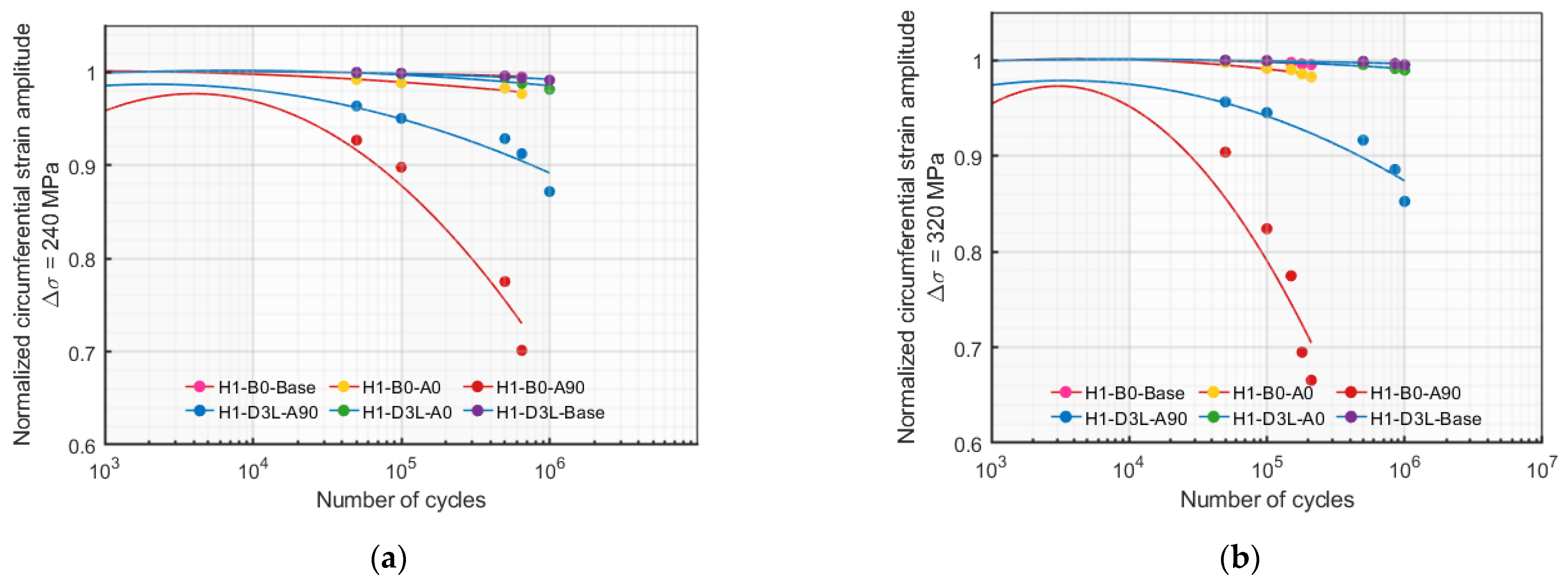
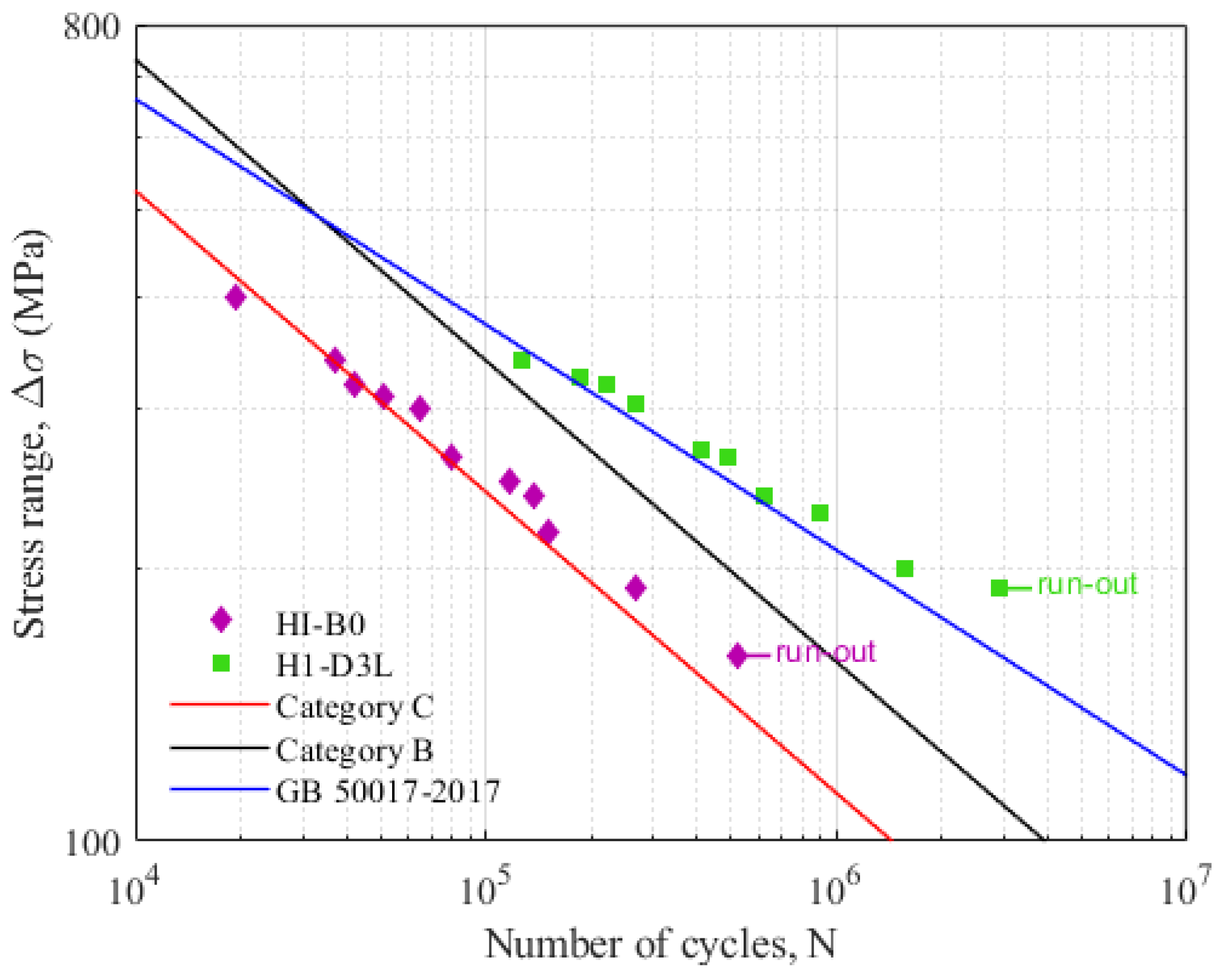
4.5. Fatigue Life
5. Conclusions
Author Contributions
Funding
Data Availability Statement
Conflicts of Interest
References
- Weng, J.; Wang, Z.; Zhou, C.; Pei, W.; Zhou, R.; Liu, R.; Gong, Y. Transient Response of Dynamic Stress Concentration around a Circular Opening: Incident SH Wave. Appl. Sci. 2023, 13, 9824. [Google Scholar] [CrossRef]
- Kirsch, E.G. The Theory of Elasticity and the Requirements of Strength of Materials. Z. Des Ver. Dtsch. Ingenieure 1898, 42, 797–807. [Google Scholar]
- Kang, J.H. Exact solutions for stresses, strains, and displacements of a rectangular plate with an arbitrarily located circular hole subjected to in-plane bending moment. Int. J. Mech. Sci. 2014, 89, 482–486. [Google Scholar] [CrossRef]
- Lu, A.; Xu, Z.; Zhang, N. Analytical stress solution for an infinite plane containing two holes. Int. J. Mech. Sci. 2017, 128, 224–234. [Google Scholar] [CrossRef]
- Liu, M.; de Oliveira Miranda, A.C.; Antunes, M.A.; Meggiolaro, M.A.; de Castro, J.T.P. Plastic stress concentration effects in fatigue strength. Int. J. Fatigue 2023, 168, 107394. [Google Scholar] [CrossRef]
- Yi, W.; Rao, Q.; Luo, S.; Shen, Q.-Q.; Li, Z. A new integral equation method for calculating interacting stress intensity factor of multiple crack-hole problem. Theor. Appl. Fract. Mech. 2020, 107, 102535. [Google Scholar] [CrossRef]
- Zappalorto, M. Mode I Generalized Stress Intensity Factors for Rounded Notches in Orthotropic Plates. Theor. Appl. Fract. Mech. 2019, 101, 356–364. [Google Scholar] [CrossRef]
- Patel, A.; Desai, C.K. Stress concentration around an elliptical hole in a large rectangular plate subjected to linearly varying in-plane loading on two opposite edges. Theor. Appl. Fract. Mech. 2020, 106, 102432. [Google Scholar] [CrossRef]
- Cheng, Y.; Zhao, Y.; Han, K. Dynamic Stress Analysis of a Strip Plate with Elliptical Holes Subjected to Incident Shear Horizontal Waves. Symmetry 2025, 17, 154. [Google Scholar] [CrossRef]
- Qu, E.; Qi, H.; Guo, J. Scattering and stress concentration of SH guided waves by a non-circular hole in a functionally graded piezoelectric slat. Appl. Math. Model. 2025, 141, 115914. [Google Scholar] [CrossRef]
- Zhu, Y.; Ren, H.; Yang, Z.; Zhao, J.; Chen, Y.-C. Dynamic stress analysis of elliptical inclusions in an inhomogeneous medium with modulus and density variations under the action of shear horizontal (SH) waves. Mech. Mater. 2023, 181, 104659. [Google Scholar] [CrossRef]
- Ke, L.; Chen, A.; Feng, Z.; Li, C.; Li, Y. Fatigue performance of carbon fiber-reinforced polymer strengthened single-edge cracked steel plates: Effects of adhesive property and CFRP arrangement. Polym. Compos. 2024, 45, 5953–5967. [Google Scholar] [CrossRef]
- Vijayan, D.S.; Sivasuriyan, A.; Devarajan, P.; Stefańska, A.; Wodzyński, Ł.; Koda, E. Carbon fiber-reinforced polymer (CFRP) composites in civil engineering application—A comprehensive review. Buildings 2023, 13, 1509. [Google Scholar] [CrossRef]
- Wang, Z.Y.; Wang, Q.Y.; Li, L.; Zhang, N. Fatigue behavior of CFRP-strengthened open-hole steel plates. Thin-Walled Struct. 2017, 115, 176–187. [Google Scholar] [CrossRef]
- Romanowicz, P.J.; Szybiński, B.; Wygoda, M. Fatigue performance of open-hole structural elements reinforced by CFRP overlays. Int. J. Adhes. Adhes. 2024, 130, 103606. [Google Scholar] [CrossRef]
- Tafsirojjaman, T.; Fawzia, S.; Thambiratnam, D.P. Structural behavior of CFRP-strengthened beam-column connections under monotonic and cyclic loading. Structures 2021, 33, 2689–2699. [Google Scholar]
- Al-Mosawe, A.; Al-Mahaidi, R.; Zhao, X.L. Effect of CFRP properties on the bond characteristics between steel and CFRP laminate under quasi-static loading. Constr. Build. Mater. 2015, 98, 489–501. [Google Scholar] [CrossRef]
- Doroudi, Y.; Fernando, D.; Hosseini, A.; Ghafoori, E. Behavior of cracked steel plates strengthened with adhesively bonded CFRP laminates under fatigue loading: Experimental and analytical study. Compos. Struct. 2021, 266, 113816. [Google Scholar] [CrossRef]
- Dai, Y.; Chen, J.; Yu, C.; Almutairi, A.D.; Yuan, Y. Comparative Analysis of Strength Improvement Techniques in Perforated Glass Fiber Reinforced Polymer Plates: Adhesive Filling, Bolt Reinforcement, and Elliptical Perforation Design. Materials 2025, 18, 4290. [Google Scholar] [CrossRef]
- Chen, T.; Yao, J.; Liu, R.; Li, L. Fatigue behavior of steel plates with multi-holes repaired by CFRP. Compos. Struct. 2020, 242, 112163. [Google Scholar] [CrossRef]
- Lepretre, E.; Chataigner, S.; Dieng, L.; Gaillet, L. Fatigue strengthening of cracked steel plates with CFRP laminates in the case of old steel material. Constr. Build. Mater. 2018, 174, 421–432. [Google Scholar] [CrossRef]
- Wang, Z.Y.; Zhang, T.; Li, X.; Wang, Q.Y.; Huang, W.; Shen, M. Characterization of the effect of CFRP reinforcement on the fatigue strength of aluminum alloy plates with fastener holes. Eng. Struct. 2018, 177, 739–752. [Google Scholar] [CrossRef]
- Grzejda, R. Finite element modeling of the contact of elements preloaded with a bolt and externally loaded with any force. J. Comput. Appl. Math. 2021, 393, 113534. [Google Scholar] [CrossRef]
- Rong, X.; Xie, A.; Zhao, P.; Yang, M.; Bu, J.; Wei, X. Fatigue performance of composite trough-girders with corrugated-steel-webs. J. Constr. Steel Res. 2023, 207, 107974. [Google Scholar] [CrossRef]
- GB 50017-2017; Standard for Design of Steel Structures. China Architecture & Building Press: Beijing, China, 2018.
- Yucel, G.; Talaslioglu, T. Incomplete-type welding imperfection on fatigue assessment of tubular T-joints. Rev. Construcción 2025, 24, 89–99. [Google Scholar] [CrossRef]
- Zhu, G.; Sun, G.; Li, G.; Cheng, A.; Li, Q. Modeling for CFRP structures subjected to quasi-static crushing. Compos. Struct. 2018, 184, 41–55. [Google Scholar] [CrossRef]
- Andrianov, I.; Awrejcewicz, J.; Danishevs’ kyy, V.; Ivankov, A. Asymptotic Methods in the Theory of Plates with Mixed Boundary Conditions; John Wiley & Sons: Hoboken, NJ, USA, 2014. [Google Scholar]
- Shen, H.X.; Xu, K.K.; Nie, Z.J. Testing of high strength steel welded thin-walled RHS subjected to combined compression and bending. Thin-Walled Struct. 2022, 179, 109661. [Google Scholar] [CrossRef]
- Wang, H.T.; Liu, S.S.; Liu, Q.L.; Pang, Y.Y.; Shi, J.W. Influences of the joint and epoxy adhesive type on the CFRP-steel interfacial behavior. J. Build. Eng. 2021, 43, 103167. [Google Scholar] [CrossRef]
- GB/T 228.1-2010; Metallic Materials—Tensile Testing—Part 1: Method of Test at Room Temperature, General Administration of Quality Supervision. Inspection and Quarantine of the People’s Republic of China: Beijing, China, 2010. (In Chinese)
- GB/T 1591-2018; High Strength Low Alloy Structural Steels, General Administration of Quality Supervision. Inspection and Qurantine of the People’s Republic of China: Beijing, China, 2018. (In Chinese)
- GB/T 2567-2021; Test Methods for Properties of Resin Casting Body, General Administration of Quality Supervision. Inspection and Quarantine of the People’s Republic of China: Beijing, China, 2021. (In Chinese)
- Łodygowski, T.; Siekierski, W. Beam-element model of bridge truss girders regarding joint dimensions. Eng. Trans. 2002, 50, 3–17. [Google Scholar]
- Huang, S.; Deng, X.; Lam, L.K. Integrated design framework of 3D printed planar stainless tubular joint: Modelling, optimization, manufacturing, and experiment. Thin-Walled Struct. 2021, 169, 108343. [Google Scholar] [CrossRef]
- Amirafshari, P.; Brennan, F.; Kolios, A. A fracture mechanics framework for optimising design and inspection of offshore wind turbine support structures against fatigue failure. Wind. Energy Sci. 2021, 6, 677–699. [Google Scholar] [CrossRef]
- Song, Y.; Chen, J.; Sørensen, J.D.; Li, J. Multi-parameter full probabilistic modeling of long-term joint wind-wave actions using multi-source data and applications to fatigue analysis of floating offshore wind turbines. Ocean. Eng. 2022, 247, 110676. [Google Scholar] [CrossRef]
- Mayer, H. Fatigue crack growth and threshold measurements at very high frequencies. Int. Mater. Rev. 1999, 44, 1–34. [Google Scholar] [CrossRef]
- Kazemi, F.; Asgarkhani, N.; Shafighfard, T.; Jankowski, R.; Yoo, D.-Y. Machine-learning methods for estimating performance of structural concrete members reinforced with fiber-reinforced polymers. Arch. Comput. Methods Eng. 2025, 32, 571–603. [Google Scholar] [CrossRef]
- Gai, J.; Yang, X.; Zhao, Y. Electroacoustic wave scattering from cylindrical inhomogeneities in transversely isotropic piezoelectric composites. Mater. Des. 2025, 261, 115296. [Google Scholar] [CrossRef]





| Material | Thickness (mm) | Young’s Modulus (GPa) | Tensile Strength (MPa) | Yield Stress (MPa) | Poisson’s Ratio |
|---|---|---|---|---|---|
| steel | 6 | 210 | 414 | 360 | 0.3 |
| S30 | 1 | 2.97 | 40 | - | 0.35 |
| CFRP | 0.15 | 164 | 2610 | - | 0.3 |
Disclaimer/Publisher’s Note: The statements, opinions and data contained in all publications are solely those of the individual author(s) and contributor(s) and not of MDPI and/or the editor(s). MDPI and/or the editor(s) disclaim responsibility for any injury to people or property resulting from any ideas, methods, instructions or products referred to in the content. |
© 2026 by the authors. Licensee MDPI, Basel, Switzerland. This article is an open access article distributed under the terms and conditions of the Creative Commons Attribution (CC BY) license.
Share and Cite
Jian, Z.; Kim, B.H.; Gai, J.; Zhao, Y.; Yang, X. Fatigue Performance Enhancement of Open-Hole Steel Plates Under Alternating Tension–Compression Loading via Hotspot-Targeted CFRP Reinforcement. Buildings 2026, 16, 313. https://doi.org/10.3390/buildings16020313
Jian Z, Kim BH, Gai J, Zhao Y, Yang X. Fatigue Performance Enhancement of Open-Hole Steel Plates Under Alternating Tension–Compression Loading via Hotspot-Targeted CFRP Reinforcement. Buildings. 2026; 16(2):313. https://doi.org/10.3390/buildings16020313
Chicago/Turabian StyleJian, Zhenpeng, Byeong Hwa Kim, Jinlei Gai, Yunlong Zhao, and Xujiao Yang. 2026. "Fatigue Performance Enhancement of Open-Hole Steel Plates Under Alternating Tension–Compression Loading via Hotspot-Targeted CFRP Reinforcement" Buildings 16, no. 2: 313. https://doi.org/10.3390/buildings16020313
APA StyleJian, Z., Kim, B. H., Gai, J., Zhao, Y., & Yang, X. (2026). Fatigue Performance Enhancement of Open-Hole Steel Plates Under Alternating Tension–Compression Loading via Hotspot-Targeted CFRP Reinforcement. Buildings, 16(2), 313. https://doi.org/10.3390/buildings16020313